English
 中文简体
中文简体
News
Home > Author > Chen Xiaotong — Key Account Sales Manager > Refillable Airless Serum Bottles for Sustainable High-Performance Cosmetic Packaging

 2026.06.28
 Chen Xiaotong — Key Account Sales Manager
Content
Cosmetic packaging has become far more than a container for holding skincare formulas. It is now a strategic part of product preservation, brand presentation, consumer experience, sustainability planning, and supply-chain efficiency. Among the many packaging formats used for serums, creams, lotions, sunscreens, toners, and other skincare products, the refillable airless serum bottle stands out as a practical solution for modern cosmetic brands that want both premium protection and reduced material waste.
The HB-K022A/B plastic refillable airless serum bottle is designed around this exact need. It combines an outer bottle intended for repeated use with a replaceable inner bottle that can be exchanged after the formula is finished. This structure allows consumers or brands to retain the main outer component while replacing only the inner cartridge, reducing unnecessary plastic consumption compared with fully disposable packaging. At the same time, its airless dispensing system helps protect sensitive formulations from air exposure and contamination, supporting longer shelf life and more consistent product performance.
For skincare brands, the selection of packaging directly influences formula stability, user satisfaction, refill strategy, logistics, and perceived product value. A serum bottle must dispense smoothly, protect active ingredients, prevent leakage, look refined on a shelf, and be compatible with high-volume manufacturing. The HB-K022A/B refillable airless bottle addresses these needs with a practical material combination, a clean cylindrical structure, a pump system with a retaining clip, and multiple capacity options suitable for different cosmetic categories.
This article explores the product’s structure, advantages, applications, sustainability value, manufacturing considerations, and competitive benefits. It also highlights the manufacturing strengths behind the product, including experience in plastic cosmetic packaging, quality management, environmental certification, design capability, and large-scale production resources.
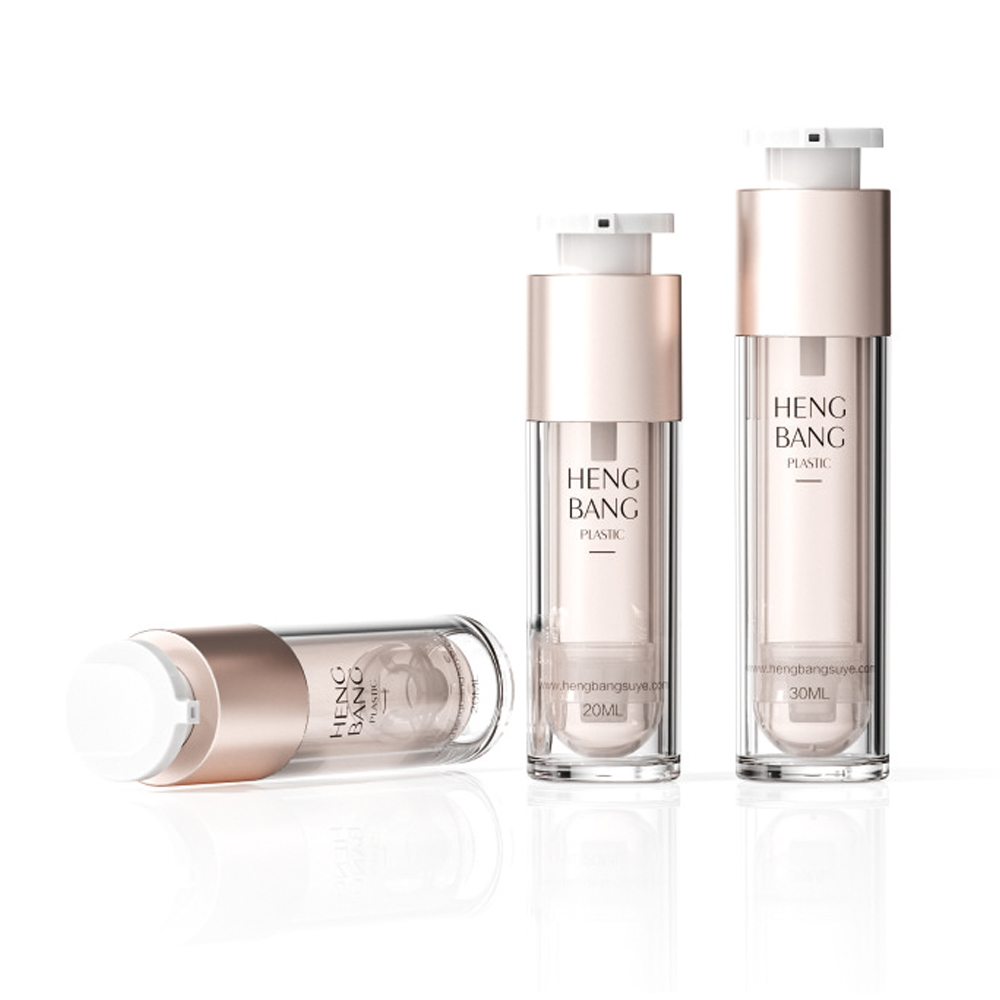
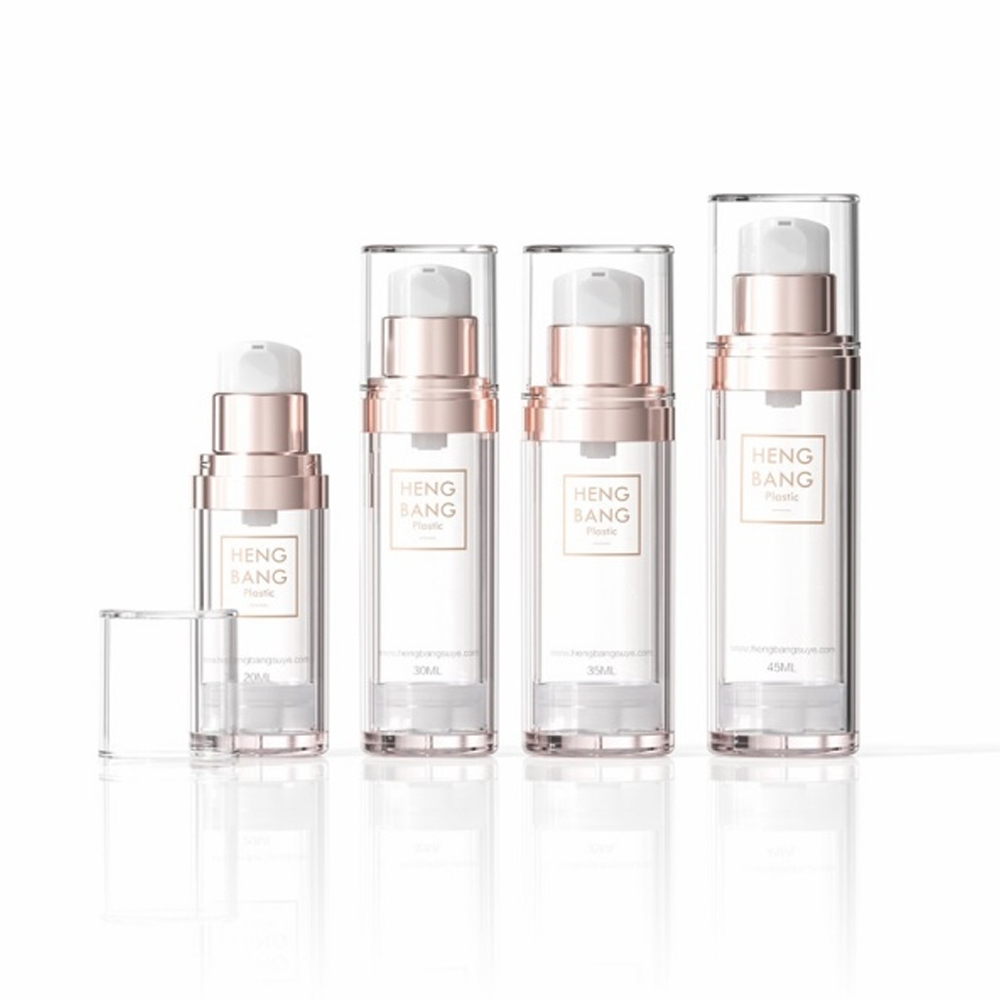
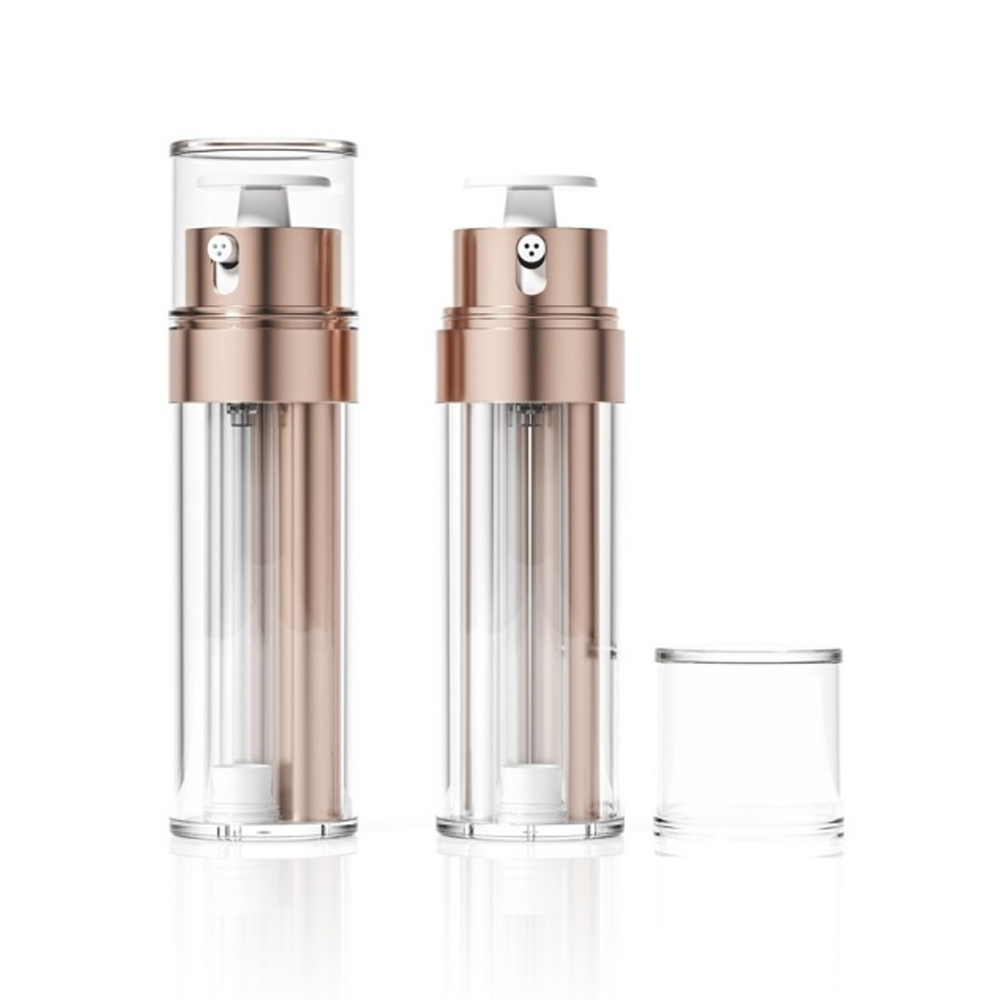
HB-K022A/B Plastic Refillable Airless Serum Bottle
Airless packaging is widely used in skincare because many modern formulas contain active ingredients that can be sensitive to oxygen, bacteria, and repeated user contact. Traditional jars expose creams to air whenever the cap is opened and may require users to touch the product directly. Conventional dip-tube pump bottles can reduce direct contact, but they still allow air to enter the container as the product is dispensed. Airless bottles solve this issue by using a vacuum-style dispensing mechanism, often with a piston that moves upward from the base as the product is pumped out.
In an airless bottle, the formula is not drawn through a dip tube. Instead, pressure created by the pump causes the piston to rise, pushing the product upward. This design limits air entry and helps maintain the formula’s quality throughout use. For serums, lotions, creams, and sunscreens containing antioxidants, botanical extracts, peptides, vitamins, or other sensitive ingredients, this protection can be highly valuable.
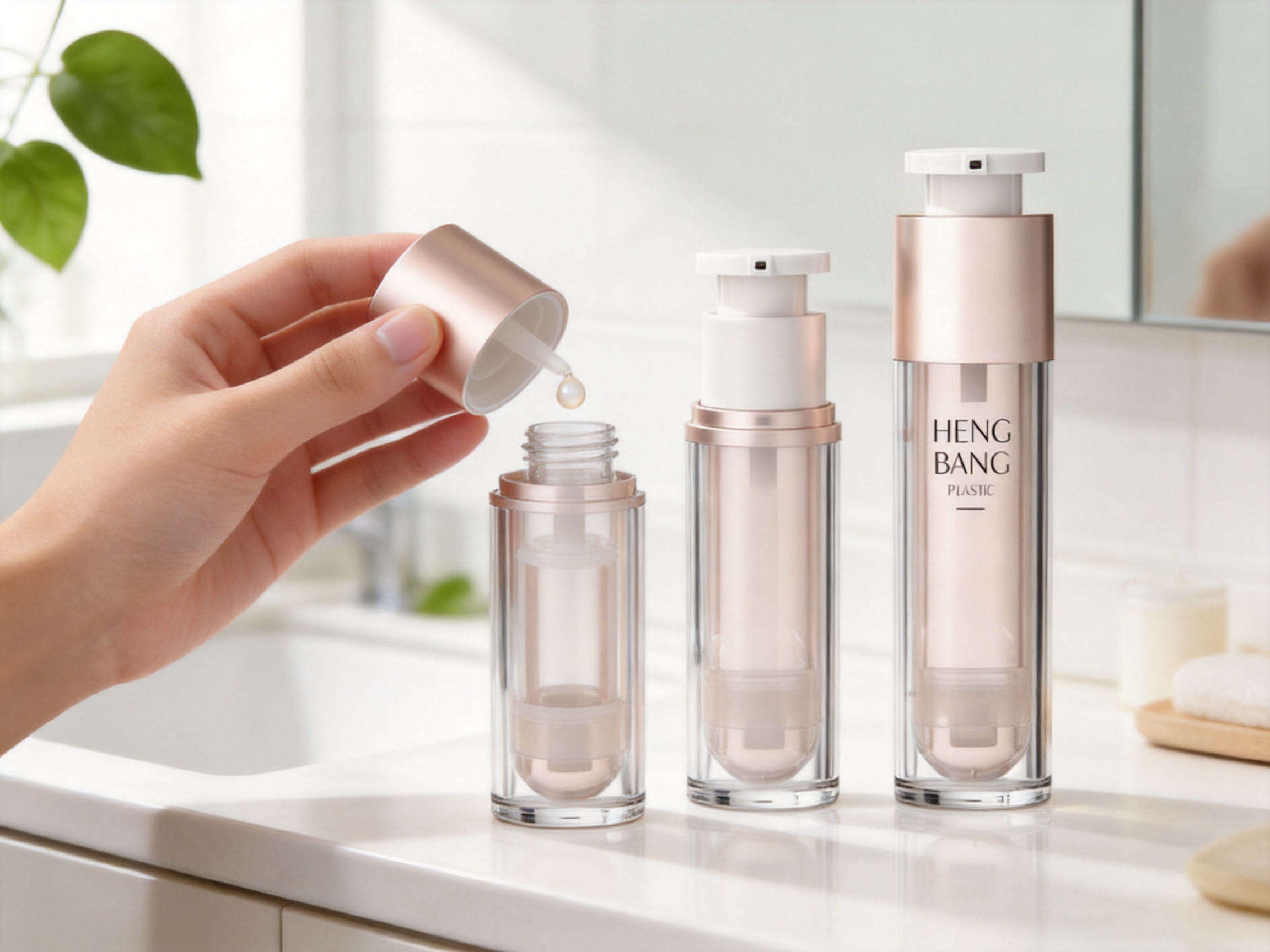
The HB-K022A/B bottle uses this airless principle while adding a refillable architecture. The outer bottle is designed to remain in use, while the inner bottle is disposable and replaceable. This creates a balance between functional formula protection and improved sustainability. The user still benefits from airless dispensing, while brands gain a packaging format that supports refill programs and reduced plastic waste.
The HB-K022A/B plastic refillable airless serum bottle is composed of four key material areas: a PP retaining clip, a PP and ABS pump, an MS outer bottle, and a PP inner bottle. Each material is selected for a specific role in the packaging structure. PP is commonly used in cosmetic packaging because it offers durability, chemical resistance, and reliable molding performance. ABS provides strength and dimensional stability for pump components. MS is often valued for clarity and a refined appearance, allowing the outer bottle to deliver a more premium visual effect.
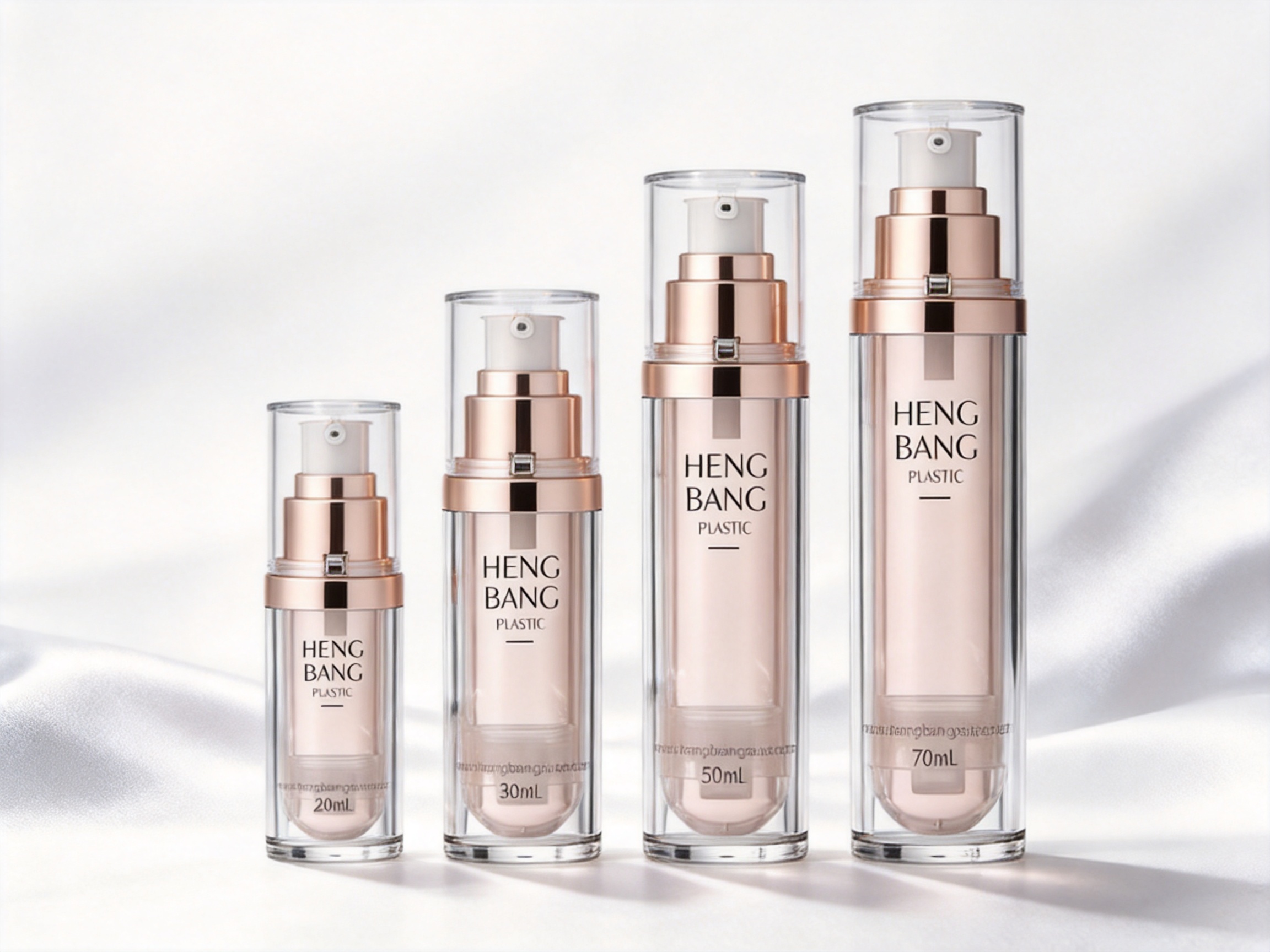
The product is available in 20 ml, 30 ml, 50 ml, and 70 ml capacities, making it suitable for trial-size serums, standard retail skincare products, premium treatment formulas, and larger-volume lotions or creams. The airless pump output is specified at 0.23 cc, which supports controlled dosage and helps users apply the product more precisely. Controlled dispensing is especially important for high-value formulas, where excessive product waste can negatively affect consumer satisfaction.
The bottle also includes a nozzle with a retaining clip. This feature improves protection during transportation, storage, and retail handling by helping prevent accidental pressing of the pump. For e-commerce and global distribution, such details matter because packaging must withstand movement, vibration, and pressure changes during shipping.
Item |
Specification |
Product Name |
HB-K022A/B Plastic Refillable Airless Serum Bottle |
Product Type |
Plastic refillable airless bottle |
Clip Material |
PP |
Pump Material |
PP and ABS |
Outer Bottle Material |
MS |
Inner Bottle Material |
PP |
Capacity Options |
20 ml, 30 ml, 50 ml, 70 ml |
Height Options |
118.5 mm, 136.5 mm, 132.5 mm, 160 mm |
Diameter Options |
33 mm and 40 mm |
Pump Output |
0.23 cc |
Primary Applications |
Serums, lotions, creams, sunscreens, toners, and skincare products |
Sustainability is no longer a secondary topic in cosmetic packaging. Consumers are increasingly aware of plastic waste, while cosmetic brands are under pressure to create packaging systems that reduce environmental impact without sacrificing performance or luxury appeal. Refillable packaging is one of the most practical ways to address this challenge because it reduces the amount of material discarded after each product cycle.
The HB-K022A/B bottle uses a permanent outer bottle and a replaceable inner bottle. When the product is used up, the consumer does not need to discard the full package. Instead, a replacement inner bottle can be inserted into the outer structure. This approach significantly reduces the plastic waste associated with repeat purchases. It also allows brands to build customer loyalty through refill sales while promoting a more responsible consumption model.
Compared with traditional single-use airless bottles, the refillable system provides a clear competitive advantage. A conventional airless package must be completely replaced once empty, even if many of its components remain structurally usable. In contrast, the refillable design preserves the main outer bottle and focuses replacement on the formula-contact component. This is particularly useful for prestige skincare lines, where the outer packaging may be designed with higher visual and tactile value.
The refillable concept also supports brand storytelling. Cosmetic brands can communicate that their packaging is designed for repeated use, reduced material waste, and improved lifecycle value. For consumers who want to make more sustainable purchasing decisions, refillability can become a decisive reason to choose one product over another.
Many skincare products are formulated with ingredients that can degrade when exposed to oxygen, light, or contamination. Airless packaging helps protect these formulas by minimizing air contact during use. The HB-K022A/B bottle’s piston-based dispensing principle helps maintain a controlled internal environment, allowing the product to be dispensed without drawing outside air back into the container.
This is especially valuable for serums, which often contain concentrated active ingredients. Vitamin-based formulas, antioxidant blends, brightening products, anti-aging treatments, and hydrating serums may all benefit from reduced exposure to air. When a formula is better protected, it can maintain its intended texture, color, scent, and effectiveness for a longer period.
The airless design also supports hygienic use. Unlike jars, where users may dip fingers into the product repeatedly, an airless pump bottle dispenses the formula without direct contact with the remaining contents. This reduces the risk of contamination and improves the user experience. For products marketed as clean, professional, dermatological, or high-performance skincare, hygienic dispensing is an important packaging advantage.
The HB-K022A/B refillable airless serum bottle offers several advantages over conventional packaging formats. These advantages are not limited to sustainability; they also include formula protection, controlled dosage, premium appearance, ease of use, and reduced product waste.
The most obvious advantage is the refillable structure. Standard cosmetic bottles are often discarded entirely after the formula is used. With the HB-K022A/B design, the outer bottle can remain in circulation while only the inner bottle is replaced. This reduces material consumption over repeated use cycles and allows brands to create refill programs that align with modern sustainability goals.
Open jars can expose products to air, dust, and direct user contact. Airless bottles provide a more protective environment. By using an internal piston system, the HB-K022A/B bottle helps reduce air exposure and contamination risk. This makes it especially useful for premium serums, emulsions, and skincare products with delicate active ingredients.
Squeeze tubes are convenient, but they can release too much product if excessive pressure is applied. An airless pump provides a more consistent dose. With an output of 0.23 cc, the HB-K022A/B bottle supports measured dispensing, which is valuable for products that require precise application or contain expensive ingredients.
Traditional bottles with dip tubes may leave residual product at the bottom or corners. Airless piston systems are designed to push the formula upward, improving product evacuation and reducing waste. Consumers appreciate packaging that allows them to use more of the product they paid for.
The retaining clip on the nozzle helps prevent accidental dispensing during shipping, storage, and travel. This feature is particularly relevant for e-commerce brands, where products may experience pressure, movement, and impact during delivery. A small protective component can prevent leakage, preserve product cleanliness, and reduce customer complaints.
The material structure of the HB-K022A/B bottle reflects practical cosmetic packaging requirements. PP, ABS, and MS each contribute different performance characteristics. PP is widely used for inner bottles and closures because it is lightweight, resistant to many cosmetic ingredients, and suitable for mass production. ABS provides strength and rigidity for pump-related parts. MS can deliver a clear and elegant outer appearance, supporting a premium presentation.
The use of an MS outer bottle is particularly important for brands that want plastic packaging with a refined look. While glass is often associated with luxury, it is heavier and more fragile. MS provides a transparent or high-clarity visual effect while keeping the packaging lightweight and more resistant to breakage. For shipping, travel, and daily use, this can be a significant benefit.
The PP inner bottle serves as the replaceable formula-contact component. Because it is designed for disposal and replacement, it plays a key role in the refill system. The ability to replace the inner unit helps brands maintain hygienic product handling while still reducing the need to discard the full outer structure.
The pump, made from PP and ABS, must perform reliably across repeated uses. Pump consistency is essential in airless packaging because the user expects smooth actuation, accurate dosage, and stable dispensing from the first use to the final application. The retaining clip, made from PP, adds a protective function without complicating the user experience.
One of the strengths of the HB-K022A/B bottle is its availability in several capacities: 20 ml, 30 ml, 50 ml, and 70 ml. This range gives cosmetic brands flexibility when developing product lines. A 20 ml option can be used for concentrated serums, travel sizes, samples, or premium treatment formulas. A 30 ml size is commonly suitable for facial serums and daily treatment products. A 50 ml option works well for creams, emulsions, lotions, and sunscreens. A 70 ml size can support larger-volume skincare products, body treatments, or extended-use formulas.
Using the same design language across different capacities allows brands to create a cohesive product family. A skincare line may include a 20 ml eye serum, a 30 ml facial serum, a 50 ml moisturizer, and a 70 ml sunscreen, all using packaging that looks unified and professional. This consistency strengthens shelf appeal and brand recognition.
Capacity flexibility also helps brands manage different market segments. Trial sizes can attract first-time users, standard sizes can serve mainstream retail, and larger sizes can appeal to loyal customers. When combined with refill availability, these options allow a brand to develop both entry-level and repeat-purchase strategies.
The HB-K022A/B refillable airless bottle is suitable for a wide variety of cosmetic and skincare products. Its airless function makes it especially appropriate for formulas that need protection from air and contamination, while its refillable structure supports products intended for regular use and repeat purchase.
Serums are one of the most natural applications for this bottle. They are often high-value formulas containing active ingredients, and consumers expect precise dispensing. The 20 ml and 30 ml sizes can be especially suitable for facial serums, eye serums, brightening treatments, anti-aging products, and hydrating concentrates.
Lightweight lotions and emulsions can benefit from airless dispensing because the pump helps maintain product hygiene and reduces waste. The 50 ml and 70 ml capacities may be appropriate for daily moisturizers, facial lotions, and body care formulas.
Many cream products are packaged in jars, but airless bottles provide a cleaner alternative. For creams with suitable viscosity, this refillable airless format can improve hygiene and offer a more controlled dispensing experience.
Sunscreen packaging must be reliable, easy to use, and protective. Airless dispensing can help consumers apply product cleanly and consistently, while the retaining clip supports travel and outdoor use. Refillable sunscreen packaging can also appeal to consumers who use sunscreen daily and want to reduce packaging waste.
While some toners are packaged in standard bottles, more concentrated treatment toners or essence products may benefit from controlled dispensing. The HB-K022A/B bottle can support skincare products that sit between traditional liquid toners and richer serums.
Consumers evaluate cosmetic packaging through several touchpoints: appearance, ease of opening, pump feel, dosage control, cleanliness, portability, and the ability to use the product fully. The HB-K022A/B bottle is designed to support a positive experience in each of these areas.
The airless pump provides simple one-handed dispensing. The user presses the pump and receives a controlled amount of product. The absence of a dip tube means there is no need to shake or tilt the bottle to access remaining formula. As the piston moves upward, the product is delivered efficiently until it is nearly finished.
The retaining clip helps make the bottle travel-friendly. Consumers often carry skincare in bags, suitcases, or gym kits, and accidental leakage can damage personal items. A clip-protected nozzle reduces this risk and adds a sense of reliability.
The refillable system can also create a more engaging ownership experience. Rather than treating packaging as disposable, consumers may view the outer bottle as a durable component of their skincare routine. This perception can increase emotional value and brand loyalty. A well-designed refill system encourages repeat purchases while reinforcing the customer’s belief that the brand is responsible and thoughtful.
A high-quality airless bottle depends not only on design but also on manufacturing capability. Precision is essential because the pump, piston, inner bottle, outer bottle, and sealing structure must work together reliably. If the dimensions are inconsistent, the bottle may leak, fail to pump properly, or produce uneven dosage. Therefore, advanced manufacturing management is a core advantage for suppliers of refillable airless cosmetic packaging.
Yuyao Hengbang Plastic Co., Ltd. was established in 2006 and has developed specialized expertise in plastic packaging for cosmetics and skincare products. With a building area of 35,000 square meters and more than 300 employees, the company has the production scale needed to support cosmetic brands requiring stable supply and consistent quality. Its experience in plastic cosmetic packaging allows it to serve categories such as cosmetic bottle sets, airless bottles, double chamber bottles, lotion bottles, plastic cream jars, sunscreen bottles, toner bottles, and related containers.
The company’s young and professional team provides a full range of services, including design and development. This is important for customers because cosmetic packaging often requires more than a standard container. Brands may need support with capacity selection, component matching, decorative effects, color planning, functional testing, and packaging optimization. A supplier with design and development capability can help customers move from concept to finished package more efficiently.
The company has passed ISO9001:2015 and ISO14001:2015 certifications. ISO9001:2015 demonstrates a quality management system focused on consistent processes, customer satisfaction, and continual improvement. ISO14001:2015 reflects an environmental management system, which is especially relevant for packaging suppliers working with sustainability-oriented brands. In addition, the company was awarded as a Ningbo High-Tech Enterprise in 2021 and owns multiple invention patents, showing ongoing commitment to technical improvement and innovation.
Airless packaging requires precise component fit. The pump must create sufficient pressure to move the piston and dispense the formula. The inner bottle must maintain compatibility with the piston and pump assembly. The outer bottle must hold the refill structure securely while also delivering the desired appearance. Even small dimensional inconsistencies can affect performance.
Advanced plastic manufacturing processes typically involve mold development, material preparation, injection molding, component inspection, assembly, and functional testing. For a refillable airless bottle, the manufacturing process must also ensure that the replaceable inner bottle fits smoothly into the permanent outer bottle. The user should be able to replace the inner unit without difficulty, while the assembled package should remain stable and secure during daily use.
Quality control is particularly important for pump output. The specified 0.23 cc dosage must be consistent enough to satisfy both consumer expectations and brand requirements. If the pump output varies significantly, users may apply too much or too little product. Reliable pump performance contributes to a professional skincare experience and helps maintain formula usage guidance.
Cosmetic brands often compete in crowded markets where packaging design is a major factor in consumer decision-making. The refillable airless bottle must be functional, but it must also look appealing. A supplier with design and development capability can support customers by refining bottle proportions, selecting compatible materials, improving assembly structure, and developing packaging that fits the brand’s visual identity.
The HB-K022A/B bottle provides a clean and versatile platform. Its capacity range and material composition make it suitable for different decoration possibilities, including color customization, surface finishing, labeling, printing, and other cosmetic packaging effects depending on project requirements. The MS outer bottle can support a refined visual impression, while the inner PP bottle provides functional product containment.
Design development also helps optimize refillability. A refill system must be intuitive. If consumers find replacement difficult, they may not continue using refills. Therefore, component structure, opening method, insertion feel, and secure locking are all important. Professional engineering helps ensure that sustainability does not come at the cost of convenience.
For cosmetic packaging buyers, supplier certifications are more than formal documents. They indicate that the supplier has established systems for process control, documentation, corrective action, and continual improvement. ISO9001:2015 certification is especially relevant for packaging because consistency is essential across production batches. Brands need bottles that perform the same way shipment after shipment.
ISO14001:2015 certification supports environmental responsibility. As cosmetic brands increasingly set sustainability targets, they prefer packaging suppliers that understand environmental management. A refillable bottle already contributes to waste reduction, and working with a supplier that has environmental certification strengthens the overall sustainability position.
The company’s recognition as a high-tech enterprise and ownership of invention patents further support its competitive positioning. These factors indicate that the manufacturer is not limited to basic production but also invests in technology and innovation. For customers seeking differentiated packaging, this can be a meaningful advantage.
The HB-K022A/B bottle offers value at both the product level and the brand strategy level. At the product level, it protects formulas, dispenses accurately, reduces contamination risk, and supports convenient use. At the brand level, it enables refill systems, sustainability messaging, premium positioning, and repeat-purchase programs.
Refillable packaging can also support cost and logistics strategies over time. While the initial outer bottle may carry more structural value, replacement inner bottles may reduce material use for repeat purchases. This can support refill subscription models, loyalty programs, and environmentally focused product launches. Brands can sell the complete package first, then offer replacement inner bottles as follow-up purchases.
This model can improve customer retention. Once a consumer owns the outer bottle, purchasing a refill becomes a natural next step. The packaging system encourages repeat engagement with the brand. In competitive skincare markets, where customer acquisition costs can be high, a refillable packaging format can support long-term consumer relationships.
Compared with many standard packaging options, the HB-K022A/B bottle provides a strong combination of sustainability, protection, and user convenience. It is not merely a refillable container, and it is not merely an airless pump bottle. Its competitiveness comes from integrating both features into one practical system.
Against traditional jars, it offers better hygiene and controlled dispensing. Against ordinary pump bottles, it offers improved airless protection and product evacuation. Against disposable airless bottles, it offers a refillable system that reduces waste. Against glass bottles, it offers lighter weight and improved breakage resistance. Against low-end plastic packaging, it offers a more refined structure and a premium user experience.
Another advantage is the range of sizes. Some packaging designs are available only in one or two capacities, limiting their use across a full product line. The HB-K022A/B bottle’s multiple capacity options make it easier for brands to maintain visual consistency across different skincare categories.
The retaining clip is also a practical competitive detail. Packaging problems during shipping can be costly, especially for online cosmetic brands. Leakage or accidental dispensing may lead to returns, replacements, negative reviews, and loss of consumer trust. A simple protective feature can reduce these risks and improve distribution reliability.
The product is versatile enough to support both premium and broader-market skincare brands. Premium brands can emphasize the airless protection, refillable structure, refined outer bottle, and controlled dosage. Mass-market brands can focus on convenience, reduced waste, durable plastic construction, and multiple size options.
For premium brands, the refillable outer bottle can become part of a luxury routine. The consumer may keep the outer bottle on a vanity or bathroom shelf and purchase refills as needed. This reinforces the idea that the packaging has lasting value. For mass-market brands, refillability can help differentiate products in retail environments where many containers look similar.
The bottle is also suitable for emerging indie skincare brands. Smaller brands often need packaging that looks professional without excessive complexity. A ready-developed refillable airless bottle can help them enter the market faster while still offering sustainability and high-performance dispensing.
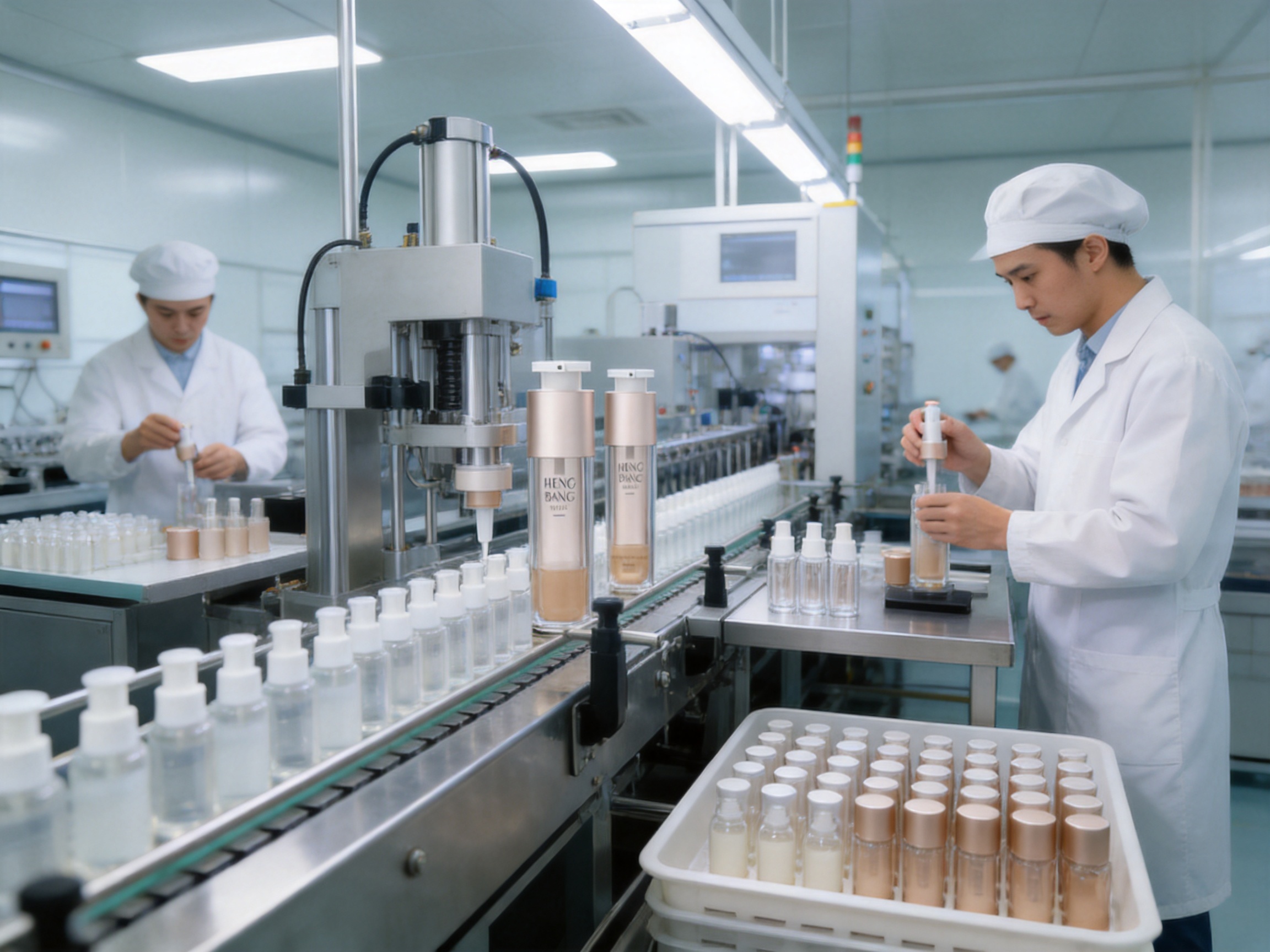
Plastic reduction is one of the most important challenges in cosmetic packaging. While plastic remains valuable because it is lightweight, moldable, durable, and cost-effective, brands must use it more responsibly. Refillable packaging offers a practical path forward by extending the use life of selected components and reducing repeated disposal.
The HB-K022A/B bottle’s outer-and-inner structure reflects this approach. Instead of designing every component for single use, the outer bottle is retained. Only the inner bottle is replaced after use. This makes the packaging system more resource-efficient across multiple purchase cycles.
Responsible consumption also depends on consumer behavior. Refillable packaging works best when the replacement process is easy and the brand communicates clearly. A refillable airless bottle can encourage consumers to participate in waste reduction without asking them to compromise on formula protection or convenience. This is important because sustainable packaging must still be practical. If a package is inconvenient, consumers may abandon it.
The airless refill format provides a strong sustainability message because it protects the product and reduces packaging waste at the same time. Product waste is also an environmental issue. If packaging fails to protect a formula or leaves too much residue, resources are wasted. Airless dispensing can help users access more of the product, supporting both economic and environmental efficiency.
When selecting the HB-K022A/B refillable airless serum bottle, brands should consider formula compatibility, viscosity, capacity, decoration, refill strategy, and user instructions. Airless bottles work well for many serums, lotions, creams, and emulsions, but formula testing is always important. The pump must dispense the product smoothly, and the formulation must be compatible with the selected materials.
Capacity should be matched to product positioning. A concentrated serum may be best in 20 ml or 30 ml. A moisturizer may be better in 50 ml. A sunscreen or larger-use lotion may suit 70 ml. Brands should also consider how long the product is intended to last and whether the refill size should match the original inner bottle exactly.
Decoration should support the refill concept. The outer bottle can carry the main brand identity, while replacement inner bottles can be packaged more simply. This allows brands to reduce material use in refill sales while maintaining a premium visual experience through the reusable outer component.
User instructions are important. Consumers should understand how to replace the inner bottle, how to use the retaining clip, and how to dispense the product correctly. Clear instructions can improve adoption and reduce customer service questions.
Packaging supply reliability is a major concern for cosmetic brands. Delays or inconsistent quality can disrupt product launches and retail commitments. A manufacturer with significant production space, experienced employees, and established quality systems can provide greater confidence.
Yuyao Hengbang Plastic Co., Ltd. has a 35,000-square-meter facility and more than 300 employees, supporting the production capacity needed for cosmetic packaging projects. Its specialization in plastic packaging for cosmetics and skincare products allows it to understand industry expectations, including appearance standards, pump performance, sealing reliability, and batch consistency.
The company’s business philosophy of quality, integrity, and customer first is directly relevant to packaging supply. Cosmetic brands need suppliers that can communicate clearly, maintain stable quality, and respond to market demands. The company’s focus on credibility and specialization supports long-term cooperation with customers seeking dependable packaging solutions.
In the cosmetic market, differentiation is not created only by formula. Packaging plays a visible and tactile role in how consumers judge a product. A refillable airless serum bottle can immediately communicate modernity, hygiene, and environmental awareness. These qualities are highly relevant to contemporary skincare consumers.
The HB-K022A/B bottle allows brands to build a stronger message around product preservation and sustainability. A brand can explain that the airless system helps protect the formula from air and contamination, while the refillable inner bottle helps reduce plastic waste. This dual benefit is easy for consumers to understand and can be communicated on product pages, packaging inserts, retail displays, and marketing materials.
For brands competing against conventional pump bottles or jars, the refillable airless format provides a more advanced packaging story. It demonstrates that the brand has considered both the science of skincare preservation and the environmental impact of packaging. This can enhance perceived value and justify premium positioning.
It is a plastic cosmetic packaging solution composed of a reusable outer bottle and a replaceable inner bottle. It uses an airless dispensing system to help protect skincare formulas from air exposure and contamination while supporting reduced plastic waste through refill use.
A standard airless bottle is usually discarded entirely after use. This refillable design allows the outer bottle to be reused while only the inner bottle is replaced. This provides the protective benefits of airless packaging while reducing the amount of plastic discarded during repeat purchases.
The retaining clip is made from PP, the pump is made from PP and ABS, the outer bottle is made from MS, and the inner bottle is made from PP. This combination supports durability, pump performance, clarity, and replaceability.
The bottle is available in 20 ml, 30 ml, 50 ml, and 70 ml capacities. These options make it suitable for serums, lotions, creams, sunscreens, toners, and other skincare products.
Serums often contain sensitive active ingredients that can be affected by air exposure or contamination. Airless packaging helps reduce contact with outside air and allows the product to be dispensed hygienically through a pump system.
The outer bottle is designed for repeated use. After the formula is finished, the user can replace the disposable inner bottle instead of throwing away the entire package. Over multiple use cycles, this reduces plastic waste compared with fully disposable packaging.
The retaining clip helps prevent accidental pumping during transportation, storage, or travel. This reduces the risk of leakage and helps protect the product before use.
The bottle is suitable for many skincare formulas, including serums, lotions, creams, sunscreens, toners, emulsions, and treatment fluids. Brands should still test formula compatibility and viscosity before commercial use.
Controlled dosage helps consumers use the right amount of product and reduces waste. The specified pump output of 0.23 cc supports precise dispensing, which is especially useful for premium skincare formulas.
The product is supported by a manufacturer specializing in plastic cosmetic packaging, with a 35,000-square-meter facility, more than 300 employees, ISO9001:2015 and ISO14001:2015 certifications, design and development capability, high-tech enterprise recognition, and multiple invention patents.
The HB-K022A/B plastic refillable airless serum bottle represents a practical evolution in cosmetic packaging. It combines the formula-protecting performance of airless dispensing with the environmental benefits of a refillable structure. Its reusable outer bottle and replaceable inner bottle help reduce plastic waste, while the airless piston system helps protect sensitive skincare formulas from air exposure and contamination.
With multiple capacity options, controlled 0.23 cc dispensing, a nozzle retaining clip, and a thoughtful material structure using PP, ABS, and MS, the bottle is suitable for a wide range of skincare products. It offers clear advantages over conventional jars, standard pump bottles, squeeze tubes, and fully disposable airless containers.
For cosmetic brands, this packaging solution supports product quality, consumer convenience, sustainability messaging, and long-term refill strategies. For manufacturers and suppliers, it demonstrates the importance of precision production, reliable quality management, and innovation in modern cosmetic packaging.
Backed by experienced plastic packaging manufacturing, ISO-certified management systems, design and development capability, and a strong focus on quality and customer needs, this refillable airless bottle is well positioned for skincare brands seeking packaging that is functional, attractive, sustainable, and commercially competitive.
Cosmetic Packaging and Preservation Principles, Industry Technical Overview.
ISO9001:2015 Quality Management Systems, International Organization for Standardization.
ISO14001:2015 Environmental Management Systems, International Organization for Standardization.
Airless Dispensing Systems for Cosmetic and Dermatological Products, Packaging Technology Review.
Sustainable Packaging Strategies in the Personal Care Industry, Cosmetic Packaging Research Notes.
Plastic Materials in Cosmetic Containers: PP, ABS, and Styrenic Polymers, Materials Application Handbook.


Copyright © Yuyao Hengbang Plastic Co., Ltd.
All Rights Reserved.
 Wholesale Plastic Cosmetic Packaging Manufacturers