English
 中文简体
中文简体
News
Home > Author > Wang Mengyao — Product After-Sales Service Coordinator > 30ml Triple Chamber Airless Bottle for Precision Cosmetic Formulations

 2026.05.25
 Wang Mengyao — Product After-Sales Service Coordinator
Content
Modern skincare packaging is no longer a passive container. It has become a functional part of the formula experience, a preservation system, a dosage tool, a visual identity carrier, and a bridge between laboratory innovation and daily consumer use. The 30ml triple chamber airless bottle represents this evolution clearly. Designed with three independent chambers and three separate outlets, it allows different cosmetic liquids or semi-fluid formulations to remain separated until the moment of application. This structure supports flexible mixing, cleaner dispensing, improved formula stability, and a more customized skincare routine.
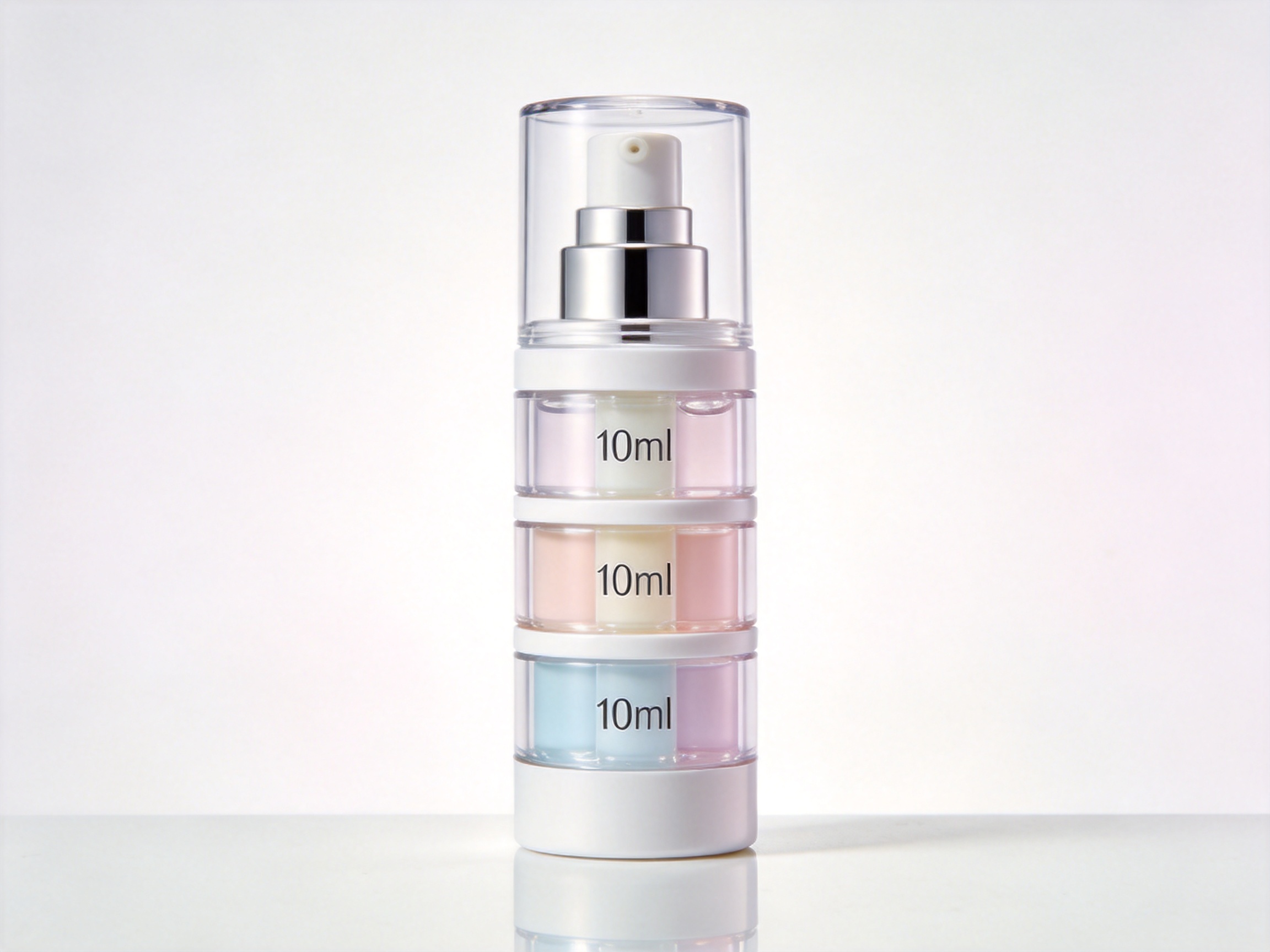
The product is especially suitable for essence, cream, anti-aging formulas, whitening skincare, brightening serums, moisturizing concentrates, and multi-step treatment products. With a capacity configuration of 10ml + 10ml + 10ml, it enables brands to package three compatible or complementary formulas in one compact airless system. The user can dispense one, two, or three products depending on the intended routine, creating a sophisticated application experience while reducing the need for multiple separate bottles.
Cosmetic consumers today expect skincare products to be effective, convenient, hygienic, and visually appealing. At the same time, cosmetic brands face increasing technical pressure. Many high-performance ingredients are sensitive to air, light, oxygen, contamination, pH changes, or premature contact with other active materials. A formula that performs well in the laboratory may lose potency if exposed repeatedly to external air or if combined too early with another ingredient.
Traditional single-chamber bottles are simple and economical, but they are not always ideal for advanced skincare systems. If multiple actives must be kept apart before use, brands often need to sell separate bottles, sachets, ampoules, or dual-step kits. This can increase packaging cost, storage space, transportation weight, and user confusion. A triple chamber airless bottle provides an elegant solution: three formulas can be housed in one coordinated package while staying physically separated until dispensing.
The 30ml triple chamber airless bottle answers several market trends at once. It supports personalization because consumers can choose how many chambers to dispense. It supports formula protection because airless pumping limits repeated oxygen exposure. It supports premium branding because the packaging itself communicates innovation. It supports sustainability goals indirectly by integrating three functions into one container system, potentially reducing the number of external packs required for a complete routine.
For skincare brands, multi-chamber packaging is also a storytelling tool. A product can be presented as a three-phase anti-aging treatment, a day-and-night compatible essence system, a whitening and repair combination, or a hydration-barrier-strengthening program. Instead of offering only one formula, brands can offer a structured ritual in one bottle. This creates stronger shelf differentiation compared with ordinary lotion bottles or cream jars.
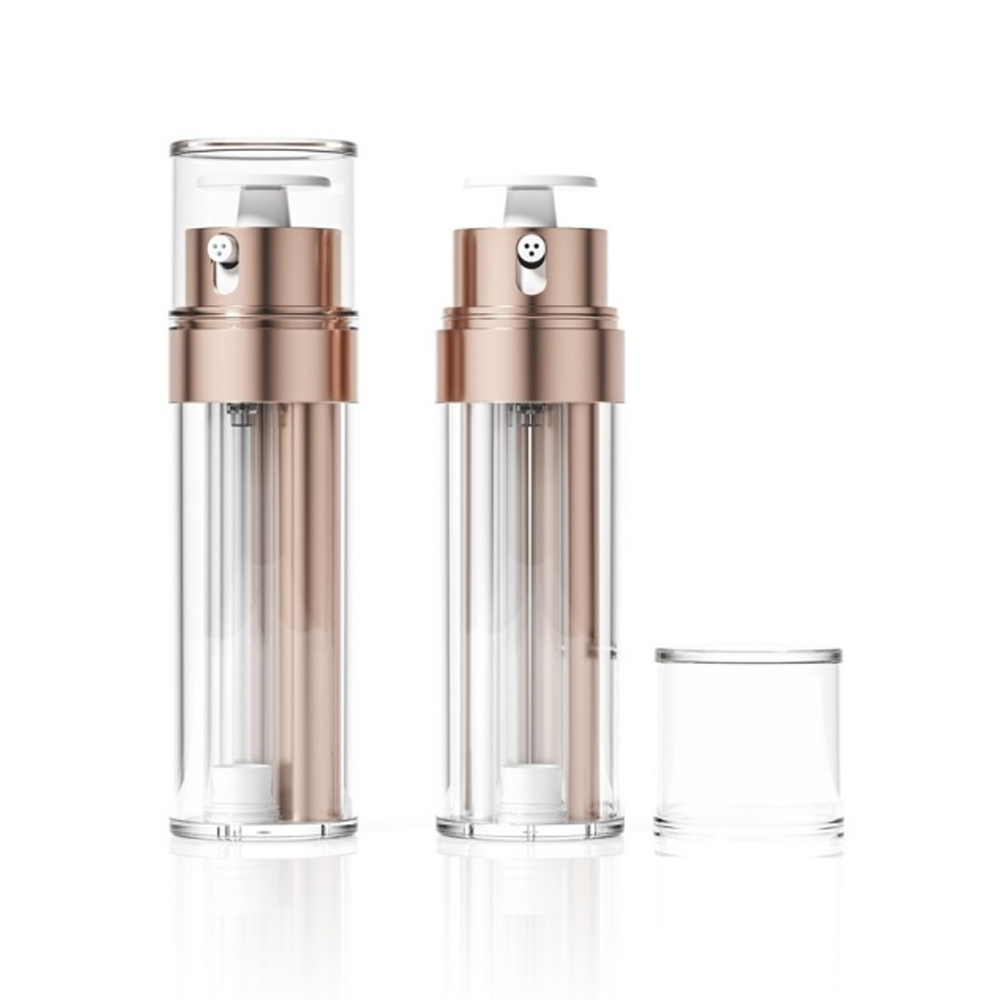
The 30ml triple chamber airless bottle is designed with three independent internal chambers, each with a 10ml capacity. Each chamber is connected to its own dispensing channel, allowing separate outlets to support controlled product delivery. The airless pump mechanism helps push the contents upward without relying on a dip tube, which reduces residual product waste and minimizes contact between the formula and outside air.
The body structure combines multiple plastic materials selected for appearance, durability, molding performance, and compatibility with cosmetic packaging requirements. The cap uses MS material. The pump uses ABS and PP. The bottle uses MS, PETG, and ABS. These materials help create a refined surface appearance while maintaining strength and manufacturability. The bottle height is 158mm, and the diameter is 44mm, making it slim enough for premium cosmetic shelves and portable enough for consumer use.
Item |
Specification |
Functional Meaning |
Product Type |
Triple chamber airless bottle |
Three formulas can be stored separately in one package. |
Total Capacity |
30ml |
Suitable for premium serums, essences, creams, and treatment products. |
Chamber Capacity |
10ml + 10ml + 10ml |
Allows balanced filling of three formulas or active phases. |
Height |
158mm |
Creates a slim and elegant cosmetic profile. |
Diameter |
44mm |
Comfortable to hold and convenient for shelf display. |
Cap Material |
MS |
Provides transparent or glossy visual possibilities. |
Pump Material |
ABS + PP |
Supports pump strength, resilience, and dispensing performance. |
Bottle Material |
MS + PETG + ABS |
Combines appearance, moldability, and structural stability. |
Output Option |
0.24cc / 0.36cc |
Supports dosage control according to formula viscosity and usage needs. |
Typical Applications |
Essence, cream, anti-aging, whitening, brightening, and repair skincare |
Ideal for multi-active cosmetic systems. |
This specification profile makes the bottle particularly appropriate for premium and professional cosmetic brands. The 30ml total volume is familiar to serum users, yet the triple chamber design adds technical value beyond a standard 30ml airless bottle. The 0.24cc and 0.36cc output options also give brands room to match the pump delivery to the formula concept. A lightweight essence may require one output level, while a richer emulsion or cream may require another.
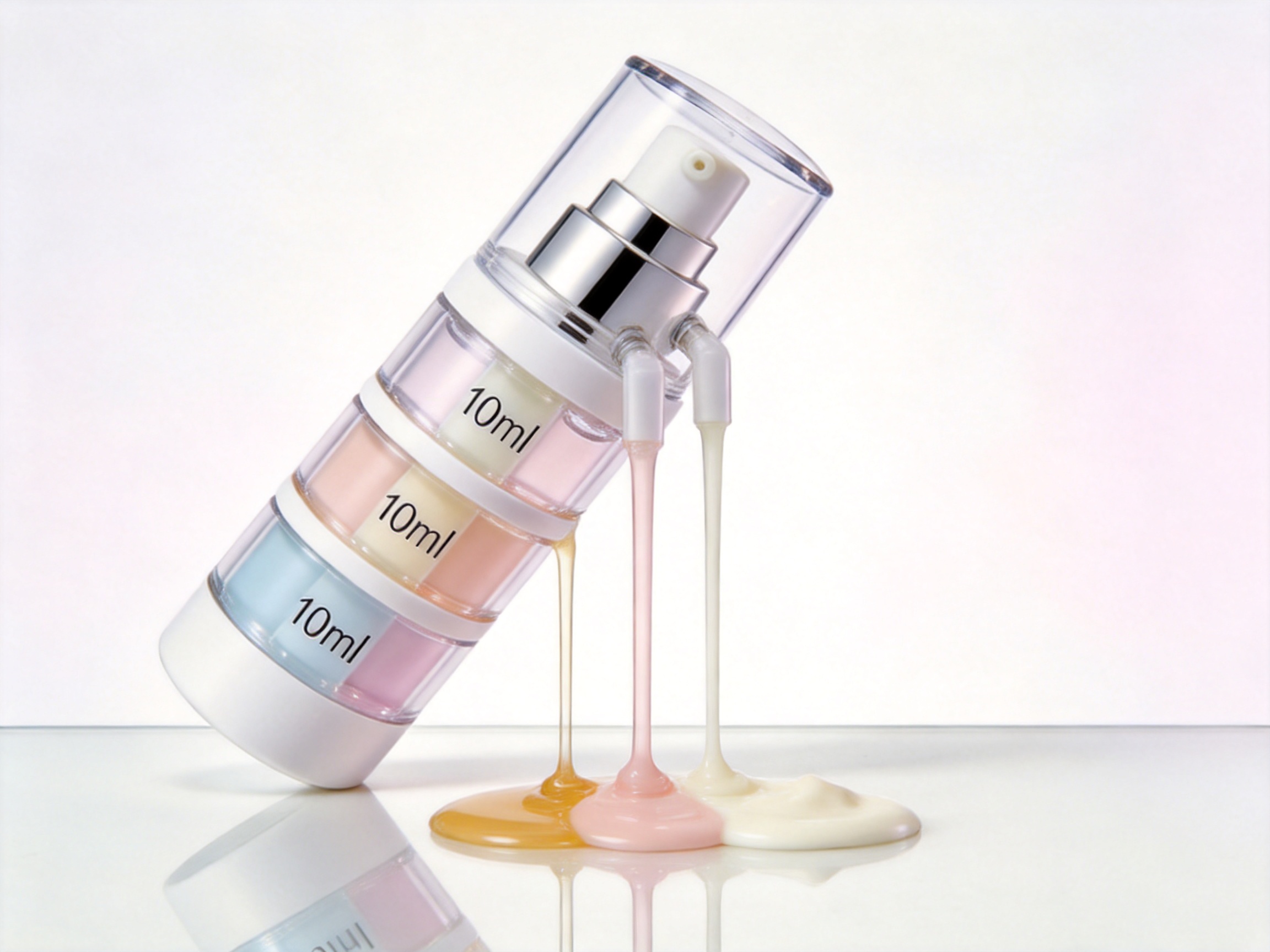
The most distinctive feature of the bottle is its three independent outlets. In ordinary packaging, multiple ingredients are either mixed during production or packed in separate containers. A dual chamber bottle improves this by separating two formulas, but a triple chamber structure goes one step further. It allows skincare developers to create more complex product systems without forcing early contact between all components.
For example, one chamber may contain a hydrating base with hyaluronic acid or other humectants. A second chamber may contain a brightening concentrate. A third chamber may contain a repair or anti-aging emulsion. The consumer can dispense all three at once for a complete routine or use selected chambers according to skin condition, time of day, or product instruction. This flexibility supports personalized skincare without requiring the user to manage three separate bottles.
The independent outlet design also offers practical advantages for product quality. Certain cosmetic ingredients may be unstable when combined for long periods. Some actives may have different ideal pH conditions. Others may oxidize, discolor, or lose effectiveness if exposed too often to air. By storing formulas separately in airless chambers, the package helps maintain separation until the moment of use.
In competitive markets, this gives brands a meaningful advantage. Many cosmetic products claim advanced formulation benefits, but consumers may not see the technical difference immediately. A triple chamber airless bottle makes the innovation visible. The packaging itself demonstrates that the product contains multiple active phases and that the brand has invested in a more advanced delivery system.
Compared with a conventional single-chamber lotion bottle, the triple chamber airless bottle offers stronger formula versatility. A standard bottle is suitable when all ingredients are stable together and when one uniform formula is enough. However, modern skincare often combines multiple functions, such as anti-aging, whitening, hydration, barrier repair, and antioxidant protection. Placing all actives in one formula can be technically challenging and may require compromises in texture, preservation, stability, or ingredient concentration.
With three chambers, each formula can be optimized independently. One phase can be lightweight and fast absorbing. Another can be richer and more nourishing. A third can be concentrated for targeted action. This allows cosmetic laboratories to develop a more balanced product system. Instead of forcing one texture to satisfy every function, brands can offer three coordinated formulas that meet at the point of application.
Compared with ordinary jars, the airless bottle is cleaner and more controlled. Cream jars require the consumer to open the container and often touch the product with fingers or a spatula. This increases the possibility of contamination, especially for formulas used repeatedly over weeks or months. Airless bottles reduce open exposure and dispense product through a pump system, improving hygiene and convenience.
Compared with dropper bottles, the triple chamber airless bottle can provide better control for emulsions and creams. Droppers are popular for watery serums and oils, but they are less ideal for thicker textures. They also expose the bottle opening to air whenever the dropper is removed. Airless pumping supports a more sealed experience and can dispense consistent amounts without requiring the consumer to handle a glass pipette.
Compared with separate multi-step kits, the triple chamber bottle saves space and simplifies usage. Consumers may appreciate multi-step skincare, but they can become frustrated if the routine requires too many bottles. A single integrated package makes the routine more intuitive. For brands, this can also improve the appearance of gift sets, travel products, and premium treatment lines.
Dual chamber packaging has already become a popular solution for separating two formulas, but many skincare concepts naturally involve more than two functional phases. A triple chamber airless bottle creates additional possibilities. It can support a three-active system, a three-texture system, or a three-benefit system. For example, the three chambers may be arranged as hydration, brightening, and firming; or as repair, antioxidant, and moisturizing; or as base essence, active booster, and protective lotion.
The third chamber adds more than extra capacity. It adds strategic flexibility. A brand can formulate a hero product with three clear claims instead of two. It can also create modular routines in which consumers use one, two, or three components. This supports modern skincare preferences, where users increasingly want products that respond to different skin needs rather than one fixed routine.
From a visual marketing perspective, three chambers can be more impressive than two. When transparent or semi-transparent materials are used, the separated formulas may create a strong shelf effect. Different colors, pearl effects, or viscosity differences can communicate the product concept immediately. Even when the bottle is opaque, the triple dispensing structure signals technological sophistication.
Competitors offering single or dual chamber packaging may meet basic formula separation needs, but they cannot provide the same level of multi-formula storytelling. For brands seeking differentiation in anti-aging, whitening, medical beauty, professional salon skincare, or high-end retail, the triple chamber system offers a valuable competitive position.
Airless packaging is valued because it reduces repeated air contact with the formula. In a traditional pump bottle with a dip tube, air may enter the container as product is removed, depending on the structure. In a jar, the exposure is even greater. Airless systems typically use a piston or vacuum-assisted mechanism that moves upward as product is dispensed, helping maintain a more protected internal environment.
This design is particularly useful for formulas containing sensitive ingredients. Many popular skincare actives can degrade under oxygen, light, temperature, or contamination stress. While packaging alone cannot replace proper formulation and preservation, it plays a major role in maintaining product integrity during consumer use. A triple chamber airless bottle multiplies this advantage by protecting three formulas separately.
The airless format also supports better product evacuation. Consumers often dislike packaging that leaves significant residue at the bottom or around corners. Airless mechanisms are designed to push product upward evenly, reducing waste and improving perceived value. For premium skincare, where the formula cost per gram can be high, this is an important benefit.
Another advantage is dosage consistency. The output options of 0.24cc and 0.36cc allow brands to choose an appropriate pump delivery amount. Consistent dosage helps users apply the intended amount and helps brands design clearer instructions. For example, a routine may recommend one pump from each chamber or a specific combination depending on skin type.
The 30ml triple chamber airless bottle is suitable for a wide range of skincare concepts. In anti-aging products, one chamber may contain a peptide-rich essence, another an antioxidant solution, and another a nourishing emulsion. This separation can help preserve the identity and stability of each active system while giving consumers a complete treatment experience.
In whitening or brightening skincare, the chambers may separate brightening actives, hydration support, and soothing repair ingredients. Brightening formulas often require careful stability control, especially when using ingredients that may be sensitive to oxidation or pH. Separate chambers give formulators more design freedom.
In moisturizing products, the bottle can combine a water-rich essence, a barrier-supporting emulsion, and a concentrated booster. This allows users to adjust the richness of their application depending on weather, skin dryness, or day and night routines. In hot seasons, they may use one or two chambers. In colder seasons, they may use all three.
In professional beauty salon products, the bottle can be positioned as a treatment system. Salons and spas often prefer products that look technical and deliver visible ritual value. A triple chamber airless bottle can be used for facial programs, post-treatment care, or premium retail recommendations.
In travel and gift packaging, the three-in-one design improves convenience. Instead of packing three small bottles, users can carry one integrated airless bottle. For gift sets, the package can represent an entire skincare story in a single elegant form.
Successful cosmetic packaging must satisfy both emotional and practical expectations. Consumers want a product that looks beautiful on a vanity table, feels comfortable in hand, dispenses smoothly, and fits naturally into daily routines. The 30ml triple chamber airless bottle is designed to align with this dual pursuit of beauty and use.
The slim 158mm height and 44mm diameter give the bottle a refined silhouette. It can stand elegantly among premium skincare products while remaining compact enough for personal care use. The coordinated materials allow surface finishing options such as glossy effects, transparent details, color matching, metallized decoration, silk-screen printing, hot stamping, labeling, or other cosmetic packaging enhancements depending on brand requirements.
The three-outlet structure can turn application into a satisfying ritual. Consumers often enjoy seeing distinct formulas combine at the moment of use. This moment reinforces the feeling that the product is fresh, active, and customized. It also helps justify premium positioning because the user can feel the packaging technology in every application.
Convenience is equally important. A consumer who buys an anti-aging or whitening product wants results, but also wants an easy routine. If a product is too complicated, it may not be used consistently. By integrating three chambers into one pump bottle, the package simplifies multi-step care. This can improve product compliance and customer satisfaction.
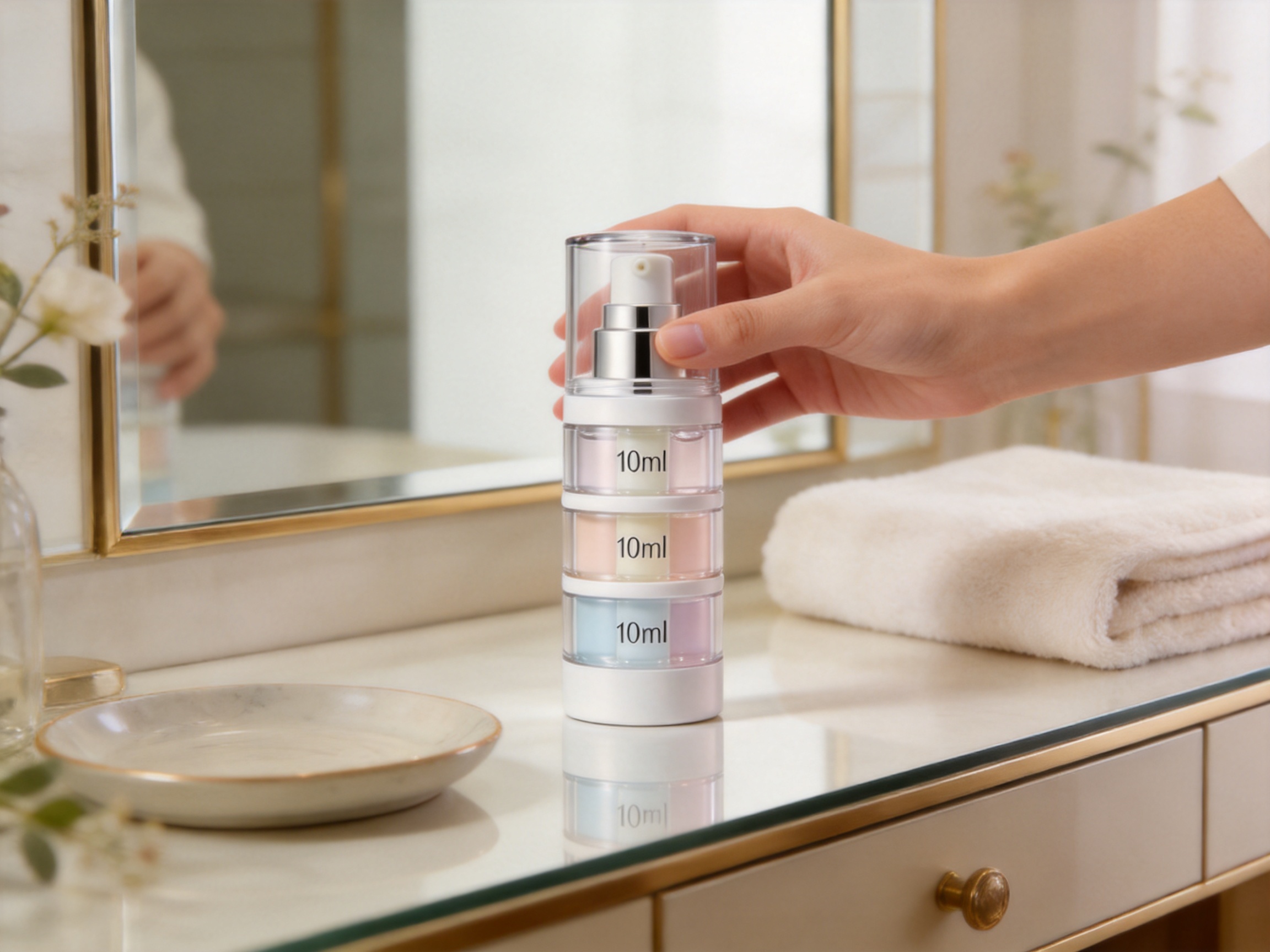
The product uses MS, ABS, PP, and PETG materials in different parts of the packaging system. Each material has its role in supporting appearance, function, and manufacturability. MS can provide clear, glossy, and aesthetically pleasing effects, making it useful for caps and selected bottle components. ABS offers rigidity, impact resistance, and dimensional stability, which are valuable in structural parts. PP is widely used in pump components because of its chemical resistance, flexibility, and molding reliability. PETG offers clarity, toughness, and good processing properties for cosmetic packaging applications.
Material selection is not only about appearance. It affects pump performance, assembly tolerance, compatibility testing, decoration results, and long-term product reliability. A triple chamber airless bottle is more complex than an ordinary bottle because it must maintain separation among three chambers while supporting smooth dispensing. This requires careful control of part dimensions and material behavior.
The combination of materials also supports different design languages. A brand may choose a clear or translucent appearance to show the three internal formulas. Another brand may select a solid color for a clinical or luxury effect. Decorative finishes can help the same structural bottle serve different market levels, from professional skincare to high-end retail.
For cosmetic brands, using a mature plastic packaging manufacturer is essential because material performance must be matched with mold design, injection parameters, assembly methods, and quality inspection. Even a beautiful concept can fail if tolerances are unstable or if pump performance varies. The product’s material system is therefore closely tied to manufacturing expertise.
A triple chamber airless bottle requires more advanced production capability than standard cosmetic containers. It involves precision molds, multi-component plastic injection, controlled assembly, pump performance verification, sealing evaluation, and appearance inspection. The three-chamber structure increases the need for dimensional accuracy because every chamber and outlet must function independently without leakage, cross-contamination, or dispensing imbalance.
Yuyao Hengbang Plastic Co., Ltd. has been engaged in plastic cosmetic packaging manufacturing since 2006. With a building area of 35,000 square meters and more than 300 employees, the company has the scale required to support stable production and customized development. Its specialization in plastic packaging for cosmetics and skincare products gives it experience with airless bottles, lotion bottles, toner bottles, sunscreen bottles, cream jars, double chamber bottles, and other related packaging categories.
The company’s manufacturing process begins with product design and engineering review. For a triple chamber airless bottle, designers must consider capacity distribution, pump matching, chamber separation, material shrinkage, assembly route, decoration space, and user ergonomics. Mold development must then translate these requirements into accurate tooling. Precision in mold manufacturing is critical because small deviations can affect sealing, pump fit, or visual alignment.
Injection molding is another key stage. Different materials require different processing temperatures, cooling times, and mold conditions. Stable injection parameters help ensure consistent part dimensions, surface quality, and mechanical performance. For cosmetic packaging, visual defects such as flow marks, scratches, sink marks, color inconsistency, and burrs must be carefully controlled.
After molding, components move to assembly. A triple chamber airless system requires accurate placement and secure fitting of the pump, bottle body, piston or airless mechanism, outlets, actuator, and cap. Assembly control helps ensure that each chamber dispenses correctly and remains separated. The company’s young and professional team provides design and development services, which are important for customers seeking customized packaging solutions rather than only standard products.
Quality is essential in cosmetic packaging because the container directly affects consumer trust. A premium formula can lose market value if the pump leaks, the bottle scratches easily, the output is inconsistent, or the decoration fades. A triple chamber airless bottle has even higher quality requirements because its structure is more sophisticated than ordinary bottles.
The manufacturer has passed ISO9001:2015 and ISO14001:2015 certifications. ISO9001:2015 indicates a quality management system focused on process control, continuous improvement, customer satisfaction, and documented procedures. In cosmetic packaging manufacturing, this can support more consistent production and clearer quality accountability. ISO14001:2015 indicates an environmental management system, reflecting attention to environmental responsibilities in production operations.
The company was also awarded as a Ningbo High-Tech Enterprise in 2021 and owns multiple invention patents. These achievements show that the organization does not merely rely on basic manufacturing, but also invests in technology, development, and innovation. For customers looking for advanced packaging such as triple chamber airless systems, this capability matters.
Quality inspection for this type of bottle may include appearance inspection, dimensional measurement, pump output testing, airless function testing, leakage testing, assembly strength checks, cap fitting checks, and compatibility-related evaluation according to customer formula requirements. Before mass production, samples may be tested with the intended cosmetic formula to observe dispensing behavior, filling suitability, stability, and visual presentation.
A reliable quality system also helps reduce customer risk. Packaging problems can cause delays, product returns, or brand reputation damage. Working with an experienced manufacturer helps brands improve launch reliability and maintain consistent quality across production batches.
Cosmetic packaging is a major part of brand identity. The same formula can be perceived as clinical, natural, luxury, youthful, professional, or minimalist depending on packaging design. The 30ml triple chamber airless bottle offers many opportunities for visual customization.
Color customization can be used to match a brand’s identity or to communicate formula function. A blue tone may suggest hydration. A gold or champagne finish may suggest luxury and anti-aging. A white and silver design may suggest dermatological precision. A translucent body may emphasize formula separation and freshness.
Surface decoration can include printing, hot stamping, labeling, coating, matte treatment, glossy treatment, gradient effects, or metallic accents. The cap and pump can also be coordinated with the bottle body for a unified appearance. Because the bottle has a distinctive structure, decoration should support rather than obscure its functional value.
Brands may also customize the filling concept. Three chambers can contain equal volumes, but the product story can assign different meanings to each 10ml component. For example, a brand may name the chambers “Activate,” “Repair,” and “Protect.” Another may position them as “Hydrate,” “Brighten,” and “Firm.” The package becomes a physical expression of the formula strategy.
Customization also includes pump output selection. The 0.24cc and 0.36cc options can be chosen according to formula viscosity, dosage instructions, and user experience. A lighter serum system may need a smaller dose, while a richer cream system may benefit from a larger output. This technical flexibility helps align packaging with product performance.
High-value skincare products often include ingredients that require careful packaging. Peptides, botanical extracts, antioxidants, brightening agents, and advanced moisturizers may be sensitive to oxidation, contamination, or compatibility challenges. Although final formula stability depends on the chemist’s design, packaging can help protect and present these ingredients more effectively.
The triple chamber structure allows each formula to be optimized for its own active system. If one component performs best at a certain pH, it can remain in that environment until application. If another component is oil-rich or emulsion-based, it can be stored separately from a watery essence. If a third component contains a visible booster or pearlized effect, it can maintain its individual appearance.
This separation can help brands develop more ambitious formulas. Instead of reducing active levels to avoid incompatibility in one combined formula, developers can distribute actives among chambers. This may improve the product concept and allow clearer benefit communication.
The airless dispensing function also supports premium claims because it aligns with consumer expectations for hygiene and freshness. In the high-end skincare segment, packaging must communicate that the formula is protected and carefully delivered. A triple chamber airless bottle does this both visually and functionally.
When using a triple chamber airless bottle, brands should consider formula viscosity, filling equipment, filling sequence, compatibility, and dispensing balance. Since each chamber holds 10ml, the filling process must ensure accurate volume control for three separate compartments. Formula density and viscosity may affect filling speed and pump behavior.
Before large-scale production, brands should perform compatibility tests between the formula and packaging materials. This is standard practice for cosmetic packaging. Tests may evaluate discoloration, swelling, cracking, fragrance absorption, leakage, pump clogging, output change, or interaction with decorative surfaces. The duration and conditions of testing depend on the brand’s internal quality standards and market requirements.
Dispensing tests are also important. If the three formulas have very different viscosities, they may not dispense at identical speeds. The brand and packaging supplier should evaluate whether the selected pump output and actuator design create the desired user experience. In some cases, formula adjustment may be needed to achieve balanced delivery.
The filling partner should understand airless packaging requirements. Airless bottles may need specific filling methods to avoid trapped air, incomplete priming, or piston performance issues. Careful coordination among the packaging manufacturer, formula developer, and filling factory helps ensure successful commercialization.
Sustainability in cosmetic packaging is complex. Brands must balance recyclability, material reduction, product protection, consumer safety, decoration, transportation, and formula preservation. A triple chamber airless bottle uses multiple components and materials, so it should be evaluated carefully within the brand’s sustainability strategy. However, it also offers certain responsible packaging advantages.
By integrating three formulas into one package, the bottle can reduce the need for three separate outer containers in some product systems. It may also reduce wasted formula because airless packaging can improve product evacuation compared with some jars or standard bottles. Better formula protection can reduce the chance of premature product degradation, which is also an important sustainability consideration because wasted product represents wasted resources.
The manufacturer’s ISO14001:2015 environmental management certification indicates structured attention to environmental aspects of operations. For customers, this can support supplier evaluation and responsible sourcing programs. Brands may also discuss material options, decoration choices, packaging weight, refill possibilities, or mono-material development directions depending on project goals.
Premium packaging should not be wasteful by default. It should deliver real functional value. In this case, the triple chamber airless bottle provides formula separation, hygiene, dosage control, and convenience. These benefits help justify the packaging structure and support responsible product design when used for appropriate high-value formulas.
The 30ml triple chamber airless bottle is not merely a container; it is a product platform. It gives brands a way to build advanced skincare concepts that are easy to understand and attractive to consumers. In a competitive cosmetic market, this can be a major advantage.
For mass-market brands moving upward, the bottle can create a premium impression without requiring a completely unfamiliar routine. Consumers already understand pump bottles and serums, so the triple chamber design feels innovative but not intimidating. For luxury brands, it supports a high-tech image and creates a memorable application moment. For professional skincare brands, it communicates treatment-level sophistication.
The product also helps brands differentiate against competitors using standard airless bottles. Many brands now use airless packaging, so airless alone is no longer always enough to stand out. Triple chamber airless packaging adds another layer of distinction. It shows that the product is not only protected but also intelligently separated and customizable.
Retail presentation is another advantage. A bottle with multiple chambers naturally invites consumer curiosity. Sales staff can explain the three formulas and demonstrate the dispensing method. Online marketing can show the separated phases and mixing moment. This creates content opportunities for videos, product pages, training materials, and social media campaigns.
Advanced packaging requires more than a design drawing. It requires the ability to convert design into stable mass production. A triple chamber airless bottle must meet cosmetic standards for appearance and function while remaining manufacturable at scale. This is where supplier experience becomes critical.
Yuyao Hengbang Plastic Co., Ltd. has a long-standing focus on plastic cosmetic packaging and a broad product category base, including cosmetic bottle sets, airless bottles, double chamber bottles, lotion bottles, plastic cream jars, sunscreen bottles, and toner bottles. This experience helps the company understand different formula types, market requirements, and brand expectations.
The company’s philosophy of quality, integrity, and customer first aligns with the needs of cosmetic brands that require reliable cooperation. Packaging projects often involve multiple rounds of sampling, testing, modification, decoration approval, production scheduling, and logistics coordination. A professional team can help customers reduce complexity and improve project efficiency.
The company’s scale also matters. A 35,000-square-meter facility and more than 300 employees provide production capacity and organizational support. For customers launching new skincare lines, supplier capacity can influence lead time, repeat order reliability, and long-term growth. A supplier with design and development capability can also help customers move from concept to finished packaging more effectively.
One possible concept is a “three-phase anti-aging serum.” Chamber one contains a hydrating essence. Chamber two contains a peptide or firming concentrate. Chamber three contains a nourishing emulsion. The consumer presses the pump to combine the phases before applying to the face and neck. The brand can position the product as a complete daily anti-aging treatment.
Another concept is a “brightening and repair system.” Chamber one delivers a brightening active formula. Chamber two provides soothing hydration. Chamber three offers barrier-supporting moisture. This concept is suitable for consumers who want luminosity but also need comfort and skin balance.
A third concept is a “day-to-night adaptable skincare booster.” Users can apply one chamber in the morning, two chambers before makeup, and all three chambers at night. This supports personalized skincare without requiring multiple product purchases. The brand can provide clear instructions for different routines.
A fourth concept is a “professional salon treatment bottle.” Each chamber can represent a stage of treatment: preparation, activation, and sealing. The bottle can be used by beauty professionals or sold to customers for at-home maintenance after a salon procedure.
These concepts show that the package can serve many different marketing stories. Its value is not limited to one formula type. It is a flexible platform for innovative skincare development.
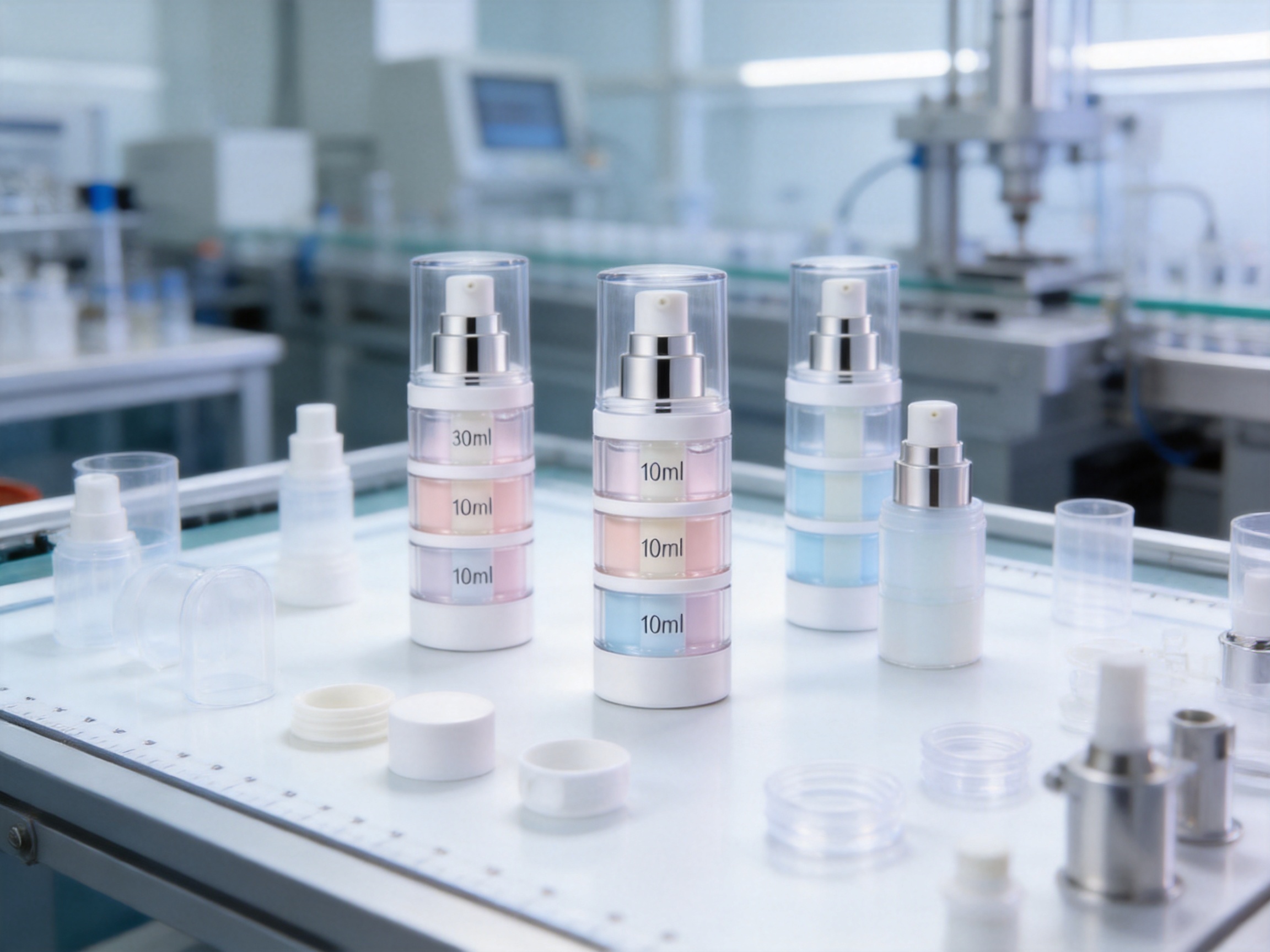
The main advantage is that it stores three formulas separately in one package and dispenses them through independent outlets. This supports formula separation, flexible mixing, improved hygiene, and a more customized skincare experience.
It is suitable for essences, creams, anti-aging products, whitening products, brightening serums, moisturizing treatments, repair formulas, and multi-active skincare systems.
The total capacity is 30ml, divided into three 10ml chambers. The configuration is 10ml + 10ml + 10ml.
Airless packaging helps reduce repeated exposure to outside air during use. It can also improve hygiene, support consistent dispensing, and reduce product waste by helping push the formula upward as it is used.
A dual chamber bottle separates two formulas, while a triple chamber bottle separates three. This gives brands more flexibility for complex skincare concepts, such as hydration, brightening, and firming in one product system.
Yes. Cosmetic brands can explore customization in color, decoration, surface finish, printing, hot stamping, label design, and formula positioning. Pump output options can also be selected according to formula requirements.
The cap uses MS material. The pump uses ABS and PP. The bottle uses MS, PETG, and ABS. These materials support appearance, structure, molding performance, and cosmetic packaging functionality.
The product supports output options of 0.24cc and 0.36cc, allowing brands to choose a dosage level suitable for their formula viscosity and usage instructions.
Compatibility testing helps confirm that the formula and packaging work well together. It can identify issues such as leakage, discoloration, material interaction, pump clogging, output variation, or decoration problems before mass production.
The manufacturer has experience in plastic cosmetic packaging, a large production facility, more than 300 employees, design and development capability, ISO9001:2015 and ISO14001:2015 certifications, high-tech enterprise recognition, and multiple invention patents.
The 30ml triple chamber airless bottle offers a strong combination of beauty, function, and technical value. Its three independent chambers allow skincare brands to separate compatible or complementary formulas until application. Its airless dispensing system supports hygiene, dosage control, and formula protection. Its 10ml + 10ml + 10ml structure creates a compact yet sophisticated platform for anti-aging, whitening, moisturizing, brightening, and repair products.
Compared with conventional bottles, jars, droppers, and even dual chamber systems, the triple chamber airless bottle provides broader formula flexibility and stronger product storytelling. It helps brands create premium experiences that are visible, practical, and memorable. For consumers, it simplifies multi-step skincare into one elegant package. For brands, it creates differentiation in an increasingly competitive market.
The manufacturing strength behind the product is equally important. Advanced plastic packaging requires precision design, reliable molding, controlled assembly, strict inspection, and professional development support. With established experience in cosmetic packaging, certified management systems, high-tech recognition, and a customer-focused philosophy, Yuyao Hengbang Plastic Co., Ltd. is positioned to support brands seeking innovative packaging for modern skincare products.
As skincare continues to move toward personalization, active ingredient protection, and premium user experiences, the triple chamber airless bottle stands out as a practical and forward-looking packaging solution. It is not just a container for cosmetics. It is a delivery system for multi-formula beauty innovation.
1. International Organization for Standardization. ISO 9001:2015 Quality Management Systems: Requirements.
2. International Organization for Standardization. ISO 14001:2015 Environmental Management Systems: Requirements with Guidance for Use.
3. Harry, R. G. Harry’s Cosmeticology: Principles and Practice of Modern Cosmetics.
4. Barel, A. O., Paye, M., and Maibach, H. I. Handbook of Cosmetic Science and Technology.
5. Rosen, M. R. Delivery System Handbook for Personal Care and Cosmetic Products.
6. Elsner, P., and Maibach, H. I. Cosmeceuticals and Active Cosmetics.
7. Butler, H. Poucher’s Perfumes, Cosmetics and Soaps.
8. Cosmetic Packaging Industry Technical Notes on Airless Dispensing Systems and Multi-Chamber Containers.


Copyright © Yuyao Hengbang Plastic Co., Ltd.
All Rights Reserved.
 Wholesale Plastic Cosmetic Packaging Manufacturers