English
 中文简体
中文简体
News
Home > Author > Wang Mengyao — Product After-Sales Service Coordinator > Plastic Blue Sunscreen Squeeze Bottle for Modern Skincare Packaging

 2026.07.06
 Wang Mengyao — Product After-Sales Service Coordinator
Content
The plastic blue sunscreen squeeze bottle is designed for skincare brands that need practical, protective, and visually clean packaging for daily-use sun care products. As sunscreen becomes an essential part of personal care routines, packaging is no longer a simple container. It must help preserve the formula, support convenient application, communicate product value, and withstand the demands of production, transportation, retail display, and repeated consumer use.
This article focuses on the HB-F004 plastic blue sunscreen squeeze bottle, a 30 ml and 50 ml packaging solution made with PP, SUYLYN, adhesive, and PE materials. It is suitable for sunscreen lotions, daily sun protection creams, travel-size sun care products, facial SPF emulsions, and other skincare formulas that require controlled dispensing and dependable barrier performance. With a soft-touch squeeze structure, blue opaque appearance, recyclable PP characteristics, and compact ergonomic profile, this bottle offers meaningful advantages for cosmetic and skincare brands seeking functional and attractive plastic packaging.
Beyond the product itself, the manufacturing strength behind the bottle is also important. A reliable cosmetic packaging supplier must combine mold development, material control, process management, quality inspection, environmental responsibility, and customization capability. Yuyao Hengbang Plastic Co., Ltd. has been engaged in plastic cosmetic packaging since 2006, with a 35,000-square-meter production base, more than 300 employees, ISO9001:2015 and ISO14001:2015 certifications, invention patents, and experience in design and development for skincare packaging. These strengths provide a solid foundation for consistent bottle performance and scalable supply.
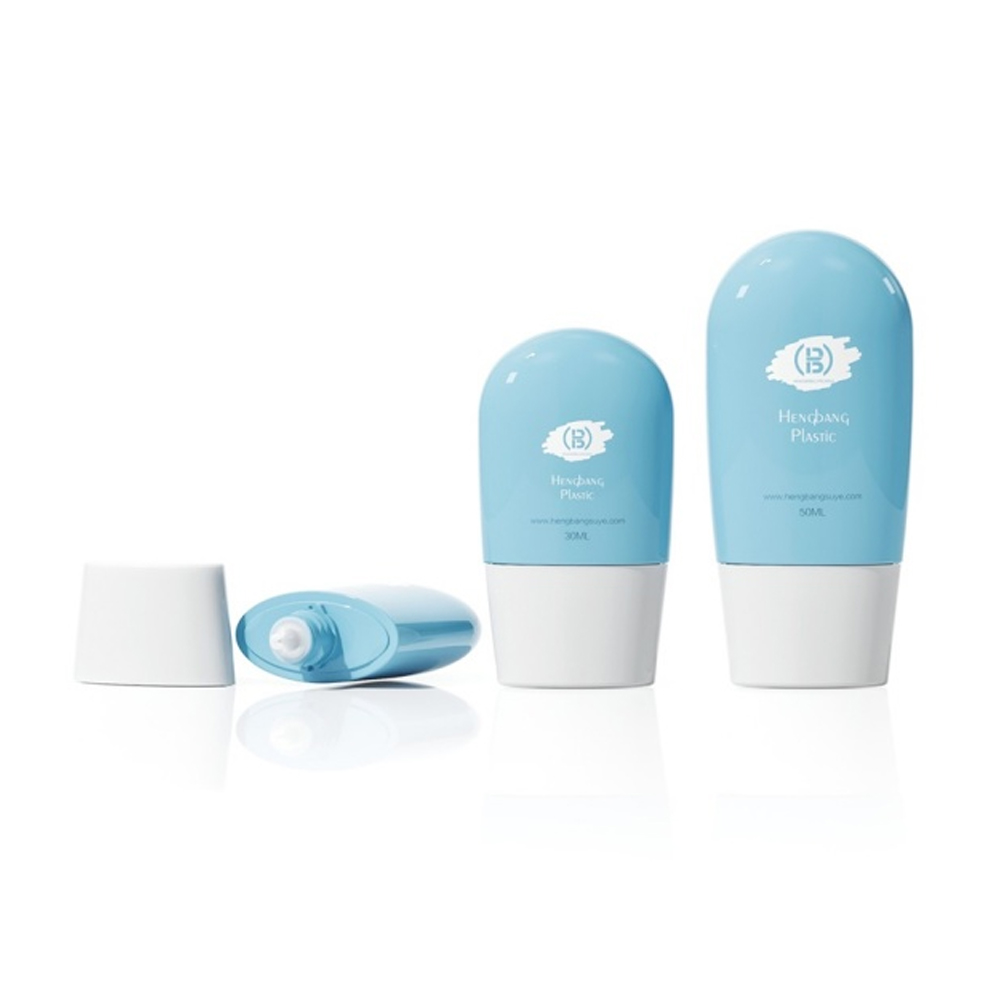
HB-F004 Plastic Blue Sunscreen Squeeze Bottle
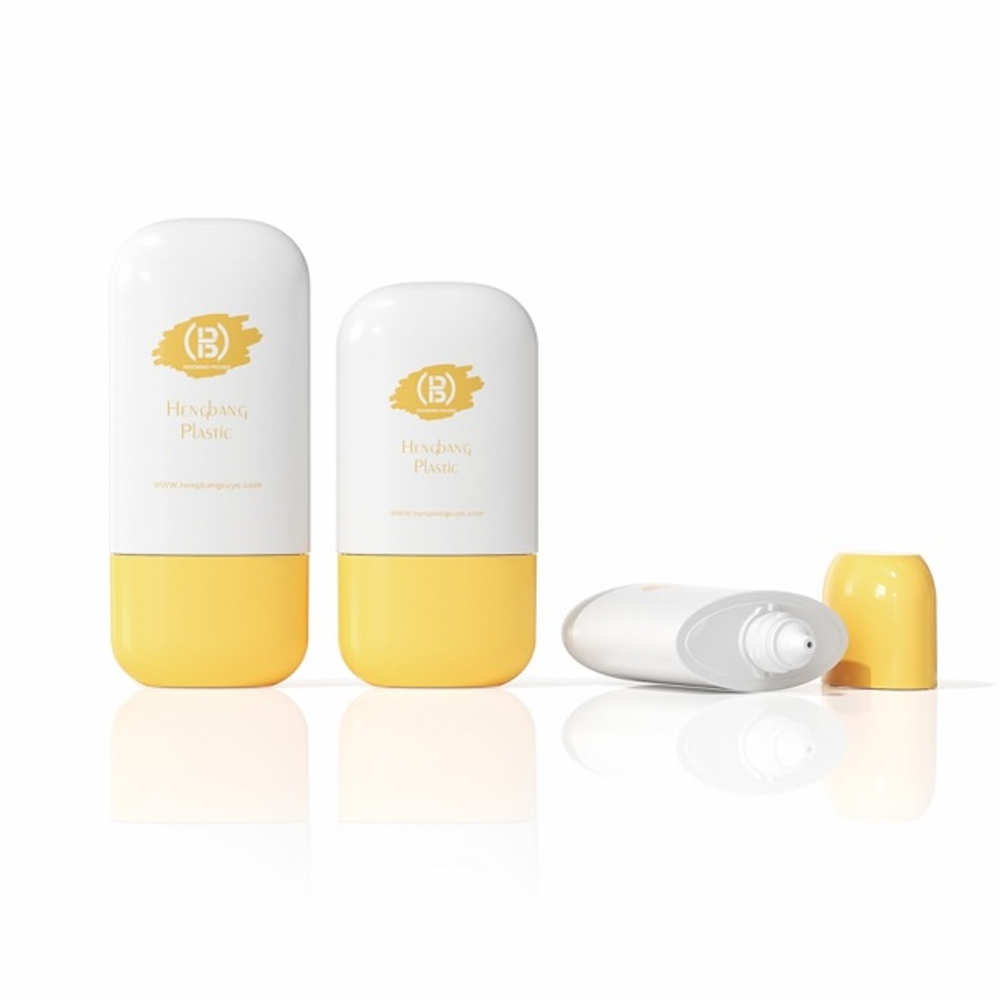
The HB-F004 plastic blue sunscreen squeeze bottle belongs to the plastic sunscreen squeeze bottle category. It is engineered for sunscreen products that must be used frequently, carried conveniently, and protected from external light exposure. The bottle body is typically softer in texture because of its PP-based structure, which makes it easy to squeeze and comfortable to handle. This softness is especially important for sunscreen packaging because users often apply product several times throughout the day, particularly during outdoor activities, travel, sports, or daily commuting.
The blue exterior gives the bottle a distinctive cosmetic appearance while also supporting formula protection. Sunscreen formulas often contain UV filters, emulsifiers, oils, stabilizers, antioxidants, and skincare actives. Some ingredients can be sensitive to light, heat, and oxygen. An opaque or blue bottle design can help reduce direct UV exposure, lowering the risk of ingredient degradation compared with clear packaging. For brands that market sunscreen as a reliable protective skincare product, packaging that supports formula stability is a valuable advantage.
The bottle is available in 30 ml and 50 ml capacities. These sizes are suitable for travel, sample sales, handbag-friendly packaging, facial sunscreen, child-friendly sun care, premium mini products, and promotional kits. Unlike large rigid bottles, a compact squeeze bottle can increase portability and encourage repeat use. Consumers are more likely to reapply sunscreen when the package is easy to carry and simple to operate.
The bottle’s form also supports clean shelf presentation. Its flattened oval profile, practical cap system, and blue tone create a professional appearance that can be matched with different label styles. Brands can use minimalist clinical designs, colorful summer graphics, eco-conscious product stories, or premium skincare branding depending on their market positioning.
Product Type |
Plastic Sunscreen Squeeze Bottle |
Model |
HB-F004 |
Main Application |
Sunscreen, sun care lotion, facial SPF cream, travel skincare packaging |
Material Structure |
PP + SUYLYN + Adhesive + PE |
Capacity Options |
30 ml, 50 ml |
Height |
91.2 mm for 30 ml, 116.2 mm for 50 ml |
Diameter |
53 mm × 26.5 mm |
Appearance |
Blue, generally opaque or light-protective style |
Functional Feature |
Soft squeeze body for controlled dispensing |
Recycling Note |
PP is commonly identified with recycling symbol #5 |
Sunscreen packaging faces different challenges from many ordinary cosmetic containers. A sunscreen product is expected to remain stable, hygienic, easy to apply, and reliable in diverse environments. It may be stored in a bathroom, carried in a beach bag, placed inside a backpack, exposed to warm weather, or used with wet hands. Packaging must therefore combine comfort, durability, and protective performance.
The first important requirement is formula protection. Sunscreen formulas may contain organic UV filters, mineral filters, botanical extracts, moisturizing ingredients, and emulsion systems. If a bottle allows too much light exposure, certain sensitive components may lose effectiveness or change in color, odor, or texture. Blue or opaque plastic packaging helps reduce direct light penetration and can support better shelf stability than transparent containers.
The second requirement is portability. Sunscreen must be reapplied, especially after sweating, swimming, or extended outdoor exposure. If packaging is bulky, difficult to squeeze, or prone to leakage, users may leave it at home. A compact 30 ml or 50 ml squeeze bottle solves this problem by fitting easily into handbags, pockets, toiletry kits, sports bags, and travel pouches.
The third requirement is controlled dispensing. Sunscreen users want to apply enough product, but they also dislike messy overflow. A squeeze bottle allows the user to regulate output pressure with the hand. Compared with jars that require fingers to dip into the formula, squeeze packaging can feel more hygienic and convenient. Compared with rigid bottles, the softer bottle body can help consumers access the formula more easily, including near the end of product life.
The fourth requirement is brand trust. Sunscreen is a protective skincare product, and consumers often judge product quality partly by packaging. A sturdy, well-shaped, visually consistent bottle can create a sense of reliability. For skincare brands, packaging is part of the product promise. A weak, unattractive, or inconvenient bottle can reduce perceived value even if the formula itself is excellent.
Polypropylene, commonly known as PP, is widely used in cosmetic packaging because it offers a strong balance of flexibility, chemical resistance, processability, and recyclability. For sunscreen squeeze bottles, PP provides a comfortable hand feel and allows the bottle body to return to shape after squeezing. This characteristic is important for products used repeatedly over weeks or months.
PP also performs well with many skincare formulations. Sunscreens often include oil phases, emulsifiers, UV filters, and active ingredients. Packaging material must resist interaction with the formula and maintain structural integrity. A PP-based bottle, especially when combined with additional material layers such as SUYLYN, adhesive, and PE, can support improved packaging performance for cosmetic applications.
Another advantage is light weight. Plastic sunscreen bottles are usually lighter than glass alternatives, which reduces transportation burden, improves consumer portability, and lowers breakage risk. For travel sunscreen and outdoor skincare, lightweight plastic packaging is often more practical than heavy containers.
PP is also associated with recycling symbol #5, which aligns with growing market demand for more environmentally conscious packaging. While actual recycling depends on local recycling systems and the complete packaging structure, the use of PP supports a more responsible packaging direction compared with materials that are difficult to recover or reuse. For brands seeking to communicate sustainability progress, selecting PP-based packaging can be part of a broader eco-conscious strategy.
The multi-material structure of PP, SUYLYN, adhesive, and PE is designed to balance softness, resilience, sealing compatibility, and formula protection. Each layer can contribute to a different packaging function. PP offers structural support and squeeze comfort. PE can improve flexibility and sealing behavior. Adhesive layers help integrate different materials into a stable construction. SUYLYN may contribute to surface, bonding, or performance characteristics depending on the final processing design. The result is a bottle that is not merely shaped plastic, but a functional packaging component engineered for sunscreen use.
The blue color of the bottle is more than a visual choice. In sunscreen packaging, color can be connected to formula protection and market communication. A blue bottle naturally suggests freshness, cleanliness, water, sky, cooling sensation, and outdoor protection. These associations fit well with sunscreen and sun care products. Consumers often connect blue packaging with dermatological care, sensitive-skin products, beach products, and refreshing skincare.
From a functional perspective, opaque or blue packaging can reduce exposure to ultraviolet light. Sunscreen formulas are designed to protect human skin from UV radiation, but the ingredients inside the formula may themselves need protection before application. Excessive light exposure can negatively affect fragrance, active ingredients, antioxidants, colorants, and formula stability. A protective bottle helps preserve the intended product experience from factory filling to final consumer use.
Compared with clear packaging, the blue bottle provides a stronger barrier against visible product discoloration and light-related degradation. Clear containers can be attractive for showing formula color or texture, but they may not be ideal for light-sensitive sunscreen formulations. In contrast, a blue squeeze bottle gives brands a balance of attractive appearance and practical protection.
The bottle’s color can also help products stand out on retail shelves. Sunscreen categories often include white, yellow, orange, and blue packaging. A consistent blue tone can create a professional and calming identity. When combined with matte labels, glossy printing, foil decoration, or minimalist typography, the bottle can support multiple brand styles from mass-market sun care to premium facial sunscreen.
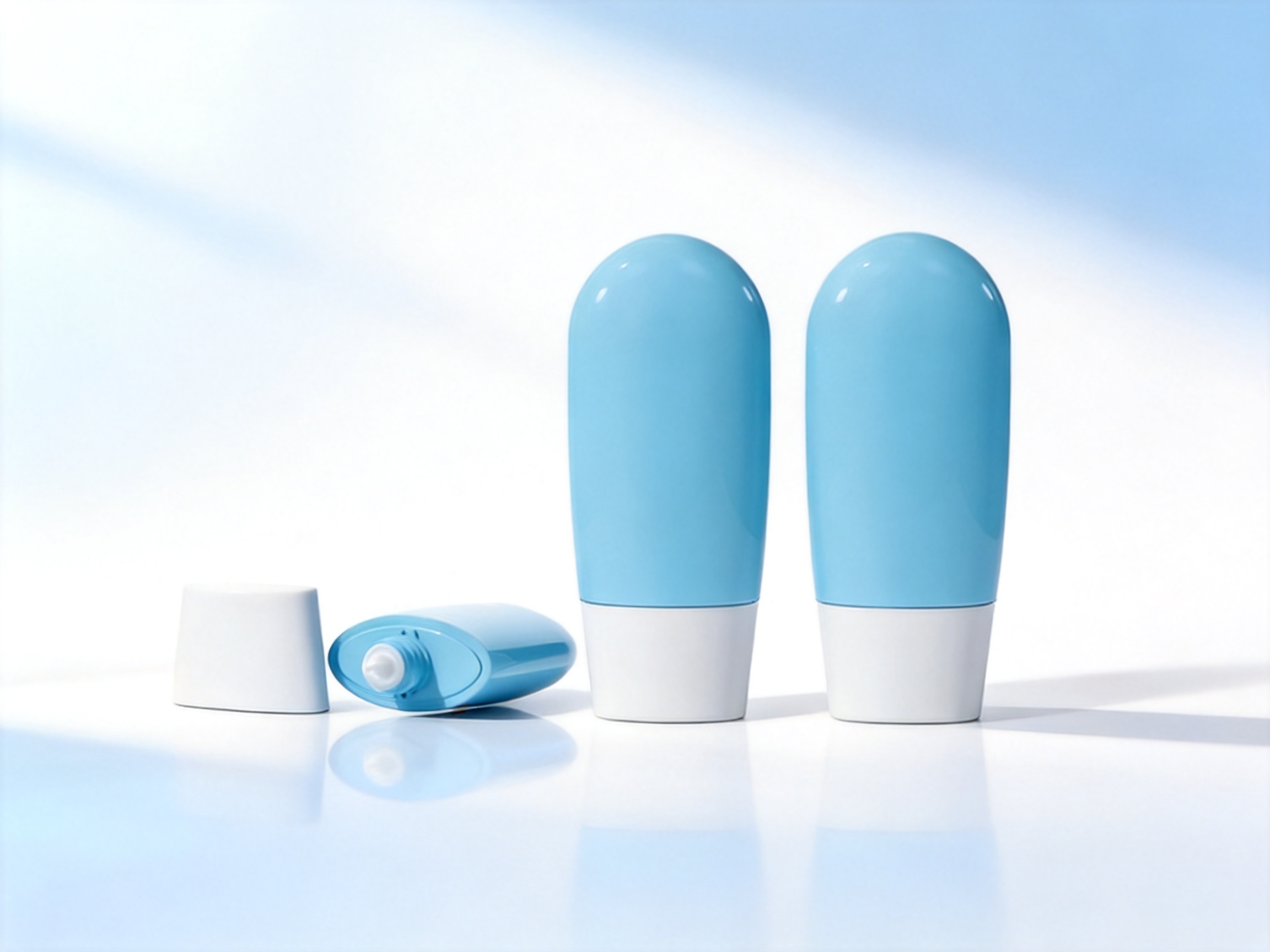
A sunscreen package must work well in the hand. Consumers may apply sunscreen at home in the morning, in a car before an outdoor event, on a beach towel, at a sports field, or while traveling. In many of these situations, the user wants quick, simple, and clean dispensing. The HB-F004 bottle’s squeeze format supports this behavior by allowing users to press the body and control the flow of product.
The flattened diameter of 53 mm × 26.5 mm helps create a compact profile. It can fit comfortably into the palm and is easier to carry than round bottles of similar volume. A slim oval bottle can slide into small compartments and product kits without wasting space. This makes it highly suitable for travel-size sunscreen, trial products, hotel amenities, outdoor activity sets, and handbag skincare.
The 30 ml version is ideal for brands that want to offer portable facial sunscreen, sampling programs, gift sets, or airline-friendly travel packaging. The 50 ml version provides more product while still remaining compact. This capacity is common for facial sunscreens and premium daily-use sun care products because it gives enough volume for regular use without becoming bulky.
The soft-touch squeeze body also improves product evacuation. Rigid containers can make it difficult to dispense thicker sunscreen emulsions, especially when product volume becomes low. A flexible bottle allows users to apply pressure and push formula toward the opening. This can improve user satisfaction because consumers feel they can use more of the product they purchased.
Ergonomics also affect perceived quality. If a bottle feels too hard, too thin, unstable, or slippery, consumers may associate the entire product with lower quality. A balanced soft body gives a comfortable tactile impression while still maintaining the structure needed for filling, labeling, transport, and shelf display.
The HB-F004 plastic blue sunscreen squeeze bottle competes with several common packaging formats, including tubes, jars, rigid bottles, airless pumps, and glass containers. Each format has its own purpose, but the squeeze bottle offers a particularly strong balance for sunscreen products.
Compared with jars, squeeze bottles provide better hygiene and convenience. Jars require users to open a wide mouth and touch the formula directly or use a spatula. This can introduce contamination and is not ideal for outdoor sunscreen application. A squeeze bottle dispenses product through a smaller opening, reducing direct contact with the remaining formula.
Compared with rigid plastic bottles, the flexible squeeze format improves dispensing control. Sunscreen lotions can be thick, and rigid bottles may require shaking or tapping. A soft PP-based bottle allows direct hand pressure, making the application experience smoother. This is especially useful for children’s sunscreen, sports sunscreen, and daily facial sunscreen.
Compared with glass packaging, the plastic squeeze bottle is lighter, safer, and less prone to breakage. Sunscreen is often used in outdoor environments where glass can be inconvenient or risky. Plastic packaging is more suitable for beaches, swimming pools, sports bags, and travel. It also reduces shipping weight, which can benefit logistics efficiency.
Compared with ordinary transparent plastic containers, the blue opaque style provides better light protection. A clear bottle may allow consumers to see the formula, but it can expose sensitive ingredients to light. For sun care products, light protection is often more important than formula visibility. The blue appearance offers a professional cosmetic look while supporting product stability.
Compared with some airless pump containers, a squeeze bottle can be more cost-effective, simpler, and easier to use for certain sunscreen formulas. Airless systems are excellent for high-value skincare, but they involve more components and may increase packaging cost. For brands that need reliable daily sunscreen packaging at scale, a squeeze bottle can provide a strong balance between functionality and affordability.
Compared with standard tubes, the HB-F004 bottle offers a more defined container shape and potentially stronger shelf presence. Tubes are widely used in sunscreen packaging, but many products look similar. A structured blue squeeze bottle can differentiate a brand and create a more premium impression while still delivering the familiar squeezing action consumers like.
The bottle is especially suitable for sunscreen lotion, facial SPF cream, body sun protection emulsion, mineral sunscreen, moisturizing sunscreen, tinted sunscreen samples, after-sun lotion, UV-protective skincare, and travel sun care kits. Its compact size and protective appearance make it versatile across different product lines.
For facial sunscreen, the 30 ml and 50 ml formats match common consumer expectations. Facial sunscreen is often used daily and carried for reapplication. A slim blue bottle can be positioned as a dermatology-inspired, clean beauty, sensitive-skin, or premium skincare product depending on decoration choices.
For children’s sunscreen, the soft squeeze body is practical because parents need quick application. The bottle can be easy to hold, easy to pack, and safer than glass. Blue packaging can also be paired with playful labels or simple family-friendly graphics.
For travel retail, the 30 ml size is especially attractive. Travelers seek small, compliant, leak-resistant, and convenient sunscreen packaging. A compact squeeze bottle can be included in sun care kits, hotel amenity sets, airline skincare packs, or vacation promotional bundles.
For sports and outdoor brands, portability and durability are critical. A lightweight plastic bottle is easier to carry during hiking, cycling, running, camping, fishing, or beach activities. The user can quickly squeeze out sunscreen without complex pump mechanisms or wide-mouth openings.
For cosmetic brands expanding into sun care, the bottle offers a familiar yet distinctive format. It can bridge skincare and sunscreen categories by providing a clean cosmetic appearance while retaining the practicality needed for SPF products.
The performance of cosmetic packaging depends not only on design, but also on manufacturing discipline. Yuyao Hengbang Plastic Co., Ltd. was established in 2006 and has developed long-term expertise in plastic packaging for cosmetics and skincare products. With a building area of 35,000 square meters and more than 300 employees, the company has the scale to support stable production while maintaining specialized attention to product development.
The company provides a full range of services, including design and development. This matters because sunscreen packaging must be adapted to formula viscosity, filling method, cap compatibility, decoration requirements, sealing performance, and brand positioning. A manufacturer with design capability can help customers optimize structure, appearance, and production feasibility before mass production.
The company has passed ISO9001:2015 certification, reflecting a quality management system focused on process control and continuous improvement. It has also passed ISO14001:2015 certification, which relates to environmental management. For global cosmetic brands, these certifications are important indicators of supplier reliability, documentation discipline, and operational responsibility.
The company was awarded as a Ningbo High-Tech Enterprise in 2021 and owns multiple invention patents. These achievements suggest an emphasis on technological development and innovation rather than simple commodity manufacturing. In the competitive cosmetic packaging industry, patents and high-tech recognition can indicate stronger product engineering, process improvement, and long-term development capability.
Since its establishment, the company has adhered to the business philosophy of quality, integrity, and customer first. For buyers of cosmetic packaging, this philosophy translates into practical expectations: stable communication, consistent product batches, responsible after-sales support, and attention to customer requirements. Packaging suppliers must be reliable because packaging delays or defects can directly affect skincare product launches.
Manufacturing a high-quality sunscreen squeeze bottle requires more than molding plastic into shape. It involves material selection, mold precision, processing temperature control, structural consistency, surface finishing, inspection, packaging, and logistics preparation. Each step affects the final product’s appearance and usability.
The process begins with product design and engineering evaluation. Designers must consider bottle capacity, wall thickness, squeeze force, shoulder shape, cap fit, labeling area, decoration compatibility, and filling-line requirements. A good design must look attractive while remaining practical for mass production. For the HB-F004 bottle, the compact 30 ml and 50 ml sizes require precise dimensional control so that the bottle remains stable and easy to handle.
Material preparation is another critical stage. PP, PE, SUYLYN, and adhesive materials must be selected according to performance requirements. Material batches need to be checked for consistency, contamination, moisture condition, and compatibility with production equipment. In cosmetic packaging, small material variations can affect color, transparency, softness, odor, and sealing behavior.
Multi-layer processing requires careful control. When different materials are combined, adhesion and layer uniformity are important. The bottle must maintain its structure after squeezing, filling, capping, transportation, and consumer use. If the layers are not properly bonded, the package may show defects or reduced performance. Controlled processing helps ensure stable tactile feel and reliable bottle strength.
Mold quality is also essential. The mold determines the bottle’s shape, surface smoothness, dimensional accuracy, and repeatability. High-quality mold development reduces defects such as uneven walls, deformation, flash, poor neck finish, and inconsistent capacity. For cosmetic packaging, surface appearance is particularly important because consumers notice visual imperfections.
During forming, production parameters such as temperature, pressure, cooling time, and cycle stability must be controlled. A sunscreen bottle needs enough flexibility for squeezing but enough strength to stand upright and protect the product. This balance is achieved through material formulation, wall thickness design, and stable processing conditions.
After forming, bottles may undergo trimming, surface treatment, decoration preparation, and inspection. Depending on customer requirements, decoration can include color matching, labeling, printing, hot stamping, coating, or other cosmetic finishing methods. The blue bottle body provides a strong base for visual branding and can be adapted to different market styles.
Quality inspection is performed to verify dimensions, appearance, capacity, fit, leakage resistance, surface defects, and packaging cleanliness. For sunscreen products, leakage prevention is especially important because the formula may be carried in bags and used during travel. Inspection helps reduce the risk of customer complaints and product waste.
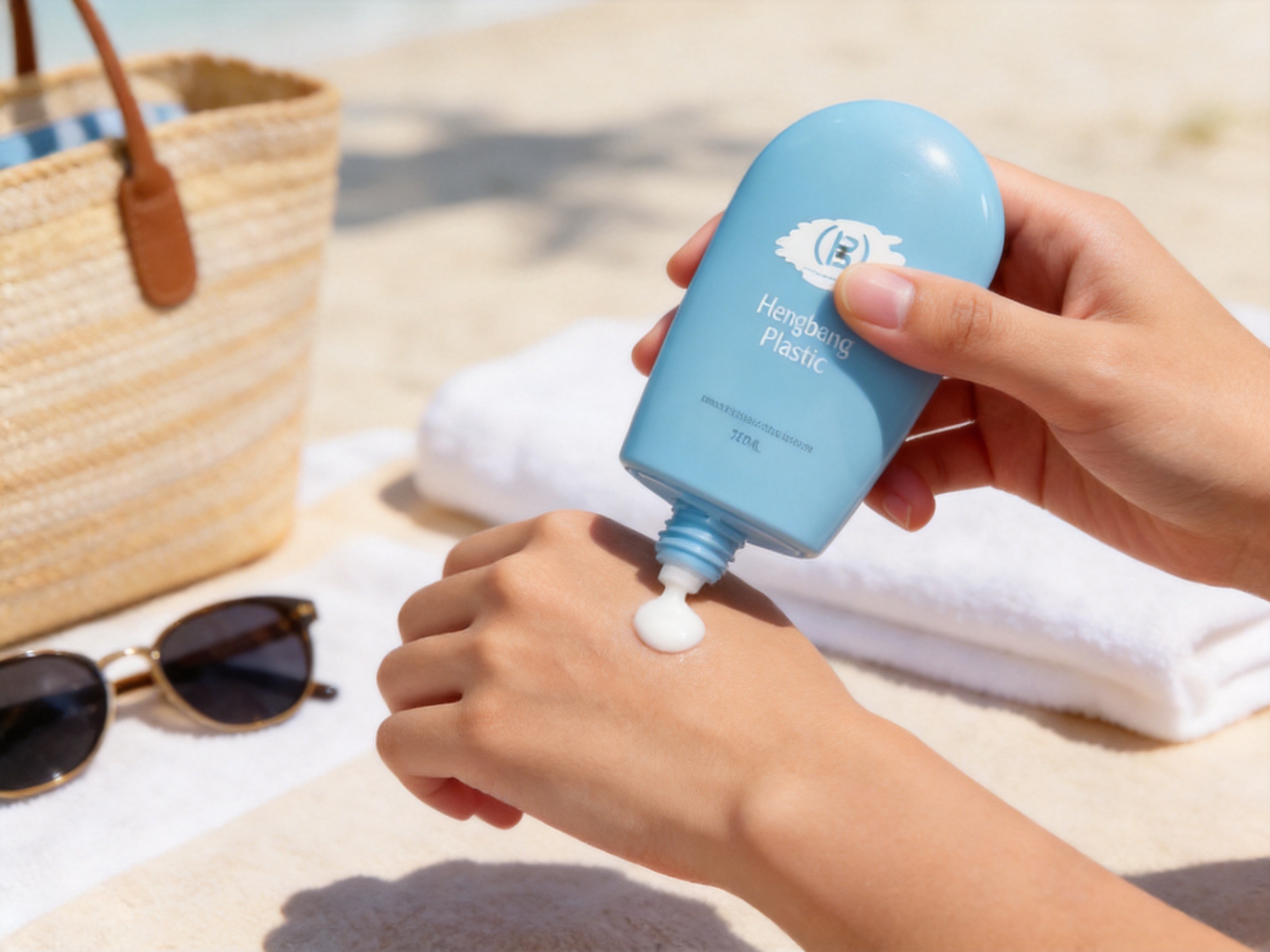
In cosmetic packaging, quality control must be systematic. A visually attractive bottle is not enough if it leaks, deforms, fails during filling, or varies from batch to batch. The HB-F004 bottle benefits from a manufacturing environment where quality management is supported by ISO9001:2015 certification and years of production experience.
Dimensional inspection helps ensure that the bottle matches customer filling equipment and cap components. The neck, opening, height, diameter, and body profile must remain within acceptable tolerances. If dimensions vary, filling lines may jam, caps may not seal correctly, labels may wrinkle, or cartons may not pack efficiently.
Appearance inspection focuses on color consistency, surface defects, contamination, scratches, uneven molding, and deformation. Sunscreen packaging is part of the customer’s brand image, so clean and consistent appearance is critical. A premium sunscreen formula can lose market appeal if the bottle looks inconsistent or poorly finished.
Leakage and sealing evaluation are especially important. Sunscreen products are often packed in bags, suitcases, and outdoor kits. Consumers expect the package to stay closed and avoid messy leakage. A reliable bottle and cap system protects the formula and improves user confidence.
Squeeze performance can also be assessed. The bottle should not be too rigid or too weak. If it is too rigid, product dispensing becomes difficult. If it is too weak, the bottle may collapse or feel low quality. A balanced PP-based body supports comfortable use while maintaining enough structural stability.
Material and process traceability further support reliability. When a manufacturer keeps records of materials, production batches, inspection results, and process conditions, it can respond more effectively to customer feedback. Traceability also supports consistent future orders, which is essential for brands that require long-term packaging supply.
Although the HB-F004 bottle already has a distinctive blue sunscreen style, it can serve as a platform for brand customization. Cosmetic packaging buyers often require unique visual identity, specific color tones, label areas, cap colors, surface finishes, and decoration methods. A manufacturer with design and development capability can help transform a standard bottle into a brand-specific package.
Color customization is one of the most common requirements. While blue is ideal for sunscreen, brands may request different shades such as deep ocean blue, pale sky blue, medical blue, icy blue, or custom Pantone-inspired tones. Color can communicate product positioning: dark blue may suggest premium dermatological care, while light blue may suggest freshness and gentle protection.
Surface decoration can also vary. Labels can be used for flexible branding and regulatory information. Screen printing can create a clean, integrated appearance. Hot stamping can add premium metallic details. Matte or glossy effects can influence tactile and visual perception. The compact bottle shape supports both simple and detailed designs.
Capacity selection is another customization strategy. A brand may use the 30 ml bottle for trial products and the 50 ml bottle for retail sales. This creates a coherent product family while serving different market needs. The same bottle design language across multiple capacities can strengthen brand recognition.
Cap and closure options may also influence the user experience. A secure, easy-to-open closure is critical for sunscreen. Depending on product viscosity and dispensing requirements, the closure can be selected to support controlled output, clean application, and transportation safety.
Brand owners can also use the bottle for multi-product sets. For example, a sun care line may include facial sunscreen, body sunscreen, after-sun lotion, and travel moisturizer in coordinated packaging. The bottle’s cosmetic appearance makes it suitable for more than one product category, especially within skincare and personal care ranges.
Sustainability is increasingly important in cosmetic packaging. Consumers, retailers, and brand owners are paying more attention to material selection, recyclability, weight reduction, production efficiency, and responsible manufacturing. The HB-F004 bottle’s PP-based material structure is relevant because PP is commonly associated with recycling symbol #5.
Using lightweight plastic can reduce transportation weight compared with heavier materials such as glass. Lower weight may contribute to improved logistics efficiency, especially for large production volumes and international shipments. A compact bottle design also improves packing density, allowing more units to be transported in limited space.
Recyclability depends on regional recycling infrastructure and the complete package construction, including labels, caps, inks, adhesives, and material combinations. However, choosing PP as a major component is a practical step toward more recyclable cosmetic packaging. Brands can further improve sustainability by selecting compatible labels, reducing excessive decoration, and educating consumers about disposal.
The manufacturer’s ISO14001:2015 certification also supports environmental management. This certification indicates attention to environmental systems, resource use, waste control, and regulatory compliance. For skincare brands that include sustainability in their supplier evaluation, environmental management certification can be an important factor.
Durability is another sustainability consideration. Packaging that leaks, breaks, or fails during use causes product waste. A well-designed sunscreen bottle helps protect the formula and reduces avoidable disposal. In this sense, quality and sustainability are connected. Better packaging performance can help reduce waste throughout the supply chain.
For cosmetic and skincare companies, packaging is not simply a cost item. It influences marketing, consumer experience, retail conversion, logistics, and brand loyalty. The HB-F004 plastic blue sunscreen squeeze bottle offers commercial value by combining protective appearance, portable size, practical dispensing, and reliable manufacturing support.
The bottle can help a sunscreen product look professional and market-ready. Its blue color immediately connects with sun care, outdoor freshness, and skin protection. Its compact size encourages trial purchase and daily carrying. Its squeeze function supports repeated application, which is essential for sunscreen effectiveness.
For brands competing in crowded sunscreen markets, differentiation is vital. Many products use similar tubes or pump bottles. A structured blue squeeze bottle can create a distinctive shelf silhouette while remaining familiar enough for consumers to understand instantly. This balance of differentiation and usability can support better product acceptance.
The bottle also supports multiple price positions. With appropriate decoration, it can be used for affordable daily sunscreen, pharmacy-style skincare, premium facial SPF, children’s sunscreen, sports sun care, or travel kits. This flexibility gives brands more freedom in product planning.
Reliable supply is another commercial advantage. Packaging shortages or inconsistent batches can delay product launches and damage brand reputation. A manufacturer with established facilities, a professional team, certifications, and development experience can reduce sourcing risk. For buyers, supplier reliability is as important as unit price.
In addition, the bottle’s capacity options allow brands to build product strategies. A 30 ml bottle can serve as a sample, trial, promotional, or travel SKU. A 50 ml bottle can serve as the standard retail size. Using the same design family helps reduce development complexity and creates a cohesive visual identity.
A successful sunscreen package must encourage correct and frequent use. Consumers often underapply sunscreen or forget to reapply. Packaging cannot solve every behavior issue, but it can reduce friction. A bottle that is easy to carry, easy to squeeze, and pleasant to look at is more likely to be used regularly.
The soft PP-based body supports effortless dispensing. Users can control how much product comes out by adjusting squeeze pressure. This is useful for applying sunscreen to different areas such as the face, neck, arms, or hands. Controlled dispensing helps reduce mess and waste.
The compact profile makes the product easier to keep nearby. A user can carry it in a handbag, gym bag, stroller bag, desk drawer, or travel kit. The more accessible the sunscreen is, the more likely the user is to reapply during the day.
The blue appearance can also reinforce the emotional experience of sun protection. It suggests coolness, freshness, and confidence under sunlight. Packaging psychology matters in cosmetics because users interact with the product every day. A pleasant bottle can make sunscreen feel less like a medical obligation and more like a skincare habit.
Hygiene is another part of consumer experience. Compared with jar packaging, a squeeze bottle reduces direct contact with the remaining formula. This supports a cleaner application routine, especially when the product is used outdoors where hands may not always be perfectly clean.
The HB-F004 bottle is well suited for several product positioning strategies. A brand can present it as a daily facial sunscreen package, emphasizing portability and formula protection. It can also be positioned as travel sun care packaging, highlighting compact size and easy squeezing. Another option is family sunscreen, where practical use and safe plastic construction are important.
For a dermatology-inspired sunscreen, the bottle can be decorated with clean white, silver, or navy design elements. The blue body can communicate reliability and clinical freshness. For a beach or outdoor sunscreen, the design can use bright colors, wave patterns, or sporty graphics. For a premium skincare sunscreen, minimal printing, soft-touch effects, and elegant typography can create a refined appearance.
The bottle is also suitable for brands that want to emphasize responsible packaging. The PP recycling association and lightweight structure can be included as part of a broader sustainability message, provided the claim is accurate for the complete package and target market.
Because sunscreen is often sold across channels, the bottle can work in pharmacies, beauty stores, supermarkets, travel retail, e-commerce, spas, hotels, and promotional campaigns. Its compact shape is especially useful for e-commerce shipping, where breakage resistance and efficient packing are important.
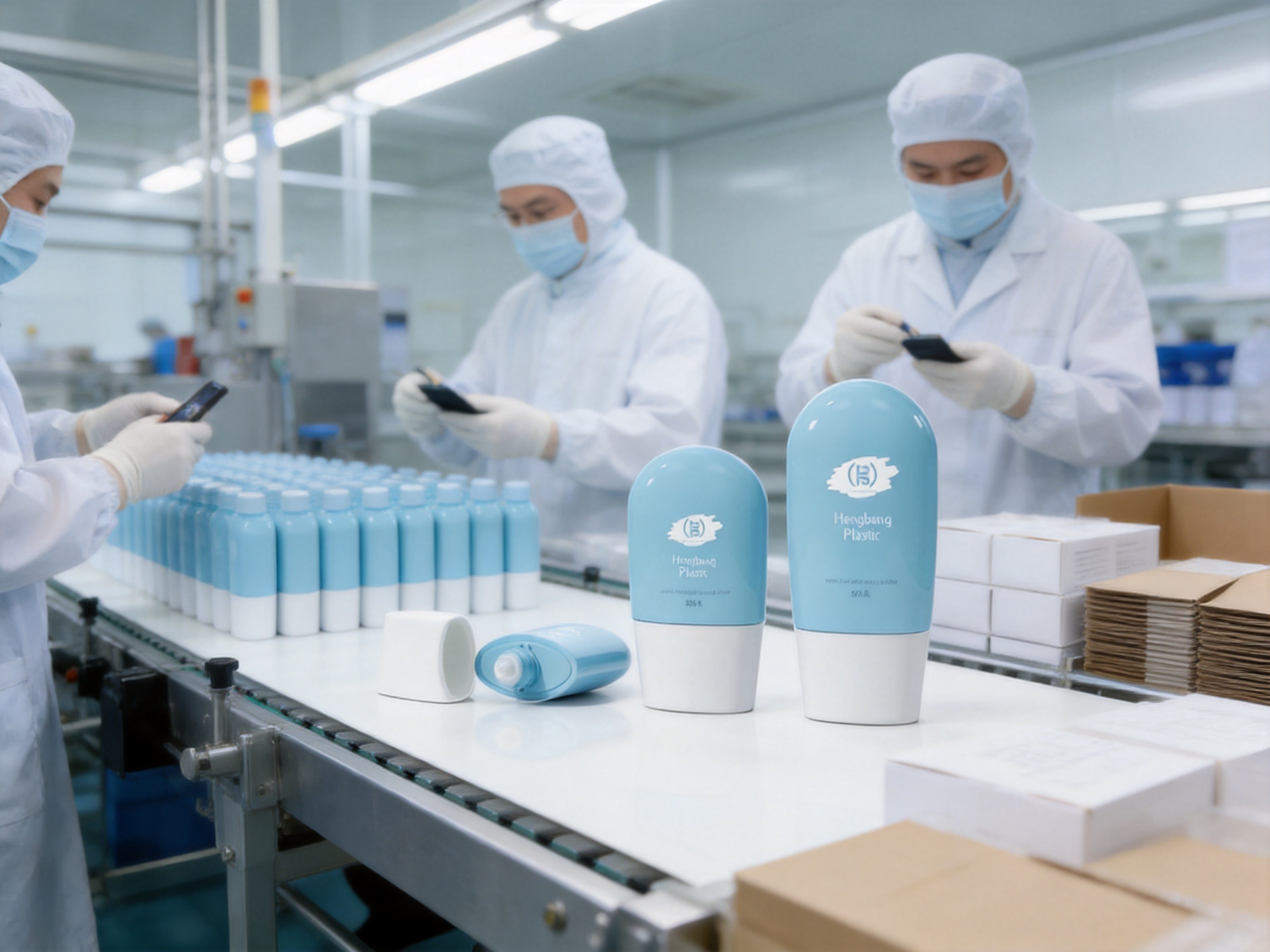
It is mainly designed for sunscreen and sun care products, including sunscreen lotion, facial SPF cream, travel sunscreen, moisturizing sunscreen, and other skincare formulas that require convenient squeeze dispensing and protection from light exposure.
The bottle is available in 30 ml and 50 ml capacities. The 30 ml version is suitable for travel, sampling, promotional kits, and portable skincare, while the 50 ml version is suitable for standard facial sunscreen or daily-use sun care products.
The blue appearance supports both function and branding. It helps reduce direct light exposure compared with clear packaging and also communicates freshness, skincare protection, and outdoor sun care. Blue is a popular visual choice for sunscreen because it connects naturally with water, sky, and cooling protection.
Yes. The PP-based bottle body is typically softer in texture, allowing users to squeeze the package comfortably and dispense sunscreen with controlled pressure. This is useful for frequent daily application and reapplication.
A squeeze bottle is generally more convenient and hygienic than a jar for sunscreen. It reduces direct contact with the remaining formula, supports controlled dispensing, and is easier to use outdoors or while traveling.
Compared with glass, this plastic squeeze bottle is lighter, safer for outdoor use, more resistant to breakage, and easier to carry. These advantages are important for sunscreen products used at beaches, pools, sports fields, and travel destinations.
PP is commonly associated with recycling symbol #5. Actual recycling depends on local recycling systems and the complete packaging structure, but PP is widely recognized as a recyclable plastic category.
Yes. Cosmetic packaging can often be customized through color adjustment, labeling, printing, cap matching, surface effects, and brand-specific decoration. The bottle’s blue body and compact shape provide a strong base for different sunscreen product identities.
Some sunscreen ingredients, skincare actives, fragrances, antioxidants, and emulsion systems may be sensitive to light exposure. Opaque or colored packaging can help reduce UV exposure and support better formula stability during storage and use.
The product is supported by a manufacturer with long-term experience in cosmetic plastic packaging, a 35,000-square-meter production base, more than 300 employees, ISO9001:2015 and ISO14001:2015 certifications, design and development capability, high-tech enterprise recognition, and multiple invention patents.
The plastic blue sunscreen squeeze bottle is a practical and commercially valuable packaging solution for modern sun care products. Its PP-based soft squeeze body supports comfortable use, controlled dispensing, and frequent reapplication. Its blue opaque appearance helps protect sunscreen formulas from light exposure while creating a fresh and professional skincare identity. Its 30 ml and 50 ml capacity options make it suitable for travel, daily facial sunscreen, promotional products, and standard retail packaging.
Compared with jars, glass containers, rigid bottles, transparent packaging, and some more complex dispensing systems, this squeeze bottle offers a strong balance of hygiene, portability, cost efficiency, durability, and consumer convenience. It is especially effective for brands that want sunscreen packaging that feels simple, reliable, attractive, and suitable for real daily use.
The manufacturing strength behind the product further increases its value. With established production scale, professional development capability, ISO-certified management systems, environmental certification, patent achievements, and long-term specialization in cosmetic packaging, Yuyao Hengbang Plastic Co., Ltd. provides the technical and operational foundation needed for dependable packaging supply.
For skincare brands developing sunscreen products, packaging must protect the formula, satisfy consumers, support brand positioning, and perform consistently throughout the supply chain. The HB-F004 plastic blue sunscreen squeeze bottle meets these needs with a thoughtful combination of material performance, ergonomic design, visual appeal, and production reliability. It is a strong choice for cosmetic companies seeking a compact, protective, and market-ready sunscreen packaging solution.
1. ISO 9001:2015 Quality Management Systems: Requirements.
2. ISO 14001:2015 Environmental Management Systems: Requirements with Guidance for Use.
3. International Organization for Standardization, Guidance on Quality Management Principles.
4. Plastics Industry Association, General Information on Polypropylene Material Applications.
5. Society of Plastics Engineers, Technical Discussions on Polyolefin Packaging Materials.
6. Cosmetic Packaging Industry Reports on Sunscreen Packaging Trends and Consumer Convenience.
7. Personal Care Products Council, General Guidance on Cosmetic Product Packaging and Stability Considerations.
8. Packaging Technology Literature on Light Protection, Barrier Design, and Plastic Container Performance.


Copyright © Yuyao Hengbang Plastic Co., Ltd.
All Rights Reserved.
 Wholesale Plastic Cosmetic Packaging Manufacturers