English
 中文简体
中文简体
News
Home > Author > Wang Mengyao — Product After-Sales Service Coordinator > Refillable Airless Serum Bottles: Sustainable Precision Packaging for Modern Skincare

 2026.06.22
 Wang Mengyao — Product After-Sales Service Coordinator
Content
In modern cosmetic packaging, the bottle is no longer a simple container. It is a protective system, a dispensing tool, a sustainability statement, and an important part of the consumer experience. For serums, lotions, creams, sunscreens, toners, and other skincare formulations, packaging must preserve product performance from the first pump to the last dose. The HB-K022A/B Plastic Refillable Airless Serum Bottle is designed for this demanding environment, combining refillability, airless dispensing, controlled output, and a durable multi-component structure.
This plastic refillable airless bottle is built around a practical two-part concept: a permanent outer bottle and a replaceable inner bottle. When the formula is used up, the consumer or brand can replace only the inner bottle rather than discarding the full package. This helps reduce plastic waste while maintaining the appearance, handling quality, and premium feel of the outer packaging. For cosmetic brands seeking plastic cosmetic containers that support both product protection and responsible packaging strategies, this structure offers clear commercial and environmental value.
The bottle is especially suitable for skincare formulas that need reduced air exposure, such as facial serums, eye-care products, anti-aging lotions, lightweight creams, sunscreen emulsions, and functional cosmetic products. Its airless vacuum design helps prevent air from entering the container during dispensing. Instead of relying on a dip tube, the system uses a piston mechanism that moves upward as the product is pumped out. This structure helps improve evacuation, reduce contamination risk, and maintain formula stability over repeated use.
Compared with many conventional lotion bottles, jars, or standard pump containers, this refillable airless serum bottle offers a combination of advantages: improved hygiene, reduced formula oxidation, controlled dispensing, better user convenience, and a more sustainable replacement model. It is also supported by a manufacturer with extensive experience in plastic cosmetic packaging, advanced production capabilities, quality management systems, and a long-term focus on design and development for cosmetics and skincare packaging.
HB-K022A/B Plastic Refillable Airless Serum Bottle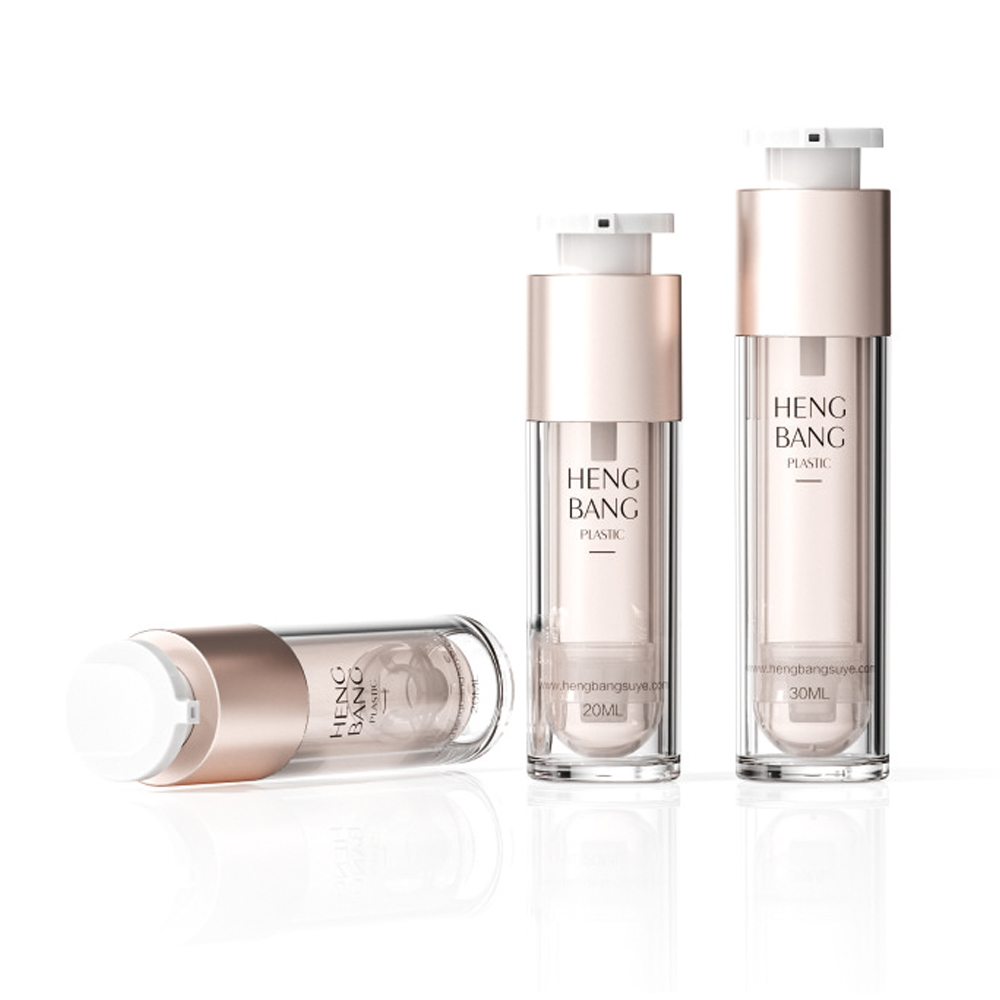
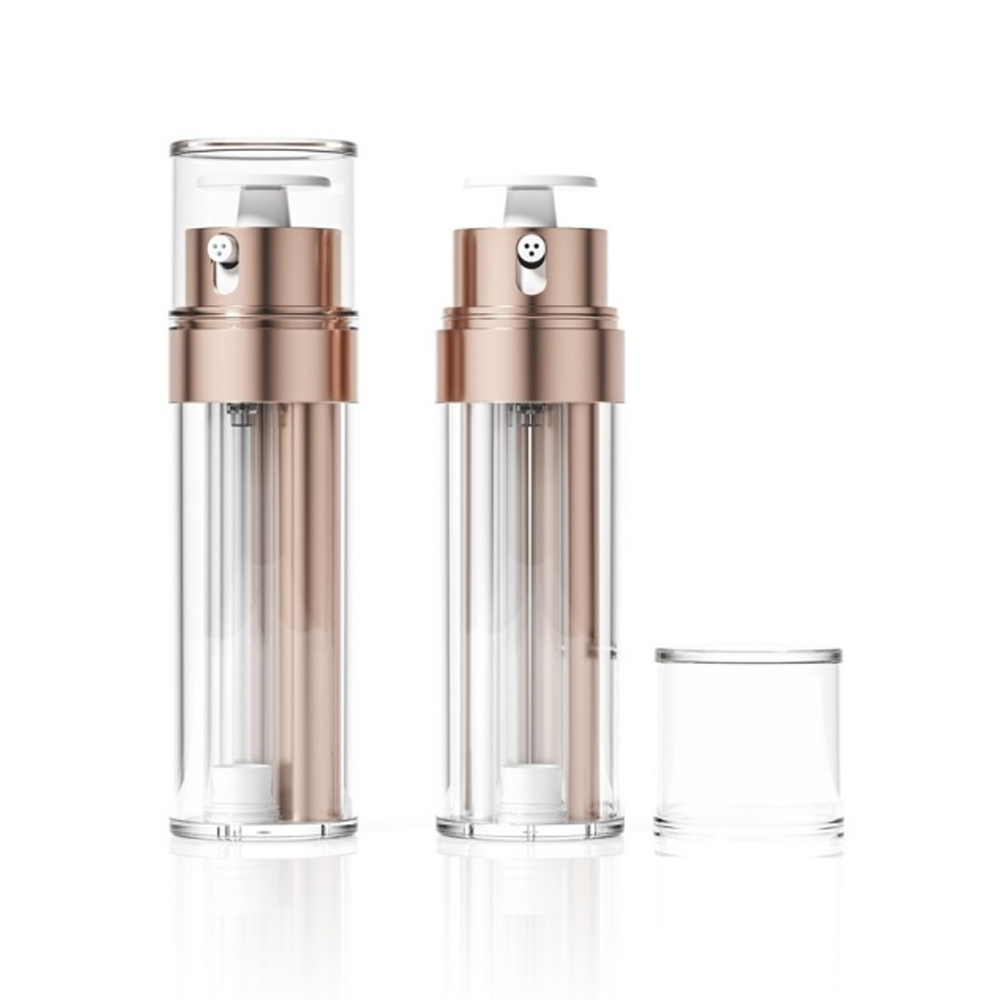
The HB-K022A/B Plastic Refillable Airless Serum Bottle is a refillable cosmetic packaging solution designed for brands that require clean dispensing, reliable protection, and an upgraded consumer experience. The product belongs to the category of plastic refillable airless bottles and is applicable to a wide range of skincare products. Its structure includes a clip, pump, outer bottle, and inner bottle, with materials selected to balance strength, appearance, safety, and usability.
The retaining clip on the nozzle is a practical detail that helps prevent accidental pressing during transportation, storage, or travel. This is important for cosmetic brands because leakage, product loss, and messy packaging can negatively affect customer satisfaction. A secure nozzle system contributes to better distribution performance, especially for e-commerce, retail shipping, and travel-size skincare products.
The permanent outer bottle is made from MS material, which can provide a clear, elegant, and rigid appearance suitable for premium skincare packaging. The replaceable inner bottle is made from PP, a material widely used in cosmetic packaging because of its chemical resistance, light weight, and practicality. The pump components combine PP and ABS, supporting functional performance and durability. The clip is made from PP, providing flexibility and security.
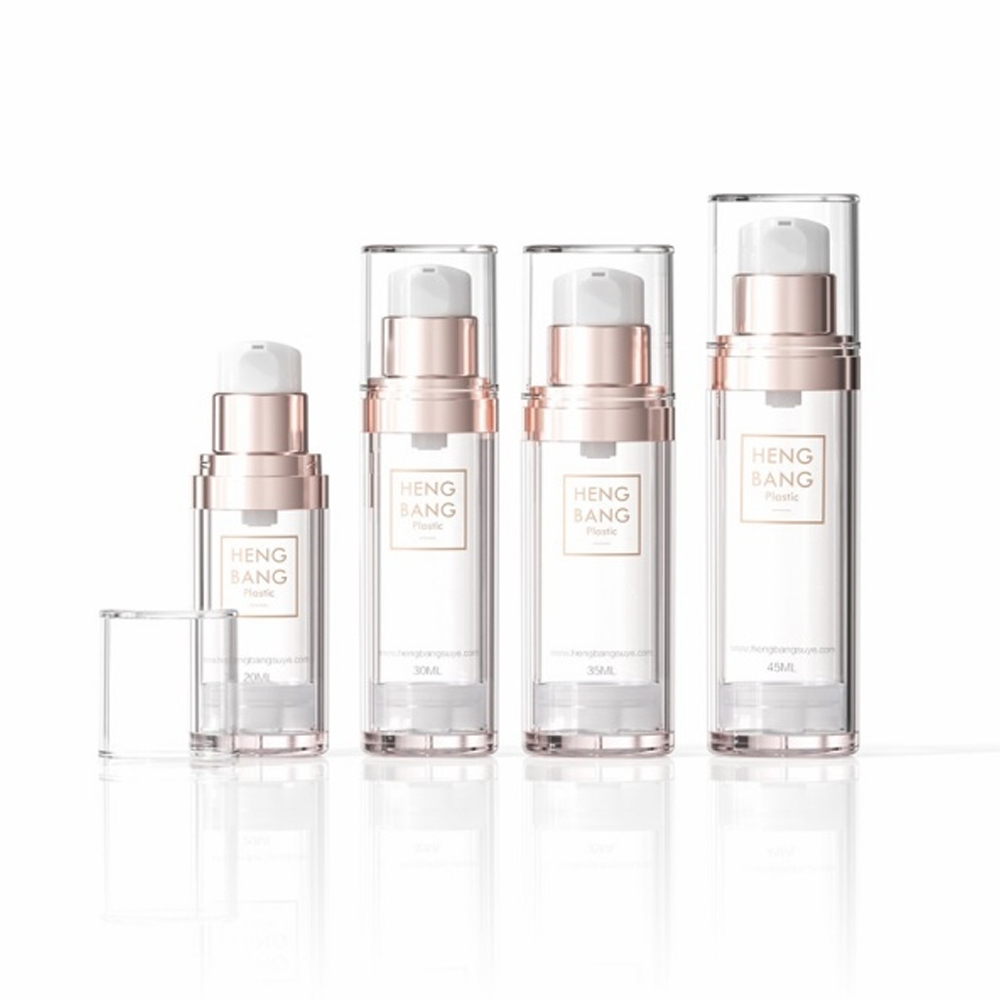
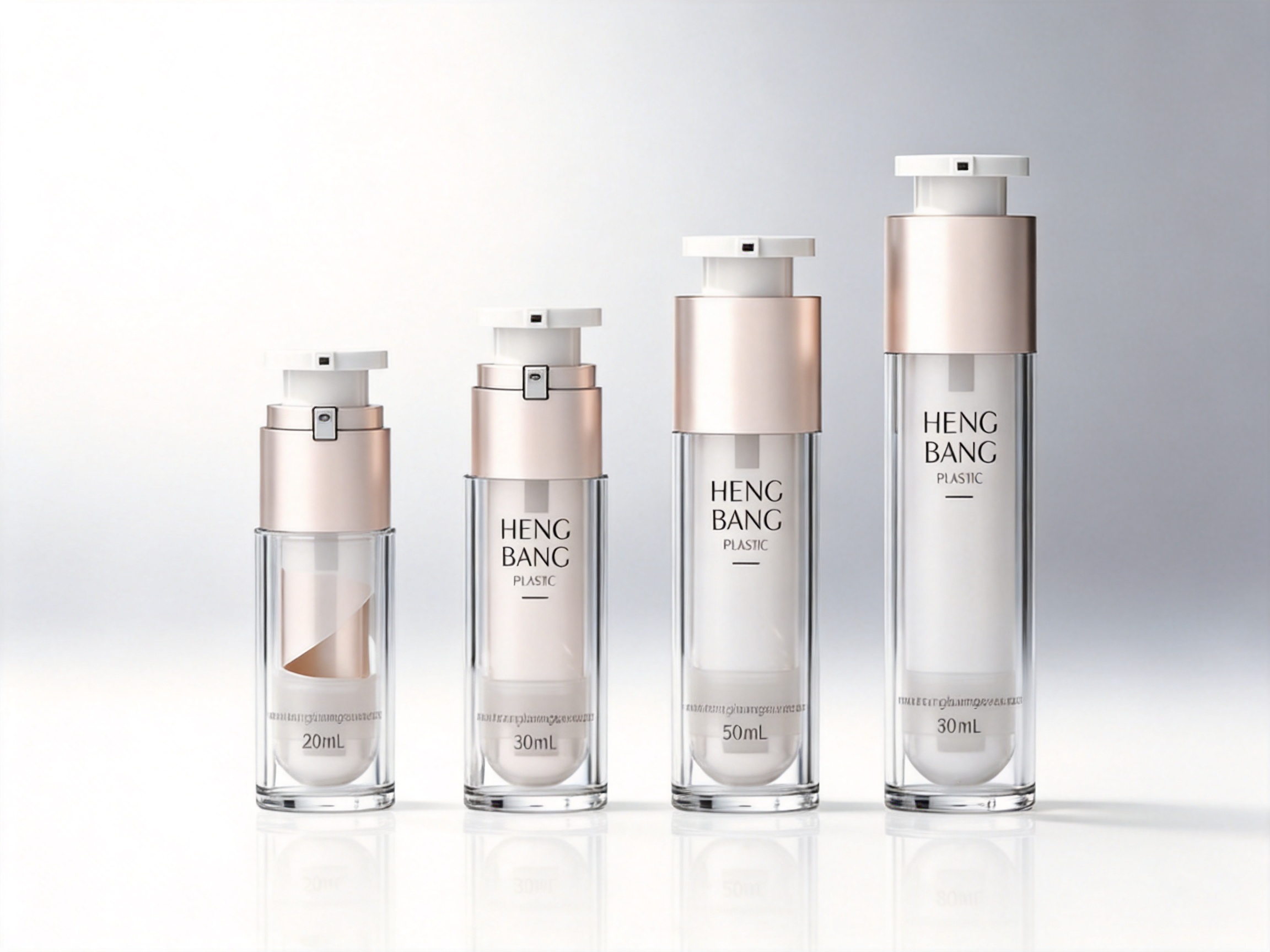
The product is available in multiple capacities, including 20 ml, 30 ml, 50 ml, and 70 ml. These sizes cover different market applications, from concentrated serums and treatment products to daily lotions and skincare emulsions. The 20 ml and 30 ml sizes are suitable for high-value formulas, travel products, eye serums, and trial sets. The 50 ml and 70 ml sizes are suitable for face lotions, moisturizers, sunscreen products, and daily-care formulas.
Item |
Specification |
Product Type |
Plastic refillable airless serum bottle |
Available Capacities |
20 ml, 30 ml, 50 ml, 70 ml |
Clip Material |
PP |
Pump Material |
PP + ABS |
Outer Bottle Material |
MS |
Inner Bottle Material |
PP |
Height Options |
118.5 mm, 136.5 mm, 132.5 mm, 160 mm |
Diameter Options |
33 mm, 40 mm |
Pump Output |
Approximately 0.23 cc per actuation |
Typical Applications |
Serum, lotion, cream, sunscreen, toner, skincare essence, cosmetic treatment products |
Skincare formulas are becoming increasingly advanced. Many modern products include active ingredients, botanical extracts, vitamins, peptides, antioxidants, brightening agents, and functional oils. These ingredients may be sensitive to air exposure, contamination, and repeated contact with fingers or external particles. As formulas become more sophisticated, packaging must do more than contain the product; it must help maintain the formula’s intended performance.
Traditional jars remain popular for some creams, but they expose the product to air every time the lid is opened. They may also require the consumer to dip fingers or a spatula into the formula, increasing contamination risk. Standard pump bottles improve convenience but often contain a dip tube and headspace air, which may expose the formula to oxygen during use. Airless bottles solve many of these limitations by using a vacuum-style dispensing system.
In an airless system, the product is pushed upward by a piston from the bottom. When the user presses the pump, the formula is dispensed without requiring a dip tube. As the piston rises, the product volume decreases without allowing outside air to replace it. This helps reduce oxidation and contamination while supporting consistent dispensing. For serums and sensitive skincare products, this feature is a major advantage.
The HB-K022A/B bottle takes airless protection further by combining the airless mechanism with a refillable structure. The inner bottle holds the formula, while the outer bottle can be retained for repeated use. This means a brand can deliver a high-quality package experience while encouraging replacement of only the formula-containing cartridge or inner bottle. In a marketplace where consumers increasingly pay attention to waste reduction, refillability can strengthen brand value.
One of the strongest advantages of this bottle is its refillable architecture. Cosmetic packaging sustainability is no longer a niche concern. Brands, retailers, and consumers are all placing more attention on packaging weight, material efficiency, recyclability, reuse, and refill systems. The HB-K022A/B design directly responds to this shift by separating the reusable exterior from the disposable inner component.
In a conventional full-disposal package, the consumer throws away the entire container after finishing the product. This includes the decorative outer structure, pump system, cap or actuator, and body. Even when recyclable materials are used, collection and recycling systems vary by region, and not all cosmetic packaging is successfully recycled. A refillable design reduces the need to discard the entire unit each time.
With this product, the outer bottle acts as a long-term shell. It protects the inner bottle, provides the visual identity, and maintains the premium hand feel. The inner bottle is replaceable and can be purchased separately. This approach can reduce total material consumption over multiple product cycles. For example, a consumer who uses the same outer bottle for several refills may discard significantly less plastic than a consumer who repeatedly purchases complete new bottles.
From a brand perspective, refillability also creates new commercial opportunities. Brands can sell original products with full packaging and then offer refill replacements. This can encourage repeat purchases, improve customer retention, and support sustainability messaging. Refill programs may also help brands create subscription models, travel refill systems, or professional skincare replenishment programs.
The refillable system is not only about sustainability; it is also about user experience. A well-designed refillable bottle should be easy to replace, secure after assembly, and attractive enough to keep. The permanent outer bottle must feel durable, while the inner bottle must fit accurately and function reliably. This requires precision manufacturing and strict quality control, both of which are central to the value of this product.
The most important functional advantage of an airless serum bottle is product protection. In skincare packaging, exposure to air can influence product stability, especially for formulas containing oxidation-sensitive ingredients. Airless dispensing helps reduce the entry of air into the container, protecting the formula throughout its use cycle. This can help maintain texture, color, fragrance, and active ingredient performance more effectively than many traditional containers.
Compared with cream jars, airless bottles offer a more hygienic dispensing experience. The user does not need to insert fingers into the product. Each pump delivers a controlled amount through the nozzle. This reduces direct contact with the remaining formula and supports a cleaner daily routine. For facial serums, eye-care products, acne-care formulas, and professional skincare products, hygiene is an important selling point.
The pump output of approximately 0.23 cc per actuation supports measured application. Controlled dosage is valuable for both consumers and brands. Consumers can avoid overuse and waste, while brands can provide clearer usage instructions. For example, a serum brand may recommend one or two pumps per application. This creates a consistent user experience and helps the consumer understand product value.
Airless bottles often provide better product evacuation than traditional dip-tube pumps. Because the piston rises as the product is dispensed, more of the formula can be pushed toward the pump pathway. This helps consumers use more of the product they purchased and reduces residue left at the bottom or shoulders of the bottle. For high-value skincare formulas, better evacuation can improve customer satisfaction.
The nozzle retaining clip is a practical advantage for logistics and daily use. Cosmetic products may be transported through warehouses, retail channels, cross-border shipping, and courier networks. Accidental pressing can cause leakage, staining, and product loss. A retaining clip helps secure the pump and reduce unwanted dispensing. This feature is especially helpful for travel, handbags, gift sets, and online sales.
The MS outer bottle provides a durable and refined external appearance, while the PP inner bottle supports formula compatibility and replaceability. This combination allows brands to deliver an attractive package without sacrificing function. Competitor products may rely on a single-use structure or less refined exterior. The dual-bottle design creates a premium impression while supporting a more responsible replacement system.
The availability of 20 ml, 30 ml, 50 ml, and 70 ml sizes allows brands to build a coordinated product line. A skincare brand can use smaller bottles for concentrated serums and larger bottles for lotions or sunscreen products while maintaining a consistent packaging family. This helps strengthen shelf recognition, brand identity, and consumer trust.
Every material in a cosmetic package has a purpose. The HB-K022A/B bottle uses PP, ABS, and MS in different parts according to their functional requirements. The clip is made from PP, a material known for flexibility and resilience. The pump uses PP and ABS, combining chemical resistance and structural strength. The outer bottle uses MS for appearance and rigidity. The inner bottle uses PP for practicality and compatibility with many cosmetic formulas.
PP is widely used in cosmetic packaging because it is lightweight, moldable, and resistant to many common cosmetic ingredients. It can perform well in components that require repeated movement, such as clips and inner containers. ABS is often used where strength, toughness, and dimensional stability are needed. In pump structures, component accuracy is essential because small dimensional differences can affect dosage, sealing, and actuation feel.
MS material is suitable for outer packaging where visual quality matters. It can offer clarity and a solid feel, helping create a premium impression. Since the outer bottle is intended to be retained and reused, durability and appearance are particularly important. A consumer is more likely to keep and reuse a refillable package if it looks attractive and feels reliable.
The separation between the outer bottle and the inner bottle also gives brands design flexibility. The outer bottle may support decorative processes, color effects, surface finishes, or branding elements, while the inner bottle focuses on formula containment. This separation can simplify refill planning and create a packaging system with both functional and marketing advantages.
The refillable airless serum bottle is not limited to serum products. Its clean dispensing system and multiple capacities make it suitable for many cosmetic and skincare categories. In the facial serum market, airless packaging is often preferred because formulas may contain active ingredients that benefit from reduced air exposure. The 20 ml and 30 ml sizes are ideal for concentrated treatments, luxury serums, brightening solutions, and anti-aging formulas.
For lotions and lightweight creams, the 50 ml and 70 ml sizes provide enough capacity for daily use. The controlled pump output helps users apply a measured amount without dipping fingers into a jar. For sunscreen products, airless packaging can help keep the formula cleaner and easier to apply, especially when consumers carry the product outdoors or during travel.
Toner and essence products can also benefit from airless dispensing when the formula has a slightly thicker texture or when the brand wants to position the product as a premium treatment rather than a basic liquid. Cosmetic emulsions, primer-like skincare products, after-sun care, neck creams, hand treatments, and dermatology-inspired formulas may also be suitable depending on viscosity and compatibility testing.
Brands developing product sets can use this bottle family alongside cosmetic bottle sets, lotion bottles, plastic cream jars, sunscreen bottles, toner bottles, and double chamber bottle concepts. A coordinated packaging strategy helps create a professional image and allows consumers to recognize the product line easily. For example, a brand may choose airless serum bottles for active products and matching jars or lotion bottles for complementary items.
Packaging directly influences how consumers perceive a skincare product. A formula may be effective, but if the bottle leaks, clogs, feels weak, or dispenses too much product, the overall experience suffers. The HB-K022A/B bottle is designed to support a smooth and controlled application process. The pump output is suitable for formulas where accurate dosing matters, and the airless system helps deliver the product consistently.
The refillable structure can also create emotional value. Consumers increasingly want packaging that reflects thoughtful design and responsible consumption. A refillable cosmetic container allows them to feel that they are reducing waste without giving up convenience or aesthetics. The permanent outer bottle can become part of their skincare routine, while the replacement inner bottle provides a practical replenishment method.
The retaining clip adds confidence for users who travel or carry skincare products in a bag. Accidental leakage is one of the most common frustrations with pump packaging. A secure clip can reduce the risk of product being dispensed unintentionally. This small detail can make a significant difference in everyday use.
For premium brands, the refillable airless format can support a higher-value positioning. Rather than presenting packaging as disposable, the brand can communicate durability, refill logic, and advanced protection. For professional or clinical-style skincare brands, the airless system supports a clean and technical image. For natural or sustainable brands, the refillable structure supports environmental messaging. For luxury brands, the permanent outer bottle supports a collectible and elegant user experience.
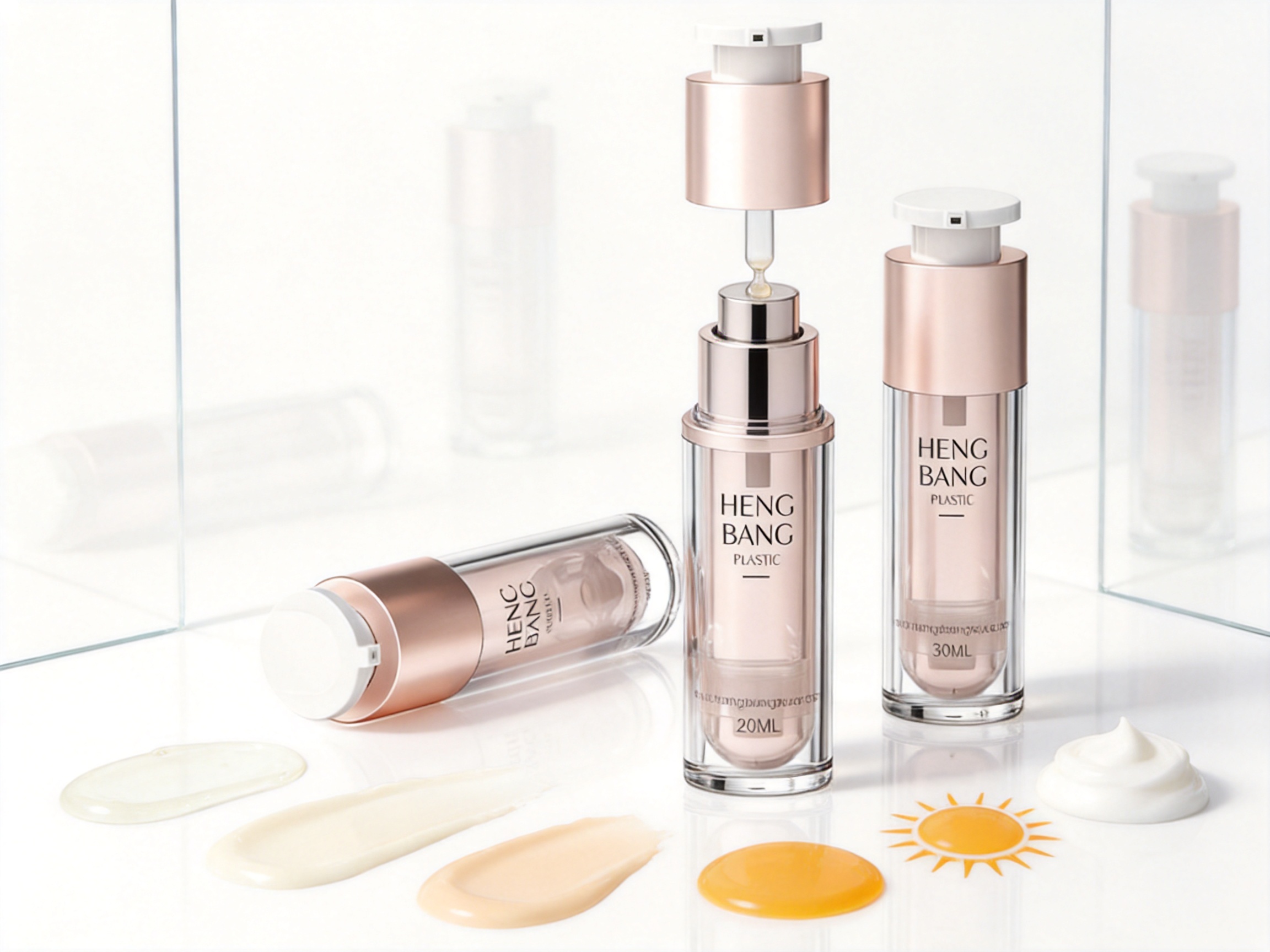
A refillable airless bottle requires more manufacturing precision than a basic container. The outer bottle, inner bottle, pump, clip, piston, sealing areas, and assembly points must work together accurately. If tolerances are inconsistent, the refill may not fit properly, the pump may not dispense smoothly, or the airless function may be compromised. This is why supplier capability is critical when selecting plastic cosmetic packaging.
Yuyao Hengbang Plastic Co., Ltd. was established in 2006 and has developed into a specialized manufacturer of plastic packaging for cosmetics and skincare products. With a building area of 35,000 square meters and more than 300 employees, the company has the scale required to support stable production, product development, and order fulfillment for cosmetic brands. Its young and professional team provides services that include design and development, helping customers transform packaging ideas into manufacturable products.
The company’s experience across cosmetic bottle sets, airless bottles, double chamber bottles, lotion bottles, plastic cream jars, sunscreen bottles, and toner bottles allows it to understand the different requirements of skincare packaging. Airless bottles require sealing and pump reliability. Lotion bottles require smooth dispensing and compatibility. Cream jars require attractive appearance and secure closure. Sunscreen bottles require practical handling and product protection. This broad product knowledge supports better engineering decisions for refillable airless packaging.
Advanced manufacturing begins with design. For a refillable airless system, engineers must consider component dimensions, assembly sequence, material shrinkage, pump output, piston movement, bottle strength, user handling, and refill replacement. A successful design must be easy for consumers to use and efficient for mass production. It must also pass functional testing before being introduced to the market.
Mold development is another essential capability. Plastic cosmetic containers depend on precise molds to ensure consistent wall thickness, accurate threads or snap structures, smooth surfaces, and reliable assembly. High-quality molds help reduce defects such as deformation, flashing, poor fitting, and leakage. For a product like this, where the inner bottle must match the outer bottle and pump system, mold accuracy is especially important.
Injection molding and related plastic forming processes must be controlled carefully. Material drying, temperature, pressure, cooling time, and mold maintenance all influence final quality. Consistent processing helps ensure that each component meets dimensional and appearance standards. In cosmetic packaging, visual defects are not acceptable because the package is part of the product’s market image. Functional defects are even more serious because they can lead to leakage, pump failure, or product instability.
The company has passed ISO9001:2015 and ISO14001:2015 certifications. ISO9001:2015 reflects a quality management system focused on consistent processes, customer satisfaction, and continuous improvement. ISO14001:2015 reflects environmental management, which is especially relevant for packaging manufacturers in a market increasingly concerned with sustainability. These certifications support customer confidence and show that manufacturing is managed according to recognized standards.
The company was awarded as a Ningbo High-Tech Enterprise in 2021 and owns multiple invention patents. This demonstrates an emphasis on innovation rather than only basic production. In packaging, innovation can appear in refill systems, dispensing structures, material optimization, decoration methods, assembly improvements, and sustainability-oriented solutions. For brands seeking differentiated cosmetic packaging, a supplier with development capability can be a strategic partner.
Quality control is essential for cosmetic packaging because the container protects the formula, supports brand reputation, and affects consumer satisfaction. For an airless serum bottle, testing should focus on several areas: sealing performance, pump output consistency, compatibility, actuation feel, piston movement, refill fit, appearance, and transport resistance.
Sealing performance is critical because airless packaging depends on controlled internal movement and reduced air entry. If seals are weak or dimensions are inconsistent, the pump may fail to create the proper dispensing effect. Leakage tests help ensure that the bottle can withstand normal handling, shipping, and storage. Vacuum or pressure-related evaluations may also be used depending on product design.
Pump output consistency is another key factor. A pump output of approximately 0.23 cc per actuation allows brands to communicate dosage expectations. However, this value must remain consistent across production batches. Inconsistent output can frustrate consumers and affect product usage rates. Quality inspection helps confirm that the pump mechanism dispenses properly.
Appearance inspection is particularly important for cosmetic packaging. Consumers associate packaging appearance with product quality. Scratches, cloudiness, deformation, color variation, and surface defects can reduce perceived value. A permanent outer bottle should be especially well controlled because consumers are expected to keep and reuse it.
Refill fit testing is unique to refillable packaging. The replacement inner bottle must install smoothly, remain secure, and function correctly with the pump and outer bottle. If the replacement process is difficult or unreliable, consumers may abandon the refill system. Therefore, repeat assembly and disassembly evaluations are important for ensuring real-world usability.
Compatibility testing should be conducted between the bottle materials and the intended formula. Although PP, ABS, and MS are widely used in cosmetic packaging, each skincare formula may contain different oils, solvents, surfactants, fragrances, or active ingredients. Brands should test their specific formulations under appropriate temperature and time conditions to confirm performance.
Packaging customization is a major part of brand differentiation. A refillable airless bottle can be customized in several ways, depending on project requirements and production feasibility. Brands may choose color matching, surface decoration, printing, labeling, hot stamping, matte or glossy effects, and component color combinations. The outer bottle can carry the main visual identity, while the inner refill can remain simpler and more cost-efficient.
Color plays a strong role in skincare branding. A transparent or frosted appearance may communicate purity and clinical performance. White may suggest simplicity and dermatological care. Soft pastel colors may suit gentle skincare, while deep colors can suggest luxury or active formulations. Metallic or high-contrast details can enhance shelf impact.
Decoration methods can support premium positioning. A brand may choose minimal printing for a modern look or more detailed decoration for retail storytelling. Since the outer bottle is reusable, decoration quality should be durable enough to withstand repeated handling. This is another reason why material selection and surface treatment are important.
The refillable format also allows brands to create packaging systems. The first purchase may include the complete airless bottle, while later purchases may include replacement inner bottles. Brands can develop refill cartons, subscription packs, professional refill programs, or travel refill sets. This flexibility can strengthen long-term customer engagement.
The cosmetic packaging market is highly competitive, with many suppliers offering basic pump bottles, jars, and airless containers. The HB-K022A/B Plastic Refillable Airless Serum Bottle stands out because it combines several important features in one product. It is airless, refillable, available in multiple capacities, designed with a retaining clip, and supported by an experienced cosmetic packaging manufacturer.
Compared with ordinary pump bottles, it offers better formula protection and cleaner dispensing. Compared with jars, it provides improved hygiene and reduced air exposure. Compared with non-refillable airless bottles, it offers a more sustainable use model. Compared with simple refill pouches or basic refill containers, it preserves a premium user experience through the permanent outer bottle.
Many brands want sustainable packaging, but they do not want to sacrifice aesthetics or function. This product addresses that concern by using a durable outer bottle and replaceable inner bottle. It allows brands to present a polished, high-quality package while reducing full-package disposal. This balance is valuable because consumers may support sustainability in principle, but they still expect packaging to be attractive, convenient, and reliable.
Another competitive advantage is the product’s suitability for various skincare categories. A packaging solution that can serve serums, lotions, creams, sunscreens, and treatment products gives brands more flexibility. Instead of sourcing many unrelated containers, brands can build a cohesive packaging family around a shared design language.
The manufacturing background also strengthens competitiveness. A supplier with years of experience, certifications, patents, and a professional development team can help customers reduce project risk. Packaging projects often involve design adjustments, sampling, compatibility testing, decoration trials, and production planning. A capable manufacturer can support these steps more efficiently than a supplier focused only on standard low-complexity items.
Sustainability in cosmetic packaging is not a single feature. It involves material choice, package weight, refillability, durability, production management, logistics efficiency, and end-of-life considerations. The refillable airless bottle contributes to sustainability primarily through reuse of the outer bottle and replacement of the inner bottle. Over repeated cycles, this can reduce the amount of plastic discarded by the user.
The company’s ISO14001:2015 certification further supports environmental responsibility at the manufacturing management level. Environmental management systems can include attention to resource use, waste control, process improvement, and compliance with environmental requirements. For cosmetic brands, working with a supplier that understands environmental management can support broader sustainability goals.
Refillable packaging also encourages consumers to think differently about cosmetic containers. Instead of treating every bottle as disposable, the consumer can keep the outer structure and replace the formula unit. This can increase awareness of material value and support a more circular approach to beauty consumption.
However, successful refillable packaging must be convenient. If refilling is messy, confusing, or unreliable, consumers will not continue using it. The HB-K022A/B design addresses this by using a replaceable inner bottle rather than requiring consumers to pour product from a pouch into the container. This can reduce mess and preserve product hygiene. The replacement inner bottle model is especially suitable for airless systems because it maintains a controlled formula environment.
Refillable packaging can create a strong brand story. A skincare brand can explain that the outer bottle is designed for repeated use, while the inner bottle can be replaced after the product is finished. This message is simple and understandable. It allows the brand to communicate responsibility without relying on complicated claims.
Brands can also use refill systems to improve customer loyalty. Once a consumer owns the outer bottle, purchasing replacement inner bottles becomes convenient. This creates a natural repeat-purchase pathway. If the product experience is positive, the consumer has a reason to stay with the same brand rather than switching to another product.
For premium skincare, refill systems can support a luxury service model. The original package can be positioned as a durable beauty tool, while refills provide continued product use at a potentially lower packaging footprint. For professional skincare, refills can be sold through clinics, salons, spas, or online subscriptions. For clean beauty brands, refillability can align with ingredient transparency and reduced-waste messaging.
Gift sets and product lines can also benefit from refillable airless packaging. A brand may launch a starter set with several complete bottles and later offer refill cartridges for each formula. This creates a system that feels organized and intentional. The consistent bottle design also improves visual harmony on a bathroom shelf, vanity, or retail display.
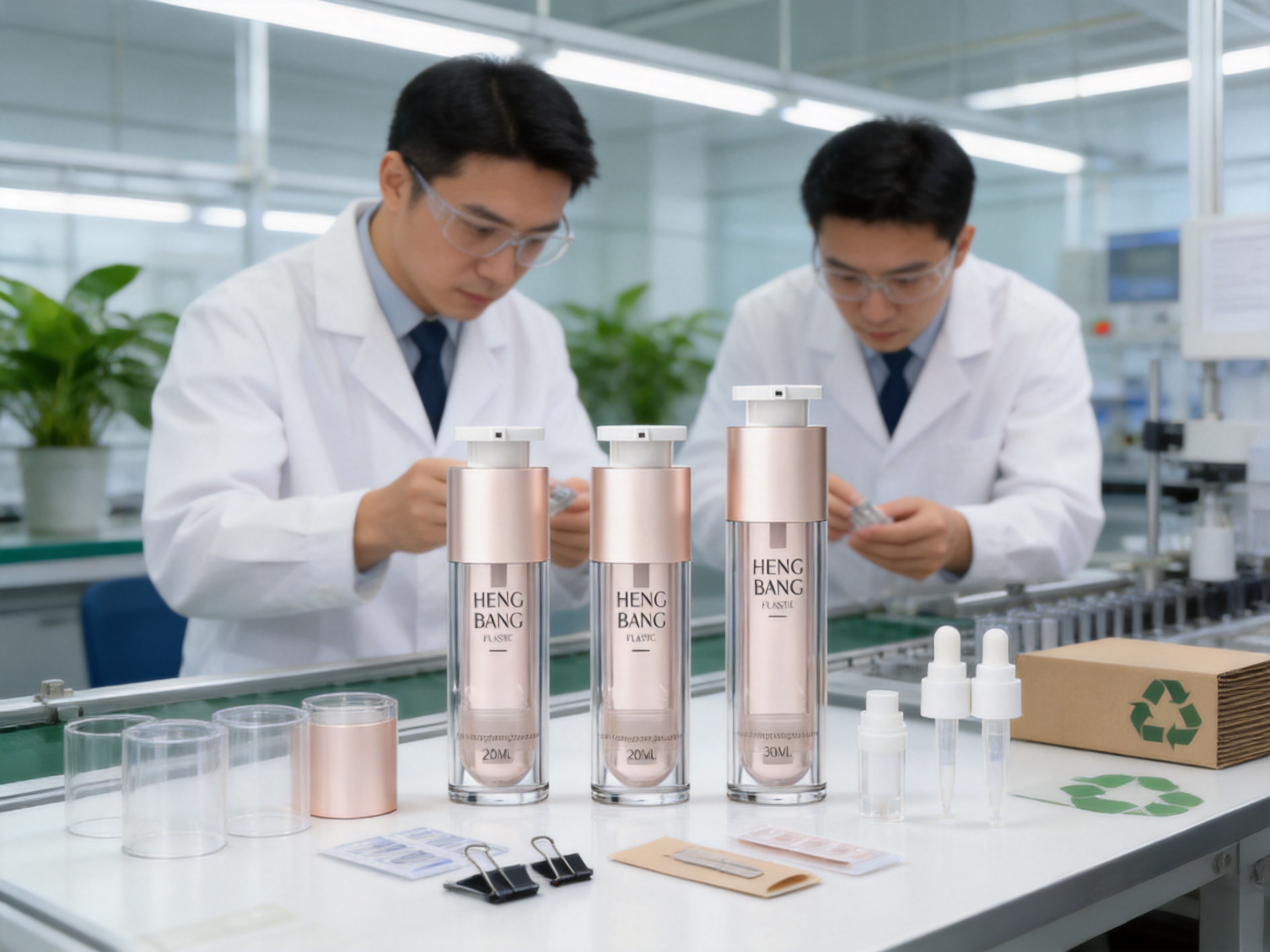
Facial serums often contain concentrated active ingredients and are sold at a higher price per milliliter than basic skincare products. Airless packaging helps protect these formulas and dispense them in controlled amounts. The 20 ml and 30 ml sizes are particularly suitable for premium serums, eye serums, antioxidant formulas, retinol alternatives, peptide treatments, and brightening products.
Lightweight lotions and emulsions benefit from pump packaging because consumers want quick, clean application. The 50 ml and 70 ml options are appropriate for daily moisturizing products. The airless system helps reduce product exposure and supports better evacuation than many conventional pump bottles.
Sunscreen packaging must be convenient and reliable. Consumers may use sunscreen outdoors, during travel, or while carrying it in a bag. The retaining clip helps prevent accidental dispensing, while the pump supports controlled application. The refillable structure may also appeal to consumers who use sunscreen frequently and need regular replenishment.
Professional skincare brands often prefer packaging that looks clean, technical, and hygienic. Airless bottles are well aligned with this positioning. The controlled pump and reduced contact with the formula help support a professional image. Refillable inner bottles can also support spa, salon, clinic, or subscription-based replenishment models.
The smaller capacities can be used for travel products, introductory kits, or sample-size premium treatments. A secure clip is useful for travel because it reduces the chance of leakage. Refillable systems can also be used for repeat travel formats if the brand provides compatible replacement inner bottles.
Before selecting any cosmetic package, brands should evaluate the formula, target market, decoration requirements, transportation conditions, and regulatory expectations. For this refillable airless bottle, formula viscosity is an important factor. Very thin liquids, very thick creams, or formulas with particles may require testing to confirm pump suitability. The bottle is suitable for many skincare products, but compatibility testing remains essential.
Brands should also consider the consumer instructions for refill replacement. Refillable packaging should be intuitive, but clear guidance helps improve user satisfaction. Instructions can be printed on the carton, included in an insert, or communicated through brand channels. The easier the refill process is to understand, the more likely consumers are to use it correctly.
Decoration durability should be evaluated because the outer bottle is intended for repeated use. If printing or coating wears off quickly, the refillable concept may lose appeal. Brands should choose decoration methods that match the expected use cycle and handling environment.
Logistics testing is also recommended. Cosmetic products may face vibration, pressure changes, temperature variation, and rough handling during shipping. The retaining clip helps reduce accidental dispensing, but finished products should still be tested in their final packaging configuration, including cartons, inserts, and shipping materials.
Yuyao Hengbang Plastic Co., Ltd. specializes in producing plastic packaging for cosmetics and skincare products. Since its establishment in 2006, the company has followed the business philosophy of quality, integrity, and customer first. This philosophy is important in packaging manufacturing because customers need stable quality, reliable communication, and long-term cooperation.
The company’s building area of 35,000 square meters and team of more than 300 employees provide a strong production foundation. Scale matters in cosmetic packaging because brands may need stable supply for seasonal launches, promotional campaigns, and long-term product lines. A manufacturer with sufficient facilities and personnel can better support production scheduling, quality inspection, and delivery coordination.
The company provides design and development services, which can help customers optimize packaging before mass production. This is valuable for brands that need customized colors, decoration, or structural adjustments. A professional development team can help evaluate feasibility, reduce design risk, and improve the final package.
Certifications such as ISO9001:2015 and ISO14001:2015 show that the company has established management systems for quality and environmental responsibility. The Ningbo High-Tech Enterprise recognition and invention patents demonstrate innovation capability. These strengths are important for brands looking for cosmetic packaging manufacturers that can support not only production but also long-term packaging improvement.
This bottle uses an airless dispensing system rather than a traditional dip-tube pump. A piston moves upward as the product is dispensed, helping reduce air entry and improve product evacuation. It also has a refillable structure with a permanent outer bottle and replaceable inner bottle.
Serums often contain active ingredients that may be sensitive to air exposure or contamination. Airless packaging helps protect the formula by reducing contact with outside air and allowing clean, controlled dispensing through the pump.
The user can keep the outer bottle and replace only the inner bottle after the formula is finished. Over multiple use cycles, this reduces the need to discard a complete bottle each time, lowering total packaging waste compared with single-use full containers.
The clip is made from PP, the pump is made from PP and ABS, the outer bottle is made from MS, and the inner bottle is made from PP. These materials are selected for function, durability, appearance, and practicality in cosmetic packaging.
The bottle is available in 20 ml, 30 ml, 50 ml, and 70 ml capacities. These options support products ranging from concentrated serums and eye treatments to lotions, sunscreens, and daily skincare emulsions.
The pump output is approximately 0.23 cc per actuation. This supports controlled dosage and helps consumers apply a consistent amount of product.
The retaining clip helps prevent accidental pressing of the nozzle during transportation, storage, or travel. It can reduce leakage risk and improve the consumer experience.
Yes, it can be suitable for sunscreen emulsions, depending on the formula’s viscosity and compatibility with the packaging materials. Brands should conduct formula compatibility and dispensing tests before final production.
Yes. The design includes a permanent outer bottle intended for repeated use. The inner bottle is replaceable after the product is used up.
Refillable airless packaging requires precise component fit, reliable pump performance, sealing control, and consistent assembly. An experienced manufacturer with quality systems and development capability can reduce project risk and improve final product reliability.
The HB-K022A/B Plastic Refillable Airless Serum Bottle represents a modern direction in cosmetic packaging: protective, refillable, hygienic, and suitable for premium skincare. Its airless dispensing system helps reduce air exposure and contamination, while its piston-based structure supports efficient product evacuation. The refillable design, with a permanent MS outer bottle and replaceable PP inner bottle, gives brands a practical way to reduce full-package disposal and build stronger sustainability messaging.
Its multiple capacities make it adaptable to serums, lotions, creams, sunscreens, toners, and treatment products. The retaining clip improves transport security, while the controlled pump output supports accurate use. Compared with standard pump bottles, jars, and non-refillable containers, this product offers a stronger balance of formula protection, user convenience, premium appearance, and environmental responsibility.
Behind the product is a manufacturer with years of experience in plastic cosmetic packaging, broad category knowledge, ISO9001:2015 and ISO14001:2015 certifications, a large production base, professional development capability, and recognized innovation strength. For skincare brands searching for cosmetic containers that align with modern consumer expectations, this refillable airless bottle offers a compelling packaging solution.
1. Cosmetic Packaging and Dispensing Systems: Principles of Airless Pump Design and Product Protection.
2. ISO9001:2015 Quality Management Systems: Requirements and Application in Manufacturing.
3. ISO14001:2015 Environmental Management Systems: Frameworks for Sustainable Industrial Production.
4. Modern Skincare Packaging Materials: Polypropylene, ABS, and Styrenic Materials in Cosmetic Containers.
5. Sustainable Beauty Packaging: Refill Systems, Reusable Components, and Consumer Adoption Trends.
6. Cosmetic Product Stability and Packaging Compatibility: Practical Considerations for Brands and Manufacturers.


Copyright © Yuyao Hengbang Plastic Co., Ltd.
All Rights Reserved.
 Wholesale Plastic Cosmetic Packaging Manufacturers