English
 中文简体
中文简体
News
Home > Author > Zhang Yuxin — Plastic Cosmetic Packaging Sales Representative > Plastic Airless Foundation Bottles for Premium Skincare and Beauty Packaging

 2026.06.12
 Zhang Yuxin — Plastic Cosmetic Packaging Sales Representative
Content
In the modern cosmetics and skincare market, packaging is no longer a simple container; it is a functional, protective, visual, and strategic part of the product experience. A foundation, serum, lotion, sunscreen, toner, or cream may be carefully developed with active ingredients, delicate textures, and brand-specific positioning, but its performance in the hands of consumers depends heavily on the packaging system that protects and dispenses it. The plastic airless foundation bottle introduced here is designed for brands that require clean dispensing, premium appearance, reliable compatibility, and a refined user experience in a compact cosmetic packaging format.
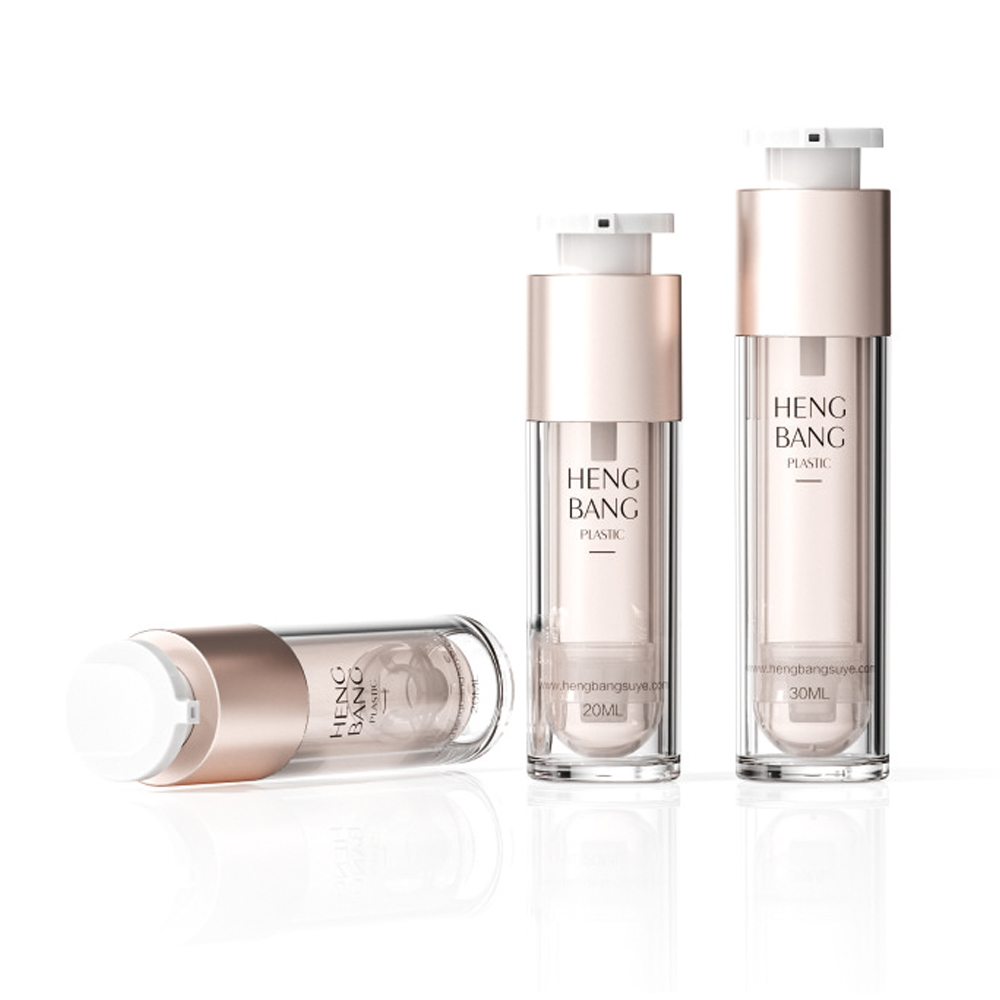
This plastic airless bottle features a clear PETG bottle body, an airless pump system, and a rose gold collar that gives the package a high-end visual identity. It is suitable for foundation and other skincare or beauty formulations, especially products that benefit from controlled dispensing and reduced exposure to air. With available capacities of 20 ml, 30 ml, 35 ml, and 45 ml, it supports trial-size products, travel packaging, boutique skincare lines, foundation packaging, and daily-use cosmetic products. The 0.23 cc dosage output helps users control product application and reduces unnecessary waste.
Compared with ordinary cosmetic bottles, jars, and traditional pump containers, this airless bottle provides stronger protection for sensitive formulas. Its airless technology helps minimize contact between the formula and external air during use, which is especially valuable for preservative-free, natural, botanical, or performance-focused products. The dispensing structure also reduces the risk of contamination because users do not need to dip fingers into the package or repeatedly expose the contents to the surrounding environment.
For beauty brands, the advantages extend beyond product protection. The customized appearance, transparent body, metallic collar effect, and smooth dispensing behavior all contribute to a polished retail presentation. A cosmetic package must communicate quality before the customer even opens it. This bottle is designed to do exactly that: it combines functional engineering with visual refinement, helping brands present their formulations with confidence on shelves, in online product images, and in the daily routines of consumers.
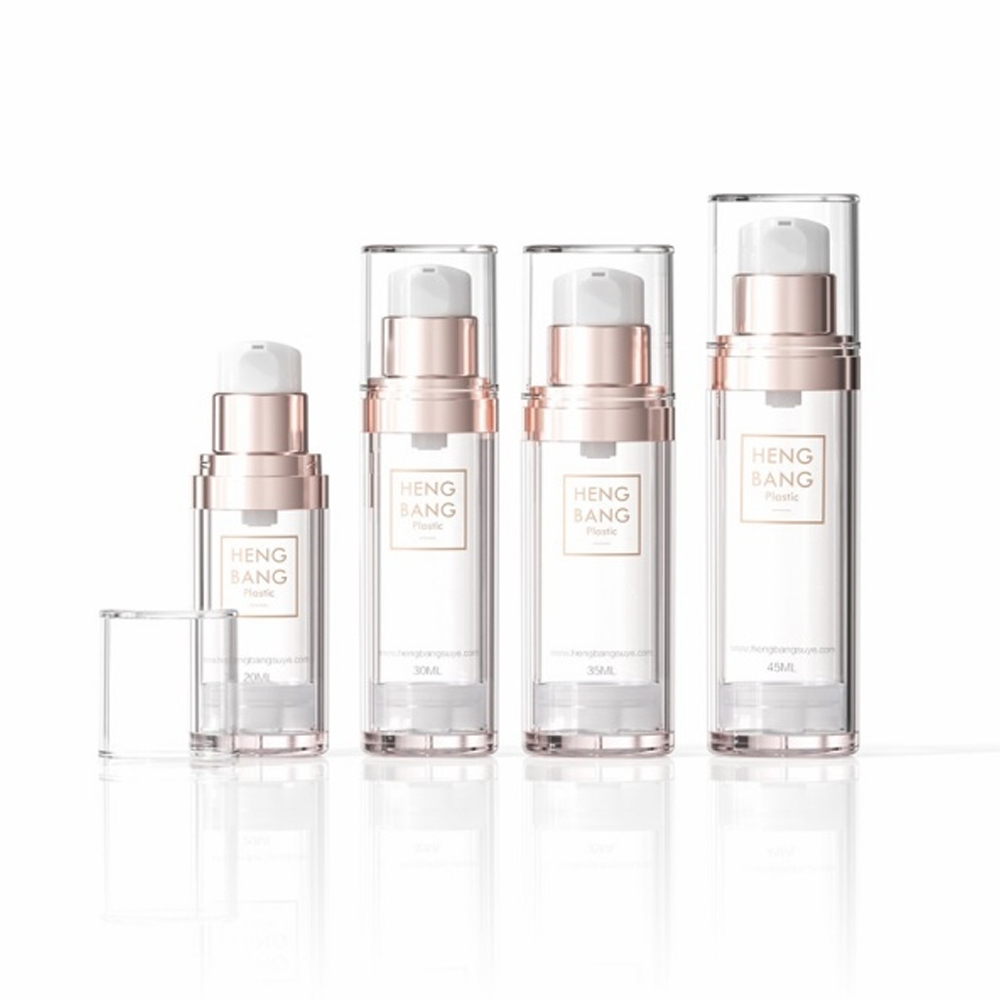
HB-K006 Plastic Airless Foundation Bottle
The plastic airless foundation bottle is a premium packaging solution designed for cosmetic and skincare applications where hygiene, dosage control, appearance, and material performance all matter. It is particularly suited for liquid foundation, primer, serum foundation, sunscreen, lotion, moisturizer, lightweight cream, essence, and similar formulations that require controlled dispensing. Its construction includes a PETG bottle body, a PP pump, and a cap made with MS and ABS materials. This material combination supports clarity, durability, pump performance, and attractive finishing options.
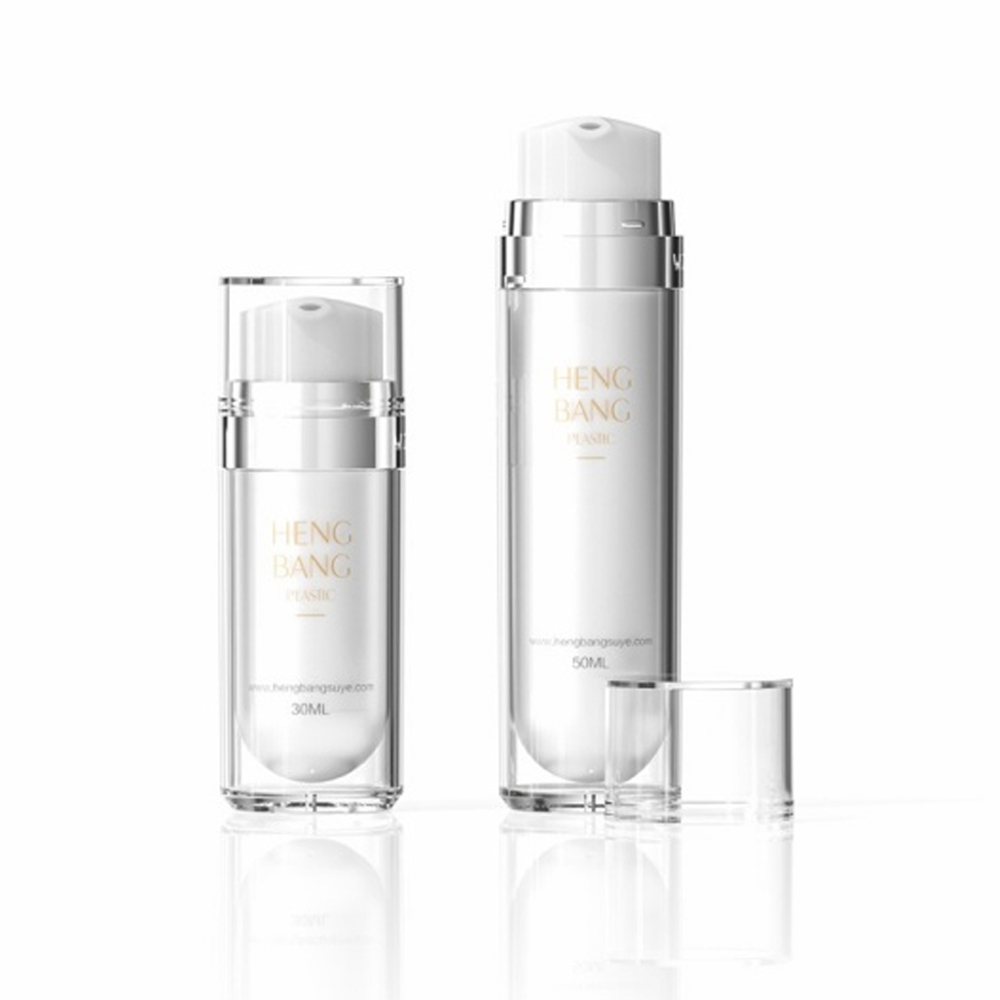
The bottle’s clear body provides excellent product visibility, allowing consumers to see the formula color, remaining volume, and product texture. This is especially important for foundation products, where shade recognition is a major purchase factor. A transparent package can help reduce shade-selection uncertainty and increase confidence at the point of sale. For skincare products, clarity also creates a clean, clinical, and modern appearance that aligns well with minimalist and premium brand concepts.
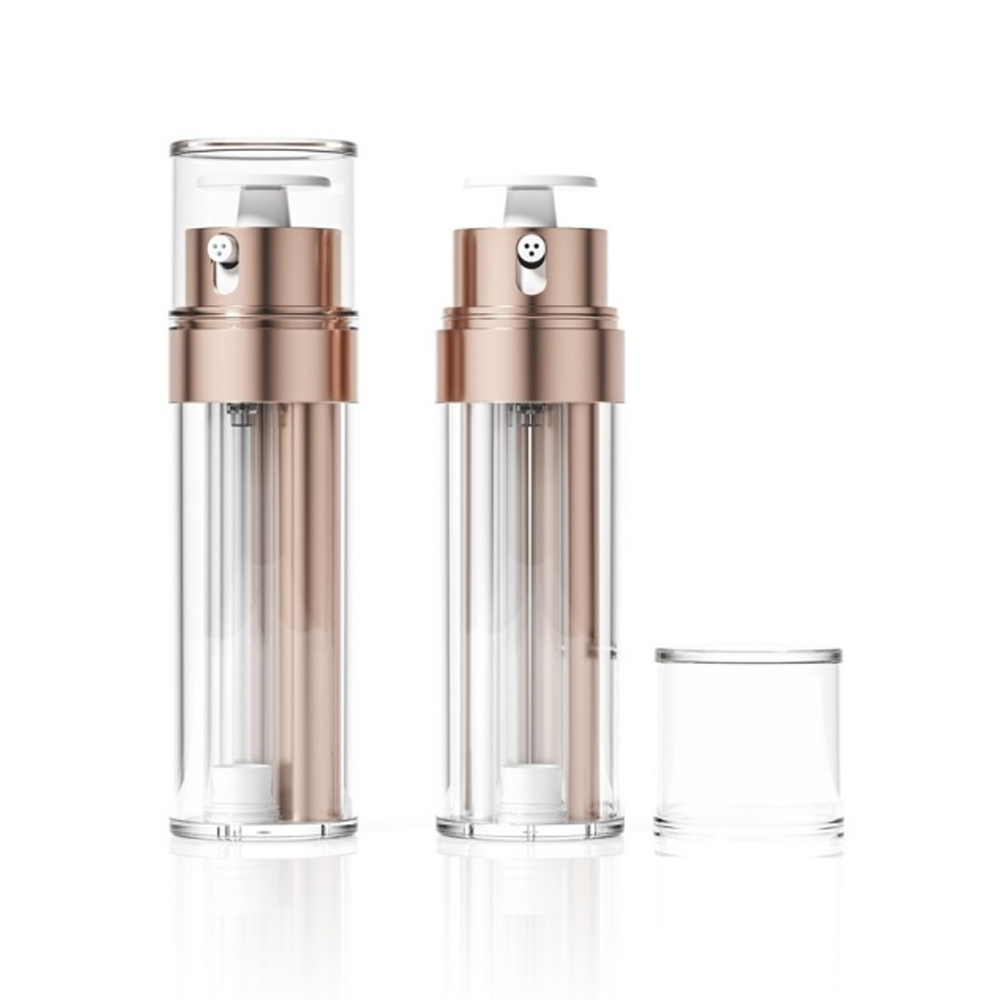
The rose gold collar adds a luxury accent without overwhelming the overall design. Rose gold remains popular in beauty packaging because it communicates softness, warmth, and sophistication. It can be paired with nude, white, black, transparent, pastel, or metallic brand palettes. Combined with a clear bottle, it creates an appearance that is both elegant and versatile, suitable for mass-premium, professional salon, boutique skincare, private-label cosmetics, and influencer-led beauty brands.
The airless pump is the central functional element. Unlike a simple open-mouth bottle or jar, the airless system helps deliver the product without requiring direct contact with the formula inside the bottle. Each press gives a measured dose of approximately 0.23 cc, improving consistency in application. This is valuable for both consumers and formulators. Consumers appreciate predictable use, while brands benefit from a packaging format that supports proper dosage and reduces complaints related to over-dispensing or messy application.
Item |
Specification |
Product Type |
Plastic airless foundation bottle |
Suitable Applications |
Foundation, lotion, serum, sunscreen, primer, moisturizer, essence, and personal care formulas |
Cap Material |
MS and ABS |
Pump Material |
PP |
Bottle Material |
PETG |
Available Capacities |
20 ml, 30 ml, 35 ml, 45 ml |
Height Options |
Approximately 102 mm, 120 mm, 119 mm, and 132 mm according to capacity |
Diameter Options |
Approximately 33 mm and 36.5 mm according to size |
Dosage Output |
Approximately 0.23 cc per pump |
Appearance |
Clear bottle with airless pump and rose gold collar |
Primary Advantages |
Controlled dispensing, reduced contamination risk, premium appearance, product visibility, and formula protection |
Cosmetic formulas are becoming more sophisticated. Consumers increasingly demand lightweight textures, high-performance active ingredients, botanical extracts, clean-label claims, and reduced preservative systems. These trends place higher demands on packaging. A traditional jar may be visually familiar, but it exposes the product to air and finger contact each time it is used. A simple bottle may be convenient, but without effective dispensing control, it can lead to excessive pouring, leakage, and product waste. Airless packaging responds to these challenges by improving protection and enhancing the user experience.
An airless bottle works by dispensing product through a pump system while reducing the amount of air that enters the product chamber. This helps maintain product freshness during repeated use. While packaging cannot replace proper formulation design, it can support formula stability by limiting unnecessary exposure to air and external contaminants. For foundations, this helps preserve texture and color consistency. For skincare products, it helps maintain the intended product experience from the first use to the final dose.
Another important advantage is hygienic use. Consumers increasingly understand that dipping fingers into a jar may introduce impurities. This is particularly relevant for facial products, eye-area products, and formulas designed for sensitive skin. Airless pump packaging offers a more hygienic alternative by allowing the user to dispense the product without opening the container or touching the remaining formula. This functional benefit can be communicated clearly in product marketing and can support premium positioning.
The airless format also helps improve the perceived value of a cosmetic product. When a consumer presses a pump and receives a smooth, consistent dose, the experience feels controlled and professional. This is different from squeezing a soft tube too hard, shaking a bottle to get the last portion out, or using a jar that becomes messy around the rim. In competitive cosmetic categories, these small moments influence brand loyalty. A well-designed bottle can make the formula feel more advanced and more enjoyable to use.
The plastic airless foundation bottle offers clear advantages when compared with conventional cosmetic packaging. In traditional jars, the user frequently opens the container fully, exposing the formula to air. This may be acceptable for certain thick creams, but it is less ideal for formulas where cleanliness, oxidation control, and accurate dosing are priorities. A jar can also make usage less consistent because consumers may take too much or too little product each time. The airless bottle’s pump output helps standardize the amount dispensed.
Compared with squeeze tubes, the airless bottle offers a more premium appearance and more controlled delivery. Tubes are flexible and practical, but they may deform during use, can appear less luxurious, and may dispense inconsistently depending on hand pressure. For foundation products, excessive squeezing can waste product and create mess. In contrast, the airless pump delivers a measured quantity with each press. This helps users build coverage gradually and improves the overall application process.
Compared with standard pump bottles that allow air intake, the airless bottle supports better formula protection. Standard pumps may draw air into the container as product is dispensed, increasing exposure over time. For many basic formulas, this may be acceptable, but for brands emphasizing natural ingredients, reduced preservatives, or delicate textures, an airless system is a stronger choice. It aligns with consumer expectations for safer, cleaner, and more technologically advanced packaging.
Compared with glass foundation bottles, this PETG-based plastic format can provide better resistance to breakage and lighter weight. Glass has a premium image, but it may be heavier, more fragile, and less convenient for travel or e-commerce shipping. PETG offers clarity and attractive appearance while improving portability and reducing the risk of breakage during handling. For online beauty brands, subscription boxes, travel kits, and professional makeup artists, a lighter and more durable package can be a meaningful advantage.
Compared with low-cost plastic bottles, this airless foundation bottle presents a more refined structure and more sophisticated decoration potential. The combination of transparent PETG, PP pump engineering, MS/ABS cap components, and rose gold collar detailing helps the package compete in premium cosmetic segments. It is not simply a container; it is part of the brand’s visual and functional promise.
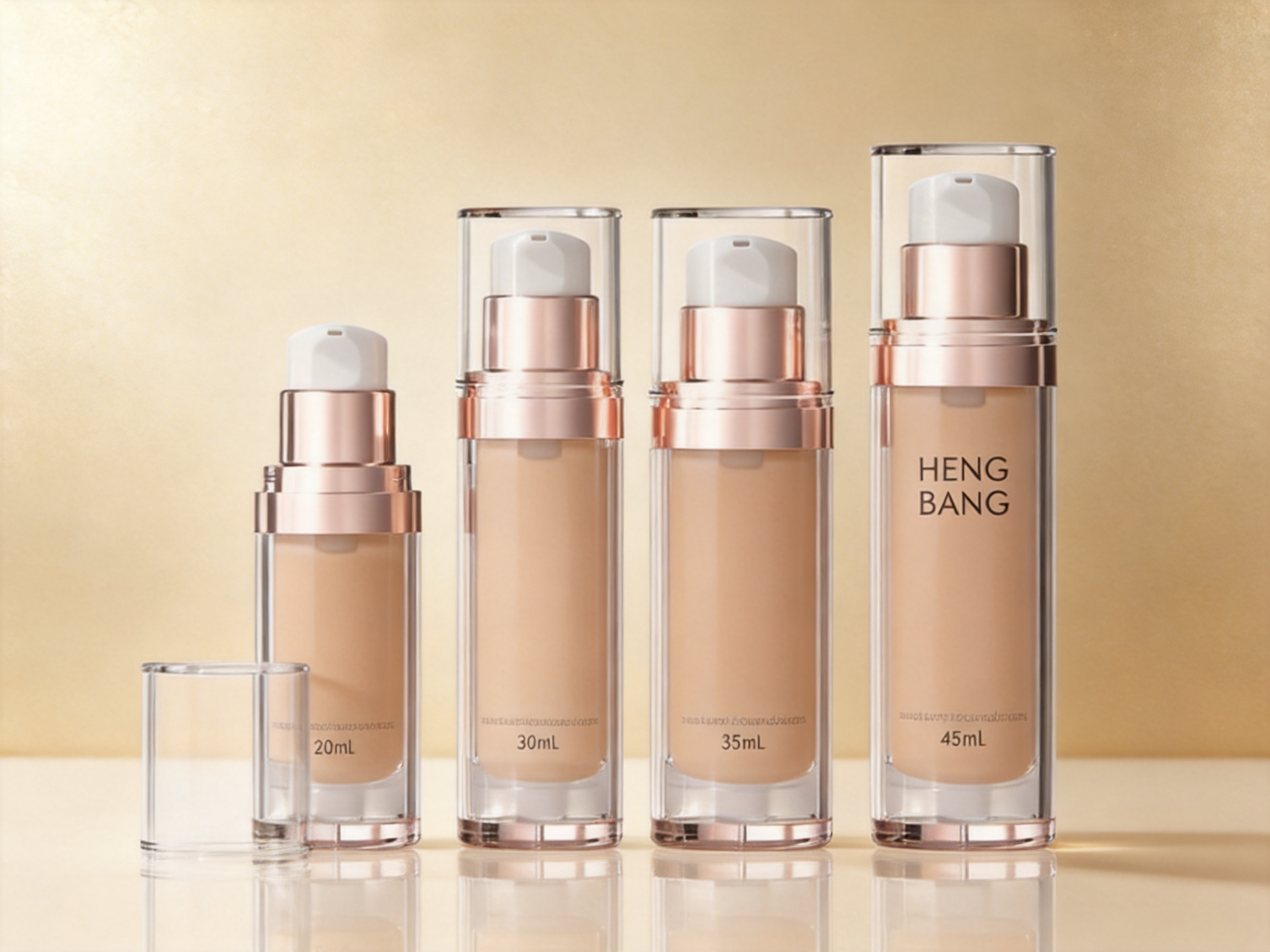
The material selection of a cosmetic bottle influences clarity, durability, compatibility, processing quality, and final appearance. In this airless bottle, PETG is used for the bottle body. PETG is valued in cosmetic packaging because it can provide excellent transparency, toughness, and a clean appearance. A transparent PETG bottle allows the formula to become part of the visual design. This is especially useful for foundation shades, tinted skincare, illuminating primers, and products with unique colors.
The pump is made from PP, a widely used plastic in cosmetic dispensing components due to its practicality, chemical resistance, and processability. A pump must operate smoothly through repeated use, maintain consistent dosage, and support compatibility with a range of cosmetic formulations. PP is a reliable choice for this purpose. Its role in the dispensing mechanism is essential because the consumer interacts with the pump every time the product is used.
The cap uses MS and ABS materials. ABS is known for strength and rigidity, while MS can support clarity and aesthetic requirements depending on the component design. Together, these materials help create a cap structure that protects the pump and contributes to a clean, finished appearance. A cap is often underestimated, but it matters greatly in retail presentation and consumer handling. It prevents accidental pressing, helps keep the dispensing area cleaner, and completes the package silhouette.
The rose gold collar creates a decorative highlight that elevates the overall design. In cosmetic packaging, metal-like accents can provide a premium impression even when the main container is plastic. This allows brands to achieve a luxury look while keeping the package lightweight and practical. The collar can coordinate with printed logos, hot stamping, labeling, or other brand decoration methods, depending on the final customization requirements.
The bottle’s cylindrical form provides a balanced shape that is easy to hold, display, and pack. The available diameters of approximately 33 mm and 36.5 mm support compact size options while maintaining good hand feel. The height options allow brands to select a capacity that fits the product positioning. Smaller sizes can be used for travel kits, samples, trial sets, or high-value concentrated products. Larger sizes are suitable for daily-use products and full-size retail packaging.
The 0.23 cc dosage output is one of the most important performance characteristics of this bottle. In foundation packaging, controlled dispensing directly affects user satisfaction. Too much product can lead to waste, cakey application, and messy packaging. Too little product may require repeated pressing and frustrate the user. A measured output of approximately 0.23 cc provides a balanced amount suitable for gradual application.
For liquid foundation, consumers often prefer to build coverage in layers. A controlled pump allows them to dispense one or two doses, apply evenly, and add more only if needed. This supports modern makeup techniques that emphasize natural finish, skin-like texture, and precision. For skincare, the same dosage control helps consumers apply a consistent amount of serum, lotion, sunscreen, or moisturizer. Consistency can improve perceived results and reduce overuse.
From a brand perspective, dosage control supports product value. When a package dispenses too much product, consumers may finish it quickly and perceive poor value. When dispensing is difficult or inconsistent, they may blame the formulation. A reliable pump creates a smoother relationship between product design and consumer expectation. It also helps brands provide clearer usage instructions, such as one pump for targeted application or two pumps for full-face coverage.
The pump system also contributes to a cleaner package exterior. Products like foundation and sunscreen can easily stain caps, shoulders, and labels if dispensing is uncontrolled. A precise pump reduces dripping and helps keep the bottle looking attractive throughout its use cycle. This is particularly important for beauty products that consumers leave on vanities, carry in makeup bags, or photograph for social media.
Although the bottle is described as a foundation bottle, its application range is broader. It can be used for liquid foundation, serum foundation, BB cream, CC cream, primer, tinted moisturizer, facial lotion, essence, sunscreen, anti-aging serum, moisturizing emulsion, and personal care formulas. Its airless function makes it especially suitable for products where freshness, cleanliness, and precise dispensing are valuable selling points.
For foundation and complexion products, the clear bottle allows shade visibility. This is important because customers often compare color families before purchase. A transparent package can reduce reliance on printed shade indicators alone. It also helps brands create visually coordinated product lines, where different shades form an attractive display.
For sunscreen products, controlled dispensing and reduced exposure are meaningful advantages. Sunscreen formulas must be applied correctly, and a pump can support convenient use. The compact size options also make the bottle suitable for facial sunscreen, travel sunscreen, and premium sun-care products. A clean airless system can help consumers feel that the product remains fresh and hygienic during daily application.
For serums and lotions, the airless design supports premium skincare positioning. Many modern skincare brands promote active ingredients, botanical extracts, or reduced preservative formulas. Packaging that helps minimize contamination risk complements these claims. The refined appearance also supports products sold in department stores, spas, clinics, beauty salons, and online premium skincare channels.
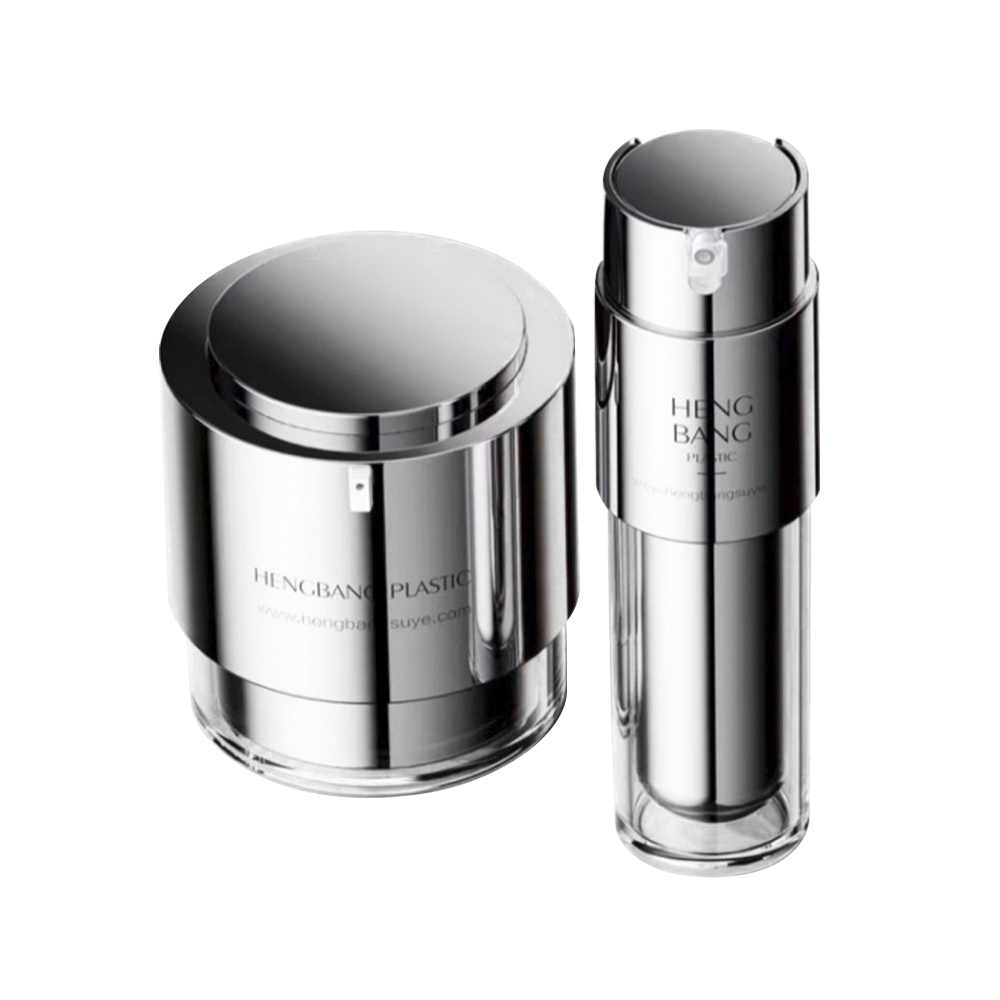
For personal care products, the bottle can serve as a clean and elegant package for hand lotion, neck cream, lightweight body emulsion, or targeted treatment products. The 20 ml to 45 ml capacity range is practical for compact products where portability and controlled usage matter. Brands can build sets using multiple capacities, pairing the airless bottle with cosmetic jars, toner bottles, lotion bottles, sunscreen bottles, and double chamber bottles to create a coordinated packaging family.
The availability of 20 ml, 30 ml, 35 ml, and 45 ml capacities gives brands flexibility in product planning. Capacity is not merely a technical specification; it affects price positioning, perceived value, usage occasion, retail channel, and shipping cost. A well-chosen capacity can make a product more competitive and easier to market.
The 20 ml size is suitable for travel products, trial launches, gift sets, subscription boxes, and high-value formulas. For foundation, it can serve as a compact format that allows consumers to test a shade or formula without committing to a larger bottle. For skincare, it can be used for concentrated serums or limited-edition sets. Smaller packaging is also useful for brands entering new markets, where trial size can reduce purchase barriers.
The 30 ml size is a classic capacity for foundation and skincare. Many consumers are familiar with 30 ml as a standard cosmetic volume, making it easy to position as a full-size product. It provides a balance between portability and sufficient usage duration. For a new foundation line, 30 ml can be a strong main retail size.
The 35 ml size offers a slightly larger value proposition while remaining compact. It can differentiate a product from standard 30 ml competitors by offering a little more content without making the package bulky. This can be useful for brands that want to emphasize value, daily use, or extended product life.
The 45 ml size is suitable for products used more generously, such as lotion, sunscreen, moisturizer, or body-focused formulations. It can also be used for premium foundation products where the brand wants to provide extended use. The taller bottle silhouette offers more visual presence on the shelf and can create a more substantial impression in the consumer’s hand.
Cosmetic packaging must compete visually in both physical and digital environments. On retail shelves, a product may be surrounded by dozens of competing bottles, tubes, jars, and cartons. Online, it must stand out in small product thumbnails and lifestyle photography. The clear PETG body, rose gold collar, and airless pump structure help create a package that communicates refinement, cleanliness, and modern beauty technology.
Transparency is an especially powerful design feature. It allows the formula itself to become part of the package identity. For foundation, shade visibility is practical and attractive. For skincare, transparency suggests purity and simplicity. It also allows brands to use the color of the formula as a design element, reducing the need for excessive decoration. Minimalist brands can use clean printing and subtle metallic accents; more expressive brands can combine the clear body with color labels, gradient effects, or decorative sleeves.
The rose gold collar adds warmth and a premium signal. Compared with plain white or black components, a metallic accent can make a product feel more luxurious. Rose gold works well for beauty products aimed at elegance, softness, and modern femininity, but it can also be adapted to gender-neutral branding when paired with clean typography and transparent materials.
The package’s smooth shape supports easy labeling and decoration. Brands can apply logos, product names, shade numbers, ingredient highlights, usage instructions, and regulatory information in a clean layout. Because the bottle already has a premium structural appearance, decoration can remain refined rather than excessive. This helps the final product look more professional and less cluttered.
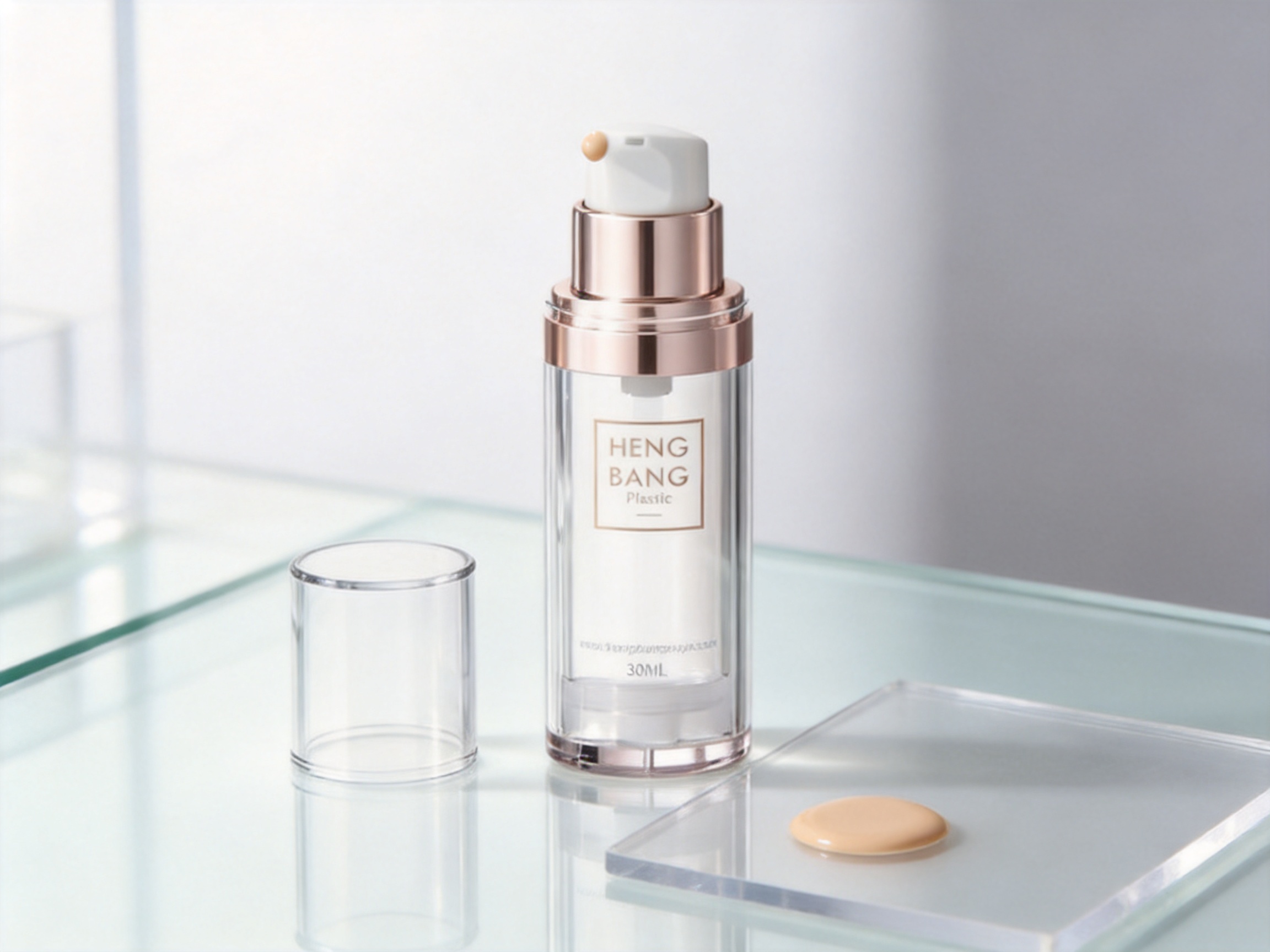
High-quality cosmetic packaging requires more than a good design concept. It depends on disciplined manufacturing, material knowledge, mold precision, assembly control, testing, and quality management. Yuyao Hengbang Plastic Co., Ltd. has developed its expertise in plastic cosmetic packaging since 2006. With a building area of 35,000 square meters and more than 300 employees, the company has the scale and experience required to support cosmetic brands with reliable packaging solutions.
The company specializes in plastic packaging for cosmetics and skincare products, including cosmetic bottle sets, airless bottles, double chamber bottles, lotion bottles, plastic cream jars, sunscreen bottles, and toner bottles. This broad product range is important because many cosmetic brands need packaging consistency across multiple product categories. A foundation bottle may need to match a toner bottle, cream jar, or sunscreen container within the same product line. A manufacturer with multiple packaging categories can help brands create unified visual systems and reduce sourcing complexity.
The company’s young and professional team provides services that include design and development. This matters because packaging projects often require more than selecting an existing mold. Brands may need guidance on capacity, decoration, material selection, dispensing systems, matching caps, color coordination, and market suitability. A manufacturer with design and development capabilities can help transform a brand concept into a practical, manufacturable, and attractive package.
The company has passed ISO9001:2015 and ISO14001:2015 certifications. ISO9001:2015 reflects a quality management system focused on consistent processes, customer satisfaction, and continual improvement. ISO14001:2015 reflects environmental management practices. For cosmetic brands, these certifications provide additional confidence when selecting a packaging supplier. They indicate that the manufacturer operates with structured systems rather than relying only on informal production habits.
The company was awarded as a Ningbo High-Tech Enterprise in 2021 and owns multiple invention patents. These strengths support its position as a manufacturer capable of technical development and innovation. In cosmetic packaging, innovation may involve improved structures, better dispensing performance, more attractive decoration methods, improved production efficiency, and enhanced product reliability. Patents and high-tech recognition suggest that the company values advancement and continuous development.
The production of a plastic airless foundation bottle involves multiple stages, each requiring careful control. While each manufacturer may use its own specific production methods, high-quality cosmetic packaging generally depends on accurate material preparation, precision molding, component finishing, pump assembly, decoration, inspection, and packing. For an airless bottle, the relationship between the pump, bottle, cap, collar, and internal dispensing structure must be carefully controlled to ensure smooth operation.
Material selection is the first stage. PETG, PP, MS, and ABS must be chosen according to performance requirements. Clarity, toughness, rigidity, pump resilience, surface finish, and compatibility all influence final product quality. Materials must be processed under appropriate conditions to avoid defects such as haze, deformation, flow marks, weak sealing, or inconsistent dimensions.
Mold precision is another critical factor. Cosmetic packaging components are often judged visually and functionally. Consumers notice uneven surfaces, poor fit, scratches, loose caps, and unstable pumps. Precision molds help ensure consistent dimensions and smooth assembly. For airless packaging, dimensional accuracy is especially important because the pump system must create reliable dispensing behavior. Even small variations can affect dosage, sealing, or user feel.
Injection molding and related plastic forming processes must be controlled for temperature, pressure, cooling, and cycle stability. The goal is to produce components with consistent appearance and mechanical performance. Clear PETG components require special attention because transparency makes defects more visible. A clean, glossy, and uniform bottle body creates a stronger premium impression.
Assembly requires accuracy and cleanliness. The pump, collar, cap, and bottle body must fit securely. The dispensing system must operate smoothly and deliver the intended output. Components should be assembled in a controlled manner to reduce contamination and prevent damage to visible surfaces. For cosmetic packaging, scratches or fingerprints can affect perceived quality even if the package remains functional.
Quality inspection is essential throughout production. Checks may include appearance inspection, dimensional verification, pump performance testing, dosage consistency testing, fit testing, leakage assessment, and packing inspection. A structured quality management system helps identify issues early and maintain consistency across large production batches. For brands launching products internationally or across multiple sales channels, consistent packaging quality is essential for brand reputation.
Decoration and customization also require technical skill. Cosmetic brands often need color matching, printing, hot stamping, labeling, metallized effects, or other finishing options. The clear bottle and rose gold collar provide a strong base design, but customization allows each brand to create a distinctive identity. Decoration must be durable and aligned with the bottle material and intended use environment. For products carried in bags or handled daily, decoration should resist wear and maintain appearance.
Reliability is a major factor in cosmetic packaging selection. A beautiful bottle is not enough if the pump fails, the cap loosens, the decoration wears quickly, or the product leaks during shipping. The airless foundation bottle is designed to address these concerns through controlled dispensing, appropriate material selection, and manufacturing discipline.
ISO9001:2015 certification supports quality management by emphasizing documented processes, traceability, corrective action, and continual improvement. For cosmetic brands, this can reduce sourcing risk. Packaging failures can be costly because they may delay product launches, cause customer complaints, or damage inventory. Working with a manufacturer that values quality systems helps brands protect their timelines and reputation.
ISO14001:2015 certification also matters in today’s market. Consumers and brand owners increasingly consider environmental responsibility when selecting packaging. While plastic remains important for performance, safety, and lightweight durability, responsible production management can help reduce environmental impact. Environmental management systems encourage resource awareness, waste control, and compliance with relevant requirements.
The company’s philosophy of quality, integrity, and customer first is reflected in its long-term focus on cosmetic packaging specialization. Since its establishment, it has followed market demands and pursued higher levels of specialization. This is important because cosmetic packaging trends change quickly. Brands may request new looks, new capacities, new dispensing systems, and more refined decoration. A specialized manufacturer can respond more effectively than a general plastic product supplier.
Customization is one of the most important reasons brands select a professional cosmetic packaging supplier. The same bottle structure can support multiple market identities depending on decoration, color, and formula pairing. A clear bottle with a rose gold collar can be positioned as luxurious, natural, clinical, glamorous, minimalist, or professional depending on the branding approach.
For a premium foundation line, the bottle can be decorated with elegant typography, shade numbering, and subtle metallic accents. The transparent body allows the foundation shade to remain visible, while the collar reinforces a luxury identity. For a clean skincare line, the bottle can use simple black or white printing, emphasizing active ingredients and airless protection. For a sunscreen line, the bottle can combine clear or tinted visual elements with fresh colors and practical usage claims.
Brands can also create product families by matching the airless foundation bottle with other packaging types such as lotion bottles, toner bottles, cream jars, sunscreen bottles, and double chamber bottles. A unified packaging system improves shelf impact and strengthens brand recognition. When consumers see consistent shapes, colors, and decoration styles across a product range, the brand appears more organized and professional.
Customization can also support different retail strategies. A 20 ml bottle can be used for discovery kits, while a 30 ml or 35 ml bottle can serve as the main retail product. A 45 ml bottle can be positioned as a value size or daily care option. By combining capacity planning with customized decoration, brands can create a complete product architecture using one consistent airless packaging concept.
Clean beauty, natural skincare, and preservative-conscious formulations place special emphasis on packaging. Consumers who choose these products often expect hygienic, protective, and visually clean packaging. Airless bottles are well aligned with this expectation because they reduce the need for repeated opening and direct contact with the formula.
Natural formulations may contain botanical extracts, oils, vitamins, or other ingredients that benefit from reduced air exposure. Although formulation stability must be validated through proper testing, airless packaging can support the overall preservation strategy by limiting unnecessary exposure during consumer use. This makes it suitable for brands that emphasize freshness and responsible formulation.
Preservative-free or reduced-preservative products must be handled carefully. Packaging alone cannot guarantee safety, but it is a key part of the product protection system. Compared with jars, airless pump bottles offer a more hygienic user interaction. This can help brands communicate a more advanced and responsible approach to product delivery.
The clear PETG body also supports clean beauty aesthetics. Transparency, minimal decoration, and controlled dispensing all communicate simplicity and trust. Consumers can see the product, understand the amount remaining, and use it cleanly. These qualities support the emotional language of clean beauty: purity, care, control, and confidence.
The growth of e-commerce has changed packaging requirements. Products must look good online, survive shipping, and provide a positive unboxing experience. A plastic airless bottle offers practical advantages compared with heavier or more fragile alternatives. PETG provides clarity and a premium look while reducing the risk of breakage associated with glass. This can be valuable for online beauty brands that ship directly to consumers.
Lightweight plastic packaging can also help manage shipping costs and reduce damage complaints. In e-commerce, a damaged package can lead to refunds, negative reviews, and brand dissatisfaction. A durable plastic bottle with a secure cap and controlled pump can improve the customer experience from delivery to daily use.
The compact format is convenient for consumers. The bottle can fit into makeup bags, travel pouches, bathroom shelves, salon kits, and professional makeup cases. The cap protects the pump from accidental pressing, while the pump provides quick and clean application. These everyday usability details matter because consumers judge a beauty product not only by its formula but also by how easily it fits into their routine.
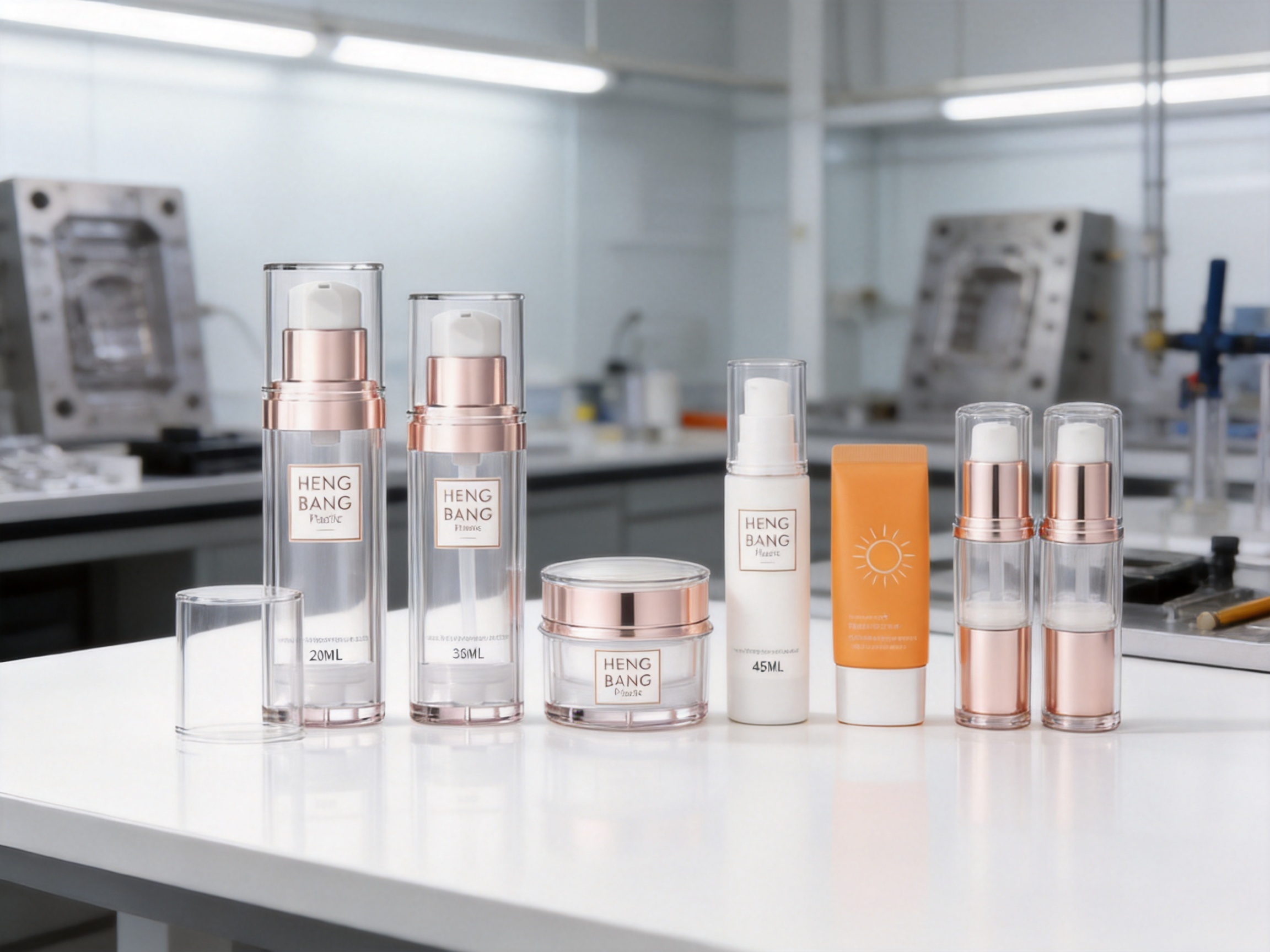
Competition in cosmetics is intense. Many products offer similar claims, textures, or ingredient stories. Packaging can become a decisive point of differentiation. This airless foundation bottle helps brands compete through five main advantages: protection, precision, appearance, practicality, and customization potential.
Protection comes from the airless dispensing structure that helps reduce air exposure and contamination risk. Precision comes from the 0.23 cc dosage output, which supports controlled application and reduces waste. Appearance comes from the clear bottle and rose gold collar, creating a premium visual impact. Practicality comes from lightweight PETG, multiple capacities, and user-friendly operation. Customization potential comes from the bottle’s adaptable design, which can support different brand identities.
Compared with competitors using basic jars or low-cost pump bottles, brands using airless packaging can communicate higher value. They can emphasize hygienic dispensing, better formula care, controlled dosage, and modern packaging technology. These benefits are easy for consumers to understand and can be explained in product pages, packaging copy, training materials, and retail displays.
Compared with brands using glass bottles, this plastic airless option can offer improved portability and reduced breakage risk while still maintaining a premium appearance. This is particularly important for brands selling through online channels or targeting consumers who travel frequently. The bottle provides a balance between elegance and practicality.
Compared with generic airless bottles, the clear PETG body and rose gold collar provide stronger shelf appeal. The package does not look overly clinical or plain. It offers a beauty-oriented design suitable for foundation and skincare products where visual attraction matters. This combination of function and beauty is what makes the bottle competitive.
This airless bottle is suitable for multiple product positioning strategies. For a luxury foundation line, it can be used to emphasize refined dispensing, shade visibility, and premium metallic detailing. For a clean skincare line, it can support claims related to hygienic application and formula protection. For a professional salon or spa brand, it provides a polished and reliable package that looks appropriate in treatment rooms and retail areas.
For private-label cosmetic brands, the bottle offers a strong ready-to-customize base. Private-label products must often enter the market quickly while still appearing distinctive. A premium airless bottle can elevate the perceived quality of the formula and help a new brand compete with established names.
For indie beauty brands, the capacity options allow flexible launch planning. A brand can begin with one size and later expand into additional sizes or related packaging categories. The bottle’s visual appeal can help create strong product photography, which is essential for social media marketing and online sales.
For established brands, the bottle can support line extensions, limited editions, seasonal launches, travel kits, and upgraded packaging transitions. Replacing a jar or basic pump bottle with an airless format can refresh a product and create a new marketing story without changing the formula itself.
This bottle is suitable for liquid foundation, primer, serum foundation, facial lotion, moisturizer, sunscreen, essence, lightweight cream, BB cream, CC cream, and similar cosmetic or skincare products. It is especially useful for formulas that benefit from hygienic dispensing and controlled dosage.
Airless packaging reduces the need to open the container and touch the formula directly. This helps minimize contamination risk and supports better formula protection during repeated use. A jar may be convenient for some thick creams, but it exposes the contents to air and finger contact each time it is opened.
The pump output is approximately 0.23 cc per press. This controlled dosage helps consumers apply foundation, lotion, serum, or sunscreen more consistently while reducing product waste.
The available capacities are 20 ml, 30 ml, 35 ml, and 45 ml. These sizes support trial products, travel packaging, standard retail foundation, daily skincare, and larger-use products such as sunscreen or lotion.
The bottle body is made from PETG, the pump is made from PP, and the cap uses MS and ABS materials. This material combination supports clarity, durability, reliable pump performance, and an attractive cosmetic appearance.
The clear body allows consumers to see the foundation shade directly. This can improve shade selection, enhance shelf appeal, and make the product more visually informative in both retail stores and online product images.
The rose gold collar adds a premium decorative accent. It creates a refined and elegant look that can help the product stand out from ordinary plastic bottles and support higher-value brand positioning.
Yes, it is suitable for many clean beauty and natural skincare products because airless dispensing helps reduce exposure to air and external contact during use. However, each formula should still be tested for compatibility and stability with the selected packaging.
The measured pump output helps consumers dispense a controlled amount rather than pouring or squeezing out too much. This is especially useful for foundation and high-value skincare formulas where precise application matters.
The manufacturer has specialized in cosmetic and skincare plastic packaging since 2006, with a 35,000-square-meter building area and more than 300 employees. It has ISO9001:2015 and ISO14001:2015 certifications, design and development capabilities, high-tech enterprise recognition, and multiple invention patents.
When selecting this airless bottle for a product line, brands should begin by identifying the formula’s viscosity, application method, target price, and desired usage period. Foundation and serum products may perform best in 20 ml or 30 ml sizes, while lotions and sunscreens may benefit from 35 ml or 45 ml options. The selected size should align with consumer expectations in the target market.
Brands should also evaluate decoration early in the development process. Because the bottle is clear and already includes a rose gold accent, decoration should complement rather than overwhelm the structure. Minimalist printing, elegant labels, shade identification, and subtle metallic elements can all work well. For foundation ranges, clear shade names and numbers are important for consumer convenience.
Formula compatibility testing is essential. Even when materials are commonly used in cosmetic packaging, each formula has unique properties. Oils, solvents, pigments, fragrances, UV filters, and active ingredients may interact differently with packaging materials. Brands should conduct stability, leakage, pump performance, and aging tests before full production.
Brands should consider the full consumer journey. The bottle must look attractive in marketing images, feel comfortable in the hand, dispense cleanly, remain stable during shipping, and maintain appearance during use. This plastic airless foundation bottle is designed to support these requirements, making it a strong candidate for brands seeking a balance of beauty, performance, and practicality.
The plastic airless foundation bottle is a compelling packaging choice for modern cosmetic and skincare brands. It combines PETG clarity, PP pump performance, MS/ABS cap construction, a rose gold decorative collar, and airless dispensing technology in a compact and elegant format. With capacities of 20 ml, 30 ml, 35 ml, and 45 ml, it supports a wide range of product strategies, from trial sizes and travel kits to premium foundation and daily skincare products.
Its main advantages are clear: controlled 0.23 cc dispensing, reduced contamination risk, improved formula protection, product visibility, premium shelf appeal, and customization potential. Compared with jars, squeeze tubes, standard pump bottles, and fragile glass packaging, it offers a balanced solution that meets the needs of both brands and consumers. It helps protect the formula, improves application control, and enhances the perceived value of the product.
Behind the product is the manufacturing strength of Yuyao Hengbang Plastic Co., Ltd., a specialized cosmetic packaging manufacturer established in 2006. With a large production base, professional team, design and development services, ISO9001:2015 and ISO14001:2015 certifications, high-tech enterprise recognition, and multiple invention patents, the company provides the technical and operational foundation needed for reliable cosmetic packaging supply.
For brands developing foundation, skincare, sunscreen, lotion, or personal care products, this airless bottle offers a practical and premium packaging solution. It supports clean beauty trends, e-commerce requirements, retail shelf appeal, and consumer demand for hygienic, controlled, and attractive packaging. In a market where packaging plays a vital role in product success, this bottle provides a strong combination of function, beauty, and manufacturing reliability.
ISO 9001:2015, Quality Management Systems Requirements, International Organization for Standardization.
ISO 14001:2015, Environmental Management Systems Requirements with Guidance for Use, International Organization for Standardization.
Soroka, W., Fundamentals of Packaging Technology, Institute of Packaging Professionals.
Paine, F. A., and Paine, H. Y., A Handbook of Food Packaging, Springer, packaging principles applicable to protective container design.
Lockhart, H., and Paine, F. A., Packaging of Pharmaceuticals and Healthcare Products, Springer, guidance on protective and hygienic packaging concepts.
Cosmetics Europe, Guidelines for Cosmetic Product Stability Testing and Packaging Compatibility Evaluation.
Robertson, G. L., Food Packaging: Principles and Practice, CRC Press, reference for material selection, barrier concepts, and packaging performance principles.


Copyright © Yuyao Hengbang Plastic Co., Ltd.
All Rights Reserved.
 Wholesale Plastic Cosmetic Packaging Manufacturers