English
 中文简体
中文简体
News
Home > Author > Zhang Yuxin — Plastic Cosmetic Packaging Sales Representative > Plastic Airless Lotion Bottles for Modern Skincare Packaging

 2026.05.21
 Zhang Yuxin — Plastic Cosmetic Packaging Sales Representative
Content
In competitive skincare and cosmetics markets, packaging is no longer a simple container. It is a performance system, a brand communication tool, a user-experience component, and a quality-protection barrier. The plastic airless lotion bottle described here is designed for brands that need a clean visual identity, dependable dispensing, and practical protection for creams, lotions, serums, sunscreens, toners, and other skincare formulas.
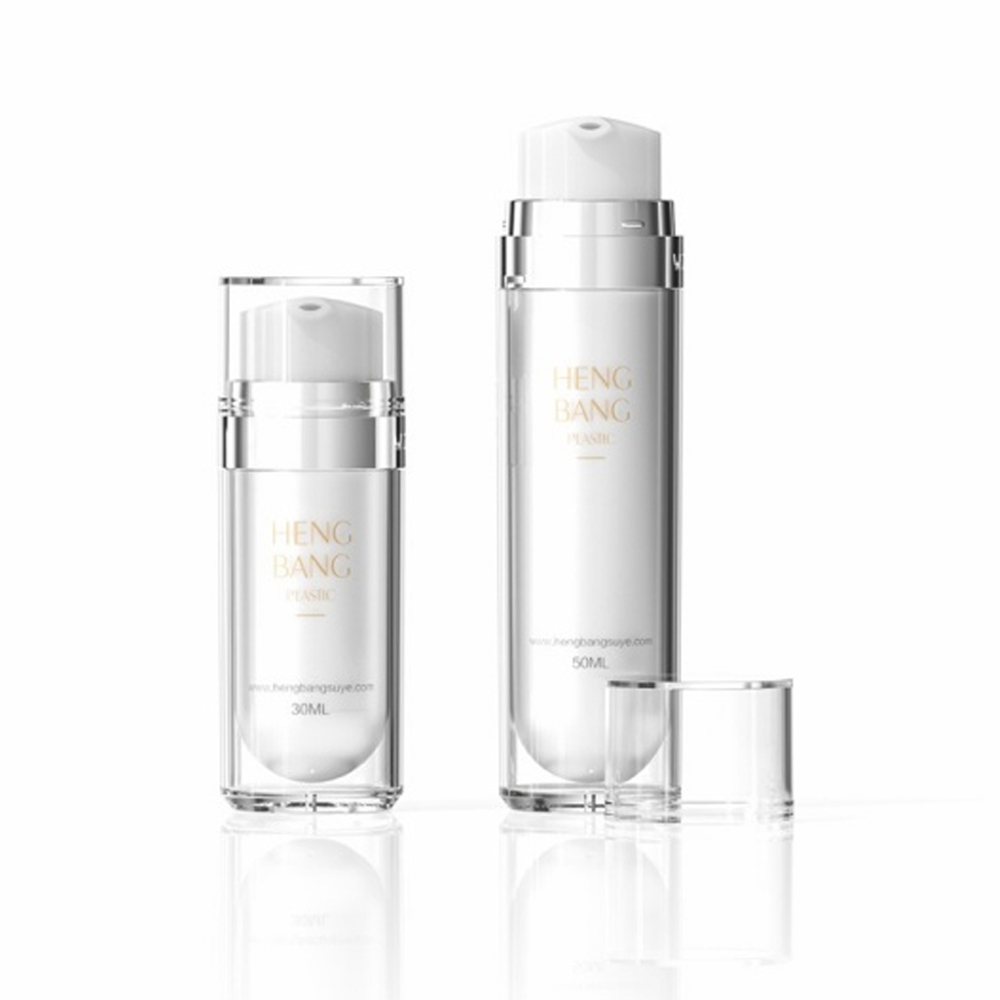
This product belongs to the plastic airless bottle category and reflects the growing demand for cosmetic packaging that is elegant, functional, lightweight, and suitable for modern production. With a transparent outer bottle and cap, a matte silver inner bottle, a bright silver plated collar, and a white injection-molded pump head, the bottle combines minimalist styling with a premium cosmetic appearance. It is offered in compact and full-size capacity options, including project configurations around 20 ml to 30 ml and a 50 ml size, making it adaptable for travel products, eye care, facial lotion, concentrated treatments, and retail skincare lines.
Unlike conventional open-mouth jars or basic lotion bottles, an airless package is designed to reduce unnecessary air contact with the formula during use. This is particularly valuable for skincare products containing active ingredients, delicate emulsions, botanical extracts, or formulas intended to maintain a refined texture over repeated use. The bottle’s double-walled widemouth construction, inner PP bottle, MS outer components, PP pump, and MS cap create a packaging structure that supports both appearance and performance.
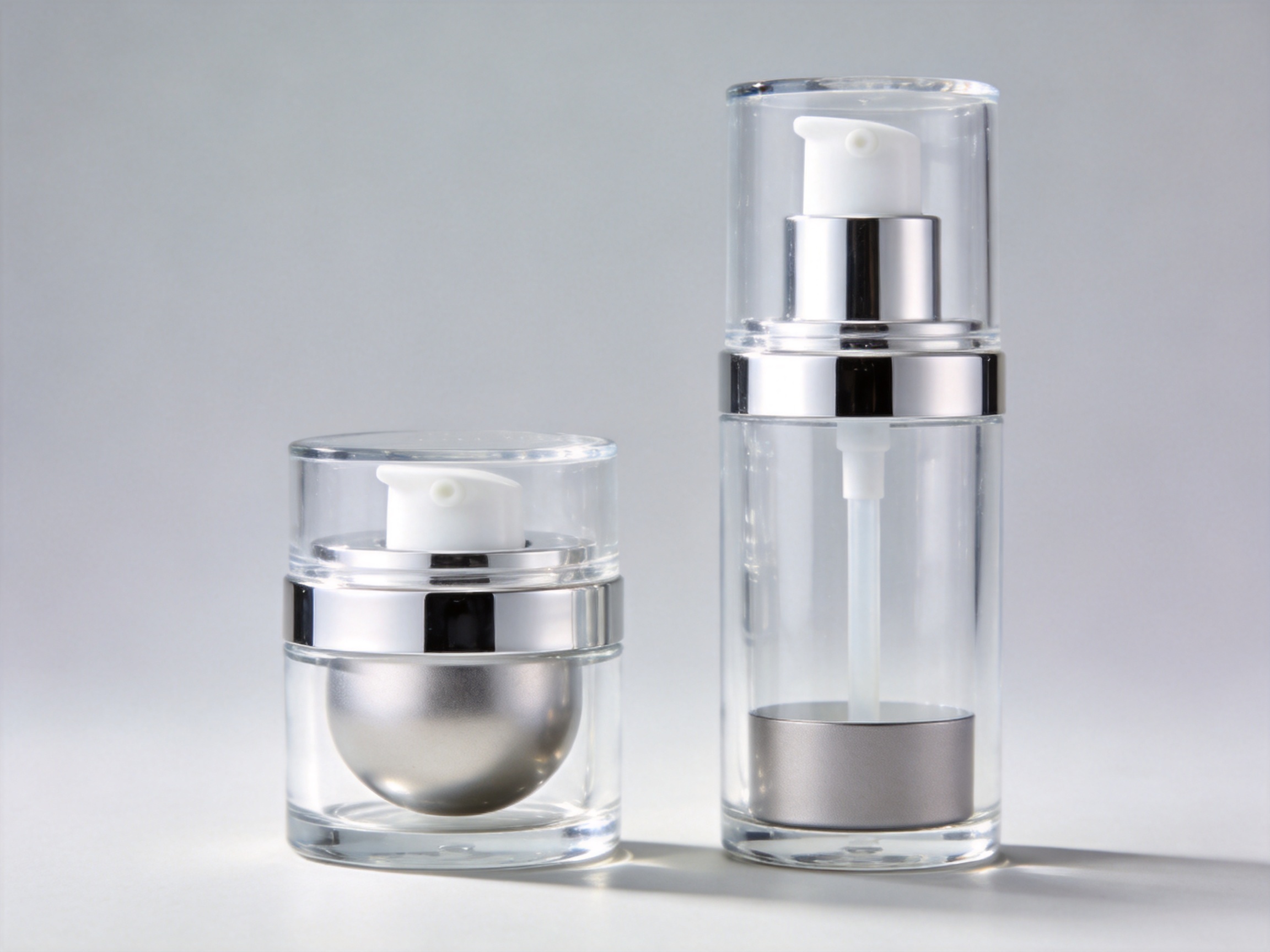
The plastic airless lotion bottle is built around a double-wall concept. The outer bottle and cap are transparent, allowing the interior design to become part of the visual identity. The inner bottle is sprayed in matte silver, while the collar is plated in bright silver. This combination creates contrast between clarity, softness, and shine. The white pump head adds a clean, hygienic appearance that is well suited to skincare and personal care categories.
From a brand perspective, the bottle provides an effective balance between understated luxury and practical manufacturability. The transparent exterior gives the package a modern cosmetic look, the silver inner body communicates refinement, and the bright silver collar provides a highlight that catches attention on shelves or in product photography. The result is a package that can support premium skincare without relying on overly complicated decoration.
The bottle is available with two inner-bottle bottom styles: a round-bottom version and a flat-bottom version. This choice gives product developers and cosmetic brands flexibility in visual design and packaging identity. A round-bottom inner bottle can create a softer, more sculptural look, while a flat-bottom inner bottle can appear more stable, direct, and contemporary. Because both styles are based on the same general airless bottle concept, brands can create product families while still differentiating formulas or market positions.
The widemouth design also improves filling convenience. For manufacturers and filling partners, a wider opening can simplify the filling process for lotions, emulsions, creams, and other medium-viscosity skincare products. This is especially useful when products are produced at scale or when the formula has a texture that requires more careful filling than a thin liquid.
The following table summarizes the main available product information. Exact final specifications can be adjusted according to project requirements, decoration choices, and production confirmation.
Item |
Specification |
Product Type |
Plastic airless lotion bottle |
Suitable Categories |
Cosmetic bottle set, airless bottle, lotion bottle, plastic cream jar alternative, sunscreen bottle, toner bottle, skincare packaging |
Main Materials |
Cap: MS; Pump: PP; Outer bottle: MS; Inner bottle: PP |
Capacity Options |
Compact format around 20 ml to 30 ml depending on project configuration; full-size 50 ml format |
Reference Heights |
Approximately 111.5 mm for compact size; approximately 149.1 mm for 50 ml size |
Reference Diameter |
Approximately 39.5 mm |
Pump Output |
Approximately 0.23 cc per actuation, subject to final pump confirmation |
Visual Design |
White pump head, matte silver inner bottle, bright silver plated collar, transparent cap and outer bottle |
Inner Bottle Options |
Round-bottom style or flat-bottom style |
Airless packaging has become one of the most important trends in skincare packaging because it responds directly to formula protection and consumer convenience. In a traditional bottle, air may enter the container as product is dispensed. In an open jar, the formula may be exposed to air and fingers each time the consumer uses it. An airless system is designed to reduce these issues by dispensing the product through a pump mechanism while limiting direct air exchange.
For skincare brands, this has several important benefits. First, it can help support formula stability by reducing unnecessary exposure. Many modern formulas include ingredients that require careful packaging consideration, such as vitamins, peptides, plant extracts, lightweight oils, and emulsifying systems. While packaging is not a substitute for proper formulation and preservation, the right container can contribute to a more controlled user experience.
Second, an airless pump improves hygiene perception. Consumers increasingly expect skincare products to feel clean and controlled. A pump system allows the user to dispense product without dipping fingers into a jar or repeatedly opening a wide container. This is especially important for facial products, eye care, sunscreens, and products positioned as advanced skincare treatments.
Third, airless packaging helps provide accurate dispensing. The stated pump output of approximately 0.23 cc per actuation offers a useful dosing reference for brands. Controlled output can help reduce waste, improve consumer satisfaction, and make product usage more predictable. For daily skincare routines, a pump that dispenses a consistent amount creates a more professional experience.
Finally, airless packaging can improve product evacuation compared with some conventional containers. Many airless systems are designed to move product upward as it is dispensed, helping consumers use more of the formula. This is a practical advantage that can support positive reviews and reduce frustration associated with product remaining trapped at the bottom or shoulder of a bottle.
Compared with standard lotion bottles, this plastic airless lotion bottle provides a more advanced user experience. A conventional lotion bottle may rely on a dip tube, which can leave product residue and may require tilting or shaking as the bottle empties. An airless structure offers smoother dispensing and a more premium perception.
Compared with cosmetic jars, the airless pump format offers improved cleanliness and convenience. Jars are popular for thick creams, but they require direct contact with the product unless a spatula is used. Many consumers do not consistently use spatulas, and repeated exposure can reduce the sense of freshness. A pump bottle creates a more controlled routine and is easier to use in bathrooms, travel bags, dressing tables, and professional skincare settings.
Compared with simple single-wall plastic bottles, this double-walled construction creates a stronger visual impression. The outer transparent wall and inner sprayed bottle create depth, making the package look more substantial. This is valuable for brands that need packaging that appears refined but remains practical for volume production.
Compared with overly decorative packaging, this bottle offers a balanced aesthetic. Some cosmetic containers rely on heavy colors, complex metallization, or decorative features that may become outdated quickly. The transparent and silver design of this bottle is more timeless. It can support minimalist brands, professional skincare lines, prestige products, and clean beauty concepts.
Compared with packaging that is difficult to fill, the widemouth design is more production-friendly. Filling efficiency matters because packaging performance is not limited to consumer use. It must also work during manufacturing, assembly, inspection, storage, transportation, and final filling. A bottle that supports easier filling can help reduce production challenges and support consistent output.
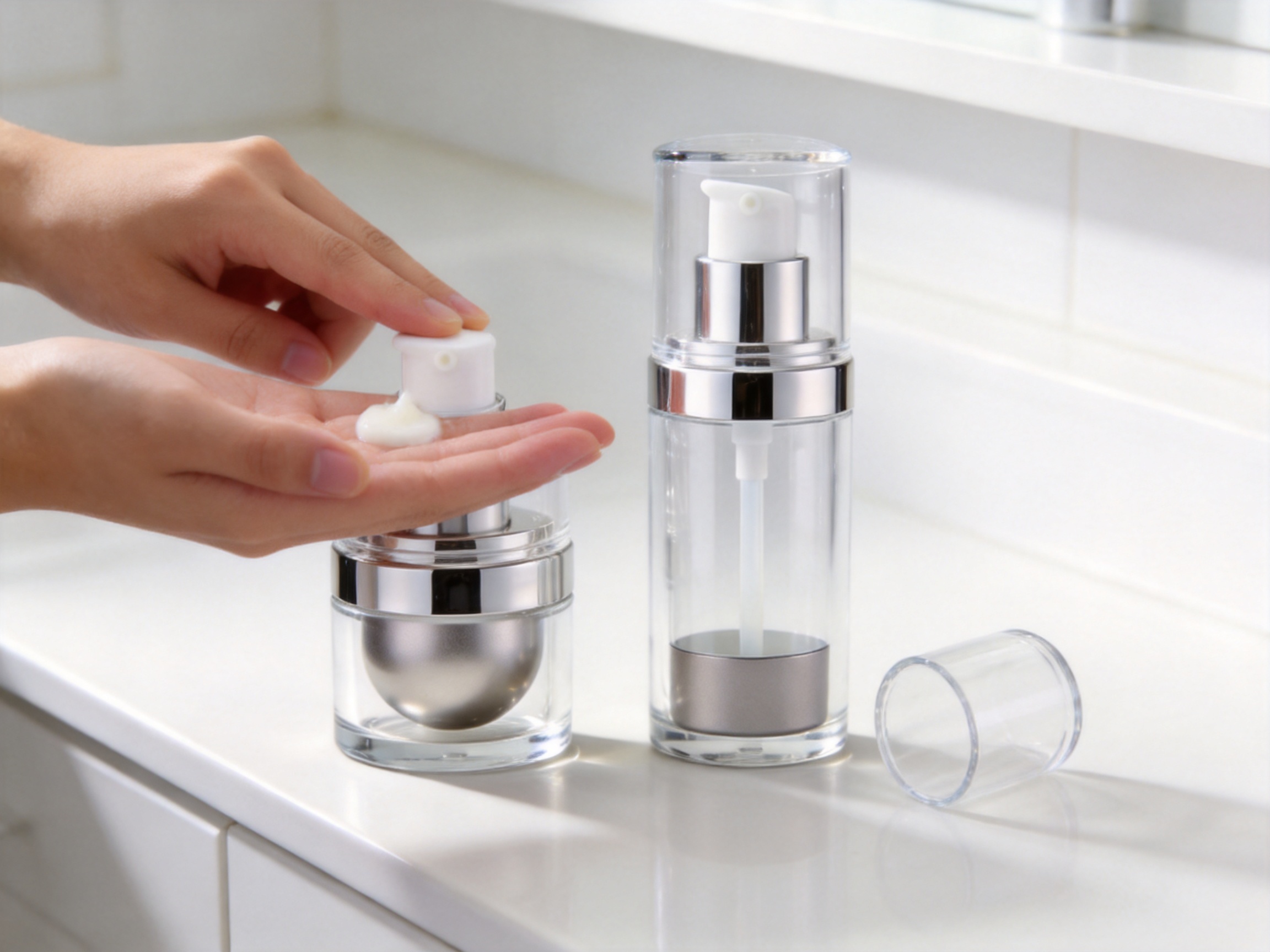
The material structure of the bottle is designed to combine cosmetic appearance with functional reliability. The cap and outer bottle use MS, a material often selected for clarity and rigidity in cosmetic packaging applications. The transparency of these components is important because the bottle’s visual concept depends on the clear outer layer. A clear cap and bottle also help communicate cleanliness, precision, and quality.
The pump uses PP, a common and practical material for pump components due to its chemical resistance, toughness, and manufacturability. PP is widely used in cosmetic packaging because it can support repeat motion, molded details, and compatibility with many personal care formulas. The inner bottle is also made from PP, supporting functional contact with the product and offering a practical balance of performance and production efficiency.
The double-wall format offers both decorative and practical advantages. Visually, it creates a layered look, allowing the matte silver inner bottle to be protected and displayed through the transparent outer bottle. Structurally, the outer wall contributes to the premium feel of the container. The user does not simply hold a thin container; instead, the bottle has a more dimensional and refined presence.
The collar is plated in bright silver, giving the bottle a precise decorative accent. In cosmetic packaging, small details can strongly influence consumer perception. A well-finished collar can make the transition between the pump and bottle appear more intentional, refined, and luxurious. The contrast between matte silver and bright silver also provides visual hierarchy, helping the pump area look clean and finished.
The design of this airless lotion bottle reflects several major packaging trends. The first is minimalism. Modern skincare brands often prefer packaging that looks clean, scientific, calm, and reliable. This bottle supports that direction by avoiding excessive decoration while still offering a premium structure.
The second trend is transparency. Transparent packaging can communicate purity, honesty, and modernity. In this case, the transparent outer bottle does not simply expose the formula; instead, it reveals the matte silver inner bottle. This creates a controlled transparent effect, giving designers a refined visual platform without requiring the formula itself to be visible.
The third trend is metallic accenting. Metallic details remain popular in cosmetic packaging because they communicate value. However, too much metallic decoration can appear heavy or outdated. This bottle uses silver selectively: matte silver for the inner bottle and bright silver for the collar. The result is attractive but not excessive.
The fourth trend is modular differentiation. By offering round-bottom and flat-bottom inner-bottle styles, the bottle allows brands to create variation without completely redesigning the package. This is useful for product ranges. For example, a day lotion and night cream could use different inner-bottom styles, or a premium line and standard line could share the same outer identity while differing in inner details.
This plastic airless lotion bottle is suitable for a wide range of cosmetic and skincare products. It can be used for facial lotions, moisturizing emulsions, lightweight creams, anti-aging products, sunscreen formulas, tone-correcting lotions, primer-like skincare, eye treatments, neck creams, hand care, and travel-size skincare sets. The controlled pump output makes it particularly useful for products that require measured application.
For sunscreen packaging, the airless format can offer convenience and a cleaner user experience. Consumers often use sunscreen daily, and a pump bottle supports quick application. The compact size can be suitable for handbags and travel kits, while the 50 ml version can serve as a standard retail format.
For lotions and emulsions, the bottle provides a refined alternative to tubes and traditional pump bottles. Many skincare emulsions are not as thick as creams but require more protection and precision than simple liquid toners. An airless lotion bottle fits this middle category very well.
For toners or lightweight treatment fluids, the suitability depends on formula viscosity and pump compatibility. If the formula is fluid but still compatible with the pump structure, the bottle can offer a premium dispensing experience. Brands should always conduct compatibility, leakage, and dispensing tests before final launch.
For cosmetic sets, the bottle’s consistent diameter and elegant design make it suitable for coordinated packaging families. It can be paired with cream jars, toner bottles, double chamber bottles, sunscreen bottles, and other cosmetic containers to create a complete skincare line. The transparent and silver design can serve as a visual bridge across multiple product formats.
The manufacturer behind this product has been engaged in plastic cosmetic packaging production since 2006. With a building area of approximately 35,000 square meters and more than 300 employees, the company has the scale needed to support both product development and stable manufacturing. This matters because cosmetic packaging quality depends on more than a single mold or machine. It depends on integrated management of design, tooling, injection molding, surface treatment, assembly, quality inspection, and delivery.
The company specializes in plastic packaging for cosmetics and skincare products. This specialization is important because cosmetic packaging has unique expectations. A cosmetic bottle must not only hold product; it must look attractive, feel refined, dispense consistently, resist leakage, support decoration, and meet brand requirements. Experience in cosmetic packaging helps the manufacturer understand these details from the beginning of a project.
The company’s young and professional team provides services that include design and development. This is an important advantage for brands that need more than standard stock packaging. Even when a brand selects an existing bottle design, it may still need guidance on color matching, decoration, capacity selection, pump output, material selection, and product family planning. A development team can help convert an idea into a manufacturable package.
The manufacturer has obtained ISO9001:2015 and ISO14001:2015 certifications. ISO9001:2015 reflects a quality management system, while ISO14001:2015 reflects environmental management. These certifications demonstrate a structured approach to production control, documentation, process management, and continuous improvement. For cosmetic brands, working with a certified manufacturer can reduce uncertainty and support more professional supply chain management.
The company was awarded as a Ningbo High-Tech Enterprise in 2021 and owns multiple invention patents. These achievements indicate a commitment to innovation and technical development. In cosmetic packaging, patents and high-tech recognition can reflect improvements in structure, manufacturing, design, or function. For customers, this means the supplier is not only producing existing containers but also investing in better packaging solutions.
The production of a refined plastic airless lotion bottle requires several manufacturing stages. Each stage must be controlled to achieve final quality. The pump head is injection-molded in white, requiring accurate molding, surface consistency, and functional precision. A pump component must be visually clean and mechanically dependable because it is the part the consumer touches and uses repeatedly.
Injection molding is central to plastic cosmetic packaging. Mold precision affects bottle shape, wall thickness, assembly fit, transparency, and surface quality. For transparent MS components, molding control is especially important because defects such as flow marks, bubbles, scratches, or haze can reduce the package’s premium appearance. A skilled manufacturer must control material drying, injection temperature, mold temperature, cooling time, and handling procedures.
The inner bottle is sprayed in matte silver. Spraying requires surface preparation, coating control, color consistency, and curing management. Matte finishes can look elegant, but they must be applied evenly to avoid patchiness or inconsistency. Since the inner bottle is visible through the transparent outer bottle, the spraying quality directly influences the final appearance.
The collar is plated in bright silver. Plating creates a reflective decorative effect and requires careful process control. A poor plating result may show uneven brightness, weak adhesion, scratches, color difference, or surface defects. A strong plating process helps the collar appear crisp and premium, enhancing the total package.
Assembly is another critical stage. An airless bottle includes multiple components that must fit and function together. The pump, collar, cap, inner bottle, and outer bottle must align correctly. Poor assembly can lead to leakage, unstable pumping, poor cap fit, weak appearance, or consumer dissatisfaction. A manufacturer with specialized experience in cosmetic packaging can establish assembly controls and inspection points to reduce these risks.
Quality inspection should include dimensional checks, appearance inspection, pump performance testing, cap fitting, leakage testing, decoration checks, and packaging protection before shipment. Because cosmetic packaging is judged visually, inspection standards must be strict. A small scratch or color inconsistency may matter to a skincare brand, especially for premium products.
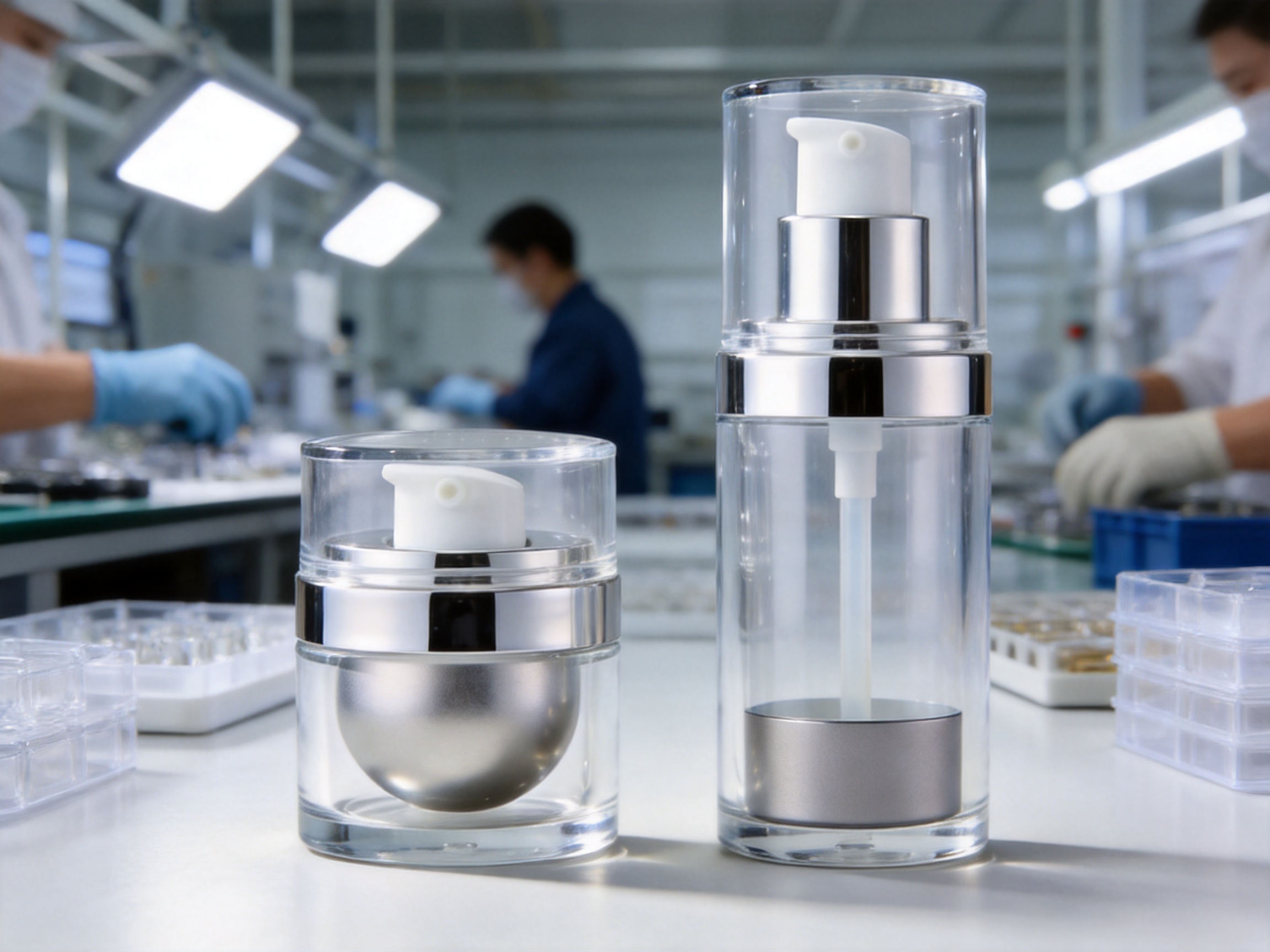
In the cosmetics industry, brands compete not only on formula but also on perception. A consumer may encounter the package before understanding the ingredients. The container influences whether the product feels trustworthy, modern, premium, clean, or desirable. This plastic airless lotion bottle gives brands several competitive advantages.
First, it creates premium shelf appeal without excessive complexity. The transparent outer bottle, matte silver inner bottle, bright silver collar, and white pump form a complete visual system. It looks refined and contemporary, making it suitable for both established brands and emerging skincare labels.
Second, it supports product protection and hygiene perception. Consumers are more aware of packaging and product freshness than before. An airless pump suggests a cleaner and more advanced dispensing experience than an open jar.
Third, it supports consistent use. A pump output of approximately 0.23 cc provides a controlled dispensing experience. Consumers can better manage how much product they apply, and brands can provide clearer usage instructions.
Fourth, the two inner-bottle bottom styles allow differentiation. This helps brands create product lines with subtle design variation. Instead of using unrelated packaging for different formulas, a brand can maintain a consistent identity while still distinguishing product types.
Fifth, the bottle is supported by a manufacturer with significant production capacity, certification, and industry experience. This reduces the risk of working with a supplier that lacks cosmetic packaging specialization. For brands planning long-term product lines, reliable manufacturing support is a major advantage.
Many competitor bottles fall into one of three categories: basic pump bottles, decorative but impractical containers, or premium packages that are expensive and difficult to produce consistently. This bottle offers a practical middle path. It provides premium appearance and airless function while maintaining plastic packaging efficiency.
Basic pump bottles may be lower in cost, but they often lack the product-protection perception and premium identity required by modern skincare brands. They may also rely on dip tubes, which can reduce product evacuation and affect the consumer experience near the end of use.
Decorative containers may look attractive initially, but if they are not production-friendly, they can create issues during filling, assembly, shipment, or daily use. Packaging must survive the entire commercial chain. A beautiful package that leaks, scratches easily, or dispenses poorly can damage a brand’s reputation.
Some high-end packaging solutions rely on heavy materials or complicated structures that increase cost and reduce flexibility. This plastic airless lotion bottle offers a lighter and more adaptable alternative. It gives brands a premium cosmetic look without requiring the weight or fragility of some glass packaging formats.
The double-wall design also provides an advantage over single-wall plastic containers. It creates visual depth and a more substantial hand feel. The consumer receives a package that appears more refined, while the brand benefits from the practical advantages of plastic molding and assembly.
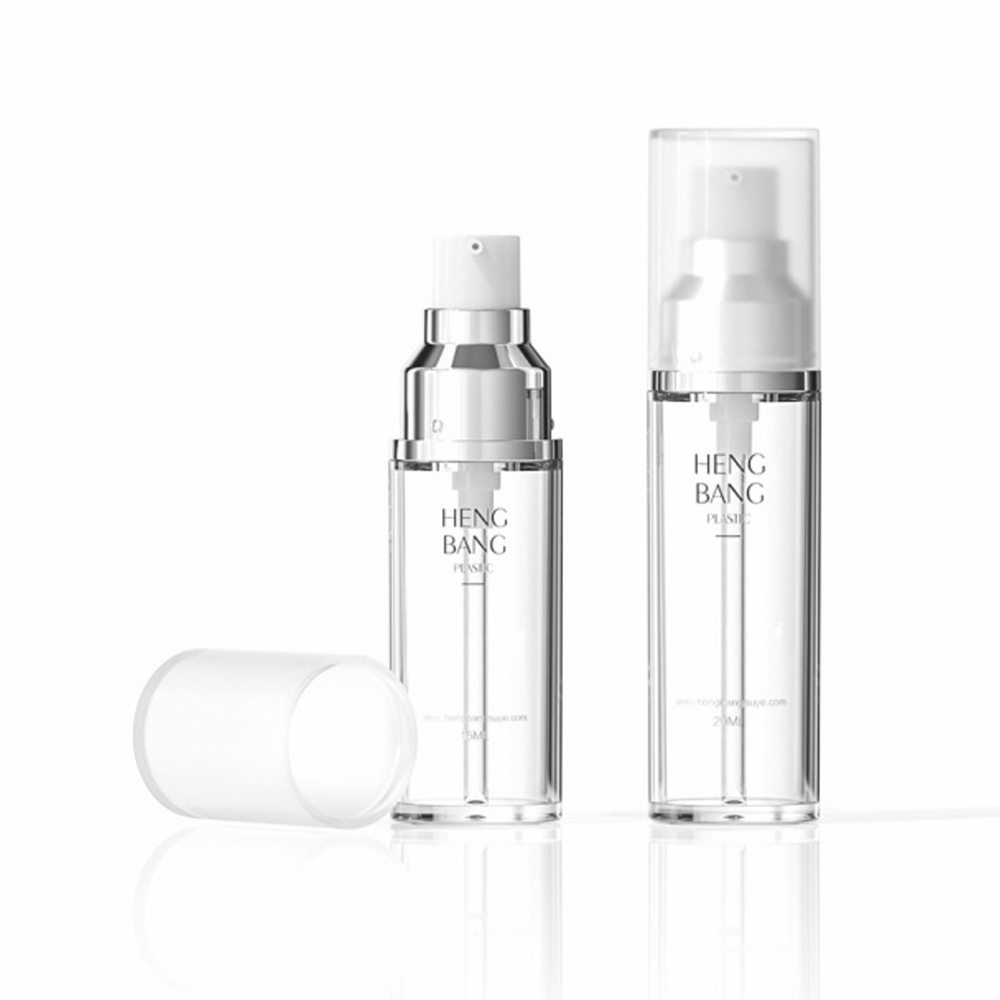
A good cosmetic package should be intuitive. The user should understand how to open it, how to dispense the product, how much product to expect, and how to store it. This bottle’s pump format is familiar and easy to use. The transparent cap protects the pump head while maintaining the clean visual identity of the package.
The white pump head suggests cleanliness and simplicity. When the consumer presses the pump, the controlled output helps avoid excessive product waste. This is especially useful for concentrated skincare products where one or two pumps may be enough for each application.
The diameter of approximately 39.5 mm provides a comfortable grip. The bottle is narrow enough for easy handling but substantial enough to feel stable. The compact height option is convenient for travel and trial products, while the taller 50 ml option is suitable for standard retail use.
The visual layering of the bottle can also improve the emotional experience of ownership. Consumers often keep skincare packaging visible on bathroom counters or dressing tables. A refined bottle can become part of the consumer’s personal environment, reinforcing brand value each time it is used.
The product’s existing design is already strong, but it also provides room for brand customization. Brands may adjust color details, printing, labeling, surface decoration, and packaging combinations according to their identity. The transparent outer structure can work with minimalist printing, subtle logos, delicate typography, or limited-edition color concepts.
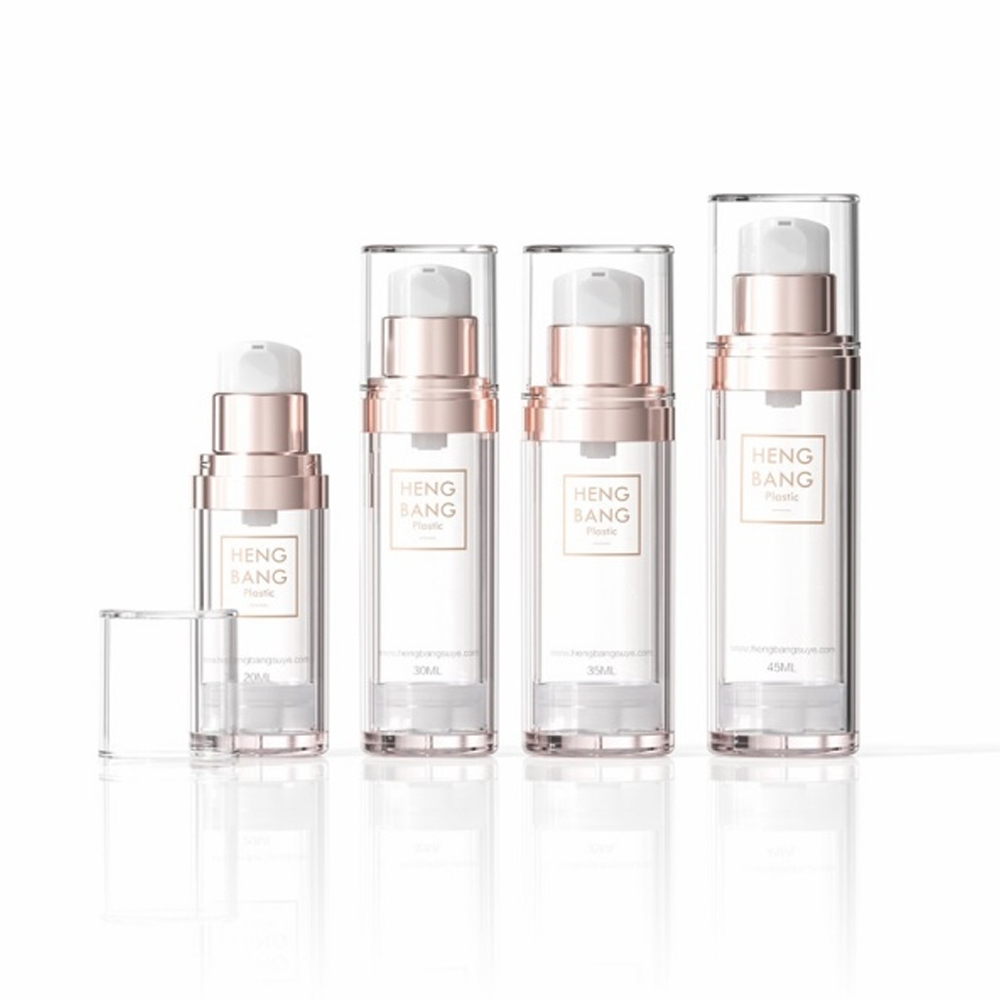
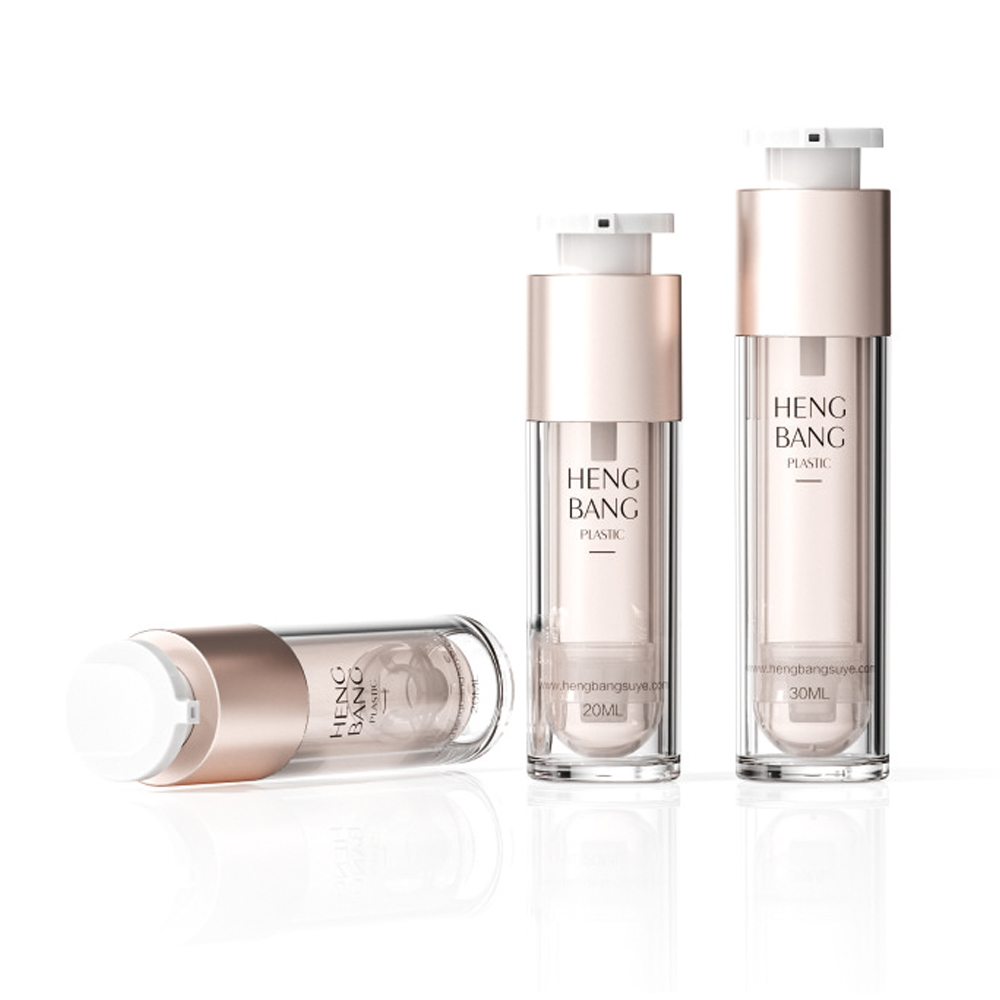
The matte silver inner bottle is suitable for brands that want a premium, clinical, or technology-inspired look. However, similar structures can often support other color directions depending on manufacturing feasibility. For example, a brand may explore soft champagne, pearl white, pale gold, or custom sprayed tones if compatible with the production process.
The bright silver collar is a strong default choice because it matches many cosmetic design styles. It can work with luxury skincare, professional spa products, derma-cosmetic lines, and modern clean beauty brands. The plated accent can also help unify a product family when paired with matching caps, jars, or toner bottles.
For companies launching multiple products, this bottle can be part of a larger cosmetic packaging strategy. A 20 ml to 30 ml compact format can be used for eye cream, serum, trial size, gift sets, or travel kits. The 50 ml format can be used for daily facial lotion, sunscreen, moisturizer, or treatment emulsion. By using related packaging formats, a brand can improve shelf consistency and reduce visual fragmentation.
Before launching any cosmetic product, brands should conduct compatibility and performance testing. Even high-quality packaging must be tested with the actual formula because viscosity, oils, solvents, fragrance components, preservatives, and active ingredients may interact differently with materials or pump systems.
Recommended testing includes formula compatibility, pump dispensing stability, leakage resistance, drop testing, transportation simulation, vacuum or pressure variation testing if applicable, cap fit inspection, decoration adhesion testing, and aging tests under relevant temperature conditions. These tests help confirm that the bottle performs reliably throughout storage, shipment, sale, and consumer use.
Appearance quality should also be clearly defined. For transparent components, acceptable standards for scratches, dots, haze, and molding marks should be agreed upon. For sprayed matte silver surfaces, color tolerance and coating uniformity should be confirmed. For plated collars, brightness, adhesion, and surface defects should be inspected.
A strong manufacturer can support these quality conversations because it understands the details of cosmetic packaging production. This is one reason why experience, certifications, and production scale are important. Packaging quality is the result of many controlled steps, not only the final inspection.
Sustainability is an increasingly important topic in cosmetic packaging. While every packaging choice involves trade-offs, responsible manufacturing practices can help reduce waste and improve process control. The manufacturer’s ISO14001:2015 certification indicates that environmental management is part of its operating system. This is relevant for brands seeking suppliers with structured environmental awareness.
Plastic airless packaging can contribute to product protection, controlled dosing, and improved product evacuation. Reducing product waste is also part of a responsible packaging discussion. If consumers can use more of the formula and dispense it more accurately, less product may be discarded unnecessarily.
Brands can further support sustainability goals by optimizing decoration, avoiding unnecessary secondary packaging, selecting appropriate capacities, and planning efficient logistics. A lightweight plastic airless bottle may also reduce transport burden compared with heavier alternatives. Final sustainability decisions should consider materials, decoration, recyclability, product protection, supply chain distance, and consumer use patterns.
The company’s business philosophy emphasizes quality, integrity, and customer first. In practical terms, this means focusing on stable product performance, honest cooperation, and market-oriented development. Cosmetic packaging projects often require communication across multiple stages, including design selection, sample confirmation, decoration approval, mass production, inspection, and delivery. A customer-focused supplier can make this process smoother.
Quality is especially important because packaging is the physical representation of a brand. If a pump fails, a cap cracks, a collar scratches, or a bottle leaks, the consumer may blame the cosmetic brand rather than the packaging supplier. Therefore, a manufacturer’s quality culture directly affects the brand’s reputation.
Integrity matters because brands need accurate information about materials, production timing, decoration feasibility, and quality standards. Packaging development can involve many decisions, and reliable communication helps prevent delays or misunderstandings.
Customer-first service is valuable because each cosmetic brand may have different priorities. Some brands prioritize luxury appearance, some prioritize cost efficiency, some need fast delivery, and some need technical guidance for difficult formulas. A professional packaging supplier should be able to support these different needs while maintaining realistic production standards.
This bottle is especially suitable for skincare brands that want to present a modern and premium identity. It works well for anti-aging lotions, brightening emulsions, moisturizing treatments, sunscreen lotions, professional salon products, spa skincare, men’s skincare, clinical-inspired lines, and travel-size sets.
Emerging brands can use this bottle to quickly elevate visual presentation without developing a completely custom mold. The existing structure already offers a premium look, allowing the brand to focus on formula, decoration, and market positioning.
Established brands can use it for line extensions, seasonal launches, gift sets, or specialized treatments. The availability of different capacity options makes it suitable for both retail and promotional strategies.
OEM and ODM skincare manufacturers can also benefit from this bottle because it supports efficient filling and a broad range of product categories. The widemouth design and airless pump structure are practical for many lotion and cream formulations.
Professional skincare channels, such as beauty salons and dermatology-inspired brands, may appreciate the clean pump format. The package communicates hygiene, precision, and controlled application, which aligns well with professional treatment positioning.
Capacity selection should be based on formula type, usage amount, price positioning, and consumer routine. A compact 20 ml to 30 ml format can be ideal for eye-area products, high-value active treatments, trial products, travel kits, and gift sets. Smaller sizes can also encourage consumers to try a formula at a lower entry price.
The 50 ml format is a common and practical size for facial lotion, sunscreen, moisturizer, and daily treatment products. It provides enough product for regular use while maintaining a premium and manageable bottle size. At approximately 149.1 mm in height, the 50 ml format has a more prominent shelf presence.
Brands should also consider pump output when selecting capacity. If the pump dispenses approximately 0.23 cc per actuation, the number of uses can be estimated according to the formula’s recommended dosage. This helps brands communicate usage instructions and plan consumer expectations.
For product families, using multiple sizes can be effective. A compact size can be included in a travel set or starter kit, while the 50 ml version can serve as the main retail product. Consistent design across sizes strengthens brand recognition.
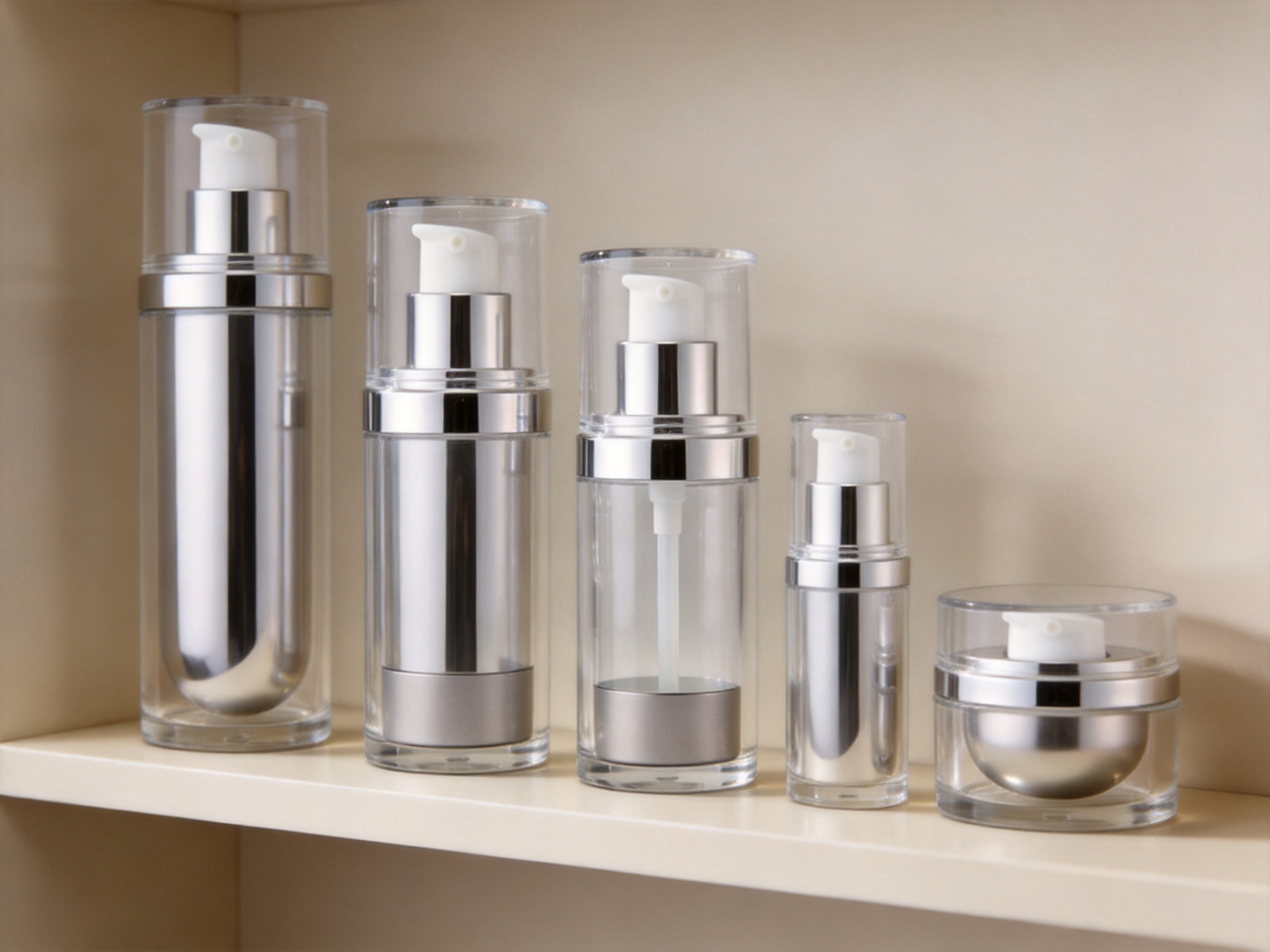
This bottle uses an airless pump structure rather than a simple dispensing system. It is designed to reduce unnecessary air contact during use, provide controlled dispensing, and create a more premium user experience. Its double-walled structure, transparent outer bottle, matte silver inner bottle, and plated collar also give it a more refined appearance than many standard lotion bottles.
It is suitable for many skincare and cosmetic products, including facial lotions, emulsions, lightweight creams, sunscreen lotions, eye treatments, moisturizers, treatment serums with suitable viscosity, and travel-size skincare products. Final suitability should always be confirmed through compatibility and dispensing tests with the actual formula.
The cap is made from MS, the pump is made from PP, the outer bottle is made from MS, and the inner bottle is made from PP. This material combination supports clarity, molding precision, functional dispensing, and cosmetic appearance.
The bottle is available in compact and full-size options. Project specifications include compact formats around 20 ml to 30 ml depending on configuration and a 50 ml format. The 50 ml version is suitable for standard skincare retail products, while smaller formats are useful for travel, trial, and targeted treatment products.
The pump output is approximately 0.23 cc per actuation, subject to final confirmation. This controlled dosage helps consumers apply product more consistently and reduces unnecessary waste.
The double-walled design improves visual depth and creates a more premium hand feel. It also allows the matte silver inner bottle to be displayed through the transparent outer bottle, producing a refined layered appearance.
Yes. The bottle supports brand decoration possibilities such as color coordination, printing, labeling, and design adaptation according to project requirements. The existing silver and transparent appearance is already suitable for premium skincare, but additional customization may be discussed based on production feasibility.
The inner bottle can be produced with a round-bottom style or a flat-bottom style. The round-bottom style creates a softer look, while the flat-bottom style appears more stable and modern. This gives brands design flexibility within the same packaging concept.
ISO9001:2015 indicates a structured quality management system, while ISO14001:2015 indicates environmental management practices. These certifications help show that the manufacturer follows organized production and management processes, which can support more reliable cooperation.
Yes. Its transparent cap and outer bottle, matte silver inner bottle, bright silver plated collar, white pump head, and airless dispensing system all support a premium skincare image. It is suitable for brands that want packaging that feels clean, modern, and refined.
The plastic airless lotion bottle described in this article brings together modern cosmetic design, functional dispensing, and manufacturing practicality. Its double-walled widemouth structure, airless pump, controlled output, transparent outer components, matte silver inner bottle, and bright plated collar make it a strong choice for skincare brands seeking attractive and dependable packaging.
Its advantages over competitor packaging include improved hygiene perception compared with jars, more refined appearance than basic pump bottles, better product protection than many conventional containers, and more practical manufacturability than overly complicated luxury packages. The availability of compact and 50 ml formats, along with round-bottom and flat-bottom inner-bottle styles, gives brands valuable flexibility.
The product is also supported by a manufacturer with years of cosmetic packaging experience, significant production scale, ISO9001:2015 and ISO14001:2015 certifications, high-tech enterprise recognition, invention patents, and integrated design and development services. These strengths matter because cosmetic packaging success depends on consistent manufacturing, careful decoration, stable assembly, and reliable quality control.
For brands developing lotions, emulsions, sunscreens, moisturizers, treatment products, or coordinated skincare sets, this airless lotion bottle offers a compelling combination of beauty and function. It helps elevate brand image, improve user experience, and support product performance in a market where packaging is a key part of consumer trust.
1. ISO 9001:2015 Quality Management Systems: Requirements.
2. ISO 14001:2015 Environmental Management Systems: Requirements with Guidance for Use.
3. Cosmetic Packaging and Dispensing Systems: Industry Technical Guidelines for Airless Pump Containers.
4. Principles of Plastic Injection Molding for Cosmetic Packaging Components.
5. Surface Decoration Methods for Plastic Cosmetic Containers: Spraying, Plating, and Printing Applications.
6. Skincare Packaging Design Trends: Minimalism, Hygiene, Functionality, and Premium Consumer Experience.


Copyright © Yuyao Hengbang Plastic Co., Ltd.
All Rights Reserved.
 Wholesale Plastic Cosmetic Packaging Manufacturers