English
 中文简体
中文简体
News
Home > Author > Zhang Yuxin — Plastic Cosmetic Packaging Sales Representative > Refillable Airless Serum Bottles for Sustainable High-Performance Cosmetic Packaging

 2026.06.30
 Zhang Yuxin — Plastic Cosmetic Packaging Sales Representative
Content
The HB-K022A/B Plastic Refillable Airless Serum Bottle represents a practical evolution in cosmetic packaging: it combines airless dispensing performance, replaceable inner-bottle convenience, and a durable outer shell designed for repeated use. For skincare brands seeking packaging that supports product protection, user comfort, refill concepts, and reduced plastic waste, this bottle offers a balanced solution for serums, lotions, creams, sunscreen formulas, toner essences, and other sensitive cosmetic preparations.
Modern cosmetic packaging must do more than hold a formula. It must protect active ingredients, dispense consistently, support a premium user experience, present a clean visual identity, and respond to growing sustainability expectations. Airless packaging has become especially important because many contemporary skincare products contain ingredients that may be sensitive to air exposure, oxidation, or contamination. The HB-K022A/B bottle is built around this need while adding a refillable structure that improves long-term packaging efficiency.
Unlike ordinary pump bottles that often rely on dip tubes and allow air to enter the container during use, an airless bottle uses a piston mechanism that rises from the base as product is dispensed. This vacuum-style structure helps reduce contact between the contents and external air. For serums, lotions, creams, and other formulations where cleanliness and product stability matter, this design can help preserve texture, appearance, and functional performance throughout the usage cycle.
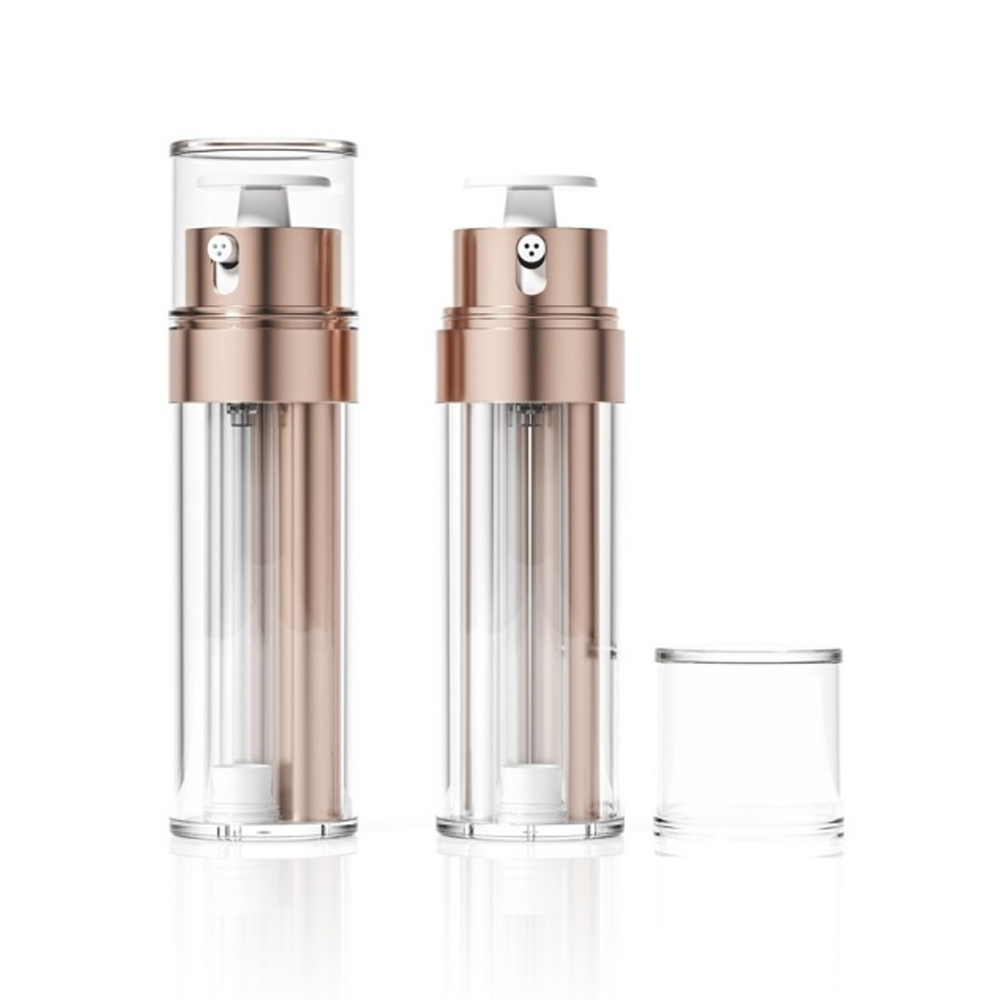
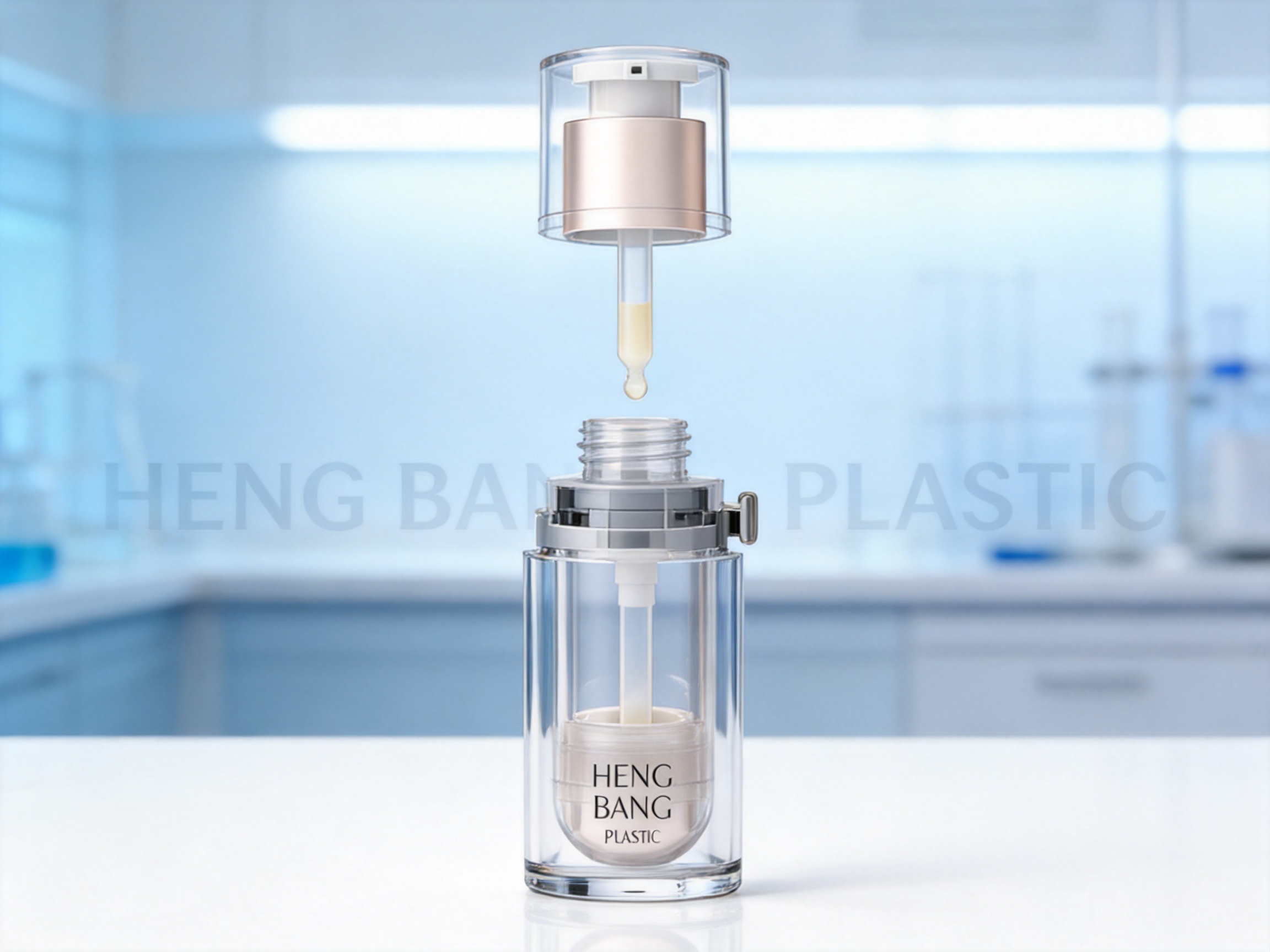
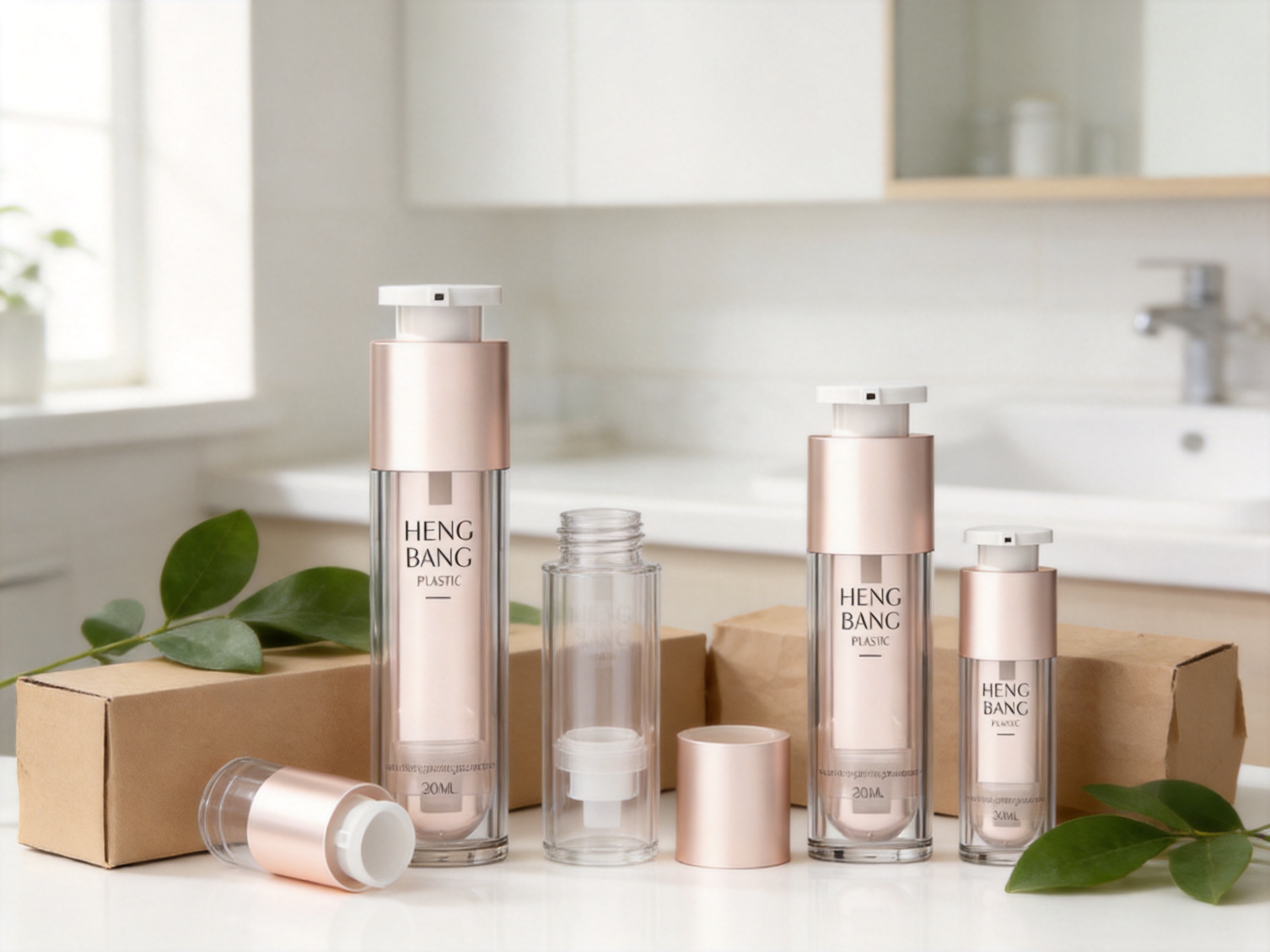
The HB-K022A/B model is composed of a permanent outer bottle and a disposable inner bottle. Once the formula is used up, the consumer or brand can replace the inner bottle rather than discarding the entire package. This feature significantly reduces unnecessary plastic waste compared with fully disposable packaging. It also allows cosmetic brands to build refill programs, repeat-purchase systems, or environmentally conscious product lines without sacrificing the advantages of airless dispensing.
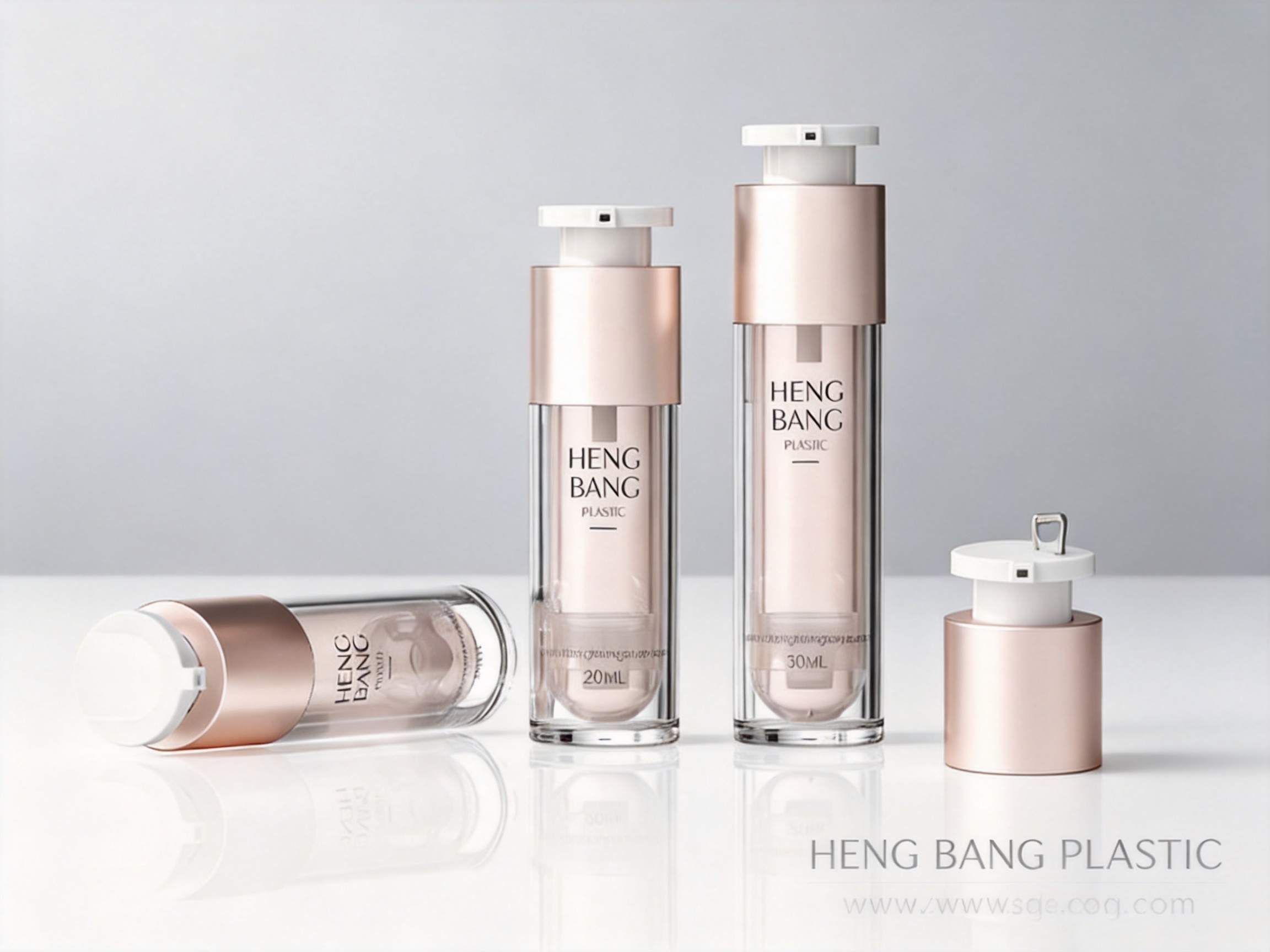
HB-K022A/B Plastic Refillable Airless Serum Bottle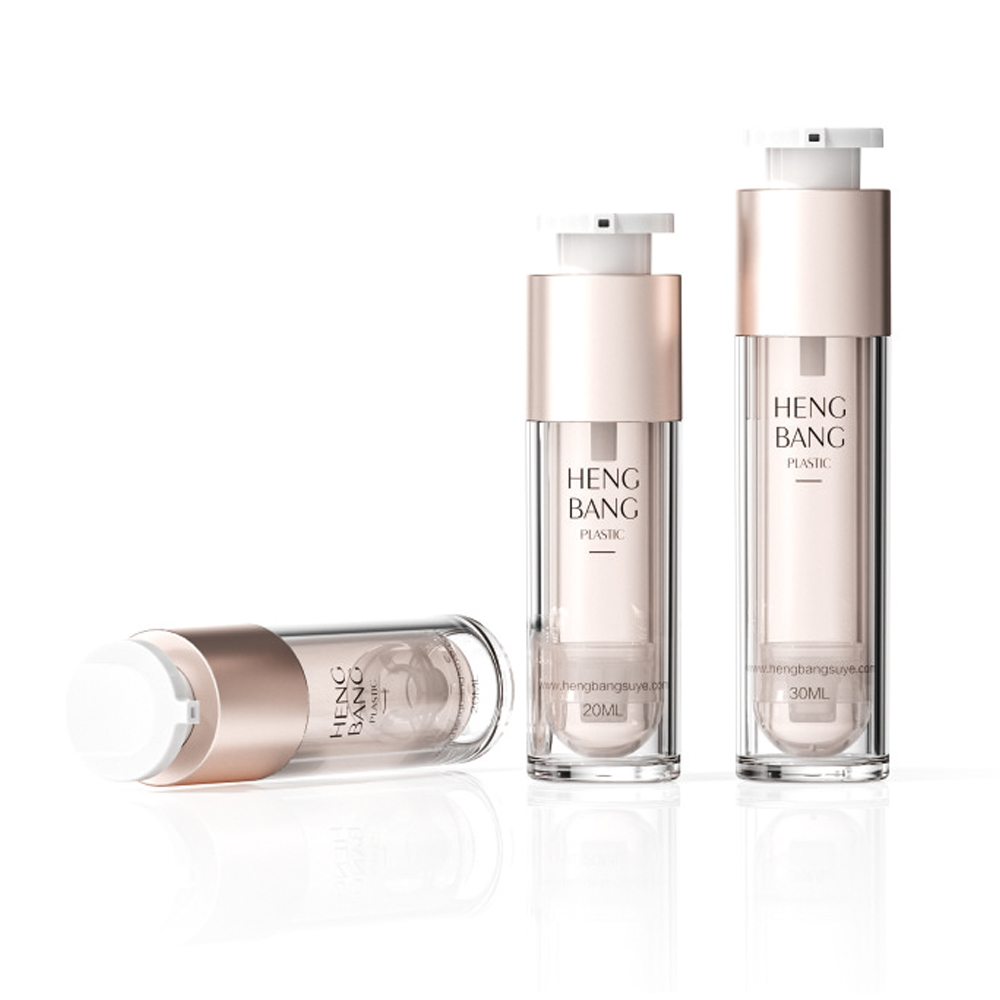
The HB-K022A/B Plastic Refillable Airless Serum Bottle is part of the broader category of plastic refillable airless bottles. It is suitable for cosmetic and skincare applications where formula protection, precise dispensing, and improved packaging sustainability are all important. Its refillable structure is particularly valuable for products that are purchased repeatedly, such as daily-use facial serums, moisturizers, sunscreen emulsions, anti-aging creams, eye-care lotions, and skin-repair treatments.
The bottle includes a retaining clip at the nozzle area, helping reduce accidental pressing during transport, storage, or retail handling. This detail is important for brand owners because leakage, accidental discharge, and product waste can negatively affect the consumer experience and increase after-sales issues. The retaining clip provides an additional level of practical control, especially for products sold through e-commerce channels where packages may experience vibration and movement during shipping.
The outer bottle is made from MS, while the inner bottle is made from PP. The pump uses PP and ABS components, and the clip is made from PP. This combination supports durability, functional stability, and compatibility with many cosmetic packaging requirements. MS provides a clear and refined outer appearance, while PP is widely used for cosmetic packaging because of its processing stability, light weight, and broad formula suitability.
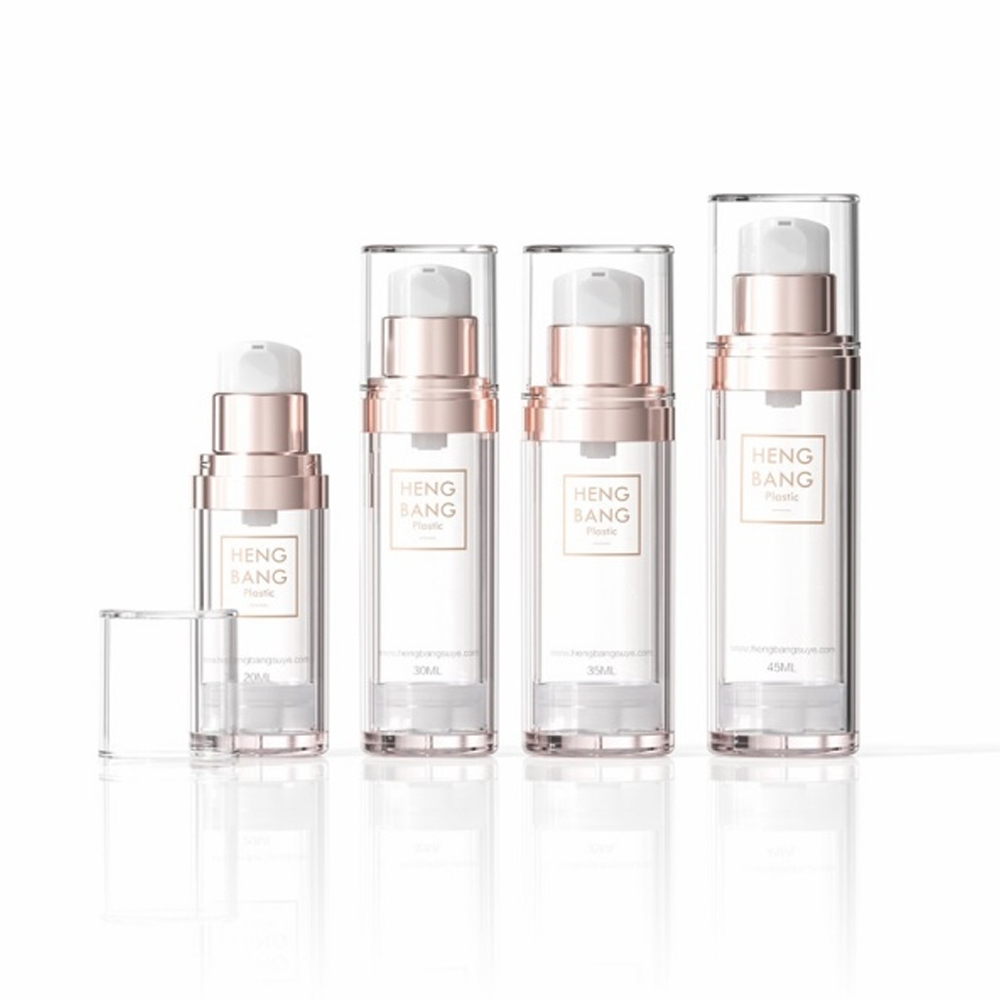
Available capacities include 20 ml, 30 ml, 50 ml, and 70 ml. These sizes cover a useful range of cosmetic applications. Smaller sizes are suitable for concentrated serums, eye products, travel kits, trial programs, and premium treatments. Medium and larger capacities are suitable for daily-use lotions, moisturizers, sunscreens, and facial emulsions. This range allows brands to develop product families with consistent packaging style while offering different formula volumes.
Item |
Specification |
Product Name |
HB-K022A/B Plastic Refillable Airless Serum Bottle |
Product Category |
Plastic Refillable Airless Bottles |
Main Structure |
Permanent outer bottle with replaceable disposable inner bottle |
Materials |
Clip: PP; Pump: PP + ABS; Outer Bottle: MS; Inner Bottle: PP |
Capacity Options |
20 ml, 30 ml, 50 ml, 70 ml |
Height Options |
118.5 mm, 136.5 mm, 132.5 mm, 160 mm |
Diameter Options |
33 mm, 40 mm |
Dosage Reference |
0.23 cc |
Suitable Applications |
Serum, lotion, cream, sunscreen, toner essence, skincare emulsions |
The central advantage of this bottle is its airless dispensing system. In conventional packaging, a dip tube draws formula upward from the bottom of the container. As product leaves the bottle, air often enters to replace the empty volume. This repeated air exchange can increase the risk of oxidation, drying, contamination, fragrance loss, color change, or reduced performance for certain formulations. Airless packaging minimizes this issue by using an internal piston that rises as the formula is dispensed.
For skincare products, this feature is more than a marketing benefit. Many formulas contain active ingredients, botanical extracts, oils, vitamins, peptides, or antioxidant systems that can be affected by prolonged air exposure. Although packaging cannot replace correct formulation and preservation systems, it can help support product stability by limiting unnecessary contact with external air. This is one reason airless bottles have become common in higher-value skincare, cosmeceutical products, and sensitive emulsions.
The piston mechanism also improves evacuation performance. With a dip-tube bottle, it is common for product to remain at the bottom or around shoulders of the container, making it difficult for consumers to use every portion. Airless systems help push the product upward evenly, allowing a higher percentage of the contents to be dispensed. This reduces waste and improves perceived value because consumers can access more of the formula they purchased.
The HB-K022A/B bottle is especially suited for brands that want to emphasize cleanliness and controlled product delivery. Since users do not need to open a jar or touch the formula directly, the risk of introducing contaminants through fingers is reduced. Compared with open-mouth cream jars, an airless pump bottle offers a more hygienic and convenient daily-use experience. For premium skincare, this can strengthen consumer trust and support a more professional brand image.
One of the strongest competitive advantages of the HB-K022A/B bottle is its refillable construction. Sustainability has become an essential consideration in cosmetic packaging. Consumers increasingly expect brands to reduce unnecessary packaging waste, and many retailers and markets are encouraging refill models, lightweight packaging, and material reduction. The refillable outer-and-inner-bottle system directly responds to these trends.
Instead of throwing away the full bottle after each use cycle, the user replaces only the inner bottle. The permanent outer bottle remains in use, preserving the package’s visual identity and tactile value. This structure can reduce the total quantity of plastic consumed across repeated purchases. It also gives brands a clear sustainability story that is easy for consumers to understand: keep the outer bottle, replace the inner cartridge, and reduce waste over time.
Compared with simple refill pouches, this system has a major practical advantage: it keeps the airless dispensing function intact. Refill pouches can reduce packaging material, but they may require consumers to pour formula into a container, which can be messy and may expose the formula to air or contamination. The replaceable inner bottle avoids these drawbacks by providing a controlled refill component that works with the pump and outer shell. It offers a more premium, cleaner, and more reliable refill experience.
Compared with single-use airless bottles, the refillable design provides a more efficient lifecycle. Single-use airless packaging protects formulas well, but the entire assembly is discarded after use. The HB-K022A/B model keeps the desirable protection of an airless system while reducing repeated disposal of the outer container. This combination makes it attractive for brands that want both performance and environmental responsibility.
Open jars remain popular for creams because they are easy to fill and familiar to consumers, but they have limitations. Every time a jar is opened, the formula is exposed to air. The user may also touch the product with fingers, which can introduce external matter into the container. For sensitive skincare, a pump format can create a cleaner and more controlled experience. The HB-K022A/B airless bottle helps minimize repeated exposure and supports more hygienic use.
Dip-tube pumps often struggle to dispense viscous formulas completely. When the bottle is nearly empty, the dip tube may fail to reach remaining product at the bottom or sides. Users may shake, tap, or open the package to access the last portion. The airless piston design pushes product upward, helping improve evacuation and reduce frustration. This makes the bottle suitable for formulas where product value is high and consumers expect minimal waste.
Some refill systems require consumers to pour formula from a refill bag or bottle into the original container. This may work for cleansers or shampoos, but it is less ideal for sensitive skincare formulas. Pouring can introduce air, dust, or handling contamination. The HB-K022A/B system uses a replaceable inner bottle, making the refill process more controlled. Consumers can replace the used component without handling the formula directly.
The outer bottle material supports a refined appearance suitable for skincare shelves. At the same time, the product is not merely decorative; it offers functional performance through the airless pump, retaining clip, replaceable inner bottle, and multiple size options. This combination gives brands the ability to position the package as both elegant and technically advanced.
Cosmetic packaging sold online must withstand shipping and handling. A nozzle with a retaining clip reduces accidental pumping, leakage, and product waste during transport. This is important because e-commerce complaints often arise from damaged or leaking packages. By including a clip, the bottle helps brands improve delivery reliability and maintain a professional unboxing experience.
The HB-K022A/B bottle is particularly appropriate for serum packaging. Serums are often positioned as concentrated treatments with high perceived value. They may contain brightening agents, hydrating ingredients, firming complexes, botanical extracts, or antioxidant systems. Consumers expect serum packaging to feel precise, clean, and protective. An airless serum bottle meets these expectations by offering controlled dispensing and reduced air exposure.
For lotions and light creams, the bottle provides convenience and hygiene. Users can press the pump to dispense a measured amount without opening a jar. The 0.23 cc dosage reference supports controlled use, allowing consumers to apply consistent quantities. This can be useful for facial lotions, eye creams, neck creams, hand-care treatments, and professional skincare products.
Sunscreen products can also benefit from airless packaging. Many sunscreen emulsions require stable texture and reliable dispensing. A pump bottle supports clean application and helps prevent the product from drying around an open mouth. The refillable structure can be especially attractive for daily-use sunscreen lines, where consumers may purchase refills frequently.
Toner essences and lightweight emulsions can be packaged in smaller or medium sizes, depending on viscosity and dosage needs. While very fluid products may require suitable pump matching and formula testing, the airless structure can support a premium dispensing experience for essence-style products that are positioned above standard toners.
The bottle also fits cosmetic sets. A brand can use multiple capacities within a coordinated line: 20 ml for eye serum, 30 ml for treatment serum, 50 ml for lotion, and 70 ml for sunscreen or daily cream. This creates a unified packaging family while allowing each formula to have an appropriate volume.
The use of PP for the inner bottle is practical and widely accepted in cosmetic packaging. PP is lightweight, moldable, and suitable for many skincare formulations. It can be processed efficiently and supports the replacement concept because the disposable inner bottle should be functional, stable, and economical. As the component most closely associated with refill replacement, it must balance performance and material efficiency.
The MS outer bottle contributes clarity and visual appeal. A permanent outer shell should be attractive enough for long-term use. Since consumers keep this component, it becomes part of the brand’s durable packaging identity. A well-designed outer bottle encourages users to participate in the refill system because the package continues to look desirable after the first purchase.
The PP and ABS pump construction supports mechanical performance. Pumps must deliver repeatable output, resist deformation, and operate smoothly over many cycles. The pump is central to the user experience: if the pump feels unstable, leaks, clogs, or dispenses inconsistently, the entire product impression suffers. By selecting suitable engineering plastics for pump components, the bottle supports reliable operation.
The PP retaining clip is a small but important component. It is easy to overlook accessory parts, yet they can strongly affect shipping safety and consumer confidence. A secure clip helps prevent unintended actuation before first use or during travel. For travel-size skincare and e-commerce shipments, this is a meaningful advantage.
Packaging is one of the most visible expressions of a cosmetic brand. The HB-K022A/B bottle provides a structure that can support different market positions, from clean clinical skincare to premium beauty, eco-conscious personal care, and functional cosmeceutical products. Its airless structure communicates protection and technology, while its refillable design communicates responsibility and modern consumption values.
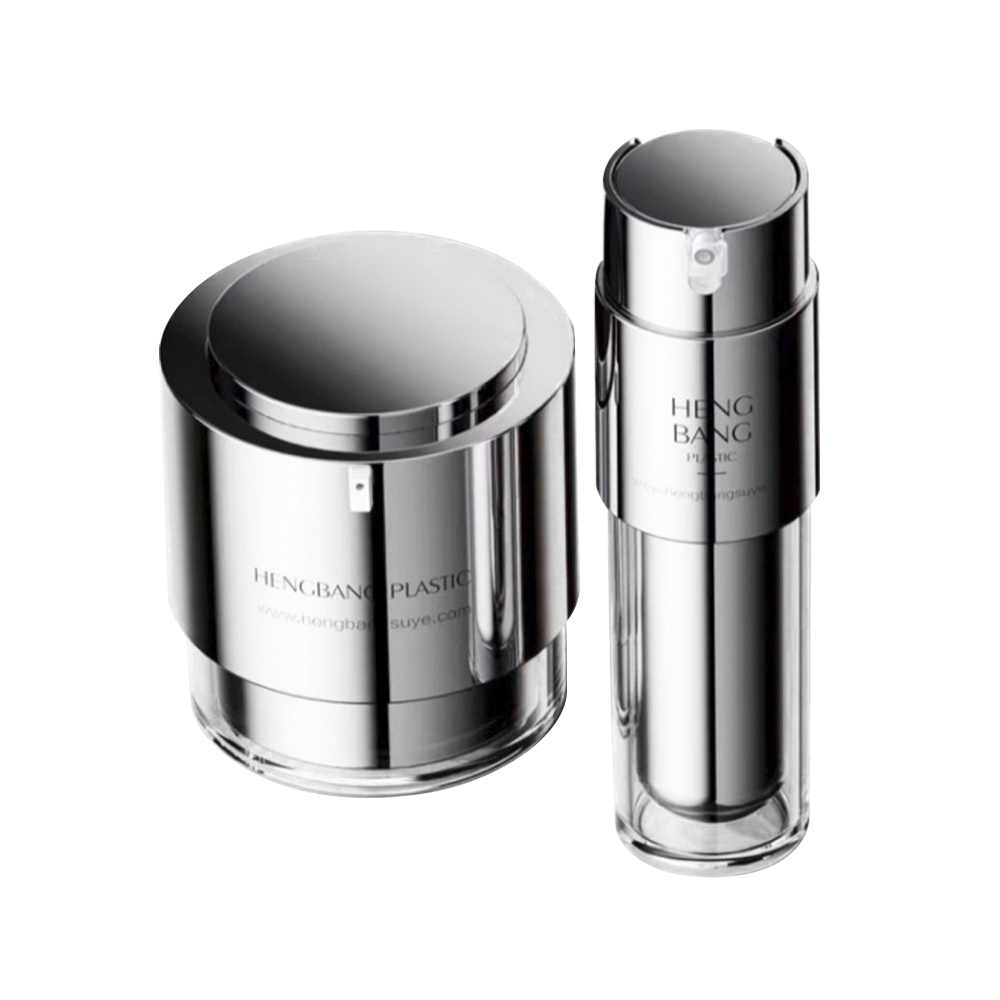
Decoration options may include color matching, surface finishing, labeling, screen printing, hot stamping, and other cosmetic packaging decoration processes depending on project requirements. A minimalist white or transparent finish can fit dermatological skincare. Soft pastel colors can support gentle, botanical, or sensitive-skin positioning. Metallic accents can help premium or anti-aging lines create a more luxurious shelf presence.
Because the bottle is available in multiple capacities, brands can build a consistent design system across several products. This is valuable for retail recognition. When a consumer sees the same silhouette across a serum, lotion, and sunscreen, the product line appears more coherent. Consistent packaging can also simplify brand photography, display design, and online product presentation.
The refillable system can become a key part of brand communication. For example, a brand may sell the first purchase as a complete bottle and subsequent purchases as replacement inner bottles. This can encourage repeat buying while reducing material consumption. The consumer feels that the brand has provided a practical sustainability solution rather than only making a general environmental claim.
The quality of an airless refillable bottle depends not only on design but also on manufacturing capability. A bottle with multiple interacting components requires precise molding, controlled assembly, material consistency, pump testing, and quality inspection. Cosmetic packaging must meet both aesthetic and functional standards. Scratches, color inconsistency, leakage, poor pump rebound, or unstable fit can all affect customer satisfaction.
Yuyao Hengbang Plastic Co., Ltd. was established in 2006 and has developed substantial experience in plastic cosmetic packaging. With a building area of 35,000 square meters and more than 300 employees, the company has the scale to support professional production, project development, and order fulfillment. Its specialization in plastic packaging for cosmetics and skincare products allows it to understand the requirements of beauty brands, skincare manufacturers, and packaging buyers.
The company’s capabilities include design and development support. This is important because packaging projects often require more than selecting an existing model. Brands may need guidance on capacity choice, decoration, formula compatibility testing, packaging structure, refill concept planning, and shipment protection. A young and professional team that provides a full range of services can help customers move from concept to finished packaging more efficiently.
Certification also reflects management maturity. The company has passed ISO9001:2015 and ISO14001:2015 certifications. ISO9001:2015 relates to quality management systems, helping ensure that processes, inspections, and continuous improvement practices are organized. ISO14001:2015 relates to environmental management systems, supporting better control of environmental responsibilities in manufacturing. For cosmetic brands that require dependable suppliers, these certifications can provide additional confidence.
The company was awarded as a Ningbo High-Tech Enterprise in 2021 and owns multiple invention patents. This indicates that it is not only a production facility but also an organization engaged in technical improvement and innovation. For products like refillable airless bottles, innovation matters because the packaging must combine user-friendly refillability with reliable dispensing and manufacturability.
Airless bottles demand accurate component fit. The piston must move correctly; the pump must prime and dispense smoothly; the inner bottle must fit securely with the outer bottle; and the nozzle system must operate without leakage. Manufacturing control begins with mold design and material processing. If dimensions vary too widely, the result may be poor sealing, inconsistent output, or assembly difficulty.
Injection molding is central to producing plastic cosmetic packaging components. Process parameters such as temperature, pressure, cooling time, and material drying can influence part dimensions and surface quality. A professional manufacturer monitors these factors to maintain stable production. For a refillable airless bottle, dimensional repeatability is especially important because replacement inner bottles must remain compatible with the permanent outer shell across multiple production batches.
Assembly processes must also be controlled. Pump components, piston elements, clips, and bottle parts must be assembled in the correct sequence and with appropriate pressure. Over-tight assembly can damage parts, while loose assembly can cause leakage or poor function. Consistent assembly procedures help ensure that each bottle performs as intended.
Quality inspection may include appearance checks, dimension checks, pump function testing, leakage testing, output testing, and packaging inspection. For airless products, pump output consistency matters because consumers expect predictable dosage. The HB-K022A/B has a dosage reference of 0.23 cc, which supports controlled formula delivery. Proper testing helps maintain confidence in this dispensing performance.
Environmental management is also relevant. Because the product is designed to reduce plastic waste through refillability, it is beneficial when the manufacturer also maintains environmental management practices. ISO14001:2015 certification supports the idea that manufacturing activities are guided by environmental control principles, making the product’s sustainability concept more credible.
The cosmetic market is highly competitive. Product formulas, brand stories, retail channels, and packaging must work together to attract consumers. Packaging can be a decisive factor because it shapes first impressions and daily usage experiences. A refillable airless serum bottle helps brands compete in several ways.
First, it supports premium positioning. Airless packaging is often associated with advanced skincare and professional formulas. When consumers see an airless pump, they may perceive the product as more hygienic and better protected than a basic jar or squeeze tube. This can strengthen the perceived value of serums, anti-aging products, and treatment lotions.
Second, it supports sustainability messaging. Consumers are increasingly skeptical of vague environmental claims. A tangible refill mechanism is easier to understand and demonstrate. The brand can explain that the outer bottle is retained while only the inner component is replaced. This practical structure is more convincing than simple claims without visible packaging changes.
Third, it supports repeat purchases. Refill systems can help brands build customer loyalty. Once a consumer owns the outer bottle, buying replacement inner bottles becomes convenient and cost-effective. The refill model can also support subscription programs, bundled refills, and loyalty campaigns. This is valuable in skincare, where daily-use products are replenished regularly.
Fourth, it improves user satisfaction. Controlled dispensing, reduced mess, better product evacuation, and a retaining clip all contribute to a smoother experience. Consumers may not always analyze packaging technology, but they notice when a product pumps cleanly, travels safely, and allows them to use the formula efficiently.
Many competitor packages focus on one advantage while sacrificing another. A standard jar may provide a luxurious appearance but lacks hygienic dispensing. A disposable airless bottle may protect the formula but creates more waste after each use cycle. A refill pouch may reduce material but may be messy and less suitable for premium skincare formulas. The HB-K022A/B bottle combines the strengths of several formats while reducing their weaknesses.
Compared with a conventional plastic lotion bottle, this airless serum bottle provides better protection from air intake and often better product evacuation. Compared with a glass bottle and dropper, it reduces the need for direct opening and pipette handling. Droppers can look premium, but they expose the formula to air each time the dropper is removed, and users may touch the pipette to skin. The airless pump format can be cleaner and more convenient.
Compared with metal or heavy luxury packages, the plastic refillable design can be lighter and easier to ship. Reduced weight can improve transport efficiency and lower breakage risks. Plastic packaging also provides broader design flexibility in molding, color, and component integration. For brands that want a premium but practical solution, this balance is important.
Compared with low-cost single-use pumps, the HB-K022A/B bottle gives brands a stronger value proposition. It is not merely a container; it is a refill platform. This allows the package to become part of a long-term product system. In an era when packaging responsibility is increasingly important, that system-based thinking can differentiate a brand from competitors that still rely on fully disposable formats.
The consumer experience begins before the first pump. The bottle’s structure, surface, color, and nozzle protection all contribute to first impressions. A retaining clip suggests that the package is protected and ready for clean use. When the consumer removes the clip and presses the pump, smooth dispensing helps confirm quality.
During daily use, the airless bottle provides convenience. The user can apply serum or lotion with one hand, dispense a controlled amount, and avoid opening a jar. This is especially useful in bathroom routines, travel situations, or professional skincare settings. The package remains clean because the product is dispensed from the nozzle instead of being scooped out.
As the product is used, the piston rises and helps push the formula upward. This gives users confidence that they can access most of the contents. When the inner bottle is empty, the refillable design becomes important. Instead of discarding the outer bottle, the user replaces the inner bottle. This can create a satisfying sense of responsible consumption.
For brands, the refill moment is also a valuable communication opportunity. Instructions can be provided on cartons, labels, inserts, or digital channels. Clear refill guidance helps consumers understand the system and use it correctly. A well-designed refill process can turn packaging into a loyalty-building experience.
Before selecting an airless refillable bottle, brands should evaluate formula characteristics. Viscosity, particle content, oil phase, fragrance, preservation system, and compatibility with PP and other components should be tested. While airless bottles are widely used for serums, lotions, and creams, each formula has its own behavior. Proper compatibility and dispensing tests help ensure successful commercialization.
Brands should also consider dosage. A 0.23 cc dosage reference can support controlled application, but ideal dosage depends on formula concentration and intended use. A powerful serum may require a small amount per use, while a sunscreen or body lotion may require larger dispensing. Matching capacity and dosage to usage frequency helps improve consumer satisfaction.
Decoration should be planned according to brand positioning and refill behavior. Since the outer bottle is permanent, it should carry durable brand identity. Replacement inner bottles may use simpler decoration or coding, depending on the sales model. Brands can use this distinction to reduce decoration waste while keeping the primary package attractive.
Secondary packaging should also support the refill concept. The first-purchase carton can explain the complete system, while refill cartons can be smaller or more material-efficient. Clear labeling helps distinguish complete units from replacement inner bottles. For retail channels, shelf communication should make the refill benefit obvious.
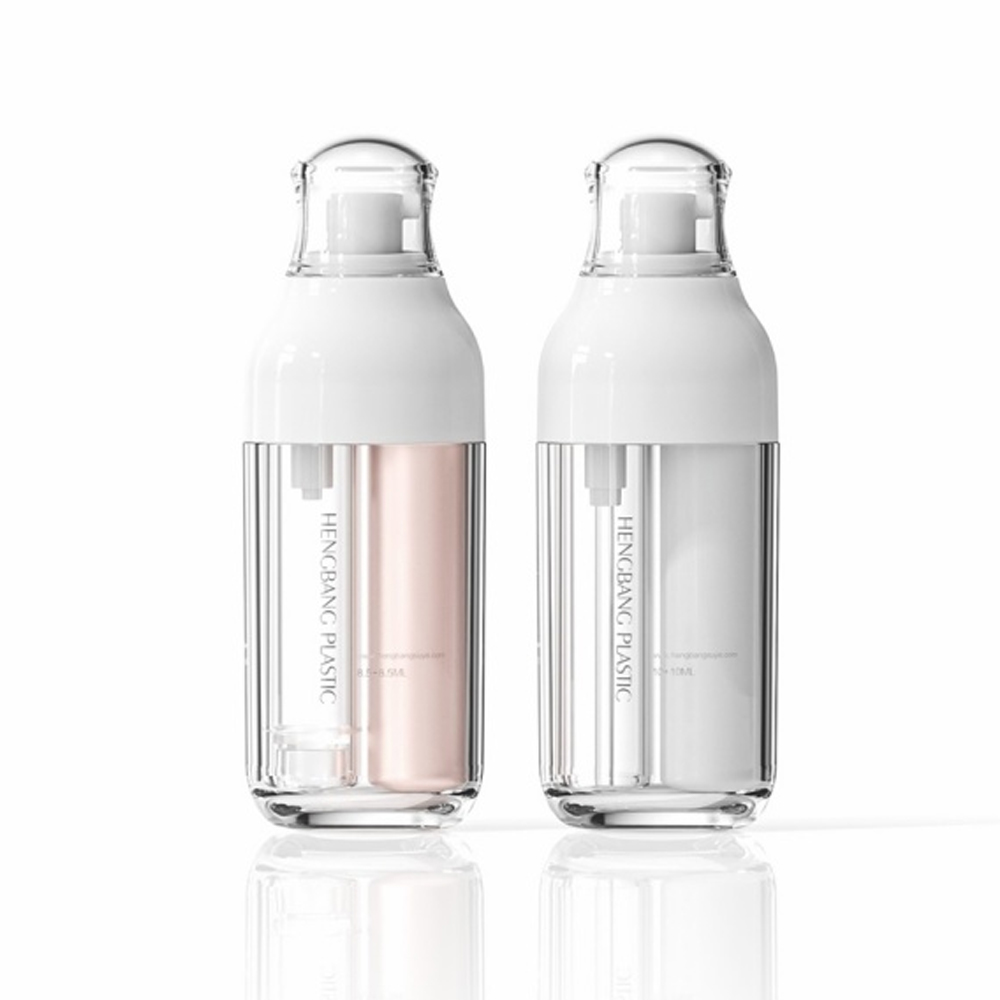
The HB-K022A/B bottle can be integrated into broader cosmetic bottle sets. A skincare brand may pair it with toner bottles, cream jars, sunscreen bottles, or double chamber bottles depending on the product line. The airless refillable bottle can serve as the hero package for treatment products, while other containers support complementary formulas.
For example, a daily skincare routine may include a toner bottle for preparation, a 30 ml airless serum bottle for active treatment, a 50 ml airless lotion bottle for hydration, and a plastic cream jar for a richer night product. If the brand wants to emphasize sustainability, the airless items can use refillable inner bottles, while other components can be designed for recyclability or lightweighting.
In premium sets, the refillable airless bottle can help communicate technical sophistication. The consumer sees that the brand has invested in packaging that protects the formula and reduces waste. This can be particularly effective for anti-aging, brightening, sensitive-skin, and dermatological skincare lines.
For travel or trial sets, the 20 ml option can be useful. It provides a compact format while maintaining the advantages of airless dispensing. Travel users appreciate secure packaging, especially when a retaining clip helps prevent accidental discharge. Trial sizes also allow brands to introduce consumers to the refill system before they commit to larger sizes.
Yuyao Hengbang Plastic Co., Ltd. has built its business around plastic cosmetic and skincare packaging. Since its establishment in 2006, the company has focused on quality, integrity, and customer-first service. These principles are important in packaging supply because cosmetic brands need reliable delivery, consistent quality, and responsive communication.
The company’s production scale supports both manufacturing stability and development capability. A 35,000-square-meter building area provides room for production, assembly, inspection, storage, and project coordination. More than 300 employees contribute to production capacity and service responsiveness. For overseas and domestic buyers, this scale can help reduce supply risk.
The company’s young and professional team provides services including design and development. This is particularly relevant for brands that want customized packaging solutions. A customer may start with the HB-K022A/B model and then request specific colors, decorations, packaging combinations, or refill-program support. Professional technical and service teams can help translate those needs into manufacturable solutions.
Multiple invention patents indicate an emphasis on innovation. In cosmetic packaging, innovation often appears in structural improvement, pump performance, refill systems, assembly methods, and user convenience. The HB-K022A/B bottle reflects this type of practical innovation: it solves real market problems by combining airless protection with a replaceable inner bottle.
The company’s philosophy of quality, integrity, and customer first is especially relevant to airless packaging. Airless bottles must perform reliably after filling, shipping, storage, retail handling, and repeated consumer use. If a pump fails or a refill does not fit, the brand’s reputation may suffer. Therefore, quality must be built into the product from design through mass production.
ISO9001:2015 certification supports systematic quality management. This may include process documentation, inspection standards, corrective actions, supplier control, and continuous improvement. For cosmetic brands, working with a supplier that uses structured quality systems helps reduce uncertainty and supports consistent product launches.
ISO14001:2015 certification complements the refillable product concept. Sustainability is not only about the final package; it also involves production management, resource awareness, and environmental responsibility. A manufacturer with an environmental management system is better positioned to support customers who care about responsible sourcing and supply-chain credibility.
The high-tech enterprise recognition in Ningbo further supports the company’s image as a manufacturer with development strength. Packaging markets continue to change, and brands need suppliers capable of adapting to new trends. Refillable airless packaging is one example of such adaptation.
Several major trends make the HB-K022A/B bottle timely. The first is the rise of active skincare. Consumers are increasingly interested in formulas with targeted benefits, such as hydration, barrier repair, brightening, firming, and anti-aging. These products often require packaging that supports stability and precise use. Airless bottles meet this expectation.
The second trend is sustainable packaging. Consumers, retailers, and regulators are paying more attention to plastic waste. Refill systems are one of the most visible ways for brands to respond. The replaceable inner-bottle system gives consumers a simple way to participate in waste reduction without changing their skincare routine dramatically.
The third trend is premium convenience. Consumers want products that are easy to use, clean, portable, and attractive. Airless pump bottles support this lifestyle. The retaining clip adds travel and shipping practicality, while the refillable structure adds long-term value.
The fourth trend is brand differentiation. Many cosmetic shelves are crowded with similar jars, tubes, and droppers. A refillable airless bottle gives a product a stronger point of difference. It allows brands to communicate technology, hygiene, sustainability, and user-centered design in one package.
Brands using the HB-K022A/B bottle can position it in several ways. For a clinical skincare line, the focus can be formula protection, hygienic dispensing, and measured output. The design can use clean colors, simple typography, and scientific messaging. The refill system can be presented as a responsible extension of professional skincare.
For a natural or eco-conscious skincare line, the focus can be reduced plastic waste through replacement inner bottles. The outer bottle can use soft natural tones, and refill instructions can be highlighted clearly. The brand story can emphasize practical sustainability without compromising product protection.
For a premium anti-aging line, the focus can be luxury combined with advanced dispensing. The permanent outer bottle becomes a long-term beauty object, while the inner refill supports repeat use. Metallic decoration or elegant color matching can enhance the high-end impression.
For e-commerce skincare, the retaining clip, pump safety, and refill replacement model can be emphasized. Subscription refills can be promoted as convenient and waste-conscious. Clear online visuals can show the outer bottle and replacement inner bottle system.
Beyond consumer appeal, refillable airless packaging can support business operations. A brand can sell complete units at first purchase and refill units for repeat orders. This creates multiple stock-keeping unit strategies and encourages customer retention. Refills may also reduce shipping volume and material use depending on final packaging design.
The consistent outer bottle design can strengthen brand recognition over time. Because consumers keep the outer bottle, the brand remains visible in the user’s daily environment. Each refill reinforces the relationship between the consumer and the product line.
The multiple capacity options also support product segmentation. A brand can offer trial, standard, and value sizes while maintaining a unified look. This can help with retail planning, promotional kits, seasonal sets, and market testing.
For contract fillers and skincare manufacturers, the airless structure may reduce certain product-handling concerns after filling, provided the filling process is properly matched to the package. Brands should still conduct filling trials, torque or assembly checks, compatibility testing, and transport simulation before launch.
It is designed for skincare and cosmetic formulas that benefit from airless dispensing, controlled dosage, and refillable packaging. Typical applications include serums, lotions, creams, sunscreen emulsions, toner essences, and other sensitive cosmetic products.
The bottle uses a permanent outer bottle and a replaceable inner bottle. After the formula is used, the user replaces only the inner bottle instead of discarding the full package. This reduces repeated disposal of the outer component and supports a more sustainable product lifecycle.
Airless packaging helps reduce contact between the formula and external air during use. It also reduces the need for users to open the container or touch the product directly. This can help protect sensitive formulas, improve hygiene, and support more complete dispensing.
The available capacity options are 20 ml, 30 ml, 50 ml, and 70 ml. These sizes are suitable for concentrated serums, daily lotions, sunscreen products, travel sizes, trial sets, and full skincare routines.
The clip is made from PP, the pump uses PP and ABS, the outer bottle is made from MS, and the inner bottle is made from PP. This material combination supports function, appearance, durability, and refill practicality.
The retaining clip helps prevent accidental pressing of the nozzle during shipping, storage, travel, or retail handling. This reduces the risk of leakage and product waste.
A traditional cream jar exposes the formula to air whenever it is opened and may require direct finger contact. The airless pump bottle provides cleaner dispensing, reduced air exposure, and more controlled usage.
A disposable airless bottle protects the formula but is typically discarded completely after use. The HB-K022A/B bottle keeps the airless protection while allowing the inner bottle to be replaced, reducing waste from repeated full-package disposal.
It combines technical airless dispensing, a refined outer appearance, controlled dosage, refillability, and user convenience. These features support premium positioning and help communicate formula protection, hygiene, and sustainability.
The manufacturer has long-term experience in cosmetic plastic packaging, a 35,000-square-meter production base, more than 300 employees, design and development services, ISO9001:2015 and ISO14001:2015 certifications, high-tech enterprise recognition, and multiple invention patents.
The HB-K022A/B Plastic Refillable Airless Serum Bottle is a strong packaging solution for cosmetic brands that want to combine performance, sustainability, and premium user experience. Its airless piston dispensing helps protect formulas from unnecessary air exposure, supports hygienic use, and improves product evacuation. Its refillable inner-bottle system reduces waste compared with fully disposable packaging while maintaining the cleanliness and convenience that skincare consumers expect.
For brands competing in skincare, packaging can be a powerful differentiator. This bottle provides a clear advantage over open jars, ordinary dip-tube pumps, disposable airless bottles, and messy pour-in refill systems. It supports modern product strategies such as refill programs, subscription refills, coordinated skincare sets, e-commerce sales, and premium active-ingredient lines.
Behind the product is a manufacturer with established production scale, technical development ability, quality management systems, environmental management certification, and a long-standing focus on cosmetic packaging. These strengths help ensure that the bottle is not only attractive in concept but also practical for real production and market use.
As cosmetic brands look for packaging that protects formulas, satisfies consumers, and supports responsible material use, refillable airless bottles are becoming increasingly relevant. The HB-K022A/B model offers a well-balanced answer: durable outside, replaceable inside, protected formula delivery, controlled dispensing, and a cleaner path toward sustainable skincare packaging.
1. ISO 9001:2015 Quality Management Systems, International Organization for Standardization.
2. ISO 14001:2015 Environmental Management Systems, International Organization for Standardization.
3. Cosmetic Packaging and Dispensing Systems: Principles of Airless Pump Design and Product Protection, Packaging Technology Industry Literature.
4. Sustainable Packaging in the Beauty and Personal Care Industry, Market Research and Packaging Development Reports.
5. Plastic Materials for Cosmetic Packaging: Polypropylene, ABS, and Styrenic Resin Applications, Polymer Packaging Reference Publications.
6. Good Manufacturing and Quality Control Practices for Cosmetic Packaging Components, Cosmetic Packaging Supplier Guidelines.


Copyright © Yuyao Hengbang Plastic Co., Ltd.
All Rights Reserved.
 Wholesale Plastic Cosmetic Packaging Manufacturers