English
 中文简体
中文简体
News
Home > Author > Zhang Yuxin — Plastic Cosmetic Packaging Sales Representative > Why PETG Lotion Bottles Are Becoming a Preferred Choice for Modern Skincare Packaging

 2026.08.07
 Zhang Yuxin — Plastic Cosmetic Packaging Sales Representative
Content
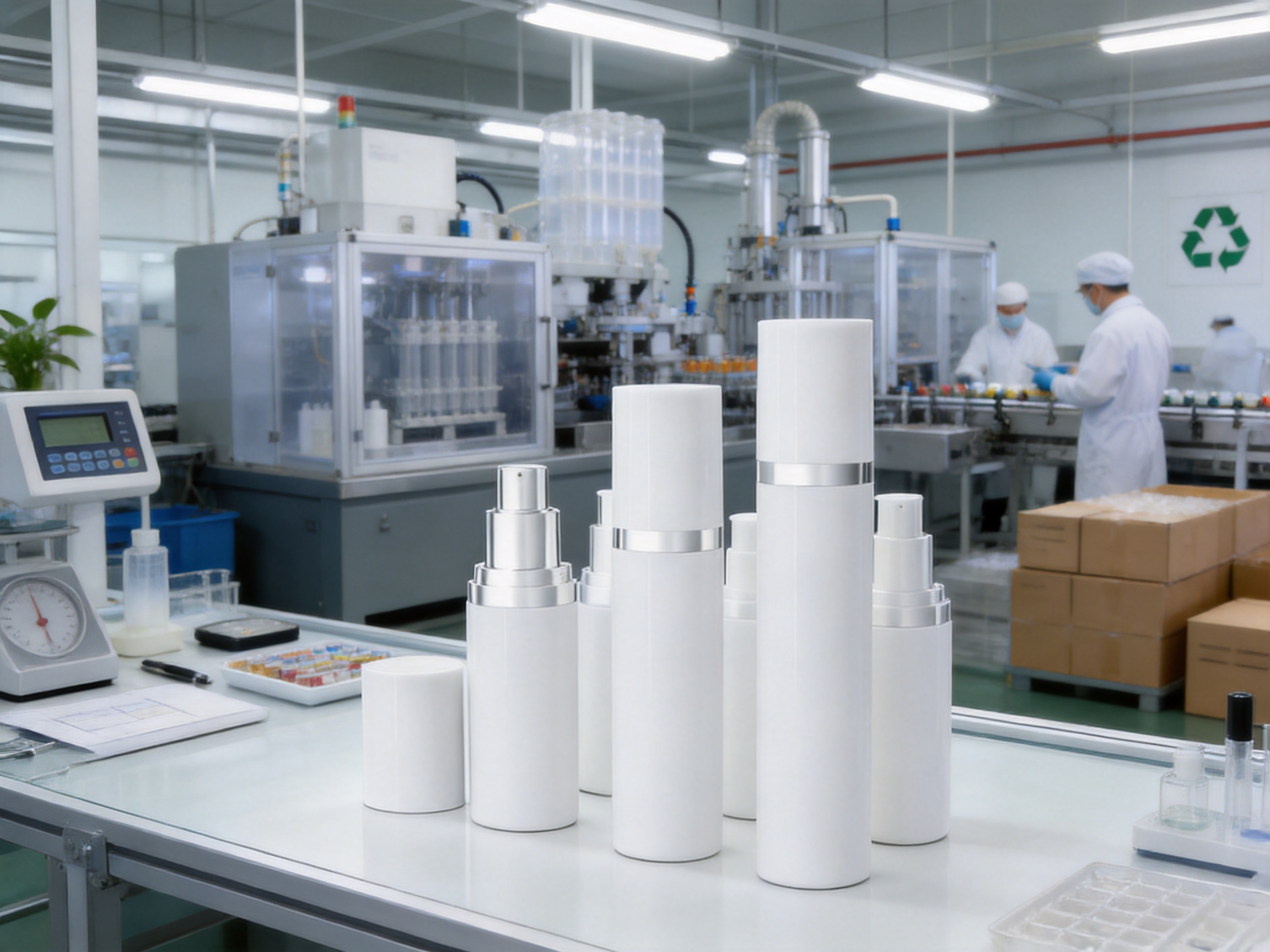
In the skincare and personal care market, packaging is no longer treated as a secondary component. It is an important part of product performance, visual identity, consumer convenience, and brand positioning. A well-designed lotion bottle must protect its contents, dispense the right amount, remain comfortable to use, and communicate quality from the first moment a customer sees it.
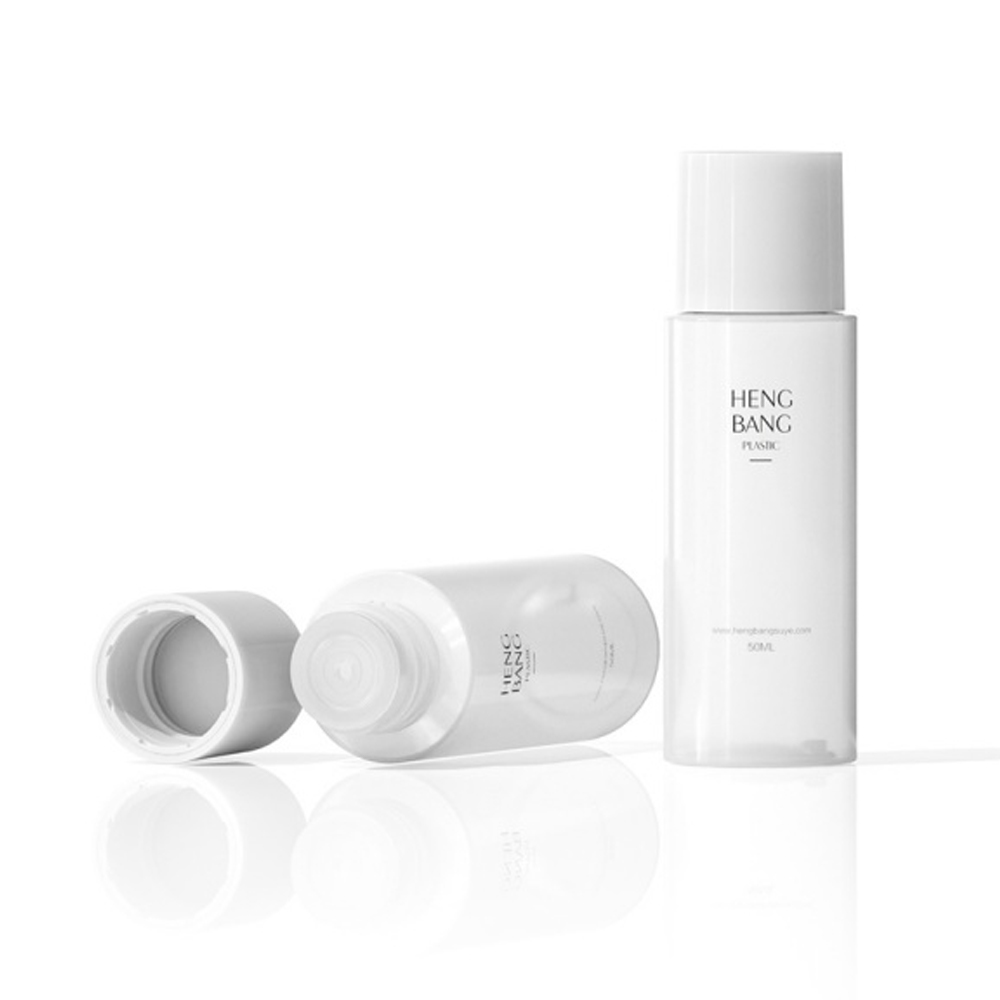
The HB-R001 PETG white lotion bottle is designed to meet these requirements through a combination of clean cylindrical styling, practical capacities, durable PETG construction, and flexible decoration options. It is suitable for lotions, moisturizers, emulsions, body care products, hand care formulas, and other liquid or semi-liquid skincare products that require controlled dispensing and an attractive presentation.
Manufactured by Yuyao Hengbang Plastic Co., Ltd., the bottle reflects the company’s experience in plastic cosmetic packaging, product development, and customized manufacturing. With a production history dating back to 2006, a 35,000-square-meter building area, more than 300 employees, ISO9001:2015 and ISO14001:2015 certifications, and multiple invention patents, the manufacturer offers more than a standard packaging item. It provides a production platform capable of supporting product development, customization, quality management, and large-scale supply.
Skincare packaging must perform several functions simultaneously. It has to preserve the product, make dispensing simple, provide an appealing appearance, and withstand the conditions of transportation, storage, and daily use. At the same time, packaging must support a brand’s visual language and allow manufacturers to create differentiated products in a competitive market.
Lotion bottles are particularly important because lotions and emulsions are commonly used every day. Consumers expect the package to be clean, reliable, and easy to operate. A pump should work smoothly, a cap should remain secure, and the container should feel stable in the hand. If any of these details fail, the perceived quality of the product may decline even when the formulation itself is excellent.
The HB-R001 PETG lotion bottle addresses these expectations with a straightforward cylindrical structure. Its smooth lines create a minimalist appearance that can be used for professional skincare, moisturizing products, body lotions, sun care, and other cosmetic applications. The design avoids unnecessary visual complexity, giving brands a neutral foundation that can be adapted to different identities.
This type of design also offers practical benefits. A cylindrical bottle is easy to hold, simple to label or decorate, and suitable for consistent packing. Its balanced profile can help create a neat appearance on retail shelves, bathroom counters, hotel amenity displays, and professional beauty environments.
The HB-R001 is a PETG lotion bottle available in 30 ml, 40 ml, and 50 ml capacities. These sizes cover several common applications, from trial and travel formats to regular-use skincare packaging. The available volume range gives brands the flexibility to build a coordinated product family while maintaining a consistent visual appearance.
The bottle can be produced in a high-transparency or frosted PETG finish. A transparent finish allows the color and texture of the product to contribute to the package presentation, while a frosted finish creates a softer and more refined appearance. Frosting can also help create a muted, premium visual effect suitable for minimalist skincare lines.
The packaging is compatible with a sophisticated pump dispenser or twist cap. The pump option supports controlled dispensing and convenient one-hand operation. A twist cap can provide a different user experience and may be preferred for selected product formulas or brand concepts. The closure choice can therefore be matched to the product’s viscosity, usage pattern, and target market.
The surface supports silk-screen printing and hot stamping. These decoration techniques allow a logo, product name, instructions, or other graphic elements to be applied directly to the bottle. A carefully selected decoration method can strengthen brand recognition while maintaining the clean visual character of the package.
The supplied material specification is as follows:
| Component | Material |
|---|---|
| Bottle | PETG |
| Pump | PP and ABS |
| Cap | MS and ABS |
The listed product dimensions include a 33 mm diameter. The supplied height information corresponds to the available capacity options and should be confirmed with the manufacturer during technical approval, especially when a complete closure, decoration, or customized component is included.
| Capacity | Listed Height Information | Diameter | Dispensing Information |
|---|---|---|---|
| 30 ml | 107 mm | 33 mm | 0.23 cc listed application value |
| 40 ml | 126 mm listed in the supplied specification | 33 mm | 0.23 cc listed application value |
| 50 ml | 145 mm listed in the supplied specification | 33 mm | 0.23 cc listed application value |
Final dimensions, pump output, compatibility, and filling performance should be evaluated against the customer’s specific formula and production requirements before mass manufacturing.
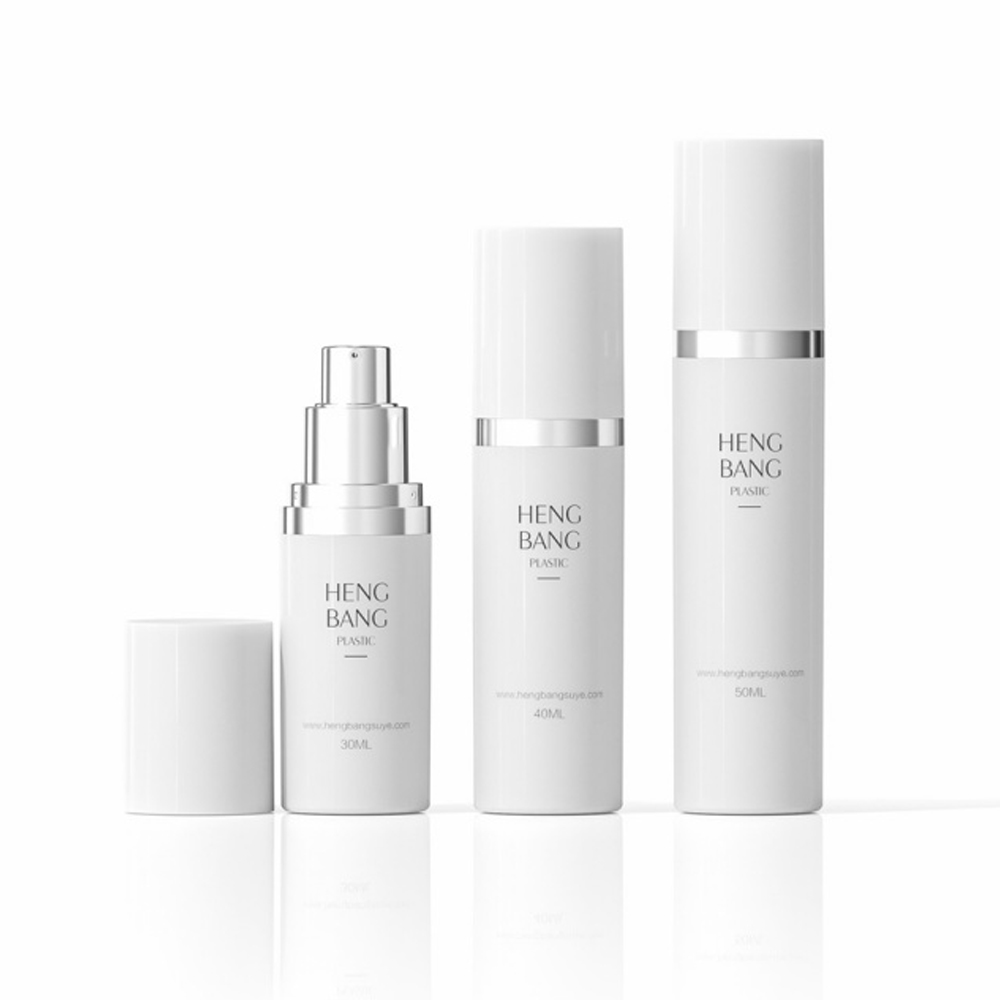
HB-R001 PETG White Lotion Bottle
PETG is widely used in cosmetic packaging because it can combine visual clarity, a smooth surface, and practical mechanical performance. For a lotion bottle, the material contributes to both the appearance and the perceived quality of the package.
One of the most noticeable advantages of PETG is its ability to provide a transparent or glass-like visual effect while remaining a plastic material. This can help brands achieve a refined appearance without relying on a heavier glass container. The result is a package that can look premium while offering the handling convenience associated with plastic packaging.
PETG also provides a comfortable surface for daily use. The HB-R001 design uses smooth, stable lines and a cylindrical body that fits naturally in the hand. This is particularly useful for lotions and skincare products, which are often used in bathrooms, bedrooms, offices, travel environments, or professional treatment rooms.
Compared with packaging that has complicated contours, a cylindrical PETG bottle can provide a more consistent surface for decoration. Logos, text, and graphic elements can be placed with a clean visual balance. The relatively simple geometry also makes it easier for a brand to coordinate bottle artwork with outer cartons, labels, shipping cases, and other packaging components.
The material is also suitable for creating different surface effects. High-transparency PETG can support a fresh, modern appearance, while frosted PETG can create a softer and more understated image. This flexibility makes the same basic bottle structure adaptable to different product categories and market segments.
Compared with ordinary opaque plastic packaging, transparent or frosted PETG may provide a more elevated presentation. Consumers can see the product color through a clear bottle, or they can experience a diffused and elegant appearance through a frosted finish. This creates additional opportunities for color matching between the formula and the container.
Compared with glass, PETG can offer a lighter and more user-friendly format. A lighter package can be more convenient during transport and daily handling, particularly for products used by children, older consumers, or individuals with limited hand strength. Plastic construction can also reduce the risk of breakage caused by accidental drops during normal use.
Compared with highly decorative or irregularly shaped containers, the HB-R001 offers a more timeless appearance. Its cylindrical profile is less dependent on short-term design trends. This can help a skincare brand maintain a consistent package architecture when launching additional products in the future.
These comparisons should be evaluated in relation to the specific formula, distribution system, target market, and sustainability objectives of each project. No single material is suitable for every application. However, PETG offers a strong balance of visual quality, usability, and design flexibility for many lotion packaging programs.
The appearance of a cosmetic package strongly influences the way a product is perceived. A minimalist design can communicate simplicity, purity, professionalism, and confidence. The HB-R001 uses a cylindrical body with smooth and stable lines, giving it a calm and organized appearance.
This design is particularly appropriate for skincare brands that prefer a restrained visual language. It can support white, neutral, pastel, metallic, or bold color systems. It can also be integrated into different positioning strategies, including clinical skincare, natural-inspired products, salon care, hotel amenities, spa products, and daily moisturizing collections.
The bottle’s shape provides a useful balance between visual presence and efficient use of space. Its narrow cylindrical format can be arranged in retail displays without occupying excessive shelf width. It is also suitable for grouped product presentations, where several capacities or formulations are displayed together.
A consistent bottle shape can help a brand create a recognizable product family. For example, a 30 ml size may be used for travel or introductory products, a 40 ml size for selected facial treatments, and a 50 ml size for regular-use lotion or moisturizer. By keeping the same basic shape across these formats, the brand can create visual continuity while offering different product volumes.
Ergonomics are essential in lotion packaging because consumers often dispense products with one hand. A bottle should be easy to grip, stable during operation, and comfortable to hold while applying the product.
The HB-R001’s cylindrical body provides a straightforward grip without sharp corners or complicated transitions. Its compact diameter is suitable for hand-held use, while its vertical form helps the bottle occupy limited counter space. The smooth body can also be wiped clean more easily than a package with deep grooves or complex decorative structures.
A pump dispenser can further improve convenience by reducing the need to unscrew a cap during each use. This can be valuable for products used frequently or in environments where maintaining a clean routine is important. A twist cap remains an alternative for brands that prefer a different closure style or filling system.
The listed 0.23 cc application value provides a reference point for controlled dispensing. Actual output may depend on pump construction, formula viscosity, actuation force, and filling conditions. These variables should be tested together during product development to ensure that the dispenser delivers the intended amount consistently.
The closure is one of the most important functional elements of a lotion bottle. It must protect the contents, support convenient use, and remain compatible with the formula throughout the product’s shelf life.
The HB-R001 can be paired with a pump dispenser or twist cap. The pump option is appropriate for products that benefit from measured dispensing and minimal contact with the remaining contents. Consumers can press the actuator to release a controlled quantity, which may help reduce overuse and product waste.
The pump structure uses PP and ABS components according to the supplied specification. These materials are commonly used in cosmetic dispensing systems and allow the closure to combine functional structure with an attractive finish. The cap is specified as MS and ABS, providing an additional component option for the final package configuration.
A twist cap can create a more compact or familiar user experience for selected lotions. It may also be useful when the product’s viscosity, usage occasion, or distribution model makes a pump unnecessary. Offering more than one closure direction gives brands greater flexibility during packaging development.
Sealing performance should be verified through technical testing. Important evaluation points include closure fit, leakage resistance, pump recovery, output consistency, actuation performance, compatibility with the formula, and behavior during transportation. The final testing program should be based on the customer’s formula and intended distribution environment.
Cosmetic formulas can vary considerably in viscosity, acidity, oil content, fragrance composition, active ingredients, and sensitivity to oxygen or contamination. The bottle and closure should therefore be tested with the actual formula rather than evaluated only by appearance.
Compatibility testing may include storage at different temperatures, repeated dispensing, long-term contact with the formula, and observation of changes in color, odor, texture, or package condition. The pump should also be assessed for clogging, inconsistent output, or changes in actuation force.
These procedures are not merely technical formalities. They help ensure that the final package performs reliably throughout the product’s intended service life. A manufacturer with experience in cosmetic packaging can support customers in identifying the relevant test requirements during the development stage.
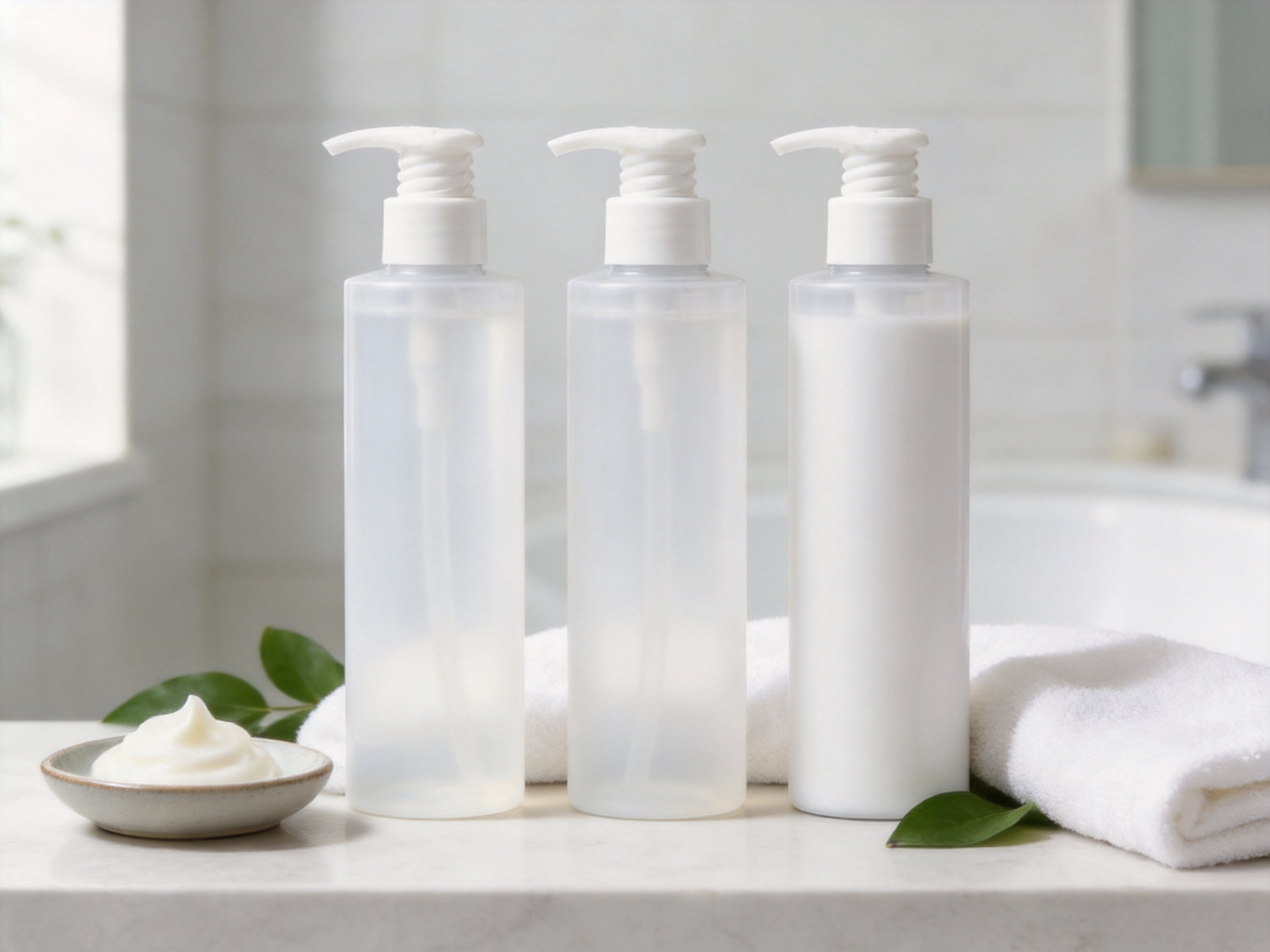
Cosmetic packaging must be functional, but it must also serve as a communication surface. The bottle is often the first physical element that a customer notices, and its decoration can influence whether the product appears premium, clinical, natural, youthful, or luxurious.
The HB-R001 surface supports silk-screen printing and hot stamping. These techniques can be used separately or in combination, depending on the desired visual effect and production requirements.
Silk-screen printing is suitable for applying logos, product names, usage information, patterns, and other graphic elements directly to the bottle surface. It can produce clear text and strong color coverage when the artwork and ink system are properly selected.
For a white lotion bottle, silk-screen printing can create a strong contrast with dark, metallic, pastel, or vivid inks. It can also support restrained monochrome branding for minimalist product lines. The technique is adaptable to both small graphic details and larger front-panel artwork.
Artwork preparation is an important part of the printing process. Brands should provide accurate dimensions, color references, logo files, and placement instructions. The manufacturer can then evaluate the artwork in relation to the bottle’s curvature, print area, and production tolerances.
Hot stamping can add a metallic or high-impact visual element to the package. Gold, silver, and other foil effects are often used to emphasize a logo, product name, border, or selected decorative detail.
When applied selectively, hot stamping can create a premium appearance without making the overall design visually heavy. It may be especially effective on a frosted PETG surface, where the contrast between the soft body finish and metallic decoration can reinforce a refined brand position.
Hot stamping should be considered as part of the complete packaging system. The foil color, typography, bottle finish, carton design, and cap treatment should be coordinated so that the final package appears intentional and consistent.
Although the HB-R001 has a defined cylindrical structure and listed capacities, cosmetic packaging projects often require additional decisions. These may include bottle color, surface finish, pump or cap selection, decoration method, logo placement, and packaging combinations.
Hengbang’s design and development services can assist customers in turning a general concept into a manufacturable package. Early technical discussion is useful because it allows design preferences to be considered alongside material selection, tooling, decoration, assembly, filling, and quality requirements.
Customization should be approached systematically. A strong package is not simply attractive; it must also be stable during production, practical for filling, compatible with the formula, and consistent across repeated batches.
The performance of a cosmetic bottle depends not only on its design but also on the manufacturing system used to produce it. Dimensional consistency, surface quality, component matching, decoration accuracy, and quality inspection all influence the final result.
Yuyao Hengbang Plastic Co., Ltd. was established in 2006 and has developed experience in plastic packaging for cosmetics and skincare products. The company has a building area of 35,000 square meters and more than 300 employees. This scale provides a foundation for coordinating product development, production, assembly, quality control, and customer service.
The company’s focus on cosmetic and skincare packaging is an important advantage for buyers. Packaging intended for personal care products has specific requirements related to appearance, cleanliness, closure performance, formula compatibility, and batch consistency. A manufacturer familiar with these requirements can provide more relevant technical support than a general plastic supplier with no specialized cosmetic packaging focus.
The company also provides design and development services. This is valuable for customers who have a product concept but need assistance with structure selection, component coordination, decoration planning, or production preparation. Collaboration at the development stage can reduce the risk of discovering technical problems after a design has already been finalized.
Hengbang has passed ISO9001:2015 certification. ISO9001 is associated with quality management systems and provides a structured framework for process control, documentation, continual improvement, and customer-focused operations.
For packaging buyers, a quality management system can support more consistent manufacturing practices. It can help establish procedures for incoming materials, production operations, inspection, nonconformity handling, corrective actions, and record management.
Quality management is particularly important for cosmetic packaging because small variations can affect the appearance or function of the final product. Differences in bottle dimensions may influence closure fit. Surface defects may affect decoration. Pump output variations may change the consumer experience. A controlled quality system helps address these risks in an organized way.
The company has also passed ISO14001:2015 certification. This standard is associated with environmental management systems and provides a framework for identifying, controlling, and improving environmental performance within an organization.
Environmental management does not automatically mean that every product is recyclable, recycled, or environmentally superior. However, it demonstrates that environmental responsibilities are incorporated into the company’s management framework. For customers evaluating supply partners, this can be a useful part of responsible procurement and supplier assessment.
Brands can discuss material selection, production efficiency, decoration systems, packaging reduction, and end-of-life considerations with the manufacturer during project development. The final environmental profile of the package will depend on the complete structure, materials, logistics, use phase, and local recycling systems.
Hengbang has been recognized as a Ningbo High-Tech Enterprise and owns multiple invention patents. These achievements indicate an emphasis on technical development and product innovation.
For buyers, research and development capability can be valuable when a project requires more than a standard catalog item. It may support the creation of new structures, improved dispensing systems, specialized closures, or packaging solutions adapted to particular formulas and market requirements.
A supplier with development experience can also help identify practical compromises. For example, a customer may want a highly decorative package, but the design must remain compatible with automated filling, transportation, and cost targets. Technical collaboration can help balance visual ambition with manufacturing reliability.
Product comparisons should be based on the needs of a particular project, but the HB-R001 offers several advantages that may distinguish it from competing lotion bottle formats.
The availability of 30 ml, 40 ml, and 50 ml options allows brands to select a volume that fits their positioning and usage model. Smaller sizes can support travel products, samples, gift sets, and premium treatments. Larger sizes can serve daily-use lotions and moisturizers.
Having several capacities within one design family can simplify brand architecture. A company may use the same visual language for multiple products while still offering different amounts for different sales channels.
The ability to choose between high-transparency and frosted PETG expands the design possibilities without requiring a completely different bottle structure. Clear PETG can highlight the formula, while frosted PETG can create a more subdued and sophisticated impression.
This flexibility can help brands launch related products for different market segments. A transparent finish may suit a fresh or colorful skincare collection, while a frosted finish may suit a premium or professional line.
The compatibility with a pump dispenser or twist cap gives the HB-R001 greater adaptability than a bottle restricted to one closure type. Brands can select the closure according to the formula, dispensing preference, target consumer, and filling operation.
This also helps packaging buyers compare different consumer experiences before committing to mass production. A pump may be selected for convenience and dosage control, while a twist cap may support simplicity or a particular package style.
Support for silk-screen printing and hot stamping provides practical opportunities for customization. Some competing bottles may require labels or limited decoration systems, whereas direct printing and hot stamping can create a more integrated appearance.
Decoration flexibility is important for brands that need to communicate product information while maintaining a premium visual surface. It can also help reduce dependence on additional labels, depending on the project’s requirements.
The product is supported by a manufacturer focused on cosmetic and skincare plastic packaging. The company’s experience, employee base, production area, certifications, design services, and patent activity provide a broader foundation than a simple trading arrangement.
For international buyers, supplier capability can be as important as the bottle itself. Consistent communication, technical review, quality documentation, production planning, and after-sales coordination all affect the success of a packaging project.
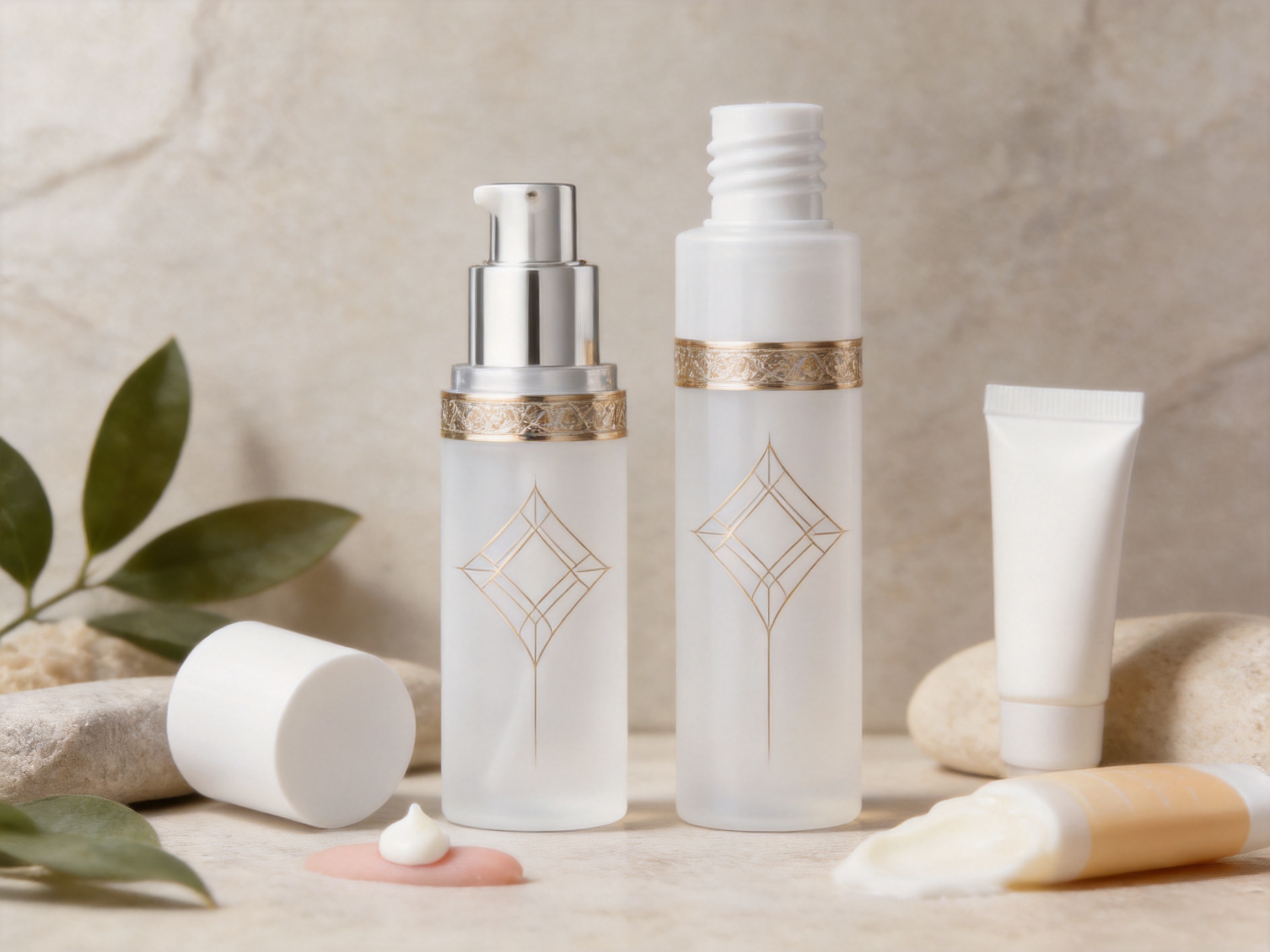
The HB-R001 can be considered for a wide range of liquid and semi-liquid cosmetic products. Its lotion-oriented structure and dispensing options make it suitable for several product categories.
Facial moisturizers often require a package that looks clean and hygienic while supporting controlled dispensing. A pump configuration can help consumers dispense a consistent amount and avoid repeatedly placing fingers into the product.
The 30 ml and 40 ml options may be appropriate for targeted facial treatments, travel formats, or premium products. The 50 ml option can support a standard daily moisturizer format, depending on the formula and market expectations.
Body lotions are commonly used in larger quantities than facial treatments, but compact package sizes can still be useful for travel, hotel amenities, gift sets, and specialty products. The cylindrical profile can be easy to store and handle in bathrooms or personal care areas.
The product category information includes sunscreen packaging as a potential application area. A pump lotion bottle may be suitable for selected sunscreen or after-sun formulations, subject to formula compatibility, regulatory requirements, and appropriate performance testing.
Sun care packaging may be exposed to heat, sunlight, frequent handling, and outdoor conditions. Brands should therefore conduct application-specific stability and package testing before commercial use.
Hand lotions, hand creams with suitable viscosity, and body care emulsions can benefit from convenient pump dispensing. The bottle can be positioned in personal care collections for homes, offices, salons, spas, hotels, and retail gift programs.
Professional skincare environments often prefer packaging that looks organized and is easy to operate. The HB-R001’s clean design can be adapted for beauty salons, spas, clinics, and hospitality applications where visual consistency is important.
For these uses, customers should confirm whether the selected closure, dispensing output, and capacity are appropriate for the expected frequency of use and refill or replacement schedule.
A successful packaging project should move through several controlled stages. The process begins with a clear understanding of the product formula, target market, package size, decoration requirements, filling method, and expected order volume.
The customer should provide information about the formula’s viscosity, ingredients, fragrance, color, pH range, and intended shelf life. This information helps the manufacturer evaluate material and closure compatibility.
If the formula contains strong solvents, high levels of essential oils, aggressive preservatives, or other ingredients that may interact with packaging materials, additional compatibility testing may be necessary.
The 30 ml, 40 ml, and 50 ml options should be compared according to the intended product use. Brands should also decide whether a pump or twist cap better supports the consumer experience and filling process.
At this stage, the dispensing output should be reviewed. The listed 0.23 cc value can serve as an initial reference, but the final output should be measured using the selected pump and actual formula.
The customer should select high-transparency or frosted PETG and determine whether the package will use silk-screen printing, hot stamping, or another approved decoration arrangement. Artwork should be reviewed for scale, position, color, and legibility.
Samples are useful for checking how the bottle finish, decoration, closure, and formula color appear together. A design that looks correct on a digital screen may appear different when applied to a curved, frosted, or transparent surface.
Compatibility testing should include contact between the actual formula and the complete package. The bottle, pump, cap, decoration, and any internal components should be evaluated together.
Testing may examine leakage, deformation, discoloration, odor transfer, loss of decoration, pump performance, and changes in formula appearance. The duration and conditions should reflect the product’s intended shelf life and distribution environment.
Before mass production, the customer and manufacturer should approve the technical drawing, material specification, decoration artwork, closure configuration, dimensions, color standards, and quality requirements.
A documented approval process helps reduce misunderstandings and provides a common reference for subsequent production batches. It is especially important when several components must be assembled into one finished package.
When evaluating a lotion bottle supplier, buyers should examine more than the appearance of a sample. The supplier’s production controls, technical communication, certifications, inspection procedures, and ability to manage repeat orders are also important.
For the HB-R001, buyers may wish to review bottle weight, wall thickness, dimensional tolerances, neck specifications, closure fit, pump output, surface finish, decoration adhesion, color consistency, and carton packing. These details can have a direct influence on production efficiency and customer satisfaction.
For decorated bottles, inspection should confirm logo position, print clarity, foil adhesion, color accuracy, and resistance to normal handling. For pump bottles, the inspection should include actuator operation, recovery, leakage resistance, and output consistency.
Packaging quality is not limited to whether one sample looks acceptable. It also includes the manufacturer’s ability to reproduce the approved standard across a complete production batch and across future orders.
Cosmetic packaging often involves multiple stages, including bottle production, closure production, decoration, assembly, inspection, and packing. Coordination between these stages can affect delivery schedules and final quality.
A manufacturer that provides design and development support may be able to coordinate more of these activities within one supplier relationship. This can simplify communication for the customer and reduce the need to manage unrelated component suppliers.
Buyers should still confirm production lead times, minimum order quantities, sample procedures, decoration charges, inspection standards, shipping arrangements, and documentation requirements before placing an order.
Packaging sustainability should be considered from the beginning of product development. Material selection, package weight, decoration, transportation, product protection, and end-of-life management all contribute to the overall environmental profile.
PETG may provide a lightweight alternative to glass in some applications, which can influence transportation weight and handling. However, responsible evaluation requires consideration of local recycling systems, package construction, additives, decoration layers, and regional waste management practices.
The bottle’s cylindrical structure may also support efficient packing compared with highly irregular forms. Efficient packing can help reduce unused space during transportation, although actual performance depends on the outer carton, case configuration, and shipping method.
Hengbang’s ISO14001:2015 environmental management certification provides a basis for discussing environmental controls and improvement practices with customers. Brands seeking specific sustainability targets should request project-specific information and evaluate the complete package rather than relying on a single material label.
Potential improvement directions may include reducing unnecessary material, optimizing wall thickness without compromising performance, selecting appropriate decoration coverage, and designing packaging that aligns with available recycling infrastructure. These decisions should be balanced with product protection and consumer expectations.
A cosmetic package is a technical product as well as a visual product. A supplier must understand how the bottle interacts with the formula, closure, filling line, decoration system, and distribution process.
Hengbang’s experience since 2006 provides a long operating history in plastic packaging for cosmetics and skincare products. Its team of more than 300 employees and 35,000-square-meter building area indicate an established manufacturing organization capable of supporting ongoing production requirements.
The company’s focus on quality, integrity, and customer-first service is aligned with the needs of packaging buyers who require stable communication and dependable order execution. Its design and development services can help customers address technical questions before production begins.
The company’s recognition as a Ningbo High-Tech Enterprise and ownership of multiple invention patents further demonstrate a commitment to technical advancement. These strengths are relevant when customers require customized packaging, improved structures, or coordinated product development rather than a simple off-the-shelf purchase.
Certifications and company scale do not replace product-specific testing. Nevertheless, they provide useful evidence that a supplier has established systems and resources for managing quality, environmental responsibilities, development, and production.
Brands considering the HB-R001 should prepare a clear packaging brief. The brief should include the product category, formula characteristics, required capacity, closure preference, appearance, decoration, target order volume, intended sales channel, and expected delivery schedule.
It is also useful to define the desired consumer experience. If the product should feel luxurious and measured, a pump and hot-stamped logo may be appropriate. If the product should feel simple and practical, a twist cap and clean silk-screen decoration may be more suitable.
Customers should request samples that represent the intended final configuration. A plain bottle may not provide enough information if the final product will use frosting, colored material, printing, hot stamping, or a different closure.
The final commercial decision should consider the entire cost structure. In addition to the unit price, buyers should evaluate tooling, decoration, assembly, inspection, packaging, transportation, storage, and potential minimum order requirements.
Clear communication at the beginning of the project can help reduce later changes. Technical drawings and approved samples should be retained as references for production and repeat orders.
The bottle is designed for lotions, moisturizers, emulsions, body care products, selected sunscreen products, hand care products, and other liquid or semi-liquid skincare formulations. Final suitability depends on formula compatibility and product-specific testing.
The listed capacities are 30 ml, 40 ml, and 50 ml. These options can support travel formats, premium treatments, regular-use skincare, gift sets, and coordinated product collections.
The bottle is made from PETG. The supplied specification lists PP and ABS for the pump and MS and ABS for the cap.
The bottle can be produced with a high-transparency or frosted PETG appearance. The preferred finish should be selected according to the brand’s visual identity, formula color, and desired market positioning.
Yes. The HB-R001 can be paired with a pump dispenser. A twist cap is also available as an alternative closure direction.
The bottle surface supports silk-screen printing and hot stamping. These methods can be used for logos, product names, graphic details, and other branding elements.
The supplied product information lists an application value of 0.23 cc. Actual pump output should be confirmed through testing with the selected pump and the customer’s formula.
The listed diameter is 33 mm. Final dimensional confirmation should be made using the approved technical drawing and complete closure configuration.
The bottle is manufactured by Yuyao Hengbang Plastic Co., Ltd., a Chinese supplier specializing in plastic packaging for cosmetics and skincare products.
The supplier was established in 2006, has a 35,000-square-meter building area and more than 300 employees, and provides design and development services. It has passed ISO9001:2015 and ISO14001:2015 certifications, received Ningbo High-Tech Enterprise recognition in 2021, and owns multiple invention patents.
Customers can discuss appearance, finish, closure selection, decoration, logo placement, and other project requirements with the manufacturer. The exact customization scope should be confirmed during technical development.
No packaging material should be assumed to be suitable for every formula. The actual product should undergo compatibility, stability, sealing, and dispensing tests before mass production.
Buyers should request samples, review dimensions and materials, test the actual formula, evaluate closure performance, confirm decoration quality, and approve a final production standard. They should also discuss order quantities, lead times, inspection requirements, and shipping arrangements.
An inquiry should include the desired capacity, product formula type, closure preference, bottle finish, decoration requirements, estimated order quantity, target market, delivery expectations, and any documentation or testing requirements.
The HB-R001 PETG white lotion bottle offers a balanced packaging solution for modern skincare and personal care products. Its cylindrical design provides a clean and stable appearance, while its PETG construction supports high-transparency or frosted visual effects and a comfortable hand feel.
The 30 ml, 40 ml, and 50 ml capacity options allow brands to develop different product sizes within one coordinated design. Pump and twist cap options support different dispensing preferences, while silk-screen printing and hot stamping provide practical ways to create a distinctive package identity.
Its advantages over competing lotion bottle solutions include capacity flexibility, adaptable surface finishes, multiple closure directions, decoration compatibility, and support from a manufacturer specializing in cosmetic packaging. The supplier’s experience since 2006, established workforce, manufacturing area, quality and environmental certifications, technical development services, high-tech enterprise recognition, and invention patents further strengthen the product’s commercial value.
For the best result, the bottle should be evaluated as part of a complete packaging system. Formula compatibility, pump output, sealing, decoration adhesion, dimensional accuracy, filling-line performance, transportation, and environmental objectives should all be considered before final approval.
When these factors are reviewed carefully, the HB-R001 can provide a dependable and visually refined foundation for lotion, moisturizer, body care, sun care, and other skincare packaging projects.
1. Yuyao Hengbang Plastic Co., Ltd. Product specification for HB-R001 PETG White Lotion Bottle.
2. Yuyao Hengbang Plastic Co., Ltd. Corporate information and manufacturing capability overview.
3. International Organization for Standardization. ISO 9001:2015, Quality Management Systems—Requirements.
4. International Organization for Standardization. ISO 14001:2015, Environmental Management Systems—Requirements with Guidance for Use.
5. General cosmetic packaging development practices concerning material compatibility, closure performance, dispensing systems, and decoration quality.
6. General packaging engineering principles for cosmetic containers, including dimensional control, sealing evaluation, product protection, and consumer usability.


Copyright © Yuyao Hengbang Plastic Co., Ltd.
All Rights Reserved.
 Wholesale Plastic Cosmetic Packaging Manufacturers