English
 中文简体
中文简体
News
Home > Author > Chen Xiaotong — Key Account Sales Manager > Refillable Airless Serum Bottles: A More Sustainable Solution for Modern Cosmetic Packaging

 2026.08.03
 Chen Xiaotong — Key Account Sales Manager
Content
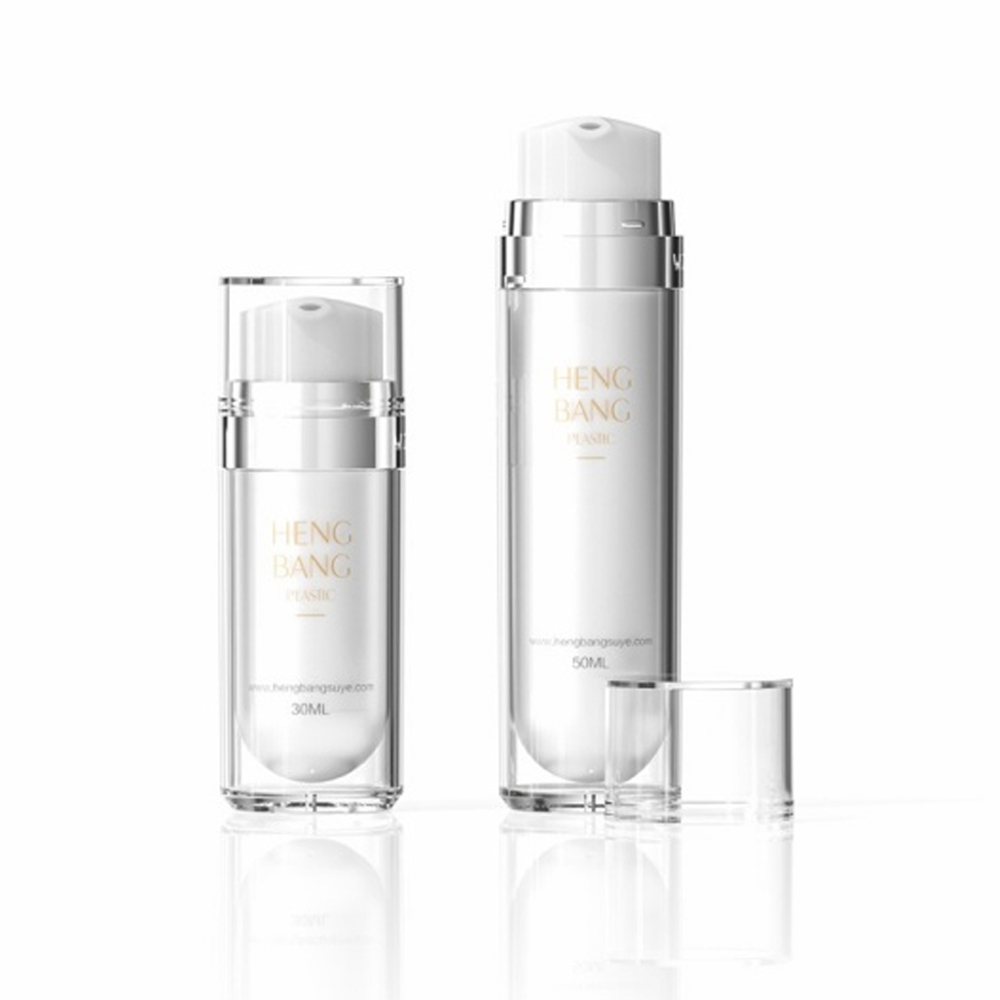
The packaging chosen for a skincare product affects far more than its appearance. It influences product protection, dispensing performance, consumer convenience, shelf presence, transportation efficiency, and the environmental profile of the complete product. For brands developing serums, lotions, creams, and other sensitive formulations, the container must also help preserve the quality of the formula throughout its useful life. The HB-K022A/B plastic refillable airless serum bottle has been developed to address these requirements through a combination of airless dispensing technology, a permanent outer bottle, and a replaceable inner bottle.
This structure creates a practical alternative to conventional single-use cosmetic containers. Instead of discarding the entire package whenever the product is consumed, the user can retain the outer bottle and replace only the empty inner bottle. The approach can reduce the quantity of packaging material consumed over repeated purchases while maintaining the premium appearance and functional performance expected from modern skincare packaging.
The bottle is manufactured by Yuyao Hengbang Plastic Co., Ltd., a Chinese cosmetic packaging manufacturer with experience in plastic packaging for cosmetics and skincare products. Established in 2006, the company operates from a facility with a building area of approximately 35,000 square meters and employs more than 300 people. Its production capabilities include design and development services, while its quality and environmental management systems are supported by ISO9001:2015 and ISO14001:2015 certifications.
This article examines the construction, performance, benefits, applications, customization potential, and manufacturing strengths associated with the HB-K022A/B refillable airless serum bottle. It also explains how this packaging format compares with more traditional pump bottles, jars, and disposable airless containers.
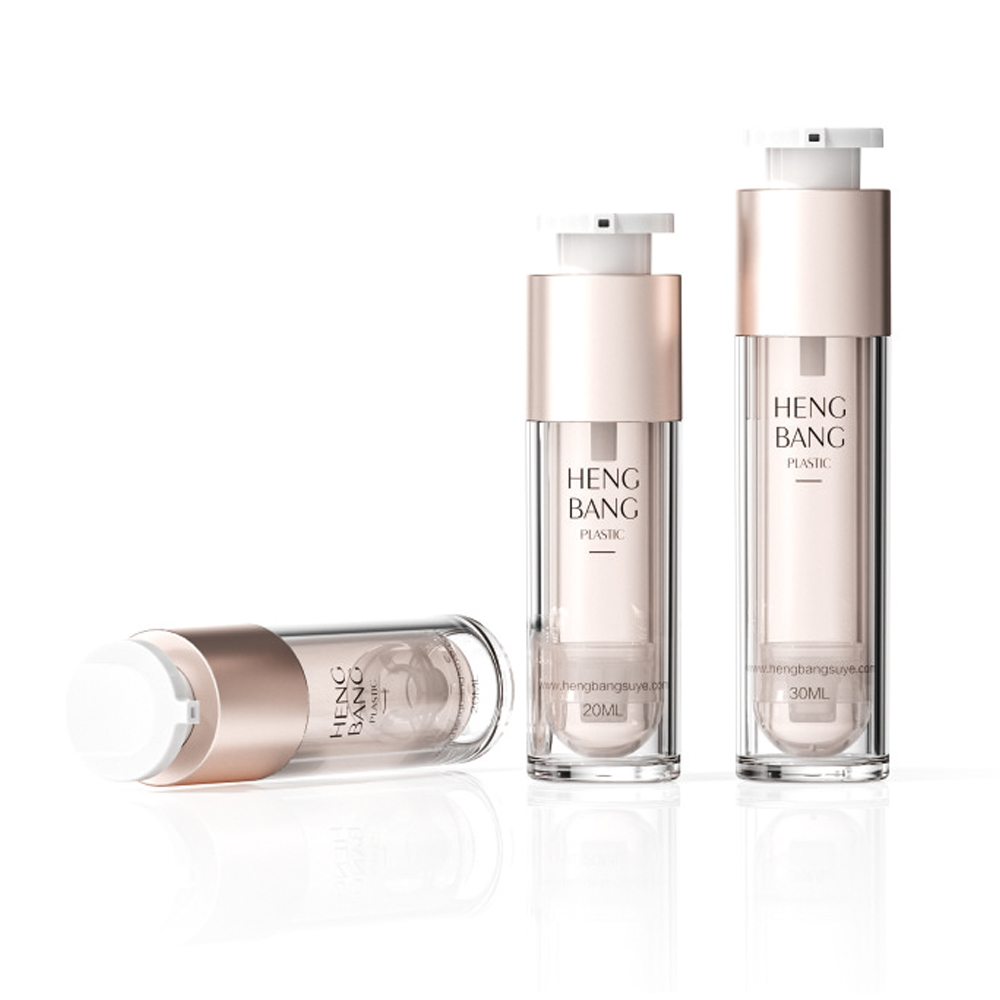
HB-K022A/B Plastic Refillable Airless Serum Bottle
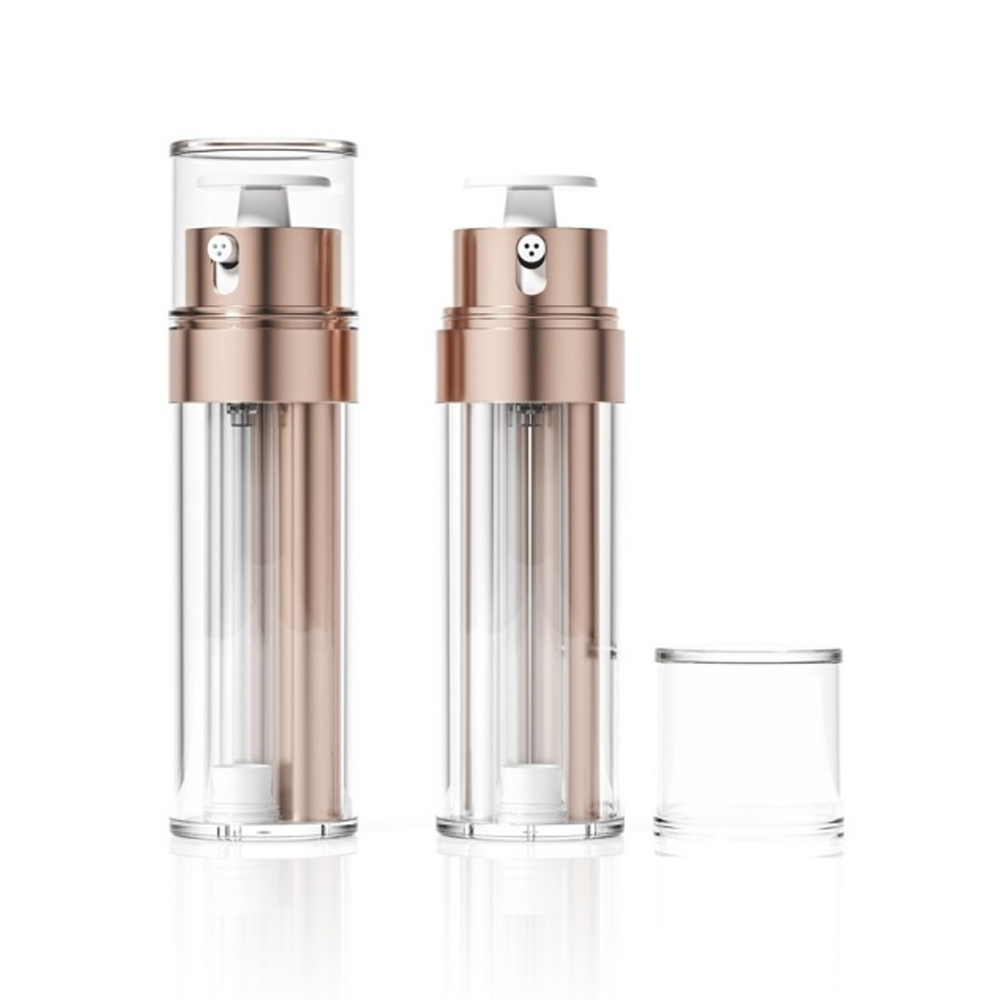
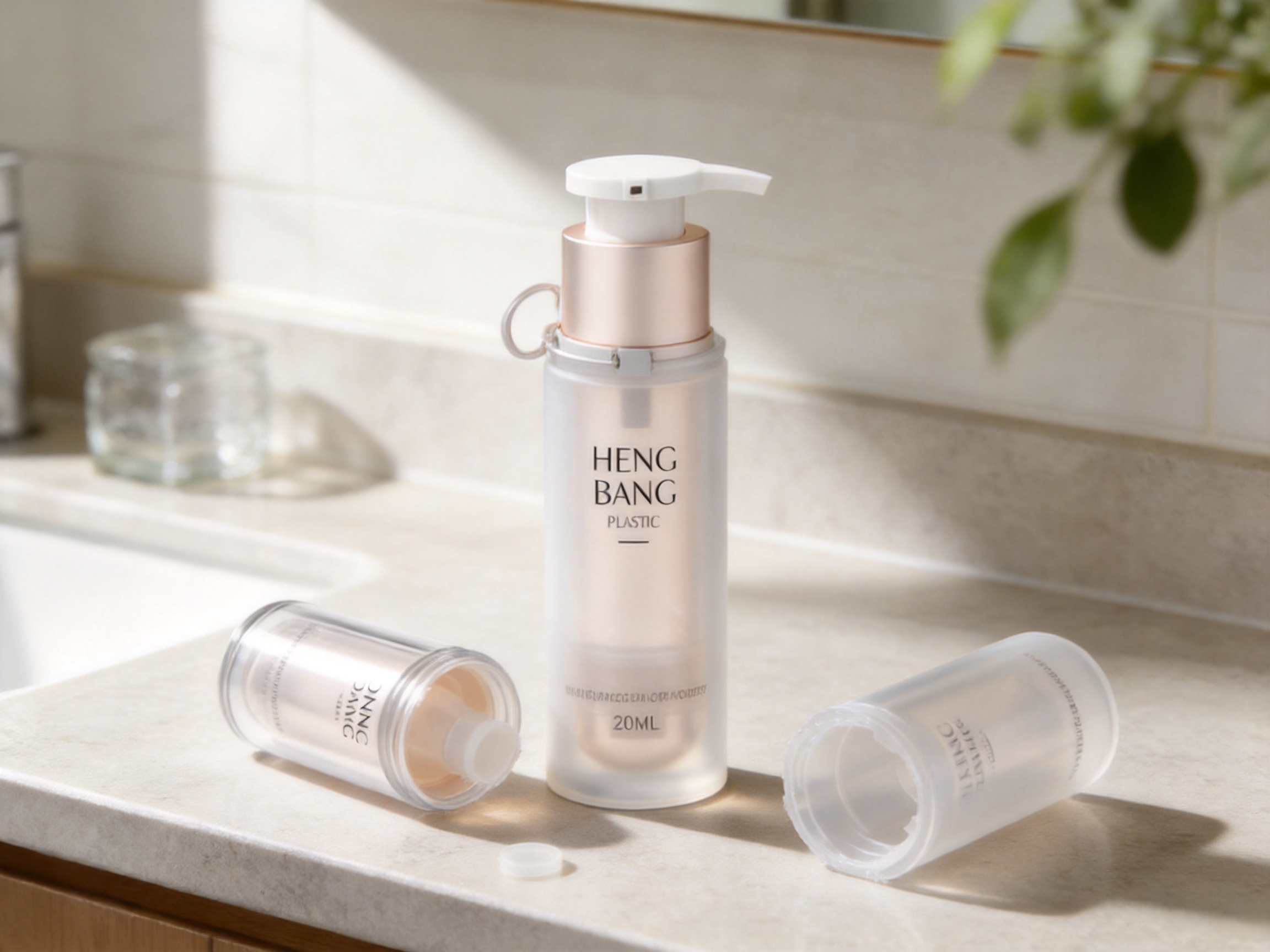
The HB-K022A/B is a plastic refillable airless serum bottle designed for skincare and cosmetic formulations. Its central feature is a two-part construction consisting of a permanent outer bottle and a disposable inner bottle. The outer bottle provides the structural body and visual presentation, while the inner bottle holds the product and can be replaced when empty.
This configuration is particularly suitable for brands that want to combine premium packaging with a more resource-conscious refill concept. The consumer purchases the complete bottle for the first use and can subsequently purchase replacement inner bottles. The outer component remains in service, allowing the packaging system to support multiple product cycles.
The bottle uses an airless dispensing system. Unlike a conventional pump bottle that may draw air into the container through a dip tube, an airless package uses a piston positioned at the base of the inner container. As the pump is pressed, the piston moves upward and pushes the formulation toward the dispensing outlet. The product is therefore dispensed without requiring a traditional dip tube and with reduced exposure to incoming air.
An airless mechanism is valuable for products that are sensitive to oxidation, contamination, evaporation, or repeated contact with the surrounding environment. Serums, creams, lotions, eye-care products, and selected pharmaceutical or cosmeceutical preparations can benefit from this type of protection. The suitability of the package should always be confirmed through compatibility, stability, and dispensing tests using the final formula.
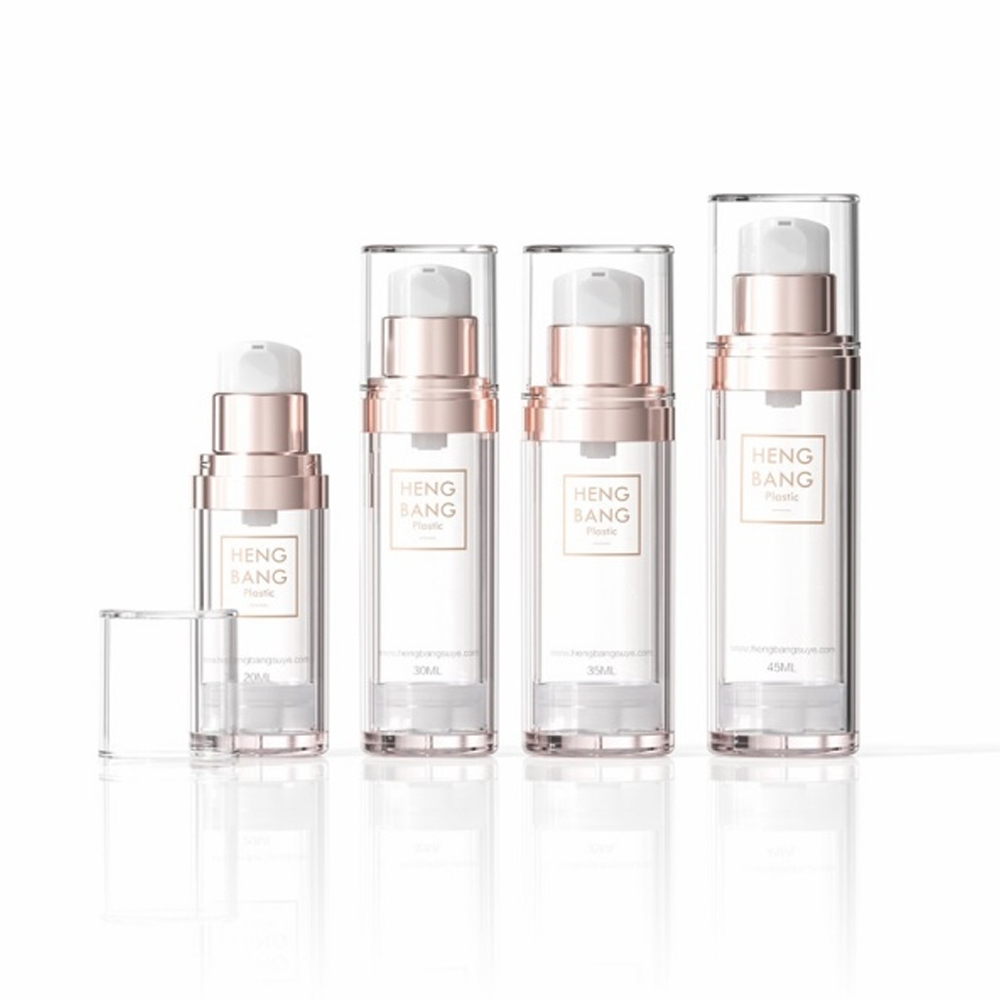
The HB-K022A/B is available in four stated capacities: 20 ml, 30 ml, 50 ml, and 70 ml. These options allow brands to use the same general packaging family for travel sizes, trial sizes, standard retail products, and larger treatment or professional-use formats.
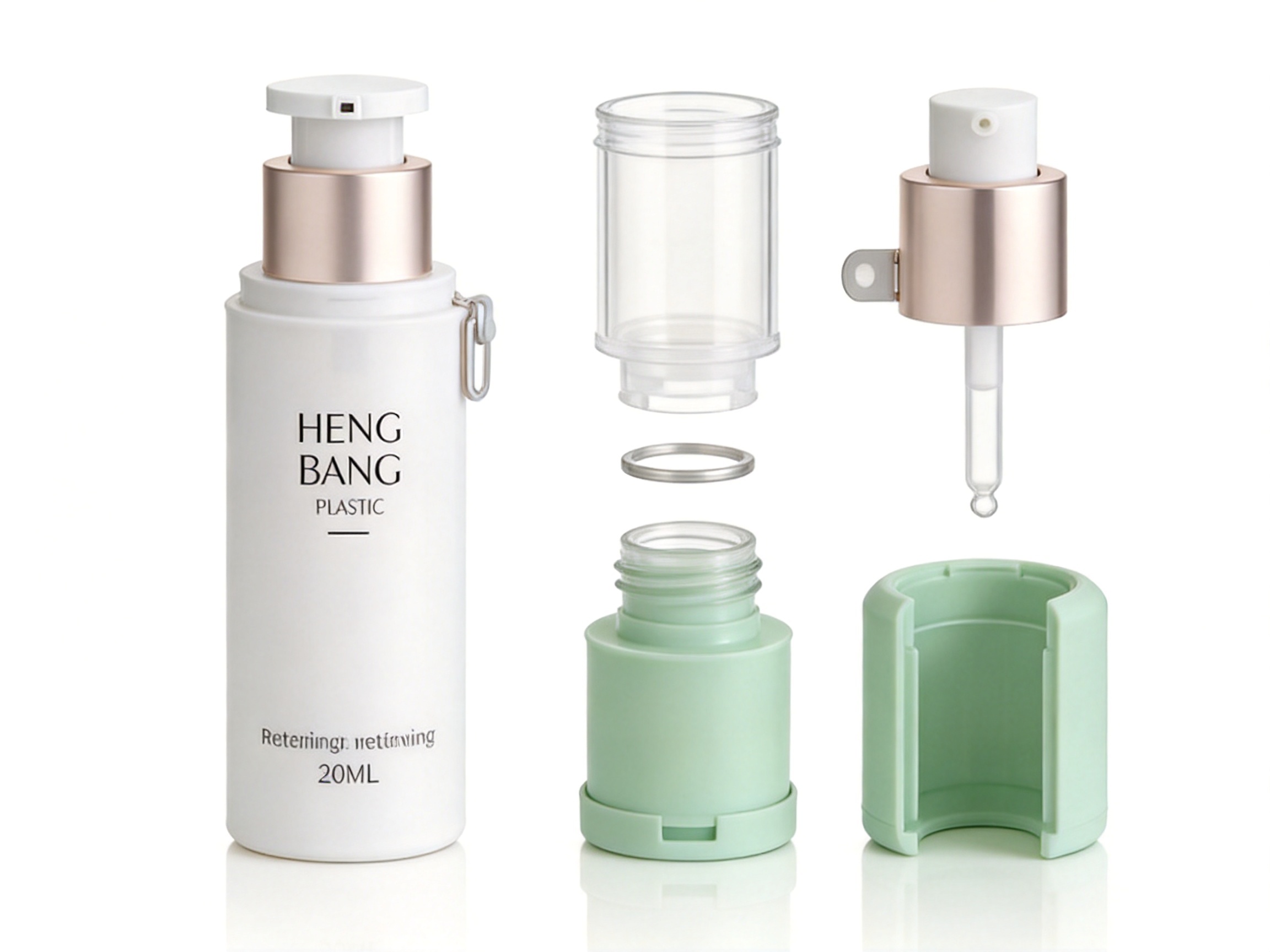
The bottle is composed of several functional components. The outer bottle is made from MS, while the inner bottle is made from PP. The pump is identified as PP+ABS, and the retaining clip is made from PP. Each material serves a particular role within the package.
| Component | Specified material | Primary function |
|---|---|---|
| Outer bottle | MS | Provides the permanent external structure, visual form, and handling surface |
| Inner bottle | PP | Holds the cosmetic formulation and is replaced after the product is used |
| Pump | PP + ABS | Creates the dispensing action and transfers the product to the outlet |
| Retaining clip | PP | Helps prevent unintended pump activation during storage and transport |
The separation between the permanent outer component and the replaceable inner component is one of the product’s most important design advantages. A conventional package often treats the bottle, pump, and product-contact container as one disposable unit. In this design, the outer shell can remain with the consumer, while the product-contact portion can be changed when necessary.
The PP inner bottle offers a practical material choice for a replaceable cosmetic container. Polypropylene is widely used in packaging because of its balance of chemical resistance, lightweight performance, moldability, and durability. Nevertheless, the final packaging system should be tested against the intended formula, especially when the product contains high concentrations of oils, solvents, fragrances, acids, active ingredients, or other substances that may affect packaging performance.
The MS outer bottle gives the package a distinct external structure and can support a refined visual design. The outer component is not required to contain the formulation directly, which allows the design to focus on protection, ergonomics, decoration, and long-term reuse. The combination of a durable exterior with a replaceable interior can help brands create a recognizable product platform across several formulas or product sizes.
An airless bottle is designed to dispense product while limiting the entry of air into the container. In the HB-K022A/B, the product is pushed upward by a piston at the base of the inner bottle. When the pump is activated, pressure is created in the dispensing system, and the piston moves upward to deliver the formula through the outlet.
This operating principle differs from the structure of many traditional lotion pumps. A conventional pump may use a long dip tube extending toward the bottom of the bottle. Product is drawn upward through the tube as the pump is pressed, and air may enter the container to replace the volume of product removed. In an airless system, the rising piston replaces the removed product volume, so the container does not need the same type of air exchange.
Reduced air exposure can be beneficial for formulations whose appearance, odor, texture, or performance may be affected by oxidation or contamination. The package also reduces the need for the consumer to open the container repeatedly. This can be especially useful for products used in small doses, such as concentrated serums, eye treatments, and active skincare formulations.
The airless format can also improve product evacuation. A well-designed piston system helps move the product upward from the bottom of the inner container, allowing the user to access a greater proportion of the formula than may be possible with a conventional bottle and dip tube. Actual residual product levels depend on the viscosity of the formulation, pump dosage, internal geometry, filling accuracy, and production tolerances.
The system is not intended to replace proper product preservation or good manufacturing practices. Airless packaging can reduce exposure, but it cannot guarantee complete protection against every form of contamination. Formulators and packaging engineers should evaluate the complete product-package interaction, including microbial stability, compatibility, leakage resistance, pump priming, dosage consistency, and end-of-life performance.
The refillable architecture is a significant point of differentiation in the cosmetic packaging market. Many skincare containers are discarded in their entirety after a single product cycle. Even when the container is technically recyclable, the disposal of the bottle, pump, cap, and decorative components still represents a loss of material and manufacturing energy.
With the HB-K022A/B, the outer bottle is intended to remain in use. Once the inner bottle is empty, the consumer can remove it and install a replacement inner bottle. This can reduce the amount of material required for repeated purchases, depending on the design of the refill and the consumer’s actual reuse behavior.
The refill concept can support several sustainability objectives. First, it may reduce the quantity of outer packaging produced for every purchase. Second, it can encourage consumers to view packaging as a durable component rather than a disposable object. Third, it provides brands with an opportunity to build a refill program, subscription model, or loyalty system around replacement inner bottles.
The environmental benefit of a refillable system depends on practical details. Consumers must be able to purchase replacement inner bottles conveniently. The refill must be easy to install without contamination or leakage. The outer bottle must remain attractive and functional over multiple cycles. Transport and secondary packaging for refills should also be considered. A refill program is most effective when it is convenient, clearly explained, and supported by suitable collection or recycling practices.
Compared with a completely disposable airless bottle, the refillable structure provides a stronger opportunity to reduce repeated use of heavier or more decorative exterior components. Compared with a glass jar, it can offer a lighter package with a controlled dispensing mechanism. Compared with a traditional tube or bottle, it can provide a more premium refill experience while maintaining airless product protection.
Standard lotion pumps are familiar, economical, and suitable for many products. However, they often rely on a dip tube and may allow air to enter the container as product is removed. This can be less desirable for sensitive formulas. The HB-K022A/B airless system uses a rising piston and is designed to limit air exchange within the product chamber.
The airless system can also provide a more controlled and hygienic user experience. The consumer does not need to pour the product from an open bottle or insert fingers into the package. The dispensing outlet can deliver a measured portion with each pump stroke, supporting consistent application and helping reduce unnecessary product exposure.
Jars offer a wide opening and are often preferred for thick creams and masks. However, the user must usually remove the lid and access the product with a finger or spatula. Repeated opening exposes the contents to surrounding air, and direct contact may introduce contaminants if the consumer’s hands are not clean.
The HB-K022A/B provides a closed dispensing format that can be more suitable for products where hygiene and limited environmental exposure are important. It may also improve portability because the pump and retaining clip help prevent accidental opening or leakage during transportation.
Single-use airless bottles offer many of the functional advantages of airless packaging, but the complete package is generally discarded after the product is consumed. The refillable HB-K022A/B retains the airless dispensing concept while adding a replaceable inner bottle.
This distinction may help brands reduce the amount of packaging associated with repeat purchases. It also gives consumers a more structured refill experience. The permanent outer shell can become part of the product identity, while the inner bottle can carry the formula-specific information or be supplied as a replacement unit.
Glass can communicate quality and luxury, but it is heavier and more fragile than many plastic packaging options. Increased weight can affect shipping costs and transportation emissions, while breakage creates safety and product-loss concerns.
The HB-K022A/B plastic construction can provide a lightweight alternative with greater resistance to impact during ordinary handling and distribution. The exact environmental and commercial result depends on the resin selection, package weight, production location, transport distance, and disposal or recycling route. A responsible comparison should evaluate the complete life cycle rather than relying only on the material category.
The product is offered in 20 ml, 30 ml, 50 ml, and 70 ml capacities. Multiple sizes allow a brand to create a coordinated range without developing a completely different package for every product. A small serum may use the 20 ml or 30 ml option, while a regular treatment product may use the 50 ml option. The 70 ml version can be considered for larger lotion, cream, or professional-use applications.
| Capacity | Stated height | Stated diameter information | Reported application |
|---|---|---|---|
| 20 ml | 118.5 mm | 33 mm or 40 mm, subject to configuration | 0.23 cc |
| 30 ml | 136.5 mm | 33 mm or 40 mm, subject to configuration | 0.23 cc |
| 50 ml | 132.5, as listed in the supplied specification | 33 mm or 40 mm, subject to configuration | 0.23 cc |
| 70 ml | 160 mm | 33 mm or 40 mm, subject to configuration | 0.23 cc |
The supplied information lists the dispensing application as 0.23 cc. This value can be useful for estimating the amount delivered per pump cycle, but brands should confirm the actual dosage under production conditions. The delivered quantity may vary according to formulation viscosity, pump assembly, internal pressure, filling level, temperature, and component tolerances.
The supplied dimensional data should also be confirmed during technical development. In particular, one height entry is presented as “132.5ml” in the original specification, although height is normally expressed in millimeters. Final drawings, samples, and approved technical documents should be used when preparing artwork, cartons, filling equipment, and retail specifications.
Diameter options of 33 mm and 40 mm provide flexibility for different visual proportions and capacity configurations. A narrower diameter can create a taller, more elegant profile, while a wider diameter may offer a more substantial appearance and improved stability. The best choice depends on the product’s positioning, shelf layout, filling line, secondary packaging, and consumer handling preferences.
The bottle is designed for products that benefit from controlled, hygienic, and low-exposure dispensing. Potential applications include facial serums, moisturizing lotions, anti-aging treatments, brightening products, barrier creams, eye-care formulations, hand creams, sunscreen products, and selected professional skincare preparations.
Serums are a natural application because they often contain concentrated active ingredients and are dispensed in small quantities. The pump format can support repeatable dosing, while the airless structure can help reduce exposure during daily use. The 20 ml and 30 ml formats may be suitable for concentrated facial treatments, travel products, or introductory sizes.
Lotions and creams can use the 50 ml or 70 ml formats when a larger quantity is required. The package may also be considered for products used in salons, clinics, hotels, or other professional environments where hygiene and convenient dispensing are important.
The bottle may be suitable for sunscreen products, but the suitability of the pump and internal materials must be evaluated against the specific sunscreen formula. Some sunscreen formulations contain high levels of oils, powders, filters, or solvents that can affect dispensing behavior and component compatibility. Formula testing should address long-term storage, elevated temperatures, repeated pumping, and exposure to light.
For toner products, the application depends on the formula viscosity and the desired dispensing method. Thin toners are often supplied in sprayers or pourable bottles, but thicker essence-toner products may be compatible with a pump format. The 0.23 cc stated application should be evaluated to determine whether it delivers the desired amount for the intended use.
Pharmaceutical and cosmeceutical applications may also be considered, but these require additional regulatory, compatibility, validation, and quality controls. Cosmetic packaging specifications should not automatically be treated as pharmaceutical packaging specifications. Each regulated application must be reviewed according to the applicable market requirements.
A successful refillable package must be easy to understand and simple to operate. The HB-K022A/B supports this goal through a familiar pump format and a retaining clip. The clip can help prevent unintentional actuation while the product is stored, shipped, or carried in a bag.
The retaining clip is especially valuable for travel and e-commerce distribution. A pump that is accidentally pressed during transit may release product into the carton or bag. A clip provides an additional mechanical safeguard, although brands should still conduct drop, vibration, compression, leakage, and transport testing with the filled package.
The pump format also allows consumers to dispense product without removing a large cap. This can improve convenience during daily skincare routines. A consistent pump stroke may help users apply a similar quantity each time, supporting a predictable usage period and reducing over-application.
The refill process should be supported by clear instructions. Consumers need to know how to remove the empty inner bottle, how to install the new inner bottle, whether the pump must be primed, and how to dispose of the used component. Instructions may be printed on the carton, included as a leaflet, molded into the packaging, or communicated through the brand’s customer service channels.
Refillability can also strengthen customer engagement. A brand can offer refill reminders, multi-pack inner bottles, subscription options, or loyalty rewards. This can turn packaging from a one-time purchase into part of an ongoing relationship between the consumer and the product line.
The permanent outer bottle creates a stable platform for visual identity. Brands can use color, surface finish, labeling, printing, coating, and other decoration methods to create a distinctive appearance. Because the outer bottle may be reused, its design should remain attractive and durable over multiple product cycles.
The shape can be positioned for different market segments. A clean cylindrical form may suit clinical, minimalist, or professional skincare. A softer or more sculpted profile may support prestige beauty positioning. The available height and diameter combinations can be used to establish a family appearance across several capacities.
Refillable packaging can communicate a sustainability message, but the communication should be precise. Brands should explain which component is retained, which component is replaced, and how the used inner bottle should be handled. Unsupported environmental claims should be avoided. Clear communication builds trust and helps consumers use the refill system correctly.
Labels and decoration should not interfere with the replacement process, pump operation, or visual inspection of the container. Artwork must account for the seam, shoulder, base, clip, and pump geometry. Before mass production, brands should approve decorated samples and assess resistance to rubbing, oils, water, alcohol, sunscreen ingredients, and normal consumer handling.
The bottle can also support product-line differentiation. For example, a brand may use different outer colors for separate skincare collections while maintaining the same refill platform. Alternatively, the outer shell can remain consistent while the inner refill carries formula-specific labeling. The appropriate strategy depends on the brand’s retail model and regulatory labeling needs.
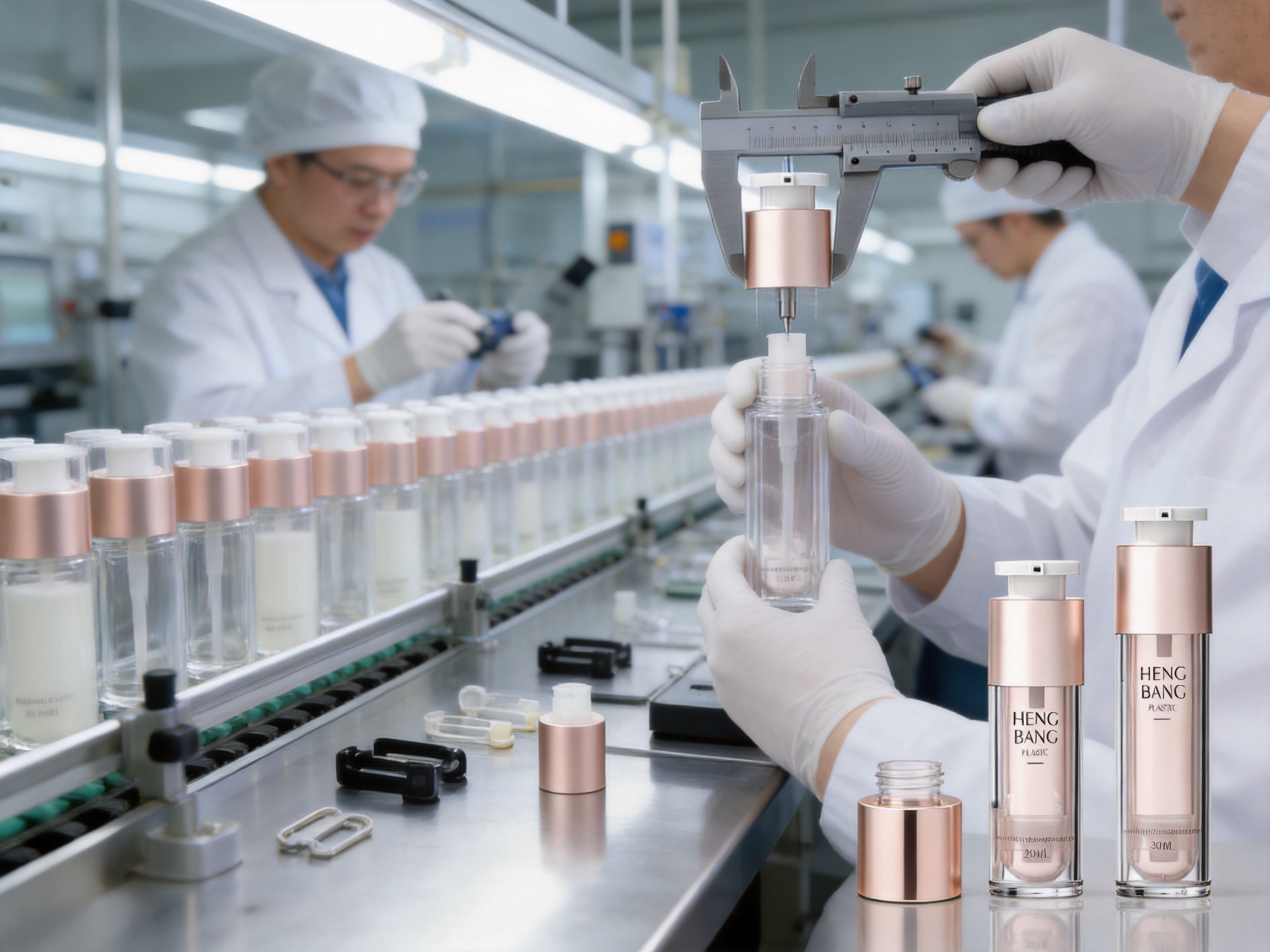
Yuyao Hengbang Plastic Co., Ltd. was established in 2006 and specializes in plastic packaging for cosmetics and skincare products. Its stated building area of approximately 35,000 square meters and workforce of more than 300 employees provide a substantial base for product development, tooling coordination, molding, assembly, quality control, and customer service.
The company provides design and development services in addition to manufacturing. This is important for packaging projects because successful production begins before the mold is created. A packaging supplier must understand the formula, target capacity, dispensing requirements, decoration, filling method, transportation conditions, and market expectations. Early design collaboration can help identify potential problems with wall thickness, parting lines, fit, assembly, pump performance, or refill usability.
A professional development process normally includes concept evaluation, structural design, prototype review, mold development, trial production, dimensional inspection, assembly testing, filling trials, and final approval. The exact process depends on the customer’s project requirements, but each stage helps reduce the risk of costly changes after mass production begins.
Multi-component packaging requires particular attention to consistency. The outer bottle, inner bottle, pump, clip, and associated interfaces must work together. If tolerances are not controlled, the refill may fit poorly, the pump may not prime correctly, or leakage may occur. A supplier experienced in cosmetic packaging can coordinate these elements more effectively than a manufacturer focused only on individual molded parts.
Hengbang’s ISO9001:2015 certification indicates a documented quality management framework. Such a framework can support controlled procedures for customer requirements, design management, purchasing, production, inspection, nonconformance handling, corrective action, and continuous improvement. Certification alone does not replace product-specific testing, but it provides an organized foundation for repeatable operations.
The company also holds ISO14001:2015 certification, which relates to environmental management systems. This is relevant to a refillable packaging product because environmental performance involves more than the product concept. It includes material management, waste control, energy use, production practices, compliance, and ongoing environmental improvement.
Hengbang was awarded as a Ningbo High-Tech Enterprise in 2021 and owns multiple invention patents, according to the supplied company information. These points indicate an emphasis on technical development and intellectual property. For customers, a supplier with internal development experience may be better positioned to support new structures, dispensing solutions, and packaging improvements.
Plastic cosmetic packaging requires precise control of molding conditions. Temperature, pressure, cooling, cycle time, material drying, and mold maintenance can all affect the appearance and dimensions of a component. A high-quality outer bottle must maintain a consistent shape, stable base, clean surface, and reliable fit with the other parts.
The inner bottle is particularly important because it holds the formula and interacts with the dispensing mechanism. Its dimensions must support proper piston movement and adequate product evacuation. The opening must be compatible with the pump assembly, and the assembled unit must resist leakage during storage and transport.
The pump requires both mechanical performance and a suitable user experience. Testing may include priming after filling, repeated actuation, dosage measurement, recovery after storage, resistance to leakage, and operation at different temperatures. Products with high viscosity may require more pumping force than thin serums, so pump performance must be evaluated with the actual formula rather than with water alone.
Assembly quality is equally important. Components must be correctly oriented and securely fitted. The retaining clip must remain in place during transportation but be removable or disengageable by the consumer without excessive force. The outer bottle and inner bottle must be assembled in a way that supports replacement while preventing accidental separation during normal use.
Surface quality is a major consideration in prestige cosmetic packaging. Visible defects such as flow marks, weld lines, scratches, color variation, sink marks, flash, contamination, or uneven decoration can affect the consumer’s perception of the product. Inspection standards should be agreed before production, including acceptable limits for cosmetic defects and dimensional variation.
A reliable production program should also include batch traceability. Component lots, raw material information, production dates, inspection results, and assembly records can help the supplier and customer investigate any quality issue. Traceability is especially useful when the package is used for products distributed across multiple markets.
Packaging selection should be followed by systematic validation. The HB-K022A/B should be tested with the actual cosmetic formulation, filling process, closure configuration, decoration, carton, and expected shipping conditions. General information about the bottle cannot replace a product-specific validation program.
Compatibility testing may examine changes in color, odor, viscosity, weight, pH, appearance, leakage, stress cracking, swelling, brittleness, and pump performance. Samples can be stored under normal, elevated, and reduced temperature conditions to understand how the product and package behave over time.
Dispensing tests should measure the first pump, priming behavior, average dosage, dosage variation, number of pump strokes, and residual product. The stated 0.23 cc application can serve as an initial reference, but the final specification should be based on testing with the intended formula and production components.
Environmental and transport testing can include vibration, impact, compression, temperature cycling, humidity exposure, and drop testing. These tests should be performed on filled, closed, and decorated packages in their intended secondary packaging. E-commerce products may require more rigorous testing because they can experience multiple handling events without the protection of a traditional palletized supply chain.
Refill testing should be treated as a separate qualification activity. The outer bottle must continue to fit the replacement inner bottle after repeated use. The refill process should not cause cracks, deformation, pump misalignment, or contamination. Consumer trials may help identify practical problems that are not obvious in laboratory testing.
Regulatory and labeling requirements also need to be reviewed. The package should provide adequate space for product name, ingredients, net contents, responsible company information, warnings, batch information, recycling guidance, and other required details. The available capacity should be confirmed using the relevant measurement standard for the target market.
A refillable bottle can create commercial advantages for both manufacturers and cosmetic brands. The common packaging platform can support multiple product sizes and formulations, potentially simplifying development and supplier management. Once the outer design is approved, new inner bottle programs may be introduced with less structural development than an entirely new package.
Refill programs may also encourage repeat purchases. The consumer already owns the outer bottle, so purchasing a replacement inner bottle can be more convenient than buying a completely new package. Brands can use this structure for subscription services, replenishment reminders, seasonal treatment programs, or professional refill channels.
For retail display, the bottle can provide a premium appearance while occupying a controlled footprint. The 20 ml, 30 ml, 50 ml, and 70 ml capacities allow product planners to develop a size hierarchy. The package can be used for entry products, hero products, travel formats, and larger-value offerings while maintaining a consistent family identity.
The refill concept may also support inventory planning. A brand can maintain a permanent outer bottle design and update the inner formulation or label for new product launches. However, any change to the formulation must be accompanied by renewed compatibility testing. Reuse of the same external design does not automatically validate a new formula.
From a manufacturing perspective, cooperation with an integrated packaging supplier can reduce communication gaps between design, molding, assembly, and quality control. Yuyao Hengbang’s stated ability to provide design and development services is relevant for customers seeking a complete packaging partner rather than a supplier of isolated components.
The HB-K022A/B combines several features that are increasingly important in skincare packaging. It offers airless product dispensing, a replaceable inner bottle, multiple capacity options, a retaining clip, and a plastic construction suitable for lightweight packaging development.
Its strongest advantage is the relationship between performance and reusability. A package does not need to sacrifice a premium appearance or controlled dispensing experience in order to support a refill model. The permanent outer bottle can provide the desired visual and tactile character, while the replaceable inner bottle manages the product-contact function.
The format is also adaptable. It can be considered for serums, creams, lotions, sunscreen products, toner-like essences, and other formulations that require pump dispensing. The range of capacities allows brands to develop a coherent packaging family rather than using unrelated containers for every product.
Compared with open jars, it can offer a cleaner dispensing experience. Compared with conventional dip-tube pumps, it can reduce air exchange. Compared with disposable airless bottles, it can support a refill strategy. Compared with heavy glass, it can provide a lighter plastic alternative. These advantages should be confirmed through testing and evaluated according to the requirements of the intended product.
The brand should first define the formula type, viscosity, target dosage, capacity, shelf life, filling method, decoration, market, and intended consumer experience. The choice between 20 ml, 30 ml, 50 ml, and 70 ml should reflect actual product usage rather than appearance alone.
Unfilled samples should be examined for dimensions, weight, component fit, surface appearance, pump feel, retaining clip function, and refill operation. The brand should confirm whether the selected diameter and height are suitable for the planned carton and retail display.
The actual product should be filled into production-representative components. Testing should evaluate leakage, odor transfer, color change, pump operation, dosage consistency, and long-term storage behavior. Formula changes should trigger a compatibility review.
Decorated samples should be tested for adhesion, abrasion resistance, contact with oils and alcohol, and appearance after shipping simulation. Cartons and inserts should protect the pump and clip while allowing efficient packing and unpacking.
Before production begins, the customer and supplier should agree on drawings, materials, colors, acceptable cosmetic defects, functional testing, sampling plans, packaging methods, and documentation. A signed golden sample or approved limit sample can help maintain consistency between production batches.
The brand should prepare instructions and customer support information for replacing the inner bottle. The refill should be supplied in packaging that protects it during transportation and clearly communicates its compatibility with the permanent outer bottle.
Consumers should store the bottle according to the cosmetic product’s instructions and avoid exposing it to unnecessary heat, freezing conditions, or direct sunlight. The pump and dispensing outlet should be kept clean, and the consumer should avoid disassembling components that are not intended to be removed.
The retaining clip should remain in place during transportation or storage when the pump is not in use. Before first use, the consumer may need to remove the clip and activate the pump several times to prime the system. The exact instructions depend on the final pump configuration and filling process.
When the product is empty, the consumer should follow the brand’s refill instructions. The inner bottle should not be forcibly removed with sharp tools, since this could damage the outer bottle or cause injury. Replacement parts should be designed and supplied so that the process is intuitive and safe.
It is a plastic refillable airless bottle designed primarily for serums and other skincare or cosmetic products, including creams, lotions, selected sunscreen products, and toner-like essences. Final suitability depends on the formulation and required dosage.
The package uses a permanent outer bottle and a replaceable inner bottle. After the product in the inner bottle is consumed, the empty inner bottle can be replaced while the outer bottle is retained for future use.
The system uses a piston at the base of the inner bottle to push the product upward. This reduces the need for a dip tube and limits the entry of air into the product chamber, which can help protect sensitive formulations during normal use.
The supplied specification identifies the clip as PP, the pump as PP+ABS, the outer bottle as MS, and the inner bottle as PP.
The stated capacities are 20 ml, 30 ml, 50 ml, and 70 ml. Brands should confirm the final capacity and dimensions through approved technical drawings and samples.
The supplied information lists an application of 0.23 cc. The actual dosage should be validated with the intended formula, pump, filling level, and production batch.
Yes. The product description identifies a nozzle with a retaining clip. The clip is intended to help prevent accidental pump activation during storage and transportation.
It may be considered for sunscreen products, but compatibility and dispensing tests are essential. Sunscreen formulas can contain ingredients that affect plastic materials, decoration, seals, or pump performance.
The airless structure may be technically relevant to selected pharmaceutical or cosmeceutical applications, but pharmaceutical use requires additional regulatory, compatibility, validation, and quality requirements. Cosmetic packaging approval should not be assumed to cover regulated pharmaceutical applications.
Because the outer bottle can be retained, repeated purchases may require only a replacement inner bottle rather than a completely new external package. The actual reduction depends on refill design, consumer reuse, transportation, and disposal practices.
Customization may include color, decoration, labeling, surface treatment, and coordinated product-line design. The available options should be discussed with the manufacturer and confirmed through samples and production testing.
Different formulas can interact differently with packaging materials and dispensing components. Viscosity, solvents, oils, acids, fragrances, active ingredients, and preservatives may affect compatibility or pump behavior. Testing with the final formula helps verify performance.
Yuyao Hengbang Plastic Co., Ltd. was established in 2006 and specializes in plastic packaging for cosmetics and skincare products. The company reports a 35,000-square-meter building area, more than 300 employees, design and development capabilities, ISO9001:2015 and ISO14001:2015 certifications, and multiple invention patents.
The buyer should confirm the capacity, dimensions, materials, pump dosage, color, decoration, refill method, compatibility with the formula, filling process, quality standards, packaging method, lead time, minimum order quantity, and applicable documentation.
The HB-K022A/B plastic refillable airless serum bottle offers a combination of functional protection, refill potential, and flexible cosmetic presentation. Its airless piston system is designed to limit air exposure and provide controlled dispensing, while the permanent outer bottle and replaceable inner bottle create a practical foundation for repeat use.
The product can be an attractive option for skincare brands seeking an alternative to conventional jars, dip-tube pumps, single-use airless bottles, and heavier glass containers. Its 20 ml, 30 ml, 50 ml, and 70 ml capacity options support a wide range of product concepts, from concentrated serums and travel formats to lotions and larger treatment products.
The success of the package depends on more than its basic structure. Formula compatibility, pump dosage, refill convenience, decoration durability, transport resistance, and consumer instructions must all be validated. A well-executed refill system should be easy to purchase, easy to replace, and clear about the handling of used components.
Yuyao Hengbang Plastic Co., Ltd. brings manufacturing experience, design and development support, quality management certification, environmental management certification, and stated technical innovation capabilities to this packaging category. For brands developing new cosmetic or skincare products, cooperation with an experienced supplier can help connect product design, tooling, molding, assembly, inspection, and commercial packaging requirements.
As cosmetic consumers increasingly evaluate product performance and packaging responsibility together, refillable airless packaging can help brands respond to both expectations. The HB-K022A/B provides a platform for creating skincare packaging that is protective, convenient, reusable at the outer-component level, and adaptable to modern product-line development.
Yuyao Hengbang Plastic Co., Ltd. Product Specification: HB-K022A/B Plastic Refillable Airless Serum Bottle.
Yuyao Hengbang Plastic Co., Ltd. Corporate Information and Manufacturing Capability Statement.
ISO 9001:2015, Quality Management Systems—Requirements.
ISO 14001:2015, Environmental Management Systems—Requirements with Guidance for Use.
General technical literature on airless cosmetic dispensing systems and piston-based packaging.
General packaging development guidance concerning cosmetic compatibility, dispensing validation, transport testing, and refill-system usability.


Copyright © Yuyao Hengbang Plastic Co., Ltd.
All Rights Reserved.
 Wholesale Plastic Cosmetic Packaging Manufacturers