English
 中文简体
中文简体
News
Home > Author > Chen Xiaotong — Key Account Sales Manager > PETG Lotion Bottles for Premium Skincare Packaging

 2026.08.13
 Chen Xiaotong — Key Account Sales Manager
Content
In the skincare and cosmetics market, packaging is more than a protective container. It is an essential part of the product experience, a communication tool for the brand, and an important factor in purchasing decisions. Consumers evaluate a lotion bottle through its appearance, weight, grip, dispensing performance, closure security, and suitability for the product inside. For manufacturers and private-label skincare companies, the challenge is to select packaging that combines reliable function with a refined appearance while remaining practical for production, customization, transportation, and daily use.
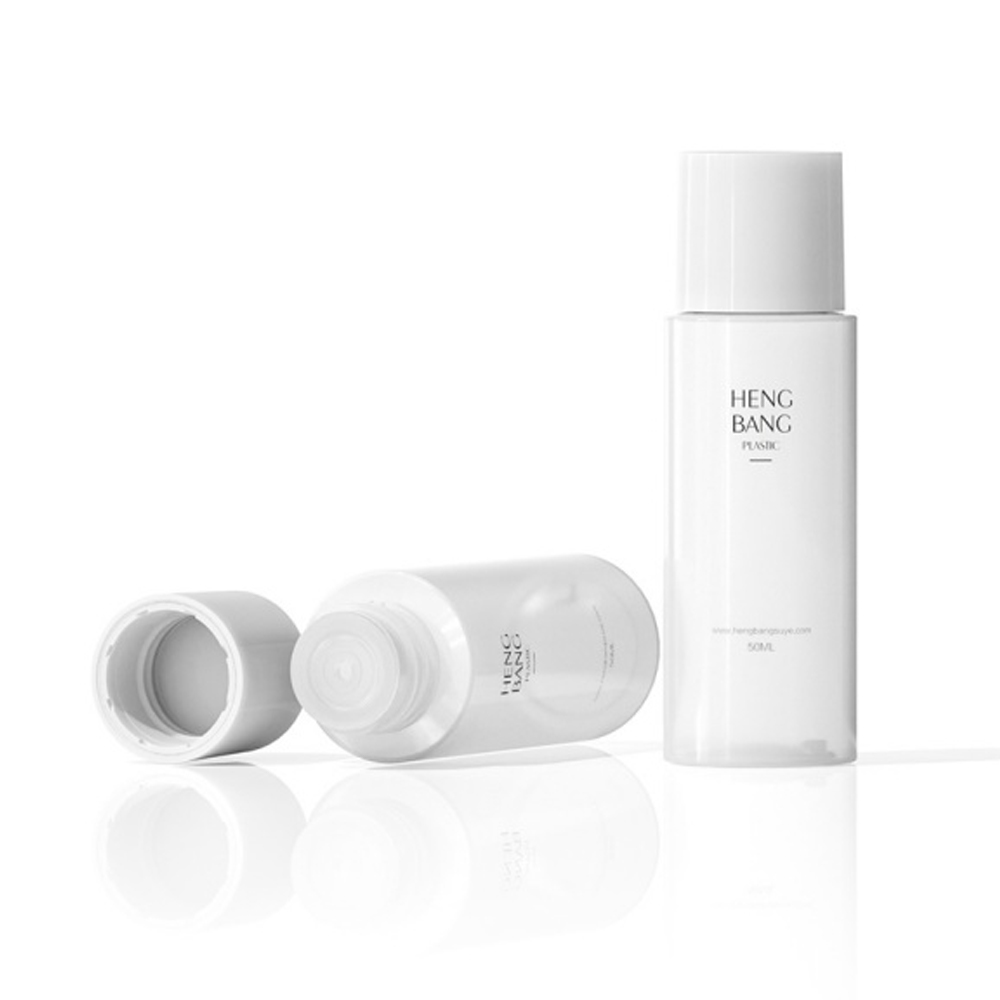
The HB-R001 PETG white lotion bottle has been developed to meet these requirements. Its cylindrical structure, clean surface, PETG material, pump or twist-cap options, and multiple capacity choices make it suitable for lotions, emulsions, creams, body care products, and other skincare formulas. The design balances a minimalist visual language with the functional requirements of modern cosmetic packaging.
Produced by Yuyao Hengbang Plastic Co., Ltd., the bottle reflects a manufacturing approach centered on plastic cosmetic packaging, product development, quality management, and customer-oriented service. With more than two decades of industry experience, a 35,000-square-meter building area, over 300 employees, ISO9001:2015 and ISO14001:2015 certifications, and multiple invention patents, the company provides capabilities that extend beyond the supply of a single container. Its services include design and development, packaging production, surface decoration, and support for different skincare applications.
This article examines the design advantages, material characteristics, technical specifications, decoration possibilities, manufacturing strengths, and commercial applications of the HB-R001 PETG lotion bottle. It also explains why a cylindrical PETG package can be a competitive choice for skincare brands seeking a premium presentation without unnecessary visual complexity.
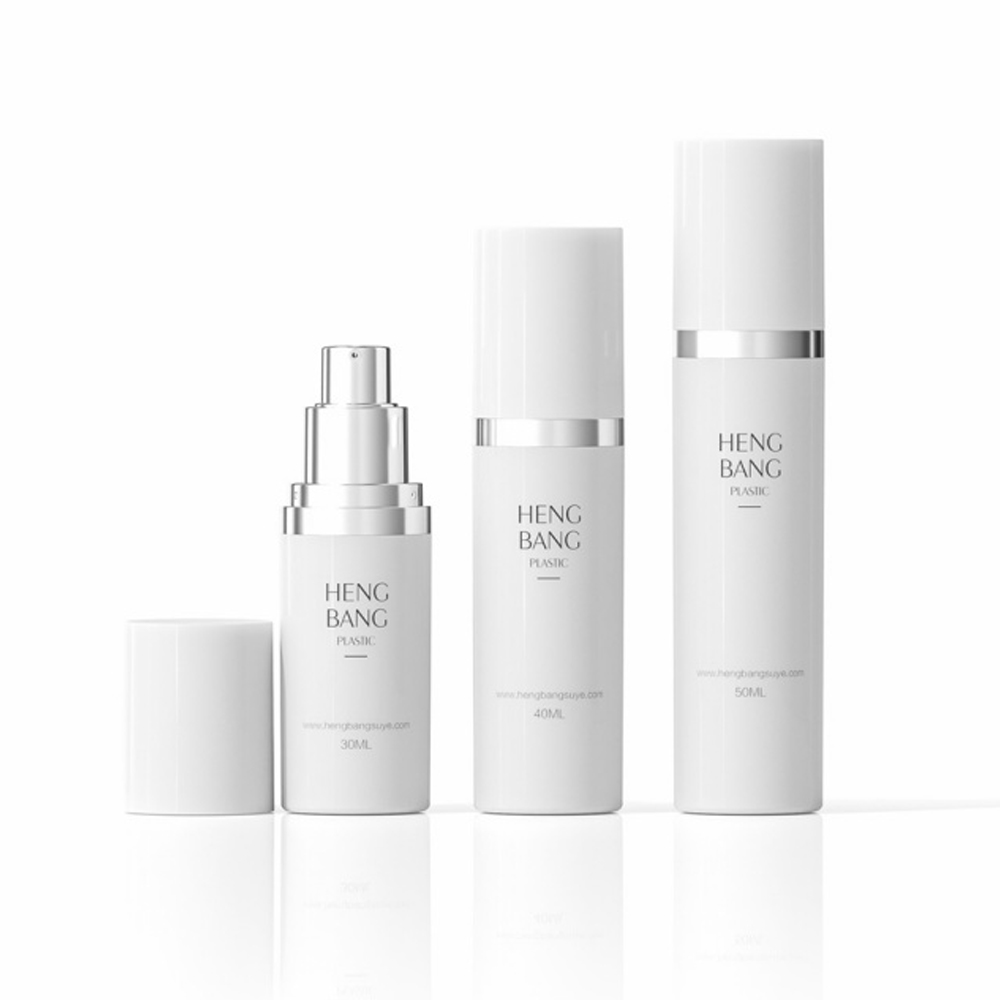
HB-R001 PETG White Lotion Bottle
The HB-R001 is a cylindrical lotion bottle made primarily from PETG. The product is available in 30 ml, 40 ml, and 50 ml capacities, allowing brands to select a size that matches different retail formats, product positioning, and usage patterns. Its compact cylindrical form is easy to understand visually and simple to integrate into a broad range of cosmetic packaging collections.
The bottle is described as a white lotion bottle, while PETG may also be supplied in high-transparency or frosted finishes according to the desired packaging concept. This flexibility is valuable because the same basic form can support different visual identities. A white opaque appearance can create a clean, soft, and contemporary impression. A transparent version can emphasize clarity and reveal the color or remaining volume of the formula. A frosted surface can add a more tactile, understated, and premium effect.
The bottle can be paired with a sophisticated pump dispenser or a twist cap. A pump is appropriate for lotions, emulsions, and other products that benefit from controlled, hygienic dispensing. A twist cap can support a more compact or cost-conscious configuration and may be suitable for products with different viscosity or usage requirements. The closure selection enables brands to adapt the same bottle platform to several product concepts.
The bottle surface supports silk-screen printing and hot stamping. These processes allow a logo, product name, usage information, or decorative element to be placed directly on the container. As a result, the packaging does not depend entirely on adhesive labels to communicate brand identity. Direct decoration can produce a cleaner surface, reduce visual clutter, and help the bottle maintain a consistent appearance across a product range.
The available specifications provide a practical foundation for personal-care packaging programs. The listed capacities are 30 ml, 40 ml, and 50 ml. The corresponding heights are approximately 107 mm, 126 mm, and 145 mm as provided in the product information. The listed bottle diameter is 33 mm, and the dispensing information includes a 0.23 cc output specification.
| Specification | Available Information |
|---|---|
| Product type | Cylindrical PETG lotion bottle |
| Available capacities | 30 ml, 40 ml, and 50 ml |
| Material | PETG bottle; MS or ABS cap; PP and ABS pump components |
| Listed diameter | 33 mm |
| Listed heights | Approximately 107 mm, 126 mm, and 145 mm for the available size range |
| Dispensing specification | 0.23 cc |
| Closure options | Pump dispenser or twist cap |
| Surface decoration | Silk-screen printing or hot stamping |
| Typical applications | Lotions, emulsions, skincare products, and body-care formulas |
Final dimensions, tolerances, component combinations, and compatibility should be confirmed during the technical approval process. This is particularly important when the bottle is used with a specific formula, a customized pump, or a special decorative finish.
PETG is widely valued in packaging applications because it offers a combination of clarity, visual quality, toughness, and forming flexibility. For cosmetic brands, the material can support both practical performance and premium presentation. The material’s appearance is especially suitable for skincare packaging, where consumers often associate a smooth, refined container with product quality and careful formulation.
One of the most recognizable advantages of PETG is its ability to present a bright and attractive surface. In a high-transparency finish, the bottle can communicate purity, lightness, and modernity. This is useful for products with naturally attractive colors, lightly tinted lotions, or formulas whose remaining quantity should be visible to the user.
A frosted finish produces a different effect. It diffuses light and creates a soft-touch visual impression without necessarily requiring a complex bottle shape. Frosting can help a simple cylindrical bottle appear more sophisticated and can support product concepts associated with hydration, sensitivity, wellness, or minimalist skincare.
White PETG creates a solid, uniform appearance that can be especially effective for clinical, gentle, or premium skincare positioning. The clean white surface provides strong contrast for dark lettering, metallic hot stamping, or restrained graphic design. It also offers a consistent background for a coordinated product family.
Cosmetic packaging must look attractive on a retail shelf, but it must also withstand handling during filling, packing, shipping, and use. PETG is suitable for applications where brands want an elegant appearance without relying on an unusually complicated structure. The HB-R001 uses a straightforward cylindrical body, making the design visually calm and operationally practical.
Compared with packaging made from more fragile transparent materials, a PETG bottle can provide a more forgiving solution for everyday cosmetic use. It is appropriate for products that may be carried in a handbag, stored in a bathroom, or used during travel, although the final package should always be evaluated through appropriate transport and compatibility testing.
The material can support multiple visual treatments, including clear, frosted, and white presentations. This design flexibility gives brands more options without requiring a completely different bottle concept for every product. A single bottle family can therefore be used for a moisturizer, a body lotion, a hand cream, or a treatment emulsion, with decoration and color helping to distinguish each formula.
This type of platform strategy can simplify product-line planning. Instead of developing unrelated packaging for every SKU, a company can use a consistent bottle silhouette and vary the capacity, closure, color, or decoration. The resulting collection can look coordinated while still allowing each product to communicate its own identity.
The cylindrical shape of the HB-R001 is one of its strongest visual and functional characteristics. Its smooth, stable lines create a restrained appearance that is compatible with a wide range of cosmetic styles. The form is neither overly decorative nor visually aggressive, allowing the formula, label, logo, or surface finish to remain the focus.
A bottle must be comfortable to hold if it is to be used repeatedly. The cylindrical body offers a familiar grip and avoids sharp corners that may feel uncomfortable during dispensing. Its compact diameter also supports one-handed handling for many users. The smooth surface is easy to wipe and maintain, which is important for lotion products that may leave residue around a pump or closure.
The proportions of the available sizes create a practical range for different usage occasions. A 30 ml bottle can be suitable for trial products, travel formats, sample-related retail programs, or concentrated treatments. The 40 ml option offers an intermediate format, while the 50 ml bottle provides additional product volume for regular skincare use without becoming excessively large.
Minimalist packaging has become increasingly important in skincare because it communicates clarity and confidence. A simple cylindrical form can appear premium when its surface quality, component fit, color, and decoration are carefully controlled. The HB-R001 provides a neutral foundation for such a strategy.
For a high-end visual direction, a white bottle can be combined with understated black printing, silver hot stamping, or a restrained logo. For a natural or wellness-oriented product, frosted PETG with muted printing may be appropriate. For a more contemporary or colorful line, a transparent bottle can be paired with vibrant formula colors and carefully placed graphics.
The smooth bottle wall is well suited to direct decoration. Silk-screen printing can be used for precise text, logos, symbols, and color blocks. Hot stamping can introduce metallic accents that attract attention while keeping the overall design controlled. These techniques are particularly valuable for cylindrical bottles because they can emphasize the continuous surface and reinforce the impression of a finished, integrated package.
Decoration should be selected according to the product’s intended market, formula, handling conditions, and production volume. The final artwork should be tested on the actual bottle material and finish to verify color accuracy, adhesion, legibility, and resistance to routine handling.
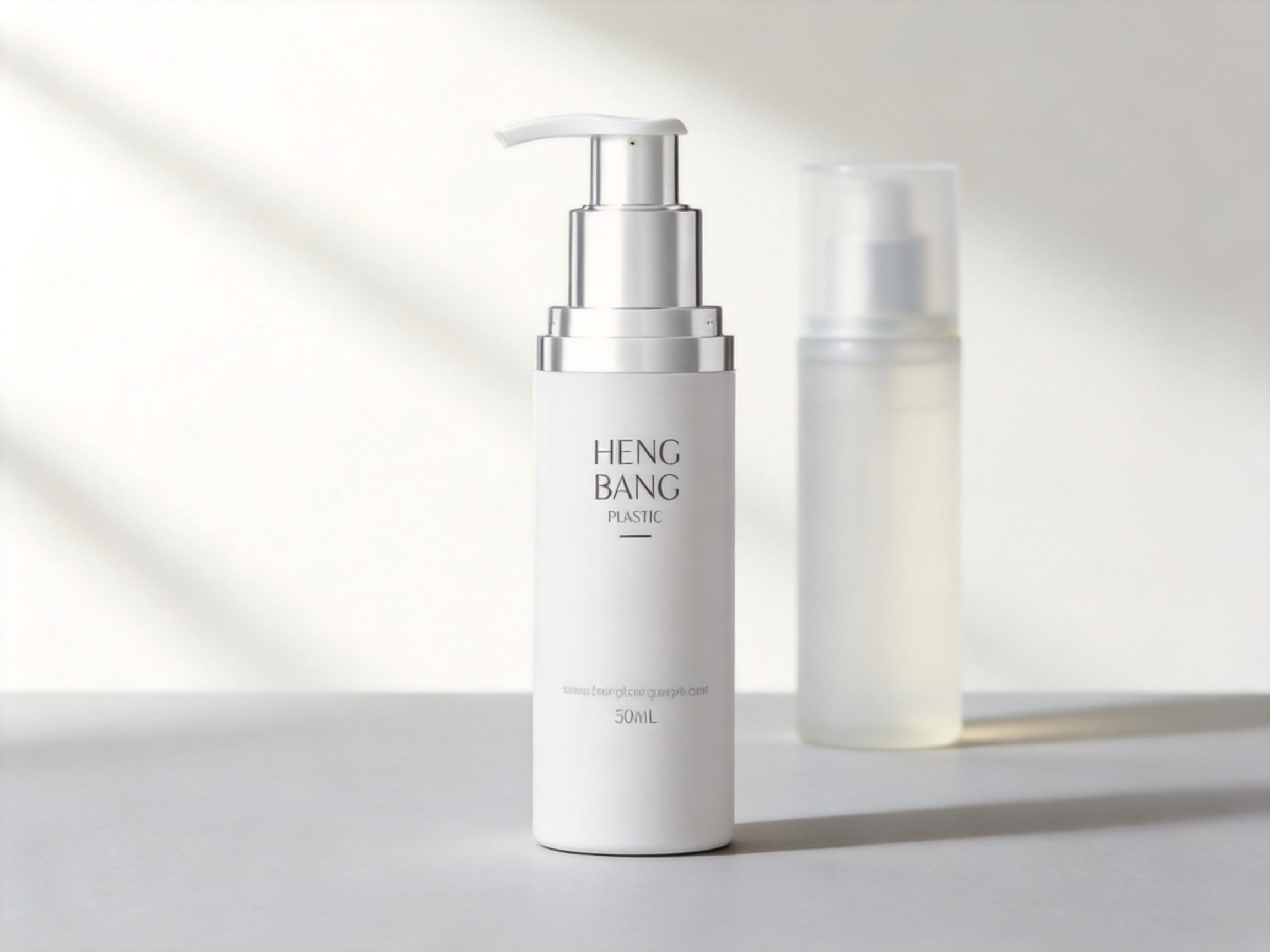
The dispensing component has a direct influence on the consumer’s experience. The HB-R001 can be paired with a pump dispenser or twist cap, providing flexibility for different types of skincare products and different cost or design objectives.
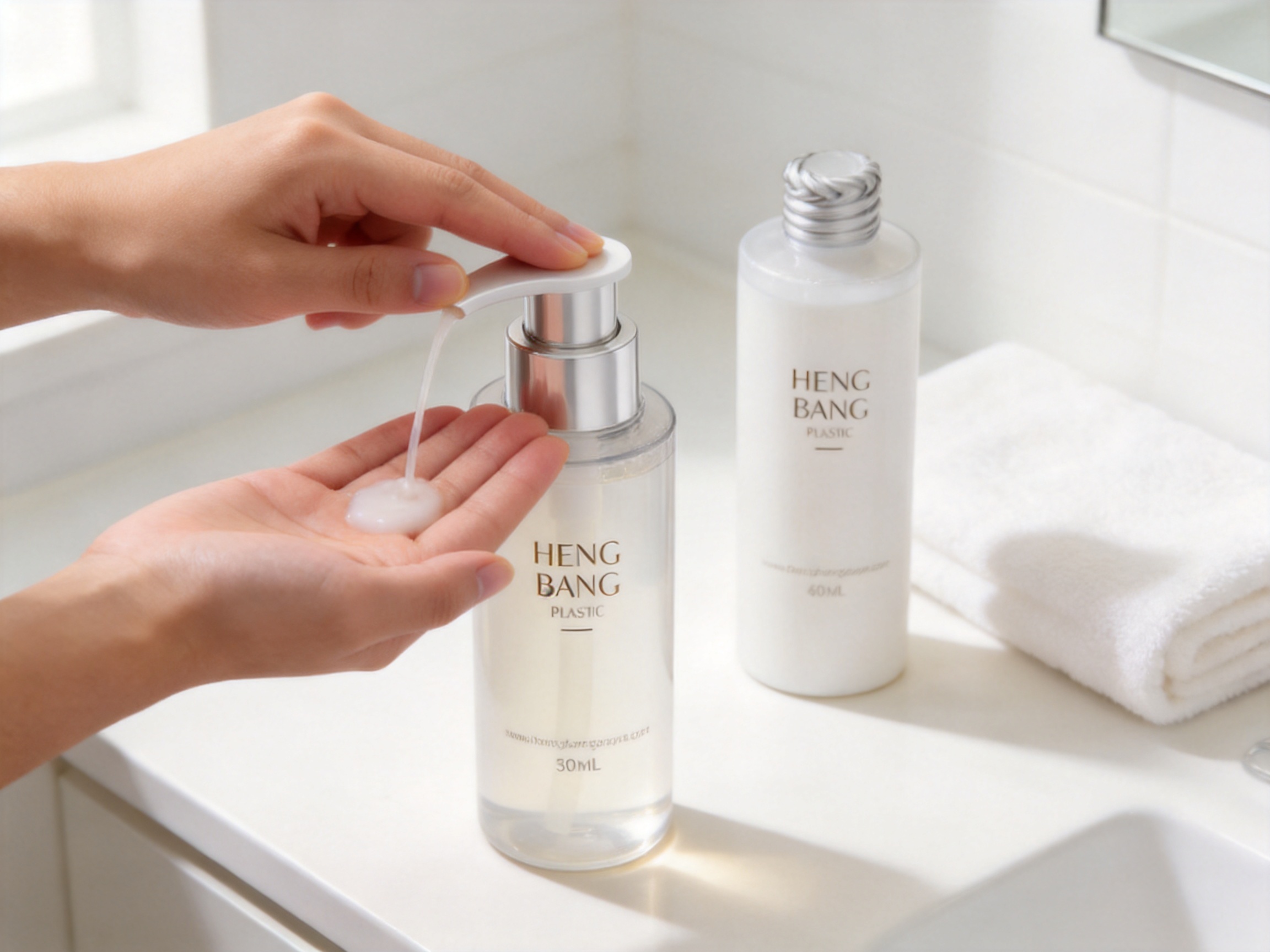
A pump is a natural choice for lotions and emulsions because it supports measured dispensing. The listed output specification is 0.23 cc, which provides a reference point for portion control. A controlled output can help users dispense a consistent amount and may reduce unnecessary product waste. It also keeps the user’s fingers away from the remaining formula inside the bottle, supporting a cleaner and more convenient experience.
Pumps can contribute to the premium perception of a skincare package. The action of pressing a smooth actuator is familiar to consumers and often feels more refined than opening a jar or repeatedly removing a small cap. A pump can also help the product appear more professional and suitable for daily routines.
The pump components listed for this product include PP and ABS. The bottle and pump should be evaluated together, rather than as separate parts. Important considerations include neck fit, actuator movement, output consistency, priming behavior, leakage resistance, compatibility with the formula, and the ability of the closure to remain secure during transportation.
A twist cap provides an alternative dispensing experience. It may be selected when a brand wants a simpler package, a more compact closure, or a different visual style. Twist caps can be suitable for formulas that are dispensed by squeezing, pouring, or using a controlled opening, depending on the final package design.
The listed cap material is MS or ABS. The material choice can influence appearance, weight, color matching, surface finish, and perceived quality. A cap may be coordinated with the white PETG bottle for a unified monochrome look, or it may be given a contrasting color to differentiate the product from other items in the same range.
A high-quality closure is important because it helps protect the formula from leakage, contamination, and unnecessary exposure. The product description emphasizes airtight sealing and convenient dispensing. These characteristics should be verified through sample evaluation and appropriate testing under the intended conditions of use.
Packaging performance depends on the complete system, including the bottle opening, pump or cap, inner components, and assembly process. For this reason, brands should conduct compatibility and transport tests using the actual cosmetic formula and final decoration. Testing can help identify issues related to leakage, product interaction, color change, odor transfer, stress cracking, or pump performance before mass production.
The HB-R001 competes through a combination of material presentation, practical sizing, closure flexibility, surface decoration, and a clean design language. Its advantages are not based on one isolated feature; instead, they result from how multiple features work together.
Many standard plastic lotion bottles are designed primarily around cost and basic functionality. While such packaging can be suitable for some products, it may not communicate the premium positioning that modern skincare brands require. The HB-R001 offers a more considered appearance through its smooth cylindrical form, refined proportions, and PETG surface quality.
The clean design also provides a stronger foundation for premium decoration. Instead of relying on a complicated mold shape to create visual interest, the package can achieve distinction through material finish, printing, hot stamping, color coordination, and component selection.
Some bottles are offered in only one size or with only one closure. The HB-R001 is available in three capacities and can be matched with either a pump or twist cap. This gives brands more flexibility when creating product families or testing different market channels.
For example, a 30 ml size may serve a travel or trial program, while a 50 ml version may be used for a standard retail product. A pump can support a lotion or emulsion, while a twist cap may be chosen for a different texture or a more compact package. This versatility can reduce the need to search for several unrelated packaging suppliers.
Highly textured or irregularly shaped packages can be visually distinctive, but they may make direct printing more difficult. The smooth cylindrical surface of the HB-R001 supports clear and consistent graphic placement. This is beneficial for brands that need a logo, product name, instructions, and regulatory information to remain legible.
Silk-screen printing and hot stamping also allow brands to create a premium result without covering the entire bottle with a large label. This can preserve the visual quality of the PETG material and produce a cleaner appearance.
The package can support several positioning strategies. A medical-inspired skincare line may use white PETG with precise black typography. A luxury line may select frosted PETG, a metallic finish, and a polished pump. A youthful line may choose transparent PETG with colorful printing. A professional salon or spa product may use a restrained palette and a larger capacity.
This adaptability is a competitive advantage because packaging investments can often be extended across several product concepts. The bottle can become part of a recognizable packaging architecture rather than a one-time container for a single formula.
The performance of a cosmetic bottle depends heavily on the manufacturer’s ability to control materials, molding, component assembly, decoration, inspection, and customer communication. The manufacturer of the HB-R001 is Yuyao Hengbang Plastic Co., Ltd., a company established in 2006 and focused on plastic packaging for cosmetics and skincare products.
The company has a building area of approximately 35,000 square meters and more than 300 employees. This scale provides a substantial foundation for product development, production organization, quality management, and customer service. A dedicated focus on cosmetic and skincare packaging also means that the company’s experience is aligned with the requirements of personal-care products rather than being limited to general plastic goods.
Hengbang provides design and development services in addition to production. This is important for brands that need support during the transition from an initial packaging concept to a manufacturable product. Development work may include evaluating the bottle structure, capacity, closure arrangement, material presentation, decoration method, and intended application.
A manufacturer with development capabilities can help customers identify potential problems earlier. For example, a design that looks attractive in a drawing may need adjustment to improve molding feasibility, pump fit, printing placement, or assembly stability. Early technical cooperation can make the final product more consistent and can reduce avoidable changes during later production stages.
The company has passed ISO9001:2015 certification. This certification is associated with a structured quality-management system and demonstrates the company’s commitment to organized processes, documented controls, customer requirements, and continual improvement. For cosmetic packaging buyers, a formal quality system can provide greater confidence in production consistency and communication.
Packaging quality is not limited to visual appearance. It includes dimensional accuracy, component fit, dispensing function, sealing, material consistency, decoration adhesion, cleanliness, and protection during shipping. A systematic quality-management approach helps ensure that these areas receive appropriate attention throughout the production process.
Hengbang has also passed ISO14001:2015 certification. This standard is associated with environmental-management systems and demonstrates an organizational commitment to identifying and managing environmental responsibilities. For cosmetic brands increasingly concerned with responsible sourcing, an environmental-management framework is a valuable part of supplier evaluation.
Certification does not replace a customer’s own sustainability assessment, but it provides an established basis for discussing environmental procedures, operational controls, and continuous improvement. Brands can use this information when reviewing packaging suppliers as part of their broader environmental and procurement policies.
The company was awarded recognition as a Ningbo High-Tech Enterprise in 2021 and owns multiple invention patents. These achievements indicate attention to technical development and innovation. In packaging, innovation may involve structural design, component interaction, production methods, functional improvements, or decorative solutions.
For buyers, a technically capable supplier can be especially valuable when a product requires customization. The ability to develop new solutions or modify an existing platform can help brands create packaging that is differentiated without sacrificing manufacturability.
The exact production parameters for a specific order must be confirmed with the manufacturer, but a high-quality PETG lotion bottle generally requires control across several connected stages. The strength of a packaging supplier lies in coordinating these stages rather than treating them as isolated operations.
Material preparation is the starting point for consistent bottle production. PETG resin must be handled according to appropriate processing requirements, with attention to storage, cleanliness, and preparation. Material consistency influences transparency, color, surface appearance, dimensional stability, and finished-bottle performance.
For a white bottle, the color system and opacity must be controlled so that the body appears uniform across the production batch. For transparent or frosted versions, surface clarity and light diffusion become more important. Any selected color or finish should be approved using production-representative samples.
The cylindrical body requires stable forming and dimensional control. The bottle diameter, height, wall distribution, base stability, and neck area all contribute to the final user experience. Consistent dimensions are also essential for reliable pump or cap assembly.
A stable base helps the package stand securely on shelves, counters, and bathroom surfaces. A uniform body supports consistent decoration. A correctly formed neck allows the closure to seal properly and operate smoothly. These details may appear simple, but they are central to the performance of a lotion bottle.
The bottle, cap, pump, and internal components must be treated as one packaging system. The listed material combination includes PETG for the bottle, MS or ABS for the cap, and PP plus ABS for the pump. Each material has different characteristics, and the final assembly must be evaluated for fit, appearance, strength, and compatibility.
Component matching also includes visual coordination. A high-quality bottle can lose its premium impression if the cap color differs unexpectedly, the pump sits unevenly, or the closure has excessive movement. Proper assembly control helps preserve the clean appearance that is central to the HB-R001 design.
Silk-screen printing and hot stamping are valuable finishing options for the HB-R001. Silk-screen printing can provide sharp text and graphic elements, while hot stamping can add metallic or special-effect details. Both methods require control of artwork registration, ink or foil selection, curing or adhesion, and surface cleanliness.
The decoration process should be selected in relation to the product’s expected handling. Bottles may be exposed to oils, creams, moisture, friction, and repeated contact with hands. Decoration testing should therefore confirm that the printed or stamped design remains attractive during normal use.
Finished bottles should be inspected for appearance, dimensional consistency, closure performance, decoration quality, and cleanliness. Inspection criteria should be agreed upon with the customer before mass production. Protective packing is equally important because an attractive package must arrive at the filling site or distribution center in suitable condition.
Good packing practices can help reduce scratches, deformation, contamination, and component mixing during transportation. For export orders, packaging configuration should also be considered in relation to carton strength, palletization, handling, and the distance to the destination market.
The HB-R001 is suitable for a variety of skincare and personal-care products. Its 30 ml, 40 ml, and 50 ml options allow the bottle to serve both compact and standard-use formats.
Facial lotions and emulsions are natural applications for a pump bottle. The pump can help deliver a controlled portion while limiting direct contact with the formula. The clean appearance of white or frosted PETG is compatible with moisturizing, brightening, soothing, and barrier-care product concepts.
The 50 ml format can be used for compact body-care products, targeted treatments, or premium sample-sized body lotions. A larger body-lotion package may be preferred for products intended for frequent, full-body use, so the selected capacity should reflect the formula, dosage, and retail strategy.
Hand-care products often benefit from portable packaging. A narrow cylindrical bottle can be easy to carry and store. A pump configuration may be selected for professional or home use, while a twist-cap configuration may be considered for a simpler portable format.
The product category information includes sunscreen bottles, and the HB-R001 format may be considered for certain sunscreen or daily-protection products after compatibility and dispensing evaluation. Sunscreen formulas can vary significantly in viscosity and composition, so testing is essential. The package should be assessed for formula interaction, dosage suitability, closure performance, and resistance to the conditions associated with outdoor use.
The 30 ml size is practical for travel-oriented products, discovery kits, promotional sets, and trial programs. Compact packaging allows brands to introduce a new formula to consumers with a lower initial commitment. It can also support gift sets that combine several skincare products in a coordinated collection.
Customization enables a standard bottle platform to become a distinctive brand asset. For the HB-R001, customization may involve material finish, color, cap selection, dispensing system, surface decoration, and capacity.
White, transparent, and frosted presentations offer different emotional associations. White can suggest cleanliness and simplicity. Transparent PETG can create a bright and contemporary impression. Frosted PETG can communicate softness and refinement. Brands may select one finish for a single product or use several finishes to organize different categories within a broader line.
The cylindrical body provides a continuous surface for logo placement and product information. Artwork should be developed with the curvature of the bottle in mind. Letter size, line thickness, contrast, and print location should be tested on physical samples to ensure readability.
Packaging information may include the product name, volume, directions, key benefits, warnings, batch information, and required regulatory details. The available decoration area should be planned carefully so that essential information remains clear and the visual design does not become overcrowded.
Hot stamping can provide metallic highlights for logos, borders, product names, or small decorative elements. Gold, silver, and other foil effects can be used to strengthen a luxury or professional visual direction. Because metallic elements can become visually dominant, they are often most effective when applied selectively.
A brand may use the same bottle shape across several products while varying the closure color, printed text, or surface finish. This creates visual continuity and helps consumers recognize the product family. At the same time, controlled variations can distinguish products according to function, skin type, or formula category.
Environmental considerations are increasingly relevant to cosmetic packaging decisions. A responsible evaluation should consider the entire packaging system, including material selection, product lifespan, decoration, component separation, shipping efficiency, and end-of-life handling.
PETG offers an attractive plastic solution, but brands should assess the recycling infrastructure available in their target markets and confirm how the complete package is classified locally. The bottle, pump, cap, and decorative elements may require different handling depending on their material combinations and local collection systems.
The company’s ISO14001:2015 environmental-management certification provides a basis for discussing environmental controls and improvement activities with potential customers. Brands should request current technical and environmental information when making sustainability claims and should avoid presenting a package as recyclable or environmentally superior without verifying the relevant market conditions.
Responsible packaging can also involve reducing unnecessary secondary packaging, optimizing the bottle-to-product ratio, selecting an appropriate capacity, limiting over-decoration, and improving transport efficiency. A compact cylindrical bottle may support organized packing and efficient product-line planning, but actual logistics performance should be confirmed through carton and shipping tests.
Before approving the HB-R001 for mass production, buyers should review the package through a structured evaluation process. The goal is to confirm that the bottle meets both marketing expectations and technical requirements.
The formula should be tested in the actual bottle with the intended pump or cap. Compatibility evaluation may examine changes in color, odor, viscosity, appearance, and package condition over time. The package should also be checked for stress, swelling, cracking, leakage, and changes in dispensing behavior.
For pump versions, the brand should evaluate priming, output consistency, actuator feel, residual product, and the number of actuations required to dispense the expected amount. The listed 0.23 cc output provides a reference, but the final result should be measured using the selected pump and formula together.
Closure testing should confirm that the bottle remains secure during filling, storage, transport, and consumer use. Testing may include orientation checks, repeated opening and closing, vibration, temperature exposure, and other conditions appropriate to the product. The final test plan should reflect the formula and distribution environment.
Printed and hot-stamped surfaces should be evaluated for adhesion, abrasion resistance, moisture exposure, and contact with the formula. A package that looks excellent at the sample stage must maintain its appearance during handling and use.
Color and finish should be approved using production-representative samples. Screen displays and digital renderings cannot fully reproduce the appearance of PETG, frosting, white opacity, metallic foil, or printed color. Physical samples are essential for confirming the final visual result.
Cosmetic packaging requirements differ by market. Brands should confirm the necessary labeling, volume statements, warnings, material declarations, and documentation for the countries where the product will be sold. The manufacturer can provide technical information, but the brand remains responsible for ensuring that the complete product complies with applicable regulations.
A bottle is only one part of a successful packaging program. Supplier reliability affects development speed, sample quality, production consistency, communication, documentation, and the ability to respond to future changes.
Hengbang’s experience since 2006 provides a long-term manufacturing background in cosmetic and skincare packaging. Its team of more than 300 employees and its 35,000-square-meter building area indicate an established organizational structure capable of supporting ongoing production and development requirements.
The company’s focus on design and development is particularly useful for brands seeking more than a catalog purchase. A supplier that understands both the visual and technical sides of packaging can help connect the brand concept with a workable production solution. This may be important when customers need a specific capacity, pump feel, surface finish, printing layout, or coordinated packaging family.
ISO9001:2015 and ISO14001:2015 certifications add formal quality and environmental-management foundations. Recognition as a Ningbo High-Tech Enterprise and ownership of multiple invention patents further demonstrate attention to technical capability. Together, these strengths help position the manufacturer as a development and production partner rather than only a source of standard plastic containers.
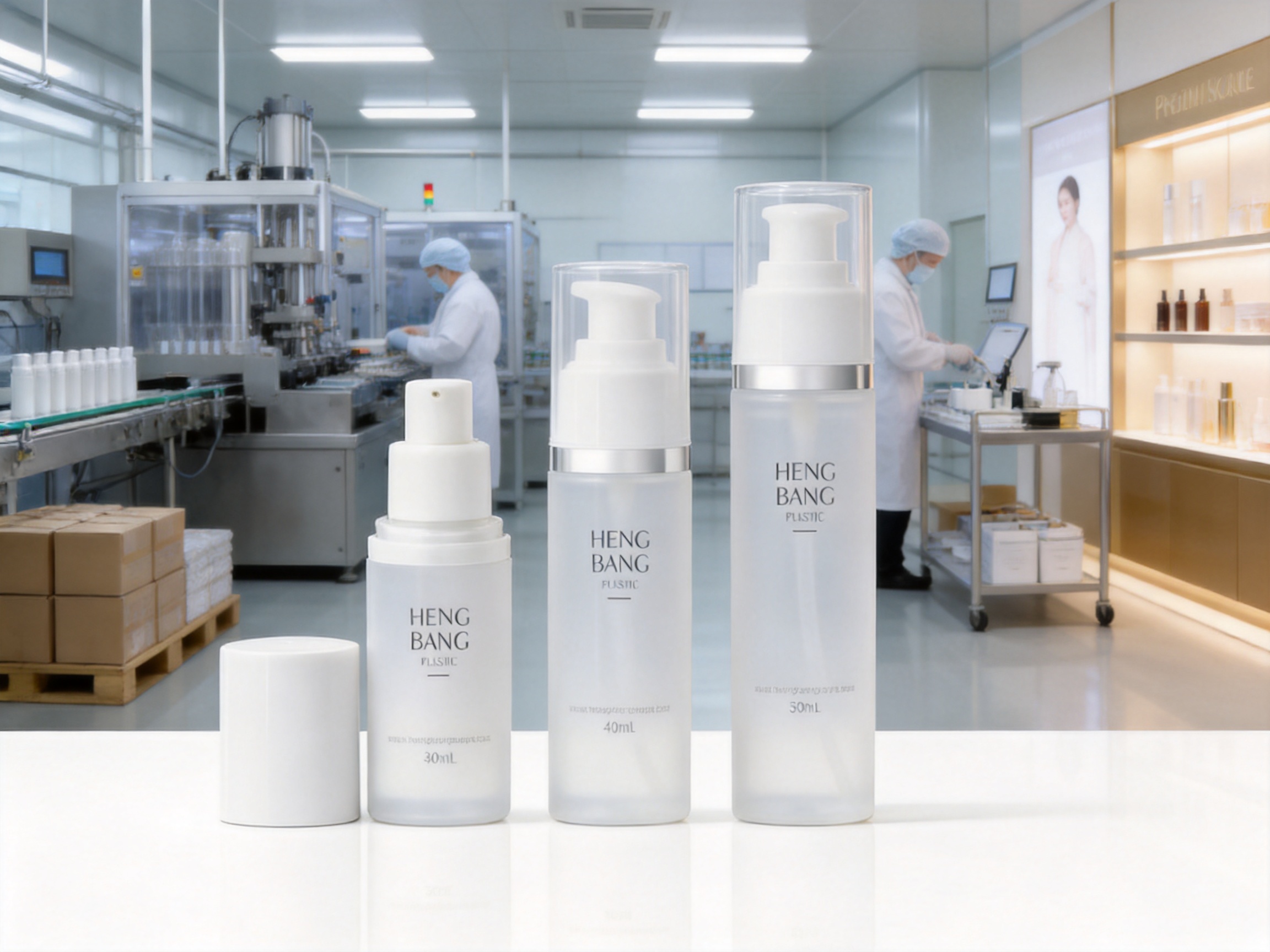
The commercial value of the HB-R001 comes from its ability to support a premium appearance while remaining adaptable to different products and markets. Brands can select a capacity that matches their price point, use a pump or twist cap according to the formula, and customize the surface through printing or hot stamping.
This flexibility can help reduce the visual and operational complexity of a product range. A consistent bottle platform may make it easier to create new SKUs, seasonal editions, gift sets, and private-label collections. It can also help establish a recognizable shelf presence when several products use the same cylindrical silhouette.
The design is suitable for brands that want to communicate simplicity, cleanliness, and reliability. It does not depend on exaggerated decoration or an unusual shape to appear premium. Instead, it allows quality to be expressed through the relationship between the bottle surface, closure, color, typography, and dispensing experience.
For wholesalers, distributors, and contract manufacturers, the three capacity options provide a useful range for serving different customers. A single supplier relationship can support small portable formats, intermediate products, and standard skincare sizes. Customization services can then adapt the common package to individual brand requirements.
The bottle is made from PETG. The listed component materials are PETG for the bottle, MS or ABS for the cap, and PP plus ABS for the pump.
The available capacities are 30 ml, 40 ml, and 50 ml. These options support travel, trial, standard-use, and compact premium skincare formats.
The product information lists heights of approximately 107 mm, 126 mm, and 145 mm for the available size range. Buyers should confirm the final height associated with each capacity during technical approval.
The listed diameter is 33 mm. Final dimensional tolerances and component-fit details should be confirmed with the manufacturer.
Yes. The bottle can be paired with a pump dispenser. The listed dispensing specification is 0.23 cc, although the final output should be verified with the selected formula and pump assembly.
Yes. The product can also be paired with a twist cap. This provides an alternative configuration for products that do not require a pump or for brands seeking a different appearance or dispensing method.
Yes. The surface supports silk-screen printing and hot stamping. Brands may also discuss available color, transparency, frosting, closure, and capacity options with the manufacturer.
It is suitable for lotions, emulsions, skincare products, hand-care products, body-care products, and certain sunscreen or daily-care formulas, subject to formula compatibility and dispensing tests.
PETG can provide a refined surface, high transparency or frosted appearance, comfortable handling, and design flexibility. It supports premium visual presentation while allowing the bottle to retain a simple, practical shape.
The listed methods are silk-screen printing and hot stamping. These can be used for logos, product names, decorative details, and other packaging graphics.
Yes. The company specializes in cosmetic and skincare packaging and provides design and development services. Customers can discuss structural, decorative, and component requirements during the development process.
The company has passed ISO9001:2015 and ISO14001:2015 certifications. It was also recognized as a Ningbo High-Tech Enterprise in 2021 and owns multiple invention patents.
Yes. Formula compatibility, dispensing, sealing, decoration resistance, and transport performance should be evaluated using the intended bottle, closure, formula, and decoration combination.
Yes. Its cylindrical form, smooth PETG surface, white or frosted appearance, pump option, and hot-stamping capability can support premium, minimalist, professional, and contemporary skincare positioning.
The HB-R001 PETG white lotion bottle offers a balanced solution for modern cosmetic packaging. Its cylindrical shape provides a clean and stable visual identity, while PETG supports high transparency, frosting, white coloration, and a refined tactile impression. The available 30 ml, 40 ml, and 50 ml capacities make the platform suitable for several retail and usage scenarios.
The option of a pump dispenser or twist cap gives brands flexibility in both function and appearance. The listed 0.23 cc dispensing specification provides a useful reference for pump development, while the smooth surface supports silk-screen printing and hot stamping for clear, elegant decoration.
Compared with basic commodity bottles, the HB-R001 provides greater opportunities for premium presentation, coordinated product families, and customized branding. Its value is strengthened by the manufacturer’s experience in cosmetic packaging, design and development services, formal quality and environmental-management certifications, technical recognition, patents, and established production organization.
For brands selecting this bottle, the most important next steps are to confirm the desired capacity, closure, color or finish, decoration method, formula compatibility, dispensing performance, and transport requirements. With proper technical validation, the HB-R001 can serve as a practical and visually refined package for lotions, emulsions, skincare treatments, and related personal-care products.
1. Product specification information for the HB-R001 PETG White Lotion Bottle, including material, capacity, dimensions, dispensing information, closure options, and decoration methods.
2. Company profile and manufacturing information provided for Yuyao Hengbang Plastic Co., Ltd., including establishment history, facility size, employee information, design and development capabilities, certifications, and technical recognition.
3. ISO 9001:2015, Quality Management Systems—Requirements.
4. ISO 14001:2015, Environmental Management Systems—Requirements with Guidance for Use.
5. General cosmetic-packaging evaluation principles covering material compatibility, closure performance, dispensing consistency, decoration adhesion, transport testing, and market-specific regulatory review.


Copyright © Yuyao Hengbang Plastic Co., Ltd.
All Rights Reserved.
 Wholesale Plastic Cosmetic Packaging Manufacturers