English
 中文简体
中文简体
News
Home > Author > Chen Xiaotong — Key Account Sales Manager > Replaceable Plastic Airless Serum Bottles for High-Performance Cosmetic Packaging

 2026.07.28
 Chen Xiaotong — Key Account Sales Manager
Content
Modern skincare packaging must do more than hold a formula. It must protect sensitive ingredients, support convenient application, communicate product value, and help brands respond to growing expectations for sustainability. The HB-K023 replaceable plastic airless serum bottle is designed for this changing market. Available in 20ml and 30ml capacities, this packaging solution combines an airtight dispensing system, a replaceable inner bottle, customizable exterior decoration, and a refined appearance suitable for premium skincare collections.
Serums, concentrates, emulsions, eye treatments, lotions, and other targeted cosmetic formulas often contain ingredients that are sensitive to air, contamination, light, or repeated handling. Traditional open-neck bottles and jars can expose a product to environmental conditions every time the package is used. The HB-K023 airless system is developed to minimize these concerns through a controlled pump mechanism and an airtight product chamber.
For cosmetic brands, the bottle offers a combination of product protection, user convenience, visual flexibility, and packaging efficiency. For manufacturers, it demonstrates how thoughtful structural design and organized production can create a container that meets both performance requirements and market expectations. The replaceable format also provides an opportunity to build refill-oriented packaging programs without asking consumers to sacrifice a premium experience.
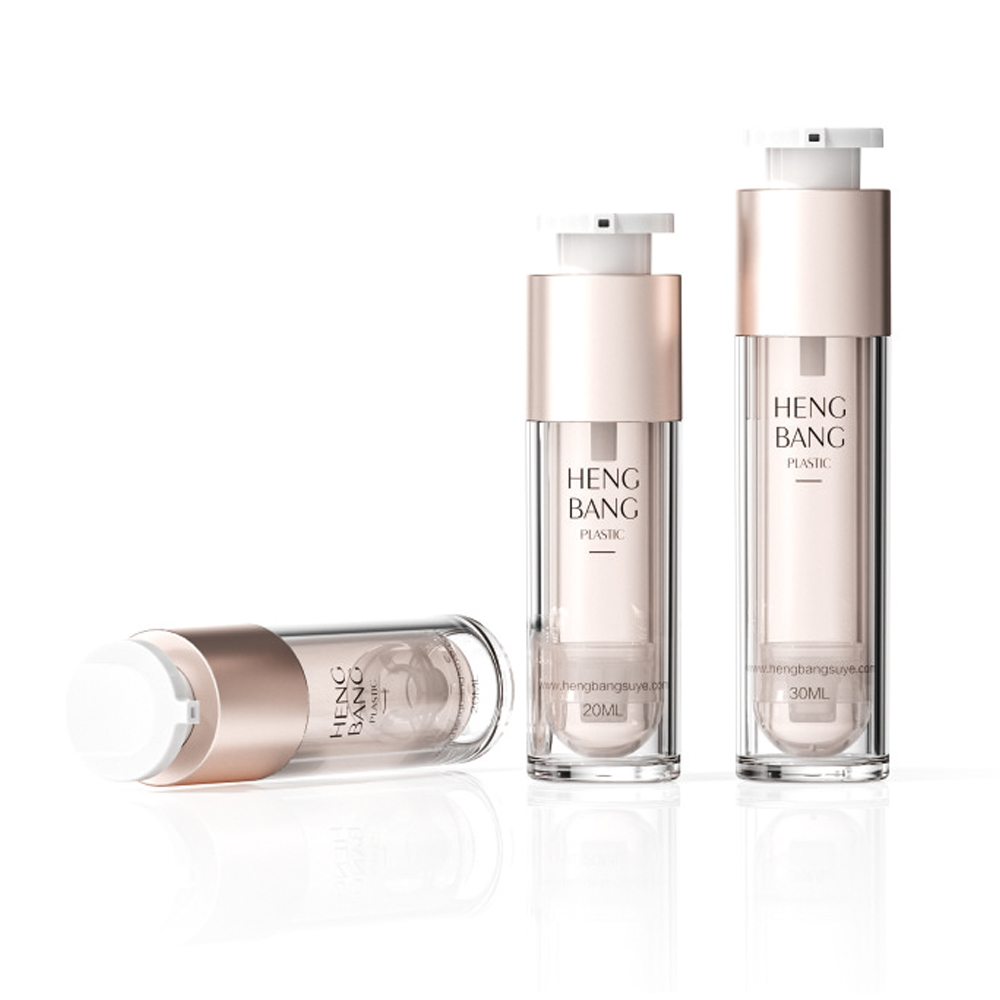
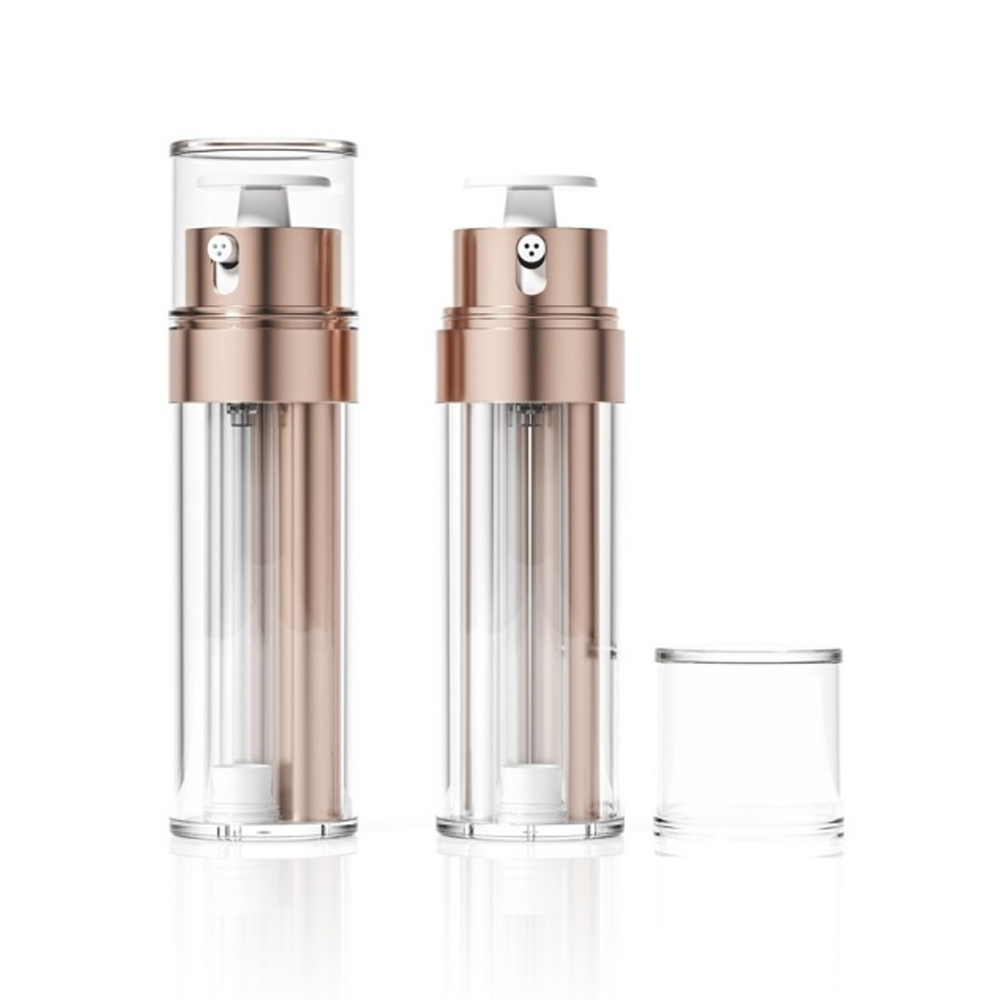
HB-K023 30ml Replaceable Plastic Airless Serum Bottle
The HB-K023 is a replaceable plastic airless serum bottle developed for cosmetic and skincare applications. It is offered in two stated capacities: 20ml and 30ml. The compact size makes it suitable for concentrated products, travel-oriented skincare, professional treatment products, sample-to-full-size product lines, and premium formulations used in controlled doses.
The bottle uses an outer container, a replaceable inner bottle, and a pump assembly. According to the supplied specifications, the pump is made from PP, ABS, and aluminum components, the outer bottle uses MS, and the inner bottle is made from PP. The dispensing output is listed as 0.23cc per actuation, allowing the brand to develop a measured application routine around the container.
The 20ml version has a listed height of 117mm, while the 30ml version has a listed height of 135mm. Both versions share a listed diameter of 36.5mm. These dimensions provide a slender and recognizable silhouette while maintaining a practical footprint for shelves, drawers, cosmetic bags, and bathroom storage.
The product is categorized as a plastic refillable airless bottle. Its structure is especially relevant to brands that want to combine the protection of airless dispensing with a more resource-conscious approach to packaging. Rather than treating the entire container as a single-use unit, the replaceable design creates the possibility of retaining selected outer components while changing the inner product reservoir.
Many skincare formulas are affected by oxygen exposure and contamination. Antioxidants, botanical extracts, active ingredients, vitamins, peptides, and other sensitive components may require careful packaging to preserve their intended quality during the product’s use period. A conventional jar exposes the product surface whenever the lid is removed. A standard bottle may also allow air to move into the container as the formula is dispensed.
An airless package works differently. Instead of relying on a dip tube that draws product upward, an airless system generally uses a moving internal component to push the formula toward the pump. This design reduces the amount of air entering the product chamber during normal use. The HB-K023 uses an airtight dispensing concept intended to reduce oxidation and contamination risks associated with repeated opening and handling.
This is particularly valuable for products positioned around freshness, purity, efficacy, or active performance. A serum may be used once or twice daily over several weeks. During that period, the packaging must support reliable dosing while limiting unnecessary exposure. An airless mechanism gives the formulation a more protected environment than many open dispensing formats.
The packaging also helps maintain a clean user experience. Consumers do not need to insert their fingers into the product, and they do not need to pour or shake the formula repeatedly. The pump provides a more controlled and hygienic method of dispensing, which is suitable for facial serums, moisturizers, eye products, concentrated treatments, and other products where measured use is important.
Every package has a role in preserving the condition of its contents. The role of airless packaging is to reduce contact between the formula and external air during use. This does not replace the need for appropriate formulation development, stability testing, filling controls, or storage instructions. However, it provides a structural advantage by supporting a more enclosed product environment.
The HB-K023 is therefore well suited to brands that want packaging to reinforce a product promise based on care, protection, and controlled performance. Its airtight design can be presented as part of a complete packaging strategy, alongside suitable formulation compatibility testing and professional filling procedures.
The listed 0.23cc output provides a defined dispensing reference for product development. A brand can use this output to estimate the number of applications available from a filled unit, although the final count will depend on the formula, pump behavior, filling level, consumer habits, and production tolerances.
Controlled dispensing can help reduce accidental overuse and make a premium product feel more precise. It can also support application instructions such as “one pump,” “two pumps,” or “a small amount.” For concentrated serums and treatment products, this type of guidance can improve the relationship between the product, the package, and the consumer’s daily routine.
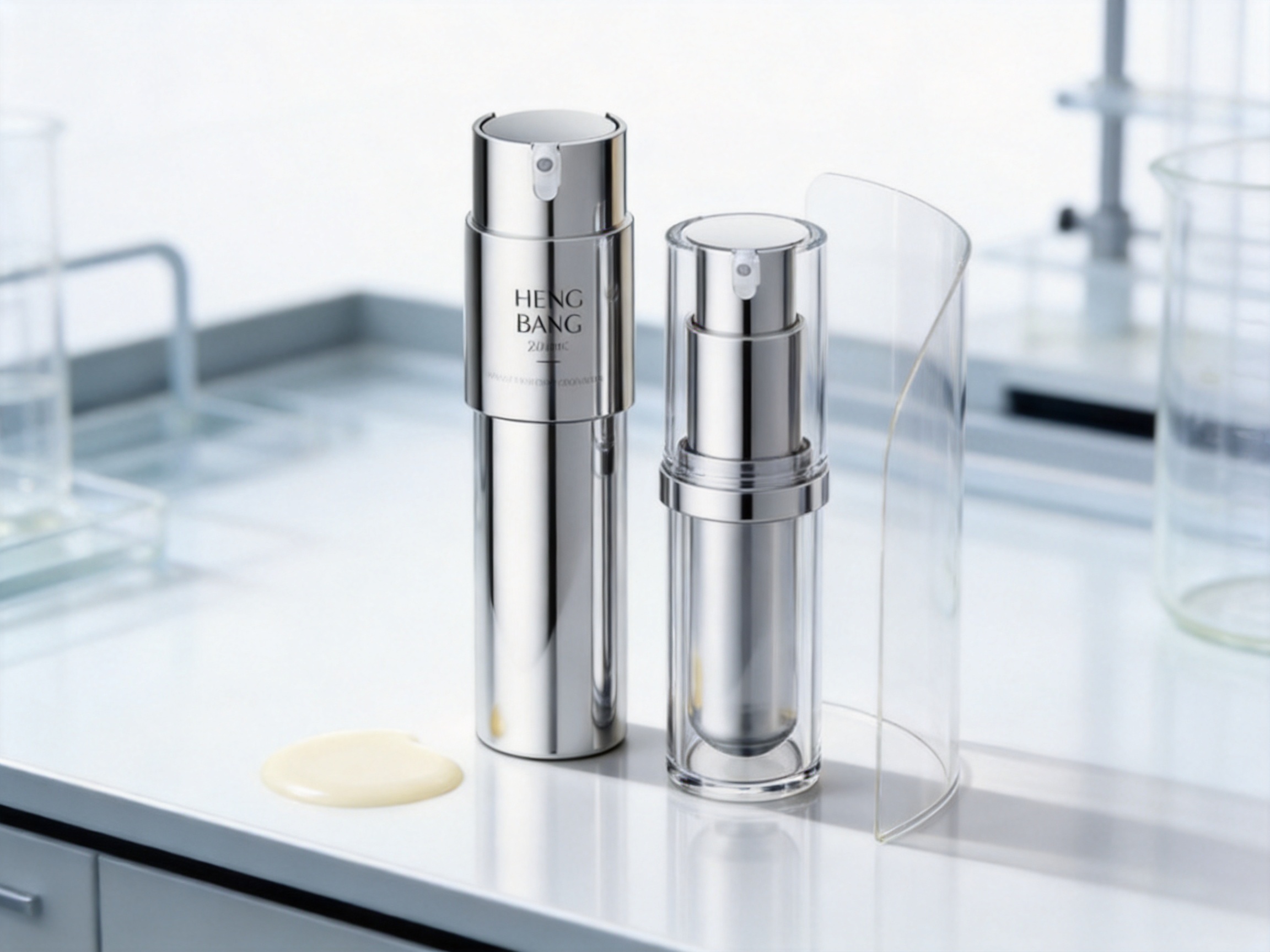
The replaceable inner bottle is one of the most distinctive features of the HB-K023. Cosmetic packaging has traditionally been designed as a complete unit that is discarded after the product is finished. A replaceable format introduces another approach: the outer presentation can remain part of the consumer’s routine while the inner product container is replaced.
This design may help brands develop refill systems for selected product categories. It can support a more structured conversation about packaging consumption, especially among consumers who are interested in reducing unnecessary waste. The exact environmental benefit depends on the materials, manufacturing method, transportation, filling system, consumer behavior, and end-of-life arrangements. Nevertheless, a replaceable design provides a practical platform for brands that want to explore packaging reuse and refill programs.
The replaceable structure can also help establish customer retention. When a consumer purchases a replacement inner bottle rather than a completely new package, the original outer container can remain visually familiar. This supports a consistent bathroom or dressing-table experience and may encourage repeat purchases within the same product family.
A refill system can be organized in several ways. A brand may sell the initial bottle as a premium starter package and offer replacement inner bottles at a different price. It may create a subscription program for regularly used serums or lotions. It may also introduce different formulas using compatible inner components while preserving a common outer design language.
These possibilities allow packaging to become part of the customer relationship. The initial package can communicate the brand’s design identity, while the replacement format can emphasize convenience and continuity. The approach is particularly suitable for skincare routines in which consumers use the same type of product over a long period.
For retailers, refillable packaging may create additional merchandising options. Starter units, refill units, gift sets, and limited-edition outer components can be displayed as connected products. This can support a broader product architecture without requiring a completely different primary package for every variation.
Brands considering a refill system should establish clear instructions for consumers. The replacement process should be easy to understand and should preserve the cleanliness of the product-contact area. Packaging instructions can explain how to remove the used inner bottle, how to install a new one, and how to avoid touching sensitive components.
Compatibility is also important. The selected formula, filling process, inner bottle material, and pump should be evaluated as a complete system. A refillable concept must provide reliable engagement and sealing after replacement. Brands should conduct appropriate tests for leakage, pump function, drop resistance, transportation, temperature variation, and formula compatibility before commercial launch.
The HB-K023 uses a multi-material construction selected for different functional areas of the package. The stated material configuration includes PP, ABS, aluminum, MS, and PP for the pump, outer bottle, and inner bottle components respectively.
Item |
Specification |
Product type |
Replaceable plastic airless serum bottle |
Available capacities |
20ml and 30ml |
Pump materials |
PP, ABS, and aluminum |
Outer bottle material |
MS |
Inner bottle material |
PP |
Listed height, 20ml version |
117mm |
Listed height, 30ml version |
135mm |
Listed diameter |
36.5mm |
Listed dispensing output |
0.23cc |
Polypropylene is widely used in cosmetic packaging because it can provide a practical balance of chemical resistance, light weight, and processability. Its use in the inner bottle is relevant because the inner component comes into direct contact with the formula and must be evaluated for compatibility with the intended product.
ABS is commonly selected for components that require a firm, finished appearance and good dimensional performance. Its presence in the pump assembly can support a robust operating feel and contribute to the visual quality of the package. Aluminum elements may provide a refined accent and reinforce the premium character of the dispensing system.
The outer bottle material is listed as MS in the supplied product information. Brands should confirm the precise material designation, surface treatment, and decoration options during technical development. The outer component is the main visual platform of the package, and its surface can be adapted through color, finish, and decoration according to the brand’s requirements.
The HB-K023 has several advantages when compared with conventional jars, open-neck bottles, and basic lotion containers. These advantages do not mean that one package is suitable for every formula or market. Instead, they show why a replaceable airless bottle can be a strong option for targeted skincare products.
A jar requires the consumer to open a wide lid and remove product with a finger, spatula, or applicator. Each contact can introduce material from the surrounding environment into the formula. The HB-K023 uses a pump, which allows the consumer to dispense the product without placing fingers inside the product chamber.
This supports a cleaner routine and helps a brand communicate a more professional product experience. It is especially relevant for facial products and formulas marketed around purity, sensitive skin, or active ingredients.
Unlike an open container, the airless system is designed to limit air movement into the product chamber during dispensing. The airtight design is intended to help reduce oxidation and contamination concerns, supporting the stability objectives of the formulation.
Packaging alone cannot guarantee a product’s shelf life or performance. Stability depends on the formula, manufacturing controls, filling conditions, closure design, and storage environment. Even so, the airless format provides a useful layer of protection in the overall packaging system.
The 0.23cc listed output gives the package a controlled dispensing profile. This may be preferable to jars or wide-mouth bottles, where the amount removed can vary considerably. Measured dispensing can help consumers follow product instructions and can make a concentrated formula feel more economical.
The slender profile, multi-component pump, and customizable exterior create a suitable foundation for premium skincare packaging. The bottle can be designed in sophisticated colors, soft-touch finishes, glossy surfaces, metallic effects, printed graphics, or other decorative styles, subject to technical confirmation.
Visual presentation is particularly important for serum products. Consumers often associate a well-finished package with research, quality, and performance. The HB-K023 gives brands a substantial surface for creating a recognizable appearance while retaining the functional advantages of airless dispensing.
The replaceable bottle format differentiates the product from standard single-unit packaging. It can help brands explore refill models and develop a longer-term packaging relationship with consumers. When supported by clear instructions and appropriate product design, this feature may contribute to a more considered approach to packaging use.
Cosmetic packaging must function as both a technical container and a communication tool. The same bottle can appear clinical, natural, luxurious, minimalist, youthful, or professional depending on its colors, decoration, surface treatment, and component coordination.
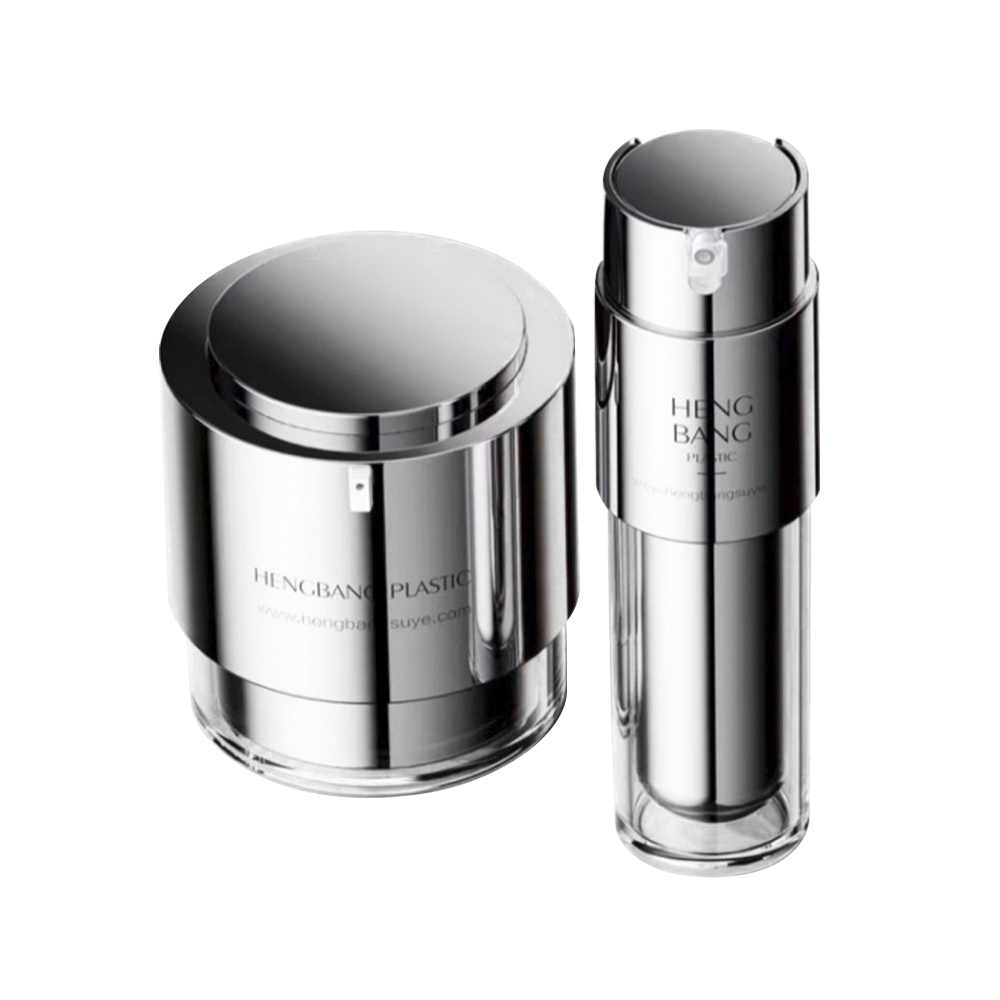
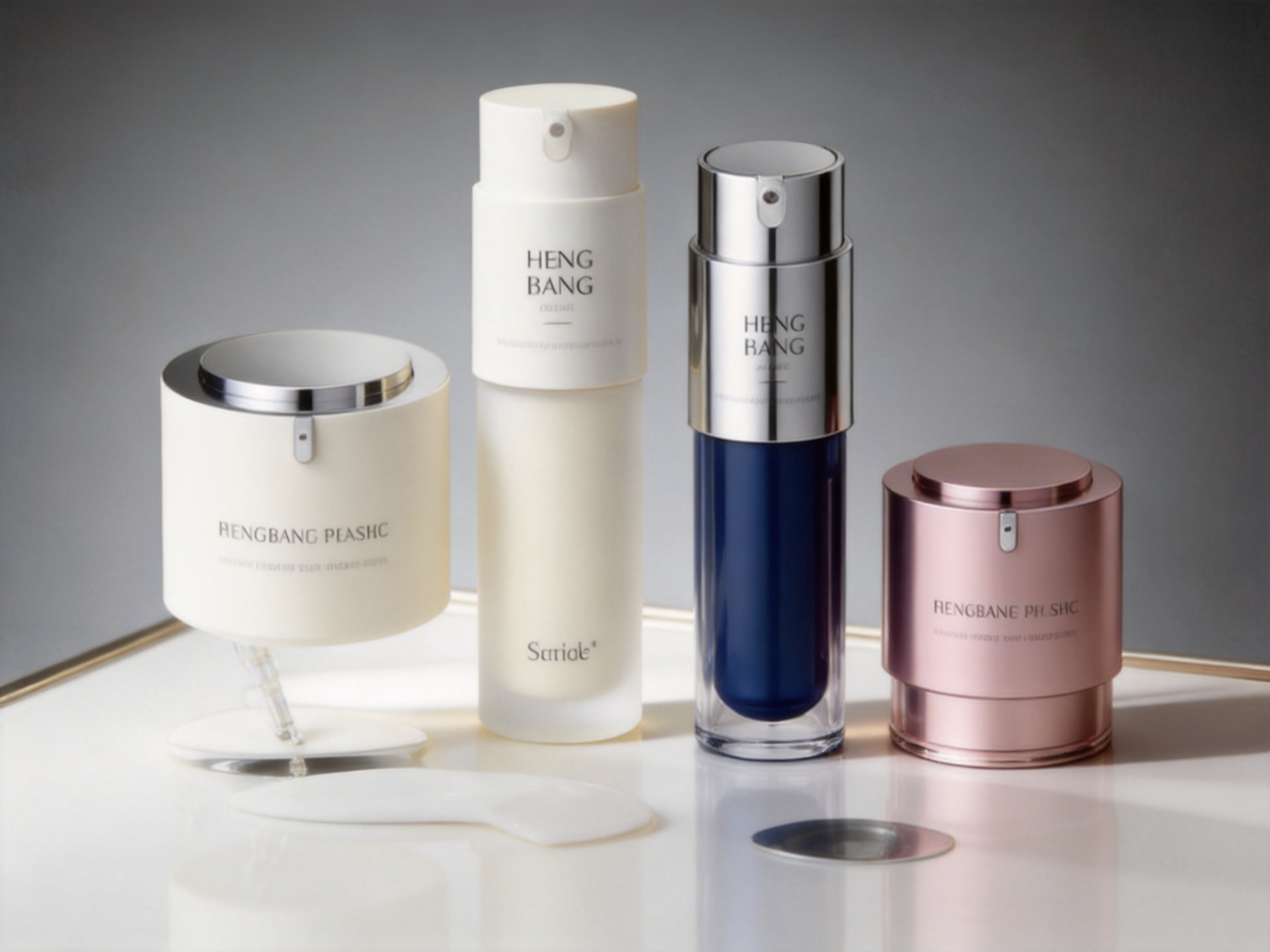
The HB-K023 can be customized in color, finish, and decoration. This flexibility allows brands to align the bottle with an existing identity or create a new visual system for a product launch. A premium anti-aging serum may use deep colors, metallic accents, and restrained typography. A clean beauty product may use light tones, translucent effects, and simple decoration. A professional treatment line may use white, silver, or neutral colors with clear product coding.
Color is one of the first visual signals a consumer notices. Brands can use one color for a complete product line or assign different shades to individual formulas. For example, a product family may use the same bottle structure while distinguishing hydration, brightening, firming, and soothing products through coordinated color bands.
Color matching should be evaluated using approved samples and appropriate production references. Different materials and finishes can affect the final appearance. A color that appears consistent on a screen may look different on a curved surface, under retail lighting, or beside another component. Professional sample approval is therefore an essential part of the development process.
Surface finish influences both appearance and handling. Glossy surfaces can create a polished and reflective impression. Matte finishes can produce a soft, understated, and contemporary effect. Frosted or translucent treatments may communicate lightness and purity. A combination of matte and glossy areas can create visual contrast without requiring complex structural changes.
The selected finish should also be considered in relation to fingerprints, scratch visibility, filling-line handling, transportation, and consumer grip. Packaging development is strongest when visual preferences and practical requirements are evaluated together.
Decoration may include brand marks, product names, volume information, instructions, ingredient-related messaging, regulatory information, and visual patterns. Depending on the chosen process and design, decoration can be applied to different areas of the bottle or coordinated with labels and secondary packaging.
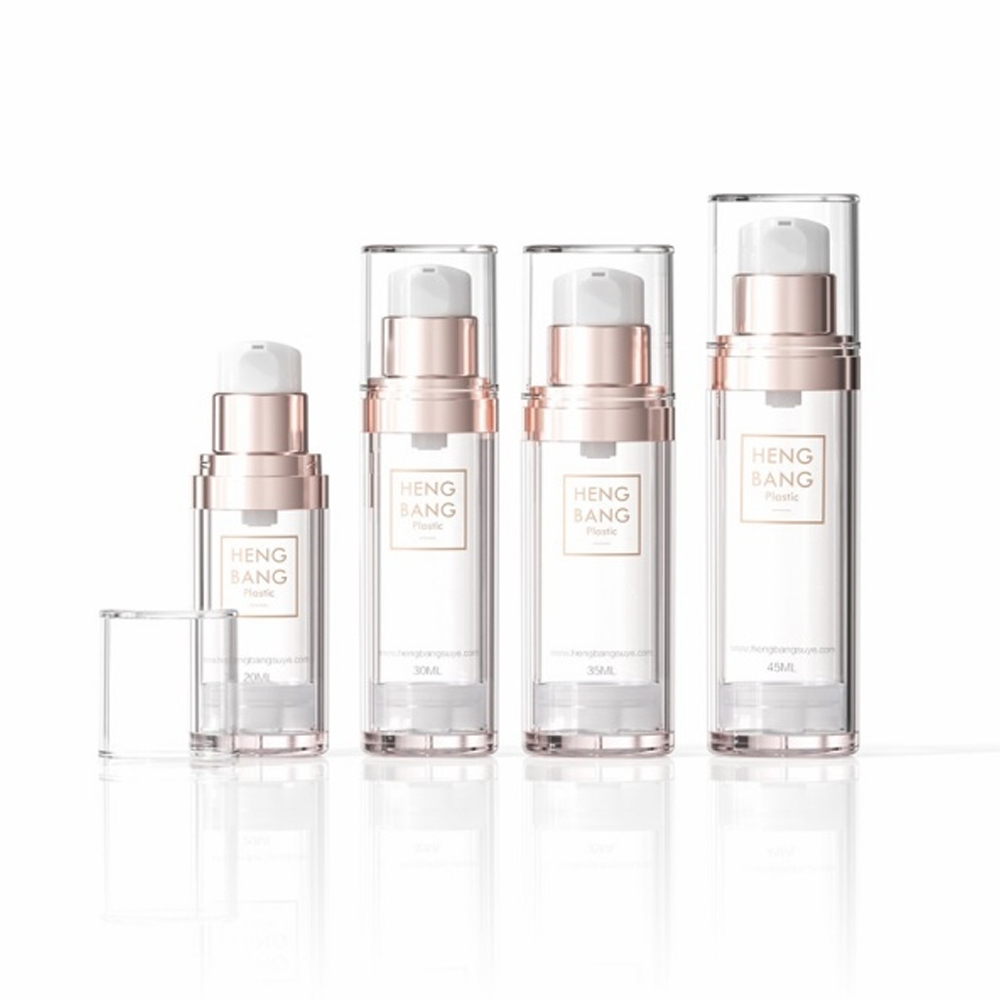
Because the HB-K023 is available in two capacities, product teams should establish a consistent design hierarchy. The 20ml and 30ml versions can share the same logo placement and visual language while using differentiated volume information. This creates a coherent range and helps consumers identify the products quickly.
The compact airless format can be adapted to a broad range of products. Its most direct application is serum packaging, but the bottle may also be considered for lotions, emulsions, concentrated moisturizers, eye treatments, primers, sun care products, and other formulas that benefit from controlled dispensing.
Facial serums are often sold in smaller volumes because they are concentrated and used in limited quantities. The 20ml and 30ml capacities are suitable for products that are applied once or twice per day. The pump can support a repeatable routine, while the airless structure helps reduce unnecessary exposure during the product’s use period.
Eye products require careful positioning and controlled application. A pump bottle can be more hygienic than a jar and can help the consumer dispense a small amount before applying it around the eye area. Formula compatibility, output testing, and application guidance remain important for this category.
Some lightweight creams and emulsions can be packaged in airless bottles when their viscosity is compatible with the pump and internal mechanism. This may provide a more elevated alternative to a conventional lotion bottle or cream jar, especially for products positioned around daily skincare rituals.
Sun care formulas may benefit from measured dispensing because consumers need to apply an appropriate amount for the intended protection level. The HB-K023 can be considered for selected facial sun care or treatment products, subject to formula viscosity, dispensing requirements, regulatory considerations, and compatibility testing.
The compact profile may suit professional skincare kits, treatment programs, hotel amenities, travel collections, and trial-size offerings. A refillable concept can also support a premium travel system in which the outer component is retained while the inner product unit is replaced or renewed.
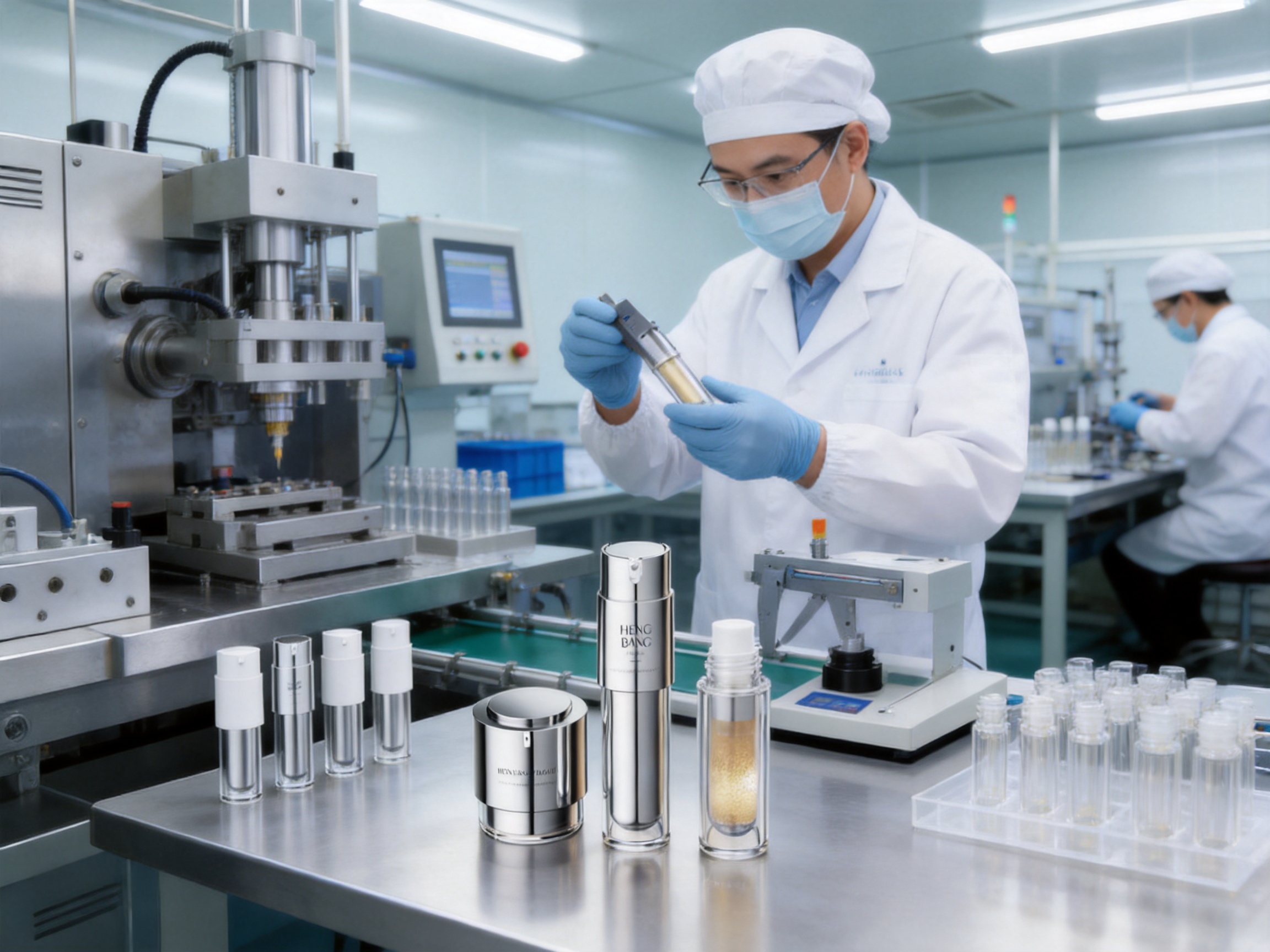
The performance of cosmetic packaging depends on more than the visible design. Reliable packaging requires controlled material selection, mold development, component production, assembly, inspection, decoration, and communication with the customer. The manufacturer behind the HB-K023, Yuyao Hengbang Plastic Co., Ltd., has been engaged in cosmetic and skincare packaging production since 2006.
The company has a building area of approximately 35,000 square meters and more than 300 employees. Its operations focus on plastic packaging for cosmetics and skincare products, supported by a young and professional team that provides design and development services. This combination of manufacturing space, personnel, and product-development capability can be valuable to brands that need more than a standard catalog item.
Packaging projects frequently begin with a concept rather than a finished specification. A brand may know its target capacity, positioning, and visual direction but still need support with structure, color, decoration, and production feasibility. A manufacturer with design and development experience can help translate those requirements into a manufacturable package.
For the HB-K023, development discussions may include the intended formula, viscosity, filling temperature, pump output, closure behavior, refill process, decorative treatment, and packaging logistics. Early technical communication helps identify potential issues before mass production and reduces the risk of costly changes later in the project.
The company has passed ISO9001:2015 certification. This standard is associated with quality management systems and emphasizes organized processes, customer requirements, continual improvement, and controlled documentation. For cosmetic packaging buyers, a quality management framework can provide greater confidence that production activities are handled through defined procedures rather than informal practices alone.
The company has also passed ISO14001:2015 certification. This standard concerns environmental management systems and supports a systematic approach to environmental responsibilities. It does not by itself define the environmental performance of every individual product, but it indicates that environmental management is incorporated into the organization’s broader operating framework.
In 2021, the company was awarded recognition as a Ningbo High-Tech Enterprise and owns multiple invention patents. These qualifications and intellectual property assets reflect an emphasis on technical development and product innovation. For buyers seeking differentiated cosmetic containers, technical capability can be an important advantage because it supports the development of distinctive structures and improved packaging functions.
The replaceable airless design itself illustrates the type of product direction that responds to current market needs. It combines dispensing performance with a refill-oriented structure, providing a packaging option that is not limited to basic containment.
A full-service packaging supplier can simplify communication across several stages of a project. Instead of coordinating independently with designers, component manufacturers, decorators, and assemblers, a brand may work with one experienced partner for a larger portion of the process.
For an airless bottle, coordination is especially important because the pump, inner bottle, outer bottle, and decorative surfaces must work together. Dimensions, tolerances, sealing areas, and assembly steps all influence the final product. A coordinated supplier can help maintain consistency between the parts and reduce avoidable variation.
The exact production route for a specific customized order depends on the selected materials, decoration, color, and volume. However, a professional manufacturing process generally includes several key stages.
Engineering begins with reviewing the structure, dimensions, material requirements, and intended application. Mold design must account for wall thickness, shrinkage, component geometry, assembly points, surface appearance, and production repeatability. For a replaceable airless bottle, the relationship between the inner and outer components is particularly important.
Accurate engineering helps ensure that the pump fits securely, the inner bottle can be installed correctly, and the outer components create the intended visual alignment. It also supports stable production at scale.
Materials must be selected and prepared according to the approved specification. Colorants, resins, metal components, and decoration materials should be managed in a controlled way to minimize variation. The material used for a product-contact component should be evaluated alongside the formula to confirm suitability.
Brands may need to provide information about the formula’s alcohol content, oil phase, active ingredients, acidity, viscosity, fragrance, and storage conditions. This information supports more informed packaging compatibility discussions.
Plastic components are produced using controlled molding processes suitable for the selected material and part geometry. The objective is to achieve consistent dimensions, clean surfaces, reliable assembly features, and acceptable cosmetic appearance. The outer bottle and inner bottle may require different process settings because they perform different roles in the package.
Metal or aluminum accents are produced and finished according to the approved design. Their appearance must be coordinated with the plastic components so that the completed bottle presents a balanced and premium appearance.
After forming, the components may receive color, coating, printing, hot stamping, metallization, or other approved decorative treatments. Decoration is assessed not only for visual quality but also for adhesion, consistency, resistance to handling, and suitability for the intended distribution environment.
Packaging that will travel through international logistics channels may experience vibration, friction, temperature shifts, and repeated handling. Decorative performance should therefore be considered in relation to the full supply chain rather than only the showroom sample.
Assembly brings the pump, outer bottle, inner bottle, and related components together. The process must maintain alignment and ensure that the replaceable structure functions correctly. Clean assembly practices are important because the container is intended for cosmetic and skincare use.
Depending on the order, automated or semi-automated equipment may be used to support consistency and production efficiency. Human inspection can complement equipment-based controls by identifying cosmetic defects or assembly concerns that require visual judgment.
Inspection may cover dimensions, component fit, pump actuation, output, leakage, surface appearance, decoration, and packaging integrity. Testing procedures should be adapted to the customer’s technical requirements and the product’s intended distribution conditions.
For the HB-K023, particular attention should be paid to the airless function, pump output, replaceable inner bottle interface, closure security, and consistency between the 20ml and 30ml versions. Samples from production should be evaluated before approval for shipment.
Quality assurance begins before production and continues through delivery. A strong project normally uses an approved specification sheet, color reference, decoration proof, sample approval, inspection criteria, and packaging instruction. These documents create a common reference for the buyer and manufacturer.
Dimensional accuracy affects both appearance and function. The height and diameter of the bottle must remain within acceptable tolerances so that the package fits secondary cartons, display trays, filling equipment, and shipping cases. Component dimensions also influence pump engagement and refill installation.
The listed output of 0.23cc provides a useful performance reference. Actual production performance should be verified through repeated actuation testing. The pump should deliver a consistent amount without excessive sputtering, leakage, blockage, or irregular recovery.
Brands should test the pump with the actual formula or a representative formula whenever possible. Viscosity and internal friction can influence dispensing behavior. A pump that performs well with a thin serum may behave differently with a thicker emulsion.
Leakage testing helps determine whether the assembled bottle can withstand normal handling and transportation. Bottles may be stored upright, inverted, or on their side during shipping and retail display. The closure and pump interface should be evaluated under conditions appropriate to the final distribution plan.
Appearance inspection can include color consistency, surface smoothness, decoration position, print clarity, metal finish, scratches, dents, contamination, and assembly alignment. Premium packaging requires particular care because small visible defects can affect consumer perception.
The finished bottles should be protected against friction, impact, dust, and movement during transportation. Appropriate inner packing and outer cartons help preserve the components until they reach the filling facility or distribution center. International buyers should confirm carton dimensions, palletization, shipping marks, and handling requirements as part of order planning.
The HB-K023 can support several brand positioning strategies. Its appearance may be developed for luxury skincare, professional beauty, clean contemporary collections, or practical refill-oriented product lines. The key is to connect the bottle’s functional advantages with a clear consumer message.
Brands may focus on the combination of airless protection, controlled dispensing, and refined appearance. This positioning is suitable for serums and treatments that emphasize advanced formulas or concentrated performance.
The replaceable inner bottle can support messaging around refillability and more considered packaging use. Brands should communicate responsibly and avoid broad environmental claims that have not been verified. The strongest approach is to explain exactly what can be replaced, what can be retained, and how consumers should handle the components at the end of use.
The measured pump and hygienic dispensing format can suit products used in clinics, salons, spas, and professional treatment programs. A clean, standardized bottle can help create consistency across a professional range.
A simple color palette, precise decoration, and high-quality finish can transform the bottle into a minimalist luxury package. The compact diameter and vertical profile provide a distinctive shape without excessive structural complexity.
The 20ml and 30ml formats allow a brand to select a capacity according to formula concentration, usage cycle, retail price, and product positioning. The 20ml version has a listed height of 117mm, while the 30ml version has a listed height of 135mm. Both share the listed diameter of 36.5mm.
A 20ml bottle may be appropriate for a concentrated serum, eye treatment, travel product, introductory product, or premium treatment with a shorter usage cycle. Its smaller volume can also support gift sets and trial programs.
A 30ml bottle may be better suited to a standard facial serum or daily treatment intended for regular use over a longer period. It provides additional product capacity while maintaining the same listed diameter, allowing the brand to preserve a related visual identity across the product family.
Brands should calculate the expected number of applications using the actual pump output, recommended dosage, filling level, and consumer routine. The decision should also consider shelf presentation, carton size, shipping efficiency, and retail price architecture.
Before commercial production, the bottle should be tested with the intended formula. Compatibility evaluation may include appearance changes, odor changes, weight variation, leakage, stress cracking, swelling, discoloration, pump performance, and long-term storage behavior.
Formulas with different viscosities may require different development parameters. A lightweight watery serum, a viscous gel, and a rich emulsion can each interact differently with the pump system. Filling temperature and filling speed may also affect the finished package.
Brands should prepare a technical brief containing the formula category, approximate viscosity, desired output, filling conditions, storage requirements, decoration expectations, and distribution markets. This information helps the manufacturer determine whether the selected configuration is suitable or whether adjustments are needed.
The package should be tested in realistic conditions. Laboratory testing can provide valuable information, but transportation simulation, repeated pump use, temperature cycling, and consumer handling tests may reveal additional issues. A successful package must perform not only when new but also after weeks of normal use.
From a consumer perspective, the HB-K023 offers a straightforward and clean method of use. The pump allows product to be dispensed without opening a wide container or inserting fingers into the formula. The compact size is easy to hold, and the vertical design can fit naturally into a daily skincare routine.
The airless structure may provide reassurance to consumers who are concerned about contamination or exposure. The replaceable inner bottle may appeal to users who want to reduce the amount of packaging discarded after each purchase, provided that the refill process is clearly communicated.
The appearance of the package also contributes to the experience. A well-decorated bottle can feel appropriate for display on a vanity, bathroom shelf, professional counter, or retail display. In premium skincare, this emotional and visual value is an important part of the product experience.
For brand owners, the HB-K023 can reduce the need to compromise between visual quality and product protection. The bottle provides an established structural platform while leaving room for customization. This can shorten the path from product concept to market-ready packaging when the requirements align with the existing design.
The two capacity options support product-line planning. Brands can use one size for a core product and another for a travel, professional, or premium variation. Shared design elements can make the range look coordinated while preserving clear differences between products.
The replaceable structure may also support repeat purchase strategies. A brand can develop a starter unit and replacement units, creating opportunities for continued engagement. This model can be especially relevant for products that consumers use consistently, such as daily serums, moisturizers, and targeted treatments.
Access to design and development services can further simplify customization. Instead of selecting a container in isolation, the brand can discuss formula requirements, decoration, component relationships, and production considerations with a packaging specialist.
Yuyao Hengbang Plastic Co., Ltd. was established in 2006 and specializes in plastic packaging for cosmetics and skincare products. Its stated building area is 35,000 square meters, and its workforce includes more than 300 employees. These resources support production, engineering, quality management, design development, customer service, and related operational functions.
The company’s business philosophy is described as “Quality, Integrity, and Customer First.” This philosophy is relevant to packaging projects because reliable delivery depends on more than manufacturing capacity. Buyers also need clear communication, accurate documentation, consistent samples, responsive problem solving, and an understanding of the intended market.
ISO9001:2015 and ISO14001:2015 certifications provide a formal foundation for quality and environmental management. The company’s Ningbo High-Tech Enterprise recognition and multiple invention patents further indicate a focus on technical development. Together, these strengths position the manufacturer as a potential partner for brands seeking cosmetic packaging with both functional and visual differentiation.
A successful HB-K023 project can follow a structured workflow.
The brand should identify the formula type, target capacity, dosage, intended application, retail positioning, distribution market, and desired launch schedule. It should also decide whether the project will use the 20ml or 30ml version.
The formula should be reviewed in relation to the inner bottle, pump, seals, and expected storage conditions. Samples can be filled and tested to evaluate dispensing behavior and material compatibility.
The brand should prepare color references, decoration artwork, finish preferences, logo requirements, and any regulatory text. The manufacturer can then assess feasibility and prepare samples.
Sample approval should cover dimensions, color, finish, decoration, pump feel, output, refill operation, and overall appearance. The approved sample should be retained as a production reference.
Before mass production, the parties should agree on inspection standards and test methods. These may include pump function, leakage, visual quality, assembly, and carton protection.
The filling facility should receive clear information about the bottle structure and assembly process. Shipping cartons, pallet requirements, storage conditions, and delivery schedules should be confirmed before production is completed.
The HB-K023 is a replaceable plastic airless bottle designed primarily for serums and other skincare products. It combines an airless pump system with a replaceable inner bottle and a customizable outer appearance.
The supplied information lists 20ml and 30ml capacities. The 20ml version has a listed height of 117mm, and the 30ml version has a listed height of 135mm. The listed diameter is 36.5mm.
The listed dispensing output is 0.23cc per actuation. Actual performance should be confirmed through testing with the intended formula and production configuration.
The pump is listed as PP, ABS, and aluminum. The outer bottle is listed as MS, and the inner bottle is listed as PP. Final material and surface specifications should be confirmed for each customized order.
An airless bottle is designed to reduce air exposure and provide controlled dispensing. This can support the protection and hygienic use of serums and other formulas that may be sensitive to repeated opening or contamination.
It may be suitable for selected lotions, emulsions, and lightweight creams, depending on viscosity and pump compatibility. Brands should conduct formula-specific testing before confirming the package for production.
The design uses a replaceable inner bottle. The exact replacement procedure should be confirmed with the manufacturer and communicated clearly to consumers. Testing should verify that the inner component can be replaced securely and hygienically.
Yes. The supplied information states that color, finish, and decoration can be customized. Brands should approve color samples, decoration proofs, and finished samples before mass production.
The pump format can provide cleaner dispensing, more controlled dosing, and reduced direct contact between the consumer’s fingers and the formula. The airless structure also offers a more enclosed product environment than an open jar.
Yes. Its replaceable inner bottle creates a platform for a refill-oriented product model. Brands should define the replacement process, packaging instructions, environmental claims, and end-of-life guidance carefully.
No. Airless packaging can help reduce exposure, but formula stability depends on many factors, including ingredients, manufacturing, filling, storage, and testing. The finished formula and package should be evaluated as a complete system.
Yuyao Hengbang Plastic Co., Ltd. provides cosmetic packaging production as well as design and development services. Its stated capabilities include support for customized color, finish, decoration, and packaging development.
The company has passed ISO9001:2015 and ISO14001:2015 certifications. It was also recognized as a Ningbo High-Tech Enterprise in 2021 and owns multiple invention patents.
A buyer should provide the formula category, desired capacity, target output, viscosity information, decoration requirements, color references, expected order quantity, filling conditions, distribution market, and preferred delivery schedule.
The HB-K023 20ml and 30ml replaceable plastic airless serum bottles combine several features that are important to modern cosmetic packaging. The airless pump supports controlled and hygienic dispensing. The airtight design is intended to reduce oxidation and contamination risks during normal use. The replaceable inner bottle creates an opportunity for refill-oriented packaging programs. The slim profile and customizable exterior provide a strong foundation for premium brand presentation.
Its advantages are supported by the manufacturing and development capabilities of Yuyao Hengbang Plastic Co., Ltd., a cosmetic packaging producer established in 2006 with a 35,000-square-meter building area and more than 300 employees. The company’s ISO9001:2015 and ISO14001:2015 certifications, high-tech enterprise recognition, invention patents, and design-development services add value for brands seeking a capable packaging partner.
For serum, lotion, eye treatment, selected sun care, and other skincare applications, the HB-K023 offers a balanced combination of product protection, convenience, customization, and replaceable construction. With appropriate compatibility testing, quality control, and clear refill instructions, it can help brands create packaging that performs effectively while contributing to a more distinctive and considered consumer experience.
1. Product specification materials for the HB-K023 replaceable plastic airless serum bottle, including capacity, dimensions, materials, and dispensing output.
2. ISO 9001:2015, Quality Management Systems — Requirements.
3. ISO 14001:2015, Environmental Management Systems — Requirements with Guidance for Use.
4. General principles of cosmetic packaging compatibility, dispensing performance, and stability evaluation.
5. General guidance on refillable packaging design, consumer handling, and packaging communication.


Copyright © Yuyao Hengbang Plastic Co., Ltd.
All Rights Reserved.
 Wholesale Plastic Cosmetic Packaging Manufacturers