English
 中文简体

News
Home > Author > Chen Xiaotong — Key Account Sales Manager > Why PETG Lotion Bottles Are a Smart Choice for Premium Skincare Packaging

 2026.10.28
 Chen Xiaotong — Key Account Sales Manager
Content
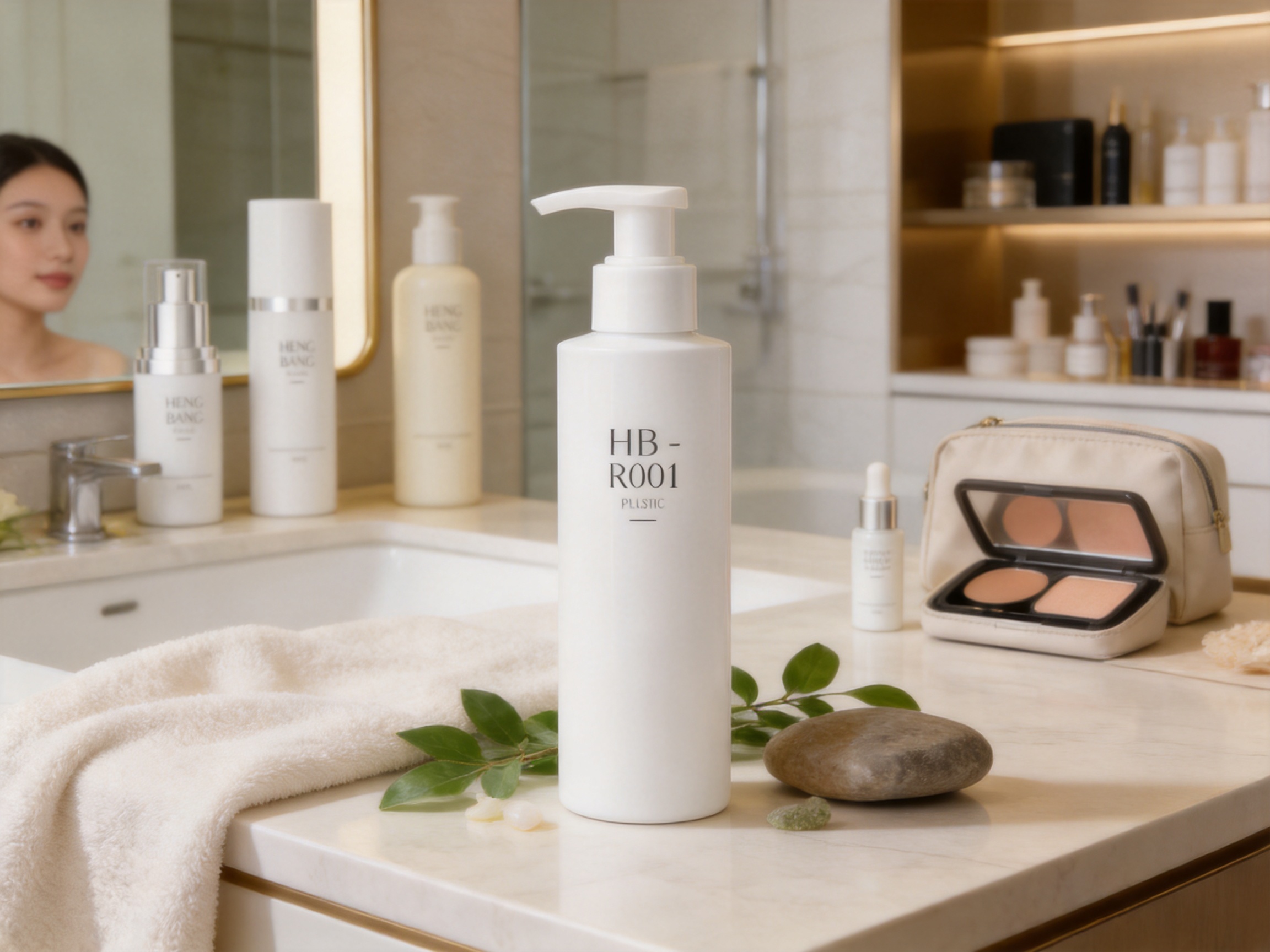
In the competitive skincare market, packaging is more than a protective outer shell. It is a practical dispensing system, a visual expression of a brand, and an important part of the customer experience. A well-designed lotion bottle must protect its contents, support convenient daily use, communicate quality, and remain suitable for efficient manufacturing and customization. The HB-R001 PETG White Lotion Bottle is designed around these combined requirements.
With its cylindrical silhouette, refined surface, PETG construction, and compatible pump or twist-cap options, the HB-R001 offers a balanced packaging solution for lotions, emulsions, moisturizers, serums, creams, and other personal-care formulations. Its available capacities of 30 ml, 40 ml, and 50 ml make it suitable for multiple product positioning strategies, including trial sizes, travel collections, daily-use skincare, and premium retail products.
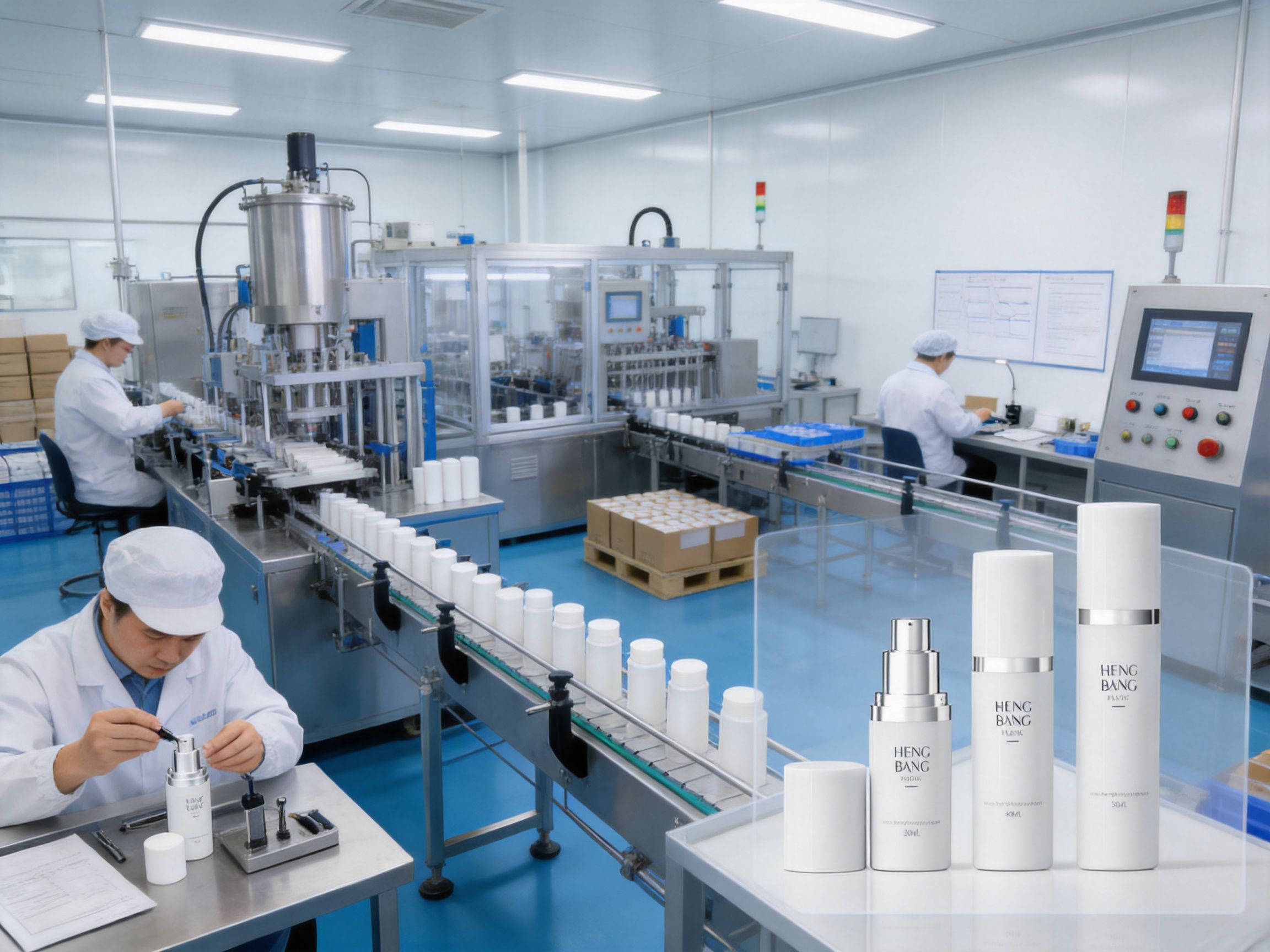
The bottle is manufactured by Yuyao Hengbang Plastic Co., Ltd., an experienced cosmetic packaging producer established in 2006. The company operates a facility with a building area of approximately 35,000 square meters and a workforce of more than 300 employees. Its capabilities include design, development, production, and packaging support for cosmetic and skincare brands. Through quality management, environmental management, technical experience, and product customization, the company provides a complete manufacturing foundation for the HB-R001 bottle.
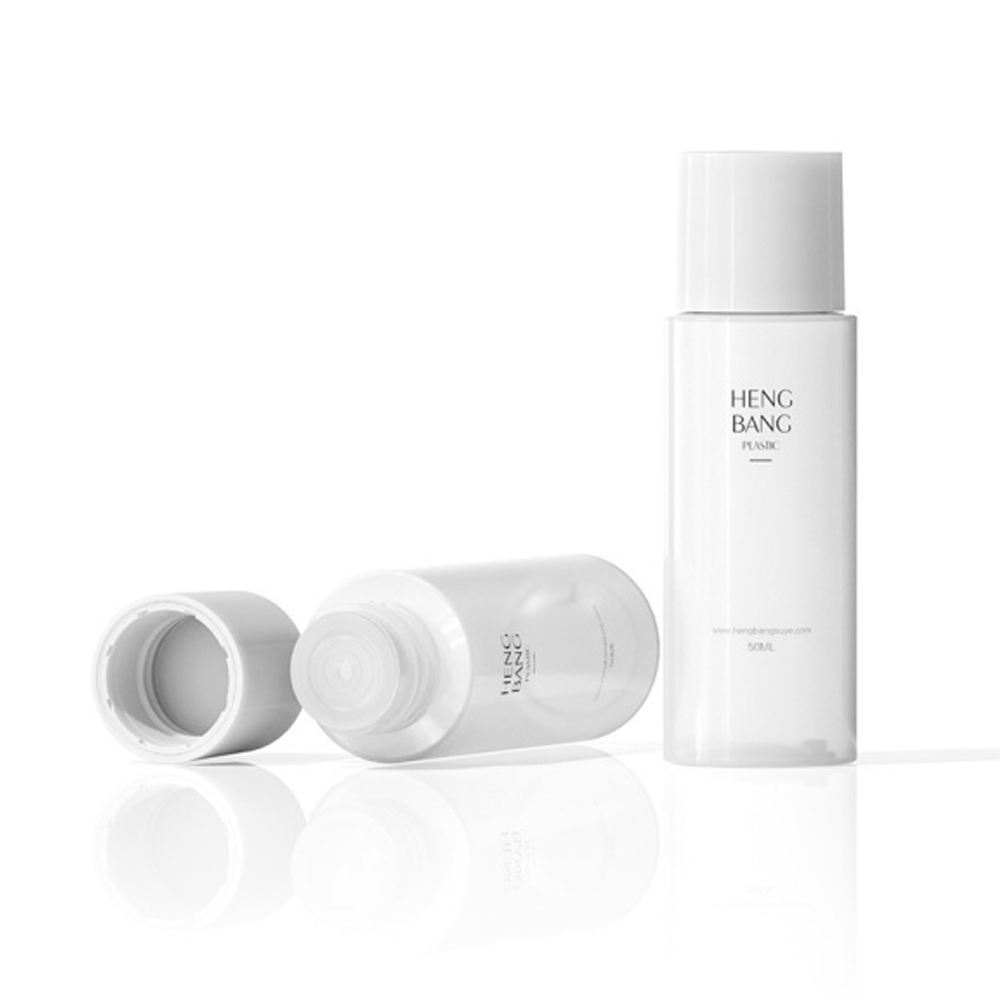
The HB-R001 is a cylindrical PETG lotion bottle developed for modern cosmetic and skincare applications. Its straight, stable body creates a clean visual profile that can fit many brand styles, from clinical skincare and dermocosmetics to natural beauty, premium body care, and professional salon products.
The design avoids excessive decoration and focuses on proportion, smoothness, and usability. This minimalist appearance gives the bottle a broad market appeal. It can be presented as a high-end white package, a translucent container, or a frosted package depending on the selected PETG finish and decoration method.
PETG is used for the bottle, while the closure and dispensing components are made from complementary materials. The listed construction includes an MS or ABS cap, a PP and ABS pump, and a PETG bottle body. This material combination supports a practical balance between visual quality, structural performance, component compatibility, and manufacturing flexibility.
The product is available in three nominal capacities:
| Item | Specification |
|---|---|
| Product model | HB-R001 |
| Product type | PETG lotion bottle |
| Bottle material | PETG |
| Cap material | MS or ABS |
| Pump material | PP and ABS |
| Available capacities | 30 ml, 40 ml, and 50 ml |
| Listed height options | 107 mm, 126 mm, and 145 mm |
| Listed diameter | 33 mm |
| Listed dispensing specification | 0.23 cc |
| Decoration compatibility | Silk-screen printing and hot stamping |
| Recommended applications | Lotions, moisturizers, emulsions, serums, creams, and skincare products |
The dimensional information should be confirmed with the manufacturer before mass production because the supplied technical data presents the height values alongside the capacity options, while some entries are written with inconsistent unit notation. Final drawings, tolerances, component specifications, and filling compatibility should always be approved during the sampling stage.
The cylindrical form of the HB-R001 creates a strong foundation for premium cosmetic packaging. Round bottles are visually balanced, easy to recognize, and comfortable to hold. Their continuous surface also gives brands a generous area for logos, product names, instructions, and decorative graphics.
Compared with highly complex shapes, the cylindrical body offers a more timeless appearance. This helps a product remain visually relevant when a brand updates its identity or expands its product range. The same bottle structure can support several labels, formulas, or fragrances while maintaining a consistent family appearance across a product line.
The straight body and stable lines also contribute to efficient shelf presentation. Bottles can be arranged in rows with a uniform visual rhythm, whether they are displayed in retail stores, spas, pharmacies, department stores, or online product photography. A clean silhouette is particularly valuable for brands that rely on minimalist design, monochrome packaging, or restrained typography.
The bottle is described as white, but PETG also allows the possibility of high-transparency or frosted visual treatments. A white appearance can help communicate cleanliness, softness, purity, and professional skincare performance. A translucent or frosted finish can create a more elevated appearance by allowing light to interact with the bottle surface.
The smooth body is also pleasant to touch. Tactile quality can influence how consumers judge a product before they use it. A comfortable grip, stable weight, and refined surface can make a lotion bottle feel more substantial than a basic commodity package. This perceived quality is especially useful for moisturizers, facial emulsions, anti-aging products, hand creams, and other items positioned above the mass-market level.
PETG is widely valued in packaging applications because it can combine clarity, toughness, formability, and a refined appearance. In cosmetic packaging, these characteristics are important because the package must remain attractive while withstanding handling throughout filling, transport, retail display, and consumer use.
One of the principal benefits of PETG is its visual quality. The material can provide a clear, glass-like impression while maintaining the practical advantages associated with a plastic container. For brands that want a premium appearance without using glass, PETG can offer an attractive alternative. It gives packaging designers more freedom to develop a polished appearance while keeping the bottle suitable for regular daily handling.
PETG can also support frosted and colored appearances. This flexibility allows the same general bottle platform to be adapted to different product identities. A light, milky finish may suit a sensitive-skin moisturizer. A frosted translucent body may suit a botanical skincare line. A white opaque version may be appropriate for a clinical or dermatological brand.
Material selection must always be evaluated against the specific formula. Cosmetic products can contain oils, alcohols, active ingredients, fragrances, preservatives, or other substances that may interact differently with packaging materials. For this reason, compatibility testing remains an important part of the development process. The HB-R001 provides a strong packaging platform, but each brand should complete formula-to-package testing before commercial filling.
Compared with ordinary low-cost packaging materials, a well-finished PETG bottle can communicate greater product value. It is especially appropriate when a brand wants to combine a modern appearance with practical plastic construction. Compared with glass, PETG can be more convenient for products used in bathrooms, travel bags, gyms, spas, and other environments where reduced breakage risk and easier handling are valuable considerations.
Another advantage is the material’s suitability for surface decoration. PETG provides an effective base for silk-screen printing and hot stamping, allowing brands to apply logos, text, metallic details, and graphic elements directly to the bottle or to use a coordinated label strategy.
The HB-R001 can be paired with a pump dispenser or a twist cap. A pump configuration is particularly suitable for lotion and emulsion products because it enables controlled dispensing and reduces the need for users to handle the product opening directly.
For daily skincare, dispensing convenience has a direct effect on customer satisfaction. A pump can help users release a measured amount with one hand, which is useful when applying body lotion after bathing, using moisturizer at a bathroom sink, or applying a facial product as part of a multi-step routine.
The listed pump material is PP combined with ABS. This component structure supports a practical combination of functional polymer performance and a refined external appearance. The pump can be integrated with the bottle and cap system to create a coordinated package with a polished overall finish.
The listed dispensing specification is 0.23 cc. This value can help brands estimate the approximate amount released per actuation and plan usage instructions, although the actual output should be verified through production samples. Pump output may be influenced by the formula’s viscosity, the pump structure, priming behavior, filling level, and manufacturing tolerances.
Controlled dispensing offers several potential advantages over wide-mouth containers. It can make dosing more consistent, help reduce accidental overuse, and limit direct contact between the user’s hands and the remaining product. This can contribute to a cleaner experience and a more professional presentation.
A twist-cap option can be considered when a brand prefers a simpler closure, a lower component count, or a different aesthetic. The choice between a pump and a twist cap should be based on the viscosity of the formula, the intended user experience, filling process, target price, and desired visual style.
Cosmetic packaging must do more than look attractive. It must help preserve the product during storage and use. The HB-R001 is designed with a coordinated bottle and closure system intended to provide secure sealing for lotion and skincare applications.
A well-fitted closure helps reduce the risk of leakage during transportation and routine handling. This is important for products distributed through domestic and international supply chains, where packages may experience vibration, changes in orientation, stacking pressure, and temperature fluctuations.
The pump or twist-cap structure also helps create a controlled opening and closing experience. A secure closure can protect the package from accidental activation, reduce mess, and support a cleaner appearance on the shelf or in the consumer’s bathroom.
It is important to distinguish between package sealing performance and the broader stability of a cosmetic formula. Packaging can assist with protection, but product preservation also depends on the formula, filling conditions, storage environment, closure design, and regulatory requirements. Brands should therefore conduct leakage tests, compatibility tests, transportation simulations, and stability evaluations appropriate to the final product.
The cylindrical shape can be advantageous for mechanical handling. It avoids sharp corners that may be more vulnerable to impact or difficult to clean during production. Its smooth geometry also allows consistent application of decoration and may simplify certain stages of inspection and packing.
The 30 ml, 40 ml, and 50 ml options give brands flexibility when planning a product portfolio. Different sizes can be used for different stages of the customer journey and different retail channels.
A 30 ml bottle is suitable for trial products, travel sizes, premium facial serums, concentrated emulsions, or gift sets. It can lower the initial purchase commitment for customers who want to test a new formula. It is also convenient for travel and subscription boxes.
A 40 ml option provides a middle position between compact and full-size packaging. It may suit facial moisturizers, daily lotions, premium treatment products, and products intended to last for several weeks. This size can help a brand create a distinctive alternative to common market sizes.
A 50 ml bottle is appropriate for daily-use facial moisturizers, creams, emulsions, and other products where customers expect a practical retail quantity. It can provide a larger amount while retaining a compact, premium appearance.
Offering multiple capacities within one design family can strengthen brand consistency. A company may use the 30 ml version for a travel line, the 40 ml version for a specialized treatment, and the 50 ml version for the main retail product. When the visual language remains consistent, customers can easily recognize the relationship between the products.
Before selecting a capacity, brands should consider the recommended use amount, product shelf life after opening, target market, retail price, shipping requirements, and the way the package will be displayed. The ideal size is not always the largest available option. It should reflect how often the product is used and how consumers expect the product to be purchased.
Packaging decoration is one of the most important ways to transform a standard bottle into a recognizable brand asset. The HB-R001 surface supports silk-screen printing and hot stamping, creating multiple opportunities for customization.
Silk-screen printing can be used for brand names, product titles, instructions, decorative lines, icons, and other graphic elements. It is suitable for designs that require clean text and controlled color application. A carefully printed logo can remain crisp and easy to read while supporting a premium appearance.
Hot stamping can add metallic or reflective effects to selected elements. Gold, silver, and other visual treatments can draw attention to the product name, logo, collection identifier, or decorative border. When used with restraint, hot stamping can help communicate luxury without making the package appear excessively complex.
The white PETG body provides a neutral base for many color systems. Dark lettering can create a strong contrast and clinical appearance. Soft colors can reinforce a gentle or botanical identity. Metallic accents can add luxury. Minimal black-and-white decoration can support a modern, high-fashion presentation.
Brands should consider the complete visual hierarchy before approving artwork. The logo, product name, function, capacity, and required regulatory information should be arranged so that the most important details are immediately visible. A cylindrical bottle should also be reviewed from multiple viewing angles to ensure that the decoration remains attractive when the bottle is rotated or placed among other products.
During development, artwork approval should include color confirmation, print adhesion testing, abrasion evaluation, and visual inspection under appropriate lighting. Decoration performance can be influenced by surface preparation, ink selection, curing conditions, handling, and storage. A professional manufacturing partner can help coordinate these details during sampling and production preparation.
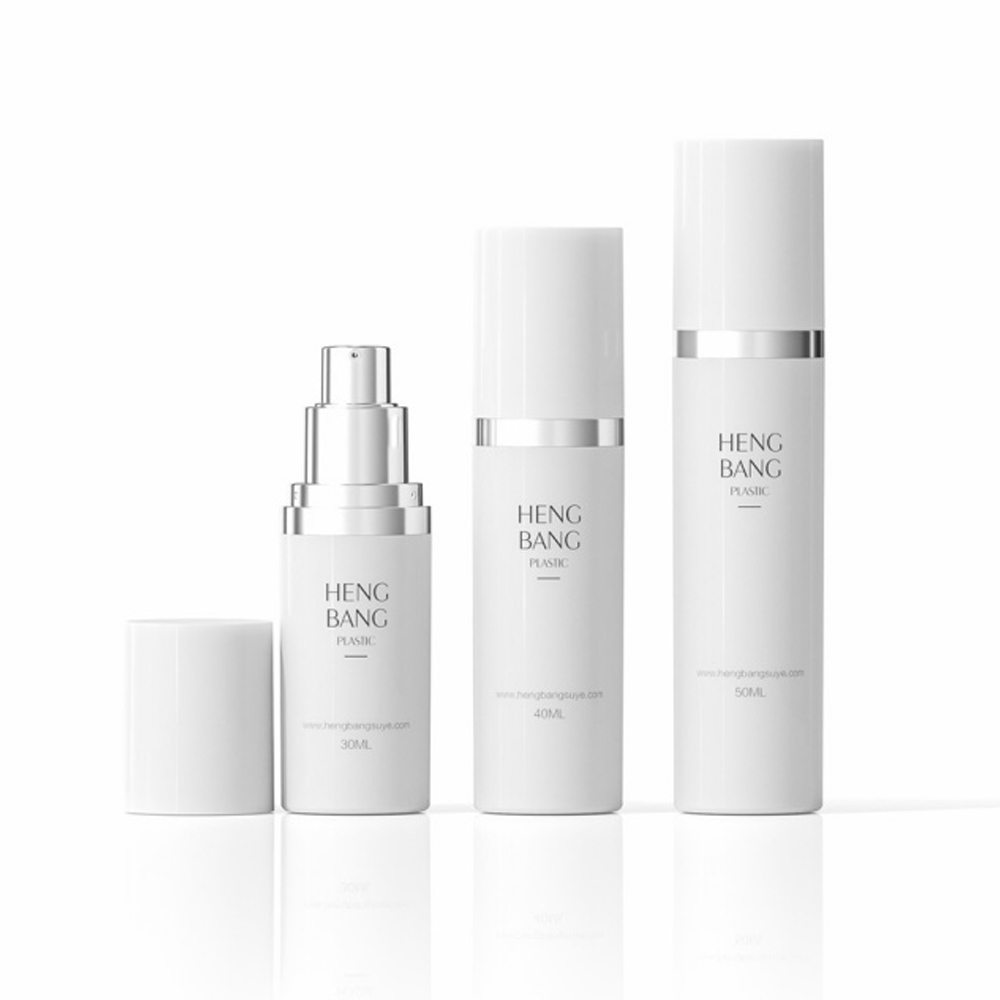
HB-R001 PETG White Lotion Bottle
The HB-R001 has several characteristics that can distinguish it from basic lotion bottles used for entry-level packaging.
Many low-cost bottles focus primarily on containing the formula. Their shapes may be generic, their surfaces may appear thin or uneven, and their decoration options may be limited. The HB-R001 is designed with a cleaner silhouette and a more refined surface, allowing it to communicate greater product value before the customer uses the formula.
Some premium packages rely on heavy materials or complicated structures that may increase shipping weight and handling requirements. The HB-R001 seeks a practical middle ground by using PETG and a streamlined cylindrical design. It can deliver a polished appearance while remaining suitable for everyday skincare use.
Basic bottles may offer only one closure type. The HB-R001 can be supplied with a pump dispenser or twist cap, allowing brands to choose a system that better fits their formula and customer experience. The pump option is especially appropriate for controlled dispensing of lotions and emulsions.
The ability to use silk-screen printing and hot stamping gives the bottle greater branding potential than an undecorated commodity package. A strong decoration program can make a standardized bottle appear distinctive and can support consistent visual identity across multiple skincare products.
The availability of 30 ml, 40 ml, and 50 ml versions allows brands to develop more than one commercial format. This is useful for companies that serve multiple channels or want to create a complete product range without changing to unrelated bottle designs.
The bottle can be adapted to clinical, minimalist, natural, premium, professional, or everyday skincare concepts. Its basic geometry is restrained enough to support different artwork systems, yet refined enough to avoid appearing ordinary when properly finished.
The performance of a cosmetic package depends not only on its visible design but also on the capabilities of the company that develops and produces it. Yuyao Hengbang Plastic Co., Ltd. was established in 2006 and has built its business around plastic packaging for cosmetics and skincare products.
The company’s approximately 35,000-square-meter building area provides a substantial physical foundation for manufacturing, product development, quality control, storage, and operational coordination. A workforce of more than 300 employees supports the company’s ability to manage different stages of production and respond to the requirements of customers in the cosmetic packaging sector.
The company provides design and development services in addition to production. This is important for brands that do not want to manage every technical detail independently. A design and development partner can help convert a packaging concept into a manufacturable product, coordinate component structures, and identify potential issues before mass production.
Hengbang has obtained ISO 9001:2015 certification and ISO 14001:2015 certification. ISO 9001:2015 is associated with quality management systems, while ISO 14001:2015 is associated with environmental management systems. These certifications indicate that the company has established formal systems related to quality and environmental management. Certification does not eliminate the need for product-specific inspections, but it provides an important organizational framework for consistent manufacturing practices.
The company was recognized as a Ningbo High-Tech Enterprise in 2021 and owns multiple invention patents. These achievements suggest an ongoing focus on technical development and product innovation. For packaging buyers, technical capability can be important when a project requires more than a standard stock item, especially when the package involves customized dimensions, special decoration, coordinated components, or unique structural requirements.
A young and professional team can also contribute to efficient communication during product development. Packaging projects often involve designers, purchasing departments, formula developers, filling facilities, quality managers, and regulatory teams. Clear coordination among these groups helps reduce delays and supports more reliable project execution.
The manufacturing process for a PETG lotion bottle involves several coordinated stages. While exact machinery and process parameters depend on the final design, a professional production workflow generally begins with material preparation and continues through molding, component production, assembly, decoration, inspection, and packing.
The process begins with product design and engineering review. The bottle shape, neck finish, wall structure, capacity, shoulder transition, base stability, and closure interface must be considered together. For a pump bottle, the neck and pump dimensions must be compatible. For a twist-cap version, the cap engagement and sealing structure require equal attention.
Design review helps identify potential manufacturing issues before the mold is produced. It can also support better material distribution, more consistent wall appearance, easier demolding, and more reliable assembly. For customized projects, prototype evaluation is particularly valuable because it allows the brand to assess grip, visual proportion, decoration area, and dispensing performance.
PETG resin must be processed under suitable conditions to achieve the desired appearance and structural performance. Material preparation, drying, temperature control, and processing stability all influence the final bottle. Proper control can help reduce visible defects and support consistent transparency, frosting, color, and surface quality.
For a product such as the HB-R001, appearance control is important because the clean cylindrical design places attention on the uniformity of the surface. Variations in clarity, color, wall thickness, or finish may become noticeable when the bottle is displayed under bright retail lighting.
The bottle-forming stage creates the main PETG container. The mold must reproduce the intended geometry accurately while supporting stable production. The cylindrical design can provide a relatively straightforward surface for molding and inspection, but the neck, shoulder, base, and decorative area still require careful engineering.
Stable forming helps maintain dimensional consistency between production lots. This is important for assembly with pumps or caps, for accurate filling-line operation, and for a uniform appearance when multiple bottles are displayed together.
The pump contains multiple functional parts, and each component must work together correctly. The PP and ABS materials listed for the pump support a coordinated structure, while the MS or ABS cap provides an external closure option. Component fit, actuation, return behavior, sealing, and appearance should be reviewed during assembly testing.
Quality checks may include pump output, priming behavior, leakage resistance, cap fit, actuation force, and visual inspection. The actual test plan should reflect the final formula and the customer’s technical requirements.
After the bottle and closure components are produced, they may be assembled and prepared for decoration. Silk-screen printing and hot stamping require controlled positioning and appropriate surface conditions. Accurate alignment is especially important for cylindrical products because even a small shift may be visible when the logo is viewed from the front.
Decoration may be applied before or after certain assembly steps depending on the production method. The chosen sequence should minimize handling damage and maintain the cleanliness of the finished package.
Final inspection can include appearance checks, dimensional checks, closure checks, decoration checks, and functional tests. Bottles may be inspected for scratches, contamination, color variation, molding marks, deformation, printing errors, and assembly defects.
Protective packing is also important. Cosmetic packaging may pass through multiple stages before filling, including transportation, warehousing, and production-line handling. Appropriate inner packaging and outer cartons help reduce the risk of surface damage and component loss.
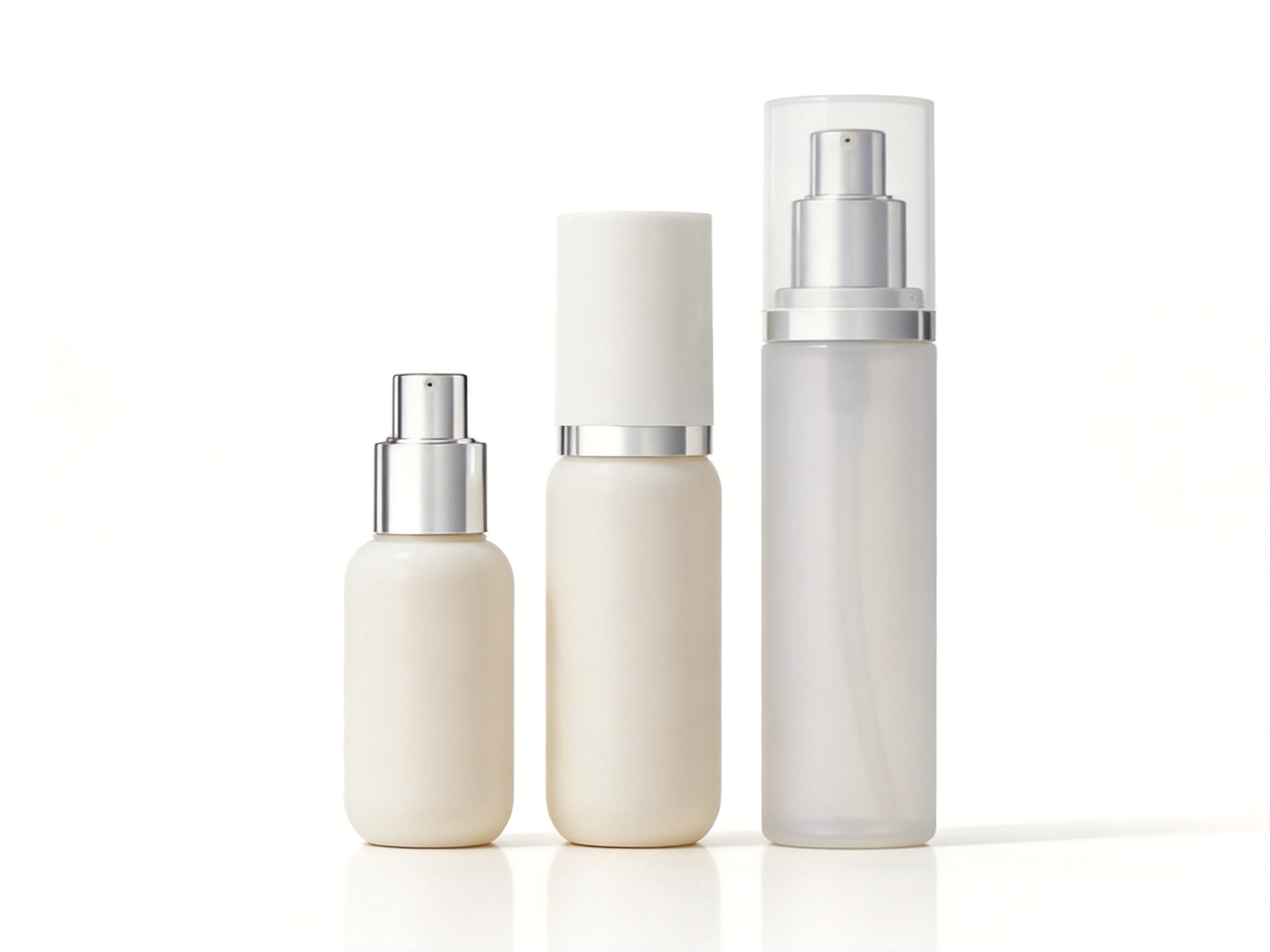
Reliable cosmetic packaging requires repeatable processes. A bottle that looks excellent in a single prototype must also maintain its quality across large production quantities. This is why quality management systems, process documentation, inspection standards, and production traceability are valuable.
ISO 9001:2015 certification provides a structured approach to quality management. In practical terms, a quality system can support clearer procedures, corrective action, customer feedback management, document control, and ongoing process improvement. These elements can help reduce inconsistencies and improve communication between departments.
For buyers, quality should be evaluated through a combination of supplier qualifications and product-specific testing. A certification is a useful indicator of management structure, but every order should still have approved samples, agreed specifications, acceptable quality limits, and inspection procedures.
The HB-R001 should be assessed for several categories of quality. Visual quality includes color, clarity, frosting, surface smoothness, and decoration accuracy. Structural quality includes bottle dimensions, base stability, neck finish, and component fit. Functional quality includes pump output, cap performance, sealing, and resistance to leakage. Compatibility quality includes interaction with the intended lotion or skincare formula.
A professional supplier can help a brand establish a quality control plan before production. This may include first-article approval, pilot production review, incoming material inspection, in-process inspection, final inspection, and retained sample management.
Environmental responsibility is increasingly relevant to cosmetic packaging decisions. The HB-R001 is a plastic PETG package, so brands should evaluate its material selection, production efficiency, transportation profile, decoration system, and end-of-life considerations as part of a broader packaging strategy.
ISO 14001:2015 certification reflects the company’s environmental management framework. An environmental management system can support the identification of environmental impacts, operational controls, legal compliance, and improvement objectives. Buyers may request additional information about material sourcing, production waste management, energy use, recycling guidance, and available packaging alternatives when required by their sustainability policies.
The bottle’s relatively compact format can support efficient product distribution, especially when compared with larger or more complex packaging structures. A cylindrical design can also simplify secondary packing and warehouse organization. However, actual logistics efficiency depends on the final bottle dimensions, carton design, pallet configuration, and shipping method.
Brands should avoid making environmental claims without evidence. If recycled content, recyclability, reduced material use, or other sustainability claims are important, these points should be confirmed through documentation and evaluated according to the target market’s rules.
The HB-R001 is suitable for a broad range of cosmetic and skincare products. Its lotion-bottle structure makes it a natural choice for facial moisturizers, body lotions, hand lotions, emulsions, and lightweight creams.
It can also be considered for selected serums and treatment products when the formula viscosity and dispensing requirements are compatible with the pump. Some professional skincare products may benefit from the bottle’s clean appearance and controlled dispensing structure.
For sensitive-skin products, the white or frosted appearance can support a gentle and clinical visual message. For botanical or natural products, a translucent finish and restrained decoration can communicate simplicity and ingredient-focused positioning. For premium anti-aging products, hot stamping and a sophisticated pump can create a more luxurious presentation.
The bottle may also fit hotel amenities, spa products, salon skincare, and gift sets. The 30 ml capacity is particularly useful for travel and hospitality applications, while the 50 ml size may better suit retail facial care or professional take-home products.
A clinical skincare brand may choose a white bottle with dark silk-screen printing, restrained typography, and minimal decorative elements. The result can emphasize clarity, professional care, and product functionality.
A natural brand may use a frosted PETG appearance, soft green or earth-tone printing, and a simple logo. The cylindrical silhouette can support a calm and uncomplicated visual identity.
A premium facial care line may combine a refined pump, a smooth white finish, and hot-stamped metallic details. The 40 ml or 50 ml option can be selected according to the product’s intended use and retail positioning.
A 30 ml version can be used for discovery kits, travel collections, subscription boxes, and promotional sets. A smaller format can introduce the product to new consumers while maintaining the same visual identity as the full-size package.
Professional users often value clean dispensing, recognizable product families, and easy handling. The HB-R001 can support a coordinated salon or spa range when several products share the same bottle platform and decoration style.
Before placing a mass-production order, brands should evaluate the bottle on the intended filling line. Important points include bottle orientation, infeed handling, neck dimensions, filling speed, pump installation, cap application, label or print positioning, and final packing.
The formula should be tested in the actual bottle and closure system. Compatibility evaluation may include visual changes, swelling, cracking, stress whitening, odor transfer, leakage, pump performance, and long-term contact behavior. Testing should be carried out under the storage conditions expected in the target market.
Viscosity is especially important for pump products. A very thick cream may require a different pump structure or a larger actuator opening than a light lotion. A thin emulsion may require careful control of leakage and output. The listed 0.23 cc specification provides a starting point, but the actual performance must be confirmed with the final formula.
Filling and capping conditions should also be controlled. Excessive torque, incorrect insertion depth, or misalignment may affect sealing and pump operation. A supplier and filling partner should communicate about technical drawings, neck specifications, closure requirements, and acceptable tolerances.
A successful packaging project normally begins with a clear product brief. The brief should identify the formula type, target capacity, intended market, desired finish, decoration method, closure preference, annual quantity, and required delivery schedule.
The next stage is sample review. Brands should examine the bottle’s appearance, dimensions, grip, weight, closure fit, pump output, and decoration area. If possible, samples should be filled with the actual formula and tested under realistic conditions.
Artwork should be supplied in an appropriate format and reviewed against the final printable area. The brand should confirm logo proportions, colors, text size, regulatory wording, capacity markings, and batch or date coding requirements.
Once the design is approved, the supplier and buyer should confirm the technical specification, packaging method, quality standard, inspection process, payment terms, production schedule, and shipping arrangements. Written approval helps prevent misunderstandings during mass production.
For customized projects, the buyer may also request information about minimum order quantities, component availability, decoration costs, mold charges, sample charges, lead times, and spare component requirements. These commercial details vary according to the scope of the project and should be confirmed directly with the manufacturer.
The bottle body is made from PETG. The listed cap materials are MS or ABS, and the pump uses PP and ABS. The exact component configuration should be confirmed according to the selected closure option and final production specification.
The listed capacities are 30 ml, 40 ml, and 50 ml. These options can support travel products, trial sizes, facial skincare, daily moisturizers, and premium treatment products.
Yes. The product is designed as a lotion bottle and is suitable for many lotion, emulsion, moisturizer, serum, and lightweight cream applications. Formula compatibility and pump performance must be verified before mass production.
Yes. The HB-R001 can be paired with a pump dispenser. The listed pump material is PP and ABS, and the listed dispensing specification is 0.23 cc. Actual output should be confirmed with the final formula and production sample.
The product description indicates compatibility with a sophisticated pump dispenser or twist cap. The available closure should be confirmed with the manufacturer based on the formula, order requirements, and desired package configuration.
Yes. The surface supports silk-screen printing and hot stamping. These techniques can be used for logos, product names, decorative graphics, metallic details, and other branding elements.
PETG and glass have different advantages. PETG can offer a premium visual appearance with easier handling and lower breakage concerns in many everyday environments. Glass may provide a different tactile and weight experience. The best material depends on the formula, brand positioning, logistics, sustainability policy, and customer expectations.
The product is presented as a white PETG lotion bottle, while the description also references high-transparency or frosted PETG appearances. The exact finish, opacity, color, and surface treatment should be confirmed during sampling.
The supplied information lists a diameter of 33 mm and height values of 107 mm, 126 mm, and 145 mm alongside the capacity options. Because the technical table contains inconsistent unit notation, buyers should request a final dimensional drawing before confirming production.
Yes. Yuyao Hengbang Plastic Co., Ltd. provides design and development services in addition to manufacturing. This can assist brands that need support with product structure, component coordination, customization, and packaging development.
The company has passed ISO 9001:2015 and ISO 14001:2015 certifications. It was also recognized as a Ningbo High-Tech Enterprise in 2021 and owns multiple invention patents.
The bottle can be considered for international cosmetic products, but the buyer remains responsible for confirming the packaging, labeling, formula, and regulatory requirements of the destination market. Product-specific testing and documentation should be completed before launch.
Recommended evaluations include dimensional inspection, visual inspection, decoration adhesion, pump output, leakage resistance, closure fit, transportation simulation, formula compatibility, stability, and filling-line performance.
Yes. The three capacity options and flexible decoration methods make it suitable for a coordinated family of skincare products. Brands can use different sizes or finishes while maintaining a recognizable overall design language.
Yuyao Hengbang Plastic Co., Ltd. is located at No. 7 Zhenbei Road, Mazhu Town, Yuyao City, Zhejiang Province, China.
The HB-R001 PETG White Lotion Bottle is a versatile packaging platform for brands seeking a clean, modern, and premium presentation. Its cylindrical shape provides visual balance, comfortable handling, and a broad printable surface. PETG construction supports an attractive appearance and offers an alternative to heavier or more fragile packaging materials in many applications.
The availability of 30 ml, 40 ml, and 50 ml capacities allows the bottle to serve different product strategies. A pump or twist-cap configuration provides additional flexibility, while silk-screen printing and hot stamping create opportunities for brand customization.
The product is strengthened by the manufacturing background of Yuyao Hengbang Plastic Co., Ltd. The company’s experience since 2006, approximately 35,000-square-meter building area, more than 300 employees, design and development services, ISO 9001:2015 and ISO 14001:2015 certifications, high-tech enterprise recognition, and invention patents provide a substantial foundation for cosmetic packaging production.
For the best results, buyers should treat the HB-R001 as the starting point of a complete packaging development process. Final success depends on confirming dimensions, selecting the correct closure, testing the formula, approving decoration, validating the filling line, and establishing clear quality standards.
When these steps are managed carefully, the HB-R001 can help skincare brands present their products with a combination of refined appearance, convenient dispensing, flexible customization, and reliable manufacturing support.
1. Product specification information for HB-R001 PETG White Lotion Bottle, supplied by the manufacturer.
2. ISO 9001:2015, Quality Management Systems — Requirements.
3. ISO 14001:2015, Environmental Management Systems — Requirements with Guidance for Use.
4. General technical literature on PETG materials and cosmetic packaging applications.
5. General packaging development practices for cosmetic containers, dispensing systems, formula compatibility, and quality control.


Copyright © Yuyao Hengbang Plastic Co., Ltd.
All Rights Reserved.
 Wholesale Plastic Cosmetic Packaging Manufacturers