English
 中文简体

News
Home > Author > Chen Xiaotong — Key Account Sales Manager > Replaceable Plastic Airless Serum Bottles for Advanced Cosmetic Packaging

 2026.10.26
 Chen Xiaotong — Key Account Sales Manager
Content
Modern skincare formulas increasingly depend on packaging that does more than hold a product. A serum bottle must protect sensitive ingredients, support precise dosing, preserve a premium appearance, and provide a convenient experience from the first use to the last. At the same time, cosmetic brands are under growing pressure to reduce packaging waste and offer more responsible solutions without compromising appearance or performance.
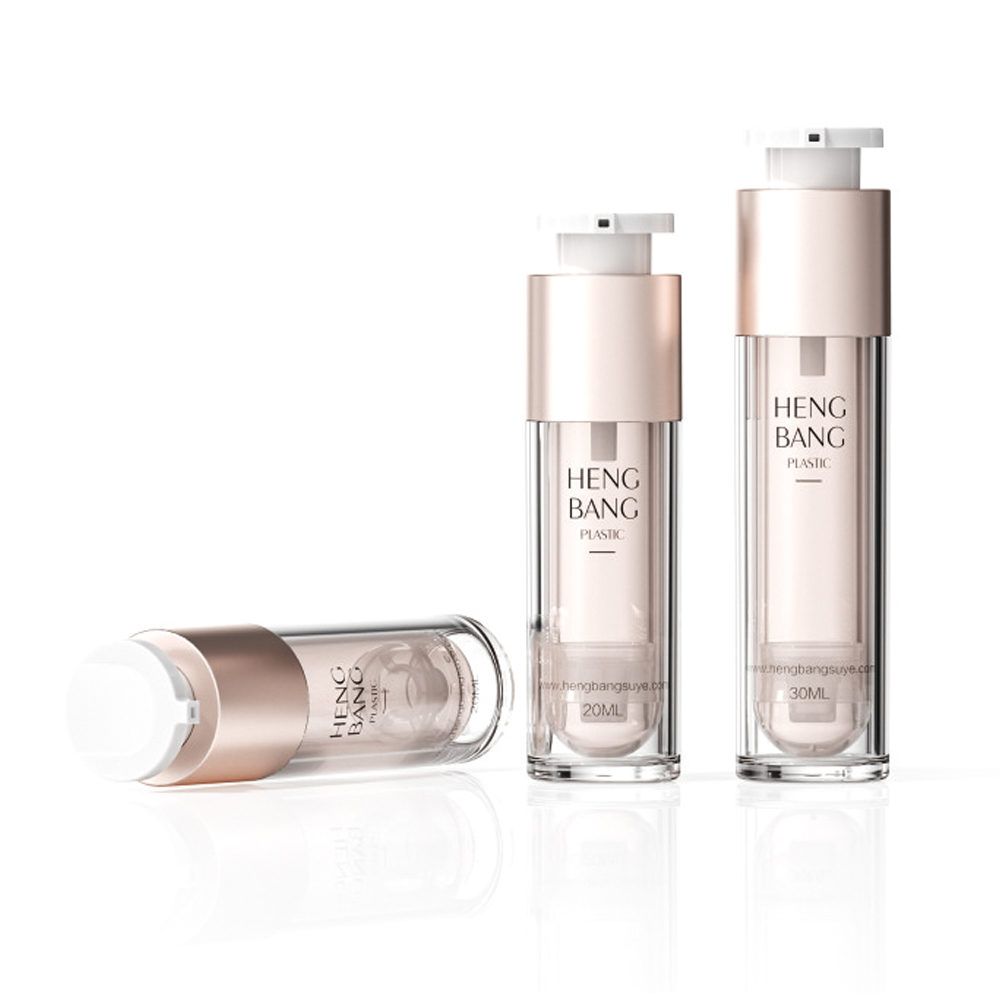
The HB-K023 replaceable plastic airless serum bottle is designed for this changing market. Available in 20ml and 30ml capacities, this refillable airless package combines an elegant external structure with an interchangeable inner bottle. Its airless dispensing system helps limit contact between the formula and outside air, while its replaceable design gives brands an opportunity to create a more resource-conscious packaging program.
Manufactured by Yuyao Hengbang Plastic Co., Ltd., the bottle is intended for serums, lotions, creams, skincare concentrates, and other personal-care formulas that benefit from controlled dispensing and improved protection. The product is also suitable for brands seeking customized cosmetic packaging, because its color, surface finish, and decoration can be adjusted to match different visual identities.
This article examines the product’s structure, functional advantages, customization possibilities, manufacturing strengths, quality considerations, and suitability for modern skincare packaging programs.
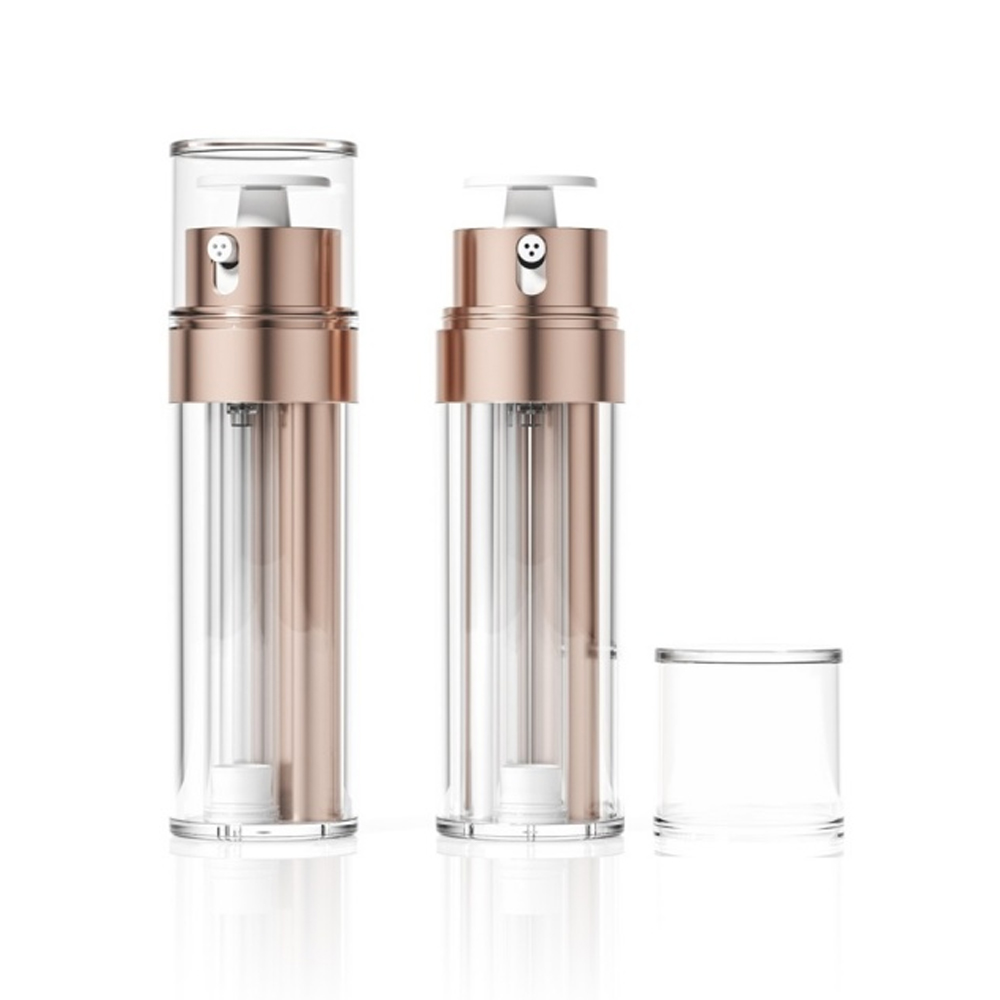
HB-K023 30ml Replaceable Plastic Airless Serum Bottle
The HB-K023 is a plastic refillable airless bottle developed for cosmetic and skincare applications. Its design consists of an outer bottle, an inner bottle that can be replaced, and a pump assembly. The airless system is engineered to dispense the formula without requiring a conventional dip tube. Instead, the internal product platform rises as the formula is used, helping reduce the amount of air drawn into the container during dispensing.
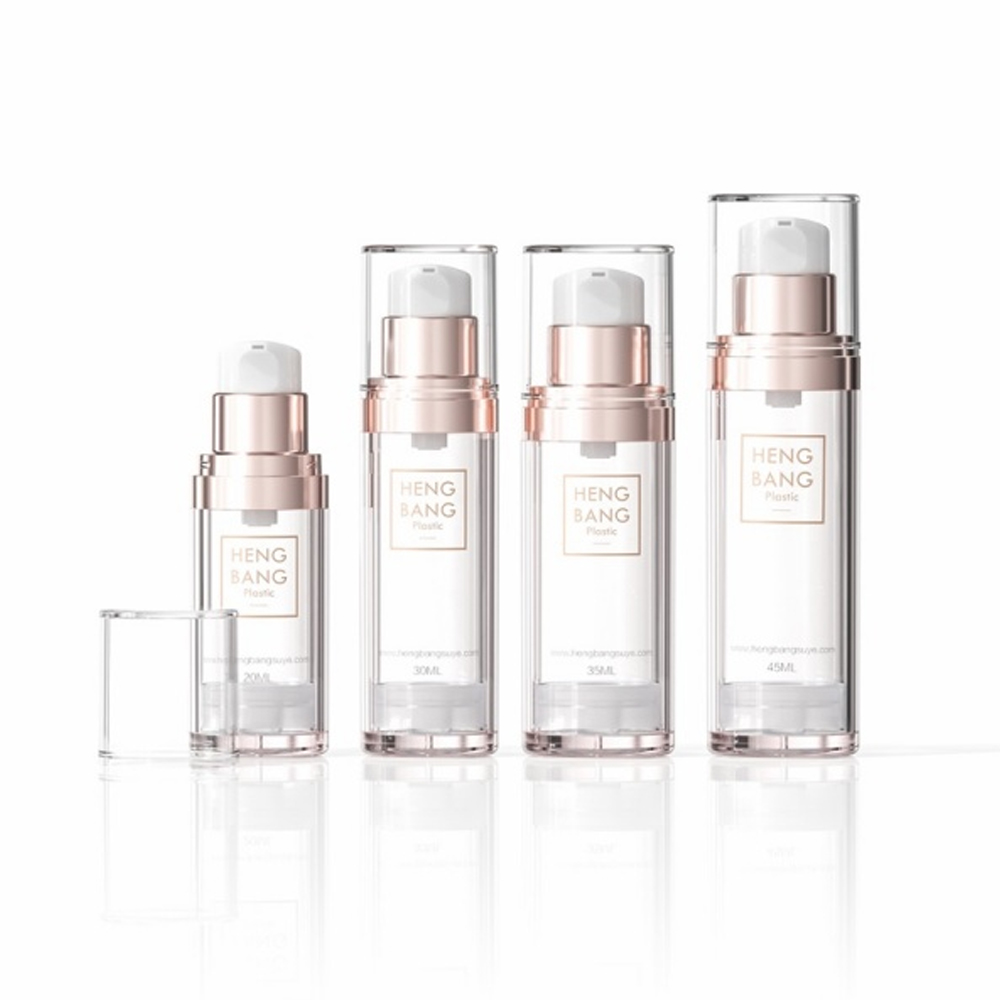
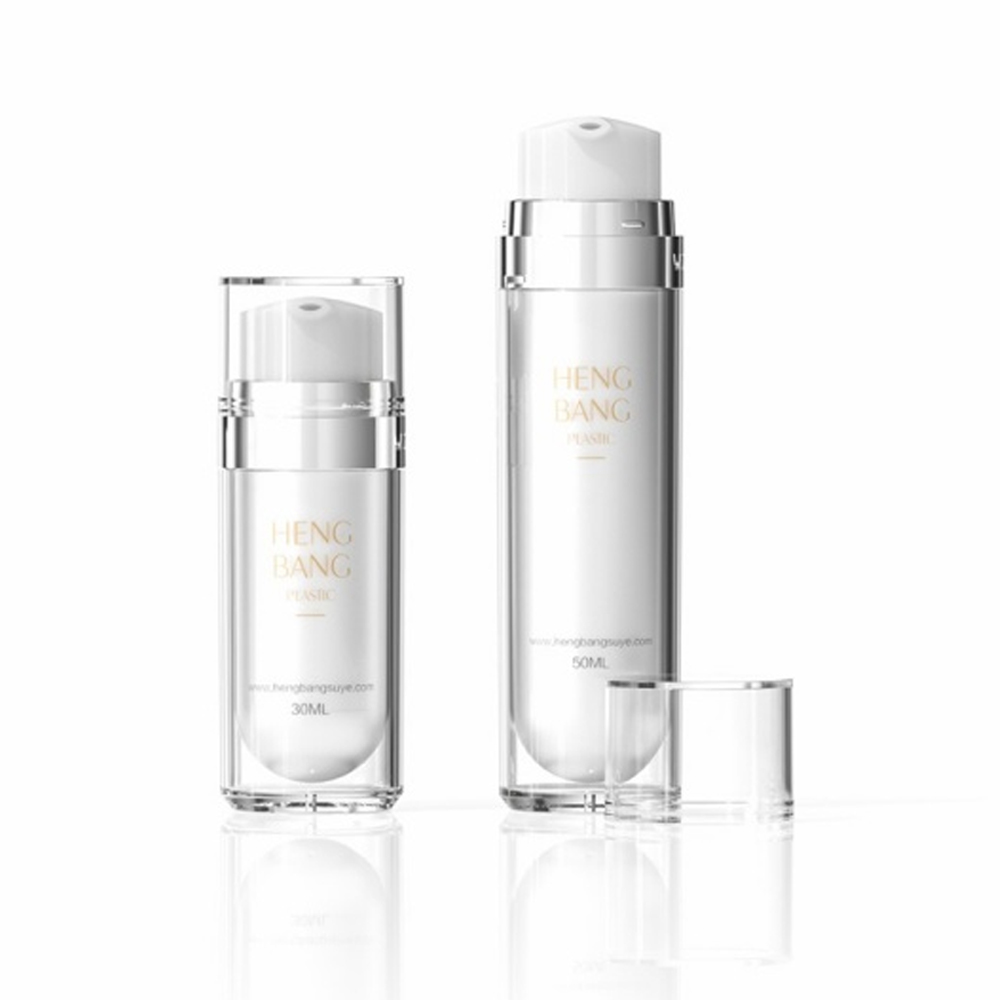
The bottle is offered in two stated capacities: 20ml and 30ml. These sizes are particularly practical for concentrated skincare products, travel-oriented packaging, trial programs, professional treatments, and premium retail collections. The 20ml format can be positioned as a compact serum package, while the 30ml format offers additional capacity for daily-use products and full-size skincare lines.
The listed product dimensions include a diameter of approximately 36.5mm. The stated height is approximately 117mm for one capacity and 135mm for the other. Because packaging specifications can vary according to the selected configuration, brands should confirm the final capacity, height, pump, decoration, and filling requirements with the manufacturer before approving mass production.
The external appearance is designed to communicate quality and refinement. A smooth cylindrical profile provides a clean foundation for labels, printing, coating, or other decorative treatments. The format can fit naturally into serum collections, clinical skincare ranges, professional beauty products, and high-end personal-care lines.
| Specification | Available Information |
|---|---|
| Product type | Replaceable plastic airless serum bottle |
| Model | HB-K023 |
| Capacity | 20ml and 30ml |
| Outer bottle material | MS |
| Inner bottle material | PP |
| Pump materials | PP, ABS, and aluminum |
| Diameter | Approximately 36.5mm |
| Height | Approximately 117mm and 135mm, depending on configuration |
| Declared application dosage | Approximately 0.23cc per actuation |
| Primary applications | Serum, lotion, cream, skincare concentrate, and related cosmetic formulas |
| Customization | Color, finish, and decoration options available |
| Refill concept | Replaceable inner bottle for selected packaging programs |
The stated application dosage of approximately 0.23cc per pump is useful for brands developing controlled-use products. A consistent output can help consumers apply a repeatable quantity and can support formula positioning, usage instructions, and product testing. Actual output can depend on the formula viscosity, pump configuration, filling conditions, and production tolerances, so final performance should be verified using the intended formulation.
Many skincare formulas are sensitive to oxygen, contamination, moisture, and repeated handling. Ingredients such as botanical extracts, vitamins, peptides, antioxidants, and other active components may require careful packaging selection. A traditional open-mouth jar exposes the formula to air whenever the lid is removed. Consumers may also touch the product directly, creating additional opportunities for contamination.
An airless package approaches the problem differently. The formula remains inside a closed container, and dispensing occurs through a pump. As the product is used, an internal component rises to move the formula toward the pump. This mechanism helps minimize the open space above the formula and reduces the need for the user to insert fingers into the product.
The HB-K023 airless design is therefore well suited to brands that want to present their formulas in a more protective and hygienic format. The system does not replace the need for proper formula development, preservation testing, compatibility testing, or stability testing. However, it can provide an important layer of packaging support for products where controlled exposure is a consideration.
Airless packaging may also help improve the consumer experience. The user simply presses the pump to dispense the product, avoiding the need to unscrew a lid or scoop product from a jar. This creates a cleaner routine and can make the package easier to use in bathrooms, bedrooms, spas, clinics, and travel environments.
Every opening of a conventional container can expose a formula to the surrounding environment. With a pump-based airless bottle, the product is dispensed through a dedicated outlet. This can reduce direct contact and help keep the remaining formula enclosed between uses.
The value of reduced exposure depends on the complete packaging system and formula. A brand should assess the compatibility of the pump, inner bottle, outer bottle, and product formulation as a complete unit. Even so, an airless package is generally a strong option for formulas that require a more controlled dispensing environment than an ordinary jar or open bottle can provide.
The approximately 0.23cc output provides a useful starting point for dose planning. For a serum, one or two pumps may be specified for each application. For a lotion or light cream, the brand may define the recommended amount according to the formula and target area.
Controlled dispensing can support several commercial benefits. It may reduce excessive use, help consumers understand the correct quantity, and make the product feel more professional. It can also help brands estimate the number of applications available from one package, although the final calculation should be confirmed through real pump testing.
Airless bottles are designed to help consumers access a high proportion of the product inside the package. In a conventional bottle with a dip tube, some residue may remain below the tube opening or along the internal walls. An airless platform can move upward as the formula is consumed, helping bring the product toward the pump.
The actual emptying rate depends on formula viscosity, internal geometry, pump performance, and filling accuracy. Nonetheless, the airless format is widely selected when brands want to offer more efficient product access than a basic bottle can provide.
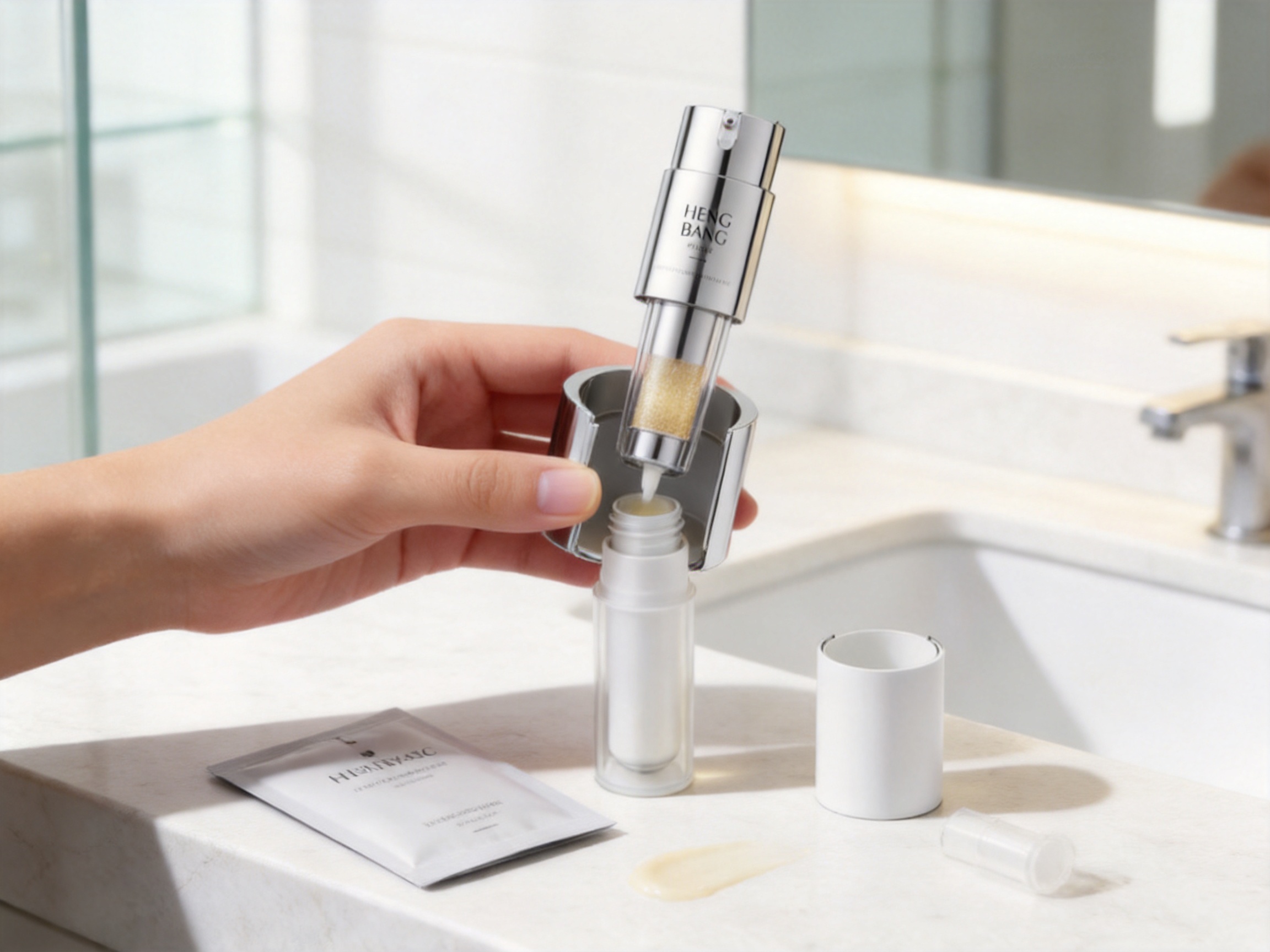
One of the most important features of the HB-K023 is its replaceable bottle structure. Rather than treating the complete package as a single disposable unit, the design allows the inner bottle to be replaced in suitable refill programs. This creates opportunities for brands to develop packaging systems that combine a durable external presentation with a replaceable product container.
The replacement concept can be adapted to different commercial models. A brand may sell a premium starter package containing the outer bottle and pump assembly, followed by lower-material replacement units. Alternatively, the brand may offer replacement inner bottles as part of a subscription, loyalty program, professional treatment system, or direct-to-consumer refill service.
Such a program requires more than a replaceable component. The brand must define how replacement works, how the consumer handles the inner bottle, how the package is cleaned or protected, and how the pump is reassembled. Clear instructions and well-designed secondary packaging are important parts of a successful refill experience.
A replaceable inner bottle may reduce the need to purchase a complete decorated package each time the product is replenished. It can also allow a brand to preserve the visual identity of a premium outer component while changing only the part that contains the formula.
The environmental value of a refill program depends on several factors, including the materials used, the weight of the components, transportation requirements, consumer participation, and the number of successful reuse cycles. Brands should avoid making broad environmental claims without conducting an appropriate life-cycle assessment or obtaining supporting data. However, the replaceable structure provides a practical foundation for exploring more resource-conscious packaging models.
For consumers, refillable packaging can create a sense of continuity and value. The primary package may become a recognizable part of a skincare ritual, while replacement units provide a convenient way to replenish the product. For brands, the system can encourage repeat purchases and strengthen the relationship between the consumer and the product line.
The refill concept can also support product-line architecture. A single outer design may be used across several formulas, while different inner bottles identify serum variants, treatment strengths, or seasonal editions. This approach may help create a cohesive shelf appearance and simplify certain aspects of product presentation.
The listed construction combines several materials selected for their functional roles. The pump assembly uses PP, ABS, and aluminum. The outer bottle is listed as MS, while the inner bottle is made from PP. Each material can contribute different properties, including structural support, appearance, rigidity, processability, and compatibility with cosmetic packaging requirements.
Polypropylene, commonly identified as PP, is widely used in cosmetic packaging because of its lightweight nature, chemical resistance, and suitability for injection molding. In the HB-K023, the PP inner bottle forms the product-contact container in the stated construction.
Product-contact compatibility should always be tested using the final formula. The evaluation should consider the formula’s oils, solvents, fragrances, active ingredients, pH, viscosity, and storage conditions. Testing can help identify changes in color, odor, texture, leakage, stress cracking, swelling, or pump performance.
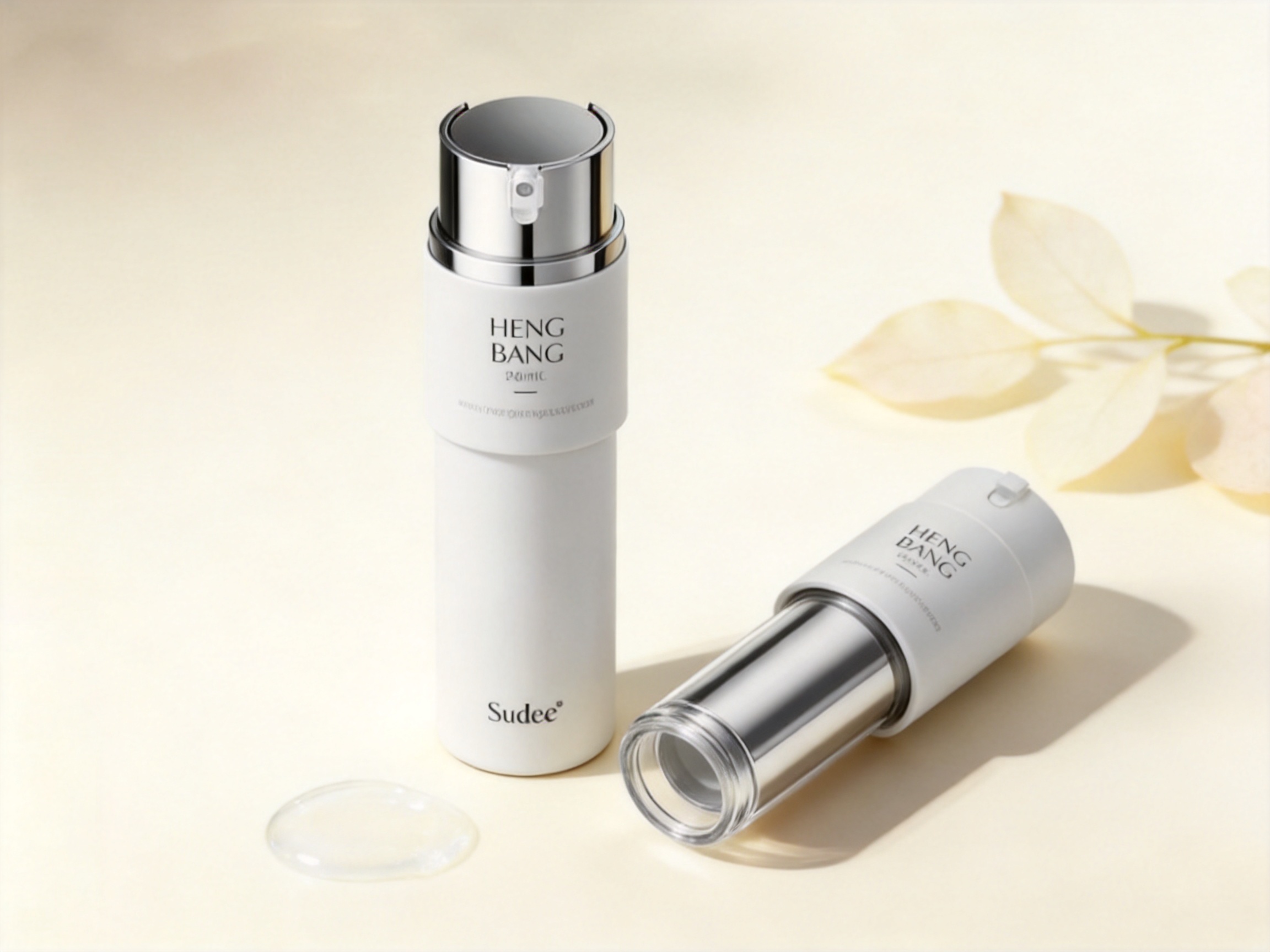
The listed MS outer bottle provides the visible body of the package. Its role is primarily related to structure, appearance, and presentation. The outer bottle can be customized through color, surface treatment, and decoration to create a particular visual effect.
A well-designed outer body can help a product stand apart from ordinary stock packaging. It can communicate simplicity, clinical precision, natural skincare positioning, luxury, or modern minimalism depending on the selected color and finish.
The pump combines PP, ABS, and aluminum components. PP can provide lightweight molded parts and functional support. ABS is often used where a rigid, precise, or visually refined component is required. Aluminum can contribute a metallic appearance and a premium tactile impression.
The pump is one of the most important performance components in the package. It must work consistently with the formula, deliver the target dosage, resist leakage, and provide an appropriate actuation feel. Brands should evaluate priming time, output consistency, closure behavior, dispensing angle, and performance after storage under different conditions.
The HB-K023 offers several advantages when compared with conventional jars, basic lotion bottles, and non-refillable packages. These advantages do not mean that airless packaging is suitable for every formula or every market. Instead, they highlight the situations in which this particular format can provide stronger functional and commercial value.
Open-mouth jars are familiar, versatile, and sometimes cost-effective. However, they require the consumer to remove a lid and access the product directly. This can expose the remaining formula to air and repeated hand contact. The HB-K023 avoids this type of direct access by using a pump mechanism.
The airless bottle can therefore provide a more hygienic and controlled experience for serums, creams, and treatment products. It may also be more convenient for consumers who prefer one-handed dispensing.
Basic lotion bottles may use a simple dip tube pump or a flip-top closure. These designs can work well for less sensitive formulas, but they may not offer the same air-management concept as an airless package. The HB-K023 is designed around a closed, pump-dispensed structure that helps protect the formula during normal use.
The airless format can also support a more premium appearance. The coordinated outer body, specialized pump, and customizable finish can create a stronger visual impression than a standard stock bottle.
Single-use or complete-package replacement models may require the consumer to discard the outer bottle, pump, and decorative components every time the formula is replenished. A replaceable inner bottle offers an alternative approach in which some components can remain in use while only the designated replacement part is changed.
The practical benefit depends on the refill system and consumer behavior. For brands that can establish a clear replacement process, the design may help reduce unnecessary repurchasing of complete outer packages and support a more durable product experience.
Glass can create a luxurious and substantial feel, but it may increase package weight and introduce a greater risk of breakage during shipping or use. A plastic airless bottle can offer lighter handling and greater resistance to impact in many everyday situations.
The HB-K023 can be useful for brands that want a premium appearance without the weight and fragility commonly associated with glass. The final environmental and performance comparison should consider the entire system, including manufacturing, logistics, use, and end-of-life handling.
Cosmetic packaging is a major part of product communication. Consumers often form an initial impression from the shape, color, surface, and dispensing experience before they fully understand the formula. The HB-K023 is designed to support customization in color, finish, and decoration.
Color can be used to separate product categories, communicate formula benefits, or establish a recognizable brand family. Soft neutral shades may support a sensitive-skin or dermatological positioning. Deep colors may convey richness and intensive treatment. Bright colors may appeal to younger or more energetic skincare lines.
Consistent color matching is important when a product line includes multiple production batches. Brands should approve physical color samples under suitable lighting conditions and define acceptable tolerances before production begins.
Surface finish affects both visual appearance and tactile perception. Glossy surfaces can create a clean and reflective look. Matte surfaces often suggest understated sophistication. Frosted, satin, metallic, or soft-touch treatments may be considered depending on the desired market position.
The selected finish should be evaluated for resistance to rubbing, oils, alcohol-based products, moisture, temperature variation, and ordinary handling. A visually attractive finish must remain stable throughout shipping, retail display, and consumer use.
Decoration may include screen printing, hot stamping, labeling, coating, or other approved techniques. The best method depends on the artwork, number of colors, required durability, production volume, and desired visual effect.
Simple logos and text can create a refined appearance when applied with accurate alignment. More complex artwork may require careful control of color registration and surface preparation. The company’s design and development capabilities can help brands select an appropriate approach during the sampling stage.
The HB-K023 is produced by Yuyao Hengbang Plastic Co., Ltd., a cosmetic packaging manufacturer established in 2006. The company operates in Yuyao City, Zhejiang Province, China, and has a stated building area of approximately 35,000 square meters with more than 300 employees.
This scale provides a foundation for coordinated product development, tooling, molding, assembly, decoration, inspection, and customer support. Cosmetic packaging production requires close cooperation among industrial designers, mold engineers, injection-molding technicians, assembly workers, quality personnel, and sales teams. An integrated organization can help reduce communication gaps between design concepts and production requirements.
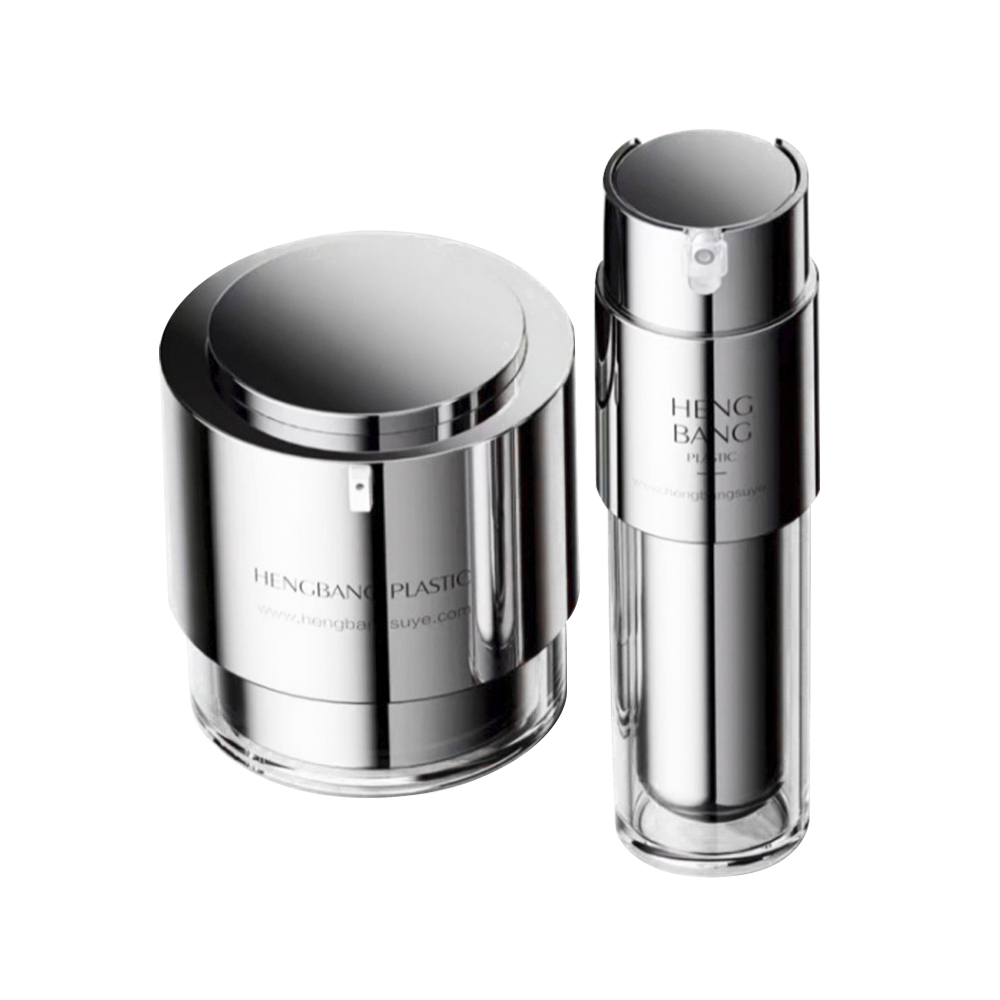
The company specializes in plastic packaging for cosmetics and skincare products. Its product categories include airless bottles, lotion bottles, cream jars, toner bottles, sunscreen bottles, double-chamber bottles, and other cosmetic containers. This breadth allows the manufacturer to understand the different requirements associated with skincare formulas and packaging formats.
The company states that its professional team provides design and development services. This is important for brands that need more than a standard catalog item. Development support may include reviewing dimensions, confirming decoration areas, assessing pump configurations, creating samples, and adapting the package for a specific product line.
Early technical communication is especially important for airless packaging. The formula viscosity, filling temperature, filling equipment, sealing method, pump output, and storage conditions can all affect final performance. A manufacturer with relevant packaging experience can help identify questions before mass production begins.
Yuyao Hengbang Plastic Co., Ltd. states that it has passed ISO9001:2015 and ISO14001:2015 certifications. ISO9001:2015 is associated with quality management systems, while ISO14001:2015 is associated with environmental management systems. These certifications indicate that the company has established management frameworks related to quality and environmental processes.
Certification does not eliminate the need for product-specific inspections. Each order should still be assessed according to agreed specifications, approved samples, drawings, color standards, functional requirements, and packaging conditions. Nevertheless, formal management systems can support more consistent procedures and clearer accountability.
The company reports that it was recognized as a Ningbo High-Tech Enterprise in 2021 and owns multiple invention patents. Technical recognition and patent activity suggest an emphasis on product development and process improvement. For customers, this can be valuable when developing packaging that requires specialized structures, new dispensing concepts, or differentiated decorative effects.
The exact relevance of a patent depends on the individual product and the scope of the patent. Brands should request product-specific technical information when intellectual property or exclusive designs are important to a project.
A reliable cosmetic package is the result of multiple controlled processes rather than one production step. Although exact factory procedures may vary, the manufacturing pathway for a product such as the HB-K023 generally involves design confirmation, mold preparation, material processing, component molding, surface finishing, assembly, inspection, and packaging.
The process begins with technical review of the bottle structure. Engineers consider capacity, wall thickness, pump fit, internal clearance, external dimensions, decoration space, refill access, and filling requirements. The design must balance appearance with manufacturability.
For a replaceable package, the interface between the outer bottle, inner bottle, and pump is especially important. The components must fit securely while allowing the intended replacement procedure. Excessive looseness may create a poor user experience, while excessive tightness may make replacement difficult or damage components.
Plastic components are typically produced using precision molds. Mold design influences dimensional accuracy, surface quality, cycle time, and consistency. Gate location, cooling channels, ejector placement, draft angles, and material flow must be considered carefully.
A well-maintained mold can help reduce flash, short shots, deformation, sink marks, and other defects. Mold trials allow the manufacturer to evaluate initial samples and make adjustments before final production.
The PP and ABS components are generally formed through injection molding. During this process, prepared plastic material is heated and injected into a mold under controlled pressure. After cooling, the molded part is ejected and inspected.
Important process variables may include material drying where required, melt temperature, injection speed, holding pressure, cooling time, and mold temperature. Stable process conditions contribute to repeatable dimensions and reliable assembly.
The outer bottle must achieve the intended appearance and structural quality. Depending on the selected MS material and manufacturing method, the body may be molded or processed through an appropriate plastic-forming technique. Wall uniformity, roundness, base stability, and surface quality are important for both appearance and performance.
The outer body also needs to maintain compatibility with decoration. A surface that is clean, consistent, and properly prepared provides a stronger foundation for printing, coating, or other treatments.
After molding, components may undergo color treatment, coating, printing, metallization, hot stamping, or other decorative processes. Every treatment requires control of adhesion, coverage, color, registration, and curing or drying conditions.
Decorated components should be checked for scratches, pinholes, uneven color, poor adhesion, missing text, and alignment errors. If the package is intended for a premium product, cosmetic inspection standards should be defined clearly at the beginning of the project.
Assembly brings the outer body, inner bottle, pump, and related components together. Clean handling is important because cosmetic packaging can be affected by dust, fibers, oil, and other contaminants.
Assembly checks may include pump insertion, component alignment, closure fit, actuation feel, and overall appearance. For a refillable structure, the replacement sequence should be tested repeatedly to confirm that the components can be installed and removed as intended.
Functional testing may include pump output, priming, leakage, closure integrity, dispensing consistency, and compatibility with the target formula. Samples can be stored under different temperatures or subjected to transportation simulation to evaluate whether the package continues to perform correctly.
Testing is most meaningful when carried out with the actual formula or a representative formula. Water-based, oil-based, emulsion, gel, and high-viscosity products can interact with packaging in different ways. A pump that performs well with one product may require adjustment when used with another.
Quality control should cover raw materials, molded components, decorated parts, assembled products, and finished shipments. A complete inspection plan can help identify issues early and reduce the risk of inconsistent packaging reaching the market.
Critical dimensions may include bottle diameter, height, neck area, pump fit, inner bottle position, and component interfaces. Measuring instruments should be calibrated and used according to documented procedures.
Dimensional consistency is particularly important for automated filling and assembly. Even small variations may affect equipment performance, label alignment, pump insertion, or refill usability.
Appearance inspection can identify scratches, dents, black spots, color deviations, molding lines, flash, contamination, printing defects, coating problems, and assembly marks. The inspection environment should provide suitable lighting and clear acceptance criteria.
Brands should approve a golden sample or reference sample that represents the intended appearance. This gives the manufacturer and customer a common basis for evaluating production units.
Pump testing should evaluate the first actuation, continuous output, recovery, and output consistency. Some airless pumps require several presses to prime, particularly after filling or transportation. The acceptable priming behavior should be agreed during product development.
Output should be measured over multiple actuations and multiple samples. The target of approximately 0.23cc is a declared application dosage, but actual tolerance should be specified based on the product’s needs.
Leakage testing can help confirm that the pump and bottle remain sealed during storage and transportation. Packages may be evaluated in different orientations and under temperature variation. A package should also be checked after repeated actuation and refill handling if it is intended for a replacement program.
Compatibility testing examines whether the formula changes the package or the package changes the formula. Observations may include color, odor, viscosity, weight, leakage, deformation, stress cracking, pump behavior, and decorative adhesion.
Testing should reflect the intended shelf life and storage conditions. Accelerated testing can provide useful information, but real-time testing remains an important part of a complete product evaluation program.
The HB-K023 can be considered for a wide range of skincare products. Its size and dispensing format make it especially appropriate for concentrated or premium formulas that benefit from controlled use and a refined package.
Serums are a natural application for an airless package. Their concentrated positioning, active ingredients, and premium price point often justify a bottle that offers precise dispensing and strong protection during use.
The 20ml size may suit intensive treatments, trial programs, or short-course products. The 30ml size may be used for daily facial serums and full-size retail products.
Eye creams and eye serums are often sold in relatively small quantities and may benefit from a clean dispensing format. An airless pump can help the user dispense a small amount without repeatedly touching the remaining formula.
Because eye-area products may use specialized formulas, compatibility and output testing are essential. The pump should provide a controlled amount that matches the brand’s application guidance.
Light creams and moisturizers can be packaged in an airless bottle when the brand wants a cleaner alternative to a jar. A bottle can also provide a more convenient experience for consumers who prefer pump dispensing.
Formula viscosity should be evaluated carefully. Very thick products may require a pump designed for higher resistance, while lightweight emulsions may flow more easily. The correct configuration should be confirmed through trials.
Sunscreen products and treatment lotions may be suitable applications where controlled dispensing is desirable. The package must be assessed for compatibility with UV filters, oils, solvents, and other formula components.
Sun-care products may also be exposed to heat, sunlight, and outdoor conditions. The finished package should therefore be tested under the intended storage and usage environment.
Professional skincare products used in salons, spas, clinics, or aesthetic treatment environments may benefit from a hygienic pump format. The refillable concept can also support professional systems in which a durable external package is used repeatedly with replacement product units.
The replaceable structure gives the HB-K023 a sustainability-oriented feature, but responsible packaging claims must be based on the complete system. A refill package may provide benefits when consumers actually replace the inner bottle and continue using the outer component for an appropriate number of cycles.
Brands should examine material weight, manufacturing energy, transport distance, refill frequency, cleaning requirements, and end-of-life options. A refill that requires excessive shipping or complicated handling may not deliver the intended benefit. Consumer instructions should be simple, clear, and realistic.
A practical program should explain which component is replaced, how the old component is removed, how the new component is installed, and how the package should be stored between uses. Instructions may be printed on the carton, included as an insert, or communicated through customer service and digital product education.
The refill should be protected from contamination during handling. If the consumer is expected to touch the inner bottle, the design should minimize contact with the product-contact surfaces. The replacement process should also prevent accidental damage to the pump or outer shell.
Brands should communicate the materials accurately and avoid implying that the package is universally recyclable if the complete assembly contains multiple materials or components that are difficult to separate. Clear material identification can help consumers make more informed disposal decisions.
Where suitable, the brand may investigate whether the inner bottle and outer components can be separated after use. Any recycling instructions should reflect the capabilities of the intended market rather than relying on assumptions about local collection systems.
A plastic airless bottle can offer practical advantages during transportation and retail handling. Compared with a fragile glass package, a plastic format may reduce breakage risk in many common logistics conditions. Its relatively compact dimensions can also support efficient carton design.
The bottle should still be protected from scratches, crushing, excessive heat, and uncontrolled movement during shipment. Secondary packaging should prevent pump actuation and protect decorative surfaces. Carton dividers, trays, bags, or other protective solutions may be selected according to order volume and logistics requirements.
Before a large shipment, brands should consider transportation simulation. Vibration, compression, impact, temperature changes, and humidity can affect the package during international shipping. Testing can help determine whether the selected shipping configuration is adequate.
Although the HB-K023 is presented as a 20ml and 30ml airless bottle, the final selection should be based on the formula, target market, filling line, decoration plan, and usage instructions. Capacity alone does not determine whether a package is suitable.
Thin serums, emulsions, gels, and creams may require different pump performance. A package should be tested with the actual formula at the intended filling temperature. If the product contains particles, fibers, high levels of oils, or unusual ingredients, additional evaluation may be necessary.
The approximate 0.23cc output should be compared with the recommended application amount. If the brand wants to deliver a larger or smaller quantity, a different pump configuration may be required. The number of pumps per application should be easy for consumers to understand.
The bottle must be compatible with the customer’s filling and assembly equipment. Neck dimensions, filling speed, component orientation, and pump insertion method can all affect line efficiency. Trial runs with production-intent components are strongly recommended.
The 20ml and 30ml sizes may be positioned differently. The smaller version can support premium travel, introductory, or intensive treatment concepts. The larger version may be more appropriate for daily-use products and standard skincare routines.
A successful packaging project usually begins with a clear technical brief. The brief should state the product category, formula type, target capacity, expected annual volume, decoration requirements, desired delivery schedule, and intended market.
The next step is sample review. Brands should assess the bottle’s appearance, pump feel, dimensions, refill mechanism, compatibility with the formula, and suitability for the planned filling line. Decoration samples should be evaluated separately from undecorated samples because coating and printing can change the tactile and visual result.
After sample approval, the customer and manufacturer should confirm specifications in writing. Important details include material requirements, color standards, dimensions, output tolerance, inspection criteria, packing method, labeling, and shipment conditions.
Pre-production samples or a pilot order can help verify the final process. This stage is useful for identifying issues such as pump priming, filling speed, decoration alignment, component fit, and refill usability before the full order is manufactured.
For long-term cooperation, brands can establish periodic quality reviews and retain approved reference samples. This helps maintain consistency across repeat orders and supports communication when product lines are expanded.
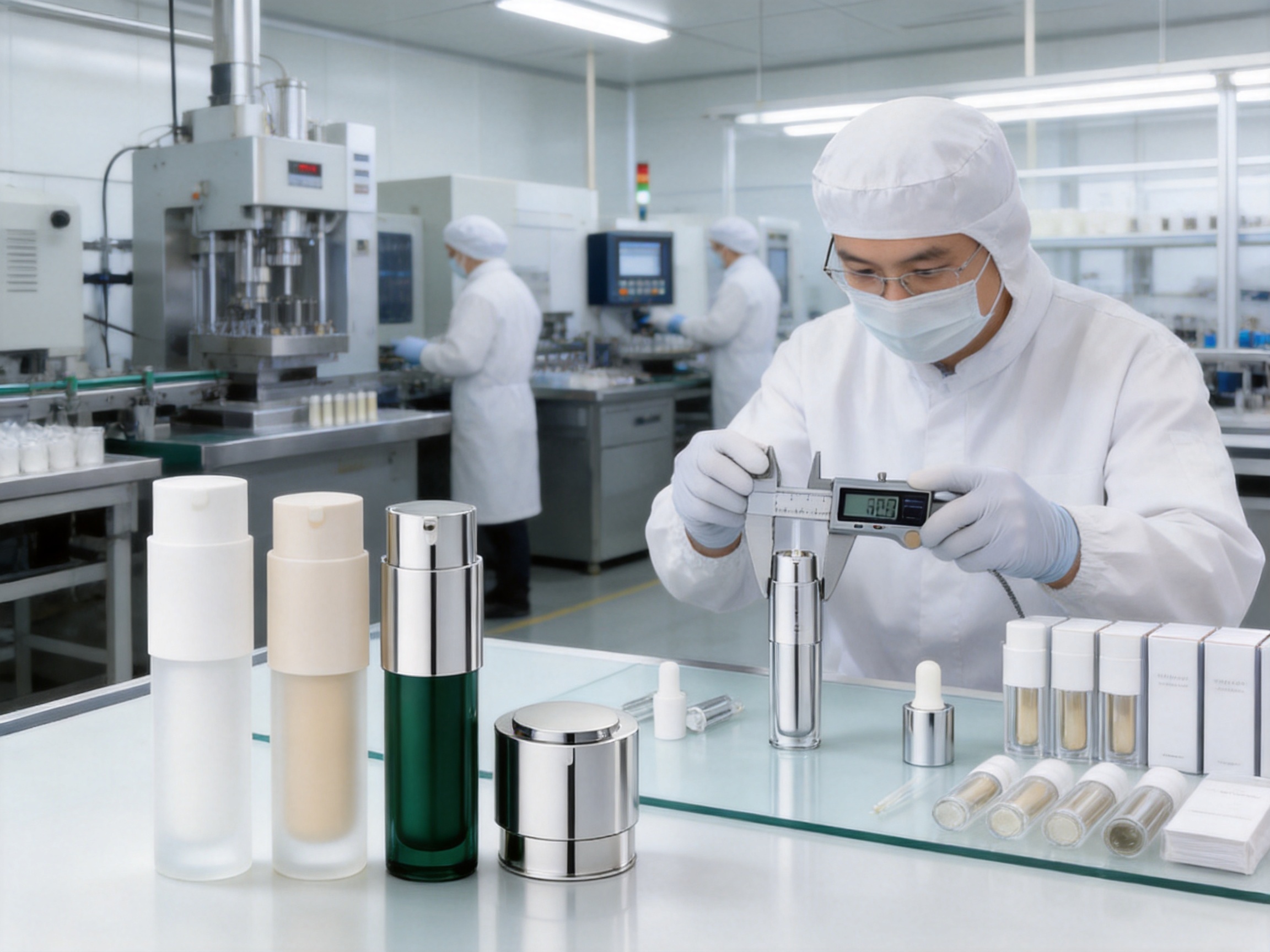
The HB-K023 is designed for cosmetic and skincare products such as serums, lotions, creams, facial treatments, eye products, and related formulas that benefit from airless dispensing and a premium appearance.
The available information lists 20ml and 30ml capacities. The selected capacity should be confirmed with the manufacturer together with the corresponding height and final technical drawing.
The product is designed with a replaceable inner bottle. This supports refill-oriented packaging programs in which the outer package and selected components may remain in use while the inner product container is replaced.
The listed application dosage is approximately 0.23cc per actuation. Actual output can vary according to formula viscosity, pump configuration, and production tolerance, so brands should conduct final testing with the intended product.
The listed materials are PP, ABS, and aluminum for the pump, MS for the outer bottle, and PP for the inner bottle. Final material documentation should be confirmed for the selected production configuration.
Yes. The bottle can be customized in color, surface finish, and decoration. Brands should approve physical samples and establish color and appearance standards before mass production.
It may be suitable for selected creams, but compatibility must be verified. High-viscosity formulas can require different pump performance from lightweight serums. Testing should evaluate priming, output, recovery, and emptying behavior.
No packaging system can replace proper formulation, preservation, stability testing, and good manufacturing practice. Airless packaging is designed to reduce exposure during dispensing and can support improved product protection, but the complete formula-package system must be evaluated.
The format may be considered for sunscreen and sun-care products, provided that compatibility testing is completed. UV filters, oils, solvents, and other ingredients may interact differently with packaging materials and pump components.
Brands should evaluate appearance, dimensions, pump output, priming, leakage, formula compatibility, refill operation, decoration durability, filling-line performance, storage stability, and transportation resistance.
The HB-K023 is produced by Yuyao Hengbang Plastic Co., Ltd., a cosmetic packaging manufacturer based in Yuyao City, Zhejiang Province, China.
The company reports ISO9001:2015 and ISO14001:2015 certifications. Customers should request current certification documents and confirm their relevance to the specific project when required.
The HB-K023 replaceable plastic airless serum bottle combines several features that are important to contemporary cosmetic brands. Its airless pump format supports controlled dispensing and reduced exposure during use. Its 20ml and 30ml options serve concentrated skincare products, travel products, professional treatments, and daily-use formulas. Its replaceable inner bottle provides a foundation for refill-oriented packaging systems.
The bottle also offers strong presentation potential. Color, finish, and decoration can be customized to support premium, clinical, minimalist, natural, or other brand directions. The combination of MS outer construction, PP inner construction, and a PP, ABS, and aluminum pump gives the package a balance of visual appeal, lightweight handling, and functional performance.
Compared with ordinary jars and basic bottles, the HB-K023 can provide a more hygienic and controlled dispensing experience. Compared with heavier glass formats, it may offer easier handling and improved resistance to everyday impact. Compared with complete-package replacement systems, its interchangeable inner bottle can support a more thoughtful refill model when properly designed and communicated.
The manufacturer’s experience, production scale, design support, quality systems, environmental management certification, high-tech enterprise recognition, and patent activity further support the product’s suitability for professional cosmetic packaging development. Nevertheless, every brand should conduct formula-specific compatibility testing, pump testing, refill trials, and transportation evaluations before commercial launch.
For skincare companies looking for a refined, customizable, and refill-oriented airless package, the HB-K023 provides a flexible platform. Its greatest value lies not only in the bottle itself but in the possibilities it creates: better product presentation, more controlled dispensing, a stronger consumer experience, and a packaging strategy that can evolve with modern cosmetic market expectations.
1. Product specification information for the HB-K023 replaceable plastic airless serum bottle, including capacity, dimensions, materials, pump output, and customization details.
2. Company information supplied by Yuyao Hengbang Plastic Co., Ltd., including manufacturing history, facility scale, employee information, product specialization, and development capabilities.
3. ISO 9001:2015, Quality Management Systems — Requirements.
4. ISO 14001:2015, Environmental Management Systems — Requirements with Guidance for Use.
5. General technical principles of airless cosmetic dispensing systems, including pump operation, formula compatibility, priming, output control, and leakage evaluation.
6. General cosmetic packaging quality practices covering dimensional inspection, appearance standards, decoration durability, transportation testing, and product-package compatibility.


Copyright © Yuyao Hengbang Plastic Co., Ltd.
All Rights Reserved.
 Wholesale Plastic Cosmetic Packaging Manufacturers