English
 中文简体

News
Home > Author > Li Wenjing — Cosmetic Packaging After-Sales Specialist > 30ml and 50ml Empty Sunscreen Bottle: A Practical Packaging Solution for Modern Skincare

 2026.10.30
 Li Wenjing — Cosmetic Packaging After-Sales Specialist
Content
Packaging plays a decisive role in how consumers experience sunscreen and other everyday skincare products. A well-designed container must do more than hold a formula. It should protect the contents, support convenient dispensing, remain comfortable to use, fit naturally into daily routines, and communicate quality through its appearance and performance. For brands developing sunscreen, lotion, cream, or other personal-care products, the choice of bottle can influence portability, application control, storage efficiency, and customer satisfaction.
The HB-F003 30ml and 50ml empty sunscreen bottle is designed around these practical requirements. It is a plastic sunscreen squeeze bottle created for portable skincare use, including daily sun protection, travel routines, outdoor activities, commuting, and quick reapplication. Its compact structure, ergonomic handling, and two capacity options provide flexibility for brands that serve different consumer needs. The 30ml format is positioned as a mini size for portability and travel, while the 50ml format offers a larger volume for routine daily use.
Manufactured by Yuyao Hengbang Plastic Co., Ltd., the bottle benefits from the experience of a specialized cosmetic packaging producer with facilities, technical personnel, certifications, and product development capabilities. The company’s focus on plastic packaging for cosmetics and skincare products supports a production approach that considers both the functional requirements of the package and the commercial expectations of modern personal-care brands.
This article examines the bottle’s construction, specifications, user benefits, packaging advantages, manufacturing strengths, customization considerations, and potential applications. It also explains how the two available sizes can support different product strategies and why a compact squeeze bottle can be an effective alternative to larger or less portable packaging formats.
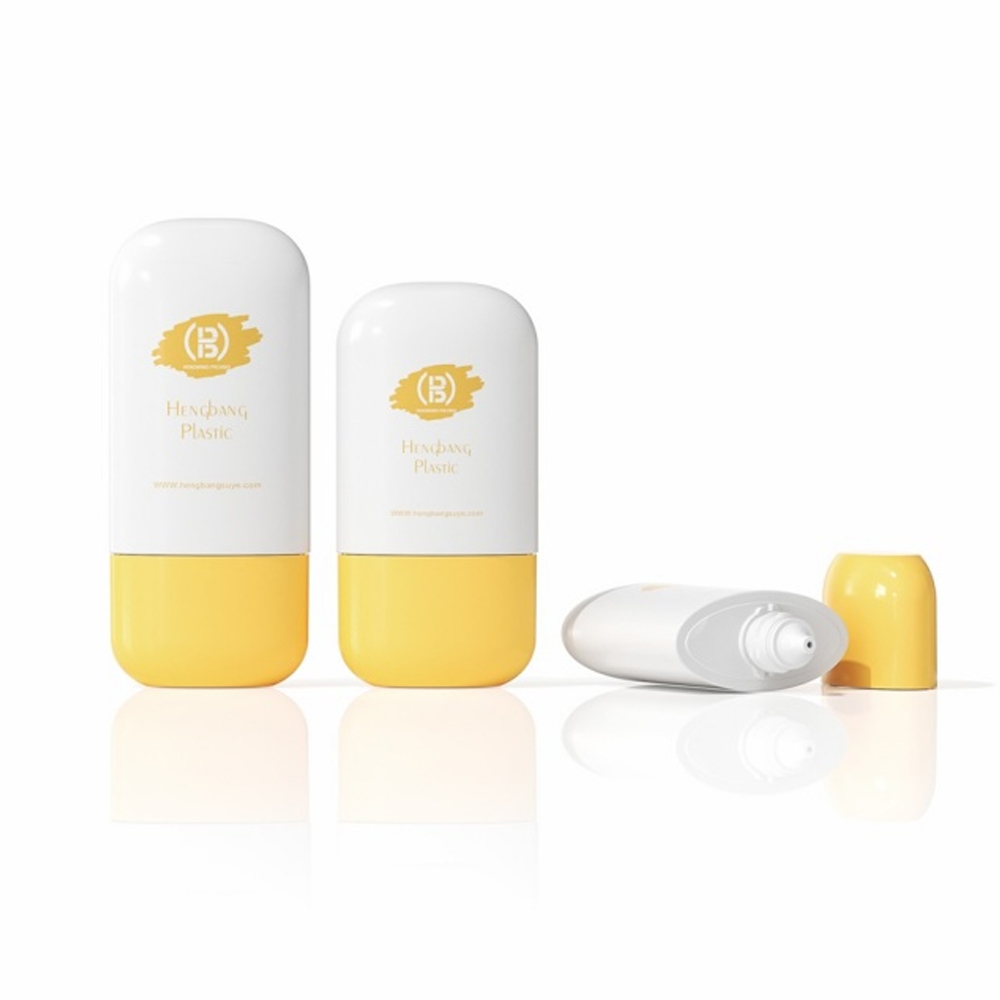
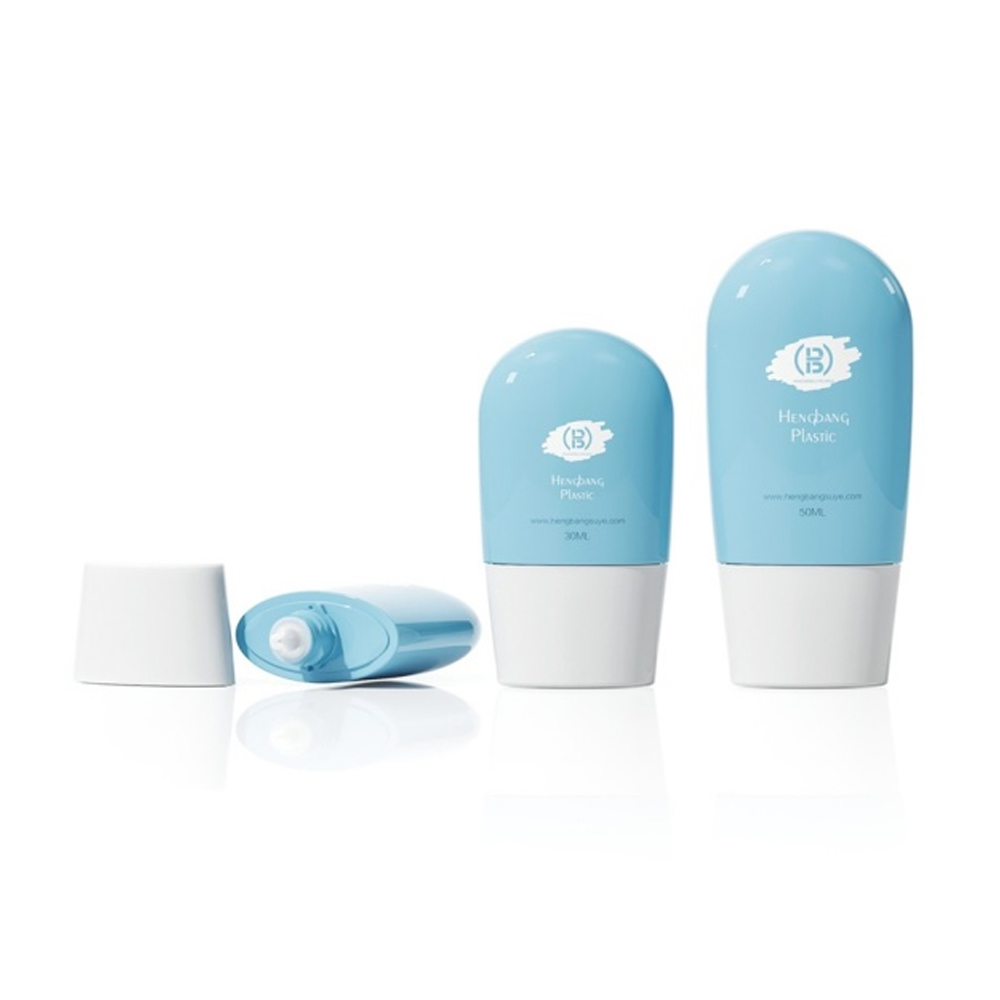
HB-F003 30ml 50ml Empty Sunscreen Bottle
The HB-F003 is an empty sunscreen bottle available in 30ml and 50ml capacities. It belongs to the plastic sunscreen squeeze bottle category and is intended to be filled by cosmetic, skincare, and personal-care brands. The container is suitable for products such as sunscreen lotions, lightweight creams, body-care formulas, travel skincare products, and other formulations that benefit from controlled dispensing through a squeeze-style package.
The bottle is described as lightweight, portable, and sturdy. These characteristics are particularly important for sunscreen packaging because sunscreen is frequently used outside the home. Consumers may carry it in handbags, backpacks, beach bags, gym bags, luggage, or vehicle storage compartments. A container that is too large, heavy, or awkward to handle can discourage reapplication. A compact package helps make sun protection easier to integrate into a busy routine.
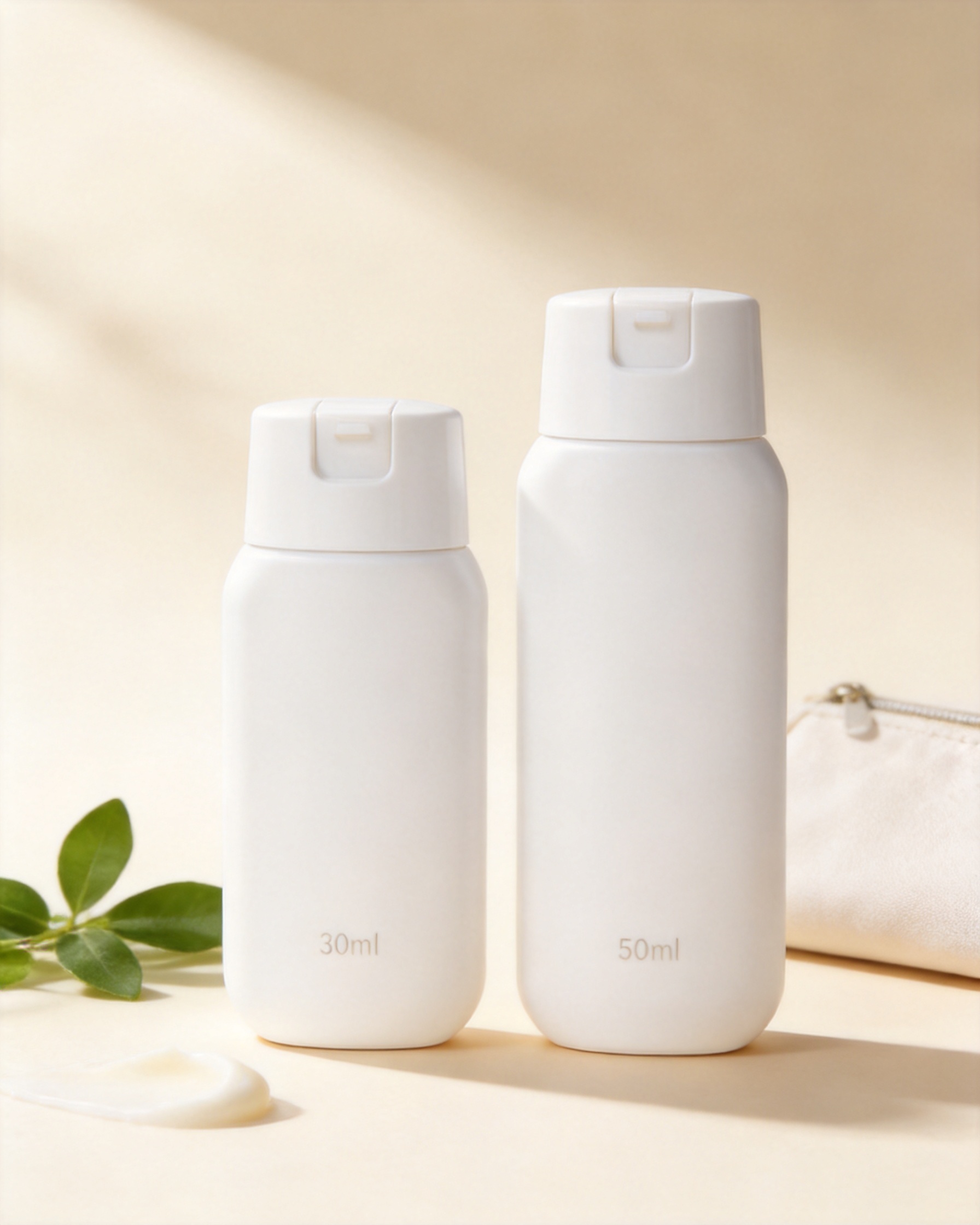
Two capacities allow the same basic packaging concept to address different purchasing and usage situations. The 30ml version is appropriate for consumers who prefer a compact product for short trips, handbags, or occasional touch-ups. The 50ml version provides more product for regular daily use while maintaining a relatively portable format. Offering two sizes can also help a brand create a product family without needing to develop an entirely different container system.
The product information identifies the material composition as PP, SUYLYN, adhesive, and PE. This combination indicates a multilayer or combined-material packaging structure in which different material components contribute to the container’s physical performance. Polypropylene is widely used in cosmetic packaging because it offers a practical balance of light weight, toughness, chemical resistance, and manufacturing versatility. PE is also common in flexible and squeezable packaging applications. The exact role of each listed component should be confirmed with the manufacturer during technical development, particularly when a brand is evaluating formula compatibility, decoration, recycling requirements, or regulatory documentation.
The following table summarizes the available product information supplied for the HB-F003 empty sunscreen bottle.
| Specification | Available Information |
|---|---|
| Product model | HB-F003 |
| Product type | Plastic sunscreen squeeze bottle |
| Capacity options | 30ml and 50ml |
| Listed material | PP + SUYLYN + adhesive + PE |
| Listed height | 95.2mm and 110.2ml as provided in the product information |
| Listed diameter | 47*23mm as provided in the product information |
| Primary application | Sunscreen, skincare, lotion, and other suitable personal-care formulas |
The original specification data identifies the 30ml height as 95.2mm. The second height is written as “110.2ml” in the supplied information, although height is normally expressed in millimeters rather than milliliters. The dimensional detail should therefore be verified with the manufacturer before tooling, artwork preparation, filling-line setup, shipping calculations, or final product approval. The listed diameter “47*23mm” may also represent a dimensional combination rather than a single circular diameter, so brands should request a technical drawing or physical sample for confirmation.
These verification steps are standard in professional packaging development. They do not reduce the value of the product; instead, they help ensure that the final package is correctly matched to the filling equipment, formula, closure, label, carton, and shipping configuration.
Sunscreen is a product category with unusually demanding usage conditions. Consumers may apply it at home, reapply it at work, carry it to school, use it during travel, or bring it to outdoor activities. The package must therefore support both planned application and spontaneous use. A compact squeeze bottle can meet these needs by combining portability with simple product access.
A squeeze format allows users to apply pressure to the body of the bottle and dispense the product through the opening. Compared with a wide-mouth jar, this can reduce the need for users to insert their fingers into the package. That provides a more convenient and potentially more hygienic experience, particularly when the product is used outdoors or shared among family members. It can also reduce the exposure of the remaining formula to open air and external contact during ordinary use, depending on the final closure and opening design.
The bottle’s ergonomic design is intended to support a comfortable grip. This is important because sunscreen application often involves one-handed use. Consumers may be standing, walking, preparing for an outdoor activity, or holding other personal items. A container that can be held securely and squeezed with moderate pressure contributes to a smoother application process.
Compact packaging can also encourage more frequent reapplication. Consumers are more likely to carry a product when it fits easily into a personal bag and does not add unnecessary weight. The 30ml size is particularly useful for a touch-up product or travel-oriented SKU. The 50ml size gives consumers more formula while preserving the convenience associated with a smaller package.
For brands, a compact sunscreen bottle can offer a clear product-positioning advantage. It supports messaging around mobility, convenience, daily protection, outdoor readiness, and travel friendliness. The package becomes part of the product experience rather than merely a passive container.
Packaging competition is not limited to one bottle against another. Brands often choose between tubes, jars, pumps, large bottles, sachets, and airless formats. Each option has a suitable application, but the HB-F003 concept offers several practical advantages when portability and convenient handling are priorities.
Large bottles can provide good value for household or family use, but they are not always convenient for commuting, travel, or short outdoor activities. Their size may take up more space in a bag and make quick reapplication less convenient. The 30ml and 50ml options are better suited to consumers who want a personal-sized package that can be carried throughout the day.
The smaller formats may also allow brands to create secondary product sizes alongside a larger home-use bottle. A brand can offer a standard package for regular bathroom use and a compact version for travel or on-the-go application. This approach creates additional merchandising opportunities while responding to different consumer occasions.
Jars are often associated with creams and masks, but they require the user to open a relatively broad container and collect the product manually. This can be less convenient for sunscreen, which is often applied quickly and repeatedly. A squeeze bottle offers a more direct route from container to hand or skin, helping to simplify the application process.
The narrower dispensing approach may also help users control the amount released. Product control depends on the formula, opening, and package design, but the squeeze format gives the user an intuitive way to adjust pressure and dispensing speed. This can be valuable for sunscreen products, where consumers need to apply an adequate amount rather than dispense a large quantity all at once.
Pumps are convenient for many lotions and cleansers, but they can add structural components, height, and cost. They may also be less suitable for compact travel use if the actuator is prone to accidental activation or requires a protective lock. A squeeze bottle can provide a simpler and more compact alternative when a pump is not essential to the product experience.
The final choice depends on formula viscosity, filling requirements, dispensing behavior, and brand positioning. However, for lightweight sunscreen lotions and similar products, a squeeze format can deliver a practical balance between usability and packaging simplicity.
Sachets can be highly portable, but they are generally designed for one-time or limited use. They may be less suitable for a sunscreen product that consumers need to reapply throughout a day or carry over an extended period. A 30ml or 50ml bottle provides a reusable package with a more familiar skincare experience and potentially better shelf presence.
For brands seeking a portable but durable alternative to sachets, a small squeeze bottle can support repeat use while maintaining a compact footprint.
Portability is one of the strongest selling points of the HB-F003 bottle. The product description specifically positions the 30ml size as suitable for airline carry-on requirements. Because airline and airport rules may vary by location and may change over time, brands should present this benefit responsibly and confirm the applicable requirements for their target markets. In general, the compact capacity is well suited to travel-oriented skincare collections and personal toiletry kits.
The 30ml size can be used for business trips, weekend travel, holiday packing, gym visits, and daily touch-ups. Its relatively small footprint allows it to fit into compact cosmetic bags and personal organizers. It can also serve as a sampling or promotional size, allowing a brand to introduce a sunscreen product to consumers without requiring them to purchase a full-size package immediately.
The 50ml size offers a practical middle ground between a mini product and a larger daily-use container. It can provide sufficient product for routine use while remaining easier to carry than many standard-size bottles. A brand may choose the 50ml format as its core retail package and use the 30ml option for travel retail, seasonal campaigns, gift sets, or promotional bundles.
Both sizes support the broader movement toward products designed for flexible lifestyles. Modern consumers may move between home, office, school, fitness facilities, public transportation, and outdoor environments in a single day. Packaging that fits these transitions can make the product more relevant and easier to use consistently.
The product information lists PP, SUYLYN, adhesive, and PE as the material structure. Since the package combines more than one material component, technical evaluation is important before commercial production. Cosmetic formulas can vary significantly in terms of oils, alcohols, solvents, emulsifiers, active ingredients, fragrances, and preservatives. The selected container must be assessed for compatibility with the intended formulation.
PP is frequently selected for cosmetic packaging because it is lightweight and suitable for many molded components. Its physical properties can support a durable container that is easy to transport and handle. PE is also commonly used where flexibility, squeezability, and practical chemical resistance are required. The combination of materials can be engineered to produce a container that balances firmness with the ability to respond to hand pressure.
The inclusion of an adhesive or bonding layer suggests that the package may involve a combined or layered construction. Layered packaging is often developed to improve mechanical performance, appearance, barrier behavior, or compatibility with a particular product category. The precise structure, thickness, and layer arrangement should be confirmed through technical documentation supplied for the HB-F003 model.
Brands should conduct compatibility testing using the actual sunscreen formula, filled container, intended closure, and proposed storage conditions. Testing may include visual inspection, leakage evaluation, weight change, odor transfer, color change, stress cracking, deformation, dispensing performance, and long-term storage observation. Accelerated testing can support preliminary assessment, while real-time testing remains important for final validation.
Packaging testing is especially valuable for sunscreen because formulas may contain oils, UV filters, emollients, silicones, alcohols, or other components that interact differently with plastic structures. A packaging supplier with experience in cosmetic applications can help identify appropriate test procedures, but the final responsibility for formula-package compatibility rests with the brand and its technical team.
A cosmetic package is used repeatedly, so small design details can influence customer satisfaction. The HB-F003 bottle is described as having an ergonomic design that supports a comfortable grip and easy application. An ergonomic shape can reduce hand strain, improve stability, and help users apply the appropriate amount more confidently.
Squeeze packaging also gives the user direct control over dispensing pressure. A light squeeze may release a small amount for a targeted area, while additional pressure can deliver more product for larger areas. The actual dispensing behavior depends on the formula viscosity, opening dimensions, material flexibility, and closure design. These variables should be evaluated together rather than separately.
For sunscreen, the dispensing opening is a particularly important feature. It must support convenient release without creating excessive dripping, clogging, or product residue around the opening. The package development process should consider how the formula behaves when the bottle is upright, inverted, stored in a bag, exposed to heat, or used after repeated opening and closing.
The closure must also match the intended consumer experience. A secure closure helps reduce accidental leakage during transport, while a user-friendly design makes repeated application easier. The final cap or flip-top specification should be confirmed with the supplier according to the formula, filling process, and market requirements.
Yuyao Hengbang Plastic Co., Ltd. was established in 2006 and has developed into a specialized manufacturer of plastic packaging for cosmetics and skincare products. The company is reported to have a building area of 35,000 square meters and more than 300 employees. These resources provide a substantial foundation for product development, tooling coordination, production management, quality control, and order fulfillment.
The company’s specialization is relevant to the HB-F003 bottle because cosmetic packaging requires knowledge that extends beyond general plastic molding. A successful skincare container must be evaluated for appearance, dimensional consistency, formula compatibility, closure performance, filling efficiency, decoration, and consumer handling. Experience within the cosmetics and skincare sector helps a manufacturer understand these interconnected requirements.
The company also provides design and development services. This is valuable for brands that need assistance adapting a standard package, developing a new component, preparing technical drawings, selecting decoration methods, or improving the relationship between bottle design and formula behavior. Early cooperation between the brand, packaging engineer, formula developer, and manufacturer can reduce development errors and shorten the path from concept to production.
A young and professional team, as described in the company information, can support communication across multiple project stages. These stages may include product briefing, sample preparation, mold discussion, material confirmation, testing, artwork review, pre-production approval, and mass production. Clear communication is particularly important when a project involves multiple capacities, custom colors, printed graphics, or specialized filling requirements.
The company has passed ISO9001:2015 and ISO14001:2015 certifications. ISO9001:2015 is associated with quality management systems, while ISO14001:2015 is associated with environmental management systems. Certification alone does not guarantee that every individual package will meet every customer requirement, but it indicates that the organization has established management frameworks relevant to quality processes and environmental practices.
The reported recognition as a Ningbo High-Tech Enterprise in 2021 and ownership of multiple invention patents further indicate an emphasis on technical development. Patents and enterprise recognition should be evaluated in the context of the specific product and project, but they can reflect a company’s investment in innovation and engineering capabilities.
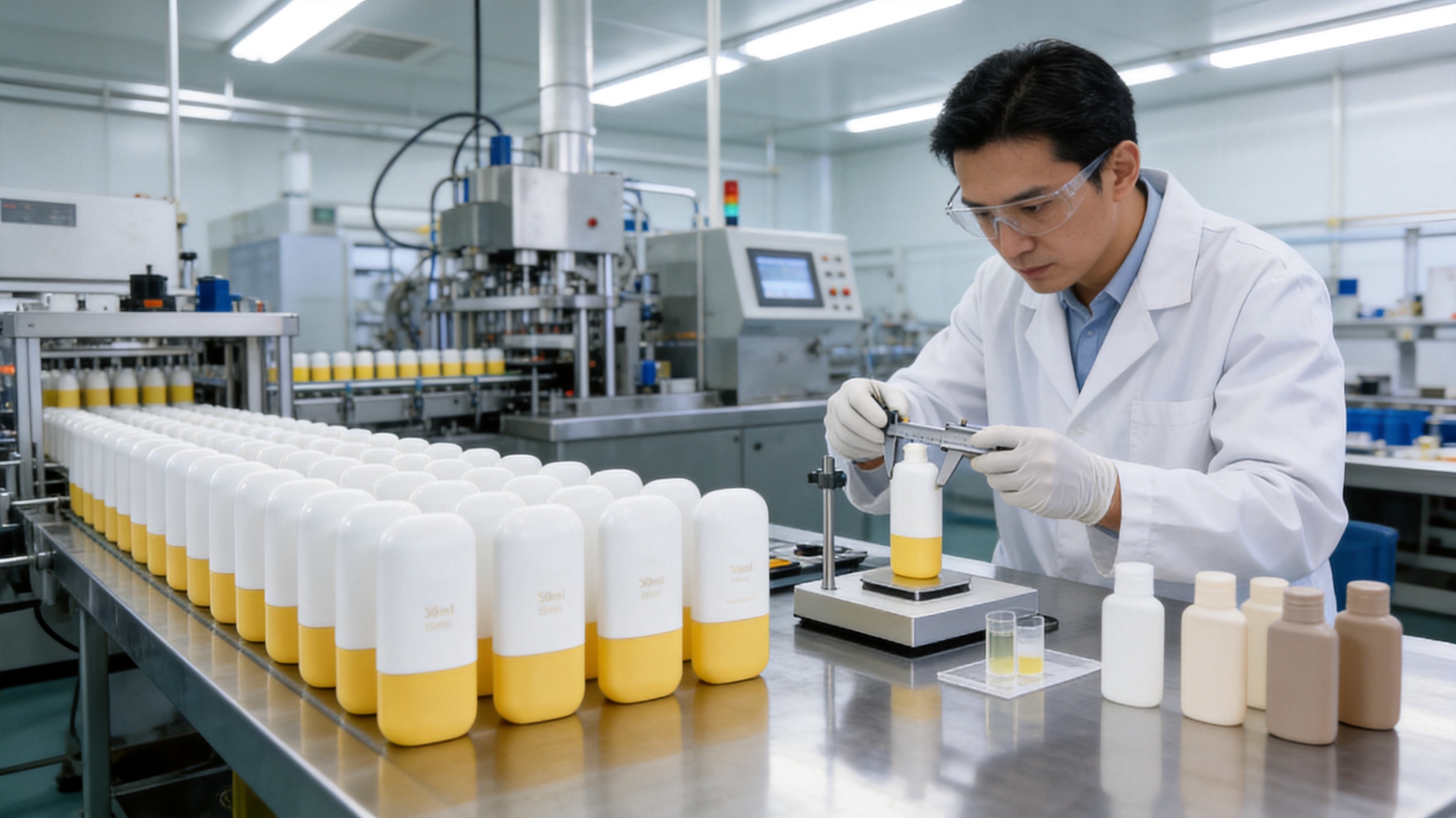
Quality management is essential for a sunscreen bottle because packaging defects can affect product safety, brand reputation, and customer trust. A professional production process should address incoming materials, molding or forming conditions, assembly, appearance inspection, dimensional control, closure performance, cleanliness, and packing.
For the HB-F003 bottle, quality evaluation may include checking the body for deformation, scratches, contamination, uneven walls, color variation, and molding imperfections. Dimensional checks help ensure that the bottle fits the approved specifications and works with the selected closure, label, carton, and filling equipment.
Leakage testing is another important consideration. The test method should reflect the real shipping and storage conditions expected in the target markets. Packages may experience vibration, compression, temperature changes, and changes in orientation during transportation. Testing should therefore be conducted with the final formula or a representative test material whenever possible.
Dispensing tests can evaluate whether the package releases the product consistently after repeated use. A sunscreen bottle should not perform well only during the first opening; it should remain functional as the fill level decreases. Testing may include repeated squeezing, repeated closure cycles, inverted storage, and examination of the dispensing opening for residue or blockage.
Appearance quality also matters commercially. Cosmetic consumers often interpret clean molding, consistent color, accurate printing, and secure assembly as signs of product quality. A well-controlled manufacturing process helps brands create a consistent visual identity across batches and sizes.
The HB-F003 bottle provides a compact surface for brand communication. Depending on the final geometry and decoration process, brands may consider printing, labeling, color matching, or other approved surface treatments. The decoration plan should be developed alongside the technical drawing because available decoration areas may be affected by curves, seams, shoulder transitions, cap clearances, and squeeze behavior.
Sunscreen packaging often needs to communicate several product attributes quickly. These may include sun protection information, product name, SPF or protection claims, usage instructions, volume, ingredients, warnings, batch information, and brand identity. A compact bottle requires careful information hierarchy so that essential information remains legible without overcrowding the design.
The 30ml and 50ml versions can be given a unified visual identity. Using the same color system, typography, decoration style, and cap treatment across both capacities can help consumers recognize that they belong to the same range. At the same time, size-specific details can distinguish travel, daily-use, promotional, or professional channels.
Color selection should be evaluated for both aesthetics and manufacturing repeatability. A brand may request a specific bottle color, but the final appearance can be influenced by resin type, pigment concentration, wall thickness, surface texture, and lighting conditions. Sample approval under agreed viewing conditions is recommended before mass production.
Decoration durability should also be tested. Sunscreen products are frequently handled with hands that may contain oils, lotions, or water. The package may be exposed to sunlight, sand, humidity, and friction inside a bag. Appropriate testing can help confirm that the selected printing or labeling method remains attractive throughout normal use.
Although the HB-F003 is presented as an empty sunscreen bottle, its compact squeeze-bottle format may support other compatible skincare and personal-care products. Potential applications include lightweight lotions, moisturizing emulsions, hand creams, after-sun products, facial care formulas, body-care products, and travel-size treatments.
Suitability depends on the formula’s viscosity, chemical composition, dispensing behavior, stability requirements, and regulatory classification. A package that performs well with one formula may require additional testing with another. Brands should not assume that general skincare compatibility automatically applies to every formulation.
The product can also support different commercial concepts. A brand may use the 30ml version for trial products, gift sets, travel kits, hotel amenities, event distribution, or seasonal outdoor campaigns. The 50ml version may serve as a standard retail size, a professional-use package, or a daily skincare format.
For contract manufacturers and private-label skincare companies, offering two capacities can simplify portfolio development. They can create related products for multiple retail channels while using a familiar packaging platform. This may help reduce design complexity and support more consistent purchasing, filling, decoration, and inventory planning.
A successful packaging project should begin with a clear product brief. The brief should identify the formula type, viscosity, expected fill volume, target market, intended use occasions, decoration requirements, closure preferences, filling method, estimated order quantity, and shipping environment.
The next step is to review technical information for the bottle. Brands should request accurate drawings, confirmed dimensions, component details, tolerances, material specifications, closure information, and available decoration areas. The dimensional entries supplied for the HB-F003 should be clarified at this stage, especially the second height shown as “110.2ml” and the listed “47*23mm” diameter notation.
Physical samples should then be evaluated with the actual or representative formula. The evaluation should consider grip, squeezing force, dispensing amount, closure use, leakage resistance, appearance, labeling, and storage orientation. If the formula is still under development, a representative laboratory formula can support early testing, followed by confirmation with the final commercial formula.
After sample approval, the brand and manufacturer should agree on quality standards. These may include acceptable color variation, print registration, surface defects, dimensional tolerances, leakage limits, component fit, and packing requirements. Written approval criteria reduce ambiguity during mass production.
Pre-production samples are useful before a full manufacturing run. They allow the brand to confirm the final color, decoration, assembly, filling behavior, and carton fit. Any changes should be documented before the production order is released.
During mass production, the manufacturer should follow the approved specification and quality system. The brand may also arrange inspections according to its purchasing procedures. Clear communication about sampling plans, inspection timing, and corrective action helps protect both parties and supports consistent delivery.
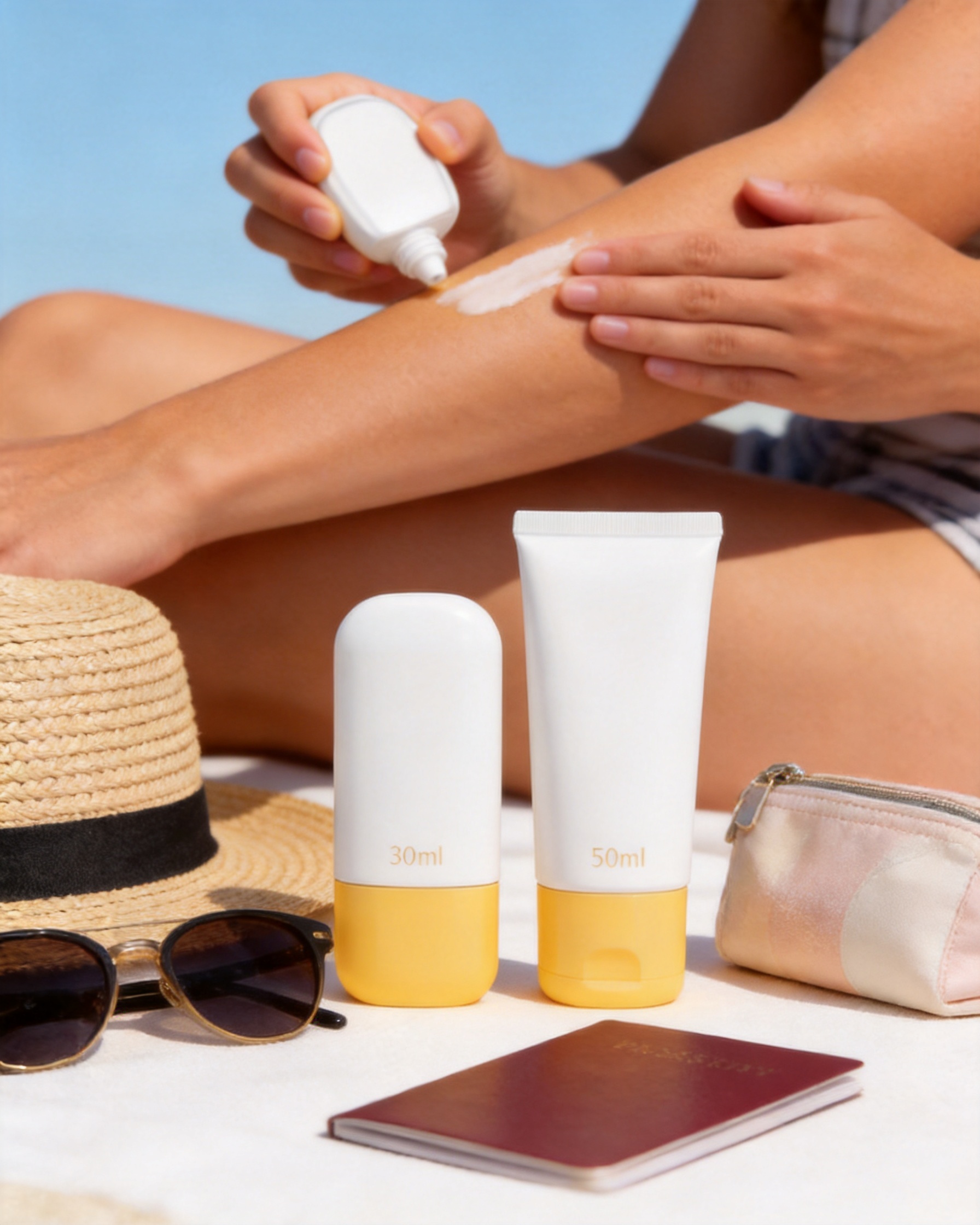
The bottle’s two capacity options can support flexible purchasing and market segmentation. A brand does not need to rely on one size for every consumer occasion. The 30ml version can address mobility and trial, while the 50ml version can address regular use and value. This product architecture may support wider distribution across travel retail, e-commerce, pharmacies, beauty stores, salons, outdoor channels, and gift collections.
Plastic construction can also support efficient handling during logistics. The container is described as lightweight, which may help reduce the burden associated with transportation and consumer carrying compared with heavier packaging alternatives. Actual shipping efficiency depends on master-carton dimensions, packing density, closure selection, protective materials, and order configuration.
A compact package can be easier to organize in retail displays and online product photography. Its proportions may work well in skincare sets and seasonal promotional arrangements. For e-commerce brands, a small package can also fit into compact fulfillment systems, although the final shipping design must still protect the bottle against compression and impact.
Manufacturing with a company that focuses on cosmetic plastic packaging may simplify supplier communication. Instead of coordinating with a general plastics producer unfamiliar with skincare requirements, a brand can work with a supplier whose business is centered on cosmetic and personal-care containers. This specialization may support more relevant technical discussions and more efficient product development.
The company information identifies ISO14001:2015 certification and describes the bottle as made from lightweight, eco-friendly plastic. Environmental claims should be presented accurately and supported by appropriate documentation for the target market. Lightweight design may reduce material use or transport weight in some circumstances, but a complete environmental assessment should consider raw materials, manufacturing energy, decoration, distribution, consumer use, and end-of-life management.
The listed material structure includes multiple components. Multilayer or combined-material packaging can provide functional advantages, but it may also create challenges for recycling depending on the local waste-management system and the exact structure. Brands should request material composition details and recycling guidance before making environmental claims on the package or in marketing materials.
Responsible packaging development may include reducing unnecessary material, optimizing wall thickness without compromising performance, selecting appropriate decoration methods, improving shipping efficiency, and providing clear disposal information. Where recycled or alternative materials are considered, the brand and manufacturer should evaluate their effect on appearance, strength, squeezability, formula compatibility, regulatory requirements, and supply stability.
Environmental performance should be discussed as part of the full product system rather than treated as a single attribute. A durable package that prevents product loss, supports correct use, and reduces the need for replacement may provide practical benefits, while the material structure must still be managed responsibly at the end of its useful life.
Packaging can help transform a functional sunscreen into a clearly differentiated consumer proposition. The HB-F003 bottle naturally supports several positioning themes, including portable protection, daily convenience, travel readiness, easy handling, and modern skincare routines.
For a travel-focused product, the 30ml package can be presented as a compact companion for business trips, holidays, and outdoor excursions. For a daily skincare product, the 50ml package can emphasize routine use, convenient storage, and regular reapplication. For a younger or active consumer audience, the squeeze format can communicate simplicity and mobility.
The bottle may also appeal to brands seeking a balance between premium presentation and practical cost awareness. It offers a clean platform for branding without requiring an overly complex structure. The final perceived value will depend on the quality of the formula, decoration, closure, carton, and overall brand design, but the container provides a functional foundation for a polished product.
Because the two sizes share the same basic model designation, a brand can create a consistent range while varying the use occasion. This supports visual continuity across product pages, shelves, travel kits, and promotional materials.
The bottle is intended for sunscreen and suitable skincare formulas, but compatibility must be confirmed with the exact formula. Viscosity, oils, solvents, active ingredients, fragrance, preservatives, and storage conditions can all affect performance. Brands should conduct compatibility and dispensing tests before approving commercial production.
The 30ml size is suitable for travel, handbags, sampling, touch-ups, gift sets, and short-term use. The 50ml size is suitable for consumers who want more product for regular daily skincare while retaining portability. Some brands may choose to launch both sizes to serve different channels and occasions.
The product description positions the 30ml size as meeting airline carry-on requirements. However, airline, airport, and national regulations can vary and may change. Brands should verify the current requirements in the markets where the product will be sold and avoid presenting a universal guarantee without confirmation.
Customization possibilities should be discussed with the manufacturer. Depending on the model and order conditions, brands may evaluate bottle color, cap color, printing, labeling, surface finish, packaging, and other visual details. The available decoration area and technical limitations should be confirmed using a drawing and physical sample.
The supplied specification lists PP, SUYLYN, adhesive, and PE. The exact layer structure, component function, and material documentation should be confirmed with the manufacturer. Brands should request the information needed for formula compatibility, regulatory review, recycling evaluation, and internal quality approval.
Suitability depends on the formula and dispensing design. Some thick creams may require a larger opening or a different package structure, while others may work effectively in a squeeze bottle. A filled sample should be tested for squeezing force, flow, residue, and complete product evacuation.
The supplied information lists heights of 95.2mm and “110.2ml,” along with a diameter notation of “47*23mm.” Because height is normally expressed in millimeters and the diameter entry may represent multiple dimensions, the brand should request a confirmed technical drawing before finalizing artwork, filling, or shipping calculations.
Yuyao Hengbang Plastic Co., Ltd. was established in 2006 and specializes in plastic packaging for cosmetics and skincare products. The company reports a 35,000-square-meter building area, more than 300 employees, design and development services, ISO9001:2015 and ISO14001:2015 certifications, recognition as a Ningbo High-Tech Enterprise in 2021, and multiple invention patents.
Recommended evaluations may include formula compatibility, leakage, dispensing, closure cycling, drop or transport simulation, temperature exposure, appearance, dimensional accuracy, decoration durability, and storage stability. The final testing plan should reflect the formula, market, packaging configuration, and quality requirements of the brand.
It may support a range of compatible sunscreen and skincare formulas, especially products that benefit from compact squeeze packaging. Each formula should still be tested separately. A brand can use the 30ml and 50ml sizes to create related products for travel, daily use, sampling, seasonal campaigns, and promotional sets.
The HB-F003 30ml and 50ml empty sunscreen bottle is a practical packaging option for brands seeking a lightweight, portable, and user-friendly container for sunscreen and compatible skincare products. Its two capacities make it adaptable to different consumer occasions, from travel and touch-ups to routine daily application. The compact squeeze format supports convenient handling and can offer advantages over larger, heavier, wide-mouth, or less portable packaging designs.
The bottle’s value is strengthened by its positioning within a specialized cosmetic packaging manufacturing environment. Yuyao Hengbang Plastic Co., Ltd. brings experience in plastic packaging for cosmetics and skincare products, a reported 35,000-square-meter facility, a workforce of more than 300 employees, design and development capabilities, ISO9001:2015 and ISO14001:2015 certifications, technical recognition, and invention patents. These resources can support a structured path from packaging concept and sampling to quality approval and mass production.
For the best results, brands should confirm all technical details, including the material structure, dimensions, closure specifications, decoration options, and formula compatibility. The unusual units in the supplied height and diameter information should be clarified through an official technical drawing. Once these details are verified, the HB-F003 can provide a flexible foundation for portable sunscreen products, travel skincare collections, daily-use lotions, and other personal-care applications.
In a market where consumers increasingly expect products to fit smoothly into active and mobile lifestyles, packaging convenience is a meaningful competitive factor. By combining compact capacities, ergonomic handling, lightweight plastic construction, and specialized manufacturing support, this bottle offers a well-balanced solution for brands developing modern sunscreen and skincare products.
1. Product specification sheet for HB-F003 30ml and 50ml Empty Sunscreen Bottle, supplied product information.
2. Company profile of Yuyao Hengbang Plastic Co., Ltd., supplied corporate information.
3. ISO 9001:2015, Quality Management Systems — Requirements.
4. ISO 14001:2015, Environmental Management Systems — Requirements with Guidance for Use.
5. General cosmetic packaging compatibility and stability testing principles, industry reference material.
6. General guidance for plastic packaging design, dispensing performance, transport testing, and cosmetic product development.


Copyright © Yuyao Hengbang Plastic Co., Ltd.
All Rights Reserved.
 Wholesale Plastic Cosmetic Packaging Manufacturers