English
 中文简体

News
Home > Author > Li Wenjing — Cosmetic Packaging After-Sales Specialist > Compact PETG Travel Lotion Bottles for Modern Skincare Packaging

 2026.10.06
 Li Wenjing — Cosmetic Packaging After-Sales Specialist
Content
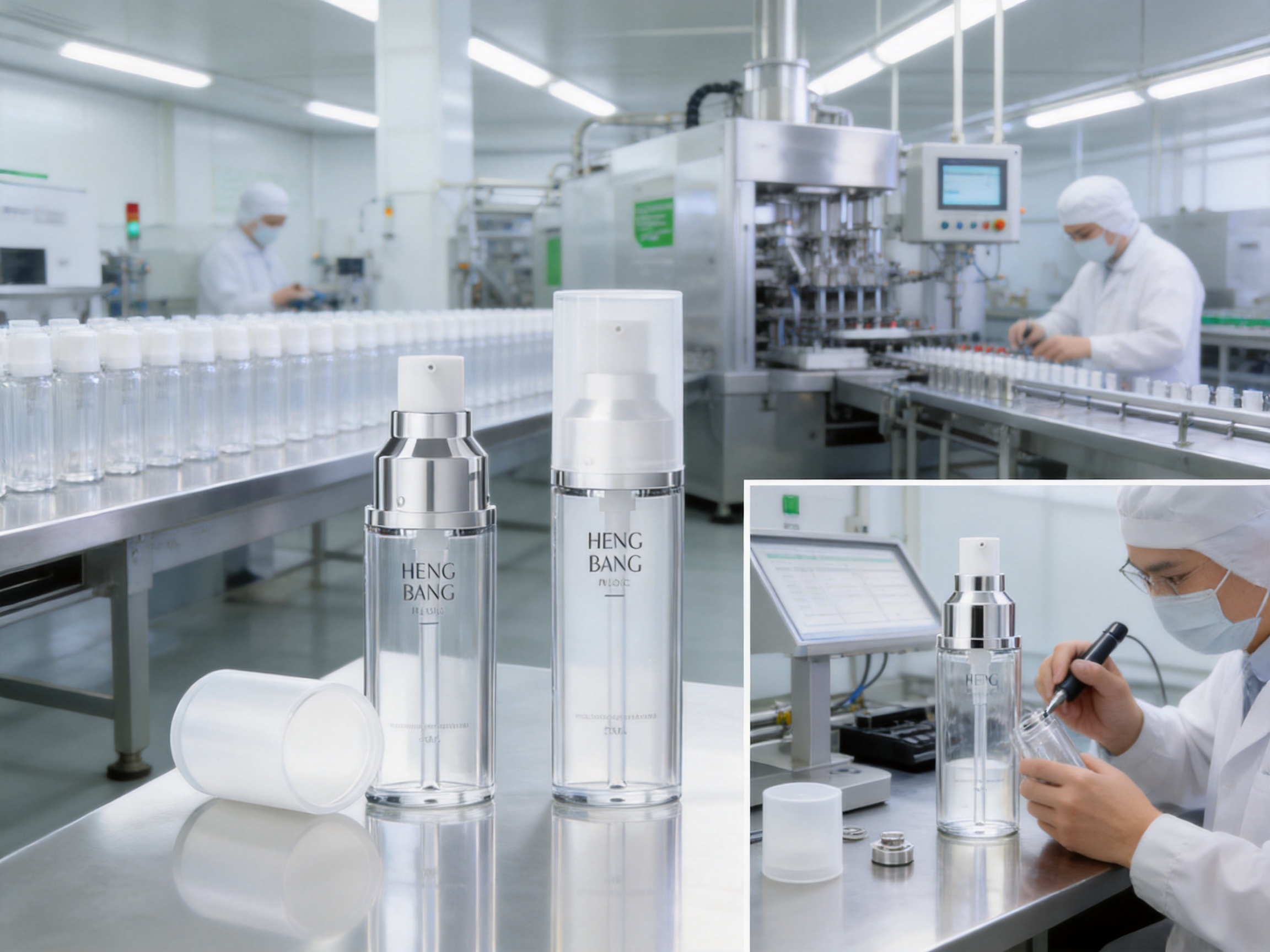
Travel skincare has become an important part of everyday personal care. Consumers now expect their favorite lotions, creams, serums, and hand-care products to be available not only in full-size packaging, but also in compact formats that fit naturally into handbags, toiletry cases, gym bags, and carry-on luggage. This change in consumer behavior has created a growing demand for small cosmetic containers that are practical, attractive, hygienic, and suitable for repeated use.
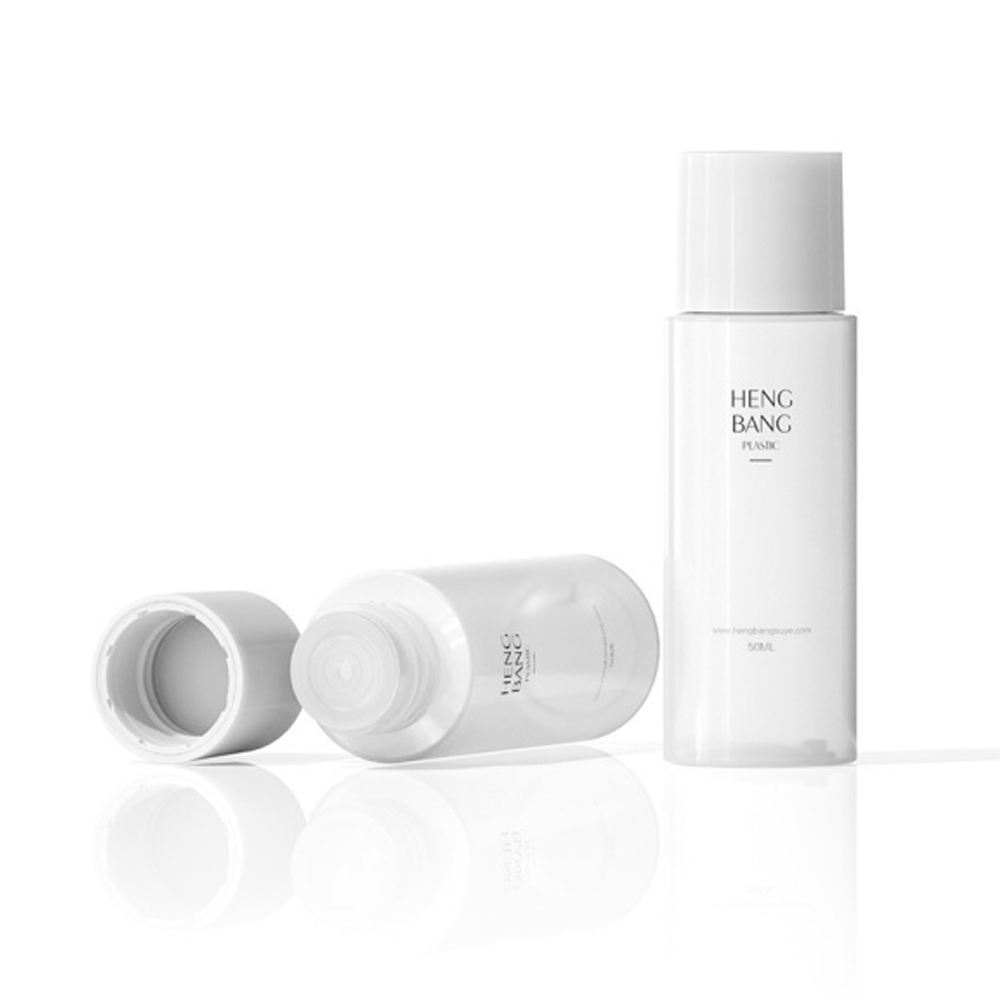
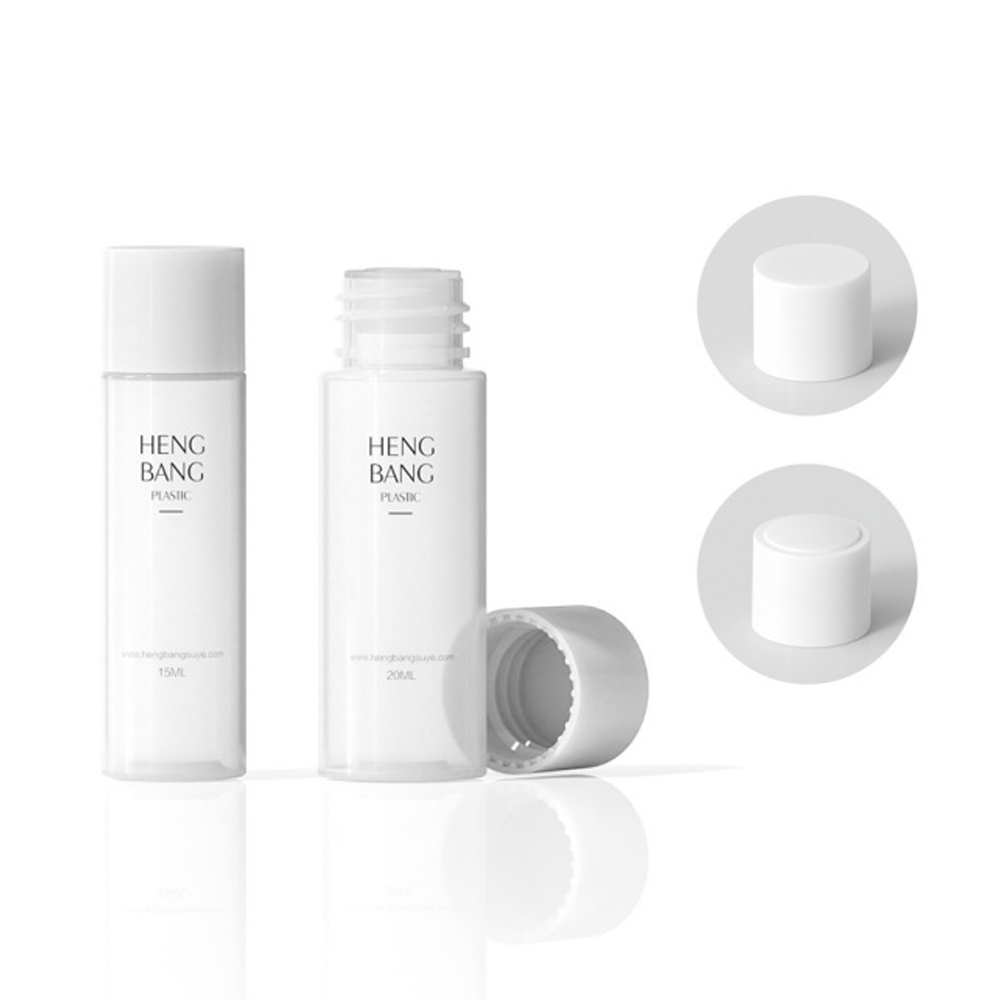
The HB-R007 PETG plastic travel size lotion bottle is designed to answer that demand. Available in 15 ml and 20 ml capacities, the bottle provides a convenient solution for brands seeking compact packaging for lotions and other skincare formulations. Its small footprint, PETG-based construction, selection of closure and dispensing components, and travel-friendly format make it suitable for a broad range of personal-care applications.
More than a miniature container, the HB-R007 represents a coordinated packaging solution. The bottle is designed around the needs of both end users and cosmetic manufacturers. Consumers benefit from portability and controlled dispensing, while brands gain access to a compact package that can be developed, decorated, and integrated into a wider product range.
This article examines the design characteristics, material options, application benefits, manufacturing strengths, quality considerations, and commercial advantages of the HB-R007 PETG travel size lotion bottle. It also explains why a specialized cosmetic packaging manufacturer can provide greater value than a general-purpose container supplier.
The HB-R007 is a PETG plastic travel size lotion bottle offered in 15 ml and 20 ml capacities. The product is categorized as a PETG lotion bottle and is intended primarily for compact skincare packaging. Its applications include moisturizers, lotions, creams, serums, hand lotions, and other personal-care formulas that require a small, portable container.
The design supports three configurations identified as A, B, and C. Each configuration is available in 15 ml and 20 ml sizes, allowing a brand to select the form that best matches its formula, dispensing expectations, and visual identity. The available configurations create flexibility without requiring a completely different product concept for every application.
According to the supplied product specifications, the lotion versions use PETG and PP components. The water-oriented configuration uses ABS, PP, and PETG. This material arrangement indicates that the product family is designed to accommodate different formula textures and packaging requirements rather than relying on a single universal structure.
Item |
Configuration A |
Configuration B |
Configuration C |
Recommended formula category |
Lotion |
Water-based product |
Lotion |
Material combination |
PETG + PP |
ABS + PP + PETG |
PETG + PP |
Available capacity |
15 ml / 20 ml |
15 ml / 20 ml |
15 ml / 20 ml |
Height options |
90.7 mm / 100.7 mm |
69.8 mm / 79.8 mm |
90.7 mm / 100.7 mm |
Diameter |
25.5 mm |
25.5 mm |
25.5 mm |
Application dosage information |
0.12 cc |
0.12 cc |
0.12 cc |
The stated height varies according to the selected capacity and configuration. The diameter is listed as 25.5 mm, creating a slim cylindrical profile that is easy to hold and efficient to arrange in a travel kit or retail display. The application information lists a 0.12 cc dosage specification, which can support consistent product delivery when matched with a suitable lotion formula and dispensing mechanism.
PETG is widely used in cosmetic packaging because it offers a useful combination of clarity, toughness, formability, and visual quality. For a small travel bottle, these characteristics are especially valuable. The container must be light enough for travel, durable enough to withstand normal handling, and visually appealing enough to represent a skincare brand.
Compared with ordinary glass packaging, a PETG plastic bottle can provide a lower-risk option for travel. Glass may communicate luxury, but it can add weight and may break if dropped or compressed inside luggage. A plastic bottle can help reduce the practical concerns associated with breakage during transportation, hotel use, or daily carrying.
PETG also supports a clean and refined appearance. Depending on the final production and decoration requirements, the material can be used for transparent, translucent, or colored packaging effects. This makes it suitable for brands that want to communicate freshness, cleanliness, softness, or modern technical performance.
Another benefit is design flexibility. PETG can be processed into compact shapes with smooth surfaces and consistent dimensions. This is important for a bottle that may be used in coordinated skincare sets. A matching family of small bottles can create a stronger shelf presence and a more recognizable brand experience.
For travel packaging, the material must also work well with compatible closures and components. The HB-R007 combines PETG with PP in its lotion configurations. This combination can support a practical balance between the bottle body and the functional component system. The specific final compatibility should always be evaluated with the intended formula, filling process, and storage conditions.
The 15 ml and 20 ml capacities are designed for short-term, portable, and trial-oriented use. These sizes are small enough to fit into personal travel kits, yet large enough to provide multiple applications of many skincare products. They can be used for weekend trips, business travel, gym routines, outdoor activities, and sample distribution.
A compact size also helps brands create more flexible product formats. A 15 ml version may be suitable for trial kits, promotional sets, hotel amenities, or high-value skincare sampling. A 20 ml version may be useful when the user needs a slightly longer supply while still expecting a portable package.
Small packaging can also reduce the perceived commitment associated with trying a new formula. Consumers who are uncertain about a lotion or cream may be more willing to purchase a travel-size version before moving to a full-size product. For brands, this creates an opportunity to introduce new formulas, seasonal collections, limited editions, and gift sets.
The compact capacity may also support product bundling. A brand can place several 15 ml or 20 ml containers into a coordinated skincare kit, such as a moisturizing set, sun-care collection, hand-care package, or travel recovery routine. Because the bottles are narrow and lightweight, they can be arranged efficiently within a box or pouch.
From a retail perspective, travel-size packaging can also serve as an important point-of-sale product. It may be displayed near checkout areas, in airport retail environments, in travel sections, or alongside full-size skincare products. The relatively small format allows brands to introduce additional purchasing occasions without changing the central formula or product positioning.
Many generic travel containers are designed for broad household use rather than for professional cosmetic presentation. They may have inconsistent dimensional control, limited material choices, basic closures, or an appearance that does not match premium skincare positioning. The HB-R007 is differentiated by its focus on cosmetic and skincare applications.
One important advantage is the availability of multiple configurations. Instead of offering only one container shape, the product family includes A, B, and C versions. This gives brands more freedom when matching the package to a lotion, water-based product, or a particular visual concept.
The stated 25.5 mm diameter provides a relatively narrow profile. A slim container can be easier to hold, store, label, and pack. It can also help preserve a consistent family appearance when different capacities are placed together. The 15 ml and 20 ml options offer size variation while maintaining a recognizable product platform.
The bottle is also positioned as a travel-friendly and TSA-compliant format in the supplied product information. Travel regulations and airline policies should always be checked by the user or brand for the relevant destination, but a small 15 ml or 20 ml package is well suited to the general expectations of carry-on personal-care packaging.
Another advantage is the ability to support different product categories within skincare. A generic bottle may be optimized for one type of liquid, while the HB-R007 product family is described for lotions, creams, serums, hand lotions, and water-oriented applications. Formula compatibility testing remains essential, but the range gives brands a useful starting point for multiple product concepts.
Finally, the HB-R007 can provide a more professional foundation for customization. A cosmetic packaging manufacturer can assist with development, component selection, and production coordination. This is different from purchasing an anonymous container with limited technical support or no established packaging-development partner.
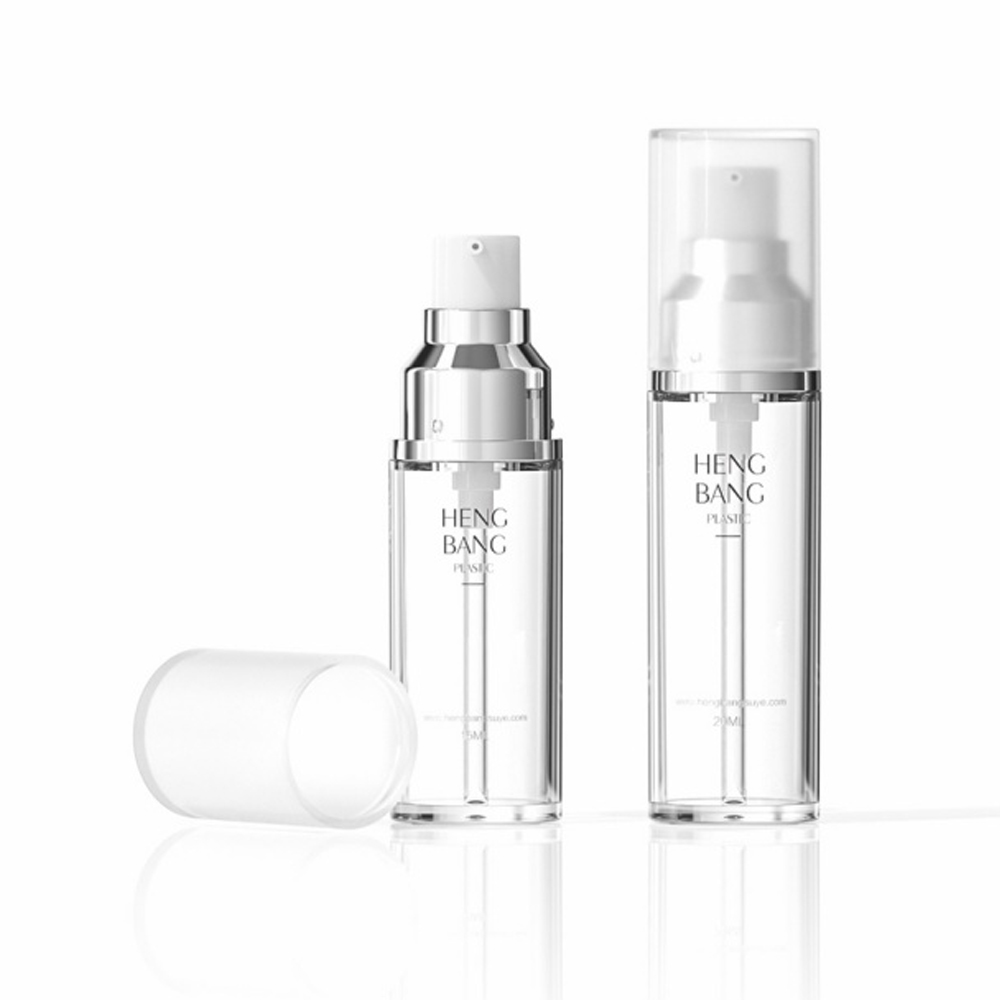
HB-R007 PETG Plastic Travel Size Lotion Bottle
The central purpose of the HB-R007 is to package personal-care formulas in a controlled and portable format. Lotions and creams often need a package that is easy to use with one hand, simple to carry, and capable of delivering an appropriate amount without excessive mess. A compact dispensing bottle can support these expectations when the formula and component system are correctly matched.
The listed application dosage is 0.12 cc. This specification can be useful for brands planning the user experience, estimating the number of applications per container, and developing instructions for use. Actual dispensing performance depends on the selected component, formula viscosity, filling conditions, and product testing, so dosage validation should be included in the development process.
For serums and lighter formulas, a suitable configuration may provide controlled delivery without requiring a large package. For lotions and creams, the material combination and dispensing structure should be evaluated for flow behavior, recovery, leakage resistance, and user comfort. The presence of different configurations allows the manufacturer and brand to discuss the most suitable option rather than treating every formulation identically.
Hand lotions are another natural application. Consumers often carry hand-care products in purses, backpacks, work bags, or vehicles. A 15 ml or 20 ml container can give the product a more refined and convenient presentation than an oversized tube or jar. It may also be used in corporate gifts, hospitality programs, beauty kits, and promotional packages.
The bottle format can also support sunscreen-related products, provided the formula and regulatory requirements are properly assessed. A small sunscreen package can be convenient for reapplication during outdoor activities or travel. However, sunscreen packaging must be validated for formula stability, dispensing performance, labeling requirements, and the specific regulatory market in which the product will be sold.
The material information identifies PETG and PP for the lotion configurations and ABS, PP, and PETG for the water-oriented configuration. Each material contributes to the overall packaging structure. PETG is associated with the bottle body, while PP and ABS may be used in functional or structural components depending on the selected version.
Component coordination is a major consideration in cosmetic packaging. The bottle body, closure, actuator, inner parts, and decorative elements must work together dimensionally. A small error in fit can affect appearance, filling efficiency, leakage resistance, or dispensing performance. Professional packaging development therefore requires more than simply choosing a plastic resin.
Different formulas may interact differently with packaging materials. Fragrances, oils, alcohols, acids, active ingredients, and preservatives can all influence compatibility requirements. A responsible development process should include formula-to-package testing under relevant temperatures, storage periods, and transportation conditions.
Brands should also consider the relationship between the formula and the intended dispensing experience. A thin water-like product may require a different flow path from a rich cream. A serum may need a precise and clean outlet, while a lotion may require a larger or more resilient dispensing structure. The A, B, and C options provide a basis for making that decision with greater flexibility.
The use of established materials can also simplify communication between the packaging supplier, filling facility, and brand. When the material structure is clearly identified, technical teams can better evaluate production conditions, decoration methods, component assembly, and quality-control requirements.
The listed diameter of 25.5 mm gives the bottle a slim profile. This dimension can be advantageous in several areas of packaging development. Narrow containers are generally easier to arrange in multi-piece gift sets, compact cartons, travel pouches, and retail displays.
For consumers, a narrow profile may be easier to hold during application. It can also occupy less space in a cosmetic bag. In crowded travel environments, every centimeter matters. A package that provides useful product capacity without unnecessary width can contribute to better organization.
The available heights are listed as 90.7 mm and 100.7 mm for configurations A and C, and 69.8 mm and 79.8 mm for configuration B. These dimensions suggest that the different versions have distinct structural proportions. Configuration B offers a shorter profile, while A and C provide taller formats. This gives brands a choice between a more compact vertical appearance and a shorter, easier-to-pack silhouette.
Dimension consistency is also important for secondary packaging. Carton designers need reliable measurements to create internal supports, inserts, sleeves, and printed boxes. Retail display planners need predictable dimensions for shelf arrangement. Filling facilities need stable dimensions for handling, orientation, and equipment setup.
A professional manufacturer can help coordinate these requirements during the development stage. Early dimensional planning can reduce the risk of creating a beautiful outer box that does not properly protect the bottle or accommodate production tolerances.
The HB-R007 is suitable for a broad range of personal-care concepts. Its primary application is lotion packaging, but the stated product description also identifies creams, serums, and hand lotions. This versatility makes it valuable for brands with several related product lines.
Moisturizer brands can use the bottle for lightweight facial lotions, travel editions, sample programs, and curated skincare sets. Because moisturizers are frequently used during travel, a small bottle offers a practical way to maintain a daily routine away from home.
Serum brands may use the format for introductory sizes, premium trial kits, or special treatment programs. Small packaging is particularly suitable for formulas where the consumer needs only a limited amount per application. The brand can offer a more accessible entry point without changing the formula’s professional positioning.
Hand-care brands can use the bottle for portable lotion products. The compact package may be paired with seasonal fragrances, corporate campaigns, hotel amenities, or gift collections. A narrow profile can help the bottle fit naturally into a handbag, desk drawer, or travel pouch.
Sun-care brands may consider the format for small sunscreen products or complementary after-sun lotions. Any sunscreen application requires careful verification of formula compatibility, dosage, label information, and market-specific compliance. Nevertheless, the 15 ml and 20 ml capacities are well aligned with portable sun-care concepts.
Brands can also use the bottle for private-label and contract-manufactured products. A packaging platform with several configurations can help a product developer create a coherent range without beginning from an entirely new container design for every item.
The manufacturer of the HB-R007 is Yuyao Hengbang Plastic Co., Ltd., a specialist in plastic packaging for cosmetics and skincare products. The company was established in 2006 and has developed substantial experience in the production of plastic cosmetic containers.
The company has a building area of 35,000 square meters and more than 300 employees. These resources indicate an established organization with the personnel and physical foundation needed to support product development, manufacturing coordination, quality management, and customer service.
A large manufacturing site can provide practical advantages when it is supported by effective systems. It may allow production activities, inspection processes, storage, development work, and administrative coordination to operate within an integrated organizational structure. For international buyers, this can simplify communication and reduce dependence on multiple unrelated suppliers.
The company also maintains a young and professional team that provides design and development services. This is particularly relevant for cosmetic packaging because successful packaging often requires collaboration between industrial design, material selection, component engineering, formula development, filling operations, and brand marketing.
Design and development support can help customers move from an initial concept to a workable package. Discussions may include capacity, bottle geometry, dispensing behavior, decoration requirements, compatibility, packaging logistics, and production quantities. Early technical input can prevent costly changes after artwork, tooling, or secondary packaging has already been prepared.
The company’s focus on cosmetic and skincare packaging is another important strength. A specialist supplier is more likely to understand the practical requirements of beauty packaging than a general plastics producer whose main experience may be in industrial, household, or commodity containers.
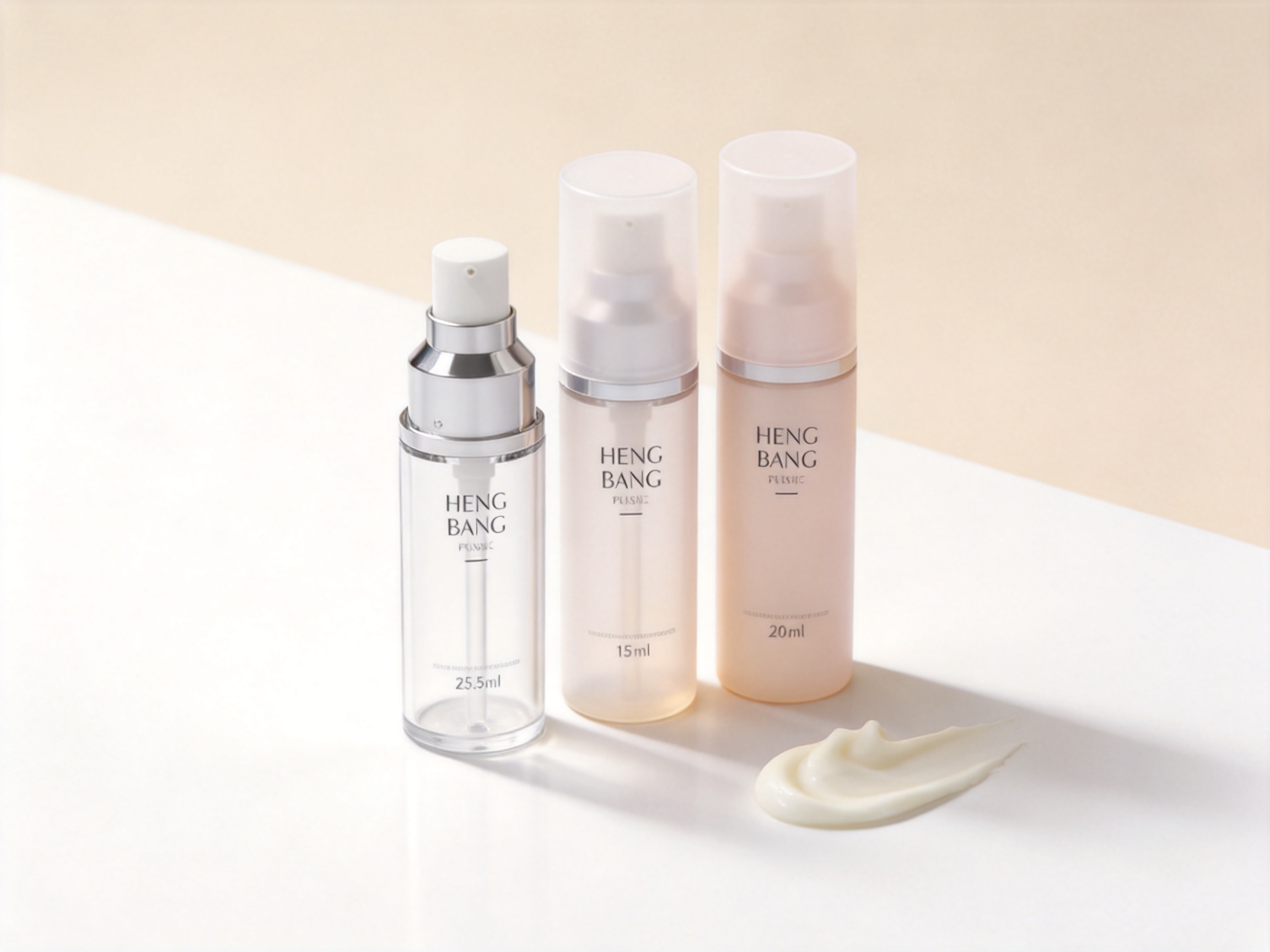
Quality consistency is essential for cosmetic packaging. A visually attractive bottle is not sufficient if dimensions vary excessively, components fit poorly, surfaces contain defects, or the package does not perform reliably during filling and transportation. Brands need a supplier that understands the relationship between packaging quality and the consumer’s perception of the product.
Yuyao Hengbang Plastic Co., Ltd. has passed ISO9001:2015 certification. ISO9001 is associated with quality-management systems and structured processes for maintaining consistent operations. Certification does not eliminate the need for product-specific testing, but it demonstrates that the company has established a formal framework for quality management.
The company has also passed ISO14001:2015 certification. This standard is associated with environmental-management systems. For buyers evaluating cosmetic packaging suppliers, environmental management can be an important part of responsible procurement and long-term supply-chain planning.
Quality management for a bottle such as the HB-R007 may include control of raw materials, molding conditions, dimensional accuracy, surface appearance, component assembly, cleanliness, packaging, and shipment preparation. The precise inspection plan should be agreed upon between the manufacturer and customer according to the product application and market requirements.
For a travel-size package, quality inspection is especially important because the bottle may be handled frequently and transported in variable conditions. The finished package should be evaluated for closure fit, leakage resistance, dispensing consistency, visual defects, and compatibility with the intended filling process.
Reliable manufacturing also supports brand consistency. When a brand repeats an order or expands from one capacity to another, consistent production helps preserve the same visual and functional identity. This is valuable for companies building a long-term skincare portfolio rather than launching a single isolated product.
The company owns multiple invention patents. While the supplied information does not specify the individual patent technologies, the presence of invention patents indicates an emphasis on technical development and proprietary improvement.
Innovation in cosmetic packaging can involve many areas, including bottle structures, dispensing mechanisms, component integration, material combinations, manufacturing methods, and user convenience. A manufacturer with patent-development experience may be better prepared to address packaging challenges that cannot be solved through standard catalog products alone.
For customers, this technical orientation can create opportunities for more differentiated packaging. A brand may want a compact bottle with a particular visual proportion, dispensing behavior, closure style, or product protection feature. Collaboration with a development-oriented supplier can help determine whether the requirement can be addressed through an existing platform or requires additional engineering.
Patent ownership should not be treated as a substitute for testing or regulatory review. Instead, it is one indicator of the company’s commitment to research, development, and product improvement. For buyers seeking a long-term packaging partner, this orientation can be a meaningful advantage over suppliers that focus only on basic volume production.
Environmental responsibility is becoming increasingly important in cosmetic packaging decisions. Brands are expected to consider material selection, manufacturing efficiency, package weight, product-to-package ratio, transport requirements, and end-of-life management.
The HB-R007 is a small plastic package, and its compact size may help reduce unnecessary material and shipping volume compared with larger or heavier formats. However, environmental performance must be assessed as part of the full package life cycle. The formula, closure, decoration, secondary carton, shipping configuration, and disposal conditions all influence the overall result.
The company’s ISO14001:2015 certification demonstrates that environmental management is included within its formal organizational systems. Buyers may wish to request additional information about material sourcing, production controls, waste management, energy use, and available options for future sustainability programs.
Material selection should also consider practical performance. A package that protects the formula, avoids leakage, and delivers the product efficiently may help reduce product waste. Preventing damaged goods and discarded formulas is an important part of responsible packaging management.
Brands should communicate recycling or disposal guidance accurately and according to local regulations. The presence of multiple materials in a package may affect sorting and recycling options, so packaging teams should review the complete structure rather than evaluating the bottle body alone.
Cosmetic packaging is a major part of brand communication. Even a small bottle can express the product’s positioning through shape, color, surface finish, label design, printing, and component coordination.
The HB-R007 provides a practical base for a range of visual directions. A transparent or lightly tinted appearance may communicate freshness and purity. Soft colors may support moisturizing or sensitive-skin products. Stronger colors and graphic decoration may be appropriate for sports care, sun care, or youthful skincare collections.
The choice between the A, B, and C configurations can also influence brand identity. A taller profile may create a more elegant or slender appearance, while a shorter format may appear more compact and functional. The available 15 ml and 20 ml capacities allow the brand to create size variation while maintaining a related package family.
Decoration decisions should be considered alongside production and filling requirements. Labels, printing, coatings, and surface treatments can influence cost, lead time, appearance, and quality control. A professional supplier can help customers understand the relationship between the desired visual result and the chosen manufacturing process.
For brands selling through e-commerce, package presentation remains important even when the consumer first encounters the product on a screen. Product photography, unboxing, influencer demonstrations, and social-media content all depend on a package that looks intentional and well finished.
International cosmetic brands often need suppliers that can support communication across product development, quality, documentation, and delivery. A supplier with an established organization and a clear focus on cosmetic packaging can reduce uncertainty during the sourcing process.
The company’s experience since 2006 provides a long operating history in the sector. Its 35,000-square-meter building area and more than 300 employees indicate a substantial production and service structure. These factors may be important for buyers evaluating supply continuity, development support, and the ability to manage recurring orders.
International buyers should still conduct their own supplier qualification process. This may include reviewing samples, confirming material information, evaluating inspection records, checking production capacity, discussing minimum order quantities, and conducting compatibility tests with the intended formula.
A direct technical discussion can also clarify whether the selected bottle is best suited to the product. The customer should provide information about viscosity, density, active ingredients, alcohol or oil content, filling temperature, storage conditions, expected shelf life, dispensing targets, and intended sales markets.
Clear communication at the beginning of the project can improve development efficiency. It helps the manufacturer recommend an appropriate configuration and allows the brand to plan artwork, cartons, filling lines, transportation, and regulatory documentation more accurately.
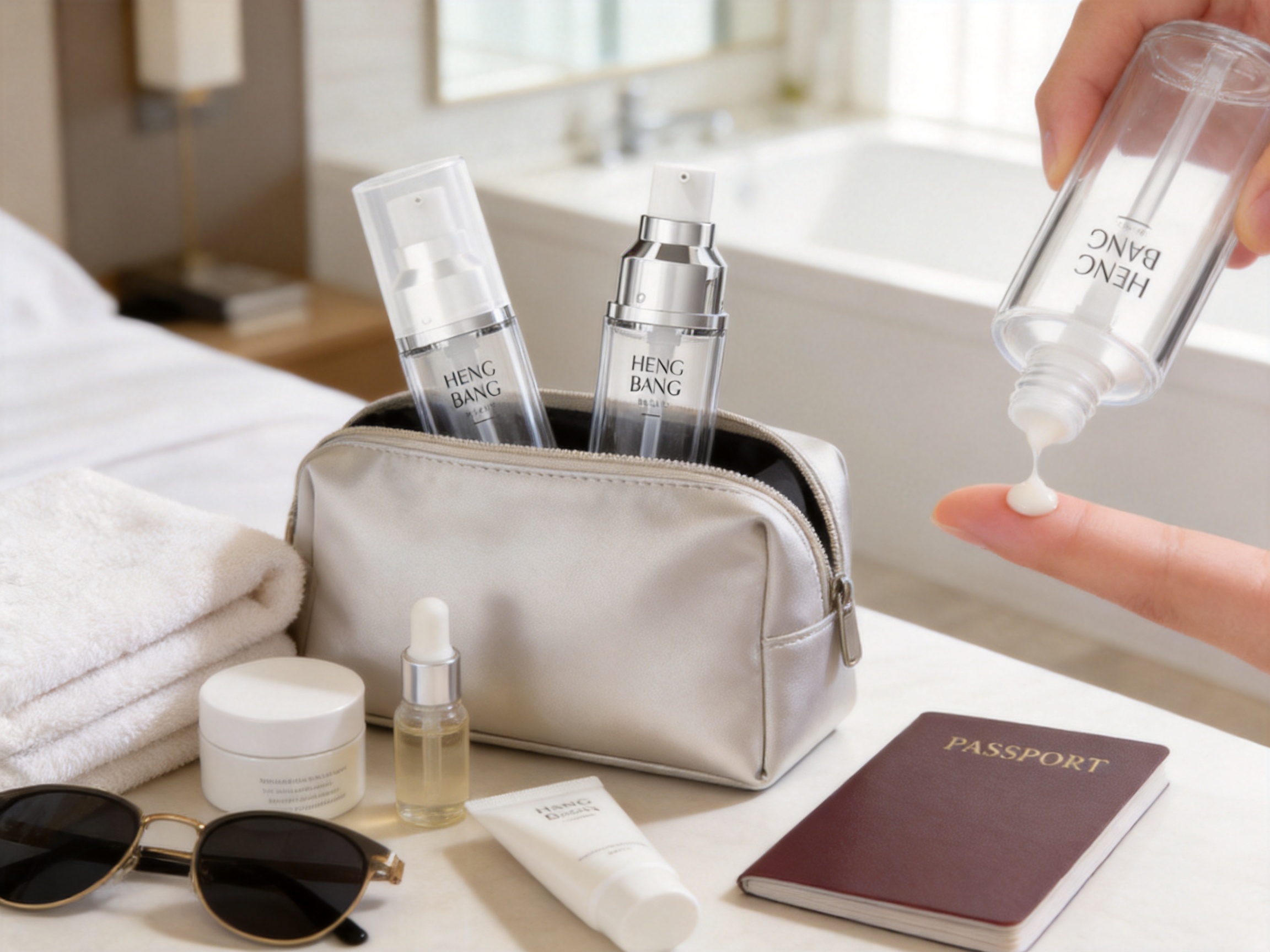
A successful cosmetic packaging project should follow a structured development process. The first step is to define the product formula and user experience. The brand should determine whether the package will hold a lotion, cream, serum, hand lotion, water-based product, or another compatible formulation.
The second step is to select the appropriate configuration. The A, B, and C versions differ in material combination and height profile. Capacity, viscosity, dispensing expectations, and visual positioning should all be considered before a final selection is made.
The third step is to test compatibility. The filled package should be observed under suitable storage conditions, including temperature variation when relevant. Testing should examine changes in color, odor, viscosity, package appearance, component performance, leakage, and dispensing behavior.
The fourth step is to evaluate filling and assembly. The bottle should be tested on the customer’s filling line or through a representative filling process. The project team should confirm that the package can be oriented, filled, closed, inspected, and packed efficiently.
The fifth step is to develop artwork and secondary packaging. Label dimensions, print areas, carton inserts, protective materials, and shipping cases should be based on approved production samples rather than preliminary assumptions.
The sixth step is to establish quality standards. The buyer and manufacturer should agree on acceptable limits for dimensions, color, surface appearance, assembly, leakage, dispensing, cleanliness, and packaging condition. A documented quality standard makes future production decisions more consistent.
The final step is to conduct a production trial and approval process. A trial order can verify the relationship between the approved sample and mass production. It can also reveal opportunities to improve filling efficiency, decoration alignment, packing methods, or shipment protection before larger orders are released.
A travel-size bottle can play several roles within a cosmetic brand’s portfolio. It can serve as an entry-level product for consumers who want to try a formula. It can complement a full-size product as a travel companion. It can become part of a gift set or seasonal collection. It can also support professional sampling and promotional campaigns.
Because the HB-R007 is available in two capacities, brands can create a clear size architecture. The 15 ml version may be positioned as a trial or sample size, while the 20 ml version may be presented as a longer-use travel size. The same general visual language can be applied across both options.
A coordinated product family can improve consumer recognition. When a shopper sees related shapes and proportions across moisturizer, serum, hand lotion, and sun-care products, the range may appear more organized and professionally developed.
The bottle can also help brands respond quickly to changing market opportunities. Travel retail, subscription boxes, influencer kits, limited editions, and event samples all require compact packaging. A flexible packaging platform allows a company to create new commercial formats without developing a completely new package for every short-term campaign.
For contract manufacturers and private-label suppliers, the product can provide a useful starting point for multiple customer projects. The same basic package family can be adapted through formula selection, color, decoration, and secondary packaging to create differentiated market offerings.
Before placing an order, buyers should confirm the selected configuration, capacity, material combination, dimensional requirements, application dosage, closure structure, color, decoration, and packaging method. The product information identifies the main specifications, but a final commercial quotation should reflect the exact project requirements.
Buyers should request production samples and evaluate them with the intended formula. Empty-container inspection alone cannot confirm complete package performance. The formula may alter the behavior of the dispensing system or interact with the materials over time.
Minimum order quantities, mold or tooling conditions, decoration charges, sample lead times, production lead times, shipping terms, and documentation requirements should be discussed before purchase. These factors can vary according to customization level and order volume.
Brands selling in regulated markets should also confirm the labeling and packaging obligations that apply to their products. The bottle itself does not replace the need for accurate ingredient information, warnings, usage instructions, batch identification, or other legally required details.
It is also useful to establish a communication plan. Assigning technical, quality, purchasing, and design contacts on both sides can help resolve questions quickly. A clear approval procedure can reduce misunderstandings during sample development and mass production.
The HB-R007 is a PETG plastic travel size lotion bottle designed for cosmetic and skincare products. It is available in 15 ml and 20 ml capacities and can be used for lotions, creams, serums, hand lotions, and other suitable personal-care formulas.
The lotion configurations are specified as PETG plus PP. The water-oriented configuration is specified as ABS, PP, and PETG. The exact component structure depends on the selected version, and formula compatibility testing should be completed before commercial production.
The bottle is available in 15 ml and 20 ml capacities. These sizes are suitable for travel products, trial packaging, sample kits, gift sets, and compact personal-care applications.
The product information identifies configurations A, B, and C. Each configuration is available in 15 ml and 20 ml sizes. The versions differ in material combination and height profile, giving brands flexibility when matching the package to a formula and visual concept.
The diameter is listed as 25.5 mm. The heights are 90.7 mm and 100.7 mm for configurations A and C, and 69.8 mm and 79.8 mm for configuration B, depending on capacity.
The application information lists 0.12 cc. Actual dispensing results should be confirmed through testing with the intended formula and selected component system.
Yes. The product is described as a travel-size and TSA-compliant lotion bottle in the supplied information. Travelers should still confirm current airline and destination requirements, while brands should verify that the final filled product and labeling meet applicable regulations.
It may be suitable for creams and serums when the formula is compatible with the selected configuration and dispensing system. Testing should examine viscosity, flow, leakage, stability, and user experience before approval.
The HB-R007 is developed specifically for cosmetic and skincare packaging. It offers two capacities, three configurations, a slim 25.5 mm diameter, PETG-based material options, and support from a manufacturer with cosmetic packaging experience and design-development capabilities.
The supplier was established in 2006, operates in a 35,000-square-meter building, and has more than 300 employees. It provides design and development services, has passed ISO9001:2015 and ISO14001:2015 certifications, and owns multiple invention patents.
Yes. Compatibility testing is recommended for every cosmetic formula. The test program should consider the ingredients, viscosity, storage temperature, expected shelf life, dispensing performance, leakage resistance, and transportation conditions.
Customization should be discussed with the manufacturer. Potential areas may include color, decoration, labeling, component selection, secondary packaging, and product configuration. The available options depend on technical requirements, order volume, and production conditions.
The HB-R007 PETG plastic travel size lotion bottle offers a practical and versatile packaging solution for modern skincare brands. Its 15 ml and 20 ml capacities are well suited to travel, sampling, gift sets, personal-care kits, and portable daily routines. The slim 25.5 mm diameter supports convenient handling and space-efficient packing, while the A, B, and C configurations create flexibility for different formulas and brand concepts.
Its PETG and PP material combinations provide a strong foundation for cosmetic packaging, while the water-oriented configuration expands the potential application range. The listed 0.12 cc dosage specification can support controlled product delivery when confirmed through formula-specific testing.
The product’s value is further strengthened by the manufacturer’s specialized focus on cosmetic and skincare packaging. Since its establishment in 2006, Yuyao Hengbang Plastic Co., Ltd. has developed a substantial organizational base, including a 35,000-square-meter building area, more than 300 employees, design and development capabilities, ISO9001:2015 and ISO14001:2015 certifications, and multiple invention patents.
For brands seeking more than a basic container, these manufacturing strengths can support a better development process. Technical communication, material evaluation, quality planning, sample approval, and production coordination all contribute to a more reliable final package.
As with any cosmetic container, the final selection should be based on formula compatibility, filling-line performance, dispensing expectations, regulatory needs, transportation conditions, and commercial goals. When these factors are evaluated carefully, the HB-R007 can become an effective platform for attractive, portable, and professionally manufactured skincare packaging.
1. Product specification information for HB-R007 PETG Plastic Travel Size Lotion Bottle, including capacities, materials, dimensions, configurations, and application dosage.
2. Company profile information for Yuyao Hengbang Plastic Co., Ltd., including establishment history, facility area, employee information, design and development services, certifications, and invention patents.
3. ISO 9001:2015, Quality Management Systems—Requirements.
4. ISO 14001:2015, Environmental Management Systems—Requirements with Guidance for Use.
5. General cosmetic packaging development principles covering material compatibility, dispensing performance, dimensional control, quality inspection, and transportation evaluation.
6. General guidance for travel-size personal-care packaging and consumer product format development.


Copyright © Yuyao Hengbang Plastic Co., Ltd.
All Rights Reserved.
 Wholesale Plastic Cosmetic Packaging Manufacturers