English
 中文简体

News
Home > Author > Li Wenjing — Cosmetic Packaging After-Sales Specialist > Why Refillable Double-Wall Cream Jars Are Shaping the Future of Skincare Packaging

 2026.10.04
 Li Wenjing — Cosmetic Packaging After-Sales Specialist
Content
Skincare packaging is changing rapidly. Consumers increasingly expect beauty products to deliver more than attractive presentation and convenient use. They also want packaging that supports responsible consumption, reduces unnecessary waste, protects the formula, and provides a premium experience throughout the product’s life cycle. Brands, meanwhile, are looking for packaging solutions that combine visual appeal, functional reliability, manufacturing consistency, and commercial flexibility.
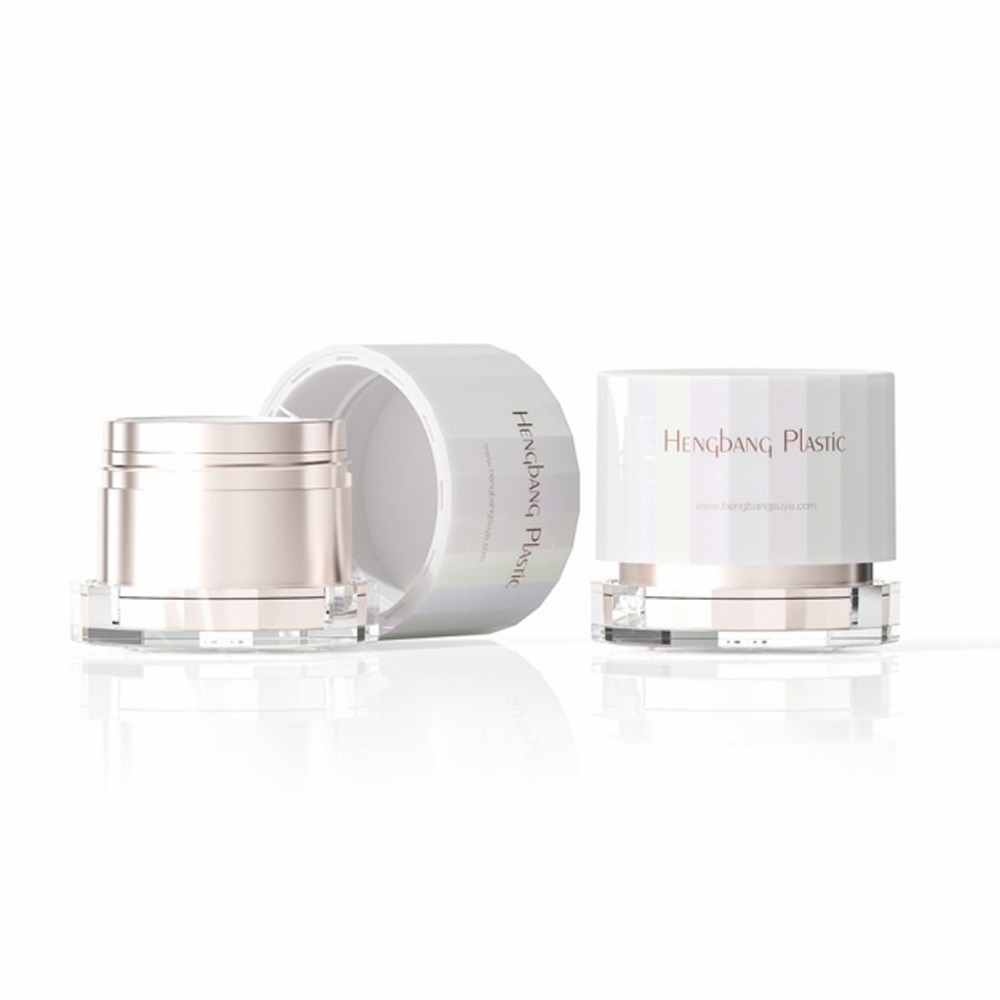
The HB-G021 Double Wall Plastic Refillable Cream Jar has been developed to address these requirements in one practical format. Designed for day creams, night creams, moisturizers, and similar skincare formulations, this refillable cream jar combines a luxurious double-wall appearance with an inner refill system. It is available in 30 ml and 50 ml capacities, making it suitable for a variety of facial skincare positioning strategies, from targeted treatment products to everyday moisturizing lines.
The value of the HB-G021 is not limited to its appearance. Its refillable structure can help brands reduce the amount of packaging needed over repeated purchases, while giving consumers a convenient way to continue using a familiar premium container. The jar also creates opportunities for stronger customer retention, differentiated product architecture, and more responsible packaging communication.
Behind the product is Yuyao Hengbang Plastic Co., Ltd., a manufacturer with experience in cosmetic and skincare packaging. Established in 2006, the company operates from a facility with a building area of 35,000 square meters and employs more than 300 people. Its capabilities include product design and development, and its management systems include ISO9001:2015 and ISO14001:2015 certifications. The company has also been recognized as a Ningbo High-Tech Enterprise and owns multiple invention patents.
This article examines the product’s design, material structure, refill advantages, application potential, customization considerations, and the manufacturing strengths that support its use in competitive skincare markets.
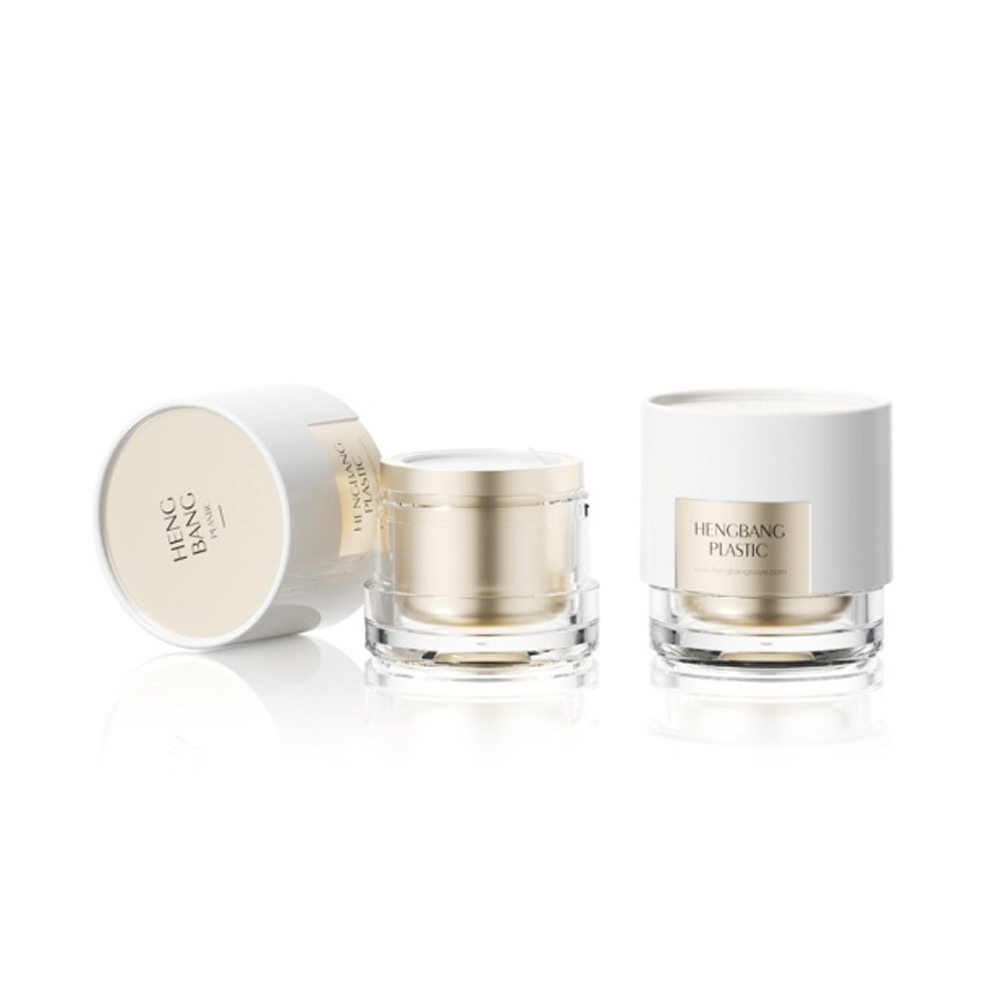
HB-G021 Double Wall Plastic Refillable Cream Jar
The HB-G021 is a refillable plastic cream jar designed around a simple but valuable concept: the visible outer package can remain in use while the inner container is replaced when the product is finished. This design approach separates the long-term presentation component from the replaceable product-holding component.
Traditional cream jars are generally purchased as complete units each time a consumer buys a new product. Even when the jar is attractive and durable, the entire container may be discarded or recycled after a single use cycle. A refillable system changes this pattern. The consumer retains the primary jar and replaces only the refillable inner component, depending on the final configuration selected by the brand.
This structure offers several potential advantages. It can reduce the quantity of material used over multiple purchase cycles, support more efficient shipping of replacement units, and create a distinctive user experience. It can also help a skincare brand communicate a clearer sustainability story without abandoning a premium appearance.
The HB-G021 is particularly suitable for formulas that are traditionally presented in jars, including facial creams, nourishing moisturizers, sleeping masks, firming creams, and other rich skincare products. The 30 ml size can support travel-friendly, trial, treatment, or premium positioning, while the 50 ml size is well suited to a standard facial cream format.
Its double-wall construction contributes to a substantial and luxurious visual impression. In a crowded skincare market, packaging weight, proportion, surface treatment, and structural depth can influence how a consumer evaluates a product before opening it. A double-wall format gives the package more visual volume than a thin single-layer jar and provides a stronger platform for decoration, color matching, and brand presentation.
The product information supplied for the HB-G021 identifies three primary material groupings: ABS and PP for the cap, MS and ABS for the outer bottle structure, and PP for the inner bottle. This combination supports a layered design in which different components can perform different functional and aesthetic roles.
| Specification | Available or Listed Information |
|---|---|
| Product type | Double-wall plastic refillable cream jar |
| Capacity options | 30 ml and 50 ml |
| Cap material | ABS + PP |
| Outer bottle material | MS + ABS |
| Inner bottle material | PP |
| Listed height | 67 mm |
| Listed diameter | 66.5 mm |
| Primary applications | Day creams, night creams, moisturizers, and similar skincare products |
The product data lists a height of 67 mm for the capacity options and a diameter of 66.5 mm. One line in the original specification presents “67ml” in the height field, which appears to be a unit inconsistency. For production approval, brands should confirm the final technical drawing, component tolerances, and dimensional details with the manufacturer before tooling or mass production.
ABS is commonly selected in premium cosmetic packaging when a rigid, smooth, and visually refined component is required. In this product, ABS contributes to the cap and outer structural elements. PP is used for the inner bottle and is also part of the cap structure. The combination allows the packaging to balance presentation requirements with the practical needs of a refillable inner component.
The MS and ABS combination in the outer bottle provides a differentiated visual and tactile direction compared with a basic single-material plastic jar. Depending on the selected finish and decoration, the outer structure may be developed to support metallic, satin, glossy, soft-touch, or color-matched effects. Any specific finishing process, surface treatment, or decorative method should be confirmed during sampling and quotation.
The inner PP bottle is important to the refill concept. It serves as the replaceable component and gives the package a clear internal architecture. A well-designed inner component should be easy to identify, easy to install, and sufficiently stable during normal use. The precise refill method, closure fit, sealing performance, and compatibility with the formula should be validated through technical testing before commercial launch.
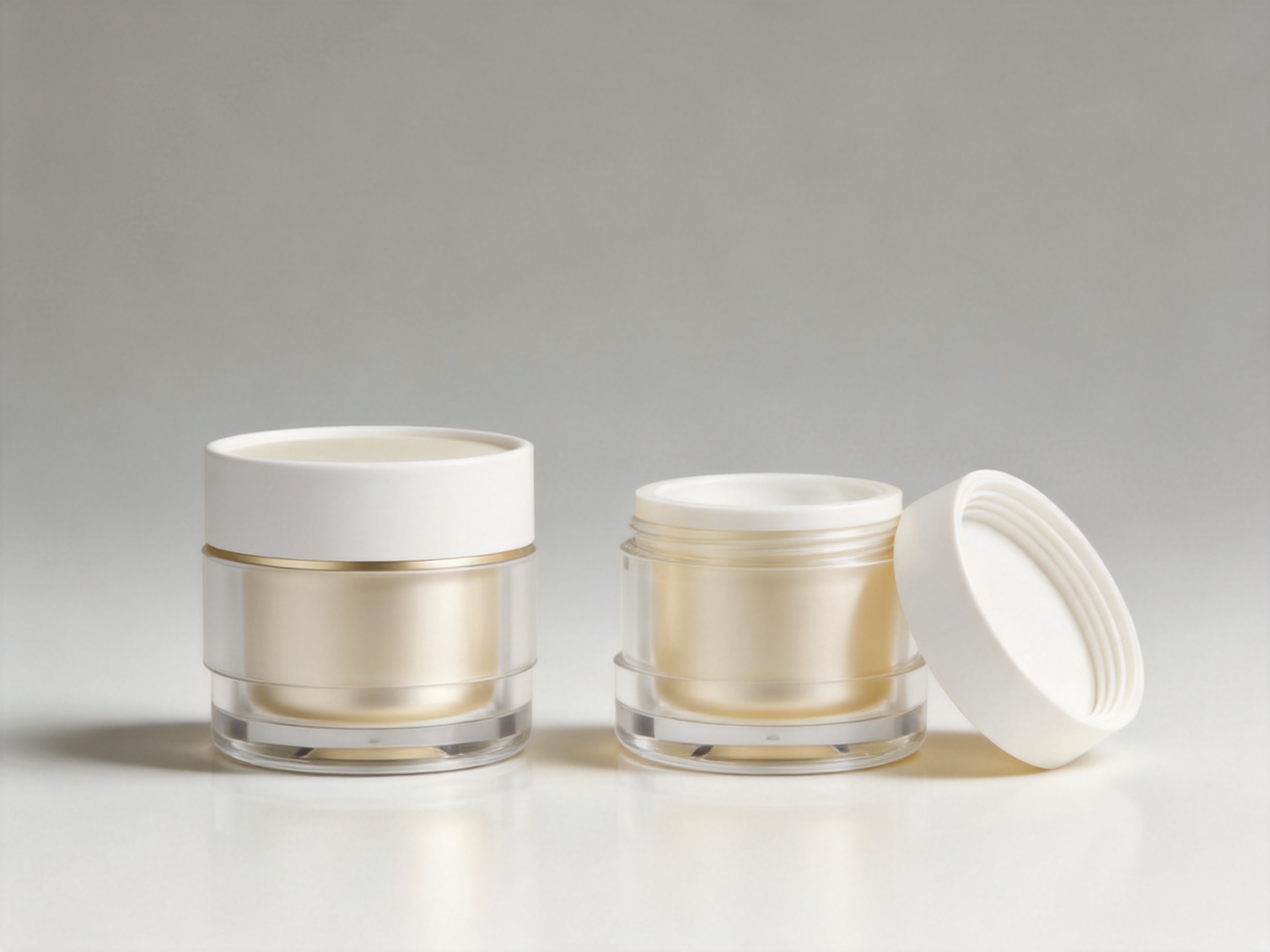
The most important advantage of the HB-G021 is its refillable structure. Refillable packaging can create value in several connected areas: resource efficiency, user experience, brand differentiation, operational planning, and customer loyalty.
A refill system is designed to reduce the need to replace the entire outer jar every time the product is repurchased. When a consumer keeps the outer component and replaces only the inner container, the total amount of packaging used across several purchase cycles may be lower than with a series of fully disposable jars.
The actual environmental benefit depends on many factors, including the number of refill cycles, the weight of the outer package, the weight of each refill, transportation conditions, production efficiency, consumer participation, and end-of-life treatment. Even so, a reusable outer structure provides a practical foundation for a more circular packaging model.
For brands, this creates an opportunity to present sustainability as a repeat-use behavior rather than a one-time material claim. Instead of simply describing a package as recyclable, a brand can explain how customers can retain the premium outer jar and purchase replacement inner units. Clear instructions and convenient refill availability are essential to make this benefit real.
Refills are typically more cost-effective than buying a complete new jar, particularly when the outer presentation component represents a meaningful part of the package value. This can make the product more attractive to returning customers and may encourage regular replenishment.
A refill model also allows a brand to create multiple purchase pathways. New customers can buy a complete starter set containing the outer jar and the first inner unit. Existing customers can purchase refills at a lower package cost. This approach may support subscription programs, loyalty rewards, seasonal refill campaigns, and professional skincare routines.
Commercial pricing must be calculated carefully. The brand should consider the cost of the outer jar, refill component, closures, decoration, filling, secondary packaging, shipping, and distribution. Nevertheless, the refill architecture gives the brand more flexibility than a conventional single-use package.
A refillable package must be more than environmentally attractive; it must also be easy to use. The HB-G021 concept is intended to make the refill process convenient, clean, and straightforward. This is important because consumers are unlikely to adopt a refill routine if it requires complicated tools, messy transfers, or uncertain assembly.
The preferred user experience is simple: use the product, remove the empty inner component, insert the replacement, and continue using the familiar outer jar. The exact procedure should be presented through printed instructions, packaging graphics, or a short educational guide created by the brand.
Clean handling is equally important for skincare. The refill should be designed and supplied in a way that minimizes unnecessary contact with the formula and reduces the possibility of contamination during installation. Brands should validate the refill interface, closure fit, and user instructions under realistic conditions.
Many facial creams use similar packaging formats. A standard jar may be functional, but it can be difficult for a new product to stand out on a shelf or in an online product presentation. The HB-G021 adds differentiation through its double-wall structure and refillable architecture.
This combination allows a brand to position the product as premium, modern, and responsible at the same time. The outer jar can become a recognizable part of the brand identity, while different formulas or seasonal editions can use compatible refills. The result is a packaging platform rather than a one-time container.
Compared with a basic thin-wall cream jar, the HB-G021 may offer a more substantial appearance and more space for visual design. Compared with a fully rigid luxury package made from heavier materials, its plastic-based construction may provide opportunities for weight management and more efficient handling. The final performance and sustainability profile should be assessed through the brand’s complete product life-cycle analysis.
The HB-G021 should be evaluated against the needs of a specific product and market, but several advantages distinguish it from a conventional non-refillable jar.
A conventional cream jar is generally designed for one complete purchase cycle. Even if its materials are technically recyclable, the package does not necessarily encourage the consumer to preserve and reuse its most decorative components. The HB-G021 makes continued use part of the product concept.
The outer jar can remain associated with the customer’s daily skincare routine. This may improve emotional attachment and increase the perceived value of the packaging. It also gives the brand a longer period of physical visibility in the consumer’s home.
Luxury skincare packaging often relies on substantial walls, complex component assemblies, or heavy materials to create a premium impression. The double-wall concept gives the HB-G021 depth and presence while using a structured combination of plastic components.
This does not mean that all double-wall plastic packages are automatically lighter or more sustainable than every alternative. Instead, the advantage is design flexibility. A brand can explore a luxury appearance while also developing a refill strategy and considering the material balance of the complete package.
The availability of 30 ml and 50 ml options allows brands to serve different market segments with the same general product concept. The 30 ml format may be used for concentrated treatments, travel, limited editions, or premium introductory products. The 50 ml format corresponds more closely to the familiar size of many facial creams.
Using related sizes may simplify brand architecture. A company can create a coordinated range with a consistent appearance across different formulas while adapting the net content to each product’s positioning.
The outer structure and cap can provide a broad canvas for color, finish, and branding treatments. Possible directions may include opaque colors, transparent accents, soft-touch effects, metallic visual effects, contrasting rings, printed graphics, or molded details, subject to technical review and supplier confirmation.
This flexibility can help a brand create a recognizable visual system. The same jar may appear in different colors for day cream, night cream, anti-aging cream, or sensitive-skin products while retaining the same overall silhouette.
When consumers purchase a complete starter package and later return for compatible refills, the package becomes part of an ongoing product relationship. This can support repeat purchases and make it easier for a brand to build a routine-based skincare portfolio.
A refill program also creates opportunities for loyalty communication. Brands may provide incentives for returning customers, offer refill bundles, or introduce limited-edition inner units while keeping the outer jar unchanged. These commercial possibilities are more difficult to create with a fully disposable package format.
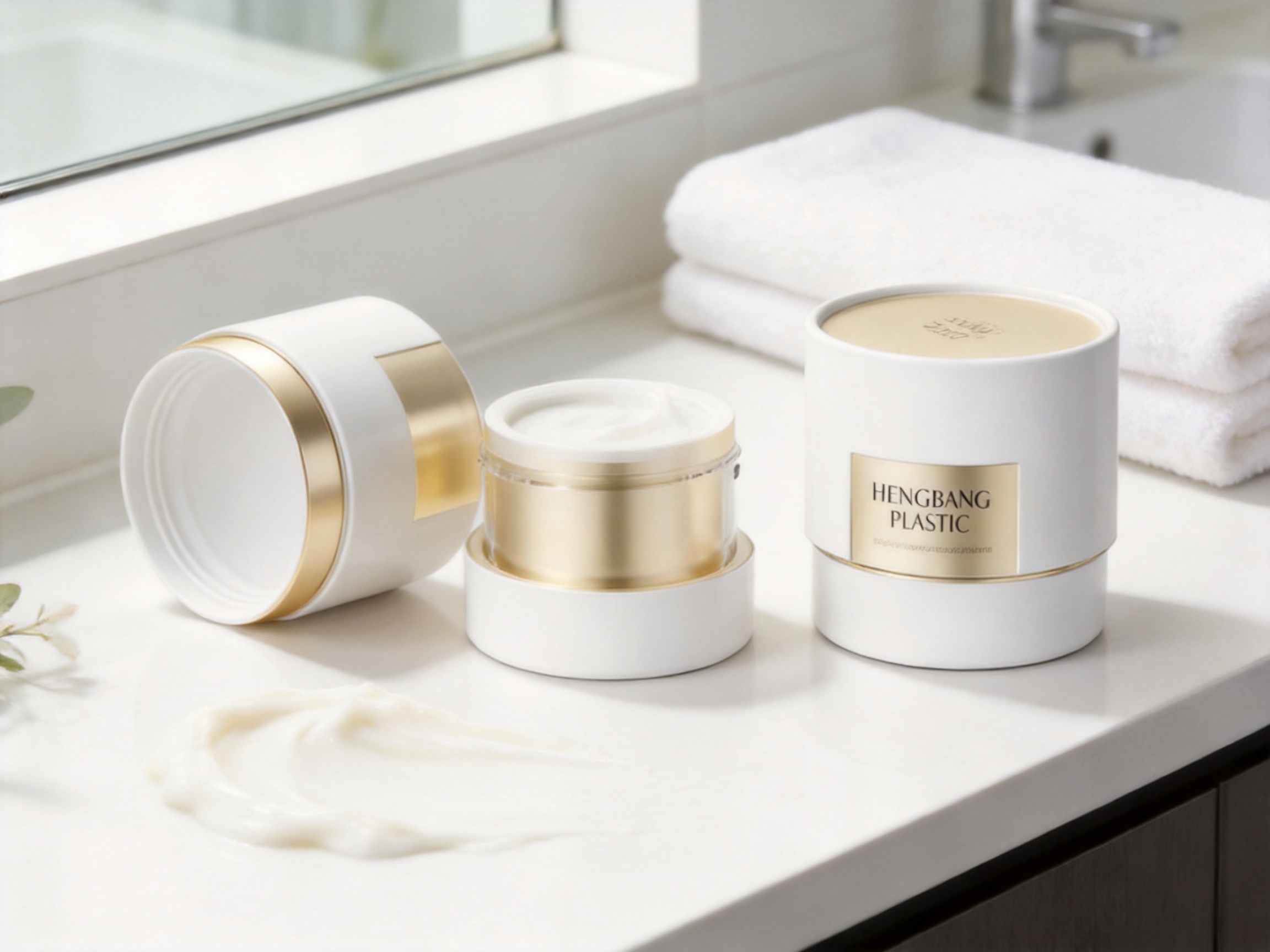
The HB-G021 is suited to a range of cream-based skincare products. Its format is particularly appropriate where a rich texture, premium appearance, and daily ritual are important to the customer experience.
Day creams are often used every morning and may be positioned around hydration, radiance, firmness, barrier support, or protection from environmental stress. A 50 ml refillable jar can serve as a regular-use format, while a 30 ml option can support travel or premium treatment lines.
Night creams are frequently associated with restorative skincare rituals and richer textures. The substantial appearance of a double-wall jar can reinforce the idea of a concentrated evening treatment. A refillable format also suits products that customers repurchase as part of a consistent nighttime routine.
Moisturizers have broad consumer appeal and are often used repeatedly throughout the year. A refill system can help reduce the package burden associated with regular repurchase. Brands may also use the same outer design for different moisturizer variants, such as lightweight, intensive, calming, or nourishing formulas.
Facial treatment creams, firming products, overnight masks, and specialized moisturizers can benefit from a package that communicates value before the consumer applies the formula. The outer jar can be developed as a durable, recognizable presentation component, while refills can be produced for ongoing use.
The product can also be considered by private-label skincare companies and contract manufacturers that need a differentiated package without developing an entirely new structural format. The existing 30 ml and 50 ml capacities provide a starting point for range planning, while the outer and inner components offer opportunities for coordinated product families.
The performance of cosmetic packaging depends not only on the visible design but also on the manufacturer’s ability to manage materials, dimensions, tooling, assembly, quality control, and communication. Yuyao Hengbang Plastic Co., Ltd. brings several organizational strengths to the development of the HB-G021.
Established in 2006, the company has developed experience in plastic packaging for cosmetics and skincare products. Long-term involvement in this sector helps a manufacturer understand the practical requirements of cosmetic packaging, including appearance consistency, component fit, capacity planning, and the relationship between packaging design and filling operations.
Experience is especially valuable for refillable systems. A refillable jar has more functional relationships than a simple one-piece container. The outer jar, inner bottle, cap, and formula must work together as a complete package. Manufacturing experience supports more informed design reviews and helps identify potential issues before mass production.
The company has a building area of 35,000 square meters and more than 300 employees. These resources indicate an organization with the scale to support coordinated work across product development, production planning, quality management, and customer service.
For buyers, manufacturing scale can be important when a product moves from sample development to commercial production. A supplier should be able to communicate clearly about capacity, lead times, component scheduling, inspection arrangements, and delivery planning. The appropriate production plan will depend on order volume, decoration requirements, tooling status, and the selected refill configuration.
The company provides design and development services in addition to production. This is relevant to brands that need support adapting a standard package to a particular market, formula, or visual identity.
For the HB-G021, development discussions may include the refill interface, closure fit, dimensional confirmation, decoration, color matching, material selection, filling compatibility, and secondary packaging. Early technical communication can reduce changes later in the project and make the transition from concept to production more efficient.
ISO9001:2015 certification reflects the company’s use of a recognized quality management framework. A quality management system can support documented procedures, defined responsibilities, corrective actions, process monitoring, and continual improvement.
Certification does not eliminate the need for product-specific inspection or testing. However, it provides an important organizational foundation for consistent manufacturing and customer communication. Brands should still agree on approved samples, critical dimensions, visual standards, testing methods, and acceptance criteria for each project.
ISO14001:2015 certification reflects an environmental management framework. This is relevant to a refillable product because the environmental value of the package should be supported by responsible manufacturing practices as well as by the reusable design.
An environmental management system can help an organization identify environmental aspects, establish objectives, monitor performance, and improve operational controls. For brands developing environmental claims, it remains important to distinguish between certified management practices and specific product-level claims. Refill-cycle assumptions, material declarations, recycling guidance, and life-cycle benefits should be communicated accurately.
The company was awarded recognition as a Ningbo High-Tech Enterprise in 2021 and owns multiple invention patents. These achievements indicate an emphasis on technical development and innovation. In the context of cosmetic packaging, innovation may involve structural design, component integration, manufacturing methods, usability, or material application.
For the HB-G021, the combination of refillability and double-wall presentation demonstrates a product-development direction that goes beyond a basic open jar. Brands seeking a distinctive package can benefit from working with a supplier that treats packaging as an engineered product as well as a decorative object.
Exact patent coverage, application scope, and production relevance should be confirmed directly with the manufacturer when required for a commercial project. Buyers should also review any intellectual-property considerations related to customized designs.
A successful refillable cream jar project requires a structured development process. The following stages provide a practical framework for brands evaluating the HB-G021.
The brand should begin by specifying the formula type, net content, target market, price level, visual direction, distribution channels, and intended refill model. The choice between 30 ml and 50 ml should be based on product positioning, dosage, expected usage period, and local market preferences.
Packaging compatibility should be assessed with the actual formula. Factors may include viscosity, oil content, active ingredients, fragrance, pH, preservatives, and expected shelf life. The inner PP component and the closure system should be evaluated under appropriate storage and use conditions.
The refill procedure should be tested by people who represent the intended consumer group. The process should be intuitive and should not require excessive force or complicated tools. The brand should confirm how the empty inner bottle is removed, how the replacement is installed, and how the user knows that the refill is correctly positioned.
Color, gloss level, texture, logo placement, printing, and other decorative details should be reviewed through physical samples. Digital images are useful for concept development, but they cannot fully represent the tactile quality, component fit, and color behavior of the finished package.
The brand and manufacturer should confirm the technical drawing, including the listed height of 67 mm, diameter of 66.5 mm, capacity, component relationships, and allowable tolerances. Assembly trials should examine cap fit, inner bottle placement, outer structure stability, and the interaction between the filled component and the complete package.
Testing may include leakage evaluation, drop or transport simulation, torque testing, temperature exposure, compatibility assessment, and shelf-life observation. The exact testing program should reflect the formula, sales region, distribution conditions, and applicable regulatory expectations.
Before mass production, the buyer should approve a golden sample or master sample and define acceptable limits for color variation, surface marks, assembly gaps, printing position, component damage, and functional performance. Clear standards help the manufacturer and buyer evaluate production consistently.
The HB-G021 provides a strong foundation for brands that want to express premium skincare positioning through packaging. The double-wall silhouette can support a broad range of visual identities.
A minimalist brand may select a single neutral color with restrained typography and a matte finish. A luxury brand may use a deep color palette, metallic-looking details, contrasting components, and a heavier visual proportion. A botanical or clean-beauty brand may favor soft colors, simple graphics, and communication focused on the refill journey.
The cap and outer bottle can be coordinated or deliberately contrasted. For example, a brand may use a white outer jar with a colored cap for a fresh moisturizer, or a dark outer jar with a light inner refill label for a night cream. The exact decorative options depend on the selected production method and should be reviewed with the manufacturer.
Packaging communication should explain the refill process clearly. Consumers need to understand whether they are purchasing a complete starter package or a replacement inner unit. Labels, cartons, instructions, and online product pages should use consistent language and visual guidance.
It is also useful to preserve the outer jar as a recognizable brand asset. If the design is appealing and durable, customers may be more motivated to keep it. This can increase the practical impact of the refill system and maintain brand visibility between purchases.
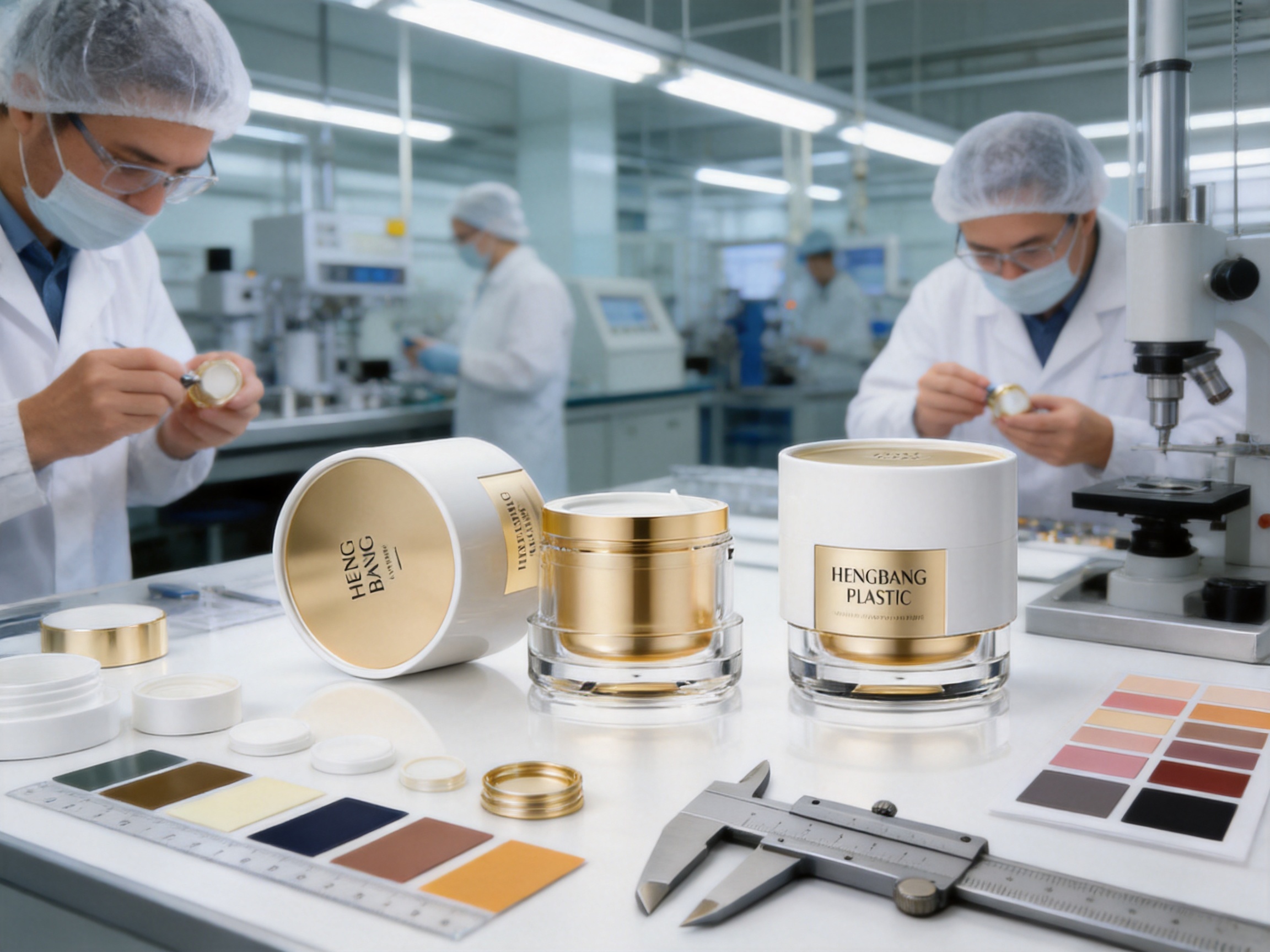
Refillable packaging supports a more resource-conscious direction, but sustainability claims should be specific and evidence-based. The primary concept is that the outer jar can remain in use while the inner component is replaced. The benefit increases when consumers actually complete multiple refill cycles.
Brands should consider the full system rather than focusing on one component. Relevant factors include the material and weight of the outer jar, the material and weight of the refill, the number of expected uses, transportation efficiency, production waste, secondary packaging, consumer behavior, and end-of-life options.
The refill program should also be convenient enough to encourage participation. If refills are difficult to purchase, unavailable in major markets, or confusing to install, consumers may revert to complete replacement packages. Supply planning is therefore part of the sustainability strategy.
Clear disposal guidance is important as well. Different markets have different recycling systems, and the multiple-material structure may require specific instructions. Brands should obtain accurate material information and provide guidance that reflects local conditions.
The HB-G021 can support responsible beauty positioning, but the final environmental claim belongs to the complete product system and the brand’s verified data. Statements such as “refillable,” “designed for repeated use,” or “helps reduce packaging used over multiple purchase cycles” may be more precise than broad claims that cannot be supported by a defined life-cycle assessment.
Cosmetic packaging must be evaluated for more than appearance. It should protect the formula, remain functional during its expected service life, and meet the requirements of the intended sales markets.
Brands should confirm the relevant regulatory expectations for materials that come into contact with cosmetic formulas. They should also review labeling, traceability, batch management, product information, and packaging waste requirements in each target region.
Formula compatibility is particularly important for creams containing oils, fragrances, botanical extracts, acids, retinoids, or other active ingredients. Testing should consider both the inner bottle and any surfaces that may contact the formula during filling, storage, or use.
The refill interface should be evaluated for stability and cleanliness. A replacement inner bottle that is not securely seated could affect the user experience or create a risk of leakage. The cap should close consistently, and the finished assembly should withstand ordinary handling and transportation.
Quality inspection should address visual and functional characteristics. Cosmetic packaging is highly sensitive to appearance, so surface marks, color differences, scratches, sink marks, flash, printing defects, and assembly inconsistencies should be controlled according to agreed standards.
A product such as the HB-G021 delivers the best results when the brand and manufacturer collaborate from the beginning. Packaging decisions influence filling, logistics, consumer instructions, product pricing, and environmental communication. Treating the jar as an isolated purchasing item may create avoidable problems later.
Yuyao Hengbang Plastic Co., Ltd. can support this cooperation through product development and cosmetic packaging experience. The manufacturer’s business philosophy emphasizes quality, integrity, and customer first. These principles are especially relevant when the project involves multiple components and a refillable user journey.
During early discussions, buyers should provide the formula profile, target annual quantity, desired delivery schedule, decoration requirements, sales markets, and refill strategy. In return, the supplier should clarify component availability, minimum order quantities, sampling arrangements, production lead times, quality procedures, and technical limitations.
Good communication also helps the brand avoid unrealistic assumptions. For example, a particular color or surface effect may require additional development. A refill structure that works for one cream may need adjustment for a different viscosity or formula. A package that looks suitable in a computer rendering may require changes after assembly testing.
Professional collaboration transforms the package from a catalog item into a controlled commercial solution. The HB-G021 provides the structural starting point, while the final result depends on accurate specifications, testing, and production management.
It is a refillable cosmetic cream jar with a double-wall outer structure and a replaceable inner bottle. It is designed for skincare products such as day creams, night creams, and moisturizers.
The listed capacity options are 30 ml and 50 ml. The 30 ml size may suit travel, trial, treatment, or premium formats, while the 50 ml size is suitable for many standard facial cream applications.
The listed materials are ABS and PP for the cap, MS and ABS for the outer bottle, and PP for the inner bottle. The final material documentation should be confirmed with the manufacturer for each production project.
The supplied information lists a height of 67 mm and a diameter of 66.5 mm. One specification line contains a unit inconsistency for height, so the final technical drawing should be approved before production.
The intended concept is that the consumer retains the outer jar and replaces the inner bottle when the product is finished. The precise removal and installation method should be confirmed through samples and user testing.
Yes. The product description specifically identifies day creams, night creams, and moisturizers as suitable applications. Formula compatibility and filling performance should still be tested with the intended formulation.
Its main differences are the refillable inner structure and double-wall presentation. These features can support repeated use of the outer jar, create a more premium appearance, and offer brands a differentiated packaging platform.
The company provides design and development services, and the outer structure and cap may offer opportunities for color, finish, printing, and other decorative treatments. Customization details should be confirmed during technical development.
No. The benefit depends on actual refill use, component weights, manufacturing, transportation, disposal, and consumer behavior. A refillable design provides the opportunity for reduced packaging use over multiple cycles, but the complete system should be evaluated before making specific environmental claims.
Yuyao Hengbang Plastic Co., Ltd. has passed ISO9001:2015 and ISO14001:2015 certifications. These relate to quality management and environmental management systems, respectively.
The company was established in 2006, has a 35,000-square-meter building area, employs more than 300 people, provides design and development services, was recognized as a Ningbo High-Tech Enterprise in 2021, and owns multiple invention patents.
The buyer should confirm capacity, final dimensions, component materials, refill operation, formula compatibility, decoration, quality standards, packaging configuration, minimum order quantity, lead time, testing requirements, and regulatory documentation.
The HB-G021 Double Wall Plastic Refillable Cream Jar responds to several important needs in modern skincare packaging. It combines a premium double-wall appearance with a refillable inner structure, giving brands an opportunity to reduce packaging use across repeated purchase cycles while creating a more distinctive customer experience.
Its 30 ml and 50 ml options make it adaptable to different product strategies, and its ABS, PP, MS, and ABS component structure supports a balance between presentation and practical design requirements. The jar is suitable for day creams, night creams, moisturizers, and other cream-based skincare products.
Compared with a conventional single-use cream jar, the HB-G021 can offer stronger differentiation, a more reusable product architecture, more flexible customer retention opportunities, and a platform for premium visual development. Its benefits become most meaningful when the refill system is easy to understand, convenient to use, consistently supplied, and supported by accurate environmental communication.
The manufacturing foundation is equally important. Yuyao Hengbang Plastic Co., Ltd. brings cosmetic packaging experience, design and development capability, a substantial facility, a workforce of more than 300 employees, ISO9001:2015 and ISO14001:2015 certifications, high-tech enterprise recognition, and multiple invention patents. These strengths provide a basis for coordinated development from initial concept through sampling and production.
For skincare brands seeking packaging that connects luxury presentation with responsible repeat use, the HB-G021 is a practical product platform. With careful formula testing, dimensional confirmation, refill validation, decoration development, and quality planning, it can support attractive and commercially effective skincare packaging for evolving consumer expectations.
1. ISO 9001:2015, Quality Management Systems—Requirements.
2. ISO 14001:2015, Environmental Management Systems—Requirements with Guidance for Use.
3. Ellen MacArthur Foundation, Circular Economy Principles and Packaging Design Guidance.
4. Association of Plastic Recyclers, Packaging Design and Recyclability Considerations.
5. International Organization for Standardization, General Principles for Environmental Management Systems.
6. Cosmetic packaging product specifications and company information supplied for the HB-G021 Double Wall Plastic Refillable Cream Jar.


Copyright © Yuyao Hengbang Plastic Co., Ltd.
All Rights Reserved.
 Wholesale Plastic Cosmetic Packaging Manufacturers