English
 中文简体
中文简体
News
Home > Author > Li Wenjing — Cosmetic Packaging After-Sales Specialist > How Double-Walled Airless Lotion Bottles Improve Cosmetic Packaging Performance

 2026.07.26
 Li Wenjing — Cosmetic Packaging After-Sales Specialist
Content
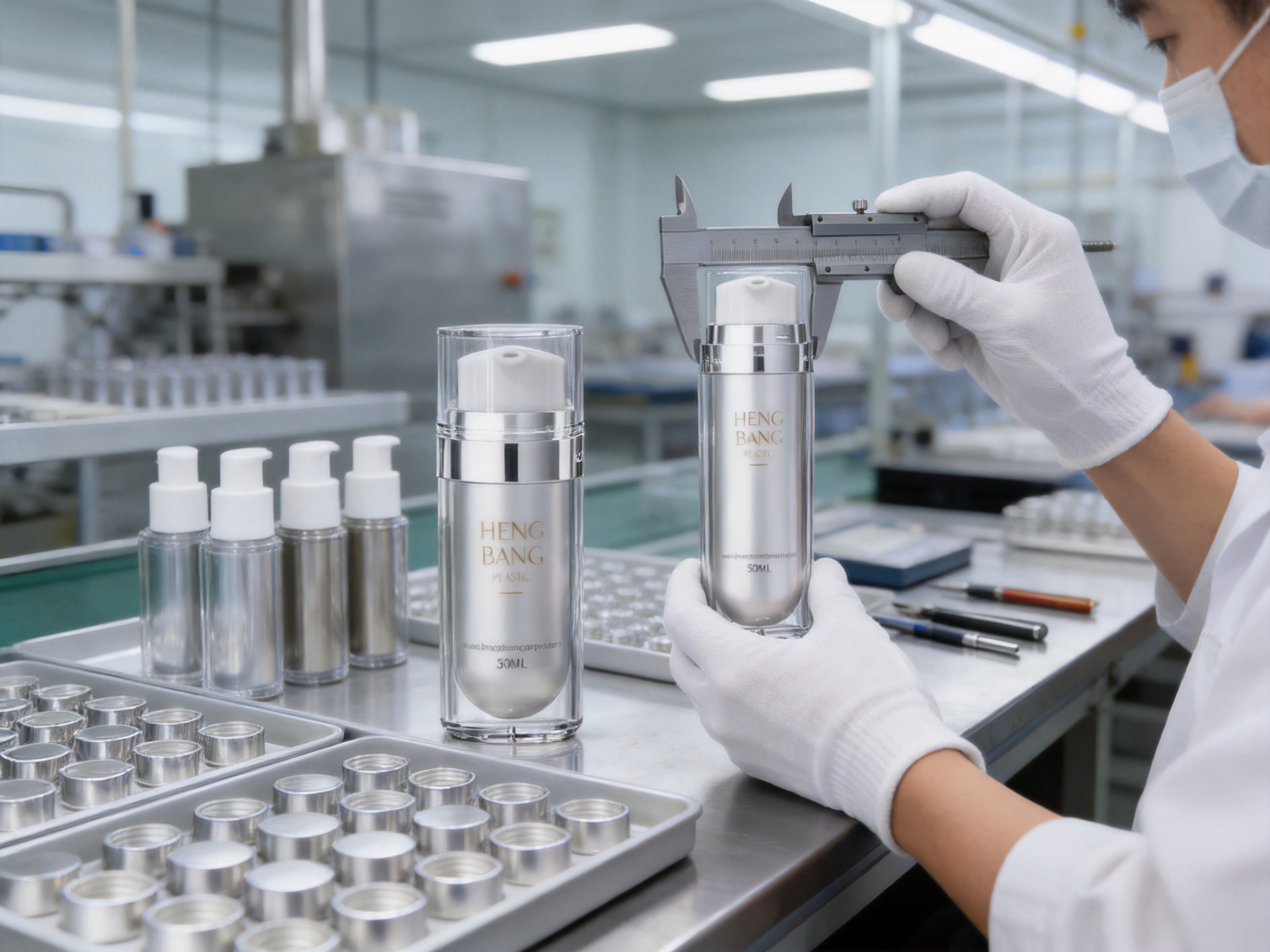
In the competitive cosmetics and skincare market, packaging is no longer a secondary consideration. A bottle must protect the formula, support convenient dispensing, communicate quality, and help a product stand out on a crowded retail shelf. For lotions, creams, serums, primers, sunscreens, and other fluid or semi-fluid formulations, the packaging solution must also control dosage and reduce unnecessary product exposure to air. The HB-K009A/B plastic airless lotion bottle has been developed to address these requirements through a combination of airless dispensing technology, double-walled construction, a wide-mouth profile, refined surface treatment, and a modern minimalist appearance.
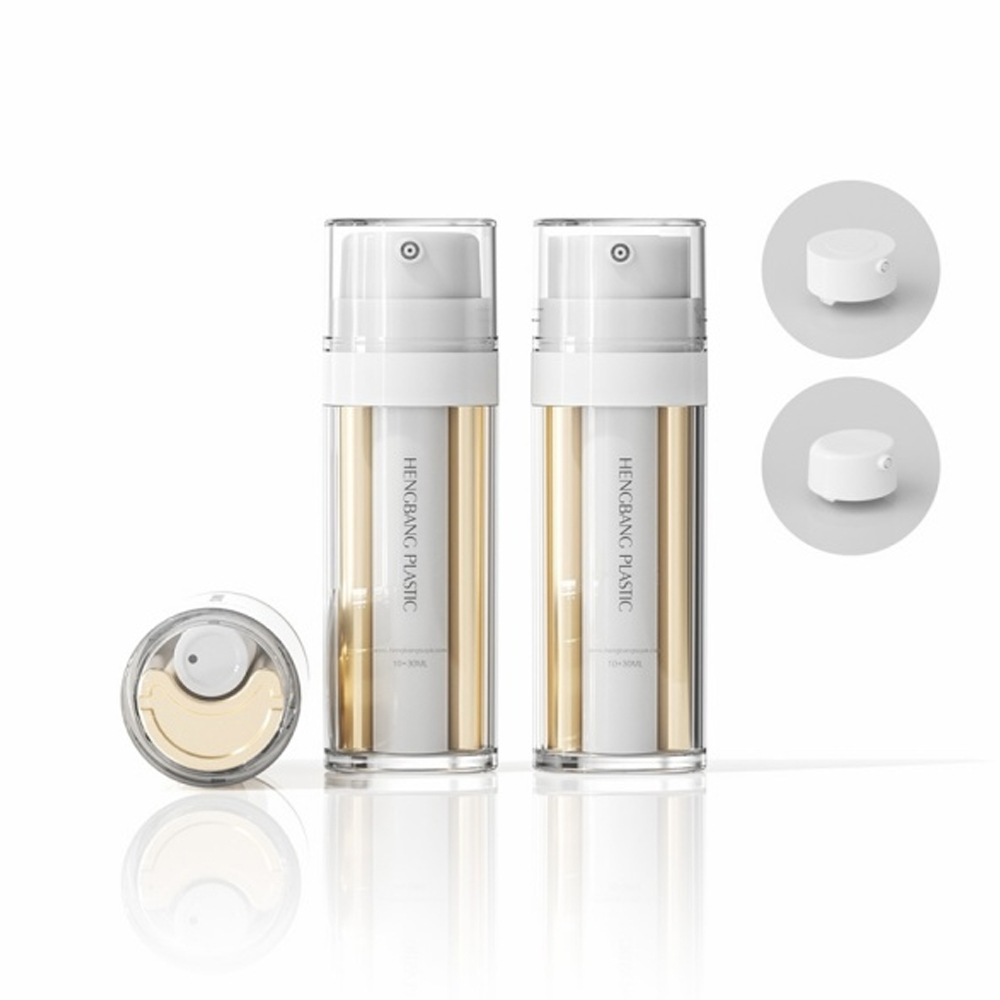
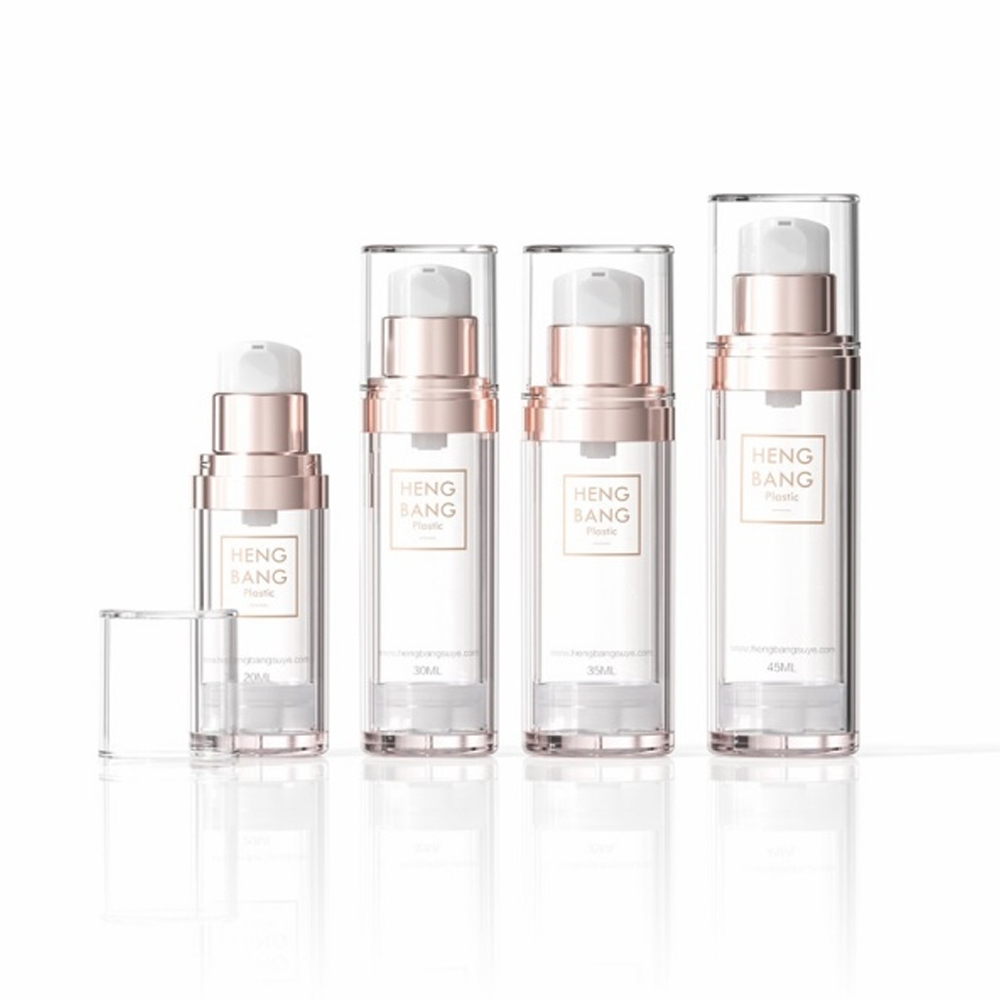
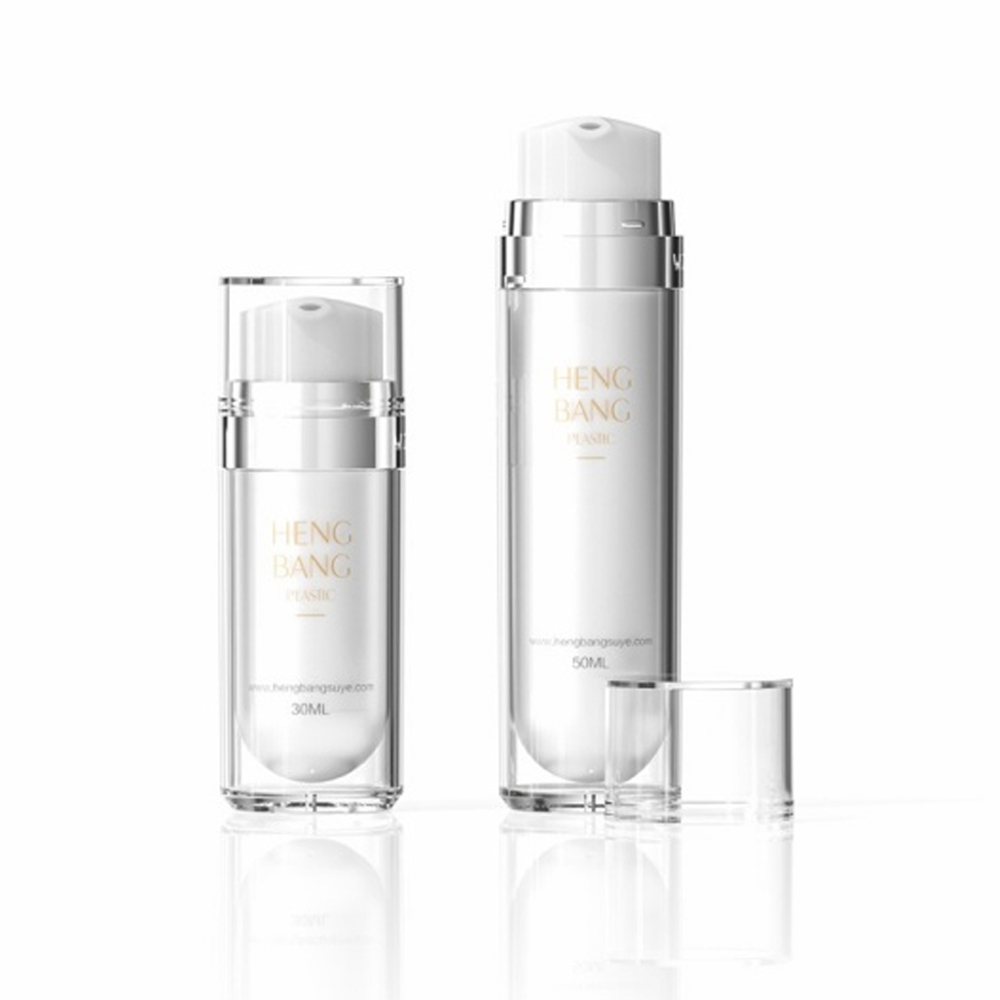
This packaging format is designed for brands that want the visual impact of a premium container without abandoning the practical advantages of plastic. It combines a transparent outer bottle and cap with a matte silver inner bottle, a bright silver plated collar, and a white injection-molded pump head. The result is a layered appearance that balances clarity, metallic elegance, and clean contemporary styling. The design is suitable for skincare and cosmetic products that need a sophisticated presentation while requiring controlled and hygienic dispensing.
The bottle is available in different capacity options and inner-bottle configurations. The product description identifies 30 milliliters and 50 milliliters as available capacities, while the supplied dimensional table lists 20 milliliters and 50 milliliters. Because packaging specifications can vary according to production version, mold configuration, or updated product documentation, buyers should confirm the final capacity before ordering. The specification table also identifies two possible inner-bottle styles: a round bottom and a flat bottom. These choices allow brands to select a visual and structural format that best suits their product positioning.
Airless packaging works differently from a traditional bottle with a dip tube. Instead of relying on a long tube to draw product upward, an airless system uses a movable internal piston or equivalent vacuum-driven structure. When the pump is pressed, the dispensing mechanism releases a measured amount of product while the internal system moves upward. This reduces the amount of air that enters the product chamber during normal use.
Reducing air exposure can be valuable for many cosmetic and skincare formulas. Oxygen, repeated opening, contamination from fingers, and environmental exposure may gradually affect the appearance, texture, fragrance, or performance of sensitive products. Although the exact level of protection depends on the formula, filling conditions, closure design, and product compatibility, airless packaging generally provides a more controlled dispensing environment than an open-mouth jar or a conventional bottle.
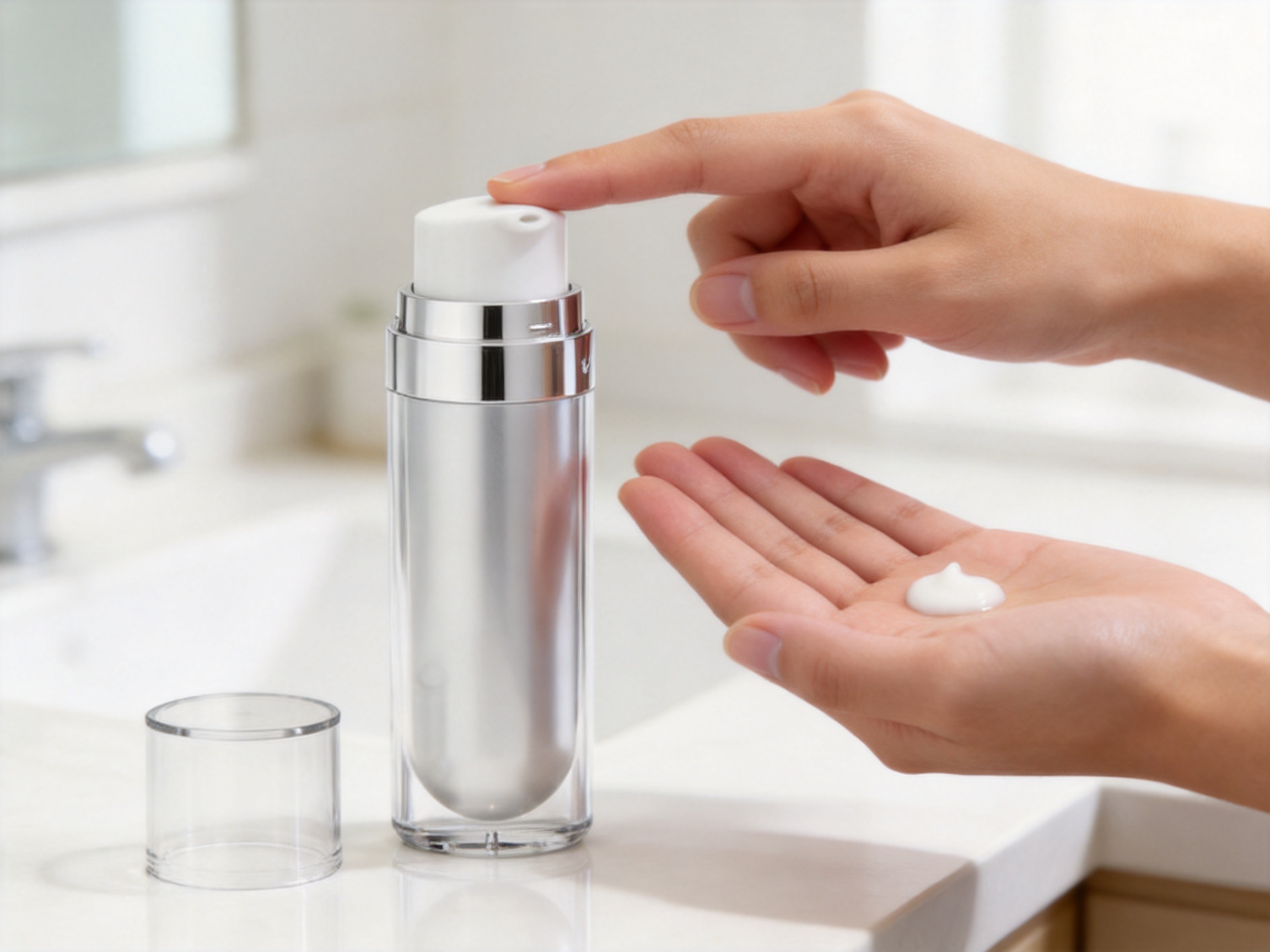
The HB-K009A/B format is particularly suitable for lotions and other formulations that benefit from controlled delivery. A user does not need to remove a cap and scoop product from a jar. Instead, the pump head can be pressed with one hand, helping the consumer dispense the desired amount while keeping the remaining contents inside the closed container. This supports a cleaner user experience and can improve the perceived quality of the product.
Airless operation also contributes to more efficient product evacuation. Traditional pump bottles may leave a noticeable quantity of product inside the container when a dip tube can no longer reach the remaining formula. An airless mechanism is designed to move the internal product mass toward the dispensing outlet, helping users access more of the filled product. Actual evacuation performance depends on formula viscosity, pump calibration, filling accuracy, and component tolerances, but the design principle is advantageous for premium skincare products where minimizing residual waste is important.
The bottle is built from multiple components that work together to create a durable and visually layered package. According to the supplied material information, the cap is made of MS, the pump is made of PP, the outer bottle is made of MS, and the inner bottle is made of PP. In this context, MS refers to a clear styrene-based material commonly used in cosmetic packaging for its appearance, transparency, and moldability. PP, or polypropylene, is widely used for functional packaging parts because of its low density, chemical resistance, and suitability for injection molding.
The transparent outer bottle provides an open and polished visual effect. It allows the internal silver component to remain visible and creates depth between the exterior and inner container. This layered construction can make the bottle appear more substantial than a single-wall package while also giving the product a high-end character. The transparent cap continues the visual language by protecting the pump head without concealing the overall design.
The inner bottle is sprayed in matte silver. A matte finish absorbs and diffuses light rather than reflecting it sharply, giving the package a soft metallic appearance. This can be particularly effective for skincare ranges positioned around clinical care, advanced beauty, hydration, anti-aging, sun protection, or professional treatment. The matte silver treatment also contrasts with the transparent outer wall, creating a distinctive appearance that is more refined than a plain transparent bottle.
The bright silver plated collar adds a high-contrast detail between the bottle body and pump head. A plated collar can provide a reflective highlight and strengthen the impression of precision. It visually frames the dispensing area, making the pump assembly appear more integrated and finished. The white pump head then provides a clean focal point and gives the package a neutral, hygienic appearance.
The combination of transparent, matte silver, bright silver, and white elements creates several branding opportunities. A brand can use the bottle as a foundation for a restrained monochromatic range, or it can add customized decoration to the outer surface. Depending on the production plan, possible decoration methods may include screen printing, labeling, hot stamping, or other compatible surface treatments. Decoration selection should be validated against the selected material, coating system, artwork, and expected resistance requirements.
One of the most important advantages of the HB-K009A/B bottle is its double-walled structure. A double-walled package includes an outer shell and an inner product container rather than relying on one exposed wall. This creates a more dimensional appearance and can provide additional support around the product chamber. In premium cosmetic packaging, the extra layer often contributes to a stronger sense of quality and durability.
Compared with a basic single-wall plastic bottle, the double-walled format can offer a more substantial hand feel. Consumers often associate weight, layered construction, and carefully finished details with product value. While the precise weight depends on component specifications, the visual and tactile effect can help a skincare product occupy a more premium position without requiring a heavy glass container.
The outer wall also provides an additional design surface and can help protect the inner decorative treatment from direct handling. The matte silver inner bottle remains visible through the transparent exterior while being visually separated from the consumer’s hand. This helps maintain a cleaner appearance during use. The bottle therefore combines an attractive display effect with practical protection for the internal decorative layer.
Compared with glass packaging, a plastic double-walled bottle can be easier to handle in daily use, shipping, and retail display. Plastic packaging is generally less vulnerable to shattering from accidental drops, although no package is completely damage-proof. Reduced breakage risk can be valuable for bathroom storage, travel applications, sampling programs, and e-commerce distribution. The lower handling risk may also help brands simplify certain logistics and customer-service challenges associated with damaged containers.
Compared with a conventional jar, the double-walled airless bottle offers a more hygienic dispensing format. A jar exposes the product each time the lid is removed, and consumers frequently touch the formula directly. The airless pump allows the user to dispense product without inserting fingers into the container. For lotions, creams, and treatment products, this can improve the perceived cleanliness of the product experience.
Compared with an ordinary lotion bottle, the HB-K009A/B design provides a stronger visual identity. A standard bottle may be functional but visually flat, particularly when displayed alongside premium competitors. The transparent outer wall, silver inner bottle, plated collar, and white pump form a recognizable combination that can help a product appear more sophisticated from a distance and more carefully engineered when held.
The product is described as a wide-mouth airless pump bottle. A wide-mouth profile can contribute to stability, visual balance, and filling convenience. A broader body typically creates a more confident footprint on a counter, shelf, vanity, or bathroom surface. It can also provide a generous area for decoration, branding, regulatory information, and usage instructions.
The supplied specification lists a diameter of 39.5 millimeters. This relatively compact diameter supports a portable form while preserving enough body width for a stable presentation. The available height varies according to capacity. The supplied table lists a height of 111.5 millimeters for one size and 149.1 millimeters for another. As with the capacity information, final measurements should be confirmed against the approved technical drawing because dimensions may differ between versions.
The pump is positioned for intuitive use. A user can hold the bottle in one hand and press the pump head with a finger or thumb. The 0.23 cubic centimeter dosage listed in the supplied information indicates a controlled output per actuation. This dosage is appropriate for products where users need a measured quantity rather than an unrestricted pour. It may also help brands communicate usage instructions more consistently, although the actual delivered amount should be verified through production testing.
Controlled dosage can reduce overuse and improve the relationship between the consumer and the formula. For concentrated serums, treatment lotions, facial creams, and sunscreens, a calibrated pump helps users develop a repeatable application routine. It may also support more predictable product consumption, allowing brands to estimate the number of applications per package more accurately.
The pump format further reduces mess. Unlike a flip-top bottle, which may allow product to collect around the opening, a pump can keep the dispensing point more defined. Unlike a jar, it eliminates the need for a separate spatula or direct finger contact. These details matter because consumers often judge packaging through small everyday interactions: whether the cap is easy to remove, whether the bottle stays clean, and whether the right amount is dispensed without effort.
The product description states that the bottle is offered in 30 milliliters and 50 milliliters. The supplied technical table lists 20 milliliters and 50 milliliters. This apparent difference should be resolved during project confirmation, but the presence of multiple capacity choices is itself valuable. Small capacities can support travel sizes, trial products, gift sets, professional samples, and high-value concentrated formulas. Larger capacities can suit daily-use lotions, moisturizers, sun care products, and treatment programs intended to last longer.
A smaller airless bottle can help a brand introduce a premium product at a lower initial purchase price. It may also be suitable for limited-edition releases, discovery kits, subscription boxes, and hotel or spa applications. The smaller format creates a compact visual presence and can be easier to carry in a handbag or travel case.
A 50 milliliter format is widely recognized by consumers as a practical skincare size. It can provide enough volume for regular face-care use while remaining compact enough for retail shelving and travel. This size may be used for day creams, night creams, facial lotions, anti-aging products, brightening treatments, and sunscreen products, subject to formula compatibility and regulatory requirements.
Offering more than one size also allows a brand to create a coordinated product family. A 20 or 30 milliliter package may serve as a trial or travel product, while a 50 milliliter package acts as the standard retail size. If the same design language is maintained across the range, consumers can easily recognize the brand while still understanding the difference between products and usage occasions.
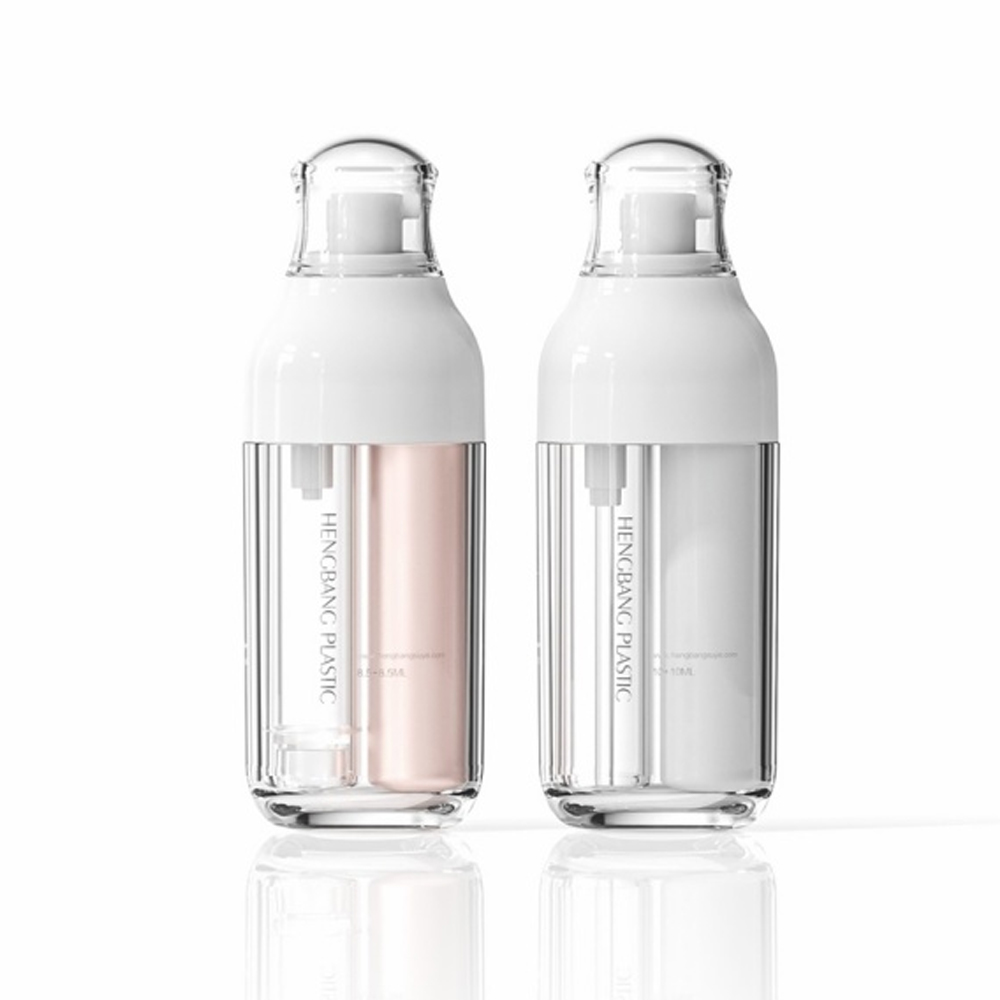
The product description identifies two inner-bottle styles: round bottom and flat bottom. These options can support different aesthetic and technical preferences. A round-bottom inner bottle may create a softer visual impression and can complement rounded cosmetic designs. A flat-bottom inner bottle may provide a more structured appearance and can be preferred when brands want a clear, stable internal base.
The choice between these configurations may influence the appearance of the silver interior through the transparent outer wall. A rounded base can produce subtle changes in light reflection, making the inner surface appear more fluid and sculptural. A flat base can create sharper visual lines and a more architectural impression. The most suitable choice depends on the brand’s identity, the intended product category, and the approved packaging artwork.
Internal geometry can also influence component assembly and product evacuation. The airless system must be matched to the selected bottle structure, formula viscosity, filling method, and pump output. For this reason, a packaging project should include compatibility trials, actuation testing, leakage checks, and evacuation tests before mass production. Selecting the correct inner-bottle style is not only a visual decision; it is part of the complete engineering process.
HB-K009A/B Plastic Airless Lotion Bottle
The supplier, Yuyao Hengbang Plastic Co., Ltd., was established in 2006 and operates from a facility with a building area of approximately 35,000 square meters. With more than 300 employees, the company has developed a substantial production and service foundation for cosmetic and skincare packaging. Its focus on plastic packaging allows the company to concentrate its technical resources on components such as bottles, jars, caps, pumps, and related cosmetic containers.
A dedicated manufacturing base can provide important advantages for product development. Packaging projects often require coordination between structural design, mold development, injection molding, assembly, decoration, quality control, and logistics. When these activities are managed through an organized production system, communication can become more efficient and design changes can be evaluated more quickly.
The company also provides design and development services. This is valuable for brands that have a general concept but need support converting it into a manufacturable container. A professional packaging development team can help evaluate wall thickness, draft angles, parting lines, component tolerances, pump fit, decorative surfaces, and assembly requirements. Early technical review can reduce the risk of expensive mold changes or production delays later in the project.
Injection molding is central to the production of many plastic cosmetic packaging components. In this process, plastic material is heated and injected into a precision mold under controlled pressure. After cooling, the molded part is ejected and inspected. Consistent molding requires stable material preparation, accurate temperature control, appropriate injection parameters, effective cooling, and regular mold maintenance.
For the HB-K009A/B bottle, injection molding is particularly relevant to the pump head and PP inner bottle. The pump head must have a clean surface, consistent geometry, and reliable connection with the pump assembly. The inner bottle must maintain the correct shape so that the airless mechanism operates properly and the completed package remains visually aligned inside the transparent outer bottle.
The transparent outer bottle requires careful attention to appearance. Clear or translucent parts can reveal flow marks, weld lines, bubbles, scratches, contamination, and uneven gloss more readily than opaque parts. A capable manufacturer must therefore control material handling, mold polishing, injection conditions, part removal, inspection, and packaging protection. The transparency of the outer component is a design advantage, but it also raises the standard for visual quality.
The matte silver inner bottle requires another type of process control. Surface spraying must be uniform in color, coverage, adhesion, and gloss level. The coating should be applied consistently around the part so that the silver appearance remains even when viewed through the transparent exterior. Areas near the neck, shoulder, and base may require special attention because their geometry can influence spray coverage.
The bright silver collar is plated to create a reflective finish. Plating processes require surface preparation, controlled deposition, rinsing, drying, and inspection. The finished collar should be checked for color consistency, adhesion, scratches, pinholes, uneven plating, and compatibility with assembly. Because the collar is a highly visible component, even small surface defects can affect the overall impression of the bottle.
Assembly is another critical stage. The cap, pump, collar, outer bottle, inner bottle, and airless components must be fitted in the correct sequence and with controlled force. Misalignment can affect both appearance and function. A collar that is slightly tilted, a cap that does not seat evenly, or an inner bottle that is not centered may reduce the package’s perceived quality. Proper fixtures, trained operators, and standardized work instructions help maintain consistency across production batches.
The company has passed ISO9001:2015 and ISO14001:2015 certifications. ISO9001:2015 is associated with quality management systems, including documented processes, customer-focused quality planning, corrective action, and continual improvement. ISO14001:2015 concerns environmental management systems and encourages organizations to control environmental impacts, comply with applicable requirements, and improve environmental performance.
Certifications do not replace product-specific testing, but they demonstrate that the company has established formal systems for managing quality and environmental responsibilities. For cosmetic packaging buyers, this can provide confidence that production is supported by documented procedures rather than relying solely on informal inspection.
Quality control for an airless lotion bottle should cover incoming materials, molded components, surface treatments, plating, assembly, pump operation, dimensional accuracy, and finished-product appearance. Typical inspection points may include cap fit, pump actuation, output dosage, collar alignment, bottle transparency, coating adhesion, color consistency, leakage resistance, and compatibility with the filling line.
Dimensional control is important because airless packaging contains multiple interacting parts. The neck finish, pump interface, collar, cap, and internal dispensing mechanism must remain within appropriate tolerances. A small dimensional variation can affect how the pump operates or whether the cap closes properly. Regular measurement and sampling help identify deviations before they affect a large production quantity.
Functional testing should include repeated pump actuations. A single successful press does not demonstrate long-term reliability. The pump should be evaluated over a defined number of cycles to check output consistency, recovery, smoothness, and possible leakage. Testing should also consider the actual formula or a representative laboratory substitute because viscosity and rheology can influence pump performance.
Compatibility testing is equally important. Cosmetic formulas may contain oils, alcohols, active ingredients, fragrances, emulsifiers, acids, or other materials that interact differently with PP, MS, coatings, adhesives, and plated surfaces. A proper compatibility program may include filled-package storage at room temperature, elevated temperature, low temperature, freeze-thaw conditions, light exposure, and transport simulation. The exact test plan should be determined by the formula, distribution environment, and product claims.
Environmental management is becoming increasingly important in packaging procurement. The use of plastic should be considered alongside durability, product protection, transportation efficiency, and end-of-life conditions. A well-designed plastic package may reduce breakage and weight compared with glass, but brands should still evaluate material composition, decoration layers, recyclability, local collection systems, and opportunities for material reduction. ISO14001 certification indicates that environmental management is incorporated into the company’s organizational framework.
The HB-K009A/B bottle provides a substantial visual platform for brand development. The transparent outer wall can display printed logos, product names, ingredient communication, or decorative patterns while allowing the silver inner bottle to remain visible. This creates opportunities for layered graphics in which printed elements appear to float over the metallic background.
A restrained decoration strategy may emphasize the bottle’s existing materials. A small logo in black, white, or a metallic color can create a luxury appearance without visually overwhelming the package. A more expressive skincare line may use gradients, color blocks, translucent printing, or coordinated caps and labels. The correct approach depends on the brand’s target consumer, price point, retail environment, and product story.
The matte silver inner surface is suitable for clinical and modern visual systems. Silver can suggest technology, precision, purity, or advanced formulation, while the white pump communicates simplicity and cleanliness. The transparent cap allows the decorative system to remain visible even when the product is closed. This can be useful for shelf presentation because the consumer can immediately see the pump and bottle architecture.
Decoration must be evaluated for durability. The bottle may be exposed to oils, lotions, water, alcohol-based cleaners, friction, temperature changes, and repeated handling. A decoration that looks excellent immediately after production may fade, rub off, or lose adhesion if it is not properly matched to the substrate and use conditions. Sample testing should therefore include abrasion, chemical resistance, temperature exposure, and simulated consumer handling.
The bottle can also support coordinated packaging across a wider cosmetic range. A brand may use the same bottle architecture for moisturizer, serum, sunscreen, lotion, primer, and treatment products, changing only the artwork, color accents, and capacity. This improves shelf recognition and helps create a unified product family. Consistent packaging can also simplify brand education because consumers quickly learn how to operate the same pump format.
The primary application is lotion packaging. Facial lotions and moisturizers often require easy, clean dispensing and benefit from a premium appearance. The airless pump can help maintain a closed package during use, while the controlled output supports repeatable application.
The bottle is also suitable for selected creams. Formulas that are too thick for the pump should be tested carefully, but many lightweight and medium-viscosity creams can be evaluated for compatibility with an airless dispensing system. The pump output of 0.23 cubic centimeters provides a starting point for dosage planning, although formula-specific trials are necessary.
Sunscreen is another possible application. Sunscreen users need convenient dispensing, and a pump can help reduce messy handling. However, sunscreen packaging requires thorough testing because formulas may contain high levels of oils, film-forming agents, filters, or other ingredients that can affect packaging materials and pump performance. Brands should also confirm that the package supports all applicable regulatory, stability, and labeling requirements for the intended market.
Serums and treatment products may benefit from the bottle’s controlled format and premium appearance. Products containing valuable active ingredients are often marketed with a strong emphasis on protection, precision, and advanced care. The airless architecture can support these messages, provided that the final package is validated for the specific formula and claims.
Body lotions and hand-care products can also use this format when the desired brand image is elevated and compact. The 50 milliliter size may be especially appropriate for concentrated hand creams, travel products, professional kits, or boutique skincare lines. For larger-volume body products, a different capacity may be more economical, but the same design concept can still inspire a coordinated packaging range.
Professional and salon products are another potential category. A well-designed pump bottle can be convenient in treatment rooms, reception areas, and retail displays. The closed dispensing system may also support a more orderly workstation compared with open jars. Professional users should nevertheless verify cleaning practices, repeated handling, and the expected number of pump cycles.
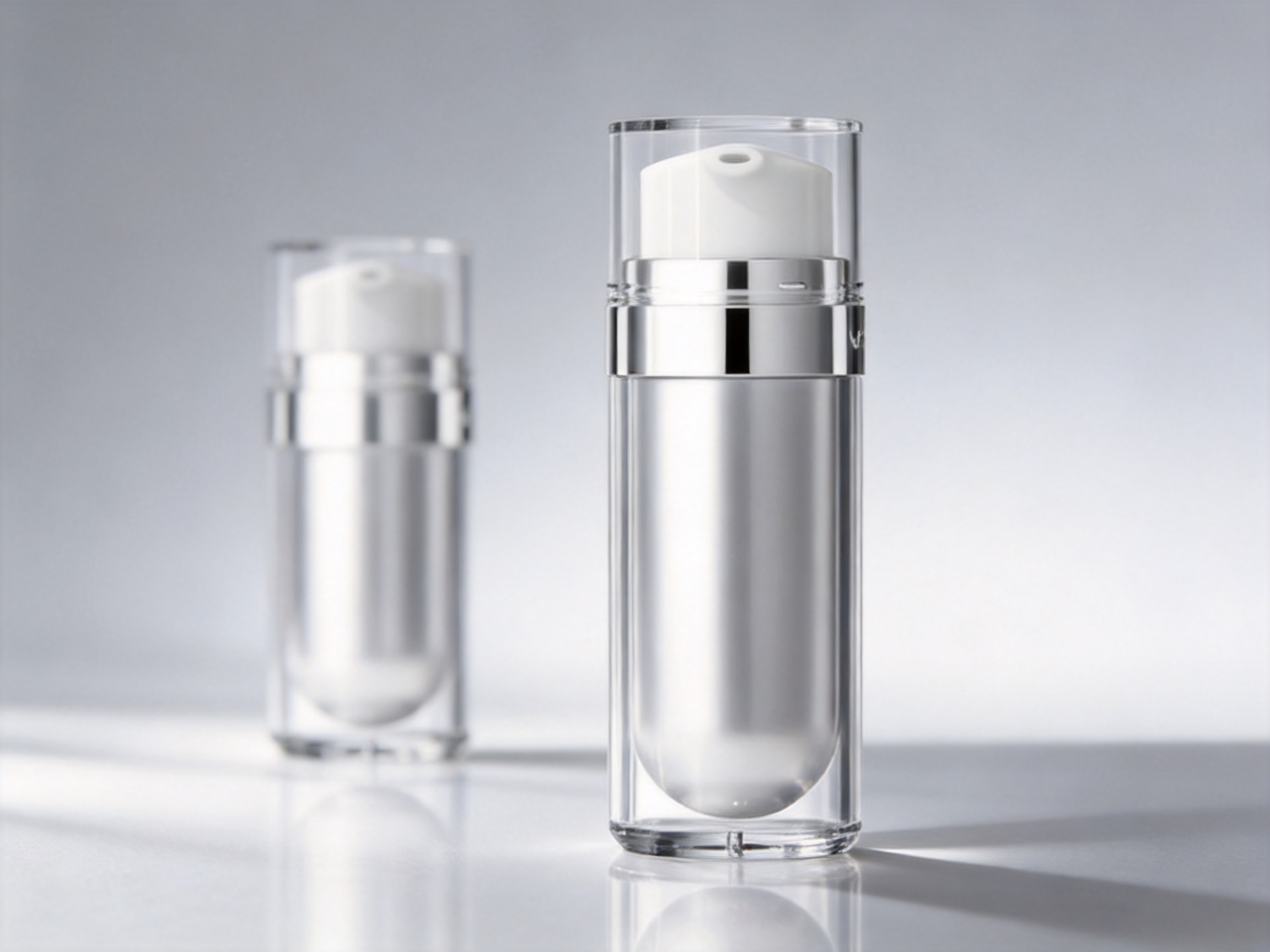
Plastic is sometimes viewed as less luxurious than glass, but modern cosmetic packaging demonstrates that the final experience depends on more than material category alone. Surface finish, component architecture, decoration, color, weight distribution, closure performance, and dispensing technology all contribute to perceived value. The HB-K009A/B bottle uses these elements together to create a premium presentation from plastic components.
Plastic can provide design freedom through injection molding. Complex forms, integrated details, controlled wall profiles, and consistent repeatability can be achieved when molds and processing conditions are properly managed. This is useful for brands that want distinctive packaging while maintaining a scalable production process.
Plastic can also reduce the risks associated with breakage during handling and transportation. This does not mean that plastic packaging is indestructible, and finished products still require drop and shipping tests. However, a plastic bottle is generally more forgiving than a glass container when subjected to everyday impacts. This can be an advantage for e-commerce, travel retail, subscription distribution, and consumer use in bathrooms or gyms.
Weight is another consideration. Lighter packaging may reduce the energy required for transportation, although a complete environmental assessment must consider material quantity, manufacturing energy, decoration, product protection, and end-of-life management. A double-walled bottle may use more material than a simple bottle, but it can also deliver stronger product protection and premium appeal. The correct comparison should therefore be based on the total packaging system rather than on one attribute alone.
A successful cosmetic packaging program requires more than selecting a visually attractive sample. The package must be translated into production drawings, tooling specifications, material requirements, assembly instructions, decoration files, inspection standards, and shipping plans. A manufacturer with design and development capabilities can assist brands throughout this process.
During the concept stage, the manufacturer can review the desired capacity, dimensions, shape, pump output, material combination, and decoration concept. Engineering feedback at this point may identify potential risks such as insufficient draft, difficult demolding, excessive wall variation, unstable standing performance, or limited space for decoration.
During mold development, precision is essential. The mold determines the geometry and repeatability of the components. Mold flow, cooling, ejection, polishing, and venting can influence the final appearance and dimensional stability. Transparent components require particularly careful mold finishing because surface imperfections can become visible in the finished part.
During sampling, brands can evaluate not only appearance but also real user experience. The sample should be filled or assembled as closely as possible to the intended production condition. Testing should include opening and closing the cap, pressing the pump, observing output, checking whether the bottle stands securely, and evaluating how the package feels in the hand.
During mass production, process documentation and inspection standards help maintain consistency. Approved samples should be retained as references for color, gloss, plating appearance, printing position, and assembly. Production records can support traceability and make it easier to investigate any quality issue that arises.
During delivery, protective packing is important because finished cosmetic packaging can be damaged by dust, scratches, pressure, or uncontrolled movement. Clear outer bottles, plated collars, and sprayed surfaces should be protected from contact that could cause visible defects. Packaging configurations should also be tested for transportation conditions and warehouse stacking.
The following table summarizes the supplied product information. Because the source material contains different capacity references in the descriptive text and technical table, buyers should request the latest approved drawing and specification sheet before placing a production order.
| Item | Supplied Specification | Notes |
|---|---|---|
| Product type | Plastic airless lotion bottle | Double-walled, wide-mouth airless pump format |
| Product code | HB-K009A/B | Use the confirmed code in purchase and artwork documents |
| Described capacities | 30 milliliters and 50 milliliters | Confirm final available capacity before production |
| Table-listed capacities | 20 milliliters and 50 milliliters | Technical information should be reconciled with the product description |
| Height | 111.5 millimeters and 149.1 millimeters | Likely associated with different capacity versions; confirm by drawing |
| Diameter | 39.5 millimeters | Confirm tolerance and finish dimensions |
| Pump output | 0.23 cubic centimeter per actuation | Verify with formula-specific testing |
| Cap material | MS | Transparent cap according to the product description |
| Pump material | PP | Injection-molded in white |
| Outer bottle material | MS | Transparent outer bottle |
| Inner bottle material | PP | Sprayed in matte silver; round or flat bottom options |
| Collar finish | Bright silver plating | Confirm plating requirements and resistance standards |
| Typical applications | Lotions, creams, serums, sunscreen, and skincare products | Formula compatibility must be validated before filling |
Brands should begin by identifying the formula characteristics. Viscosity, density, oil content, active ingredients, pH, fragrance, alcohol level, and suspended particles may affect the performance of the airless system. The formula should be evaluated with the actual pump and bottle rather than with a visually similar package from another supplier.
The next step is a component compatibility review. The bottle, pump, cap, collar, coating, plating, and any decorative materials should be exposed to the formula under realistic conditions. Testing should examine discoloration, swelling, stress cracking, odor transfer, loss of adhesion, leakage, pump blockage, output variation, and changes in appearance.
Filling-line trials should follow laboratory compatibility testing. A bottle that performs well in a hand-filled test may behave differently on an automated line. The filling speed, nozzle size, product temperature, air removal, insertion force, capping method, and conveyor handling can all influence the final package. Trial filling can reveal issues related to foaming, product contamination, insufficient priming, or component misalignment.
Brands should also evaluate the pump’s priming behavior. Airless pumps may require several actuations before the first product is dispensed, especially after filling or transport. The number of priming presses should be documented, and consumer instructions may be needed if the product has a specific operating sequence.
Drop and transportation testing should be conducted with the finished package. Tests may include drops from different orientations, vibration, compression, temperature cycling, and simulated distribution. The purpose is to confirm that the cap remains secure, the pump does not become damaged, the collar remains aligned, and the bottle does not leak or suffer unacceptable cosmetic defects.
Finally, a production approval sample should be signed off before mass manufacturing. This sample should represent the approved material, color, coating, plating, decoration, assembly, and pump output. Clear acceptance criteria reduce misunderstandings between the buyer and manufacturer and create a practical reference for later inspections.
Consumers generally prefer packaging that is easy to understand and easy to operate. The HB-K009A/B bottle has a familiar pump format that requires little explanation. The transparent cap communicates that the package is closed and protected, while the visible pump head shows where to press. This intuitive design reduces the learning curve for first-time users.
The bottle’s compact cylindrical profile can be comfortable to hold. The 39.5 millimeter diameter provides a narrow enough body for controlled handling while maintaining a premium visual proportion. A stable base can help prevent accidental tipping on a vanity or bathroom counter, although final stability depends on the base geometry, center of gravity, filled weight, and surface conditions.
Airless dispensing can also help keep the package clean. The user does not need to touch the formula directly, and the pump outlet can be wiped if necessary. This can be especially appealing for facial products and products shared by multiple users in professional environments.
The transparent cap helps consumers see whether the pump is covered before placing the bottle into a bag or storage area. This small feature can reduce accidental contact with the pump head and provide a visual confirmation that the package is closed. The cap also supports the overall layered design by allowing the silver collar and white pump to remain part of the visible presentation.
Packaging must perform both on the shelf and in the shipping carton. The HB-K009A/B bottle has a strong shelf presence because its double-walled construction creates depth and contrast. Silver details can catch light, while the transparent outer wall adds clarity. The bottle can therefore attract attention without requiring excessive decoration.
The flat, controlled surfaces of the bottle provide room for product information and branding. This is useful for retail products that must communicate the product name, benefits, usage directions, net contents, warnings, batch information, and other regulatory details. Artwork should be planned around the bottle’s curvature and any required clear-space areas.
For e-commerce, the plastic construction may reduce the likelihood of breakage during parcel handling compared with glass, but protective secondary packaging remains necessary. Brands should consider how the cap is secured, whether the pump can be accidentally pressed in transit, and how the package will be protected from scratches. A well-designed carton or insert can preserve the bottle’s surface finish while also strengthening the unboxing experience.
The bottle may be particularly effective for premium online brands that rely on visual presentation in product photography. The transparent and silver layers can create attractive highlights under studio lighting. Product photographs should represent the actual finish accurately, especially where matte and bright metallic elements are used together.
Yuyao Hengbang Plastic Co., Ltd. describes its business philosophy as “Quality, Integrity, and Customer First.” These principles are relevant to custom cosmetic packaging because successful projects depend on more than the initial sample. A brand needs reliable communication, consistent production, controlled delivery, and responsive support when technical questions arise.
The company’s experience since 2006 provides a substantial operating history in plastic packaging for cosmetic and skincare applications. Its professional team offers design and development support, which can be useful for customers that need a complete packaging solution rather than a standalone component. The stated workforce of more than 300 employees and facility area of approximately 35,000 square meters indicate a developed manufacturing organization capable of supporting multiple production activities.
The company was recognized as a Ningbo High-Tech Enterprise in 2021 and owns multiple invention patents. These achievements suggest an emphasis on technical development and innovation. In packaging, innovation may include improvements in dispensing systems, structural design, manufacturing efficiency, material use, assembly, and decorative effects. Brands should ask for product-specific technical details when a patent or advanced process is especially relevant to their project.
A supplier’s manufacturing strength is most valuable when it directly supports the buyer’s objectives. For the HB-K009A/B bottle, those objectives may include a premium appearance, reliable airless operation, stable supply, flexible capacity selection, suitable decoration, and consistent quality across production batches. The company’s combination of product specialization, design services, formal management systems, and manufacturing experience provides a foundation for addressing these needs.
Open-mouth jars are familiar and can accommodate thick creams, but they expose the product whenever the lid is removed. Users may also touch the formula directly, which can affect cleanliness and consumer perception. The HB-K009A/B airless bottle provides a closed dispensing route and a measured pump output, making it a stronger option for brands that prioritize controlled use and a more hygienic interaction.
A jar may offer a broader opening for scooping, while the airless bottle offers greater control. The correct choice depends on formula viscosity, consumer expectations, and brand positioning. For lotions and medium-viscosity treatments, the airless bottle can provide a more convenient alternative to a jar without sacrificing a premium appearance.
Standard lotion bottles may use a simple squeeze body or a conventional pump with a dip tube. These formats can be economical, but they may provide less protection from air exposure and may leave more residual product inside the container. The double-walled airless structure offers a more advanced dispensing concept and a visually distinctive construction.
Glass can create a luxurious hand feel and strong chemical resistance, but it is heavier and more vulnerable to breakage. The plastic airless bottle offers a lighter, more impact-tolerant alternative with greater molding flexibility. The transparent outer wall and metallic finishes help create a premium look while retaining the practical advantages of plastic.
Single-wall plastic bottles can be simple and cost-effective, but they often have a less dimensional appearance. The double-walled structure of the HB-K009A/B bottle provides visual depth, a more substantial profile, and a protected inner decorative layer. For brands competing in premium skincare, these differences can support stronger shelf differentiation.
Sustainability should be addressed at the design and development stage. Brands should review the total amount of material used, the number of components, the compatibility of coatings and plating with local recycling systems, and the availability of collection infrastructure in target markets. A package should not be described as sustainable solely because it is plastic or because it uses less material in one component.
The double-walled structure creates a premium appearance and may improve protection, but it also introduces multiple components and material combinations. Brands that prioritize recyclability should discuss material selection, separation possibilities, decoration choices, and end-of-life communication with the manufacturer. In some markets, consumers may not be able to separate the pump, collar, outer bottle, and inner bottle easily, so regional recycling guidance should be considered.
Durability is also part of sustainability. A package that protects the formula, survives transportation, and allows consumers to use more of the filled product may reduce waste associated with breakage, leakage, or unused residue. Airless evacuation can contribute to efficient product use, though the actual benefit should be verified through performance testing.
Environmental improvements may also come from production efficiency, responsible material management, controlled scrap rates, optimized shipping cartons, and compliance with an environmental management system. The manufacturer’s ISO14001:2015 certification provides a framework for these efforts, while individual projects should still define measurable environmental objectives where appropriate.
It is designed primarily for lotions and skincare products, and it may also be suitable for creams, serums, sunscreen, primers, and other compatible cosmetic formulations. The final application depends on viscosity, ingredients, dispensing requirements, and compatibility test results.
Airless dispensing uses an internal mechanism that moves the product toward the pump outlet as the package is used. This minimizes the amount of air entering the product chamber during normal dispensing compared with many conventional bottles. It can support cleaner use, controlled delivery, and improved product evacuation.
The supplied information lists MS for the cap and outer bottle, and PP for the pump and inner bottle. The pump head is injection-molded in white, the outer bottle and cap are transparent, and the inner bottle is sprayed matte silver. The collar is plated in bright silver.
The product description states 30 milliliters and 50 milliliters, while the supplied technical table lists 20 milliliters and 50 milliliters. This discrepancy should be confirmed with the manufacturer before ordering. The final capacity should be selected according to the approved mold, drawing, and filling requirement.
The inner bottle can be selected in a round-bottom or flat-bottom style according to the supplied product description. The best choice depends on visual preference, component configuration, and technical compatibility with the selected capacity and airless system.
The supplied information lists a pump output of 0.23 cubic centimeters per actuation. The actual dosage should be verified through testing with the intended formula because viscosity, temperature, filling condition, and component tolerances can affect output.
The bottle’s transparent outer surface and silver inner component provide a useful base for brand decoration. Possible options may include printing, labeling, metallic effects, or other compatible treatments. Customization should be discussed with the manufacturer and tested for adhesion, abrasion resistance, chemical resistance, and visual consistency.
It may be suitable for sunscreen products, but sunscreen formulas require dedicated compatibility, stability, pump performance, and regulatory testing. A brand should not assume compatibility based only on appearance or use by another product category.
Brands should evaluate formula compatibility, pump priming, dosage consistency, leakage resistance, cap fit, drop performance, transport durability, coating adhesion, plating quality, color consistency, and filling-line performance. A production approval sample should be confirmed before full-scale manufacturing.
The company states that it has passed ISO9001:2015 and ISO14001:2015 certifications. It also states that it was recognized as a Ningbo High-Tech Enterprise in 2021 and owns multiple invention patents.
Buyers should request the latest technical drawing, component specification, capacity confirmation, material declaration, decoration standard, inspection standard, and approved sample. This is especially important because the supplied description and table contain different references for the smaller capacity.
The HB-K009A/B plastic airless lotion bottle combines several features that are increasingly important in cosmetic packaging: controlled dispensing, reduced routine air exposure, double-walled construction, premium metallic detailing, transparent visual layers, plastic practicality, and flexible application potential. Its white pump head, matte silver inner bottle, bright silver collar, transparent outer bottle, and transparent cap create a clean and modern appearance that can support premium skincare positioning.
Its advantages over simpler packaging formats include a more hygienic user interaction than an open-mouth jar, a more distinctive appearance than a basic single-wall bottle, and lower breakage risk than many glass alternatives. The 0.23 cubic centimeter pump output supports measured application, while the available capacity and inner-bottle options provide flexibility for different product ranges.
The product’s performance depends on careful development. Brands should reconcile the listed capacity information, confirm final dimensions, test the formula with the complete package, validate pump behavior, and approve decoration and assembly standards before mass production. These steps are essential for ensuring that the visual design is matched by reliable function.
Backed by a manufacturing organization established in 2006, a facility of approximately 35,000 square meters, more than 300 employees, design and development services, ISO9001:2015 and ISO14001:2015 certifications, high-tech enterprise recognition, and multiple invention patents, the supplier presents itself as a capable partner for cosmetic packaging development. For brands seeking a refined airless package that balances modern aesthetics, practical dispensing, and scalable plastic manufacturing, this bottle offers a strong platform for lotions, creams, serums, sunscreen, and other skincare products.
1. Product specification and descriptive information supplied for the HB-K009A/B plastic airless lotion bottle.
2. Material information supplied for the cap, pump, outer bottle, and inner bottle components.
3. ISO 9001:2015, Quality Management Systems — Requirements.
4. ISO 14001:2015, Environmental Management Systems — Requirements with Guidance for Use.
5. General principles of airless cosmetic dispensing systems and vacuum-assisted product evacuation.
6. General technical practices for injection molding of plastic cosmetic packaging components.
7. General testing practices for cosmetic package compatibility, leakage, pump performance, and transportation durability.


Copyright © Yuyao Hengbang Plastic Co., Ltd.
All Rights Reserved.
 Wholesale Plastic Cosmetic Packaging Manufacturers