English
 中文简体
中文简体
News
Home > Author > Li Wenjing — Cosmetic Packaging After-Sales Specialist > HB-R001 PETG White Lotion Bottle: Refined Packaging for Modern Skincare

 2026.08.01
 Li Wenjing — Cosmetic Packaging After-Sales Specialist
Content

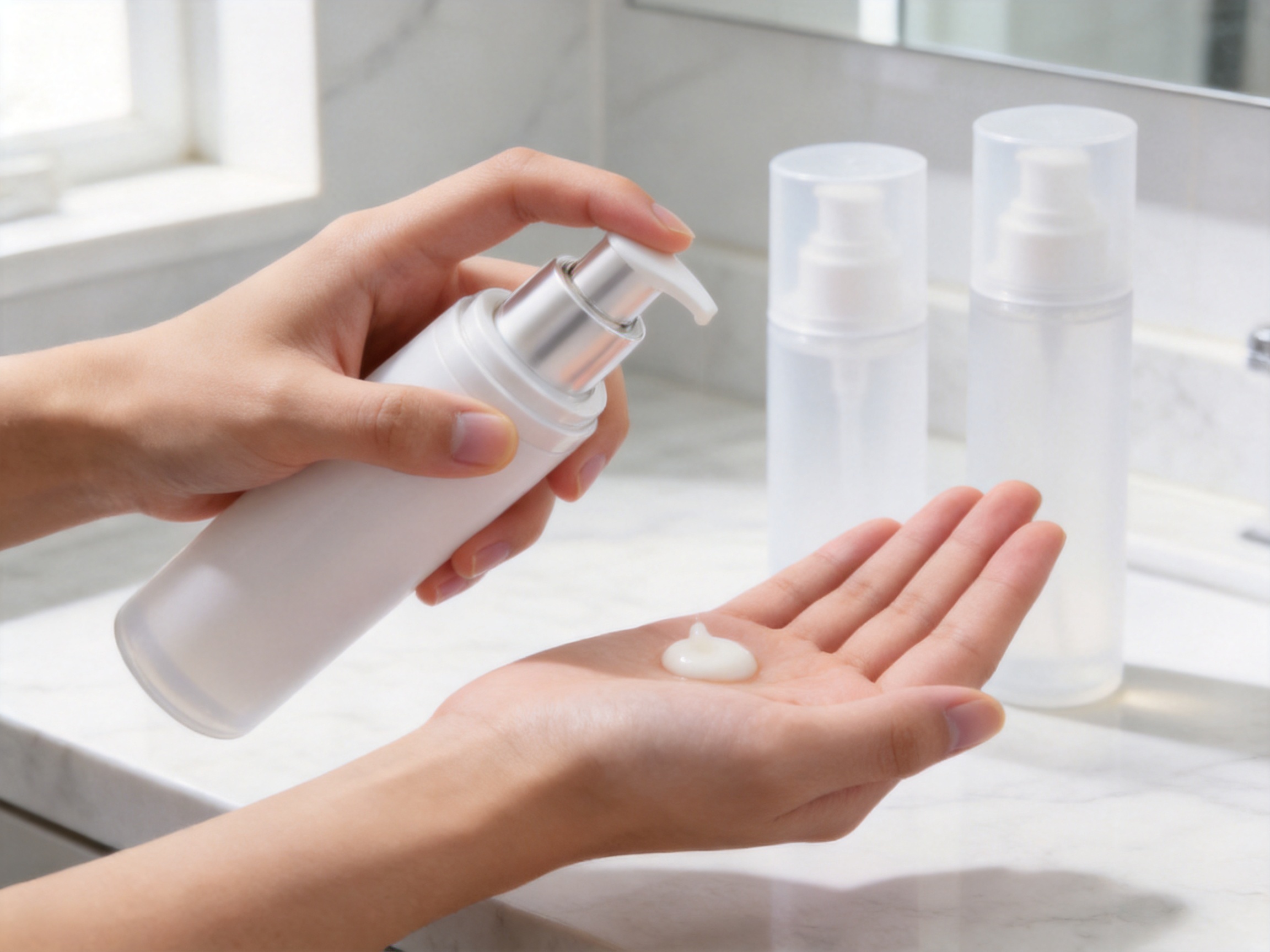
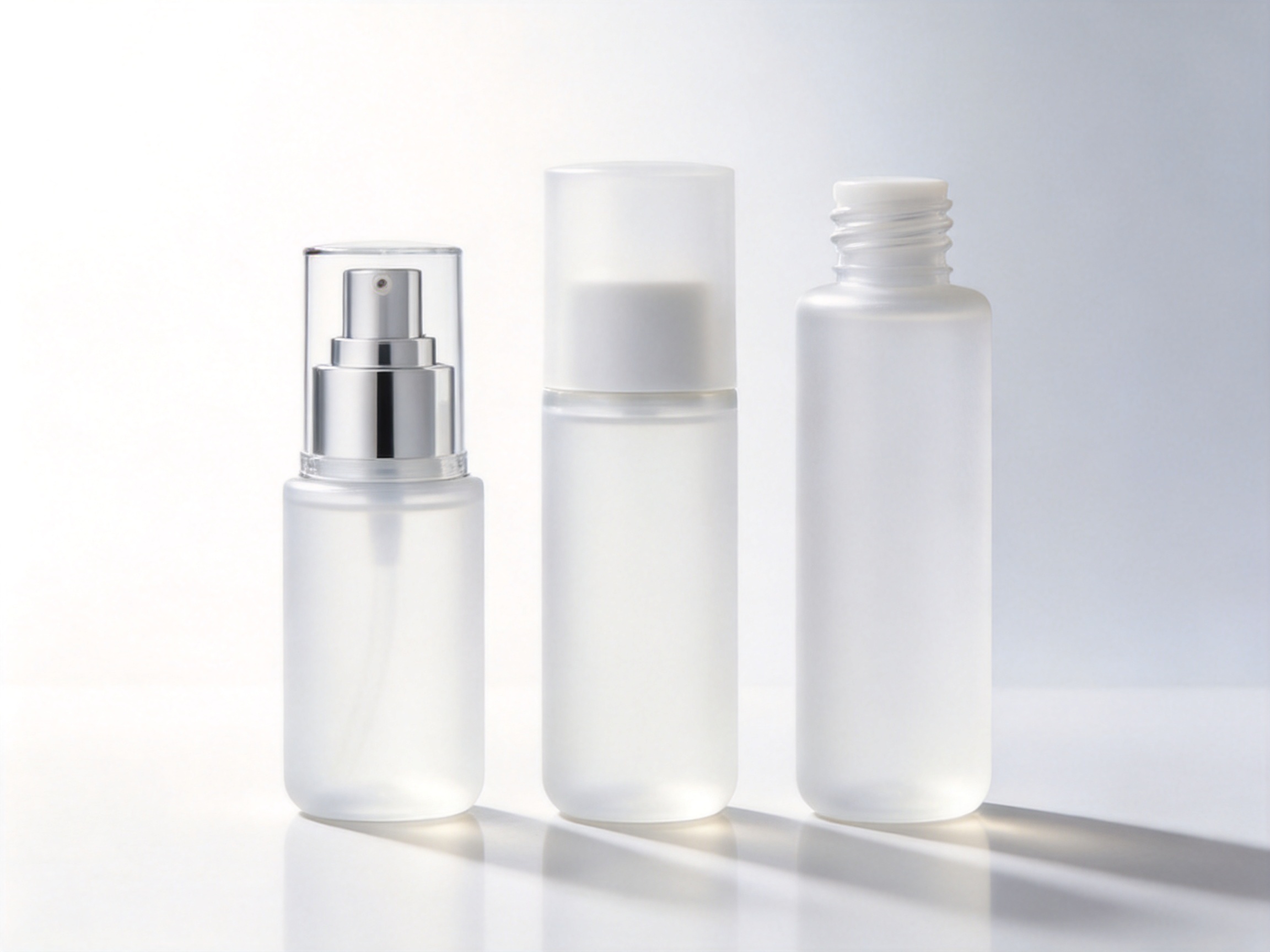
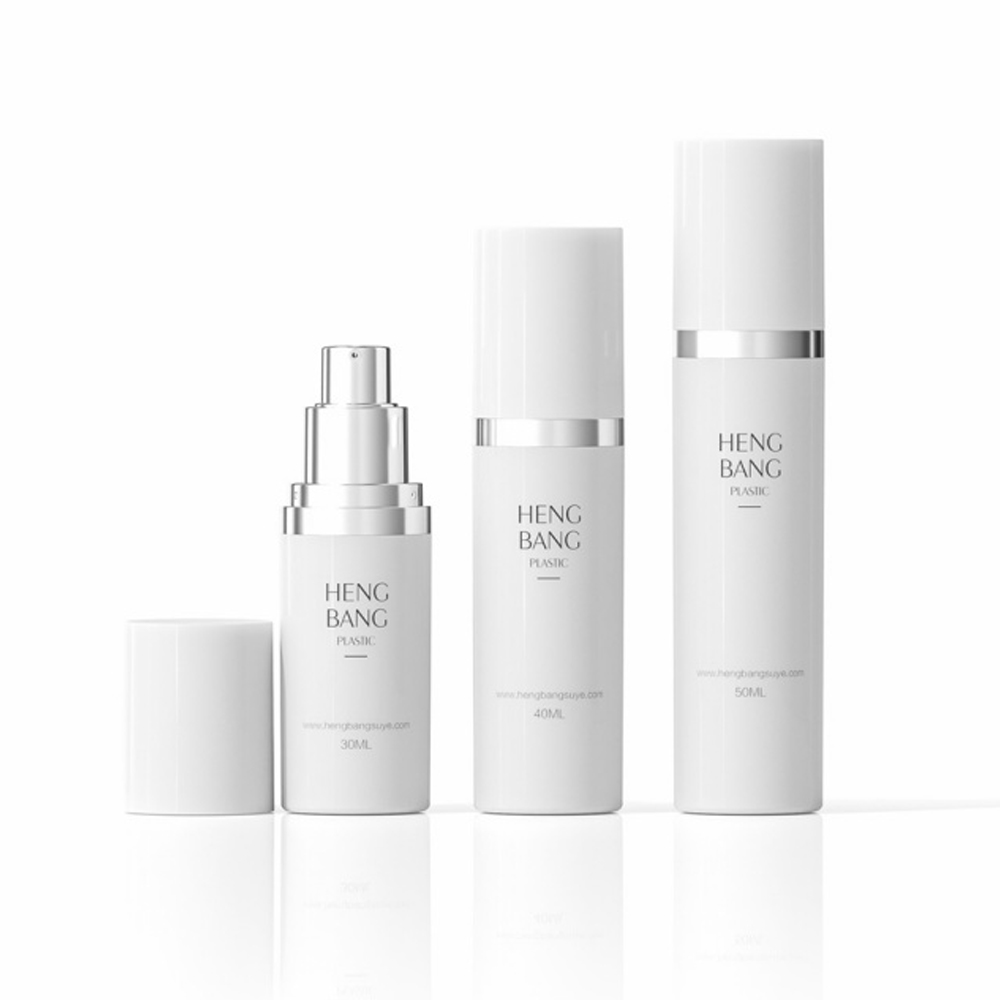
HB-R001 PETG White Lotion Bottle
In the skincare and personal care market, packaging is no longer limited to protecting a formula. A bottle must communicate quality, support convenient daily use, preserve product integrity, and provide a suitable surface for brand presentation. The HB-R001 PETG White Lotion Bottle is designed around these expectations. Its cylindrical silhouette, clean white appearance, PETG construction, practical capacities, and compatible dispensing options make it a versatile choice for lotions, emulsions, serums, creams, and other skincare formulations.
The HB-R001 combines a minimalist visual language with functional packaging performance. Its smooth, stable lines create a premium impression without excessive decoration, while its rounded body offers a comfortable grip for routine use. The bottle can be produced with a high-transparency or frosted PETG finish, allowing manufacturers and brands to select an appearance that matches their formula, positioning, and target market. A pump dispenser or twist cap can be used according to the intended application, creating flexibility across different product concepts.
For cosmetic brands, packaging selection involves balancing design, usability, production consistency, customization, and supply capability. The HB-R001 addresses these requirements through a practical structure that is suitable for both established skincare lines and emerging brands. Available in 30 ml, 40 ml, and 50 ml capacities, it can support different product volumes while maintaining a consistent visual identity across a collection.
The HB-R001 is a cylindrical PETG lotion bottle developed for skincare and cosmetic packaging applications. Its body has a straightforward geometric form, making it easy to integrate into a broad range of product lines. The balanced proportions create an uncluttered appearance that works well with modern, clinical, natural, luxury, and professional skincare concepts.
The cylindrical shape is especially useful for brands seeking a bottle that is visually familiar but still refined. Unlike highly complex molded forms, a cylindrical bottle can provide a consistent hand feel, straightforward labeling or decoration areas, and a stable appearance on retail shelves. Its uncomplicated profile also supports coordinated packaging systems in which several products share the same shape but use different capacities, colors, closures, or surface treatments.
The white finish gives the HB-R001 an immediately clean and hygienic appearance. White cosmetic packaging is widely associated with purity, simplicity, and professional skincare. It can be used for moisturizing lotions, facial emulsions, sunscreen products, body lotions, cleansing products, and other formulas where a calm and trustworthy visual presentation is important. The PETG material can also be offered in a high-transparency or frosted appearance, giving brands additional creative options.
A transparent finish can help display the color and texture of a formula, particularly when the product itself has a distinctive appearance. A frosted finish, by contrast, creates a softer and more luxurious visual effect. It diffuses light across the surface and can make the bottle feel more comfortable and sophisticated. The white version provides a stronger opaque appearance, which may be preferred for a uniform brand system or for products that require a more controlled visual presentation.
The HB-R001 is designed to avoid unnecessary complexity. Its straight, cylindrical body provides a clear container format that is easy for consumers to understand and use. The stable lines support efficient handling, while the rounded profile reduces sharp edges and contributes to a smooth tactile experience.
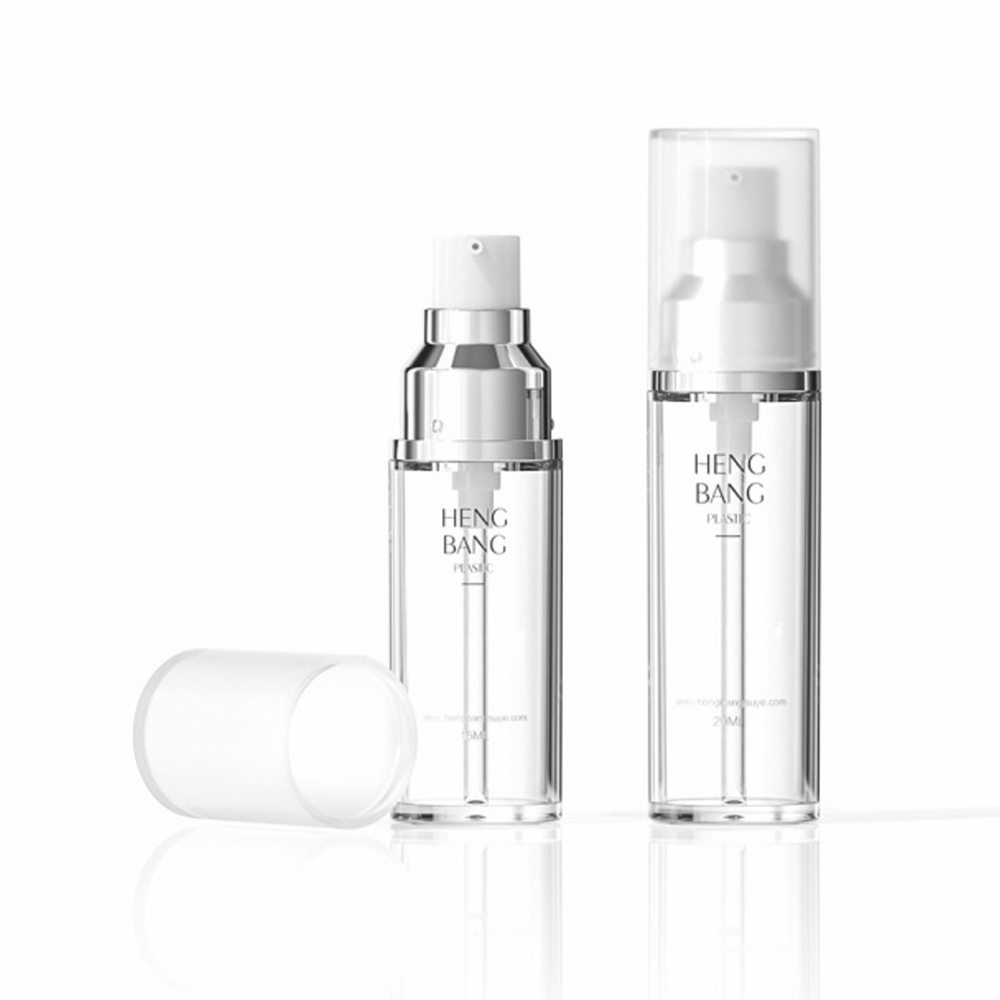
The bottle may be paired with a sophisticated pump dispenser or a twist cap. A pump is suitable for lotions, emulsions, and other products that require measured, hygienic dispensing. It can help users dispense a controlled amount without repeatedly inserting fingers into the container. A twist cap offers a different user experience and may be appropriate for formulas with a thicker texture or for product concepts that emphasize portability and simple closure operation.
The availability of different closure options allows the same bottle concept to serve multiple product categories. This is an important benefit for cosmetic packaging programs because a brand may wish to develop a family of products that share a recognizable body while using closures to distinguish product functions. For example, a pump may be selected for a daily facial lotion, while a twist cap may be considered for a richer body product or a travel-oriented format.
PETG, or polyethylene terephthalate glycol-modified, is widely used in packaging applications that require a combination of clarity, appearance, and practical processing characteristics. In the HB-R001, PETG provides a smooth and refined surface that supports both transparent and frosted visual effects.
One of the most noticeable advantages of PETG is its clear, bright appearance. Compared with materials that may appear dull or hazy, PETG can deliver a warm luster and a polished presentation. This makes it appropriate for brands that want their packaging to look clean and contemporary. When a transparent or lightly frosted version is selected, the material can help reveal the formula or create a soft visual relationship between the container and its contents.
PETG also offers a pleasant tactile quality. The bottle surface can feel smooth in the hand, which contributes to the perception of product quality during everyday use. In skincare packaging, touch is an important part of the consumer experience. A bottle is handled repeatedly, placed on a vanity, carried in a bag, or used in a bathroom environment. A comfortable surface and well-balanced form can make routine product use feel more controlled and enjoyable.
Another advantage is PETG’s suitability for detailed cosmetic decoration. The HB-R001 surface supports silk-screen printing and hot stamping. These methods allow brands to apply logos, product names, usage information, decorative lines, and other visual elements directly to the bottle. The result can be a more integrated appearance than a basic label-only solution, particularly when the artwork is designed to work with the bottle’s cylindrical geometry.
Silk-screen printing is a flexible decoration method for cosmetic containers. It can be used to create crisp text, solid color blocks, fine logos, and understated graphic details. On a white bottle, dark or metallic ink can create strong contrast. On a transparent or frosted surface, selected ink colors can emphasize the formula’s appearance or create a light, elegant effect.
Hot stamping can add a premium accent to the packaging. Metallic gold, silver, and other foil effects can be used for a logo, product name, border, or small decorative element. Because hot stamping is often associated with prestige packaging, it can help position the same basic bottle structure for different market segments. A restrained metallic mark may support a luxury skincare line, while a simple one-color print may be better suited to a clean-label or professional product range.
Decoration should be considered during the early development stage. Artwork size, print position, color contrast, logo proportions, and the relationship between the body and closure all influence the final result. The cylindrical body of the HB-R001 provides a consistent decoration area, but brands should evaluate artwork around the curved surface to ensure that text remains legible and that visual elements are aligned correctly.
For brands developing multiple products, the bottle can also serve as a foundation for a coordinated packaging architecture. Different printed colors can distinguish product functions, while a common body shape creates family recognition. Capacity variations can separate trial, standard, and larger-use formats without requiring a completely different visual system.
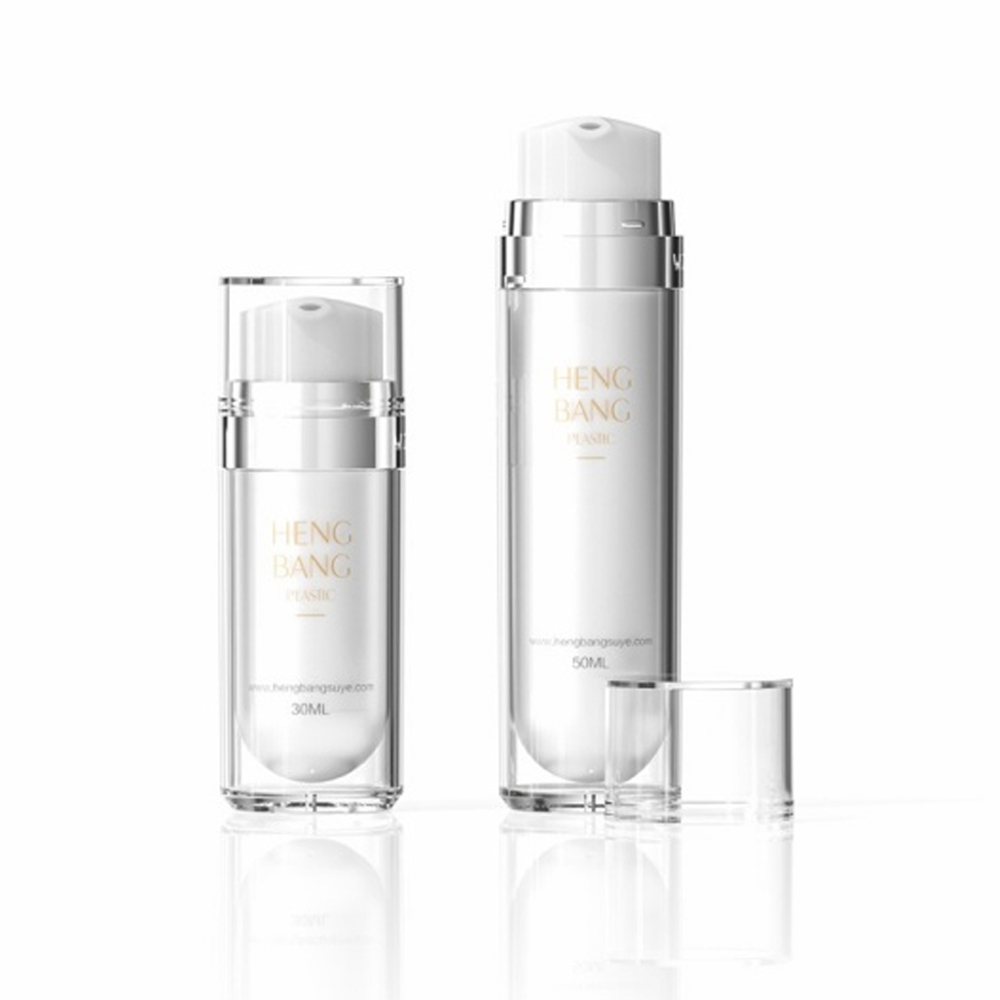
The HB-R001 is described in 30 ml, 40 ml, and 50 ml capacities. This range is practical for a variety of skincare and cosmetic products. Smaller capacities may be suitable for concentrated treatments, premium samples, travel formats, or products intended for controlled consumption. The 40 ml option can serve as an intermediate size for facial lotions and emulsions. The 50 ml version offers additional product volume while retaining a compact and elegant footprint.
| Capacity | Listed Height | Potential Application Direction | Packaging Consideration |
|---|---|---|---|
| 30 ml | 107 mm | Facial lotion, emulsion, serum, travel or premium trial format | Compact size for handbags, travel kits, and concentrated products |
| 40 ml | 126 mm as listed in the product information | Daily skincare lotion, light cream, treatment product | Balanced volume for regular consumer use |
| 50 ml | 145 mm as listed in the product information | Moisturizer, sunscreen, body or facial care product | Larger capacity for extended use and value-oriented positioning |
| All listed sizes | Diameter listed as 33 mm | Cosmetic and skincare packaging programs | Consistent cylindrical format for product-line coordination |
The listed dimensions should be confirmed during technical development because packaging measurements may vary according to the selected closure, component configuration, production tolerance, and final mold specification. The product information lists a diameter of 33 mm and heights of 107 mm, 126 mm, and 145 mm for the three capacity options. The middle and larger entries are presented with volume-style abbreviations in the original specification, so a final technical drawing should be used to verify the exact dimensional notation before production.
A range of capacities offers important commercial flexibility. Brands can use the 30 ml bottle for a new product launch or gift set, the 40 ml bottle for a core item, and the 50 ml bottle for a replenishment or value format. Keeping a similar shape across these sizes may simplify visual merchandising and help consumers recognize the product family.
Dispensing performance is a central consideration for lotion packaging. The HB-R001 can be paired with a pump dispenser or twist cap, giving brands the ability to select a closure that matches the product’s viscosity and usage pattern.
A pump can support controlled dispensing and convenient one-handed use. This is valuable for lotions and emulsions used as part of a daily skincare routine. A properly matched pump can reduce unnecessary exposure of the formula to the surrounding environment and help maintain a clean dispensing experience. It can also make it easier for users to apply a consistent amount, which is useful for products such as facial moisturizers, body lotions, and sunscreen products.
A twist cap offers a familiar and straightforward closure format. It can be useful where the product requires a wider opening, where the formulation is relatively thick, or where the brand prefers a compact top structure. The cap can also contribute significantly to the overall appearance of the bottle. A coordinated cap color, surface finish, or decorative treatment can transform the visual character of the package without changing the main bottle body.
The product information specifies a cap material of MS/ABS, a pump material of PP plus ABS, and a PETG bottle. The exact material configuration should be confirmed for each finished component and application. Brands should also evaluate compatibility between the formulation, bottle, dip tube, gasket, spring system, closure liner, and any decorative coating. Formula compatibility testing remains essential because the suitability of a packaging system depends on the complete product package rather than the bottle material alone.
A reliable closure helps protect the product during storage, transport, and daily use. The HB-R001 is presented with an emphasis on airtight sealing and effortless dispensing. In practical development, sealing performance should be checked through torque testing, leakage testing, environmental testing, and compatibility evaluation under the expected storage conditions.
For pump configurations, the complete dispensing system should be assessed. Important factors include pump output, actuation force, return performance, residual product, closure fit, and the ability of the pump to handle the formula consistently. For twist-cap configurations, developers should verify thread engagement, opening and closing behavior, liner contact, and the package’s resistance to leakage under normal handling.
These evaluations help ensure that the packaging performs as expected from factory filling through consumer use. They also reduce the risk of problems caused by mismatched components. A visually attractive bottle is valuable, but its commercial success depends equally on dependable performance and a good user experience.
The HB-R001 offers several practical advantages when compared with basic, generic lotion bottles. First, its cylindrical profile has a refined and intentionally designed appearance. A simple shape does not have to look ordinary. Through PETG material quality, surface treatment, closure selection, and decoration, the bottle can achieve a premium appearance while remaining structurally uncomplicated.
Second, the bottle offers greater visual flexibility than an opaque, single-finish container. The availability of high-transparency, frosted, and white appearances gives brands options for different product identities. A transparent look can emphasize clarity and formula visibility. Frosting can create a soft, elegant effect. White can support a clean, clinical, or minimalist presentation.
Third, the bottle supports multiple decoration processes. Silk-screen printing and hot stamping provide more opportunities for customization than an undecorated stock container. Brands can create a more distinctive presentation through logo placement, typography, metallic accents, and color coordination.
Fourth, the 30 ml, 40 ml, and 50 ml capacity range can support a product series. A basic bottle may be available in only one size or one closure configuration, which can make it difficult to build a coherent product family. The HB-R001’s range provides a starting point for organizing different products according to usage, price, or market positioning.
Fifth, the bottle is suitable for several categories rather than being limited to one formulation type. Its intended applications include lotion and skincare products, while the broader cosmetic packaging category also includes sunscreen, toner, cream, and related personal care products. Suitability must always be confirmed through formulation and compatibility testing, but the container’s overall concept is adaptable.
Many brands want packaging that looks premium but remains practical to manufacture, fill, decorate, and transport. Highly sculpted bottles can create visual impact, but they may require more complicated tooling, specialized filling arrangements, or additional packing protection. The HB-R001 takes a more balanced approach. Its premium impression comes from proportion, surface quality, finish, and component coordination rather than from an overly complicated shape.
This approach may help brands achieve a sophisticated appearance while keeping the packaging system easier to standardize. The cylindrical geometry is familiar to filling and packaging operations, and the smooth body can provide a consistent area for decoration. Nevertheless, actual production efficiency depends on the confirmed design, decoration process, filling equipment, order quantity, and quality requirements.
The HB-R001 is produced by Yuyao Hengbang Plastic Co., Ltd., a manufacturer specializing in plastic packaging for cosmetics and skincare products. The company was established in 2006 and operates with a building area of approximately 35,000 square meters and more than 300 employees. This scale indicates an established production organization capable of supporting product development, manufacturing coordination, quality management, and customer service.
The company provides design and development services in addition to manufacturing. This is important for brands that need support during the transition from a packaging concept to a production-ready component. Development assistance may involve confirming the bottle structure, reviewing closure combinations, discussing surface decoration, checking capacity and dimensions, and coordinating samples for evaluation.
A professional packaging supplier should be able to consider the entire product system rather than treating the bottle as an isolated component. The bottle body, pump, cap, decoration, filling process, transport packaging, and final consumer experience all influence the result. A supplier with experience in cosmetic packaging can help identify potential issues earlier in the development cycle and create a clearer path toward mass production.
Yuyao Hengbang Plastic Co., Ltd. has passed ISO9001:2015 and ISO14001:2015 certifications according to the supplied company information. ISO9001:2015 relates to quality management systems, while ISO14001:2015 relates to environmental management systems. These certifications demonstrate that the company has established management frameworks for quality-related processes and environmental management practices.
Certification alone does not replace product-specific testing, but it can provide useful evidence of a structured operating environment. For cosmetic packaging buyers, a documented quality system may support more consistent production control, clearer procedures, improved traceability, and more organized handling of customer requirements.
Quality management for a PETG lotion bottle may include incoming material checks, molding-process controls, dimensional inspection, appearance inspection, closure matching, decoration verification, and packaging inspection. Depending on the order and application, customers may also request sampling plans, inspection reports, production samples, and performance testing.
The company has been recognized as a Ningbo High-Tech Enterprise and owns multiple invention patents, based on the provided company profile. These achievements indicate an emphasis on technical development and intellectual property. For a packaging manufacturer, research and development capability can contribute to improvements in component structure, tooling, dispensing systems, production efficiency, decoration, and quality control.
Development capability is especially relevant when a brand needs more than an off-the-shelf package. A customer may require a different closure, a specific surface effect, a modified capacity, a special color, or a coordinated set of components. The ability to discuss these requirements with a technically experienced supplier can improve communication and reduce unnecessary design revisions.
The company’s young and professional team is described as providing a full range of services, including design and development. This supports a service model in which the supplier can participate from early concept discussions through sampling, production preparation, and delivery coordination. Clear communication remains essential, but an integrated supplier relationship can be more efficient than working with multiple disconnected vendors.
The exact manufacturing route for a finished cosmetic bottle depends on the final design and production specification. A typical development process begins with product definition. At this stage, the brand and manufacturer confirm the intended formula, capacity, closure, appearance, decoration, target market, and filling requirements.
Next, the technical team reviews the bottle structure. Important points include wall thickness, neck dimensions, base stability, shoulder design, mouth finish, closure fit, and the relationship between the internal volume and external dimensions. A PETG bottle must be designed to deliver the required appearance while meeting handling and performance expectations.
Tooling and process preparation follow design confirmation. Mold conditions, material behavior, cooling, surface requirements, and dimensional tolerances must be considered. The selected production process should create a stable container with consistent appearance and reliable closure engagement. Any frosted or white surface treatment must also be defined clearly, including color target, opacity, gloss level, and acceptable appearance variation.
After initial samples are produced, the bottle should be evaluated both visually and functionally. Sampling can confirm the capacity, dimensions, surface quality, closure compatibility, dispensing behavior, and decoration position. If the package will be used with a specific formula, compatibility testing should begin with representative samples and the intended product composition.
Production inspection may address several categories of quality. Dimensional inspection can verify height, diameter, neck finish, and other critical measurements. Visual inspection can identify scratches, black spots, deformation, color variation, bubbles, flow marks, surface defects, or uneven frosting. Functional inspection can evaluate closure fit, pump actuation, leakage resistance, and dispensing output.
Decoration inspection is also important. Silk-screen printing should be checked for color consistency, registration, adhesion, edge definition, and text clarity. Hot stamping should be evaluated for foil transfer, completeness, alignment, and resistance to handling. The acceptable standard should be confirmed with approved samples or a signed color and appearance reference.
Inspection standards are most effective when agreed before mass production. A clear quality specification can define critical defects, major defects, minor defects, allowable tolerances, sampling procedures, and packaging requirements. This creates a common reference for the supplier and customer and helps prevent misunderstandings during order fulfillment.
The HB-R001 is primarily described as a PETG lotion bottle, but its design can support several related applications after appropriate testing. Facial lotions and emulsions are natural uses because the bottle can be paired with a pump for controlled dispensing. The 30 ml and 40 ml options may be suitable for concentrated or premium facial care products, while the 50 ml size can provide a larger daily-use format.
Moisturizers and light creams can also be considered, particularly when the selected closure is compatible with the formula’s viscosity. If the product is thick, the filling and dispensing system should be tested carefully to confirm that the user can obtain the desired amount without excessive force or repeated pumping.
Sunscreen packaging requires special attention to formula compatibility, light exposure, dispensing performance, and consumer use patterns. The white or frosted appearance may support a clean and protective visual identity, but the final package must be evaluated with the specific sunscreen formulation. Testing should include storage conditions and repeated-use simulation.
Toner products are often more fluid than lotions, so the closure choice and dispensing output become particularly important. A pump or suitable cap can be selected according to the formula and application method. For a toner presented in a lotion-style bottle, the visual distinction may help create a more premium skincare concept, but the package must be tested for controlled delivery and leakage resistance.
Body care products can benefit from the 50 ml option when positioned as a compact premium format, a travel product, or a targeted treatment. The cylindrical shape can also coordinate with larger containers in a broader body care collection, even when the HB-R001 itself is used for a smaller or specialized product.
| Product Category | Potential Packaging Benefit | Key Development Check |
|---|---|---|
| Facial lotion | Clean appearance and controlled pump dispensing | Formula compatibility and pump output |
| Moisturizer | Premium cylindrical presentation with several capacities | Viscosity handling and residual product |
| Sunscreen | White or frosted appearance suitable for a protective skincare identity | Formula interaction, storage, and repeated-use testing |
| Toner | Compact format for a refined skincare line | Leakage resistance and dispensing control |
| Body lotion | 50 ml option for travel, treatment, or premium positioning | Consumer grip, closure durability, and transport testing |
| Serum or emulsion | 30 ml format for concentrated or targeted products | Dosage consistency and formula-package compatibility |
Packaging consistency helps consumers navigate a product range. When a brand uses related shapes, finishes, and closure styles, products can appear connected even when their formulas and purposes differ. The HB-R001 offers a simple foundation for such a system.
A brand may use the white PETG finish for a core line and introduce frosted or transparent variations for selected products. Alternatively, all products may use the same white bottle while different silk-screen colors distinguish hydration, brightening, anti-aging, sun care, and sensitive-skin categories. This approach creates order without requiring a completely new package for every product.
Closure coordination is another way to build product recognition. A uniform pump can create a professional appearance across a lotion series, while selected products may use a twist cap when the formula or market position requires it. Cap color and finish can be matched to the printed artwork, creating a complete visual system.
Capacity can also communicate product hierarchy. A 30 ml bottle may represent an intensive treatment or travel product. A 40 ml bottle may serve as a standard facial care format, and a 50 ml bottle may represent a larger or more value-focused option. Clear communication of capacity helps consumers understand the role of each product in the range.
For brand owners, one advantage of the HB-R001 is the ability to combine a recognizable shape with flexible customization. This may reduce the need to create a completely new container for every product while still allowing each product to appear distinctive. Shared packaging components can support stronger visual continuity and may simplify planning for a growing product range.
For product developers, the bottle provides a defined starting point for testing. Instead of beginning with an unformed concept, the development team can evaluate a known cylindrical structure, available capacities, and potential closure options. This can help organize discussions about fill volume, dispensing, appearance, decoration, and user experience.
For marketing teams, the smooth PETG surface offers room for clear communication. The brand logo, product name, claims, directions, and required information can be arranged through silk-screen printing, hot stamping, or other approved decoration solutions. A clean bottle design can also support photography, retail display, e-commerce presentation, and social media content.
For purchasing teams, working with an established cosmetic packaging manufacturer may provide a more coordinated supply relationship. The supplier’s experience in design and development can be useful when reviewing specifications, sample approvals, decoration options, and production planning. Commercial conditions such as minimum order quantity, lead time, tooling, testing, packing method, and shipment schedule should be confirmed separately for each project.
Cosmetic packaging must be evaluated as part of the complete finished product. The PETG bottle should be tested with the intended formula, closure, decoration, and storage conditions. Important assessments may include appearance stability, leakage, stress cracking, odor transfer, color change, adhesion of decoration, and dispensing performance.
Brands should provide the manufacturer with relevant formula information where appropriate. The supplier may need to know the product’s viscosity, alcohol content, oil phase, active ingredients, pH range, fragrance, preservatives, and expected storage conditions. This information helps guide compatibility evaluation, although final responsibility for product safety and regulatory compliance remains dependent on the specific market and finished product requirements.
Transport testing may also be necessary. Cosmetic bottles can experience vibration, compression, impact, temperature changes, and pressure variation during distribution. The package should be assessed in its actual shipping configuration, including the cap or pump, protective components, cartons, and outer cases. A successful laboratory sample does not automatically guarantee performance in every distribution environment, so practical validation is valuable.
Decoration durability should be reviewed as part of the consumer experience. Printing and hot stamping may be exposed to handling, oils from the skin, water, cleanser residue, and rubbing against other objects. Appropriate adhesion and abrasion tests can help determine whether the selected decoration remains attractive throughout expected use.
Environmental responsibility is increasingly important in cosmetic packaging decisions. The HB-R001 uses PETG for the bottle and specified plastic materials for the closure and pump components. Brands should evaluate the complete package, including material combinations, decoration, secondary packaging, transportation efficiency, and end-of-life considerations.
ISO14001:2015 certification, as reported for Yuyao Hengbang Plastic Co., Ltd., indicates an established environmental management framework. This does not mean that every package has the same environmental profile, but it provides a useful basis for discussing environmental procedures and improvement goals with the manufacturer.
Brands can also consider practical design choices that reduce unnecessary impact. Selecting an appropriate capacity avoids excessive empty space. Optimizing secondary packaging can reduce transport volume. Using only necessary decorative elements may simplify processing, although the effect depends on the chosen decoration method. Clear material information can support better internal packaging management and communication with downstream partners.
Environmental claims should be based on verified information. Terms such as recyclable, recycled, reduced material, or environmentally friendly should only be used when they are supported by suitable evidence and comply with the requirements of the target market. A responsible packaging program combines attractive design with accurate, transparent communication.
A successful HB-R001 project can follow a structured development workflow. The first step is to define the product application. The brand should identify the formula type, target fill volume, desired dispensing method, expected consumer use, and target market.
The second step is to select the visual direction. The team can choose between a white, transparent, or frosted PETG appearance and determine whether the closure should be a pump or twist cap. At this point, the desired finish, cap color, decoration method, and overall brand style should be discussed.
The third step is to review technical specifications. The listed capacities are 30 ml, 40 ml, and 50 ml, with a listed diameter of 33 mm and corresponding heights in the supplied product information. The customer and manufacturer should confirm the exact dimensions, neck finish, component materials, fill line, overflow volume, and tolerance requirements using formal technical documentation.
The fourth step is sampling. Samples should be reviewed for visual appearance, hand feel, stability, closure operation, dispensing behavior, and decoration quality. If the bottle will be used with a particular formula, filled samples should be evaluated rather than relying only on empty-container inspection.
The fifth step is testing and approval. Testing may include leakage, torque, actuation, compatibility, aging, transport, decoration adhesion, and appearance evaluation. The specific test plan should reflect the product formula, distribution conditions, and regulatory expectations.
The final step is production preparation. Approved samples, artwork, color references, inspection standards, packing requirements, and delivery details should be documented. Clear approval records help maintain consistency between the sample stage and mass production.
Cosmetic brands compete not only through formulation performance but also through the total product experience. The HB-R001 can support market differentiation in several ways. Its clean cylindrical form can appeal to consumers who prefer understated and modern packaging. Its PETG surface can create a more polished appearance than a basic commodity container. Its finish options can be adapted to different price tiers and brand identities.
In a premium skincare line, hot stamping and a frosted surface may create a restrained luxury effect. In a clinical line, a white bottle with precise dark printing may communicate cleanliness and professional care. In a natural or wellness-oriented line, a soft finish and simple typography may convey calmness and simplicity. In a travel or trial line, the 30 ml capacity can provide a compact and convenient format.
The bottle’s competitive value therefore comes from a combination of attributes rather than one isolated feature. Material appearance, tactile quality, capacity flexibility, dispensing options, decoration compatibility, and manufacturing support work together to provide a broader packaging solution.
Compared with highly decorative packaging, the HB-R001 may also offer a more timeless visual direction. Minimalist packaging is less dependent on short-term graphic trends and can be updated through artwork, color, or closure changes. This may help brands refresh a product line without changing the underlying container concept.
Brands considering the HB-R001 should begin by matching the capacity to the intended use. The 30 ml size may be appropriate for products used in small quantities or for portable formats. The 40 ml size can provide a balance between compactness and daily usability. The 50 ml size may be preferred when a larger product volume is needed without moving to a substantially different container design.
Next, the dispensing system should be selected according to formula behavior. A pump is often convenient for fluid and medium-viscosity lotions, while a twist cap may be considered for thicker or more traditional cream-like products. Actual compatibility must be verified through testing.
The finish should be selected according to brand positioning. White provides a clean and uniform appearance. Transparent PETG can display the formula or create a bright, open look. Frosted PETG can soften reflections and communicate a more luxurious impression.
Finally, decoration should be chosen according to the artwork and commercial objective. Silk-screen printing is suitable for clear text and graphic application. Hot stamping is useful for metallic highlights and premium branding. The final choice should consider durability, cost, color consistency, production quantity, and the intended handling environment.
The HB-R001 PETG White Lotion Bottle is a versatile cosmetic packaging solution built around clean design, practical dispensing, and flexible customization. Its cylindrical form delivers stable lines and a comfortable grip, while PETG provides a smooth surface with a refined luster. White, transparent, and frosted appearances allow the bottle to support different skincare concepts, from clinical minimalism to understated luxury.
The 30 ml, 40 ml, and 50 ml capacities provide useful choices for facial lotions, emulsions, moisturizers, sunscreen products, toners, serums, and other personal care applications. Pump and twist-cap options allow brands to align the closure with product texture and consumer expectations. Silk-screen printing and hot stamping create additional opportunities for logo presentation and product-line differentiation.
The product is supported by the manufacturing experience of Yuyao Hengbang Plastic Co., Ltd., a company established in 2006 with a substantial production facility, more than 300 employees, design and development capabilities, ISO9001:2015 and ISO14001:2015 certifications, high-tech enterprise recognition, and multiple invention patents according to the supplied information. These strengths provide a foundation for organized development, production control, and customer support.
As with all cosmetic packaging, final selection should include formula compatibility testing, closure verification, decoration evaluation, dimensional confirmation, and transport validation. When these steps are completed carefully, the HB-R001 can offer brands an attractive balance of premium appearance, everyday usability, product-line flexibility, and manufacturing support.
The HB-R001 is a cylindrical PETG lotion bottle intended for cosmetic and skincare packaging. It is especially suitable for lotions, emulsions, moisturizers, and related personal care products. Other applications, such as sunscreen, toner, serum, and body care products, should be confirmed through formula and performance testing.
The supplied product information lists three capacities: 30 ml, 40 ml, and 50 ml. These sizes can support different product formats, including trial, travel, standard, premium, and extended-use applications.
The listed materials are MS/ABS for the cap, PP plus ABS for the pump, and PETG for the bottle. The exact component configuration should be confirmed for the selected finished package and tested with the intended formula.
The product information lists a diameter of 33 mm. Final dimensions should be verified with an approved technical drawing because measurements may vary according to the selected capacity, closure, mold, and production specification.
The bottle can be produced in a high-transparency or frosted PETG appearance, and the featured product is described as a white lotion bottle. The selected finish should match the brand’s visual direction and the desired relationship between the container and formula.
Yes. The HB-R001 can be paired with a pump dispenser. A pump can provide controlled, convenient dispensing for lotions and emulsions. Pump output, formula viscosity, actuation force, leakage resistance, and component compatibility should be tested before approval.
Yes. A twist cap is another available closure direction. It may be suitable for thicker products or brands seeking a simple and compact opening system. Thread fit, sealing performance, opening torque, and user convenience should be evaluated.
The surface supports silk-screen printing and hot stamping. These processes can be used for logos, product names, graphic details, text, and metallic accents. Artwork should be reviewed for alignment and legibility on the cylindrical surface.
PETG can provide a clear, polished appearance, a smooth tactile surface, and compatibility with transparent or frosted visual effects. It also offers a suitable surface for cosmetic decoration. The final performance depends on the complete package design and production specification.
It may be considered for sunscreen packaging, particularly when the appearance and dispensing system fit the product concept. However, sunscreen formulas can have specific compatibility and storage requirements. The filled package should undergo suitable compatibility, stability, dispensing, and transport testing.
According to the supplied company information, Yuyao Hengbang Plastic Co., Ltd. provides a full range of services including design and development. Customers can discuss capacity, closure, material, finish, decoration, sampling, and production requirements with the manufacturer.
The company information states that Yuyao Hengbang Plastic Co., Ltd. has passed ISO9001:2015 and ISO14001:2015 certifications. It is also described as a Ningbo High-Tech Enterprise recognized in 2021 and as owning multiple invention patents.
Recommended evaluations may include dimensional inspection, closure fit, leakage testing, pump output, actuation force, formula compatibility, storage stability, decoration adhesion, abrasion resistance, and transport simulation. The final test program should be based on the formula, market, distribution conditions, and customer quality standards.
Yes. The common cylindrical structure can be used across several capacities and product categories. Brands can distinguish products through capacity, closure, finish, printed color, hot-stamped details, or other approved decoration choices while retaining a consistent family appearance.
1. Product specification information for HB-R001 PETG White Lotion Bottle, including material, capacity, dimensions, applications, and decoration options.
2. Company profile information for Yuyao Hengbang Plastic Co., Ltd., including establishment date, facility area, workforce, services, certifications, enterprise recognition, and patents.
3. ISO 9001:2015, Quality Management Systems—Requirements.
4. ISO 14001:2015, Environmental Management Systems—Requirements with Guidance for Use.
5. General cosmetic packaging development practices covering material compatibility, closure performance, decoration durability, quality inspection, and transport testing.


Copyright © Yuyao Hengbang Plastic Co., Ltd.
All Rights Reserved.
 Wholesale Plastic Cosmetic Packaging Manufacturers