English
 中文简体

News
Home > Author > Li Wenjing — Cosmetic Packaging After-Sales Specialist > Why Airless Foundation Bottles Are Shaping the Next Generation of Cosmetic Packaging

 2026.11.05
 Li Wenjing — Cosmetic Packaging After-Sales Specialist
Content
Cosmetic packaging has become an essential part of product performance, consumer confidence, and brand presentation. A foundation bottle is no longer viewed merely as a container that holds makeup. It must protect the formula, dispense the correct amount, support hygienic use, communicate quality, and fit naturally into a modern beauty routine. These expectations are especially important for liquid foundation, tinted skincare, primer, serum foundation, and other complexion products that may contain sensitive ingredients or require precise application.
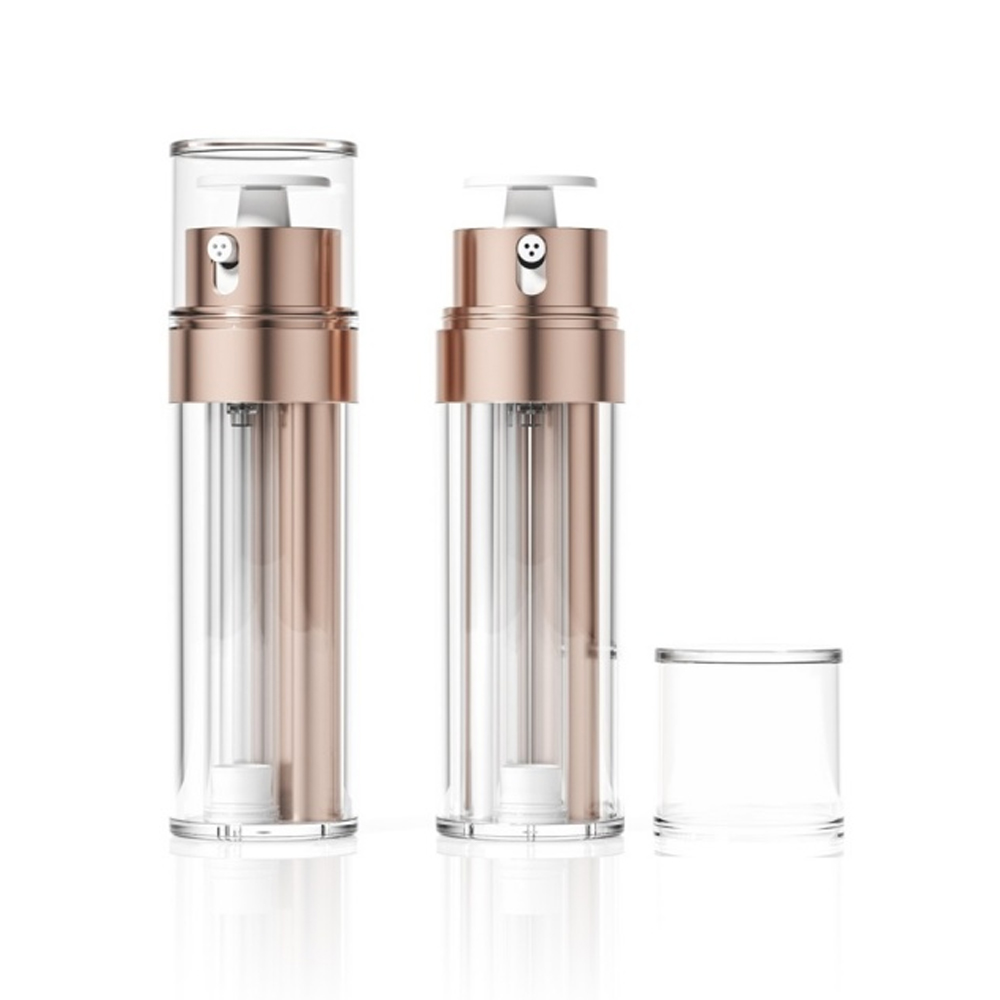
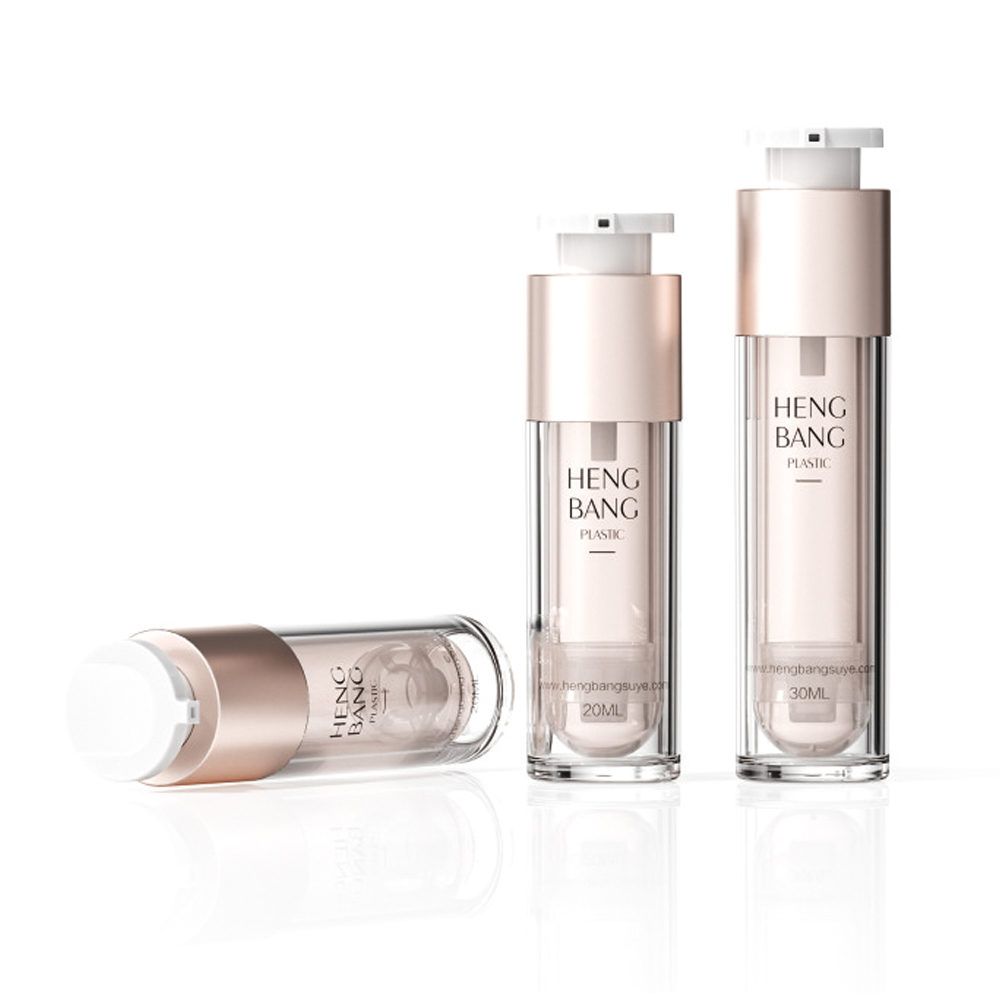
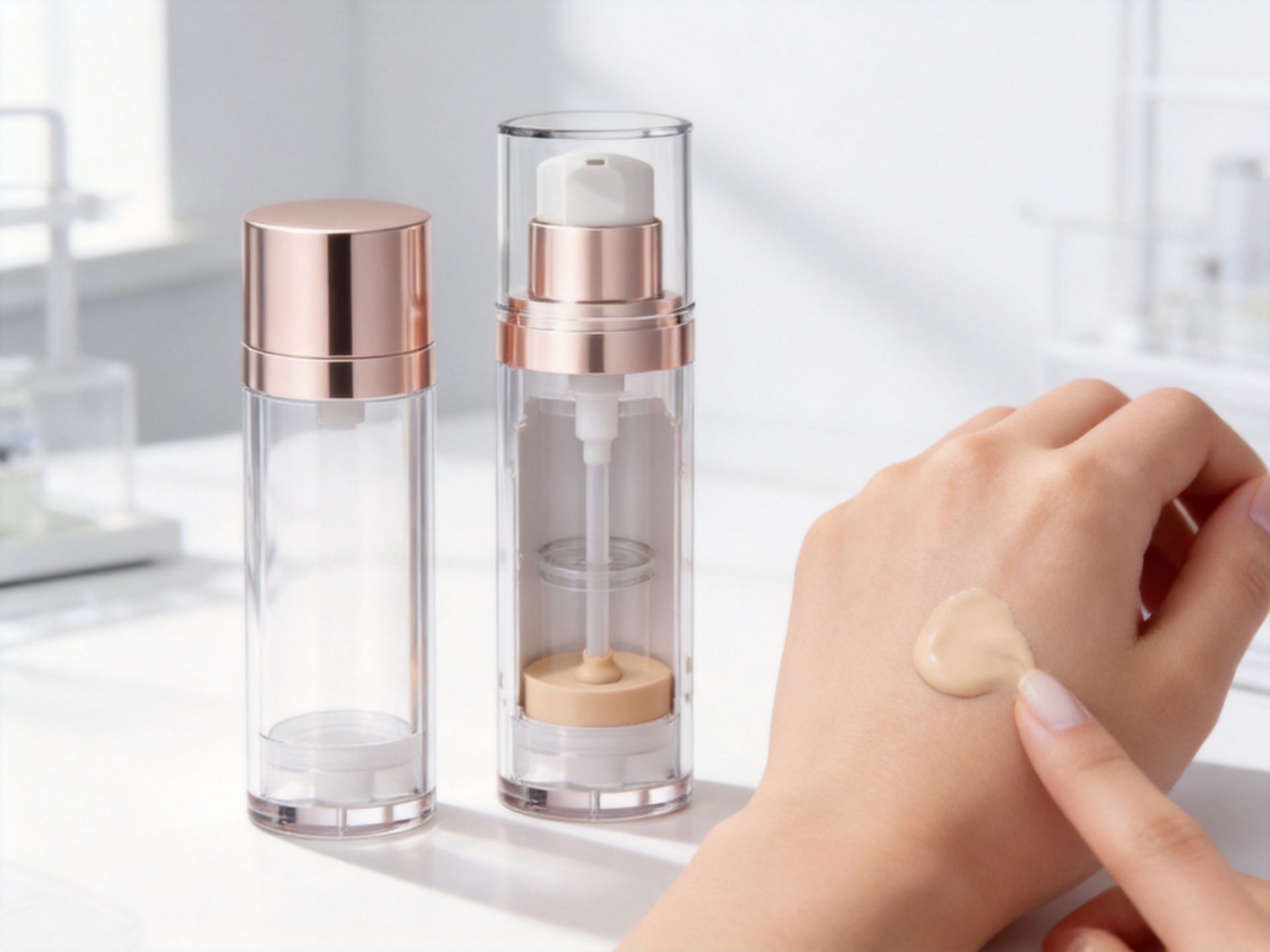
The HB-K006 plastic airless foundation bottle addresses these requirements through a combination of airless dispensing technology, a clear PETG bottle, a rose gold collar, controlled 0.23cc dosage, and several capacity options. Its structure is designed for cosmetic and personal care brands seeking a premium appearance without relying on heavy glass packaging. At the same time, its plastic construction supports easier handling, lower breakage risk, and greater flexibility during transportation and daily consumer use.
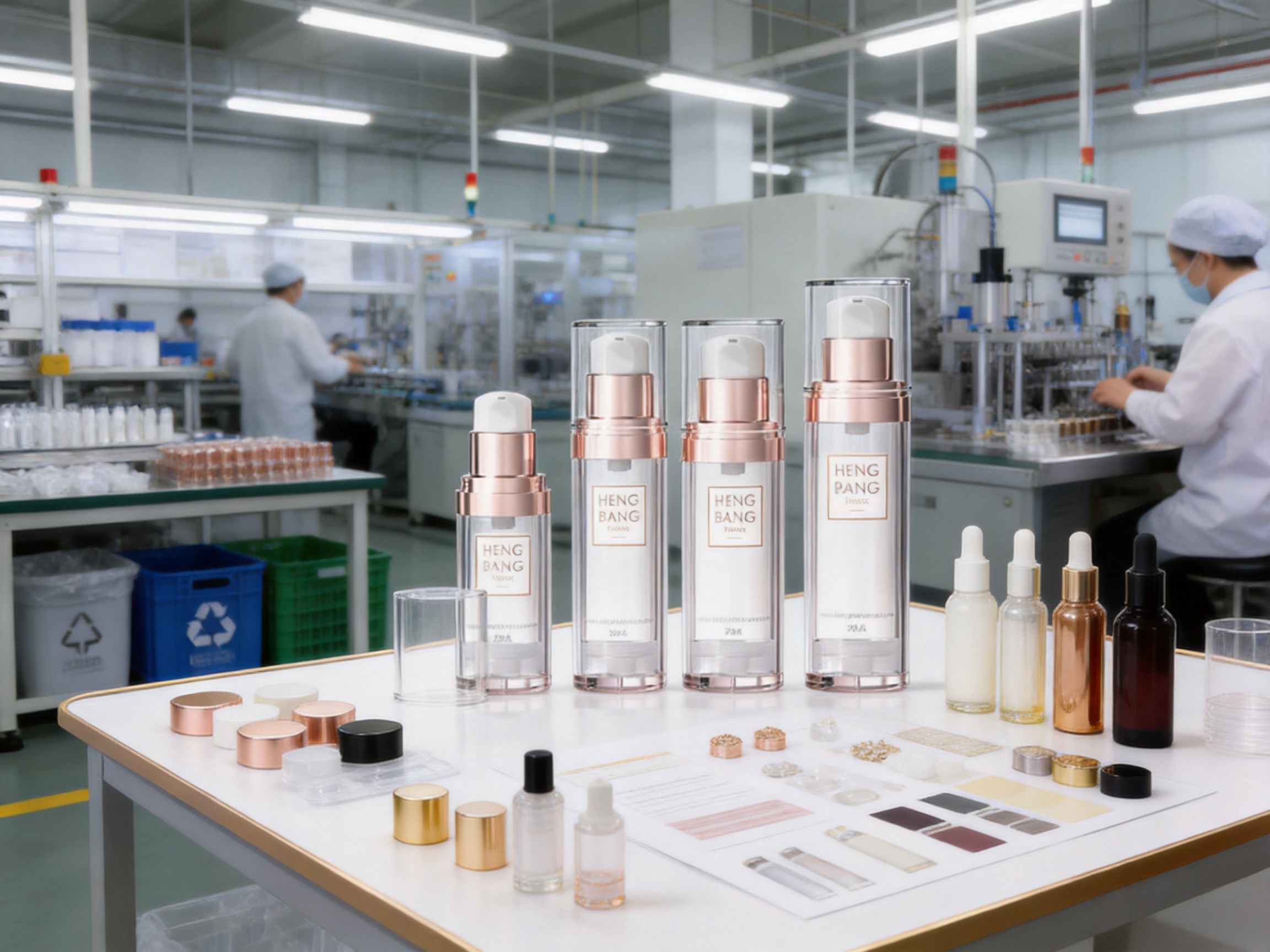
Manufactured by Yuyao Hengbang Plastic Co., Ltd., the bottle reflects the capabilities of an established cosmetic packaging producer with experience in design, development, production, and quality management. The manufacturer has operated since 2006, has a 35,000-square-meter building area, and employs more than 300 people. Its ISO9001:2015 and ISO14001:2015 certifications, product development capabilities, invention patents, and high-tech enterprise recognition provide an important foundation for customers seeking a packaging partner rather than a simple component supplier.
This article examines the design, functional advantages, manufacturing strengths, customization potential, and commercial applications of the HB-K006 plastic airless foundation bottle. It also explains how the bottle compares with conventional cosmetic containers and why airless packaging can offer meaningful advantages for modern skincare and makeup formulations.
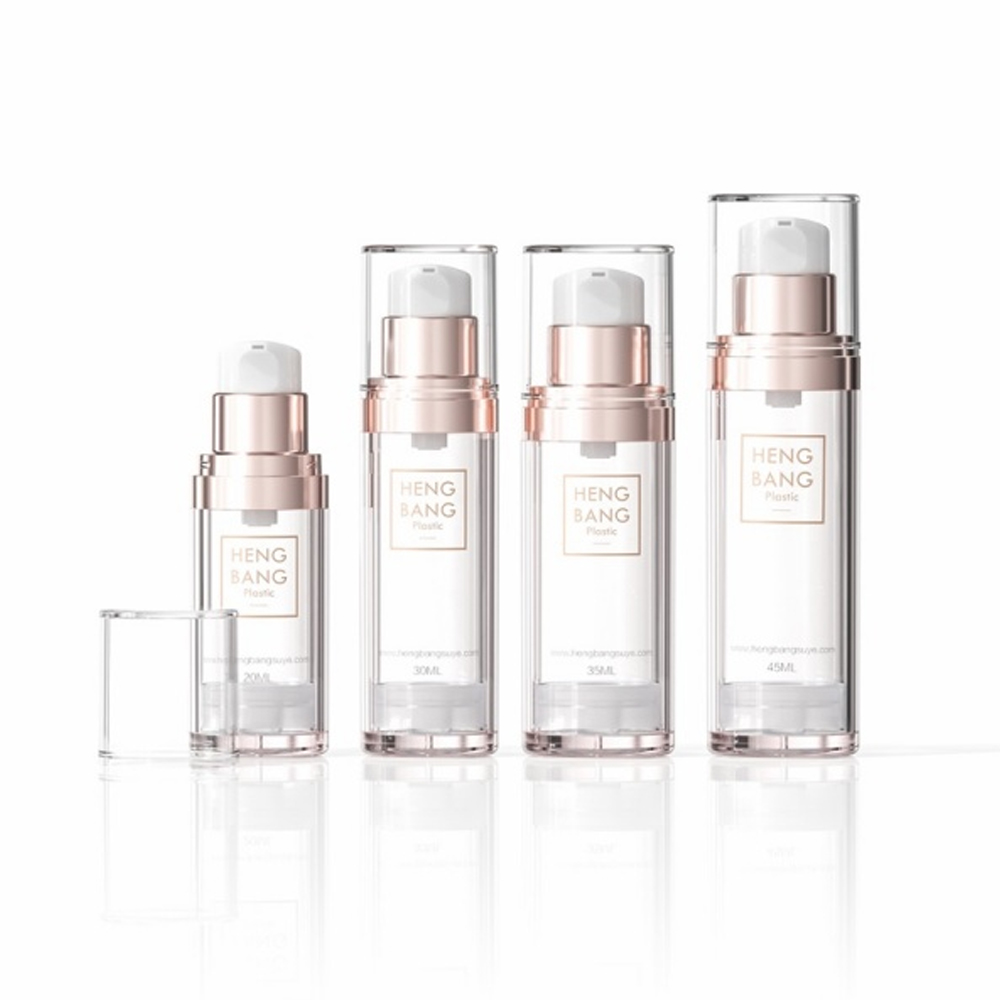
HB-K006 Plastic Airless Foundation Bottle
Foundation products are used directly on the face, which makes cleanliness, consistency, and ease of application particularly important. A package that exposes the formula to unnecessary air, repeated finger contact, or uncontrolled dispensing can affect the user experience. Even when the formula itself is well developed, unsuitable packaging may lead to oxidation concerns, product waste, messy application, or reduced consumer confidence.
Traditional foundation packaging commonly includes jars, squeeze tubes, dropper bottles, and standard pump bottles. Each format has practical benefits, but each also involves compromises. A jar may provide a wide opening, yet the user must repeatedly place fingers or an applicator into the product. A squeeze tube can be portable and economical, but the amount dispensed may vary significantly. A standard pump bottle improves convenience, although the formula remains more exposed to air within the container as the product is used.
An airless bottle is designed to reduce these limitations. Instead of relying on a conventional dip tube, an airless package generally uses an internal piston or similar mechanism that moves upward as product is dispensed. This structure helps limit the amount of air entering the product chamber. The result is a more controlled and hygienic delivery system that is well suited to formulas where protection from contamination and exposure is important.
The HB-K006 is specifically positioned as a plastic airless foundation bottle. Its design combines the performance expectations of airless packaging with the visual appeal required in the competitive cosmetic market. The transparent bottle allows the package to communicate the product color and fill level, while the rose gold collar adds a decorative premium element. This balance between functionality and appearance is valuable for both established cosmetic brands and emerging labels.
The HB-K006 is a cosmetic airless bottle developed for foundation and other liquid beauty or personal care formulations. Its design is suitable for brands that need a compact, refined, and controllable dispensing package. Available capacities include 20ml, 30ml, 35ml, and 45ml, allowing customers to select a format according to product positioning, usage frequency, and target market expectations.
| Item | Specification |
|---|---|
| Product type | Plastic airless foundation bottle |
| Available capacities | 20ml, 30ml, 35ml, and 45ml |
| Reported heights | 102mm, 120mm, 119mm, and 132mm, depending on capacity |
| Available diameters | 33mm and 36.5mm |
| Dispensing dosage | 0.23cc per actuation |
| Cap material | MS/ABS |
| Pump material | PP |
| Bottle material | PETG |
| Primary application | Foundation, skincare, beauty, and personal care formulations |
The listed dimensions vary according to the selected capacity and bottle configuration. The 20ml option is appropriate for travel sizes, trial formats, professional kits, and premium products intended for short-term use. The 30ml format corresponds closely to the familiar size expected for many liquid foundation products. The 35ml and 45ml options provide additional volume for products intended for frequent use or extended routines.
The 0.23cc dosage is one of the bottle’s most important functional specifications. A controlled dose helps the user apply a repeatable quantity with each pump, reducing guesswork and supporting more consistent makeup application. It can also help brands estimate the number of applications available from a package, although the actual number will depend on the consumer’s technique and the formula’s viscosity.
The listed material structure includes MS/ABS for the cap, PP for the pump, and PETG for the bottle. PETG is widely used in cosmetic packaging because it can provide clarity, impact resistance, and a smooth surface suitable for decorative treatment. The combination creates a package that is visually attractive while remaining practical for manufacturing, transport, storage, and everyday handling.
The central technical advantage of the HB-K006 is its airless dispensing system. Airless packaging is designed to minimize direct contact between the formula and the surrounding air during use. When the user presses the pump, the internal mechanism moves the product upward toward the dispensing outlet. As the product level decreases, the internal platform or piston continues to rise, allowing the package to use a high proportion of the formula without requiring the consumer to tilt or shake the bottle repeatedly.
This approach is particularly useful for formulas that contain delicate botanical extracts, vitamins, antioxidants, natural oils, or other ingredients that may be sensitive to environmental exposure. Airless packaging does not replace the need for appropriate formulation stability testing, but it can support a more controlled package environment. For brands developing preservative-free, low-preservative, natural, or sensitive-skin products, the format may help reduce contamination risks associated with repeated handling.
Conventional open-neck packages expose the formula each time the container is opened. When a consumer uses fingers, a sponge, a brush, or another applicator, there may be an opportunity for contaminants to enter the container. A pump-operated airless package reduces the need to reach into the product chamber. This creates a cleaner and more convenient routine, especially for products used daily.
The airless structure can also help maintain product consistency throughout the service life of the package. With many standard containers, the product may become increasingly difficult to access near the end of use. The rising internal mechanism in an airless bottle is intended to move the product toward the pump, helping minimize the amount left behind in corners or at the base of the container.
It is important to distinguish between minimizing exposure and creating an absolute barrier against all contamination. No cosmetic package can guarantee protection under every storage condition or user behavior. The final performance depends on the compatibility of the formula, pump, closure, seals, filling process, and storage environment. Nevertheless, the airless design provides a strong foundation for improved product protection compared with open jars and some conventional pump formats.
The dosage of a cosmetic pump directly affects the user experience. If the pump releases too little product, consumers may need several actuations for one application. If it releases too much, the result may be product waste, uneven coverage, or difficulty blending. The HB-K006 uses a 0.23cc dosage to offer a controlled and repeatable delivery pattern.
For foundation, controlled dispensing is particularly useful because users often build coverage gradually. A single measured pump can be mixed with moisturizer, primer, or another complexion product, while additional pumps can be used for fuller coverage. This makes the bottle suitable for different application styles without requiring the consumer to pour product onto a hand or directly onto a cosmetic tool.
A consistent dose can also support more predictable product consumption. Brands can use dosage information during product development, usage testing, and packaging selection. Retailers and consumers may benefit from clearer expectations about how long a bottle can last. Although the actual service life depends on the formula and the user’s habits, a defined dosage is more informative than a package that releases an inconsistent quantity each time.
The pump format also reduces the mess associated with open bottles. A well-designed actuator allows the user to dispense foundation onto the back of the hand, a palette, a sponge, or a brush. The bottle does not need to be inverted or shaken aggressively, and the pump can be operated with one hand. This is an important benefit for consumers who apply makeup while traveling, preparing for work, or using a compact vanity area.
For manufacturers, dosage control is a critical factor in matching the package to the formula. Viscosity, particle content, pigments, oils, emulsion structure, and filling temperature can all affect dispensing performance. Packaging evaluation should therefore include compatibility testing, pump output testing, priming tests, leakage checks, and repeated-use testing. A professional packaging supplier can help customers assess whether the selected airless pump is appropriate for the planned formula.
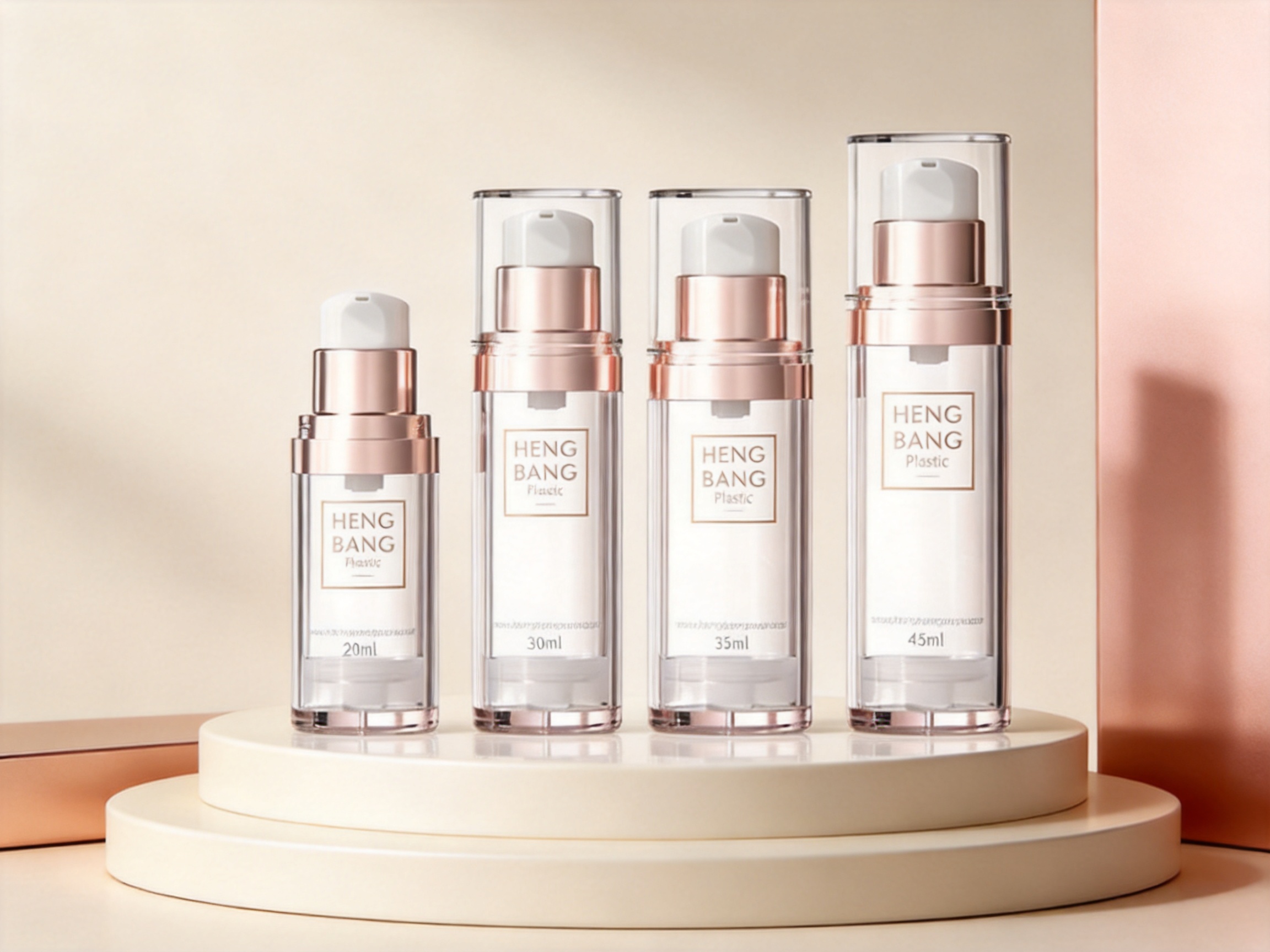
The bottle body of the HB-K006 is made from PETG. This material is valued in cosmetic packaging for its combination of visual clarity, toughness, and processing flexibility. The clear appearance can give the product a clean and contemporary look. It can also help consumers see the shade, color, and remaining quantity of a foundation, which is useful when selecting a product or deciding when to reorder.
Compared with fragile glass, PETG offers a lower risk of shattering during everyday use. This is beneficial for bathroom storage, travel bags, professional makeup kits, and shipping environments. A plastic bottle can also reduce concern about sharp fragments if it is accidentally dropped. For brands targeting active, mobile, or travel-oriented consumers, this practical advantage can be an important part of the packaging proposition.
PETG can support a smooth and refined exterior suitable for printing, labeling, coating, and other decorative processes. The exact decoration method should be confirmed according to the customer’s design, order quantity, and desired finish. A transparent base may be combined with screen printing, labeling, metallized details, color coating, or other visual treatments to create a distinctive product identity.
Polypropylene, or PP, is used for the pump component. PP is a common material in cosmetic packaging because it offers a useful balance of chemical resistance, light weight, durability, and production efficiency. The pump must interact reliably with the formula and maintain stable operation during repeated use. Material selection is therefore part of the overall compatibility equation rather than an isolated design decision.
The pump assembly is responsible for drawing the product toward the outlet, controlling the dose, and helping prevent leakage during handling. Its performance should be evaluated with the final formulation rather than with water alone, because foundation formulas can vary considerably in thickness and flow behavior. Oil-rich, silicone-rich, pigment-heavy, and emulsion-based formulas may each require different testing conditions.
The cap uses MS/ABS material. The cap protects the actuator and dispensing area when the bottle is not in use. It also contributes significantly to the product’s visual identity. A cap with a clean fit and a polished finish can make the package feel more complete and premium, while also helping protect the pump from accidental activation in a cosmetic bag.
The combination of the cap, clear bottle, and rose gold collar creates a layered appearance. The decorative collar introduces a metallic accent without requiring the entire bottle to be made from metal or glass. This can help the package achieve a luxury-inspired aesthetic while retaining the handling benefits of plastic construction.
Cosmetic consumers often make initial judgments based on packaging. Before testing a formula, they may evaluate the bottle’s shape, color, weight, finish, and apparent quality. The HB-K006 uses a clear bottle and rose gold collar to establish a polished visual impression. This styling can suit foundation, serum foundation, color cosmetics, skincare hybrids, and premium personal care products.
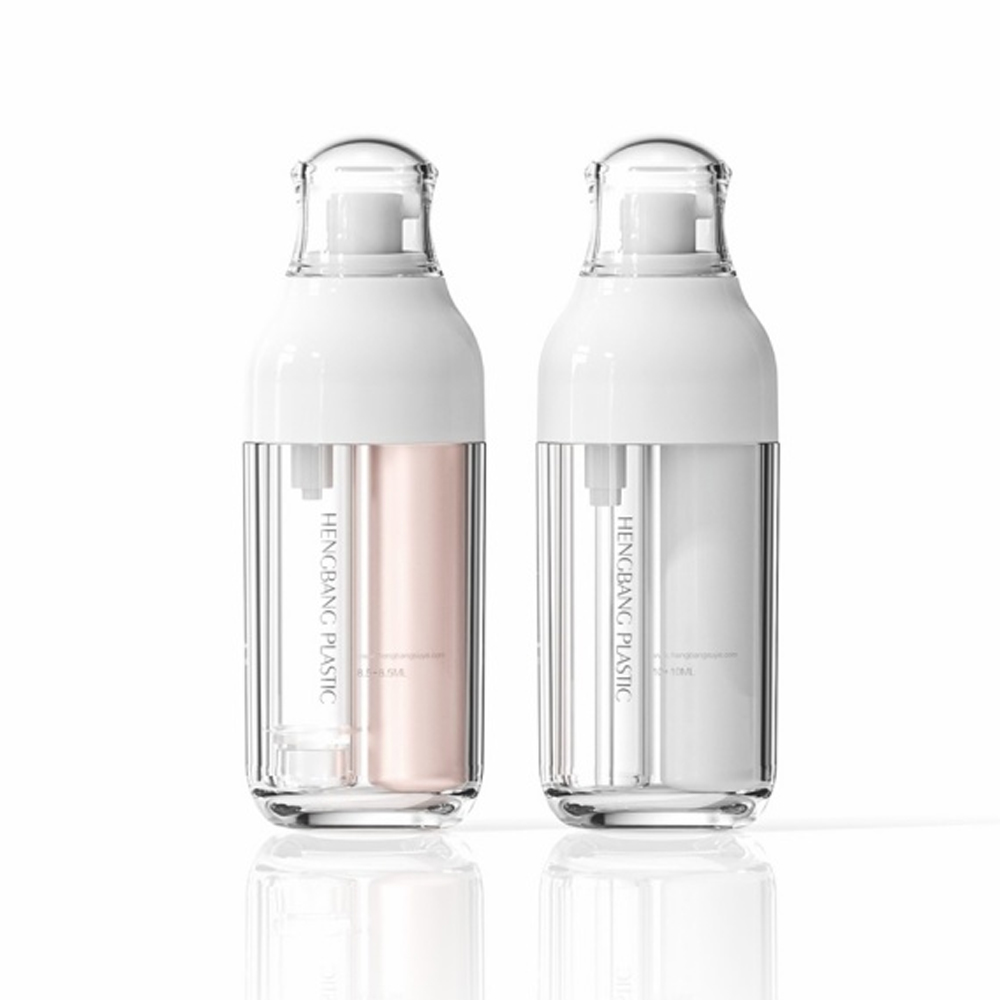
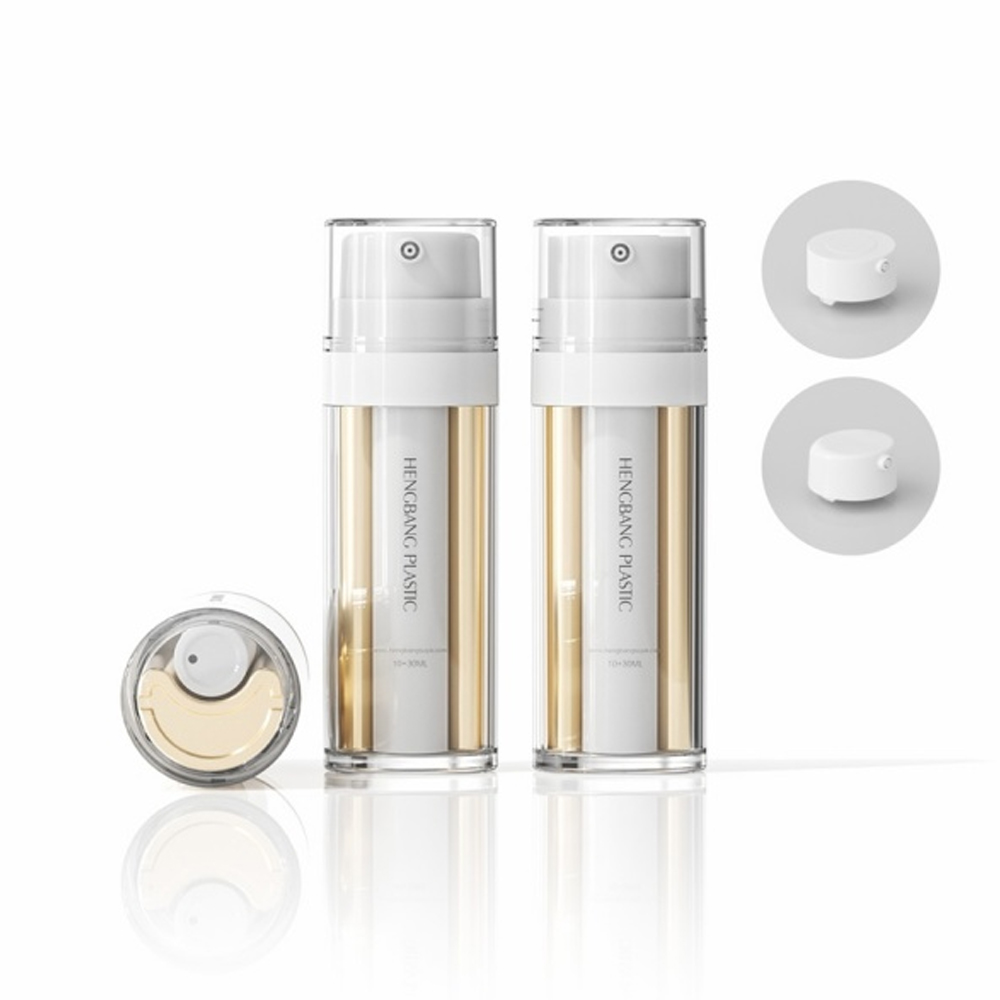
The transparent bottle offers several branding opportunities. A brand may choose to display the natural color of the foundation, use a tinted inner formula to create a coordinated appearance, or apply a minimal label that emphasizes clarity and modern design. Transparency can also support shade differentiation when multiple foundation colors are sold within the same product family.
The rose gold collar provides a recognizable accent that can be coordinated with a brand’s logo, secondary packaging, cartons, or other products in the same collection. Metallic details often communicate refinement, but they must be integrated carefully so that the package remains visually balanced. The HB-K006 provides a foundation for this type of design development without requiring a completely custom bottle mold in every project.
Shelf appeal is not limited to retail stores. Product images on e-commerce websites must communicate quality through a screen, where shape, clarity, and color become especially important. A clean airless bottle with a premium collar can photograph effectively from several angles. Its compact cylindrical profile can also create consistent visual alignment when multiple products are arranged together.
Customization allows brands to move beyond a generic stock package. Depending on project requirements, decoration may include logo printing, color matching, surface finishing, labeling, special coating, and coordinated secondary packaging. The feasibility of each option depends on the design, quantity, material, and production process. Early communication with the packaging manufacturer can help ensure that the visual concept remains practical for mass production.
A cosmetic jar offers a wide opening and can be suitable for thick creams, masks, and balms. However, an open jar requires the user to access the product directly. This may increase contact between fingers or applicators and the formula. The package may also allow more air exchange every time the lid is removed.
The HB-K006 provides a more hygienic dispensing experience because the user receives the product through a pump. There is no need to insert fingers into the bottle, and the product chamber remains closed during normal use. This makes the airless bottle particularly attractive for liquid foundation, lightweight creams, emulsions, and products marketed around freshness or sensitive formulations.
Squeeze tubes are lightweight and economical, but the quantity released may vary according to how strongly the consumer presses the tube. Over time, the tube may also become less attractive as it is repeatedly squeezed and handled. The HB-K006 offers a more structured presentation and a defined 0.23cc dosage, which can provide a more premium and controlled experience.
A tube may be ideal for travel or low-cost products, but a pump bottle often communicates greater value for foundation and skincare products positioned at the mid-range or premium level. The clear bottle and decorative collar further separate the HB-K006 from basic flexible packaging.
A conventional pump bottle already improves convenience compared with a jar, but it may use a dip tube and allow more air to occupy the empty space as the product is consumed. The airless mechanism in the HB-K006 is designed to reduce this exposure and support more complete product evacuation.
The airless design can also help the bottle dispense product when it is held upright, without relying on gravity to move the formula toward the dip tube. This is helpful for consumers who want to use the bottle to the end and for brands that want to reduce residual product left inside the package.
Glass can communicate luxury and has a substantial hand feel, but it is heavier and more vulnerable to breakage than many plastic alternatives. Shipping glass may require additional protective materials, and consumers may be less comfortable carrying it in a makeup bag or travel case.
The PETG construction of the HB-K006 offers a lightweight and impact-resistant alternative. It can retain a clear, premium appearance while improving practical handling. For brands balancing visual quality, transport efficiency, and consumer convenience, this can be a meaningful competitive advantage.
The availability of four capacities allows the same bottle concept to serve different commercial strategies. Packaging size influences retail price, usage duration, portability, regulatory labeling, shipping cost, and the way consumers perceive value. Selecting the right capacity should therefore be part of the product planning process rather than an afterthought.
The 20ml size can be used for travel products, introductory formats, limited editions, professional samples, and products intended to be carried in a small cosmetic bag. It may also suit premium foundations with a higher concentration of pigments or active ingredients, where consumers use a smaller quantity per application.
The 30ml size is a familiar and versatile choice for foundation and complexion products. It can provide a balanced relationship between retail presence, portability, and expected usage duration. Brands introducing a new foundation line may find this size appropriate for a core standard product.
The 35ml capacity offers additional content without creating a dramatically different package concept. It may be useful for brands wishing to provide more product than a conventional foundation while maintaining a manageable bottle profile. The 45ml version can support products intended for frequent use, professional application, or customers who prefer larger-value formats.
Capacity selection should be reviewed together with the formula density and filling process. A 30ml nominal capacity does not automatically mean that every formula will have the same visible fill level or usage life. Brands should conduct actual filling trials and confirm the net content, headspace, pump priming, and labeling requirements before final approval.
The quality of a cosmetic package depends not only on its design but also on the manufacturer’s ability to control materials, molding, assembly, decoration, inspection, and delivery. Yuyao Hengbang Plastic Co., Ltd. has specialized in plastic packaging for cosmetics and skincare products since 2006. Its long-term focus on this sector provides relevant experience in developing packaging for products with demanding appearance and performance expectations.
The company has a building area of 35,000 square meters and more than 300 employees. This scale suggests an organized production environment capable of supporting multiple stages of packaging development and manufacturing. For customers, a larger and more established production base may provide advantages in project coordination, manufacturing capacity, quality management, and delivery planning.
The manufacturer’s team includes design and development capabilities. This is important because cosmetic packaging projects often involve more than selecting an existing bottle. Customers may need support with dimensions, component combinations, dispensing performance, surface decoration, color, mold development, and production preparation. A supplier able to participate during the development stage can help identify potential problems before mass production begins.
The company has passed ISO9001:2015 certification, which relates to quality management systems. A quality management framework can support documented procedures, process control, inspection planning, corrective action, and continual improvement. For cosmetic packaging customers, these systems are relevant to consistency across batches and to the traceability of production activities.
The ISO14001:2015 certification relates to environmental management systems. This indicates that environmental considerations are incorporated into a formal management framework. It does not mean that every package is automatically environmentally neutral, but it demonstrates that environmental management is recognized as part of the company’s operating responsibilities.
The company was recognized as a Ningbo High-Tech Enterprise in 2021 and owns multiple invention patents. These qualifications suggest an emphasis on technical development and innovation. In packaging manufacturing, innovation may involve dispensing structures, assembly methods, mold design, material application, decoration, or production efficiency. Such capabilities can be valuable when a brand seeks a package that combines familiar usability with distinctive appearance.
A high-quality airless bottle typically passes through several controlled stages before it reaches the customer. Although exact factory procedures may differ according to the project, the process generally begins with product design and technical confirmation. Engineers review the target capacity, dimensions, materials, pump output, formula requirements, and appearance specifications.
Mold and tooling considerations are then evaluated. The bottle, cap, collar, and pump components must be produced with dimensional consistency so that they assemble correctly. Clear plastic components require special attention to surface quality, visible marks, gate locations, and clarity. Decorative parts require control of color, coating, plating, or other finishing processes.
Material preparation is another important stage. PETG, PP, MS, and ABS components must be selected and processed according to the approved specification. Material consistency affects appearance, strength, molding performance, and formula compatibility. For a transparent bottle, variation in clarity or color can be especially noticeable.
After molding, components may undergo trimming, cleaning, decoration, inspection, and assembly. The airless pump must be correctly fitted to the bottle, and the cap must provide suitable protection. Assembly checks can include component alignment, closure fit, actuator operation, pump output, leakage resistance, and visual appearance.
Quality inspection may occur at incoming material, in-process, and finished-product stages. Typical checks can include dimensions, weight, color, surface defects, printing accuracy, pump function, and packaging integrity. For projects with strict brand requirements, customers may establish approved samples, inspection standards, and acceptable quality limits in advance.
Before mass production, compatibility and stability testing should be completed with the actual foundation or skincare formula. This can involve filling the product into the bottle and observing changes under different temperatures, storage periods, orientations, and usage cycles. Testing may help identify swelling, discoloration, leakage, pump failure, odor transfer, formula separation, or dispensing changes.
These steps are important because packaging and formula function as a system. A bottle that performs well with one emulsion may not operate identically with another. A professional packaging manufacturer can provide the component expertise, while the brand and formulation team remain responsible for confirming the suitability of the final packaged product.
One of the strengths of a stock airless bottle is the ability to shorten development time compared with creating an entirely new package from the beginning. The HB-K006 provides an established structural platform, while customers can explore appearance, labeling, color, and capacity options to create a package that aligns with their brand.
Logo application is one of the most common forms of customization. A brand may use a restrained one-color mark for a minimalist appearance or a multi-color design for stronger shelf recognition. The transparent bottle can support a floating or clean-label visual style, while the rose gold collar can become part of a wider metallic design language.
Surface finishing can significantly change the perceived character of the package. Glossy surfaces may communicate brightness and clarity, while matte treatments can suggest softness, modernity, or understated luxury. Frosted effects, opaque color, metallic accents, and selective printing can be considered according to the brand’s positioning and budget.
Capacity selection is also a form of customization. A brand may use the 20ml size for a travel range and the 30ml or 35ml size for its primary retail product. A larger 45ml format may be introduced for professional or value-oriented channels. Using related bottle designs across a product family can improve visual consistency and make future launches easier to recognize.
Packaging development should begin with a clear technical brief. The brief should state the formula type, viscosity, ingredients of concern, target dosage, filling process, intended market, decoration requirements, annual demand, and expected launch schedule. The more complete the information, the easier it is for the supplier to recommend suitable component combinations and testing plans.
Although the HB-K006 is described as a foundation bottle, its airless format may also be considered for other products with compatible physical properties. Potential applications include BB cream, CC cream, tinted moisturizer, primer, serum foundation, liquid concealer, facial emulsion, lightweight lotion, and selected sunscreen or personal care formulations.
For skincare products, the airless structure can support a clean dispensing routine and a premium appearance. Lightweight lotions and emulsions may benefit from the pump’s controlled output, particularly when the product is used across the face or in targeted areas. For tinted skincare, the transparent bottle can help communicate the product’s color and visual character.
Not every formula is suitable for the same pump. Very thick creams, products with large particles, highly volatile ingredients, or formulas with unusual flow behavior may require specific testing or another dispensing system. Brands should not assume suitability based solely on appearance. A compatibility trial using the actual formula is essential before commercial approval.
The bottle can also support product lines that combine cosmetic and skincare claims. Hybrid products such as moisturizing foundation, illuminating complexion cream, and treatment makeup often need packaging that communicates both beauty and care. An airless pump with a refined design can help bridge these two categories.
Sustainability is becoming an important part of packaging selection, but it must be evaluated across the full product life cycle. A responsible decision considers material quantity, product protection, shipping efficiency, durability, consumer use, decoration, recycling conditions, and the amount of formula wasted at the end of use.
The plastic construction of the HB-K006 can reduce breakage compared with glass and may lower transport weight. A lighter package can contribute to more efficient handling and shipping, although the overall environmental impact depends on the exact material mass, logistics, manufacturing energy, and end-of-life system.
Airless packaging may also help reduce residual product waste by moving the formula toward the dispensing outlet. Preventing product waste is important because the environmental resources used to manufacture the formula can be greater than those used to produce the container. A package that helps consumers use more of the product may therefore contribute to a more efficient overall system.
At the same time, multi-material structures can create challenges during recycling. The cap, pump, collar, and bottle may contain different materials or finishes. Brands should consult local recycling guidance and assess whether component separation is practical in their target markets. They may also request information from the manufacturer about available material options, packaging weight, and potential design improvements.
ISO14001:2015 certification at the manufacturing company level demonstrates a formal commitment to environmental management. Brands should still evaluate the complete packaging project and communicate accurate sustainability claims. Environmental benefits should be supported by documented information rather than broad or unverified statements.
Before approving the HB-K006 for commercial production, a brand should conduct a structured testing program. The first step is to fill the actual formula into production-intent components. Laboratory samples or unrelated packaging may not reveal the same performance as the final bottle, pump, collar, and cap combination.
Priming tests should confirm that the pump begins dispensing within an acceptable number of actuations. Output testing should verify that the dose remains close to the target 0.23cc across repeated pumps. Brands should also observe whether the dose changes as the bottle approaches empty, because an inconsistent final portion may affect consumer satisfaction.
Leakage and sealing tests should be performed under normal and stressful conditions. Bottles may be stored upright, sideways, or upside down during transportation and consumer use. They may also experience vibration, pressure changes, temperature variations, and repeated cap removal. Testing these conditions can help identify weaknesses before launch.
Compatibility testing should monitor the formula and package for changes. Important observations may include discoloration, odor, viscosity, separation, swelling, cracking, stress whitening, label adhesion, collar corrosion, and pump blockage. Accelerated aging can provide useful early information, but real-time stability testing should also be considered according to the brand’s quality program.
Drop and impact testing can help evaluate the practical durability of the plastic bottle. Clear PETG may resist breakage, but the complete assembled package should still be tested because the pump and collar can be more vulnerable than the bottle body. The packaging should be evaluated both empty and filled, with and without secondary packaging.
Visual inspection is equally important for a premium cosmetic package. Brands should establish standards for clarity, color, printing position, collar finish, cap alignment, scratches, particles, and other appearance characteristics. Approved reference samples can provide a common basis for communication between the customer and manufacturer.
The HB-K006 can support brands in several ways beyond basic formula containment. Its premium appearance may help a product enter higher-value retail environments. Its plastic construction may support more convenient shipping and handling. Its airless system may create a stronger performance story for consumers who value hygienic dispensing and formula protection.
The multiple capacity options allow companies to build a range architecture around one design platform. This can simplify visual branding and reduce the need to develop unrelated packaging for every product size. A consistent package family may also help consumers recognize a brand across foundation, primer, tinted moisturizer, and skincare categories.
The controlled 0.23cc dosage provides a clear technical feature that can be discussed in product training and internal quality documents. While packaging claims should be carefully worded, brands can explain that the pump is designed for measured dispensing and reduced product waste. This kind of practical benefit may be more persuasive than decoration alone.
The bottle’s customization potential also gives brands room to differentiate themselves. A standard structural platform does not need to look generic. Through color, printing, labels, finishing, secondary packaging, and product storytelling, companies can create a distinctive final presentation while benefiting from a proven bottle format.
Working with a manufacturer that offers design and development services can reduce coordination between separate vendors. A single packaging partner may be able to discuss technical design, materials, decoration, assembly, and production planning in one workflow. This can improve communication and make it easier to identify conflicts between appearance goals and manufacturing requirements.
Established cosmetic brands often need packaging that can maintain consistency across large production runs. They may require documented specifications, stable quality, reliable delivery, and the ability to support multiple decoration versions. The HB-K006 provides a structured platform that can be adapted to a large product family or a multi-market launch.
Emerging brands may prioritize speed, visual impact, and manageable development costs. A stock airless bottle can reduce the risks associated with creating an entirely new mold. The brand can focus its resources on formula development, testing, design, and marketing while using an existing package structure with capacity and decoration options.
Indie beauty companies and professional makeup brands may also appreciate the practical durability of plastic packaging. Products used backstage, in salons, at photo shoots, or during travel are exposed to repeated handling. A bottle that combines a premium appearance with reduced breakage risk can be more suitable than fragile glass for these environments.
For direct-to-consumer brands, package photography and unboxing experience are important. The clear bottle and rose gold collar can create a visually appealing presentation in online images and customer-generated content. The pump format also gives the product a clean, modern interaction that can support positive reviews and repeat purchase behavior.
A successful airless packaging project benefits from a clear sequence. First, the brand should define the formula, intended use, target market, capacity, and desired appearance. Next, the supplier can provide samples and technical information for evaluation. The brand should test the actual formula with the samples before approving decoration or mass production.
After preliminary compatibility confirmation, the parties should finalize capacity, dimensions, pump dosage, materials, color, decoration, and closure requirements. Artwork should be reviewed against the available printing or labeling area. Any regulatory information, ingredient declarations, batch coding, and usage instructions should be checked before final artwork approval.
A production-intent sample should then be evaluated for appearance, dispensing, assembly, and formula compatibility. If the sample is approved, it can become a reference standard for subsequent production. Quality requirements, inspection methods, packaging arrangements, and delivery terms should be documented clearly.
During mass production, quality monitoring should cover both individual components and assembled bottles. Any changes in material, decoration, pump supplier, mold, or process should be communicated and assessed. Maintaining consistency is especially important when a product is distributed across several markets or replenished over multiple production cycles.
After launch, customer feedback can help identify opportunities for improvement. Brands may monitor pump complaints, leakage reports, remaining product, cap fit, decoration durability, and consumer comments about ease of use. This information can guide future orders and support continuous packaging development.
The HB-K006 is designed primarily for liquid foundation and other compatible cosmetic, skincare, beauty, and personal care formulations. Possible applications may include BB cream, CC cream, primer, tinted moisturizer, serum foundation, lightweight lotion, and selected sunscreen products, subject to formula compatibility testing.
The available capacities are 20ml, 30ml, 35ml, and 45ml. The appropriate size depends on the product’s positioning, usage frequency, retail strategy, portability requirements, and target consumer.
The listed dosage is 0.23cc per actuation. This controlled output is intended to support consistent application and reduce unnecessary product waste. Actual performance should be confirmed with the final formula during pump testing.
The cap uses MS/ABS, the pump uses PP, and the bottle uses PETG. These materials provide a combination of clarity, durability, light weight, processing flexibility, and suitability for cosmetic packaging applications.
An airless bottle is designed to minimize the formula’s exposure to surrounding air as the product is dispensed. It commonly uses an internal piston or platform rather than relying only on a conventional dip tube. This can support formula protection and more complete product evacuation, although the final result depends on the formula and package system.
The airless format may be suitable for preservative-free or low-preservative formulations because it is designed to reduce contamination risks during use. However, the package cannot replace proper microbiological controls, stability testing, and formulation validation. Brands should test the complete formula and packaging system before making a commercial decision.
The appearance can be developed through available capacity choices, decoration, labeling, color, printing, surface treatment, and related packaging elements. The exact options depend on the project specifications, order quantity, materials, and production feasibility.
PETG is generally less likely to shatter than glass during ordinary handling and transportation. This can be useful for travel, shipping, professional makeup kits, and bathroom use. Packaging performance should still be verified through drop, impact, leakage, and transport testing.
Suitability depends on the formula’s viscosity, pigments, oils, solids, and flow properties. The pump should be tested with the exact foundation formula to confirm priming, output, consistency, and resistance to blockage.
The manufacturer has passed ISO9001:2015 and ISO14001:2015 certifications. It was also recognized as a Ningbo High-Tech Enterprise in 2021 and owns multiple invention patents. Customers should request project-specific quality documentation when necessary.
A useful quotation brief should include the desired capacity, formula type, target dosage, estimated order quantity, decoration requirements, color references, filling method, delivery location, expected launch date, and any special quality or testing requirements.
The final formula should be filled into production-intent samples and tested for pump priming, dosage, leakage, compatibility, stability, drop resistance, cap fit, appearance, and repeated-use performance. Both accelerated and real-time evaluation may be appropriate depending on the product and quality program.
The HB-K006 plastic airless foundation bottle combines practical dispensing performance with a refined cosmetic appearance. Its airless technology is designed to minimize contamination risks and reduce unnecessary exposure to air, while the 0.23cc pump supports controlled application and more predictable product use. The clear PETG bottle provides a modern visual foundation, and the rose gold collar adds a premium accent suitable for skincare, makeup, and personal care products.
Compared with open jars, squeeze tubes, standard pump bottles, and fragile glass containers, the HB-K006 offers a balanced combination of hygiene, dosage control, durability, portability, and shelf appeal. Its 20ml, 30ml, 35ml, and 45ml capacities give brands flexibility across different product strategies, from travel sizes and professional formats to standard retail foundation and larger-value packages.
The product is further supported by the manufacturing experience of Yuyao Hengbang Plastic Co., Ltd. Since 2006, the company has focused on plastic packaging for cosmetics and skincare products. Its 35,000-square-meter building area, workforce of more than 300 employees, design and development services, ISO9001:2015 and ISO14001:2015 certifications, high-tech enterprise recognition, and invention patents provide a substantial foundation for packaging development and production.
For brands considering this bottle, the most important next step is a complete technical evaluation with the intended formula. Compatibility, dosage, priming, leakage, decoration, stability, and transport performance should all be confirmed before mass production. When these factors are managed carefully, the HB-K006 can become more than a container: it can support product protection, consumer convenience, brand differentiation, and a stronger overall cosmetic experience.
1. Product specification information for the HB-K006 plastic airless foundation bottle, including materials, capacities, dimensions, and dosage.
2. Cosmetic packaging development principles for airless dispensing systems, formula protection, compatibility testing, and package performance evaluation.
3. ISO 9001:2015, Quality Management Systems — Requirements.
4. ISO 14001:2015, Environmental Management Systems — Requirements with Guidance for Use.
5. General technical literature on PETG, polypropylene, MS, and ABS materials used in cosmetic packaging.
6. General industry guidance on cosmetic container design, pump dispensing, stability testing, leakage testing, and consumer packaging usability.
7. Corporate information concerning manufacturing experience, facility scale, employee numbers, certifications, design services, and technical development capabilities.


Copyright © Yuyao Hengbang Plastic Co., Ltd.
All Rights Reserved.
 Wholesale Plastic Cosmetic Packaging Manufacturers