English
 中文简体
中文简体
News
Home > Author > Wang Mengyao — Product After-Sales Service Coordinator > Why Double-Walled Airless Lotion Bottles Are Advancing Modern Cosmetic Packaging

 2026.07.24
 Wang Mengyao — Product After-Sales Service Coordinator
Content
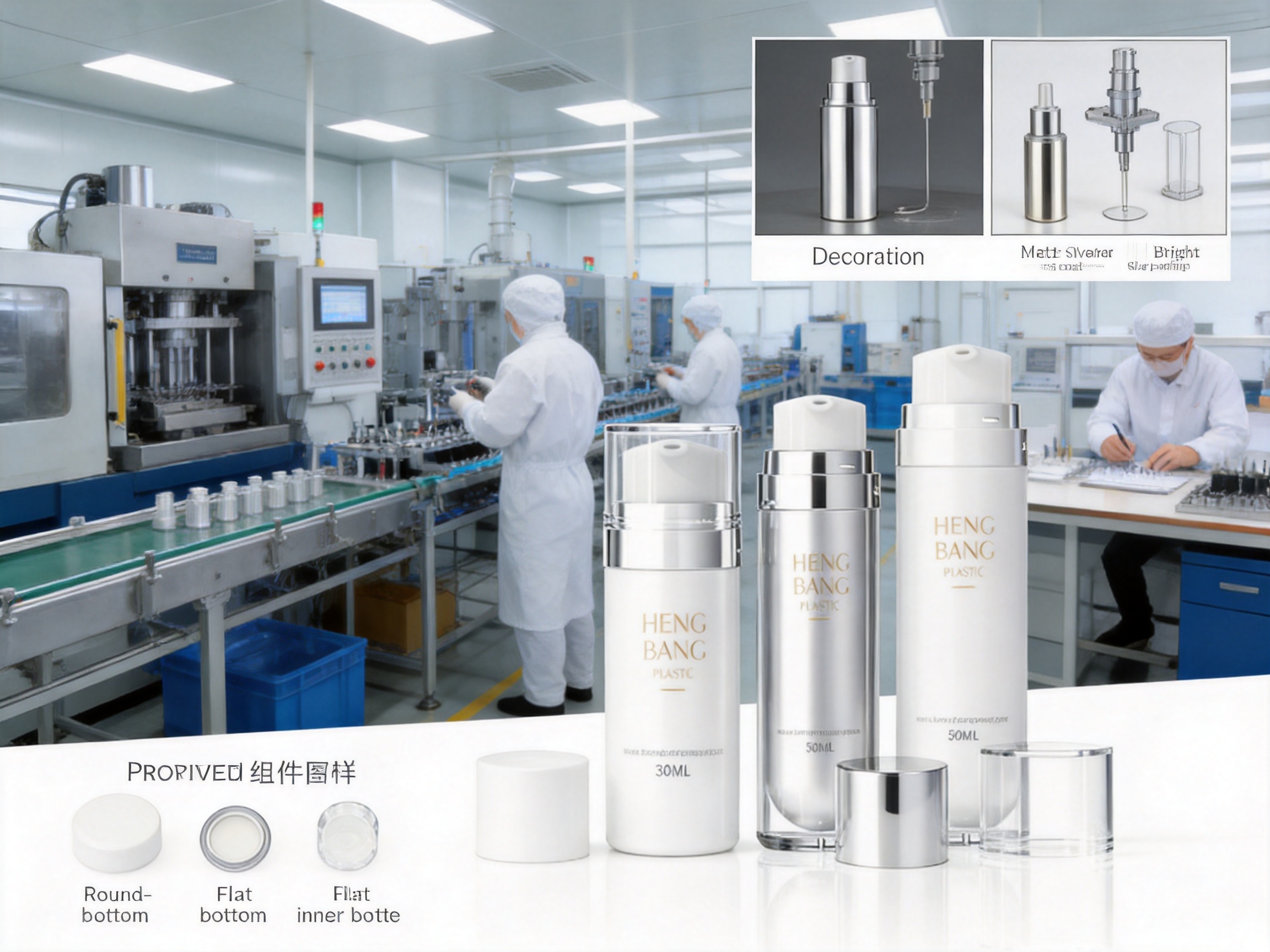
In the highly competitive cosmetics and skincare market, packaging is no longer limited to protecting a formula and displaying a brand name. It has become an essential part of product performance, user experience, visual positioning, and commercial differentiation. Consumers increasingly expect packaging to be clean, attractive, convenient, hygienic, and appropriate for premium skincare formulations. At the same time, cosmetic brands need packaging that supports efficient filling, consistent dispensing, reliable transportation, and flexible customization.
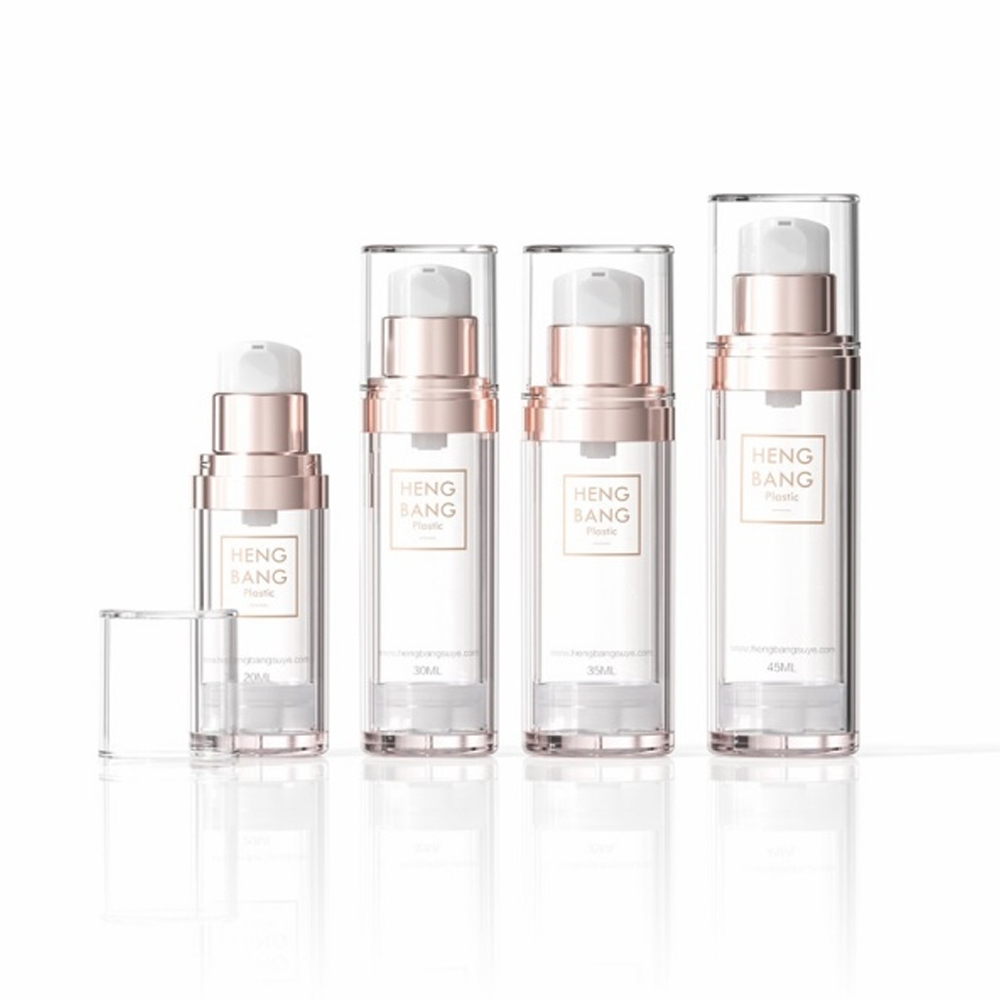
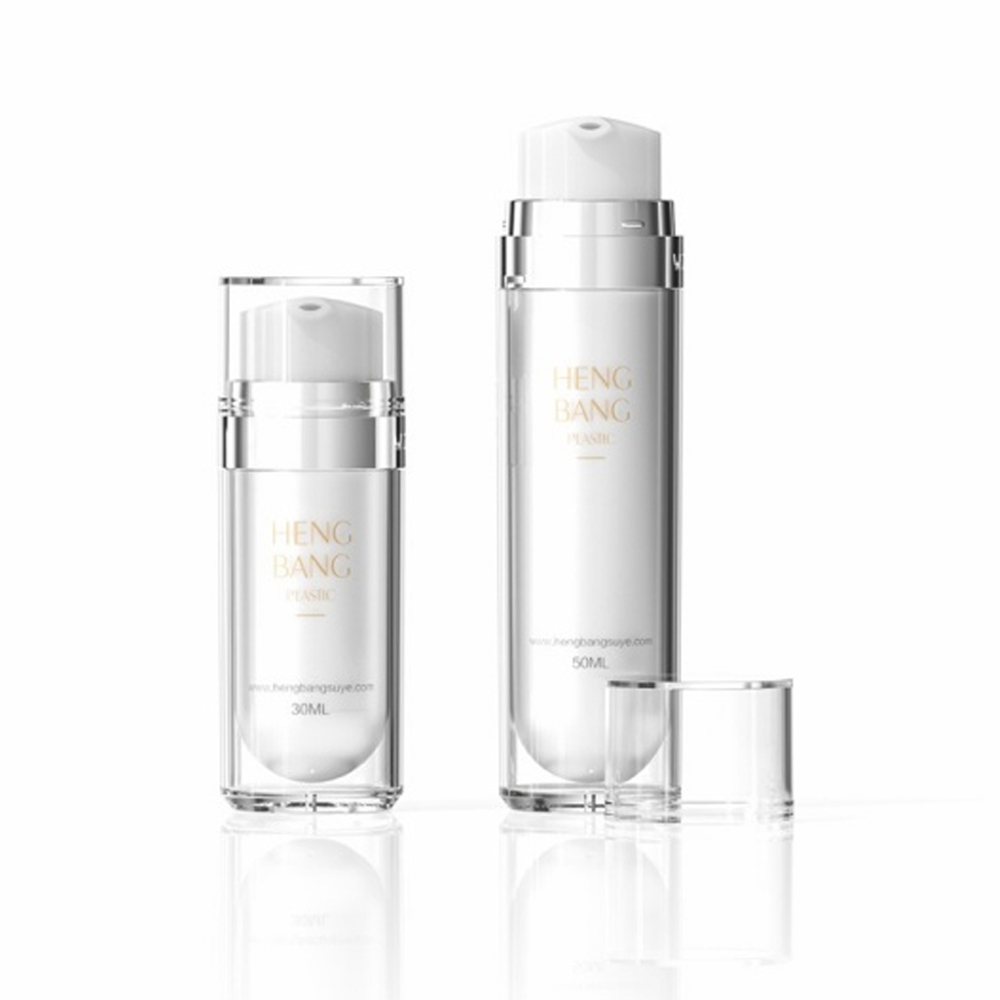
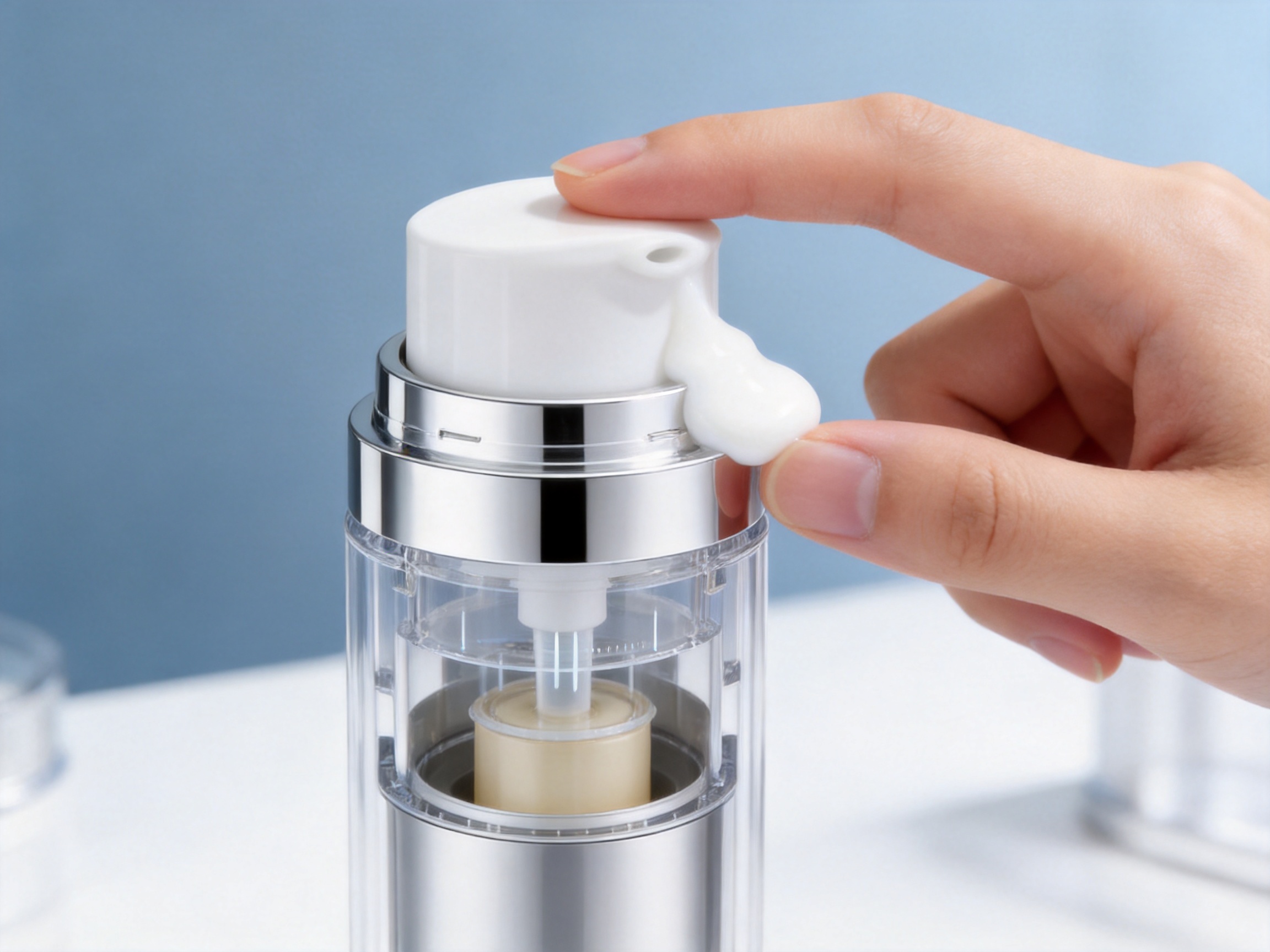
The HB-K009A/B Plastic Airless Lotion Bottle is designed to address these requirements through a double-walled structure, airless dispensing technology, a wide-mouth visual profile, and a refined combination of matte silver, bright silver, white, and transparent components. Available in two stated capacity options, the bottle can support a variety of lotion, cream, serum, sunscreen, and other skincare applications.
Its construction combines a plastic pump, a plastic inner bottle, a metallic-effect outer bottle, and a transparent cap. This arrangement creates a contemporary appearance while maintaining the practical benefits expected from modern cosmetic packaging. The product is especially suitable for brands seeking a balance between premium presentation and scalable plastic packaging production.
The HB-K009A/B is a plastic airless lotion bottle intended for cosmetic and skincare packaging. Its design uses a double-walled body, giving the container greater visual depth than a basic single-wall bottle. The external appearance is carefully divided into several finishes: the pump head is injection-molded in white, the inner bottle is sprayed in matte silver, and the collar is plated in bright silver. The cap and outer bottle are transparent.
This contrast between opaque, metallic, and transparent elements creates a modern visual identity. The bright silver collar adds a polished accent around the dispensing area, while the matte silver inner bottle provides a soft, understated finish. The transparent components allow the internal structure and decorative details to contribute to the overall appearance of the package.
The product description identifies 30 ml and 50 ml versions, while the supplied dimensional information lists 20 ml and 50 ml capacity rows. Because these figures differ, buyers should confirm the final capacity, height, and filling specifications with the manufacturer before placing an order. This clarification is particularly important when the bottle is being matched with a filling line, carton, label, formula quantity, or regulatory declaration.
Product Attribute |
Available or Listed Information |
Product Name |
HB-K009A/B Plastic Airless Lotion Bottle |
Product Category |
Plastic Airless Bottle |
Structure |
Double-walled bottle with airless pump dispensing system |
Cap Material |
MS |
Pump Material |
PP |
Outer Bottle Material |
MS |
Inner Bottle Material |
PP |
Capacity Described |
30 ml and 50 ml |
Capacity Listed in Supplied Table |
20 ml and 50 ml |
Listed Height |
111.5 mm and 149.1 mm |
Listed Diameter |
39.5 mm |
Dispensing Information |
0.23 cc listed under the supplied application field |
Inner Bottle Options |
Round bottom or flat bottom |
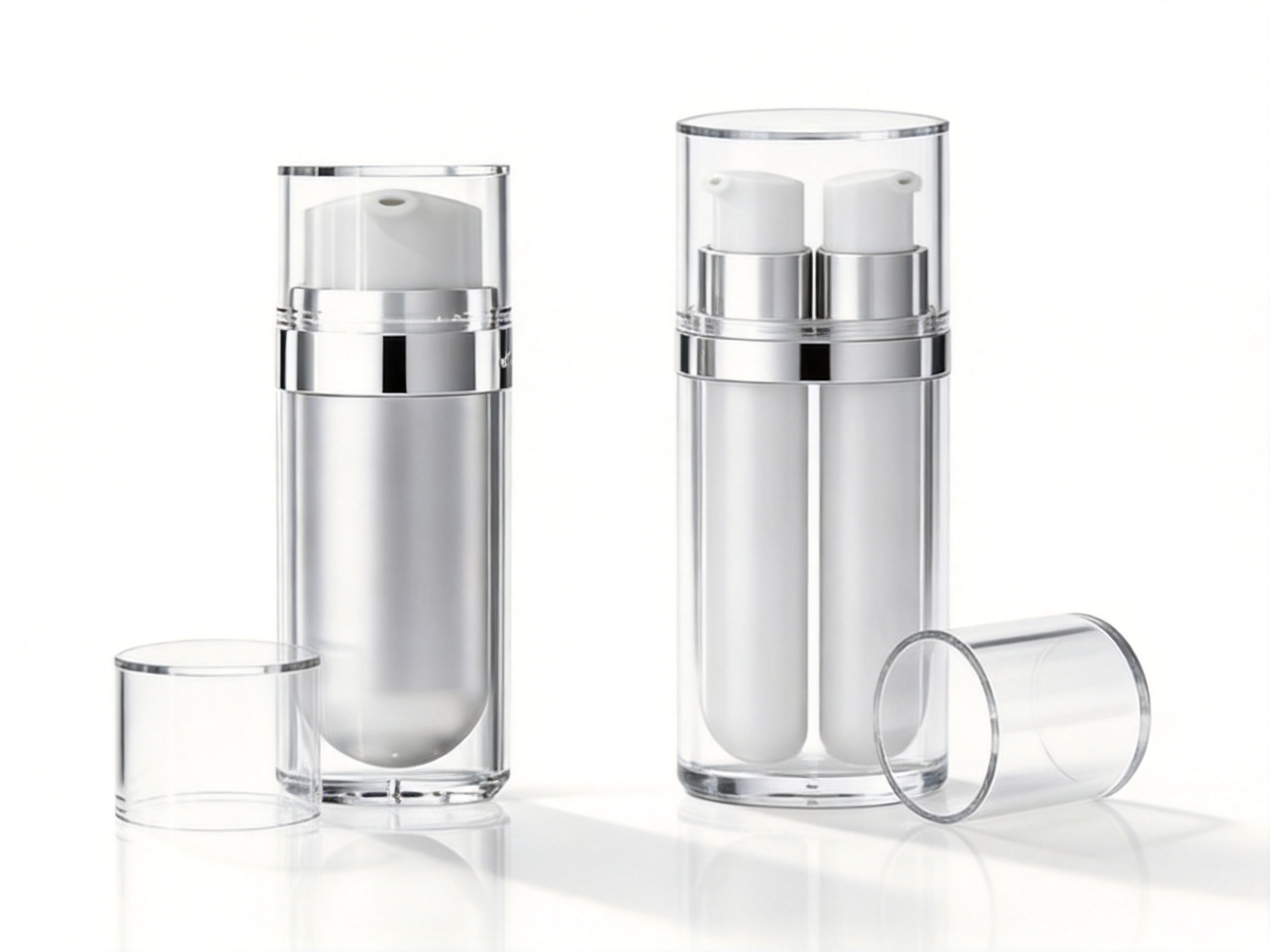
One of the defining features of this bottle is its double-walled construction. A double-wall package consists of an inner container that holds the formula and an outer structure that creates an additional visual and mechanical layer. Compared with a basic single-wall bottle, this design can give the package a fuller, more substantial appearance.
For cosmetic brands, perceived value is closely connected to the way a package feels in the hand and appears on a retail shelf. A double-walled bottle can communicate solidity and refinement without relying on a heavy glass body. The space and relationship between the inner and outer components also provide greater opportunities for decorative effects, color contrast, and layered visual design.
The HB-K009A/B uses a transparent outer element together with a matte silver inner bottle. This arrangement makes the metallic inner surface part of the visible package rather than hiding it beneath a completely opaque exterior. The result is a controlled combination of transparency and metallic decoration. It can work particularly well for skincare products that are positioned around advanced care, hydration, brightening, sun protection, or premium daily routines.
The double-walled format also separates some of the package’s visual functions from its formula-containing function. The inner bottle is responsible for holding the product, while the outer construction contributes to appearance, handling, and presentation. This division allows designers to develop a more sophisticated package without requiring every decorative treatment to be applied directly to the primary formula container.
Compared with simple lotion bottles, the double-walled design has a stronger presence on a counter, shelf, or bathroom vanity. It can help a new product achieve a more premium appearance while maintaining the weight and manufacturing possibilities associated with plastic packaging.
Airless packaging is widely used for skincare products because it is designed to dispense formula without relying on the traditional dip tube and open-air return process found in many standard pump bottles. In an airless system, the internal structure is designed to help move the formula toward the pump as the product is used.
This approach can offer several practical benefits. It may help reduce the amount of air introduced into the product during repeated use, support more controlled dispensing, and assist consumers in using the product efficiently. For formulas that are sensitive to air exposure or that require a more protected dispensing environment, an airless bottle can be a valuable packaging choice. Actual compatibility and protection performance must always be validated with the specific formula and filling process.
The HB-K009A/B combines an airless pump with a double-walled cosmetic body. This gives the product two important forms of differentiation. First, the dispensing system is aligned with the functional expectations of modern skincare packaging. Second, the external design gives the bottle a more elevated appearance than a basic functional dispenser.
The pump output is listed as 0.23 cc in the supplied information. This specification may help brands estimate the amount delivered with each complete actuation. However, output can be affected by the formula’s viscosity, the pump assembly, filling conditions, actuation method, and production tolerances. A brand should therefore carry out dosage testing using the intended formula before confirming final claims or usage instructions.
Controlled dispensing can be beneficial for lotions, creams, emulsions, moisturizers, primers, sunscreens, and other products where consumers need a repeatable amount. It can also help limit unnecessary over-dispensing, which improves the user experience and may reduce product waste.
Compared with open jars, an airless bottle can provide a more hygienic user interaction because consumers do not need to place their fingers directly into the formula. Compared with conventional screw-cap bottles, the pump format can be quicker and cleaner during daily use. Compared with basic lotion pumps, the airless construction offers a more advanced positioning that can support premium skincare concepts.
HB-K009A/B Plastic Airless Lotion Bottle
The supplied material information identifies MS for the cap and outer bottle, and PP for the pump and inner bottle. In cosmetic packaging terminology, MS commonly refers to a styrenic plastic material used for clarity, appearance, or rigidity, while PP refers to polypropylene. The exact grade, additives, surface treatment, and component specification should be confirmed through the manufacturer’s technical documentation.
Polypropylene is widely used in cosmetic packaging because it can provide a useful combination of chemical resistance, processability, low weight, and mechanical performance. Its use in the pump and inner bottle is consistent with the functional demands of a lightweight airless package. The inner bottle must be designed to work with the formula, the pump mechanism, and the filling process, so compatibility testing remains essential.
The outer component is presented with a transparent appearance and is described as MS. This material selection supports the product’s clear decorative style and allows the matte silver inner bottle to remain visually important. The cap is also transparent, creating continuity between the top and body of the package.
The white injection-molded pump head introduces a clean contrast against the silver and transparent parts. White is a versatile color in skincare packaging because it can communicate cleanliness, simplicity, clinical positioning, or modern minimalism. It also provides a neutral base that can work with a wide range of labels, cartons, logos, and secondary packaging systems.
The bright silver-plated collar provides a more reflective accent. Metallic decoration is often used to create a premium impression, define the pump area, and add visual hierarchy to the bottle. On this product, the collar separates the pump from the body and gives the top of the package a polished finishing detail.
Decoration plays an important role in the commercial performance of cosmetic packaging. A technically reliable bottle may still fail to attract attention if its visual treatment does not match the product’s market position. The HB-K009A/B uses a coordinated finish system rather than a single surface treatment.
The matte silver inner bottle has a soft, low-gloss appearance. Matte surfaces are often associated with refined simplicity and can reduce the visual harshness sometimes created by highly reflective metallic finishes. They can also provide a sophisticated background for a logo, product name, or concise information panel.
The bright silver-plated collar adds contrast. Because it is more reflective than the inner bottle, it draws attention to the dispensing mechanism and creates a focal point near the top of the package. This contrast between matte silver and bright silver can help the package look more dimensional and carefully engineered.
Transparent elements provide another layer of visual interest. A transparent cap allows consumers to see the pump head before opening the package, while the transparent outer bottle supports the layered appearance of the double-wall construction. Depending on the final decoration program, a transparent component may also be compatible with additional printing, coating, or labeling methods, subject to technical testing.
This combination can serve multiple brand directions. A clean white and silver palette may suit dermocosmetic products, professional skincare, premium moisturizers, and clinical-inspired formulas. With suitable labels and cartons, the same basic bottle may also be adapted for minimalist, natural, luxury, or gender-neutral product lines.
The product offers two inner bottle styles: a round-bottom version and a flat-bottom version. This choice gives brands an opportunity to select the internal design according to formula behavior, filling requirements, visual preference, or development strategy.
A round-bottom inner container may support a particular internal movement pattern as the airless system operates. It can also create a softer visual profile inside the transparent outer structure. A flat-bottom version may offer a different internal geometry and may be preferred for certain filling or assembly considerations. The suitability of either option depends on the formula, production equipment, desired residual level, and validated package performance.
Brands should discuss the two options during the development stage rather than treating them as interchangeable without testing. Differences in internal geometry can influence filling volume, piston movement, remaining product, and the behavior of thicker or more fluid formulas.
The availability of these two styles is an advantage for product developers because it creates flexibility without requiring an entirely different external design. A company may use one style for a cream and another for a lotion, or it may select the option that best fits a particular product filling line.
Capacity is a key consideration in cosmetic packaging because it affects product positioning, retail price, usage duration, shipping dimensions, and consumer expectations. The product description refers to 30 ml and 50 ml capacities, while the technical table provided for the product lists 20 ml and 50 ml. This inconsistency should be resolved with a confirmed technical drawing or final quotation.
A smaller capacity, such as 20 ml or 30 ml if available, may be suitable for trial products, travel sizes, eye treatments, concentrated serums, premium active products, or promotional kits. A 50 ml format is commonly associated with daily facial moisturizers, creams, lotions, and other products intended for regular use.
Offering more than one size can help a brand build a coordinated product family. A smaller bottle may serve as a discovery product, gift-with-purchase item, travel version, or limited-edition format, while the larger bottle can function as the primary retail SKU. Using a related structure across multiple sizes can strengthen visual consistency and simplify brand recognition.
The listed heights are 111.5 mm and 149.1 mm, with a diameter of 39.5 mm. These dimensions should be checked against the confirmed capacity and final component configuration. Height and diameter influence carton design, pallet loading, shipping efficiency, shelf placement, and compatibility with filling and capping equipment.
From a purchasing perspective, capacity confirmation should be included in the technical approval process. The brand should review the bottle drawing, pump output, net filling volume, overflow volume, tolerance range, and actual sample measurements before mass production.
Traditional cosmetic jars can provide a wide opening and a familiar user experience, but they require the consumer to access the formula directly. This may introduce repeated contact between fingers and product. The HB-K009A/B offers a pump-based alternative that can make the dispensing process cleaner and more controlled.
The airless format also supports a more contemporary skincare image. Brands promoting precision, hygiene, active ingredients, or professional treatment concepts may find the pump format more aligned with their positioning than a conventional jar.
A single-wall plastic bottle can be efficient and practical, but it may provide fewer opportunities for layered decoration. The double-walled construction of the HB-K009A/B creates visual depth and allows the transparent outer structure, matte silver inner bottle, bright silver collar, and white pump to work together.
This makes the package more noticeable without requiring excessive decoration. The design is decorative but not visually overloaded, which is an advantage for brands that want a modern and restrained premium appearance.
Plastic packaging can provide weight advantages compared with many glass alternatives. Lower weight may simplify handling during filling, warehousing, distribution, and consumer use. It may also reduce the risk of breakage associated with glass containers.
However, packaging sustainability and environmental performance depend on the full system, including material selection, decoration, component count, recyclability, manufacturing energy, logistics, and end-of-life infrastructure. Brands should evaluate the complete package and communicate environmental claims only when supported by appropriate evidence.
The white, silver, and transparent color combination is adaptable. It can support a clinical skincare line, a luxury lotion, a sunscreen series, a modern personal-care range, or a minimalist facial-care collection. This flexibility can reduce the need to redesign the basic container for every product concept.
The option of a round-bottom or flat-bottom inner bottle gives developers additional control during package selection. This is particularly useful for brands that manage several formulas with different viscosities or dispensing requirements.
The product category information identifies several relevant applications, including lotion, cream, sunscreen, toner, and other cosmetic products. The most appropriate application should be determined through formula compatibility, viscosity testing, package performance testing, and regulatory review.
Facial lotion and moisturizer products are natural applications for an airless lotion bottle. The pump can provide convenient daily dispensing, while the 30 ml, 20 ml if confirmed, or 50 ml format can support different product positioning. A silver and transparent design may suit hydrating, firming, brightening, or barrier-care concepts.
Although creams are frequently packed in jars, an airless bottle can offer a more hygienic alternative for brands seeking a premium dispensing format. The formula must be tested for pump compatibility, especially if it is highly viscous or contains suspended particles, waxes, oils, or complex active systems.
Sunscreen packaging must be assessed carefully because the formula may be more demanding in terms of flow, compatibility, and dosage. The pump output specification can support measured dispensing, but the final product should be evaluated under actual use conditions. Brands should also consider whether the bottle’s decoration, materials, and component seals remain stable during exposure to oils, filters, heat, light, and repeated handling.
Serums and concentrated treatments often benefit from packaging that communicates precision and protection. The airless structure may be appropriate for formulas where minimizing unnecessary air exchange is a development objective. The package should not be assumed to preserve every sensitive formula automatically; product-specific stability and compatibility studies are required.
Depending on the selected capacity and dispensing performance, the bottle may also be considered for specialty body lotions, hand treatments, primers, and other emulsion-based products. The product’s relatively narrow cylindrical form can support an elegant appearance on a vanity or retail shelf.
Yuyao Hengbang Plastic Co., Ltd. was established in 2006 and has a building area of 35,000 square meters with more than 300 employees. The company specializes in plastic packaging for cosmetics and skincare products. This specialization is important because cosmetic packaging requires knowledge of appearance, component fit, filling requirements, decoration, dispensing, and formula interaction.
A supplier focused specifically on cosmetic and skincare packaging can provide more relevant development experience than a general plastics manufacturer. Cosmetic containers often contain multiple components that must work together with consistent alignment and appearance. The pump, collar, inner bottle, outer bottle, and cap must be designed as a coordinated system rather than as isolated parts.
The company’s young and professional team provides design and development services. This suggests that customers may be able to receive support beyond basic production, including early-stage packaging concepts, structural development, component coordination, and product refinement. For brands without a large internal engineering department, such support can simplify the transition from an initial packaging idea to a manufacturable container.
The company has passed ISO9001:2015 and ISO14001:2015 certifications. ISO9001:2015 is associated with quality management systems, while ISO14001:2015 is associated with environmental management systems. These certifications do not eliminate the need for product-specific quality inspections, but they indicate that the company has established formal management frameworks relevant to quality control and environmental procedures.
The company was awarded as a Ningbo High-Tech Enterprise in 2021 and owns multiple invention patents. These qualifications reflect an emphasis on technical development and intellectual property. In the context of airless cosmetic packaging, technical capability can be relevant to pump construction, internal movement, component assembly, tooling, material application, and decorative processing.
The company’s stated business philosophy is “Quality, Integrity, and Customer First.” Its development approach is guided by market demand and focused on credibility, quality, and specialization. For international cosmetic brands, this orientation can be valuable because packaging projects often require communication across design, engineering, procurement, quality, production, and logistics teams.
The pump head is injection-molded in white, and the plastic components include the pump and inner bottle. Injection molding is a highly established process for producing repeatable plastic components at scale. It involves heating a polymer, injecting it into a mold, allowing it to cool, and then removing the finished part.
For cosmetic packaging, injection molding accuracy is important because component dimensions influence pump fit, cap engagement, sealing, appearance, and overall assembly. Stable molding conditions can help maintain consistent wall thickness, geometry, and surface quality. Mold design, material drying where required, temperature control, injection pressure, cooling, and cycle management all contribute to final part quality.
A professional manufacturer can use injection molding to produce large quantities of uniform components while supporting design features such as snap fits, internal passages, threads, shoulders, and locating structures. These details are essential for an airless package because the pump must be securely installed and aligned with the inner container.
The HB-K009A/B is a multi-component package. Its performance depends not only on individual parts but also on how those parts are assembled. The inner bottle, outer bottle, collar, pump, and cap must be fitted correctly so that the completed container has a stable appearance and reliable dispensing function.
Assembly processes may include component inspection, alignment, press fitting, pump installation, decorative component placement, and final visual checking. The exact process should be confirmed with the manufacturer, but the product’s construction clearly requires coordinated handling of multiple parts.
Assembly quality is especially important for a transparent package. Small misalignments, scratches, contamination, uneven gaps, or inconsistent collar positioning can be more visible through a clear outer component. A controlled assembly environment and appropriate inspection standards help protect the final appearance.
The inner bottle is described as being sprayed in matte silver. Spraying can create an opaque or semi-opaque decorative layer with a controlled color and sheen. The matte effect is intended to reduce gloss and create a softer, more refined finish.
Surface treatment requires attention to coating adhesion, coverage, color consistency, drying or curing, resistance to handling, and compatibility with later assembly. Cosmetic packaging suppliers typically evaluate the decorated component for scratches, uneven spray, dust, pinholes, color deviation, and surface defects. Brands should approve a master sample or color standard before mass production.
The collar is described as plated in bright silver. Plating is used to create a reflective metallic appearance on a component. In premium cosmetic packaging, bright plating can provide a jewelry-like accent and enhance the perceived value of the container.
Important quality considerations include uniform brightness, edge coverage, adhesion, resistance to rubbing, and consistency from batch to batch. The collar may be handled repeatedly by consumers, so the final surface should be evaluated for wear under realistic conditions. Compatibility with the formula and exposure to moisture, oils, and cleaning agents should also be considered where applicable.
The transparent cap and outer bottle require careful control because clarity makes surface defects more apparent. Transparent parts may be inspected for haze, flow marks, black spots, bubbles, scratches, weld lines, and dimensional variation.
Clear components can be visually striking, but they also demand suitable storage and handling. Protective packaging, clean work areas, and appropriate inspection procedures can help reduce cosmetic defects before shipment. The final appearance should be evaluated under consistent lighting because defects may appear differently under natural, retail, and inspection lighting.
The supplier’s ISO9001:2015 and ISO14001:2015 certifications provide a formal foundation for quality and environmental management. In practical terms, a quality system may support document control, process procedures, corrective actions, supplier management, inspection records, and continuous improvement. An environmental management system may support the identification and management of environmental aspects associated with manufacturing operations.
Certification is only one part of supplier evaluation. Buyers should also request current technical drawings, material declarations, inspection standards, sample approval procedures, production lead times, packaging specifications, and relevant test reports. These documents help convert a general product description into a controlled commercial specification.
Airless packaging should be evaluated through a combination of visual, dimensional, functional, compatibility, and transportation testing. A bottle that looks attractive but does not dispense consistently will create complaints and damage consumer confidence. Conversely, a technically functional bottle with poor decoration may weaken the product’s market position.
Dimensional inspection can include bottle height, diameter, component fit, collar position, cap engagement, pump dimensions, and internal geometry. The listed height and diameter should be confirmed against approved technical drawings. Dimensional tolerances should be agreed before production so that both supplier and buyer use the same acceptance criteria.
Pump tests may evaluate actuation force, output per stroke, priming behavior, recovery, leakage, and dispensing consistency. The stated output of 0.23 cc provides a useful starting point, but the result should be verified with the intended formula. Thick creams, lightweight lotions, and high-oil emulsions can behave differently in the same pump.
Leakage testing helps determine whether the assembled bottle remains secure during storage, handling, and shipping. Tests may include upright storage, inverted storage, pressure variation, vibration, and temperature exposure. The specific test method should reflect the product’s distribution environment.
Compatibility testing is essential before approving an airless bottle for commercial use. The filled package should be observed over an appropriate period under different temperature and humidity conditions. Evaluation may include color change, odor change, swelling, cracking, stress whitening, coating damage, plating deterioration, pump blockage, leakage, and changes in dispensing performance.
Formulas containing alcohol, essential oils, high concentrations of surfactants, strong solvents, acids, retinoids, pigments, or aggressive active ingredients may require additional attention. Compatibility should be assessed with the complete package, including the inner bottle, pump, collar, cap, decorative coating, and any label or adhesive.
Cosmetic packaging must withstand more than normal shelf display. It may be exposed to vibration, impact, stacking pressure, temperature changes, and repeated handling during transportation. Transportation testing can help identify cap detachment, pump damage, surface scratches, component separation, and leakage before a product reaches consumers.
The HB-K009A/B has a recognizable base design, but branding can be developed through labels, printing, color changes where available, cartons, and product-specific decoration. Its restrained metallic palette offers a neutral foundation for different visual identities.
A clinical skincare brand might use a simple black or dark gray typographic system against the silver body. A luxury brand could add restrained gold or deep-colored secondary packaging. A natural skincare brand may combine the bottle with muted green, beige, or botanical artwork. A sunscreen line might use a high-contrast color system to improve product recognition and shelf visibility.
Because the cap and outer bottle are transparent, the decoration should be planned carefully. Text and logos need to remain legible against the inner silver surface. The brand should also consider how the package looks when it is full, partially used, and displayed under different lighting conditions.
For a product family, a consistent bottle structure can be paired with varied label colors, typography, or carton graphics. This allows individual products to remain distinct while preserving a unified brand architecture.
Packaging designers should avoid placing critical information where it becomes visually obscured by the internal structure. Product name, volume, usage information, batch details, and regulatory content must remain clear and readable. The final artwork should be reviewed on production-representative samples rather than only on digital renders.
Brands considering this bottle should begin with a clear product brief. The brief should identify the formula type, viscosity, intended dispensing dose, target market, filling quantity, decoration requirements, distribution region, annual demand, and desired launch date.
The next step should be sample evaluation. Samples should be checked for appearance, cap fit, pump operation, component alignment, hand feel, surface finish, and compatibility with the intended secondary packaging. If the brand is deciding between a round-bottom and flat-bottom inner bottle, both should be filled and tested where practical.
Capacity must be confirmed early because the supplied product information contains two different smaller-capacity references. The product description states 30 ml and 50 ml, whereas the supplied technical table lists 20 ml and 50 ml. Buyers should request an official capacity chart and dimensional drawing before approving artwork or ordering cartons.
Decoration standards should also be defined. A brand may specify acceptable color variation, gloss level, plating appearance, coating adhesion, print position, logo size, and visible defect limits. Written standards help reduce disagreement during mass production.
Filling trials are strongly recommended. The formula should be filled using the intended equipment, then tested for priming, output, leakage, residual product, and consumer handling. The bottle may operate differently when filled manually compared with a high-speed production line, so a production-representative trial is valuable.
Finally, the buyer should agree on packaging for shipment. Transparent and plated components require protection against scratches, abrasion, dust, and impact. Inner cartons, separators, polybags, trays, and pallet configurations should be selected according to the product’s surface sensitivity and shipping route.
Cosmetic packaging projects often involve more complexity than the appearance of the finished product suggests. A bottle may include several materials, multiple decorative processes, tight component relationships, and formula-specific performance requirements. A manufacturer with experience in plastic cosmetic packaging can help identify risks earlier in the project.
Yuyao Hengbang Plastic Co., Ltd. has focused on plastic packaging for cosmetics and skincare products since 2006. Its established production history, 35,000-square-meter building area, and workforce of more than 300 employees indicate an organization with substantial manufacturing resources. The company’s product range includes cosmetic bottles, airless bottles, double-chamber bottles, lotion bottles, plastic cream jars, sunscreen bottles, and toner bottles.
This product range is relevant because brands often need more than one packaging format. A supplier capable of supporting bottles and jars may help customers develop coordinated packaging families. It may also provide a more consistent communication channel for future product launches.
The company’s design and development services can be valuable during the early stages of customization. Packaging projects benefit from cooperation between industrial design, mold development, material selection, decoration, assembly, and quality teams. The supplier’s technical knowledge can help translate a visual concept into a practical structure.
Its ISO9001:2015 and ISO14001:2015 certifications, Ningbo High-Tech Enterprise recognition in 2021, and multiple invention patents further support its positioning as a technically oriented manufacturer. These credentials should be considered alongside direct audits, sample testing, production capability reviews, and commercial due diligence.
A responsible packaging evaluation should consider both benefits and limitations. The HB-K009A/B offers a sophisticated appearance and airless functionality, but the final performance depends on the formula, pump configuration, decoration, and production controls.
The first point requiring confirmation is capacity. As noted, the supplied description and table do not provide identical smaller-capacity figures. This should be resolved before purchasing.
The second point is formula compatibility. Airless technology is not automatically suitable for every cosmetic formula. Very thick products, formulas with particles, or products with unusual flow behavior may require a modified pump or a different internal structure.
The third point is decoration durability. Matte spraying and bright silver plating can create a premium appearance, but their resistance to rubbing, oils, moisture, and household chemicals must be tested for the intended use environment.
The fourth point is recycling and end-of-life handling. The bottle contains multiple materials and decorative treatments, which may affect recycling depending on local infrastructure. Brands seeking environmental claims should assess the entire package and obtain appropriate supporting information.
The fifth point is production consistency. A sample may look excellent, but mass production requires control of color, clarity, plating, assembly, output, and leakage. Buyers should establish inspection standards and approve production samples before the first large order.
It is a double-walled plastic airless lotion bottle designed for cosmetics and skincare products. It combines an airless pump system with a transparent outer structure, a matte silver inner bottle, a bright silver collar, and a transparent cap.
The product description states 30 ml and 50 ml. However, the supplied technical table lists 20 ml and 50 ml. Customers should confirm the final available capacities with the manufacturer before ordering.
The supplied information identifies MS for the cap and outer bottle, and PP for the pump and inner bottle. The precise material grades and any additives or coatings should be confirmed through the manufacturer’s technical documentation.
The supplied information lists 0.23 cc under the application field. This should be verified through testing with the intended formula because viscosity and other formula properties can affect actual dispensing behavior.
It may be considered for sunscreen products, but the formula and package must undergo compatibility, dispensing, stability, leakage, and decoration-resistance testing. Sunscreen formulas can place particular demands on packaging materials and pump performance.
It may be suitable for certain creams, especially those with pumpable viscosity. Thick or highly structured creams should be tested carefully to confirm priming, output, recovery, and residual product performance.
They are two internal design options. Their differences may influence internal geometry, formula movement, residual product, visual appearance, and filling considerations. The best option should be selected through product-specific testing.
Its main points of differentiation are the airless dispensing system, double-walled construction, layered transparent and metallic appearance, and choice of inner bottle styles. These features can provide stronger functional and visual positioning than a basic single-wall lotion bottle.
No packaging system should be assumed to provide universal protection. An airless design is intended to reduce the product’s exposure to air during dispensing, but the actual protection level depends on the complete package and formula. Stability and compatibility testing are necessary.
The supplied information confirms specific finishes and component colors. Additional customization options, such as printing, labeling, color changes, logo application, or secondary packaging, should be discussed directly with the manufacturer and evaluated through production samples.
Buyers should consider dimensional inspection, pump output testing, priming tests, leakage testing, cap and collar fit, coating and plating adhesion, formula compatibility, stability testing, transportation testing, and visual inspection under agreed lighting conditions.
The company information states that Yuyao Hengbang Plastic Co., Ltd. has passed ISO9001:2015 and ISO14001:2015 certifications. It was also recognized as a Ningbo High-Tech Enterprise in 2021 and owns multiple invention patents.
The company is located at No. 7 Zhenbei Road, Mazhu Town, Yuyao City, Zhejiang Province, China. Buyers should contact the company directly for current production, sampling, quotation, and shipping information.
The HB-K009A/B Plastic Airless Lotion Bottle combines the functional advantages of airless dispensing with the visual appeal of a double-walled cosmetic package. Its white injection-molded pump, matte silver inner bottle, bright silver-plated collar, transparent outer bottle, and transparent cap create a contemporary appearance suitable for a broad range of skincare concepts.
Compared with basic jars, it offers a cleaner and more controlled pump-based user experience. Compared with conventional single-wall lotion bottles, it provides stronger visual depth and a more premium presentation. Its plastic construction supports lightweight handling, while the available inner-bottle options provide additional flexibility during product development.
The supplier’s experience in cosmetic packaging, design and development capabilities, ISO9001:2015 and ISO14001:2015 certifications, high-tech enterprise recognition, and invention patents support the product’s positioning as a professionally developed packaging solution. Its manufacturing strengths include plastic component production, decorative processing, multi-component assembly, and quality and environmental management systems.
For the best commercial result, brands should confirm the capacity specifications, select the appropriate inner bottle style, conduct formula compatibility testing, verify pump output, approve decoration samples, and establish detailed quality standards before mass production. With these steps in place, the HB-K009A/B can serve as an attractive and functional packaging platform for lotions, creams, sunscreens, serums, and other modern skincare products.
1. Product information supplied for the HB-K009A/B Plastic Airless Lotion Bottle, including materials, capacities, dimensions, finishes, and application information.
2. Company information supplied for Yuyao Hengbang Plastic Co., Ltd., including company history, production area, employee count, certifications, patents, and service capabilities.
3. ISO 9001:2015, Quality Management Systems — Requirements.
4. ISO 14001:2015, Environmental Management Systems — Requirements with Guidance for Use.
5. General cosmetic packaging development practices covering pump compatibility, formula stability, dimensional inspection, leakage testing, decoration evaluation, and transportation testing.


Copyright © Yuyao Hengbang Plastic Co., Ltd.
All Rights Reserved.
 Wholesale Plastic Cosmetic Packaging Manufacturers