English
 中文简体
中文简体
News
Home > Author > Wang Mengyao — Product After-Sales Service Coordinator > 50ml Transparent Toner Bottle: A Practical Guide to Premium Cosmetic Packaging

 2026.08.05
 Wang Mengyao — Product After-Sales Service Coordinator
Content
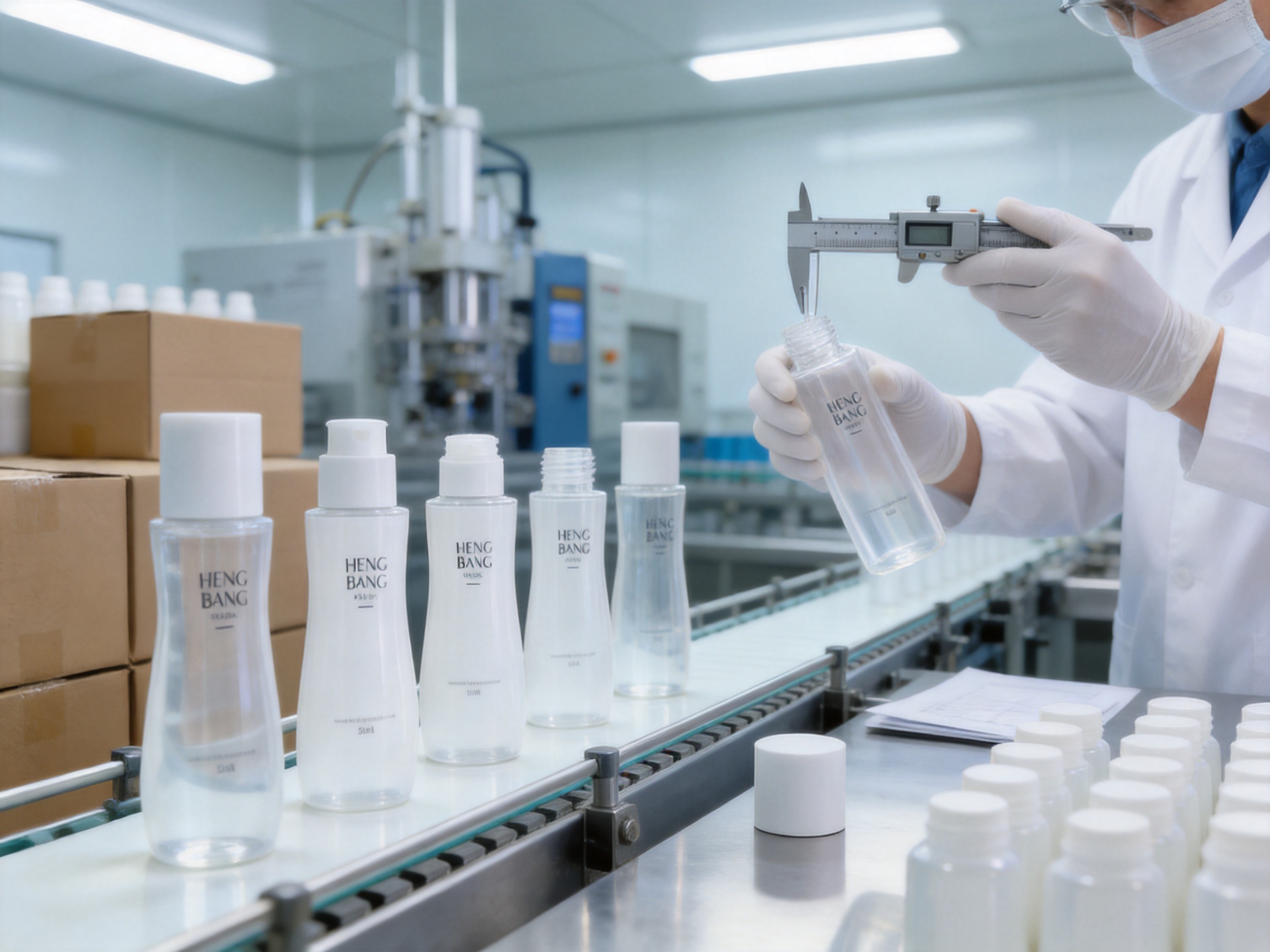
Packaging is one of the most important elements in the presentation, protection, and everyday use of skincare products. A toner bottle must do more than hold a liquid. It must protect the formula, support convenient dispensing, communicate product quality, and remain attractive throughout the customer’s experience. For brands developing toners, essences, lotions, and other lightweight skincare products, a well-designed 50ml bottle offers a balanced combination of portability, visual appeal, and practical capacity.
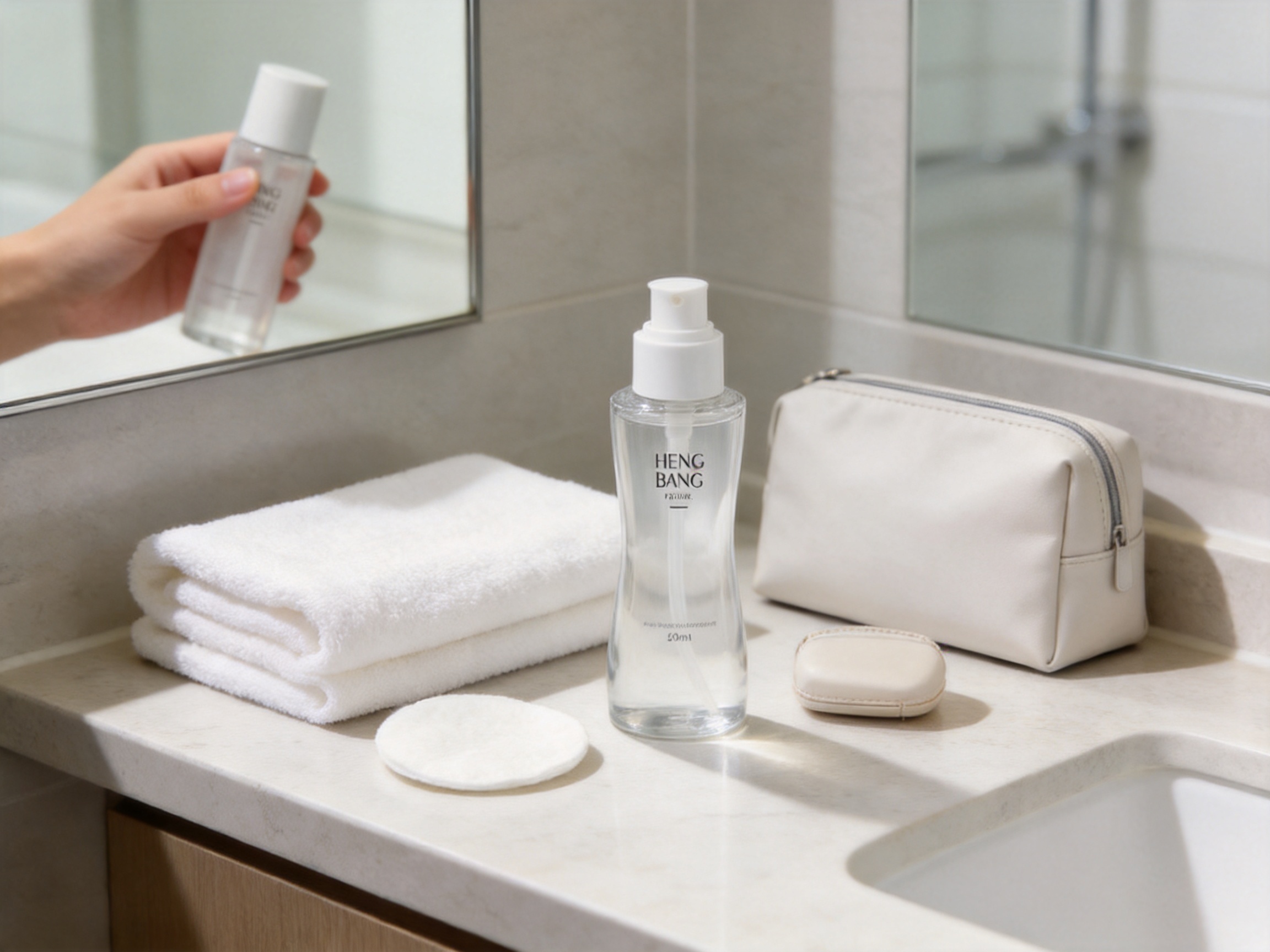
The HB-C017 50ml Plastic PETG Toner Bottle is designed for cosmetic and skincare applications that require a transparent, compact, and durable container. Its clear appearance allows users to see the product inside, while its streamlined waist provides a comfortable grip. The bottle is suitable for toner, essence, lotion, cleansing water, and similar liquid or semi-liquid formulations, subject to compatibility testing with the selected formula and closure system.
This product is manufactured by Yuyao Hengbang Plastic Co., Ltd., a Chinese cosmetic packaging manufacturer with experience in plastic containers for cosmetics and skincare products. Established in 2006, the company operates from a facility with a building area of approximately 35,000 square meters and a workforce of more than 300 employees. Its capabilities include design, development, production, quality management, and customer-oriented packaging services.
This article examines the bottle’s structure, material characteristics, dimensions, practical advantages, customization possibilities, manufacturing strengths, quality considerations, and potential applications. It also explains how this type of packaging compares with common alternatives and provides a question-and-answer section for purchasing, product development, and packaging teams.
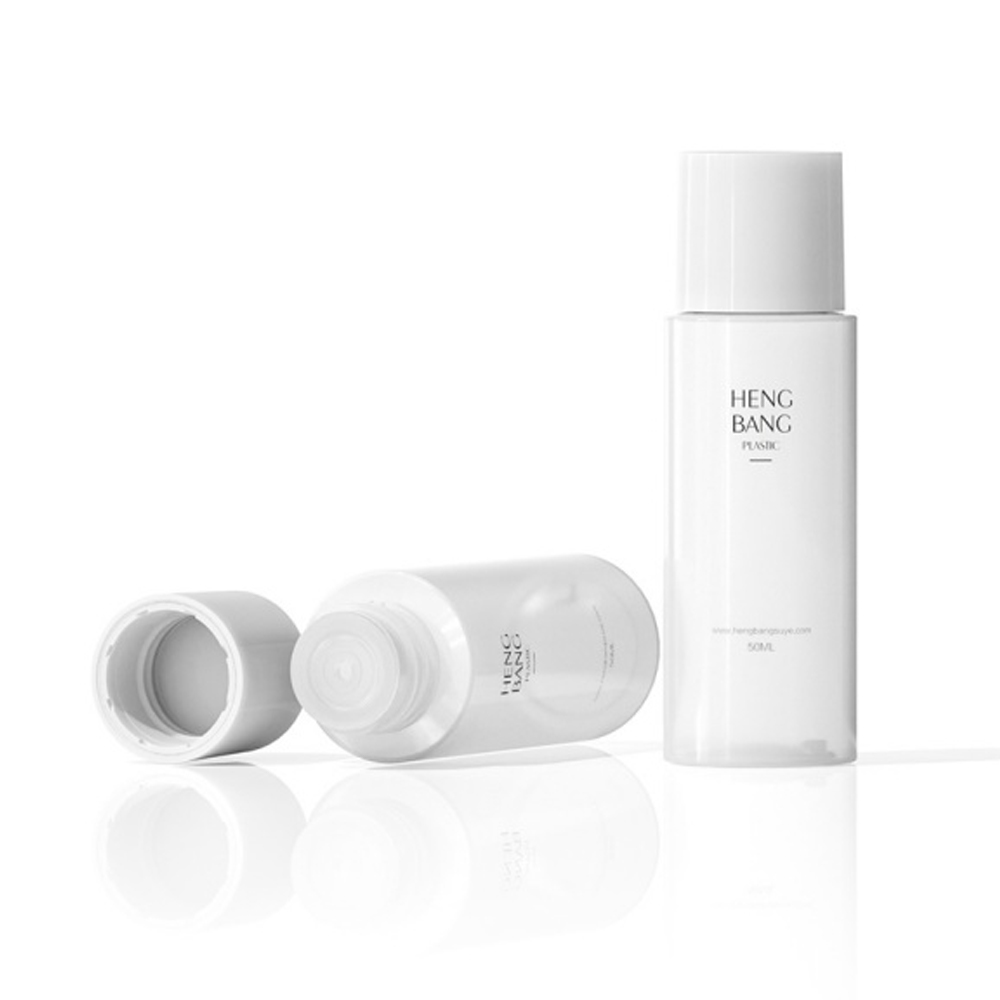
HB-C017 50ml Plastic PETG Toner Botter
The HB-C017 is a 50ml cosmetic bottle developed for toner and other lightweight skincare products. The compact capacity is suitable for trial-size products, travel collections, gift sets, professional sampling, and daily-use skincare lines. At the same time, 50ml offers more usable volume than many sample containers, giving brands an opportunity to create a portable product that remains practical for repeated use.
The bottle has a height of approximately 110mm and a diameter of approximately 35mm. These proportions create a slim vertical profile that can be placed efficiently on retail shelves, bathroom counters, dressing tables, and travel bags. The relatively narrow diameter also supports a controlled handhold, while the waist-shaped exterior improves comfort during use.
The body is presented as a high-transparency PETG container in the product description. The supplied technical table identifies the bottle material as PET and the cap material as ABS+PP. Because the product description and specification table use different material references, buyers should confirm the final resin specification with the manufacturer before approving mass production. This confirmation is especially important when the packaging will be exposed to alcohol, essential oils, acids, active ingredients, fragrances, or other substances that may influence material compatibility.
The crystal-clear appearance is one of the bottle’s most visible features. Transparency allows the liquid level and color to be observed without opening the package. For skincare products with a clean, fresh, or premium visual identity, this can support a direct connection between the formula and the consumer. The bottle can also display tinted toners, botanical liquids, micellar products, and lightly colored essences in a visually appealing way.
The closure is identified as ABS+PP. These materials are commonly used in cosmetic packaging because they can provide a combination of structural stability, functional performance, and compatibility with a broad range of closure designs. The exact dispensing format should be confirmed according to the product concept. Depending on the final configuration, the bottle may be paired with a suitable cap, treatment pump, spray component, or other dispensing solution.
Product item |
HB-C017 50ml Plastic PETG Toner Bottle |
Primary category |
PETG toner bottle |
Nominal capacity |
50ml |
Approximate height |
110mm |
Approximate diameter |
35mm |
Body material stated in product description |
PETG |
Bottle material stated in technical table |
PET |
Cap material |
ABS+PP |
Recommended product category |
Toners, essences, lotions, cleansing waters, and similar skincare products |
Capacity influences both consumer behavior and brand positioning. A 50ml bottle is large enough for repeated use but compact enough to remain convenient for travel and storage. This makes it a flexible format for brands that want to serve several market segments with one core package design.
For a standard toner routine, consumers often apply product once or twice daily. A 50ml format may provide a practical period of use while preventing the package from becoming bulky. The actual service period depends on the formula, dispensing method, application area, and amount used each time. Nevertheless, the size can help brands position the product as a portable daily essential rather than a single-use sample.
The format is also suitable for travel and hospitality applications. Consumers often prefer smaller skincare containers for airplanes, short trips, gym bags, and overnight stays. A bottle that is slim and lightweight can be easier to carry than a larger glass container. It can also be incorporated into travel kits, seasonal sets, promotional bundles, and introductory collections.
From a merchandising perspective, 50ml packaging can help a product occupy less shelf depth and create a clean visual arrangement. Multiple bottles may be aligned in a row without requiring the space associated with large-volume containers. For online sales, a compact package may also support efficient bundling and simplified fulfillment, although shipping requirements should always be evaluated with actual packed samples.
Brands may use the 50ml format as a bridge between sampling and full-size purchasing. A customer can experience a formula in a package that feels more substantial than a sachet or miniature vial. If the experience is positive, the customer may later purchase a larger size in the same product family. This approach can be particularly effective for premium skincare, professional brands, emerging labels, and products with higher price points.
Transparent plastic provides immediate visual communication. Customers can see the remaining amount, observe the color of the product, and recognize whether the bottle has been opened or used. For clear or lightly tinted toners, transparency can reinforce a clean and uncomplicated product image.
Visibility is also valuable for inventory control. Retail staff can quickly determine whether a package is full, partially used, or ready for replenishment. Consumers can estimate how much product remains and plan a replacement purchase. This practical benefit is easy to overlook, but it contributes to a more convenient user experience.
The product description emphasizes the resilient nature of the bottle and its ability to support safer transportation. Compared with many glass containers, a plastic bottle can reduce the risk of breakage caused by ordinary handling, accidental drops, and movement during travel. This can be an important advantage for products intended for handbags, luggage, bathrooms, and online delivery.
Impact resistance does not mean that the container is indestructible. Packaging performance depends on resin grade, wall thickness, bottle geometry, closure design, filling conditions, temperature, and transportation practices. Brands should conduct drop testing, vibration testing, leakage testing, and compatibility testing using the final production configuration.
Plastic packaging generally offers a lower weight than an equivalent glass container. Reduced weight may improve consumer convenience and can contribute to more efficient handling throughout the supply chain. Workers can pack and move products more easily, while customers may find the package more comfortable to carry.
Weight reduction should be balanced against structural requirements. A bottle must remain sufficiently rigid for filling, capping, labeling, stacking, and consumer use. An experienced packaging manufacturer can help determine how the shape, wall structure, neck, and base should be balanced for the intended application.
The supplied product information refers to PETG in the product name and description, while the technical information lists PET for the bottle. PET and PETG are related polyester materials but are not identical in all processing and performance characteristics. Their appearance, forming behavior, chemical resistance, stiffness, and processing requirements may differ depending on the grade and manufacturing method.
Before placing a purchase order, the buyer should request a formal material confirmation, technical data sheet, and sample approval record. The documentation should identify the resin used for the bottle, the materials used for the closure, any additives or colorants, and the applicable quality standards. This step avoids confusion between product naming and production specifications.
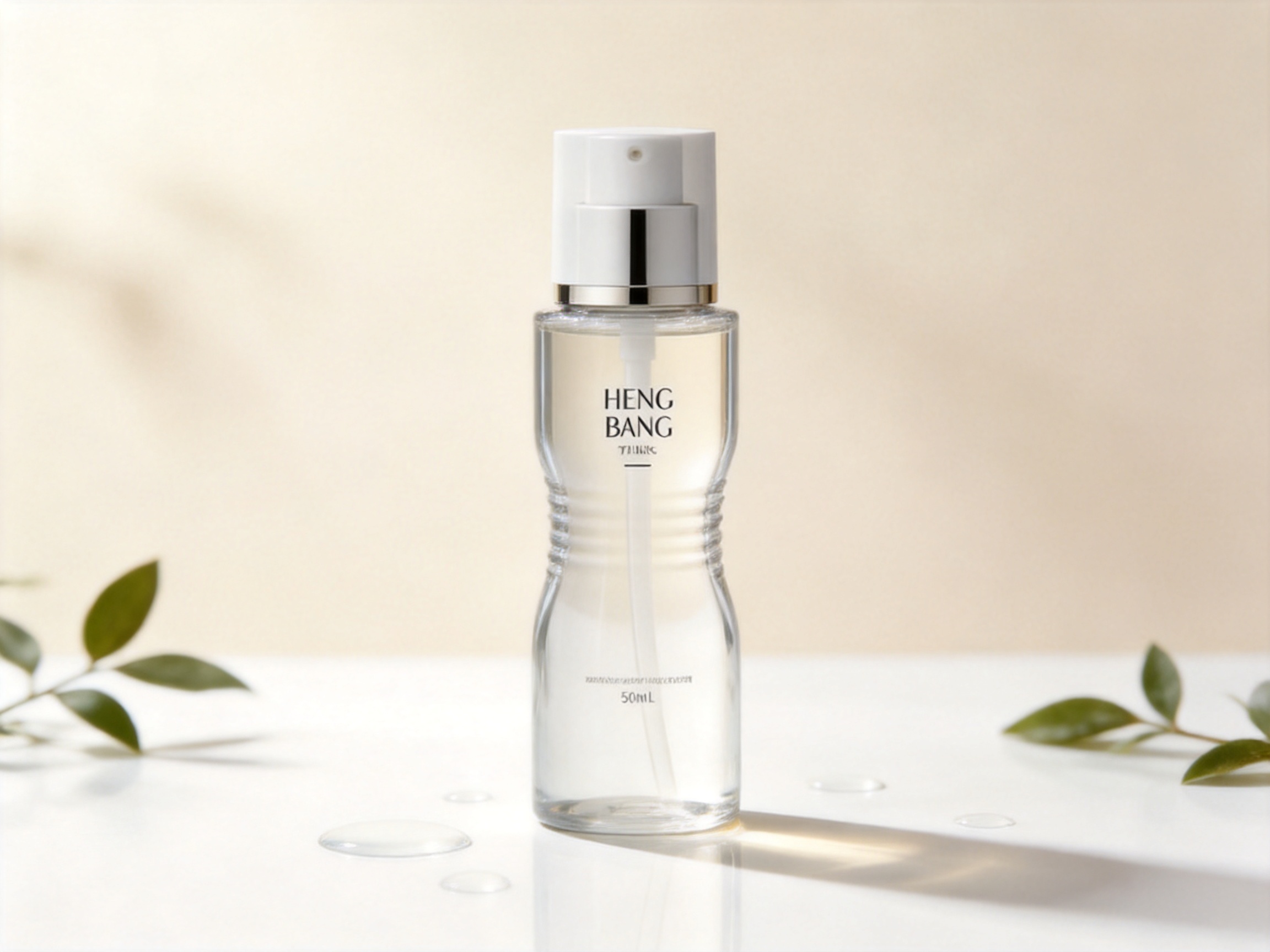
Cosmetic packaging is handled frequently, often with wet or moisturized hands. A shape that is easy to hold can make a meaningful difference in daily use. The HB-C017 design features a streamlined waist that supports a stable grip. Its approximately 35mm diameter creates a narrow profile that can fit comfortably in many adult hands.
The waist-shaped form may also help users control the bottle while applying toner to cotton pads, palms, or the face. Controlled handling can reduce the chance of squeezing or dropping the package. A well-balanced shape can be especially useful when the product is used near sinks, mirrors, or other hard surfaces.
Ergonomics extends beyond the bottle body. The closure must be easy to open and close, provide a reliable seal, and work with the viscosity of the formula. The package should be evaluated by representative users to determine whether the cap is easy to grip, whether the dispensing opening delivers an appropriate amount, and whether the bottle can be used without excessive tilting or shaking.
The bottle’s slim shape supports efficient storage. It may fit into cosmetic organizers, travel pouches, bathroom cabinets, and retail display trays. A narrow package can also allow brands to create coordinated product families in which multiple bottles share a visual language while offering different capacities or functions.
Glass is often selected for its weight, premium feel, and strong barrier performance. However, glass can be more vulnerable to breakage during handling and transportation. A resilient plastic bottle may be more suitable for travel products, online distribution, children-free bathroom environments, and promotional sets where accidental impact is a concern.
The plastic format can also reduce the weight of the finished package. This may make it easier for customers to carry and may simplify handling during fulfillment. The best choice still depends on the formula, brand image, sustainability objectives, and required barrier performance. For oxygen-sensitive or light-sensitive products, additional packaging measures may be necessary.
Soft squeeze bottles can be practical for some lotions and cleansers, but their appearance may not suit every toner or premium skincare concept. A rigid transparent bottle can deliver a more structured presentation and may provide a clearer view of the formula. The streamlined body can also create a more polished shelf presence.
A rigid container may offer more predictable dimensional stability during labeling and display. It can retain its shape as the product is consumed, whereas a squeeze package changes form during use. This difference can influence how the product looks in retail photography and on the customer’s bathroom shelf.
Large bottles can provide a lower cost per milliliter, but they may be less convenient for travel and less flexible for trial-oriented sales strategies. A 50ml format can serve customers who want portability or who prefer to test a product before purchasing a larger quantity.
The smaller size can also help brands launch limited editions, curated skincare sets, and seasonal packages without committing to a large container. It is therefore useful for both established product lines and new formulas being introduced to the market.
Opaque packages protect sensitive formulas from light more effectively than transparent packages in some situations. However, transparent packaging offers stronger product visibility and can make the formula itself part of the visual identity. If a toner has a clear, attractive, or naturally colored appearance, the HB-C017 format can display that characteristic directly.
Brands that require additional light protection may consider secondary cartons, sleeves, tinted material, UV-protective additives, or other design solutions. These options should be assessed alongside formula stability data rather than selected only for appearance.
The bottle is positioned primarily for toner products, but its capacity and shape may support a broader range of cosmetic and skincare applications. Potential uses include hydrating toner, balancing toner, exfoliating toner, essence, facial mist, cleansing water, lightweight lotion, after-sun liquid, and other compatible products.
For watery products, the dispensing system should provide clean and controlled delivery. For slightly thicker essences or lotions, the neck and closure must be designed to support appropriate flow. Formula viscosity, surface tension, filling temperature, and dosage requirements should be reviewed before selecting the final closure.
The bottle may also be used for professional skincare kits, hotel amenities, sample programs, and gift collections. In each case, the design can be adapted through color, decoration, labeling, secondary packaging, or closure selection. The final package should communicate the intended product category while remaining consistent with legal labeling requirements in the target market.
Although the bottle is described for cosmetics and skincare, it should not automatically be used for pharmaceuticals, food, beverages, or other regulated products without specific compliance review. Each application has different requirements for materials, migration, cleanliness, labeling, sealing, and traceability.
Yuyao Hengbang Plastic Co., Ltd. was established in 2006 and specializes in plastic packaging for cosmetics and skincare products. More than a decade of focused experience can help a manufacturer understand the practical requirements of cosmetic packaging, including appearance, dimensional accuracy, closure fit, decoration, filling compatibility, and commercial presentation.
Experience is especially valuable when a project involves more than a standard bottle. Packaging development may require cooperation among product designers, mold engineers, production teams, quality personnel, filling factories, and brand managers. A manufacturer familiar with these connections can help identify potential problems earlier in the development cycle.
The company reports a building area of approximately 35,000 square meters and more than 300 employees. A facility of this scale can support multiple functions, such as mold development, injection molding, bottle production, assembly, inspection, storage, and order coordination. The actual production process and available equipment should be confirmed for each project, but the reported scale indicates an established manufacturing operation rather than a purely trading-based supply model.
Production scale can support more consistent supply for customers who need repeat orders or multiple packaging formats. It may also provide greater flexibility when a brand develops a series of related containers, such as toner bottles, airless bottles, lotion bottles, plastic cream jars, sunscreen bottles, and double-chamber packaging.
The company states that its professional team provides design and development services. This capability is important because cosmetic packaging is often developed around a particular brand identity, formula, consumer group, or dispensing method. A manufacturer involved at an early stage may help assess whether a proposed shape is practical to mold, decorate, fill, close, and transport.
Development support can include reviewing drawings, suggesting structural changes, preparing samples, coordinating mold work, evaluating closure fit, and making adjustments after testing. The precise scope should be agreed in writing, especially regarding mold ownership, development charges, sample quantities, lead times, and intellectual property.
The company reports certification to ISO9001:2015 and ISO14001:2015. ISO9001:2015 is associated with quality management systems, while ISO14001:2015 is associated with environmental management systems. Certification can indicate that documented management procedures are in place, although buyers should request current certificates and confirm their scope and validity.
A quality management system can support controlled procedures for incoming materials, production operations, inspection, corrective actions, and customer feedback. An environmental management system may help organize efforts related to resource use, waste control, emissions, and environmental responsibilities. These systems do not replace product-specific testing, but they can provide a structured foundation for manufacturing management.
The company was awarded as a Ningbo High-Tech Enterprise in 2021 and owns multiple invention patents, according to the supplied company information. Such recognition suggests an emphasis on technical development and innovation. For buyers, the practical value lies in understanding how these capabilities apply to the selected product, including mold design, material use, structural performance, assembly efficiency, or decoration technology.
Buyers should request product-specific information rather than assuming that every patent or technical achievement applies directly to the HB-C017 bottle. Clear communication about the actual manufacturing process, available customization, and quality controls will help establish realistic expectations.
The appearance of a cosmetic bottle depends heavily on mold precision. The waist profile, shoulder transition, base stability, neck finish, and cap interface must be developed as an integrated structure. Poorly coordinated tooling can result in uneven walls, visible flow marks, deformation, poor closure fit, or inconsistent appearance.
During development, engineers typically review draft angles, parting lines, gate locations, cooling behavior, ejection points, and dimensional tolerances. Transparent containers require particular attention because surface imperfections may be more visible than they would be on an opaque package. A well-managed tooling process can improve repeatability and reduce the need for later modifications.
Plastic processing requires control of resin handling, drying conditions where applicable, processing temperature, injection or forming pressure, cooling time, and cycle consistency. Transparent materials can be sensitive to processing conditions that influence clarity, stress, haze, and surface quality.
The final properties of the bottle depend not only on the material name but also on the specific grade, additives, processing method, and design. Therefore, technical evaluation should be based on actual production samples. Buyers should compare samples from the approved production process rather than relying exclusively on photographs or general material descriptions.
Dimensions such as height, diameter, neck size, and capacity influence filling-line performance and compatibility with labels, cartons, trays, and closures. A nominal capacity of 50ml does not eliminate the need to confirm overflow volume, fill volume, headspace, and actual usable capacity.
Dimensional inspection should consider the bottle body, neck finish, cap, sealing surface, and assembled height. Consistent dimensions can help filling factories maintain stable line speeds and reduce problems such as loose caps, cross-threading, leakage, label misalignment, or package instability.
The closure must form a reliable connection with the bottle neck. Important factors include thread or snap-fit geometry, gasket or liner design, tamper evidence, opening torque, resealing performance, and dispensing behavior. A package that looks attractive but leaks during transportation can create significant commercial and reputational costs.
Assembly procedures should be tested under realistic conditions. The filled package should be stored at different temperatures, inverted, shaken, and subjected to transportation simulation where appropriate. Testing should cover both the initial seal and repeated opening and closing, especially for products expected to be used over several weeks.
Cosmetic packaging inspection may include visual checks, dimensional measurement, weight checks, capacity verification, closure testing, leakage testing, drop testing, and color or transparency comparison. The exact inspection plan should reflect the product’s risk profile and the customer’s quality requirements.
For a transparent toner bottle, common appearance criteria may include clarity, absence of excessive black spots, freedom from cracks, acceptable gate marks, smooth surfaces, consistent shape, and correct assembly. A signed reference sample and an approved specification sheet can help both manufacturer and buyer evaluate production consistently.
Although the bottle is naturally transparent, it can serve as a neutral foundation for different brand identities. Decoration may include labels, screen printing, hot stamping, color effects, coatings, sleeves, or secondary cartons, depending on the project requirements. The chosen technique should be evaluated for adhesion, abrasion resistance, chemical resistance, and visual consistency.
Labels can provide a practical solution for smaller production runs or products that require variable information. They can display brand names, product descriptions, ingredients, usage instructions, batch information, and regulatory details. Label dimensions should be matched to the curved waist so that the label does not wrinkle, lift, or create an uneven appearance.
Direct printing may create a more integrated appearance and can be suitable for premium packaging. However, printing requires careful control of artwork, registration, ink adhesion, curing, and minimum order quantities. Clear bottles may also use transparent labels or selected ink effects to preserve visibility of the formula.
Color and decoration should not compromise the purpose of transparency. Some brands may choose a lightly tinted bottle to reinforce a specific product identity while retaining partial visibility. Others may use a transparent body with a colored cap to create a recognizable product family. Since the closure is identified as ABS+PP, its color and finish can become an important part of the overall design system.
The brand should provide information about the product’s viscosity, pH, alcohol content, fragrance, oils, active ingredients, preservatives, and expected storage conditions. These details help determine whether the bottle and closure are suitable.
Because the supplied information references both PETG and PET, the buyer should obtain written confirmation of the bottle resin. The neck finish, closure type, dispensing opening, and sealing method should also be specified. If the package is intended for a spray, pump, or treatment closure, the complete assembly should be evaluated rather than the bottle alone.
Samples should be examined for appearance, dimensions, grip, stability, transparency, closure fit, and dispensing performance. The brand should test the package with the actual formula whenever possible. Empty-package approval is useful, but filled-package approval provides more reliable information.
Compatibility testing may include storage at room temperature, elevated temperature, low temperature, light exposure, and repeated opening. The evaluation should observe changes in color, odor, clarity, weight, leakage, stress cracking, swelling, brittleness, and label adhesion. The testing period should reflect the intended shelf life and distribution conditions.
Artwork, color references, label position, printing tolerance, inspection limits, packing method, and carton markings should be approved before mass production. A written quality standard reduces ambiguity and helps both sides manage production expectations.
The filling factory should verify that the 110mm height and 35mm diameter work with its equipment, guides, star wheels, capping heads, labeling machines, and packing trays. Transportation tests should be performed using the final carton configuration. Packaging performance is a complete system that includes bottle, closure, label, carton, pallet, and shipping environment.
Plastic packaging decisions should consider the full product life cycle. Lightweight plastic may reduce transport weight compared with heavier materials, but responsible design also requires attention to material selection, unnecessary components, decoration, recyclability, production waste, and end-of-life communication.
Brands should confirm the applicable recycling rules in each target market. The material identification, closure combination, label adhesive, ink, coating, and secondary packaging may all influence sorting and recycling outcomes. A package that appears simple may contain several materials, so design teams should consider compatibility from the beginning.
The company’s reported ISO14001:2015 certification indicates the presence of an environmental management framework. Buyers may request additional information about production waste management, recycled content options, energy management, material reduction, and environmental documentation. Such questions help ensure that sustainability claims are based on verifiable information rather than general marketing language.
It is also important to avoid unsupported environmental claims. Terms such as eco-friendly, recyclable, low-carbon, or sustainable should be used only when supported by appropriate evidence and relevant local regulations. A clear, accurate explanation of material and packaging choices is more credible than an exaggerated claim.
Evaluation area |
Recommended checks |
Material |
Confirm whether the bottle is PET, PETG, or another specified resin; request technical documentation. |
Capacity |
Verify nominal capacity, actual fill volume, overflow volume, and required headspace. |
Dimensions |
Check height, diameter, neck finish, base stability, and compatibility with filling equipment. |
Appearance |
Inspect transparency, surface smoothness, molding marks, particles, deformation, and color consistency. |
Closure |
Test fit, opening torque, resealing, leakage resistance, and dispensing performance. |
Formula compatibility |
Conduct storage and interaction testing with the actual toner or skincare formula. |
Decoration |
Evaluate print or label adhesion, abrasion resistance, chemical resistance, and placement tolerance. |
Transportation |
Perform drop, vibration, compression, and temperature-related tests using final packed units. |
Documentation |
Approve drawings, quality standards, inspection reports, certificates, and packaging specifications. |
The HB-C017 format can help brands create a product that looks clean, modern, and accessible. Its transparent body showcases the formula, while its slim form supports convenient storage. These features can be valuable for brands that want packaging to communicate simplicity, freshness, and everyday usability.
The bottle’s flexible capacity may also support multiple commercial strategies. A brand can use it as a core travel size, a gift-set component, a trial product, or a secondary size within a broader skincare range. Using a consistent bottle family can simplify visual branding and make product collections easier for consumers to recognize.
For growing businesses, cooperation with a manufacturer that offers design and development support can reduce the burden on internal packaging teams. Instead of managing every technical issue independently, the brand can work with a supplier familiar with mold development, plastic processing, cosmetic closures, and quality management.
For established companies, the product may be considered as part of a broader packaging portfolio. A supplier producing multiple categories, including airless bottles, double-chamber bottles, lotion bottles, plastic cream jars, sunscreen bottles, and toner bottles, may offer opportunities for supplier consolidation. Consolidation can simplify communication, sampling, quality coordination, and order management when the supplier’s capabilities meet the required standards.
Clear communication is essential when developing cosmetic packaging. The buyer should provide complete product information, expected annual volume, target market, required decoration, delivery schedule, filling method, and quality expectations. The supplier should respond with clear information about available materials, tooling, minimum order quantities, lead times, sample procedures, and testing recommendations.
All important decisions should be recorded in written specifications. This includes the final bottle material, cap material, dimensions, tolerance, capacity, color, transparency standard, decoration position, closure torque, packing method, and inspection criteria. Written approval protects both parties from misunderstandings during production.
Sample evaluation should involve more than visual approval. The brand, filling factory, and supplier should assess the complete package in realistic conditions. A bottle that performs well when empty may behave differently after filling, labeling, capping, carton packing, or long-distance transportation.
Communication should also continue after the first order. Production feedback, customer comments, leakage reports, decoration observations, and filling-line performance can be used to improve future batches. A long-term supplier relationship is strengthened when both sides treat quality as an ongoing process rather than a one-time inspection.
The bottle is primarily designed for toner products. It may also be suitable for essences, cleansing waters, lightweight lotions, facial liquids, after-sun products, and similar skincare formulas, provided that the material and closure are confirmed as compatible.
The stated capacity is 50ml. Buyers should distinguish between nominal capacity, actual fill volume, overflow volume, and headspace. The final filling specification should be confirmed with the manufacturer and filling facility.
The listed height is approximately 110mm and the listed diameter is approximately 35mm. Production tolerances and the dimensions of the assembled bottle with cap should be confirmed before designing labels, cartons, trays, or filling equipment.
The product description identifies it as PETG, while the technical table lists the bottle material as PET. These materials should not be treated as interchangeable without confirmation. Buyers should request a formal written specification identifying the exact resin used for the approved production version.
The supplied information lists ABS+PP for the cap. The exact construction, liner, dispensing insert, and closure style should be confirmed according to the product formula and user requirements.
The transparent body allows users to see the product color and remaining quantity. It can support a clean and premium visual presentation, simplify inventory observation, and make the formula part of the packaging design.
Its 50ml capacity, compact dimensions, lightweight plastic construction, and impact-resistant design make it a practical candidate for travel-oriented skincare. However, travel performance should be verified through leakage, drop, pressure, and transportation testing using the final closure and filled formula.
Cosmetic bottles can often be customized through color, decoration, labeling, printing, closure selection, or related packaging development. Available options, minimum order quantities, tooling requirements, and lead times should be confirmed directly for the HB-C017 project.
The appropriate dispensing system depends on the bottle neck, formula viscosity, required dosage, and intended user experience. A pump or spray should be tested as a complete assembly with the bottle and formula before approval.
Recommended tests may include material compatibility, leakage, closure fit, opening and closing, drop resistance, vibration, temperature storage, label adhesion, decoration abrasion, dimensional stability, and filling-line performance. The test plan should be adjusted to the formula and distribution environment.
The company states that its professional team provides design and development services. Buyers should discuss the exact scope, including drawing review, sample production, mold development, decoration, technical documentation, and production support.
The company reports ISO9001:2015 and ISO14001:2015 certifications. Buyers should request current certificates and confirm their validity and scope. Certification supports management-system confidence but does not replace product-specific approval and testing.
It should not be assumed to be suitable for pharmaceutical, food, beverage, or other regulated applications without specific compliance documentation and testing. Cosmetic packaging requirements may differ significantly from those sectors.
The brand should request a written material declaration, technical data sheet, and approved sample reference. The purchase order and quality agreement should identify the confirmed material clearly so that production is based on one agreed specification.
The HB-C017 50ml toner bottle combines a compact format, transparent appearance, ergonomic waist, and plastic construction suited to modern skincare packaging. Its 50ml capacity supports travel, sampling, gift sets, and daily-use product concepts, while its approximately 110mm height and 35mm diameter create a slim profile for storage and display.
Its most visible competitive advantages are product visibility, convenient handling, portability, and resistance to ordinary impact compared with more fragile alternatives. The bottle also provides a flexible foundation for labels, printing, color coordination, and broader cosmetic packaging programs.
The manufacturing background of Yuyao Hengbang Plastic Co., Ltd. adds further value for brands seeking an experienced packaging partner. The company reports a 35,000-square-meter building area, more than 300 employees, design and development capabilities, ISO9001:2015 and ISO14001:2015 certifications, Ningbo High-Tech Enterprise recognition, and multiple invention patents. These resources can support structured product development and repeat commercial production.
Before ordering, buyers should confirm the exact bottle material because the supplied information references both PETG and PET. They should also validate formula compatibility, closure performance, dimensions, decoration, filling-line suitability, and transportation durability. With those checks completed, this 50ml transparent bottle can provide a practical and attractive packaging solution for toner and a wide range of related skincare products.
1. Product specification for HB-C017 50ml Plastic PETG Toner Bottle, supplied product information.
2. Company profile of Yuyao Hengbang Plastic Co., Ltd., supplied corporate information.
3. ISO 9001:2015, Quality Management Systems — Requirements.
4. ISO 14001:2015, Environmental Management Systems — Requirements with Guidance for Use.
5. General principles of cosmetic packaging compatibility testing and packaging performance evaluation.
6. General practices for plastic container dimensional inspection, leakage testing, drop testing, and transportation evaluation.


Copyright © Yuyao Hengbang Plastic Co., Ltd.
All Rights Reserved.
 Wholesale Plastic Cosmetic Packaging Manufacturers