English
 中文简体

News
Home > Author > Zhang Yuxin — Plastic Cosmetic Packaging Sales Representative > 50ml PETG Toner Bottle: A Clear, Durable, and Practical Solution for Modern Skincare Packaging

 2026.10.14
 Zhang Yuxin — Plastic Cosmetic Packaging Sales Representative
Content
In the skincare industry, packaging is more than a protective shell for a formula. It is part of the customer experience, an important contributor to product stability, and a visible expression of a brand’s quality standards. Toners, essences, and lightweight skincare liquids require packaging that is convenient to use, easy to transport, visually appealing, and suitable for a wide range of retail environments. The HB-C017 50ml plastic PETG toner bottle is designed to meet these requirements through a combination of transparent appearance, compact capacity, ergonomic handling, and durable plastic construction.
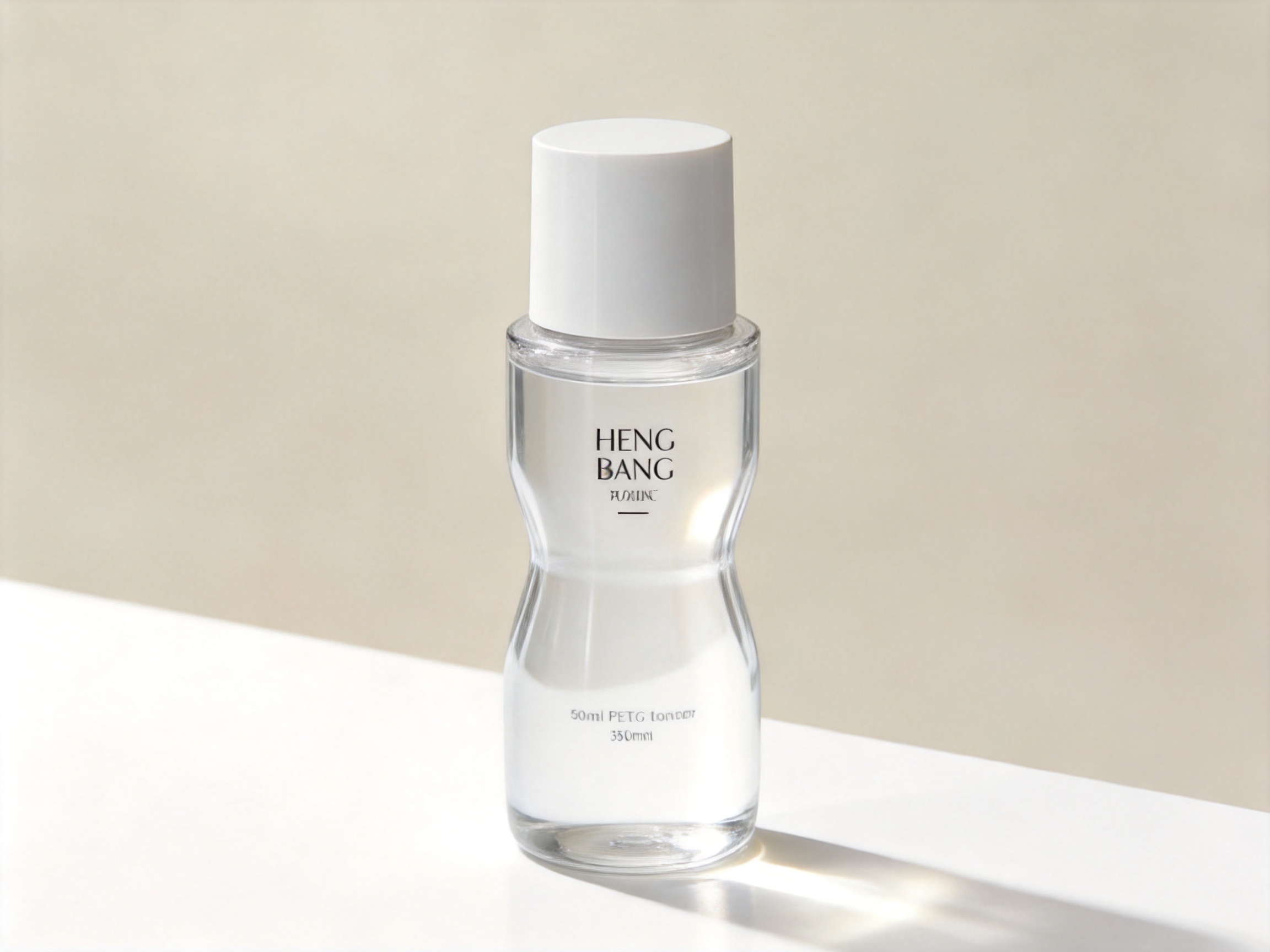
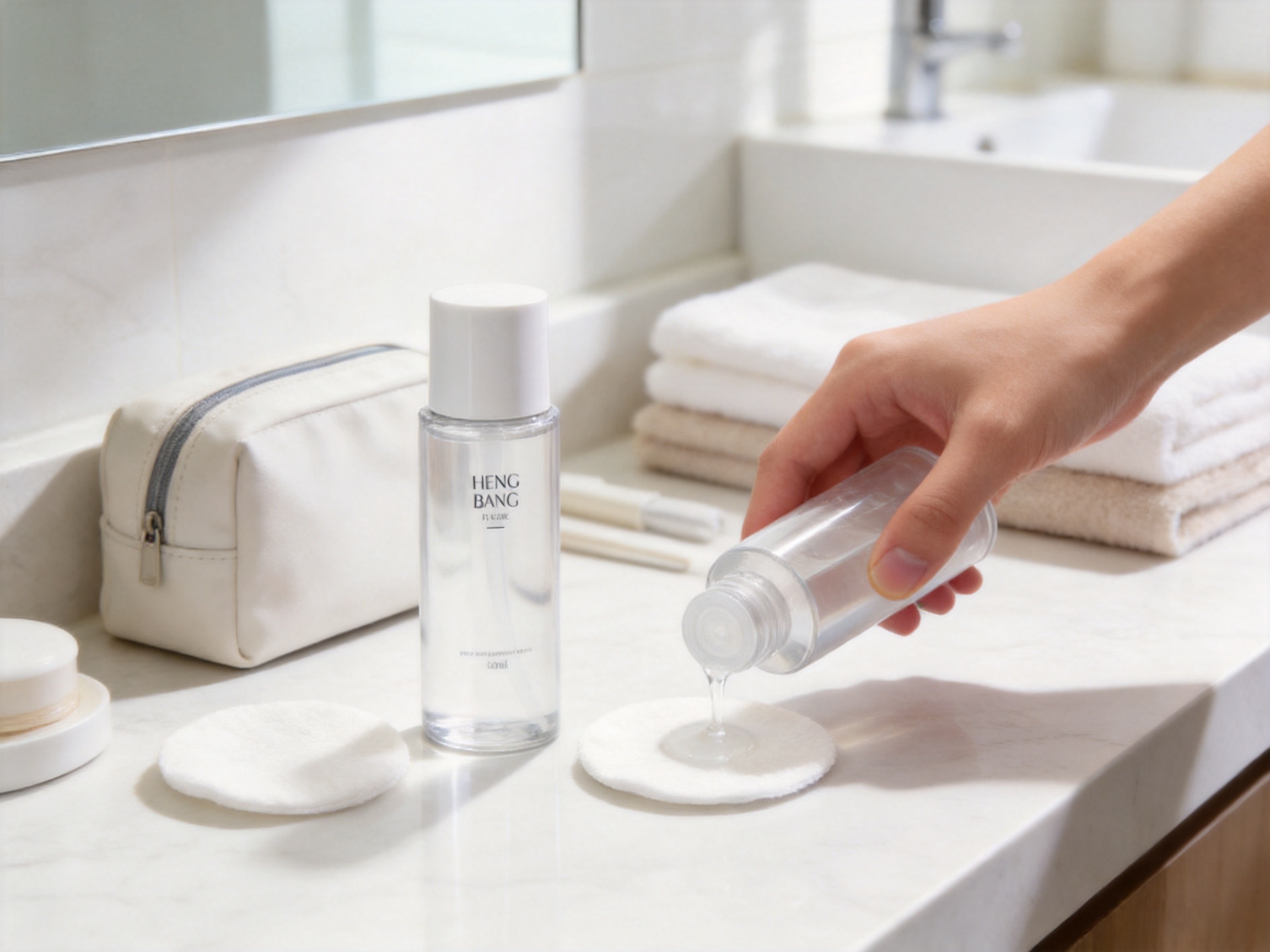
With its 50ml capacity, streamlined waist, and crystal-clear body, this toner bottle is especially suitable for travel-size skincare, premium sampling programs, gift sets, beauty kits, and concentrated toner or essence products. Its appearance allows the liquid inside to remain visible, giving consumers an immediate impression of cleanliness and product purity. At the same time, the bottle’s impact-resistant construction provides a practical alternative to more fragile packaging materials in situations where products are frequently transported, handled, or displayed.
The bottle is produced by Yuyao Hengbang Plastic Co., Ltd., a cosmetic packaging manufacturer established in 2006. The company operates from Yuyao City, Zhejiang Province, and has a 35,000-square-meter building area with more than 300 employees. Its capabilities include packaging production, product design, development services, and manufacturing for cosmetic and skincare applications. The company has obtained ISO9001:2015 and ISO14001:2015 certifications, was recognized as a Ningbo High-Tech Enterprise in 2021, and holds multiple invention patents.
This article examines the design, material characteristics, application value, manufacturing strengths, and purchasing considerations associated with the 50ml PETG toner bottle. It also explains why a compact transparent bottle can offer advantages over competing packaging options when the needs of a skincare brand include appearance, portability, operational efficiency, and consistent quality.
The HB-C017 is a 50ml plastic toner bottle intended for liquid skincare formulations such as toners, essences, facial waters, and other lightweight products. Its compact size is large enough for practical daily use while remaining small enough for travel, promotional distribution, and multi-product skincare sets.
The product has a height of approximately 110mm and a diameter of approximately 35mm. These dimensions create a narrow, vertically oriented package that occupies limited shelf and shipping space. The proportions also contribute to comfortable handling. A consumer can hold the bottle securely in one hand while dispensing the product with the other, which is important for routines that involve several skincare steps.
The body is described as a high-transparency PETG bottle in the product content, while the supplied specification table identifies the bottle material as PET and lists the cap as ABS plus PP. Because PETG and PET are different material designations, buyers should confirm the final material specification with the manufacturer before mass production. This clarification is particularly important for brands that have specific requirements related to chemical compatibility, appearance, recyclability, labeling, or regulatory documentation.
Regardless of the final resin designation confirmed for production, the concept of the product is clear: it is a transparent, durable plastic bottle created for toner and essence packaging. The design combines an attractive appearance with the practical benefits commonly associated with rigid cosmetic plastics, including lower breakage risk, convenient handling, and efficient transportation.
Product item |
Specification |
Product type |
Plastic toner bottle |
Model |
HB-C017 |
Nominal capacity |
50ml |
Approximate height |
110mm |
Approximate diameter |
35mm |
Body material listed in product description |
PETG |
Bottle material listed in supplied specification table |
PET |
Cap material |
ABS plus PP |
Primary applications |
Toners, essences, facial waters, skincare liquids, travel-size products, and gift sets |
Transparency is one of the most recognizable features of the HB-C017 bottle. A clear package allows the consumer to see the formula inside, monitor the remaining quantity, and understand the general appearance of the product before purchase. For toners and essences, which are often associated with freshness, light textures, and clean formulations, this visual openness can support a strong product presentation.
A transparent bottle also gives brands greater flexibility when developing a visual identity. The liquid itself can become part of the design language. A clear formula can communicate simplicity and purity, while a lightly colored formula can create a distinctive appearance without requiring an opaque external package. Brands may combine the transparent body with a colored cap, printed graphics, labels, or minimalist typography to achieve different market positions.
In premium skincare, transparent packaging can make a product appear precise and refined. In professional or dermatological product lines, it can help reinforce a straightforward and functional image. For natural or clean beauty ranges, the visible formula can support a message centered on simplicity and ingredient awareness. The same bottle format can therefore serve different branding strategies depending on the decoration and closure selected.
Visibility also provides a practical benefit during filling and quality inspection. Manufacturing and packaging teams can more easily observe fill levels, identify unusual particles, and inspect the general condition of the liquid when the container is transparent. Retail and warehouse staff can also see whether products are correctly filled and whether the contents appear consistent across a batch.
Compared with fully opaque containers, a transparent bottle may provide a more immediate connection between the product and the customer. However, brands should evaluate light sensitivity before selecting clear packaging. If a formula contains ingredients that are sensitive to ultraviolet or visible light, additional testing, secondary packaging, tinted material, or a protective carton may be required. The clear design is highly attractive, but it should always be matched to the stability profile of the formula.
The product description presents the bottle as being made from high-transparency, resilient PETG. PETG, or polyethylene terephthalate glycol-modified material, is widely recognized in packaging and product applications for its clarity, toughness, and ability to create smooth molded shapes. Its visual quality is suitable for cosmetic packaging where the appearance of the container contributes directly to the perceived value of the product.
The supplied technical table, however, lists the bottle material as PET. PET, or polyethylene terephthalate, is also widely used in packaging because it can offer transparency, rigidity, and a relatively lightweight structure. Although PET and PETG share related material characteristics, they are not interchangeable in every application. Processing conditions, performance requirements, decoration methods, and recycling considerations may differ.
For this reason, a professional buyer should request a confirmed technical datasheet before approving the bottle for production. The datasheet should identify the final body resin, cap materials, neck finish, closure compatibility, recommended filling temperature, applicable testing standards, and any restrictions related to formulation ingredients. This is not a weakness of the product; it is a normal and necessary step in responsible packaging development, especially when product information contains more than one material reference.
Both PET and PETG can support a clean, high-quality appearance when properly processed. The selected resin should be evaluated against the formula and intended use. For example, a brand may need to consider alcohol content, essential oils, acids, surfactants, preservatives, viscosity, storage temperature, and expected shelf life. Compatibility testing helps determine whether the bottle, cap, liner, and dispensing opening work together without leakage, deformation, discoloration, stress cracking, or changes in product quality.
The bottle’s reported resilience is particularly useful for products that travel through multiple stages of distribution. Cosmetic goods may be packed into cartons, placed on pallets, loaded into trucks, moved through warehouses, and carried home by consumers. A rigid plastic bottle can reduce the risk associated with accidental impact compared with more fragile packaging alternatives. It can also help brands reduce the number of units damaged during transport, although the final performance depends on wall thickness, closure design, carton protection, stacking conditions, and distribution testing.
HB-C017 50ml Plastic PETG Toner Botter
The 50ml capacity is one of the bottle’s strongest commercial advantages. It provides enough volume for repeated use without creating the bulk associated with larger facial-water packages. This makes the bottle suitable for several product strategies, including travel collections, trial products, limited editions, salon or spa offerings, hotel amenities, subscription boxes, and gift-with-purchase programs.
Travel-size skincare remains important because consumers increasingly want portable routines. A 50ml bottle can fit conveniently into a toiletry bag, handbag, gym bag, or carry-on collection. Its narrow 35mm diameter also supports efficient use of limited storage space. The approximately 110mm height gives the bottle a recognizable presence while keeping its overall footprint compact.
For brands, a smaller package can be an effective way to introduce a new formula. Consumers may be more willing to test a 50ml toner than to purchase a much larger bottle before they understand whether the product suits their skin type or routine. This format can lower the perceived commitment associated with first-time purchase and support sampling campaigns that still feel like complete products rather than single-use sachets.
The format is also suitable for premium sets. A toner bottle can be combined with a cleanser, serum, moisturizer, sunscreen, or facial mist in a coordinated skincare collection. Because the bottle is vertically oriented and visually clear, it can contribute to a balanced presentation when placed beside other containers of different shapes and sizes.
Small-format packaging may also help brands manage inventory during product launches. A company can introduce a limited quantity in a 50ml format, assess market response, and later expand into larger capacities if demand is strong. This approach can reduce the initial packaging commitment and offer more flexibility when testing regional markets or seasonal campaigns.
Capacity should be understood as nominal rather than an automatic indication of fill volume under every production condition. The final fill level, headspace, overflow capacity, and compatibility with the dispensing method must be confirmed during product development. For toners and essences, headspace can affect user experience, filling efficiency, and the behavior of the liquid during transport.
The HB-C017 bottle uses a streamlined waist design that is intended to fit comfortably in the hand. This feature combines visual styling with practical function. Skincare packaging is handled every day, often in wet or humid bathroom environments, so grip and control are important considerations.
A comfortable bottle is easier to open, hold, pour, and return to a shelf. The narrowed waist can provide a natural gripping point and help prevent the bottle from slipping during use. It may also make the product feel more refined than a basic straight-sided container. In consumer packaging, these small tactile details can influence how people perceive quality.
The shape is appropriate for toner routines because users may apply the product to cotton pads, palms, or reusable skincare tools. A steady grip allows the user to control the quantity dispensed and reduces the risk of accidentally dropping the bottle. The exact dispensing experience will depend on the final cap or closure configuration, but the body shape creates a useful foundation for controlled handling.
Ergonomics also influence the product’s suitability for different consumer groups. A package that is easy to grip may be more accessible to people with limited hand strength or reduced dexterity. Brands seeking a more inclusive packaging experience should assess opening torque, closure texture, cap size, and dispensing force alongside the bottle’s body shape.
The waist design contributes to visual differentiation as well. The market includes many cylindrical and rectangular toner bottles, so a refined contour can help a product stand out on crowded shelves. When paired with transparent material, smooth surfaces, and high-quality decoration, the silhouette can create a recognizable product profile even before the consumer reads the label.
Glass is often associated with premium skincare because of its weight, clarity, and solid feel. However, glass can be more vulnerable to breakage during transportation, storage, and daily use. A plastic bottle such as the HB-C017 offers a lighter alternative with a lower risk of shattering when dropped or squeezed by other packages.
Reduced weight can also support more efficient logistics. Lighter packaging may reduce the total weight of cases and pallets, which can simplify handling and potentially lower transportation impacts. The exact environmental result depends on material selection, production energy, shipping distance, recycling infrastructure, and end-of-life management, so brands should make sustainability claims only after appropriate assessment.
Plastic can also provide greater flexibility in shaping. The ergonomic waist and compact proportions can be molded into a lightweight structure that would require different manufacturing considerations in glass. For travel products and gift sets, the lower breakage risk may be particularly valuable.
Refill pouches can reduce material use in certain product systems, but they do not always provide the same stand-alone presentation or ease of use. A rigid bottle offers a more familiar consumer experience and can be displayed upright on retail shelves. It is also easier to handle when a user wants to pour a measured amount onto a cotton pad or into the palm.
The rigid body provides shape stability and a consistent visual profile. It can support labels and printed decoration more predictably than a flexible package. For brands selling premium, portable, or giftable products, the bottle format may communicate a higher degree of finished-product quality.
Opaque packaging can protect light-sensitive formulas and support strong graphic branding, but it hides the product inside. The transparent HB-C017 format allows consumers to see the liquid and monitor the remaining amount. This can create a more immediate relationship between the formula and the user.
Clear packaging may also help reduce confusion when a consumer owns several similar products. The visible texture and color of the liquid can make the product easier to identify on a bathroom shelf. For brands with visually distinctive formulas, this is a valuable presentation advantage.
Larger bottles may provide a lower cost per milliliter, but they can be less convenient for travel, sampling, and first-time purchase. The 50ml format offers a balance between usefulness and portability. It supports repeated use while remaining compact enough for promotional sets and on-the-go routines.
Smaller packaging can also help reduce the risk of a product becoming outdated or unused after opening. Consumers who use skincare products intermittently may prefer a moderate quantity that can be finished within a reasonable period. This is especially relevant for formulas with a limited period after opening or products used as part of rotating skincare routines.
A packaging component becomes more valuable when it can adapt to different brand identities. The HB-C017 bottle provides a neutral but distinctive base for customization. Its transparent body can be used with clear labels, white printing, metallic decoration, colored graphics, or restrained black typography.
Minimalist brands may choose a small label that allows most of the liquid to remain visible. Clinical skincare brands may use precise typography and a limited color palette. Youth-oriented brands may select vivid caps or playful graphics. Premium brands may combine a clear bottle with metallic accents, a specialized surface finish, or a coordinated carton.
Decoration should be evaluated according to the confirmed resin, surface energy, label adhesive, ink system, and intended storage conditions. Testing is important because moisture, oils, alcohol, friction, and temperature changes can affect the durability of labels and printed graphics. A packaging supplier with product development experience can help brands identify suitable decoration methods and establish production standards.
The bottle’s compact dimensions can also simplify the development of coordinated packaging families. A brand may use the same design language across toner, serum, essence, and lotion containers while varying capacities or closures. Consistent proportions and decoration can improve shelf recognition and create a unified range.
For contract manufacturers and private-label skincare companies, a versatile standard bottle can reduce development time compared with designing a completely new container. The existing shape can serve as a starting point for a product launch, while decoration and closure choices provide room for differentiation.
The bottle is manufactured by Yuyao Hengbang Plastic Co., Ltd., which has specialized in plastic packaging for cosmetics and skincare products since 2006. More than two decades of sector experience can provide important advantages in understanding the practical requirements of beauty packaging, including appearance, dimensional consistency, closure matching, filling operations, and market presentation.
The company’s reported building area of 35,000 square meters indicates a substantial operating base for product development and manufacturing activities. Its workforce of more than 300 employees provides a broad organizational foundation for production, engineering, quality management, sales support, and customer service. The company also describes its team as young and professional, with services that include design and development.
Design and development capability is important because cosmetic packaging projects often involve more than selecting an existing bottle. Customers may need assistance with capacity selection, closure matching, neck finish confirmation, decoration, color coordination, sample evaluation, and production planning. A supplier that can participate in these stages may help reduce communication gaps between a brand, a filling factory, and a packaging manufacturer.
The company has passed ISO9001:2015 certification, which is associated with quality management system requirements. A quality management system can support documented procedures, controlled production activities, corrective actions, traceability, and continuous improvement. Certification alone does not guarantee that every individual package will meet every customer requirement, but it demonstrates that the manufacturer has established a formal framework for managing quality.
The company has also passed ISO14001:2015 certification. This standard is associated with environmental management systems and can help organizations identify environmental aspects, establish objectives, manage compliance responsibilities, and improve operational controls. For cosmetic brands increasingly concerned with responsible sourcing and supply-chain transparency, an environmental management framework is a meaningful part of supplier evaluation.
In 2021, the company was awarded recognition as a Ningbo High-Tech Enterprise and it owns multiple invention patents. These elements suggest an emphasis on technical development and innovation. Patents do not automatically apply to every product or guarantee superior performance, but they indicate that the company has invested in proprietary development and technical capabilities.
The company’s stated business philosophy centers on quality, integrity, and customer first. These values are relevant to packaging procurement because successful projects require accurate specifications, reliable communication, realistic lead times, and effective after-sales support. A long-term packaging supplier should be able to discuss technical limitations openly and provide appropriate documentation rather than treating the bottle as a purely visual commodity.
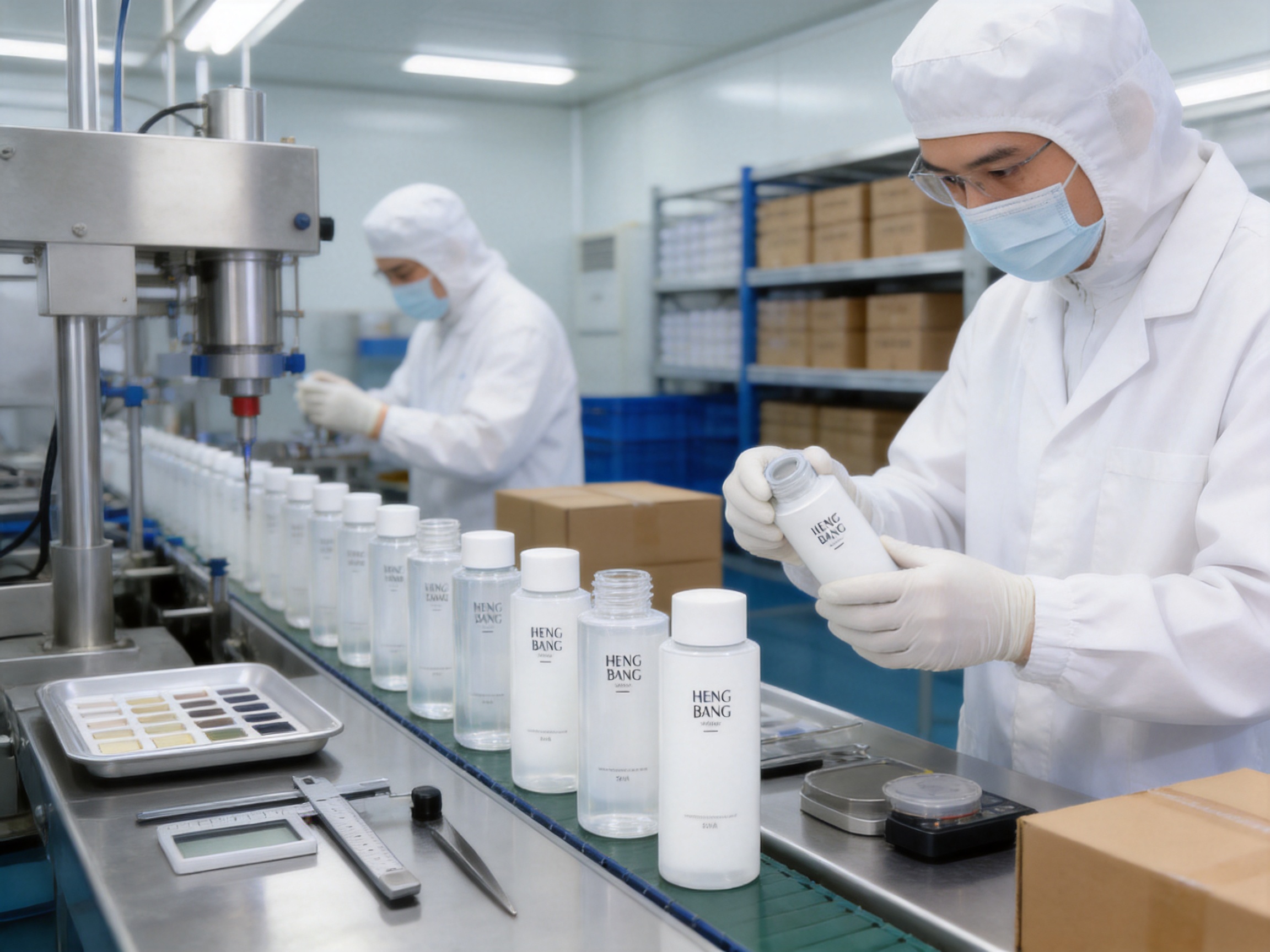
Quality control for a toner bottle should begin with raw material management. The manufacturer and buyer should confirm the resin grade, color, transparency requirements, applicable declarations, and any restrictions related to cosmetic contact. If the bottle is intended for a specific market, the packaging should be evaluated against the relevant local regulations and customer standards.
Dimensional inspection is another important area. Height, diameter, neck finish, thread dimensions, wall thickness, and opening geometry should remain within agreed tolerances. Consistent dimensions help ensure that caps, liners, pumps, overcaps, labels, and filling equipment work together correctly.
Visual inspection should cover clarity, color uniformity, molding lines, bubbles, black spots, deformation, scratches, flash, contamination, and other appearance defects. Transparent packaging makes some defects easier to identify, which can support effective quality screening. Brands should establish approved samples or visual standards so that the manufacturer and buyer evaluate appearance consistently.
Closure performance is equally important. A toner bottle may be transported over long distances and stored in varying temperatures. The cap must remain securely attached while still allowing practical opening by the consumer. Leakage testing, torque testing, inversion testing, and compatibility testing can help confirm the performance of the complete package rather than the bottle body alone.
Drop and compression testing may be appropriate when the product is expected to travel through complex distribution networks. These tests should reflect actual packaging conditions, including the secondary carton, dividers, shrink film, pallet pattern, and expected handling environment. A bottle’s impact resistance cannot be assessed accurately without considering how it will be packed and shipped.
Formula compatibility testing should be performed using the actual toner or essence whenever possible. A laboratory sample may behave differently from the finished commercial formula because of differences in alcohol, oil, surfactant, acid, fragrance, or preservative content. The test should observe the bottle, closure, and product over a suitable period and under relevant storage conditions.
Filling trials can identify practical issues before mass production. The filling line should be checked for bottle stability, speed, nozzle compatibility, foaming, dripping, fill-height consistency, cap application, and labeling. These trials help the brand and supplier identify whether the packaging performs efficiently in the customer’s production environment.
A well-designed cosmetic bottle provides value beyond the unit price. It can affect filling efficiency, case packing, shipping utilization, warehouse organization, retail display, customer satisfaction, and return rates. The HB-C017 format offers a compact and stable shape that can support predictable packing and straightforward merchandising.
The narrow body allows multiple units to be arranged efficiently in cartons, although the final packing pattern should be confirmed through an actual packaging trial. Carton design should provide enough protection around the bottle while avoiding unnecessary empty space. A balanced package can help reduce movement during transit and protect the transparent surfaces from scuffing.
The product’s moderate size may also support lower minimum-risk inventory strategies for brands launching new formulas. Instead of committing immediately to a very large bottle, a company can use the 50ml package for a limited production run, market test, or seasonal campaign. If the product performs well, the brand can continue using the same format or develop a larger family member later.
For international buyers, supplier location and communication are important. The manufacturer is based in Yuyao City, Zhejiang Province, China, and provides design, development, and packaging production services. Buyers should discuss export packing, documentation, sample approval, production scheduling, inspection arrangements, and shipping terms at the beginning of the project.
Clear documentation can prevent avoidable delays. The purchase specification should identify the bottle model, capacity, material, color, dimensions, neck finish, closure, decoration, packaging method, acceptable defect limits, and inspection requirements. Since the provided information contains both PETG and PET references for the bottle body, material confirmation should be included as a formal approval point.
Packaging sustainability should be evaluated across the entire life cycle rather than based on one material characteristic. A plastic bottle may offer lower weight and reduced breakage compared with glass, but its overall environmental profile depends on resin production, manufacturing energy, transportation, usage, collection systems, and end-of-life treatment.
The bottle’s compact format can support efficient transportation because it is relatively small and lightweight. Fewer resources may be required to move a case of products compared with heavier alternatives, but this should be verified through actual logistics data. Brands should also consider whether secondary packaging is necessary and whether cartons or inserts can be reduced without compromising protection.
Material identification is especially important for responsible packaging claims. The brand should confirm whether the bottle body, cap, liner, label, and decoration are compatible with the recycling systems available in the target market. The difference between PET and PETG may affect sorting and recycling considerations, so the final resin specification should be accurately communicated throughout the supply chain.
Environmental management certification at the manufacturing company level provides a useful foundation for supplier assessment. ISO14001:2015 certification indicates that the manufacturer has implemented an environmental management framework, but brands should still request project-specific information where needed. This may include material declarations, production controls, waste management practices, and guidance on disposal or recycling.
Responsible packaging design also means avoiding unnecessary complexity. A simple transparent bottle with a carefully selected cap and appropriately sized label may be easier to manufacture, pack, and process after use than a highly mixed-material package. Brands can work with the supplier to balance decoration, protection, appearance, and end-of-life considerations.
The bottle is directly suited to facial toners and facial waters. Its 50ml capacity can serve as a travel size, trial size, or premium compact format. The transparent body allows consumers to see the liquid and the ergonomic shape supports comfortable daily handling.
Many essences have a fluid or slightly viscous texture that can be packaged in a bottle of this type. The final closure should be selected according to the formula’s viscosity and desired dispensing method. A controlled opening can help users apply the product to a cotton pad or directly to the hands.
The compact format is useful for skincare gift boxes, seasonal collections, influencer kits, and promotional campaigns. Its clear appearance can contribute to an attractive presentation while its size allows it to be combined with other products without making the set excessively large.
A 50ml bottle can serve travel retail, hospitality, spa, and wellness applications. Its portable dimensions are convenient for consumers who need a smaller skincare format away from home. Brands should confirm the closure design and leakage performance carefully for these uses because travel products may experience frequent movement and handling.
Private-label manufacturers can use the bottle as a flexible platform for different toner concepts. The same package can support multiple labels, liquid colors, and branding systems, allowing a supplier to develop a coordinated range without designing a new container for every formula.
The first step is to define the formula and intended consumer use. The brand should identify whether the product is watery, gel-like, alcohol-based, oil-containing, acidic, fragranced, or otherwise challenging from a packaging compatibility perspective. The expected shelf life, storage temperature, transportation route, and dispensing behavior should also be documented.
The second step is to confirm the bottle specification. The buyer should request a complete drawing or technical datasheet covering the material, capacity, height, diameter, neck finish, opening, tolerances, and closure options. The discrepancy between the PETG description and PET specification should be resolved at this stage.
The third step is sample evaluation. Samples should be inspected for appearance, dimensions, grip, clarity, closure fit, label area, and compatibility with the intended filling line. If the package will be decorated, decorated samples should be evaluated rather than relying only on undecorated components.
The fourth step is formula compatibility testing. The actual product should be filled into the bottle and stored under realistic and accelerated conditions where appropriate. The brand should monitor leakage, swelling, cracking, discoloration, odor changes, sediment, formula separation, and closure performance.
The fifth step is a filling trial. The bottle should be tested on the intended production line to confirm stability, filling speed, cap application, labeling, coding, and secondary packing. Any changes to the bottle or filling settings should be documented before mass production.
The final step is a written quality agreement. This document should define approved samples, material requirements, inspection methods, defect classifications, packaging methods, delivery expectations, and procedures for handling nonconforming goods. Clear agreements protect both the supplier and the buyer while supporting consistent production over time.
Before placing a production order, buyers should confirm the following points:
1. The final bottle-body material, whether PETG, PET, or another approved resin, is clearly identified.
2. The nominal capacity and acceptable fill-volume range are documented.
3. The height, diameter, neck finish, opening size, and dimensional tolerances are approved.
4. The cap material and closure structure are compatible with the formula.
5. The package has passed leakage, compatibility, and relevant transportation tests.
6. The transparent appearance, surface finish, color, and acceptable visual limits are defined.
7. The decoration method, label material, ink, adhesive, and artwork are approved.
8. The bottle has been tested on the customer’s filling and capping equipment.
9. The shipment packaging protects the bottle from scratches, deformation, and impact.
10. Environmental documentation and recycling guidance are available where required.
11. Quality inspection procedures and sampling levels are agreed before production.
12. Lead time, minimum order quantity, sample arrangements, and shipping terms are confirmed in writing.
The bottle is designed primarily for toners, facial waters, essences, and other lightweight skincare liquids. It may also be suitable for related cosmetic products after formula compatibility and dispensing tests have been completed.
The nominal capacity is 50ml. The final commercial fill volume and required headspace should be confirmed with the manufacturer and filling facility.
The supplied product information lists an approximate height of 110mm and an approximate diameter of 35mm. Buyers should request an official technical drawing for production planning.
The product description identifies the body as PETG, while the supplied specification table lists the bottle material as PET. This difference should be confirmed with the manufacturer before ordering. The final approved material should appear clearly in the technical datasheet and purchase documentation.
The supplied information lists ABS plus PP for the cap. The exact cap construction, liner, opening, and closure compatibility should be confirmed according to the intended formula and dispensing method.
The transparent body allows consumers to see the liquid, monitor the remaining quantity, and appreciate the product’s appearance. It also supports visual inspection during filling and quality control. However, light-sensitive formulas may require additional protection or stability testing.
Yes, its compact 50ml capacity and narrow body are suitable for travel-size skincare, provided that the complete package passes leakage and transportation testing. The final closure and secondary packaging are especially important for travel applications.
The bottle can serve as a flexible base for labels, printing, color coordination, and different closure presentations. The available customization options, minimum order quantities, and decoration methods should be discussed with the manufacturer.
The manufacturer has passed ISO9001:2015 and ISO14001:2015 certifications. It was also recognized as a Ningbo High-Tech Enterprise in 2021 and owns multiple invention patents.
Brands should test dimensions, appearance, formula compatibility, leakage resistance, closure performance, filling-line compatibility, decoration durability, and transportation performance. Testing should use the actual formula and intended production conditions whenever possible.
It can provide a lightweight, impact-resistant alternative to glass for suitable formulas and positioning strategies. The final choice depends on the brand’s appearance goals, formula requirements, sustainability objectives, consumer expectations, and distribution conditions.
The manufacturer is located at No. 7 Zhenbei Road, Mazhu Town, Yuyao City, Zhejiang Province, China. Buyers should communicate directly with the company regarding samples, technical documents, customization, and orders.
The HB-C017 50ml plastic toner bottle combines compact capacity, transparent presentation, resilient plastic construction, and an ergonomic waist design for modern skincare applications. Its format is well suited to toners, essences, travel products, promotional kits, gift sets, and private-label cosmetic ranges.
Its primary advantages over many competing formats include a convenient 50ml size, a narrow footprint, a clear body that showcases the liquid, a shape designed for comfortable handling, and the practical transportation benefits of rigid plastic. Compared with fragile glass, it may offer improved resistance to accidental impact and lower shipping weight. Compared with larger or opaque containers, it can provide stronger portability and greater product visibility.
The manufacturer adds value through experience in cosmetic packaging, a 35,000-square-meter building area, a workforce of more than 300 employees, design and development services, ISO9001:2015 and ISO14001:2015 certifications, high-tech enterprise recognition, and multiple invention patents. These capabilities provide a useful foundation for brands seeking a packaging partner rather than a simple component supplier.
Before approval, buyers should resolve the PETG and PET material reference, confirm the final closure, test formula compatibility, and validate the bottle on the intended filling line. With these steps completed, the HB-C017 bottle can offer a practical and visually appealing packaging solution that supports both product protection and brand presentation.
1. Product specification materials supplied for the HB-C017 50ml plastic toner bottle.
2. Company information supplied for Yuyao Hengbang Plastic Co., Ltd.
3. ISO 9001:2015, Quality Management Systems — Requirements.
4. ISO 14001:2015, Environmental Management Systems — Requirements with Guidance for Use.
5. General technical guidance on cosmetic packaging material compatibility, container closure systems, and distribution testing.
6. General packaging engineering principles concerning plastic container design, dimensional control, leakage testing, and transportation protection.


Copyright © Yuyao Hengbang Plastic Co., Ltd.
All Rights Reserved.
 Wholesale Plastic Cosmetic Packaging Manufacturers