English
 中文简体

News
Home > Author > Zhang Yuxin — Plastic Cosmetic Packaging Sales Representative > Why PETG Travel-Size Lotion Bottles Are Raising the Standard for Portable Skincare Packaging

 2026.10.12
 Zhang Yuxin — Plastic Cosmetic Packaging Sales Representative
Content
Portable skincare has become an important part of modern personal care. Consumers want to maintain their daily routines while traveling for business, taking short holidays, visiting gyms, commuting, or simply carrying essential products in a handbag or cosmetic pouch. This demand has created a growing need for packaging that is compact, reliable, visually appealing, easy to use, and suitable for a wide variety of cosmetic formulas.
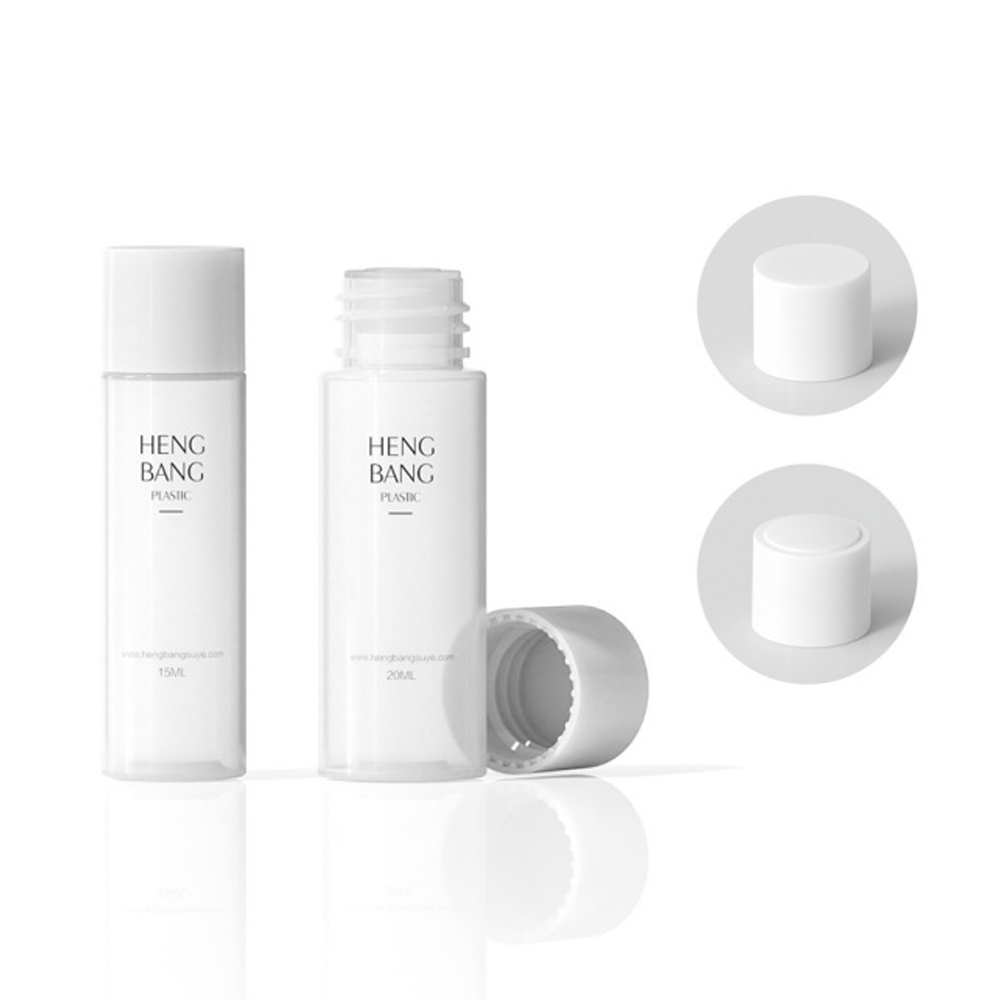
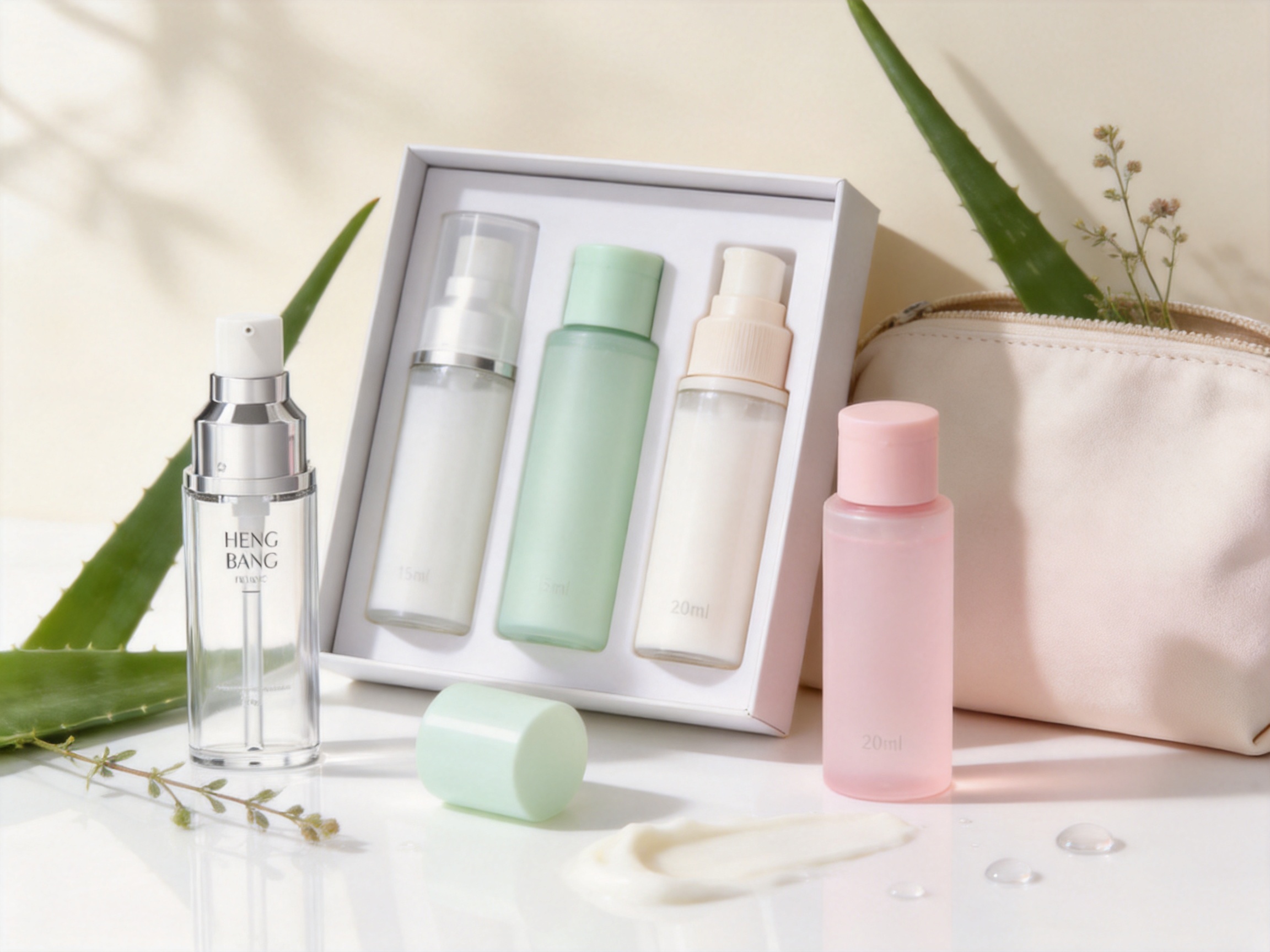
The HB-R007 PETG plastic travel-size lotion bottle is designed for this exact purpose. Available in 15 ml and 20 ml capacities, the bottle offers a compact format for moisturizers, lotions, creams, serums, hand lotions, and other skincare products. Its dimensions, lightweight construction, material options, and practical dispensing performance make it suitable for brands seeking efficient small-volume cosmetic packaging.
Unlike ordinary travel containers that may sacrifice appearance, compatibility, or user convenience, the HB-R007 combines a refined cosmetic appearance with a functional structure. Its PETG-based construction supports a clean, premium presentation, while the compact diameter and multiple height options help brands create a portable package that is easy to organize and comfortable to carry.
This article examines the product’s structure, material selection, performance advantages, manufacturing support, application possibilities, customization considerations, and the reasons it can be a competitive choice for skincare and personal care brands.
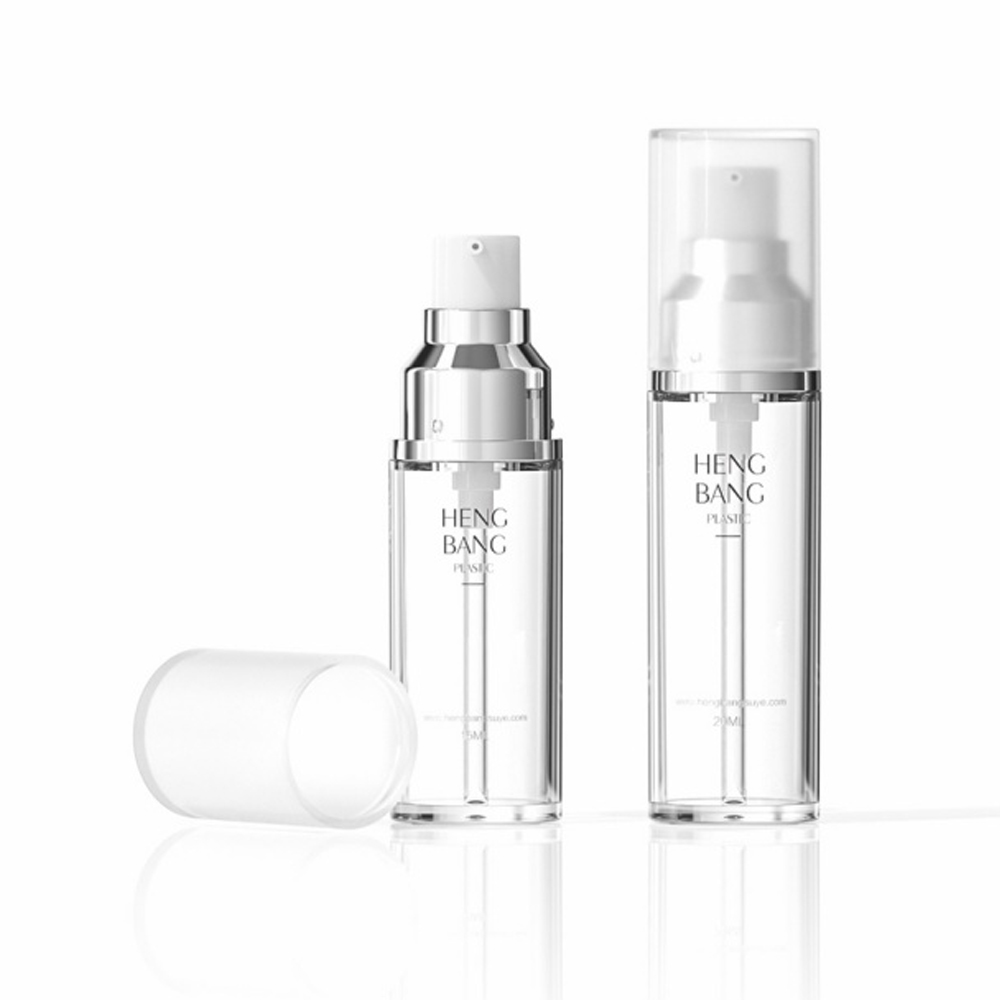
HB-R007 PETG Plastic Travel Size Lotion Bottle
The beauty and skincare market is increasingly influenced by mobility. Consumers no longer use their products only at home. They take moisturizers to the office, serums to hotels, hand lotions to restaurants, and skincare products on airplanes, trains, and road trips. A suitable package must therefore perform well in environments where space, weight, cleanliness, and convenience are especially important.
Travel-size packaging also supports product trial. A consumer may be more willing to test a new lotion or serum in a 15 ml or 20 ml format than in a large full-size package. Small containers can be used for promotional sets, sample programs, hotel amenities, subscription boxes, gift kits, and seasonal collections. For brands, this creates opportunities to introduce new formulas with a lower product commitment.
Compact packaging can also improve inventory flexibility. A single small-volume bottle design may be used for multiple products, product launches, limited editions, or travel collections. When the package is made with a professional appearance, it can support both entry-level and premium positioning depending on decoration, color, closure treatment, and filling formula.
However, designing a truly effective travel bottle is more complicated than simply reducing the size of a standard package. A small bottle must still provide sufficient protection, dependable closure performance, practical dispensing, and a stable user experience. The HB-R007 addresses these requirements through its PETG and polypropylene construction, compact dimensions, and available product configurations.
The HB-R007 is a PETG plastic travel-size lotion bottle offered in 15 ml and 20 ml capacities. Its small format is intended for portable skincare and personal care applications. The design is suitable for products such as facial lotions, body lotions, hand lotions, moisturizing creams, cosmetic serums, and other formulations that require a controlled small-volume container.
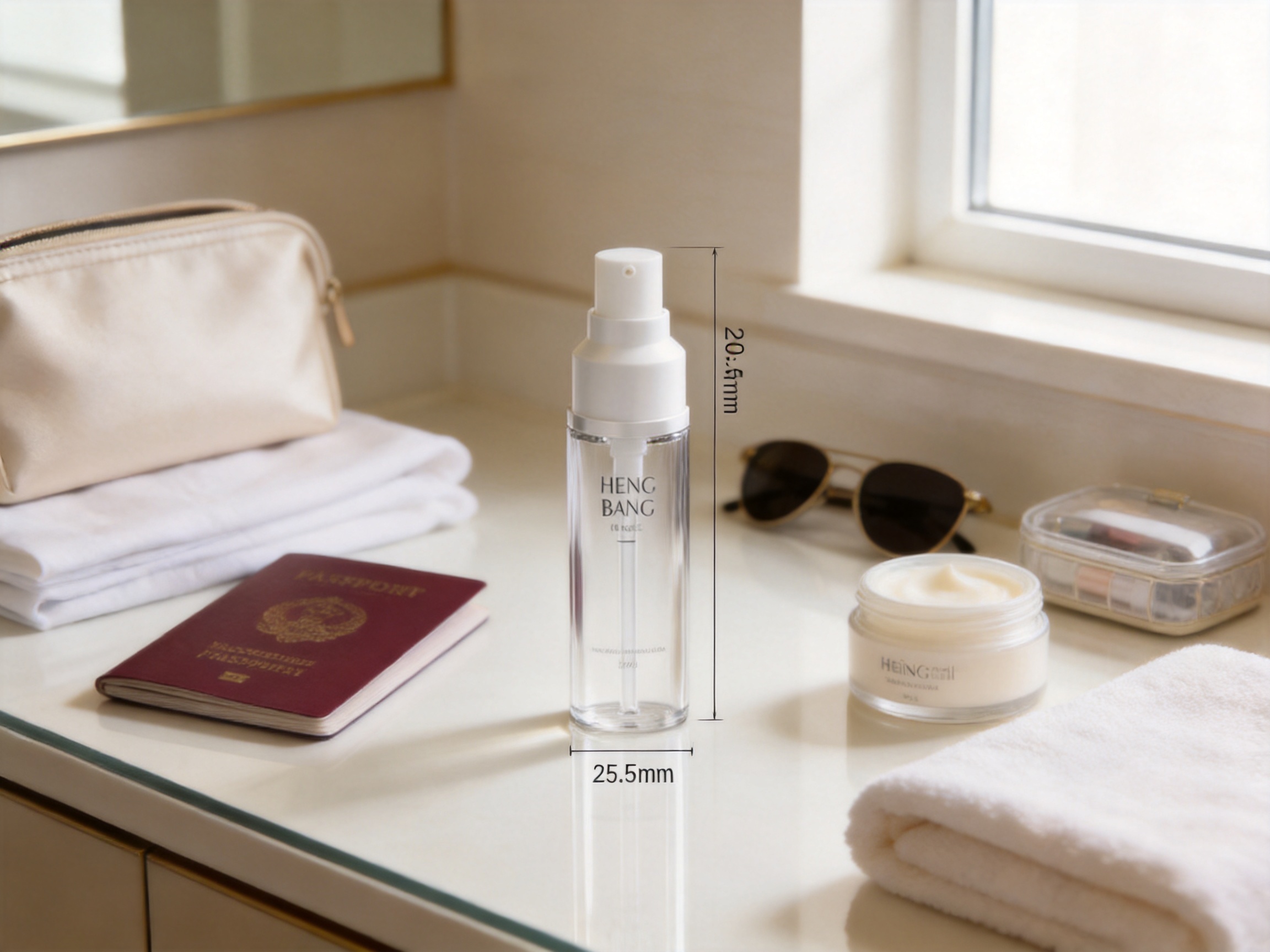
The product has a diameter of approximately 25.5 mm. Depending on the selected configuration and capacity, the listed height is approximately 90.7 mm or 100.7 mm for the taller variants. Another configuration is listed at approximately 69.8 mm or 79.8 mm. These dimensional options provide brands with flexibility when considering the relationship between container height, shelf presentation, cosmetic pouch storage, and available filling volume.
The listed application dosage is 0.12 cc. This dispensing specification is relevant for brands that want to estimate the amount released during each actuation or application. A controlled output can help users apply the product gradually, which is especially useful for concentrated skincare formulas, hand creams, facial lotions, and products used in small amounts.
The bottle is described in several structural configurations identified as A, B, and C. The available capacity for each is 15 ml or 20 ml. The stated material combinations include PETG with PP for lotion-oriented configurations and ABS, PP, and PETG for a water-oriented configuration. This indicates that different versions can be considered according to the formula type, dispensing requirements, and desired appearance.
| Specification | Configuration A | Configuration B | Configuration C |
|---|---|---|---|
| Recommended format | Travel-size lotion bottle | Travel-size liquid or water-oriented bottle | Travel-size lotion bottle |
| Capacity | 15 ml / 20 ml | 15 ml / 20 ml | 15 ml / 20 ml |
| Listed material | PETG + PP | ABS + PP + PETG | PETG + PP |
| Listed height | 90.7 mm / 100.7 mm | 69.8 mm / 79.8 mm | 90.7 mm / 100.7 mm |
| Diameter | Approximately 25.5 mm | Approximately 25.5 mm | Approximately 25.5 mm |
| Listed application output | 0.12 cc | 0.12 cc | 0.12 cc |
The dimensional and material information should be confirmed during technical communication because the most suitable configuration depends on the formula, filling method, closure requirements, decoration process, and final market regulations. Even so, the available specifications demonstrate that the HB-R007 is designed as a versatile platform rather than a single-purpose container.
PETG is widely used in cosmetic packaging because it can provide a combination of clarity, visual quality, toughness, and design flexibility. In a travel-size bottle, these characteristics are particularly useful. Consumers often want to see the package as clean and reliable, while brands want a container that can support a premium presentation without the weight and fragility associated with glass.
One important advantage of PETG is its clear and refined appearance. Depending on the final production treatment, a PETG bottle can present a smooth, glass-like visual effect while remaining lightweight. This is valuable for skincare products because packaging appearance strongly influences consumer perceptions of cleanliness, quality, and product value.
PETG can also support a broad range of cosmetic design directions. A brand may choose a transparent appearance to highlight the formula, a translucent effect to create softness, or an opaque finish to protect the visual identity of a sensitive or premium product. Color matching, surface treatment, labeling, and other decoration methods can further differentiate the package.
Another practical benefit is toughness. Travel packaging is frequently placed in bags, cosmetic cases, drawers, or toiletry organizers. It may be exposed to movement, compression, and repeated handling. Compared with conventional glass packaging, a plastic bottle can help reduce the risk of breakage during routine transport. This does not mean that the package is indestructible, but it is well suited to situations where low weight and everyday durability matter.
PETG also supports efficient small-format production. Its suitability for shaped cosmetic bottles allows manufacturers to create compact designs with consistent proportions and a professional surface. For a 15 ml or 20 ml bottle, this is important because even a small package must look balanced and intentional rather than like a reduced version of a larger container.
The HB-R007 uses polypropylene in combination with PETG in its lotion-oriented configurations. PP is commonly used in cosmetic packaging components because it offers useful molding performance, functional durability, and compatibility with closures and dispensing assemblies. When the bottle body and top components are designed as a coordinated system, the result can provide a more dependable user experience than a container assembled from unrelated parts.
For the water-oriented configuration, the listed combination is ABS, PP, and PETG. The use of different materials can allow individual components to perform specific roles. For example, the bottle body may prioritize appearance and formula containment, while the closure or pump-related parts may require another material for structural or molding considerations. The exact role of each material should be confirmed with the manufacturer for a specific order.
A multi-material package can also create greater visual contrast. A transparent or semi-transparent PETG body combined with a contrasting PP component can strengthen brand recognition. The package may be adapted for clean clinical skincare, natural personal care, professional salon products, or colorful youth-oriented cosmetics.
Material selection should always be evaluated against the formula. Different lotions, emulsions, serums, and water-based products can have different levels of alcohol, oil, fragrance, active ingredients, acidity, and sensitivity to air or light. A responsible packaging development process includes compatibility testing, storage testing, leakage evaluation, and performance confirmation before commercial filling.
The compact size of the HB-R007 is one of its most important commercial advantages. At approximately 25.5 mm in diameter, the bottle can fit into many travel organizers, cosmetic bags, handbags, amenity kits, and small retail sets. The 15 ml and 20 ml capacities provide enough room for short trips and product sampling without creating unnecessary bulk.
A narrow diameter can also help brands use shelf and kit space efficiently. Retailers and beauty companies may need to arrange several products in a gift box or multi-step skincare set. A slim travel bottle can make it easier to combine cleanser, toner, serum, lotion, cream, and sunscreen products in one collection.
The bottle’s height options give brands additional packaging flexibility. A taller 15 ml or 20 ml format may provide a more elegant silhouette and more area for vertical branding. A shorter version can be beneficial when the package must fit into a compact box, pouch, or shallow travel case. Selecting the right proportion can influence both user convenience and perceived product value.
For consumers, the small size can make daily routines easier. A travel bottle reduces the need to transfer a large bottle into a separate container. It can also serve as a dedicated portable package that is filled and sealed during production, helping maintain a consistent appearance across a product line.
Although the bottle is compact, a professional design prevents it from appearing disposable or low value. This is a major distinction between a purpose-designed cosmetic package and a generic refill container. The HB-R007 is intended to support a finished-brand presentation suitable for commercial skincare and personal care products.
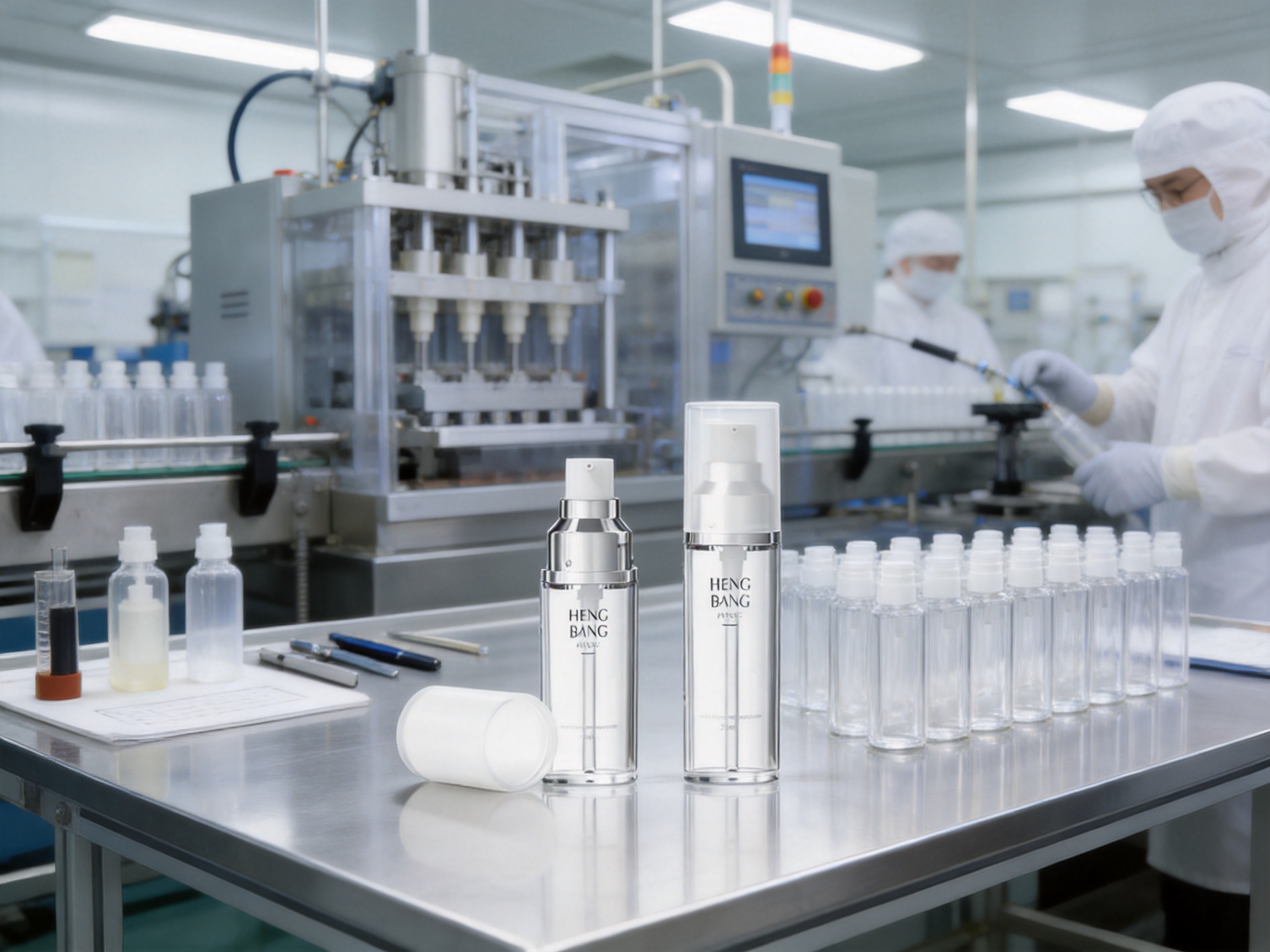
Many generic travel containers are designed primarily for basic storage. They may be functional, but they do not always provide the appearance, dispensing control, or product-line consistency required by cosmetic brands. A purpose-designed bottle such as the HB-R007 offers several potential advantages over unbranded alternatives.
Cosmetic consumers evaluate packaging before trying a product. A smooth, balanced bottle with a coordinated component system can communicate greater professionalism than a low-cost refill tube or ordinary household container. The PETG material supports a clean appearance that can be adapted to premium, clinical, minimalist, or colorful visual styles.
Brands often need several packages that appear related. The HB-R007 can be integrated into a travel collection with other bottles, jars, or tubes through coordinated color, decoration, labeling, and closure design. This helps create a consistent identity across multiple product categories.
The small diameter and available capacities are suitable for consumers who want to carry only the amount required for a short journey. The bottle is less cumbersome than a full-size package and can be arranged efficiently in toiletry kits or skincare sets.
The product is suitable for multiple personal care uses, including lotions, creams, serums, and hand-care products. With the correct configuration and compatibility validation, it may serve as a common package platform across different formulas.
For travel products, reducing package weight can simplify handling and improve convenience. A PETG plastic package can provide a premium visual effect while avoiding many of the practical concerns associated with transporting glass. This can be valuable for sample sets, promotional kits, and products intended for frequent carrying.
The listed 0.12 cc application output provides a reference point for product dosing. Controlled dispensing can reduce unnecessary product waste and help users apply a consistent quantity. Final output should be confirmed through actual testing because the result may depend on the formula, actuator, filling level, and production tolerances.
The HB-R007 can support a wide range of product concepts. Its 15 ml and 20 ml formats are especially appropriate for products used in moderate quantities or products positioned as travel, trial, or promotional sizes.
Facial moisturizers are one of the clearest applications for a small lotion bottle. A 15 ml version can be used as a trial size, while a 20 ml version can support a short-trip skincare routine. The compact format is appropriate for day creams, night lotions, lightweight emulsions, and hydration-focused products.
Hand lotion is frequently carried outside the home. A narrow, lightweight package can fit into a handbag, desk drawer, work bag, or travel pouch. The bottle’s professional appearance also makes it suitable for hospitality kits, corporate gifts, and personal care gift sets.
Some serums and treatment emulsions are used in small amounts, making a 15 ml or 20 ml package practical for trial campaigns or premium collections. Brands should evaluate formula viscosity and dispensing behavior before selecting the final configuration.
Hotels, resorts, airlines, spas, and wellness facilities may use compact lotion bottles in guest amenities. The size is convenient for short stays, and the bottle can be decorated with a hospitality identity or supplied as part of a coordinated set.
Travel-size sunscreen and after-sun products are convenient for outdoor activities and vacation kits. The suitability of the bottle depends on formula compatibility, required protection from light, dispensing performance, and applicable regional packaging requirements. A brand should complete all necessary testing before using the package for a specific sunscreen formulation.
Small packages are effective tools for introducing new products. A 15 ml bottle can provide enough product for repeated use, allowing consumers to assess texture, absorption, scent, and skin feel. This is often more informative than a single-use sachet while using less material and product than a full-size package.
The product is supplied by Yuyao Hengbang Plastic Co., Ltd., a manufacturer focused on plastic packaging for cosmetics and skincare products. The company was established in 2006 and has a building area of approximately 35,000 square meters with more than 300 employees. These figures indicate a substantial operating base for a packaging supplier serving professional cosmetic and personal care customers.
The company specializes in plastic cosmetic packaging and provides design and development services. This is important because successful packaging projects require more than the production of a bottle body. Brands may need support with structural development, material selection, component matching, prototype review, appearance decisions, and production coordination.
A supplier with dedicated cosmetic packaging experience can better understand the practical needs of skincare brands. These needs include clean visual presentation, repeatable dimensions, stable component assembly, suitable filling performance, decoration compatibility, and coordinated product families. Experience in one cosmetic package can also support the development of related bottles, jars, caps, and travel formats.
The company reports certification to ISO9001:2015 and ISO14001:2015. ISO9001:2015 is associated with quality management systems, while ISO14001:2015 is associated with environmental management systems. These certifications do not replace product-specific testing, but they demonstrate that the manufacturer has established formal systems for managing quality-related and environmental processes.
The company was also awarded as a Ningbo High-Tech Enterprise in 2021 and owns multiple invention patents. These details suggest an emphasis on technical development and product innovation. For a buyer, this can be relevant when the project requires more than a standard catalog item and may involve structural refinement, new component combinations, or a customized packaging solution.
The stated company philosophy emphasizes quality, integrity, and customer priority. In practical terms, a packaging partnership should include clear communication, transparent specification review, consistent samples, production verification, and responsive handling of technical questions. These factors are often as important as the initial product design because packaging directly affects the consumer’s experience of the finished cosmetic.
A strong cosmetic packaging program begins with a clear definition of the product. Before ordering the HB-R007, a brand should identify the formula type, viscosity, filling volume, dispensing preference, target market, decoration requirements, and expected use environment.
The brand should provide information about whether the product is a lotion, emulsion, serum, cream, water-based formula, or another product type. Details about oils, alcohol, fragrance, active ingredients, preservatives, and acidity can help guide compatibility testing.
The 15 ml format is appropriate for trial products, short trips, promotional programs, and products used in small quantities. The 20 ml format provides additional content while maintaining a portable size. The selection should reflect the expected number of applications and the product’s positioning.
Configurations A, B, and C have different listed material and dimensional descriptions. The most suitable version depends on whether the product is lotion-oriented or water-oriented, as well as the desired appearance and dispensing performance. The technical team should confirm the exact configuration before mass production.
The filled package should be tested with the actual formula. Recommended evaluations may include appearance changes, leakage, stress cracking, odor transfer, color stability, dispensing behavior, and storage performance. Testing should cover normal and accelerated conditions where appropriate.
The brand can determine whether to use labels, printing, color treatment, surface finishing, or other decoration methods. The final design should consider the available decoration area, readability at small scale, resistance to handling, and consistency with the rest of the product line.
Pre-production samples allow the buyer to evaluate fit, appearance, component alignment, dimensions, filling performance, and overall user experience. Sample approval should be based on measurable specifications rather than visual preference alone.
Before production, the buyer and manufacturer should agree on acceptable standards for dimensions, color, surface quality, component assembly, leakage, dispensing output, decoration placement, and packaging for shipment. Clear standards reduce ambiguity during inspection.
Cosmetic packaging quality is multidimensional. A bottle may look attractive but still fail if the closure leaks, the dispensing output varies excessively, or the component does not assemble correctly. For this reason, a professional quality process should examine both appearance and function.
Dimensional inspection helps confirm that the bottle remains within the agreed height, diameter, wall, and component tolerances. Consistent dimensions are important for automated filling, labeling, secondary packaging, and product-line coordination.
Visual inspection should identify scratches, black spots, bubbles, deformation, color variation, uneven surfaces, contamination, and other appearance defects. Cosmetic packaging is highly visible, so even minor defects can influence consumer confidence.
Leakage testing is especially important for a travel product. Consumers may place the bottle in a bag alongside clothing, electronics, or other personal items. The packaging should therefore be evaluated under conditions that reflect normal transport and handling. The test method and acceptance criteria should be agreed upon by the manufacturer and buyer.
Dispensing tests should verify the practical behavior of the package with the intended formula. The listed 0.12 cc application output provides a reference, but actual performance may vary with viscosity, temperature, filling level, actuator design, and component tolerances. Repeated-actuation testing can help identify output consistency.
Material and formula compatibility should be reviewed through an appropriate test plan. A package can be suitable for one lotion but unsuitable for another formula with different solvents, oils, fragrances, or active ingredients. Compatibility confirmation is therefore an essential part of responsible cosmetic packaging development.
Environmental performance is becoming increasingly important in cosmetic packaging. Brands, retailers, and consumers are examining material use, package weight, product-to-package ratios, manufacturing practices, and end-of-life considerations.
The lightweight nature of a plastic travel bottle can help reduce transport weight compared with heavier packaging formats. Smaller volumes also use less material than full-size containers, although the environmental impact of small packages must be assessed carefully because a higher package-to-product ratio may occur.
ISO14001:2015 certification reported by the manufacturer indicates that an environmental management system is in place. This is a positive foundation, but brands should still ask project-specific questions about material selection, production waste, energy management, packaging for shipment, and available recycling guidance.
Responsible design can include avoiding unnecessary secondary packaging, reducing excessive decorative layers, optimizing wall thickness without compromising performance, and selecting components that simplify the overall package. The best approach depends on the target market, product requirements, local recycling infrastructure, and applicable regulations.
Brands should also communicate disposal information accurately. The recyclability of a finished package may depend on the combination of PETG, PP, ABS, labels, coatings, pumps, and local collection systems. A package should not be marketed as recyclable without confirming the relevant conditions in the intended market.
A travel-size container has limited surface area, so branding must be carefully planned. The design should prioritize the product name, product type, key benefit, volume, required regulatory information, and brand identifier. Typography must remain legible at a small scale.
The smooth appearance associated with PETG can provide a suitable foundation for minimalist designs. White, black, neutral, or metallic decoration can create a clinical or premium appearance, while brighter colors can support youthful, playful, or seasonal collections. Transparent or translucent presentation may allow the formula itself to become part of the visual identity.
A coordinated closure can strengthen the design. Even when the bottle body remains consistent across several products, different closure colors or surface treatments can identify product categories such as hydration, calming, brightening, sun care, or hand care.
Travel sets can use the HB-R007 as one component in a broader routine. A brand might combine a cleanser, toner, serum, lotion, and cream in matching compact packages. This approach improves shelf recognition and gives consumers a convenient complete regimen.
From a commercial perspective, the HB-R007 can help brands serve several market segments with one compact packaging platform. It can be used for direct-to-consumer travel products, retail sample programs, hotel amenities, subscription boxes, beauty kits, promotional campaigns, and gift sets.
The 15 ml and 20 ml choices support different pricing strategies. A smaller size can function as an accessible entry point, while a slightly larger size can deliver a stronger trial experience or a more generous travel quantity. Both sizes can remain visually consistent across a collection.
A standard bottle platform may also simplify product development. Rather than creating a completely new package for every travel product, a brand may use the same basic form with variations in color, decoration, label, or formula. This can support brand consistency and reduce unnecessary design complexity.
For buyers, working with a manufacturer that offers design and development services can improve communication between packaging concept and production reality. A manufacturer familiar with cosmetic packaging can identify potential problems involving component fit, filling, decoration, material compatibility, and mass-production repeatability earlier in the process.
The company’s manufacturing scale, employee base, certifications, high-tech enterprise recognition, and patent ownership provide additional reasons for buyers to evaluate it as a long-term packaging partner. These qualifications should be reviewed together with samples, audits, technical documents, test results, and project references.
No packaging product should be selected solely from a catalog description. The HB-R007 offers useful specifications and a promising structure, but the final suitability depends on the actual product formula and the buyer’s requirements.
Brands should confirm the exact internal volume, fill volume, overflow capacity, neck or component dimensions, closure torque, dispensing method, and output tolerance. The listed height and material information should also be matched to the chosen configuration before artwork and tooling decisions are finalized.
Compatibility testing is essential for formulas containing volatile solvents, high levels of oils, strong fragrances, acids, retinoids, active botanical ingredients, or other potentially reactive substances. Testing should be conducted using production-intent materials and the intended filling process whenever possible.
Regulatory requirements vary by country and product category. Packaging may need to support ingredient labeling, net content statements, batch coding, shelf-life information, recycling marks, warnings, and other mandatory information. The available decoration area should be reviewed with these requirements in mind.
For products such as sunscreen, medical skincare, or products making special performance claims, additional requirements may apply. The package must be evaluated for light protection, formula stability, dispensing accuracy, and market-specific regulations.
The listed capacities are 15 ml and 20 ml. Both sizes are intended for portable skincare, personal care, trial, promotional, and travel applications.
The lotion-oriented configurations are listed as PETG plus PP. A water-oriented configuration is listed as ABS, PP, and PETG. The final material combination should be confirmed according to the selected configuration and formula.
Potential applications include lotions, moisturizers, creams, serums, hand lotions, body-care products, travel skincare, and selected water-based products. Formula compatibility and dispensing performance must be tested before commercial use.
The listed diameter is approximately 25.5 mm. Listed heights include approximately 90.7 mm and 100.7 mm for certain configurations, and approximately 69.8 mm and 79.8 mm for another configuration. Exact dimensions should be confirmed with the manufacturer for the selected version.
It indicates a listed application or dispensing output of 0.12 cc. Actual output should be verified with the intended formula and final dispensing assembly because viscosity, temperature, filling level, and component tolerances can affect performance.
Its compact 15 ml and 20 ml formats are designed for travel convenience and are generally within common liquid-size limits used for carry-on products. Travelers should always check the current rules of the airline, airport, and destination country.
It may be considered for sunscreen or after-sun products if the selected material, dispensing system, and package design are compatible with the formula. Light stability, leakage, chemical compatibility, and applicable regulatory requirements must be evaluated before launch.
Yes. PETG can provide a refined visual appearance, and the compact structure can be enhanced through color, printing, labeling, surface treatment, and coordinated closure design. Premium positioning depends on the final decoration and overall product presentation.
Yes. The 15 ml and 20 ml formats are suitable for skincare routines, gift boxes, promotional bundles, subscription kits, hospitality amenities, and travel collections. Brands can coordinate the design with other package types through color and decoration.
The company states that it provides a full range of services, including design and development. Buyers should discuss sample creation, structural requirements, formula testing, decoration, tooling, quality standards, and production schedules during project planning.
The company reports ISO9001:2015 and ISO14001:2015 certifications. It also reports recognition as a Ningbo High-Tech Enterprise in 2021 and ownership of multiple invention patents. Buyers should request current supporting documentation when required for qualification.
Buyers should confirm the exact configuration, dimensions, capacity, materials, formula compatibility, dispensing output, leakage performance, decoration, quality standards, packaging for shipment, regulatory markings, lead time, and inspection process.
The HB-R007 PETG plastic travel-size lotion bottle is a practical packaging solution for brands seeking a compact, professional, and versatile container for skincare and personal care products. Its 15 ml and 20 ml capacities respond to the needs of travel routines, trial programs, promotional sets, hospitality amenities, and portable daily care.
The PETG and PP construction provides a balance of visual quality, lightweight portability, and functional flexibility. The approximately 25.5 mm diameter supports efficient storage in cosmetic bags and gift sets, while the listed height variations allow brands to choose a proportion that suits their design and packaging environment. The available configurations also make it possible to consider different formula categories and presentation requirements.
Compared with generic travel containers, the HB-R007 offers stronger potential for brand presentation, product-line coordination, controlled dispensing, and commercial customization. Its value is further supported by the supplier’s experience in plastic cosmetic packaging, design and development capabilities, manufacturing scale, reported ISO certifications, environmental management system, high-tech enterprise recognition, and invention patents.
As with any cosmetic package, final selection should be based on technical verification rather than appearance alone. Formula compatibility, leakage resistance, dispensing consistency, decoration durability, regulatory requirements, and production standards should all be confirmed before mass manufacturing.
For brands that want to deliver skincare convenience without giving up a polished cosmetic appearance, the HB-R007 provides a strong foundation for portable packaging development. It is compact enough for modern travel, adaptable enough for multiple personal care applications, and suitable for further refinement through professional design, testing, and manufacturing collaboration.
1. Product specification information for the HB-R007 PETG Plastic Travel Size Lotion Bottle, including material, capacity, dimensional, and application data.
2. Manufacturer-provided company information regarding cosmetic packaging production, design and development services, manufacturing area, workforce, certifications, and technical recognition.
3. ISO 9001:2015, Quality Management Systems—Requirements.
4. ISO 14001:2015, Environmental Management Systems—Requirements with Guidance for Use.
5. General cosmetic packaging development practices concerning material compatibility, leakage testing, dispensing evaluation, dimensional inspection, and decoration quality control.


Copyright © Yuyao Hengbang Plastic Co., Ltd.
All Rights Reserved.
 Wholesale Plastic Cosmetic Packaging Manufacturers