English
 中文简体

News
Home > Author > Zhang Yuxin — Plastic Cosmetic Packaging Sales Representative > Why Dual-Chamber Airless Packaging Is Transforming Modern Skincare Design

 2026.09.12
 Zhang Yuxin — Plastic Cosmetic Packaging Sales Representative
Content
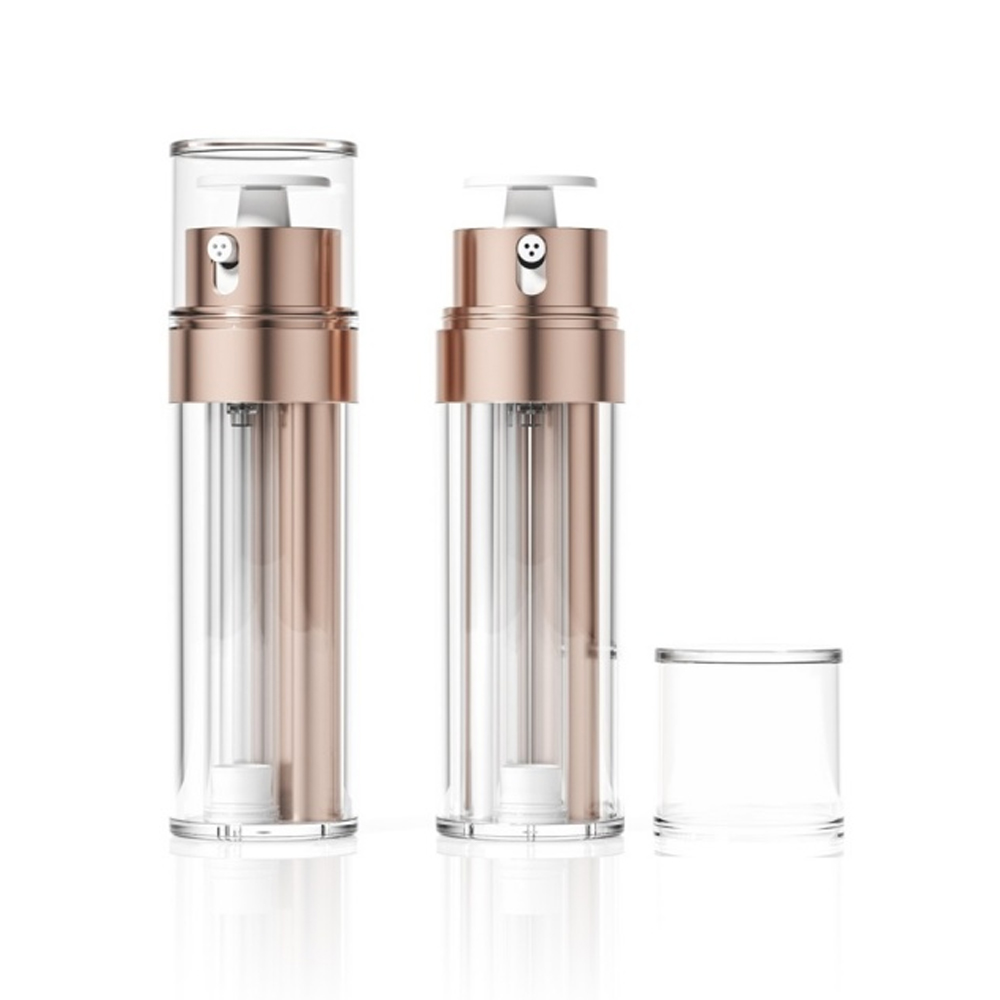
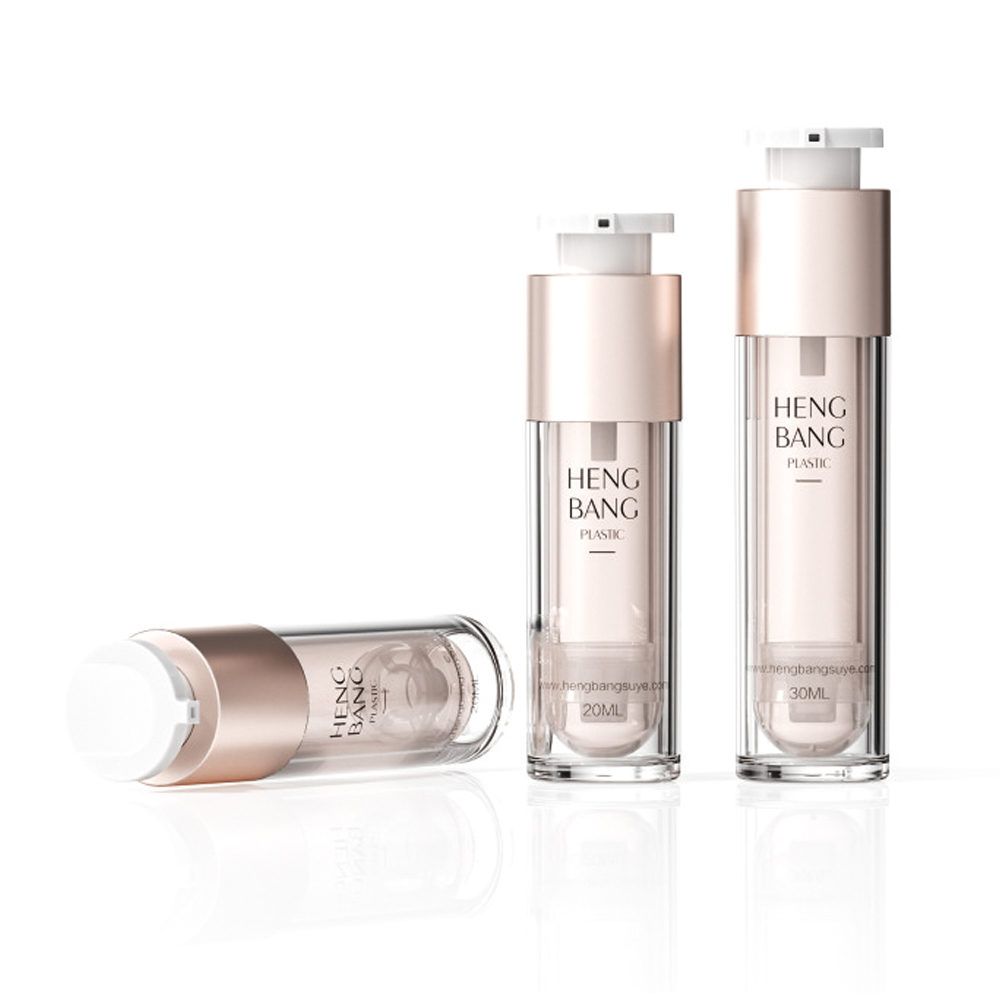
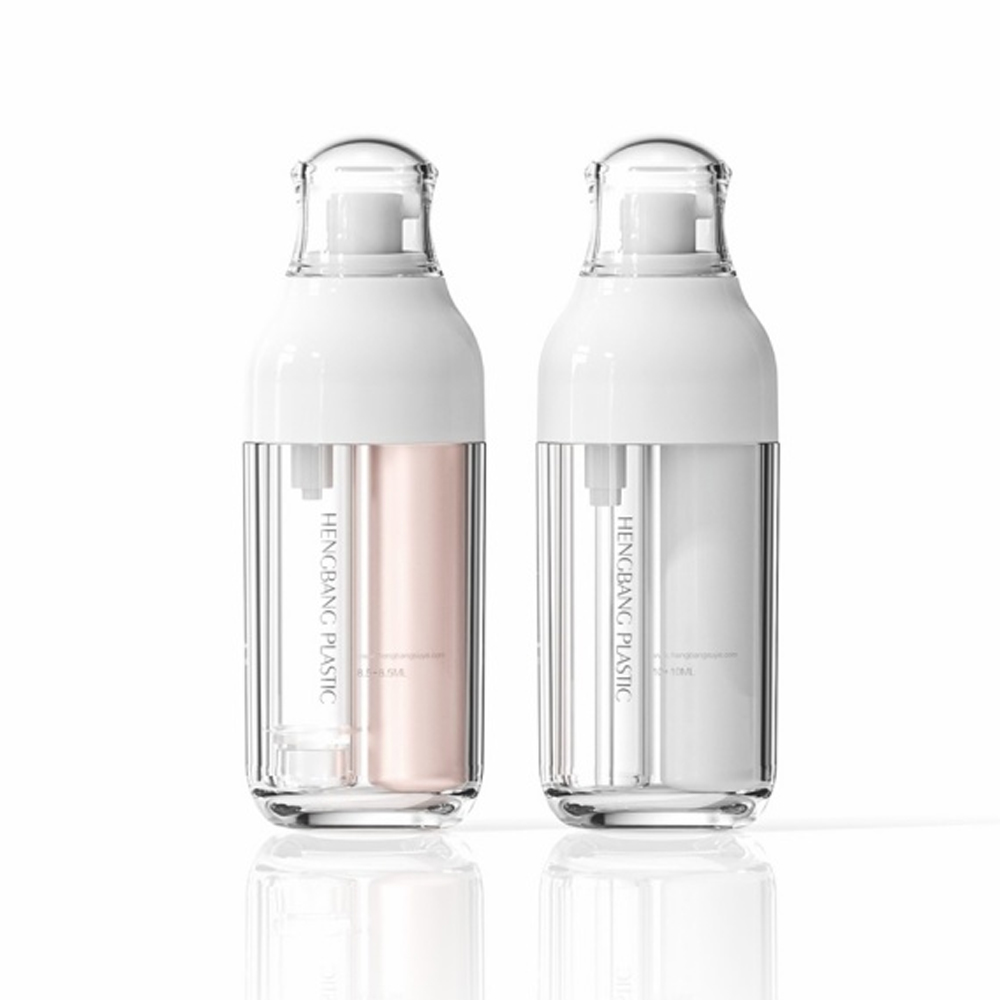
Cosmetic packaging has evolved from a simple protective container into an important part of product performance, consumer experience, and brand communication. As skincare formulas become more specialized, packaging manufacturers must provide solutions that protect sensitive ingredients, simplify application, create visual distinction, and support efficient product development. The HB-S004 2 In 1 Double Chamber Airless Bottle responds to these demands by combining two separate formulation chambers in one compact package.
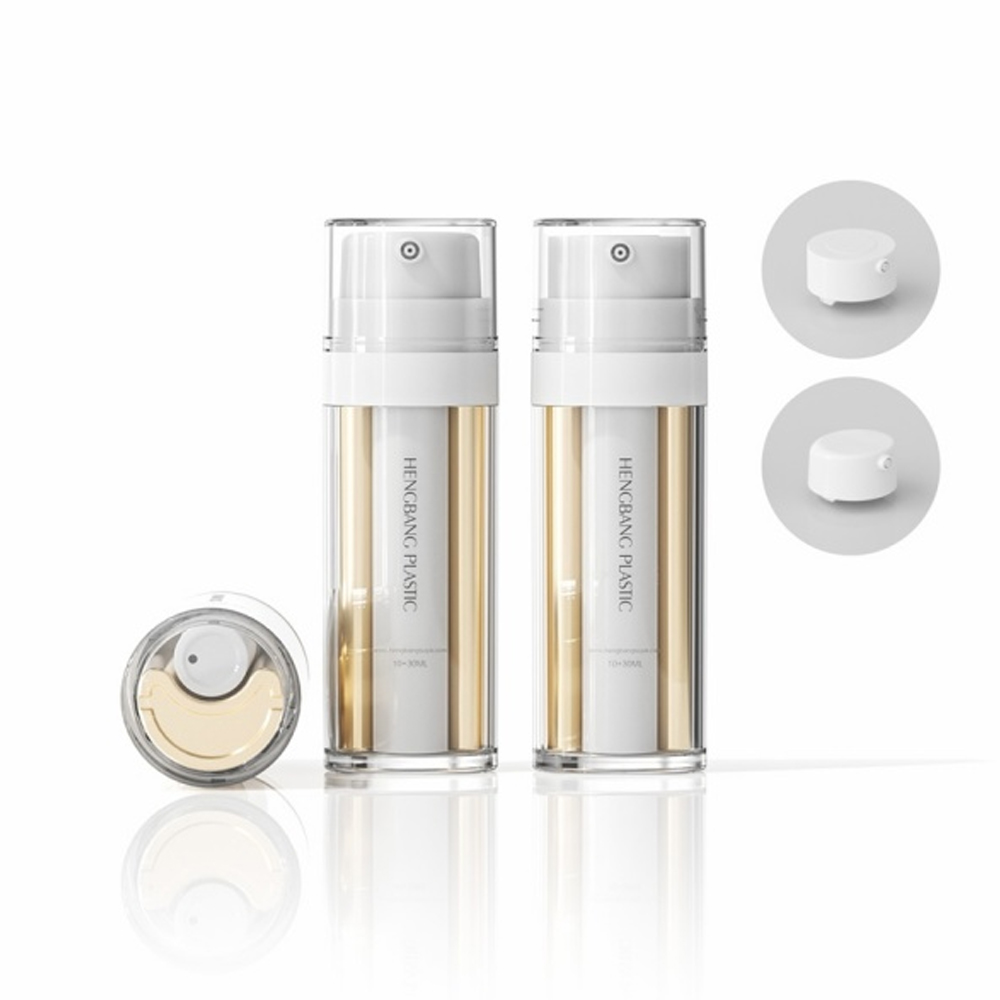
Designed for skincare, cosmetics, and personal care applications, this double-chamber airless bottle provides a practical way to package two products or two complementary formulas together. Its dual-container structure supports product separation until dispensing, while its coordinated pump system makes it possible to deliver the formulations in a controlled ratio. The result is a packaging format that combines convenience, functional differentiation, and a premium visual presentation.
The HB-S004 is especially suitable for products such as dual serums, day-and-night skincare systems, moisturizer-and-booster combinations, sunscreen and skincare blends, two-step treatments, and other products that benefit from separate formulation storage. With available capacities based on an 8.5 ml plus 8.5 ml airless configuration or a 10 ml plus 10 ml lotion configuration, the bottle can be considered for travel sizes, trial programs, professional kits, gift sets, and targeted treatment packaging.
Manufactured by Yuyao Hengbang Plastic Co., Ltd., a specialist in plastic packaging for cosmetics and skincare products, the product reflects the company’s experience in packaging design, development, production, and quality management. The company operates in a 35,000-square-meter facility and has more than 300 employees. Its ISO9001:2015 and ISO14001:2015 certifications, professional development team, and multiple invention patents provide a foundation for producing packaging that addresses both commercial and technical requirements.
HB-S004 2 In 1 Double Chamber Airless Bottle
A double-chamber airless bottle contains two separate internal reservoirs within one external package. Instead of placing both formulas in a single container, the packaging keeps them physically separated. Each chamber has its own product pathway and piston-based airless structure, allowing the contents to be dispensed without requiring conventional air exchange during normal use.
This configuration is valuable when two formulas should not be premixed during storage. Some cosmetic products contain active ingredients that are more stable when kept apart. Other products may be designed to work together only at the moment of use. A dual-chamber package provides a convenient method for offering those formulas in one coordinated product while maintaining separation inside the package.
The packaging can also be used for marketing concepts that depend on product pairing. A brand may combine a moisturizer with a concentrated serum, a pigment base with a treatment formula, or a day cream with a complementary protective product. Instead of asking consumers to purchase and carry two independent packages, the double-chamber design presents the formulas as one integrated system.
The airless structure is another important feature. Traditional bottles often draw air into the container as product is removed. An airless system uses a pump and internal piston mechanism to move the product upward, helping reduce direct exposure to air. This can support formula protection and improve the consistency of dispensing throughout the product’s service life.
For cosmetic brands, the combination of dual chambers and airless dispensing may reduce the need for additional packaging components. A two-product concept can be presented in one coordinated bottle, rather than in two unrelated containers. This may support a more organized product display, more efficient gift packaging, and a clearer consumer experience.
The HB-S004 provides two product chambers in a bottle with a height of approximately 119 millimeters and a stated diameter of approximately 41.7 by 34.2 millimeters. Its proportions make it suitable for compact skincare packaging where portability and shelf presentation are both important.
The bottle can support products that are intended to be used together or in a coordinated routine. The two formulas may be dispensed simultaneously, depending on the final pump and filling configuration, or the package may be integrated into a usage concept where the consumer applies the products in sequence. The final dispensing behavior should be confirmed during sample evaluation and compatibility testing.
The stated application output is 0.12 cc plus 0.12 cc. This means that the two chambers are designed around a matched dispensing concept, with each side providing a controlled amount during pump activation. A measured output can help consumers follow intended usage instructions and may improve the perceived quality of the product.
Controlled output is particularly useful for concentrated skincare formulas. If a serum, booster, eye treatment, or active lotion is over-applied, the product may feel heavy or be consumed too quickly. A controlled pump supports more consistent use and helps brands establish clearer application recommendations.
Output performance may vary according to formula viscosity, filling conditions, pump components, temperature, and assembly tolerances. For this reason, a complete packaging evaluation should include actual formula testing, pump cycling, leakage checks, and consumer-use simulation.
The HB-S004 uses a combination of MS, PP, and ABS components. The listed material structure includes an MS cap, a PP and ABS pump, an MS outer bottle, a PP inner bottle, and an MS shoulder. This combination allows the packaging to balance appearance, structural support, component functionality, and compatibility with common cosmetic filling processes.
| Component | Listed Material | Functional Role |
|---|---|---|
| Cap | MS | Protects the pump and contributes to the visual appearance of the package. |
| Pump | PP plus ABS | Controls dispensing and supports the dual-output operation. |
| Outer bottle | MS | Provides the visible external structure and supports decorative presentation. |
| Inner bottle | PP | Forms the internal product chamber and supports formula containment. |
| Shoulder | MS | Connects the upper bottle structure with the pump and contributes to assembly stability. |
MS is commonly used in cosmetic packaging where a refined appearance, smooth surface, and design flexibility are important. In the HB-S004, MS is used for the cap, outer bottle, and shoulder. These visible components help create a coordinated package with a clean and premium appearance.
The external structure can support different design treatments, including color matching, surface finishing, printing, coating, and other decoration methods subject to production feasibility. This gives cosmetic brands opportunities to align the bottle with a broader visual identity. A skincare product can be presented with a clinical appearance, a minimalist aesthetic, a luxury finish, or a softer lifestyle-oriented design.
The external design is also important because the double-chamber concept is visually distinctive. Consumers can immediately understand that the bottle contains two related products when the outer presentation communicates separation through color, transparency, labeling, or other graphic elements.
The pump is listed as PP plus ABS. These materials provide a practical combination for a dispensing component that must be assembled accurately and operated repeatedly. The pump is central to the performance of the package because it must deliver two streams or two measured outputs with consistency.
In a dual-chamber system, pump engineering requires attention to alignment, internal sealing, output balance, and compatibility with the two formulas. A high-quality dispensing system should maintain stable operation during repeated use and should minimize the risk of uneven discharge between the two chambers.
The pump design also contributes to user perception. A smooth, firm, and predictable actuator can make the product feel more premium. When the pump responds consistently, consumers are more likely to understand how much product to use and how the two formulas are intended to work together.
The inner bottle is made of PP. The use of an internal PP chamber supports the dual-reservoir structure and provides a dedicated area for each formula. Keeping the inner products separated is one of the principal advantages of the design.
Formula separation can help brands develop products with different textures or functions. For example, one chamber may contain a lighter serum while the other contains a richer cream. One side may contain a water-based formula and the other an oil-based or emulsion-based formula. The package offers an opportunity to combine these products without requiring the two formulas to share the same reservoir during storage.
Before commercialization, compatibility between each formula and the PP chamber, pump pathway, seals, and other contact surfaces should be evaluated. Testing is particularly important when formulas contain high levels of active ingredients, fragrances, pigments, oils, alcohols, acids, or other components that may influence packaging performance.
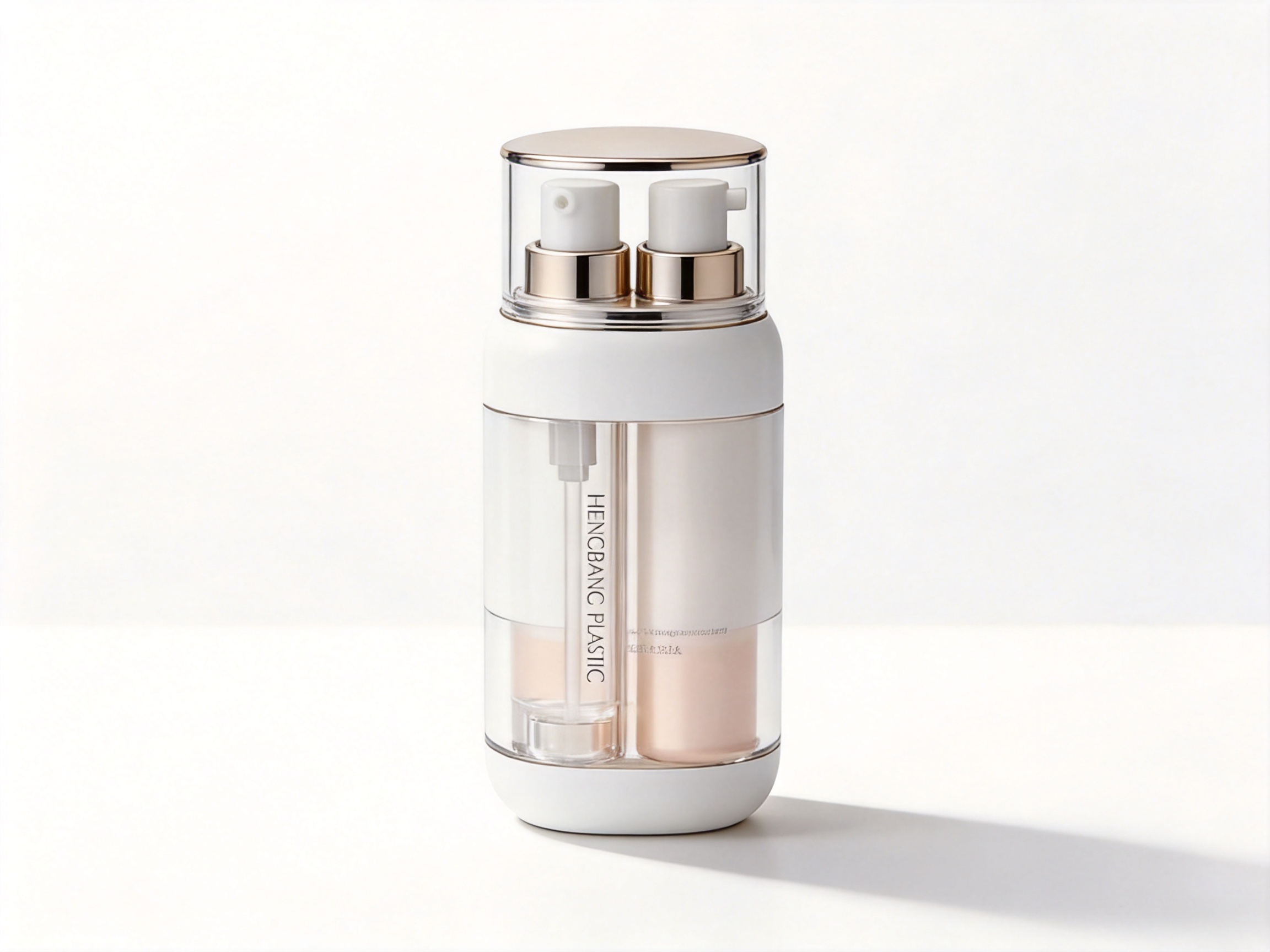
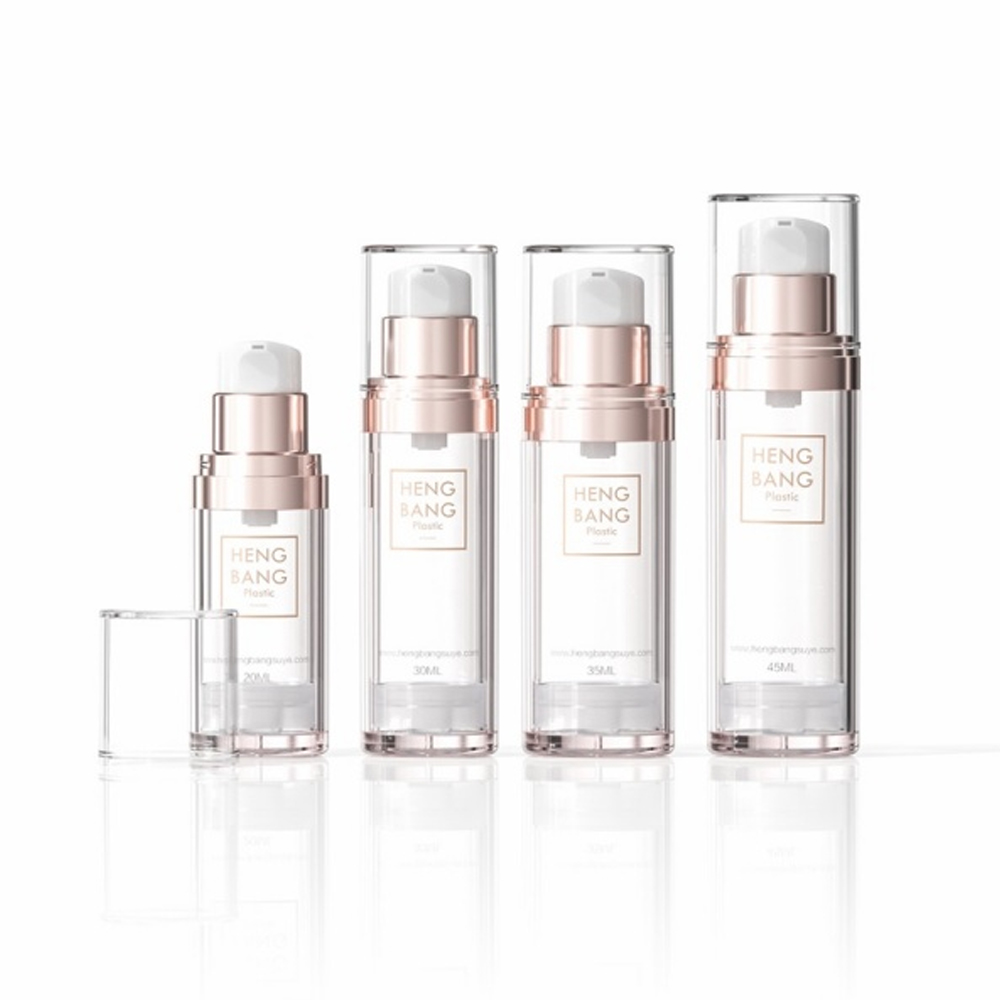
The product information describes the HB-S004 as a 17 ml or 20 ml double-chamber airless bottle, while the detailed capacity specifications list 8.5 ml plus 8.5 ml for the airless configuration and 10 ml plus 10 ml for the lotion configuration. These figures represent two chamber capacities and should be confirmed according to the selected filling and pump configuration.
| Configuration | Chamber Arrangement | Total Nominal Capacity | Potential Applications |
|---|---|---|---|
| Airless configuration | 8.5 ml plus 8.5 ml | 17 ml | Dual serums, concentrated treatments, travel skincare, and sample-size products. |
| Lotion configuration | 10 ml plus 10 ml | 20 ml | Lotions, moisturizers, paired skincare products, and compact daily-use formats. |
The 17 ml configuration is suitable for brands that want to emphasize concentrated or specialized skincare. Each chamber provides 8.5 ml, creating a compact format that can be used for serum pairs, booster systems, or limited-use treatment programs.
This size may be appropriate for high-value formulas where the consumer is expected to use a small quantity at each application. It can also support travel-oriented product lines, discovery kits, professional skincare programs, and promotional packaging. A smaller capacity may lower the commitment required from first-time buyers who want to test a new two-formula concept.
The 20 ml configuration provides 10 ml per chamber. This arrangement may be better suited to lotion, cream, or daily skincare concepts that require a slightly larger volume. It can also be used for products intended for repeated application over a defined period.
The difference between the 17 ml and 20 ml formats allows brands to choose a package according to formula viscosity, recommended dosage, usage duration, and product positioning. The same general bottle concept can therefore support multiple product strategies without requiring an entirely different packaging architecture.
Capacity selection should be determined together with the filling line, formula density, pump output, headspace requirements, and desired shelf life. A technical review can help ensure that the nominal chamber volume, actual fill volume, and consumer-use experience are properly aligned.
The most important advantage of the HB-S004 is that it brings two formulas together in one coordinated package. Conventional single-chamber bottles are effective for one formula, but they do not naturally support a two-product concept without requiring multiple packages or pre-mixing the formulas.
A double-chamber format can simplify the consumer routine. Instead of purchasing two separate products, the consumer receives a paired system in one bottle. This can make the product easier to carry, easier to store, and easier to understand.
For brands, the format can support product concepts that might otherwise be difficult to commercialize. A brand could introduce a two-step treatment, a customizable skincare combination, or a day-and-night concept without relying on two unrelated packages.
Some formulas may be more stable when they remain separate. A conventional single bottle requires the formulas to be combined before filling, which may affect texture, appearance, stability, or active ingredient performance. The dual-chamber bottle provides an alternative by keeping the products in separate chambers until dispensing.
This does not automatically guarantee formula stability. Each formula must still undergo appropriate stability and compatibility testing. However, the packaging structure creates additional design possibilities for products that should not be stored as one premixed formula.
Packaging must attract attention quickly in retail environments and online product photography. A dual-chamber bottle has an inherent visual story: two products, two functions, or two complementary benefits. The outer presentation can reinforce that story through color coding, labeling, contrasting fills, or transparent elements.
The product content emphasizes that the transparent outer presentation can allow consumers to see two distinct formulations. Where the final decoration and production configuration support transparency, the package can use visible separation as a communication tool. Even when opaque decoration is selected, the two-chamber concept can remain clear through graphics and color differentiation.
Two separate packages may require two caps, two labels, two cartons, and additional retail space. A dual-chamber format can help consolidate the user experience into one primary package. The actual reduction in packaging material and logistics volume depends on the final specification, decoration, secondary packaging, and shipping requirements, but package consolidation can be a valuable consideration during product planning.
Consumers often associate airless dispensing with modern, hygienic, and carefully engineered skincare. When combined with a distinctive dual-chamber structure and a refined cap, the package can create a premium impression before the formula is even applied.
The unique cap enhances the overall design presentation. It provides a finished appearance when the bottle is displayed and protects the pump when the product is transported or stored. A well-designed cap can also make the product more suitable for handbags, travel kits, and gift sets.
The HB-S004 can serve a broad range of cosmetic and skincare applications. Its value is strongest when the product concept benefits from separation, coordinated use, or a premium compact format.
A dual serum may combine two complementary treatment formulas. For example, one chamber may contain a hydrating serum while the other contains a soothing or brightening formula. Keeping the formulas separate can help preserve their individual characteristics while offering the consumer a simple dispensing routine.
Serum brands may also use the package for a base-and-booster concept. The primary serum can be paired with a concentrated active formula, allowing the product to be positioned as a more specialized treatment system.
The package can support a moisturizer combined with a targeted treatment. This approach may appeal to consumers who prefer a shorter routine but still want multiple skincare benefits. A lighter formula and a richer formula can be housed separately and dispensed together or used according to the brand’s instructions.
Brands may develop day-and-night products in one package, provided that the formulas and consumer instructions are suitable for the selected dispensing arrangement. One chamber could contain a daytime lotion and the other a nighttime treatment. Alternatively, the bottle could be used as a compact travel product for two stages of a daily routine.
The product category includes sunscreen bottles, and the double-chamber concept may be considered for sunscreen-related systems or pre-sunscreen skincare combinations. Any sunscreen application must meet applicable regulatory, testing, labeling, and performance requirements in the target market. Packaging selection should also consider formula stability, dispensing accuracy, and the need for consumers to apply an adequate amount.
The package should not be presented as a replacement for required sunscreen testing or as a guarantee of protection. Its role is to provide a dispensing and containment format for a properly developed product.
The compact dimensions and divided capacity make the HB-S004 suitable for professional skincare programs, hotel amenities, travel kits, beauty subscription boxes, and trial formats. A two-formula product can give consumers an opportunity to experience a complete treatment system without carrying multiple full-size packages.
For professional use, the package can support treatment protocols where two products are applied together or in a specific order. For travel use, the integrated format may make the routine easier to organize.
The performance of cosmetic packaging depends not only on the visible design but also on the manufacturing system behind it. A dual-chamber airless bottle contains multiple components that must work together. Dimensional control, assembly accuracy, material consistency, pump performance, and quality inspection are all important.
Yuyao Hengbang Plastic Co., Ltd. was established in 2006 and has developed experience in plastic packaging for cosmetic and skincare products. The company has a building area of approximately 35,000 square meters and more than 300 employees. This scale supports coordinated production, technical development, quality management, and customer service.
The company provides design and development services in addition to manufacturing. This is important for packaging projects that require more than a standard catalog item. A customer may need assistance with decoration, capacity selection, pump testing, formula compatibility, color matching, or secondary packaging coordination.
Design and development capability also helps reduce communication gaps between the initial product concept and the final manufactured package. When packaging specialists understand both the visual and functional objectives, they can help identify practical solutions during the early stages of development.
Cosmetic packaging has specific requirements. Products may contain oils, alcohols, acids, fragrances, pigments, botanical extracts, or active ingredients. They may also be used in bathrooms, handbags, travel environments, and professional treatment rooms. Packaging must therefore support appearance, usability, cleanliness, sealing, and formula protection.
A manufacturer focused on cosmetic and skincare packaging is familiar with the need to coordinate material selection, decoration, filling, and consumer handling. This specialization can provide an advantage over general plastic manufacturers that do not regularly work with cosmetic dispensing systems.
The company has passed ISO9001:2015 certification. ISO9001 is associated with a quality management system that supports controlled processes, documentation, corrective action, customer focus, and continuous improvement. Certification does not replace product-specific testing, but it demonstrates that the company has established a structured approach to quality management.
For a dual-chamber bottle, quality management may include control of incoming materials, component molding, dimensional inspection, assembly checks, pump testing, visual inspection, packaging, and traceability. The exact inspection plan should be confirmed according to the production order and technical agreement.
The company has also passed ISO14001:2015 certification. ISO14001 relates to environmental management systems and encourages organizations to manage environmental responsibilities systematically. This can support improvements in resource use, waste management, operational control, and environmental awareness.
For cosmetic packaging manufacturers, environmental management is increasingly relevant. Customers and consumers are asking about material use, production efficiency, decoration methods, packaging weight, and end-of-life considerations. ISO14001 certification provides a framework for managing these topics within the manufacturing organization.
The company owns multiple invention patents and was recognized as a Ningbo High-Tech Enterprise in 2021. These qualifications indicate an emphasis on technical development and innovation. For complex packaging such as double-chamber airless bottles, innovation may involve dispensing mechanisms, component structures, sealing methods, production tooling, or improved assembly processes.
Technical innovation is valuable when it solves a practical packaging problem. A successful innovation should contribute to reliable operation, better user experience, improved manufacturing efficiency, or enhanced design possibilities.
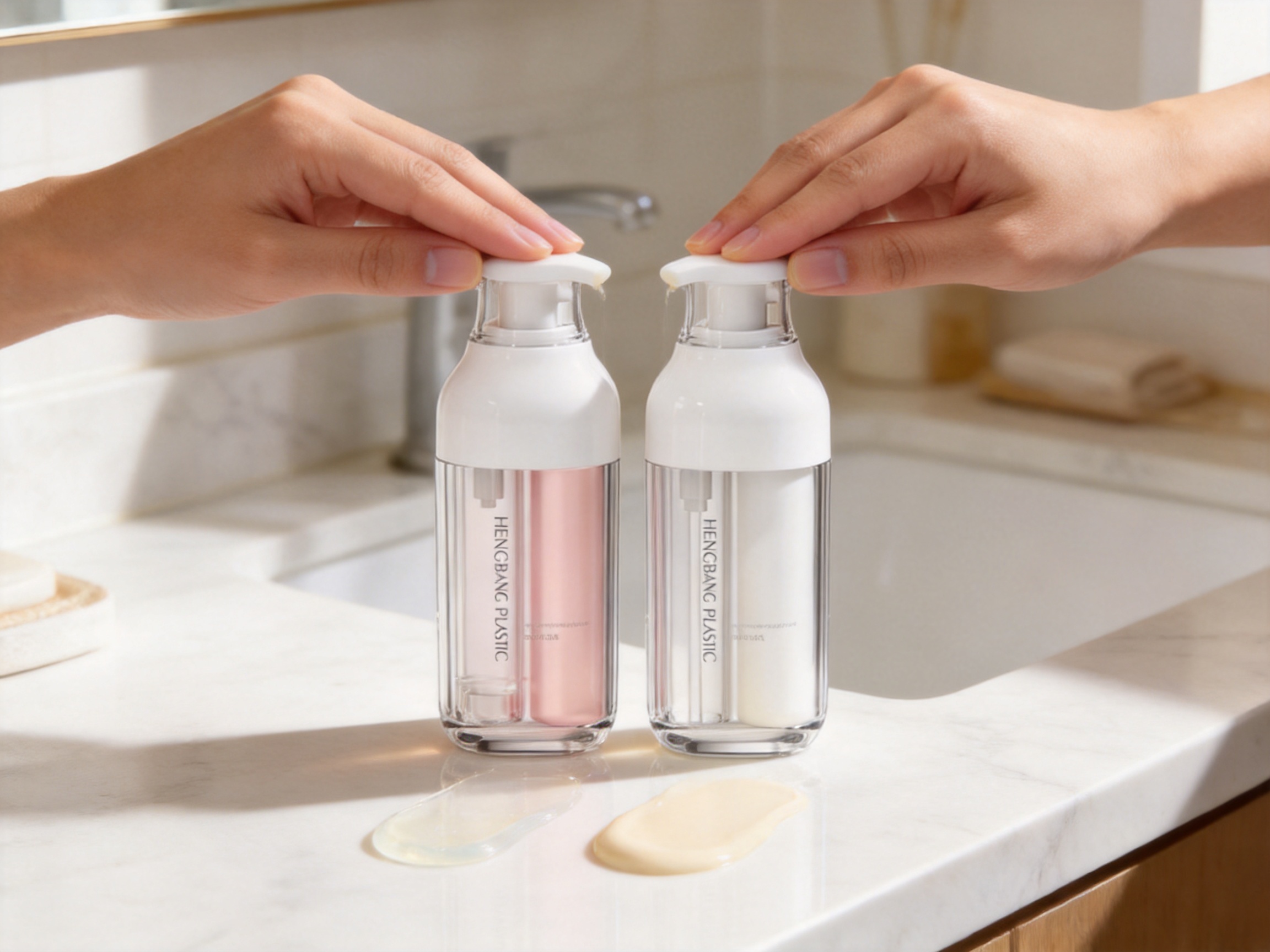
The specific production process may vary according to the final order, mold configuration, color, decoration, and pump specification. However, a high-quality double-chamber airless bottle generally requires several coordinated manufacturing stages.
Production begins with the preparation and inspection of the selected materials. The MS, PP, and ABS materials must be suitable for their intended components. Color concentrates, additives, and other production inputs should be controlled to support consistent appearance and performance.
Material control is especially important for visible cosmetic packaging. Variations in color, gloss, transparency, or surface texture can affect the appearance of the finished product. Internal components must also meet dimensional and functional requirements even when they are not visible to the consumer.
The cap, outer bottle, inner bottle, shoulder, and pump components are produced using appropriate plastic molding processes. Molds must be designed to create accurate shapes, stable wall thickness, reliable sealing areas, and repeatable assembly features.
For the two internal chambers, dimensional precision is important because each chamber must hold the intended product volume and connect correctly with the pump system. The outer bottle must also provide suitable support for the inner structure and maintain the desired visual appearance.
After molding, visible components may receive surface treatments or decoration according to the customer’s design. Options may include color matching, printing, coating, frosting, metallic effects, or other approved finishes. The final decoration should be tested for adhesion, wear resistance, and compatibility with normal handling.
When transparency or partially transparent elements are part of the product concept, decoration should be designed carefully so that consumers can still understand the two-chamber structure. Color coding can be applied to distinguish the two formulas while maintaining a unified package appearance.
The pump assembly is one of the most technically important stages. The PP and ABS components must be assembled with the internal parts that control product movement and output. The two dispensing pathways must remain properly aligned and sealed.
Assembly controls should address actuator function, output balance, fit between pump and bottle, cap engagement, and leakage prevention. Pumps should be evaluated through repeated actuation to confirm that they continue to operate smoothly after multiple cycles.
Once the individual components are produced and prepared, the bottle is assembled. The inner chambers, outer structure, shoulder, pump, and cap must fit together according to the approved specification.
Final inspection may include appearance checks, dimensional checks, component fit, cap performance, pump activation, output measurement, leakage testing, and packaging inspection. Products intended for a specific formula should also undergo filled-package compatibility testing rather than relying only on empty-package inspection.
Packaging performance cannot be separated from the formula. A pump that works well with one lotion may behave differently with a thicker cream, a fluid serum, or a formula containing particles. The HB-S004 should therefore be evaluated with the actual products intended for commercialization.
Formula viscosity influences how easily the product moves through the pump. Very thin formulas may require attention to leakage control, while highly viscous formulas may require additional priming or repeated activation before dispensing begins. Testing should cover the expected viscosity range and storage conditions.
Filled packaging should be evaluated under appropriate stability conditions. Testing may include elevated temperature, low temperature, cycling conditions, light exposure, transport simulation, and long-term storage. The purpose is to observe changes in color, odor, texture, separation, leakage, pump operation, and component appearance.
Formula ingredients may interact with packaging materials or seals. The PP inner bottle, MS outer components, pump components, and any gaskets or internal parts should be considered. Interaction testing can help identify swelling, cracking, softening, discoloration, odor transfer, stress damage, or changes in dispensing behavior.
Because the bottle is designed for two products, output balance is an important evaluation point. Each side should deliver the intended amount under normal use. If the two formulas have different viscosities, the pump may require additional testing to confirm that both sides remain synchronized.
The listed application is 0.12 cc plus 0.12 cc. This provides a reference for the expected output, but the final result should be confirmed using the actual formula and production pump configuration. Brands should also define acceptable tolerances and evaluate the package after storage and repeated use.
Packaging is part of the product’s communication system. A consumer should be able to understand what the package contains, how it works, and how the formulas are intended to be used. The HB-S004 offers several opportunities to make this communication clear.
The two formulas can be differentiated through color, label design, or transparent presentation. One chamber may be associated with hydration and the other with treatment, or one may represent daytime use and the other nighttime use. Clear visual coding can reduce confusion and make the product easier to use.
If the outer bottle is produced with transparent or partially transparent features, consumers may be able to see the two distinct formulations. This can reinforce the product’s authenticity and make the dual-chamber function immediately visible on a retail shelf.
Instructions should explain whether consumers should dispense both formulas at the same time, mix them before application, apply them separately, or use them in a particular order. The packaging provides the mechanical function, while the brand’s instructions define the intended skincare routine.
The pump and cap should be easy to understand. A first-use instruction may be necessary if the pump requires priming. Clear labeling can also explain the recommended dosage and how the product should be stored after use.
The unique cap and coordinated outer structure can help position the product as a premium or advanced skincare package. The bottle’s proportions are suitable for a polished presentation, while the dual-chamber format provides a point of difference that can be communicated in advertising, retail displays, and online product pages.
Sustainability is an important part of modern packaging decisions. The HB-S004 contains multiple plastic materials, including MS, PP, and ABS, and therefore requires thoughtful consideration of material use, decoration, manufacturing efficiency, and disposal.
The company’s ISO14001:2015 environmental management certification provides a structured basis for environmental management within its operations. However, the sustainability performance of a finished package depends on the complete product system, including material weights, secondary packaging, shipping distance, filling efficiency, product protection, and end-of-life conditions.
A dual-chamber bottle can consolidate two related formulas into one primary package. Depending on the product concept, this may reduce the need for two separate external bottles. Any potential material benefit should be evaluated against the additional components required for the dual-chamber pump and internal structure.
Airless dispensing may help consumers access more of the formula and can reduce product residue that remains in a conventional container. Better product evacuation can support efficient use and may reduce the amount of unused formula discarded with the package.
Because the product contains multiple materials and an integrated pump, recycling pathways may depend on local infrastructure. Brands should consider labeling and disposal guidance appropriate to the target market. Where possible, material choices and component combinations should be reviewed with end-of-life requirements in mind.
For cosmetic packaging buyers, the HB-S004 offers a combination of product differentiation, compact capacity, and technical functionality. It can be considered by established brands launching a new treatment system, emerging brands seeking a distinctive package, contract manufacturers developing turnkey products, and skincare companies looking for a coordinated two-formula format.
The dual-chamber design gives a product a clear point of difference. Instead of presenting another standard lotion bottle or jar, a brand can introduce a packaging concept with a visible functional benefit.
Because Yuyao Hengbang Plastic Co., Ltd. provides design and development services, buyers may have access to support during package selection and customization. This can be useful when a customer needs to coordinate color, decoration, formula compatibility, pump output, and filling requirements.
A 35,000-square-meter building area and workforce of more than 300 employees indicate a manufacturing organization with significant operational capacity. Scale can support production planning, quality control, technical coordination, and customer communication for different project sizes.
ISO9001:2015 and ISO14001:2015 certifications provide evidence of formal management systems in quality and environmental areas. Buyers should still review product-specific documentation and testing, but these certifications are useful indicators when evaluating a packaging supplier.
A successful HB-S004 project should begin with a clear product brief. The brief should identify the two formulas, intended use, target market, capacity, dispensing method, visual style, decoration requirements, secondary packaging, and expected launch schedule.
Determine why the two formulas belong together and whether they should be dispensed simultaneously or separately. Clarify the viscosity, color, fragrance, active ingredients, and expected usage quantity of each formula.
Choose between the 8.5 ml plus 8.5 ml airless configuration and the 10 ml plus 10 ml lotion configuration according to product dosage and intended usage period. The 17 ml total format may suit concentrated products, while the 20 ml total format may be more appropriate for lotion-based concepts.
Empty samples should be inspected for appearance, dimensions, component fit, cap function, pump feel, and overall presentation. Filled samples should then be tested with the actual formulas.
Filled samples should undergo stability and compatibility testing under conditions appropriate to the product. Output, leakage, formula appearance, odor, and material condition should be monitored.
Once the functional package is approved, decoration should be finalized. Color matching, printing, coating, transparency, labeling, and surface effects should be evaluated on production-representative samples.
Before mass production, the customer and manufacturer should confirm specifications, tolerances, inspection standards, packaging method, filling requirements, and quality documentation. A production trial can help identify issues before the full order is released.
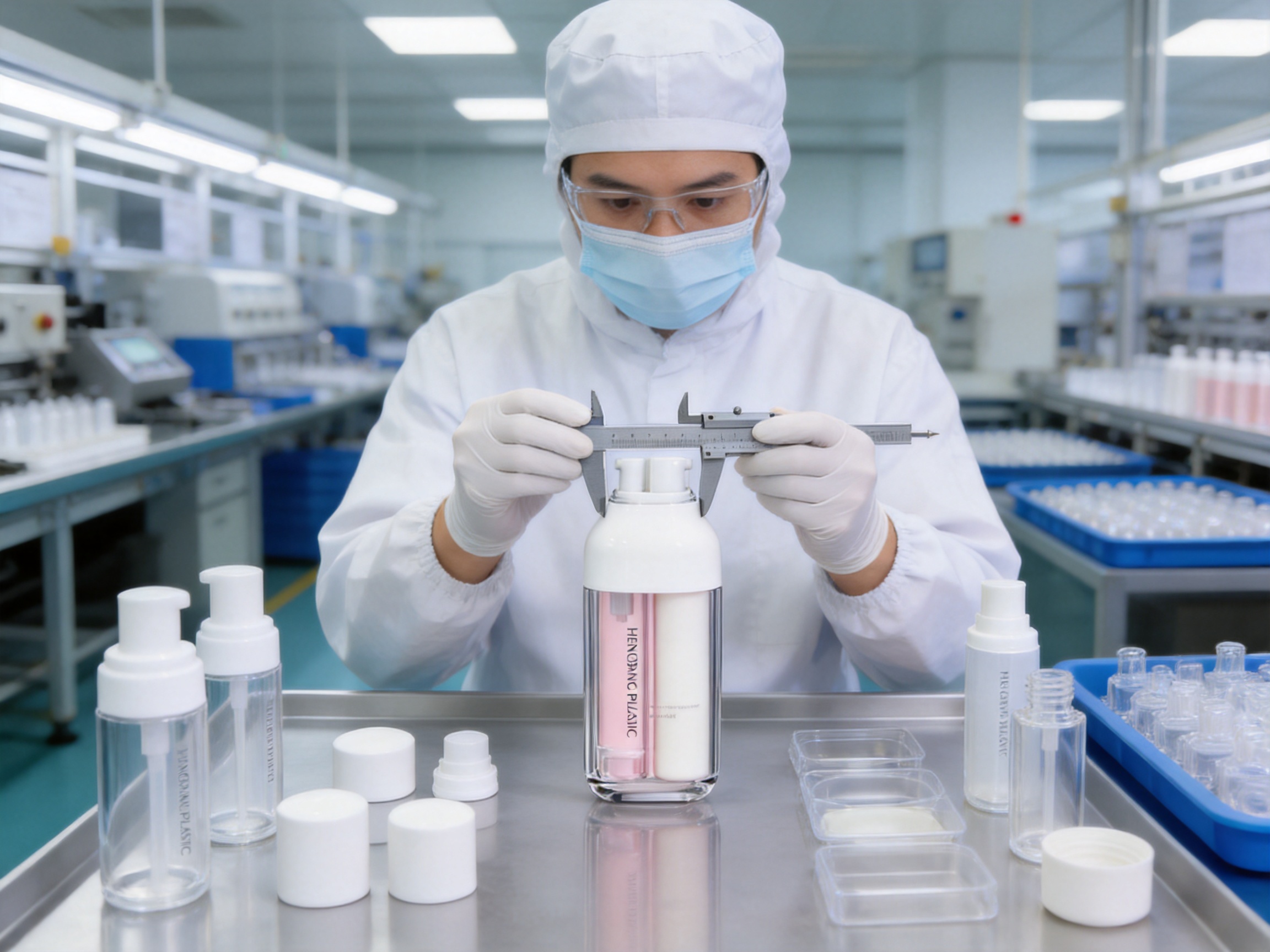
It is a cosmetic packaging container with two separate internal chambers and a coordinated airless dispensing system. It is designed to hold and dispense two related formulas in one bottle.
The detailed specifications list an 8.5 ml plus 8.5 ml configuration for a total of 17 ml and a 10 ml plus 10 ml configuration for a total of 20 ml. The correct option depends on the selected application and filling configuration.
The listed materials are MS for the cap, outer bottle, and shoulder; PP plus ABS for the pump; and PP for the inner bottle. Final material details should be confirmed in the technical specification for the production order.
The stated application is 0.12 cc plus 0.12 cc. This indicates a matched output reference for the two chambers. Actual performance should be verified with the intended formulas and final pump configuration.
The bottle may be suitable for serums, lotions, moisturizers, treatment products, sunscreen-related systems, and other cosmetic or skincare formulas. Compatibility must be tested with the actual formula before commercialization.
Yes. The dual-chamber structure is designed to keep the two formulas in separate internal reservoirs. The products can then be dispensed together or according to the usage method established by the brand.
Its compact capacity and integrated dual-product design make it suitable for travel kits, trial products, professional skincare sets, and gift packaging, subject to transport and leakage testing.
Customization may be possible through color, decoration, surface treatment, labeling, and other production options. The available choices should be confirmed according to the order quantity, design requirements, and manufacturing feasibility.
Yuyao Hengbang Plastic Co., Ltd. has passed ISO9001:2015 and ISO14001:2015 certifications. These relate to quality management and environmental management systems, respectively.
Different formulas can behave differently in the same pump and container. Viscosity, ingredients, storage conditions, and repeated use can influence dispensing, leakage, appearance, and material performance. Testing helps confirm that the package works with the specific formulas selected.
A dual-chamber bottle integrates two formulas into one coordinated package. It can simplify carrying and storage, create a distinctive product concept, and support separate formula containment while providing a unified visual presentation.
The HB-S004 2 In 1 Double Chamber Airless Bottle is a versatile packaging solution for cosmetic and skincare products that benefit from two separate formulas in one compact container. Its dual-chamber structure, airless dispensing concept, matched output reference, and premium cap design provide a combination of functionality and visual differentiation.
The product’s 17 ml and 20 ml capacity options support different applications, from concentrated serum systems to lotion and moisturizer concepts. Its MS, PP, and ABS material configuration provides a practical foundation for cosmetic packaging, while its external design offers opportunities for color coding, transparent presentation, and brand-specific decoration.
Compared with conventional single-chamber bottles, the HB-S004 can help brands create more distinctive product concepts, reduce the complexity of carrying two related formulas, and keep selected formulations separate during storage. Its value is particularly clear for paired treatments, dual serums, day-and-night products, moisturizer-and-booster systems, and compact professional or travel formats.
The manufacturing capabilities of Yuyao Hengbang Plastic Co., Ltd. further support the product’s development potential. Established in 2006, the company combines cosmetic packaging specialization, design and development services, a 35,000-square-meter building area, more than 300 employees, ISO9001:2015 and ISO14001:2015 certifications, and multiple invention patents. These strengths provide a foundation for controlled production and technical collaboration.
As with any cosmetic package, final performance depends on the relationship between the container, pump, formula, filling process, decoration, and storage conditions. Careful sample evaluation and product-specific compatibility testing are essential. When properly developed, the HB-S004 offers cosmetic brands a practical way to combine formula separation, controlled dispensing, compact capacity, and modern shelf appeal in one advanced packaging format.
1. Product specification information for the HB-S004 2 In 1 Double Chamber Airless Bottle, including materials, capacity, dimensions, and application output.
2. Company information supplied by Yuyao Hengbang Plastic Co., Ltd., including establishment year, facility area, employee number, services, certifications, and technical qualifications.
3. ISO 9001:2015, Quality Management Systems—Requirements.
4. ISO 14001:2015, Environmental Management Systems—Requirements with Guidance for Use.
5. General principles of cosmetic packaging compatibility, dispensing performance, stability testing, and quality control.


Copyright © Yuyao Hengbang Plastic Co., Ltd.
All Rights Reserved.
 Wholesale Plastic Cosmetic Packaging Manufacturers