English
 中文简体

News
Home > Author > Zhang Yuxin — Plastic Cosmetic Packaging Sales Representative > Why Replaceable Airless Serum Bottles Are Reshaping Premium Skincare Packaging

 2026.09.10
 Zhang Yuxin — Plastic Cosmetic Packaging Sales Representative
Content
Skincare packaging has moved beyond simple containment. Today, a bottle must protect the formula, support precise dispensing, communicate product quality, meet demanding visual standards, and increasingly respond to environmental expectations. This is especially true for serums, concentrates, eye treatments, creams, and other formulas whose performance can be affected by air, light, contamination, and inaccurate dosing.
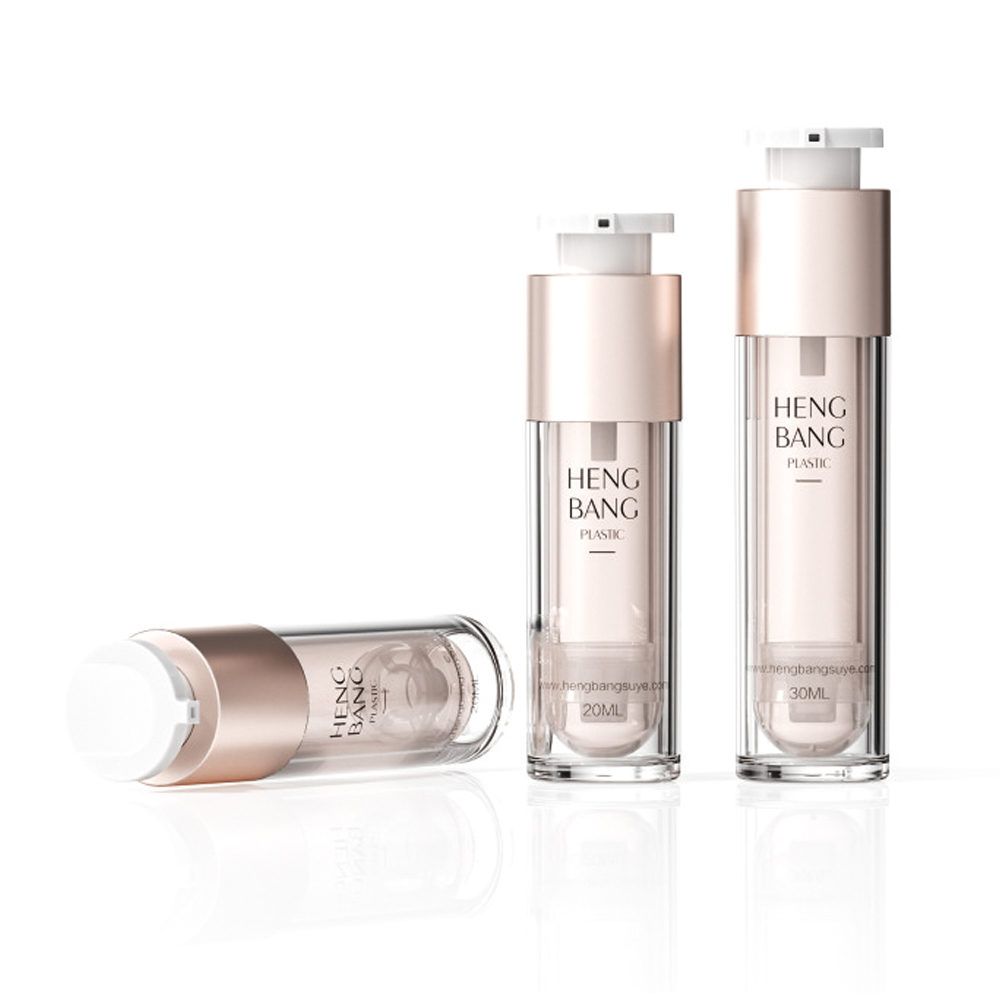
The HB-K023 replaceable plastic airless serum bottle is designed for this demanding category. Available in 20ml and 30ml capacities, it combines an airtight airless dispensing system with a replaceable inner bottle concept. The result is a packaging solution intended for brands that want a premium appearance, controlled product delivery, and a more resource-conscious approach to packaging design.
Unlike a conventional open-neck bottle or standard pump container, the airless format is engineered to reduce the contact between the formula and external air during use. Its replaceable construction also gives brands an opportunity to separate the long-life outer component from the product-containing inner component. This approach can support refill-oriented programs, product line extensions, and packaging systems designed around improved material efficiency.
The HB-K023 is produced by Yuyao Hengbang Plastic Co., Ltd., a Chinese manufacturer specializing in plastic packaging for cosmetics and skincare products. Established in 2006, the company operates from a 35,000-square-meter facility and employs more than 300 people. Its capabilities include design and development services, plastic packaging production, customization, and quality management supported by ISO9001:2015 and ISO14001:2015 certifications.
This article examines the product’s design, functional advantages, manufacturing strengths, customization potential, applications, and practical considerations for cosmetic brands evaluating a replaceable airless bottle supplier.
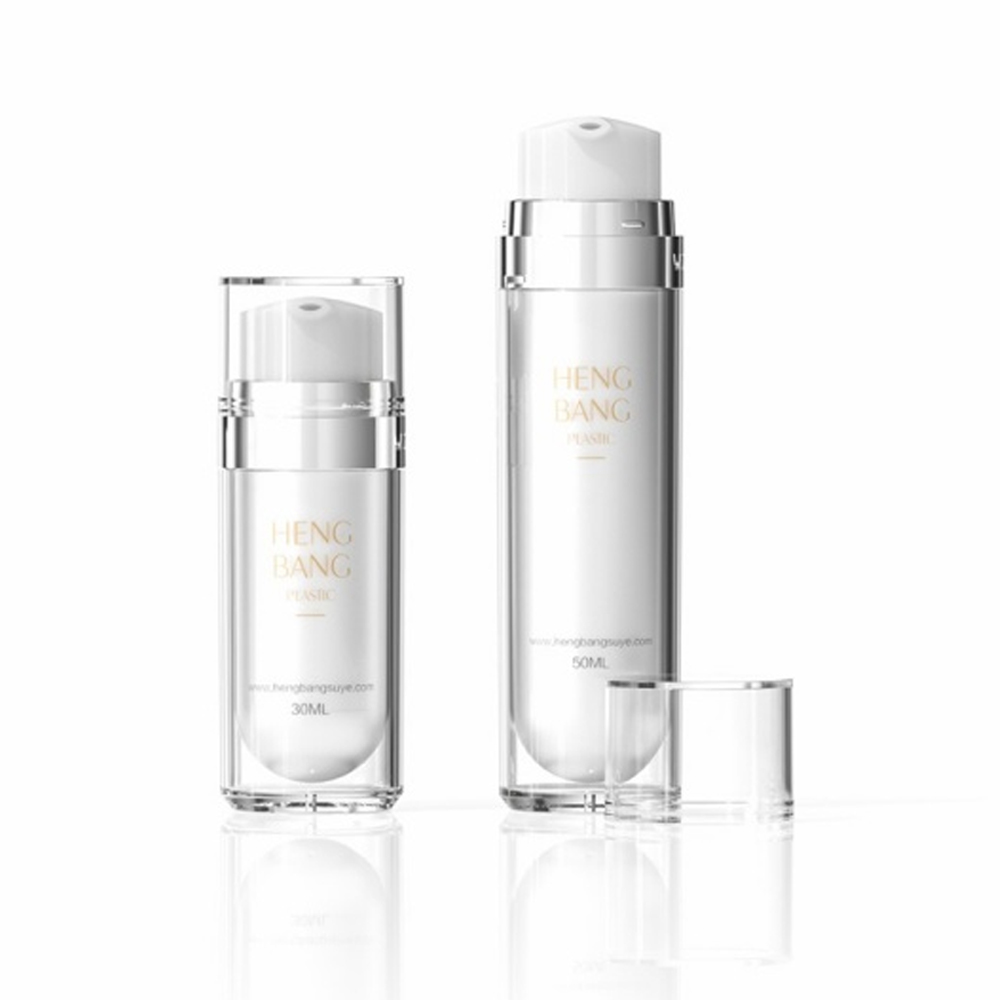
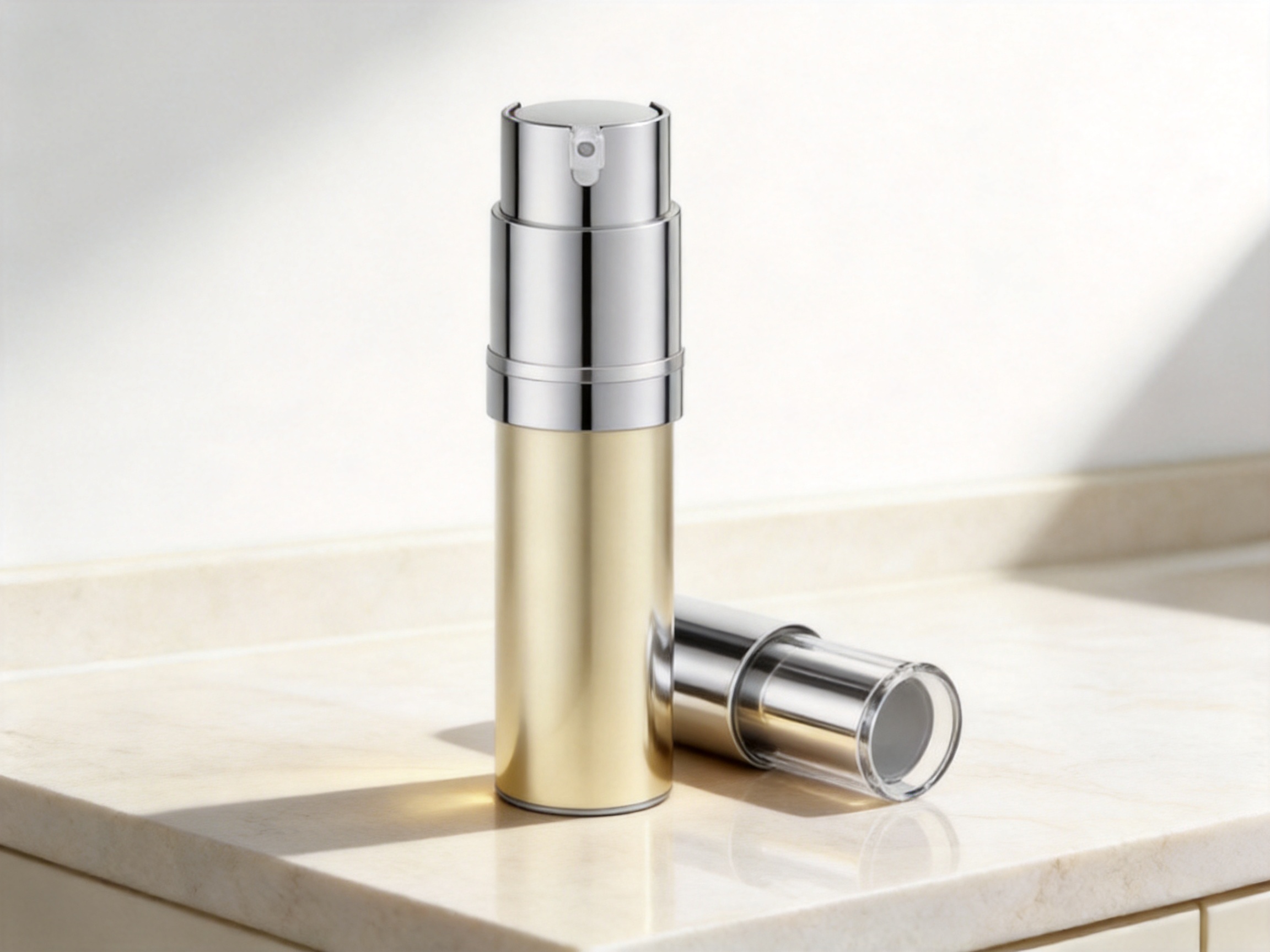
HB-K023 30ml Replaceable Plastic Airless Serum Bottle
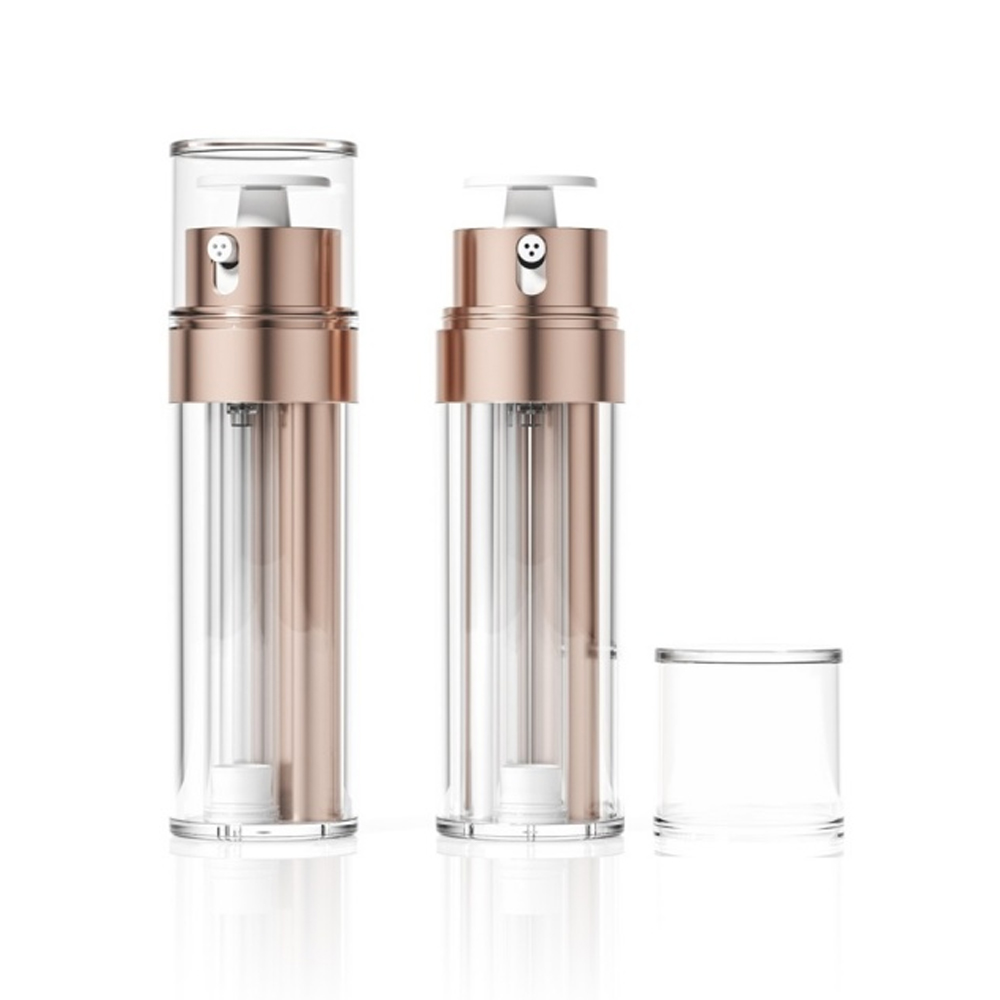
The HB-K023 is a plastic airless serum bottle developed for modern cosmetic and skincare formulations. Its structure includes a pump system, an outer bottle, and a replaceable inner bottle. According to the provided product specifications, the pump is made from PP, ABS, and aluminum, the outer bottle is made from MS, and the inner bottle is made from PP.
The product is offered in two stated capacities: 20ml and 30ml. The listed height is 117mm for the 20ml version and 135mm for the 30ml version. Both options use a listed diameter of 36.5mm, while the dispensing volume is specified as 0.23cc per actuation.
These proportions make the bottle suitable for products positioned as concentrated, premium, travel-friendly, or treatment-oriented. A 20ml bottle can be used for intensive treatment products, trial programs, professional skincare, or high-value formulas. The 30ml size is more appropriate for standard serum routines, daily-use facial treatments, primers, and other products that require a moderate usage period without becoming bulky.
The replaceable inner bottle is one of the product’s defining features. In a traditional package, the entire container may be discarded when the formula has been used. A replaceable system allows the outer housing and dispensing architecture to remain in use while the product-containing component is exchanged. For brands planning refill programs, this can create a more structured relationship between the primary package and subsequent refills.
It is important to note that “replaceable” packaging requires a clear refill strategy. The replacement component should be supplied in a compatible format, with appropriate instructions, hygiene controls, sealing specifications, and quality testing. When correctly designed, the system can provide a convenient user experience while helping the brand communicate a more considered approach to packaging consumption.
| Item | Specification |
|---|---|
| Product model | HB-K023 |
| Product type | Replaceable plastic airless serum bottle |
| Available capacities | 20ml and 30ml |
| 20ml height | 117mm |
| 30ml height | 135mm |
| Diameter | 36.5mm |
| Dispensing volume | 0.23cc per actuation |
| Pump material | PP, ABS, and aluminum |
| Outer bottle material | MS |
| Inner bottle material | PP |
| Customization | Color, finish, and decoration options |
The specifications give brands a practical foundation for product planning. However, final compatibility should always be verified through sample testing with the intended formula, decoration method, closure configuration, and filling process.
Airless packaging is designed to dispense product without relying on a conventional dip tube and without requiring the container to be repeatedly exposed to a large amount of air. In a typical airless structure, the product is placed in an inner chamber and a moving piston or equivalent mechanism rises as the pump is pressed. This action helps push the formula toward the actuator while limiting the amount of air entering the product chamber.
This operating principle offers several benefits for skincare brands. First, it can help reduce the risk of external contamination introduced through repeated opening and closing. Second, it can help limit oxidation-related exposure for formulas that are sensitive to air. Third, it allows the product to be dispensed in a controlled manner, which can improve consistency during daily use.
For a serum, dosage control is particularly important. Serums often contain concentrated active ingredients and are used in small quantities. A pump that dispenses approximately 0.23cc per actuation gives the brand a measurable starting point for usage recommendations. The final amount used by consumers will depend on the formula, pump force, viscosity, application area, and number of actuations, but a defined output supports more consistent product communication.
Airless dispensing can also improve the perceived quality of a package. Consumers often associate a smooth, controlled pump action with premium skincare. A well-designed actuator reduces the need for users to touch the product directly, helping the package feel cleaner and more sophisticated than an open jar or wide-mouth container.
Many modern skincare formulas contain ingredients selected for targeted performance, including antioxidants, botanical extracts, peptides, vitamins, brightening ingredients, moisturizers, and other active components. The stability of these formulas depends on many factors, including pH, preservatives, packaging compatibility, oxygen exposure, temperature, light, and filling conditions.
An airless bottle cannot replace proper formulation stability testing, but it can form part of a broader protection strategy. By limiting routine air exchange and reducing direct contact between the user and the formula, the packaging may help support the intended product experience throughout the usage period.
For brands, this is a significant advantage over basic packaging formats. A standard jar requires the consumer to repeatedly open a lid and remove product with a finger, spatula, or scoop. A conventional bottle with a dip tube can introduce air through repeated pumping and may leave residual product below the tube. An airless system offers a different dispensing architecture that is better aligned with controlled, hygienic skincare delivery.
Formula compatibility still needs to be assessed individually. Brands should conduct compatibility studies involving the complete package, including the inner bottle, piston, pump components, seals, decoration, and any adhesives. This is especially important for formulas containing high levels of oils, solvents, alcohol, acids, essential oils, volatile ingredients, or unusual emulsifiers.
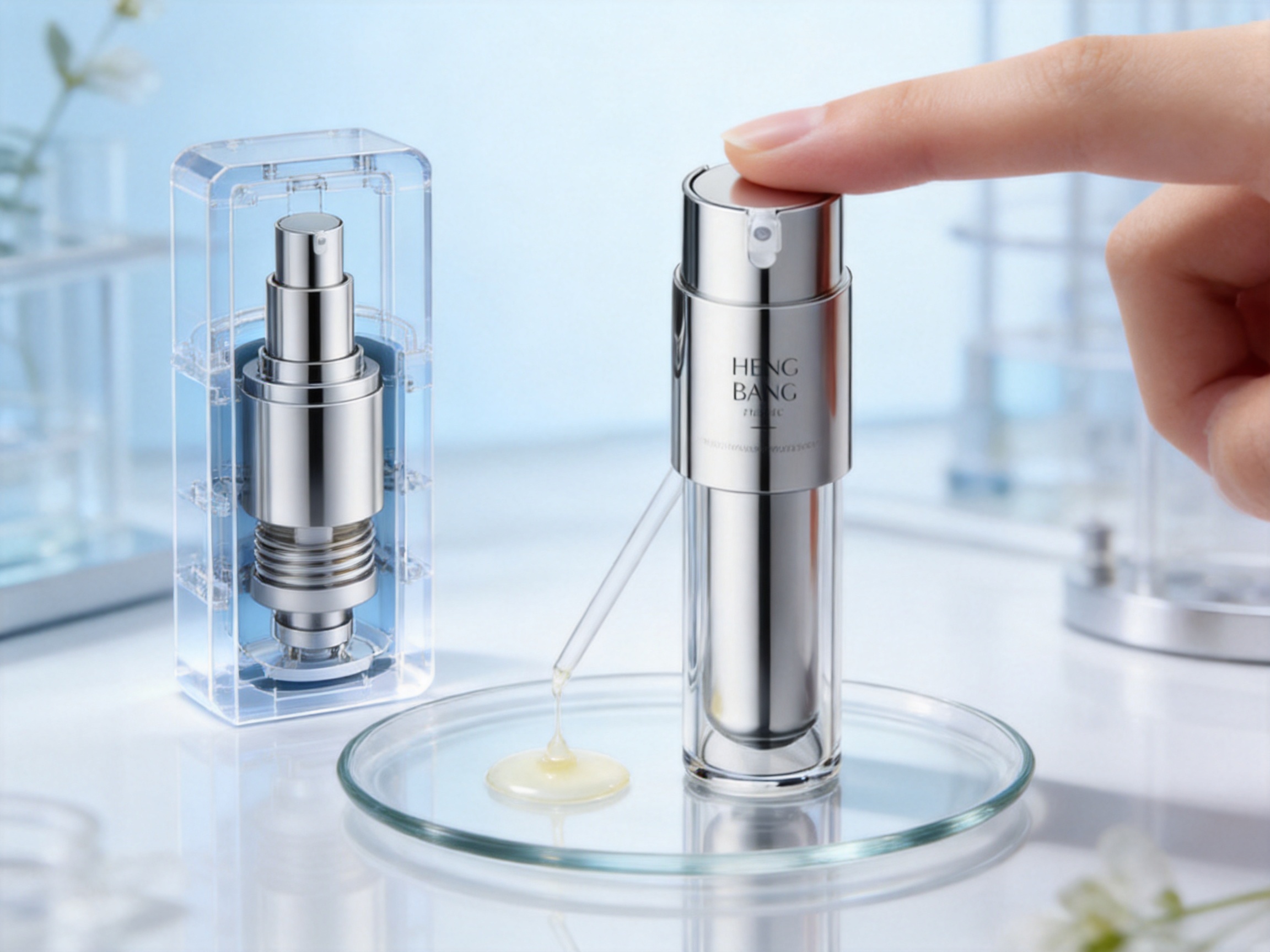
The replaceable design distinguishes the HB-K023 from many standard single-use cosmetic bottles. Instead of treating the package as one inseparable unit, the design separates the outer presentation and handling structure from the replaceable product-holding component. This can support a more flexible packaging model.
For consumers, the most visible advantage is the possibility of keeping the outer bottle while replacing the empty inner bottle. The outer component can become a recognizable part of the product identity, while the refill or replacement component provides the next dose of formula. This arrangement can be especially suitable for premium skincare collections in which the package is intended to remain attractive on a vanity or dressing table.
For brands, the system can support several commercial models:
• A starter set containing the outer bottle and first filled inner bottle.
• Replacement units sold separately after the original formula has been used.
• Subscription programs in which consumers receive replacement product at planned intervals.
• Seasonal or limited-edition formulas using the same outer packaging platform.
• Professional skincare programs that require repeat treatment products.
• Multi-formula systems using one consistent external design across a product family.
A replacement concept may also help a brand reduce the need to manufacture an entirely new decorative outer package for every purchase. The actual environmental benefit depends on the full product system, including material selection, transportation, refill design, consumer behavior, cleaning requirements, and end-of-life management. Nevertheless, the architecture creates an opportunity to design packaging around continued use rather than automatic disposal.
A successful replaceable package must be intuitive. Consumers should understand how to remove the empty inner bottle, how to install the replacement, and how to confirm that the new component is securely seated. The replacement process should not require excessive force or expose the formula unnecessarily.
Brands should provide clear instructions on the carton, leaflet, or product page. Instructions can explain when to replace the inner bottle, how to handle the replacement hygienically, and whether the outer component should be wiped before installation. If the package is intended to be reused multiple times, the durability of the outer housing and the reliability of the connection mechanism should be tested through repeated assembly cycles.
Hygiene is equally important. Replacement components should be filled and sealed under controlled conditions. The design should minimize the possibility of leakage, accidental opening, or contact between the new formula and unclean surfaces. A refill program should be planned as a complete system rather than treated as an afterthought.
When these details are managed well, the replaceable format can become a strong part of the brand experience. It can communicate thoughtful design, encourage repeat purchasing, and give customers a practical reason to remain within the same product ecosystem.
The HB-K023 uses a multi-material structure consisting of PP, ABS, aluminum, MS, and PP. Each material contributes to the overall performance or appearance of the package.
Polypropylene, commonly abbreviated as PP, is widely used in cosmetic packaging because of its balance of light weight, chemical resistance, processability, and durability. In this product, PP is specified for the inner bottle and part of the pump system. The inner PP bottle forms the product-containing component, while PP pump parts can support reliable movement and dimensional consistency.
ABS is specified as another pump material. ABS can provide a rigid, smooth surface suitable for molded components and can contribute to a solid actuation feel. Depending on the design, it may be used in a visible or structural portion of the pump assembly.
Aluminum is included in the pump specification. Aluminum can add a refined metallic appearance and may help create a premium visual or tactile detail. Its presence can be especially useful for brands that want to combine a plastic package with a more elevated finish.
MS is listed for the outer bottle. The abbreviation should be confirmed with the supplier during technical development so that the exact material identity, grade, and regulatory documentation are clear. Material confirmation is essential for compatibility testing, recycling communication, export documentation, and compliance with the regulations of the target market.
A multi-material package offers design flexibility, but it also creates technical considerations. Brands should confirm the assembly sequence, material interfaces, tolerances, adhesive requirements, decoration compatibility, and disassembly expectations. These elements can affect both manufacturing yield and end-of-life handling.
Packaging material selection should be evaluated together with the formula rather than independently. The same bottle may perform differently with a water-based serum, an emulsion, a silicone-rich treatment, a highly active concentrate, or a formula containing volatile solvents.
Compatibility testing can include appearance checks, odor evaluation, weight change, leakage testing, pump output measurement, stress testing, accelerated aging, and long-term storage observation. Brands may also assess whether the formula causes swelling, brittleness, discoloration, cracking, stress whitening, or changes in pump behavior.
For a replaceable bottle, testing should cover both the filled inner bottle and the empty outer housing. The connection between the components should remain secure during transportation, consumer handling, and repeated replacement. The pump should continue to deliver the intended dose after storage and after the inner bottle has been installed in the outer structure.
These evaluations help prevent problems that may not be visible during the initial sample review. A package can look excellent but still require development work to achieve stable dispensing with a particular formula. Close cooperation between the packaging manufacturer, filling factory, and cosmetic formulator is therefore essential.
The HB-K023 is described as customizable in color, finish, and decoration. These options give brands the ability to adapt the same structural platform to different market positions and product families.
Color is one of the most immediate ways to establish product identity. A brand may select white, black, metallic, translucent, soft pastel, or custom shades depending on its target consumer and formula positioning. A uniform color system can connect multiple products across a skincare collection, while differentiated colors can help consumers identify serum types or active ingredients.
Finish influences both appearance and touch. Glossy surfaces can create a clean, reflective look, while matte finishes often communicate understated luxury and a soft-touch experience. Metallic effects can emphasize the premium nature of a treatment product. A contrast between matte and glossy sections may also highlight the bottle’s geometry and make the package more distinctive on a retail shelf.
Decoration provides space for logos, product names, instructions, ingredient communication, and visual storytelling. Depending on the final structure and technical approval, possible decoration approaches may include screen printing, hot stamping, labeling, coating, or other applicable processes. The selected method should be evaluated for adhesion, abrasion resistance, chemical resistance, color accuracy, and compatibility with the bottle material.
Customization should be planned early. A late change to color, coating, decoration, or metallic detail can affect tooling, sampling, production scheduling, minimum order quantities, and quality inspection. Brands should approve a physical color standard rather than relying solely on digital images, because screen display and printed references may not represent the final molded or coated surface accurately.
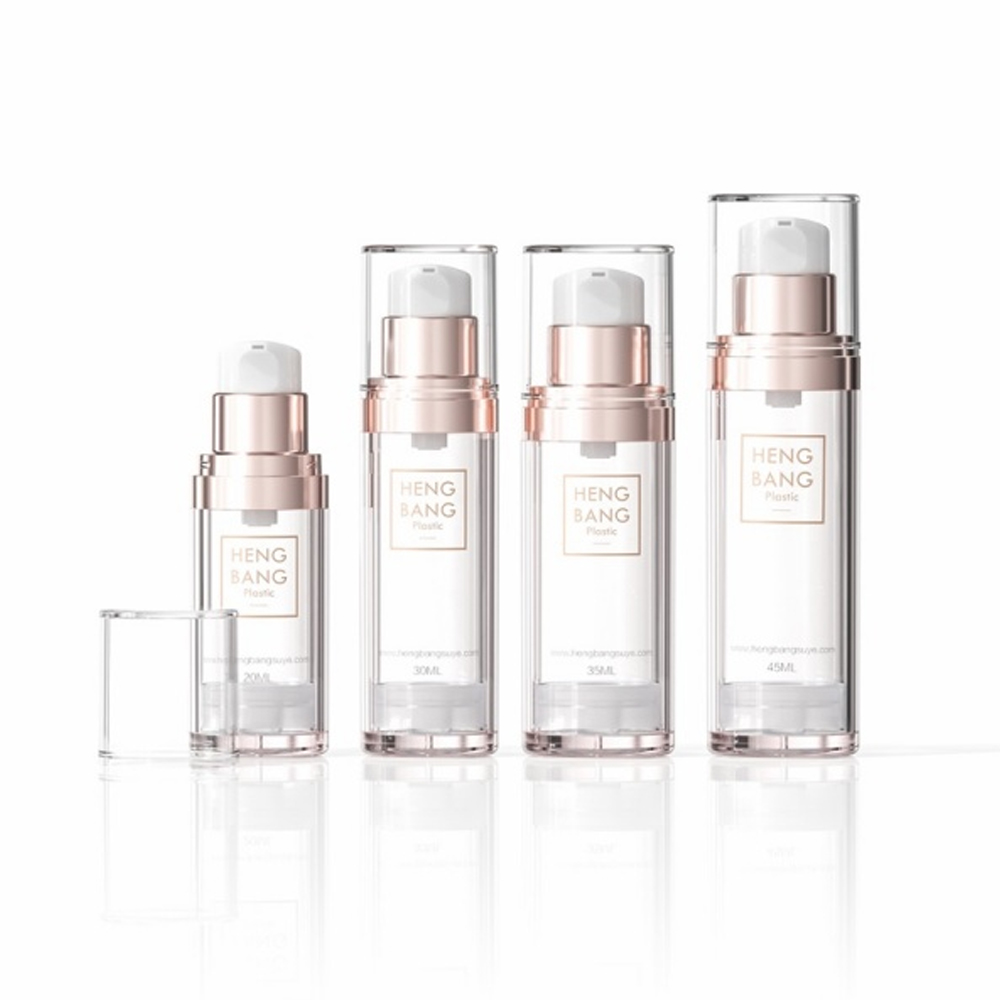
A standardized packaging platform can improve visual consistency and simplify product development. The 20ml and 30ml versions of the HB-K023 allow brands to create a family relationship between smaller and larger products. For example, a 20ml format may serve as an intensive treatment or introductory size, while the 30ml format can function as the primary retail size.
The same external design can also be adapted to multiple formulas. A brightening serum, firming serum, hydrating concentrate, and calming treatment may share a recognizable bottle silhouette while using different decoration colors or labels. This approach helps consumers understand that the products belong to one collection.
For international brands, consistent packaging can support a unified global identity. The package can remain visually recognizable across different markets while the printed information, language, and regulatory markings are adjusted for local requirements. The manufacturer’s design and development support can be useful during this stage, particularly when a brand wants to refine decoration areas or optimize the package for filling-line performance.
The product’s value is not determined only by its visible design. Reliable manufacturing is critical for airless packaging because the pump, seals, inner chamber, outer housing, and replacement interface must work together with precision.
Yuyao Hengbang Plastic Co., Ltd. was established in 2006 and has developed its business around plastic packaging for cosmetics and skincare products. The company has a building area of 35,000 square meters and more than 300 employees. This scale supports the production, assembly, quality control, development, and customer service activities required by cosmetic packaging projects.
The company provides design and development services in addition to manufacturing. This is important for brands that need more than a catalog item. Packaging development may involve selecting the correct capacity, checking the pump output, adapting decoration, confirming material compatibility, improving assembly, and preparing samples for formula testing.
ISO9001:2015 certification indicates that the company operates within a quality management framework. For packaging customers, a quality system can support process documentation, controlled procedures, corrective actions, inspection records, and continuous improvement. These elements help create greater consistency between approved samples and mass-produced units.
ISO14001:2015 certification indicates an environmental management framework. Certification does not automatically mean that every product is recyclable or that a particular package has a defined environmental footprint. However, it demonstrates that environmental management is addressed within the company’s organizational system. This is relevant to brands that are developing packaging portfolios with stronger environmental objectives.
The company was awarded Ningbo High-Tech Enterprise status in 2021 and owns multiple invention patents. These credentials suggest an emphasis on technical development and product innovation. For a product such as a replaceable airless bottle, innovation may involve pump structure, assembly design, component integration, or methods of improving the user experience.
A professional packaging manufacturing process typically begins with a product brief. The brief defines the capacity, intended formula, target market, visual direction, dispensing requirement, decoration, delivery schedule, and expected order volume. For the HB-K023, the development discussion should also include whether the brand requires both 20ml and 30ml sizes, how replacement units will be supplied, and which component is intended to remain in consumer use.
The next stage involves technical review. Engineers and product development personnel assess the formula’s viscosity, filling method, pump output, container dimensions, and material needs. They may recommend adjustments to ensure that the package can be filled efficiently and that the pump performs consistently.
Tooling and molding follow the approved design. Plastic components require controlled mold design, suitable processing conditions, and dimensional inspection. Consistent wall thickness, opening dimensions, threads or connection details, and sealing surfaces are particularly important for airless packaging.
After molding, components may undergo surface treatment or decoration. The outer bottle and pump parts may be colored, coated, printed, stamped, or assembled according to the approved specification. Each added process introduces another quality checkpoint, including color matching, print position, adhesion, surface cleanliness, and resistance to rubbing or formula contact.
Assembly brings the separate components together. The pump system, outer bottle, inner bottle, and any required seals must be assembled in the correct sequence. The replaceable interface must be checked for fit and stability. Depending on the production arrangement, assembly may be performed manually, semi-automatically, or through specialized equipment. Regardless of the method, process instructions and inspection standards are necessary to maintain consistency.
Final inspection should verify the appearance, dimensions, pump operation, output, assembly condition, and packaging integrity. Sampling plans may be used for routine production, while additional testing may be required for a new project or a revised material. Brands should agree with the supplier on acceptance criteria before mass production begins.
The HB-K023 competes with several common packaging formats, including open jars, standard lotion bottles, conventional pump bottles, and non-refillable airless containers. Its advantages are most apparent when a brand prioritizes controlled dispensing, product protection, and refill-oriented design.
Plastic cream jars are familiar and versatile, but they expose the product to air every time the lid is removed. The user must also touch the formula or use an accessory to remove it. This can be less suitable for thin serums and active treatments that are intended to be dispensed in measured quantities.
The airless bottle offers a more hygienic pump-based experience. The consumer does not need to insert a finger into the product, and the actuator can be designed to deliver a consistent amount with each press. The bottle format is also easier to use with one hand during a skincare routine.
Traditional lotion bottles may use a dip tube or a simple dispensing opening. They can be effective for many formulas, but they may not provide the same level of air management as an airless system. Some formulas may also be difficult to retrieve when the remaining product falls below the end of the dip tube.
An airless mechanism is designed to move product upward as it is used. This can help improve access to the formula and reduce the quantity left behind, although actual residual levels depend on formula viscosity, component geometry, filling accuracy, and pump performance.
Standard airless bottles already offer many functional benefits, but they are commonly treated as complete units. Once the product is finished, the entire package may be discarded. The replaceable structure of the HB-K023 gives brands an additional option: retain the outer presentation component and replace the inner product component.
This distinction can support stronger customer retention and a more differentiated brand story. It also allows the packaging system to be developed around repeat use, provided that the replacement process is convenient and the components are properly designed and tested.
Glass bottles can create a premium impression and offer good barrier properties, but they are heavier and more vulnerable to breakage than plastic alternatives. Heavier packaging can increase transportation weight and may be less convenient for travel or online delivery.
The HB-K023 uses a plastic-based construction with an aluminum element in the pump. This can provide a balance between a lightweight package and a premium appearance. Plastic also offers design flexibility for molded shapes, color matching, surface finishes, and integrated components.
The 20ml and 30ml capacities support a wide range of products. The most direct application is facial serum, particularly formulas marketed as concentrated, targeted, or premium treatments.
The bottle may also be considered for:
• Hydrating serums and moisture concentrates.
• Brightening and tone-care treatments.
• Firming and age-management formulas.
• Peptide and antioxidant products.
• Sensitive-skin treatment products.
• Eye-area treatments, subject to formula and applicator suitability.
• Lightweight emulsions and lotion treatments.
• Primer or makeup-preparation products.
• Post-treatment professional skincare.
• Travel-sized premium skincare.
• Hotel, spa, and beauty-clinic product programs.
The product category can extend beyond facial skincare if the formula is compatible with the material structure and pump. For example, a premium body treatment or hand-care concentrate may benefit from the same controlled dispensing format. The appropriate use depends on the formula’s viscosity, required dosage, filling volume, and consumer application method.
The 20ml model is suitable when a brand wants a compact and concentrated product. It may be used for a high-value treatment, introductory size, professional-use product, limited edition, or travel format. Its listed height is 117mm, making it shorter than the 30ml version while retaining the same listed diameter.
The 30ml model provides additional formula volume while maintaining a relatively narrow footprint. Its listed height is 135mm. This size is commonly appropriate for daily serum routines, where consumers expect a product to last through a regular period of use.
Brands should determine capacity based on dosage, frequency of application, recommended usage period, retail price, and distribution channel. A 30ml package may be more appropriate for an everyday product, while a 20ml package can support premium positioning or a lower entry price.
Before placing a production order, brands should define the project requirements in writing. This helps ensure that the product, formula, decoration, and supply chain are aligned.
The formula should be tested in the actual inner bottle and pump system. Water-like liquids, emulsions, gels, and thick serums can behave differently during pumping. The stated 0.23cc output should be verified with the intended formula, because viscosity and surface tension may influence the actual result.
Filling accuracy is also important. The filling factory should confirm the target fill weight or volume, the filling method, the sealing process, and the position of the inner component within the outer housing. Airless packages may require specific filling and priming procedures to achieve reliable first-use performance.
Samples should be evaluated for pump activation, output consistency, leakage, appearance, closure security, and replacement operation. It is advisable to test multiple units rather than relying on one sample.
Performance testing may include repeated actuation, drop or transportation simulation, temperature cycling, storage at elevated temperature, and long-term observation. If the package is intended to be refilled or replaced several times, the outer bottle should be tested through repeated installation and removal cycles.
Compatibility testing should be conducted with the final commercial formula, not only with water or a laboratory substitute. The formula should be observed for changes in color, odor, viscosity, separation, weight, and performance. The package should also be checked for swelling, cracking, discoloration, leakage, or loss of pump function.
Cosmetic packaging requirements vary according to the destination market. Brands should obtain the appropriate material declarations, test reports, production information, and other documentation required by their regulatory and quality teams.
Because the product uses multiple materials, documentation should clearly identify the material composition of each component. Brands should also determine how the package should be labeled for disposal and whether local recycling systems can process the individual materials.
For international shipments, packaging documentation may need to support customs classification, product safety review, customer audits, and retailer requirements. Early document planning can reduce delays during commercialization.
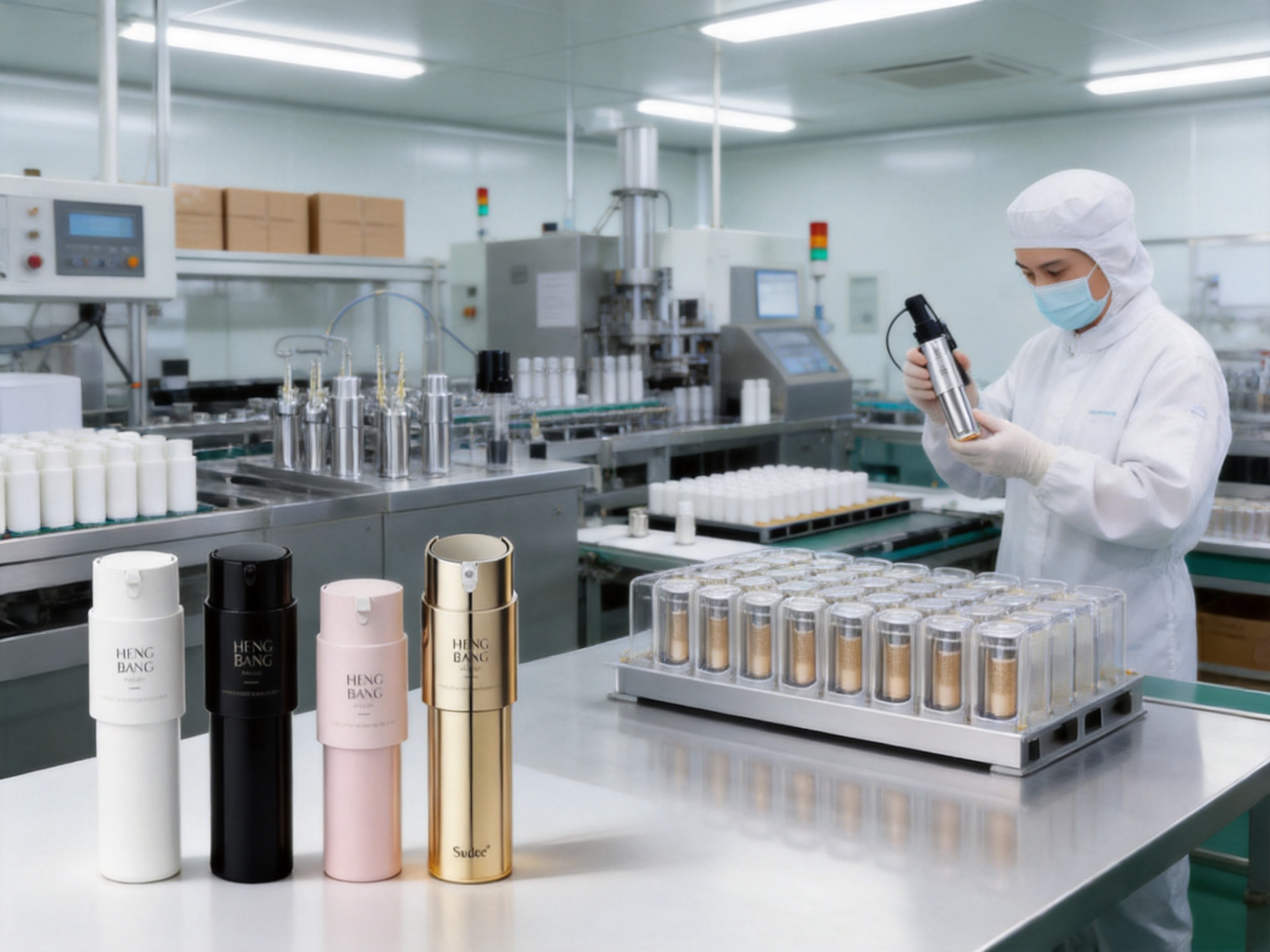
Environmental performance is becoming an important part of cosmetic packaging decisions. A replaceable bottle can contribute to a more responsible packaging strategy, but its benefits should be assessed realistically and transparently.
The key potential advantage is continued use of the outer bottle. If consumers retain the outer housing and purchase compatible replacement inner bottles, the amount of new outer packaging required over the product’s life may be reduced. The design can also encourage brands to think about packaging as a system that includes the first purchase, refills, transport, instructions, and end-of-life handling.
However, a replaceable package is not automatically environmentally superior in every situation. The total result depends on how often the outer component is reused, whether consumers actually purchase replacement units, how much material is used in the refill, how far the product travels, and whether the different materials can be separated or recycled.
Responsible environmental communication should therefore be based on verified information. Brands should avoid making broad claims unless they have supporting data. A clear statement such as “designed with a replaceable inner bottle” is more precise than an unsupported claim that the package is completely sustainable.
ISO14001:2015 certification at the manufacturing company level provides evidence of an environmental management framework. For individual packaging projects, brands may still request specific information about material use, waste reduction, production controls, and available alternatives.
The outer bottle should be durable enough for its planned service life. If consumers are expected to reuse it several times, the surface finish, connection point, pump structure, and decorative elements should be tested for repeated handling.
The replacement inner bottle should use an efficient format and should be easy to identify. Packaging design can include clear color coding, product names, or symbols that distinguish full replacement units from the reusable outer component. The replacement should also be protected during transport without introducing unnecessary secondary packaging.
Brands may consider selling the first purchase as a complete set and subsequent purchases as replacement units. This structure can make the environmental purpose of the design easier for consumers to understand. It can also help the brand measure refill adoption and improve forecasting.
Cosmetic packaging projects involve more than producing a container. They require coordination between design, material selection, molding, decoration, assembly, quality inspection, formula compatibility, filling, logistics, and customer support.
A supplier with long-term experience in cosmetic and skincare packaging can help identify potential problems earlier. For example, the supplier may advise on the relationship between bottle dimensions and pump output, the best decoration area, the likely effect of a formula on a material, or the correct way to prepare components for filling.
Yuyao Hengbang Plastic Co., Ltd. has operated since 2006 and focuses on plastic packaging for cosmetic and skincare products. Its professional team provides design and development services in addition to manufacturing. This combination can be useful for brands that want to customize a proven package rather than develop every component from the beginning.
The company’s more than 300 employees and 35,000-square-meter building area provide a substantial operating base. Its ISO9001:2015 and ISO14001:2015 certifications provide structured support for quality and environmental management. Its recognition as a Ningbo High-Tech Enterprise and its invention patents further indicate a focus on technical progress.
For a buyer, these strengths should be evaluated through project-specific evidence. Useful information may include production samples, inspection standards, material documentation, test reports, quality agreements, lead-time planning, and communication about corrective actions. A strong supplier relationship is built through both formal credentials and consistent performance on actual orders.
A practical workflow can help brands move from concept to production efficiently.
The brand should provide the intended formula type, capacity, estimated annual volume, target market, visual direction, preferred color, decoration requirements, and desired delivery schedule. If the product will be sold as a refill system, the brand should explain the planned refill model from the beginning.
The supplier and brand should review material compatibility, pump output, filling requirements, outer and inner component dimensions, and replacement operation. The 20ml and 30ml options can then be compared according to the product’s dosage and positioning.
Samples should be filled with the intended formula whenever possible. The brand should evaluate the visual appearance, pump feel, dose, leakage resistance, product retrieval, and replacement experience. Decoration samples should be assessed under realistic lighting and handling conditions.
Compatibility, stability, transport, and performance tests should be completed according to the brand’s quality requirements. Material and production documentation should be collected for internal approval and regulatory review.
Before production, both parties should approve a golden sample or signed reference sample. Color standards, decoration position, dimensional tolerances, pump output, assembly condition, and packaging method should be documented.
Finished goods should undergo agreed inspections before shipment. The packaging should be protected from dust, scratches, deformation, and contamination during storage and transportation. Carton labeling and packing quantities should match the purchase order.
The HB-K023 is designed primarily for serums and other skincare products that benefit from airless dispensing, controlled dosing, and a premium plastic package. It may also be suitable for selected lotions, concentrates, treatments, and lightweight emulsions after compatibility testing.
The provided specifications list 20ml and 30ml capacities. The 20ml version has a listed height of 117mm, while the 30ml version has a listed height of 135mm. Both versions have a listed diameter of 36.5mm.
The listed dispensing volume is 0.23cc per actuation. Actual output should be verified with the intended formula, because viscosity, temperature, filling conditions, and pump behavior can affect dispensing performance.
The bottle includes a replaceable inner bottle structure. The outer housing can be designed to remain in use while the product-containing inner component is replaced. Brands should confirm the exact replacement procedure and supply format with the manufacturer.
The airless structure is intended to reduce routine exposure to air and external contamination, which may benefit some sensitive or active formulas. It does not eliminate the need for formulation stability, preservative, compatibility, and packaging performance testing.
Yes. The product is described as customizable in color, finish, and decoration. The available methods, minimum order quantity, color standards, and production requirements should be confirmed during project development.
The listed materials are PP, ABS, and aluminum for the pump, MS for the outer bottle, and PP for the inner bottle. The exact material grade and the meaning of the MS abbreviation should be confirmed in the technical documentation before production.
The airless bottle provides pump dispensing and reduces the need for direct contact with the formula. It is also more suitable for measured serum use. A cream jar may be preferable for very thick formulas or products whose brand concept depends on a wide-mouth application experience.
It may be suitable for certain lotion formulas, particularly lightweight emulsions, but testing is necessary. The formula’s viscosity and flow properties must be compatible with the 0.23cc pump system.
No. The design creates an opportunity for reuse and replacement, but the environmental outcome depends on actual consumer behavior, material quantities, logistics, refill adoption, and end-of-life handling. Environmental claims should be supported by accurate product and lifecycle information.
The manufacturer is stated to have ISO9001:2015 and ISO14001:2015 certifications. It was also recognized as a Ningbo High-Tech Enterprise in 2021 and owns multiple invention patents.
A brand should test formula compatibility, pump output, first-use performance, repeated actuation, leakage, drop resistance, temperature stability, decoration durability, replacement operation, and filling-line suitability. The final test program should reflect the formula and target market.
The HB-K023 20ml and 30ml replaceable plastic airless serum bottle combines several features that are increasingly important in modern cosmetic packaging: controlled dispensing, reduced routine air exposure, premium customization, lightweight plastic construction, and a replaceable inner bottle concept.
Its airless pump can support a cleaner and more consistent user experience than an open jar or basic container. The 0.23cc stated output provides a useful reference for dosage planning. The two capacity options allow brands to develop compact treatment sizes and standard serum formats while maintaining a consistent package family.
The replaceable architecture gives the product a distinctive advantage over conventional non-refillable airless bottles. When supported by clear instructions, durable components, compatible replacement units, and responsible environmental communication, it can become part of a practical reuse-oriented packaging system.
The manufacturing support behind the product is also significant. Yuyao Hengbang Plastic Co., Ltd. brings experience in cosmetic and skincare packaging, design and development capabilities, a 35,000-square-meter facility, more than 300 employees, ISO9001:2015 and ISO14001:2015 certifications, high-tech enterprise recognition, and patented technical development.
For brands seeking a cosmetic container that combines appearance, functionality, and packaging-system flexibility, the HB-K023 is a strong candidate for evaluation. The best results will come from early cooperation between the packaging supplier, formula developer, filling factory, quality team, and marketing department. With thorough testing and a clearly planned refill strategy, this replaceable airless bottle can help create a more refined and differentiated skincare product.
1. Product specification information for the HB-K023 replaceable plastic airless serum bottle, including capacities, dimensions, materials, and dispensing volume.
2. Company profile information for Yuyao Hengbang Plastic Co., Ltd., including establishment date, facility area, employee number, product specialization, and development services.
3. ISO 9001:2015, Quality Management Systems—Requirements.
4. ISO 14001:2015, Environmental Management Systems—Requirements with Guidance for Use.
5. General principles of cosmetic packaging compatibility testing and container-closure performance evaluation.
6. General guidance on refillable and replaceable packaging systems for consumer products.


Copyright © Yuyao Hengbang Plastic Co., Ltd.
All Rights Reserved.
 Wholesale Plastic Cosmetic Packaging Manufacturers