English
 中文简体

News
Home > Author > Zhang Yuxin — Plastic Cosmetic Packaging Sales Representative > Why Replaceable Airless Serum Bottles Are Shaping the Future of Cosmetic Packaging

 2026.10.20
 Zhang Yuxin — Plastic Cosmetic Packaging Sales Representative
Content
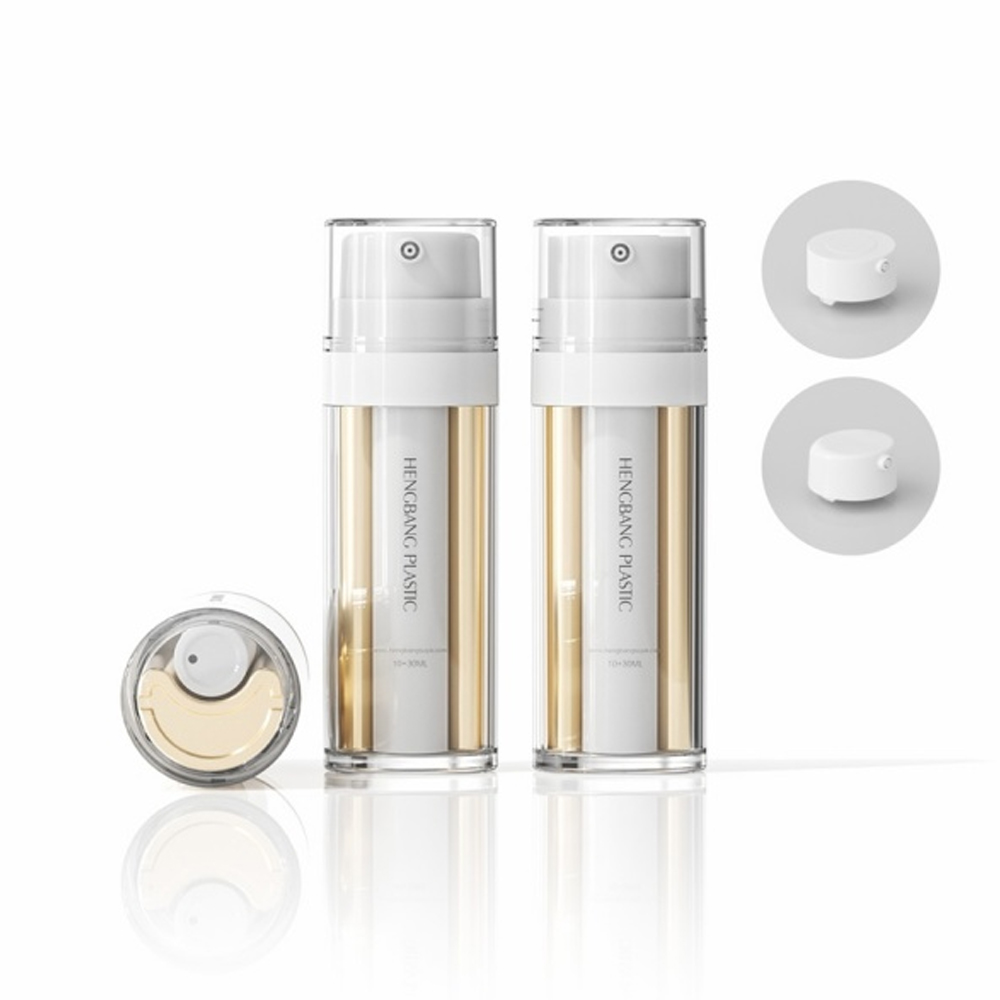
Modern skincare packaging must do more than contain a formula. It must protect product quality, support hygienic dispensing, communicate a premium brand image, and respond to growing expectations for responsible material use. The HB-K023 replaceable plastic airless serum bottle addresses these requirements through a practical combination of airtight protection, a replaceable inner bottle, customizable exterior design, and a compact format suitable for concentrated skincare products.
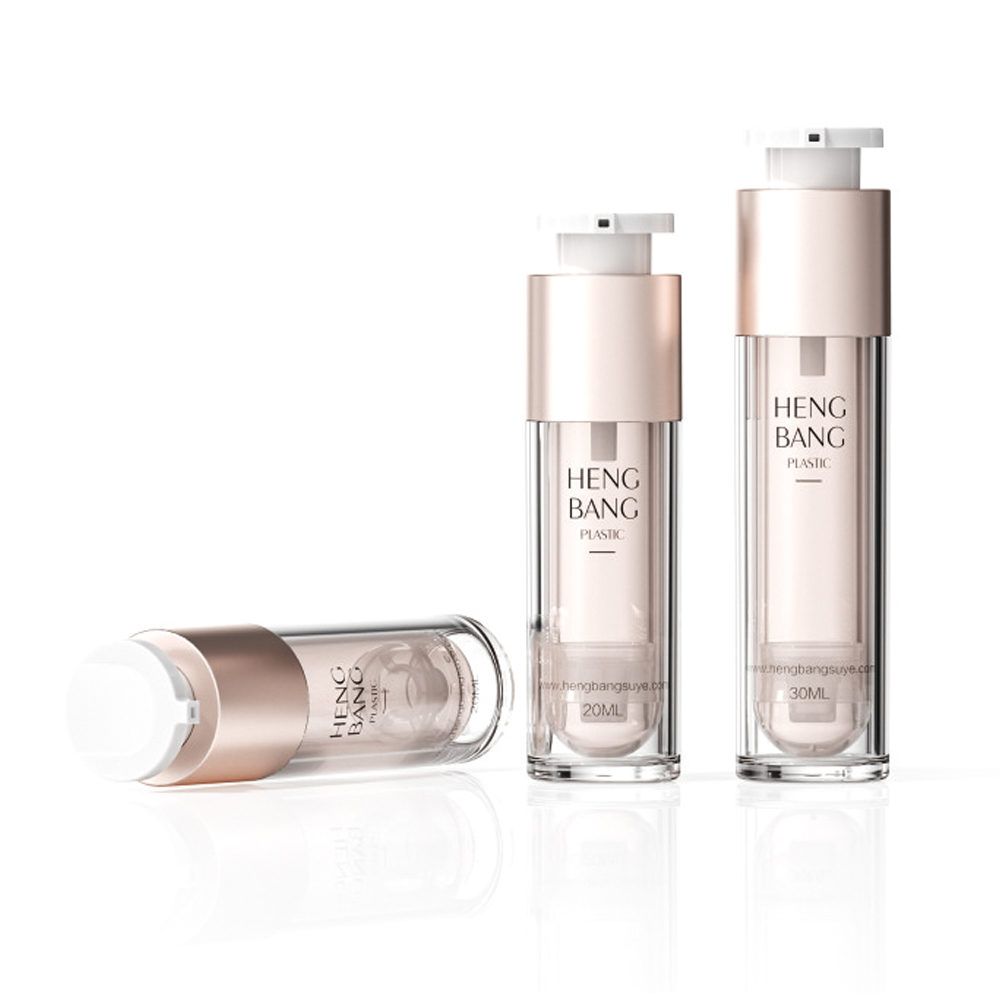
Available in 20ml and 30ml capacities, this refillable airless package is designed for serums, lotions, creams, and other formulations that benefit from controlled dispensing and reduced exposure to air. Its structure combines a plastic pump system, a durable outer bottle, and a replaceable inner bottle. This configuration gives cosmetic brands greater flexibility when developing packaging programs for premium skincare, travel-size products, treatment products, and environmentally conscious collections.
The packaging is manufactured by Yuyao Hengbang Plastic Co., Ltd., a specialist in plastic cosmetic and skincare packaging. Established in 2006, the company operates from a facility with a building area of approximately 35,000 square meters and employs more than 300 people. Its capabilities include product design, development, manufacturing, decoration, and customer-oriented packaging services. The company has obtained ISO9001:2015 and ISO14001:2015 certifications, was recognized as a Ningbo High-Tech Enterprise in 2021, and owns multiple invention patents.
The HB-K023 is a premium plastic airless serum bottle developed for brands that want a modern appearance together with practical product protection. The bottle is offered in 20ml and 30ml versions, allowing brands to select a size appropriate for a trial product, concentrated treatment, daily serum, or targeted skincare program.
The product title identifies the 30ml configuration, while the supplied technical information lists both 20ml and 30ml options. The 20ml version has a stated height of 117mm, and the 30ml version has a stated height of 135mm. Both versions share a diameter of 36.5mm. The dispensing application is listed as 0.23cc, providing a controlled amount with each pump stroke.
The bottle is categorized as a plastic refillable airless bottle. Unlike a conventional open-neck jar or a standard screw-cap bottle, an airless container is designed to reduce direct contact between the formulation and external air. The product is dispensed by a pump mechanism rather than by repeatedly opening the main container. This is especially valuable for skincare products that are sensitive to oxidation, contamination, or repeated handling.
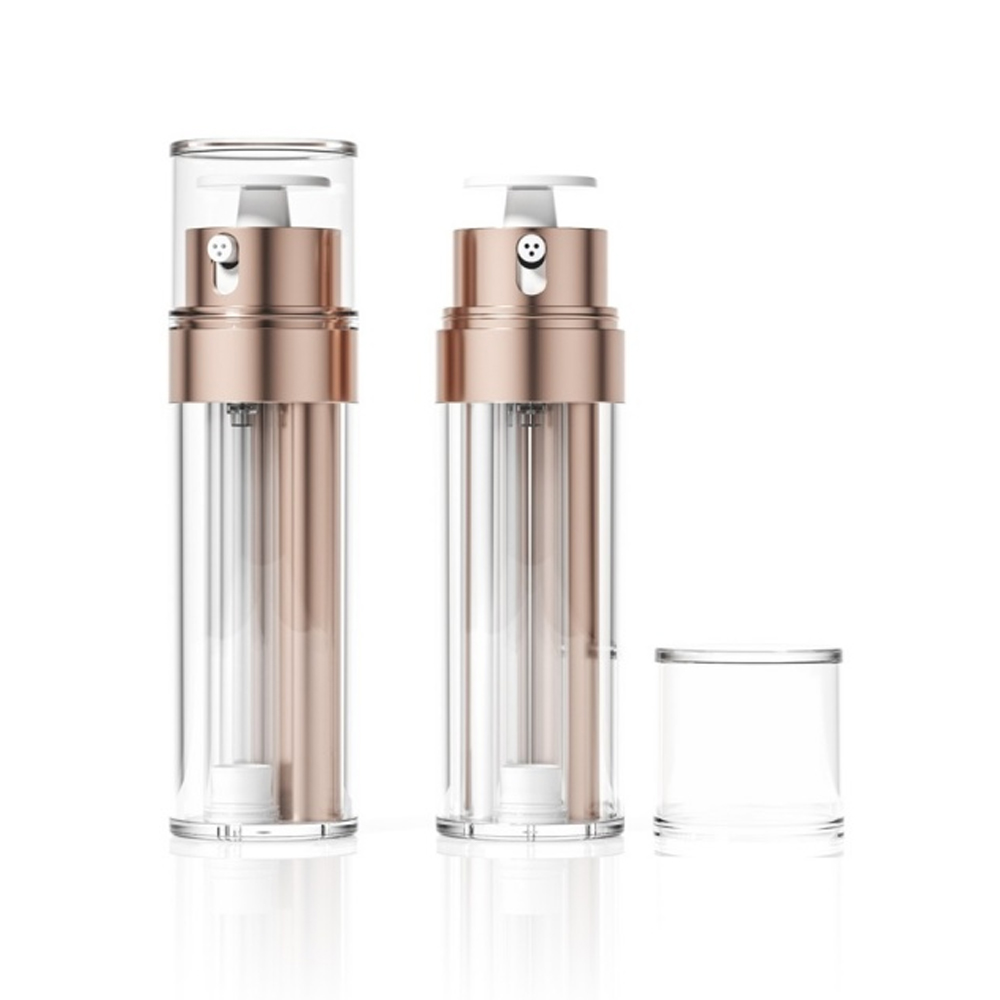
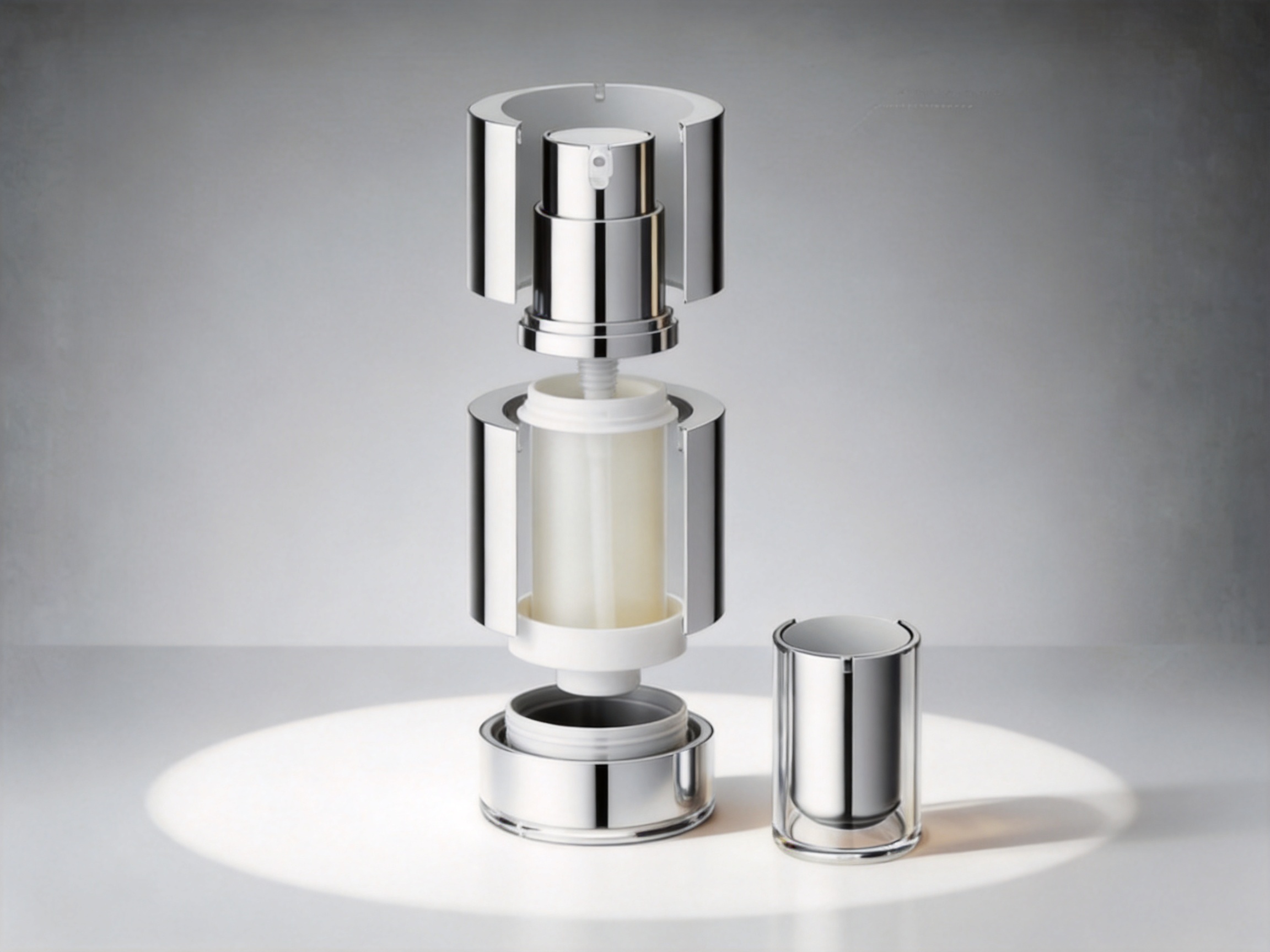
The replaceable inner bottle adds another important function. Rather than treating the entire package as a single permanent unit, the structure allows the inner container to be replaced when the product has been used. This can help brands develop refill-oriented product systems and may reduce the need to discard the complete outer presentation package after every purchase.
The HB-K023 can be customized in color, surface finish, and decorative treatment. These options enable brands to align the bottle with different positioning strategies, including clinical skincare, luxury beauty, natural cosmetics, professional salon products, and minimalist unisex collections.
Many skincare formulas are affected by exposure to air, light, microorganisms, and repeated user contact. Airless packaging cannot replace good formulation stability testing, appropriate preservation systems, or correct filling procedures, but it can provide an additional physical barrier between the formula and the surrounding environment.
The airtight design of the HB-K023 helps limit unnecessary air exchange during normal use. When a conventional bottle is opened, air can enter the package and remain above the product. Each opening also creates an opportunity for fingers, dust, or other contaminants to come into contact with the formula. A pump-based airless structure reduces the need for this type of repeated access.
This protective approach is particularly relevant to serums and treatment products. Formulas containing botanical extracts, antioxidants, vitamins, peptides, brightening ingredients, or other sensitive components may require careful protection throughout their intended shelf life. By dispensing product through a pump, the package supports a more controlled and hygienic application routine.
The airless system also helps users obtain the product without turning the bottle upside down or shaking it repeatedly. The internal dispensing structure is designed to move the product upward toward the pump outlet as the contents are used. This can make the final stages of product use more convenient than with some conventional containers that leave residue in corners or at the bottom.
For cosmetic brands, this functional performance can support a stronger product story. A serum positioned as high-performance or professionally formulated benefits from packaging that visually and mechanically communicates care, precision, and protection. The HB-K023 provides those signals without requiring a glass bottle or an oversized secondary package.
One of the defining features of the HB-K023 is its replaceable bottle structure. The outer bottle can serve as the durable presentation component, while the inner bottle holds the cosmetic formula and can be replaced according to the brand’s refill program. This creates possibilities for a packaging model in which the customer purchases the complete package initially and then obtains replacement inner bottles for subsequent use.
A refill concept can offer several benefits. It may reduce the amount of packaging discarded after one product cycle, encourage repeat purchases, and create a more continuous relationship between a brand and its customers. It can also allow the outer bottle to become a recognizable part of the user experience rather than a disposable container used only once.
The environmental performance of any refill system depends on the complete design and operating model. Brands need to evaluate the materials used in the outer and inner components, the efficiency of filling and transport, consumer behavior, recycling infrastructure, and the number of times the outer package is realistically reused. A replaceable bottle is therefore not an automatic environmental claim, but it is an important design foundation for a more resource-conscious packaging program.
The plastic construction may also provide practical advantages in distribution. Compared with some fragile alternatives, a well-designed plastic bottle can be easier to handle during filling, packing, shipping, and retail display. Its lower risk of breakage may help reduce product loss during transportation. The relatively compact cylindrical format can also support efficient carton design and convenient storage.
For brands developing a refill system, the inner bottle should be carefully matched with the formula, filling line, closure system, and user instructions. The package must be tested to confirm that the replacement process is intuitive and that the assembled bottle maintains the intended seal and dispensing performance. Hengbang’s design and development capabilities can support this type of packaging evaluation from an early project stage.
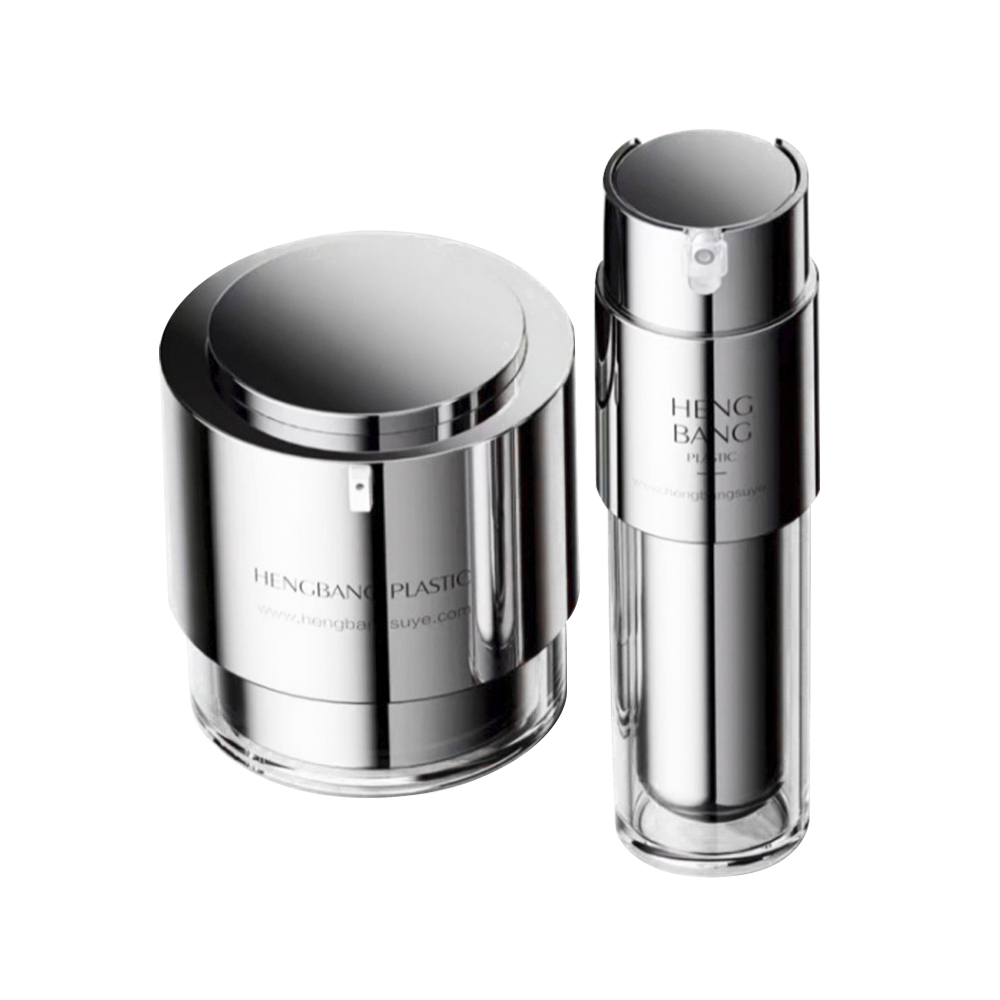
HB-K023 30ml Replaceable Plastic Airless Serum Bottle
The supplied material specification identifies several components in the HB-K023 package. The pump is made from PP, ABS, and aluminum. The outer bottle is listed as MS, and the inner bottle is made from PP. These materials provide a balance of structural support, visual quality, processing flexibility, and compatibility with a wide range of cosmetic packaging requirements.
| Item | 20ml Version | 30ml Version |
|---|---|---|
| Product type | Replaceable plastic airless bottle | Replaceable plastic airless bottle |
| Primary use | Serum, lotion, cream, or treatment formula | Serum, lotion, cream, or treatment formula |
| Stated height | 117mm | 135mm |
| Diameter | 36.5mm | 36.5mm |
| Application dosage | 0.23cc | 0.23cc |
| Pump material | PP, ABS, and aluminum | PP, ABS, and aluminum |
| Outer bottle material | MS | MS |
| Inner bottle material | PP | PP |
Polypropylene, commonly identified as PP, is widely used in cosmetic packaging because of its processing versatility and useful resistance characteristics. In the HB-K023, PP is used for the inner bottle and as part of the pump system. The inner container’s material selection supports a lightweight and practical refill component.
ABS is used in the pump assembly. It is recognized for its rigidity and ability to support molded cosmetic packaging components with a smooth, consistent appearance. Aluminum is included in the pump material structure, contributing to the visual and tactile quality of the dispensing assembly.
The outer bottle is specified as MS in the technical information. Because packaging abbreviations can vary between suppliers and projects, brands should confirm the exact resin or material definition, surface treatment, and compatibility details during technical development. This confirmation is particularly important for formulas containing oils, solvents, alcohol, acids, or high levels of active ingredients.
The 36.5mm diameter creates a balanced cylindrical profile. It is wide enough to provide a stable base and a substantial hand feel, while remaining compact enough for a serum bottle or treatment package. The two height options allow the same general design language to serve different product volumes.
The stated 0.23cc application dosage is an important specification for product planning. Brands can use this figure to estimate the number of pump applications per bottle, develop recommended usage instructions, and align the package with a treatment program. Actual output should be confirmed through production testing because pump dosage may be affected by formula viscosity, temperature, filling level, assembly tolerances, and user operation.
A conventional open jar requires the user to remove the lid and access the product directly. This can be suitable for thick creams, but it may increase exposure to air and repeated contact. A conventional squeeze tube can provide better protection, yet it may not offer the same premium appearance or replaceable bottle structure. The HB-K023 combines pump dispensing with a more substantial bottle format.
The 0.23cc pump application provides a defined dispensing target. Controlled output can help users apply a consistent amount and can reduce the tendency to pour or squeeze out more product than needed. For concentrated serums, where a small quantity may be sufficient, controlled dosing supports both user convenience and product economy.
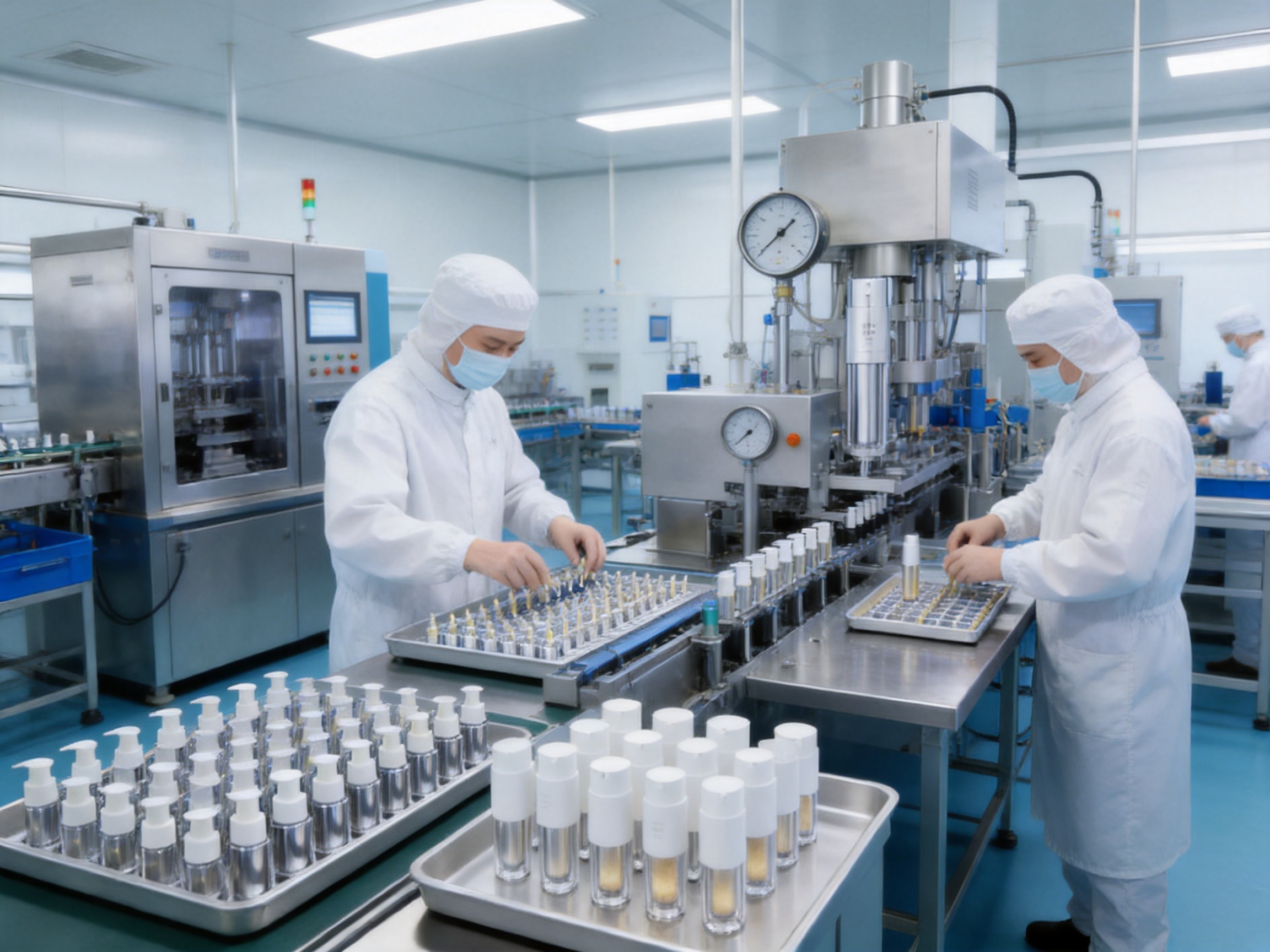
Airless pump bottles are often associated with advanced skincare and professional formulas. The HB-K023’s smooth cylindrical form, integrated pump, and customizable finish can create a more refined appearance than basic stock packaging. Brands can use color, coating, printing, labeling, or other decoration methods to establish a distinct visual identity.
The replaceable inner bottle differentiates the package from single-use pump containers. It provides a foundation for a refill system that can make repeat purchasing more practical. This is particularly valuable for brands seeking to combine premium presentation with a more deliberate approach to packaging consumption.
The 20ml and 30ml capacities support several product strategies. The 20ml size may be appropriate for intensive treatments, travel products, discovery programs, or premium active serums. The 30ml size is suitable for a standard concentrated skincare product, a daily serum, or a product intended to last through a longer usage cycle.
Plastic construction offers a practical alternative to more fragile packaging formats. For brands distributing through online channels, international shipping, beauty subscription programs, or retail chains, resistance to breakage can be a meaningful operational benefit. The bottle is also easier to carry and handle than many heavier alternatives.
Packaging is a key part of product recognition. The HB-K023 is fully customizable in color, finish, and decoration, giving brands the opportunity to transform a standard structural platform into a distinctive package.
Color customization can support different market segments. Soft neutral colors may suit sensitive-skin or clean-beauty collections. White, silver, or pale blue can communicate clinical simplicity. Dark colors and metallic accents may be selected for anti-aging or luxury treatment lines. Transparent or translucent effects may help a brand emphasize lightness, freshness, or a botanical positioning, subject to the requirements of the structure and decoration process.
Surface finish also affects how the bottle feels in the hand. A high-gloss finish can create a vivid and polished appearance, while a matte finish may communicate understated luxury. Frosted effects, soft-touch coatings, metallic treatments, and carefully controlled contrast between components can help a brand create a memorable tactile experience.
Decoration may include brand marks, product names, instructions, decorative lines, color blocks, or other graphic elements. The available decoration method should be selected according to the design, production volume, formula environment, and expected handling conditions. Adhesion, abrasion resistance, and compatibility with filling and transportation processes should be verified before mass production.
The pump and bottle can be coordinated as a complete visual system. For example, an aluminum-look pump can be paired with a neutral outer bottle for a technical aesthetic, or a contrasting pump can create a strong color accent. This flexibility allows one packaging platform to serve multiple product families while preserving a consistent brand architecture.
Customization should not be limited to appearance. Brands can also discuss structural requirements, dosage expectations, refill procedures, compatibility, filling conditions, and secondary packaging with the supplier. Early technical communication helps avoid unnecessary redesign and allows the package to be assessed as a complete product system.
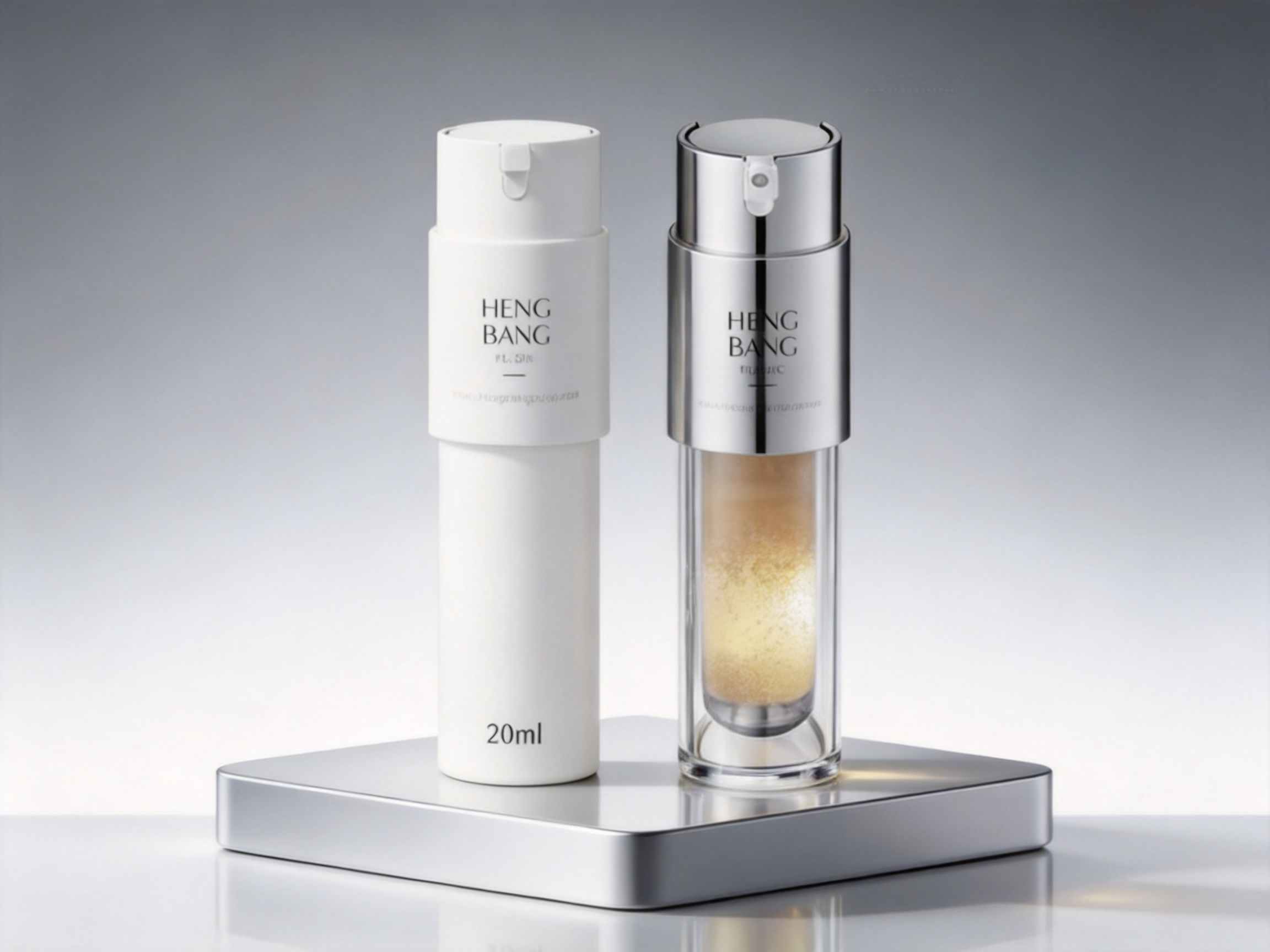
The quality of a cosmetic package depends on more than the finished appearance. Reliable performance requires coordinated design, material selection, tooling, molding, component assembly, decoration, inspection, and packaging. Hengbang’s long-term specialization in cosmetic and skincare packaging provides a foundation for managing these connected activities.
The company was established in 2006 and has developed a substantial manufacturing base. Its facility has a building area of approximately 35,000 square meters, and its workforce includes more than 300 employees. This scale supports the organization of professional teams for design, engineering, production, quality management, and customer service.
Product design and development are identified as part of the company’s full range of services. This is valuable for brands that have a concept, reference sample, or performance requirement but need assistance converting it into a manufacturable package. A development-oriented supplier can help evaluate component relationships, dimensions, decoration areas, refill structures, and production feasibility before the package reaches the mass-production stage.
The HB-K023 reflects the importance of integrated development. Its pump, outer bottle, and inner bottle must work together as one system. The dimensions of the components must be coordinated to ensure correct alignment, secure assembly, stable dispensing, and a suitable user experience. Replaceable construction adds another layer of consideration because the inner bottle must be designed for practical replacement without compromising the outer appearance or pump connection.
Modern cosmetic packaging production typically requires precision in molding and component control. Small variations in diameter, height, thread or connection areas, pump fit, and sealing surfaces can affect performance. A professional manufacturer must therefore maintain consistent production conditions and inspect components throughout the manufacturing process. Hengbang’s quality management framework, supported by ISO9001:2015 certification, provides an established basis for documented and repeatable quality procedures.
Environmental management is also relevant to contemporary packaging production. ISO14001:2015 certification indicates that the company has established an environmental management system. Such a system can support the structured management of environmental responsibilities, operational controls, resource use, waste considerations, and continuous improvement activities. Certification does not mean that every product is automatically environmentally preferable, but it demonstrates that environmental management is incorporated into the company’s organizational approach.
The company was recognized as a Ningbo High-Tech Enterprise in 2021 and owns multiple invention patents. These credentials point to an emphasis on technical development and intellectual property. For packaging buyers, this can be useful when seeking product structures that are more specialized than standard commodity containers.
A capable manufacturing process for a package such as the HB-K023 may include several coordinated stages. First, the product requirements are reviewed, including capacity, dimensions, formula type, dosage, appearance, refill expectations, and decoration. Next, engineering teams assess the component structure and prepare designs or tooling requirements. Prototype samples can then be evaluated for appearance, assembly, dispensing, compatibility, and user handling.
After approval of the design, production tooling and process conditions are established. The various components are molded or otherwise produced according to their material requirements. Pump parts, outer bottle components, inner bottles, and decorative elements are inspected and assembled. Finished products are then assessed for dimensional conformity, visual consistency, pump operation, and packaging quality according to the project’s approved specifications.
The exact production sequence, equipment configuration, inspection plan, and testing schedule should be confirmed with the manufacturer for each order. Cosmetic packaging projects often vary according to decoration, formula viscosity, filling line, order quantity, and destination market. A strong supplier should be able to adapt the manufacturing and quality plan to those project conditions.
Airless packaging performance should be evaluated through both component inspection and complete-package testing. The bottle may look attractive, but the final product must also protect the formula, dispense consistently, remain stable during transport, and provide a reliable user experience.
Dimensional accuracy is fundamental. The height and diameter of the bottle affect compatibility with cartons, filling equipment, labeling equipment, shipping cases, and retail displays. The 20ml and 30ml versions have different heights but share the stated diameter, so brands should make sure their secondary packaging accounts for the selected size.
Pump output should be checked over repeated applications rather than through a single stroke. Testing can identify variation between the first pump, middle-use pumps, and final-use pumps. It can also reveal whether the formula’s viscosity influences the stated 0.23cc application dosage.
Priming behavior is another important factor. A pump may require several initial strokes before product appears, depending on the internal structure and formula. The supplier and brand should agree on acceptable priming performance and provide appropriate user instructions if necessary.
Leakage and sealing tests are essential for products transported through different climates and handling conditions. Bottles may experience vibration, pressure changes, temperature variation, and orientation changes during shipping. Testing should be selected according to the formula, transport route, package configuration, and expected shelf life.
Formula compatibility testing should be conducted with the actual product or a representative formula. Compatibility evaluation may include visual changes, odor changes, color changes, swelling, stress cracking, leakage, pump blockage, loss of seal, and changes in dispensing performance. The final evaluation should be performed under conditions appropriate to the product’s intended storage and use.
Decoration durability is also important. The bottle may be handled repeatedly by consumers, placed in cosmetic bags, exposed to oils or creams, and wiped during use. Printed or coated areas should therefore be checked for adhesion, abrasion resistance, and resistance to the relevant environmental conditions.
For refill systems, the replacement procedure requires dedicated attention. The brand should determine whether consumers will replace the inner bottle themselves, whether the refill will arrive preassembled with a pump, and how the used inner bottle should be managed. Instructions should be clear, and the design should minimize the risk of incorrect insertion or accidental contamination.
The most direct application for the HB-K023 is facial serum packaging. A 20ml or 30ml bottle is well suited to concentrated formulas that are applied in small quantities. The controlled pump dosage can help users dispense an appropriate amount, while the airless structure supports protection from repeated exposure.
Anti-aging products often use premium positioning, active ingredients, and carefully designed application routines. The HB-K023 can reinforce this positioning through its refined form, airless pump system, and customizable surface treatment. A refillable outer bottle can further support a long-term premium product relationship.
Brightening, tone-evening, and targeted corrective formulas may benefit from controlled dispensing and reduced direct handling. Brands can use the 20ml size for an intensive treatment or the 30ml size for a daily-use product, depending on the formula and recommended application schedule.
Although the package is presented as a serum bottle, its airless dispensing structure may also be considered for suitable lotions and emulsions. Formula viscosity, pump compatibility, and output testing are required before approval. The bottle can provide a clean and convenient format for products that are too fluid for a jar but benefit from more premium presentation than a basic tube.
Eye products are commonly offered in smaller capacities because they are applied in small amounts. The 20ml configuration may be appropriate for certain eye serums or targeted treatments, subject to formula and dosage validation. The pump format can help reduce direct finger contact with the product.
The compact bottle format can be used in professional skincare kits, travel collections, sample programs, or limited-edition treatment sets. Brands may choose the smaller capacity for a discovery experience while maintaining the same structural identity as a larger product in the same line.
Cosmetic packaging is closely connected to the formula, filling process, decoration, logistics, and consumer experience. A general plastics manufacturer may be able to produce individual molded parts, but a specialist cosmetic packaging supplier is more likely to understand the requirements of pumps, airless systems, refill structures, decorative surfaces, and beauty-market presentation.
Hengbang focuses on plastic packaging for cosmetics and skincare products. This specialization can help reduce communication gaps during product development. The supplier is familiar with the importance of smooth surfaces, coordinated colors, clean assembly, premium finishes, pump performance, and packaging consistency across production batches.
The company’s full-service approach includes design and development. This gives brands the opportunity to communicate their product objectives before finalizing the package. For example, a brand may need a low-profile bottle for a travel set, a specific pump dosage for a concentrated serum, a refill process suitable for direct-to-consumer sales, or a decorative finish that complements a larger skincare range.
Working with a manufacturer that can participate in the development phase may also improve project efficiency. Design decisions can be evaluated against moldability, assembly, decoration, material behavior, and production requirements. Identifying technical challenges early is generally more effective than discovering them after artwork approval or mass production.
The company’s certifications and enterprise qualifications provide additional confidence for international buyers. ISO9001:2015 relates to quality management, while ISO14001:2015 relates to environmental management. The Ningbo High-Tech Enterprise recognition and invention patents indicate an investment in technical capabilities and product innovation.
Hengbang’s stated business philosophy is based on quality, integrity, and customer first. Its market-oriented approach and emphasis on credibility are relevant to private-label brands, contract manufacturers, established cosmetic companies, and emerging skincare businesses that need consistent communication and reliable production support.
The HB-K023 can be used as part of a refill strategy, but the success of that strategy depends on clear planning. The outer bottle should be durable enough for repeated use, visually attractive enough to retain value, and easy to clean or maintain according to the product concept.
The inner bottle should be supplied in a way that makes replacement straightforward. Depending on the final configuration, the refill may be provided as an inner container only or as a preassembled component. The brand should define the replacement method, the tools if any, the sealing requirements, and the disposal or recycling guidance for the used component.
Consumer communication is essential. Instructions can explain when the inner bottle should be replaced, how to install a new one, how to avoid touching product-contact surfaces, and how to identify an authentic refill. Clear instructions improve the probability that the customer will use the system correctly.
Brands should also consider how refills are sold. A subscription plan may encourage repeat purchasing, while a refill multipack may reduce shipping frequency. Retail stores may use dedicated refill displays, and online sellers may bundle the original bottle with one or more replacement inner bottles.
Packaging design should make the difference between the outer bottle and the replaceable inner bottle understandable without making the product look complicated. The refill system should feel natural and premium. If the process is difficult, consumers may return to conventional single-use packaging even if they support the environmental objective.
The sustainability message should remain accurate and evidence-based. Brands should avoid claiming that a refill package is automatically zero-waste or fully sustainable. Instead, they can explain the specific benefits of reuse, reduced replacement of the outer component, material choices, and responsible disposal instructions.
A successful packaging project begins with a clear technical brief. The brief should identify the intended formula, capacity, target market, expected annual volume, required decoration, preferred colors, pump dosage, filling method, refill concept, shipping conditions, and regulatory requirements.
For the HB-K023, the brand should first choose between the 20ml and 30ml versions. The choice should be based on recommended dosage, product usage period, market expectations, and overall product architecture. The 20ml and 30ml versions have different stated heights, so cartons, labels, display trays, and shipping cases must be designed for the correct size.
The next stage should involve sample evaluation. Samples can be filled with the intended formula or an appropriate laboratory substitute. The brand can then review pump feel, output quantity, priming, product evacuation, refill handling, appearance, and compatibility with the planned secondary package.
Color and decoration approvals should be documented using agreed standards. Digital artwork alone may not accurately represent the final molded color, coating, printing, or metallic effect. Physical decorated samples should be inspected under suitable lighting before mass production approval.
Quality criteria should be defined in advance. These may include acceptable color variation, printing position, surface defects, component fit, pump function, leakage performance, dimensions, and packaging cleanliness. A clear inspection standard supports consistent communication between the buyer and manufacturer.
Production planning should also account for lead times related to tooling, color matching, decoration, component assembly, and quality approval. Early confirmation of specifications can help reduce delays and avoid unnecessary changes after the production schedule has begun.
Compared with a standard glass dropper bottle, the HB-K023 provides a pump-based dispensing experience and a replaceable inner bottle concept. A dropper may be visually distinctive, but it can expose the formula each time the pipette is removed and may be less suitable for thicker emulsions. The airless pump format offers a more controlled and enclosed approach.
Compared with a traditional cream jar, the HB-K023 reduces the need for users to place their fingers into the product. The jar may offer a wide opening and a luxurious appearance, but the airless bottle is more convenient for formulas that require a measured application and reduced handling.
Compared with a squeeze tube, the HB-K023 may offer a more substantial and premium shelf presence. Tubes can be highly portable and efficient, but they generally do not provide the same replaceable rigid outer bottle experience. The best choice depends on the product’s positioning, formula, cost objectives, and consumer expectations.
Compared with a conventional pump bottle, the HB-K023 adds the potential advantage of replaceable inner construction. A standard pump bottle may be simple and cost-effective, but the entire package is generally replaced after use. The HB-K023 is intended for brands seeking a more advanced refill-oriented structure.
Compared with heavier or more fragile containers, the plastic construction can support easier handling and potentially lower breakage risk. This can be especially useful for online sales, travel products, and international distribution. However, brands should always evaluate the full package, including secondary packaging and shipping conditions, rather than relying on material assumptions alone.
A cosmetic package is part of the product ritual. The way the bottle looks on a vanity, feels in the hand, opens, dispenses, and fits into a travel bag all influence the customer’s perception of the formula inside.
The HB-K023 supports a clean and organized user experience. The pump can be operated with one hand, the bottle can stand upright, and the cylindrical shape is easy to hold. A consistent 0.23cc output target can help users develop a familiar application routine.
The replaceable inner bottle can also create a sense of continuity. Customers may retain the outer bottle as a recognizable part of the brand and replace only the component that contains the formula. This approach can make a refill purchase feel like a continuation of the original product rather than a completely new package.
Visual customization allows the experience to match the brand’s personality. A restrained matte bottle may communicate clinical confidence, while a glossy metallic design may express glamour. A soft-color collection may appeal to sensitive-skin consumers, and a darker technical design may suit performance-oriented products.
Consistency across a product line is equally important. Brands can use the HB-K023 for several formulas while changing color, decoration, or label information. This creates a family resemblance that helps consumers recognize the collection and understand the relationship between different products.
The HB-K023 is designed primarily for serums and other skincare formulas that benefit from airless pump dispensing. It may also be suitable for lotions, creams, emulsions, eye treatments, and targeted products after formula compatibility and dispensing tests are completed.
The supplied product information identifies 20ml and 30ml capacities. The 20ml version has a stated height of 117mm, while the 30ml version has a stated height of 135mm. Both versions have a stated diameter of 36.5mm.
Yes. The HB-K023 is described as a replaceable plastic airless bottle. Its structure includes a replaceable inner bottle, allowing brands to develop a refill-oriented packaging system. The exact replacement method should be confirmed during product development.
The technical information lists an application dosage of 0.23cc. The actual output should be verified using the final formula and production configuration because viscosity, temperature, assembly, and other conditions can influence dispensing performance.
The pump is specified as PP, ABS, and aluminum. The outer bottle is listed as MS, and the inner bottle is made from PP. Brands should confirm the precise material definitions and conduct compatibility testing with the intended formula.
Yes. The product can be customized in color, finish, and decoration. Brands can discuss appearance requirements, surface effects, printing, labeling, and component coordination with the manufacturer during the development process.
Serums, treatment products, concentrated lotions, emulsions, and certain creams may be suitable. Final suitability depends on viscosity, ingredients, filling temperature, compatibility, dosage requirements, and stability testing.
No. Airless packaging can help reduce exposure to air and external contamination, but it does not replace appropriate formulation, preservation, microbiological testing, or good manufacturing practices. The complete product system must be validated by qualified technical professionals.
The HB-K023 provides pump dispensing and reduces the need for direct finger contact with the product. It also offers a replaceable inner bottle structure. A jar may still be preferred for certain thick formulas or product experiences, but the airless bottle is advantageous when controlled dispensing and enclosed access are priorities.
The 20ml format may be suitable for travel collections, discovery sets, or compact treatment products. The package should be tested for leakage, closure security, and transportation conditions before being marketed for travel use.
The supplier has specialized in plastic cosmetic and skincare packaging since 2006. It operates with a building area of approximately 35,000 square meters and more than 300 employees, and it provides design and development services. The company also holds ISO9001:2015 and ISO14001:2015 certifications, has been recognized as a Ningbo High-Tech Enterprise, and owns multiple invention patents.
Brands should confirm the selected capacity, formula compatibility, pump output, refill method, material definitions, decoration requirements, color standards, inspection criteria, filling process, shipping conditions, order quantity, and applicable regulatory or labeling requirements.
The HB-K023 20ml and 30ml replaceable plastic airless serum bottles combine several features that are increasingly important in cosmetic packaging: product protection, controlled dispensing, premium appearance, material efficiency potential, and customization flexibility.
Its airtight pump structure is designed to help reduce unnecessary exposure to air and contamination during normal use. Its replaceable inner bottle gives brands a foundation for refill-oriented product systems. Its 20ml and 30ml capacities support a wide range of serum and treatment concepts, while the 36.5mm diameter provides a stable and substantial format.
The bottle’s material structure includes PP, ABS, aluminum, MS, and PP components, and its stated pump application is 0.23cc. These specifications provide a practical starting point for technical evaluation, while final compatibility and performance must be confirmed with the intended formula and production conditions.
The product is also supported by a manufacturer with substantial experience in cosmetic packaging. Since 2006, Yuyao Hengbang Plastic Co., Ltd. has developed its design, manufacturing, and service capabilities for the beauty and skincare sector. Its 35,000-square-meter building area, workforce of more than 300 employees, ISO9001:2015 and ISO14001:2015 certifications, high-tech enterprise recognition, and invention patents demonstrate a structured and development-focused business foundation.
For brands seeking an alternative to conventional jars, dropper bottles, squeeze tubes, or single-use pump containers, the HB-K023 offers a balanced platform. It can help create a more hygienic and controlled skincare experience while supporting distinctive decoration and a future-oriented refill concept. With appropriate testing, clear quality standards, and thoughtful refill communication, it can become a strong packaging solution for modern cosmetic and skincare products.
1. Product Technical Information for HB-K023 Replaceable Plastic Airless Serum Bottle. Supplied product specifications, capacities, dimensions, materials, and application dosage.
2. Yuyao Hengbang Plastic Co., Ltd. Company Profile. Corporate history, manufacturing scale, employee information, service capabilities, certifications, patents, and business philosophy.
3. ISO 9001:2015. Quality Management Systems: Requirements. International Organization for Standardization.
4. ISO 14001:2015. Environmental Management Systems: Requirements with Guidance for Use. International Organization for Standardization.
5. Cosmetic Packaging Development Principles. General guidance on formula compatibility, dispensing performance, decoration durability, quality inspection, and packaging validation.


Copyright © Yuyao Hengbang Plastic Co., Ltd.
All Rights Reserved.
 Wholesale Plastic Cosmetic Packaging Manufacturers