English
 中文简体
中文简体
News
Home > Author > Chen Xiaotong — Key Account Sales Manager > Why Refillable Double-Wall Cream Jars Are Shaping the Future of Skincare Packaging

 2026.08.29
 Chen Xiaotong — Key Account Sales Manager
Content
Packaging is no longer a secondary consideration in the skincare industry. It is part of the product experience, a visible expression of brand quality, and an increasingly important factor in a consumer’s purchasing decision. Modern customers want containers that protect formulas, look refined on the shelf, feel pleasant in the hand, and support more responsible consumption. At the same time, skincare brands are looking for packaging solutions that can be customized, manufactured consistently, and adapted to changing market expectations.
The HB-G021 Double Wall Plastic Refillable Cream Jar responds to these requirements through a combination of premium appearance, practical refill functionality, durable plastic construction, and compatibility with everyday skincare applications. Designed for day creams, night creams, moisturizers, and similar products, this refillable jar offers a more flexible alternative to conventional single-use cream packaging.
Its double-wall structure gives the container a substantial, luxurious appearance while the refillable inner system supports a more efficient packaging model. Instead of discarding the entire jar after one purchase, users can replace the inner component when the product is finished. This approach can help reduce packaging waste, improve the long-term value of the container, and create a more engaging relationship between consumers and skincare brands.
Manufactured by Yuyao Hengbang Plastic Co., Ltd., a specialist in cosmetic and skincare packaging, the HB-G021 combines product development experience with industrial production capability. The company has operated since 2006, has a building area of 35,000 square meters, employs more than 300 people, and provides design and development services alongside manufacturing. Its ISO9001:2015 and ISO14001:2015 certifications further support a quality and environmental management framework suitable for professional packaging production.
This article examines the product’s construction, refill system, aesthetic advantages, application potential, manufacturing strengths, quality considerations, and commercial value. It also explains how a refillable double-wall jar can help cosmetic brands differentiate themselves in a competitive market.
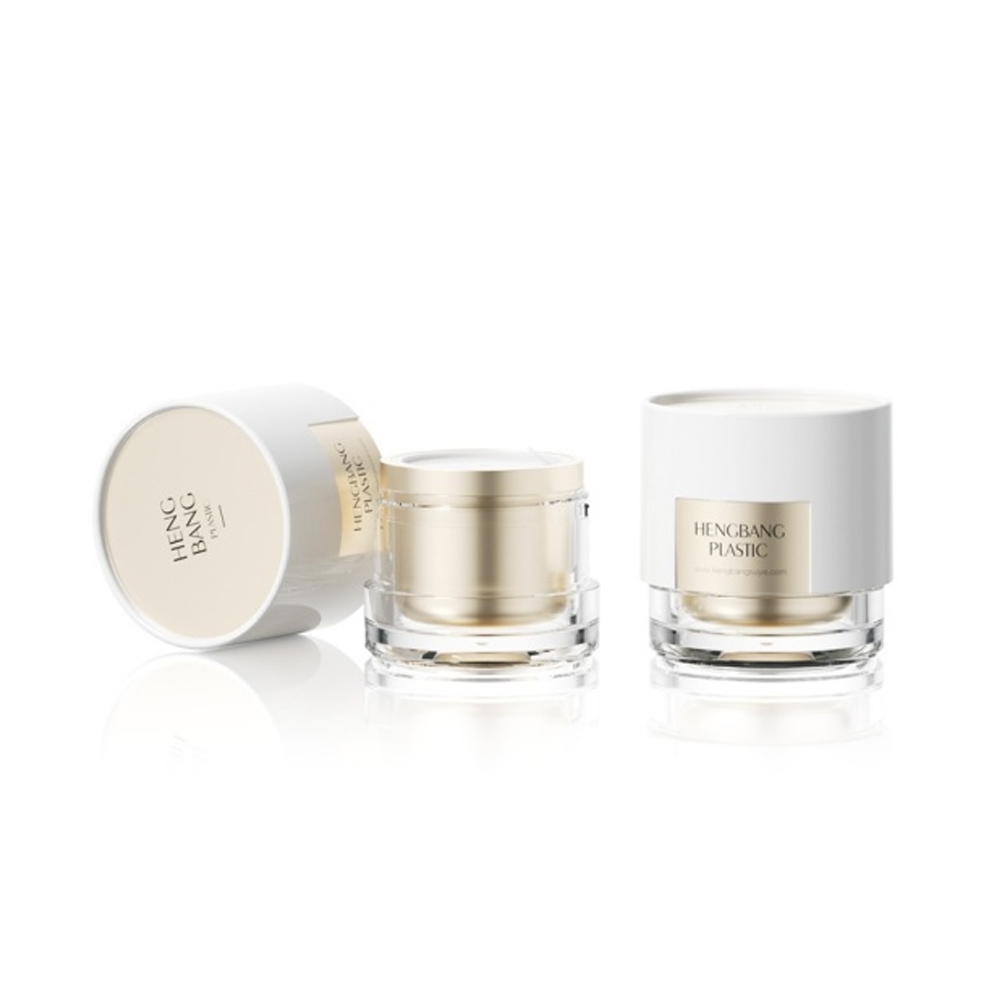
HB-G021 Double Wall Plastic Refillable Cream Jar
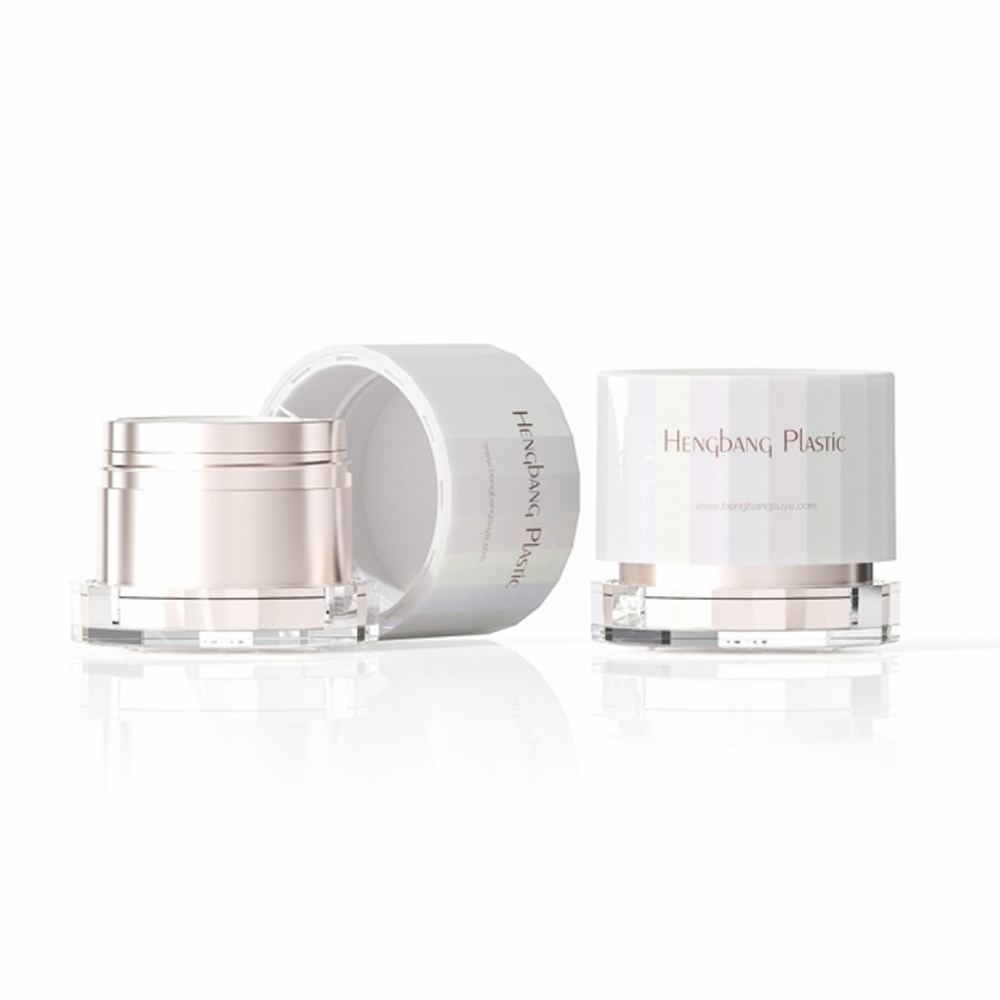
The HB-G021 is a refillable plastic cream jar developed for modern skincare formulations. Its primary purpose is to provide a reusable outer package combined with a replaceable inner container. This design separates the visible presentation component from the part that directly holds the cream, allowing the main jar to remain in use for a longer period.
Traditional cream jars are usually sold as complete units. Once the formulation has been used, the cap, outer body, decorative shell, and inner product-holding component are all discarded together. Although some of these parts may be recyclable in theory, mixed materials, coatings, labels, and residual skincare product can make separation and recycling more difficult.
A refillable construction offers another approach. The customer retains the outer jar and replaces only the inner bottle or refill component. The result is a packaging system that can reduce the amount of material required for repeat purchases. The exact reduction depends on the refill design, material selection, supply chain, and consumer behavior, but the basic principle is clear: the decorative and structural elements do not need to be manufactured and discarded repeatedly.
The concept also creates opportunities for brands. A refill program can encourage repeat purchases, support subscription models, and reinforce a sustainability message through a tangible customer experience. Instead of merely communicating environmental responsibility through advertising, the brand can provide a package that allows customers to participate directly in waste reduction.
At the same time, the HB-G021 does not compromise the visual expectations associated with premium skincare. Its double-wall construction can create a thicker, more substantial appearance than a simple single-layer plastic jar. This is particularly valuable for products positioned as luxurious, professional, natural, dermatological, or prestige skincare.
The HB-G021 is available in 30 ml and 50 ml capacities. These two sizes cover several common skincare packaging requirements. The 30 ml version can be used for premium facial creams, travel-friendly products, concentrated treatments, or smaller retail formats. The 50 ml version is suitable for standard face creams, night creams, moisturizers, and daily-use products.
| Specification | Available Information | Commercial Significance |
|---|---|---|
| Product type | Double-wall refillable plastic cream jar | Combines premium presentation with a replaceable inner system |
| Capacity | 30 ml and 50 ml | Suitable for compact and standard facial skincare formats |
| Cap material | ABS and PP | Supports a balance of appearance, durability, and functional molding |
| Outer bottle material | MS and ABS | Provides a structured, premium-looking outer package |
| Inner bottle material | PP | Provides a practical product-contact component for the refill system |
| Listed height | Approximately 67 mm | Compact format suitable for facial skincare packaging |
| Listed diameter | Approximately 66.5 mm | Broad, stable footprint with comfortable handling |
| Typical applications | Day cream, night cream, moisturizer, and similar skincare products | Appropriate for a wide range of cosmetic cream formulations |
The supplied specification information lists the height as 67 mm for both capacity options, although one entry appears as “67ml.” Because milliliters measure volume while millimeters measure dimensions, this should be confirmed during technical development. Final dimensions may also vary according to decoration, closure configuration, inner refill geometry, and tooling specifications.
The combination of 30 ml and 50 ml options gives brands flexibility when building a product family. A company may use the smaller size for eye cream, trial packaging, travel kits, or limited editions and the larger size for its core moisturizer. Both formats can share a similar visual language, helping a brand create a coordinated shelf presentation.
One of the most important advantages of a double-wall container is its appearance. A single-layer jar may be functional, but a double-wall design can create visual depth, stronger proportions, and a more substantial silhouette. When consumers pick up a skincare product, the weight, surface finish, wall thickness, and closure movement all influence their perception of value.
The outer wall acts as a presentation layer. It can support different finishing effects, including color matching, surface treatment, printing, labeling, and other decorative solutions. The inner container performs the product-holding function, while the outer structure communicates the brand’s visual identity.
For premium skincare, this separation is valuable. Brands can design an elegant permanent shell that remains consistent across multiple product refills. The result can resemble a long-term beauty accessory rather than a disposable container.
A double-wall structure generally gives a jar a more robust physical presence than a thin single-wall package. The outer body can help protect the inner component from direct impact during normal handling. It also supports a stable base and a balanced form that is suitable for display on bathroom counters, dressing tables, professional skincare shelves, and retail fixtures.
While packaging performance must always be validated through product-specific testing, the additional structural layer can be advantageous during filling, shipping, merchandising, and consumer use. A well-engineered outer body can help maintain the container’s shape and visual integrity throughout its service life.
Double-wall packaging provides more surfaces for design development. The outer wall may be used to create a colored, frosted, metallic, translucent, or opaque appearance, depending on the selected materials and finishing processes. The inner component can be optimized for product contact and functional fit, while the outer component can be optimized for aesthetics.
This flexibility allows cosmetic companies to develop different visual collections without redesigning the entire product architecture. For example, one brand could introduce a soft pastel appearance for a daily moisturizer, a dark sophisticated finish for a night cream, and a clean white finish for a sensitive-skin range, while maintaining the same basic jar platform.
The most distinctive advantage of the HB-G021 is the refillable format. The outer jar can remain with the customer while the inner unit is replaced. This provides a practical way to extend the life of the visible package and reduce repeated consumption of outer packaging components.
Compared with a conventional jar that is entirely replaced after every purchase, a refillable system may offer lower material use over several purchase cycles. The environmental outcome depends on the weight of the refill, the number of times the outer jar is reused, the logistics of refill distribution, and the eventual disposal or recycling route. Nevertheless, the product architecture is aligned with the principles of reuse and circular packaging.
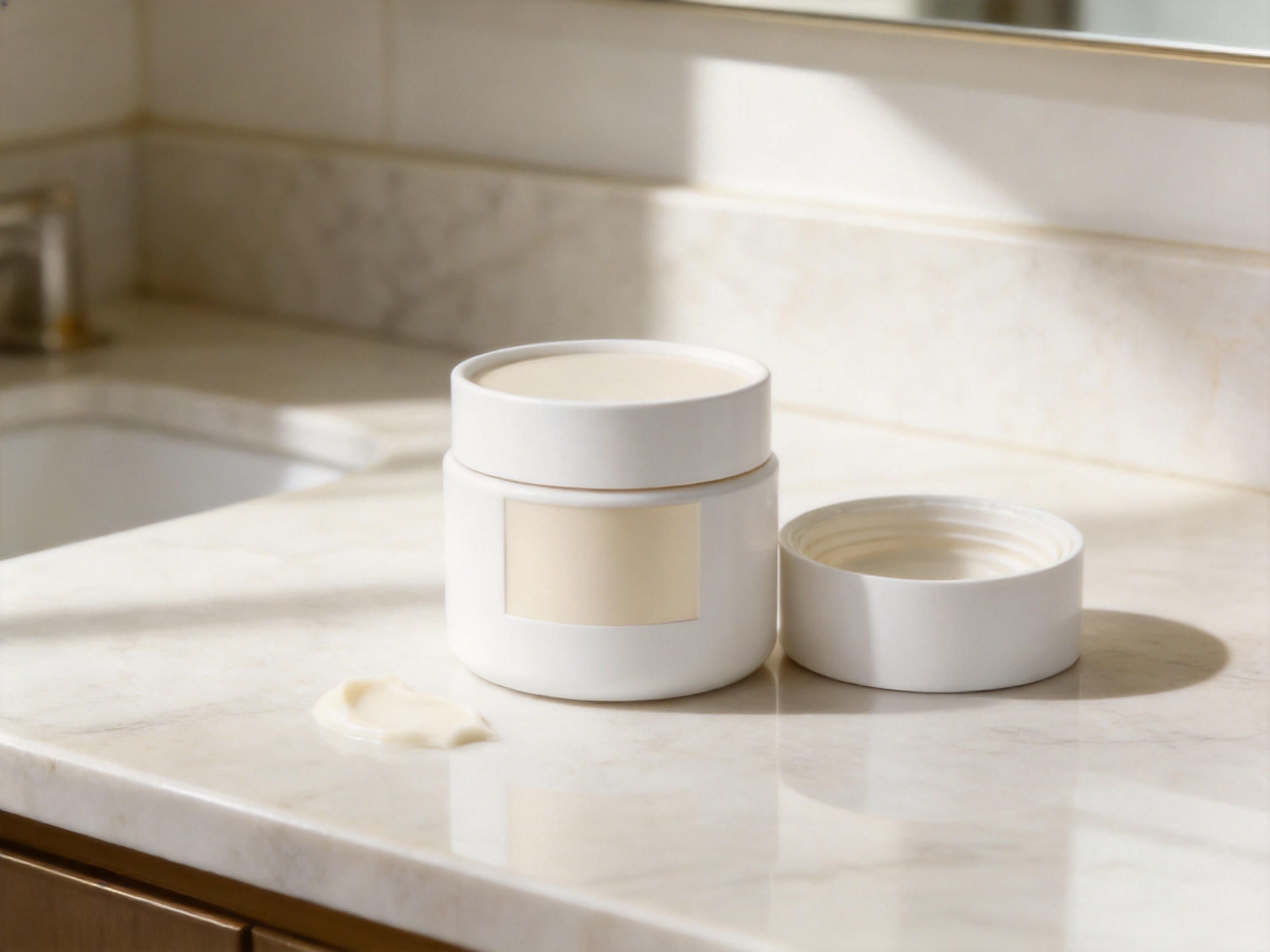
The skincare sector has traditionally depended on attractive primary packages that are replaced each time a product is purchased. This model is simple, but it can generate substantial quantities of packaging waste. A refill system changes the relationship between the consumer and the container by making the package a longer-term object.
In a circular economy, materials are kept in use for as long as possible, and products are designed to reduce unnecessary waste. A refillable cream jar contributes to this objective by separating the durable presentation package from the replaceable product-holding unit.
The outer jar usually contains the decorative surfaces, structural features, and brand identity elements that consumers see. If this component is reused, brands do not need to reproduce the complete visual package for every purchase. The refill can focus on the essential product-holding function.
This does not mean that every refill automatically has a lower environmental impact. The refill must be designed efficiently, produced responsibly, and distributed through an appropriate supply chain. However, the system creates the opportunity to reduce material demand across repeated purchases.
Refills may also provide economic value. Since a refill does not need to include the full outer jar, it may require fewer materials and less decorative processing. These savings can potentially be reflected in the purchase price, although pricing depends on formulation costs, manufacturing volume, distribution, and brand strategy.
For consumers, a lower-cost refill can make premium skincare more accessible over time. For brands, it can encourage loyalty because customers who already own the outer package have a reason to return for compatible refills.
Refillability only works when the process is simple. A complicated or messy system can discourage repeat use, regardless of its environmental benefits. The HB-G021 concept is intended to make replacement convenient, clean, and straightforward.
A successful refill experience should allow the user to remove the empty inner component, insert the new one securely, and continue using the same outer jar with minimal contact with the formulation. Brands should provide clear instructions and validate the fit of the refill under normal consumer conditions.
Many consumers are skeptical of vague sustainability claims. A refillable package provides a visible and understandable action. The customer can see that the outer container is retained and that only the inner component is replaced.
For skincare brands, this makes the sustainability story more concrete. Packaging can become part of the brand’s education strategy, explaining how the refill works, why it can reduce material use, and how customers should handle the empty components responsibly.
The listed material structure includes ABS and PP for the cap, MS and ABS for the outer bottle, and PP for the inner bottle. Each material contributes different properties to the overall packaging system. Exact performance depends on resin grade, processing conditions, wall thickness, additives, decoration, and compatibility with the formula.
ABS is commonly used in cosmetic packaging where a combination of rigidity, dimensional stability, and a refined surface is required. It can support a solid feel and can be suitable for certain decorative finishes. In the HB-G021, ABS is listed as part of the cap and outer bottle structure.
The cap is an important component because it influences the opening experience and the perceived precision of the package. A well-molded cap should fit securely, align correctly with the jar, and provide consistent movement during repeated use.
Polypropylene is widely used in packaging applications because of its light weight, chemical resistance, and versatility in injection molding. The inner bottle is specified as PP, making it a practical choice for a replaceable product-contact component.
Formula compatibility must be tested for each skincare formulation. Creams may contain oils, emulsifiers, active ingredients, fragrances, pigments, or preservatives that interact differently with packaging materials. Compatibility testing should include storage at various temperatures, long-term observation, odor evaluation, appearance checks, leakage testing, and assessment of any changes in the formulation.
The supplied material information identifies MS as part of the outer bottle. Because material abbreviations can vary by supplier and industry, the exact grade and technical meaning should be confirmed in the product specification sheet. This is important for quality control, regulatory documentation, decoration planning, and recycling assessment.
Material transparency is especially important for cosmetic brands that need to prepare product information, packaging declarations, and sustainability communication. The manufacturer and customer should jointly confirm the precise composition of each component before mass production.
The HB-G021 is particularly well suited to cream-based skincare products. Its size range and presentation style support both premium and everyday product lines.
Day creams are often positioned around hydration, barrier support, brightness, protection, or lightweight comfort. A 30 ml or 50 ml refillable jar can provide a practical format for daily facial use while presenting a more premium alternative to a simple tube or ordinary jar.
The outer package can be matched to the brand’s daytime identity through bright colors, soft neutrals, translucent effects, or clean minimalist decoration. The refill model can also support repeat purchasing, which is appropriate for a product used every day.
Night creams are frequently associated with richer textures, renewal routines, and premium self-care rituals. The substantial appearance of a double-wall jar can reinforce these associations. A darker or more sophisticated decoration scheme may help communicate a nighttime positioning.
Because night creams are often purchased as part of a continuing skincare routine, a refill program can encourage customers to maintain product continuity. The permanent outer jar can become a recognizable part of the evening ritual.
Moisturizers are among the broadest skincare categories and may be sold through mass, professional, natural, dermatological, and luxury channels. The HB-G021’s two capacities allow brands to adapt the package to different price points and usage patterns.
A 50 ml format can serve as a standard retail moisturizer, while a 30 ml version can be suitable for premium trial sets, travel collections, or targeted formulations. The same refillable architecture can support multiple product variations without requiring a completely different package design.
With appropriate compatibility testing and filling validation, the container may also be considered for sleeping masks, firming creams, soothing balms, rich hand creams, and other non-liquid cosmetic products. Suitability depends on the formulation viscosity, dosage method, filling equipment, closure design, and regulatory requirements.
Brands should not assume that every cream will perform identically in the same package. Product development should include a complete test program before commercial launch.
A successful cosmetic package requires more than an attractive concept. It requires reliable tooling, stable material control, consistent molding, accurate assembly, careful inspection, and responsive technical support. Yuyao Hengbang Plastic Co., Ltd. brings several relevant strengths to the production of cosmetic and skincare packaging.
Established in 2006, the company has accumulated experience in plastic packaging for cosmetics and skincare products. This long-term focus is significant because cosmetic packaging has specialized requirements. Components must not only look attractive; they must also fit correctly, protect the formula, withstand repeated handling, and meet the expectations of brand owners and consumers.
Experience can help a manufacturer identify potential issues earlier in the development process. These issues may include cap alignment, dimensional tolerance, assembly force, inner-component retention, surface defects, filling compatibility, and decoration limitations.
The company reports a building area of 35,000 square meters and a workforce of more than 300 employees. This scale indicates an established manufacturing operation with the organizational capacity to support product development, production coordination, quality management, and customer service.
For buyers, production scale can be important when a product moves from sample approval to repeat commercial orders. A supplier must be able to maintain consistent specifications across production batches while coordinating raw materials, tooling, assembly, inspection, packaging, and shipment schedules.
The company provides design and development services in addition to manufacturing. This is particularly valuable for refillable packaging because the system contains more functional relationships than a basic one-piece jar. The outer body, cap, inner bottle, and refill interface must work together accurately.
Development support may help brands evaluate the visual design, component proportions, material selection, assembly method, decoration requirements, and production feasibility. Early collaboration can reduce the risk of designing a package that looks attractive but is difficult to mold, fill, assemble, or refill.
Yuyao Hengbang Plastic Co., Ltd. has passed ISO9001:2015 certification. ISO9001 is associated with quality management systems and emphasizes controlled processes, documented procedures, customer requirements, continual improvement, and corrective action.
For cosmetic packaging customers, a quality management system can provide greater confidence that product specifications, inspection procedures, nonconformity handling, and process responsibilities are formally managed. Certification does not replace product-specific testing, but it provides an important foundation for consistent manufacturing.
The company has also passed ISO14001:2015 certification. This standard relates to environmental management systems and supports systematic attention to environmental aspects, compliance obligations, operational controls, and improvement objectives.
For a refillable package, environmental management is especially relevant. Brands increasingly want suppliers that can demonstrate awareness of material use, production impacts, waste management, and responsible operational practices. ISO14001 certification offers evidence of a structured environmental management approach, although customers should still request product-specific environmental data when making sustainability claims.
The company owns multiple invention patents and was recognized as a Ningbo High-Tech Enterprise in 2021. These achievements suggest an emphasis on technical development and innovation. In the packaging industry, innovation may involve new closure structures, refill mechanisms, component interfaces, surface treatments, manufacturing methods, or improvements in production efficiency.
Refillable packaging itself requires a design mindset that goes beyond the traditional disposable container. It must balance durability, ease of use, appearance, cleaning considerations, component replacement, and cost. A manufacturer with product development and patent experience is well positioned to support this type of packaging project.
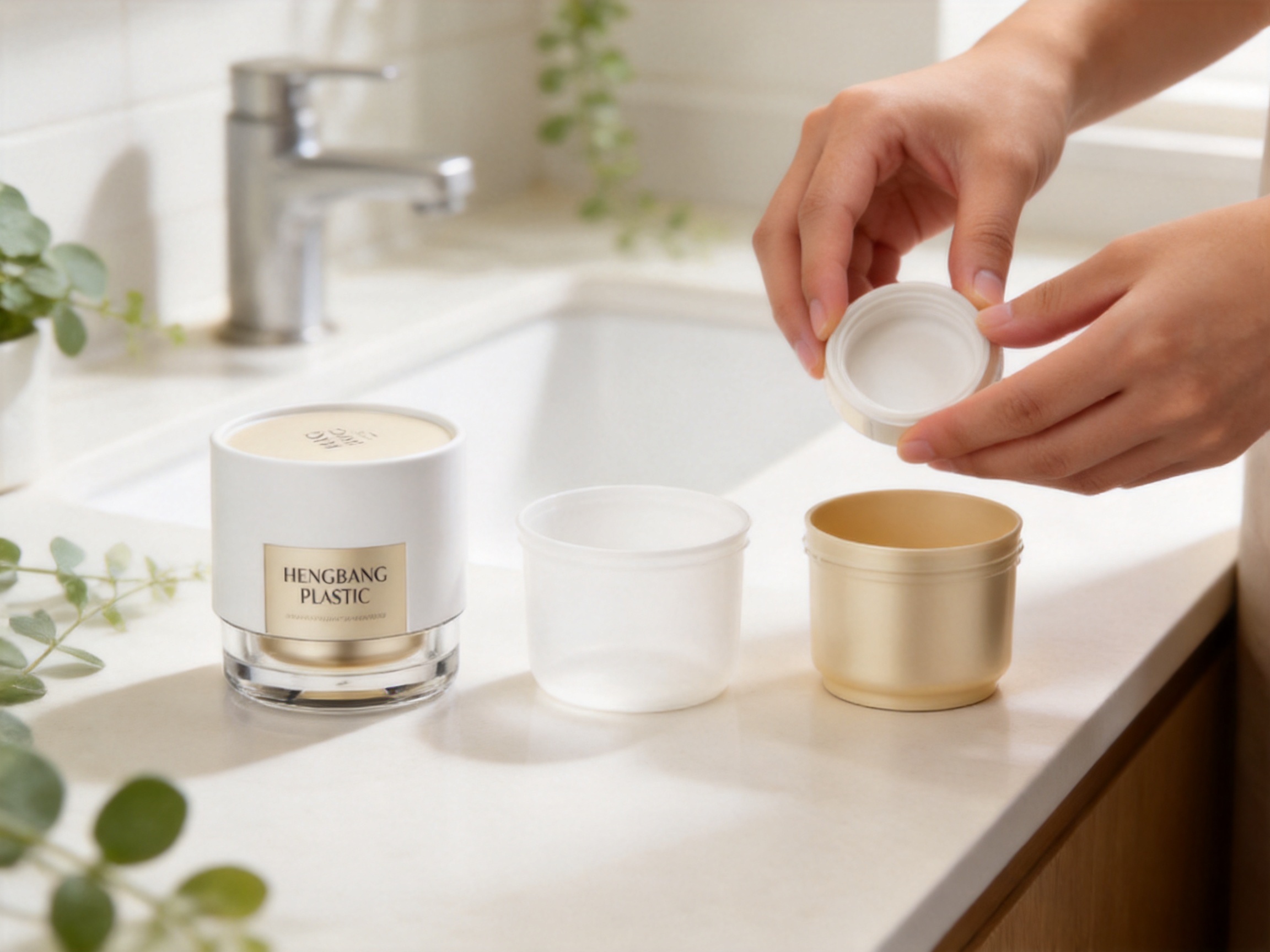
Although exact production parameters are determined by the manufacturer’s internal specifications and the customer’s approved drawings, a professional manufacturing process for a product such as the HB-G021 normally involves several controlled stages.
The first stage is the conversion of the product concept into engineering drawings and tooling requirements. Designers must define the jar diameter, height, wall thickness, cap interface, inner-bottle fit, assembly method, draft angles, parting lines, and decoration surfaces.
For a refillable jar, tooling development must consider both visible appearance and functional replacement. The inner component must be easy enough to replace while remaining stable during normal use. The cap must close securely and maintain a consistent relationship with the outer and inner parts.
Material selection should be confirmed according to the application, formula compatibility, appearance, mechanical requirements, and regulatory expectations. Resin batches should be controlled, and incoming materials should be checked according to the manufacturer’s quality procedures.
Colorants, additives, and decorative materials can influence the final appearance and performance of the package. For this reason, color approval should be based on agreed reference samples or recognized color standards rather than informal visual comparisons alone.
Plastic components such as caps and inner bottles are commonly produced through injection molding. During this process, heated plastic is injected into a mold cavity, cooled, and ejected as a finished component.
Important molding variables include melt temperature, injection pressure, holding pressure, cooling time, mold temperature, cycle time, and material flow. Stable process control helps reduce defects such as warping, sink marks, short shots, flash, weld lines, uneven surfaces, and dimensional variation.
For cosmetic packaging, visual inspection is particularly important. Even a small surface defect can affect the perceived quality of a premium product. At the same time, dimensional inspection is essential because the cap, inner bottle, and outer body must assemble correctly.
After molding and any required surface treatment, the components are assembled. The assembly process may include fitting the inner bottle into the outer structure, installing the cap components, checking the refill interface, and confirming the overall appearance.
Assembly force should be controlled. If the inner component is too loose, it may move during use or transport. If it is too tight, consumers may find replacement difficult. The optimum fit must be validated through practical testing and should remain consistent across production batches.
The double-wall outer body offers opportunities for decoration. Depending on the approved design, possible options may include color injection, printing, labeling, coating, metallized effects, frosting, or other surface treatments.
Decoration should be evaluated for adhesion, abrasion resistance, chemical resistance, and visual consistency. Skincare products are frequently exposed to oils, creams, water, and repeated handling, so the surface finish should be suitable for the intended use environment.
Quality control should cover incoming materials, molded components, assembled units, appearance, dimensions, closure performance, refill fit, leakage resistance, and packaging integrity. Inspection standards should be agreed before mass production begins.
Typical quality checks may include visual inspection under controlled lighting, dimensional measurement, cap engagement testing, component retention testing, drop or transport simulation, and stability observation. The final test plan should reflect the product’s intended market, filling process, distribution conditions, and customer requirements.
The HB-G021 should be evaluated against competing packages across several dimensions rather than by appearance alone. Its strongest competitive advantages arise from the combination of refillability, double-wall presentation, material flexibility, size options, and supplier capability.
| Comparison Factor | Conventional Single-Use Cream Jar | HB-G021 Refillable Double-Wall Jar |
|---|---|---|
| Outer package after product use | Usually discarded with the empty container | Designed to remain in use while the inner unit is replaced |
| Premium appearance | Depends mainly on a single molded wall and decoration | Double-wall structure can create greater depth and visual substance |
| Repeat-purchase model | Customer buys a complete new package each time | Customer can purchase a compatible refill after retaining the outer jar |
| Brand differentiation | Often relies primarily on color, graphics, and formulation claims | Adds a practical reuse feature to the brand proposition |
| Size flexibility | May require separate packaging platforms for different formats | Available in 30 ml and 50 ml versions for coordinated product ranges |
| Long-term customer engagement | Limited to repeat purchase of the complete package | Can support refill programs, subscriptions, and loyalty initiatives |
A conventional jar may be cheaper or simpler in certain situations, especially for low-cost products or short-term promotional launches. However, the HB-G021 can offer greater value for brands that want to combine premium design with a reuse strategy.
It also gives brands a way to compete beyond formulation claims. In crowded skincare categories, many products make similar statements about hydration, nourishment, renewal, or skin comfort. Packaging that is visibly reusable and pleasant to operate can create a meaningful point of distinction.
A substantial double-wall jar can stand out among lightweight tubes and basic containers. Its broad diameter and compact height create a stable, recognizable silhouette. With appropriate decoration, the package can communicate luxury, clinical precision, natural simplicity, or modern minimalism.
Shelf presence is important in both physical retail and online commerce. In stores, the container must attract attention from a distance. Online, it must remain recognizable in product photography and thumbnail images. A distinctive jar structure can support both needs.
Consumers often associate well-designed packaging with product quality. A solid cap, refined surface, clean assembly, and balanced proportions can reinforce a premium price position. The refill system adds another layer of value because the customer is not simply purchasing a disposable container but participating in a continuing packaging system.
Brands should ensure that the formula, filling quality, decoration, and customer communication support the same premium standard. Packaging cannot compensate for an inferior product experience, but it can strengthen a high-quality product when all elements are aligned.
A refill model can support a more predictable repeat-purchase cycle. Brands may offer refills through online stores, subscriptions, membership programs, salons, spas, pharmacies, or retail partners. This creates opportunities for more direct customer relationships.
Refill packaging can also support product customization. A brand might offer different formulations that fit the same outer jar, allowing customers to maintain the package while changing between seasonal, targeted, or limited-edition products.
Using one packaging platform across multiple products can simplify brand architecture. The same outer jar design can be adapted through color, label, decoration, or inner formulation. A consistent package family helps customers recognize the brand and can reduce the need to develop an entirely new package for each product.
The 30 ml and 50 ml formats are useful for creating a hierarchy within the range. Brands can assign the smaller version to trial or premium treatment products and the larger version to core daily-use products.
The HB-G021 can be developed as a starting platform for a customized cosmetic packaging project. The final visual effect should be determined through a combination of brand identity, formula positioning, target market, and manufacturing feasibility.
Color is one of the fastest ways to communicate product positioning. White and light colors can suggest purity, clinical care, or gentle skincare. Earth tones may support natural or botanical positioning. Black, deep blue, or rich burgundy can convey luxury and nighttime use.
Surface finish also changes the perception of the jar. Glossy finishes may appear modern and high-impact, while matte or frosted finishes can communicate softness and sophistication. Metallic effects can add prestige but should be evaluated for durability and production consistency.
Text and graphics should remain clear on the selected surface. The package may require product name, net content, usage instructions, ingredient information, batch information, regulatory details, and recycling or disposal guidance.
Before mass production, brands should approve physical decorated samples. Colors and fine details may appear differently on a curved surface than on a flat design proof. Sampling is also important for checking the relationship between the cap, outer bottle, and inner refill.
The cap is one of the most frequently handled components. Its opening and closing action should feel controlled and reliable. Consumers should be able to identify the correct opening direction and close the jar without excessive force.
A premium package should avoid unnecessary looseness, rattling, uneven alignment, or visible gaps. These details can influence whether the product feels carefully manufactured.
Before launching a refillable cream jar, brands should conduct a structured validation program. The package should be tested with the actual formula, filling method, decoration, secondary packaging, and distribution conditions.
The finished formula should be stored in the inner PP bottle under different temperature and humidity conditions. Testing should evaluate color, odor, texture, viscosity, separation, pH where relevant, and active-ingredient stability.
The inner component should also be checked for swelling, cracking, softening, deformation, stress whitening, or other changes. Compatibility should be evaluated over the intended shelf life, not only during short-term observation.
The assembled package should be tested for leakage under normal and adverse conditions. Tests may include upright storage, inverted storage, temperature cycling, vibration, compression, and drop simulation.
The cap and inner assembly must remain secure throughout transport. Leakage can damage secondary packaging, create customer complaints, and compromise confidence in the product.
The refill process should be tested by multiple users, including people unfamiliar with the package. This helps identify whether the instructions are clear and whether the inner component can be removed and replaced without excessive force or mess.
Repeated replacement cycles should also be evaluated. The outer jar and its connection points should continue to perform after the number of uses expected during the product’s service life.
Usability testing should consider grip, cap opening, product access, refill replacement, cleaning expectations, storage, and disposal. A package can be environmentally promising but commercially unsuccessful if the user experience is inconvenient.
Clear instructions may be printed on an insert, carton, label, or digital customer guide. Brands should explain which component is replaced, how to install the refill, and how to handle the empty inner unit.
Cosmetic jars can be exposed to shocks during production, warehouse handling, courier transport, and retail stocking. Drop testing and vibration testing help identify weaknesses in the cap, outer body, inner bottle, and assembly points.
The final transport test should use the intended secondary packaging because cartons, inserts, and protective components influence the results.
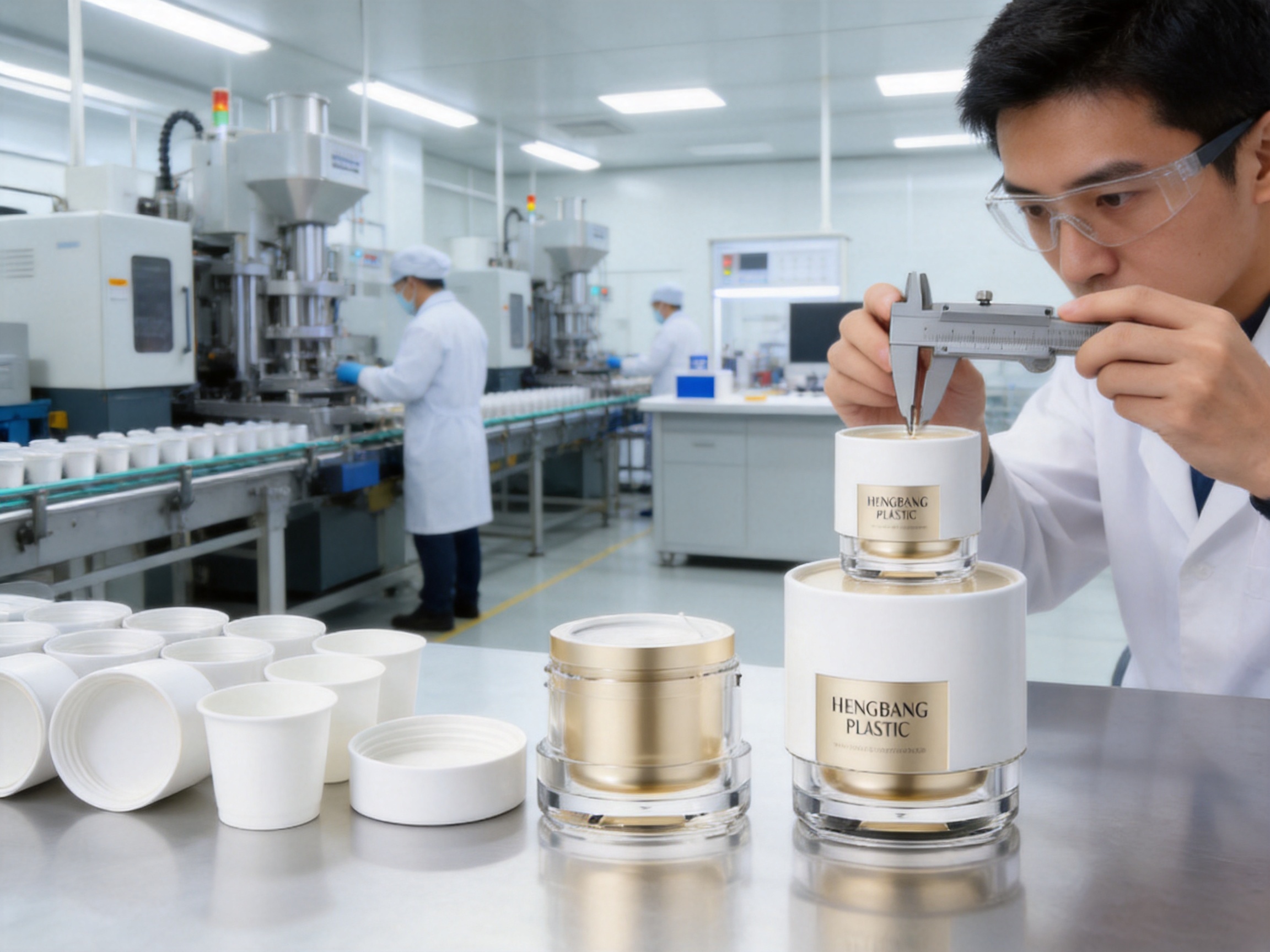
Refillable packaging offers a promising strategy for reducing unnecessary packaging consumption, but sustainability claims should be accurate and evidence-based. Brands should avoid presenting a refillable design as automatically zero-waste or completely environmentally neutral.
The overall environmental profile depends on several factors: the material weight of the outer jar and refill, the number of reuse cycles, manufacturing energy, transportation distance, decoration methods, consumer behavior, and end-of-life management. A refill system is most effective when customers actually retain and reuse the outer package over multiple purchases.
Brands can improve the credibility of their communication by explaining the specific mechanism of the package. For example, they can state that the outer jar is intended for continued use and that the inner component is replaced when the product is finished. They can also provide guidance on disposal or recycling according to local facilities and regulations.
Material information should be documented carefully. Because the listed structure includes several material types, brands should confirm whether components can be separated and how they should be identified. If a sustainability comparison is made against a standard jar, the comparison should be supported by reliable packaging-weight or life-cycle data.
The manufacturer’s ISO14001:2015 environmental management certification is relevant to a responsible production approach. However, certification should be described accurately as evidence of an environmental management system rather than as proof that every individual package has a specific environmental impact.
For cosmetic brands, supplier reliability is as important as product design. A package that performs well in a sample but varies during mass production can create serious operational problems. Consistency should be evaluated across dimensions, color, surface quality, assembly, closure fit, and refill compatibility.
Yuyao Hengbang Plastic Co., Ltd.’s quality management certification, manufacturing scale, specialized industry focus, and design-development services provide a useful foundation for supply cooperation. A professional buyer should still establish clear technical documents, approved samples, inspection standards, tolerances, packaging requirements, and change-control procedures.
Communication is especially important for refillable systems. Any change to the inner bottle, outer body, cap, material grade, or assembly process may affect the overall fit. Component drawings and revision records should therefore be controlled carefully.
Brands should also discuss production capacity, minimum order quantities, lead times, mold ownership, color approval, decoration capabilities, sample schedules, and quality documentation before placing a commercial order. These points help prevent misunderstandings and support smoother product launches.
When evaluating the HB-G021 or a similar refillable cream jar, cosmetic companies should consider the following questions:
| Evaluation Area | Questions to Confirm |
|---|---|
| Capacity | Is the required size 30 ml, 50 ml, or another customized volume? |
| Dimensions | Are the final height, diameter, neck, and cap dimensions confirmed by technical drawings? |
| Materials | Are the exact grades and roles of ABS, PP, MS, and other materials documented? |
| Formula compatibility | Has the actual cream formula been tested in the inner container? |
| Refill mechanism | Can consumers remove and replace the inner unit easily and securely? |
| Decoration | Which colors, finishes, printing methods, or labels are available? |
| Quality control | What inspection standards and acceptance criteria will apply to mass production? |
| Testing | Have leakage, drop, transport, stability, and repeated refill tests been completed? |
| Supply planning | What are the order quantity, production lead time, capacity, and shipping requirements? |
| Compliance | Does the package meet the regulations and documentation requirements of the target market? |
Answering these questions early can reduce development risk and help the brand make a realistic comparison with competing packages.
The HB-G021 is a double-wall plastic refillable cream jar designed for skincare and cosmetic products. It is suitable for applications such as day creams, night creams, moisturizers, and similar cream-based formulations.
The listed capacities are 30 ml and 50 ml. These sizes can support compact premium products, travel formats, trial products, and standard facial creams.
The design separates the reusable outer jar from the replaceable inner product-holding component. After the product is finished, the customer can retain the outer package and install a new compatible inner refill.
A double-wall jar has an additional outer structure around the inner container. This can create a more substantial appearance, provide more design surfaces, and help support a premium product presentation.
The supplied information lists ABS and PP for the cap, MS and ABS for the outer bottle, and PP for the inner bottle. Exact material grades and definitions should be confirmed with the manufacturer during technical development.
No packaging should be assumed to be compatible with every formula. The actual product must undergo compatibility, stability, leakage, and performance testing before mass production. This is especially important for formulas containing oils, fragrances, strong actives, or other ingredients that may interact with packaging materials.
Cosmetic packaging projects may be customized through color, decoration, surface finish, labeling, and other design features, subject to tooling and production feasibility. The manufacturer provides design and development services that can support customization discussions.
The refill system is designed to help reduce repeated disposal of the outer package and support a reuse-oriented consumption model. Its actual environmental benefit depends on how many times the outer jar is reused, the material weight of the components, logistics, and end-of-life handling.
The supplied information lists a height of approximately 67 mm and a diameter of approximately 66.5 mm. One capacity table entry appears to show “67ml” for height, which should be treated as a typographical inconsistency and confirmed against the manufacturer’s official technical drawing.
Yuyao Hengbang Plastic Co., Ltd. was established in 2006 and specializes in plastic packaging for cosmetics and skincare products. The company reports a 35,000-square-meter building area, more than 300 employees, design and development services, ISO9001:2015 and ISO14001:2015 certifications, and multiple invention patents.
Yes. The double-wall structure, substantial proportions, replaceable inner system, and opportunities for decoration make it suitable for premium, professional, luxury, natural, and modern skincare positioning. The final premium effect depends on material selection, molding quality, surface treatment, decoration, formula quality, and assembly consistency.
Recommended testing includes formula compatibility, stability, leakage, cap fit, refill replacement, drop resistance, vibration, transport simulation, decoration adhesion, dimensional inspection, and consumer usability evaluation.
The HB-G021 Double Wall Plastic Refillable Cream Jar is designed for a skincare market that increasingly values functionality, visual quality, and more responsible packaging choices. Its primary advantage is the combination of a premium double-wall appearance with a refillable inner system. This gives brands an opportunity to reduce repeated outer-package consumption while maintaining a refined customer experience.
The 30 ml and 50 ml capacities make the jar adaptable to different skincare formats. The listed ABS, PP, and MS material structure provides a platform for balancing appearance, durability, molding flexibility, and product-contact requirements, subject to final technical confirmation and compatibility testing.
Compared with a conventional single-use cream jar, the HB-G021 can offer stronger differentiation through reuse, greater long-term packaging value, and additional opportunities for customer engagement. It can support refill programs, repeat purchases, subscription models, coordinated product families, and sustainability communication that consumers can understand through direct use.
The supplier’s industry experience, manufacturing scale, design and development capability, quality management certification, environmental management certification, high-tech enterprise recognition, and invention patents strengthen the product’s commercial potential. These capabilities are particularly relevant to a multi-component refillable package, where dimensional accuracy, assembly fit, surface quality, and process consistency are essential.
For brands considering this packaging solution, the next step should be a structured technical evaluation. Final dimensions, material grades, decoration methods, formula compatibility, refill usability, testing requirements, and production conditions should all be confirmed before approval. When these elements are properly managed, the HB-G021 can serve as more than a container: it can become a durable part of a modern skincare system.
In an industry where packaging must communicate quality while responding to environmental concerns, a refillable double-wall cream jar offers a practical balance. It preserves the visual appeal expected from premium cosmetics, supports a convenient user experience, and provides a foundation for more efficient repeat packaging consumption.
1. Product specification and description supplied for the HB-G021 Double Wall Plastic Refillable Cream Jar.
2. Company information supplied for Yuyao Hengbang Plastic Co., Ltd., including manufacturing history, workforce, facility area, certifications, and development capabilities.
3. ISO 9001:2015, Quality Management Systems—Requirements.
4. ISO 14001:2015, Environmental Management Systems—Requirements with Guidance for Use.
5. General principles of cosmetic packaging compatibility, stability testing, and container-closure evaluation.
6. Circular economy principles concerning reuse, refill systems, material efficiency, and packaging life extension.
7. General injection-molding and quality-control practices for plastic cosmetic packaging.


Copyright © Yuyao Hengbang Plastic Co., Ltd.
All Rights Reserved.
 Wholesale Plastic Cosmetic Packaging Manufacturers