English
 中文简体

News
Home > Author > Chen Xiaotong — Key Account Sales Manager > Refillable Double-Wall Cosmetic Jar for Premium Skincare Packaging

 2026.09.20
 Chen Xiaotong — Key Account Sales Manager
Content
Packaging is a decisive part of the cosmetic and skincare experience. It protects formulas, communicates quality, supports brand positioning, and increasingly reflects consumer expectations concerning reuse and responsible consumption. The HB-G015 Refill Double Wall Plastic Cosmetic Jar is designed for brands seeking a practical balance between refined appearance, structural performance, flexible customization, and refill-oriented sustainability.
This refillable plastic cream jar combines a multi-component construction with carefully selected surface treatments. Its ABS and PP cap, MS and ABS outer bottle, and PP inner bottle create a layered packaging solution suitable for creams, balms, masks, moisturizers, and other skincare formulations. The double-wall structure provides a substantial appearance and helps create a premium tactile experience without requiring a fully glass-based package.
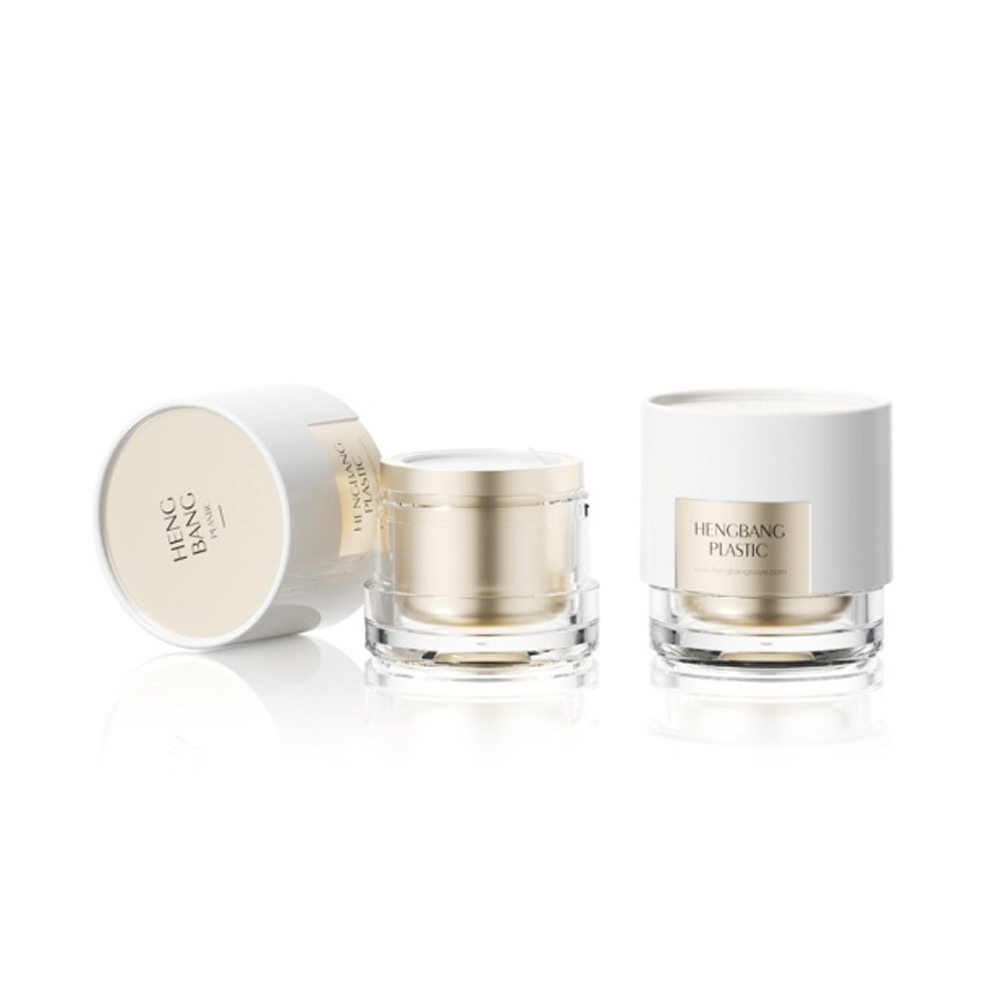
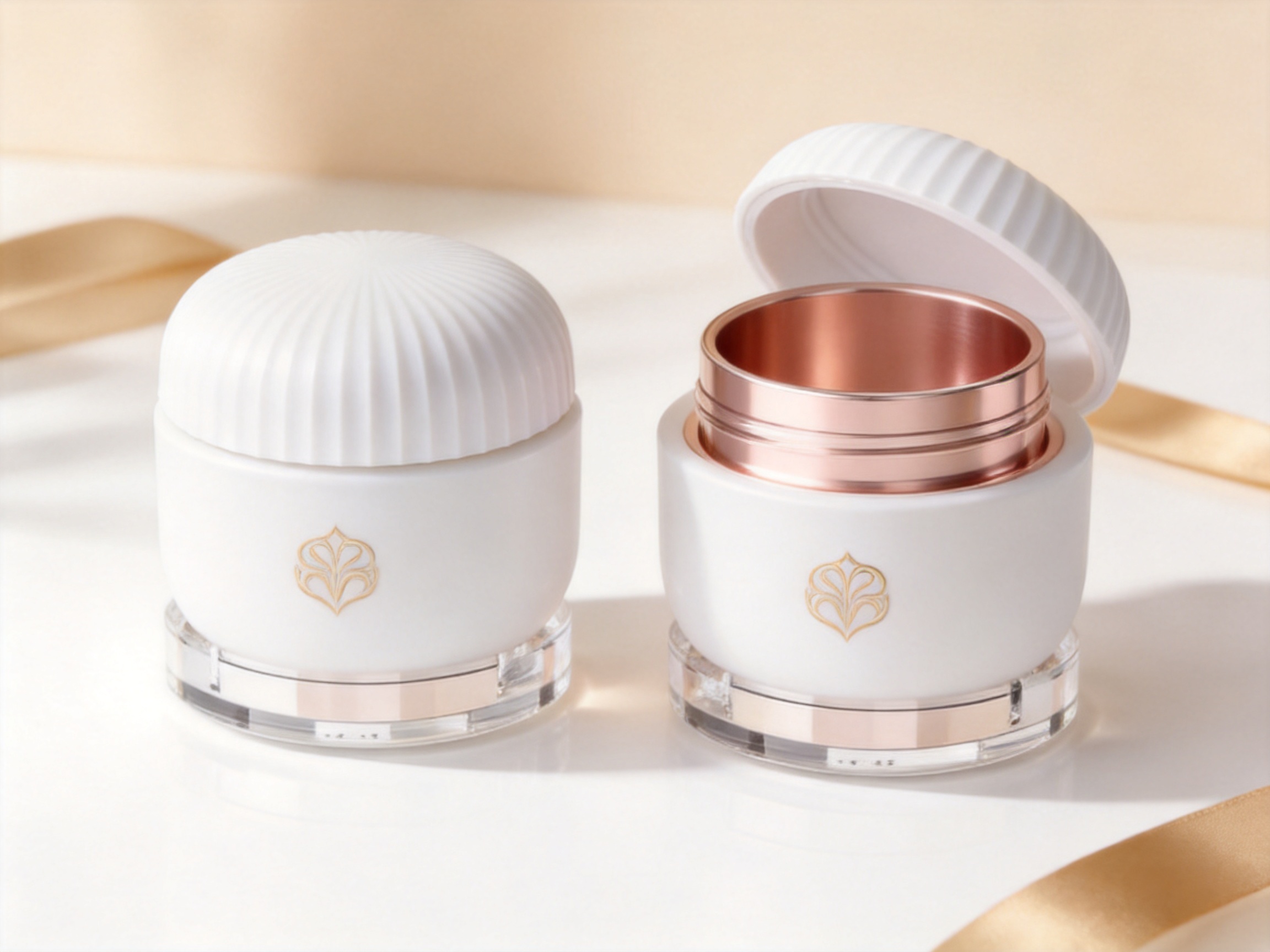
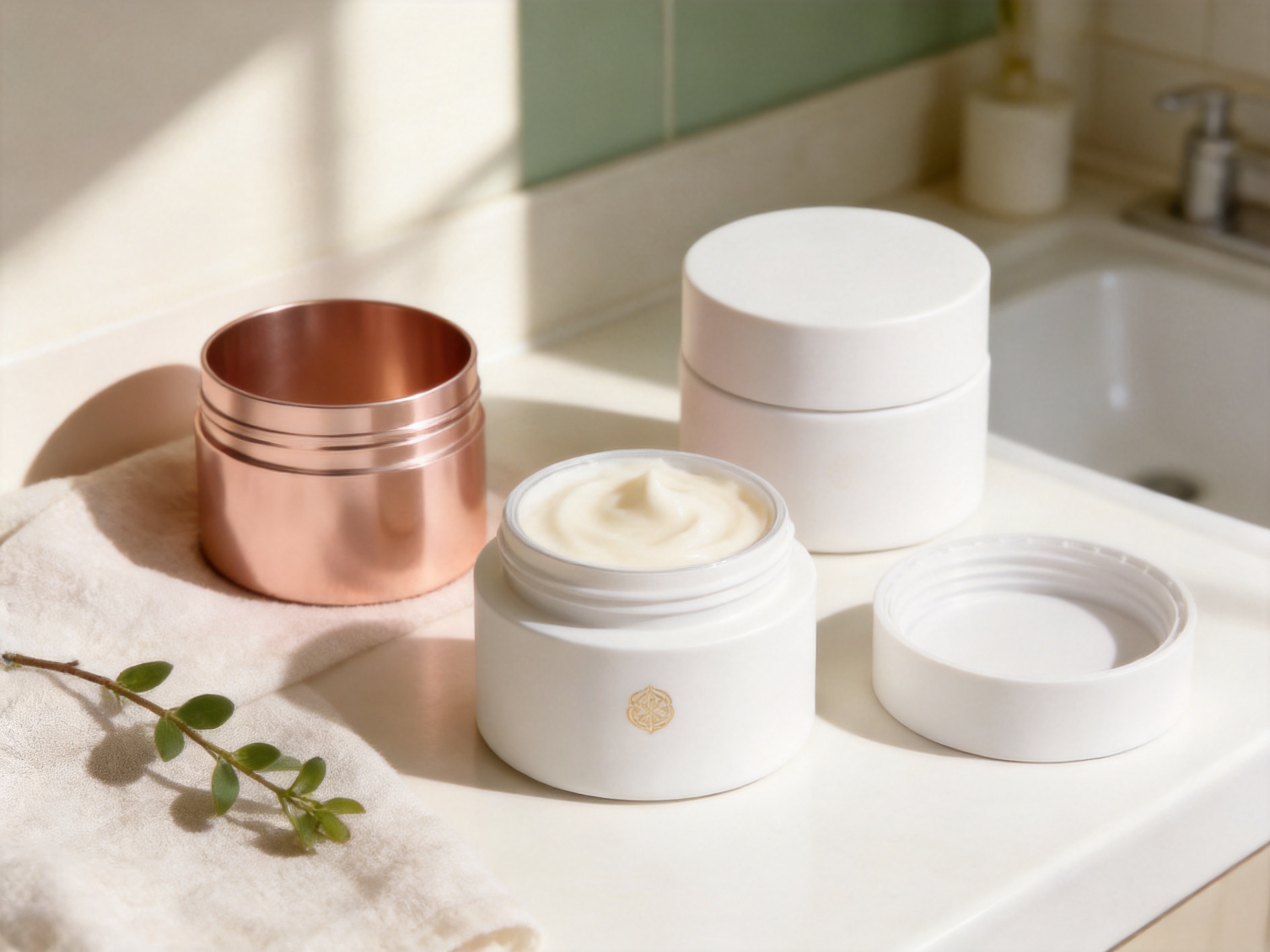
The design is especially distinctive because it combines a ribbed, semi-enveloping outer cap with a matte white spray finish, a gold hot-stamped logo, and a rose-gold electroplated inner container. These details allow a product developer to create a visually sophisticated presentation while retaining the advantages of plastic packaging, including lower handling risk, design flexibility, and convenient refill integration.
With available capacities of 30 ml and 50 ml, a listed height of 60 mm, and a listed diameter of 68.7 mm, the jar can support different product positioning requirements. A smaller size may suit trial, travel, or premium treatment formats, while the larger version may be appropriate for daily-use creams and long-term skincare routines.
For cosmetic brands, the value of this packaging extends beyond appearance. The refillable inner container offers an opportunity to establish a more thoughtful packaging system, in which the external presentation can remain part of the consumer experience while the product-holding component is replaced when necessary. This approach can help brands communicate an environmental mission without sacrificing luxury, convenience, or visual impact.
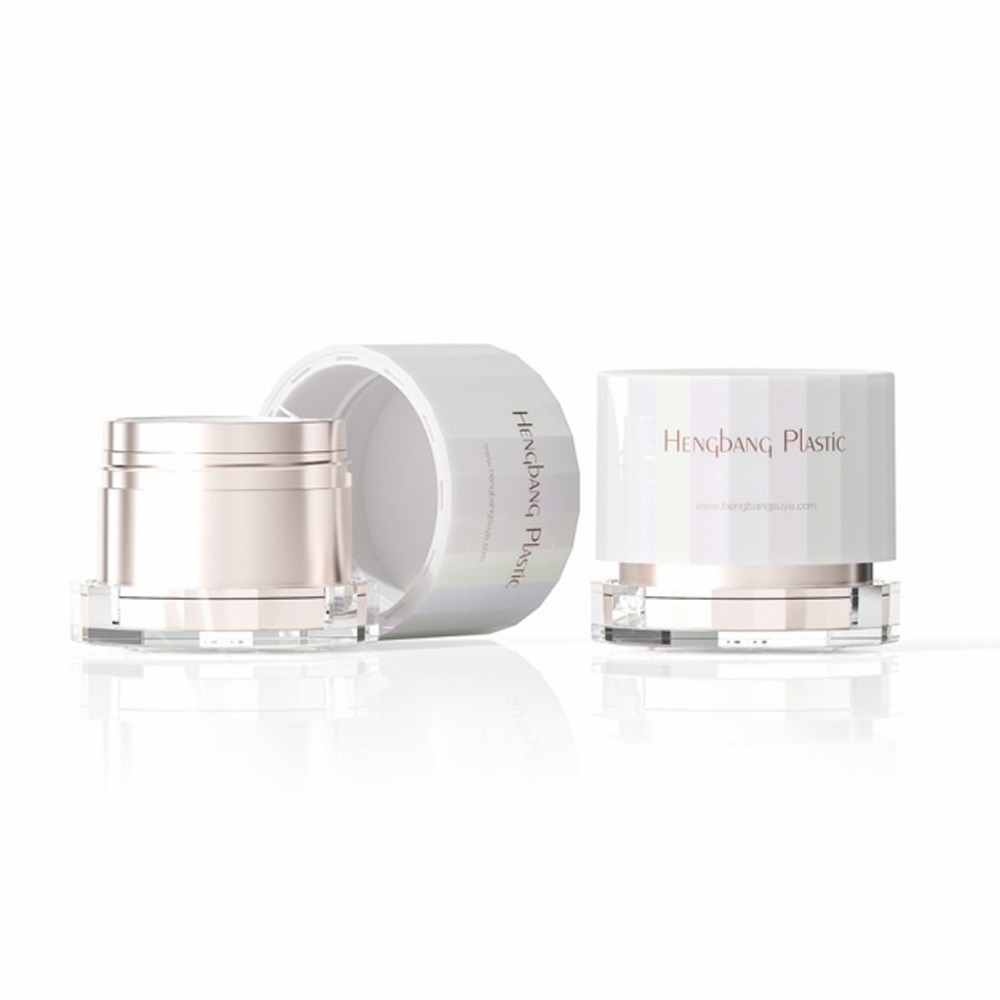
HB-G015 Refill Double Wall Plastic Cosmetic Jar
The HB-G015 is a refillable double-wall plastic cosmetic jar developed for cream-based beauty and skincare products. Instead of relying on a single-wall container, the design uses an outer structure and an inner product container. This construction creates visual depth and supports a more substantial hand feel, which are important characteristics for premium cosmetic packaging.
The product is identified as a refillable plastic cream jar and is suitable for brands that want to combine elegant presentation with a more flexible packaging format. Its appearance can be adapted to different product lines through logo treatment, surface color, finish selection, and component coordination.
The cap features a ribbed, semi-enveloping form. The ribbing creates a tactile surface that can improve grip while also giving the package a recognizable visual identity. The semi-enveloping profile adds a sense of coverage around the jar and helps the cap appear integrated with the overall body rather than functioning as a simple flat closure.
A matte white spray finish gives the package a soft, contemporary appearance. Matte surfaces are widely associated with modern skincare because they reduce excessive reflection and create a calm, clean presentation. White also provides a neutral foundation for a wide range of product concepts, including moisturizing creams, sensitive-skin products, premium facial treatments, and minimalist clinical-inspired collections.
The gold hot-stamped logo introduces a contrasting decorative element. Against a matte white surface, gold lettering or graphic treatment can make the brand mark more visible and create an impression of elegance. Hot stamping is also suitable for brands that want a clean, sharply defined logo without covering the entire package with a complex printed pattern.
Inside the outer structure, the rose-gold electroplated inner container adds a second layer of visual sophistication. When the jar is opened, the inner component becomes part of the presentation. This creates a reveal effect that can improve the unboxing experience and reinforce the perception that the product is positioned above standard mass-market packaging.
Double-wall packaging offers a different visual and tactile result from a basic single-wall jar. The outer bottle provides the main visible body, while the inner bottle holds the formula. The space and separation between these components can make the container look fuller, more substantial, and more carefully engineered.
For brands, this layered construction can also support visual differentiation. Many standard cream jars have a familiar cylindrical profile with limited decorative depth. A double-wall configuration creates more opportunities for contrast between exterior and interior finishes. In the HB-G015 design, the matte white exterior, gold logo, and rose-gold inner container work together as a coordinated system.
The packaging is therefore not simply a vessel for a cosmetic formula. It is a designed object that contributes to the consumer’s perception before the product is even applied. The shape, cap texture, color contrast, and opening sequence can all influence how a consumer interprets quality and value.
The supplied material configuration includes ABS and PP for the cap, MS and ABS for the outer bottle, and PP for the inner bottle. Each material contributes to the overall construction in a different way.
| Component | Specified material | Primary packaging role |
|---|---|---|
| Cap | ABS + PP | Closure, grip, protection, and decorative presentation |
| Outer bottle | MS + ABS | Structural exterior, double-wall appearance, and surface decoration |
| Inner bottle | PP | Product-holding refillable container |
| Available capacity | 30 ml and 50 ml | Supports different skincare product sizes |
| Listed height | 60 mm | Helps guide filling, labeling, and retail presentation planning |
| Listed diameter | 68.7 mm | Supports compatibility planning for cartons, shelves, and displays |
ABS is commonly used in cosmetic packaging where a rigid, well-defined exterior and a high-quality decorative surface are desired. Its use in the cap can help create a firm component with a stable appearance. The ribbed form can be molded into the cap to provide a consistent grip pattern and a recognizable design detail.
PP is used alongside ABS in the cap construction. PP is widely used in packaging applications because of its practical processing characteristics and broad suitability for cosmetic component systems. The combination of materials allows the cap to balance appearance, structure, and functional assembly requirements.
The cap is more than a protective cover. It affects how the package opens and closes, how the product feels in the hand, and how the jar appears when displayed. A well-designed cap can make a relatively compact container feel more substantial and can help establish a consistent identity across a skincare range.
The outer bottle uses MS and ABS, creating a combination of structural and visual elements. The outer bottle is the principal visible body of the jar, so its material arrangement must support the chosen finishing processes and the desired surface quality.
The matte white spray finish depends on a carefully prepared exterior surface. A uniform base is important because matte coatings can reveal unevenness, contamination, or inconsistent application more clearly than highly glossy surfaces. The outer bottle must therefore be handled and processed in a controlled manner to achieve a consistent result across production batches.
The outer bottle also provides the visual framework for the gold logo. When the decorative mark is applied to a clean matte surface, the contrast can be strong and refined. This gives brands an efficient way to communicate their identity without requiring an overly complex package graphic.
The PP inner bottle is the component most directly associated with the refill concept. It provides a dedicated container for the cosmetic formulation and can be designed as the replaceable portion of the package system, subject to the brand’s selected filling and assembly program.
A refillable format can support different business models. A brand may sell the complete jar as an initial purchase and offer replacement inner containers for subsequent purchases. Alternatively, it may use the refillable concept as part of a limited-edition collection, a subscription program, or a loyalty-based packaging strategy.
Refillability does not automatically guarantee a lower environmental impact in every application. The result depends on how many times the outer component is reused, how the refill is manufactured and transported, how the packaging is cleaned or handled, and how consumers dispose of each component. Nevertheless, a well-designed refill system can provide a practical framework for reducing the need to replace the complete decorative package every time a product is repurchased.
The HB-G015 offers several advantages when compared with basic single-wall or entirely disposable cosmetic jars. These advantages relate to aesthetics, user experience, design flexibility, component replacement, and brand storytelling.
A conventional cream jar may rely on a simple body, a plain screw cap, and a single color. While this format can be efficient, it may offer limited differentiation in a crowded skincare market. The HB-G015 uses multiple visual layers to create a stronger shelf presence.
The matte white exterior communicates cleanliness and simplicity. The gold logo introduces a premium accent, while the rose-gold interior creates a visible contrast during opening. The ribbed cap adds texture and gives the jar a recognizable silhouette. Together, these elements can make the package more memorable than a standard one-color container.
Consumers do not experience packaging only through sight. The way a jar feels when picked up, opened, closed, and stored contributes to the overall product impression. The ribbed semi-enveloping cap is intended to improve the tactile experience by creating a textured gripping surface.
Texture can also help distinguish a product from other jars in a bathroom cabinet or cosmetic bag. A consumer may recognize the container by touch, particularly when several similar products are stored together. This small interaction can support usability and reinforce brand recognition.
Glass is often associated with premium skincare, but it can add weight and increase the risk of breakage during shipping, handling, and use. A plastic double-wall design offers a way to create a substantial appearance while retaining the practical advantages of plastic construction.
The HB-G015 uses decorative finishing rather than depending solely on the inherent appearance of a heavy material. The matte spray finish, hot-stamped logo, and electroplated inner container create a luxury-oriented presentation while the component materials support a lighter and more flexible packaging format.
This balance can be particularly useful for brands selling through e-commerce channels. A package that is easier to handle and less vulnerable to breakage may support more convenient logistics, although final shipping performance must always be verified through product-specific testing.
The double-wall configuration is suited to a refill-oriented packaging concept. The decorative outer structure can remain part of the consumer’s long-term product experience, while the inner container can be replaced according to the brand’s refill system.
This approach provides a stronger environmental narrative than a completely single-use jar, provided the refill process is designed carefully. It can help brands discuss material efficiency, extended use of decorative components, and a more considered approach to repeat purchasing.
Refillable packaging may also improve customer retention. When consumers purchase replacement inner containers from the same brand, the packaging system becomes connected to repeat product use. This can support a more direct relationship between packaging design, product replenishment, and brand loyalty.
The 30 ml and 50 ml capacities allow the same design language to be used across different product formats. The smaller capacity may suit intensive treatments, eye-area products, overnight masks, travel collections, or premium trial editions. The larger capacity may suit facial moisturizers, body creams, rich emollient formulas, and daily-use skincare products.
Using a consistent jar style in multiple sizes can help a brand create a coordinated product family. Consumers can recognize the collection through the shared cap, exterior finish, and inner color, while the capacity differentiates the product’s intended use.
Cosmetic packaging must perform both a protective and a communication function. The HB-G015 offers several decorative elements that can be used individually or together to establish a distinctive visual identity.
The matte white spray finish provides a soft, low-reflective surface. It can make the jar appear calm and refined and can support a broad range of brand aesthetics. White is compatible with minimalist, clinical, botanical, luxury, and clean-beauty visual systems.
A spray finish also creates opportunities for color customization. Although the reference product is presented in matte white, brands may discuss alternative colors or coating specifications during development, subject to technical feasibility, minimum order requirements, and sample approval.
For production consistency, coating control is essential. Factors such as surface preparation, spray coverage, curing conditions, handling, and inspection can affect the final appearance. A professional manufacturing workflow should monitor these variables to reduce color variation, uneven coverage, particles, scratches, and other visible defects.
Hot stamping adds a metallic decorative mark to the surface of the package. The gold logo in the reference design provides a clear contrast with the matte white body and creates an immediate premium cue.
The technique can be used for a brand name, emblem, product line, or selected information. Its restrained visual character is suitable for brands that want an elegant result without covering the jar with a large printed image.
Logo placement should be considered in relation to the cap ribbing, jar orientation, label area, and consumer viewing angle. A consistent position across production units helps improve the perceived quality of the finished packaging. Artwork should be supplied in a suitable production format and confirmed through samples before bulk manufacturing.
The rose-gold electroplated inner container contributes a decorative reveal when the cap is removed. It creates contrast with the white outer body and makes the opening process more visually engaging.
Electroplating requires controlled preparation and application. The finish must be evaluated for color consistency, adhesion, coverage, and resistance to expected handling. The inner container may come into contact with the surrounding components during assembly and use, so appropriate compatibility and durability checks should be included in the development process.
The combination of gold on the exterior and rose gold inside creates a layered metallic theme. This can be adapted for skincare concepts focused on radiance, anti-aging, nourishment, treatment, or prestige beauty.
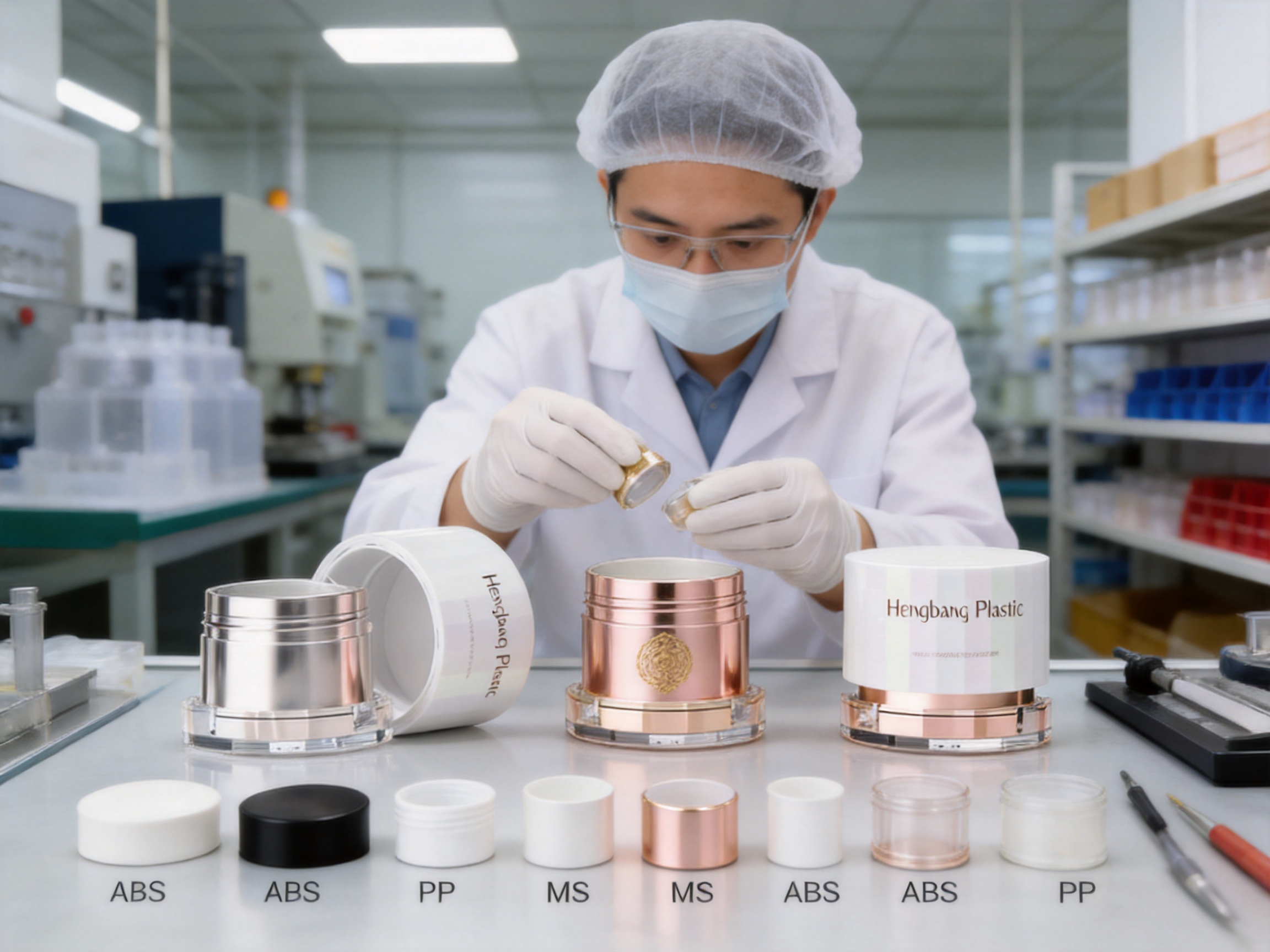
A high-quality cosmetic package is the result of coordinated design, tooling, molding, finishing, decoration, assembly, inspection, and delivery. Yuyao Hengbang Plastic Co., Ltd. specializes in plastic packaging for cosmetics and skincare products and provides design and development services alongside manufacturing.
The company was established in 2006 and operates in Yuyao City, Zhejiang Province, China. Its reported building area is 35,000 square meters, with more than 300 employees. This scale provides a foundation for coordinating product development and production activities across a professional packaging organization.
Packaging development begins before the first production run. A container must be evaluated for appearance, dimensions, component fit, decorative treatment, filling requirements, closure performance, and the intended consumer experience.
A design and development team can help convert a brand concept into a manufacturable component system. For the HB-G015, this includes coordinating the cap, outer bottle, inner bottle, finishes, logo treatment, dimensions, and refill concept.
Development work may include three-dimensional design, component engineering, sample preparation, decoration testing, color confirmation, and assembly evaluation. These steps help identify issues before mass production and allow the brand to approve the visual and functional details of the package.
Plastic cosmetic packaging depends on controlled molding to achieve consistent dimensions and reliable assembly. The cap, outer bottle, and inner bottle must be produced to suitable tolerances so that components align properly and the closure functions as intended.
For a double-wall jar, dimensional coordination is particularly important. The inner bottle must fit within the outer bottle, and the cap must engage with the jar without excessive looseness or interference. The visible relationships between the inner and outer components also affect the final appearance.
Consistent molding can help reduce flash, deformation, sink marks, short shots, uneven walls, and other defects. Process parameters, mold condition, material handling, cooling, and inspection all influence the quality of molded parts.
The HB-G015 uses spray finishing, hot stamping, and electroplating. Each process requires a different form of control.
Spray finishing requires attention to coating thickness, color, coverage, surface cleanliness, and curing. Hot stamping requires alignment between the tooling and the target surface, as well as suitable pressure, temperature, and timing. Electroplating requires controlled preparation and a stable finishing process to achieve a consistent metallic appearance.
Because multiple finishes are used on one package, the production sequence must be coordinated. Components may need to be inspected between processes to prevent a defect in one stage from being carried into the next. Protective handling is also important after decoration, because freshly finished surfaces can be vulnerable to scratches or abrasion.
Assembly transforms individual components into a usable packaging system. The cap, outer bottle, and inner bottle must be assembled according to defined procedures. The finished jar should be evaluated for alignment, fit, visual consistency, and opening and closing behavior.
For cosmetic applications, brands should also conduct formula compatibility testing. The packaging supplier can provide the container, but the brand or filling partner must confirm that the selected formulation is suitable for the materials, finishes, closure system, and intended shelf life.
Compatibility testing may examine changes in color, odor, viscosity, weight, appearance, and package integrity. It may also include storage under different temperature and humidity conditions. These tests are especially important for formulas containing oils, solvents, active ingredients, fragrances, or other components that may interact with packaging materials.
Yuyao Hengbang Plastic Co., Ltd. has passed ISO9001:2015 and ISO14001:2015 certifications according to the supplied company information. ISO 9001 is associated with quality management systems, while ISO 14001 is associated with environmental management systems.
These certifications provide an important organizational framework for process control, documentation, corrective action, continual improvement, and environmental management. They do not replace product-specific testing, but they can support a more systematic approach to manufacturing and customer service.
The company was also awarded as a Ningbo High-Tech Enterprise in 2021 and owns multiple invention patents, according to the provided information. These details indicate a focus on technical development and intellectual property alongside routine production.
Premium appearance requires more than attractive artwork. Every component should be inspected to confirm that the finished jar meets the approved sample and the customer’s specifications.
Resin and other production materials should be managed according to defined specifications. Material identification, storage conditions, batch tracking, and production records help improve traceability. Correct material selection is important because the cap, outer bottle, and inner bottle have different functional requirements.
Molded components can be checked for dimensions, weight, shape, wall consistency, visible defects, and assembly fit. Particular attention should be given to the interface between the inner and outer bottles and to the cap engagement area.
Critical dimensions should be measured against approved drawings or samples. Visual inspection can identify contamination, scratches, color variation, weld lines, deformation, and molding marks that may affect the appearance or performance of the package.
The matte white spray finish should be evaluated for uniformity, color, gloss level, adhesion, and visible defects. The gold hot-stamped logo should be checked for position, clarity, completeness, and consistency. The rose-gold electroplated inner container should be inspected for color, coverage, adhesion, and surface condition.
Decorated parts should be handled with suitable protection. Even a well-applied finish can be damaged by improper stacking, rough transport, or contact with abrasive surfaces.
Functional inspection may include cap opening and closing, component alignment, fit between the inner and outer bottles, stability on a flat surface, and overall assembly integrity. The jar should provide a predictable user experience from the first opening through repeated use.
For refillable packaging, the replacement process should also be reviewed. The brand should define how the inner container is removed, replaced, filled, or supplied to consumers. A refill system must be intuitive enough to reduce confusion and robust enough to preserve the appearance of the outer package.
The HB-G015 can be considered for a wide range of cream-based products. Its 30 ml and 50 ml capacities provide flexibility for different formulas and market positions.
A daily facial moisturizer can benefit from packaging that feels reliable, refined, and easy to store. The jar’s double-wall appearance and premium decoration can support both everyday and prestige skincare lines.
Night creams are often positioned as restorative or intensive products. The gold and rose-gold details can reinforce a treatment-oriented visual language, while the substantial cap and layered structure create a ritual-like opening experience.
Cream masks and overnight masks can use a larger capacity for repeated applications. The refill concept may be suitable for customers who regularly repurchase the same treatment, provided the filling and dispensing process is matched to the formula.
The 30 ml capacity may suit concentrated products, eye treatments, or premium active formulations. A smaller container can communicate that the product is used in measured amounts and may support travel or trial formats.
Although the jar is presented as a cosmetic cream container, its design may also be considered for selected body care or hand care products. The final application depends on formula compatibility, dispensing expectations, and the brand’s desired size and user experience.
Refillable packaging can connect environmental objectives with practical product use. Many consumers want to reduce unnecessary packaging, but they also expect attractive, convenient, and hygienic products. The HB-G015 provides a foundation for discussing these needs together.
The outer jar can function as a long-term presentation component. The replacement inner bottle can carry the new product dose, reducing the need to replace every decorative part of the package at each purchase. This may help preserve the visual investment in the original package and create a more structured repeat-purchase experience.
For brands, refill systems can support clearer communication about packaging life cycles. Instructions can explain which component is retained, which component is replaced, how the refill is installed, and how each part should be disposed of when it reaches the end of its useful life.
Refillability should be designed as a complete system rather than treated as a marketing phrase. The replacement component must be available, correctly fitted, safely filled, and convenient to purchase. The brand should also assess the additional packaging used to sell and transport refills, because the environmental result depends on the whole system.
Consumer education is equally important. If a refill process is unclear, consumers may discard the complete jar or use the components incorrectly. Clear instructions, suitable component identification, and consistent product design can improve adoption.
The HB-G015 is appropriate for brands that want their packaging to communicate several values at the same time: quality, modern design, responsible thinking, and product reliability.
The matte white body can support a clean and contemporary identity. The gold logo can provide a recognizable premium signature. The rose-gold interior can create a distinctive opening moment. The refillable structure can support a message about longer-term use and considered consumption.
These elements can be adapted to different brand stories. A clinical skincare brand may emphasize precision and clean design. A luxury brand may focus on the metallic details and tactile cap. A natural or environmentally focused brand may highlight the refill system and extended use of the outer component. A professional salon or spa brand may use the jar to create a coordinated treatment collection.
Packaging should always be aligned with the actual product and brand promise. The visual appearance can attract attention, but consistent quality, formula performance, reliable supply, and transparent communication are what sustain consumer trust.
Before placing a production order, a brand should define the technical, visual, and commercial requirements for the jar. Early preparation helps reduce revisions and supports a smoother transition from concept to finished packaging.
The available capacities are listed as 30 ml and 50 ml. The supplied information also lists a height of 60 mm and a diameter of 68.7 mm. These specifications should be confirmed against the final technical drawing because capacity, usable fill volume, component height, and external dimensions may be measured in different ways.
The brand should consider the formula’s density, filling target, headspace, and application method. A nominal container capacity is not always identical to the recommended commercial fill volume. The filling partner should verify the actual volume under production conditions.
Color approval should be based on physical samples rather than screen images alone. Matte coatings, metallic hot stamping, and electroplated finishes can appear different under various lighting conditions. Samples should be reviewed for color, gloss, logo contrast, and overall coordination.
The brand should determine whether the inner bottle will be supplied pre-filled, filled during local production, or integrated through another manufacturing arrangement. The removal and replacement process should be tested by representative users to confirm that it is understandable and practical.
Compatibility testing should be performed with the final formula and the final decorated components whenever possible. A product may behave differently depending on storage time, temperature, filling method, and contact with different packaging surfaces.
Cartons, inserts, shipping cases, and protective materials should be designed around the jar’s listed dimensions and finish sensitivity. The gold hot-stamped logo and electroplated inner container may require additional protection during transportation to prevent abrasion.
Tooling, sampling, decoration approval, material preparation, molding, finishing, assembly, inspection, and packing all influence the production schedule. Brands should allow sufficient time for sample revisions and testing before committing to a launch date.
Cosmetic packaging development involves more than making a visually attractive prototype. The package must be repeatable in production, compatible with the filling process, stable during transportation, and consistent across the quantity ordered.
A manufacturer with experience in cosmetic and skincare packaging can better understand the relationship between design intent and production reality. Decisions about wall structure, material selection, surface treatment, logo placement, component fit, and packaging protection all affect the final result.
Yuyao Hengbang Plastic Co., Ltd. has specialized in plastic packaging for cosmetics and skincare products since its establishment in 2006. Its reported team of more than 300 employees and 35,000-square-meter building area indicate the capacity to support a structured manufacturing operation. The company’s design and development services may also help brands move from an initial concept toward a production-ready package.
The stated ISO9001:2015 and ISO14001:2015 certifications provide additional evidence of formal quality and environmental management systems. The reported Ningbo High-Tech Enterprise recognition and invention patents further support the company’s emphasis on technical development.
For buyers, the most important point is not simply the existence of a certification or a large facility. The key question is how these resources are applied to the specific project. Brands should request samples, technical documents, quality standards, decoration approvals, and product-specific test results before finalizing an order.
The HB-G015 is a refillable double-wall plastic cosmetic jar designed for cream-based cosmetic and skincare products. It includes a cap, an outer bottle, and an inner bottle, with decorative finishes intended to create a premium presentation.
The supplied specifications list 30 ml and 50 ml capacities. The final fill volume should be confirmed with the manufacturer and filling partner according to the formula, headspace, and production requirements.
The listed materials are ABS and PP for the cap, MS and ABS for the outer bottle, and PP for the inner bottle.
The double-wall construction uses an outer bottle around a separate inner container. This creates a more substantial appearance and allows the inner component to support a refill-oriented packaging system.
The reference design includes a matte white spray finish, a gold hot-stamped logo, and a rose-gold electroplated inner container. Finish colors and decorative details should be confirmed through approved samples.
The ribbed, semi-enveloping cap adds tactile texture and can improve the gripping experience when opening and closing the jar. It also gives the product a more distinctive visual identity.
It may be considered for moisturizers, night creams, masks, eye treatments, body creams, and other compatible products. Final suitability depends on the formula, fill method, storage conditions, and compatibility testing.
No. The environmental result depends on how often the outer component is reused, how the refill is manufactured and transported, what materials are used, and how the components are disposed of. A well-planned refill system can, however, support a more resource-conscious packaging strategy.
Brands should consider dimensional checks, component fit, opening and closing tests, decoration adhesion, color evaluation, formula compatibility, storage testing, transportation testing, and refill-process trials. The exact program should reflect the formula and intended market.
The reference product already includes decorative customization through spray finishing, hot stamping, and electroplating. Brands should discuss available colors, logo artwork, surface effects, component options, minimum quantities, and sampling procedures with the manufacturer.
The supplied company information states that Yuyao Hengbang Plastic Co., Ltd. has passed ISO9001:2015 and ISO14001:2015 certifications. Product-specific quality requirements should still be defined and verified for each order.
The company is located at No. 7 Zhenbei Road, Mazhu Town, Yuyao City, Zhejiang Province, China.
The HB-G015 Refill Double Wall Plastic Cosmetic Jar offers a balanced solution for cosmetic and skincare brands seeking premium presentation with refill-oriented flexibility. Its layered construction, ribbed cap, matte white spray finish, gold hot-stamped logo, and rose-gold electroplated inner bottle create a coordinated visual and tactile experience.
The jar’s advantages over a basic single-wall container include stronger shelf differentiation, a more substantial appearance, enhanced handling texture, flexible use across 30 ml and 50 ml formats, and the potential to support a replaceable inner-container system. These features can help brands connect luxury design with a more considered approach to repeat packaging use.
Manufacturing quality remains central to the product’s success. Molding precision, coating consistency, hot-stamping alignment, electroplating quality, assembly control, formula compatibility, and refill usability should all be evaluated before mass production. The manufacturer’s experience in cosmetic packaging, design and development services, reported ISO certifications, technical recognition, and patent portfolio provide a strong foundation for project collaboration.
For brands developing a premium cream, treatment, mask, or moisturizer line, the HB-G015 can serve as more than a container. It can become part of the product ritual, part of the brand identity, and part of a packaging system designed for continued consumer engagement.
1. Product specification information for HB-G015 Refill Double Wall Plastic Cosmetic Jar, including materials, capacities, dimensions, and decorative treatments.
2. Company profile information for Yuyao Hengbang Plastic Co., Ltd., including establishment date, facility area, employee count, services, certifications, and technical recognition.
3. ISO 9001:2015, Quality Management Systems—Requirements.
4. ISO 14001:2015, Environmental Management Systems—Requirements with Guidance for Use.
5. General principles of cosmetic packaging development, including component design, decoration control, compatibility evaluation, and refill-system planning.


Copyright © Yuyao Hengbang Plastic Co., Ltd.
All Rights Reserved.
 Wholesale Plastic Cosmetic Packaging Manufacturers