English
 中文简体
中文简体
News
Home > Author > Li Wenjing — Cosmetic Packaging After-Sales Specialist > Why Double-Wall Acrylic Cream Jars Elevate Premium Skincare Packaging

 2026.08.11
 Li Wenjing — Cosmetic Packaging After-Sales Specialist
Content
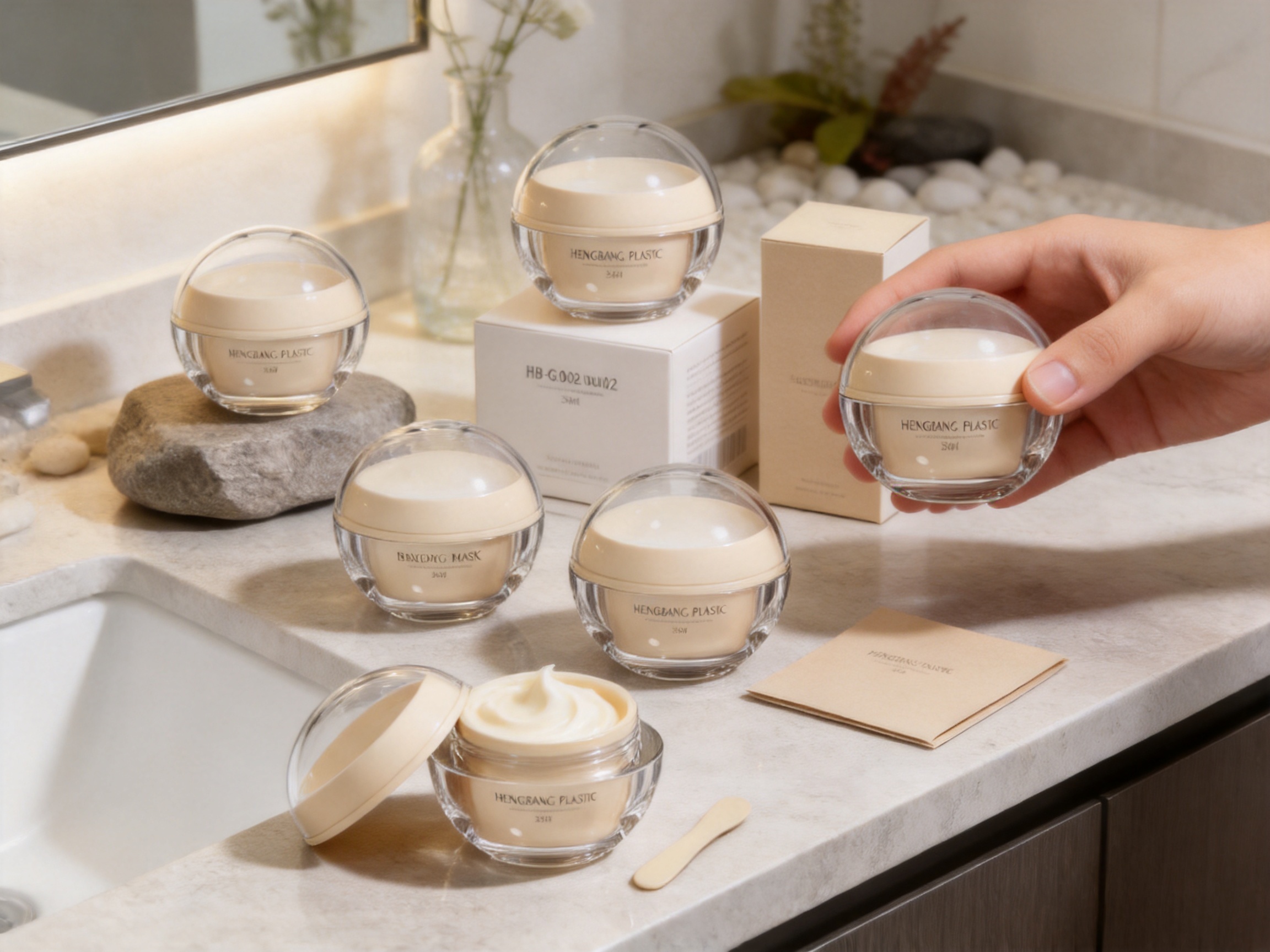
Premium skincare packaging must do more than hold a formula. It must protect the product, communicate quality, support convenient daily use, and help a brand create a recognizable presence in a competitive market. For creams, night treatments, serums, and other high-value skincare products, the container is often one of the first physical points of contact between the consumer and the brand. A well-designed jar can therefore influence perceptions of performance, reliability, luxury, and care before the customer has even opened it.
The HB-G002 Double Wall Plastic Acrylic Body Cream Jar is designed around these requirements. It combines a transparent acrylic exterior, a separate inner PP container, and a coordinated cap made from PMMA and PP. Its spherical double-wall structure gives the jar a distinctive visual identity while also adding a substantial, protective layer around the product-holding interior. Available in 30ml and 50ml capacities, the jar is suitable for a wide range of skincare applications, including facial creams, body creams, night creams, moisturizing treatments, masks, and premium serums with cream-like textures.
Unlike ordinary single-wall plastic jars, this double-wall design provides a more elevated appearance without relying on heavy glass construction. The result is packaging that combines visual clarity, structural support, handling comfort, and practical manufacturing flexibility. It is especially well suited to cosmetic brands seeking a luxurious appearance, manageable shipping weight, and a dependable platform for customization.
The HB-G002 is a double-wall plastic acrylic cream jar with a spherical profile. The design is smooth and seamless, with a rounded silhouette that distinguishes it from conventional cylindrical or square cosmetic jars. The shape creates a soft, modern impression that can work across multiple skincare categories, from prestige facial care to specialized body treatments.
The outer body is made from PMMA, commonly known as acrylic. PMMA is valued in cosmetic packaging for its glass-like transparency, smooth surface, and relatively low weight compared with glass. In this product, the transparent outer wall allows the container to display its internal structure and contents attractively. The material can also support a wide range of decorative treatments, such as screen printing, hot stamping, coating, labeling, and other brand-specific finishes, subject to project requirements and production validation.
Inside the outer shell is a PP inner bottle. This inner component forms the principal product-contact chamber. Polypropylene is widely used for cosmetic packaging because it offers good chemical resistance, practical durability, and compatibility with many skincare formulations. The combination of an acrylic exterior and PP interior allows the jar to balance visual sophistication with functional product containment.
The cap combines PMMA and PP. This material pairing helps maintain visual coordination between the closure and the body while supporting a secure fit and practical usability. A properly engineered closure is essential for minimizing exposure to air, maintaining product cleanliness, and reducing the risk of leakage during storage and transport.
The wide-mouth format is another important design feature. Cream products are often thicker than lotions or fluid serums, and a narrow opening can make dispensing inconvenient. The wide mouth of the HB-G002 allows users to access the formula more easily, whether they are using a fingertip, a small cosmetic spatula, or another dispensing tool. It can also simplify filling and manufacturing operations for products with higher viscosity.
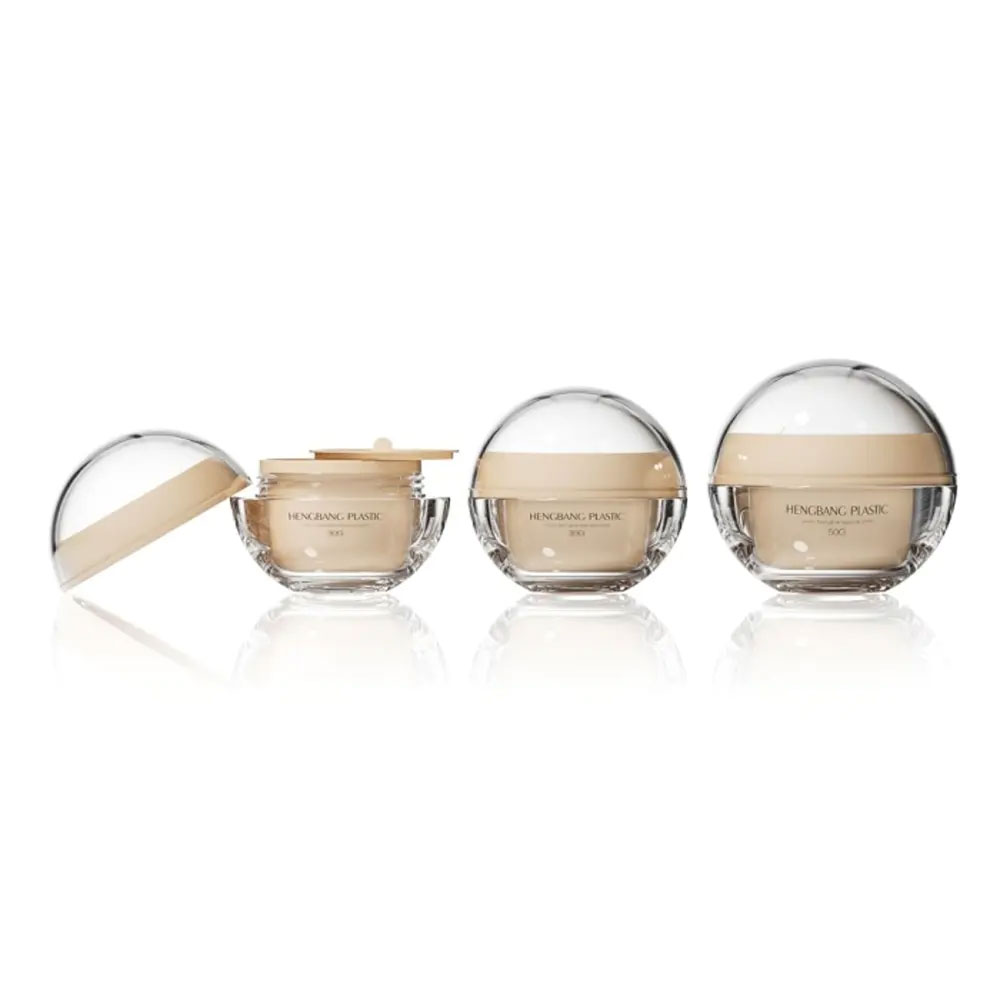
HB-G002 Double Wall Plastic Acrylic Body Cream Jar
The product is offered in two practical capacities. The 30ml option is compact and suitable for premium facial creams, trial sizes, travel collections, eye treatments, concentrated masks, and limited-edition products. The 50ml version provides additional fill volume for daily-use facial moisturizers, night creams, anti-aging products, and higher-consumption skincare formulas.
| Specification | 30ml Version | 50ml Version |
| Product type | Double-wall plastic acrylic cream jar | Double-wall plastic acrylic cream jar |
| Cap material | PMMA + PP | PMMA + PP |
| Outer bottle material | PMMA | PMMA |
| Inner bottle material | PP | PP |
| Nominal capacity | 30ml | 50ml |
| Height | 60.6mm | 68.5mm |
| Diameter | 65.35mm | 73.4mm |
The supplied product information lists the second height entry as “68.5ml,” but because height is a linear measurement, it is understood as 68.5mm. Final technical drawings, tolerances, neck dimensions, closure details, and filling specifications should be confirmed with the manufacturer before tooling or mass production.
The compact height-to-diameter proportions contribute to the jar’s stable, rounded appearance. A broader base can help the package sit securely on a vanity, retail shelf, bathroom counter, or treatment-room surface. The overall form also provides a generous decoration area, depending on the selected printing or labeling method.
The central advantage of the HB-G002 is its double-wall construction. In a single-wall jar, the external surface and product-contact chamber are effectively represented by one structural component. A double-wall jar separates the visible exterior from the internal container. This separation creates additional design opportunities and can improve the perceived quality of the finished package.
First, the outer acrylic shell produces a more substantial visual effect. Consumers often associate layered construction, transparent materials, and precisely fitted components with higher-value products. The outer wall can create depth around the inner jar, making the container look more refined than a basic molded container with a flat, exposed surface.
Second, the double-wall format allows the internal PP chamber to perform its product-containment role while the PMMA exterior focuses on appearance, handling, and brand presentation. This division of functions is useful for cosmetic brands that want the premium look of acrylic but also prefer a practical inner material for formulation compatibility and manufacturing efficiency.
Third, the outer wall provides an additional physical layer around the inner container. It should not be described as an absolute barrier against every environmental factor, because the actual protection depends on wall thickness, closure design, formulation, filling conditions, and storage requirements. Nevertheless, a well-assembled double-wall structure can add useful support and help reduce the direct impact of handling on the inner chamber.
Fourth, the rounded exterior makes the product comfortable to hold. A spherical body avoids sharp corners and creates a smooth transition between the base, sidewall, and shoulder. This is particularly appropriate for skincare products associated with comfort, softness, hydration, and self-care.
Many cosmetic jars use a single injection-molded plastic body. These containers can be economical and functional, but they may offer fewer opportunities for creating visual depth. The HB-G002 addresses this limitation through a layered design that appears more substantial and more luxurious.
A conventional single-wall jar may require additional coatings or decorative treatments to create a premium appearance. The HB-G002 can achieve visual interest through its transparent structure and spherical geometry before additional decoration is applied. This may allow a brand to develop a clean, minimalist package in which the material itself becomes part of the design language.
The double-wall configuration can also support stronger differentiation on a crowded retail shelf. Many facial creams are presented in similar round jars. A smooth spherical form with a visible transparent outer shell gives the product a recognizable profile. This can help the package stand apart from standard straight-sided jars while preserving the familiar wide-mouth format expected by consumers.
Compared with heavy glass jars, the plastic acrylic format can offer logistical benefits. It is generally easier to handle during filling, packing, warehousing, and distribution, and it can reduce the consequences of accidental impact compared with brittle glass. Lower package weight may also be advantageous for international shipping and e-commerce fulfillment. These benefits should be evaluated together with the brand’s sustainability goals, recycling strategy, and local regulatory requirements.
Compared with low-cost commodity jars, the HB-G002 offers a more carefully coordinated material system. The use of PMMA for the visible shell, PP for the inner container, and PMMA plus PP for the cap creates a product architecture that is intentionally designed rather than purely standardized.
Compared with airless packaging, a conventional wide-mouth jar does not provide the same pump-based, reduced-exposure dispensing system. However, it offers a different set of advantages: easy access for thick formulas, simple consumer familiarity, broad filling compatibility, and an attractive presentation for products whose texture and application method benefit from direct access. The choice between a jar and an airless bottle should be based on formula sensitivity, hygiene objectives, consumer usage habits, and brand positioning.
PMMA is frequently selected for premium cosmetic packaging because it can provide excellent optical clarity and a smooth, polished appearance. The transparent exterior of the HB-G002 allows consumers to see the inner structure and, depending on the formulation and fill level, observe the product inside. This supports visual merchandising and can make the package appear clean, contemporary, and high value.
Acrylic also offers a pleasant surface quality. When properly molded and finished, it can feel smooth in the hand and support a glass-like visual effect without the same level of fragility associated with glass. The material is compatible with many decorative approaches, giving brands the possibility of combining transparency with frosted effects, color tints, metallic details, printed logos, or other visual elements.
PMMA is not automatically suitable for every cosmetic formula. Compatibility testing remains important, particularly when the product contains strong solvents, high concentrations of essential oils, aggressive actives, or other ingredients that may affect plastics. The formula, inner container, closure, gasket if applicable, and decoration should be evaluated together under realistic storage conditions.
Polypropylene is a practical choice for the inner product-contact container. It is commonly used in cosmetic and personal-care packaging because of its useful balance of toughness, low density, chemical resistance, and manufacturing flexibility. For creams and emulsions, the PP inner bottle can provide a dependable chamber while the external PMMA wall contributes to appearance and structure.
The PP inner component may also support efficient production for different formula viscosities. Since the jar uses a wide opening, it can accommodate thicker products that may be difficult to fill into narrow-neck containers. The exact filling process must be confirmed according to the formula’s temperature, viscosity, shear sensitivity, and filling equipment.
The cap is a highly visible part of any cosmetic jar. It is handled every time the product is opened or closed, and its fit contributes directly to the user’s impression of quality. A PMMA and PP cap assembly can coordinate the transparent, premium appearance of the outer body with the functional requirements of a closure component.
The closure should be assessed for thread engagement, sealing performance, opening torque, closing torque, dimensional consistency, and resistance to repeated use. A beautiful jar cannot deliver a successful user experience if the cap is difficult to remove, does not close securely, or becomes loose during transport. For this reason, production validation should include closure testing after decoration, filling, and realistic distribution simulation.
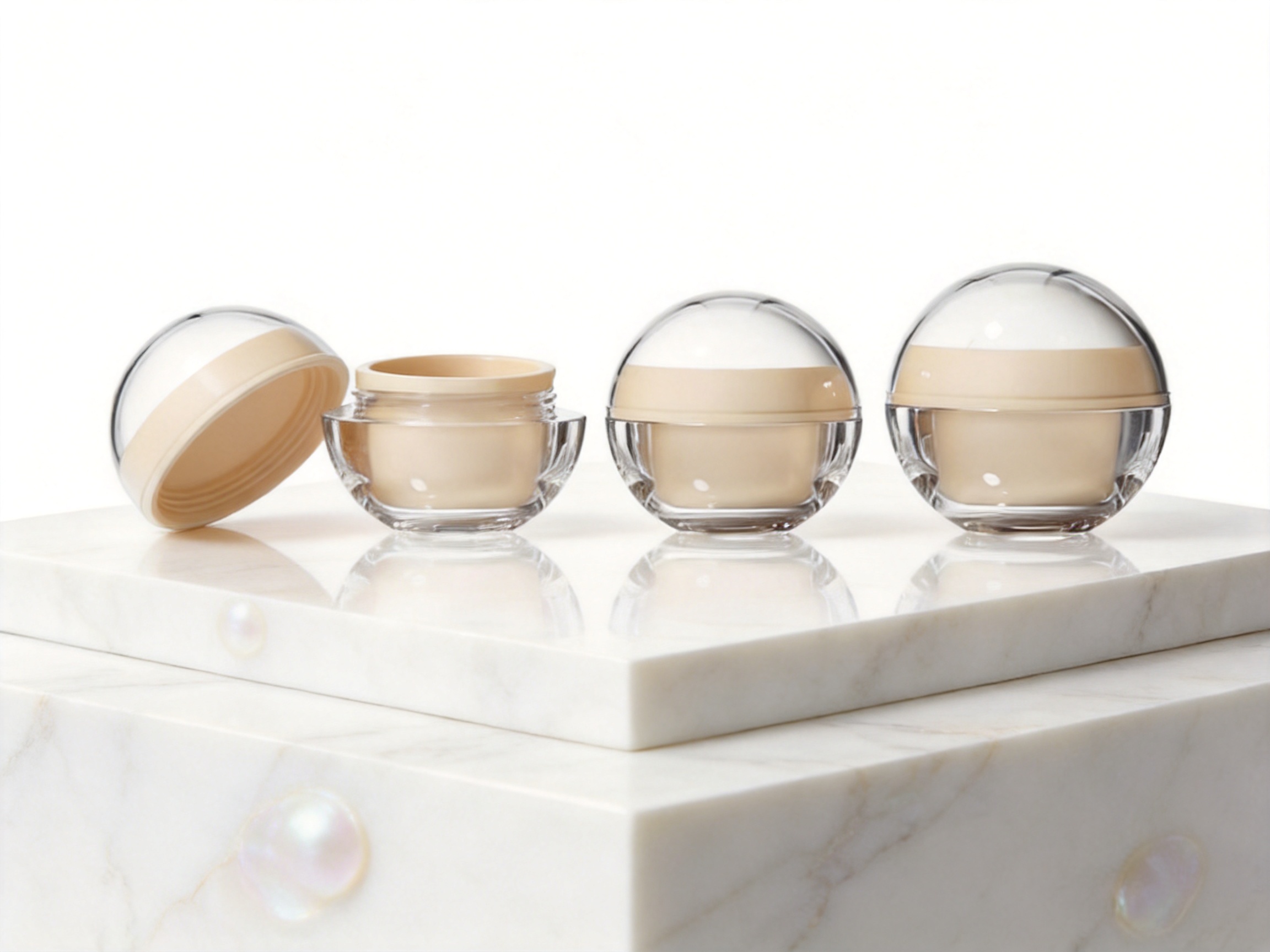
The HB-G002 is versatile enough to serve multiple cosmetic and skincare applications. Its 30ml and 50ml sizes give brands room to create coordinated product lines with different positioning and usage patterns.
Moisturizing creams are one of the most natural applications for this jar. The wide mouth allows users to take a controlled amount of product, while the smooth, rounded form reinforces the gentle and nourishing character of a daily moisturizer. A transparent outer wall can also complement clear, white, pastel, or lightly colored formulations.
Night creams are often positioned as premium, restorative, or intensive products. The spherical acrylic format supports this positioning by creating a luxurious object that feels appropriate for an evening skincare ritual. The 50ml size is well suited to a regular-use night cream, while the 30ml version can be used for concentrated treatments or introductory collections.
Although many body creams are sold in tubes or larger bottles, a premium body cream can benefit from a jar format. The substantial shape and wide opening are convenient for richer textures. A 50ml jar may be appropriate for a concentrated hand and body cream, a travel-size body treatment, or a boutique skincare line.
Cream masks, sleeping masks, and rinse-off treatments often require a broad opening because the product is applied in larger quantities. The HB-G002 can present these products in a visually appealing vessel that supports premium positioning. The design may be especially effective for masks with a smooth texture, visible color, or distinctive appearance.
Serums are frequently associated with pumps or droppers, but certain gel-serum and cream-serum formulas are better suited to jars. The 30ml capacity offers a compact platform for a concentrated treatment. Brands should carefully evaluate formula exposure, consumer hygiene, and preservative performance when selecting an open-jar format for active products.
Eye creams and neck treatments commonly use smaller pack sizes because the quantities applied are limited. The 30ml version can provide a premium presentation for these categories. The rounded jar can also support a coordinated range in which several products share the same visual language while using different capacities or decorative treatments.
Packaging is part of the product experience. Consumers judge a package through sight, touch, sound, and the effort required to open and use it. The HB-G002 is designed to create a calm, refined experience through its smooth surface and rounded form.
The spherical body fits naturally in the palm and avoids the hard edges found on many rectangular jars. Its broad base can provide stability when the container is placed on a flat surface. The transparent appearance may make the jar feel clean and modern, while the layered construction gives it a more distinctive tactile presence.
The wide mouth supports direct access to thick creams. This is useful for consumers who prefer to apply products with their fingertips and for products that cannot be dispensed easily through a narrow opening. Brands that want to encourage cleaner use can include a spatula, recommend washing hands before application, or provide usage guidance on the outer carton.
The cap should open and close smoothly with a controlled movement. For premium packaging, the closure experience is often as important as the visual design. A consistent cap fit, comfortable grip, and reliable seal can reinforce the perception that the product has been carefully engineered.
The jar’s dimensions also support convenient retail presentation. The 30ml size can fit naturally into gift sets, discovery kits, travel assortments, and hotel or spa programs. The 50ml version can serve as a core retail size for everyday skincare products. Both formats can be displayed together to create a coherent product family.
Yuyao Hengbang Plastic Co., Ltd. was established in 2006 and specializes in plastic packaging for cosmetics and skincare products. The company operates in Yuyao City, Zhejiang Province, China, and has a building area of approximately 35,000 square meters with more than 300 employees. This organizational scale provides a foundation for coordinated design, development, tooling, production, quality control, and customer service.
The company’s experience in cosmetic packaging is particularly relevant to products such as the HB-G002. Cosmetic containers require close attention to appearance, dimensional consistency, closure fit, surface quality, and compatibility with filling operations. A manufacturer focused on this sector can develop production procedures around the practical requirements of creams, lotions, serums, masks, and other personal-care formulas.
Hengbang provides design and development services in addition to manufacturing. This is important for brands that need support at the early stage of a project. Packaging development may involve selecting the appropriate capacity, reviewing the shape, confirming the closure, assessing decorative methods, and coordinating the container with an outer carton or secondary packaging. Early technical cooperation can reduce avoidable revisions later in the project.
The spherical shape of the HB-G002 requires controlled coordination between the body, inner bottle, cap, and sealing areas. Design development must consider how the components fit together, how the jar stands on a surface, how the cap aligns with the body, and how the package performs during repeated opening and closing.
An integrated development approach allows the manufacturer to examine these relationships as a complete system. Instead of treating the body and cap as unrelated components, the design team can consider appearance, assembly, usability, and production requirements together.
Plastic packaging quality begins with tooling. A spherical container with a smooth, seamless appearance requires mold surfaces, parting lines, cooling behavior, and ejection methods to be carefully managed. Variations in molding conditions can influence transparency, surface gloss, dimensional accuracy, and the appearance of weld lines or flow marks.
Experienced packaging manufacturers typically use design reviews and trial production to identify potential issues before mass production. Mold testing can help verify the fit between the outer PMMA body and inner PP bottle, the consistency of the cap, the stability of the base, and the visual quality of transparent surfaces.
For brands, the tooling stage is also the appropriate time to confirm whether the selected decoration will be applied directly to the jar or through a label or secondary component. The final artwork should take into account the curved surface, viewing angle, printable area, and the visual distortion that can occur on a spherical package.
The PMMA outer body and PP inner bottle require different processing considerations. Material drying, melt temperature, injection speed, cooling, and demolding conditions must be adjusted according to the properties of each resin. Transparent PMMA parts require particular attention to clarity and surface appearance, while PP components require reliable dimensional control and consistent assembly performance.
Production management should include control of raw material quality, machine settings, mold temperature, cycle consistency, and visual inspection. For a premium jar, small cosmetic defects can affect the perceived value even when the container remains functional. A systematic quality program helps reduce variation between batches.
A double-wall jar contains multiple components that must be assembled accurately. The outer PMMA wall, inner PP bottle, and cap assembly must maintain alignment and provide the intended visual effect. Assembly equipment or controlled manual processes should be selected according to the product’s construction and order volume.
Assembly quality can influence the appearance of the gap between walls, the seating of the inner bottle, the stability of the finished jar, and the closing behavior of the cap. A reliable production process should define inspection points for component fit, contamination, scratches, distortion, and abnormal movement.
Yuyao Hengbang Plastic Co., Ltd. has passed ISO9001:2015 and ISO14001:2015 certifications. ISO9001:2015 relates to quality management systems, while ISO14001:2015 relates to environmental management systems. These certifications indicate that the company has established formal systems for managing quality-related processes and environmental responsibilities.
Certification alone does not replace product-specific testing, but it provides an important organizational framework. For cosmetic packaging customers, a structured management system can support document control, process monitoring, corrective action, supplier management, and continuous improvement.
The company was also awarded Ningbo High-Tech Enterprise status in 2021 and owns multiple invention patents. These achievements indicate an emphasis on technical development and product innovation. For customers seeking distinctive packaging rather than basic stock containers, engineering knowledge and intellectual property can be meaningful advantages.
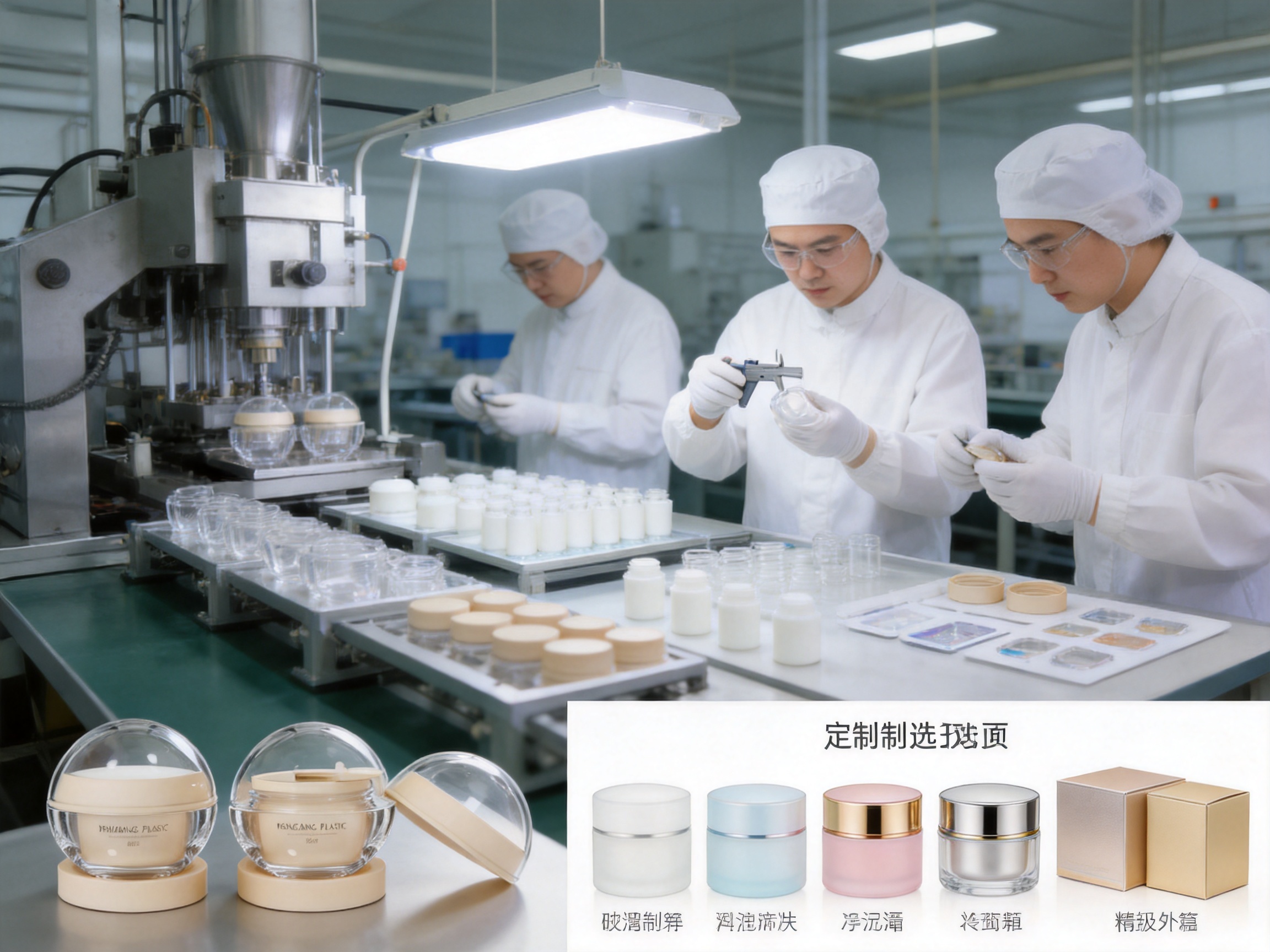
Quality control for a premium cosmetic jar should cover appearance, dimensions, materials, assembly, closure performance, and filling compatibility. The exact inspection plan may vary according to the customer’s requirements, but the following areas are especially important for the HB-G002.
Transparent PMMA components should be inspected for clarity, color consistency, black spots, bubbles, flow marks, scratches, cracks, deformation, and other visible defects. Because the exterior is highly visible, surface quality has a direct impact on the product’s shelf appeal.
The inner PP bottle should be checked for molding defects, contamination, flash, distortion, and irregular edges. The cap should be examined for surface consistency, assembly condition, and decoration quality if printing or coating is applied.
Height and diameter should be measured against approved specifications. Additional dimensions may include opening diameter, thread dimensions, cap height, wall thickness, base flatness, and the relationship between the outer and inner components. Consistent dimensions help ensure reliable filling, labeling, secondary packaging, and closure performance.
The assembled jar should be evaluated for closure fit and leakage resistance. Testing may include an inverted storage test, pressure or vacuum testing where appropriate, transport simulation, and repeated opening-and-closing cycles. The method should reflect the formula, filling level, shipping conditions, and expected product life.
Since a cream jar is often stored in bathrooms, handbags, travel cases, or retail cartons, the closure must remain secure under realistic handling. Leakage testing should be conducted using the intended formula or a representative test substance whenever possible.
Packaging compatibility testing should evaluate the interaction between the formula and the PP inner bottle, cap components, sealing elements, and any decoration. Testing may monitor changes in color, odor, viscosity, weight, container appearance, leakage, stress cracking, and closure performance over time.
Elevated-temperature and low-temperature storage conditions may be used to accelerate evaluation, but accelerated results should be interpreted together with real-time testing. The brand and packaging supplier should agree on the test protocol before final approval.
The clean spherical surface of the HB-G002 provides a strong foundation for brand customization. Although the supplied product information does not specify a fixed decoration package, cosmetic brands can discuss suitable options with the manufacturer based on artwork, order volume, color requirements, and budget.
Screen printing can be used for logos, product names, usage information, or decorative patterns. On a transparent surface, printing can create a restrained, modern appearance or a more expressive design depending on ink opacity and color selection.
Hot stamping may be considered for metallic gold, silver, or other foil accents. Metallic details can reinforce premium positioning when used selectively around a logo, cap, rim, or product name. Because the jar is rounded, artwork should be tested on production samples to confirm registration and visual consistency.
Frosted effects can soften the transparency of acrylic and create a more tactile appearance. A translucent tint can also coordinate the package with the product color or brand palette. Clear, milky, pastel, amber, pearl, and other visual directions may be explored, subject to material and decoration feasibility.
Labels offer another route to customization. A label can support complex graphics, variable information, multilingual copy, batch identification, and changing product ranges without requiring a fully printed container. The label material and adhesive should be tested for adhesion, moisture resistance, edge lifting, and compatibility with the curved surface.
Secondary packaging can complete the presentation. An outer carton may provide additional protection, ingredient information, directions, regulatory details, and brand storytelling. It can also reduce direct contact with the jar during distribution and create a more complete unboxing experience.
The same stock jar can support different market positions through changes in color, decoration, formula presentation, and secondary packaging. A minimalist skincare brand might use a clear or lightly frosted jar with a small monochrome logo. A luxury brand might combine transparent acrylic with metallic decoration and a rigid presentation carton. A botanical brand could use soft green tones, natural imagery, and restrained typography.
For clinical or dermatological skincare, the spherical form can be balanced with precise typography, restrained colors, and clear product information. For spa and wellness products, the rounded shape can be paired with calming shades and tactile labels. For gift sets, the 30ml size can be combined with other products in a coordinated assortment.
Capacity selection should reflect the consumer’s expected usage. The 30ml jar is appropriate when the formula is concentrated, the product is used sparingly, or the brand wants a compact premium format. The 50ml jar is better suited to products applied daily over a longer period. Using both sizes can help a brand build a hierarchy within one collection.
Before production, the filling company should confirm the jar’s compatibility with its equipment. The wide mouth is generally advantageous for creams, but filling parameters still depend on product viscosity, temperature, aeration, and setting behavior. The filling line should be adjusted to prevent overfilling, underfilling, contamination, or damage to the jar components.
Product-contact cleanliness is especially important for open-mouth containers. The inner PP bottle and cap should be handled in accordance with the brand’s hygiene procedures. Filling areas, operators, tools, and packaging components should be managed to minimize contamination risks.
Storage conditions should be defined for both empty packaging and filled products. Acrylic components should be protected from scratching and excessive heat. Finished jars should be packed with suitable separators or protective materials to prevent surface damage during movement.
For international distribution, packaging engineers should assess carton configuration, pallet stability, drop resistance, vibration, compression, and temperature exposure. The lighter weight of plastic compared with glass may simplify logistics, but it does not eliminate the need for transport testing. A spherical package can create unused space if cartons are not designed efficiently, so pack-out planning is important.
Cosmetic brands increasingly evaluate packaging through the full life cycle rather than appearance alone. The HB-G002’s plastic construction can offer weight and handling advantages compared with glass, but responsible packaging decisions should consider material reduction, durability, decoration, recyclability, shipping efficiency, and end-of-life conditions.
The double-wall design uses multiple plastic components, which may complicate separation and recycling compared with a simple single-material container. Brands should therefore discuss the structure with their sustainability teams and evaluate the requirements of their target markets. If recycling guidance is printed on the carton or label, it should reflect local collection systems and applicable regulations.
Durability is also part of sustainability. A container that protects the formula, survives distribution, and provides a satisfying user experience may reduce product loss and premature disposal. Reusable or refillable concepts could be considered in future development, although any refill solution would require separate engineering, hygiene validation, and compatibility testing.
Material declarations, recycled content options, decoration limitations, and environmental documentation should be confirmed directly with the manufacturer. These factors can vary according to the selected resin, color, production process, and order requirements.
Packaging development involves more than selecting an attractive shape. A successful project requires coordination between industrial design, plastic materials, tooling, molding, assembly, decoration, filling, logistics, and regulatory needs. An experienced cosmetic packaging manufacturer can help connect these stages.
Yuyao Hengbang Plastic Co., Ltd. has focused on cosmetic and skincare packaging since 2006. Its product scope includes cosmetic containers designed for creams, lotions, serums, and related personal-care products. The company’s more than 300 employees and approximately 35,000-square-meter facility provide a substantial operating base for customer projects.
The company’s design and development services can support brands that need a complete packaging solution rather than a basic component purchase. Technical discussions may include capacity selection, material confirmation, decoration, sample approval, tooling, quality standards, packaging methods, and production schedules.
The company’s ISO9001:2015 and ISO14001:2015 certifications add formal structure to quality and environmental management. Its Ningbo High-Tech Enterprise recognition and invention patents further suggest that research, engineering, and product innovation are part of its broader development strategy.
For international customers, communication and documentation are also important. A professional supplier should be able to provide technical information, sample coordination, inspection standards, packaging details, and production updates. Clear communication helps prevent misunderstandings about dimensions, materials, color, decoration, tolerances, and acceptance criteria.
A structured development process can help a brand bring the HB-G002 into production efficiently.
The brand should identify the product type, viscosity, pH, active ingredients, essential oils, solvents, expected shelf life, filling temperature, and intended application method. This information helps determine whether the jar is suitable and what compatibility tests are required.
The 30ml and 50ml options should be compared according to dosage, usage frequency, target market, retail price, and product positioning. A brand may select one size for a focused product or both sizes for a complete collection.
Physical samples should be assessed for appearance, transparency, color, surface quality, cap fit, opening experience, stability, and internal volume. Samples should be filled with the intended formula or a representative substitute whenever possible.
Artwork, color references, logo placement, label dimensions, and finishing methods should be reviewed on actual curved samples. Digital renderings are useful for concept development, but production samples are essential for final visual approval.
The filled jar should undergo storage, leakage, closure, transport, and formula compatibility testing. The testing period and conditions should be agreed by the brand, filling company, and packaging manufacturer.
Before mass production, the customer should approve a sample that reflects the intended materials, decoration, assembly, and packaging method. The approved sample becomes an important reference for production inspection.
Acceptance criteria should define allowable cosmetic defects, dimensional tolerances, color variation, decoration registration, cap performance, and packing conditions. Clear standards make inspection more objective and support consistent results between orders.
Production scheduling should account for tooling, raw materials, decoration, assembly, inspection, carton packing, and shipping. The brand should also confirm order quantities, lead times, delivery terms, and documentation requirements before placing the final purchase order.
| Evaluation area | HB-G002 double-wall acrylic jar | Basic single-wall plastic jar | Glass cream jar | Airless package |
| Visual presentation | Layered, transparent, spherical, premium appearance | Functional appearance with fewer structural layers | Premium and substantial appearance | Modern, technical appearance |
| Material system | PMMA outer body, PP inner bottle, PMMA + PP cap | Often one primary plastic body and closure | Glass body with plastic or metal components | Multiple pump and container components |
| Formula access | Wide-mouth access for creams and masks | Usually convenient for thick formulas | Usually convenient for thick formulas | Controlled dispensing through pump |
| Handling weight | Generally lighter than glass | Usually lightweight | Typically heavier | Depends on construction |
| Design differentiation | Strong differentiation through double-wall spherical form | Depends heavily on decoration | Often associated with luxury but may look conventional | Distinctive through dispensing technology |
| Best suited applications | Premium creams, night treatments, masks, body creams, concentrated skincare | Mass-market creams and general skincare | Prestige creams and giftable products | Air-sensitive or hygiene-focused formulas |
This comparison is a general packaging guide rather than a universal performance ranking. The best package depends on the formula, target consumer, brand strategy, cost structure, sustainability goals, filling line, and distribution environment. The HB-G002 is particularly strong when a brand wants a premium visual effect, a wide-mouth format, manageable weight, and a distinctive double-wall design.
The HB-G002 is a double-wall plastic acrylic cream jar with a spherical shape. It includes a PMMA outer bottle, a PP inner bottle, and a cap made from PMMA and PP.
The product information specifies 30ml and 50ml versions. The 30ml size is suitable for compact or concentrated products, while the 50ml size is appropriate for daily-use creams and larger premium treatments.
The 30ml version has a listed height of 60.6mm and diameter of 65.35mm. The 50ml version has a listed height of 68.5mm and diameter of 73.4mm. The supplied information appears to contain a unit typo for the second height, which should be confirmed as millimeters in the final technical drawing.
PMMA provides a clear, smooth, glass-like appearance and can support a premium visual presentation. It is also lighter than glass and can be used with various decoration methods, subject to testing and production requirements.
PP is widely used in cosmetic packaging because it offers practical toughness and compatibility with many skincare formulations. The inner bottle provides the product-contact chamber, while the PMMA outer wall contributes to appearance and structural presentation.
Yes. The wide-mouth format is suitable for many thick creams, body creams, masks, night creams, and gel-creams. The filling company should confirm the appropriate filling method according to the formula’s viscosity and processing conditions.
It can be used for cream-serums or gel-serums when the formula is compatible with the materials and the brand accepts the hygiene characteristics of a wide-mouth jar. Highly fluid serums may be better suited to pumps, droppers, or other dispensing formats.
No packaging should be described as completely airtight without specific testing. The cap and sealing system are designed to help protect the contents, but actual performance depends on component tolerances, formula characteristics, filling conditions, storage, and transport. Leakage and closure testing should be completed for the final product.
Cosmetic packaging projects can commonly include customization through color, coating, printing, hot stamping, labels, and secondary packaging. Available options, minimum order quantities, artwork requirements, and technical limitations should be confirmed with the manufacturer.
Plastic acrylic packaging is generally lighter than an equivalent glass container, although the actual weight depends on the design and wall thickness. Lower weight may simplify handling and shipping, but the complete package should be evaluated for protection and sustainability performance.
Potentially, but compatibility testing is essential. Active ingredients, solvents, essential oils, acids, and other formula components may interact differently with packaging materials. The filled container should be tested under suitable real-time and accelerated conditions.
Yuyao Hengbang Plastic Co., Ltd. has passed ISO9001:2015 and ISO14001:2015 certifications. These relate to quality management and environmental management systems. Product-specific inspections and testing should still be defined for each customer project.
Yes. Using both sizes can create a coordinated collection. The 30ml format may serve eye care, travel, trial, or concentrated treatments, while the 50ml format can be used for regular-use facial or body creams.
The brand should confirm the final material specification, dimensions, capacity, decoration, formula compatibility, filling method, closure performance, quality standards, packaging configuration, order quantity, lead time, and shipping requirements.
The HB-G002 Double Wall Plastic Acrylic Body Cream Jar offers a balanced solution for brands seeking premium cosmetic packaging with practical everyday performance. Its spherical form creates a distinctive shelf presence, while the transparent PMMA outer body produces a refined visual effect. The PP inner bottle provides a functional product-contact chamber, and the PMMA plus PP cap completes the coordinated design.
The double-wall architecture gives the jar a meaningful advantage over basic single-wall containers by adding visual depth, structural layering, and opportunities for sophisticated branding. Its wide mouth supports convenient access to creams, masks, and other rich formulations. The 30ml and 50ml sizes provide flexibility for different product categories, consumer routines, and price points.
Behind the product is a manufacturer with experience in cosmetic packaging, design and development capabilities, a substantial production base, formal ISO9001:2015 and ISO14001:2015 certifications, high-tech enterprise recognition, and multiple invention patents. These strengths can help brands manage the technical and commercial requirements of a complete packaging project.
For the best result, the jar should be evaluated as part of a complete packaging system. Formula compatibility, closure testing, decoration performance, filling conditions, shipping protection, regulatory information, and sustainability objectives should all be reviewed before production approval. When these factors are properly coordinated, the HB-G002 can provide a memorable, luxurious, and functional presentation for modern skincare products.
1. Product specification information for HB-G002 Double Wall Plastic Acrylic Body Cream Jar, including materials, capacities, dimensions, and construction details.
2. ISO 9001:2015, Quality Management Systems — Requirements.
3. ISO 14001:2015, Environmental Management Systems — Requirements with Guidance for Use.
4. General technical literature on polymethyl methacrylate, including transparency, molding behavior, surface appearance, and cosmetic packaging applications.
5. General technical literature on polypropylene, including chemical resistance, durability, processing characteristics, and use in product-contact packaging.
6. Cosmetic packaging quality-control practices covering visual inspection, dimensional measurement, closure testing, leakage evaluation, compatibility testing, and transport simulation.
7. Company information supplied for Yuyao Hengbang Plastic Co., Ltd., including establishment history, facility scale, workforce, design and development services, certifications, high-tech enterprise recognition, and invention patents.


Copyright © Yuyao Hengbang Plastic Co., Ltd.
All Rights Reserved.
 Wholesale Plastic Cosmetic Packaging Manufacturers