English
 中文简体
中文简体
News
Home > Author > Li Wenjing — Cosmetic Packaging After-Sales Specialist > Plastic Blue Sunscreen Squeeze Bottle: A Practical Packaging Solution for Modern Skincare

 2026.09.08
 Li Wenjing — Cosmetic Packaging After-Sales Specialist
Content
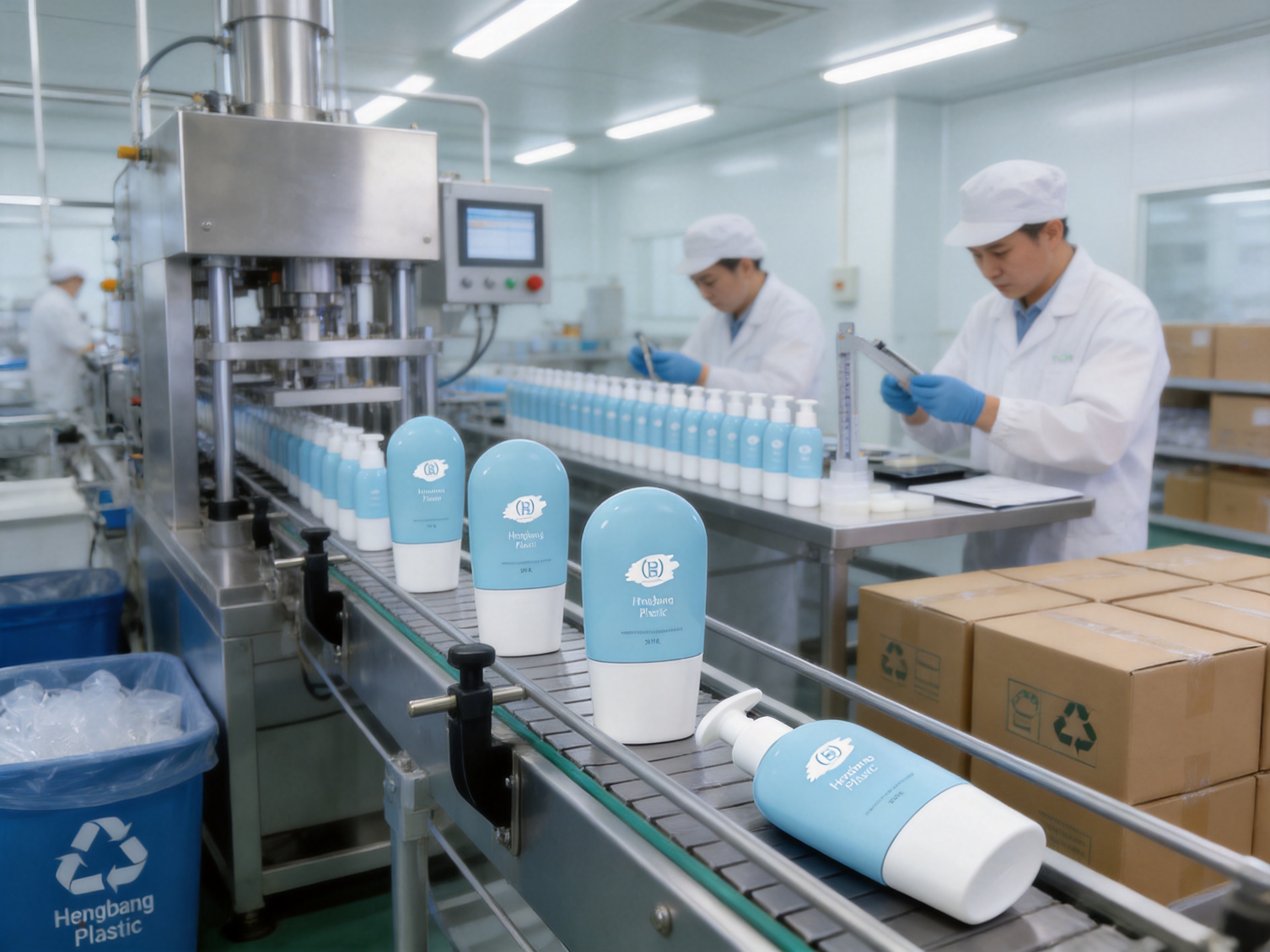
In the skincare and sun-care market, packaging is more than a container. It protects the formula, controls dispensing, communicates product quality, supports convenient use, and influences how consumers understand a brand. Sunscreen packaging must meet particularly demanding requirements because many sun-care formulas are used frequently, carried outdoors, and exposed to heat, light, movement, and repeated opening and closing. A suitable bottle therefore needs to combine reliable protection with simple, hygienic, and convenient dispensing.
The HB-F004 Plastic Blue Sunscreen Squeeze Bottle is designed for this type of application. It is a compact plastic squeeze bottle intended for sunscreen and other personal-care formulas. Its PP bottle body provides a balance of flexibility, practical durability, low weight, and recyclability. The blue or opaque appearance helps limit exposure to ultraviolet radiation, while the squeeze format allows users to dispense the product with controlled pressure.
Available in 30 ml and 50 ml capacities, the bottle can serve several different positioning strategies. The smaller size is suitable for travel, handbags, gym bags, sample programs, and portable daily-use products. The larger size provides additional product volume while remaining compact enough for regular personal-care use. Together, these options give skincare manufacturers greater flexibility when developing product families or packaging variations.
This article examines the bottle’s construction, functional benefits, material characteristics, design potential, manufacturing strengths, quality considerations, and suitability for sunscreen packaging. It also explains how Yuyao Hengbang Plastic Co., Ltd. supports cosmetic and skincare packaging production through design and development capabilities, structured quality management, environmental management, technical experience, and a dedicated manufacturing team.
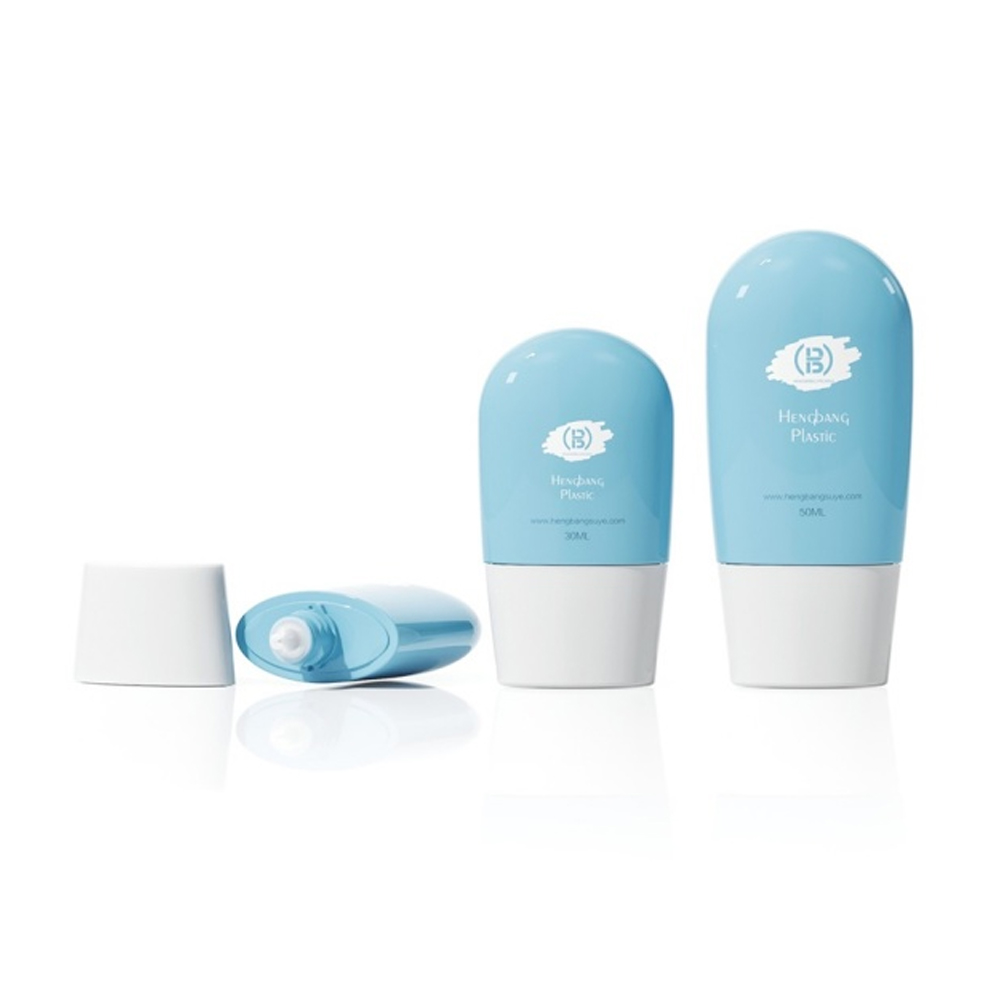
HB-F004 Plastic Blue Sunscreen Squeeze Bottle
Sunscreen is generally applied repeatedly, often outdoors and sometimes in situations where the user is away from home. Packaging must therefore support an active usage pattern rather than occasional dispensing. Consumers may place the bottle in a beach bag, backpack, bathroom cabinet, sports bag, or car. The package must be convenient to hold, easy to open, simple to squeeze, and resistant to the ordinary handling associated with daily use.
The package also plays an important role in protecting the formula. Many cosmetic and skincare products are sensitive to light, temperature, oxygen, moisture, and contamination. Although the exact stability requirements depend on the individual sunscreen formulation, a colored or opaque package can provide a useful barrier against visible and ultraviolet light. Blue plastic can give the product a distinctive appearance while reducing direct light penetration compared with a clear container.
Another consideration is controlled application. Sunscreen users need to dispense an amount that is easy to spread over the face, arms, legs, or other exposed areas. A squeeze bottle offers a direct connection between hand pressure and product output. This can make the package more intuitive than a rigid container that requires a pump mechanism or a wide opening. The user can generally apply light pressure for a small amount and increase pressure when more product is needed.
Frequent use also increases the importance of package ergonomics. A sunscreen bottle should not be unnecessarily heavy or difficult to grip. It should be comfortable for different users, including consumers with wet hands or limited dexterity. A plastic squeeze format helps reduce the risk of breakage compared with glass and can be produced in a form that is easy to carry and handle.
From the manufacturer’s perspective, the bottle must also support efficient filling, storage, shipping, labeling, and retail presentation. Excessive packaging weight can raise transport costs. An impractical shape can reduce carton efficiency. A poorly selected material can lead to leakage, deformation, or compatibility problems. The best packaging solution is therefore one that balances consumer convenience, formula protection, manufacturing practicality, and commercial appearance.
The HB-F004 is categorized as a plastic sunscreen squeeze bottle. It is presented in blue and is designed for sunscreen packaging, although the squeeze format may also be considered for selected lotions, creams, gels, and other skincare formulas after suitable compatibility testing.
The bottle body is typically softer in texture than a rigid plastic container. This softness is valuable because it allows the user to compress the bottle and create dispensing pressure. The package can be used repeatedly without requiring a separate pump, actuator, or mechanical dispenser. Its straightforward structure can make it suitable for products that need an uncomplicated and familiar user experience.
The blue appearance is not only a visual choice. A colored bottle can help reduce the amount of light reaching the contents. This may be especially relevant for formulas whose appearance, fragrance, active ingredients, or overall stability can be affected by light exposure. The degree of protection depends on the exact resin, color concentration, wall thickness, and formula requirements, so product developers should verify performance through appropriate stability testing. Nevertheless, the use of an opaque or blue format provides a practical foundation for light-conscious sunscreen packaging.
The bottle is made from a listed combination of PP, SUYLYN, adhesive, and PE. This material description should be confirmed with the supplier during technical approval, particularly regarding the exact grade and function of the SUYLYN component. The stated PP construction is associated with a recyclable plastic identification category, commonly identified as recycling symbol number 5. This can support packaging strategies that place emphasis on responsible material selection, subject to local recycling systems and the final assembled structure.
The bottle is offered in 30 ml and 50 ml capacity options. These formats can support different market requirements without forcing a brand to adopt two entirely unrelated package designs. A coordinated size range may help maintain visual consistency across travel, trial, daily-use, and retail product lines.
| Product Attribute | Available Information | Packaging Relevance |
|---|---|---|
| Product type | Plastic sunscreen squeeze bottle | Supports direct hand-controlled dispensing for sunscreen and selected skincare products |
| Model | HB-F004 | Provides a defined reference for quotation, sampling, and technical discussion |
| Primary material | PP, with SUYLYN, adhesive, and PE listed in the material structure | Combines a lightweight plastic body with a flexible squeeze-oriented format |
| Capacity options | 30 ml and 50 ml | Suitable for travel, trial, portable, and regular-use positioning |
| Appearance | Blue or opaque presentation | Supports visual differentiation and helps limit direct light exposure |
| Stated height information | 91.2 mm and a second listed value of 116.2 | Requires confirmation of the correct height and unit before tooling or filling-line approval |
| Stated diameter information | 53 × 26.5 mm | Useful for packaging layout, labeling, secondary packaging, and shipping evaluation |
The supplied specification includes a height entry of 91.2 mm and another value written as 116.2 ml. Because height should normally be expressed in a length unit rather than milliliters, this information should be clarified before final engineering approval. Confirming the dimensions is a normal and important part of packaging development. It ensures that labels, cartons, filling equipment, caps, shipping trays, and shelf displays are designed correctly.
Polypropylene is widely used in cosmetic and personal-care packaging because it can provide a useful combination of low density, chemical resistance, toughness, and processability. In a squeeze bottle, these characteristics can contribute to comfortable handling and practical everyday performance.
One of the most important benefits is weight efficiency. A lightweight bottle can reduce the amount of material used per package compared with heavier alternatives. It may also reduce the shipping weight of finished goods, which can be beneficial for brands distributing products across regions or internationally. Lower package weight does not remove the need for structural testing, but it can support more efficient logistics when the bottle meets the required performance standards.
PP can also provide good resistance to many substances used in personal-care formulations. However, no packaging material should be considered universally compatible with every sunscreen formula. Oil content, solvents, fragrances, alcohols, emulsifiers, preservatives, and active ingredients can interact differently with different plastics. For this reason, the final product developer should conduct compatibility, leakage, stress, and stability testing with the intended formulation.
The tactile quality of a squeeze bottle is another advantage. A body that is softer and more flexible than a rigid jar or bottle gives users physical feedback during dispensing. This can improve the sense of control and reduce the likelihood of dispensing more product than needed. The surface can also provide a practical area for printed information, decoration, labeling, regulatory text, and brand graphics.
PP is commonly associated with recycling code number 5. This identification can be useful when brands communicate material information or evaluate packaging within their sustainability programs. At the same time, recyclability depends on local collection systems, sorting practices, colorants, adhesives, closures, labels, and the complete package structure. Responsible communication should therefore distinguish between the resin’s recycling identification and the actual availability of recycling infrastructure in a particular market.
Compared with glass, plastic can offer a lower risk of shattering during transport and consumer use. This is valuable for sunscreen products used at beaches, pools, parks, sporting events, and travel destinations. A plastic squeeze format is generally easier to carry and less concerning when dropped on a hard surface. While plastic packaging still requires appropriate quality control, its practical safety profile can be attractive for active lifestyles.
Light management is one of the key reasons a sunscreen package may be designed in blue or another opaque color. Ultraviolet and visible light can affect certain cosmetic ingredients and may contribute to changes in color, fragrance, texture, or performance over time. The precise level of light protection provided by a container depends on multiple factors, including pigment type, pigment loading, wall thickness, resin formulation, and the geometry of the package.
The HB-F004’s blue presentation can serve two complementary purposes. First, it gives the bottle an identifiable appearance that can help distinguish a sunscreen product from a general lotion or cleanser. Second, it can reduce direct light exposure compared with a transparent container. A stronger opaque effect may be selected when formula protection is a higher priority, while a translucent blue effect may be chosen when the brand wants some visual connection between the package and its contents.
Color also contributes to consumer expectations. Blue is often associated with freshness, water, cleanliness, coolness, and outdoor protection. These associations can support a sunscreen product’s visual communication, especially when combined with clear labeling about the product’s protection level, skin type, water resistance, and application instructions. The color alone should not be treated as a technical claim, but it can reinforce the overall design language.
For formula developers, the most important step is to match the package to the sunscreen’s actual sensitivity profile. Light-transmission testing, accelerated stability testing, real-time stability testing, and compatibility evaluation can help confirm whether the chosen blue or opaque structure is appropriate. Packaging suppliers and cosmetic manufacturers should review these requirements together rather than relying only on appearance.
Blue plastic may also provide a more forgiving visual surface for minor scuffs, handling marks, or product residue than a high-gloss white or transparent package. This can be useful during transportation and retail handling. The final finish, however, should be selected according to the brand’s appearance goals, printing method, decoration requirements, and cleaning expectations.
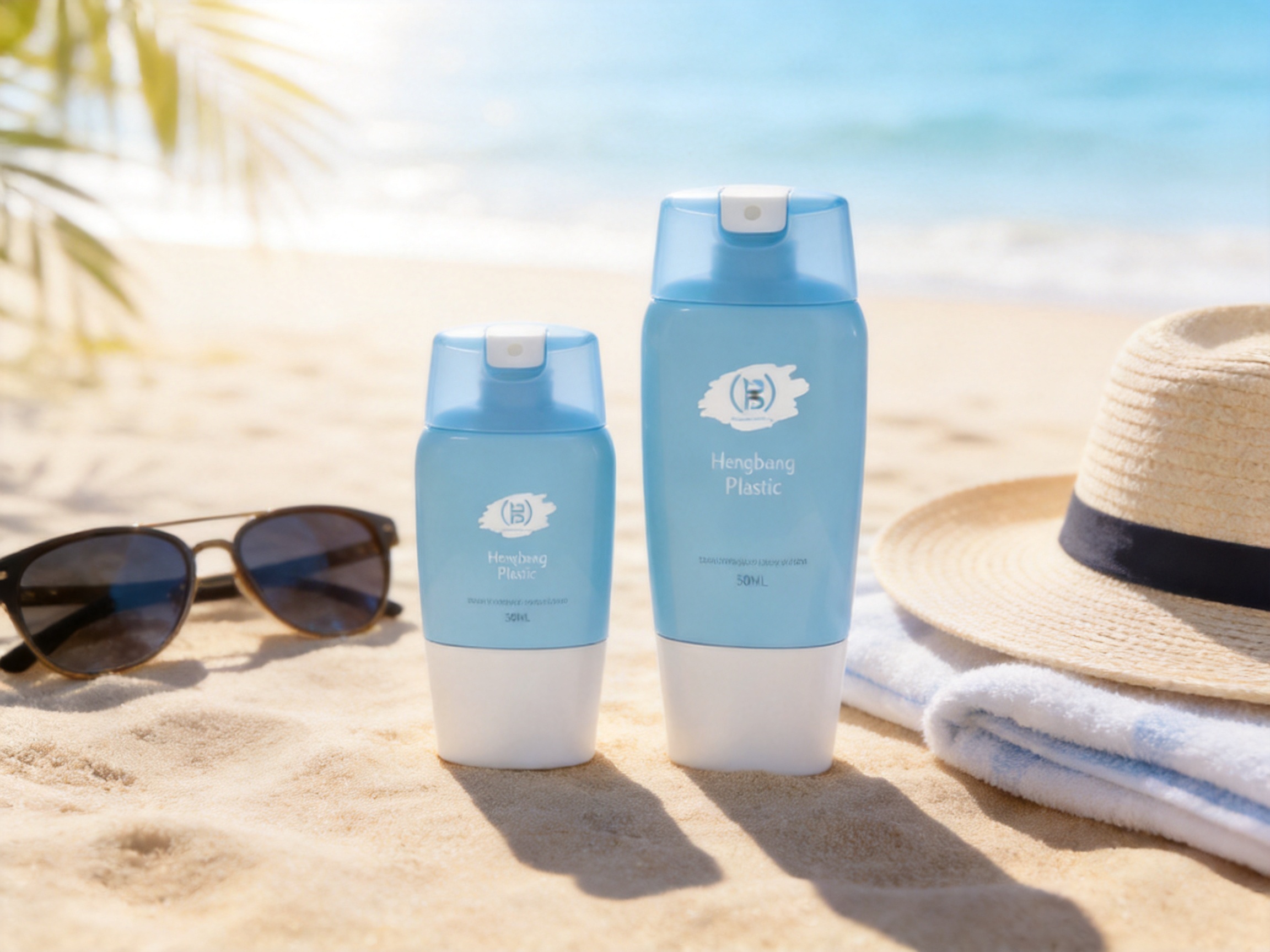
A successful sunscreen package should make correct use easy. The bottle format needs to communicate where the product comes out, how much pressure to apply, and how to close the package after use. A squeeze container can provide an intuitive experience because most consumers already understand how to compress a flexible bottle.
The 30 ml format is especially appropriate for portable use. Consumers may carry it in a small purse, toiletry bag, travel case, or sports bag. It can also serve as a trial or promotional size for brands that want to encourage first-time use. For professional or hospitality applications, the compact size may be suitable for guest amenities or event distribution, subject to the customer’s filling and labeling requirements.
The 50 ml format offers more content while retaining the advantages of a compact squeeze bottle. It may be more suitable for regular personal use, family travel, or retail products intended to last longer between purchases. Offering both sizes allows a brand to serve more than one usage occasion while maintaining a consistent packaging identity.
The tactile softness of the PP body can help users dispense product without excessive force. This may be particularly valuable for sunscreen because consumers often apply it quickly and repeatedly. A bottle that responds predictably to hand pressure can make the application process feel more controlled and less wasteful.
The package should be evaluated with the actual product across a range of temperatures and orientations. Sunscreen formulas can vary in viscosity, and a product that flows easily at room temperature may behave differently in cold or hot conditions. Testing should examine first-use dispensing, repeated dispensing, residual product, closure performance, and the ability to use the package near the end of its life.
For hygienic use, the closure should help protect the dispensing opening between applications. The specific closure design should be confirmed in the technical specification. Depending on the final configuration, the manufacturer and customer may evaluate flip-top, screw, disc-top, or other compatible options. The most appropriate choice will depend on viscosity, desired dispensing rate, leak resistance, filling process, and consumer preference.
Good packaging design also considers over-application and under-application. Sunscreen effectiveness depends heavily on using enough product and reapplying at appropriate intervals. The package cannot replace clear instructions, but a controlled outlet and comfortable squeeze response can support a more consistent routine. Product developers may also provide usage guidance on labels, cartons, or educational materials.
Rigid plastic bottles can provide strong structural stability, but they may require a pump, spray system, or wide opening to dispense the formula. A squeeze bottle offers a simpler mechanical approach. It uses the user’s hand pressure rather than a separate pump mechanism, which can reduce the number of dispensing components and create a more direct experience.
The flexible body may also help users access product more effectively as the contents decrease. In some rigid packages, a thick lotion or cream can remain at the bottom or on the sides, requiring repeated shaking or tapping. A squeezable structure can make it easier to guide product toward the opening, although actual emptying performance must be verified with the specific formula and bottle geometry.
Glass offers a premium appearance and can provide strong barrier properties, but it is heavier and more vulnerable to breakage. Sunscreen is frequently used in outdoor and travel environments where a lightweight, impact-resistant option may be more practical. The PP squeeze bottle can support a lower-risk, portable format without sacrificing a clean and professional appearance.
Plastic also gives designers more freedom to produce a soft-touch or squeezable experience. Glass cannot provide this type of direct compression. For a sunscreen product intended for active consumers, beach use, sports, or frequent travel, the functional advantages of plastic may outweigh the visual prestige associated with glass.
Jars are suitable for many creams, but they require the user to remove a lid and access the product with a finger or spatula. This can expose the formula to air and repeated contact. A squeeze bottle may offer a more convenient and potentially more hygienic dispensing method, particularly for a product applied frequently and used outside the home.
The narrow-format bottle can also be easier to carry than a wide jar. It occupies less space in a handbag or toiletry kit and can be held with one hand. For sunscreen products intended for reapplication during the day, this convenience is a meaningful competitive advantage.
Airless packages can provide excellent product evacuation and may help limit air exposure. However, they often involve more complex components, specialized pumps, and higher technical requirements. A squeeze bottle can be a more straightforward solution for brands seeking a balance between practical protection, convenient dispensing, lightweight construction, and cost-conscious production.
The choice between airless and squeeze packaging should be based on formula sensitivity, viscosity, required evacuation rate, marketing position, filling equipment, and budget. The HB-F004 is particularly attractive when a brand values simple squeezing, compact portability, blue visual protection, and a familiar consumer experience.
The performance of a cosmetic bottle depends not only on its design but also on the manufacturing system behind it. Dimensional consistency, material control, appearance quality, assembly accuracy, and production repeatability all influence the final customer experience. Yuyao Hengbang Plastic Co., Ltd. brings relevant experience to this area through its focus on plastic packaging for cosmetics and skincare products.
The company was established in 2006 and has developed a manufacturing operation with a building area of approximately 35,000 square meters and more than 300 employees. This scale provides a substantial foundation for production coordination, quality control, engineering support, order management, and customer service. A sizeable facility can also help separate and organize different stages of packaging development and manufacturing.
Hengbang provides design and development services in addition to production. This is important because packaging projects often require more than selecting an existing item. Customers may need support with capacity selection, dimensional confirmation, material discussion, surface appearance, decoration, closure matching, sample evaluation, and production planning. A supplier that can participate early in the development process may help identify potential problems before mass production.
The company’s young and professional team is described as providing a full range of services. In practical terms, this type of support can help customers coordinate technical and commercial decisions. For example, a sunscreen brand may need to compare the 30 ml and 50 ml versions, determine the most suitable label area, confirm the correct height information, and review how the bottle will be filled and packed. Early communication can improve efficiency and reduce unnecessary revisions.
Hengbang has passed ISO9001:2015 quality management certification and ISO14001:2015 environmental management certification. ISO9001:2015 is associated with structured quality processes, documentation, continual improvement, customer-focused procedures, and controlled operations. ISO14001:2015 addresses environmental management systems, including the organization’s approach to environmental responsibilities and improvement. Certifications do not replace product-specific testing, but they demonstrate a formal management framework supporting consistent production and environmental awareness.
The company was also awarded as a Ningbo High-Tech Enterprise in 2021 and owns multiple invention patents. These achievements indicate an emphasis on technical development and innovation. For packaging customers, technical capability can be valuable when a product requires special structures, new appearance effects, improved production efficiency, or a solution adapted to a particular formula and market.
Manufacturing strength is especially relevant for squeeze bottles because the body needs to balance softness and structural integrity. If it is too rigid, dispensing may be inconvenient. If it is too soft or dimensionally inconsistent, the package may deform during filling, storage, or transport. Controlled processing, material selection, mold performance, and inspection practices all contribute to achieving an appropriate balance.
For a sunscreen bottle, quality management should begin with incoming materials and continue through forming, printing or decoration, assembly, inspection, packing, and shipment. Each stage can affect the final product. Resin quality influences body strength and appearance. Processing conditions influence wall thickness and dimensional stability. Assembly affects closure fit and leakage performance.
Important inspection points may include appearance, color consistency, surface defects, flash, deformation, dimensions, thread or closure fit, opening performance, and package cleanliness. The exact inspection plan should be agreed upon according to the customer’s technical standards and intended application.
Leakage testing is particularly important for a portable sunscreen bottle. Packages may be stored upside down, placed inside bags, transported over long distances, or exposed to pressure changes. A suitable test program may include upright and inverted storage, temperature cycling, drop or impact assessment, closure torque verification, and repeated opening and closing. The final method should reflect the bottle’s actual design and the customer’s shipping conditions.
Compatibility testing should use the finished sunscreen formula rather than water alone. Water testing can provide an initial check, but it cannot reproduce the effects of oils, solvents, fragrances, emulsifiers, active ingredients, or preservatives. The formula should be evaluated for changes in color, odor, viscosity, weight, leakage, swelling, embrittlement, stress cracking, and dispensing behavior.
Light-transmission testing may also be useful when the product is marketed as light-sensitive or when the formulation contains ingredients that require protection. This testing can help confirm whether the selected blue color and wall structure provide the desired level of shielding. In addition, accelerated aging and stability testing can provide evidence about how the package and formula perform over time.
Printing, labeling, and decoration require their own quality checks. Sunscreen packaging often carries extensive information, including usage directions, warnings, volume, ingredients, manufacturer details, batch information, and regulatory claims. The surface must support readable and durable communication. Tests may examine ink adhesion, abrasion resistance, chemical resistance, and legibility after contact with sunscreen residue, water, and handling.
Environmental performance is now an important consideration in cosmetic packaging development. Brands, retailers, and consumers increasingly evaluate material use, recyclability, production efficiency, transportation impact, and package life cycle. The HB-F004 can contribute to this discussion through its PP-based structure and lightweight plastic format.
PP is commonly identified by recycling symbol number 5. This gives the material a recognized classification for sorting and recycling discussions. However, responsible packaging decisions require a broader assessment. The total package may include multiple materials, such as adhesives, closure components, labels, coatings, and decorative layers. The more complex the structure, the more important it becomes to understand how local recycling facilities process it.
A lightweight bottle may reduce material consumption and transport weight compared with heavier alternatives. This can support efficiency, but the bottle must still meet all required performance standards. A package that fails early or leaks during transport may create product loss and additional environmental impact. The correct objective is not simply the lowest possible weight; it is an optimized structure that uses resources efficiently while protecting the product throughout its intended life.
Environmental management at the manufacturing level is also relevant. Hengbang’s ISO14001:2015 certification reflects the existence of an environmental management system. Such a system can help an organization monitor environmental responsibilities, establish objectives, manage operational controls, and pursue improvement. Customers may wish to discuss material reduction, production scrap, energy use, packaging of components, and waste management as part of their supplier evaluation.
Brands should also provide accurate sustainability communication. The bottle’s PP identification and lightweight construction can be presented as material features, but claims about recyclability should consider the market where the package will be sold. Clear and responsible messaging helps avoid confusing consumers and supports more credible environmental positioning.
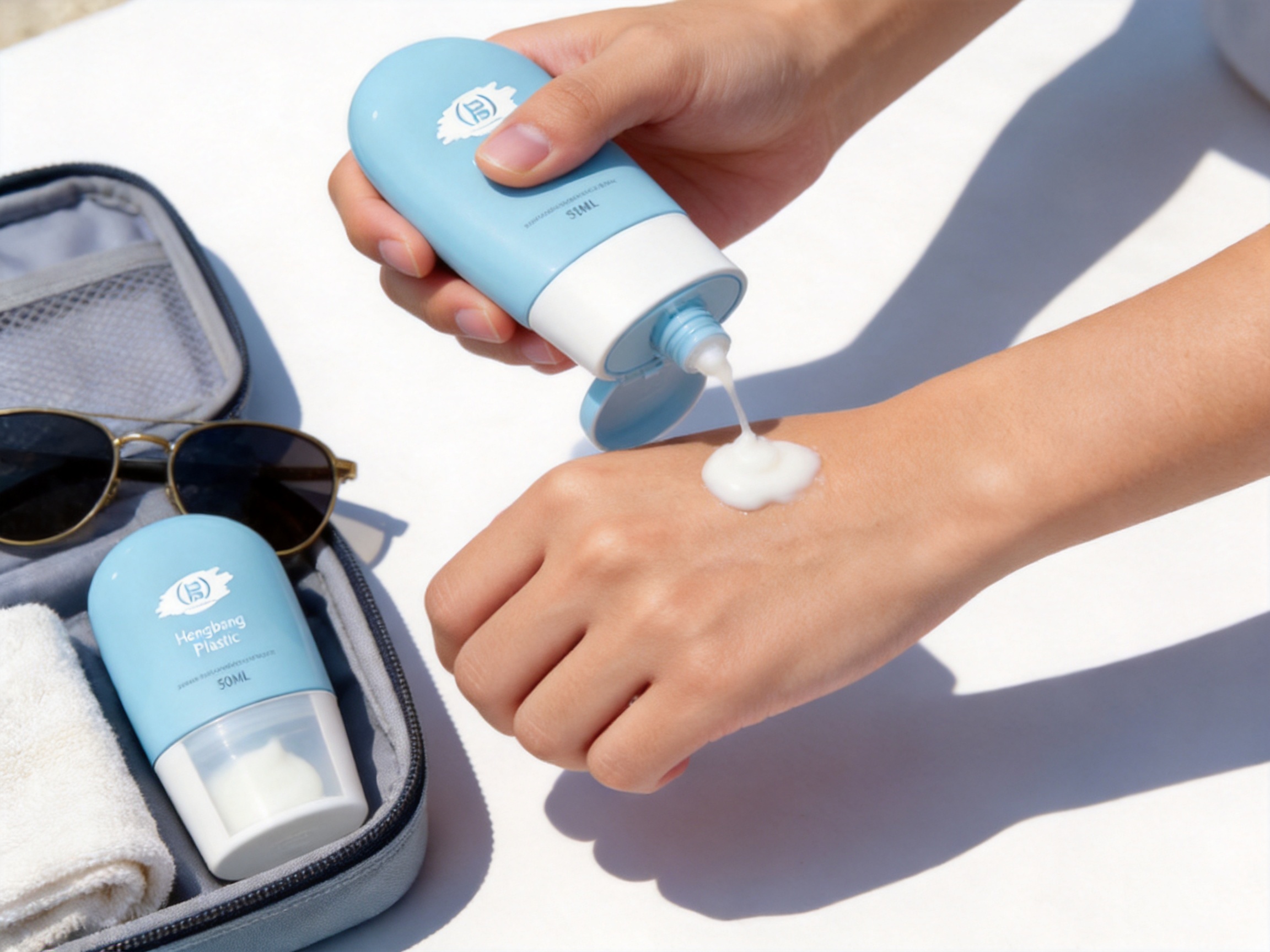
The blue body creates a strong foundation for sunscreen-oriented design. It can be combined with white, silver, yellow, green, coral, or other accent colors depending on whether the product is positioned as clinical, premium, athletic, family-oriented, natural, or beach-inspired. A consistent bottle color can also help create a recognizable product family across several sunscreen strengths or skin-care products.
The compact format leaves room for front-panel communication while allowing the sides or back to carry usage instructions and regulatory information. Before finalizing artwork, the customer should confirm the available printable area, curvature, label dimensions, decoration method, and minimum text size. The actual diameter and height should be verified because the supplied product information contains a dimensional entry that requires clarification.
A tactile surface can support a more premium impression. Depending on the manufacturing and decoration options, the bottle may be evaluated with glossy, matte, soft-touch, or other finish effects. The selected finish should be compatible with sunscreen residue, handling, cleaning, printing, and the brand’s intended shelf appearance.
Visual design should not compromise function. Decorative layers should not obscure important instructions or make the bottle difficult to identify. The opening, closure, and dispensing direction should remain intuitive. If the product is intended for outdoor use, the artwork should remain legible under strong light and after exposure to water or repeated handling.
Because the bottle is available in two capacity options, brands can create coordinated packaging architecture. For example, a 30 ml bottle may serve as a portable reapplication product, while a 50 ml bottle may serve as the primary daily-use format. Using a consistent blue color and similar decoration can make the relationship between both sizes clear to consumers.
The primary application of the HB-F004 is sunscreen, but the squeeze format may be suitable for other formulas after technical evaluation. Potential categories include facial lotions, body lotions, after-sun products, moisturizing creams, protective skin products, hand creams, and selected gels.
Suitability depends on viscosity, formula composition, dispensing requirements, and compatibility with the material structure. A thin lotion may dispense quickly, while a thick cream may require a larger opening or a softer body. A gel may require careful evaluation of residue and flow. Each application should be tested individually rather than assuming that performance with one formula will automatically apply to another.
The compact format can be useful for travel kits, hotel amenities, promotional sets, sample programs, outdoor activity products, and professional skincare lines. The 30 ml size is especially adaptable to portable applications, while the 50 ml option offers greater product volume without moving to a large rigid bottle.
For companies developing a complete cosmetic packaging range, the squeeze bottle may complement other formats such as airless bottles, double-chamber bottles, lotion bottles, plastic cream jars, and toner bottles. A coordinated supplier can help a brand compare packaging types according to formula sensitivity, dispensing behavior, product positioning, and target cost.
A successful packaging project should follow a structured process. The first stage is to define the product requirements. The customer should provide the sunscreen formula type, viscosity, filling temperature, target capacity, expected shelf life, distribution markets, decoration requirements, and desired closure style.
The second stage is dimensional and functional confirmation. The customer and supplier should verify the capacity, height, diameter, wall structure, neck finish, closure fit, filling method, and label area. For this model, the height information should be clarified because one listed value appears to use an incorrect unit. Confirming these details at the beginning helps prevent problems in artwork, tooling, filling, and secondary packaging.
The third stage is sample evaluation. Samples should be filled with the intended formula and assessed for appearance, dispensing, grip, closure operation, leakage, storage orientation, and consumer handling. Testing should include the beginning, middle, and end of the package’s use life where practical.
The fourth stage is compatibility and stability testing. The filled bottle should be stored under appropriate real-time and accelerated conditions. The product should be checked for changes in odor, color, viscosity, separation, weight, leakage, and package condition. Light exposure testing may be included when relevant to the formula.
The fifth stage is decoration approval. The customer should review color standards, artwork placement, text clarity, ink adhesion, label performance, and finish. Blue packaging can vary significantly in appearance depending on resin, pigment, lighting, and surface treatment, so a physical color standard is preferable to relying only on digital artwork.
The final stage is production approval and quality agreement. The customer and supplier should establish acceptable quality limits, inspection methods, sample retention, packing requirements, shipment conditions, and documentation. A clear agreement supports consistency across repeat orders.
One of the important advantages of working with an experienced packaging manufacturer is the opportunity to coordinate multiple development decisions through one technical relationship. Instead of treating the bottle, closure, decoration, and production process as separate issues, the customer can discuss them as one packaging system.
Hengbang’s experience in cosmetic and skincare packaging gives it a relevant understanding of the practical requirements of this market. Its design and development services can support customers that need assistance moving from a concept to a manufacturable package. This is particularly useful for emerging brands, contract manufacturers, retailers, and established cosmetic companies introducing new product lines.
The company’s quality and environmental certifications provide additional structure for supplier evaluation. ISO9001:2015 supports confidence in documented quality processes, while ISO14001:2015 demonstrates attention to environmental management. Customers should still perform their own qualification procedures, but these certifications are useful indicators of an organized operational system.
The company’s more than 300 employees and approximately 35,000-square-meter building area provide a substantial platform for manufacturing coordination. Its technical achievements, high-tech enterprise recognition, and invention patents further indicate a focus on development rather than simple commodity production.
A supplier’s strength is ultimately demonstrated through communication, sample accuracy, production consistency, responsiveness, and the ability to address problems. Packaging buyers should assess these areas during quotation, sampling, pilot production, and repeat orders. A good technical relationship can help improve the final package and reduce avoidable delays.
When requesting a quotation for the HB-F004 bottle, buyers should specify the required capacity, color, material structure, closure, decoration method, order quantity, packaging method, and destination market. They should also confirm whether the price includes the cap, label, printing, assembly, inspection, and export packing.
Buyers should request dimensional drawings or approved samples before finalizing artwork. The stated capacity and dimensional data should be checked carefully, especially the height information. If the bottle will be used on an automated filling line, the customer should provide details about machine orientation, feeding, neck handling, filling speed, and closure application.
Formula compatibility should be discussed before mass production. The buyer should provide a representative sunscreen sample or a formula profile that includes key ingredients and viscosity information. Testing with the actual formula is strongly recommended because two products with similar appearances may behave differently in contact with plastic.
Shipping and storage conditions should also be considered. A bottle intended for hot climates, international sea freight, or outdoor retail may require more extensive testing than a product distributed locally under controlled conditions. Buyers should evaluate stacking, carton configuration, temperature exposure, drop risk, and the possibility of pressure or orientation changes during transit.
Finally, the customer should define quality expectations in writing. Important areas may include color tolerance, surface defects, dimensions, weight, leakage, closure operation, printing adhesion, contamination, and packing quantity. Clear specifications help both parties understand what constitutes an acceptable product.
The HB-F004 is mainly designed for sunscreen packaging. Its squeeze format is intended for formulas that can be dispensed through hand pressure. It may also be evaluated for selected lotions, creams, gels, and other skincare products after formula compatibility and dispensing tests.
The supplied product information lists 30 ml and 50 ml capacity options. The 30 ml version is suitable for travel, portable use, trial programs, and reapplication products. The 50 ml version provides more product for regular personal use while maintaining a compact format.
The blue or opaque appearance can help reduce direct light exposure and provides a recognizable visual identity for sunscreen packaging. The actual level of protection depends on the plastic structure, colorant, wall thickness, and formula requirements. Light-transmission and stability testing should be completed for the final application.
The listed material structure is PP plus SUYLYN, adhesive, and PE. The exact function and grade of each component should be confirmed with the supplier during technical approval. The bottle body is described as PP-based and recyclable under the commonly recognized number 5 plastic identification category.
No packaging material should be assumed to be compatible with every formula. Sunscreens may contain oils, solvents, fragrances, active ingredients, and other substances that affect plastic performance. The intended formula should be tested for compatibility, leakage, stress cracking, color change, odor change, stability, and dispensing behavior.
The plastic squeeze bottle is lighter, less vulnerable to shattering, easier to carry, and capable of providing a flexible hand-controlled dispensing experience. These characteristics are valuable for outdoor, travel, sports, and daily-use sunscreen products.
A squeeze bottle can offer more convenient and potentially more hygienic dispensing because the user does not need to place a finger inside the container. It is also narrower and easier to carry. A jar may still be preferable for some very thick creams or premium product concepts, so the selection should reflect the formula and brand strategy.
This depends on the customer’s filling equipment and the final bottle and closure configuration. The filling line should be reviewed for bottle dimensions, neck finish, orientation, handling, filling temperature, closure application, and production speed. Technical samples should be tested before mass production.
The supplied information lists a height of 91.2 mm and another value written as 116.2 ml. Since milliliters measure volume rather than height, the second entry should be clarified with the supplier. Buyers should approve a technical drawing or physical sample before creating labels, cartons, or tooling.
Yuyao Hengbang Plastic Co., Ltd. is described as providing a full range of services, including design and development. Customers can discuss capacity, material, appearance, dimensions, decoration, and production requirements during the development process.
The company has passed ISO9001:2015 and ISO14001:2015 certifications. The first relates to quality management, while the second relates to environmental management. These systems support structured operations but do not replace product-specific testing and customer qualification.
The PP-based construction, lightweight format, and recycling identification number 5 can support sustainability discussions. Actual recyclability depends on the complete package, local collection systems, sorting facilities, labels, closures, adhesives, and decoration. Sustainability claims should therefore be made accurately and according to the target market.
The HB-F004 Plastic Blue Sunscreen Squeeze Bottle combines practical dispensing, compact portability, a light-conscious blue appearance, and a PP-based material structure. Its 30 ml and 50 ml capacity options allow brands to address different usage occasions, from travel and trial products to regular daily sunscreen packaging.
Its main competitive strengths are its straightforward squeeze operation, lightweight plastic construction, reduced breakage risk compared with glass, convenient format compared with many jars, and visual suitability for sun-care products. The blue or opaque appearance can also support efforts to reduce direct light exposure, although the final performance must be confirmed through formula-specific testing.
The product is supported by a manufacturer with experience in cosmetic and skincare packaging, a building area of approximately 35,000 square meters, more than 300 employees, design and development capabilities, ISO9001:2015 and ISO14001:2015 certifications, high-tech enterprise recognition, and multiple invention patents. These strengths provide a useful foundation for customers seeking both a packaging product and technical manufacturing support.
Before mass production, buyers should confirm the complete material structure, final dimensions, height information, closure configuration, decoration method, filling compatibility, leakage performance, and recycling considerations. With these points properly evaluated, the HB-F004 can serve as a versatile and commercially practical packaging choice for sunscreen and selected skincare applications.
1. Product specification information for HB-F004 Plastic Blue Sunscreen Squeeze Bottle, supplied by the manufacturer.
2. Company profile and manufacturing information for Yuyao Hengbang Plastic Co., Ltd.
3. ISO 9001:2015, Quality Management Systems — Requirements.
4. ISO 14001:2015, Environmental Management Systems — Requirements with Guidance for Use.
5. General technical guidance on cosmetic packaging compatibility, stability testing, leakage testing, and dispensing evaluation.
6. General material identification guidance for polypropylene and plastic recycling code number 5.


Copyright © Yuyao Hengbang Plastic Co., Ltd.
All Rights Reserved.
 Wholesale Plastic Cosmetic Packaging Manufacturers