English
 中文简体
中文简体
News
Home > Author > Li Wenjing — Cosmetic Packaging After-Sales Specialist > Portable 30ml and 50ml Sunscreen Squeeze Bottles for Modern Skincare Packaging

 2026.08.15
 Li Wenjing — Cosmetic Packaging After-Sales Specialist
Content
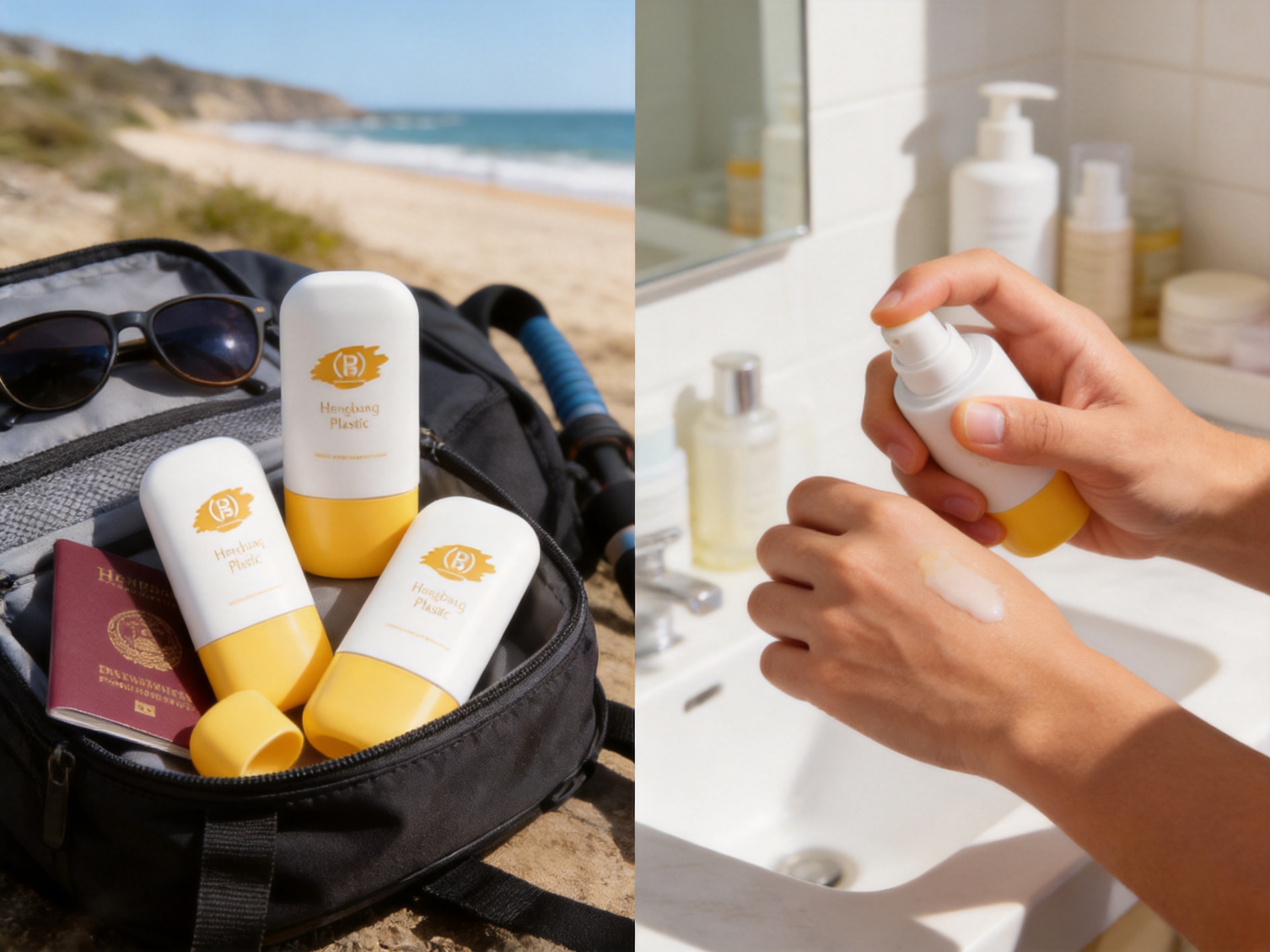
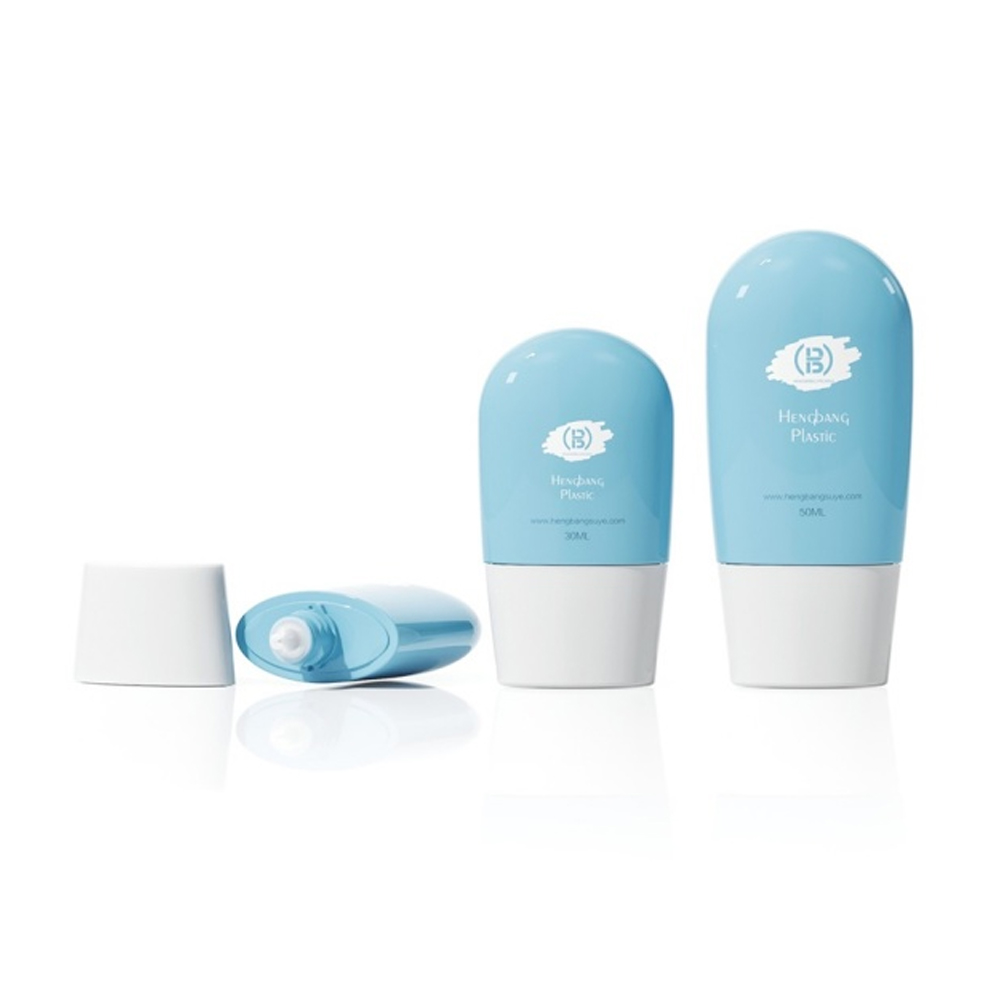
Packaging plays a decisive role in how consumers use, carry, store, and evaluate skincare products. For sunscreen in particular, the package must support portability, convenient application, reliable product protection, and attractive presentation. A bottle that is too large may be inconvenient for travel, while a container that is difficult to grip or dispense can discourage regular reapplication. The HB-F003 30ml and 50ml empty sunscreen bottle has been developed to address these practical needs through a lightweight plastic construction, compact dimensions, ergonomic handling, and flexible capacity options.
Designed for sunscreen, lotion, and other fluid or semi-fluid skincare formulas, this plastic squeeze bottle offers a practical solution for brands seeking a balance between functionality and efficient packaging. The 30ml version is especially suitable for travel kits, handbags, samples, promotional sets, and daily touch-ups. The 50ml version provides greater capacity for routine use while remaining compact enough for personal skincare bags and short journeys.
Manufactured by Yuyao Hengbang Plastic Co., Ltd., the bottle reflects the company’s long-term specialization in plastic packaging for cosmetics and skincare products. Since its establishment in 2006, the company has developed a broad service system involving design, product development, manufacturing, and quality management. Its 35,000-square-meter building area, workforce of more than 300 employees, ISO9001:2015 and ISO14001:2015 certifications, high-technology enterprise recognition, and invention patents provide a foundation for consistent production and continuous improvement.
This article examines the product’s structure, material, capacity choices, user advantages, manufacturing strengths, customization potential, sustainability considerations, and suitability for different sunscreen applications. It also compares the HB-F003 concept with common alternative packaging formats and explains why compact squeeze bottles continue to be valuable in the modern skincare market.
The HB-F003 is an empty plastic sunscreen squeeze bottle available in two stated capacities: 30ml and 50ml. Its purpose is to provide cosmetic and skincare brands with a compact primary container for sunscreen products. The design is intended for easy carrying and straightforward application, making it suitable for products used at home, during commutes, on business trips, during outdoor activities, and while traveling.
The bottle’s lightweight character is one of its most practical advantages. Sunscreen is frequently carried in bags, cosmetic pouches, luggage, and sports equipment. A heavy package can add unnecessary weight, especially when consumers carry several personal-care products together. Plastic construction allows the package to remain convenient to transport while offering a sturdy alternative to more fragile materials.
The compact format also supports a modern approach to skincare consumption. Consumers increasingly expect products to fit into flexible daily routines. A sunscreen package may need to travel from the bathroom to the office, from a home to a gym, or from a hotel room to an outdoor destination. The HB-F003 format is aligned with these patterns because it is designed around personal portability rather than large-volume household storage.
The 30ml and 50ml options allow brands to address more than one market segment without changing the overall product concept. The smaller capacity can be positioned as a travel-friendly or portable option, while the larger capacity can be used for daily skincare routines. Offering both sizes can help a brand create coordinated product families, gift sets, trial programs, and retail lines with a consistent visual identity.
Item |
30ml Version |
50ml Version |
Product type |
Plastic sunscreen squeeze bottle |
Plastic sunscreen squeeze bottle |
Stated capacity |
30ml |
50ml |
Material specification |
PP + SUYLYN + adhesive + PE |
PP + SUYLYN + adhesive + PE |
Stated height |
95.2mm |
110.2mm as listed in the supplied specification |
Stated diameter |
47*23mm |
47*23mm as listed in the supplied specification |
Primary application |
Portable sunscreen, samples, and travel skincare |
Daily sunscreen and personal skincare |
Dimensions and compatibility should always be confirmed with the manufacturer before tooling, filling, or mass production. The supplied product information lists the 30ml height as 95.2mm and the 50ml entry as “110.2ml,” which appears to require technical confirmation because height is normally expressed in millimeters. Final measurements, tolerances, closure details, and filling compatibility should therefore be verified during the product development stage.
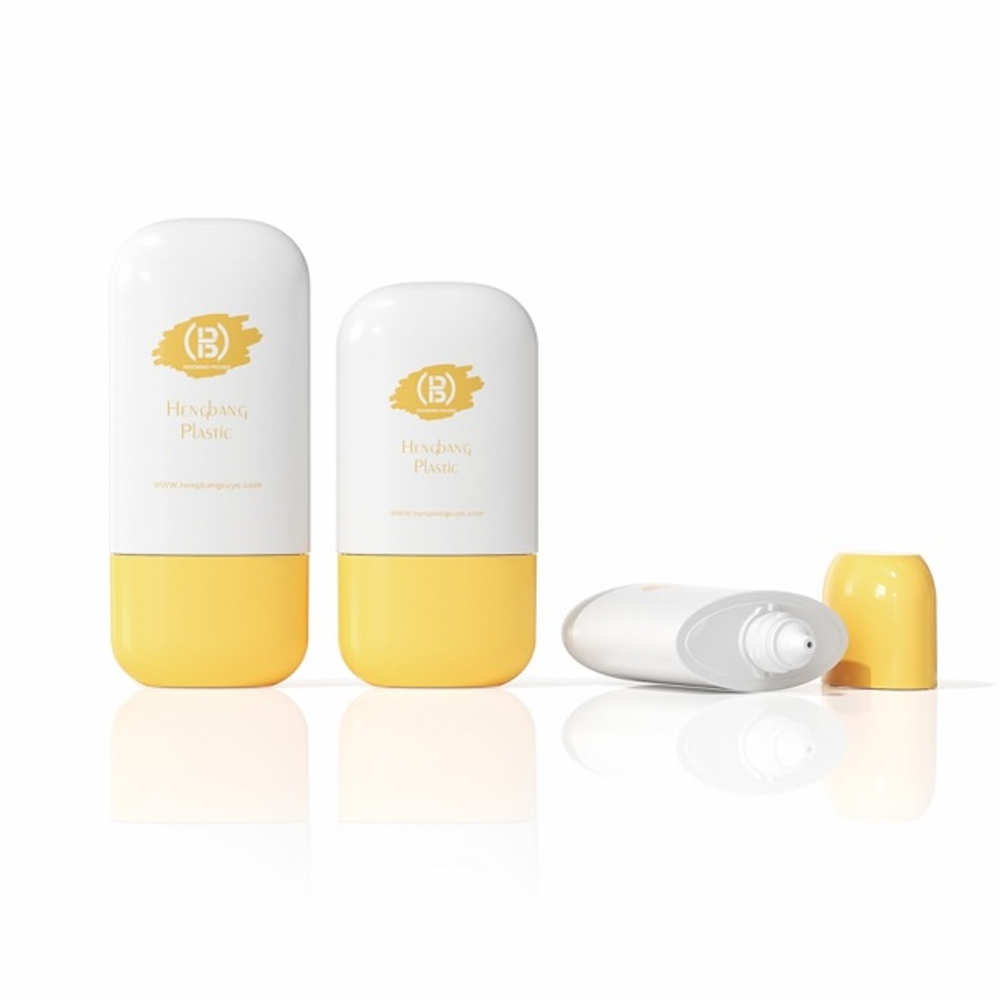
HB-F003 30ml 50ml Empty Sunscreen Bottle
Sunscreen is not an occasional product for many consumers. It is often used daily and may need to be reapplied several times during outdoor exposure. This creates packaging requirements that differ from those of products used only once or twice a day. The container must be easy to open, simple to hold, convenient to dispense, and sufficiently portable to encourage repeated use.
Consumers may apply sunscreen at home, in a vehicle, at a beach, beside a swimming pool, in an office, or during outdoor exercise. In these situations, a package that is awkward to handle can reduce user satisfaction. A compact squeeze bottle offers a familiar and direct application experience. Users can hold the body, apply controlled pressure, and dispense the desired amount without needing a separate spatula, pump mechanism, or wide-mouth opening.
Sunscreen products also benefit from packaging that helps reduce unnecessary exposure to the surrounding environment. A closed bottle can help keep the product contained between applications. Compared with an open jar, a squeeze format can reduce the need for users to touch the remaining formula directly. This may be a valuable consideration for brands that want to present a cleaner, more convenient use experience.
Portability is another important factor. Sunscreen users often take the product outside the home, and many prefer a package that fits into a small bag or travel pouch. The 30ml format is designed for this kind of use, while the 50ml format provides more product for consumers who want a practical everyday supply. The two sizes also allow brands to organize their product range according to different lifestyles and purchase occasions.
From a marketing perspective, sunscreen packaging must communicate protection, freshness, ease of use, and contemporary lifestyle appeal. A compact, well-proportioned bottle can support a clean visual presentation and provide a suitable surface for labels, printing, or other decoration methods, subject to technical evaluation. The package becomes part of the product’s identity rather than merely a container.
The supplied material specification for the HB-F003 is PP + SUYLYN + adhesive + PE. This indicates a multilayer or combined material construction involving polypropylene, a specified SUYLYN layer or component, adhesive, and polyethylene. The exact layer arrangement, thickness, and performance characteristics should be confirmed through the manufacturer’s technical documentation, but the listed structure demonstrates that the product is designed as more than a simple single-material container.
Polypropylene, commonly abbreviated as PP, is widely used in cosmetic packaging because it is lightweight, practical, and suitable for many molded packaging components. It can support a modern appearance while helping manufacturers produce consistent shapes at commercial volume. Its relatively low density is also useful for portable packaging, where both brands and consumers often prefer reduced package weight.
Polyethylene, or PE, is also commonly used in flexible and semi-flexible packaging applications. Depending on the grade and structure, PE may contribute to squeeze performance, flexibility, product containment, and compatibility with selected cosmetic formulas. The precise performance of the finished package depends on the grade, thickness, processing conditions, closure design, and the characteristics of the filled product.
The adhesive component in a multilayer structure can help bond different material layers together. Proper bonding is important when a package must maintain its physical appearance and barrier performance throughout filling, transportation, storage, and consumer use. Adhesive selection and processing control are technical matters that should be assessed in relation to the formula, temperature range, storage period, and regulatory requirements of the intended market.
The inclusion of SUYLYN in the supplied material description should be reviewed with the manufacturer to establish its exact commercial or technical meaning, grade, and role in the structure. A professional packaging development process should include material documentation, compatibility testing, seal testing, visual inspection, and performance verification before final approval.
For brands, the principal advantage of a specified multilayer structure is the possibility of balancing several requirements at the same time. These may include flexibility, shape retention, lightweight construction, product containment, surface quality, and a consistent appearance. A carefully controlled material system can help a package perform more reliably than an inadequately selected single layer.
A squeeze bottle is familiar to consumers and generally straightforward to operate. The user can hold the bottle in one hand and apply pressure to dispense the formula. This direct mechanism is especially appropriate for sunscreen because consumers may want to apply a specific amount to the face, neck, arms, or other exposed areas.
The squeeze format can also support better control than a wide-mouth jar. A jar requires the user to open a broad access area and remove product with a finger or accessory. A squeeze bottle directs the formula through a smaller opening, which may help consumers dispense more deliberately. The final dispensing performance depends on the opening, formula viscosity, internal pressure, and closure design, so these elements should be evaluated together.
The product description emphasizes an ergonomic design and comfortable grip. This is important because sunscreen application often involves repeated use. A bottle that is easy to hold can make the process feel simpler and more natural. Comfortable handling may be especially valuable when the user’s hands are wet, when the product is used outdoors, or when the consumer is applying sunscreen quickly before leaving home.
The stated diameter of 47*23mm suggests a narrow, elongated profile rather than a wide, bulky container. This shape can be helpful for storage in small spaces and may allow the bottle to fit into cosmetic pouches, side pockets, desk drawers, and travel organizers. Final ergonomic performance should be assessed using physical samples, because grip comfort depends on surface finish, wall shape, closure design, and the user’s hand size.
The 30ml version is presented as a mini size suitable for airline carry-on requirements. Travel regulations can vary by location, carrier, and current policy, so consumers and brands should confirm applicable rules before making formal travel claims. Nevertheless, a 30ml format is clearly positioned as a compact personal-care package that is easy to place in a travel toiletry bag.
The small capacity also makes the bottle suitable for short trips, gym bags, event kits, outdoor activities, and promotional distribution. A brand may use the 30ml size as a trial package to introduce a new sunscreen formula without committing the consumer to a larger volume. It may also be included in seasonal gift sets or paired with other skincare products.
The 50ml version is designed to provide a greater supply for regular daily skincare. It remains compact but offers more content than the smaller format. This balance may appeal to consumers who want a portable sunscreen that does not need to be refilled frequently during ordinary use.
For brands, the 50ml size can function as a core retail package. It is large enough to communicate value while still supporting personal portability. The availability of a matching 30ml option enables a company to build a size-based product strategy rather than relying on one container for every sales channel.
Packaging performance should be evaluated according to the formula, target market, distribution conditions, and intended consumer experience. No single package is suitable for every skincare product. However, the HB-F003 squeeze bottle offers several practical advantages when compared with common alternatives such as glass bottles, wide-mouth jars, large pump bottles, and single-use sachets.
Packaging format |
Potential strengths |
Potential limitations compared with a compact squeeze bottle |
HB-F003 plastic squeeze bottle |
Lightweight, portable, familiar dispensing method, available in 30ml and 50ml sizes |
Formula and closure compatibility must be tested before filling |
Glass bottle |
Premium appearance, substantial feel, good visual clarity for some designs |
Heavier and more vulnerable to breakage during travel or outdoor use |
Wide-mouth plastic jar |
Large opening, easy access for thick products, strong shelf presence |
Less convenient for liquid or fluid sunscreen, more direct contact with the formula |
Large pump bottle |
Convenient repeated dosing for home use |
Usually less compact and less convenient for small bags or travel |
Single-use sachet |
Very compact, useful for samples and promotional campaigns |
Limited resealability and potentially less convenient for repeated application |
Compared with glass, the HB-F003 plastic format can reduce carrying weight and avoid the breakage concerns associated with fragile containers. This does not mean that plastic is automatically superior for every brand. Glass may be selected for premium positioning or specific formula requirements. However, for sunscreen intended for active, portable, and repeated use, lightweight plastic is often a practical choice.
Compared with a wide-mouth jar, the squeeze bottle can provide a more controlled and portable application experience. Jars may be appropriate for thick creams, but sunscreen products often benefit from a package that can be held, squeezed, and closed quickly. The reduced opening area may also support a cleaner-looking user experience, although actual hygiene performance depends on consumer behavior and product design.
Compared with a large pump bottle, the 30ml and 50ml formats offer greater portability. Pump bottles are useful in bathrooms, clinics, salons, and other fixed locations, but they can occupy more space and may be less suitable for outdoor reapplication. The HB-F003 is intended to move with the user, which is a significant benefit for sunscreen.
Compared with sachets, a reusable bottle can support repeated use throughout the day or over a longer period. A sachet may be excellent for sampling, but it can be less convenient after opening and may not provide the same sense of product ownership or long-term usability. The 30ml bottle can deliver a similar compact advantage while providing a resealable container format.
The HB-F003 is not only a consumer-use package; it is also a platform for brand development. Cosmetic companies can use the bottle for sunscreen, sun protection lotions, moisturizing products, after-sun care, hand creams, body lotions, and other compatible skincare formulas. The final application should be determined through formula compatibility and filling tests.
A two-capacity product family helps simplify range planning. A brand can use the 30ml size for travel retail, samples, starter kits, and promotional campaigns, while using the 50ml version for standard retail sales. A consistent packaging shape can help create visual continuity across the range, making the products easier for consumers to recognize.
The bottle may also support different market positioning strategies. A minimalist label and soft color palette can create a clean dermocosmetic appearance. Bright colors and outdoor-oriented graphics can support a sports sunscreen line. Natural colors and restrained decoration can be used for a lifestyle or eco-conscious concept, subject to the brand’s material and sustainability claims.
Because the bottle is empty before filling, it can be matched with a wide variety of formulas after appropriate evaluation. A sunscreen manufacturer may develop a fluid lotion, daily facial sunscreen, body sunscreen, moisturizing sun-care product, or travel-size protective cream around the package. The packaging team and formulation team should collaborate early to confirm viscosity, dispensing behavior, stability, and closure performance.
The compact structure may also improve shipping efficiency compared with heavier or more complex packaging formats. Lower package weight can help reduce transportation load, although total logistics performance depends on cartons, secondary packaging, pallet configuration, order volume, and shipping distance. Brands should assess the complete distribution system rather than evaluating the primary container alone.
Yuyao Hengbang Plastic Co., Ltd. was established in 2006 and specializes in producing plastic packaging for cosmetics and skincare products. This specialization is important because cosmetic packaging requires knowledge of appearance, dimensional consistency, assembly, filling behavior, decoration, and market expectations. A manufacturer focused on this sector is more likely to understand the practical requirements of bottles, jars, closures, and related components.
The company has a building area of 35,000 square meters and more than 300 employees. These figures indicate a substantial operational base capable of supporting organized production and coordinated technical work. A larger facility can provide space for mold development, molding operations, assembly, inspection, storage, and order management, although the exact allocation of facilities and equipment should be confirmed for each project.
The company’s young and professional team provides design and development services. This is valuable for customers who need more than an existing catalog product. Packaging development often involves adjustments to dimensions, closure fit, decoration, color, surface finish, material selection, and filling requirements. A supplier able to participate in design and development can help move a project from concept to production more efficiently.
Hengbang has passed ISO9001:2015 and ISO14001:2015 certifications. ISO9001:2015 is associated with quality management systems, while ISO14001:2015 is associated with environmental management systems. Certification does not replace product-specific testing, but it demonstrates that the company has established management frameworks related to consistent quality processes and environmental management practices.
The company was awarded recognition as a Ningbo High-Tech Enterprise in 2021 and owns multiple invention patents. These achievements indicate an interest in technical development, innovation, and process improvement. For packaging buyers, technical capability can be especially important when a product requires precise dimensional control, multilayer construction, specialized tooling, or a coordinated production process.
Since its establishment, Hengbang has followed the business philosophy of “Quality, Integrity, and Customer First.” This philosophy is relevant to international packaging procurement because successful projects depend on communication, sample approval, production consistency, delivery coordination, and responsive handling of technical questions. A clear customer-oriented approach can help reduce misunderstandings during development and mass production.
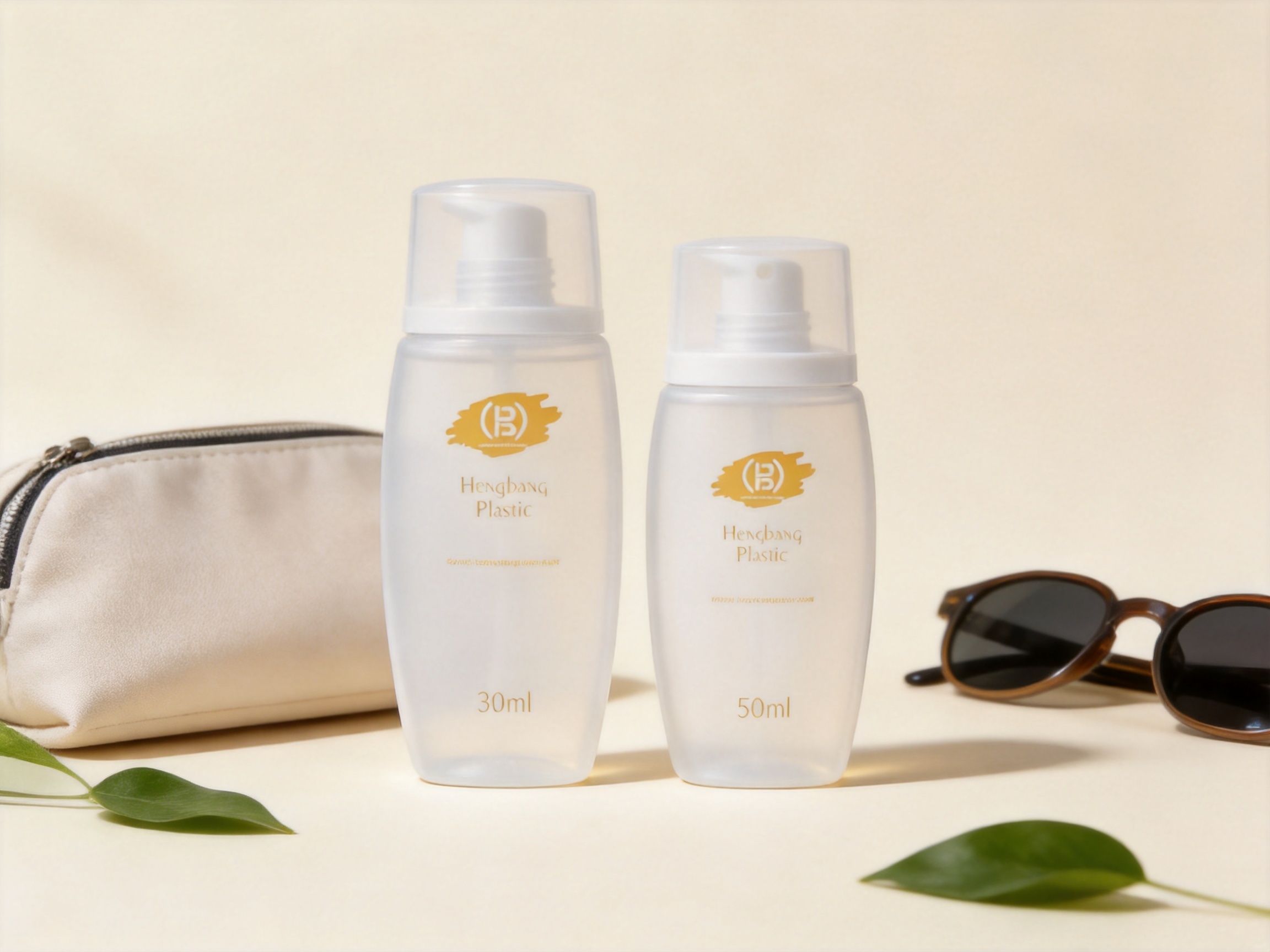
The manufacturing of a cosmetic squeeze bottle involves several connected stages. Although the exact process for the HB-F003 should be confirmed with the manufacturer, a professional workflow generally begins with product design and technical review. During this stage, the customer and supplier examine capacity, dimensions, wall structure, closure requirements, material selection, product compatibility, decoration, and target production quantity.
Design development establishes the overall shape and user experience of the bottle. For the HB-F003, important design elements include the compact profile, comfortable grip, capacity options, bottle height, diameter, shoulder transition, opening, and closure connection. The design should balance appearance with manufacturability so that it can be produced consistently at commercial scale.
Engineering review should also consider how the package behaves when filled. A bottle that looks attractive when empty must still remain stable, comfortable, and functional when it contains sunscreen. The package should be evaluated in upright and horizontal positions, during transportation, and under expected storage conditions. Testing may include leakage, compression, drop, torque, dispensing, and dimensional inspections.
Material preparation is essential for maintaining stable production. The listed PP, SUYLYN, adhesive, and PE components should be controlled according to approved specifications. Incoming materials may be reviewed for identification, appearance, batch information, and other relevant quality characteristics. Proper storage can help protect materials from contamination, moisture, excessive heat, or other conditions that may affect performance.
For multilayer or combined structures, process control is particularly important. The bonding relationship between layers should remain consistent, and the finished material should maintain its intended appearance and physical behavior. The manufacturer should define suitable inspection procedures for layer integrity, surface quality, thickness, and compatibility with the selected forming process.
The bottle body is formed using a suitable plastic processing method. The chosen method depends on the product structure, material combination, wall thickness, shape, and required production volume. Molding conditions such as temperature, pressure, cooling, cycle time, and material flow can influence the final dimensions and visual quality of the container.
Consistent forming is important because the bottle must fit its closure correctly and provide predictable squeezing performance. Variations in the neck, shoulder, opening, or body can affect assembly, sealing, labeling, and consumer use. A controlled manufacturing environment helps reduce these variations and supports repeatable output.
After the bottle body and associated components are produced, assembly may be required. The closure must fit the bottle opening securely and should be evaluated for ease of opening and closing. The assembled package should be checked for leakage and correct alignment. If the closure includes an inner sealing feature, that component should be inspected for fit and integrity.
Assembly quality has a direct effect on user confidence. A cap that is too loose may create leakage concerns, while a cap that is too tight may be difficult to operate. A professional manufacturer can use approved specifications and inspection procedures to establish an appropriate balance between secure closure and consumer convenience.
Quality control should cover both appearance and function. Visual inspection may identify scratches, deformation, contamination, color variation, incomplete forming, or other defects. Dimensional inspection may verify height, diameter, opening size, and critical fit points. Functional testing may include leak testing, squeeze behavior, closure torque, drop resistance, and compatibility with representative formulas.
Quality management is particularly significant for cosmetic packaging because the container is part of the finished consumer product. A defect in appearance can affect shelf presentation, while a functional defect can affect formula containment and customer satisfaction. ISO9001:2015 certification provides a management-system foundation, but each product still requires defined specifications and product-specific acceptance criteria.
Environmental performance is increasingly important in cosmetic packaging decisions. The HB-F003 uses plastic materials, and responsible evaluation should consider the full packaging life cycle rather than relying on a single material claim. Relevant factors include material quantity, product-to-package ratio, transportation weight, manufacturing efficiency, durability, filling yield, decoration, and end-of-life options.
Its lightweight format may help reduce transportation weight compared with heavier packaging alternatives. A smaller package also uses less material than a large container, although the exact environmental benefit depends on the material thickness and production method. Brands should request relevant technical data and assess the complete packaging system, including caps, labels, cartons, and shipping materials.
Consumers may also value durable packaging that can be used until the contents are finished. A bottle that is easy to carry and dispense can help reduce product waste caused by inconvenience. However, packaging sustainability should not be overstated. The actual recyclability of a multilayer structure may depend on local collection systems, material separation, adhesive composition, and applicable regulations.
The company’s ISO14001:2015 certification indicates that it has an environmental management system framework. This can support organized environmental objectives, operational controls, and continual improvement. Buyers should still request project-specific information about material composition, manufacturing waste, recycled content, recycling guidance, and environmental claims before using such information in marketing.
Brands seeking a more environmentally responsible sunscreen package may consider several steps. They can optimize the bottle dimensions, avoid unnecessary secondary packaging, select appropriate decoration methods, reduce excess material, provide clear disposal information, and design the product around realistic regional recycling conditions. These actions are most effective when considered at the beginning of product development.
Cosmetic brands rarely want every product to look identical. Even when using a standard bottle platform, they may require different colors, labels, surface finishes, closures, or decoration methods. The HB-F003 can serve as a starting point for a customized sunscreen package, subject to the manufacturer’s tooling and production capabilities.
Color development can influence how consumers interpret the product. White and light colors may communicate simplicity and everyday skincare. Blue or green tones may suggest freshness and outdoor protection. Warm colors may create a more energetic appearance. Color matching should be controlled through approved samples because plastic color can vary according to resin, pigment concentration, processing conditions, and surface finish.
Labeling and printing provide additional opportunities for brand communication. The package may display product name, capacity, directions, warnings, ingredient information, batch details, and regulatory information. The available decoration area, surface curvature, ink adhesion, and resistance to sunscreen oils should be evaluated before a final method is selected.
Brands may also develop coordinated sets using both capacities. For example, the 30ml bottle could be offered as a portable facial sunscreen, while the 50ml bottle could be used for a daily body sunscreen. Alternatively, both sizes could contain the same formula and differ only in target occasion. A consistent family design can help consumers understand the relationship between the products.
Before customization is approved, brands should complete a structured development process. This generally includes design confirmation, material review, sample evaluation, filling trials, decoration testing, stability assessment, transport testing, and final quality approval. Early testing helps identify problems before large-scale production and can reduce the risk of costly changes later.
The 30ml or 50ml format may be suitable for facial sunscreen intended for office workers, commuters, students, and consumers who prefer a small personal-care package. The compact bottle can be stored in a cosmetic pouch and carried throughout the day. The appropriate capacity depends on the brand’s positioning, recommended use, and target market.
Outdoor users often value portability and quick application. A squeeze bottle can be placed in a backpack, sports bag, or outdoor kit. Its lightweight construction may be more convenient than a heavier package during hiking, cycling, travel, or recreational activities. Formula compatibility and closure security should be carefully tested for these conditions.
The 30ml bottle is well suited to travel-oriented skincare sets. It can be combined with cleanser, moisturizer, toner, serum, or after-sun products in a coordinated collection. A compact sunscreen package helps brands create a complete routine for consumers who want to maintain skincare habits away from home.
Smaller packages are useful for product sampling and marketing campaigns. A 30ml bottle provides more practical reuse than a single-use sachet while remaining economical for selected promotional applications. It may be included in hotel amenities, event kits, seasonal gift boxes, membership programs, or introductory purchases.
Although the product is presented as a sunscreen bottle, the format may also be considered for compatible lotion and cream formulas. Potential applications include after-sun lotion, moisturizing body products, hand lotion, or other personal-care formulas. Each alternative use requires testing because viscosity, ingredients, fragrance oils, alcohol content, and active substances can affect packaging performance.
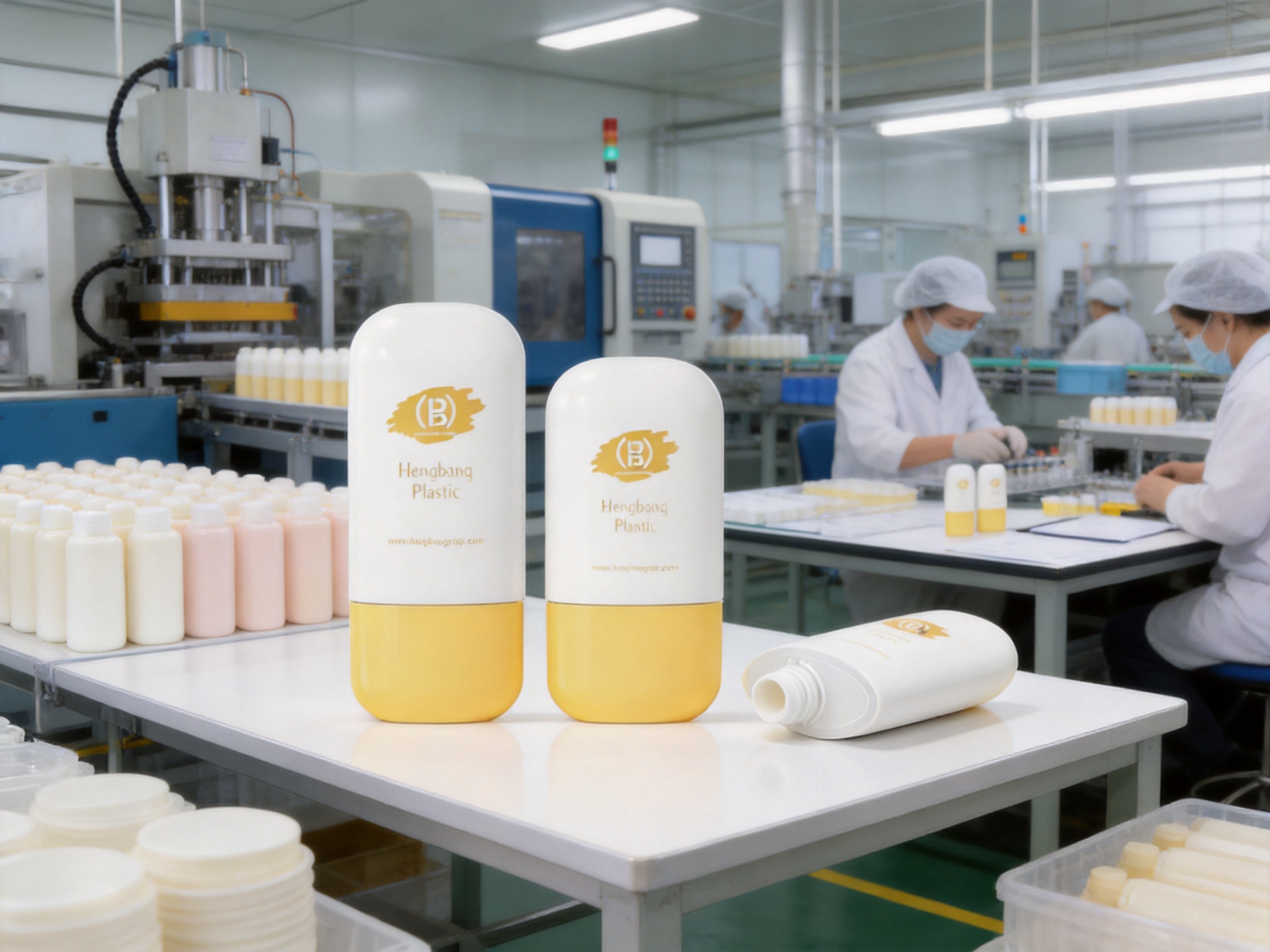
The correct capacity depends on the product’s purpose and the consumer’s expected usage. The 30ml version is more focused on portability, trial, and short-term use. It may appeal to consumers who carry sunscreen in a small handbag or who want a compact option for travel. It can also be used as an entry-level size for a new product launch.
The 50ml version provides more product for consumers who use sunscreen regularly. It can serve as the main retail size for a daily skincare line, especially when the brand wants to offer a package that remains portable but provides greater value. The larger size may also reduce the frequency of replacement during ordinary use.
Brands should consider the formula’s recommended application amount, reapplication frequency, target body area, retail channel, and expected purchase cycle. They should also evaluate packaging cost, filling efficiency, carton configuration, shipping requirements, and shelf presentation. A capacity decision should be based on both consumer needs and commercial objectives.
Decision factor |
When 30ml may be preferable |
When 50ml may be preferable |
Primary use |
Travel, samples, touch-ups, and compact personal kits |
Regular daily skincare and longer use periods |
Target customer |
Travelers, students, commuters, and trial users |
Frequent sunscreen users and value-oriented customers |
Retail strategy |
Promotional, gift, seasonal, or starter products |
Core retail product or standard line item |
Portability priority |
Maximum compactness |
Portability combined with greater content volume |
Before mass production, the filled package should be tested with the actual sunscreen formula or a representative formulation. Packaging compatibility cannot be established from material names alone. The formula may interact with the container through absorption, swelling, stress cracking, odor transfer, color change, or other effects. Testing should cover the intended storage period and relevant environmental conditions.
Leak testing is essential for a portable sunscreen bottle. Samples should be evaluated in different orientations and after transportation simulation where appropriate. Closure fit, seal integrity, neck dimensions, and bottle deformation should be reviewed together. A package that passes a static test may still require further examination after drops, vibration, temperature changes, or repeated opening and closing.
Dispensing tests should measure how easily the formula exits the bottle and whether the package provides a consistent user experience. The testing team may examine the first use, repeated use, near-empty behavior, and performance at different temperatures. If the sunscreen is relatively thick, the opening and squeeze characteristics may require additional optimization.
Visual and dimensional inspections should confirm that production samples match approved standards. Important points may include bottle height, body diameter, neck size, closure alignment, color, surface finish, label position, and overall appearance. A clear quality standard helps both the manufacturer and the buyer evaluate production batches objectively.
Transportation testing may be useful because sunscreen products are often carried in luggage and personal bags. Testing can simulate vibration, compression, drops, temperature variation, and pressure changes when relevant. The exact test program should reflect the distribution route and packaging configuration rather than relying on assumptions.
Regulatory review is also necessary. Cosmetic packaging requirements differ across markets, and brands are responsible for ensuring that the finished product complies with the laws and standards applicable to its destination. Material declarations, safety information, labeling obligations, and recycling instructions should be reviewed with qualified regulatory professionals.
When purchasing the HB-F003 for a commercial sunscreen project, buyers should provide the supplier with complete information about the intended formula, capacity, annual demand, decoration requirements, delivery destination, and target market. Early communication allows the manufacturer to determine whether the existing design is suitable or whether modifications are needed.
Sample approval should be based on both empty-package appearance and filled-package performance. A buyer should evaluate how the bottle feels in the hand, how easily the cap opens, how the formula dispenses, whether the package leaks, and how the decoration looks after handling. The sample should represent the proposed production material and process as closely as possible.
Commercial discussions should also clarify minimum order quantity, tooling charges, sample lead time, production lead time, packaging method, inspection procedure, acceptable defect limits, shipping terms, and documentation. These details are important for managing launch schedules and avoiding unexpected costs.
A specialized packaging supplier can provide value beyond the individual bottle. Design assistance, development experience, quality systems, environmental management, and technical communication can all influence the success of a packaging project. Hengbang’s history in cosmetic and skincare packaging provides a relevant foundation for buyers seeking a supplier familiar with this industry.
The HB-F003 is designed as an empty plastic squeeze bottle for sunscreen and compatible skincare products. It is especially suitable for fluid or semi-fluid formulas that can be dispensed through a squeeze container. Final formula suitability must be confirmed through compatibility and dispensing tests.
The product is listed in 30ml and 50ml capacities. The 30ml version is positioned as a compact, portable option, while the 50ml version is intended to provide greater value for routine daily skincare.
The supplied specification lists PP + SUYLYN + adhesive + PE. The exact structure, material grades, layer arrangement, and technical role of each component should be confirmed with the manufacturer before commercial approval.
The 30ml size is designed for travel-friendly use and is described as meeting airline carry-on requirements. Because travel rules may vary by country, airport, airline, and current regulation, travelers should confirm the applicable liquid-container requirements before departure.
The supplied information lists the 30ml height as 95.2mm and gives the 50ml entry as “110.2ml,” which should be technically confirmed because height is normally measured in millimeters. The diameter is listed as 47*23mm. Buyers should request an approved technical drawing before placing a production order.
It may be considered for compatible lotion, after-sun, moisturizing, hand-care, and other skincare formulas. The suitability of each formula depends on viscosity, ingredients, storage conditions, dispensing requirements, and interaction with the material structure. Testing is required for every new application.
The HB-F003 is made from lightweight plastic and is designed for portability. Compared with glass, it can reduce carrying weight and avoid the same breakage concerns during travel or outdoor use. Glass may still be preferred for certain premium concepts or formula requirements, so the best choice depends on the brand’s priorities.
Two sizes allow a brand to serve different consumer occasions. The 30ml version can support travel, samples, touch-ups, and gift sets, while the 50ml version can function as a regular daily-use product. Matching sizes can also help maintain consistent brand recognition across different sales channels.
Yuyao Hengbang Plastic Co., Ltd. has specialized in cosmetic and skincare plastic packaging since 2006. The company has a 35,000-square-meter building area, more than 300 employees, design and development capabilities, ISO9001:2015 and ISO14001:2015 certifications, recognition as a Ningbo High-Tech Enterprise in 2021, and multiple invention patents.
Yes. Formula-specific testing is strongly recommended. Testing should examine compatibility, leakage, dispensing, stability, closure performance, appearance, and transportation durability under conditions relevant to the intended product and market.
Potential customization may include color, decoration, labeling, surface treatment, and coordinated product-family design, depending on the manufacturer’s capabilities and the project requirements. Customization should be confirmed through technical review, samples, and formal approval.
Environmental claims should be based on verified technical information and applicable regulations. Buyers should consider the complete packaging system, including material structure, weight, decoration, secondary packaging, logistics, and end-of-life conditions. The company’s ISO14001:2015 certification indicates an environmental management framework, but specific claims require project-level evidence.
The HB-F003 30ml and 50ml empty sunscreen bottle is a practical packaging solution for brands that need portability, easy handling, and flexible product sizing. Its plastic construction supports a lightweight format, while the squeeze design provides a familiar and direct way to dispense sunscreen and other compatible skincare formulas. The two capacity options allow companies to create products for travel, daily use, sampling, gifting, outdoor activities, and personal skincare routines.
Its advantages over heavier, more fragile, or less portable packaging formats are particularly relevant to modern sunscreen consumption. Consumers increasingly expect skincare products to move easily with them, and a compact bottle can support regular use in a variety of locations. The ergonomic profile and portable dimensions further contribute to a convenient user experience.
The product is also supported by the manufacturing background of Yuyao Hengbang Plastic Co., Ltd. The company’s experience since 2006, specialized cosmetic packaging focus, substantial facility, professional development team, quality and environmental certifications, high-technology enterprise recognition, and invention patents provide important strengths for packaging buyers.
To achieve the best result, brands should treat the bottle as part of a complete product-development process. Formula compatibility, dispensing behavior, closure security, dimensional accuracy, decoration, transport durability, regulatory requirements, and environmental considerations should all be evaluated before mass production. With appropriate testing and customization, the HB-F003 can provide a reliable foundation for sunscreen packaging designed for contemporary skincare markets.
1. Product specification information supplied for the HB-F003 30ml and 50ml Empty Sunscreen Bottle.
2. Yuyao Hengbang Plastic Co., Ltd. company profile and manufacturing information supplied for this article.
3. ISO 9001:2015, Quality Management Systems — Requirements.
4. ISO 14001:2015, Environmental Management Systems — Requirements with Guidance for Use.
5. General principles of cosmetic packaging design, including packaging compatibility, dispensing performance, closure integrity, and transport testing.
6. General guidance for cosmetic product development, material verification, labeling review, and market-specific packaging compliance.
7. General packaging sustainability principles concerning material efficiency, transportation weight, product protection, and end-of-life considerations.


Copyright © Yuyao Hengbang Plastic Co., Ltd.
All Rights Reserved.
 Wholesale Plastic Cosmetic Packaging Manufacturers