English
 中文简体
中文简体
News
Home > Author > Wang Mengyao — Product After-Sales Service Coordinator > 50ml PETG Toner Bottle: Clear, Durable, and Designed for Modern Skincare Packaging

 2026.08.31
 Wang Mengyao — Product After-Sales Service Coordinator
Content
In the competitive skincare market, packaging is more than a protective shell. It is an important part of the customer experience, a visual expression of product quality, and a practical tool that helps preserve the value of the formula inside. The HB-C017 50ml plastic PETG toner bottle is designed for brands that need a compact, attractive, and dependable container for toners, essences, lotions, and other lightweight skincare products.
With its transparent appearance, resilient plastic construction, comfortable waist-shaped profile, and convenient 50ml capacity, this bottle combines functional performance with a clean cosmetic presentation. The design is especially suitable for brands that want customers to see the product inside while still benefiting from a lightweight and impact-resistant package.
The bottle is manufactured by Yuyao Hengbang Plastic Co., Ltd., a Chinese cosmetic packaging producer with experience in plastic containers for cosmetics and skincare products. Established in 2006, the company operates from a 35,000-square-meter facility and employs more than 300 people. Its capabilities include product design, development, manufacturing, quality management, and packaging customization.
This article examines the product’s structure, materials, practical advantages, application potential, manufacturing strengths, quality considerations, and suitability for international skincare brands.
The HB-C017 is a 50ml plastic toner bottle intended for essences and toners. Its high-transparency body allows the liquid inside to remain visible, helping create a fresh and premium appearance on retail shelves, online product pages, bathroom counters, and travel kits.
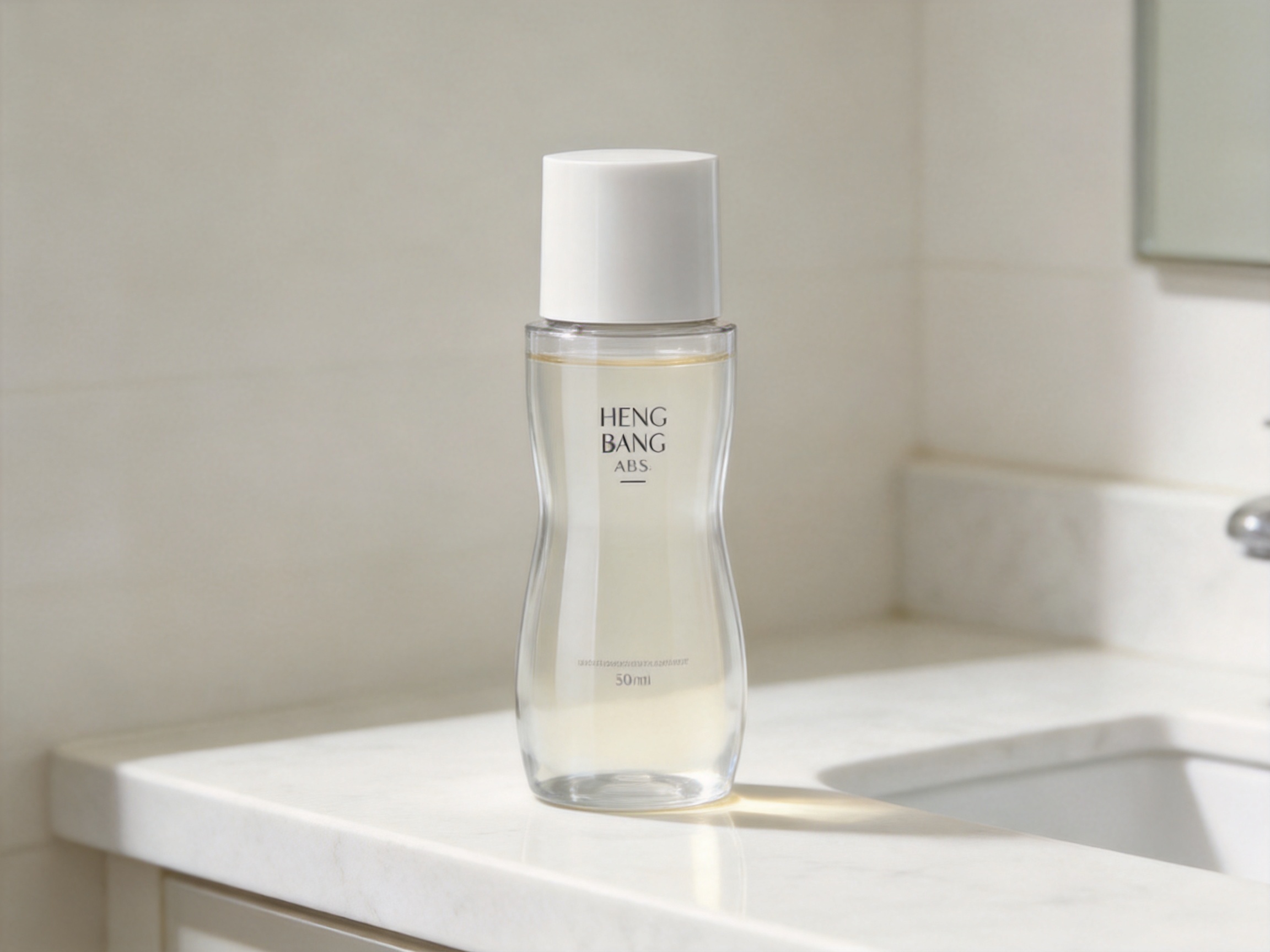
The bottle uses a streamlined waist design. Rather than relying on a simple straight cylinder, the body is shaped to sit naturally in the hand. This ergonomic profile can improve grip during daily use, particularly when the consumer is dispensing toner after cleansing or applying a product as part of a multi-step skincare routine.
At 110mm high and 35mm in diameter, the container has a narrow and portable format. Its 50ml volume offers enough capacity for regular use while remaining compact enough for travel-oriented products, trial sizes, gift sets, professional skincare kits, and premium sampling programs.
The design also supports visual communication. A transparent container can show whether the formula is clear, translucent, lightly tinted, or filled with botanical particles. For skincare brands, this visibility can help reinforce messages related to purity, freshness, simplicity, and formula appearance.
Product name |
HB-C017 50ml Plastic PETG Toner Bottle |
Product category |
PETG toner bottle |
Recommended applications |
Toners, essences, lightweight lotions, facial waters, and selected skincare liquids |
Nominal capacity |
50ml |
Height |
110mm |
Diameter |
35mm |
Cap material listed in the specification |
ABS and PP |
Bottle material listed in the specification |
PET |
Product positioning |
Transparent, compact, ergonomic cosmetic packaging |
The product title and description identify the bottle as PETG, while the supplied material table lists the bottle as PET. This distinction should be confirmed with the manufacturer before mass production. Both materials are commonly used for transparent cosmetic packaging, but their exact properties, processing conditions, compatibility, and recycling classifications may differ. A professional packaging project should always verify the final resin grade, closure system, dimensions, and decoration specifications through an approved technical drawing or sample.
Transparency is one of the most recognizable visual features of the HB-C017 bottle. In a market where consumers increasingly examine product texture, color, and ingredient presentation, a clear bottle provides an immediate view of the formula.
A visible product can support a clean-label design strategy. Clear liquids, pale botanical extracts, lightly colored essences, and water-based toners can be displayed without being hidden behind an opaque wall. The package becomes part of the product story instead of simply serving as an outer container.
Transparent packaging may also improve inventory visibility for consumers. Users can estimate how much product remains, which is useful for products used every day. This practical benefit can create a more convenient experience than an opaque container that gives no indication of remaining volume.
For retailers, the clear body can make the product easier to recognize and compare. It can also work well with minimalist labels, restrained typography, metallic accents, translucent stickers, or direct decoration. Depending on the brand direction, the same bottle can support a clinical, natural, luxury, youthful, or professional visual identity.
However, formula visibility should be considered together with product stability. Some skincare formulas may be sensitive to light, oxygen, or heat. Brands should complete compatibility and stability testing to determine whether a transparent package is appropriate for a specific formula. If light protection is required, the bottle may be combined with a carton, sleeve, colored coating, or other protective treatment, subject to technical feasibility.
PETG is widely recognized for its clear appearance and attractive surface quality. A high-transparency bottle can present a smooth, glass-like visual impression while retaining the lighter weight and handling convenience associated with plastic packaging.
This visual quality is valuable for skincare brands that want to communicate refinement without using heavy glass. The bottle can be used for premium positioning while reducing the risk of breakage during shipping, storage, and consumer handling.
The product description emphasizes the bottle’s resilience and impact resistance. This is a significant advantage over many fragile packaging alternatives. A toner bottle may be carried in a handbag, placed in a bathroom cabinet, packed in checked luggage, or shipped through several distribution stages. Plastic construction can help reduce the likelihood of shattering when the package is dropped or compressed.
Impact resistance does not mean that the bottle is indestructible. Actual performance depends on resin grade, wall thickness, bottle geometry, closure design, filling temperature, transportation conditions, and packaging protection. Nevertheless, a resilient plastic format is generally practical for brands seeking a safer alternative to conventional glass containers.
Plastic packaging typically weighs less than glass of comparable capacity. This can benefit consumers who travel frequently and companies that ship products internationally. Lower package weight may improve handling efficiency and reduce the burden placed on secondary packaging.
The lightweight format is also useful for gift boxes and multi-product sets. A 50ml bottle can be combined with cleanser, serum, cream, or mask products without making the overall kit unnecessarily heavy.
Plastic cosmetic packaging can support a broad range of production and decoration options. Depending on the confirmed material and selected manufacturing process, brands may be able to request color matching, surface finishing, labeling, printing, coating, or customized closure components.
These options allow the bottle to be adapted to different market positions. A transparent body with a white cap may communicate simplicity and purity, while a clear body with a black, gold, or silver closure may produce a more luxurious appearance. A soft pastel cap can support a gentle skincare line, and a bright color system can help a younger brand stand out.
Material selection is a critical step in cosmetic packaging development. The supplied information describes the body as PETG in the product title and content, but the product specification identifies the bottle as PET. The cap is listed as ABS plus PP. This information should be reconciled before purchase orders are issued.
Brands should request a material declaration, technical data sheet, sample approval, and compatibility testing plan. They should also verify whether the bottle is suitable for alcohol-containing toners, acidic formulas, oil-rich essences, products containing essential oils, and formulas with active ingredients. Compatibility cannot be determined solely from appearance or general resin names.
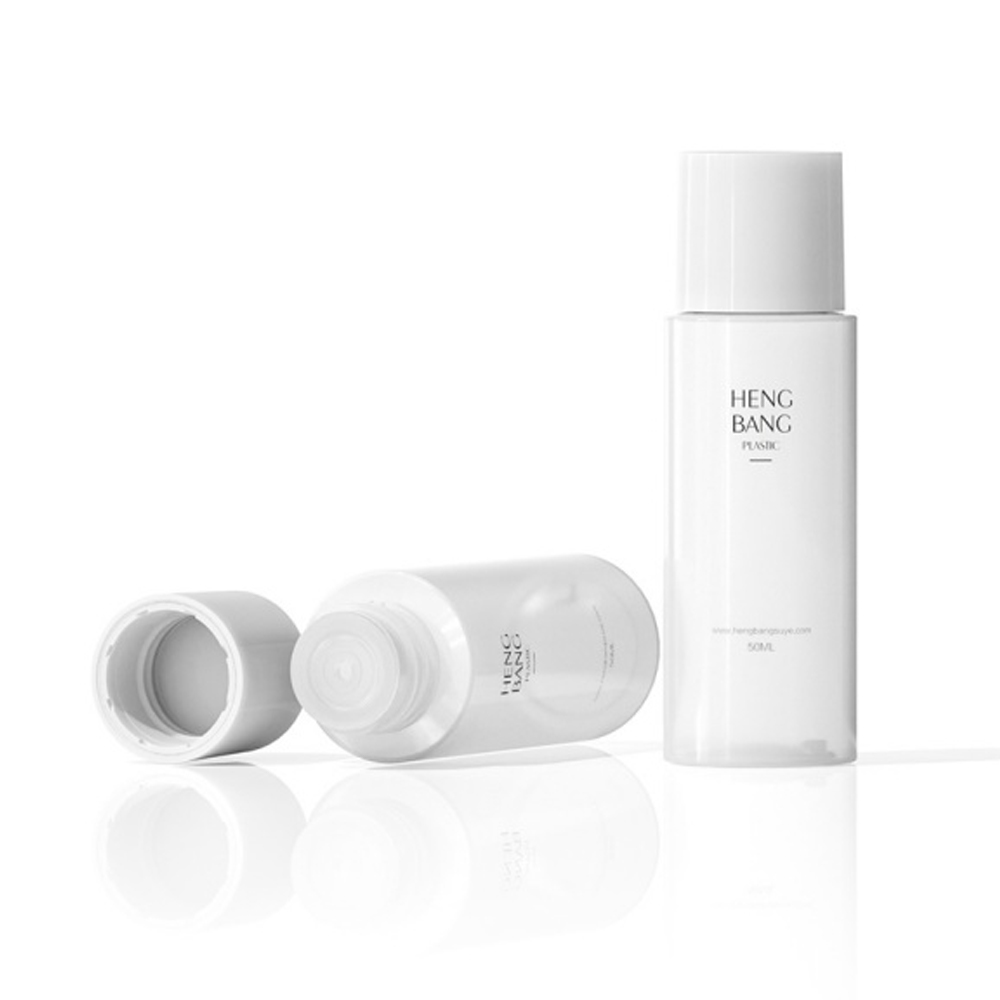
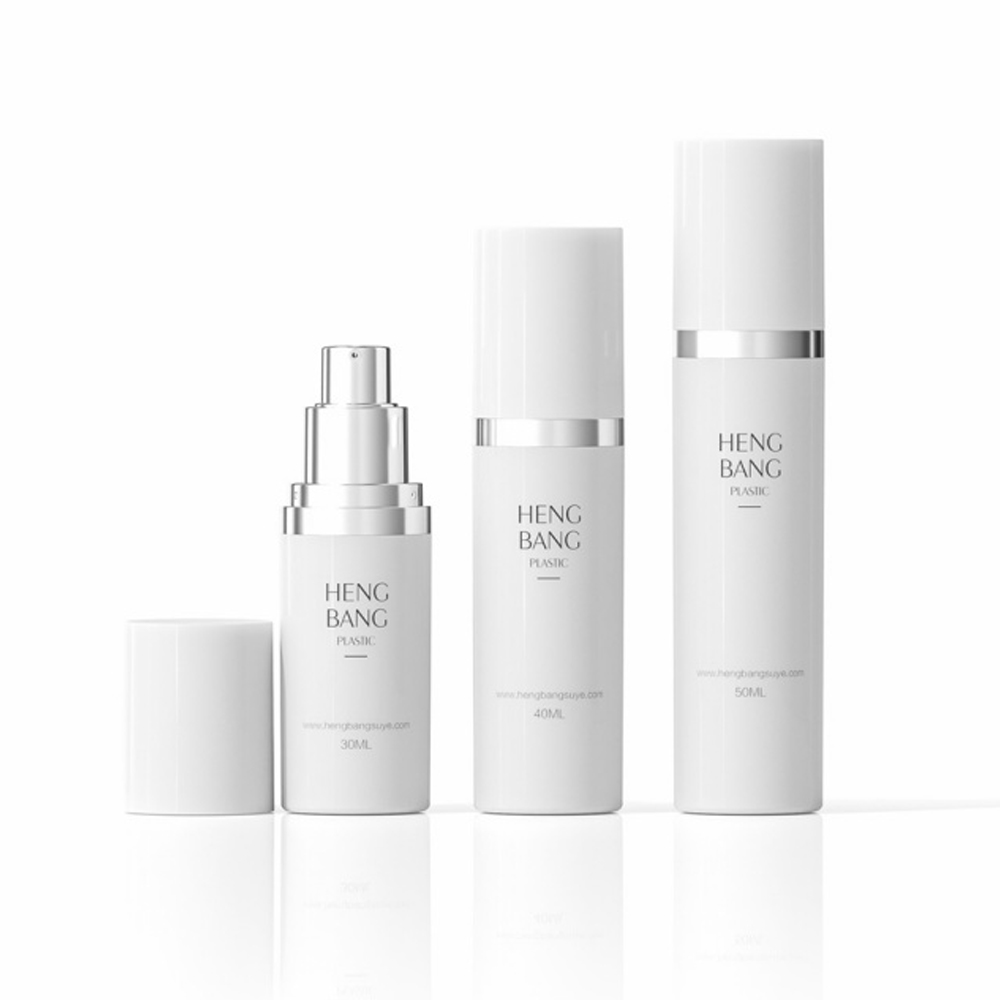
HB-C017 50ml Plastic PETG Toner Botter
The HB-C017 bottle features a streamlined waist shape intended to fit comfortably in the hand. This is an important design detail because toner is normally used directly by consumers, often in the bathroom or at a dressing table where wet hands, water splashes, and limited counter space may be present.
A shaped body can provide several practical benefits. It may help users hold the bottle more securely, reduce the chance of slipping, and make the product feel more controlled during dispensing. A comfortable grip also supports a more pleasant daily ritual, which is valuable for skincare products used repeatedly over long periods.
The 35mm diameter creates a relatively narrow profile. This allows the bottle to occupy less space than a broad jar or oversized pump container. Its slender form can fit into travel bags, cosmetic organizers, retail display trays, and bathroom storage areas.
The 110mm height gives the bottle a vertical presence that can help it appear elegant on a shelf. At the same time, its proportions remain suitable for a 50ml format rather than creating the impression of excessive empty space. The final filled appearance will depend on the formula density, headspace, closure, and fill line.
Ergonomic design should also be evaluated with the selected closure. A comfortable body is most effective when the cap is easy to remove, replace, and grip. The supplied material information lists ABS and PP for the cap. These materials are commonly used in cosmetic closures and can support a balance between appearance, dimensional performance, and processing flexibility.
Glass has a premium reputation and offers excellent transparency, but it can be heavier and more vulnerable to breakage. For a 50ml toner package, the HB-C017 plastic format may offer easier transport, safer handling, and lower risk of damage during everyday use.
Plastic can also be more suitable for travel and promotional distribution. A broken glass bottle can damage surrounding products, create sharp fragments, and cause leakage. A resilient plastic bottle generally provides a more forgiving solution for brands selling through e-commerce, subscription boxes, beauty kits, and international logistics channels.
The choice between plastic and glass should still reflect brand identity, formula requirements, environmental objectives, and market expectations. The advantage of the HB-C017 is that it can deliver transparent presentation and a refined silhouette without requiring the weight and fragility of glass.
Opaque bottles offer light protection and can create a strong visual block of color, but they conceal the product inside. The HB-C017’s transparent design is better suited to brands that want to display the formula’s color, clarity, or remaining quantity.
Transparent packaging may also reduce the need for heavy visual decoration. A clean label and carefully selected closure can be enough to create an appealing retail presentation. This may be particularly effective for minimalist, dermatological, botanical, and modern clinical skincare brands.
A toner is generally a fluid or low-viscosity product, so a narrow bottle is often more suitable than a wide-mouth jar. The bottle format can reduce unnecessary exposure of the formula to air, dust, and repeated hand contact, depending on the dispensing system chosen.
Jars are commonly associated with creams, masks, balms, and thicker products. The HB-C017 offers a format more closely aligned with liquid skincare routines. Its tall, narrow body also uses retail and storage space differently from a wide jar, which can be beneficial when products are displayed in vertical rows.
Many skincare customers prefer manageable package sizes, especially when purchasing a product for the first time. A 50ml bottle can serve as a practical entry size that is larger than a single-use sample but smaller than a family-size container.
This capacity is suitable for premium trial programs, travel collections, seasonal gift sets, and limited-edition launches. It can also help brands create a consistent size architecture across a product line, particularly when combined with other 30ml, 50ml, or 100ml formats.
The primary application is facial toner. Toners are often water-based or lightly viscous and are applied after cleansing. The bottle’s compact capacity and transparent body make it suitable for formulas positioned around hydration, balancing, refreshing, clarifying, or skin preparation.
For a toner line, the bottle may be paired with a screw cap, flip-top closure, treatment cap, or other dispensing component depending on the desired user experience. The selected closure should be tested to ensure suitable flow control and reliable sealing.
Essences frequently have a slightly richer texture than traditional toners but remain fluid enough for bottle packaging. The HB-C017 can support essence products designed for hydration, radiance, soothing, or barrier care, provided that the formula performs well with the selected bottle and closure.
The clear body can show whether the essence is colorless, translucent, or lightly tinted. This may support a product identity centered on freshness and visible purity.
Some lightweight lotions and emulsions can be filled into a bottle format rather than a jar. Whether the HB-C017 is suitable depends on viscosity and dispensing requirements. Brands should test the actual formula at different temperatures and after transportation simulation.
If the lotion is too thick for the chosen opening, dispensing may be slow or inconsistent. A suitable closure or orifice size can help address this issue, but these details must be confirmed during development.
The 50ml volume is naturally suited to travel and trial applications. It can introduce consumers to a new toner or essence without requiring them to purchase a full-size product. Travel formats are also useful in hotels, spas, dermatology clinics, beauty subscription boxes, and promotional campaigns.
For international distribution, brands should confirm the relevant travel regulations in their target markets. The bottle’s compact and resilient design may be advantageous, but the finished package must also meet requirements related to leakage prevention, labeling, transport, and product safety.
A 50ml toner bottle can be included in coordinated gift sets with cleanser, serum, cream, or eye-care products. The bottle’s transparent appearance can create a consistent visual theme when paired with other clear or semi-transparent containers.
Gift set manufacturers can use the bottle as a secondary-size product, a special-edition package, or a complementary step in a complete skincare routine. Its relatively small footprint can help designers create compact cartons and organized product inserts.
Yuyao Hengbang Plastic Co., Ltd. was established in 2006 and has developed its business around plastic packaging for cosmetics and skincare products. The company operates in Yuyao, Zhejiang Province, China, an area known for manufacturing and supply-chain activity related to plastic products and components.
The company has a building area of 35,000 square meters and more than 300 employees. This scale provides a foundation for coordinated product development, production management, quality control, warehousing, and customer service. A larger manufacturing organization can also be better positioned to support several stages of a packaging project under one corporate structure.
According to the supplied company information, Hengbang provides a full range of services, including design and development. This is important for customers that need more than a standard catalog item. Packaging development may involve structural adjustments, closure matching, decoration planning, color selection, sample approval, and production coordination.
Product design is a major strength for cosmetic packaging suppliers because a successful package must balance appearance, usability, manufacturing efficiency, and formula protection. The HB-C017’s waist-shaped body reflects attention to both visual form and hand comfort.
During development, manufacturers typically assess mold design, wall distribution, parting lines, demolding behavior, dimensional stability, closure fit, and surface appearance. These considerations affect the final product’s consistency and suitability for large-scale production.
For a customer requesting customization, the design stage may also consider the intended label area, decoration method, cap style, fill volume, transport packaging, and relationship with the rest of the product range. Early collaboration can prevent costly changes after tooling or mass production begins.
A cosmetic bottle is not an isolated component. Its performance depends on the relationship between the bottle body, closure, liner or sealing feature, dispensing opening, and filling equipment. A supplier with experience in cosmetic packaging can help coordinate these elements more effectively.
The HB-C017 specification identifies ABS and PP for the cap and PET for the bottle, while the product description positions the bottle as PETG. Confirming the exact material combination is therefore a fundamental part of component coordination. Material accuracy helps determine processing conditions, decoration compatibility, recycling communication, and formula-contact suitability.
Hengbang has passed ISO9001:2015 and ISO14001:2015 certifications according to the supplied company information. ISO9001 is associated with quality management systems, while ISO14001 is associated with environmental management systems. These certifications indicate that the company has established formal systems for managing quality and environmental responsibilities.
Certification alone does not replace product-specific testing, but it provides a useful framework for controlled processes, documentation, corrective action, and continual improvement. For buyers, it is still advisable to request current certification documents, inspection standards, test reports, and product approval procedures.
The company was awarded as a Ningbo High-Tech Enterprise in 2021 and owns multiple invention patents, according to the provided information. These achievements suggest an ongoing focus on technical development and product innovation.
For cosmetic packaging customers, innovation may appear in the form of improved structural designs, better component compatibility, more efficient production methods, enhanced decoration processes, or new packaging concepts. The value of such capabilities is strongest when they are connected to measurable product outcomes such as reliable sealing, consistent dimensions, improved usability, or reduced material waste.
Hengbang describes its team as young and professional, with a service model that includes design and development. A responsive technical and commercial team can help international customers communicate requirements more clearly and manage project details more efficiently.
Important communication points include product dimensions, material confirmation, acceptable appearance standards, order quantities, sample schedules, delivery expectations, packaging configuration, and customization requirements. Clear documentation is especially important when the customer and manufacturer operate in different languages or markets.
Cosmetic packaging quality involves both visible appearance and functional performance. A bottle may look attractive but fail to meet expectations if it leaks, deforms, has inconsistent dimensions, or does not work correctly with the filling line.
Visual inspection should assess transparency, color consistency, surface smoothness, molding marks, scratches, black spots, bubbles, contamination, deformation, and other visible defects. Transparent packaging can make some defects easier to see, so appearance standards should be defined before production.
Brands should approve a reference sample or golden sample. The approved sample can be used to establish expectations for clarity, surface finish, cap color, label position, and overall assembly appearance.
The stated dimensions are 110mm in height and 35mm in diameter. Production tolerances should be confirmed through the technical drawing. Dimensional inspection may include body height, diameter, neck finish, opening size, cap fit, wall thickness, and fill capacity.
Consistent dimensions are important for automated filling, capping, labeling, carton insertion, and retail presentation. Even small variations may affect equipment performance when a brand moves from sample testing to high-volume production.
Leakage testing is essential for toner and essence bottles. The bottle and cap should be evaluated under conditions that reflect actual use and transportation. Tests may include inverted storage, pressure variation, vibration, drop simulation, and extended standing periods.
The final test method should be agreed upon by the buyer and supplier because the result can depend on the closure design, formula viscosity, fill temperature, headspace, and packaging configuration.
Formula compatibility testing determines whether the contents cause stress cracking, discoloration, swelling, odor transfer, leakage, or other changes in the packaging. The test should use the actual formula whenever possible, not only water or a generic substitute.
Testing should consider accelerated conditions as well as normal storage. The bottle, cap, and any liner or sealing component should be evaluated together because interaction may occur between multiple materials.
The product description emphasizes safe travel and impact resistance. To validate this advantage, brands can conduct drop and transportation tests using the filled and assembled package. The test should reflect the intended secondary packaging and distribution method.
Results should be recorded according to defined criteria, including breakage, cracks, leakage, cap separation, label damage, and visible deformation. The objective is not only to test the bottle itself but to understand how the complete package performs in realistic logistics conditions.
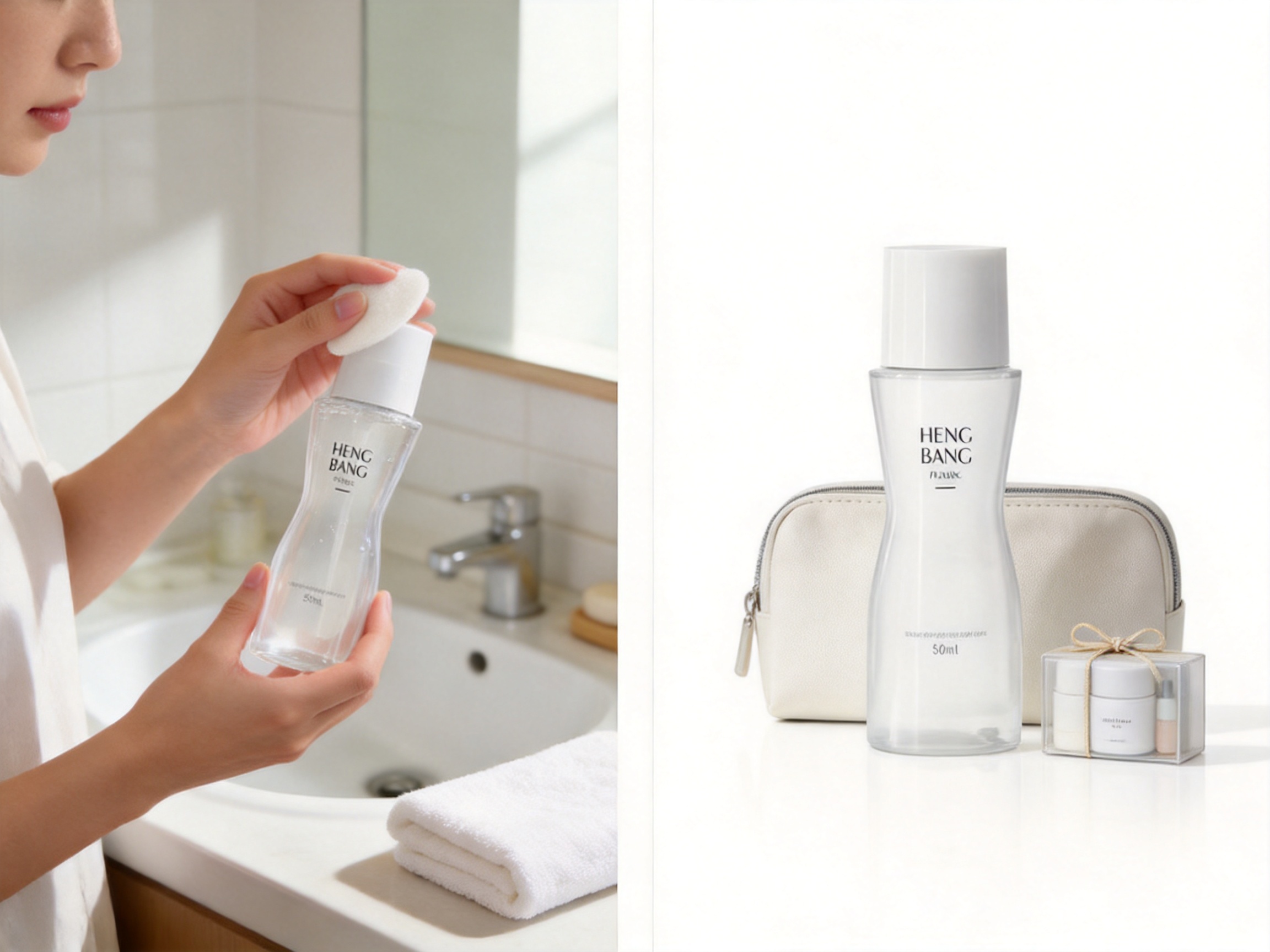
The standard transparent design provides a strong starting point for customization. Brands may request different cap colors, label designs, printed graphics, surface finishes, or packaging combinations, subject to manufacturing feasibility and minimum order requirements.
The cap can become a key visual identifier for a product family. A consistent cap color can unify multiple skincare products, while different colors can distinguish toner, serum, moisturizer, and cleanser within the same range.
Color matching should be evaluated under consistent lighting because transparent bodies and glossy surfaces can affect visual perception. A physical color sample is generally more reliable than an image displayed on a monitor.
The body can support different branding approaches, including pressure-sensitive labels, transparent labels, paper labels, and selected direct-printing methods. The appropriate option depends on the desired appearance, production quantity, formula contact risk, resistance requirements, and recycling considerations.
Label placement should account for the waist shape and available flat or gently curved surfaces. A label that is too rigid or oversized may wrinkle or lift on a contoured body. The manufacturer and decoration supplier should confirm the artwork area through a physical sample.
Surface treatments may change the visual and tactile character of the package. Glossy transparency can emphasize clarity, while a frosted or soft-touch appearance can create a more subdued premium effect. Coatings and treatments should be tested for adhesion, abrasion resistance, chemical resistance, and compatibility with the bottle material.
A carton, sleeve, or insert can protect the bottle from light and external handling while providing additional communication space. Secondary packaging is also useful when a transparent bottle needs to meet regulatory labeling requirements that cannot be accommodated on the primary container.
For gift sets and export shipments, inserts can stabilize the bottle and reduce movement inside the box. This helps protect the cap, label, and surface during transportation.
A successful packaging project should follow a structured development process. The first step is to define the product requirements, including formula type, viscosity, fill volume, target market, decoration needs, dispensing method, and expected production quantity.
The second step is to confirm the bottle material and technical specifications. Because the supplied information includes both PETG and PET references, the buyer should request written confirmation of the final bottle resin. The neck finish, cap material, sealing structure, and intended formula compatibility should also be documented.
The third step is sample evaluation. The brand should inspect the bottle’s appearance, grip, balance, transparency, closure operation, fill level, label area, and overall shelf presence. A filled sample is more informative than an empty sample because the formula changes the package’s appearance and handling characteristics.
The fourth step is compatibility and performance testing. This includes formula contact testing, leakage testing, drop testing, transportation simulation, and closure testing. For products sold internationally, the brand should also review applicable packaging, labeling, and cosmetic regulations in each destination market.
The fifth step is artwork and decoration approval. Artwork should be checked for dimensions, color, text accuracy, legal information, barcode readability, and alignment. A decorated production sample should be approved before mass production wherever possible.
The final step is production inspection and shipment release. Quality standards should be agreed upon in advance so that both parties understand acceptable and unacceptable conditions. Documentation can include inspection records, packing details, material declarations, and batch information.
Environmental performance is an increasingly important factor in cosmetic packaging selection. The company’s ISO14001:2015 certification indicates that it has an environmental management system, according to the information provided. This is relevant for buyers evaluating manufacturing partners, although specific environmental performance should be reviewed through current documentation and project-level data.
The HB-C017’s plastic format may reduce transport weight compared with glass, which can influence shipping efficiency. However, sustainability cannot be judged by weight alone. Brands should consider material selection, recycled content, production waste, decoration layers, package durability, end-of-life systems, and the actual recycling infrastructure available in target markets.
Brands may ask whether recycled resin is available, whether the bottle and cap can be separated, and how decoration affects recyclability. They should also confirm whether PETG or PET is the final material because the distinction may affect sorting and recycling pathways in different regions.
Durability is another sustainability consideration. A package that resists damage may reduce product loss caused by breakage and leakage. Preventing wasted product is important because the environmental impact of the formula and its distribution may be much greater than the impact of the container alone.
For a responsible packaging strategy, companies should avoid unsupported environmental claims. Statements such as recyclable, eco-friendly, or sustainable should be based on verified material information, local recycling conditions, and appropriate certification or technical evidence.
Buying a standard bottle may appear simple, but cosmetic packaging projects often involve many connected decisions. An established manufacturer can provide value through product knowledge, process coordination, sample development, quality documentation, and manufacturing experience.
Yuyao Hengbang Plastic Co., Ltd. has been operating since 2006 and focuses on plastic packaging for cosmetics and skincare products. Its experience in this specialized field can help customers select suitable formats for different formulas and product positions.
The company’s 35,000-square-meter building area and workforce of more than 300 employees indicate a substantial operational base. This may support a more organized approach to production scheduling, quality management, tooling coordination, and customer service than a small workshop with limited resources.
Its reported ISO9001:2015 and ISO14001:2015 certifications provide additional evidence of formal management systems. The 2021 Ningbo High-Tech Enterprise recognition and multiple invention patents further indicate an interest in technical progress and innovation.
For international customers, the most important advantage is often the ability to combine standard products with development support. A supplier that understands cosmetic packaging can help reduce communication gaps between the brand, formula developer, filling facility, decorator, and logistics provider.
The HB-C017 can support different commercial strategies. For established brands, it can serve as a compact package for a new toner, limited edition, travel product, or seasonal kit. For emerging brands, the format can provide a polished appearance without the complexity associated with heavier or more fragile materials.
The transparent body makes the product easy to display in product photography. This can be useful for e-commerce brands that rely on clean visuals and close-up images. The waist shape also creates a recognizable silhouette that can help differentiate the package from basic cylindrical bottles.
The 50ml size can help brands create accessible price points. A smaller package may encourage first-time purchases, support promotional campaigns, and make it easier to offer a product in bundles. It can also serve as a controlled format for market testing before a brand commits to a larger capacity.
For contract manufacturers and filling companies, a standardized bottle can simplify package planning when the neck finish and closure are compatible with existing equipment. This benefit must be confirmed through line trials because filling and capping equipment vary between facilities.
Before placing an order, buyers should confirm the following details with the manufacturer:
Final bottle material: PETG or PET.
Cap material and exact closure construction.
Nominal volume, overflow capacity, and recommended fill volume.
Height, diameter, neck finish, opening size, and dimensional tolerances.
Compatibility with the intended toner, essence, or lotion formula.
Leakage, drop, vibration, and transportation test requirements.
Available colors, finishes, labels, printing, and decoration methods.
Minimum order quantity and sampling procedure.
Production lead time and delivery schedule.
Packaging method for export shipment.
Quality inspection standards and defect classification.
Current quality and environmental certification documents.
Recycling and material declarations for the target market.
This checklist helps reduce uncertainty and gives the buyer a clear basis for comparing suppliers. It also ensures that the final package is evaluated as a complete system rather than as an attractive empty bottle.
The HB-C017 is designed primarily for 50ml toners and essences. It may also be suitable for selected lightweight lotions, facial waters, and other skincare liquids after formula compatibility and dispensing tests.
The stated nominal capacity is 50ml. Buyers should confirm the recommended fill volume, overflow capacity, and acceptable filling tolerance with the manufacturer before production.
The supplied specifications list a height of 110mm and a diameter of 35mm. The complete package height may vary depending on the selected cap and closure configuration.
The product title and description identify the bottle as PETG, while the material table lists the bottle as PET. This should be confirmed directly with the manufacturer. The final material declaration should be included in the approved technical documentation.
The supplied information lists ABS and PP for the cap. The exact function of each material and the final closure structure should be confirmed through the technical drawing or component specification.
Its compact 50ml size, lightweight construction, and described impact resistance make it suitable for travel-oriented applications. Nevertheless, the complete filled package should undergo leakage and transportation testing before commercial release.
Customization may be possible through cap colors, labels, printing, surface finishes, and secondary packaging. Available options depend on order quantity, decoration method, material, tooling, and production requirements.
Not necessarily. Transparent packaging allows the formula to be seen but provides limited light protection compared with opaque packaging. Brands should conduct stability testing and consider cartons, sleeves, coatings, or another protective solution if the formula is light-sensitive.
Recommended testing includes formula compatibility, leakage, dimensional inspection, closure performance, drop testing, transportation simulation, visual inspection, and filling-line trials. The exact test plan should reflect the formula, distribution method, and target market.
Yuyao Hengbang Plastic Co., Ltd. was established in 2006 and specializes in plastic packaging for cosmetics and skincare products. The company reports a 35,000-square-meter building area, more than 300 employees, design and development services, ISO9001:2015 and ISO14001:2015 certifications, a 2021 Ningbo High-Tech Enterprise recognition, and multiple invention patents.
It may be suitable for some lightweight lotions or fluid emulsions, but performance depends on viscosity, opening size, closure design, and filling conditions. A practical dispensing test with the actual formula is required before approval.
The brand should provide the formula type, target fill volume, preferred closure, decoration requirements, estimated order quantity, destination market, and delivery schedule. The supplier can then help confirm the technical specifications, provide samples, and establish a testing and approval plan.

The HB-C017 50ml plastic PETG toner bottle offers a balanced combination of transparency, resilience, compact capacity, and ergonomic handling. Its clear body can showcase the formula and support modern skincare branding, while its plastic construction can provide practical advantages over heavier and more fragile packaging alternatives.
The streamlined waist design gives the bottle a comfortable grip and a distinctive appearance. The 50ml format is appropriate for toners, essences, selected lightweight lotions, travel products, trial sizes, gift sets, and promotional programs. Its dimensions of 110mm in height and 35mm in diameter create a slender package suitable for retail displays, bathroom storage, and cosmetic organizers.
Behind the product is a manufacturer with experience in cosmetic and skincare packaging, a substantial production facility, a workforce of more than 300 employees, design and development capabilities, formal quality and environmental management certifications, and a stated commitment to innovation. These strengths can help brands move from initial packaging concepts to tested and commercially prepared products.
The most important technical action for buyers is to verify the material specification. Because the product information refers to PETG while the material table states PET, the final resin must be confirmed before approval. Formula compatibility, closure performance, decoration, recycling communication, and regulatory requirements should also be reviewed as part of a complete packaging development process.
When correctly specified and tested, the HB-C017 can provide a versatile packaging solution for skincare brands seeking a transparent, travel-friendly, and professionally manufactured 50ml bottle.
1. Product specification sheet for HB-C017 50ml Plastic PETG Toner Bottle, supplied product information.
2. Company profile of Yuyao Hengbang Plastic Co., Ltd., supplied corporate information.
3. ISO 9001:2015, Quality Management Systems—Requirements.
4. ISO 14001:2015, Environmental Management Systems—Requirements with Guidance for Use.
5. General technical guidance on cosmetic packaging material compatibility, closure performance, and transport testing.
6. General principles of plastic packaging design for cosmetic and skincare products.


Copyright © Yuyao Hengbang Plastic Co., Ltd.
All Rights Reserved.
 Wholesale Plastic Cosmetic Packaging Manufacturers