English
 中文简体
中文简体
News
Home > Author > Wang Mengyao — Product After-Sales Service Coordinator > Refillable Airless Serum Bottles: A Practical Guide to Sustainable, High-Performance Cosmetic Packaging

 2026.09.02
 Wang Mengyao — Product After-Sales Service Coordinator
Content
Modern cosmetic packaging must do more than hold a formula. It must protect sensitive ingredients, provide a convenient user experience, support efficient filling and dispensing, communicate quality, and increasingly respond to environmental concerns. For brands developing serums, creams, lotions, sunscreen products, and other skincare formulations, the choice of bottle can directly influence product stability, customer satisfaction, operating costs, and the overall sustainability profile of the packaging system.
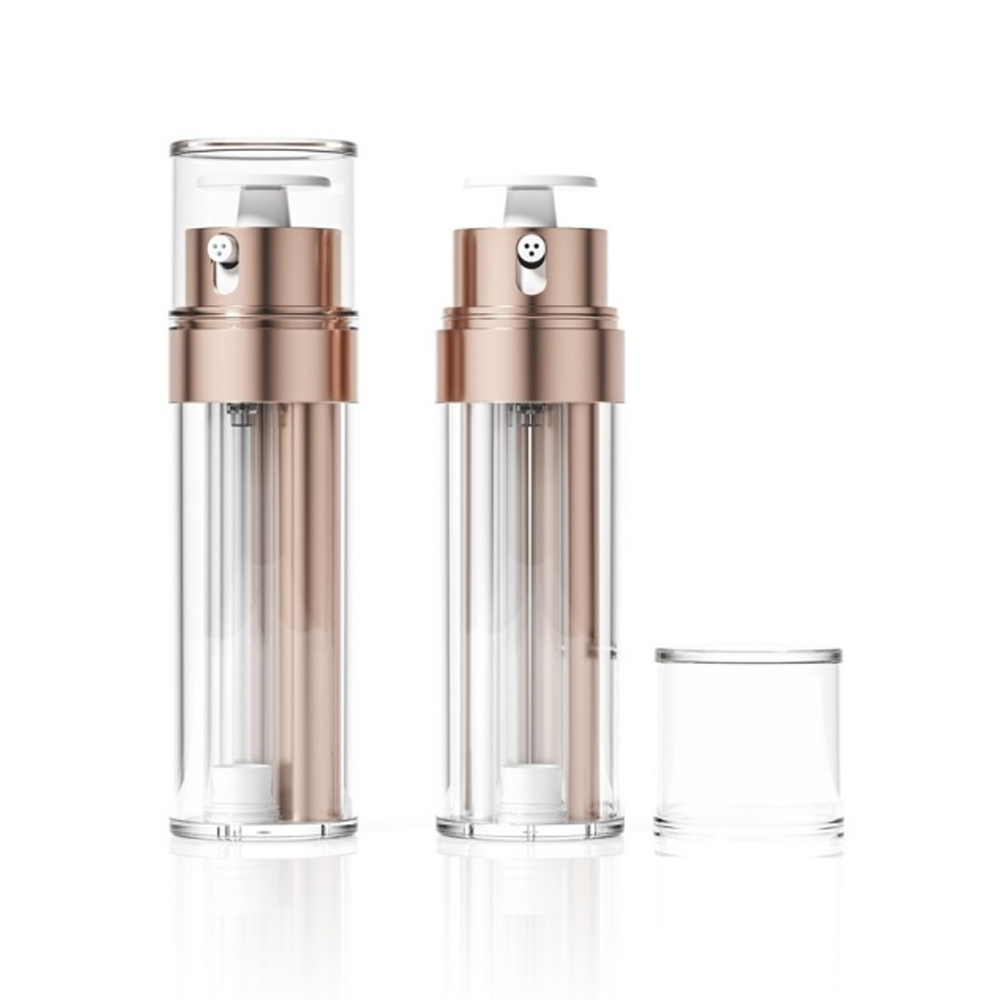
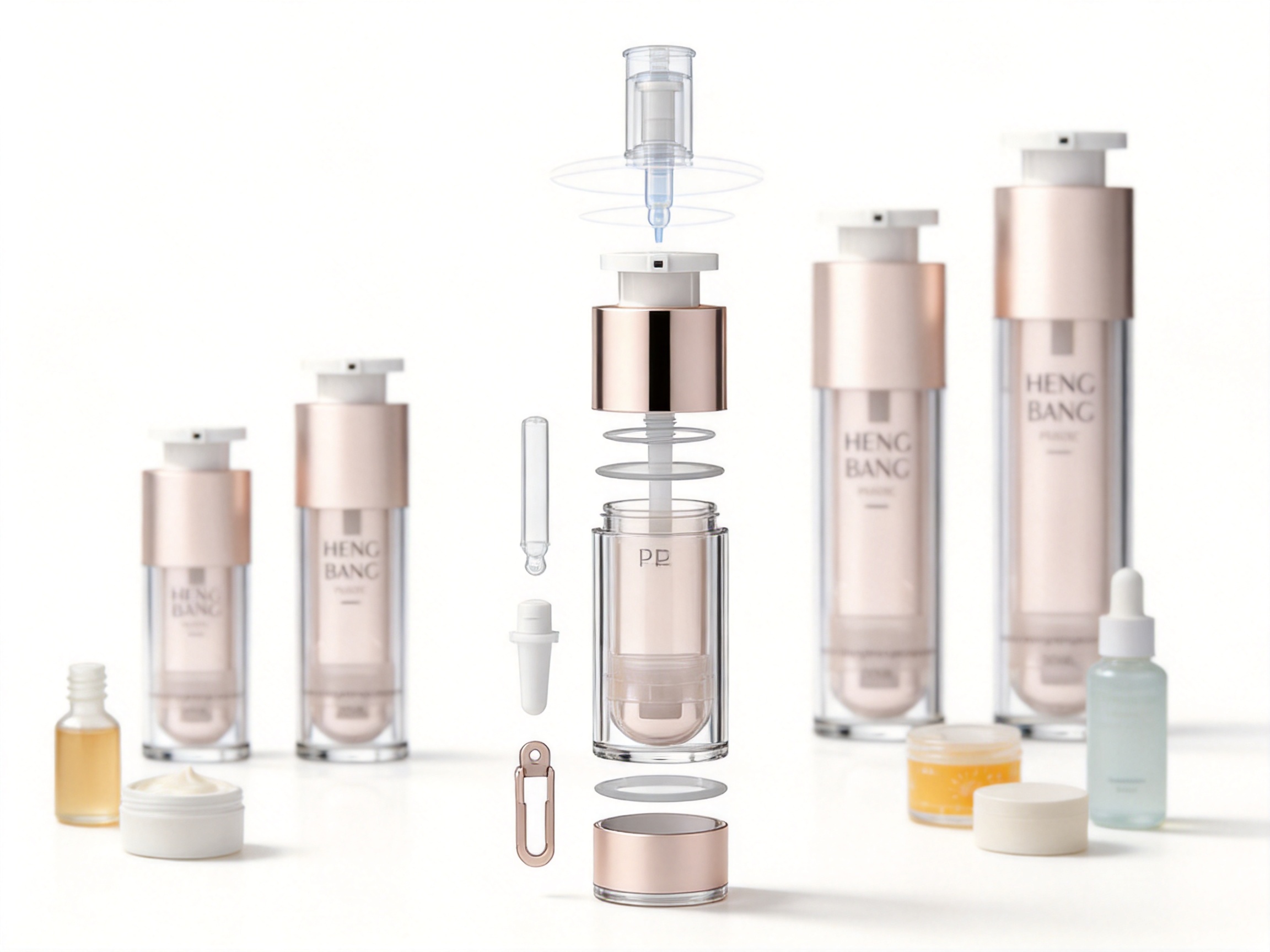
The HB-K022A/B plastic refillable airless serum bottle is designed around these combined requirements. It consists of a permanent outer bottle and a replaceable inner bottle. Once the inner container has been emptied, the user can remove it and install a replacement rather than discarding the entire package. This structure gives brands a practical alternative to conventional single-use cosmetic bottles while maintaining the clean appearance and controlled dispensing performance associated with airless packaging.
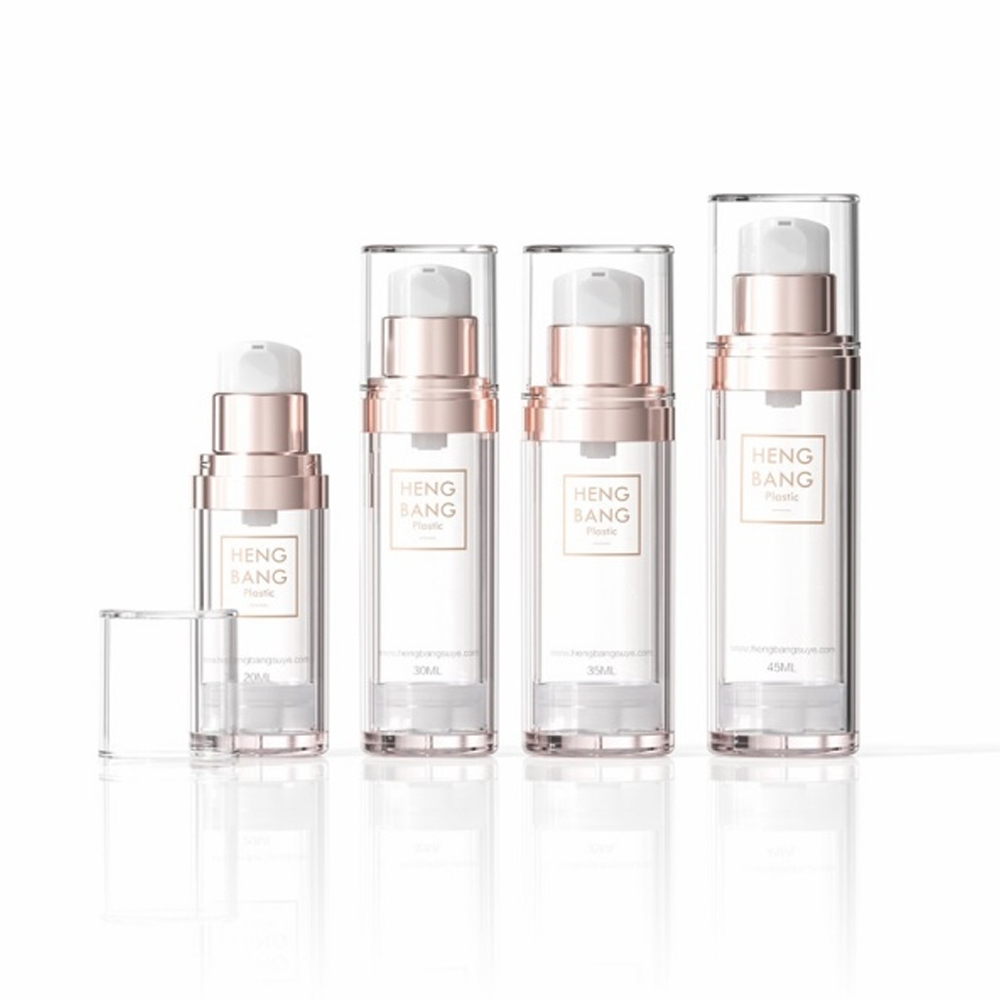
The container is available in 20 ml, 30 ml, 50 ml, and 70 ml capacities. These options make it suitable for different product positioning strategies, from compact premium serums and travel-size treatments to larger daily-use skincare products. Its airless dispensing system helps reduce exposure to air and contamination, while the pump and retaining clip provide a controlled and secure dispensing experience.
Manufactured by Yuyao Hengbang Plastic Co., Ltd., a professional cosmetic packaging producer with a 35,000-square-meter building area, more than 300 employees, ISO9001:2015 and ISO14001:2015 certifications, design and development capabilities, and multiple invention patents, the product reflects an approach that combines packaging functionality with organized industrial production.
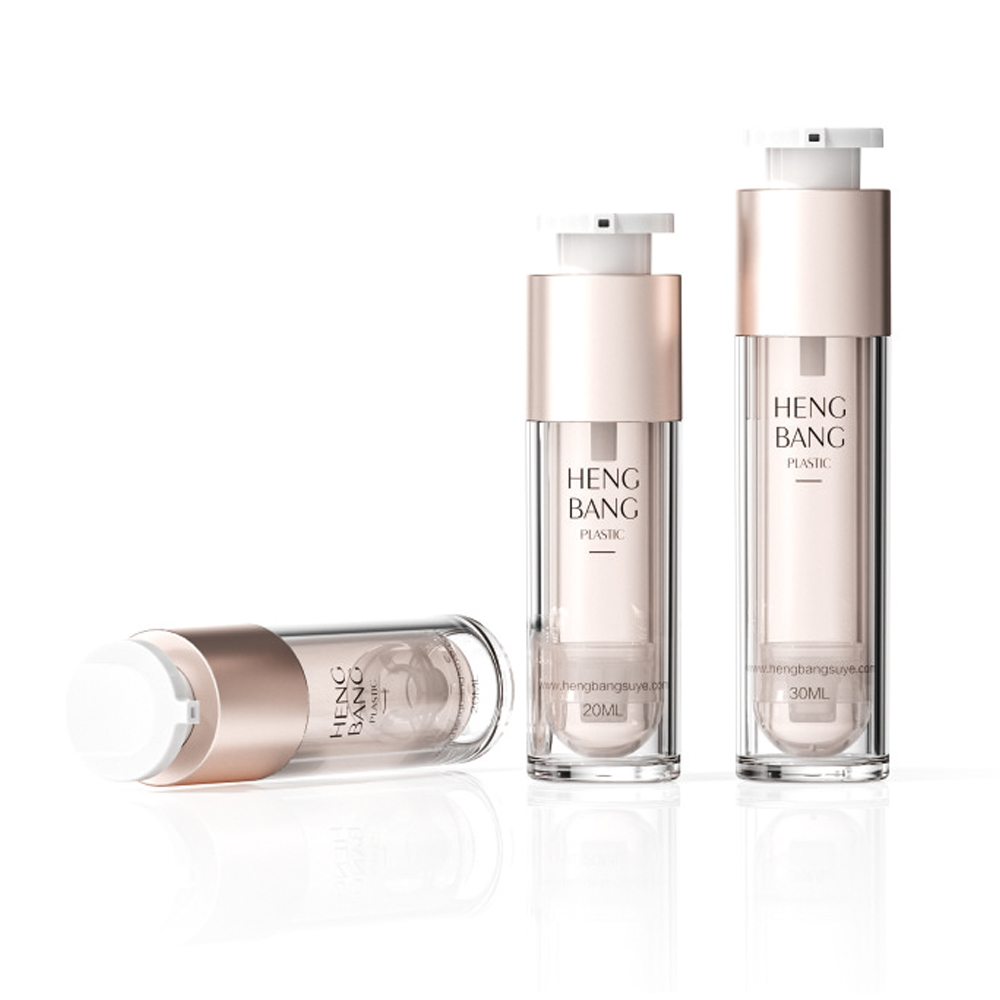
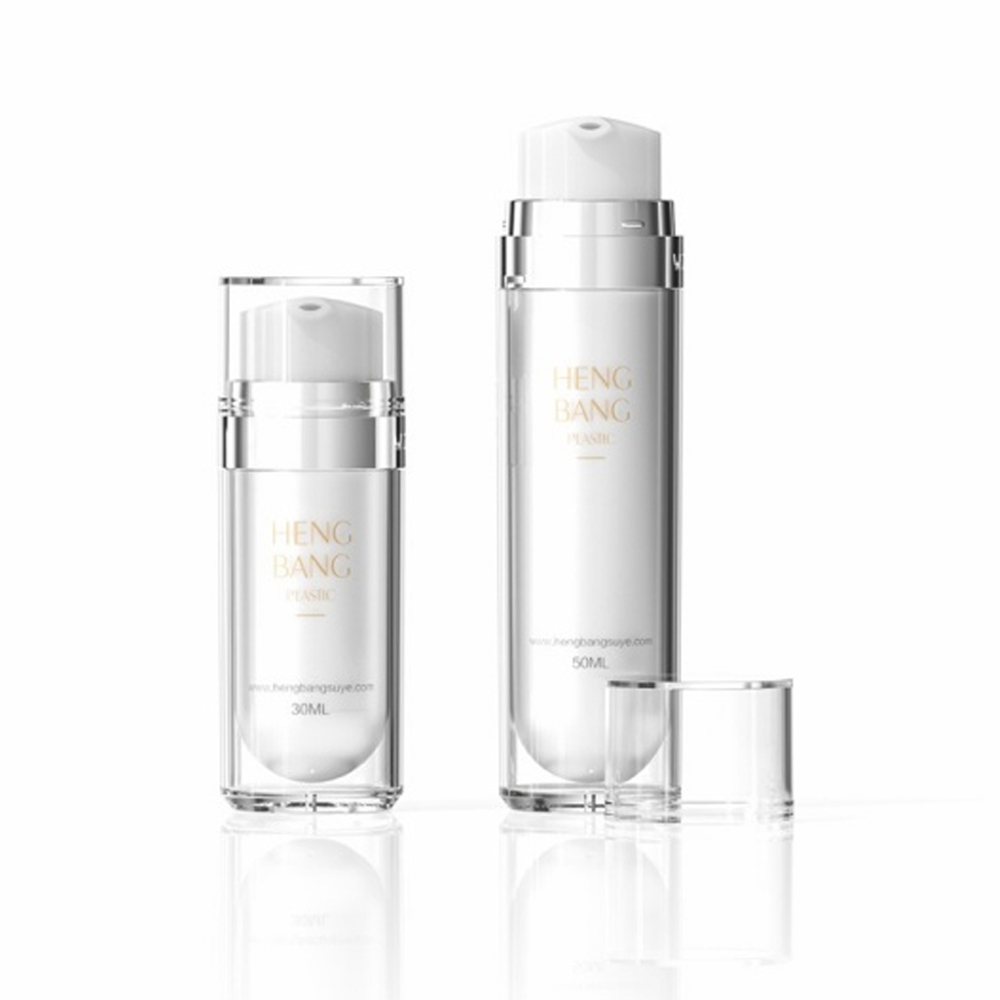
HB-K022A/B Plastic Refillable Airless Serum Bottle
Many cosmetic and skincare products are sensitive to air, moisture, light, microorganisms, and repeated handling. A conventional open jar exposes the formula to the environment every time the consumer removes the lid and touches the product. A standard bottle with a dip tube may provide better protection, but it can still draw air into the package during use and may leave a portion of the formula behind when the pump can no longer reach the bottom.
An airless bottle uses a vacuum-based dispensing structure. Instead of relying on a dip tube, the formula is held above a movable piston at the base of the container. As the pump is pressed, the piston moves upward and pushes the product toward the dispensing outlet. The formula is dispensed without requiring a dip tube to extend into the contents.
This design provides several functional advantages. First, it helps limit the movement of air into the product chamber. Second, it reduces the need for consumers to make direct contact with the formula. Third, it can help the package dispense a greater proportion of the filled product than some conventional formats. Finally, it creates a smooth and controlled user experience that is widely associated with premium skincare packaging.
These benefits are particularly relevant for serums, emulsions, lotions, creams, eye treatments, and other products whose performance may be affected by oxidation or contamination. Airless technology cannot replace appropriate formulation, filling, sealing, and storage controls, but it can become an important part of a broader product-protection strategy.
The HB-K022A/B is a refillable plastic airless serum bottle designed for cosmetic and skincare applications. Its two-part structure separates the long-term outer package from the replaceable product-contact inner bottle. The outer bottle provides the visible body and supports the overall presentation of the package. The inner bottle holds the formula and can be replaced after use.
This design is different from a conventional disposable airless bottle. In a traditional format, the complete bottle, including its decorative outer structure, may be discarded when the product is finished. With a refillable design, the permanent outer component remains in service while only the inner bottle is replaced. This can reduce the amount of packaging material discarded during repeat purchases, depending on the refill design, consumer behavior, and local recycling or disposal conditions.
The package includes a nozzle with a retaining clip. The clip helps protect the actuator and dispensing area during storage, transportation, and handling. It may also help reduce the risk of accidental actuation before the product reaches the consumer. For brands selling skincare in retail, e-commerce, hotel amenities, professional treatment environments, or gift sets, this additional security feature can contribute to a more reliable package experience.
The product is categorized as a plastic refillable airless bottle and may be used for serum, lotion, cream, sunscreen, toner, and other compatible cosmetic formulations. Final compatibility should always be confirmed through formula testing, component testing, stability studies, and filling-line trials.
| Item | Specification |
|---|---|
| Product type | Plastic refillable airless serum bottle |
| Available capacities | 20 ml, 30 ml, 50 ml, and 70 ml |
| Clip material | PP |
| Pump material | PP and ABS |
| Outer bottle material | MS |
| Inner bottle material | PP |
| Dispensing dosage | 0.23 cc per actuation, subject to testing and production tolerance |
| Listed heights | 118.5 mm, 136.5 mm, 132.5 mm, and 160 mm for the listed capacity options |
| Listed diameters | 33 mm and 40 mm, depending on configuration |
| Primary applications | Serums, creams, lotions, sunscreen, toner, and compatible skincare formulations |
The supplied product data lists the dimensions by capacity, but the height entry associated with the 50 ml option appears as “132.5 ml” in the original specification. Since height is normally expressed in millimeters, this value should be confirmed with the manufacturer during technical approval. Likewise, the applicable diameter depends on the selected configuration and should be verified against the final drawing or production sample.
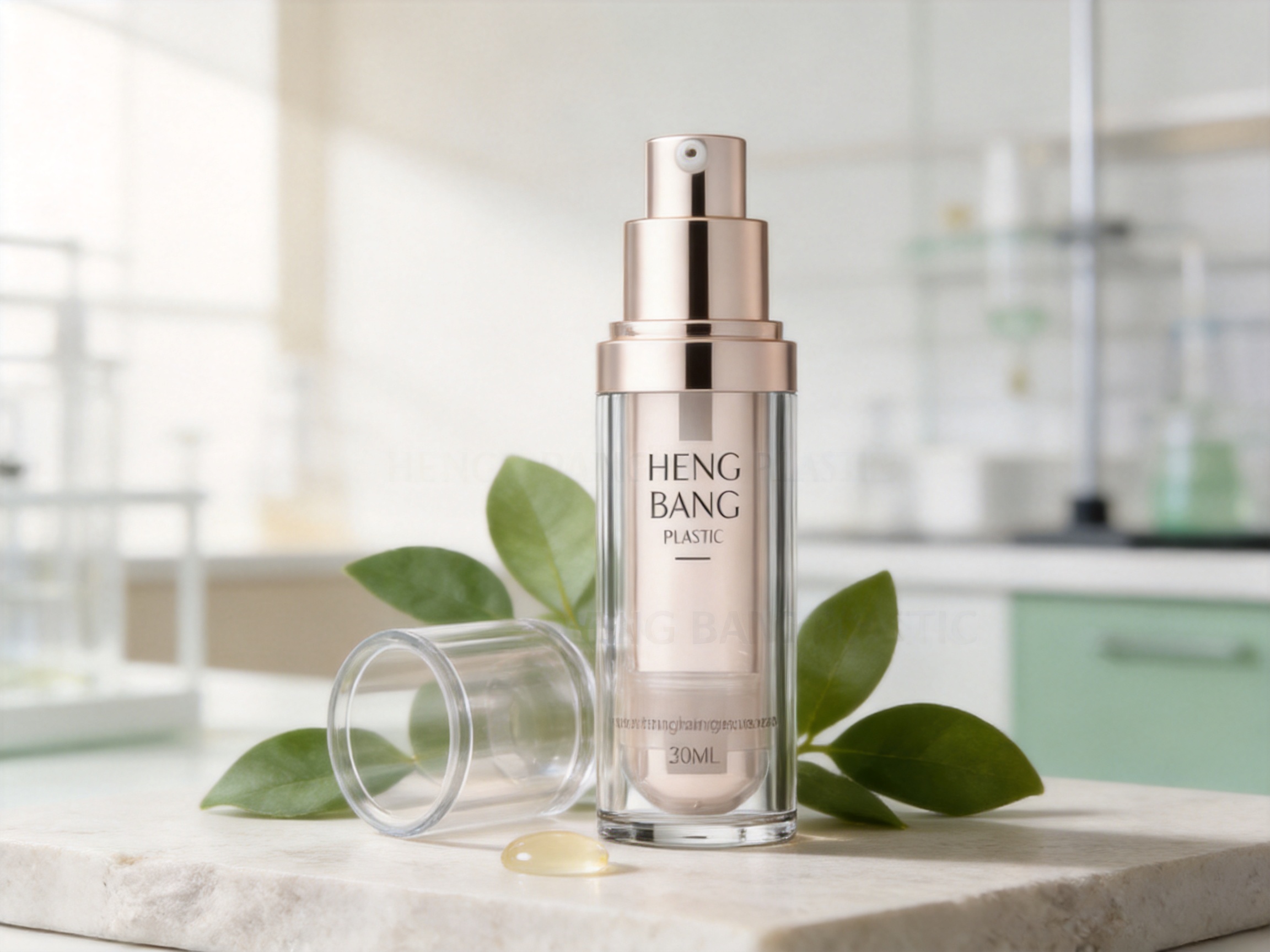
The most notable difference between this bottle and many conventional cosmetic packages is its replaceable inner bottle. The permanent outer bottle does not need to be discarded every time the consumer purchases a refill. This can reduce the quantity of material used across multiple product cycles and may support a more sustainable packaging message.
Refillability should not be treated as a simple marketing label. A successful refill system depends on several practical factors, including reliable fit, intuitive replacement, sufficient product protection, consumer willingness to repurchase refills, and a clear explanation of the replacement process. The HB-K022A/B structure addresses the physical foundation of that system by separating the outer presentation package from the disposable product-contact component.
Compared with a completely new bottle for every purchase, a refillable system may also reduce the need to reproduce decorative elements on every package. This can be especially valuable for premium products using complex surface treatments, heavier outer walls, or multiple decorative components. The reusable outer bottle can become part of the customer’s long-term product experience while the replacement inner bottle focuses on efficient product delivery.
The airless system is designed to protect the formula from unnecessary exposure during regular use. Because the product is driven upward by a piston, the package does not require a traditional dip tube. The dispensing path is controlled through the pump and nozzle, while the product remains inside the inner container until the consumer activates the pump.
This is a valuable advantage for formulations containing ingredients that are sensitive to oxygen or repeated environmental exposure. Examples may include antioxidant serums, active ingredient treatments, moisturizers, brightening products, and certain emulsions. The airless structure may also help maintain a cleaner application process because the consumer does not need to open the main product chamber or reach into the formula.
Actual shelf life and formula protection depend on the complete package system. The formula, inner bottle, pump, closure, headspace, filling process, storage conditions, and distribution environment all influence performance. Nevertheless, an airless package provides a strong technical basis for products where controlled exposure is important.
The stated dosage is 0.23 cc per actuation. A measured pump output can help consumers apply a consistent amount of serum or lotion, although the actual dosage may vary according to formulation viscosity, pump configuration, filling conditions, temperature, and production tolerance.
Controlled dispensing has several commercial benefits. It can make the product easier to use, support a more predictable application routine, and help reduce accidental overuse. For professional or treatment-oriented products, a consistent dosage can also contribute to a more standardized application method. Brands should validate the actual output through repeated pump testing using the intended formula and finished packaging components.
The retaining clip is a small component, but it can add practical value. It helps prevent unintended movement of the pump during shipping and storage. This feature is useful for online orders, retail displays, travel kits, and products that may be carried inside handbags or cosmetic cases.
A clip can also provide a visible indication that the package is in a protected or transport-ready position. When the product reaches the consumer, removing the clip creates a straightforward transition from shipping mode to daily-use mode. This simple interaction can improve the perceived quality of the package and reduce uncertainty about whether the pump is ready for use.
The four available capacities allow brands to build a coordinated product family. A 20 ml bottle may be appropriate for concentrated treatments, trial sizes, travel retail, or premium products used in small quantities. The 30 ml option is a familiar format for many facial serums and treatment products. The 50 ml version can serve daily-use skincare, creams, and larger treatment products. The 70 ml version provides additional volume for body care, lotion, sunscreen, or extended-use formulations.
Offering several capacities through one product family may simplify product-line planning. A brand can maintain a consistent design language while adapting the package size to different formulas, markets, and price points. It can also make coordinated gift sets and multi-step skincare collections easier to develop.
The HB-K022A/B uses different materials for specific components. The clip is made from PP, the pump combines PP and ABS, the outer bottle is listed as MS, and the inner bottle is made from PP. Each material contributes particular mechanical, processing, or appearance characteristics.
Polypropylene, commonly abbreviated as PP, is widely used in cosmetic packaging. It offers a useful balance of light weight, chemical resistance, toughness, and processability. In this product, the PP inner bottle serves as the product-contact container and works with the airless piston and pump system.
Product compatibility must be evaluated for each formulation. Testing should consider the formula’s oils, solvents, surfactants, active ingredients, fragrances, preservatives, pH, viscosity, and storage temperature. Compatibility studies may include visual inspection, weight change, leakage evaluation, pump performance, odor transfer, stress cracking observation, and accelerated aging.
The pump uses PP and ABS components. PP can provide chemical resistance and suitable flexibility for selected pump parts, while ABS is often used where greater rigidity and dimensional stability are required. The performance of a pump is influenced by the interaction of multiple parts, including the actuator, spring system, sealing elements, piston, valve, and dispensing orifice.
For a finished cosmetic product, the pump should be tested with the actual formula rather than with water alone. A serum may be thin, gel-like, oily, or highly viscous. A lotion may contain emulsified ingredients that affect priming and output. A sunscreen may have a different flow profile from a toner. Formula-specific testing helps confirm that the package can prime correctly, dispense smoothly, and maintain output throughout its intended use cycle.
The supplied information identifies the outer bottle material as MS. The exact meaning of this material designation, including its composition and grade, should be confirmed in the technical documentation. The outer bottle is intended to provide the visible and structural housing for the refillable system. It may support decoration, labeling, color matching, and brand-specific appearance requirements.
Because the outer bottle remains with the consumer across multiple refill cycles, its durability is particularly important. The outer structure should be evaluated for impact resistance, scratch resistance, dimensional stability, assembly strength, and appearance retention. These considerations are central to the success of a refillable package: if the permanent outer bottle remains attractive and functional, consumers have a stronger reason to keep using it.
Serums are one of the most natural applications for an airless refillable bottle. They are often sold in relatively small volumes and may contain concentrated active ingredients. The 20 ml and 30 ml capacities can support compact facial treatment formats, while the airless mechanism provides clean and controlled dispensing.
Brands can use the package for hydrating serums, antioxidant treatments, brightening products, firming formulas, barrier-support products, and other leave-on skincare applications. The final suitability depends on formula viscosity and compatibility with the inner bottle and pump.
Many creams and emulsions benefit from a package that limits direct consumer contact. The 50 ml capacity is suitable for a range of facial moisturizers and treatment creams. The pump system can provide a more hygienic alternative to a wide-mouth jar, particularly for products used around the eyes or on clean facial skin.
Airless dispensing may also help brands present a cream in a modern, hygienic, and premium format. The refillable outer structure adds another layer of differentiation in a crowded skincare market.
The 50 ml and 70 ml capacities may be useful for lotions and other products applied in larger quantities. Although body lotions are often sold in larger packages, a compact refillable bottle can be appropriate for targeted treatments, hand care, premium travel products, hotel amenities, or specialized formulas.
Sunscreen packaging must support convenient, consistent, and hygienic application. A controlled pump can help dispense measured portions, while the retaining clip may improve transport security. The 50 ml and 70 ml formats are potential options for facial sunscreen, hand sunscreen, or compact daily-use products.
Because sunscreen formulas may contain mineral filters, oils, solvents, and other ingredients that influence viscosity and compatibility, testing is essential. Brands should evaluate pump output, priming, clogging, leakage, formula separation, and package interaction under realistic conditions.
Toners are usually fluid and may be packaged in bottles with different dispensing systems. A refillable airless bottle can be considered when the brand wants a more controlled pump application or a cohesive package family that includes serums and creams. The dispensing output should be confirmed because an airless pump designed for a specific dosage may not be ideal for every low-viscosity formula.
Packaging performance depends not only on product design but also on manufacturing discipline. A refillable airless bottle includes multiple components that must be produced and assembled with close attention to dimensional accuracy, sealing, fit, appearance, and pump function. Small variations can affect priming, leakage, assembly force, or consumer usability.
Yuyao Hengbang Plastic Co., Ltd. was established in 2006 and has developed its business around plastic packaging for cosmetics and skincare products. Its reported building area of 35,000 square meters provides a substantial physical base for manufacturing, assembly, storage, quality control, and related operations. The company also reports more than 300 employees, supporting a range of production, engineering, quality, management, and customer service functions.
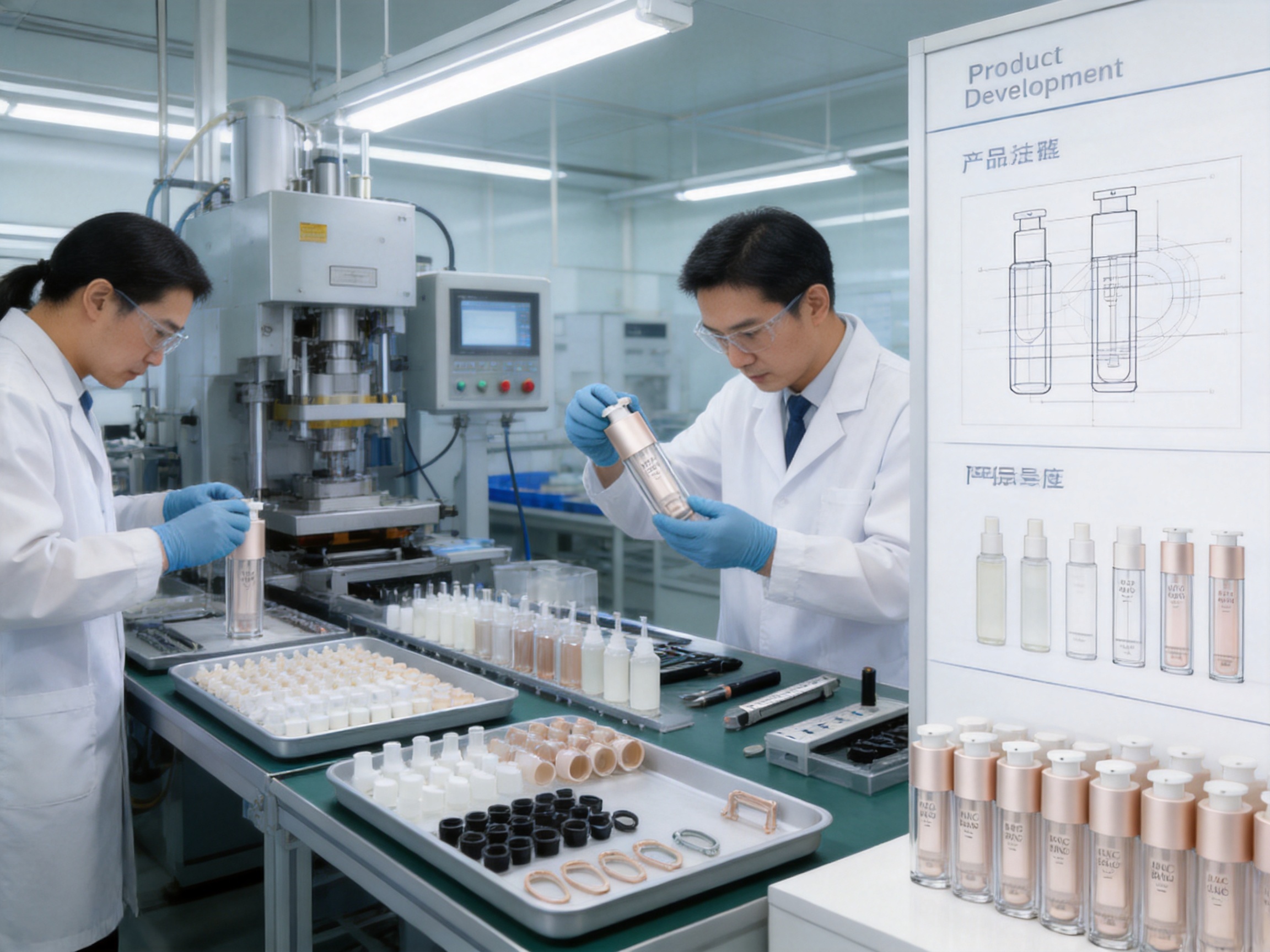
The company provides design and development services in addition to manufacturing. This is important for brands that need more than a standard catalog package. Packaging development may involve selecting a suitable capacity, adjusting the external appearance, confirming decoration requirements, adapting a pump to the formula, and coordinating prototypes with filling-line conditions.
A design and development team can help identify potential problems earlier in the project. For example, the team may review the relationship between bottle height and retail shelf space, the fit of a label or printed design, the clearance required for the pump, the ease of replacing the inner bottle, and the effect of the chosen formula on dispensing performance.
The company has passed ISO9001:2015 certification. ISO9001 is associated with quality management systems and structured processes for controlling operations, documentation, customer requirements, corrective actions, and continuous improvement. Certification does not mean that every individual component is automatically suitable for every formula, but it indicates that the manufacturer has established a formal framework for managing quality-related activities.
For cosmetic packaging buyers, a quality management system can support more consistent communication and production control. It may also make it easier to define inspection points, agree on acceptance criteria, manage samples, document deviations, and respond to quality issues.
The company has also passed ISO14001:2015 certification. ISO14001 relates to environmental management systems, including the identification and management of environmental aspects associated with organizational activities. For a packaging manufacturer, this framework can support more systematic attention to resource use, waste management, environmental compliance, and operational improvement.
The refillable structure of the HB-K022A/B aligns with the broader industry movement toward more resource-conscious packaging. The environmental value of refillability depends on the complete life cycle, including material selection, manufacturing energy, shipping, cleaning or replacement procedures, consumer reuse rates, and end-of-life pathways. An environmental management system provides a useful organizational foundation for addressing these factors.
The company reports multiple invention patents. Patents alone do not guarantee that a package will be suitable for a particular product, but they can indicate continuing investment in technical development and product innovation. Airless packaging requires knowledge of fluid movement, component interaction, sealing, assembly, and dispensing behavior. Experience in these areas can help a manufacturer refine product structures and respond to brand-specific requirements.
In 2021, the company was awarded recognition as a Ningbo High-Tech Enterprise. This recognition supports the company’s positioning as a manufacturer that combines plastic processing with technical development. For customers seeking long-term packaging partners, engineering capability can be as important as production capacity because packaging projects often require repeated testing, revisions, and coordination across design, quality, and filling operations.
A standard single-use cosmetic bottle is usually discarded after the product is consumed. It may be simple and economical, but it does not provide the same opportunity for retaining a permanent outer package. The refillable airless design can reduce the amount of material discarded over multiple product cycles, particularly when consumers continue using the same outer bottle.
The refillable model can also create a stronger relationship between the customer and the packaging. Instead of seeing the package as disposable, the consumer may regard the outer bottle as a durable product component. This can support refill programs, subscription models, loyalty initiatives, and repeat-purchase strategies.
A dip-tube pump uses a tube to draw product from the bottom of the container. This system is widely used and can be effective for many formulas, but it may allow more air exchange and may have difficulty reaching every part of the container as the fill level decreases.
The airless piston system provides a different approach. It pushes the product upward rather than drawing it through a long tube. This can help deliver a smoother dispensing experience and may improve product evacuation. Brands should still conduct full emptying and output tests because performance varies according to formula viscosity and package configuration.
Wide-mouth jars are familiar and can be suitable for thick creams, but they require the consumer to open the container fully at every use. This creates more opportunities for environmental exposure and direct contact. The airless bottle offers a closed dispensing format that may be more hygienic and convenient for active skincare products.
The bottle format can also be easier to carry and less vulnerable to accidental contamination from wet fingers, bathroom surfaces, or shared use. It provides a more controlled portion and can support a cleaner product presentation.
Non-refillable airless bottles already provide several advantages, including product protection and controlled dispensing. The HB-K022A/B adds a replaceable inner bottle to this functional platform. This gives brands an opportunity to combine airless performance with a refill-oriented business model.
The additional structure may require more attention during filling, assembly, and consumer instruction, but it creates a meaningful point of differentiation. For companies competing in premium skincare, sustainable beauty, and direct-to-consumer markets, the combination of protection, convenience, and refillability can be commercially attractive.
Before launching a product in the HB-K022A/B bottle, a brand should complete a structured validation program. The goal is to confirm that the formulation, packaging, manufacturing process, and distribution conditions work together as one reliable system.
Compatibility testing should expose the filled package to normal and accelerated storage conditions. The evaluation may include color change, odor change, viscosity change, phase separation, pH change, weight loss, leakage, swelling, cracking, stress marks, and interaction between the formula and the inner bottle.
Special attention should be given to formulas containing high levels of fragrance, essential oils, alcohol, solvents, oils, acids, retinoids, active ingredients, or other components that may affect plastic materials and seals. The package should be tested in its final formulation rather than in a simplified laboratory substitute whenever possible.
Pump testing should measure priming time, output per actuation, output consistency, actuator recovery, leakage, clogging, and performance near the end of the product life cycle. The stated dosage of 0.23 cc provides a starting reference, but the final output should be confirmed using the intended formula and production components.
Testing should include repeated actuation over the expected number of uses. It is also useful to evaluate the pump after the bottle has been stored at different temperatures or transported through simulated distribution conditions. These tests can reveal changes in viscosity or component movement that may affect dispensing.
Because refillability is central to the product concept, the replacement procedure should be evaluated carefully. The inner bottle must be easy enough for the intended consumer to replace while remaining secure during normal use. Testing should examine insertion force, removal force, alignment, retention, accidental release, and the possibility of incorrect installation.
Clear instructions should explain when the inner bottle is empty, how to remove it, how to insert the replacement, and how to activate the pump if priming is required. A simple instruction leaflet, printed insert, carton panel, or instructional symbol system can help reduce consumer confusion.
Finished packages should be tested for leakage under conditions that reflect actual shipping and storage. These may include vibration, compression, temperature variation, orientation changes, drop testing, and repeated handling. The retaining clip should be evaluated as part of this process to verify that it remains securely positioned during transportation without creating excessive removal difficulty.
E-commerce shipments may expose the package to more handling than controlled retail distribution. Brands selling directly to consumers should consider individual parcel protection, secondary packaging, and the possibility of the bottle being stored upside down or on its side.
The outer bottle may be customized through color, labeling, printing, or other decoration methods, subject to the manufacturer’s capabilities and project requirements. Finished decoration should be tested for adhesion, abrasion resistance, solvent resistance, and appearance after exposure to normal handling conditions.
Since the outer bottle is designed to remain in use across several refill cycles, its visual durability may be especially important. A scratched, faded, or damaged outer package may reduce the likelihood that consumers will continue using it. Strong appearance retention supports both the premium positioning and the practical sustainability objective of the refill system.
Although the exact production route and equipment for this specific model should be confirmed with the manufacturer, a refillable plastic airless bottle generally requires a coordinated sequence of component production, inspection, assembly, testing, and packing.
Plastic components are typically formed using precision tooling. The quality of the mold affects dimensions, surface finish, gate appearance, wall thickness, and assembly fit. For a multi-component airless package, dimensional control is essential because the inner bottle, outer bottle, pump, clip, and piston must work together.
Tooling development may include design review, mold-flow considerations, prototype sampling, dimensional measurement, and trial production. A manufacturer with design and development experience can help identify areas where draft angles, wall thickness, snap fits, threads, or sealing surfaces should be refined.
Material control begins with the selection and verification of appropriate resin grades and colorants. Materials should be managed according to approved specifications, production requirements, and applicable customer standards. Consistent material control contributes to stable appearance, mechanical performance, and formula compatibility.
For the inner bottle, the selected PP grade should be assessed against the intended formulations. For the pump, PP and ABS parts should be evaluated for dimensional stability and chemical resistance. The outer bottle material should be clearly documented, especially because the supplied “MS” designation requires technical confirmation.
Assembly must maintain the correct relationship between the inner bottle, piston, pump, outer bottle, and retaining clip. Inaccurate assembly can lead to poor priming, low output, leakage, pump looseness, or difficulty replacing the inner bottle.
Production controls may include visual checks, fit checks, torque or force measurements, pump actuation tests, and leak tests. Automated or semi-automated assembly can help improve repeatability, while trained operators remain important for visual inspection and handling of special configurations.
Quality inspection should cover dimensions, appearance, color, component completeness, pump operation, clip installation, and package integrity. Inspection standards should be agreed before mass production, including acceptable limits for scratches, color variation, flash, deformation, contamination, printing defects, and assembly marks.
A clear quality agreement helps the packaging supplier and brand evaluate production consistently. It also supports faster root-cause analysis if a problem appears during filling or after market release.
Packaging is one of the most visible parts of a cosmetic product. The HB-K022A/B provides a platform for brands that want to communicate modern skincare performance, responsible consumption, and premium functionality in one package.
The airless pump format is widely associated with advanced skincare and high-value formulas. A smooth pump action, secure retaining clip, coordinated color scheme, and refined outer bottle can create a premium appearance. The refillable structure adds a functional story that can be communicated through packaging copy and customer education.
Brands can build a refill program around the permanent outer bottle. The initial purchase may include the outer bottle and one inner bottle, while subsequent purchases may focus on replacement inner bottles. This model can encourage repeat purchasing while giving consumers a practical reason to remain within the same product system.
Refill programs can be designed for online subscriptions, retail replacement purchases, professional skincare services, hotel amenities, or seasonal product collections. The program should make the replacement process, pricing, availability, and disposal instructions clear.
The 20 ml, 30 ml, 50 ml, and 70 ml options can support a coordinated range. A brand might use the smaller sizes for concentrated serums, medium sizes for daily facial treatments, and larger formats for lotions or sunscreen. Consistent outer styling can help customers recognize the product family even when capacities differ.
Refillable packaging performs best when the customer understands how it works. Brands should explain the difference between the permanent outer bottle and the replaceable inner bottle. Instructions can show how to remove the empty insert, how to install a new one, how to remove the retaining clip, and what to do if the pump requires priming.
Education should also communicate realistic environmental claims. The package may help reduce waste compared with replacing the complete bottle each time, but the precise benefit depends on the number of refills, material weights, logistics, and end-of-life practices. Clear and evidence-based communication builds trust.
When selecting a cosmetic packaging supplier, brands should evaluate more than the appearance of a sample. Production capacity, communication, quality systems, technical support, and the ability to manage repeat orders are all important.
A manufacturer with a large production base and more than 300 employees may be able to support different stages of a packaging program, from development and sampling to mass production and quality management. However, the customer should still confirm lead times, minimum order quantities, tooling ownership, sample approval procedures, production scheduling, and packaging specifications.
Refillable systems may require careful inventory planning because the outer bottle and inner bottle are purchased and used at different rates. The brand should forecast initial launch quantities, replacement demand, seasonal changes, and possible regional variations. Maintaining sufficient inner-bottle inventory is particularly important because a refill program can lose consumer confidence if replacement components are unavailable.
Packaging and filling partners should also coordinate early. The filling line may need a specific sequence for inserting the inner bottle, filling the formula, fitting the pump, applying the retaining clip, and placing the finished unit into the carton. Line trials can identify issues involving machine gripping, speed, orientation, pump fit, and label positioning.
Cosmetic packaging must be evaluated within the regulatory requirements of the target market. The bottle itself may not be the cosmetic product, but it directly contacts or protects the formula and therefore plays an important role in product safety and quality.
Brands should maintain technical documentation for materials, component specifications, compatibility results, stability studies, production inspections, and change control. If the formula is intended for a particular region, packaging requirements should be reviewed alongside the applicable cosmetic regulations and customer standards.
Material declarations may be required for selected markets or customers. The supplier should be asked to provide appropriate documentation for the PP, ABS, and outer-bottle material, as well as information about colorants, additives, and any restricted substances relevant to the intended application.
The refill process should also be considered from a hygiene perspective. If the inner bottle is replaced as a sealed or controlled component, the risk profile may differ from a system in which consumers refill the container directly with bulk formula. Brands should define whether consumers replace a pre-filled inner bottle or refill the inner component themselves. Clear instructions and suitable design controls are essential for maintaining product quality.
The refillable airless bottle responds to several important sustainability discussions in the cosmetics industry. Packaging reduction is not limited to using less material in a single container. It can also involve extending the useful life of durable components, designing for repeat use, improving product evacuation, and creating systems that encourage more efficient consumption.
The permanent outer bottle is intended to remain in service, while the inner bottle is replaced. This approach may reduce the amount of decorative and structural material discarded with every purchase. The airless system may also help consumers use more of the product, reducing the amount of formula left behind in the package.
However, sustainability claims should be supported by a complete assessment. The refillable system includes multiple components, and its environmental performance depends on how often the outer bottle is reused. Transport distance, replacement packaging weight, manufacturing energy, consumer behavior, and local waste infrastructure also matter.
Brands can strengthen their sustainability strategy by providing replacement availability, minimizing unnecessary secondary packaging, using accurate material labeling, designing efficient shipping cartons, and explaining responsible disposal. They can also study the product’s life cycle to compare the refillable system with alternative packages using relevant assumptions.
The 20 ml option is compact and suitable for highly concentrated products, trial programs, travel sets, professional sampling, or premium treatments used in small quantities. Its smaller footprint may also support gift boxes and multi-product skincare collections.
The 30 ml size is a practical choice for many facial serums. It offers a balance between portability, perceived value, and sufficient product volume for a regular treatment routine. It may be appropriate for formulas positioned as concentrated or high-performance skincare.
The 50 ml option provides more product for daily facial creams, moisturizers, emulsions, and selected sunscreen products. It can support a longer usage cycle while retaining a relatively compact shape for bathroom storage and travel.
The 70 ml option is suitable when a brand wants additional volume for lotion, body care, sunscreen, or extended-use treatments. It can reduce the frequency of replacement purchases while preserving the airless and refillable concept.
Capacity should be chosen according to formula dosage, recommended use, target market, price positioning, shelf dimensions, shipping requirements, and replacement frequency. A brand should confirm the filled weight and actual usable volume during product development.
It is a cosmetic bottle that combines an airless dispensing mechanism with a replaceable inner container. The permanent outer bottle remains in use, while the inner bottle holding the formula can be replaced after the product is consumed.
The package uses a piston at the base. When the pump is pressed, the piston moves upward and pushes the formula toward the nozzle. This eliminates the need for a conventional dip tube and helps limit air movement into the product chamber.
The listed capacities are 20 ml, 30 ml, 50 ml, and 70 ml. The most suitable capacity depends on the formula, dosage, product positioning, and intended usage period.
The clip is made from PP, the pump uses PP and ABS, the inner bottle is made from PP, and the outer bottle is listed as MS. The exact grade and meaning of the MS designation should be confirmed in the technical documentation for the selected configuration.
Potential applications include facial serums, creams, lotions, sunscreen products, toners, and other compatible skincare formulas. Compatibility and dispensing performance must be verified with the specific formula before commercial production.
The supplied specification lists a dosage of 0.23 cc per actuation. Actual output should be confirmed through repeated testing because formula viscosity, temperature, component tolerance, and pump conditions can affect dosage.
The airless structure is designed to limit unnecessary air exposure and reduce contamination risk during normal use. It supports product protection but does not replace suitable formulation, filling, sealing, stability, and storage controls.
The retaining clip helps protect the pump and reduce accidental actuation during transportation, storage, and handling. It should be removed before normal use according to the brand’s instructions.
The intended concept is that the permanent outer bottle remains in use and the inner bottle is replaced. The exact replacement method and disposal route should be explained clearly by the brand and confirmed with the supplier.
Customization possibilities may include colors, labels, printing, decoration, and coordinated component selection. Specific options depend on the manufacturer’s capabilities, tooling, minimum order quantities, and technical requirements.
A brand should conduct formula compatibility, stability, pump output, priming, leakage, transportation, refill replacement, decoration, and end-of-use tests. Testing should use the final formula and production-intent components whenever possible.
The manufacturer was established in 2006 and reports a 35,000-square-meter building area, more than 300 employees, design and development services, ISO9001:2015 and ISO14001:2015 certifications, multiple invention patents, and recognition as a Ningbo High-Tech Enterprise in 2021.
No packaging system is universally suitable for every formulation. A serum’s viscosity, ingredients, pH, solvents, oils, active materials, and storage conditions must be evaluated through compatibility and dispensing tests before approval.
A successful launch should begin with a clear packaging brief. The brief should identify the formula type, capacity, target market, expected shelf life, dispensing dosage, visual requirements, refill strategy, distribution channels, and regulatory expectations.
The next step is technical sampling. Samples should be evaluated not only for appearance but also for pump operation, inner-bottle replacement, clip removal, dimensional fit, label placement, and compatibility with the filling line. A sample that looks attractive but is difficult to fill or replace may create avoidable costs later.
Once the design is approved, the brand should define a written specification. This document can include component drawings, material requirements, color standards, decoration standards, inspection methods, output tolerance, packaging configuration, and approved reference samples.
During mass production, incoming materials, molded components, assembled units, and packed goods should be inspected according to agreed procedures. Retained samples can support future comparisons if a question arises about color, pump output, fit, or appearance.
After launch, customer feedback should be monitored. Useful information may include whether consumers understand the refill procedure, whether the pump primes easily, whether the bottle travels well, whether the clip is easy to remove, and whether the replacement inner bottle is readily available. Feedback can guide future revisions and improve the overall refill experience.
The HB-K022A/B plastic refillable airless serum bottle combines several features that are highly relevant to contemporary cosmetic packaging: airless product protection, controlled dispensing, a secure retaining clip, multiple capacity options, and a replaceable inner bottle that can help reduce packaging waste over repeated use.
Its permanent outer bottle and disposable inner bottle create a practical platform for refill programs and product-line development. Compared with conventional single-use bottles, it can support a longer service life for the outer package. Compared with open jars, it offers a more controlled and enclosed dispensing format. Compared with standard dip-tube pumps, its piston-based airless structure is designed to reduce air exposure and improve product evacuation.
The product is supported by a manufacturer with experience in cosmetic packaging, a reported 35,000-square-meter building area, more than 300 employees, design and development services, ISO9001:2015 and ISO14001:2015 certifications, multiple invention patents, and high-tech enterprise recognition. These capabilities are valuable for brands that require coordinated support across product development, sampling, production, quality management, and long-term supply.
As with any cosmetic package, the final decision should be based on complete technical validation. Formula compatibility, pump output, refill replacement, leakage resistance, transportation durability, decoration stability, and regulatory documentation should all be reviewed before launch. When these requirements are managed carefully, a refillable airless bottle can provide a strong combination of performance, visual appeal, convenience, and sustainability-oriented design.
1. ISO 9001:2015, Quality Management Systems — Requirements.
2. ISO 14001:2015, Environmental Management Systems — Requirements with Guidance for Use.
3. Cosmetic Packaging Development Principles, including container-closure compatibility, stability evaluation, and dispensing performance testing.
4. Airless Dispensing Technology, covering piston-based packaging, vacuum-assisted product delivery, and formula protection considerations.
5. Sustainable Packaging Design Guidance, including refill systems, life-cycle thinking, material reduction, and consumer reuse behavior.
6. Product specification information supplied for the HB-K022A/B plastic refillable airless serum bottle.


Copyright © Yuyao Hengbang Plastic Co., Ltd.
All Rights Reserved.
 Wholesale Plastic Cosmetic Packaging Manufacturers