English
 中文简体
中文简体
News
Home > Author > Wang Mengyao — Product After-Sales Service Coordinator > Double-Wall Acrylic Cream Jars: Premium Design, Reliable Protection, and Flexible Cosmetic Packaging

 2026.08.27
 Wang Mengyao — Product After-Sales Service Coordinator
Content
Packaging plays a decisive role in how consumers understand a skincare product. Before a cream, serum, or night treatment is applied, customers often judge its quality through the container placed in front of them. Shape, transparency, weight, closure performance, surface appearance, and dispensing convenience all contribute to the perceived value of the formula inside. For premium skincare brands, the right jar must therefore perform several functions at the same time: it must protect the formulation, communicate quality, support convenient use, and provide a strong platform for customization and brand presentation.
The HB-G002 Double Wall Plastic Acrylic Body Cream Jar is designed around these requirements. Its spherical form, high-transparency acrylic construction, wide-mouth opening, and inner-and-outer container structure create a packaging solution for cosmetic and skincare applications that need a refined appearance without relying on conventional glass packaging. Available in 30 ml and 50 ml capacities, the jar is suitable for body creams, face creams, night creams, masks, balms, serums, and other formulations that benefit from a generous opening and a highly visible presentation.
Unlike a basic single-wall plastic jar, the HB-G002 uses a double-wall configuration. The outer PMMA structure gives the container a clear, polished, premium appearance, while the inner PP bottle forms the primary product-holding component. This layered construction can help improve the visual depth of the package and provides an additional structural element around the inner container. The result is a package that balances decorative appeal with practical functionality.
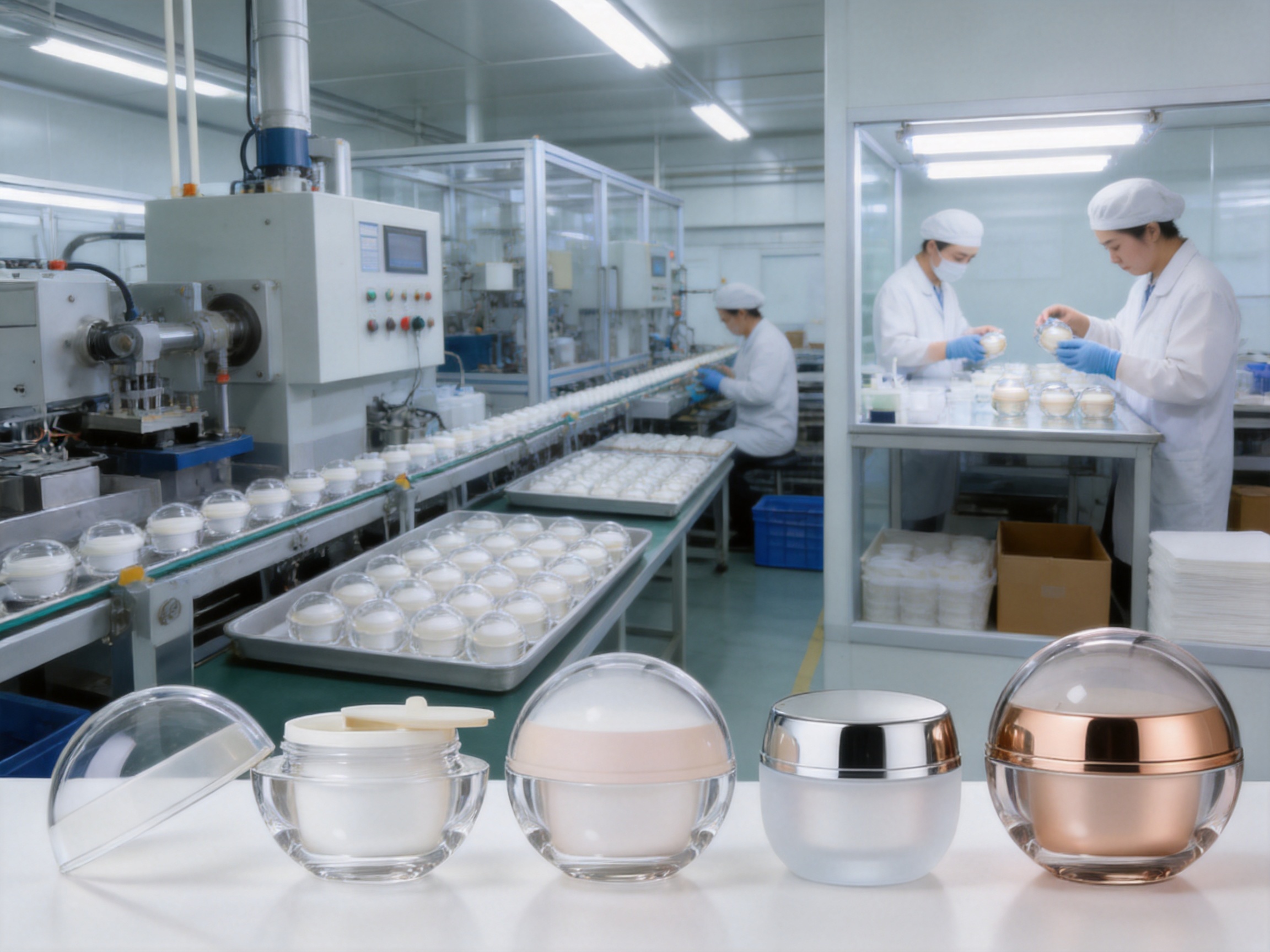
Manufactured by Yuyao Hengbang Plastic Co., Ltd., a Chinese producer specializing in plastic packaging for cosmetics and skincare products, the jar reflects the company’s experience in packaging design, product development, and quality management. Established in 2006, the company operates with a building area of 35,000 square meters and a workforce of more than 300 employees. Its ISO9001:2015 and ISO14001:2015 certifications, professional development team, and collection of invention patents support its ability to serve customers seeking consistent and scalable cosmetic packaging.
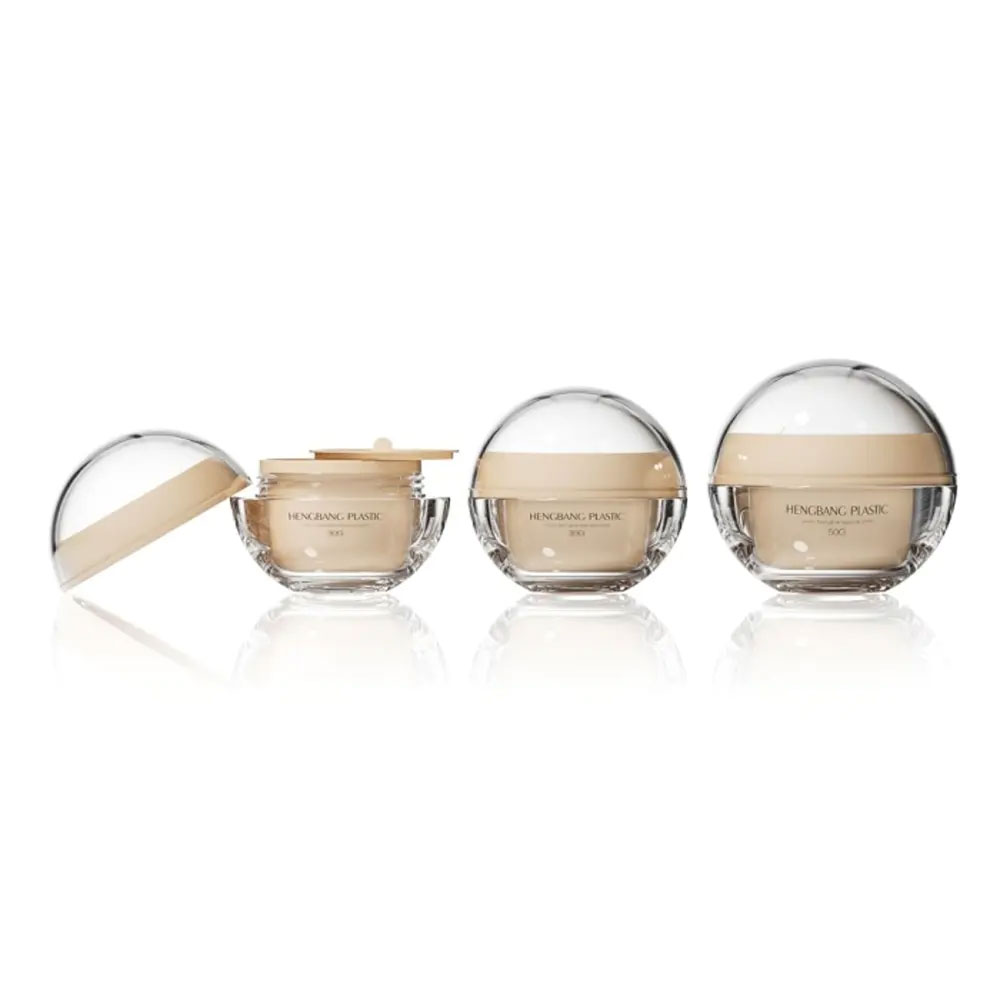
HB-G002 Double Wall Plastic Acrylic Body Cream Jar
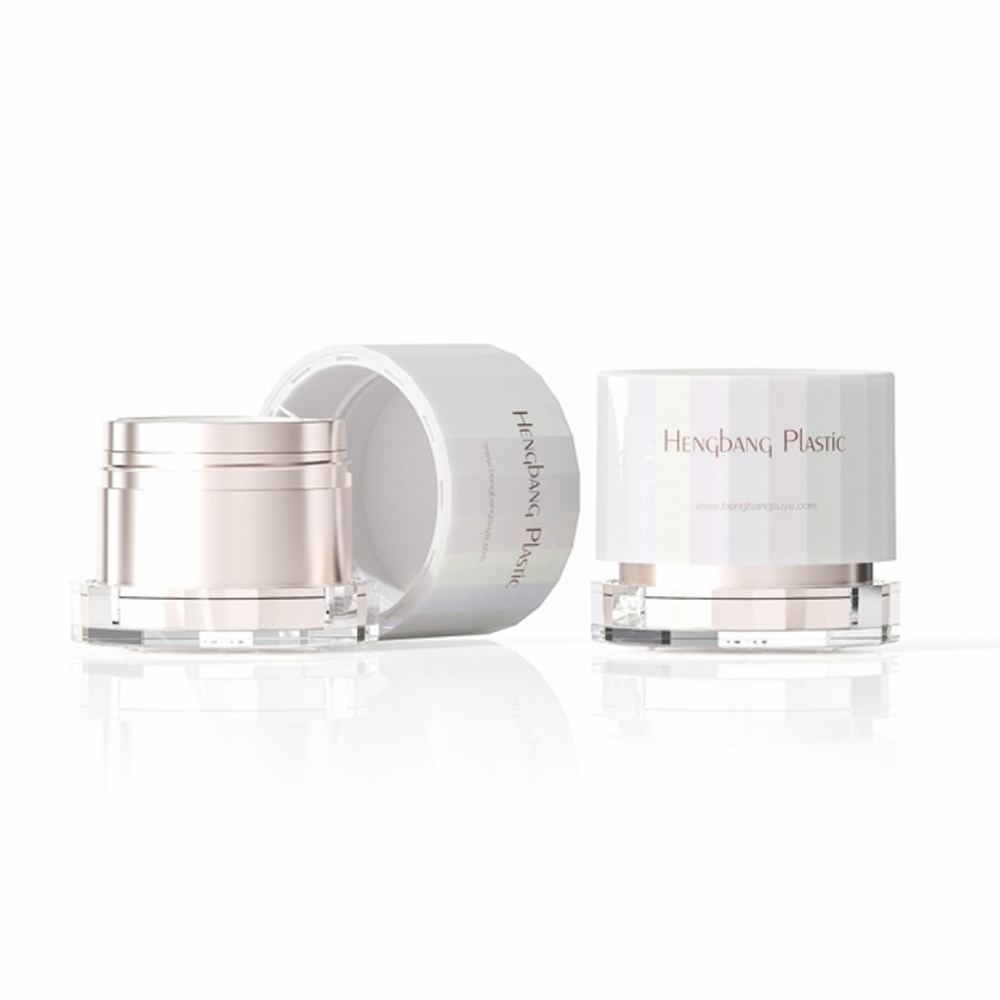
The HB-G002 is a double-wall plastic acrylic body cream jar with a distinctive spherical silhouette. Rather than following the familiar cylindrical or square jar format, it uses a rounded shape that gives the package a softer and more sculptural appearance. This makes it especially appropriate for skincare products positioned around comfort, indulgence, hydration, repair, and daily self-care.
The spherical design creates a visual impression of fullness and smoothness. Its continuous curves avoid harsh corners and provide a fluid appearance from every viewing angle. On a retail shelf, the shape can help a product stand apart from conventional jars. On a vanity or bathroom counter, it offers a decorative presence that supports the idea of a premium daily ritual.
The transparent acrylic material adds another important design element. High-transparency PMMA can create a glass-like visual effect while maintaining the practical advantages associated with plastic packaging. The clear outer wall allows the package to reveal the color and texture of the inner container or visible product presentation, depending on the selected configuration. This is useful for formulations with attractive colors, pearl effects, botanical tones, or other visual characteristics that brands want consumers to see.
At the same time, the container is not limited to a purely transparent appearance. Acrylic packaging can support a variety of finishing directions, including clear presentation, tinted color, frosting, coating, printing, labeling, metallized decoration, and other visual treatments subject to project specifications. This gives brands a flexible starting point for developing a recognizable packaging system.
The HB-G002 is described as a body cream jar, but its design is not restricted to one formula category. The wide-mouth format is appropriate for products that are dispensed with a fingertip, spatula, or small cosmetic tool. Potential applications include rich body creams, facial moisturizers, night creams, cleansing balms, exfoliating treatments, sleeping masks, hair masks, and selected serums or treatment products with a thicker texture.
Glass has long been associated with luxury skincare because of its weight, clarity, and solid feel. However, glass can also create challenges in shipping, handling, breakage prevention, and product development. The HB-G002 uses PMMA to create a transparent and polished visual effect while offering a plastic-based construction.
For many cosmetic brands, a plastic acrylic jar can be easier to integrate into a broader packaging program. The lighter material may simplify logistics and handling, while the double-wall construction helps the jar maintain a substantial and visually valuable appearance. The packaging can therefore be positioned between ordinary lightweight plastic and traditional heavy glass, giving brands an opportunity to achieve an elevated appearance with a different material strategy.
Cosmetic retail environments contain large numbers of similar packages. Cylindrical jars, rectangular boxes, pump bottles, and squeeze tubes often compete for attention in the same display area. A spherical jar introduces a stronger three-dimensional identity. Its outline can be recognized from a distance, while its transparent surface helps create visual depth when arranged with other products in a collection.
The shape can also support a coordinated product family. A brand may use the 30 ml version for a treatment or trial size and the 50 ml version for a standard retail product. Both sizes share the same design language, allowing a collection to maintain consistency while offering different usage volumes.
The supplied material information identifies the cap as PMMA plus PP, the outer bottle as PMMA, and the inner bottle as PP. This combination is central to the product’s design. Each material contributes a different performance or presentation characteristic.
| Component | Specified Material | Primary Contribution | Packaging Role |
|---|---|---|---|
| Cap | PMMA + PP | Premium appearance and functional closure structure | Closes and protects the jar while supporting the overall visual design |
| Outer bottle | PMMA | High transparency, smooth surface, and visual depth | Forms the exterior wall and creates the clear spherical presentation |
| Inner bottle | PP | Practical product-contact packaging structure | Holds the cosmetic formulation inside the double-wall assembly |
| Available capacity | 30 ml and 50 ml | Choice of compact or larger fill volume | Supports different product positioning and usage formats |
The combination of PMMA and PP allows the package to separate visual presentation from the inner product-holding function. The outer PMMA component can be optimized for appearance, while the inner PP component provides a practical container surface for the formula. This arrangement is particularly valuable for brands that want a highly decorative package without making the outer wall the only barrier around the product.
PMMA, commonly known as acrylic, is widely used in cosmetic packaging when transparency and visual quality are important. It can provide a smooth, polished surface and a clear appearance that resembles premium glass. In the HB-G002, the acrylic outer bottle emphasizes the spherical geometry and allows the package to present a clean, modern appearance.
Clear acrylic is also useful for communicating product identity. A white body cream, a lightly colored moisturizer, a translucent gel cream, or a botanical treatment can each create a different visual effect inside the same jar format. This reduces the need to conceal the package completely and allows the product itself to become part of the presentation.
Polypropylene is used for the inner bottle and as part of the cap structure. Its presence creates a practical foundation for the container. The inner PP bottle is designed to hold the formula, while the PP component in the closure supports the functional side of opening and closing.
For cosmetic packaging projects, the compatibility of the formula with the specific packaging materials must always be confirmed through testing. Formulation composition, essential oils, solvents, active ingredients, fragrance materials, pH, viscosity, storage conditions, and filling temperature can all influence package compatibility. The HB-G002 offers a defined material structure, but each finished product should undergo appropriate stability, leakage, migration, and compatibility evaluations before commercial production.
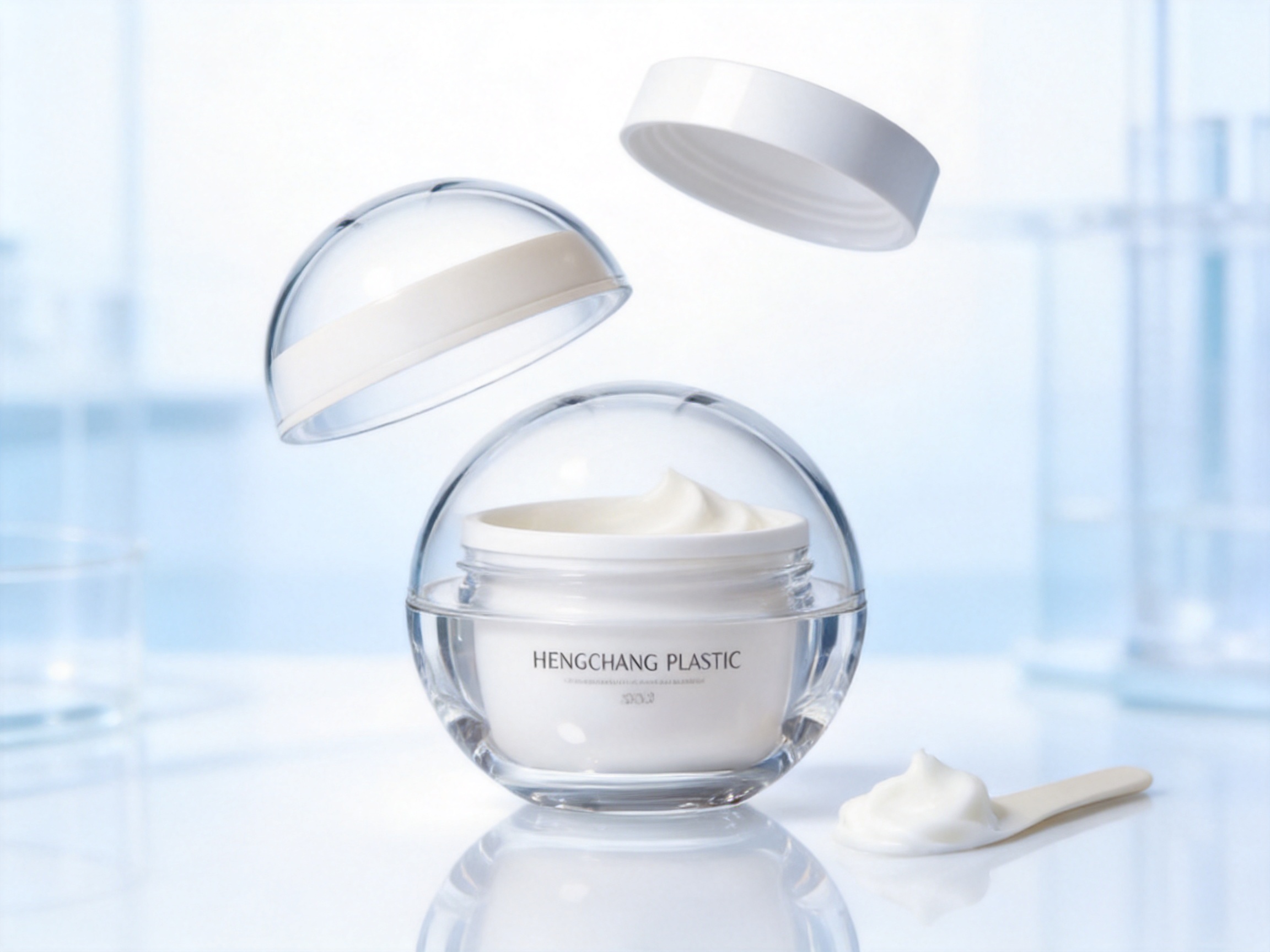
The double-wall structure is one of the most important advantages of this jar. A single-wall package has one primary visible wall between the product and the external environment. A double-wall package adds an outer structural and decorative layer around the inner bottle. This creates a more substantial appearance and can provide additional support during routine handling.
The double-wall format also gives designers more options for visual effects. The relationship between the clear outer wall, the inner bottle, the cap, and the product can create a layered appearance that is difficult to reproduce with a simple one-piece jar. The package can look fuller, more dimensional, and more luxurious while retaining a plastic-based construction.
For premium skincare, this layered effect is commercially important. Consumers often connect visual depth and material complexity with product value. A carefully finished double-wall jar can help a body cream or facial treatment appear more sophisticated than the same formulation placed in a basic single-wall container.
The HB-G002 competes with a wide range of cosmetic jars, including ordinary PP jars, single-wall acrylic jars, glass jars, and compact containers with narrow openings. Its main advantages come from the combination of form, transparency, double-wall construction, material selection, and volume options.
One of the strongest points of differentiation is the spherical body. Many cosmetic jars use straight walls and flat shoulders because these shapes are simple to manufacture and pack. The HB-G002 takes a more expressive design approach. Its rounded body communicates softness, elegance, and contemporary luxury.
This shape can be particularly effective for product lines that focus on wellness, indulgence, sensitive skin, hydration, or nighttime care. A rounded silhouette feels approachable and tactile. It can also reinforce a visual theme based on moisture droplets, pearls, botanical forms, or smooth skin.
Transparency gives a package immediate visual appeal. Customers can see the color and apparent texture of the product, while retailers can create more attractive displays. A clear package may also make the product easier to identify during use, especially when a consumer owns several items from the same category.
Compared with an opaque jar, the HB-G002 provides more opportunities for visual storytelling. A brand can show a naturally colored cream, a luminous gel, or a treatment with a distinctive tone. If the brand prefers a more restrained style, the transparent surface can be combined with minimal printing or a small label to create a clean, clinical, or modern appearance.
Glass can offer a premium experience, but it may be heavier and more vulnerable to impact. A plastic acrylic jar can provide a different balance. The HB-G002 is designed to look refined and substantial while using PMMA and PP rather than an all-glass structure.
This may offer benefits in product handling, warehouse movement, shipping preparation, and consumer convenience. However, actual transportation performance depends on the complete packaging system, including carton design, protective inserts, palletization, closure fit, and logistics conditions. The key advantage is that the jar gives brands a premium visual direction without requiring them to use a conventional glass package.
The wide-mouth opening is well suited to creams and other viscous formulations. Consumers can reach the product easily with a fingertip or cosmetic spatula, and filling operations can be planned around the larger opening. The format is especially convenient when a product is too thick for a pump or when the user needs to collect a controlled amount from the surface.
A wide opening also supports the use of rich formulas containing waxes, butters, oils, polymers, powders, or other ingredients that may require a larger filling path. Formula manufacturers must still confirm filling conditions and ensure that the product’s viscosity and temperature are suitable for the selected production process.
The product description identifies the lid as airtight, emphasizing the importance of closure performance. A secure lid helps reduce exposure to external air and supports formula freshness during ordinary use. It also helps prevent leakage and provides consumers with confidence when carrying the jar or storing it in a cosmetic bag.
Closure effectiveness depends on the complete assembly, including the cap, inner sealing components, thread or engagement design, filling level, torque, and storage conditions. For commercial projects, brands should conduct closure and leakage testing under relevant temperature, transport, and orientation conditions. The HB-G002’s closure concept is intended to support product protection, while project-specific validation confirms performance for the selected formula.
The 30 ml and 50 ml options make the product adaptable to different market strategies. A 30 ml jar may be suitable for a concentrated treatment, premium trial size, travel-friendly product, or limited-edition skincare item. A 50 ml jar may be more appropriate for a standard face cream, body treatment, or longer-term daily-use product.
Offering two capacities within one design family simplifies visual coordination. A brand can create a size hierarchy without changing the basic shape or material language. This is useful for product lines that include introductory sizes, standard retail sizes, professional-use products, or gift sets.
Although the product is identified as a body cream jar, its construction offers flexibility for a broader range of personal-care applications. Product suitability depends on the final formula and compatibility testing, but the wide-mouth structure and premium appearance are relevant to many categories.
Body creams and body butters are natural applications for this jar. These formulas are often rich, dense, and designed to be scooped by hand. The spherical package can support a luxurious body-care identity, especially when used with moisturizing, nourishing, firming, or fragrance-led products.
The 50 ml size can serve as a compact body treatment or premium sampling format, while larger packaging programs may use the same design as part of a gift collection. The jar’s clear surface can reveal the cream’s color and texture, adding to the sensory impression.
Facial creams and night creams are among the most obvious applications for a premium acrylic jar. These products are often marketed through concepts such as renewal, repair, hydration, radiance, and intensive care. A clear double-wall jar communicates a higher level of presentation and can complement a sophisticated skincare formula.
The wide mouth provides direct access to a thicker cream, while the closure is designed to help protect the formula between uses. Brands may also pair the jar with an internal protective insert or spatula, depending on their hygiene strategy and product positioning.
Sleeping masks and treatment masks frequently use jar packaging because consumers apply a generous amount to the face or body. A spherical container can make these products appear indulgent and visually distinctive. Its shape is particularly suitable for nighttime skincare lines with a soft, calming, or premium identity.
When used for a mask, the transparent exterior may allow the formula’s color and texture to become part of the product experience. For example, a translucent gel, a creamy white mask, or a lightly tinted formula can each be presented differently through the acrylic wall.
Cleansing balms, exfoliating creams, and solid-to-oil treatments often require a wide opening because of their texture. Consumers may use a spatula to lift the product and then apply it directly to the face or body. The HB-G002 can accommodate this type of dispensing behavior more naturally than a narrow-neck bottle.
These applications require careful compatibility testing because certain oils, fragrance components, solvents, and active ingredients may interact differently with packaging materials. The package should be selected as part of a complete formula-and-container evaluation rather than as an isolated visual decision.
Hair masks and intensive conditioning treatments can also benefit from a jar format. The large opening allows consumers to remove a thicker product easily, and the premium form can support salon-inspired or prestige haircare positioning.
For this use, the brand should consider wet-hand handling, bathroom storage, closure torque, and resistance to repeated opening and closing. These practical factors can be reviewed during product testing and packaging validation.
The following specifications are based on the supplied product information. The listed height and diameter values correspond to the available capacity options. Because the source data identifies the second height entry as “68.5ml,” it is presented below as 68.5 mm in accordance with the dimensional context; final technical drawings and approved samples should be used for production confirmation.
| Specification | 30 ml Version | 50 ml Version |
|---|---|---|
| Product code | HB-G002 | HB-G002 |
| Product type | Double-wall plastic acrylic cream jar | Double-wall plastic acrylic cream jar |
| Capacity | 30 ml | 50 ml |
| Height | 60.6 mm | 68.5 mm |
| Diameter | 65.35 mm | 73.4 mm |
| Cap material | PMMA + PP | PMMA + PP |
| Outer bottle material | PMMA | PMMA |
| Inner bottle material | PP | PP |
| Opening format | Wide mouth | Wide mouth |
| Design | Spherical double-wall body | Spherical double-wall body |
Dimensions are important during product development because they affect filling equipment, label placement, secondary packaging, shelf arrangement, shipping cartons, and consumer handling. Brands should request current technical drawings, tolerances, component weights, neck or closure details, and approved samples before finalizing a production program.
The performance of a cosmetic package is influenced not only by its design but also by the manufacturer’s ability to control materials, tooling, molding, assembly, decoration, inspection, and delivery. Yuyao Hengbang Plastic Co., Ltd. has specialized in plastic packaging for cosmetics and skincare products since its establishment in 2006. This industry focus is important because cosmetic packaging requires knowledge of appearance standards, component fit, formula compatibility, filling requirements, and high-volume consistency.
The company operates with a building area of 35,000 square meters and more than 300 employees. These resources indicate an organization structured to support product development and manufacturing at a commercial scale. A larger operational base can help coordinate engineering, production, quality control, warehouse management, and customer service for projects that require more than a simple stock component.
The company provides design and development services in addition to production. This is valuable for brands that need assistance translating a packaging concept into a manufacturable component. A successful cosmetic package must balance visual ambition with wall thickness, assembly requirements, material behavior, filling conditions, closure performance, and cost targets.
For a product such as the HB-G002, development work may include reviewing the spherical form, confirming the relationship between the PMMA outer bottle and PP inner bottle, checking the cap fit, evaluating surface appearance, and preparing samples for customer approval. The manufacturer’s role is not limited to producing a finished part; it also includes helping the customer define a reliable and repeatable product specification.
The company has passed ISO9001:2015 certification. ISO9001 is associated with a quality management system that supports controlled processes, documented procedures, monitoring, corrective action, and continual improvement. Certification does not remove the need for product-specific inspection, but it demonstrates a formal commitment to managing quality throughout the organization.
For cosmetic packaging buyers, a structured quality system can support more reliable communication and production control. It may help establish clearer procedures for incoming materials, process monitoring, component inspection, nonconformance management, sample approval, and customer feedback. These controls are especially important for transparent packaging, where cosmetic defects can be highly visible.
The company has also passed ISO14001:2015 certification. ISO14001 relates to environmental management systems and the systematic identification and management of environmental aspects. For a plastic packaging manufacturer, environmental management may involve resource use, waste handling, energy management, production controls, and compliance responsibilities.
Environmental certification does not mean that a package is automatically sustainable or recyclable in every market. Recycling depends on material composition, local collection systems, component separation, decoration, and regional regulations. Nevertheless, an environmental management system demonstrates that environmental performance is considered within the company’s operating framework.
The company was awarded recognition as a Ningbo High-Tech Enterprise in 2021 and owns multiple invention patents. These achievements suggest an emphasis on technical development and innovation. In cosmetic packaging, innovation may involve new shapes, improved assembly structures, decorative methods, material combinations, closure systems, or manufacturing approaches.
Patented technology and development experience can be particularly valuable when a customer requires a customized package rather than a standard catalog item. A manufacturer with technical resources can evaluate whether a design can be improved for appearance, functionality, production efficiency, or user experience.
Transparent acrylic packaging requires careful attention to visual quality. Scratches, flow marks, weld lines, contamination, color variation, haze, sink marks, and assembly misalignment can become more noticeable when the package is clear. A strong production system should therefore include appropriate inspection standards for both functional and cosmetic characteristics.
For the HB-G002, quality evaluation may reasonably include checking the spherical surface, transparency, component fit, cap alignment, inner-and-outer wall assembly, dimensional consistency, opening performance, and leakage resistance. The specific inspection plan should be agreed between the manufacturer and customer according to the intended application and quality grade.
The supplied information confirms the company’s manufacturing specialization, certifications, design and development services, and technical recognition. It does not provide a complete step-by-step process description for the HB-G002. The following process discussion therefore explains the key manufacturing stages and control points relevant to this type of package without presenting unverified factory-specific details.
Production begins with product engineering. The spherical body, cap, outer PMMA bottle, and inner PP bottle must be translated into technical drawings and tooling requirements. Engineers review dimensions, draft angles, wall thickness, assembly relationships, closure engagement, and the desired surface finish.
Tooling accuracy is particularly important for a double-wall spherical design. The outer component and inner component must align properly so that the final package has consistent visual spacing and a stable appearance. Tooling also influences the clarity and surface quality of molded acrylic parts. Before mass production, trial samples can be reviewed to confirm shape, dimensions, assembly, and appearance.
PMMA and PP must be prepared according to the requirements of the molding process. Material handling can influence clarity, color stability, dimensional consistency, and surface appearance. For transparent components, contamination control and proper material storage are especially important.
Different grades or colors of material may be selected depending on the customer’s design requirements. A clear version may emphasize the contents, while a tinted or frosted version may create a softer or more opaque effect. Any color or finish should be confirmed through approved samples because screen images and digital renderings cannot fully represent the final molded appearance.
The PMMA outer bottle, PP inner bottle, and cap components are formed using appropriate plastic processing methods. The selected molding conditions influence dimensional accuracy, transparency, surface finish, and structural integrity. Process parameters must be controlled so that the components can be assembled consistently and meet the approved specification.
For the outer acrylic bottle, visual inspection is essential because the transparent surface can reveal imperfections. For the PP inner bottle, attention should be given to the product-contact surface, dimensional stability, and assembly fit. For the cap, the PMMA and PP elements must work together to create a closure that looks integrated and operates smoothly.
After molding, the inner and outer components are assembled. The assembly process must maintain alignment and prevent damage to the transparent exterior. The cap is then fitted or matched with the jar according to the closure design.
Assembly quality affects the overall consumer experience. A jar that is visually attractive but difficult to open, unevenly aligned, or inconsistent in closure performance will not meet premium packaging expectations. For this reason, assembly inspection should cover appearance, fit, opening and closing behavior, and the stability of the completed package.
Many cosmetic brands require decoration to transform a standard container into a distinctive commercial package. Possible approaches may include screen printing, labeling, coating, frosting, hot stamping, metallized effects, or other approved decoration methods. The choice depends on the desired appearance, artwork, order volume, budget, and compatibility with the material surface.
Decorating a spherical surface requires careful artwork planning. Text and graphics must be positioned so they remain legible on a curved body. Logo size, line thickness, registration, color accuracy, and placement should be verified through physical samples. Decorative durability should also be evaluated through rub, scratch, and handling tests where appropriate.
Before shipment, finished packaging should be inspected against the agreed specification. Typical checks may include dimensions, component quantity, material or color consistency, surface appearance, closure fit, leakage performance, decoration, and packaging condition.
Protective packing is important for clear acrylic products because surface scratches can occur if components rub together during transportation. The final packing method should be selected to protect the jar while supporting efficient storage and distribution. Customers should confirm carton dimensions, unit packing, pallet requirements, and shipping documentation during project planning.
Customization allows the HB-G002 to serve different brand identities and market segments. The core spherical structure provides a recognizable foundation, while decoration and component options can create very different visual results.
A clear jar creates a bright, high-visibility presentation. Light tints can introduce a gentle color identity without hiding the product. Frosted effects can create a soft, velvety appearance, while stronger colors can provide a more dramatic premium look.
The selection should take into account the formula color, label or printing artwork, cap appearance, and the complete product family. A transparent jar may be ideal for a clean beauty concept, while a dark or opalescent finish may better suit an intensive night treatment.
Decoration can be used to communicate product name, usage information, ingredient claims, directions, warnings, volume, and regulatory details. Minimal decoration can emphasize the material and shape. More extensive decoration can create a bold visual identity for retail shelves or gift packaging.
Because the jar is spherical, the artwork should be designed specifically for the curved surface. Flat artwork may not produce the desired result when wrapped or printed around the container. Sampling is important to verify readability, alignment, and visual balance.
The cap is an important part of the package’s overall appearance. A cap color that matches the jar can create a unified look, while a contrasting cap can make the package more distinctive. Metallic, matte, glossy, or tinted effects can each communicate a different level of luxury or technical sophistication.
The cap should also be evaluated for practical handling. Consumers should be able to grip it comfortably and open it without excessive force. A premium closure should feel stable and precise throughout repeated use.
The 30 ml and 50 ml versions can be used to build a clear product hierarchy. The smaller size may represent a trial, travel, or targeted treatment product, while the larger size serves as the main retail format. Brands can keep the same spherical design and change only the capacity, decoration, or color treatment.
This approach can reduce visual fragmentation within a product family. Consumers can recognize that multiple products belong to the same brand while still distinguishing between different formulas and sizes.
Packaging selection should be integrated with formula development and filling operations. The HB-G002 is suitable for many cream and treatment applications, but the final package must be validated with the actual formulation.
Compatibility testing evaluates whether the formula and packaging remain stable together over time. Testing may consider changes in color, odor, texture, viscosity, weight, leakage, surface stress, component deformation, and decoration adhesion. Accelerated and real-time stability conditions can provide useful information for commercialization.
Particular care may be required for formulas containing high levels of essential oils, fragrance materials, alcohols, solvents, aggressive actives, or unusual preservatives. The presence of a PP inner bottle may provide a practical product-contact structure, but compatibility must be confirmed for the exact formula.
The wide-mouth opening can support the filling of viscous products, but the filling line should be checked for container dimensions, speed, nozzle clearance, filling temperature, and product flow characteristics. The correct fill volume and headspace should be established to support closure performance and visual consistency.
Overfilling can interfere with the cap or create product residue around the opening. Underfilling can affect the consumer’s perception of value. Accurate filling and clean sealing are therefore essential parts of quality control.
Closure tests help verify that the cap remains securely attached and that the jar resists leakage under expected conditions. Testing may include inverted storage, vibration, temperature changes, repeated opening and closing, and transport simulation.
The product description emphasizes an airtight lid, but the level of protection required depends on the formula and intended shelf life. Brands should define acceptable performance criteria and validate the complete filled package rather than relying solely on an empty-container evaluation.
Consumer-use testing can reveal practical issues that laboratory inspections may not identify. Participants can evaluate how easily the jar opens, how comfortable it is to hold, whether the wide mouth is convenient, and whether the closure remains clean during repeated use.
For a body cream or night cream, the package may be used with wet hands, in dim lighting, or while traveling. These conditions can influence the preferred cap finish, grip, opening torque, and label placement. Practical feedback can help brands optimize the final presentation.
Responsible packaging decisions should consider the complete product system rather than focusing on one material characteristic. The HB-G002 uses PMMA and PP in a double-wall structure, so brands should evaluate material use, durability, transportation, decoration, recyclability, and end-of-life conditions.
The double-wall design adds visual and structural value, but it also creates a more complex package than a single-material jar. Where local recycling systems require material separation, the brand may need to assess whether the components can be separated and how consumers should dispose of them. Regional recycling rules differ, and packaging claims should be based on reliable local information.
Durability is another factor. A package that maintains its appearance and function throughout its intended life may reduce the risk of damage and replacement. Lightweighting may also be considered during engineering, provided that it does not compromise the jar’s visual quality, closure performance, or structural requirements.
Yuyao Hengbang Plastic Co., Ltd.’s ISO14001:2015 environmental management certification indicates that environmental considerations are included within its management framework. Customers should still discuss project-specific goals, such as recycled content, material reduction, decoration selection, component separation, packaging efficiency, and applicable regulatory requirements.
Cosmetic packaging differs from general plastic packaging because appearance and functionality must be controlled simultaneously. A container may be structurally sound but visually unsuitable, or attractive but difficult to fill and use. A manufacturer dedicated to cosmetics and skincare understands the relationship between packaging design, consumer experience, formula protection, production scale, and market presentation.
Yuyao Hengbang Plastic Co., Ltd. focuses on plastic packaging for cosmetics and skincare products. Its product range includes packaging formats such as cosmetic bottles, airless bottles, double-chamber bottles, lotion bottles, plastic cream jars, sunscreen bottles, and toner bottles. This broader category experience can help customers develop coordinated packaging programs rather than sourcing every component from unrelated suppliers.
The company’s design and development services can assist brands that have an early-stage concept but need technical support. Its professional team can participate in discussions involving component structure, appearance, capacity, decoration, production feasibility, and sample approval. This is particularly useful when a customer wants a package with a distinctive silhouette, such as the HB-G002 spherical body.
The company’s stated business philosophy emphasizes quality, integrity, and customer focus. These principles are important in packaging projects because customers often need long-term cooperation, consistent repeat orders, responsive communication, and stable component specifications. A supplier’s ability to maintain continuity can be as important as the first sample’s appearance.
A single-wall plastic jar may offer a simple structure and potentially lower material usage, but it generally provides less visual depth. The HB-G002’s double-wall construction creates a more substantial appearance and allows a decorative outer layer to surround the inner bottle.
The spherical form also gives the HB-G002 stronger shelf differentiation. Brands seeking a premium or giftable appearance may find the double-wall design more suitable than a basic cylindrical container.
Ordinary PP jars can be practical and economical, but they may not deliver the same transparent, glass-like visual effect as acrylic. The HB-G002 uses PMMA for the outer bottle and cap structure to emphasize clarity and surface quality.
PP remains important within the HB-G002 because it forms the inner bottle and part of the closure. This combination uses each material according to its role rather than depending on one material for every function.
Glass jars are associated with weight and luxury, but they may require additional protective packaging and more careful handling. The HB-G002 offers a plastic-based alternative with a premium transparent appearance and a sculptural double-wall body.
The choice between acrylic and glass should be based on the brand’s objectives, formula requirements, consumer expectations, logistics, and sustainability plan. The HB-G002 is particularly compelling when a brand wants visual sophistication, design flexibility, and a lower-breakage-oriented material direction.
Airless bottles and jars are often selected for formulas that require controlled dispensing and reduced air exposure. The HB-G002 uses a wide-mouth jar format, which offers direct access and a different user experience. It may be more suitable for products whose texture, positioning, and usage method favor scooping rather than pump dispensing.
Brands should select between a wide-mouth jar and an airless system according to formula sensitivity, hygiene strategy, dosage needs, and marketing objectives. The HB-G002 is designed for tactile, accessible use and a visibly premium jar presentation.
A structured development workflow can help brands move from initial concept to stable mass production.
Identify the formula type, target fill volume, texture, dispensing method, expected shelf life, market region, decoration needs, and target price. Decide whether the 30 ml or 50 ml version is more appropriate, or whether both should be developed as a family.
Request current drawings, component specifications, material information, closure details, tolerances, and sample availability. Confirm the dimensions of the selected size and clarify any information that appears inconsistent in preliminary documentation.
Inspect the spherical appearance, transparency, surface finish, cap fit, inner-and-outer wall alignment, opening experience, and overall handling. If decoration is planned, review decorated samples rather than relying only on digital artwork.
Fill the actual formula into the selected jar and evaluate the package under appropriate stability conditions. Monitor appearance, odor, texture, leakage, closure performance, weight, and component changes.
Run a filling trial to confirm that the jar works with the intended production equipment. Review filling speed, product flow, cleanliness of the opening, cap application, and finished-package appearance.
Establish acceptable limits for cosmetic defects, dimensional variation, decoration, closure torque, leakage, packaging quantity, and carton condition. A clear standard helps both customer and supplier maintain consistent expectations.
Confirm order quantity, lead time, packing method, inspection requirements, shipping documents, and repeat-order procedures. Maintain an approved reference sample for future production comparison.
The HB-G002 is designed as a double-wall plastic acrylic cream jar. It is suitable for body creams, facial creams, night creams, masks, cleansing balms, hair treatments, serums with suitable viscosity, and other skincare products that benefit from a wide-mouth package.
The supplied information lists two capacities: 30 ml and 50 ml. The 30 ml version measures approximately 60.6 mm in height and 65.35 mm in diameter. The 50 ml version measures approximately 68.5 mm in height and 73.4 mm in diameter, subject to final technical confirmation.
The cap is specified as PMMA plus PP, the outer bottle is PMMA, and the inner bottle is PP. This material combination creates a transparent exterior with a practical inner product-holding structure.
The double-wall design gives the jar greater visual depth and a more substantial premium appearance than many basic single-wall jars. It also separates the decorative outer structure from the inner bottle, allowing PMMA and PP to contribute different functional and aesthetic benefits.
Yes. The wide-mouth design is suitable for many thick creams, body butters, masks, balms, and other products that are dispensed by hand or with a spatula. The actual filling process should be tested with the specific formula and production equipment.
The product description identifies the lid as airtight and emphasizes formula freshness and stability. Commercial users should still perform filled-package closure, leakage, and stability testing with their own formulation and intended storage conditions.
Cosmetic packaging projects may include customization of color, transparency, frosting, coating, printing, labels, cap appearance, and other decorative details. Availability depends on the selected design, order quantity, artwork, and technical requirements. Physical samples should be approved before mass production.
No. The supplied material information identifies PMMA and PP. PMMA is an acrylic plastic known for its transparent and polished appearance, while PP is used for the inner bottle and part of the cap structure.
Potentially, but suitability must be verified through formula compatibility and stability testing. The final evaluation should consider the product’s ingredients, pH, fragrance, essential oils, solvents, storage temperature, shelf life, and intended use conditions.
The supplier specializes in plastic packaging for cosmetics and skincare products and provides design and development services. It has operated since 2006, has more than 300 employees, occupies a building area of 35,000 square meters, and holds ISO9001:2015 and ISO14001:2015 certifications. It was also recognized as a Ningbo High-Tech Enterprise in 2021 and owns multiple invention patents.
Testing should include dimensional inspection, appearance evaluation, closure and leakage testing, formula compatibility, accelerated stability, filling-line trials, decoration durability, transportation simulation, and consumer-use assessment where appropriate. The exact test plan should reflect the formula and target market.
Its spherical silhouette, high-transparency acrylic exterior, double-wall structure, wide-mouth opening, and polished appearance create a luxury-oriented presentation. The two available capacities also support product-line development and differentiated retail positioning.
The HB-G002 Double Wall Plastic Acrylic Body Cream Jar combines a distinctive spherical design with a practical PMMA-and-PP material structure. Its clear outer bottle creates a premium visual effect, while the inner PP bottle provides a practical product-holding component. The wide-mouth opening supports creams, masks, balms, and other products that require easy access, and the airtight lid concept is intended to support formula protection during normal use.
Compared with ordinary single-wall plastic jars, the HB-G002 offers greater visual depth, a more sculptural identity, and a stronger luxury presence. Compared with glass, it provides a plastic-based alternative for brands seeking transparency, design flexibility, and a different handling and logistics profile. Its 30 ml and 50 ml capacities make it suitable for both compact treatment products and standard skincare formats.
The supplier’s long-term focus on cosmetic packaging, design and development services, ISO9001:2015 quality management certification, ISO14001:2015 environmental management certification, high-tech enterprise recognition, and invention patents further support the product’s commercial potential. These strengths can help brands move from a packaging concept to a validated and scalable product.
For the best result, buyers should combine the jar’s visual advantages with a disciplined development process. Formula compatibility, filling performance, closure testing, decoration validation, dimensional confirmation, and transportation assessment should all be completed before launch. When these factors are carefully coordinated, the HB-G002 can serve as a refined and functional package for skincare brands that want to elevate product presentation while maintaining practical manufacturing flexibility.
1. Product information supplied for the HB-G002 Double Wall Plastic Acrylic Body Cream Jar, including materials, dimensions, capacities, and design features.
2. Yuyao Hengbang Plastic Co., Ltd. company information supplied for this article, including establishment history, workforce, facility area, product specialization, certifications, and technical recognition.
3. ISO 9001:2015, Quality Management Systems—Requirements.
4. ISO 14001:2015, Environmental Management Systems—Requirements with Guidance for Use.
5. General cosmetic packaging development practices covering material compatibility, closure performance, filling trials, stability testing, and package quality inspection.


Copyright © Yuyao Hengbang Plastic Co., Ltd.
All Rights Reserved.
 Wholesale Plastic Cosmetic Packaging Manufacturers