English
 中文简体

News
Home > Author > Wang Mengyao — Product After-Sales Service Coordinator > How a Double Chamber Airless Bottle Improves Modern Skincare Packaging

 2026.09.22
 Wang Mengyao — Product After-Sales Service Coordinator
Content
Modern skincare formulas are becoming more specialized, more concentrated, and more sensitive to environmental exposure. At the same time, consumers increasingly expect packaging to be convenient, attractive, hygienic, and easy to understand. A package must therefore do more than hold a product. It must protect the formula, support accurate dispensing, communicate product value, and help a brand create a recognizable appearance on the shelf.
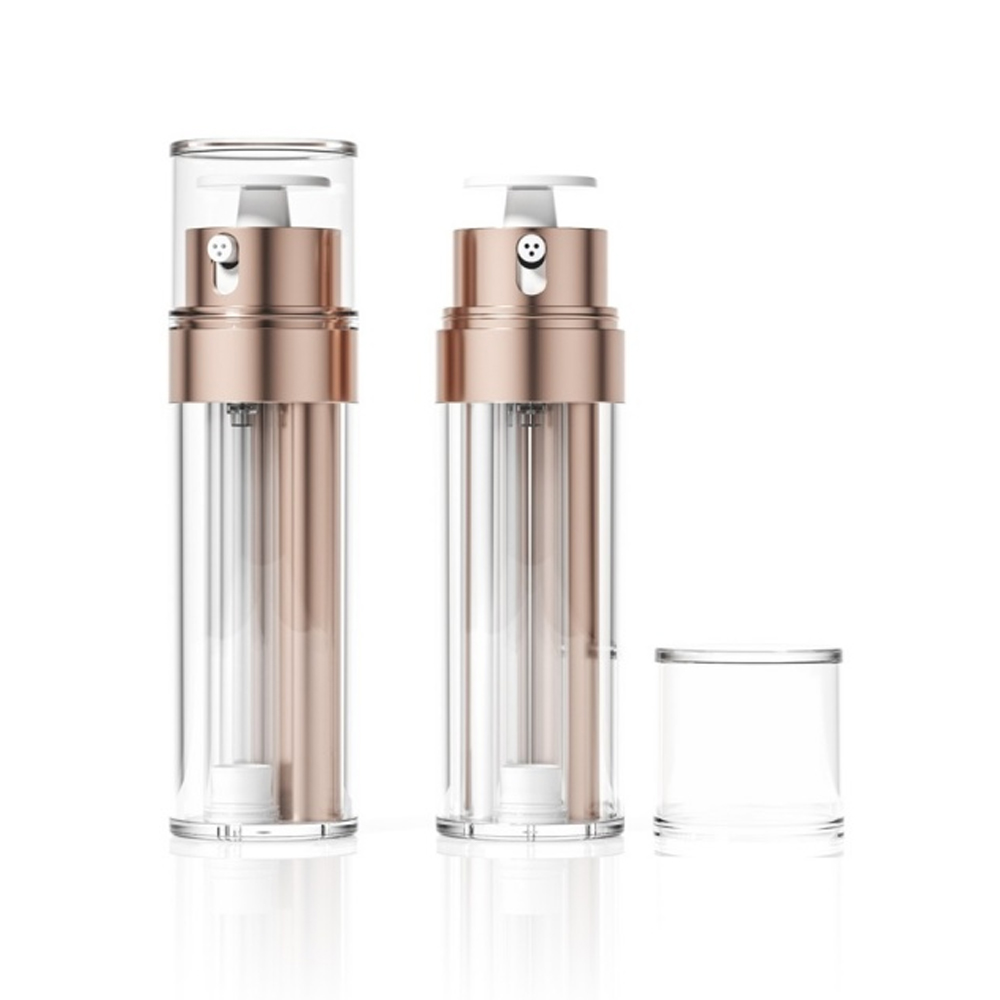
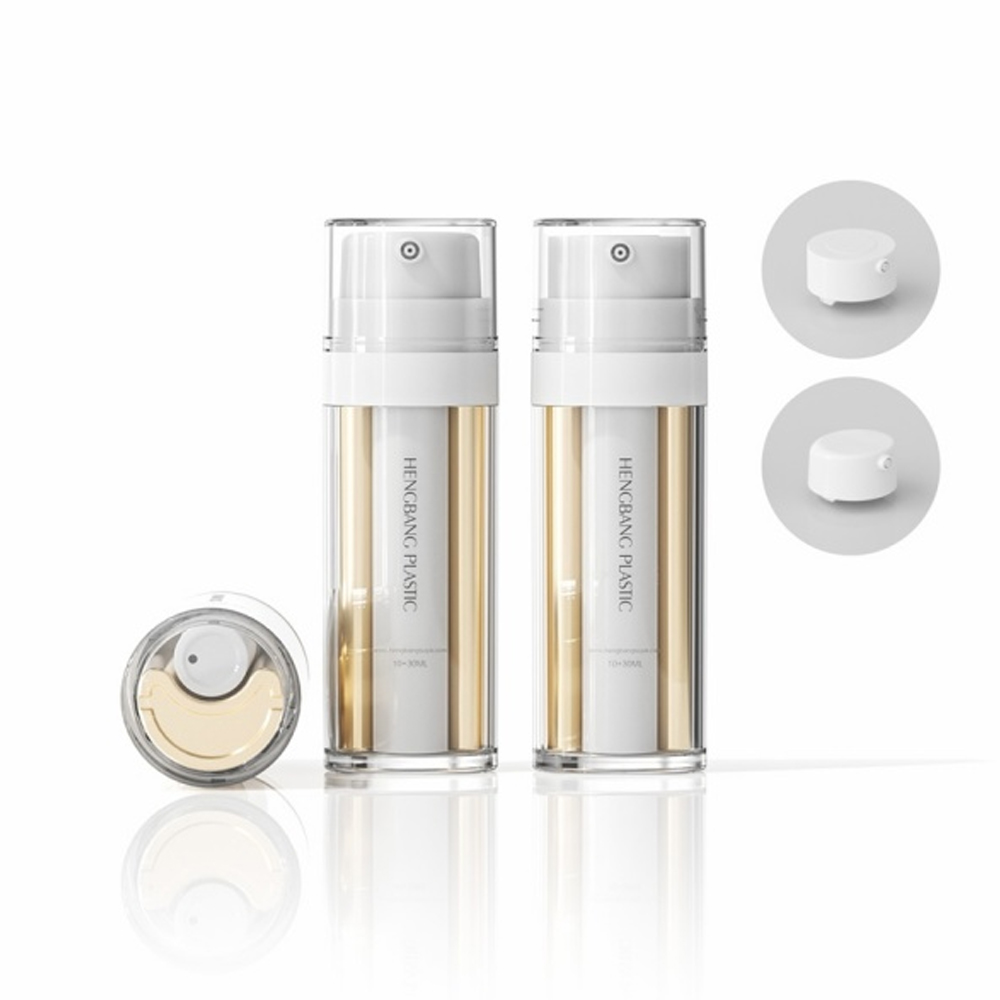
The HB-S004 2 In 1 Double Chamber Airless Bottle is designed for this changing packaging environment. It combines two independent chambers in one compact package, allowing two formulations to be stored and dispensed from a single bottle. The design is suitable for skincare products such as serums, lotions, creams, treatments, and other products that benefit from separated formulas or coordinated application.
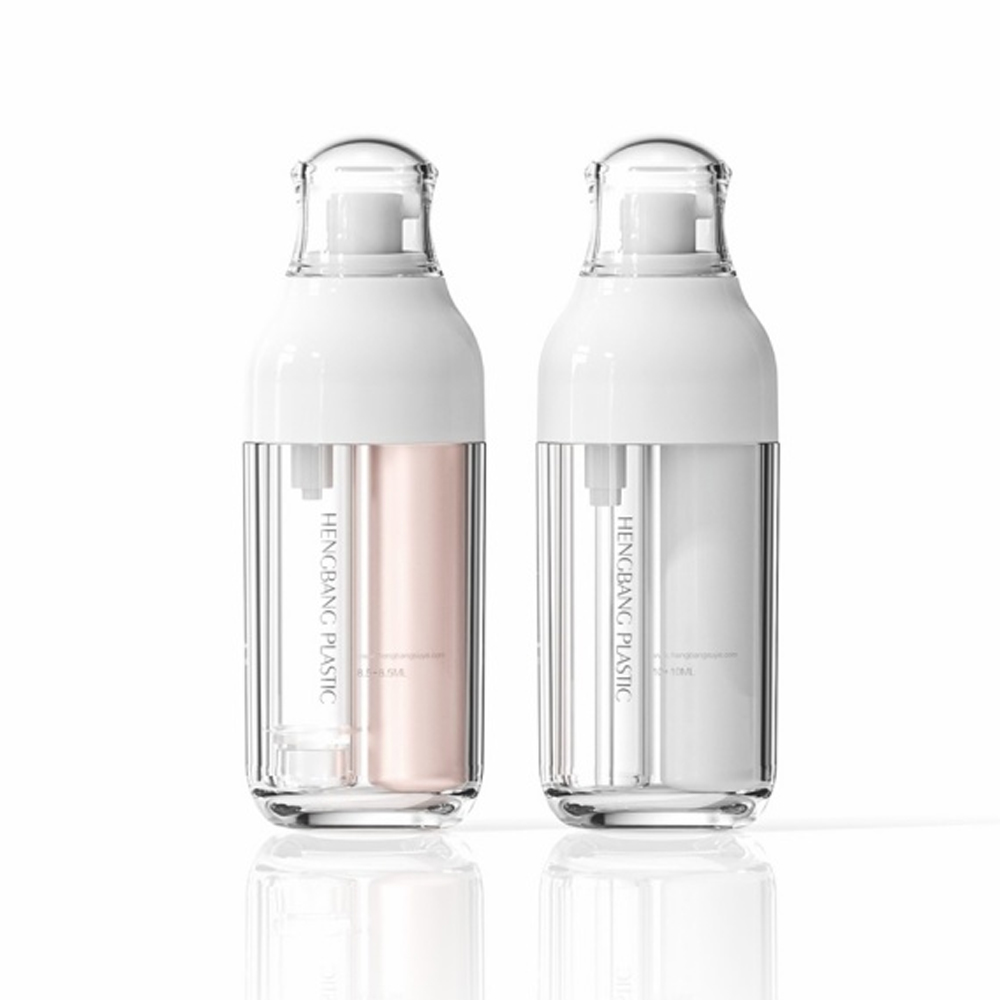
With an 8.5 ml + 8.5 ml airless configuration or a 10 ml + 10 ml lotion configuration, the bottle offers a practical total capacity while maintaining a compact footprint. Its double-chamber structure gives cosmetic brands an alternative to using two separate containers. The package can reduce the visual and physical complexity of a product set while creating a more distinctive user experience.
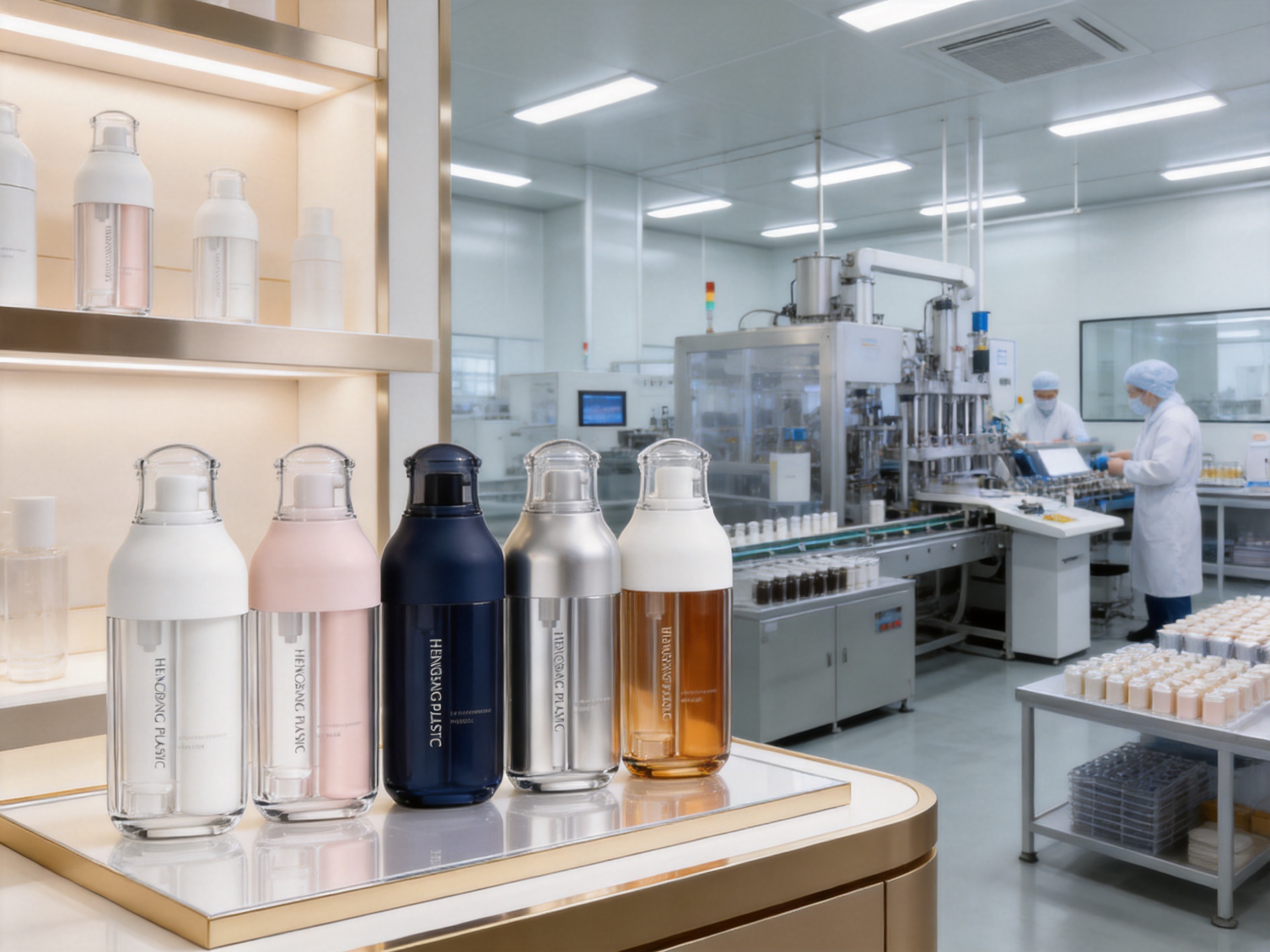
The product is manufactured by Yuyao Hengbang Plastic Co., Ltd., a professional cosmetic packaging manufacturer established in 2006. The company operates in a 35,000-square-meter facility, employs more than 300 people, and provides design and development services for cosmetic and skincare packaging. Its ISO9001:2015 and ISO14001:2015 certifications, along with its invention patents and recognition as a Ningbo High-Tech Enterprise, support its ability to serve brands that require consistent quality and organized production.
This article examines the construction, performance advantages, customization potential, manufacturing strengths, and commercial applications of the HB-S004 double chamber airless bottle.
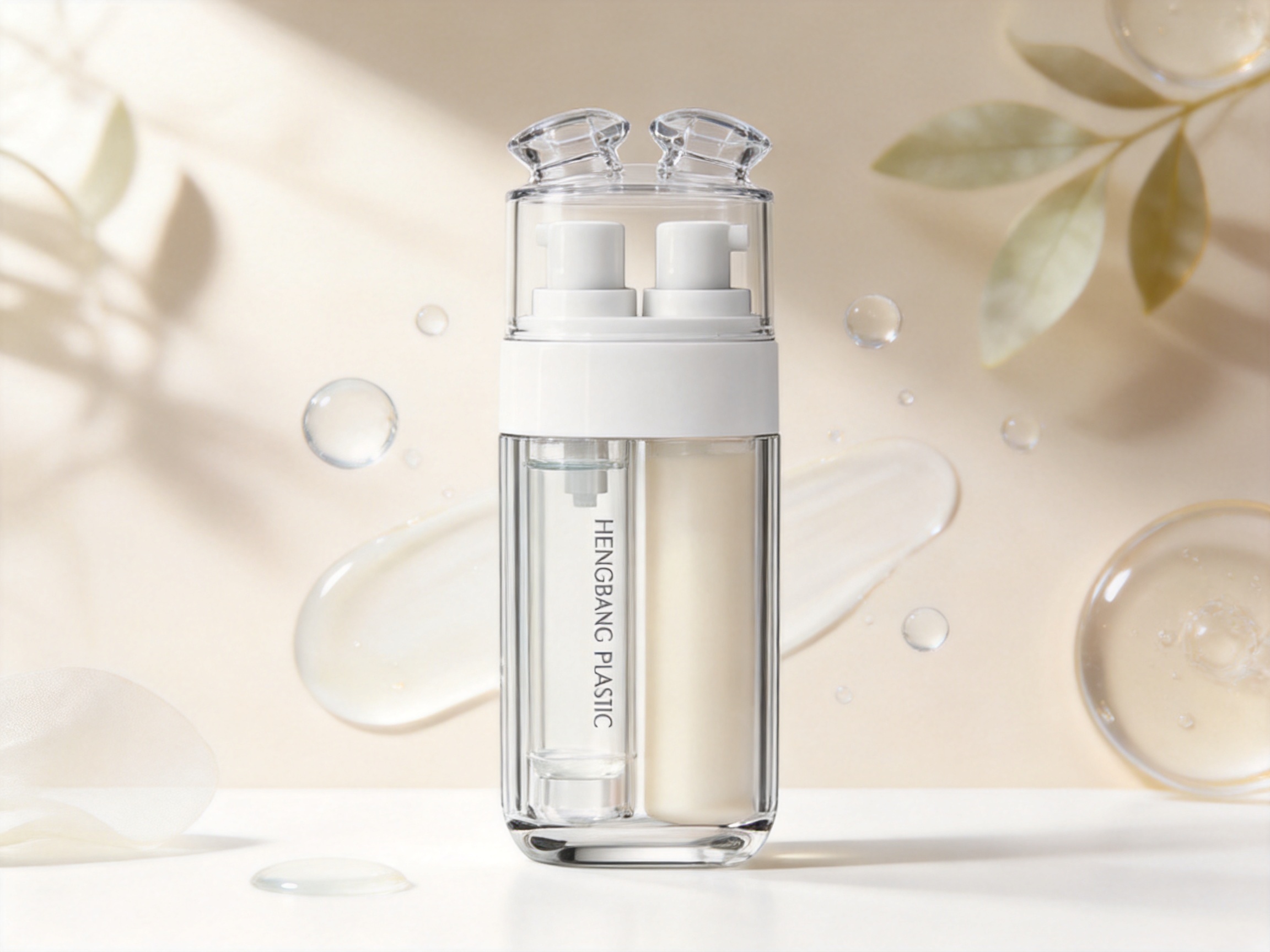
The defining feature of the HB-S004 is its dual-chamber architecture. Instead of placing one formulation in one container, the product uses two separate internal chambers. Each chamber can contain a different cosmetic formula, allowing the two products to remain separated until they are dispensed independently or used as part of the same skincare routine.
This structure can be valuable for formulas that should not be premixed during storage. Certain active ingredients may require different environments, textures, or delivery systems. A brand may also wish to offer two complementary products in one package, such as a serum and lotion, a day treatment and night treatment, or two products intended for different areas of the face.
By integrating two chambers into one bottle, the HB-S004 provides a compact alternative to a two-piece packaging set. The consumer can carry one coordinated package instead of two separate bottles. This can make the product easier to place in a handbag, travel kit, bathroom cabinet, or professional skincare collection.
The bottle is also suitable for products that are designed to be used in sequence. One side may contain a lightweight treatment, while the other contains a moisturizing or protective formula. The package can support a simple application ritual without requiring a brand to develop two unrelated primary containers.
From a merchandising perspective, a double-chamber bottle immediately communicates functional differentiation. Its unusual structure helps it stand apart from conventional single-chamber pump bottles and jars. A distinctive package can attract attention in a crowded cosmetics market, particularly when supported by suitable decoration, color separation, and clear labeling.
One of the strongest benefits of a double-chamber package is formula separation. Two products can be stored in the same external package while remaining physically independent inside. This allows a brand to create combination products without requiring consumers to purchase or organize two separate containers.
The separated chambers may be used for formulas with different viscosities. For example, one chamber may be filled with a lotion-like product while the other contains a more concentrated treatment. The available specifications identify an 8.5 ml + 8.5 ml airless option and a 10 ml + 10 ml lotion option, giving brands flexibility when selecting the package for different product concepts.
The two chambers can also support visual differentiation. A transparent or partially transparent outer presentation may allow consumers to see two distinct formulations. Color coding can help users identify each side, while transparent elements can create a more technical or premium appearance. This visual communication is especially useful when the two formulas have different colors, textures, or intended applications.
Using two separate bottles can increase the amount of packaging material, occupy more shelf and storage space, and create a less unified customer experience. A dual-chamber bottle can consolidate two products into one coordinated format. This does not automatically eliminate all packaging materials, but it can simplify the primary package architecture and create a more efficient presentation.
The HB-S004 has a height of approximately 119 mm and a diameter specification of 41.7 × 34.2 mm. This compact shape is appropriate for small-volume skincare products and promotional kits. It can be displayed upright, included in travel collections, or used as a premium sample-size package.
For brands developing gift sets, trial kits, or targeted treatment programs, the bottle may provide a useful way to combine two formulations without increasing the overall package count. A well-designed label can explain the function of each chamber and guide the consumer through the recommended usage sequence.
The airless version of the HB-S004 is designed around a pump-based dispensing system that helps reduce direct exposure between the formula and the surrounding environment. Unlike an open-mouth jar, an airless package does not require the consumer to place fingers into the product. This supports a cleaner application process and can help preserve the appearance and usability of the formula during repeated use.
Airless packaging is widely considered suitable for cosmetic products that benefit from reduced exposure to air, dust, and repeated handling. The pump mechanism moves the product upward or forward as the package is used, helping the consumer access the contents without opening the container in the same way as a conventional jar.
Each chamber of the HB-S004 has an indicated application dosage of 0.12 cc. A controlled dosage can improve convenience and help consumers apply a consistent amount of product. It may also help brands communicate recommended usage more clearly, particularly for concentrated serums, eye treatments, and targeted skincare products.
Controlled dispensing is also an important factor in premium product design. Consumers often associate a smooth pump action and measured output with quality and reliability. For brands, a controlled dispensing system can support a more consistent user experience from the first application to the last.
Plastic cream jars remain popular because they are familiar, versatile, and suitable for a broad range of textures. However, open-mouth jars require users to remove a lid and access the product directly. This can result in more frequent contact between the formula, the user’s fingers, and the surrounding environment.
The airless pump format offers a different solution. The consumer can dispense the product without inserting a finger into the chamber. This is particularly relevant for modern skincare products that emphasize cleanliness, controlled dosing, and professional application.
For brands that currently use jars but want to create a more hygienic or technical presentation, a double chamber airless bottle can serve as a strong alternative. It offers the capacity and convenience of a small cream package while presenting the product in a more advanced dispensing format.
Packaging does not replace formula stability testing, compatibility testing, or regulatory assessment. However, package design can support the positioning of sensitive or high-value skincare products. A controlled airless package may be appropriate for products containing active ingredients, concentrated treatments, premium lotions, and specialized formulas.
The dual-chamber structure can also support a product story focused on freshness, separation, or coordinated care. For example, a brand may position one chamber as a treatment step and the second as a moisturizing or finishing step. The packaging helps communicate that the two products are related but not identical.
When developing a product for commercial release, brands should confirm formula compatibility with the MS outer bottle, PP inner bottle, PP and ABS pump components, and the selected shoulder and cap materials. They should also conduct stability, leakage, transportation, and dispensing tests under the intended filling and storage conditions.
The HB-S004 uses a combination of materials selected for different parts of the package. The stated material structure includes an MS cap, a PP and ABS pump, an MS outer bottle, a PP inner bottle, and an MS shoulder. This multi-material construction allows the package to balance appearance, function, structural support, and manufacturing requirements.
| Component | Specified Material | Functional Contribution |
|---|---|---|
| Cap | MS | Protects the dispensing area and contributes to the overall visual design. |
| Pump | PP + ABS | Supports the dispensing mechanism and controlled application. |
| Outer bottle | MS | Creates the external body and provides space for visual presentation and decoration. |
| Inner bottle | PP | Forms the internal product-holding chambers. |
| Shoulder | MS | Connects the upper structure and contributes to the package finish. |
| Airless configuration | 8.5 ml + 8.5 ml | Provides two separated airless chambers. |
| Lotion configuration | 10 ml + 10 ml | Provides two separated chambers for lotion-oriented applications. |
MS material is often selected in cosmetic packaging for its visual qualities and ability to support a smooth, refined surface. PP is widely used for internal packaging components because it is lightweight and suitable for many cosmetic applications. ABS can contribute to the structure and tactile performance of pump components. The specific material combination gives the package a designed, layered appearance rather than the look of a simple single-material container.
The use of an MS outer bottle and MS shoulder supports the product’s premium visual identity. The outer structure can be developed with different surface treatments, colors, finishes, and decoration methods depending on the brand’s requirements. The inner PP bottles provide the separated product-holding structure necessary for the double-chamber format.
Because the package contains multiple components, manufacturing precision is important. The cap, pump, shoulder, outer bottle, and inner chambers must work together correctly. Dimensional control, assembly accuracy, and compatibility between parts are essential to achieving stable performance.
The outer bottle is the first component that consumers see. It determines much of the product’s visual character and provides the surface for branding and decoration. The HB-S004 description emphasizes the opportunity for a transparent outer presentation that allows consumers to see two distinct formulations. Depending on the selected finish and production specification, transparency, translucency, or decorative windows may be used to enhance the visual separation between the chambers.
Visible product differentiation can be especially effective when the two formulas have contrasting colors or textures. A pale serum paired with a richer lotion, for example, can create an immediate visual impression. If the formulas are similar in appearance, color-coded labels or decorative elements can make the two sides easier to identify.
The outer bottle can also be designed to support limited-edition collections. A brand may use one color family for a hydration series, another for brightening products, and a third for anti-aging or soothing treatments. The underlying bottle shape remains consistent while surface decoration changes according to the product line.
The two PP inner bottles are central to the product’s double-chamber function. They provide separate spaces for the two formulations and help maintain the identity of each product inside the shared outer package. Their design must correspond accurately with the pump and shoulder system so that both sides dispense properly.
For filling operations, the two chambers require clear identification and appropriate production controls. The brand and packaging supplier should establish which chamber receives each formula, confirm filling volumes, and verify that the finished package matches the intended dosage and labeling. These steps are particularly important when the two formulas have different viscosities or different filling temperatures.
The cosmetics market includes many standard packages, including single-chamber airless bottles, lotion pumps, squeeze tubes, and plastic cream jars. Each format has its own advantages. The HB-S004 distinguishes itself by combining dual-formula functionality with an airless dispensing concept and a visually distinctive outer structure.
A single-chamber airless bottle is suitable when a product contains one formula. It can provide controlled dispensing and a clean application experience. However, a brand that wants to offer two coordinated formulations may need two separate bottles, which can increase package count and reduce visual unity.
The HB-S004 allows two products to be placed in one coordinated package. This can create a stronger product concept for combination skincare, paired treatments, or formulas intended to be used together. It also gives the package a distinctive selling point that a conventional single-chamber bottle may not provide.
For example, a brand could develop a two-step moisturizing treatment in one bottle, with a hydrating serum in one chamber and a nourishing lotion in the other. Another brand could create a day-and-night travel product, using one side for daytime care and the other for evening care. The package itself becomes part of the product solution.
A plastic cream jar generally provides a wide opening and easy access to thick formulas. However, it may require direct finger contact and does not naturally support two separated formulations in one body. A double chamber airless bottle offers a more controlled dispensing process and a more modern presentation.
The HB-S004 may be especially attractive to brands that want to move a cream or lotion product into a more premium package. The cap, shoulder, and outer bottle create a layered structure that can appear more sophisticated than a basic jar. The compact double-chamber format also gives the product a clear functional distinction.
Two separate bottles can provide complete formula separation, but they may require more shelf space and more effort from the consumer. They can also appear visually disconnected unless the brand carefully coordinates their design.
A dual-chamber bottle creates a unified package. The two formulations can share one cap system, one outer silhouette, and one coordinated decoration scheme. This can make the product easier to display and easier to understand. It may also be useful for gift sets, professional treatment kits, and compact travel products.
A conventional lotion pump usually serves one chamber and one formula. It can be functional and cost-effective, but it offers limited opportunities for showing two products in one package. The HB-S004 provides a more specialized structure with two separate dispensing channels and a distinctive design story.
The indicated 10 ml + 10 ml lotion configuration gives brands an option for lotion-focused concepts. The 8.5 ml + 8.5 ml airless configuration is suitable for products that require an airless presentation. The choice between these configurations should be based on the formula, viscosity, filling method, desired dosage, and final product positioning.
Packaging plays an important role in attracting attention before a consumer reads the product description. The HB-S004 provides several visual opportunities for brand promotion. Its unique cap enhances the overall design presentation, while the external structure can be developed to make the two formulations visible or visually distinguishable.
A transparent outer effect can allow the consumer to see the product relationship directly. If the two formulas are different colors, their contrast may make the product immediately recognizable. If the formulas are the same color, the brand can use labels, rings, windows, or printed graphics to identify each chamber.
Color coding can also make the product easier to use. One side may be marked with a blue element for hydration, while the other uses a gold element for nourishment. A day product may use a lighter color and a night product a deeper shade. The packaging can therefore provide both decoration and functional guidance.
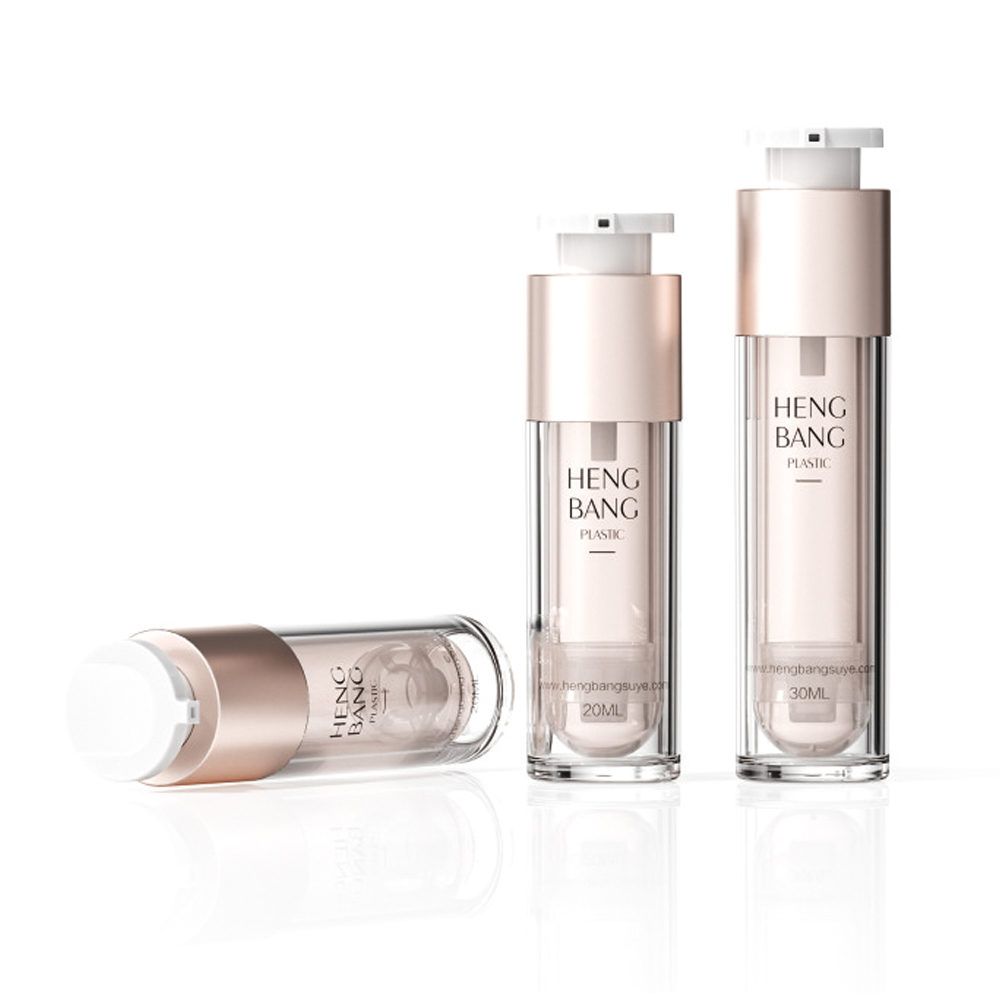
The cap creates another opportunity for differentiation. A distinctive cap shape, finish, or color can give the product a recognizable top profile. Metallic effects, matte surfaces, high-gloss finishes, and contrasting colors can be considered according to the brand’s market positioning and decoration plan.
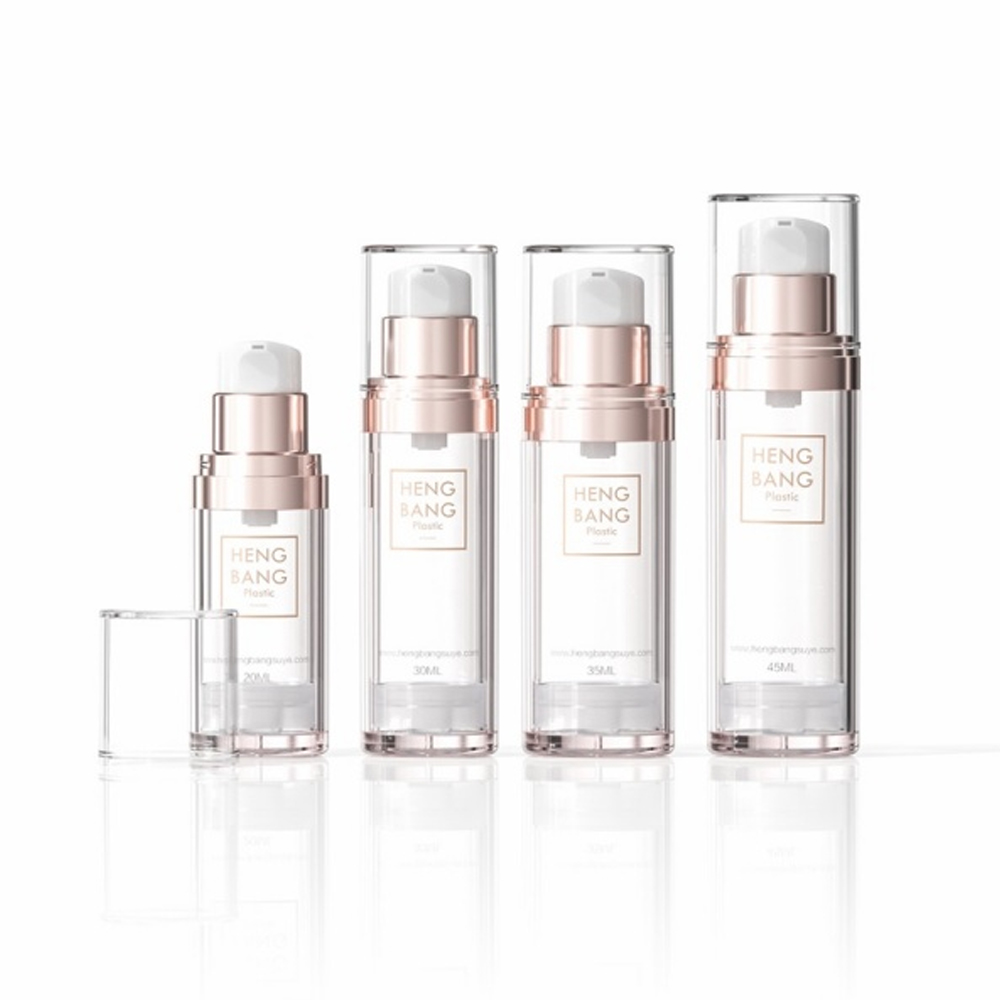
For retail displays, the bottle’s compact height and narrow profile can help create an organized presentation. Several color variations can be placed together as a collection. The same bottle architecture can support different product families while maintaining a consistent visual language across the brand.
HB-S004 2 In 1 Double Chamber Airless Bottle
The HB-S004 is categorized as a double chamber airless bottle, but its potential application extends across several cosmetic and skincare concepts. It may be considered for serum packaging, lotion packaging, treatment products, moisturizing products, travel sets, sample programs, and coordinated skincare systems.
Serums are often positioned as specialized products with concentrated ingredients and targeted benefits. A dual-chamber package can support two complementary serum formulas, such as hydration and brightening, soothing and firming, or antioxidant and moisturizing care.
The airless configuration can provide a clean and controlled method of dispensing. The 0.12 cc application specification may help brands design a usage instruction around a measured pump amount, although the final dosage should always be validated with the actual formula and pump assembly.
Two serum formulas can also be separated to preserve their individual identities. A brand may choose to instruct consumers to apply one formula first and the second formula afterward. Alternatively, the two sides may be intended for different areas of the face or for different times of day.
The 10 ml + 10 ml lotion configuration can be used for lightweight emulsions and small-volume lotion concepts. This format may be suitable for travel products, trial packages, professional samples, and premium skincare kits.
A brand could use one chamber for a hydrating lotion and the other for a barrier-supporting lotion. Another possible concept is a two-part body care product, with one side for treatment and the other for finishing moisture. Since the two formulas remain separated, the product concept can be communicated as a coordinated system rather than a single undifferentiated lotion.
Although jars are common for creams, some brands prefer pump packaging for targeted care products. A dual-chamber airless bottle may be considered for eye-area treatments, concentrated facial creams, hand treatments, or small-volume specialty products.
The compact capacity is suitable for products used in small amounts. The package can be included in premium gift sets or used for a treatment program in which two formulas are applied in a defined order.
The product category information includes sunscreen bottles, and the HB-S004 format may support certain sunscreen-related concepts when the formula and packaging compatibility are properly verified. For example, a brand could develop a compact dual-care product combining a daily protective formula with a moisturizing or after-sun product.
Any sunscreen application must comply with relevant regulatory requirements, and the selected package must be evaluated for formula compatibility, dispensing performance, labeling, and stability. The double-chamber concept should be treated as a packaging platform rather than a guarantee of suitability for every sunscreen formula.
Toners are commonly packaged in bottles with pumps, sprays, or open dispensing closures. A double-chamber structure could support a compact hydration set, such as a balancing toner paired with a soothing essence. The smaller capacity can be appropriate for travel, sampling, or introductory product kits.
Because toner formulas can vary significantly in viscosity, the pump and filling system should be tested with the intended product. The lotion configuration may be considered when the formula is more viscous than a conventional watery toner.
The performance of a complex cosmetic package depends on more than its visible design. A dual-chamber airless bottle requires coordinated development of the outer body, inner chambers, pump, cap, shoulder, sealing areas, and assembly process. Manufacturing experience is important because every component must function as part of one integrated system.
Yuyao Hengbang Plastic Co., Ltd. was established in 2006 and has developed experience in plastic packaging for cosmetics and skincare products. The company has a building area of 35,000 square meters and more than 300 employees. This scale supports a structured approach to product development, production management, quality control, and customer service.
The company provides design and development services, allowing brands to work with a supplier that understands both packaging appearance and production requirements. A supplier with product development capability can assist in translating a concept into a manufacturable package, identifying component relationships, and adjusting details for filling, assembly, decoration, and final use.
Hengbang has passed ISO9001:2015 certification. ISO9001 is associated with quality management systems and structured approaches to consistent production and customer requirements. For a multi-component package such as the HB-S004, a quality management system is important because component consistency, assembly accuracy, and inspection procedures influence the final performance.
Quality management is particularly relevant to airless packaging. The pump must operate consistently, the two chambers must remain separated, and the package must be checked for leakage and visible defects. Consistent dimensions help ensure that parts fit correctly during assembly. A systematic quality approach can reduce variation between production batches.
For customers, quality management also supports communication and accountability. Clear specifications, inspection records, production controls, and corrective procedures can help create a more reliable supply relationship.
The company has also passed ISO14001:2015 certification. ISO14001 is associated with environmental management systems. Its relevance to packaging production includes the organization of environmental responsibilities, resource management, operational controls, and continual improvement.
Cosmetic brands increasingly evaluate packaging suppliers according to both product performance and manufacturing responsibility. An environmental management system can support a more organized approach to production impacts and resource use. It does not mean that every individual package is automatically sustainable, but it demonstrates that environmental management is included within the company’s operating framework.
Brands considering the HB-S004 should discuss their specific environmental objectives with the manufacturer. Topics may include material selection, decoration methods, component reduction, production efficiency, packaging waste, and end-of-life considerations. Since the bottle uses multiple materials, responsible design evaluation is particularly important.
Hengbang owns multiple invention patents and was recognized as a Ningbo High-Tech Enterprise in 2021. These achievements indicate an emphasis on technical development and product innovation. For buyers seeking packaging beyond standard bottles and jars, a supplier with research and development experience may be better positioned to address specialized structural requirements.
The HB-S004 itself demonstrates a focus on integrated packaging design. Its double-chamber construction, airless dispensing option, unique cap, and layered material structure require more development than a basic single-wall bottle. Product innovation is valuable when it creates practical benefits rather than visual complexity alone.
Development work may include concept design, component engineering, prototype evaluation, mold development, assembly trials, dispensing tests, and compatibility verification. The exact process depends on the customer’s product, decoration requirements, and production plan.
Brands evaluating a double chamber airless bottle should review the package as a complete system. The product formula, filling process, pump output, internal chamber volume, closure performance, decoration, and transportation conditions all influence the final result.
Compatibility testing should be conducted between the intended formulas and the specified materials. The package includes MS, PP, and ABS components. Different formulas may interact differently with plastics, coatings, adhesives, seals, or decorative finishes.
Testing should consider the actual commercial formula rather than a generic substitute. Important factors may include color change, odor change, viscosity change, leakage, swelling, cracking, stress marks, pump failure, and changes in dispensing performance. Testing should be performed for an appropriate period under relevant temperature and storage conditions.
A double-chamber package requires accurate filling into the correct internal chamber. The filling line should be configured to handle the two products separately, and the assembly process should prevent cross-contamination or incorrect placement.
Brands should confirm the filling volume for the selected configuration. The listed options are 8.5 ml + 8.5 ml for airless use and 10 ml + 10 ml for lotion use. Actual fill quantities may depend on the formula, headspace, pump design, and production requirements. The final specification should be agreed upon before mass production.
Assembly inspection should verify that the cap, pump, shoulder, outer bottle, and inner bottles are correctly positioned. Visual inspection can identify scratches, color variation, contamination, misalignment, and decoration defects. Functional tests can confirm pump actuation, output, and package integrity.
The stated application specification is 0.12 + 0.12 cc. Brands should confirm whether this output meets the intended application instructions. A formula’s viscosity can influence the actual pump performance, and the same package may perform differently with a watery serum, a lotion, or a richer emulsion.
Consumers expect the pump to activate smoothly, dispense consistently, and recover properly after use. The cap should protect the dispensing area during storage and transportation. The package should also be evaluated for accidental actuation, especially when it is sold as a travel product.
Cosmetic packaging can encounter vibration, compression, temperature changes, and handling during transportation. The finished product should therefore be tested in a filled and assembled condition. Packaging tests may include leakage evaluation, drop testing, pressure or vacuum assessment where relevant, and storage at different temperatures.
The compact dimensions of the HB-S004 can support efficient product presentation, but the final shipping configuration will depend on secondary packaging. Brands should ensure that the bottle is protected from impact and friction, particularly if the outer finish is transparent, glossy, metallic, or otherwise sensitive to scratching.
Customization allows the same bottle platform to serve different market segments. The HB-S004 can be adapted through color, surface finish, decoration, labeling, cap treatment, and formula positioning.
Color is one of the simplest ways to align packaging with a brand identity. A bottle may use soft pastel colors for a gentle skincare line, deep colors for a premium treatment, or bright colors for a youthful collection. Different colors can also distinguish the two chambers or identify separate product variants.
Surface finishes can influence how the package feels in the hand and how it appears under retail lighting. Matte surfaces generally create a softer and more understated impression, while gloss finishes can produce a brighter and more reflective appearance. A combination of matte and gloss can create visual contrast without changing the bottle shape.
Decoration can communicate product information, brand identity, and chamber function. Printing, labeling, metallic details, and other approved decoration methods may be considered according to the customer’s requirements and production process.
For a dual-chamber package, labeling should be especially clear. Consumers need to understand which side contains which formula and how the two products should be used. Clear icons, numbered steps, color coding, and concise instructions can improve the user experience.
The unique cap is an important part of the HB-S004 design. It can be coordinated with the outer bottle through color and finish or intentionally contrasted to create a stronger visual focal point. A premium cap treatment can help position the product as a high-value skincare item.
The cap also protects the dispensing area and contributes to the overall sense of quality. Its fit, alignment, surface finish, and resistance to visible defects should be evaluated during product development and inspection.
A consistent bottle platform can help a brand build a recognizable product family. The same basic structure may be used for different formulas, with changes to color, decoration, and labeling. This can help consumers identify related products while allowing each formula to maintain its own visual identity.
For example, a skincare company could use one color family for hydration, another for brightening, and another for firming care. The dual-chamber function remains consistent, but the surface design communicates the intended benefit and formula combination.
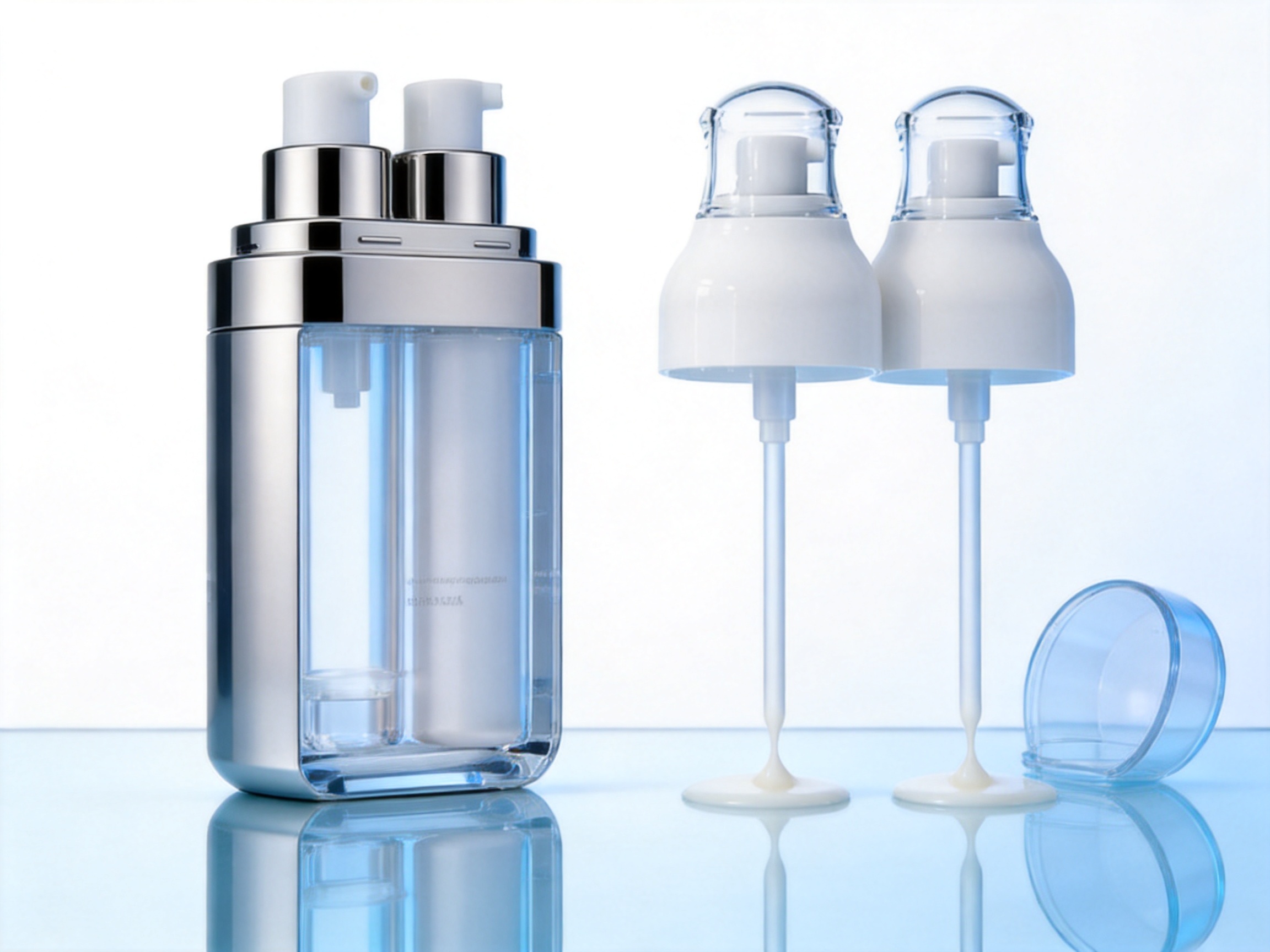
Packaging must ultimately support commercial goals. The HB-S004 offers several potential advantages for brands seeking a distinctive product concept.
Standard bottles and jars are familiar, but familiarity can make it difficult for a new product to stand out. The dual-chamber structure gives the HB-S004 a noticeable shape and a clear functional story. Its appearance can encourage consumers to pause, examine the package, and learn how the two formulas work together.
Visual differentiation is particularly valuable in crowded categories such as serums, moisturizing products, and targeted treatments. A distinctive package does not replace product performance, but it can improve first impressions and support communication at the point of sale.
The two chambers create a natural basis for explaining a skincare routine. A brand can describe the relationship between the formulas, the order of application, and the benefit of keeping them separated. This gives marketing teams a practical story for product pages, retail displays, packaging copy, and social media content.
The product can be presented as a two-step system, a complementary treatment, or a coordinated daily routine. The story can be adapted to the brand’s target audience and product category.
The combination of a unique cap, airless dispensing, multi-component construction, and dual-formula functionality can support a premium positioning. Consumers may perceive the package as more advanced than a basic bottle when the design is well executed and the product benefit is clearly communicated.
Premium value depends on the complete experience, including the formula, package quality, dispensing smoothness, decoration, labeling, and consistency. The HB-S004 provides a suitable structural foundation for that experience.
The compact capacity is useful for travel sizes, trial kits, professional samples, and introductory programs. A consumer can try two related formulas without purchasing two full-size products. A brand can also use the package in a treatment set or as part of a promotional launch.
Because the package contains two products, it may communicate more value than a single small-volume sample. This can be useful for new product introductions where the brand wants consumers to experience a complete routine.
Modern packaging development should consider environmental impact alongside appearance and function. The HB-S004 uses several materials and components, including MS, PP, and ABS. This construction supports the product’s design and performance, but the multi-material structure should be evaluated carefully when a brand is planning its environmental strategy.
Responsible packaging decisions may include reducing unnecessary components, optimizing the amount of material, improving production efficiency, selecting suitable decoration methods, and providing clear disposal information where appropriate. Brands should discuss these priorities with the manufacturer during development.
ISO14001:2015 certification demonstrates that the manufacturer has an environmental management system. Buyers may request additional information about material sourcing, production controls, waste management, energy use, and packaging options relevant to their sustainability objectives.
It is also important to distinguish between a package’s visual appearance and its environmental performance. A transparent effect, metallic finish, or multi-layer structure may influence recyclability or sorting in some systems. The final assessment should consider the exact component materials, decoration, local recycling infrastructure, and applicable regulations.
The HB-S004 is presented with two capacity configurations: 8.5 ml + 8.5 ml for airless use and 10 ml + 10 ml for lotion use. Selecting the correct configuration depends on the formula and product concept.
| Consideration | 8.5 ml + 8.5 ml Airless Configuration | 10 ml + 10 ml Lotion Configuration |
|---|---|---|
| Primary positioning | Airless skincare treatments and concentrated products. | Lotion-oriented products and lightweight emulsions. |
| Total stated capacity | 17 ml combined. | 20 ml combined. |
| Potential product types | Serums, targeted treatments, premium skincare formulas. | Lotions, hydration products, trial and travel products. |
| Key development focus | Airless dispensing, formula compatibility, controlled output. | Viscosity suitability, filling performance, pump consistency. |
| Recommended validation | Airless recovery, output, leakage, and formula protection testing. | Output consistency, filling accuracy, leakage, and texture compatibility testing. |
The product title refers to a 17 ml and 20 ml double-chamber airless bottle, while the detailed specifications identify the two chamber configurations separately. Brands should confirm the exact commercial specification, capacity, and intended filling application with the manufacturer before placing an order.
A successful packaging project usually begins with a detailed product brief. The brief should describe the formula, target market, product category, desired capacity, dispensing method, decoration, color, expected annual volume, and intended sales channels.
The manufacturer can review whether the selected formula is appropriate for the proposed materials and dispensing system. At this stage, the brand should provide viscosity information, ingredient considerations, filling temperature, and any special requirements related to light or air exposure.
Samples should be evaluated for appearance, hand feel, dimensions, cap fit, pump action, chamber identification, and overall presentation. The brand should fill the samples with representative formulas whenever possible, because an empty package cannot demonstrate actual dispensing performance.
Filled samples should undergo compatibility and stability testing under conditions appropriate to the product. The evaluation may include visual inspection, weight change, leakage, odor, color, viscosity, pump output, and component condition.
Before mass production, the brand should approve color standards, print position, label artwork, surface finish, cap appearance, and any transparent or decorative windows. For a dual-chamber product, artwork must be aligned correctly with the two internal sides.
After technical approval, the production plan should define component specifications, assembly requirements, filling controls, inspection standards, and packaging methods. Quality checks should be performed throughout production rather than only at the end.
It is a cosmetic packaging container with two separate internal chambers in one outer bottle. It is designed to hold and dispense two different skincare formulations in a coordinated package.
The stated configurations are 8.5 ml + 8.5 ml for the airless option and 10 ml + 10 ml for the lotion option. These represent two separate chambers rather than one single undivided volume.
The 8.5 ml + 8.5 ml configuration provides a stated combined capacity of 17 ml. The 10 ml + 10 ml configuration provides a stated combined capacity of 20 ml.
The listed materials are MS for the cap, outer bottle, and shoulder; PP and ABS for the pump; and PP for the inner bottle.
The stated application dosage is 0.12 cc + 0.12 cc. Actual performance should be verified using the intended formulas and the final production components.
Yes. The double-chamber structure is designed to keep two formulas separated. Brands must still conduct compatibility, filling, stability, and dispensing tests with the actual formulas before commercial production.
Potential applications include serums, lotions, creams, targeted treatments, hydration products, travel kits, professional samples, and coordinated skincare systems. The suitability of any specific formula must be confirmed through technical testing.
A regular single-chamber bottle holds one formula. The HB-S004 can hold two separate formulas in one coordinated package, creating additional opportunities for combination products, two-step routines, and visual differentiation.
The airless version offers pump dispensing instead of direct finger access. It can provide a more controlled and hygienic user experience while also allowing two formulas to remain separate.
Brands can discuss color, surface finish, decoration, labeling, and visual differentiation with the manufacturer. The exact customization options depend on the production requirements and selected finish.
The listed height is approximately 119 mm, and the listed diameter specification is 41.7 × 34.2 mm. Final production dimensions should be confirmed against the approved technical drawing.
No packaging should be assumed to be universally compatible. The actual formula must be tested with the MS, PP, and ABS components, along with the pump and closure system, under suitable stability and transportation conditions.
Yuyao Hengbang Plastic Co., Ltd. has passed ISO9001:2015 and ISO14001:2015 certifications. The company also owns multiple invention patents and was recognized as a Ningbo High-Tech Enterprise in 2021.
The company specializes in plastic packaging for cosmetics and skincare products and provides design and development services. Its facility has a building area of 35,000 square meters and more than 300 employees.
It may be suitable for private-label brands, emerging skincare companies, established cosmetic brands, and product developers seeking a distinctive dual-formula package. The brand should confirm minimum order quantities, decoration options, testing requirements, and production schedules with the manufacturer.
The HB-S004 2 In 1 Double Chamber Airless Bottle offers a practical and visually distinctive approach to modern cosmetic packaging. Its two-chamber structure allows brands to combine complementary formulas in one package while maintaining separation between the products. The airless configuration supports controlled dispensing, and the lotion configuration provides an option for lightweight emulsion and lotion concepts.
The package is differentiated by its unique cap, compact dimensions, layered material construction, and opportunities for transparent effects, color coding, and surface decoration. Compared with conventional single-chamber bottles, plastic cream jars, and separate two-bottle sets, it provides a stronger platform for combination products, two-step skincare routines, travel kits, and premium treatment concepts.
The product’s success depends on careful development. Formula compatibility, pump output, filling accuracy, component assembly, decoration, stability, and transportation performance should all be validated before mass production. Because the bottle uses multiple components and materials, technical coordination between the brand, filling partner, and packaging manufacturer is essential.
Yuyao Hengbang Plastic Co., Ltd. brings experience in cosmetic and skincare packaging, supported by a 35,000-square-meter building area, a workforce of more than 300 employees, design and development services, ISO9001:2015 and ISO14001:2015 certifications, invention patents, and high-tech enterprise recognition. These strengths provide a solid foundation for brands seeking a supplier capable of supporting both packaging innovation and organized production.
For cosmetic companies looking to create a compact, functional, and visually memorable product, the HB-S004 provides an adaptable packaging platform. Its combination of dual-chamber storage, airless dispensing, material coordination, and promotional potential makes it especially relevant to the next generation of skincare products.
1. Product specification information for the HB-S004 2 In 1 Double Chamber Airless Bottle, including materials, dimensions, capacities, and application dosage.
2. Yuyao Hengbang Plastic Co., Ltd. company information and manufacturing profile.
3. ISO 9001:2015, Quality Management Systems — Requirements.
4. ISO 14001:2015, Environmental Management Systems — Requirements with Guidance for Use.
5. General principles of cosmetic packaging compatibility, dispensing evaluation, and stability testing.
6. General cosmetic packaging development practices for airless containers, pumps, closures, and multi-component assemblies.


Copyright © Yuyao Hengbang Plastic Co., Ltd.
All Rights Reserved.
 Wholesale Plastic Cosmetic Packaging Manufacturers