English
 中文简体

News
Home > Author > Wang Mengyao — Product After-Sales Service Coordinator > Refillable Airless Serum Bottles: Sustainable Protection for Modern Skincare Packaging

 2026.09.30
 Wang Mengyao — Product After-Sales Service Coordinator
Content
The packaging used for a serum, cream, lotion, or other sensitive cosmetic product influences far more than appearance. It affects product protection, dispensing performance, consumer convenience, manufacturing efficiency, environmental impact, and the overall perception of a skincare brand. As consumers and cosmetic companies increasingly seek packaging that combines premium presentation with responsible material use, refillable airless packaging has become an important solution.
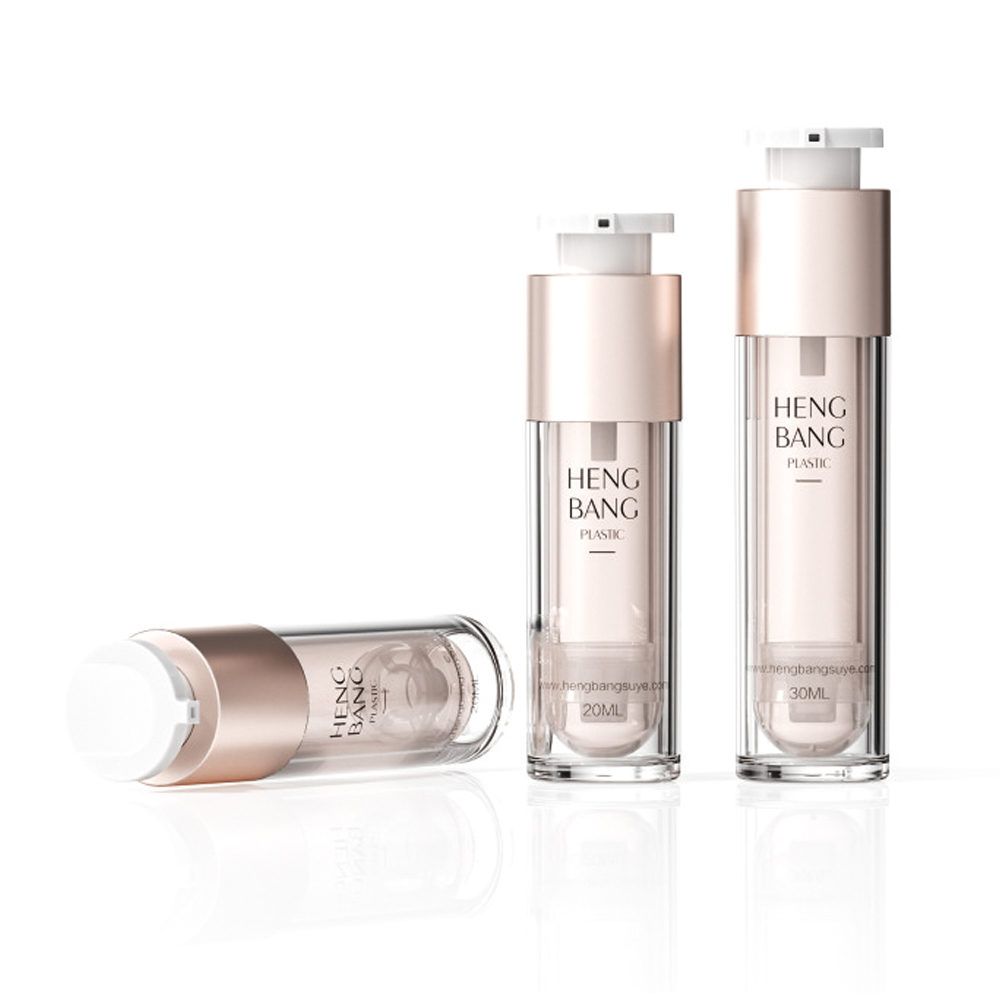
The HB-K022A/B plastic refillable airless serum bottle is designed around this changing market requirement. It combines a permanent outer bottle with a disposable replaceable inner bottle. After the original inner bottle has been emptied, the user can purchase a replacement inner bottle instead of discarding the complete package. This structure helps reduce unnecessary plastic waste while preserving the practical advantages of an airless dispensing system.
The bottle is suitable for serums, creams, lotions, moisturizers, sunscreen products, and other cosmetic or personal-care formulations that benefit from protection against air and contamination. Its vacuum-sealed design uses a piston at the base rather than a conventional dip tube. As the product is dispensed, the piston moves upward, helping the container deliver the formula efficiently while limiting air exposure.
For cosmetic packaging buyers, this product offers a combination of functional performance, flexible capacity options, reusable outer presentation, and replaceable inner packaging. For manufacturers and brand owners, it also creates opportunities for a more sustainable refill program, repeated customer engagement, and differentiated product presentation.
HB-K022A/B Plastic Refillable Airless Serum Bottle
A refillable airless serum bottle is a packaging container that separates the long-term outer structure from the replaceable product-holding component. In the HB-K022A/B design, the outer bottle remains in use while the inner bottle can be removed and replaced when the contents have been consumed.
This approach is different from a traditional single-use cosmetic bottle. In a conventional package, the bottle, pump, and product chamber are generally discarded together. A refillable design divides the package into two functional parts. The outer bottle provides the visible presentation, structural support, and hand-held user experience, while the inner bottle contains the cosmetic formula and can be replaced as needed.
The airless mechanism is another important feature. Unlike a bottle that relies on a long tube extending into the product, an airless container uses a moving piston. When the pump is pressed, the internal pressure changes and the piston rises from the bottom. This action pushes the formulation toward the dispensing system without requiring a dip tube.
Because the container is designed to limit the entry of air, it can help protect sensitive formulas from environmental exposure. Oxygen, dust, and repeated contact can affect certain cosmetic products over time. By reducing the opportunity for air and contaminants to enter the product chamber, airless packaging supports better formula protection and a more controlled dispensing experience.
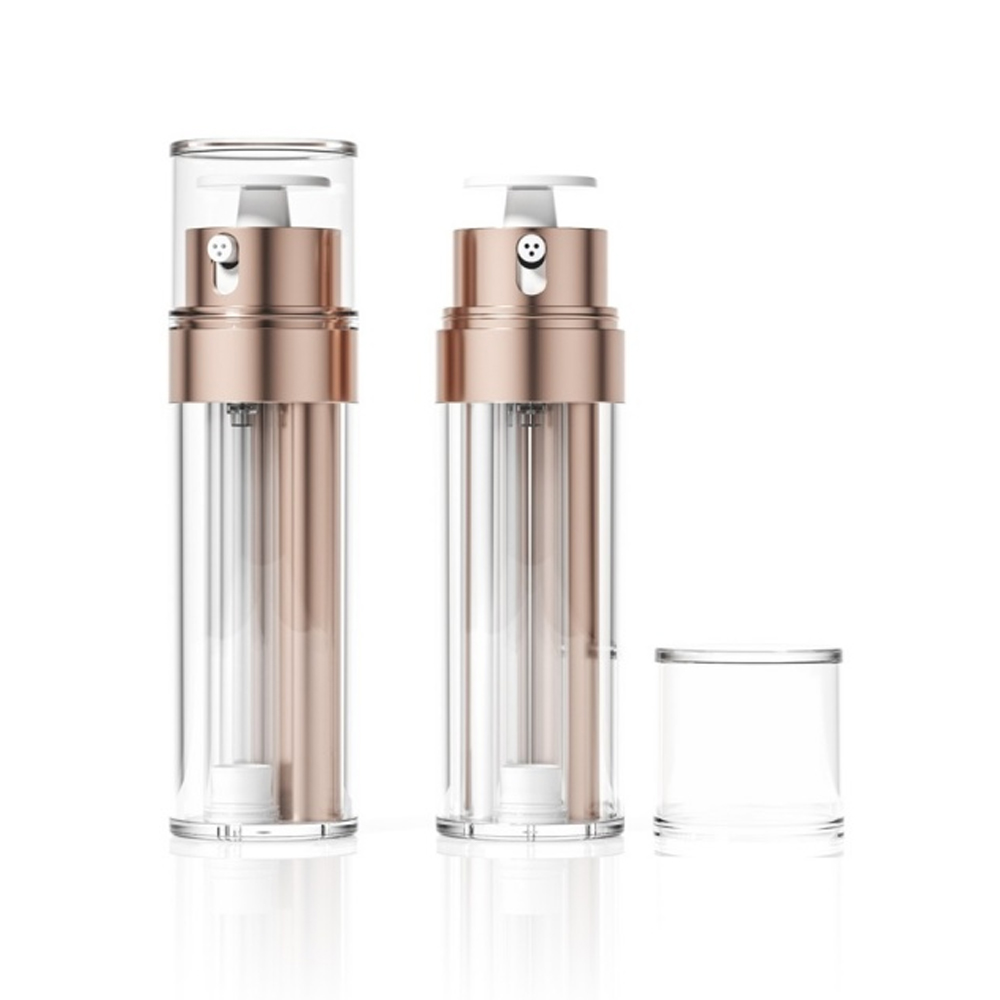
The product also includes a nozzle with a retaining clip. The clip helps prevent unintended actuation during storage, shipment, or handling. This is particularly useful for products sold through retail, e-commerce, travel, subscription, and promotional channels, where packages may be moved repeatedly before reaching the final user.
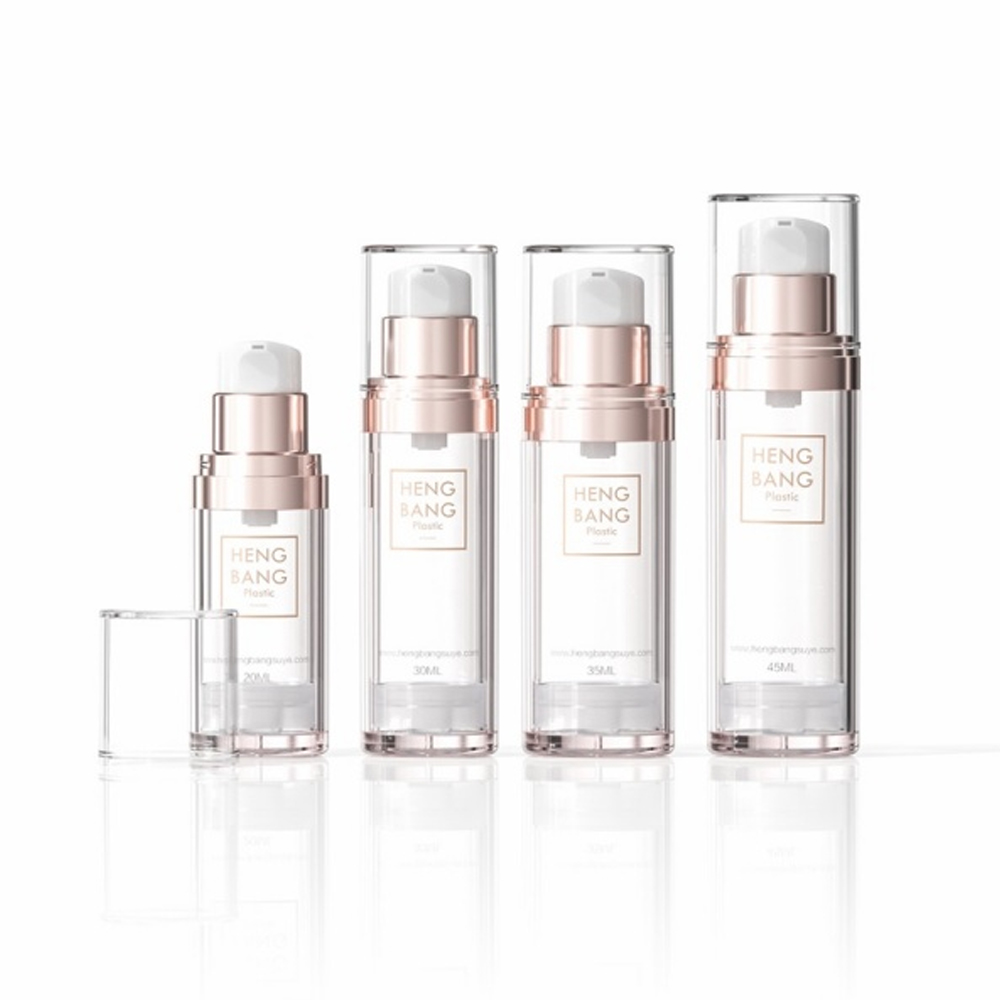
The HB-K022A/B plastic refillable airless serum bottle is available in several stated capacity options: 20 milliliters, 30 milliliters, 50 milliliters, and 70 milliliters. These sizes allow cosmetic brands to select a format based on product positioning, recommended usage period, retail price, and application category.
A 20 milliliter size may be suitable for concentrated serums, trial products, travel formats, or premium formulas used in small quantities. The 30 milliliter size can support compact daily skincare products. A 50 milliliter format is appropriate for many standard facial-care products, while a 70 milliliter option can provide additional volume for lotions, body-care products, or larger-use formulas.
The listed material structure includes PP for the clip, PP and ABS for the pump, MS for the outer bottle, and PP for the inner bottle. These materials create a multi-component package in which each part is selected for a particular functional role. The outer bottle provides a durable and visually substantial shell, while the inner bottle serves as the replaceable product chamber.
| Item | Available or Stated Specification |
|---|---|
| Product type | Plastic refillable airless serum bottle |
| Capacity options | 20 ml, 30 ml, 50 ml, and 70 ml |
| Clip material | PP |
| Pump material | PP plus ABS |
| Outer bottle material | MS |
| Inner bottle material | PP |
| Application dosage | 0.23 cc |
| Stated heights | 118.5 mm, 136.5 mm, 132.5 mm, and 160 mm for the listed size configurations |
| Stated diameters | 33 mm and 40 mm |
| Dispensing system | Airless piston pump without a conventional dip tube |
| Security feature | Nozzle with retaining clip |
The supplied specification table associates multiple heights and diameters with the capacity range. Because packaging dimensions may vary by configuration, buyers should confirm the final dimensional drawing, tolerance, pump performance, decoration area, and inner-bottle compatibility during the product development stage.
The stated application dosage is 0.23 cc. Controlled dosing is valuable for skincare products because it helps users dispense a consistent amount and can reduce excessive use. A predictable pump stroke also supports more consistent consumer experience across repeated applications.
An airless pump container is engineered to dispense product while minimizing the amount of air entering the product chamber. The internal piston sits beneath the formula. When the pump is pressed, the dispensing mechanism creates the pressure needed to move the product upward and through the nozzle. After each use, the piston advances to occupy the space left by the dispensed formula.
This design offers several practical differences compared with a traditional bottle with a dip tube. A dip tube must reach into the product, and the formula must travel through the tube as the package is used. In an airless container, the piston pushes the formula upward, allowing the product to move toward the pump without relying on a tube that extends to the bottom.
The piston-based structure can also help the package use product efficiently. As the fill level becomes lower, the piston continues to rise. This may reduce the amount of product left inaccessible at the bottom of the container compared with some conventional packages. Actual residual levels depend on the formulation, pump design, filling process, viscosity, and operating conditions.
For sensitive cosmetic formulas, minimizing repeated air exchange can be important. Some serums and creams contain active ingredients that require careful protection from environmental exposure. Airless packaging does not replace suitable formulation development, preservation, compatibility testing, or appropriate storage, but it provides a packaging structure that supports these product-protection goals.
The dispensing action also improves cleanliness for many applications. Consumers do not need to open a wide container and repeatedly insert their fingers into the product. The formula is delivered through a pump nozzle, which can help reduce direct contact between the user’s hands and the remaining product.
For brands, the airless mechanism can communicate technical value. Consumers often associate airless packaging with premium skincare, clinical-inspired formulas, concentrated serums, and carefully protected active ingredients. The mechanism therefore contributes both functional performance and perceived product quality.
The most distinctive advantage of the HB-K022A/B structure is that the outer bottle is designed to remain in use while the inner bottle is replaced. A consumer does not necessarily need to discard the complete package after finishing one fill. Only the replaceable inner component needs to be changed when a refill is purchased.
This can reduce the quantity of packaging discarded over the product’s usage cycle. The exact environmental benefit depends on the weight of the outer bottle, the material and recovery route of the inner bottle, the number of refills purchased, transportation requirements, and consumer participation. Nevertheless, separating the permanent presentation component from the disposable product chamber provides a practical foundation for a refill model.
Refillability can also help brands communicate a more responsible packaging strategy. Instead of treating the package as a one-time object, the brand can design a continued-use system in which the consumer keeps the primary outer bottle and purchases replacement inner units. This approach may encourage repeat purchase while giving the customer a clear reason to retain the original package.
The outer bottle remains visible throughout the product’s life. This allows a brand to invest in a durable, attractive package that continues to represent the product each time a refill is installed. A permanent outer component may support a more substantial in-hand feel than a lightweight disposable container, depending on the selected configuration and decoration.
For premium skincare lines, the package is part of the brand experience. A refillable outer bottle can be coordinated with a product family through color, surface finish, labeling, printing, metallic effects, or other decoration methods. The reusable exterior can create a consistent visual identity across multiple refill cycles.
The airless structure helps limit contact between the formula and outside air. This can be particularly valuable for serums, creams, lotions, and other formulations that are sensitive to oxidation, contamination, or repeated exposure. The package supports formula protection by combining a closed product chamber with a pump-based dispensing system.
Brands should still perform compatibility, stability, transport, and dosage testing with the specific formula. Viscosity, emulsion structure, active ingredients, fragrance components, colorants, and preservatives can all influence packaging performance. The advantage of an airless bottle is that it provides a suitable platform for testing sensitive products, not that it automatically guarantees stability for every formulation.
The pump allows the consumer to dispense the product without opening the main product chamber. This can support a cleaner application process and reduce the likelihood of fingers entering the remaining formula. The 0.23 cc application dosage provides a stated reference point for controlled delivery.
Controlled dispensing may be useful for concentrated serums and active skincare products, where consumers are often instructed to use a specific amount. It can also help reduce over-dispensing, although actual consumer behavior depends on the pump stroke, formula viscosity, user technique, and product instructions.
The retaining clip on the nozzle is designed to help prevent accidental pumping. This feature can reduce the risk of unintended product release during storage and transportation. It is useful for products placed in cartons, shipping cases, retail displays, travel bags, or e-commerce parcels.
A retaining clip can also improve the customer’s first impression. When the package arrives with the dispensing system secured, the user can remove the clip before the first application. This creates a visible transition from protected transport condition to ready-to-use condition.
The 20 ml, 30 ml, 50 ml, and 70 ml capacities provide flexibility for different product concepts. A cosmetic manufacturer may use the same basic packaging platform for a collection of related products while selecting different fill volumes for each SKU.
Using a common packaging family can simplify product-line planning. It may support a consistent visual identity, reduce the need to develop unrelated package structures, and make it easier for consumers to recognize products within the same range. Final compatibility should be confirmed for each capacity and formula combination.
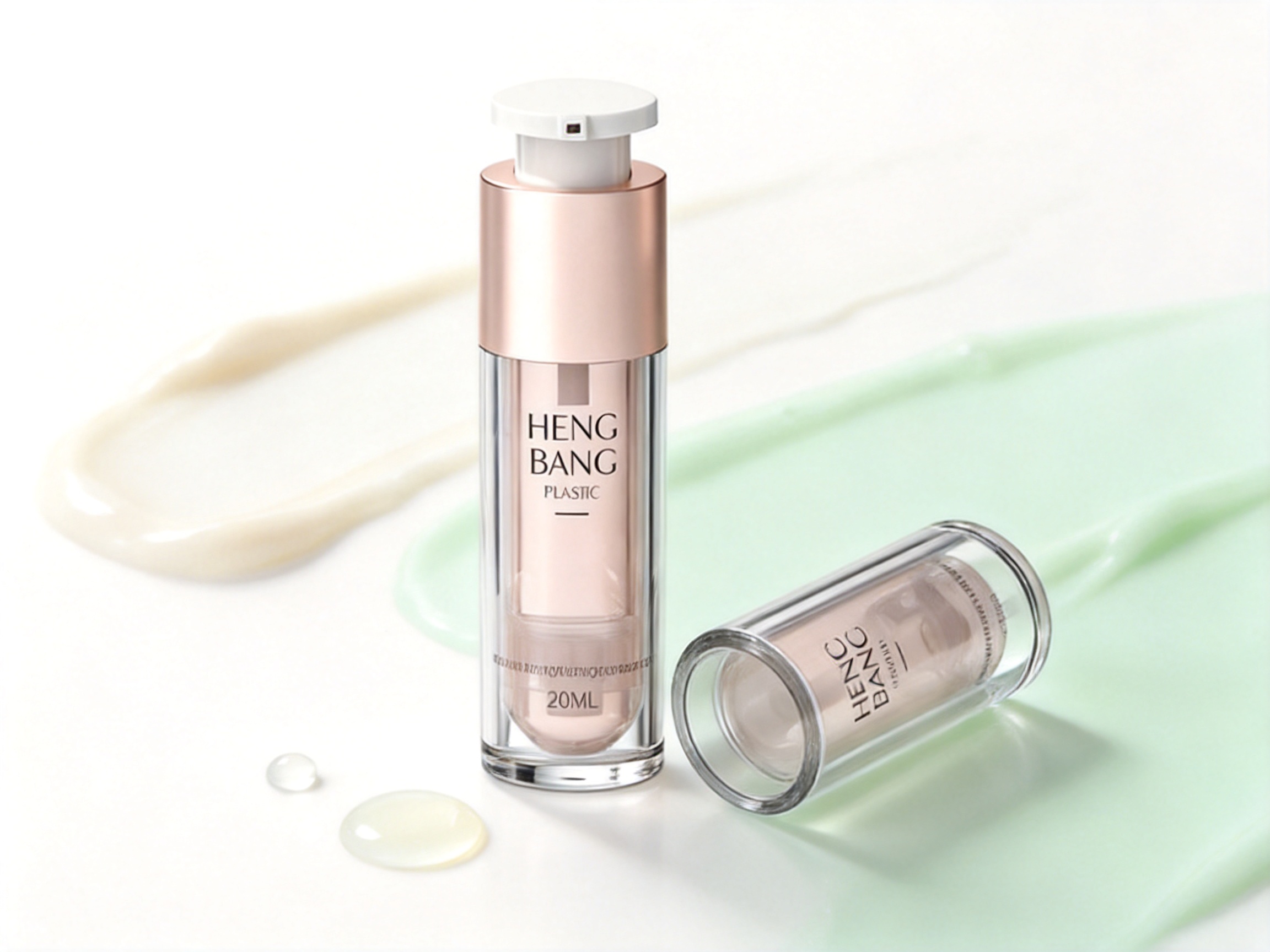
Traditional cosmetic bottles remain widely used because they can be economical, familiar, and simple to fill. However, they may have limitations when used for sensitive formulas or products that require controlled dispensing. A conventional bottle may use a dip tube, an open neck, a screw cap, or a wide-mouth opening. Each option has different implications for protection, hygiene, residual product, and consumer convenience.
Compared with a basic open container, the refillable airless bottle reduces the need for direct contact with the product. The user interacts primarily with the pump rather than repeatedly opening the product chamber. This can make the package more suitable for modern skincare products that emphasize clean application and formula preservation.
Compared with a standard pump bottle, the airless design uses a piston rather than a dip tube. This can support more consistent delivery as the product level decreases. The piston also contributes to the closed product chamber concept, helping reduce the exchange of air during use.
Compared with a single-use premium bottle, the refillable structure offers a potential reduction in packaging disposal over multiple purchase cycles. The primary outer bottle can remain part of the user’s routine while the inner bottle is changed. This gives the package a functional advantage that ordinary single-use packaging does not provide.
Compared with some glass packaging, a plastic airless bottle can offer lower breakage risk during certain handling conditions. This may be beneficial for travel, e-commerce fulfillment, and bathroom storage. The exact weight, appearance, recyclability, and environmental profile depend on the selected materials and manufacturing configuration.
| Packaging characteristic | Refillable airless bottle | Basic open jar | Conventional dip-tube bottle |
|---|---|---|---|
| Formula access | Closed pump-based dispensing | Wide opening and direct access | Pump or closure with dip tube |
| Air exposure during use | Designed to limit air entry | Repeated opening exposes the product | Depends on pump and closure design |
| Refill potential | Replaceable inner bottle with permanent outer bottle | Usually single package replacement | Usually single package replacement |
| Dispensing principle | Bottom piston moves upward | User removes product manually | Formula is drawn through a tube |
| Hygiene support | Limited direct contact through pump dispensing | Direct finger or tool contact is common | Limited direct contact through pump dispensing |
| Transport security | Nozzle retaining clip included | Depends on lid or cap | Depends on closure design |
| Product positioning | Suitable for premium, sensitive, and refill-oriented products | Suitable for many creams and masks | Suitable for many lotions and liquid products |
The airless refillable format is not intended to replace every type of packaging. A low-viscosity product, a product requiring direct application, or a formula with unusual filling characteristics may need a different container. The key advantage is that this format addresses several requirements at once: product protection, controlled dispensing, premium presentation, and refill potential.
Serums are one of the most natural applications for an airless bottle. They often contain concentrated ingredients and are dispensed in relatively small amounts. A 20 ml or 30 ml capacity can support a compact premium format, while a 50 ml size may be selected for a longer-use product.
The closed pump system is suitable for formulas that brands want to protect from repeated opening and direct contact. It also allows the product to be positioned as a precise, high-performance skincare treatment.
Facial creams and moisturizers can benefit from pump-based dispensing because consumers can obtain a measured portion without repeatedly placing fingers into a jar. The 50 ml and 70 ml options may be particularly relevant for daily-use products, depending on formula density and recommended dosage.
The outer bottle can be designed to match a premium cream range while the replaceable inner bottle supports repeat purchasing. This arrangement may be useful for brands building refill stations, subscription programs, or replacement-unit sales.
Sunscreen packaging must support convenient and repeated application. The airless bottle can be considered for selected facial sunscreen or cosmetic sunscreen formats, provided the formula, dispensing dosage, regulatory requirements, and usage instructions are properly evaluated.
The retaining clip can assist with transport and storage, while the pump can provide controlled delivery. Because sunscreen products may require generous application amounts, the selected capacity and pump output should be tested carefully against the product’s intended use.
Lotions and other body-care products often require a package that is easy to use repeatedly. The larger 50 ml and 70 ml capacities can support compact body-care products, hand treatments, travel formats, or targeted treatment products.
For higher-volume body lotions, a manufacturer may need to assess whether the available capacity is sufficient for the expected usage period. The bottle is particularly suitable where a premium compact format is preferred over a large family-size package.
The product category list includes toner bottles, although the most appropriate package for a toner depends on viscosity and application method. A thicker toner, essence, or concentrated treatment may be compatible with a pump-based format after testing. Very watery formulas may require a different dispensing system to achieve the desired spray, flow, or application pattern.
Testing should consider priming, leakage, output consistency, foaming, dripping, and the interaction between the formula and pump components. The airless concept can offer product protection, but the dispensing mechanism must match the physical properties of the formula.
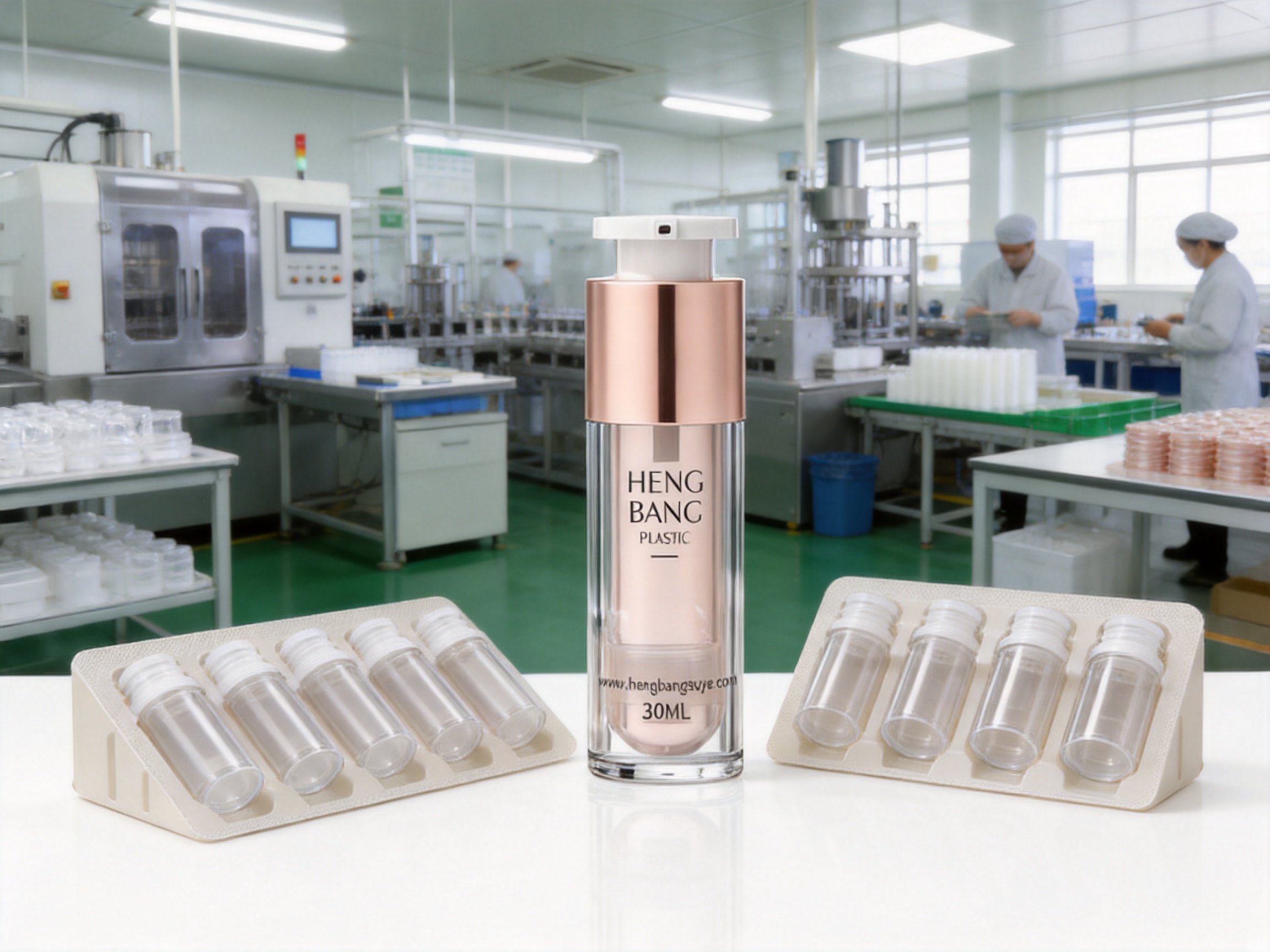
Yuyao Hengbang Plastic Co., Ltd. specializes in plastic packaging for cosmetics and skincare products. The company was established in 2006 and has a building area of 35,000 square meters with more than 300 employees. This scale provides a substantial foundation for coordinated product development, component production, quality management, and customer service.
The company’s product expertise covers cosmetic bottles, airless bottles, double-chamber bottles, lotion bottles, plastic cream jars, sunscreen bottles, toner bottles, and related plastic cosmetic containers. This category experience is important because cosmetic packaging requires more than general plastic forming. It involves pump systems, closures, appearance quality, dimensional accuracy, formula compatibility, decoration, filling coordination, and consumer-oriented design.
The company provides design and development services through a young and professional team. This can support customers during the transition from a packaging concept to a manufacturable product. For a refillable airless bottle, design development may involve the relationship between the permanent outer bottle, disposable inner bottle, pump, retaining clip, piston, fill opening, sealing areas, and replacement procedure.
Product development also requires attention to assembly. Multiple components must fit together accurately to achieve reliable pumping, secure attachment, appropriate sealing, and acceptable appearance. The interaction between PP, ABS, MS, and other components should be assessed through dimensional control and functional testing.
Hengbang has passed ISO9001:2015 and ISO14001:2015 certifications. ISO9001:2015 is associated with quality management systems, while ISO14001:2015 is associated with environmental management systems. These certifications indicate structured approaches to quality and environmental management. They do not replace product-specific testing, but they provide an important framework for controlled manufacturing and continual improvement.
The company was awarded as a Ningbo High-Tech Enterprise in 2021 and owns multiple invention patents. These achievements support its positioning as a manufacturer that invests in technical development rather than focusing only on basic commodity production. A refillable airless bottle is an example of packaging that requires functional design and coordinated component engineering.
The company also operates according to the business philosophy of “Quality, Integrity, and Customer First.” This philosophy is relevant to international packaging customers who require clear communication, dependable production, consistent specifications, and support throughout the development cycle.
An important manufacturing strength is the ability to support more than one stage of the packaging process. Customers may need assistance with structure selection, capacity planning, component matching, appearance development, and production preparation. A supplier with cosmetic packaging experience can help identify practical issues before mass production begins.
For the HB-K022A/B bottle, integrated development may include confirming whether the selected formula is suitable for the PP inner bottle, checking the pump’s delivery performance, evaluating the piston movement, and ensuring that the retaining clip stays securely in place during shipment.
Cosmetic packaging quality is visible in many ways. Buyers may evaluate color consistency, surface finish, molding marks, dimensional accuracy, pump action, leakage resistance, closure security, and overall assembly. A quality management system helps organize these requirements into repeatable inspection and production procedures.
For a refillable package, quality also includes the ease of replacing the inner bottle. If replacement is difficult, unclear, or inconsistent, the sustainability advantage may not be fully realized. The outer and inner components must work together as a practical system for both the brand and the final consumer.
The ISO14001:2015 certification reflects an environmental management framework within the company’s operations. Environmental responsibility in packaging manufacturing can involve material use, production efficiency, waste management, process control, and continual improvement.
The refillable design complements this manufacturing perspective by addressing the package’s use phase. The permanent outer bottle and replaceable inner bottle create a structure intended to reduce the need to discard the full package after every purchase. This does not eliminate the need for responsible material selection or end-of-life planning, but it supports a more resource-conscious product concept.
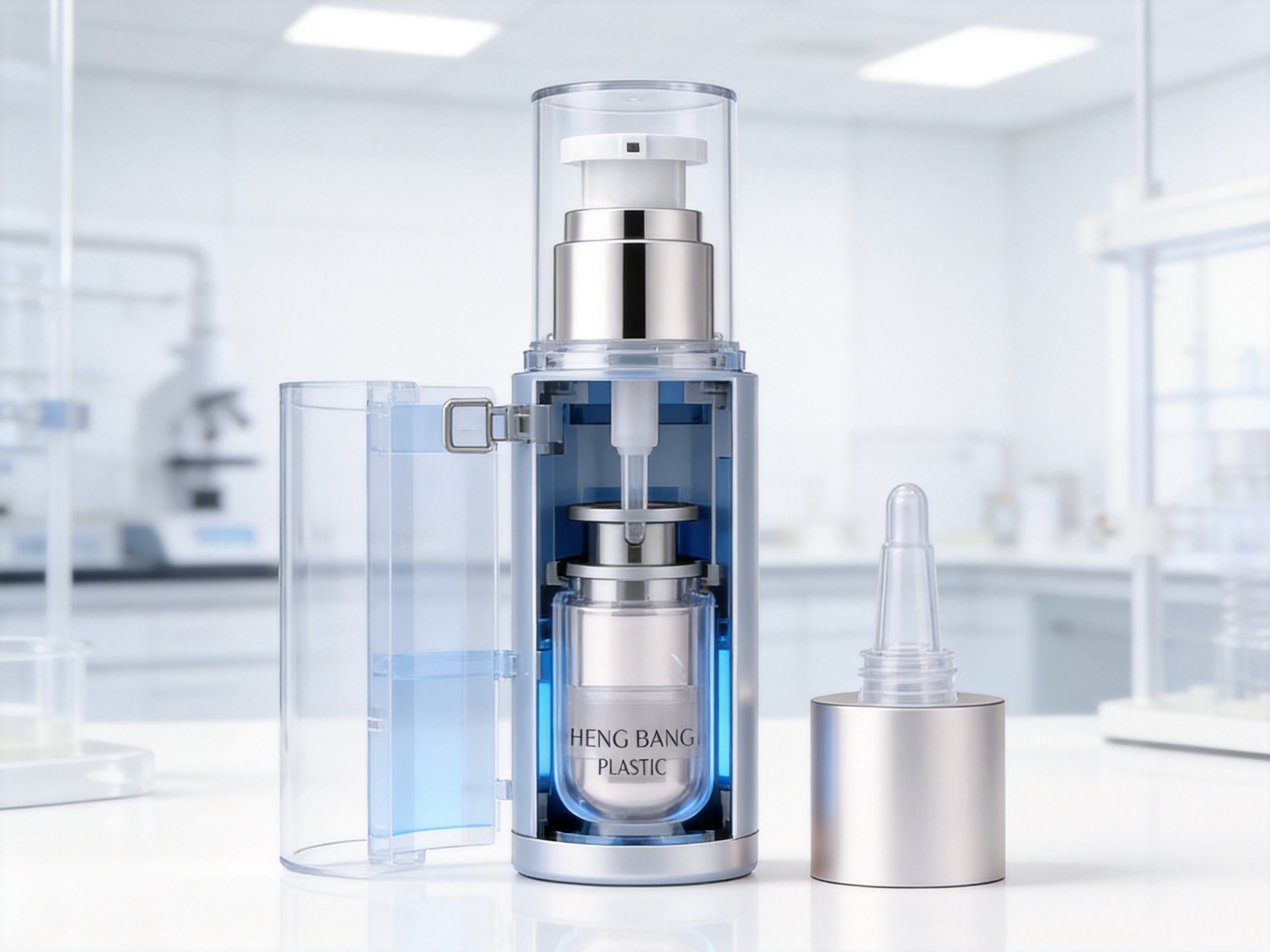
Manufacturing a refillable airless bottle requires coordinated control of several components. The outer bottle must have the intended dimensions and appearance. The inner bottle must fit correctly and hold the product securely. The pump must deliver the expected output. The piston must move smoothly. The retaining clip must remain attached until removal. These functions must work together after assembly and during use.
Material selection is also important. The listed configuration uses PP for the clip, PP and ABS for the pump, MS for the outer bottle, and PP for the inner bottle. Each material may respond differently to temperature, pressure, chemical exposure, decoration, and mechanical force. Formula compatibility testing should therefore be carried out using the actual cosmetic product and the final packaging components.
Filling operations should be evaluated before mass production. The inner bottle must be filled with the appropriate quantity without damaging the piston or contaminating sealing areas. The pump and outer components must then be assembled in a way that preserves the product chamber and prevents leakage.
Airless packages may require priming before dispensing. The number of pump strokes required for initial product delivery can depend on the assembly condition, formula viscosity, piston position, and pump design. Brands should define user instructions and verify that the expected consumer experience is acceptable.
Transportation testing is another important consideration. The bottle may experience vibration, compression, temperature changes, and repeated movement during logistics. The retaining clip should be assessed for accidental removal, while the pump and inner bottle should be evaluated for leakage and displacement.
Storage conditions should also be considered. Cosmetic products may be stored in warehouses, retail environments, bathrooms, handbags, or shipping vehicles. Testing under relevant temperature and humidity conditions can help identify potential changes in formula behavior, pump output, material appearance, or component fit.
For international customers, the final packaging design may need to accommodate labeling requirements, product information, recycling guidance, batch coding, and regulatory marks. The decoration area and available surface should be confirmed during the design phase so that required information remains clear and durable.
The HB-K022A/B bottle stands out because it combines several features that are often purchased separately. It is not only an airless bottle, and it is not only a refillable container. It integrates airless product protection, replaceable inner packaging, a permanent outer bottle, multiple capacity options, controlled pump dispensing, and a retaining clip.
Many standard cosmetic packages provide attractive appearance but are discarded after one use cycle. Others provide airless dispensing but do not offer a replaceable inner bottle. The refillable structure addresses both concerns by supporting a repeated-use outer package and a replaceable product chamber.
The design also provides a strong platform for premium skincare brands. Consumers often look for products that are convenient, hygienic, protective, and environmentally considerate. The bottle can communicate these qualities through both its physical operation and its refill concept.
For brand owners, a refillable package can create a different purchasing relationship. The first purchase may include the complete outer bottle and inner bottle, while subsequent purchases may focus on replacement inner bottles. This can support loyalty programs, refill reminders, subscription models, and product-line extensions.
The multiple capacity options provide additional flexibility compared with a single-size package. Brands can use smaller capacities for concentrated products or introductory formats and larger capacities for daily-use products. A consistent outer design can help maintain visual unity across the range.
The manufacturer’s experience in cosmetic and skincare packaging is another competitive advantage. Product knowledge across bottles, jars, airless systems, lotion containers, toner packages, and double-chamber structures can support better matching between product category and packaging format.
The company’s ISO9001:2015 and ISO14001:2015 certifications, high-tech enterprise recognition, invention patents, established operating history, 35,000-square-meter building area, and workforce of more than 300 employees further support its manufacturing credibility. These strengths are especially relevant for customers seeking a long-term packaging supplier rather than a one-time trading relationship.
A refillable package is successful only when consumers understand how to use it. The brand should provide clear instructions explaining when the inner bottle should be replaced, how the empty component is removed, how the new component is installed, and how the retaining clip is handled.
Instructions can be printed on the carton, included in a product leaflet, or communicated through digital customer education. The wording should be simple and supported by clear visual steps. The replacement procedure should be tested with representative users to ensure that it is intuitive.
The refill concept requires reliable availability of replacement inner bottles. Brands should plan inventory, product forecasting, retail distribution, online sales, and customer service around both the original package and refill units.
Replacement packaging should be protected during shipment and clearly identified. If multiple formulas use the same outer bottle, the inner refill should include strong product identification to prevent confusion. Color coding, labels, cartons, or printed information can help distinguish different formulas and capacities.
Viscosity and texture influence airless performance. A thin essence, a rich cream, and a thick balm may behave differently in the same pump system. The 0.23 cc stated dosage provides a reference, but actual output should be verified with the final formula.
Testing should include the first pump, continuous pumping, intermittent use, near-empty performance, and storage after opening. The package should be evaluated for clogging, sputtering, leakage, inconsistent output, and excessive residual product.
A refillable bottle can support waste reduction, but environmental claims should be based on the complete packaging system. Brands should consider the material weight of the outer bottle, inner bottle, pump, clip, labels, cartons, transportation, and end-of-life pathways.
Clear communication is important. A brand can explain that the outer bottle is designed for continued use and that only the inner bottle is replaced. It should avoid unsupported claims about total environmental impact unless those claims have been properly evaluated.
Before commercial launch, the complete packaging system should undergo product-specific testing. The following areas are especially relevant for the HB-K022A/B bottle.
The formula should be stored in contact with the inner bottle and relevant pump components for an appropriate period. Testing can assess changes in color, odor, viscosity, appearance, pH, separation, leakage, and dispensing performance. The final test conditions should reflect the intended product and market.
The pump should be evaluated for output quantity, repeatability, priming, recovery, and near-empty performance. The stated 0.23 cc dosage can be used as a reference for measurement. Different operators and test conditions may be included to identify variation.
The assembled bottle should be checked under normal, inverted, horizontal, and transportation-related conditions. Leakage testing helps verify the fit between the pump, inner bottle, outer bottle, and sealing components.
Packaging may be dropped or subjected to vibration during distribution. Appropriate testing can help determine whether the outer bottle cracks, whether the retaining clip remains secure, whether the pump becomes loose, and whether the inner bottle shifts within the outer structure.
The outer bottle should be tested through repeated replacement cycles. This can help determine whether the inner bottle remains secure, whether the connection becomes loose, and whether the appearance or function of the outer bottle changes after multiple uses.
Consumers should be able to hold the bottle comfortably, understand the pump, remove the retaining clip, and replace the inner bottle without excessive force or confusion. User testing can reveal practical issues that laboratory measurements may not identify.
The outer bottle provides a visible surface for brand identity. Depending on the selected production and decoration process, customers may explore different colors, finishes, printed graphics, labels, and surface treatments. The aim should be to create a coherent appearance while preserving legibility and durability.
Premium skincare products may benefit from a restrained design using a refined color palette and clear typography. Clinical-style products may use clean graphics and strong product information. Natural or environmentally positioned products may prefer soft colors and simple visual language. The refillable structure itself can become part of the design story.
The inner bottle may also carry identification information. This is useful when several replacement formulas use the same outer bottle. A clear distinction between serum, cream, sunscreen, or lotion can improve user convenience and reduce the risk of selecting the wrong refill.
The pump and retaining clip can be coordinated with the outer bottle. A unified color system can help the final package look complete, while a contrasting clip can make the transport protection feature easy to recognize. Design decisions should be balanced with production feasibility, minimum order requirements, and quality consistency.
Yuyao Hengbang Plastic Co., Ltd. has specialized in cosmetic and skincare plastic packaging since 2006. Its experience covers the product categories in which airless and refillable containers are commonly used. This specialization enables the company to understand the practical needs of cosmetic brands, including presentation, dispensing, formula protection, and production coordination.
The company’s building area of 35,000 square meters and workforce of more than 300 employees indicate an established manufacturing base. A larger operating structure can support coordination among design, development, production, quality, order management, and customer service teams.
Its professional team provides design and development services. This is useful for customers that have a product concept but need support converting it into a workable package. Development discussions may cover capacity, dimensions, materials, pump output, inner-bottle replacement, surface appearance, and filling conditions.
The company’s certifications and technical recognition add further support for quality-oriented procurement. ISO9001:2015 provides a recognized framework for quality management, while ISO14001:2015 supports environmental management. Ningbo High-Tech Enterprise recognition in 2021 and multiple invention patents demonstrate attention to technical development and innovation.
Hengbang’s stated commitment to quality, integrity, and customer-first service is aligned with the requirements of international cosmetic packaging buyers. Packaging projects often continue over many years, and dependable communication is important when brands add new formulas, change capacities, introduce refills, or expand into new markets.
The bottle has a permanent outer bottle and a replaceable inner bottle. When the product is used up, the user can replace the inner bottle rather than discarding the entire outer package.
The system uses a piston at the base of the inner product chamber. When the pump is pressed, the piston moves upward and pushes the formula toward the nozzle. This design does not require a conventional dip tube.
The bottle is intended for cosmetic and skincare products such as serums, creams, lotions, moisturizers, sunscreen products, and selected toner or essence formulas. Compatibility testing is required for each specific formulation.
The stated options are 20 ml, 30 ml, 50 ml, and 70 ml. The most suitable size depends on the formula, dosage, product positioning, and expected usage period.
The supplied material information lists PP for the clip, PP and ABS for the pump, MS for the outer bottle, and PP for the inner bottle.
The stated application dosage is 0.23 cc. Actual output should be confirmed with the final formula and production configuration.
The refillable structure is designed to reduce the need to discard the complete package after each product cycle. The permanent outer bottle can remain in use while the inner bottle is replaced. The total environmental benefit depends on refill behavior, material weights, logistics, and end-of-life management.
The retaining clip helps prevent unintended activation of the nozzle during storage, transportation, and handling. It is removed when the product is prepared for use.
It may be suitable for compatible creams, but the final formula must be tested. Viscosity, texture, particle content, emulsion structure, and storage conditions can affect pump performance.
Cosmetic packaging projects may include appearance development and decoration options. Customers should discuss colors, finishes, labels, printing, capacity, and minimum order requirements with the manufacturer.
Brands should evaluate formula compatibility, dispensing output, priming, leakage, transport resistance, storage stability, refill replacement, and user experience using the final formula and final component configuration.
Yuyao Hengbang Plastic Co., Ltd. was established in 2006, has a 35,000-square-meter building area and more than 300 employees, and has passed ISO9001:2015 and ISO14001:2015 certifications. It was also recognized as a Ningbo High-Tech Enterprise in 2021 and owns multiple invention patents.
The HB-K022A/B plastic refillable airless serum bottle responds to several important needs in modern cosmetic packaging. Its airless piston system helps protect formulas from air and contamination, while its pump supports controlled and convenient dispensing. The nozzle retaining clip improves security during storage and transport.
Its most distinctive feature is the combination of a permanent outer bottle and a replaceable inner bottle. This structure gives brands a practical way to develop refill-oriented packaging and gives consumers an opportunity to keep using the outer package over multiple product cycles. The design can support premium appearance, reduced packaging disposal, hygienic application, and customer engagement through refill sales.
The available 20 ml, 30 ml, 50 ml, and 70 ml capacities provide flexibility across serums, creams, lotions, sunscreen products, and other skincare applications. The listed PP, ABS, and MS material structure creates a multi-component system that should be evaluated with the actual formula and filling process.
Supported by cosmetic packaging experience, design and development services, ISO9001:2015 and ISO14001:2015 certifications, technical recognition, invention patents, and an established manufacturing base, Yuyao Hengbang Plastic Co., Ltd. provides a strong production partner for brands seeking functional and refillable cosmetic containers.
For companies planning a new skincare line or upgrading an existing package, the refillable airless format offers more than an attractive bottle. It provides a complete packaging concept that connects formula protection, dispensing performance, sustainability goals, premium presentation, and long-term customer use.
1. Product information supplied for HB-K022A/B Plastic Refillable Airless Serum Bottle, including materials, capacities, dimensions, application dosage, structure, and product description.
2. Yuyao Hengbang Plastic Co., Ltd. company information supplied for this article, including establishment history, facility area, employee number, product categories, certifications, technical recognition, patents, and service capabilities.
3. ISO 9001:2015, Quality Management Systems — Requirements.
4. ISO 14001:2015, Environmental Management Systems — Requirements with Guidance for Use.
5. General technical principles of airless cosmetic packaging, piston-based dispensing systems, product protection, packaging compatibility, and cosmetic container evaluation.


Copyright © Yuyao Hengbang Plastic Co., Ltd.
All Rights Reserved.
 Wholesale Plastic Cosmetic Packaging Manufacturers