English
 中文简体

News
Home > Author > Wang Mengyao — Product After-Sales Service Coordinator > Plastic Airless Foundation Bottle: A High-Performance Packaging Solution for Modern Beauty Formulations

 2026.10.18
 Wang Mengyao — Product After-Sales Service Coordinator
Content
In the competitive cosmetics and skincare market, packaging is far more than an outer container. It protects the formulation, controls how the product is dispensed, communicates brand value, and influences the consumer’s daily experience. For foundations, primers, tinted moisturizers, serums, lotions, and other sensitive beauty products, the choice of bottle can directly affect product stability, hygiene, convenience, and perceived quality.
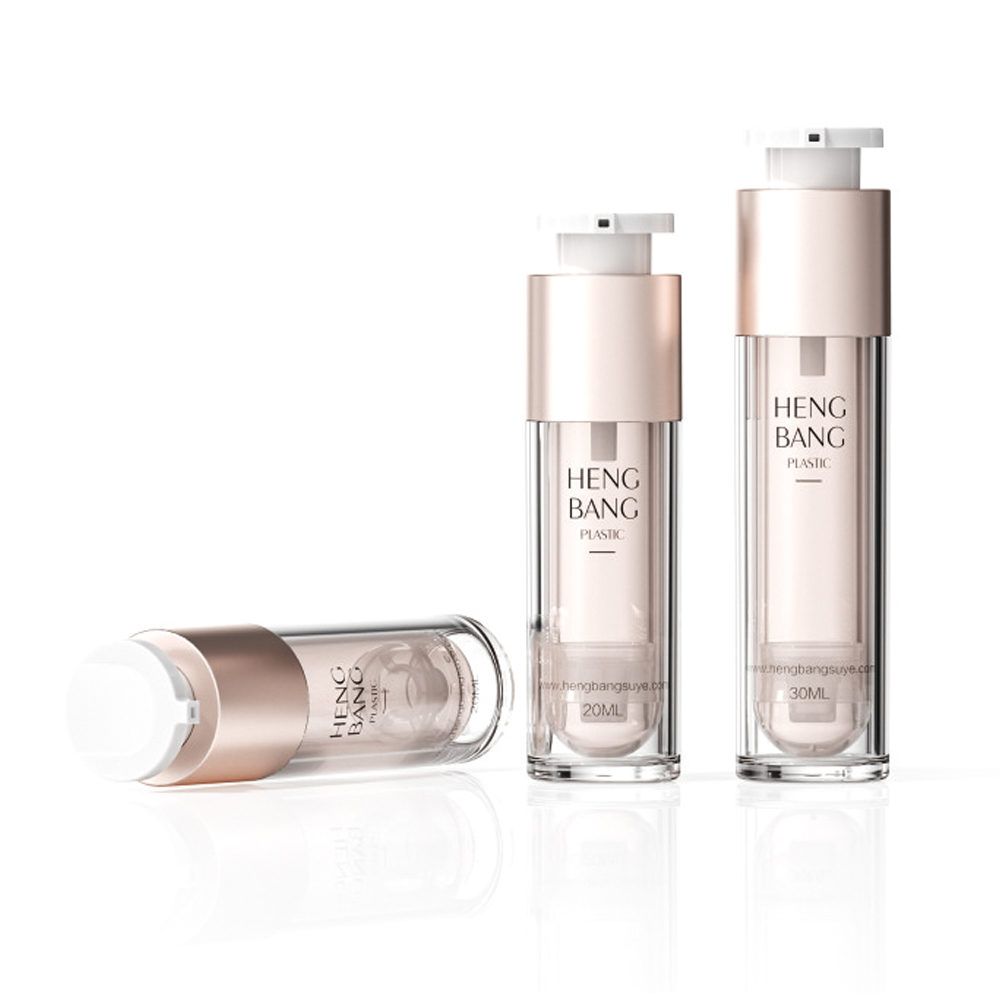
The HB-K006 Plastic Airless Foundation Bottle is designed to answer these packaging requirements through a combination of airless dispensing technology, a clear PETG bottle, a refined rose gold collar, controlled dosage delivery, and flexible capacity options. Available in 20 ml, 30 ml, 35 ml, and 45 ml sizes, it provides a versatile packaging platform for brands developing skincare, makeup, personal care, and beauty products.
Its airless pump system helps reduce unnecessary exposure to air and external contaminants, while the 0.23 cc dosage supports consistent dispensing and helps minimize product waste. The clear bottle offers excellent product visibility, and the rose gold collar creates a premium visual impression suitable for both prestige and professional beauty lines. Combined with customization capabilities and the manufacturing experience of an established plastic packaging producer, the bottle is positioned as a practical alternative to conventional jars, dropper bottles, and standard lotion pumps.
This article examines the bottle’s design, functional advantages, material structure, application potential, manufacturing strengths, customization opportunities, and suitability for modern cosmetic packaging programs.
Cosmetic products often contain ingredients that are sensitive to air, moisture, light, oxidation, or repeated contact with the user’s hands. Even when a formula has been carefully developed, unsuitable packaging may reduce its performance during storage and use. A container must therefore do more than hold a formulation. It should provide an appropriate barrier, dispense the correct quantity, protect the formula from avoidable contamination, and remain attractive throughout the product lifecycle.
Foundation and skincare products create particularly demanding packaging requirements. A foundation may contain pigments, emollients, film-forming ingredients, botanical extracts, active ingredients, and moisturizing agents. A facial lotion or cream may contain natural oils, vitamins, antioxidants, or other components that benefit from reduced exposure to air. A sunscreen or treatment product may require controlled dispensing to support consistent application.
Traditional open-mouth jars can expose the contents whenever the lid is removed. Users may also touch the formulation directly, creating a greater possibility of contamination during repeated use. Conventional bottles with open dip tubes may leave product behind when the contents become low. The dispensing mechanism may also release too much product, making it difficult for users to control application or avoid waste.
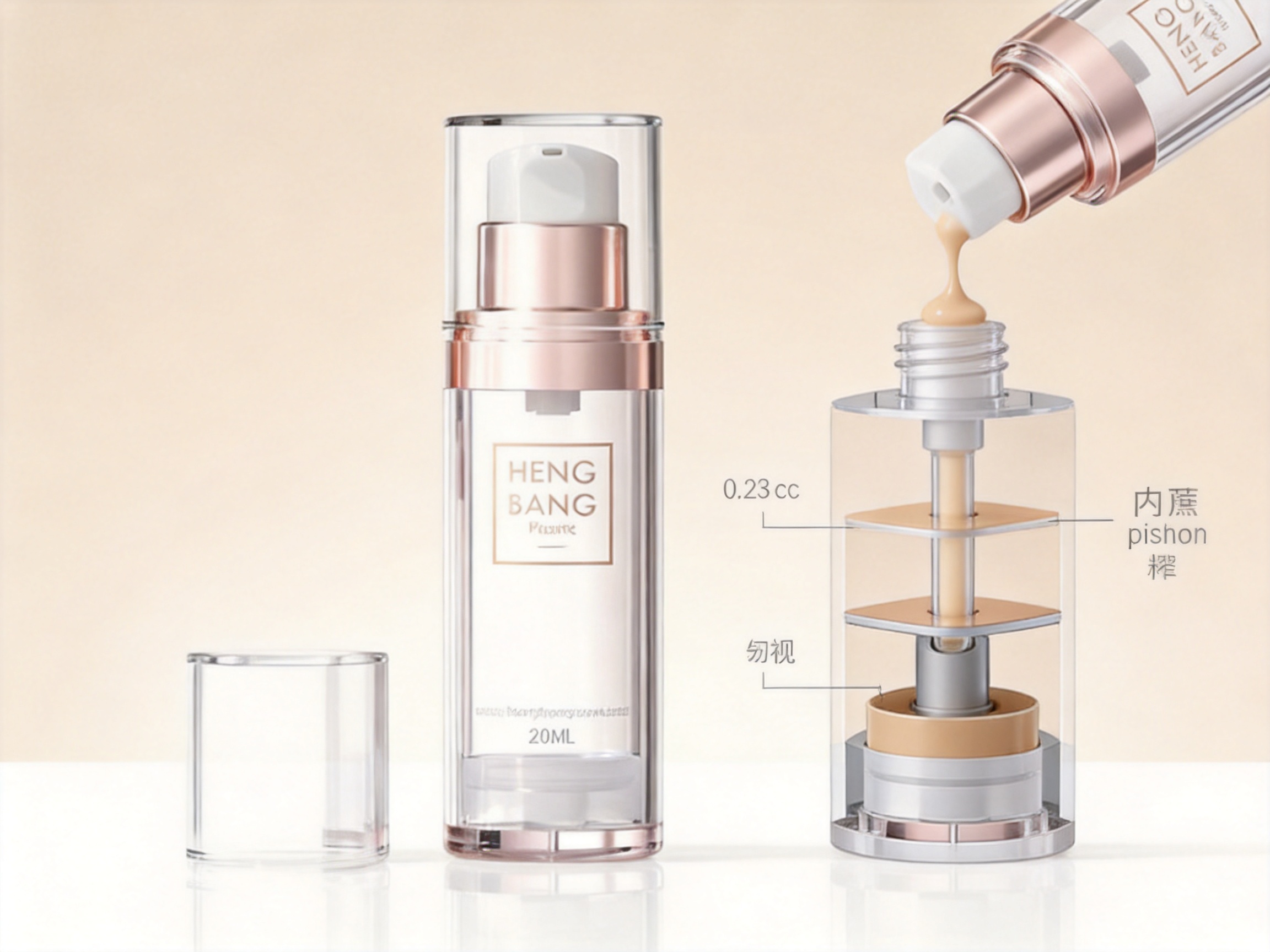
An airless bottle addresses several of these challenges through a sealed pump system and a rising internal component. Instead of relying on a conventional dip tube, the internal structure moves the product upward as the pump is used. This design supports efficient evacuation and can help maintain a cleaner, more controlled dispensing process.
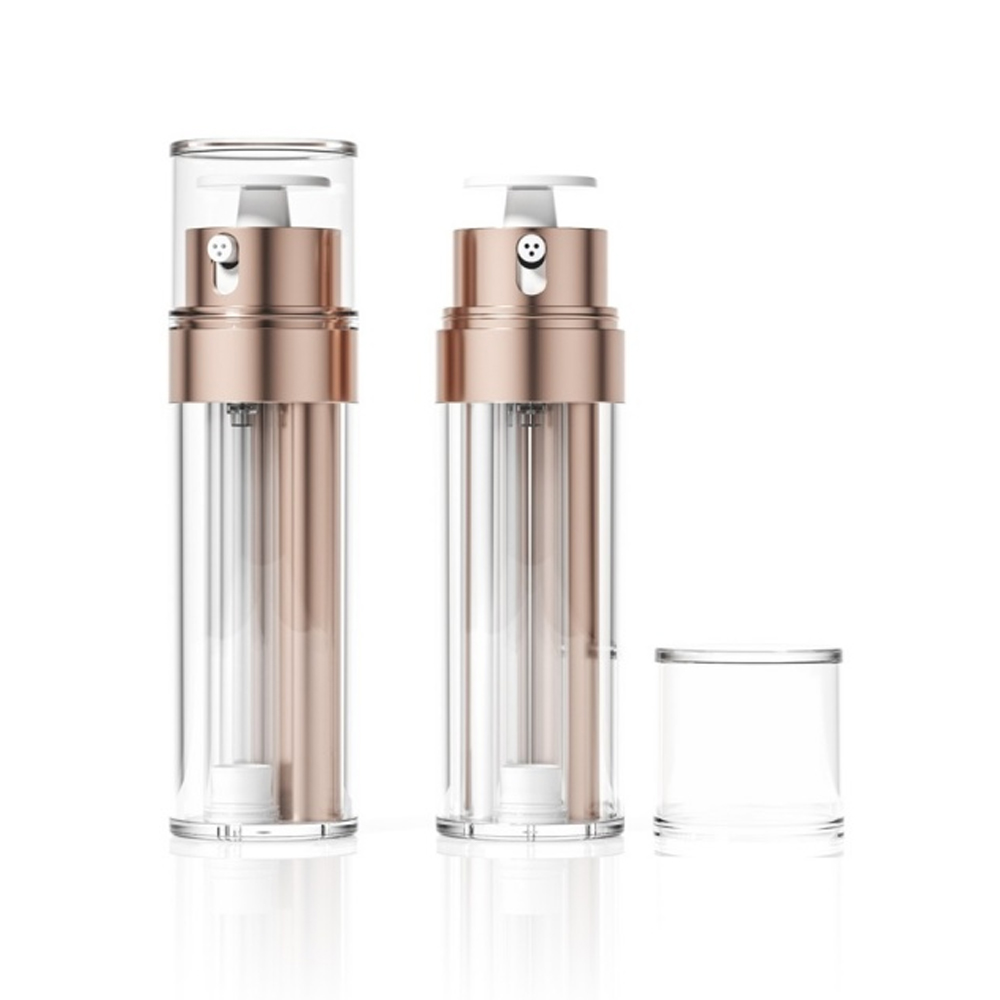
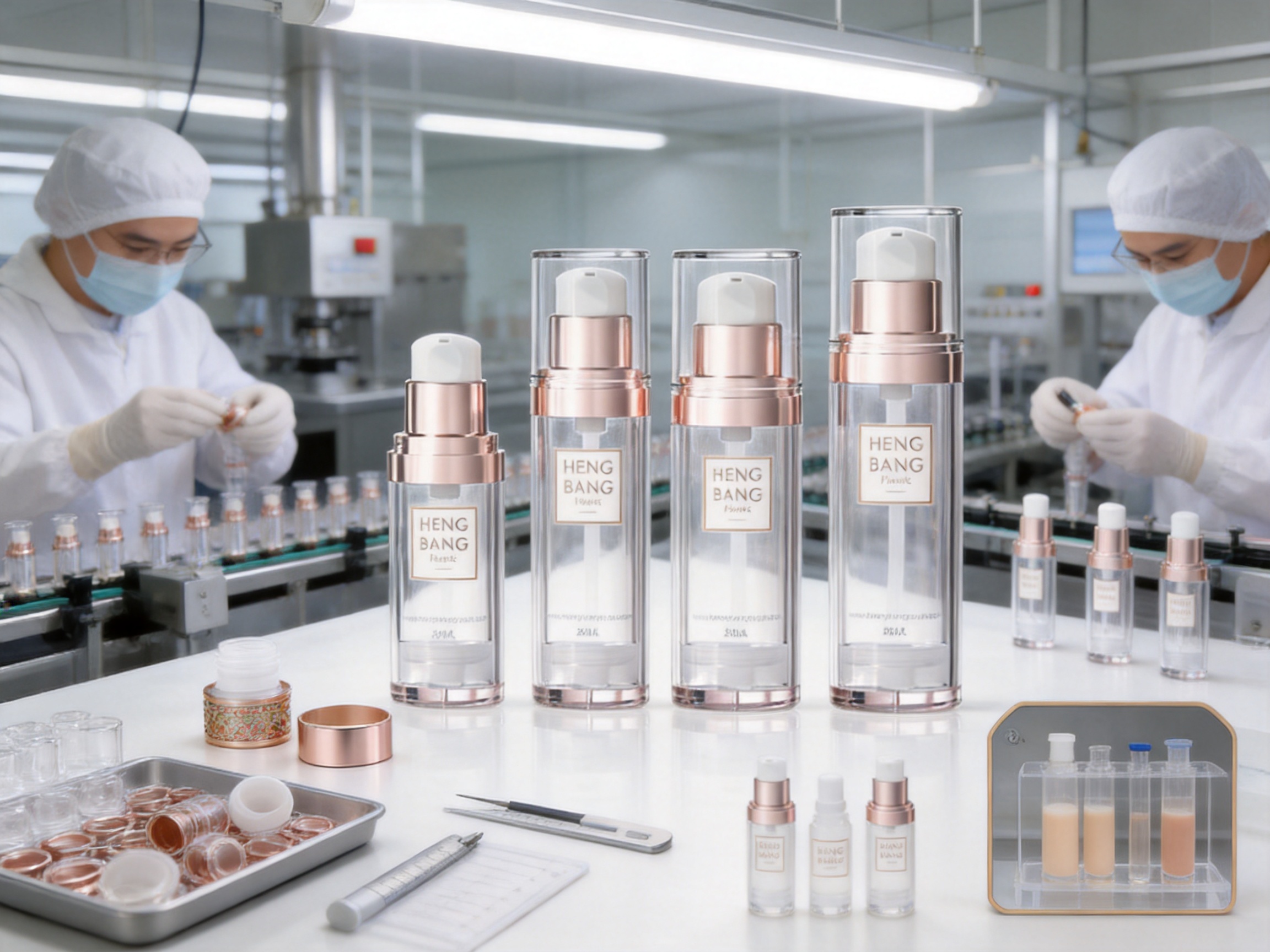
The HB-K006 Plastic Airless Foundation Bottle is a cosmetic packaging container developed for foundations, skincare products, personal care formulas, and related beauty applications. It combines a clear bottle body with an airless pump and a rose gold collar. The result is a package that balances functional protection with premium visual presentation.
The bottle is available in several capacities to support different product concepts and retail formats. The listed options are 20 ml, 30 ml, 35 ml, and 45 ml. These sizes can accommodate compact trial products, travel-friendly items, professional-use products, limited-edition packages, and standard retail offerings.
The bottle is designed with a 0.23 cc dispensing dosage. This controlled output allows brands to create a more predictable user experience. Rather than releasing an excessive amount of product with each pump, the container delivers a measured quantity that can help users apply the formulation gradually and consistently.
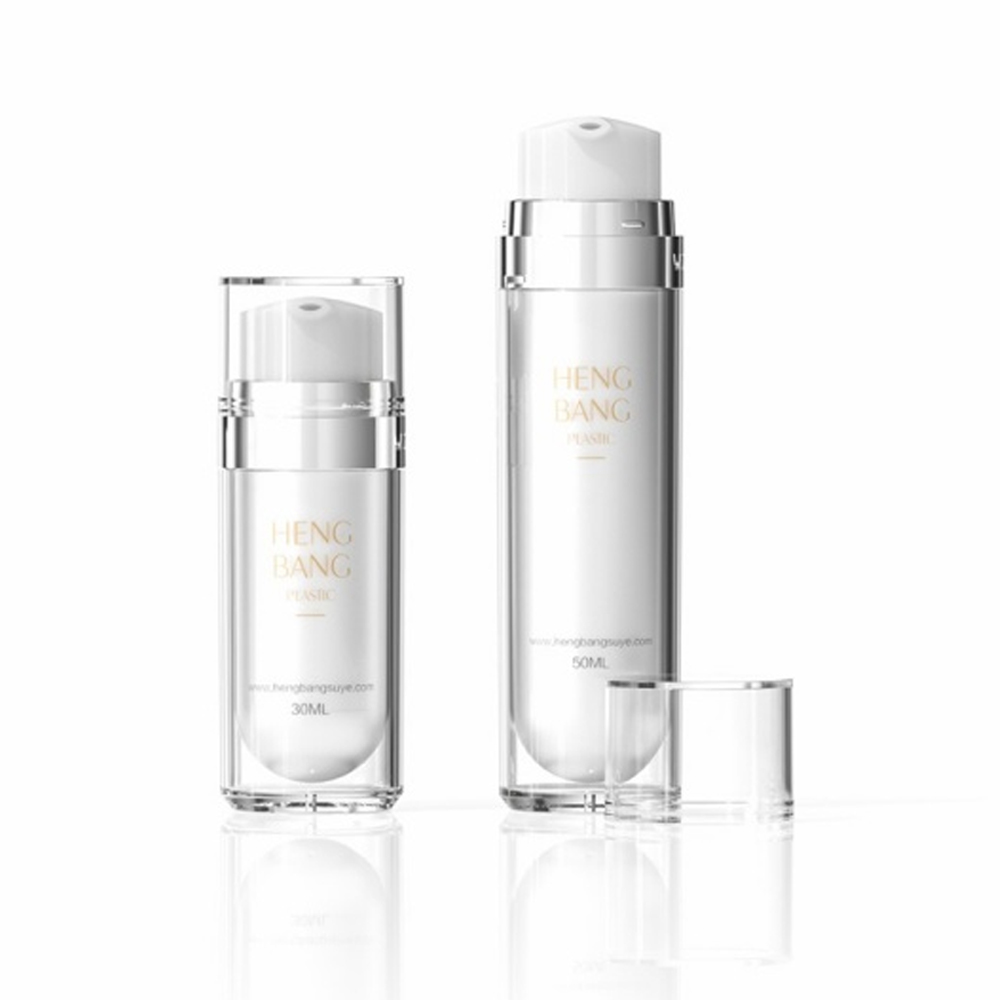
The clear PETG bottle body provides visibility of the formula, fill level, or product color. This can be valuable for foundations and tinted products because the color and texture of the contents can contribute to the package’s shelf appeal. It may also help users recognize when the product is nearly finished, depending on the opacity and color of the formulation.
The rose gold collar adds a decorative accent without requiring the entire package to use metallic materials. This allows the bottle to achieve a refined appearance while maintaining the practical benefits associated with a plastic package. The visual effect can be adapted to skincare, makeup, premium personal care, and professional cosmetic product lines.
Product Feature |
Specification or Benefit |
Product Type |
Plastic airless foundation bottle |
Available Capacities |
20 ml, 30 ml, 35 ml, and 45 ml |
Bottle Material |
PETG |
Pump Material |
PP |
Cap and Collar Material |
MS/ABS structure as specified |
Dispensing Dosage |
0.23 cc per actuation |
Available Heights |
102 mm, 120 mm, 119 mm as listed, and 132 mm |
Available Diameters |
33 mm and 36.5 mm |
Primary Applications |
Foundation, skincare, lotion, serum, cream, sunscreen, and personal care formulas |
The main functional advantage of the HB-K006 is its airless dispensing design. Airless technology is developed to reduce the amount of air that enters the product chamber during normal use. When a consumer presses the pump, the system dispenses the formula through the outlet without requiring an open container or a conventional long dip tube.
This can be especially useful for formulas that are vulnerable to oxidation or contamination. While packaging cannot replace proper formulation, preservation, stability testing, or regulatory compliance, an airless system can create a more controlled environment during consumer use. By limiting unnecessary exposure, it may help brands protect the intended quality of the product throughout its usage period.
The airless structure is also suitable for preservative-free, low-preservative, natural, and sensitive formulations when the package and formula have been properly evaluated together. Natural formulations often contain ingredients that consumers associate with purity and freshness. A sealed dispensing system can support the positioning of these products by reducing direct contact between the formulation and the user.
For active skincare products, airless packaging can also be a practical choice. Products containing antioxidants, botanical extracts, retinoid-related ingredients, vitamins, peptides, or other sensitive components may benefit from carefully selected packaging. The final suitability depends on the complete formulation, compatibility testing, storage conditions, and product claims, but the airless format provides a strong starting point for protection-oriented packaging design.
The pump also helps create a more hygienic user experience. The consumer does not need to insert fingers, spatulas, or other tools into the container. The product is released through the actuator, helping maintain separation between the contents and the user’s hands. This is useful for facial products, where clean application and controlled handling are important to many consumers.
Everyday opening and closing can introduce air and environmental particles into a package. With a conventional jar, the lid must be removed completely, and the entire exposed surface may be accessible during each application. The airless bottle offers a more enclosed dispensing route, helping reduce this type of repeated exposure.
The design does not imply absolute protection against every external factor. Cosmetic brands should still conduct compatibility, stability, microbiological, and transportation testing. However, the sealed pump format is generally better aligned with formulas that require a controlled dispensing environment than an open-mouth jar.
Traditional pump bottles may struggle to dispense the final portion of a thick or viscous formula because a dip tube cannot always reach every area of the container. Airless systems use an internal rising mechanism that pushes the product toward the dispensing outlet. This can improve product evacuation and reduce the amount left unused at the bottom or along the inner wall of the package.
Better evacuation can improve consumer satisfaction and may increase the perceived value of the product. When users can access more of the formulation they purchased, they are less likely to feel that the container contains a significant amount of inaccessible residue.
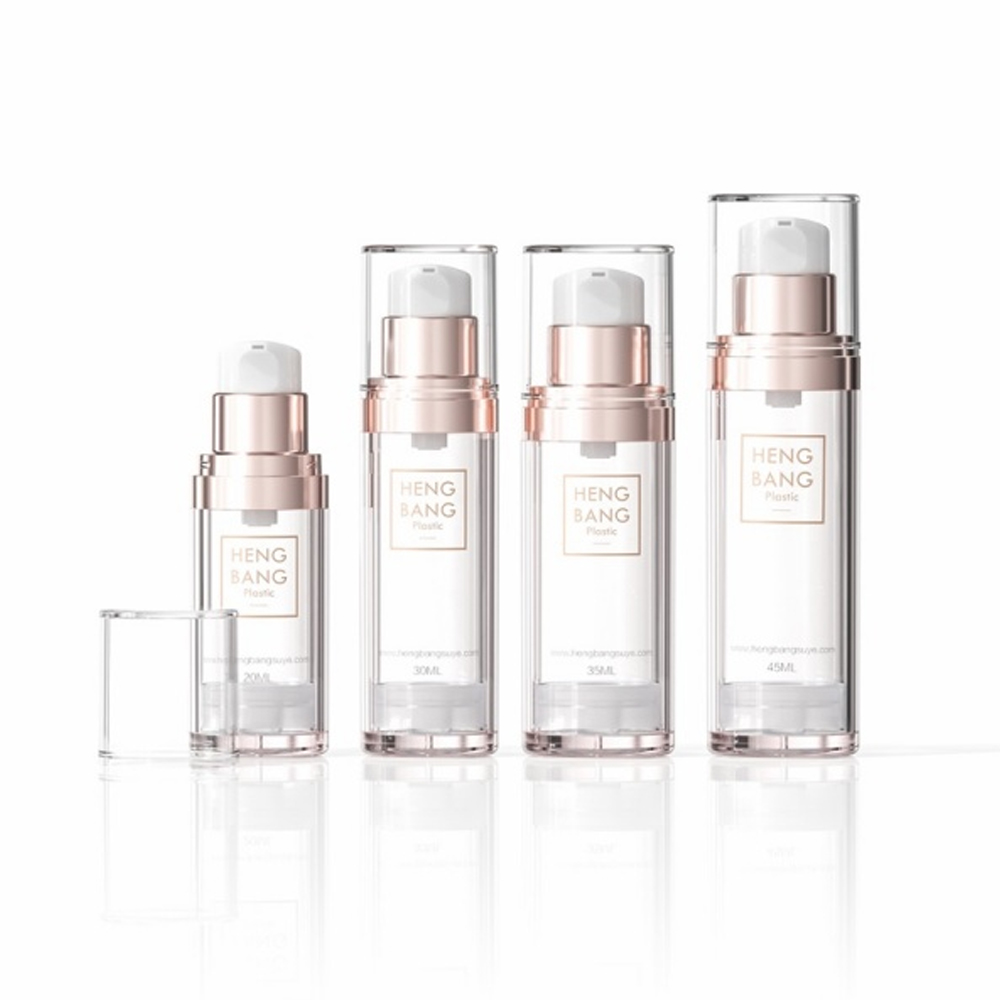
HB-K006 Plastic Airless Foundation Bottle
The HB-K006 provides a 0.23 cc dispensing dosage. This specification is important because the quantity released per actuation influences product application, consumption rate, user convenience, and the overall experience of the package.
For foundation and complexion products, controlled dispensing helps users build coverage gradually. A smaller, measured output allows a consumer to begin with a modest amount and add more if necessary. This approach can support a more natural finish, reduce over-application, and make the product easier to blend.
For skincare lotions, serums, creams, and treatment products, a controlled dosage can help establish a consistent routine. Users can learn how many pumps are appropriate for a particular application, helping reduce guesswork. This consistency may also support clearer communication in product instructions, although the recommended amount must always be determined by the product developer and relevant usage requirements.
A controlled dosage can help reduce waste in several ways. First, it avoids releasing a large amount of product at one time. Second, it allows consumers to use only what is needed for each application. Third, it helps keep the dispensing area cleaner because the pump is less likely to overflow during ordinary use.
Dosage precision is also useful for brand differentiation. Many packaging products appear similar at first glance, but the dispensing experience can strongly influence how consumers evaluate quality. A pump that delivers a stable, predictable amount may communicate engineering control and product reliability.
The 0.23 cc output can be suitable for liquid foundation, lightweight cream foundation, primer, tinted moisturizer, facial serum, eye treatment, lotion, and other products that benefit from measured dispensing. The ideal number of pumps will vary according to formula viscosity, coverage, application area, and consumer instructions.
For thicker formulations, pump performance should be evaluated through repeated-use testing. The formula’s viscosity, particle size, pigment level, oil content, and temperature behavior can affect dispensing performance. Brands should assess the complete filled package rather than evaluating the bottle with water or a low-viscosity substitute alone.
The product information identifies PETG for the bottle, PP for the pump, and an MS/ABS structure for the cap and collar components. Each material contributes different functional and visual characteristics to the overall package.
PETG is commonly used in packaging where clarity, impact resistance, and design flexibility are valued. Its clear appearance allows the bottle to display the formula and fill level. This can be particularly effective for foundation shades, transparent serums, pale lotions, and products with visually attractive textures.
The clear bottle also creates opportunities for decoration. Depending on the brand’s requirements, the surface may support printed graphics, labels, coatings, color treatments, or other decorative methods subject to compatibility and production evaluation. A transparent body can be left uncoated for a clean, modern appearance or combined with selective decoration for a more distinctive identity.
Compared with fragile glass, a plastic PETG bottle can provide a lighter and more impact-resistant format for many distribution environments. Lower weight may support easier handling during manufacturing, filling, transportation, retail display, and consumer use. The exact sustainability and environmental performance must be assessed across the complete package and supply chain, but the material provides practical advantages for brands seeking a plastic packaging solution.
Polypropylene is widely used in cosmetic dispensing components because it offers a useful balance of chemical resistance, processability, and mechanical performance. In the HB-K006, the PP pump forms part of the functional dispensing system. Its role is to support repeated actuation and consistent product delivery.
Pump components require precise molding and assembly because small variations can affect the user experience. The pump must engage properly, return smoothly after actuation, and maintain suitable product flow. Its performance should be evaluated with the intended formula and under expected storage and transportation conditions.
The cap and collar are identified as MS/ABS components. The rose gold collar gives the package a more luxurious appearance and can help the bottle stand out among ordinary plastic containers. A metallic-looking component may create visual associations with premium quality, modern beauty, and refined design.
The decorative collar also provides an opportunity to coordinate the bottle with a brand’s wider packaging family. It can be paired with rose gold labels, foil details, cartons, or other visual elements. When carefully integrated into the design system, the collar can help create a unified appearance across multiple product categories.
Packaging is one of the first points of contact between a consumer and a cosmetic product. Before a product is opened, tested, or reviewed, its appearance influences expectations. The HB-K006 combines a transparent bottle with a rose gold accent to create a presentation that is both visible and decorative.
Product visibility can be especially valuable for complexion cosmetics. A foundation bottle may display the tone, depth, or finish of the formula. While the final shade should be communicated through appropriate labeling and testing, the visible contents can support color recognition and help create a stronger visual connection between the package and the product inside.
For skincare products, clarity can communicate freshness, simplicity, and formulation transparency. A visible lotion or serum may allow consumers to observe texture, color, or remaining quantity. This can be particularly useful when the brand wants the formula itself to contribute to the visual identity of the product.
The rose gold collar provides contrast against the clear body. This contrast can make the container more noticeable on a retail shelf or in online product photography. The design can fit premium skincare collections, modern makeup ranges, salon products, boutique brands, and private-label beauty programs.
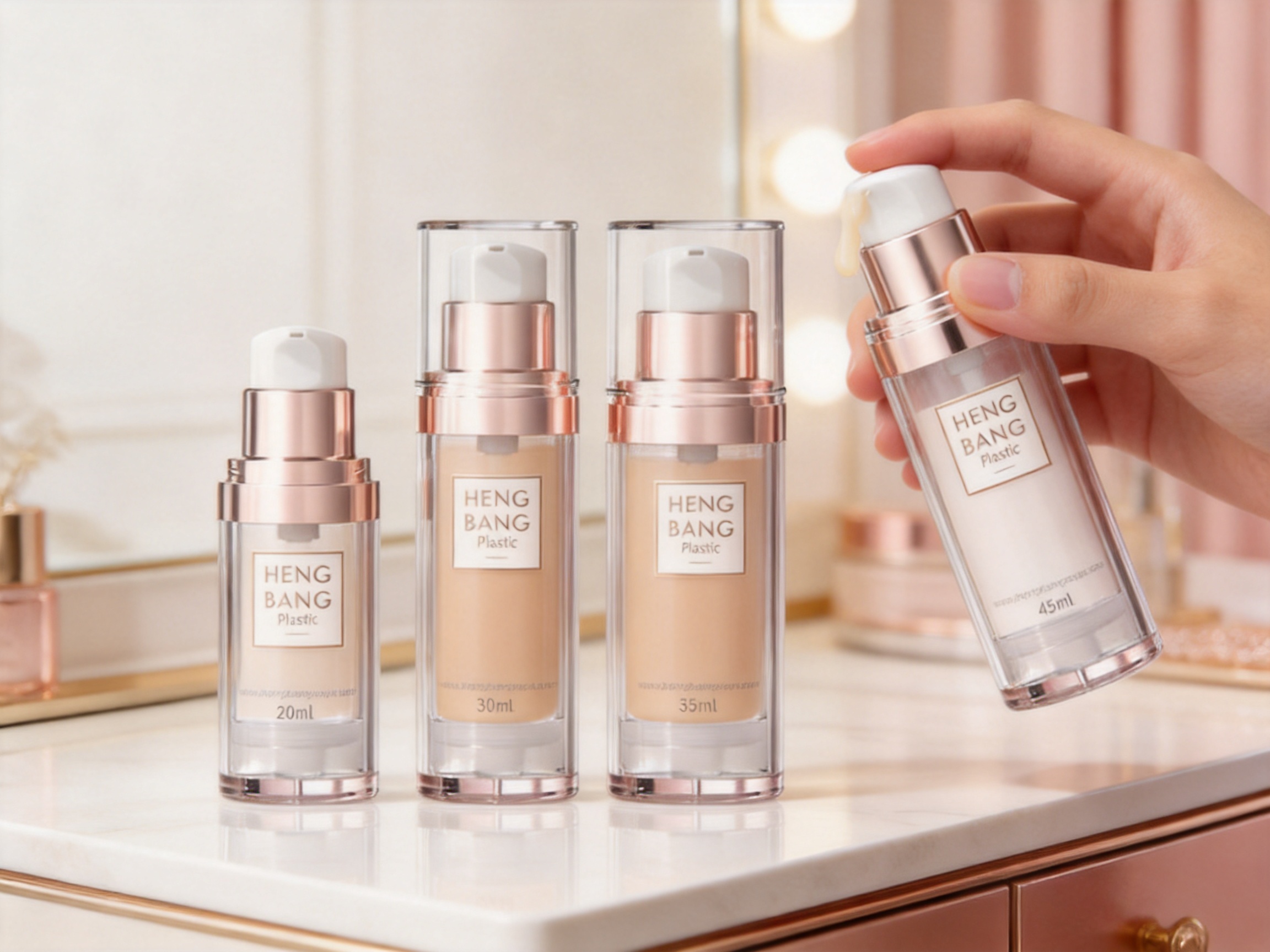
Visual appeal is not limited to retail shelves. Cosmetic packages frequently appear in social media content, tutorials, vanity displays, bathrooms, professional studios, and influencer photography. A well-proportioned bottle with a polished decorative component can support brand presentation across these environments.
The availability of four listed capacities gives brands more freedom when planning product lines. A 20 ml bottle may be appropriate for travel formats, trial sizes, limited releases, or products designed for short usage cycles. It may also be useful for premium formulas sold at a higher unit value.
The 30 ml option is a familiar format for many complexion and facial care products. It can provide a practical balance between portability, shelf presence, and product quantity. This size may suit foundation, primer, serum, or targeted treatment products.
The 35 ml option offers additional filling volume while maintaining a relatively compact format. It may be considered for formulas where the brand wants to provide more product without moving to a larger package.
The 45 ml option can support products intended for longer use or higher-frequency application. It may be appropriate for lotions, primers, foundation products, body-care treatments, or professional-use formulas that require a greater quantity.
Capacity selection should be based on formula density, recommended usage, target market, retail price, filling equipment, shipping requirements, and the desired visual proportions of the finished package. The bottle’s height and diameter may vary according to the selected size, and brands should confirm technical drawings before finalizing artwork or filling-line settings.
The listed heights include 102 mm, 120 mm, 119 mm as provided in the product information, and 132 mm. The diameter options include 33 mm and 36.5 mm. Because the source specification presents multiple dimensions across the available capacities, final dimensions should be confirmed with the manufacturer for the selected configuration.
Dimensional flexibility can help brands match the package to different retail environments. A taller, slimmer format may create an elegant appearance and use vertical shelf space efficiently. A shorter format may provide a more compact impression and be easier to carry in a cosmetic bag. Diameter influences both visual balance and hand comfort during use.
Ergonomics should be considered alongside appearance. The bottle must be easy to hold, stable when placed on a counter, and comfortable to operate with one hand. The pump should be positioned so users can press it without excessive force. The cap should protect the actuator during transport while remaining easy to remove and replace.
Package development also involves the relationship between bottle dimensions and filling equipment. Brands should verify the filling method, nozzle clearance, pump insertion process, crimping or assembly requirements, and quality-control checkpoints. Early technical coordination can reduce delays during mass production.
The HB-K006 offers several advantages over common packaging formats, although the best choice always depends on the formula and product positioning.
Open-mouth jars offer a familiar and often economical format, but they require the lid to be removed during every use. The formulation may be exposed to air, bathroom humidity, dust, and direct contact with fingers. In contrast, an airless bottle offers a more enclosed dispensing route and reduces the need for direct contact with the contents.
The pump format may also create a more hygienic and convenient user experience. Consumers can dispense the product without using a spatula or touching the formula. This is particularly relevant for facial products and formulas marketed around cleanliness or sensitive skin.
Conventional lotion pumps are effective for many products, but their dip tubes may leave residue behind when the product level becomes low. An airless system can help push the formulation toward the outlet and may improve overall product evacuation.
The HB-K006 also provides a measured 0.23 cc dosage. While conventional pumps can offer controlled dispensing, performance may vary depending on the pump design and formula. A clearly specified output gives brands a defined starting point for application and testing.
Glass can communicate luxury and provide strong barrier properties for selected formulations, but it is heavier and more vulnerable to breakage than many plastic formats. The plastic construction of the HB-K006 can support lighter handling and reduce concerns associated with breakage during ordinary logistics and consumer use.
The PETG body also supports a transparent appearance without the weight of glass. For brands seeking a premium visual style with a more practical plastic structure, the clear bottle and rose gold collar provide a balanced option.
Squeeze tubes can be useful for creams and lotions, but they may deliver less precise quantities and can become less attractive as the package is used. The airless bottle maintains a structured appearance and offers pump-based dispensing. It may therefore be better suited to products intended for display on a vanity, retail counter, or premium skincare shelf.
The HB-K006 is primarily described as a plastic airless foundation bottle, but its design can support a broader range of cosmetic and personal care applications.
Foundation is one of the most direct applications for this package. The controlled dosage can support gradual coverage, while the clear body may display the shade and formula. The airless format can also help protect the product during repeated daily use.
Primers and tinted moisturizers often require smooth, measured application over the face. A 0.23 cc dosage can provide users with a controllable starting quantity. The available capacities allow brands to select a size according to usage frequency and product positioning.
Many facial serums contain active ingredients that benefit from carefully selected packaging. An airless bottle may help reduce unnecessary exposure during use, while the pump offers a cleaner alternative to direct contact or an open dropper design.
Lightweight lotions and creams can be packaged in pump bottles for convenient daily use. The larger 35 ml and 45 ml options may be considered for products requiring more frequent or generous application.
Sunscreen, after-sun care, brightening products, and other treatment formulas may benefit from controlled dispensing. The final packaging choice must be validated for formula compatibility, regulatory requirements, and recommended application quantity. The bottle provides a practical platform for brands developing controlled-use treatment products.
Targeted products are often used in small quantities, making dosage control particularly valuable. The compact capacities may suit eye treatments, concentrated serums, spot-care products, and other formulas where each application requires a measured amount.
Customization is an important part of cosmetic packaging development. A standard bottle can become a recognizable brand asset through the combination of color, surface treatment, decoration, labeling, printing, and secondary packaging.
The HB-K006’s clear body allows brands to decide how much of the formula remains visible. A transparent appearance can be combined with printed text, partial coverage, gradient decoration, color coating, or a clear label. The rose gold collar can serve as a consistent visual feature across a product family.
Brands may also coordinate the cap, collar, carton, label, and outer shipping presentation. For example, a skincare collection could use the same bottle shape in different capacities while changing the label color according to product function. A foundation collection could use shade-specific decoration while retaining the same premium collar.
Customization should be planned with technical considerations in mind. Artwork must account for the usable decoration area, curvature, component tolerances, and surface finish. Ink adhesion, rub resistance, chemical resistance, and compatibility with the formula should be evaluated. Samples should be reviewed under retail lighting and photographed before mass production approval.
The decorative rose gold collar creates a high-end impression without requiring a complex multilayer bottle structure. This may help brands achieve a premium aesthetic while maintaining a practical plastic package. The balance between appearance and manufacturing efficiency is important for companies that want strong shelf appeal without excessive packaging complexity.
A relatively straightforward package can also simplify inventory planning. When the same bottle platform supports multiple formulas or capacities, brands may be able to develop a more consistent packaging family. The exact level of commonality depends on the product line and production plan, but standardization can support more efficient development.
The manufacturer behind the product was established in 2006 and operates with a building area of approximately 35,000 square meters and more than 300 employees. These resources indicate an established production organization with the scale to support ongoing cosmetic packaging programs.
The company specializes in plastic packaging for cosmetics and skincare products. Its capabilities include design and development services, allowing customers to work with a supplier that understands both the visual and technical requirements of cosmetic containers.
For brands, supplier capability is important because packaging development involves more than selecting a catalog item. It may require component matching, mold evaluation, decoration development, filling-line testing, quality inspection, production scheduling, and after-sales coordination. A supplier with experience in this sector can help identify potential issues earlier in the process.
Design and development support can help transform a packaging concept into a manufacturable product. The supplier may assist with structural evaluation, component selection, dimensional confirmation, material coordination, and appearance development. This is particularly useful when a brand wants customized decoration or needs to adapt the package to a specific formulation.
Development work should include sample production and functional testing. The bottle must be assessed for pump performance, leakage, actuation force, dosage consistency, component fit, cap retention, decoration quality, and appearance. Formula compatibility and stability testing should also be conducted by the brand or an appropriately qualified laboratory.
The company has passed ISO9001:2015 and ISO14001:2015 certifications. ISO9001:2015 is associated with quality management systems, while ISO14001:2015 concerns environmental management systems. Certifications do not eliminate the need for product-specific quality control, but they indicate that the organization has established management frameworks related to quality and environmental practices.
A structured quality system can support production consistency through documented procedures, inspection standards, corrective actions, supplier management, and process monitoring. For cosmetic packaging, these practices are valuable because small component variations can affect assembly, appearance, and dispensing function.
An environmental management system can help a manufacturer identify and manage environmental aspects of its operations. Brands increasingly consider environmental performance when selecting packaging suppliers, although sustainability decisions should be based on verified information about materials, energy use, waste, transport, recyclability, and end-of-life conditions.
The company owns multiple invention patents and was awarded recognition as a Ningbo High-Tech Enterprise in 2021. These achievements suggest an emphasis on technical development and innovation. For packaging customers, technical experience may support more effective problem-solving in areas such as dispensing systems, structural design, mold development, and production optimization.
Innovation in cosmetic packaging does not always require a completely new bottle shape. It may involve improving dosage control, enhancing pump reliability, refining component fit, simplifying assembly, improving decoration, or developing more efficient production methods. These incremental improvements can have a meaningful impact on the final user experience and production performance.
A high-quality cosmetic bottle requires coordination across material preparation, molding, component production, decoration, assembly, inspection, and packaging. Although the exact internal production sequence may vary, several general stages are important for a product such as the HB-K006.
The selected PETG, PP, MS, and ABS materials must be managed according to the requirements of the relevant components. Material consistency influences color, transparency, strength, dimensional stability, and surface quality. Resin handling and storage should be controlled to reduce avoidable variation during production.
Plastic components are generally formed through controlled molding processes. Tool temperature, injection pressure, cooling conditions, cycle time, and mold maintenance can influence the final appearance and dimensions. For a clear bottle, surface quality is particularly important because scratches, haze, flow marks, or uneven walls may affect the visual presentation.
Pump components also require precise molding. The internal parts must fit together correctly and operate smoothly. Dimensional control is important because even small deviations can affect sealing, actuation, dosage, or product evacuation.
The rose gold collar and other visible components may require color control or decorative finishing. Appearance should be checked for consistency across production batches. Depending on the selected customization method, the bottle may also undergo printing, labeling, coating, or other surface treatment.
Decoration quality should be evaluated for adhesion, alignment, color accuracy, abrasion resistance, and chemical resistance. Cosmetic packaging may be exposed to oils, alcohol-based products, creams, water, and repeated handling, so the finish must be suitable for the intended environment.
Assembly brings the bottle, pump, cap, collar, and internal components together. The assembly process must ensure that each part is correctly positioned and securely fitted. Improper assembly may lead to leakage, loose components, inconsistent dispensing, or cap misalignment.
Automated or semi-automated assembly can support consistency and production efficiency, while manual inspection may be used for appearance and functional checks. The appropriate approach depends on order volume, component design, and quality requirements.
Inspection may include visual checks, dimensional measurement, component-fit testing, leakage testing, pump-actuation testing, dosage checks, and packaging cleanliness verification. Sampling plans should be defined according to the customer’s quality standards and production requirements.
Filled-package testing is especially important. An empty pump may operate correctly while a finished formula behaves differently. The brand should test the actual product at different temperatures and storage intervals to verify that the package remains functional throughout the intended shelf life.
Cosmetic packaging must be evaluated together with the formulation. No container should be assumed to be universally compatible with every product. Formula ingredients can interact with plastics, seals, decorative coatings, and pump components in different ways.
Compatibility testing may examine changes in color, odor, viscosity, weight, leakage, deformation, stress cracking, swelling, component brittleness, and pump performance. The product may be stored under room temperature, elevated temperature, low temperature, humidity, and light conditions as appropriate for the product category.
Repeated dispensing tests can assess how the pump performs over the expected number of uses. The test should consider priming, dose consistency, actuation force, recovery, leakage, and the ability to dispense the remaining product near the end of the package.
Transportation simulation may also be necessary. Vibration, compression, impact, temperature changes, and altitude conditions can affect cosmetic packaging during shipment. The cap must remain secure, the pump must remain protected, and the bottle must resist damage under the intended distribution conditions.
For foundation and pigmented formulas, testing should consider whether pigments settle, clog the pump, or affect dosage consistency. For formulas containing oils, solvents, acids, or active ingredients, the materials and decorative finishes should be evaluated for chemical resistance.
Plastic packaging decisions should consider the full lifecycle of the product rather than focusing on one attribute alone. Relevant factors include material quantity, manufacturing energy, transportation weight, product protection, product waste, decoration, recyclability, and disposal infrastructure.
The PETG bottle offers a lightweight plastic format that may reduce transportation weight compared with heavier alternatives. The airless structure may also help consumers use more of the formulation, potentially reducing product waste. However, the sustainability profile of the complete package depends on the final material combination, decorative components, local recycling systems, and end-of-life handling.
Brands should communicate environmental claims carefully and support them with appropriate evidence. They should also consider whether the package can be separated into components, whether local recycling facilities accept the materials, and whether decoration affects recovery. Design choices should balance formula protection, consumer safety, performance, aesthetics, and environmental objectives.
The manufacturer’s ISO14001:2015 certification indicates the presence of an environmental management framework. Brands may request additional information about material specifications, production practices, waste management, and available packaging options when evaluating sustainability goals.
A packaging supplier’s ability to provide multiple capacities and development support can simplify procurement for cosmetic brands. Instead of sourcing every component from a different supplier, a brand may be able to establish a consistent relationship for bottle development, decoration coordination, and production planning.
Product consistency is important when a brand sells across multiple regions or launches several related products. A repeatable bottle platform can make it easier to maintain a recognizable identity while adapting the contents, labels, colors, or capacities.
The manufacturer’s location in Yuyao City, Zhejiang Province, places the production operation within a major Chinese manufacturing region. China’s established plastics and cosmetic packaging supply chains can provide access to material suppliers, mold makers, decoration services, logistics providers, and technical labor. The effectiveness of any supply chain depends on planning, communication, quality controls, and order management.
For international customers, clear specifications are essential. Purchase documentation should define material requirements, dimensions, dosage, color standards, decoration tolerances, packaging quantities, inspection procedures, and delivery expectations. Samples should be approved before mass production, and changes should be documented through a formal process.
The HB-K006 can serve as a primary package for a focused product or as part of a broader packaging family. A makeup brand may use it for foundation, primer, and tinted complexion products. A skincare brand may use different capacities for serum, lotion, cream, and treatment products.
Consistency can be created through common visual features such as the clear body, rose gold collar, typography, label proportions, or carton design. Product differentiation can then be achieved through shade names, colored labels, cap treatments, or formula-specific graphics.
A brand may also use capacity to communicate product positioning. A smaller bottle can be presented as a travel, trial, or concentrated format, while a larger version can be positioned for regular or professional use. The packaging should accurately reflect the product quantity and intended application instructions.
Online presentation should be considered from the beginning. The clear body and metallic collar can photograph well under controlled lighting, but reflections and transparent surfaces require careful product photography. Artwork should remain legible in thumbnail images, and the package should be recognizable when shown in a short video or social media post.
A successful packaging project benefits from a structured workflow.
Before selecting the final package, the brand should document the formula’s viscosity, pH, solvent content, oil content, pigments, active ingredients, preservative system, filling temperature, and expected storage conditions.
The brand should compare the 20 ml, 30 ml, 35 ml, and 45 ml options according to recommended dosage, usage frequency, retail price, target consumer, and desired package proportions. The final height and diameter should be confirmed with technical drawings.
Samples should be checked for appearance, transparency, component fit, pump actuation, cap security, dosage, stability, and user comfort. If decoration is required, decorated samples should be evaluated rather than relying only on digital artwork.
The intended formula should be filled into the actual bottle and tested under relevant conditions. Testing should include repeated dispensing and observation of the package and formula over time.
All labels, printing, coatings, collar colors, and secondary packaging should be reviewed together. Color standards should be documented to support batch-to-batch consistency.
The purchase agreement should identify the approved sample, acceptable quality limits, inspection method, packaging configuration, delivery schedule, and procedures for managing nonconforming products.
The first mass-production batch should receive additional attention. Brands should review production samples, confirm filling-line compatibility, verify the dispensing experience, and record any improvements for subsequent orders.
The HB-K006 is designed primarily as a plastic airless foundation bottle. It can also be considered for lotions, serums, creams, primers, tinted moisturizers, sunscreens, treatment products, and other skincare or personal care formulas that are suitable for airless dispensing.
The listed capacity options are 20 ml, 30 ml, 35 ml, and 45 ml. Brands should select the size according to formula usage, target market, product positioning, and filling requirements.
The specified dispensing dosage is 0.23 cc per actuation. Actual performance should be verified with the intended formula because viscosity, pigments, temperature, and other formulation characteristics can influence dispensing behavior.
The bottle is made from PETG, the pump is made from PP, and the cap and collar use the listed MS/ABS material structure. Final material specifications should be confirmed during product development and documented in the purchasing agreement.
An airless bottle offers a more enclosed dispensing system, reduces the need for direct contact with the formula, and may help limit unnecessary exposure during daily use. It may also improve product evacuation compared with some conventional jars or pump bottles.
The airless format may be suitable for preservative-free or low-preservative formulations, but suitability cannot be guaranteed solely by the package design. The complete formula and package must undergo appropriate microbiological, compatibility, stability, and regulatory evaluation.
The product information states that customized appearance is available. Potential customization may include decoration, labeling, color coordination, surface treatment, and secondary packaging. The available methods, minimum order quantities, and technical limitations should be confirmed with the manufacturer.
It may be suitable for liquid or cream foundation, but pigmented formulas require specific pump testing. Brands should evaluate whether pigments settle, clog the dispensing path, alter dosage, or affect long-term package compatibility.
The listed heights are 102 mm, 120 mm, 119 mm as provided in the product specification, and 132 mm. The listed diameters are 33 mm and 36.5 mm. Exact dimensions depend on the selected capacity and configuration and should be confirmed through technical drawings.
The manufacturer has passed ISO9001:2015 and ISO14001:2015 certifications. These relate to quality management and environmental management systems. Product-specific inspections and formula compatibility testing remain necessary for each packaging project.
Brands should test appearance, dimensions, pump function, dosage, leakage, cap fit, decoration durability, formula compatibility, stability, repeated dispensing, transportation resistance, and filling-line performance. Testing should use the actual formula and final decorated package whenever possible.
The HB-K006 Plastic Airless Foundation Bottle combines practical dispensing performance with a premium cosmetic appearance. Its airless structure helps reduce unnecessary exposure during use, while the 0.23 cc dosage provides measured and repeatable product delivery. The PETG bottle offers clear presentation, and the rose gold collar adds a refined visual accent suitable for modern beauty and skincare brands.
The range of 20 ml, 30 ml, 35 ml, and 45 ml capacities gives brands flexibility across different product concepts, usage patterns, and retail strategies. The package can support foundation, primer, serum, lotion, cream, sunscreen, and other compatible formulations. Compared with open-mouth jars, ordinary lotion pumps, glass containers, and squeeze tubes, it offers a strong combination of hygiene-oriented dispensing, product visibility, controlled application, and shelf appeal.
Its value is further supported by the manufacturer’s experience in cosmetic plastic packaging, design and development capabilities, production scale, quality and environmental management certifications, technical recognition, and patent portfolio. These strengths can help brands move from an initial packaging concept to a stable, customized, and commercially suitable finished product.
As with all cosmetic packaging, the final decision should be based on complete formula compatibility testing, stability evaluation, filling-line trials, decoration approval, and quality inspection. When properly developed and matched with the intended formula, the HB-K006 provides a versatile packaging platform for brands seeking a professional, attractive, and performance-focused airless bottle.
1. ISO 9001:2015, Quality Management Systems — Requirements.
2. ISO 14001:2015, Environmental Management Systems — Requirements with Guidance for Use.
3. General principles of cosmetic packaging compatibility, stability testing, and dispensing-system evaluation.
4. Technical product information for the HB-K006 Plastic Airless Foundation Bottle.
5. General manufacturing principles for injection-molded PETG, PP, ABS, and metal-plated or metallic-finish cosmetic packaging components.
6. Cosmetic product development practices concerning dosage control, formula protection, contamination reduction, and consumer-use testing.


Copyright © Yuyao Hengbang Plastic Co., Ltd.
All Rights Reserved.
 Wholesale Plastic Cosmetic Packaging Manufacturers