English
 中文简体
中文简体
News
Home > Author > Zhang Yuxin — Plastic Cosmetic Packaging Sales Representative > Double-Wall Plastic Acrylic Cream Jar: A Premium Packaging Solution for Modern Skincare

 2026.09.06
 Zhang Yuxin — Plastic Cosmetic Packaging Sales Representative
Content
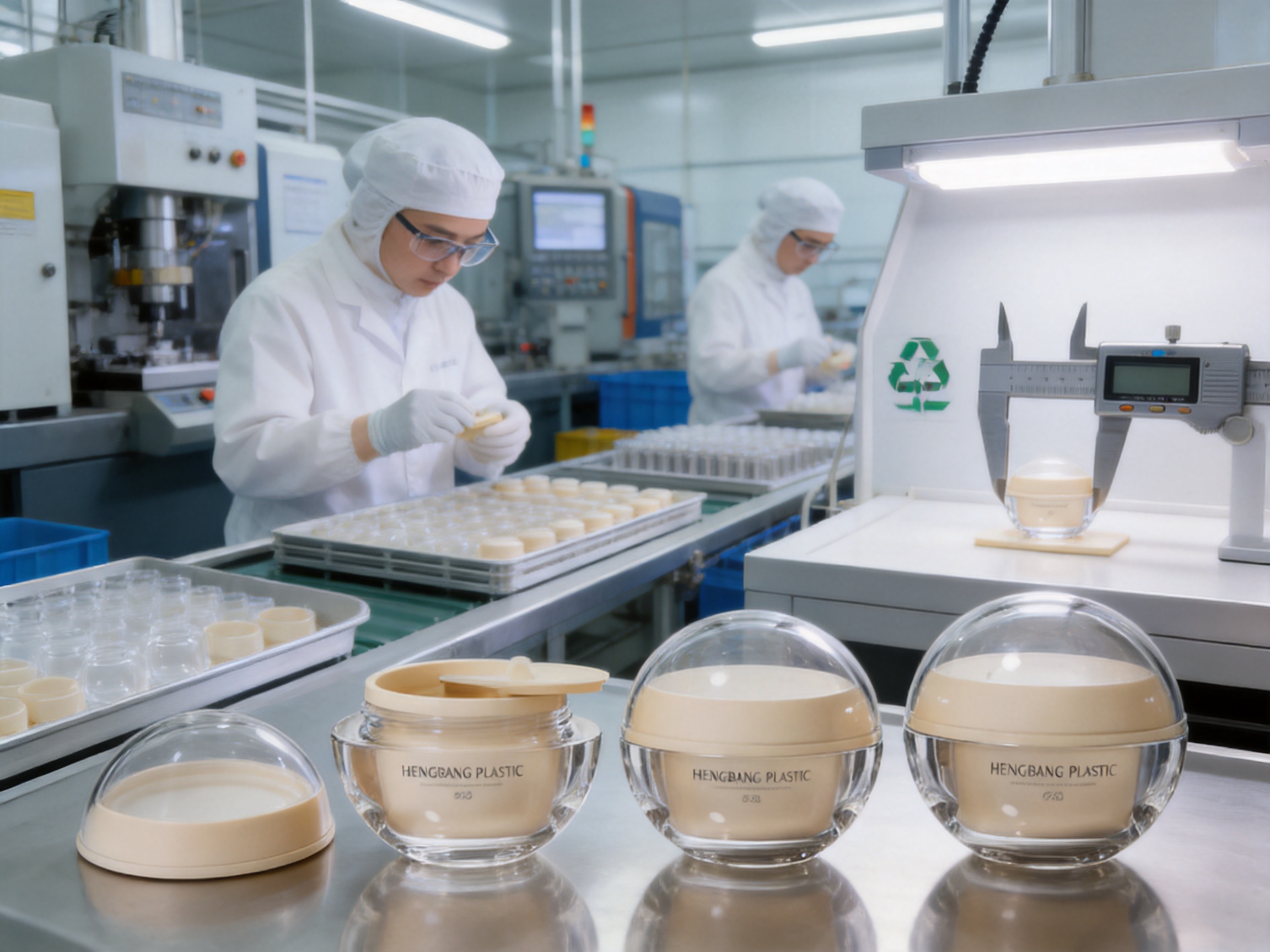
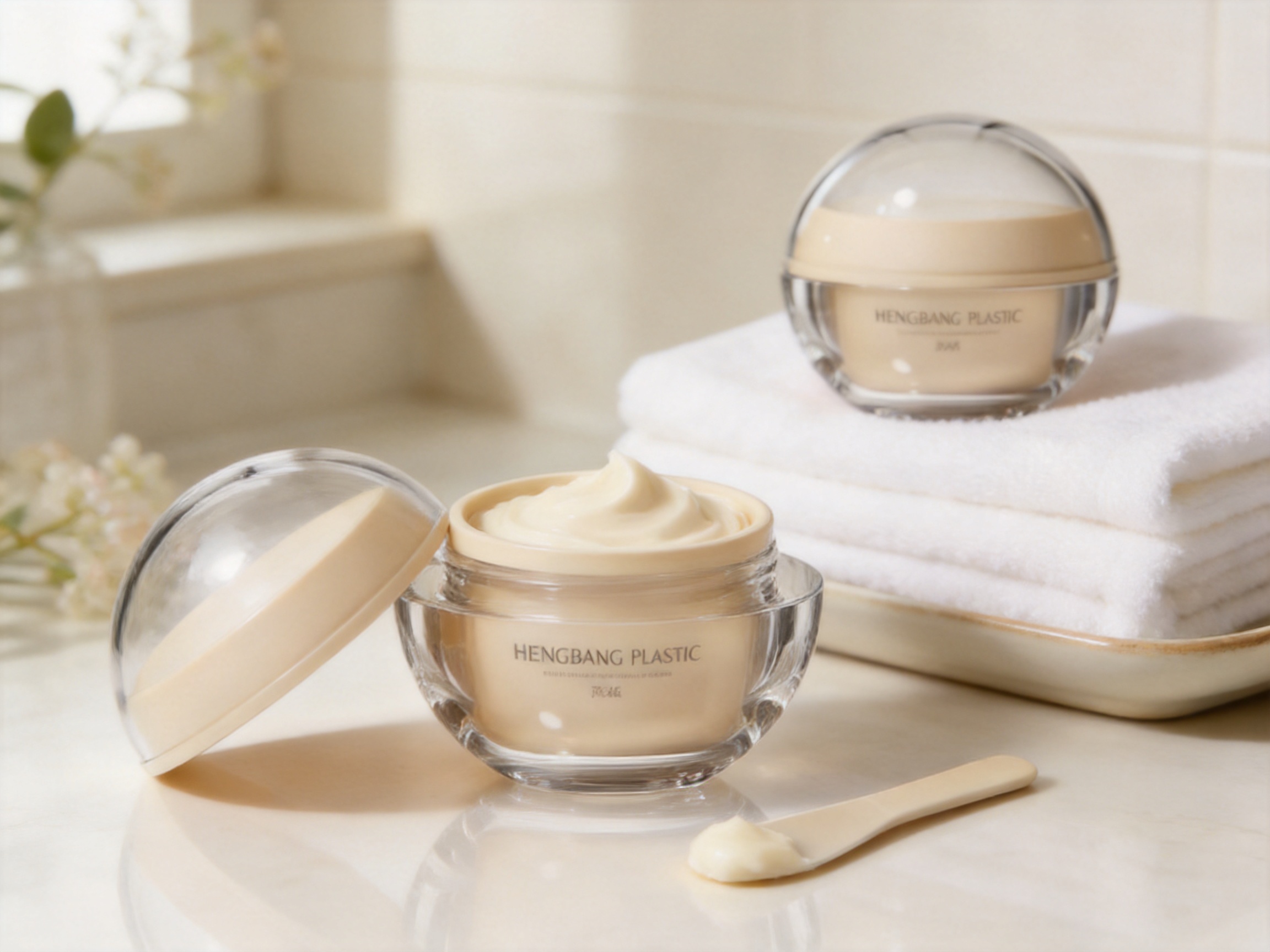
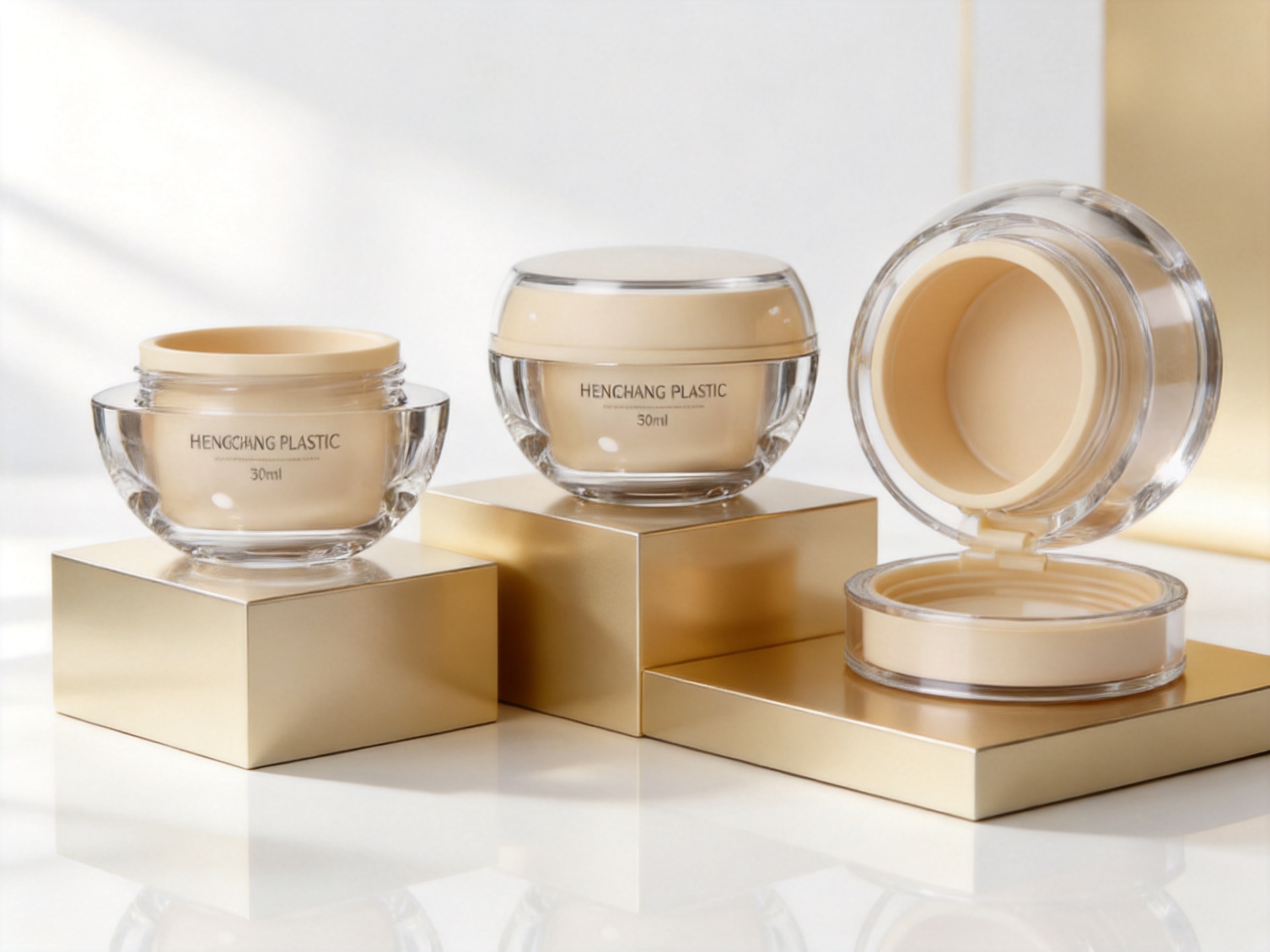
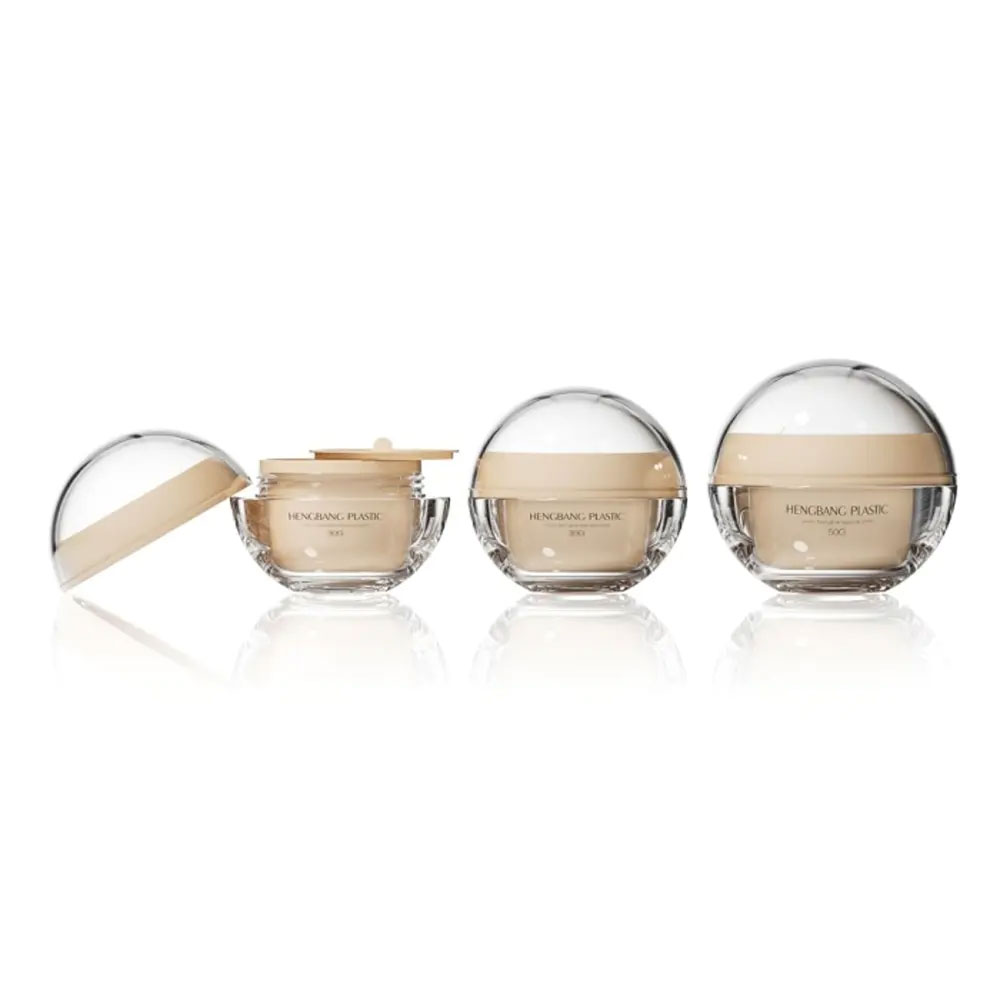
HB-G002 Double Wall Plastic Acrylic Body Cream Jar
In the skincare and cosmetics market, packaging is more than a container. It is part of the product experience, a visible expression of brand quality, and an important factor in how consumers evaluate a formula before making a purchase. A well-designed jar must protect its contents, support convenient daily use, communicate quality, and remain attractive throughout the product’s service life. The HB-G002 Double Wall Plastic Acrylic Body Cream Jar is designed to address these requirements through a combination of elegant geometry, durable plastic construction, practical dispensing features, and a premium visual appearance.
Created for skincare and cosmetic applications, the HB-G002 uses a double-wall structure and a spherical acrylic form to deliver a distinctive balance of appearance and function. Its high-transparency construction allows consumers to see the product inside, while the smooth outer profile provides a refined and luxurious impression. The wide-mouth opening supports easy access to creams and other viscous formulations, and the airtight lid is intended to help preserve formula freshness and stability.
For cosmetic brands, wholesalers, and product developers, the jar offers a flexible foundation for body creams, facial creams, night creams, serums, masks, balms, and other high-value skincare products. Its 30 ml and 50 ml capacity options make it suitable for different positioning strategies, from compact premium products to larger daily-use formats.
This article examines the product’s structure, visual advantages, functional performance, possible applications, customization potential, and the manufacturing strengths of Yuyao Hengbang Plastic Co., Ltd. It also explains why a double-wall plastic acrylic jar can offer important advantages over conventional single-wall jars and less distinctive packaging alternatives.
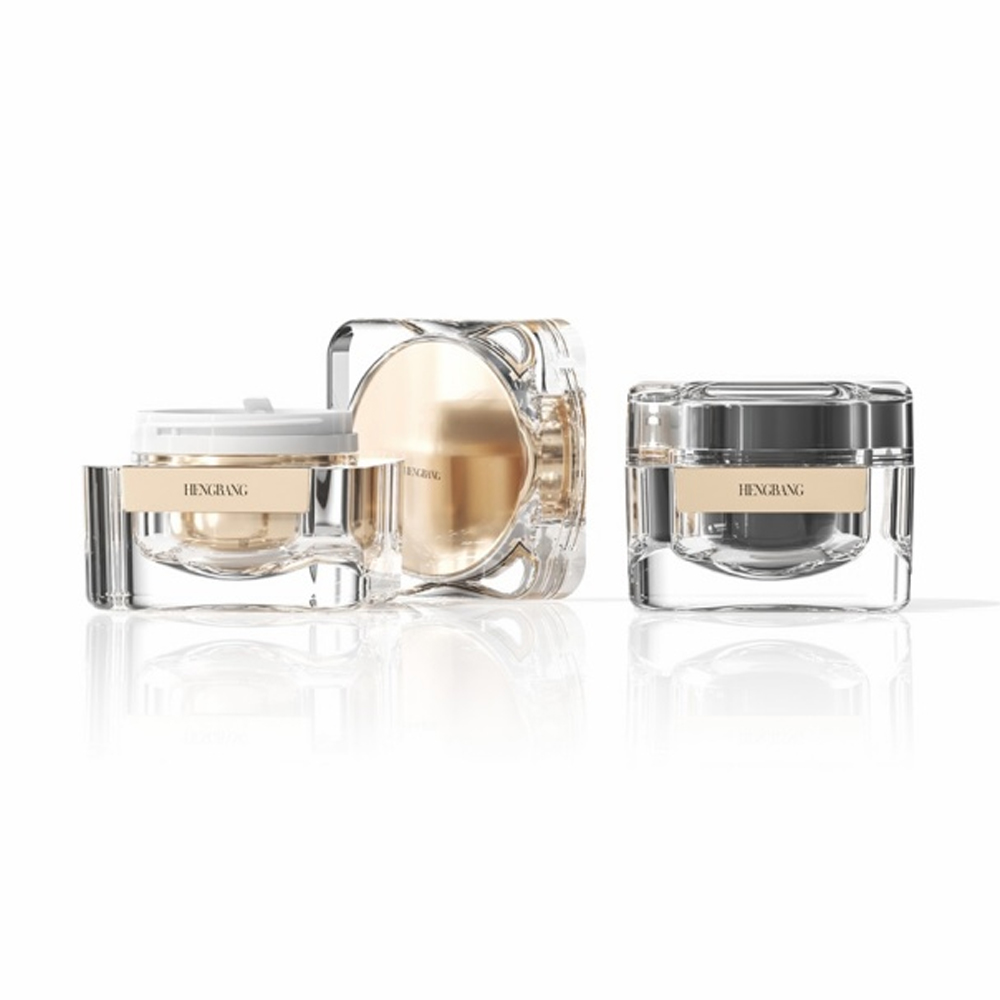
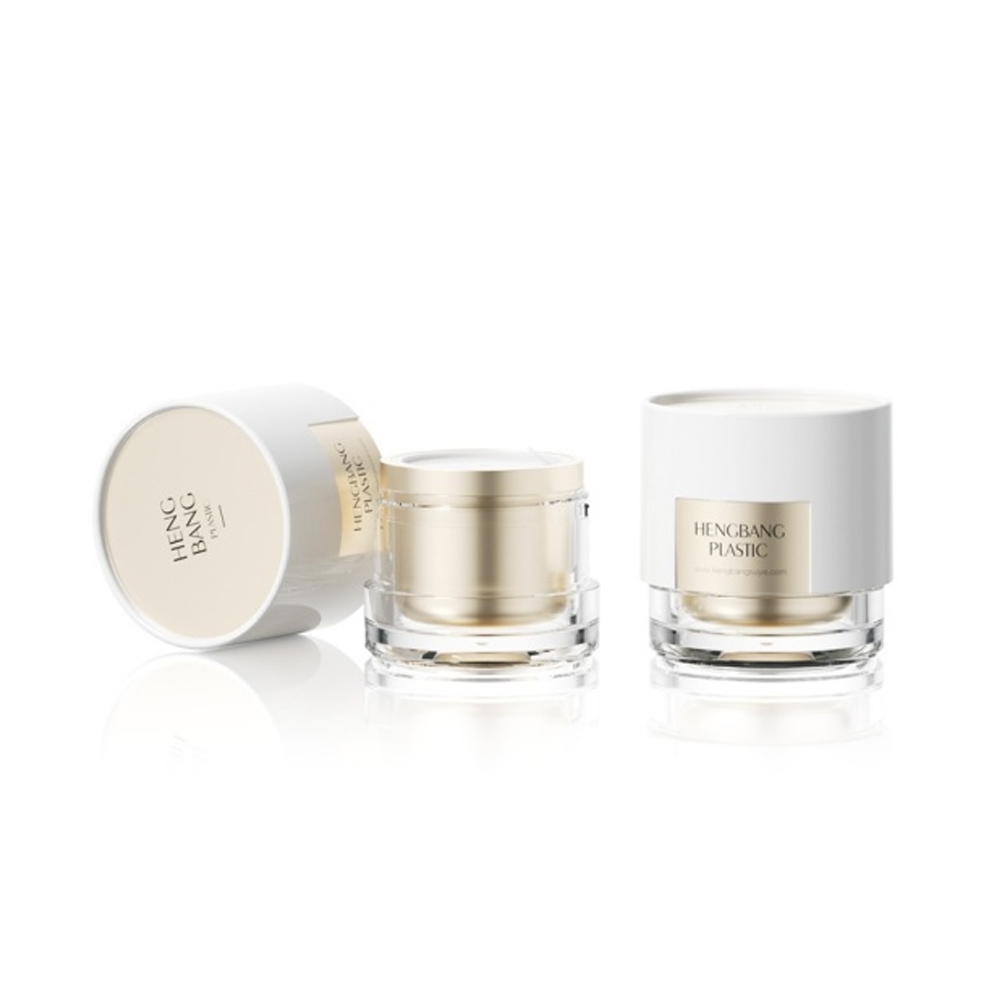
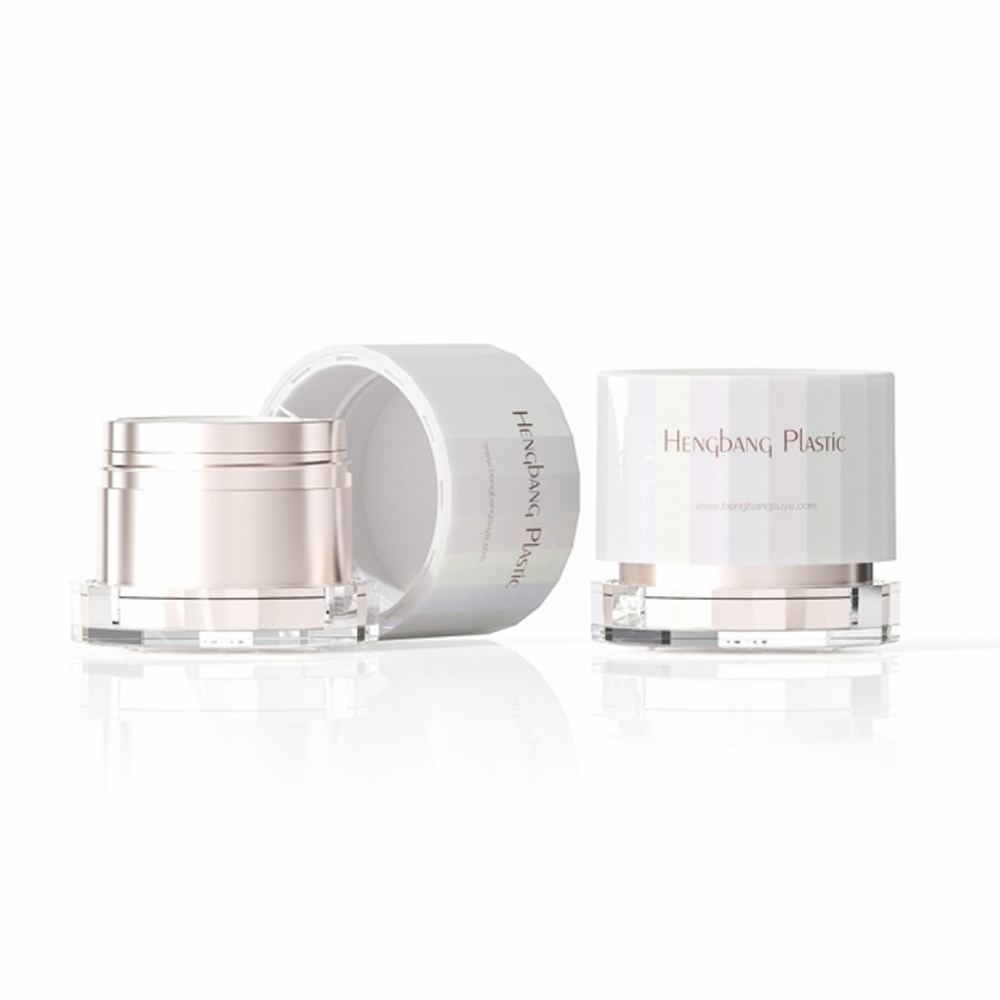
The HB-G002 is a double-wall plastic acrylic cream jar with a spherical body shape. The design is intentionally different from the standard cylindrical or rectangular cream jar commonly seen in the cosmetics market. Its rounded silhouette creates a soft, modern appearance that is especially appropriate for skincare products associated with comfort, care, hydration, nourishment, and relaxation.
The spherical form is visually memorable without being excessively decorative. It has a clean and minimalist character, making it suitable for a broad range of brand identities. A luxury skincare label may use the transparent body to emphasize purity and sophistication. A natural skincare brand may use the rounded profile to communicate softness and gentleness. A professional treatment brand may use the jar as a polished and contemporary presentation for high-performance creams.
The outer structure is made from PMMA, also known as acrylic, while the inner bottle is made from PP. The cap combines PMMA and PP. This material arrangement supports both visual presentation and practical packaging requirements. Acrylic contributes a crystal-clear, glass-like appearance, while the plastic construction helps reduce the fragility associated with ordinary glass containers.
The double-wall configuration is one of the central characteristics of the product. Instead of relying on a single exposed container wall, the jar uses an outer bottle and an inner bottle. This structure creates a more substantial appearance and provides an additional layer around the product container. It also gives the jar a sense of depth, allowing the packaging to appear more luxurious on a retail shelf or vanity.
In a competitive cosmetics market, packaging must attract attention quickly. The HB-G002 achieves this through shape, clarity, proportion, and surface presence rather than through excessive visual complexity. The result is a vessel that can support premium positioning while remaining adaptable to different product concepts and decorative treatments.
The HB-G002 is offered in two capacity options: 30 ml and 50 ml. These sizes cover several common applications in skincare packaging. The 30 ml version can be used for concentrated products, premium trial formats, travel-friendly products, eye creams, facial creams, and high-value treatments. The 50 ml version is appropriate for daily facial creams, night creams, body creams, masks, and other products intended for regular use.
The available specifications supplied for the product are summarized below.
| Item | 30 ml Version | 50 ml Version |
|---|---|---|
Product type |
Double-wall plastic acrylic cream jar |
Double-wall plastic acrylic cream jar |
Cap material |
PMMA + PP |
PMMA + PP |
Outer bottle material |
PMMA |
PMMA |
Inner bottle material |
PP |
PP |
Capacity |
30 ml |
50 ml |
Height |
60.6 mm |
68.5 mm as listed in the supplied product information |
Diameter |
65.35 mm |
73.4 mm |
Primary applications |
Facial creams, eye creams, serums, treatments, travel or premium formats |
Body creams, night creams, facial creams, masks, and daily-use skincare |
The dimensions and capacities allow brands to select the most appropriate size according to formula dosage, product positioning, retail price, and consumer usage habits. Before final production, brands should confirm the technical drawing, tolerance requirements, filling volume, decoration area, and compatibility between the chosen formula and packaging materials.
A double-wall package generally appears more substantial than a basic single-wall container. The outer wall adds visual depth and can create a floating, layered, or crystal-like effect when the inner product container is visible through the acrylic. This gives the jar a richer appearance without requiring highly complicated external ornamentation.
For premium skincare, the first impression is critical. Consumers often associate heavier-looking, carefully proportioned packaging with better product quality. The double-wall format helps a cream jar look more developed and distinctive than a thin, ordinary plastic container. It can therefore support a higher-value presentation for formulas that require premium positioning.
The outer wall provides an additional structural element around the inner bottle. While the precise protective performance depends on the final design, material thickness, manufacturing tolerances, and handling conditions, the double-wall arrangement is intended to provide a sturdier overall package. This can be valuable during filling, packing, transport, retail display, and consumer handling.
A conventional single-wall jar may expose its main container surface directly to contact, abrasion, and visual wear. By contrast, the outer wall of a double-wall jar can contribute to a more protected and finished external form. This feature is particularly useful for products intended for display in premium boutiques, department stores, hotel amenities, professional treatment rooms, or high-end online retail photography.
The separation between the outer bottle and inner bottle creates additional opportunities for visual development. Brands may choose to emphasize transparency, create a layered color effect, combine clear and opaque components, or use contrasting tones between the interior and exterior elements. Depending on the decoration process selected, the jar can be developed to match a variety of brand guidelines.
Because the spherical profile is already visually distinctive, brands may not need to rely on excessive decoration. A restrained logo, a carefully selected color, or a subtle surface finish may be sufficient to establish a recognizable product identity. This can help create a more contemporary appearance and preserve the clean character of the package.
PMMA is widely used in cosmetic packaging when a clear and polished appearance is required. The outer acrylic bottle of the HB-G002 allows the contents and inner structure to remain visually noticeable. This transparency can support several marketing purposes. It may communicate cleanliness, purity, quality, and authenticity. It can also allow the color and texture of the cream to become part of the product presentation.
For creams with attractive colors, suspended visual elements, or a naturally appealing texture, a transparent package can increase shelf impact. Even when the formulation itself is white or neutral, the clear acrylic body can reflect light and create an elegant, glass-like effect.
Acrylic also offers a smooth surface that can be used as a foundation for product decoration. Depending on the chosen process, manufacturers may develop printed logos, labels, coatings, metallic effects, frosted finishes, or other decorative treatments. The specific suitability of any decoration should be assessed with the manufacturer through samples and testing.
PP is used for the inner bottle and as part of the cap assembly. It is a widely used packaging plastic valued for its practical performance, processability, and compatibility with many everyday cosmetic applications. In the HB-G002 structure, the PP inner bottle provides the primary internal chamber for the formula, while the PMMA outer bottle provides visual appeal and additional external presence.
The combination of PMMA and PP reflects a functional approach to packaging design. Instead of requiring one material to perform every role, the package assigns different responsibilities to different components. The acrylic component emphasizes appearance and transparency, while the PP component supports the internal container structure and closure assembly.
Many luxury cosmetic jars use glass because of its weight, clarity, and premium reputation. However, glass can be vulnerable to cracking or breaking if dropped or mishandled. A plastic acrylic jar can offer a different balance of benefits. It can retain a clear and refined appearance while reducing some of the practical concerns associated with fragile glass packaging.
The HB-G002 should not be described as identical to glass in every performance characteristic. Instead, its advantage is that it provides a premium transparent aesthetic in a plastic construction. This can be valuable for brands seeking an elegant appearance together with a potentially more forgiving package for daily consumer use.
The HB-G002’s spherical shape is one of its strongest differentiating features. A rounded container has a natural softness that aligns well with personal care and skincare products. It avoids the sharp visual lines of a rectangular jar and creates a more approachable impression. This can be especially suitable for body creams, moisturizing creams, overnight treatments, and products designed around relaxation or self-care.
The smooth form also contributes to the tactile experience. Consumers often hold a cream jar in one hand while opening the cap with the other. A rounded body can feel comfortable and balanced during this interaction. The wide, stable base provides a dependable presentation on a vanity, bathroom shelf, retail counter, or product photography set.
From a branding perspective, a distinctive silhouette can improve product recognition. In a crowded skincare category, consumers may remember the shape of a product before they remember its exact name. A spherical jar can therefore become part of the product’s identity, especially when supported by consistent color, decoration, and secondary packaging.
The form is also suitable for minimalist packaging concepts. A simple round logo, short product name, and restrained color palette can complement the jar without competing with its geometry. Brands that favor clean beauty, modern luxury, or contemporary clinical aesthetics may benefit from this visual simplicity.
The wide-mouth design supports convenient access to creams, balms, masks, and other products with medium to high viscosity. Users can open the jar and remove the desired amount with a fingertip, spatula, or cosmetic applicator. This is particularly practical when a formula is too thick for a pump or conventional narrow-neck bottle.
Compared with a narrow opening, a wide mouth can make it easier to reach the remaining product near the bottom and along the sides of the inner container. This may help reduce the amount of product left unused. It also allows consumers to visually inspect the formula and estimate the remaining quantity more easily.
For body creams and night creams, the wide-mouth format matches common usage habits. Consumers often apply these products generously, and the opening provides enough access for repeated daily use. For professional or salon applications, the jar can also support controlled dispensing with a clean spatula or other suitable tool.
Proper hygiene remains important for any open-jar format. Brands should provide suitable usage guidance when necessary, such as using clean hands, closing the lid after use, and avoiding the introduction of water or other contaminants. Formula preservation and packaging compatibility should always be confirmed through appropriate technical evaluation.
The HB-G002 includes an airtight lid intended to help maintain formula freshness and stability. The closure is an important part of the overall packaging system because it helps limit unnecessary exposure of the product to the external environment after opening.
For skincare formulas, repeated opening and closing can influence the product’s condition over time. A well-fitted lid can help reduce the exchange of air and support a more controlled internal environment. This is particularly relevant for products marketed around freshness, nourishment, hydration, and premium sensorial quality.
The actual protective performance of any closure depends on the complete package design, including component dimensions, sealing surfaces, torque, liner or sealing features where applicable, formula composition, storage conditions, and filling process. As a result, brands should conduct compatibility and stability testing before commercial launch. Nevertheless, the airtight-lid concept is an important functional advantage of the HB-G002 design.
The cap combines PMMA and PP, allowing the closure to maintain a coordinated appearance with the jar while incorporating the practical advantages of the selected plastic components. This helps the entire package look unified rather than assembled from unrelated parts.
The product name and body cream category make the HB-G002 a natural choice for body care products. Body creams are often associated with generous application, rich textures, and an indulgent daily routine. The wide-mouth design supports convenient access, while the spherical body communicates softness and comfort.
The 50 ml format can be used for premium body cream collections, concentrated body treatments, hand and body creams, or smaller luxury formats. The 30 ml version may be appropriate for travel, sampling, gift sets, or high-value treatment products.
Facial creams and night creams require packaging that looks refined and supports repeated use. The transparent acrylic outer bottle can display the product’s color and texture, while the double-wall structure gives the jar a premium visual weight. The spherical profile also aligns with the calm and restorative character often associated with evening skincare routines.
For night creams, brands may choose darker decoration, metallic accents, or a translucent tinted effect. For day creams, clear or light-colored presentation may help communicate freshness and hydration. The same basic jar can therefore support multiple product lines through different decoration strategies.
Although many serums are packaged in bottles, thicker serum balms and concentrated treatment products may be better suited to a jar. The 30 ml HB-G002 provides a compact option for formulas that are used in small quantities but positioned at a higher price point.
The clear outer body can support a laboratory-inspired, premium, or artisanal appearance depending on the chosen decoration. Brands should confirm formula compatibility and dispensing requirements, especially when working with active ingredients, volatile components, oils, or formulas sensitive to air and light.
Facial masks, sleeping masks, cleansing balms, and repair balms often benefit from a wide-mouth package. These formulations may have thicker textures that are difficult to dispense through pumps or narrow openings. The HB-G002 allows users to access the product directly and remove an appropriate amount with a spatula or clean fingertip.
The rounded form can also make a mask or balm feel more like a spa product. This is helpful for brands that want to emphasize ritual, relaxation, and sensorial enjoyment in addition to functional skincare benefits.
The distinctive shape and high-transparency appearance make the jar suitable for gift sets and limited-edition collections. A brand can use the 30 ml size in a discovery set or pair the jar with other coordinated skincare products. A special cap color, printed pattern, or decorative finish can create a seasonal presentation without changing the basic container structure.
Many cream jars use a basic cylindrical design because it is familiar and easy to manufacture. While practical, this format can make it difficult for a product to stand out. The spherical body of the HB-G002 offers a stronger visual signature. It can help a product appear more distinctive in online images, retail displays, and bathroom settings.
A unique shape is especially valuable for brands entering crowded categories. When several products offer similar formulas or claims, packaging can become an important point of differentiation. The HB-G002 provides this differentiation through its form while retaining the familiar usability of a wide-mouth cream jar.
The double-wall structure gives the product more depth and visual substance than a simple single-wall plastic jar. It creates a more premium appearance and can support a higher level of perceived value. This is useful for brands that want to move beyond entry-level packaging without using excessively complicated assemblies.
The outer wall may also help maintain a more finished appearance during handling and display. The exact result depends on component quality, surface treatment, and decoration, but the structural concept is well suited to upscale cosmetic presentation.
The PMMA outer bottle creates a transparent, polished effect that can resemble the visual clarity associated with glass. At the same time, the plastic format offers brands an alternative to conventional glass jars. This balance may help companies achieve a premium aesthetic while considering practical handling, transport, and everyday consumer use.
The availability of 30 ml and 50 ml versions allows brands to build product families around a consistent design language. A brand may use the smaller jar for premium treatments and the larger jar for daily-use creams. This creates visual consistency across a product range while allowing different capacities and price points.
The HB-G002 does not depend on one specific decorative concept. Its clear and rounded foundation can accommodate minimalist, luxury, clinical, natural, youthful, or artistic branding. This versatility reduces the need to select a completely different container for every product concept.
The manufacturer, Yuyao Hengbang Plastic Co., Ltd., was established in 2006. According to the supplied company information, the company has a building area of 35,000 square meters and more than 300 employees. This scale provides a substantial foundation for the development and production of plastic packaging for cosmetics and skincare products.
Hengbang specializes in plastic packaging and offers services that include design and development. This is important because successful cosmetic packaging requires more than producing individual components. It requires coordination between product concept, mold design, material selection, component fit, decoration, assembly, filling requirements, and commercial presentation.
A manufacturer with design and development capabilities can support customers earlier in the product-development process. Instead of receiving a finished concept only at the production stage, the packaging partner can help evaluate the feasibility of the structure, recommend component adjustments, and coordinate the transition from concept to manufacturable product.
The company has passed ISO9001:2015 and ISO14001:2015 certifications, according to the provided information. ISO9001:2015 is associated with quality management systems, while ISO14001:2015 is associated with environmental management systems. These certifications indicate that the company has established structured management practices in the relevant areas. Certification does not replace product-specific testing, but it provides an important foundation for consistent operations and documented processes.
Hengbang was also awarded as a Ningbo High-Tech Enterprise in 2021 and owns multiple invention patents. These details indicate an emphasis on technical development and innovation. In the cosmetic packaging industry, technical capability can influence mold precision, component fit, appearance consistency, production efficiency, and the ability to develop differentiated structures.
The HB-G002 demonstrates the value of coordinated design and development. Its spherical shape, double-wall construction, multi-material assembly, and wide-mouth format must work together as a single packaging system. Proper design development is necessary to ensure that the outer bottle, inner bottle, and cap maintain appropriate proportions and fit.
Development work may include design refinement, structural evaluation, sample production, assembly testing, appearance inspection, and customer confirmation. The exact process will depend on project requirements, but a professional development approach helps reduce the risk of incompatibility between the visual concept and production reality.
Cosmetic packaging quality is judged through many details: clarity, surface smoothness, color consistency, dimensional accuracy, cap fit, thread performance, assembly quality, and overall appearance. A quality management system can help organize inspection criteria, production controls, documentation, and corrective actions.
For customers purchasing packaging in commercial quantities, consistency is essential. A jar that looks excellent in a first sample but varies significantly in mass production can create filling, labeling, display, or consumer experience problems. Quality-focused manufacturing practices help support more reliable outcomes across production batches.
The company’s ISO14001:2015 certification reflects an established environmental management framework. Cosmetic packaging manufacturers increasingly need to consider material use, production efficiency, waste management, process control, and broader environmental responsibilities.
The HB-G002 is a plastic package, so brands should evaluate their own sustainability objectives, local recycling conditions, decoration choices, and end-of-life requirements. Environmental performance depends on the complete package system and regional infrastructure. Even so, working with a manufacturer that maintains an environmental management system can help customers engage in more structured discussions about responsible production.
Since its establishment, Hengbang has focused on plastic packaging for cosmetic and skincare products. This specialization is relevant because cosmetic packaging has specific requirements related to appearance, touch, component assembly, formula contact, decoration, and consumer expectations.
Experience in the sector can help a manufacturer understand the difference between packaging for creams, lotions, serums, masks, and other formats. It can also support more efficient communication with brand owners, purchasing teams, product developers, and filling partners.
The production of a double-wall acrylic cream jar typically involves a coordinated sequence of design, tooling, molding, finishing, inspection, and assembly activities. The exact manufacturing process for the HB-G002 depends on the final production plan, but the following considerations are important when evaluating this type of package.
The process begins with a confirmed product design. For a spherical jar, mold design must account for curvature, wall thickness, parting lines, draft angles, gate placement, and the relationship between the outer and inner components. The cap must also align correctly with the jar and provide a secure closure.
Because the package contains multiple components, dimensional coordination is essential. The outer bottle must accommodate the inner bottle correctly, and the cap must close with the intended fit. Small dimensional differences can affect appearance, assembly, sealing, and consumer handling.
The PMMA outer bottle is responsible for much of the package’s transparent and premium appearance. Its production requires attention to clarity, surface quality, dimensional stability, and visible defects. Scratches, flow marks, bubbles, haze, or uneven surfaces can influence the perceived quality of a transparent container.
For this reason, inspection standards should be discussed before mass production. Customers may need to define acceptable limits for clarity, cosmetic defects, color, gloss, and surface finish. Clear specifications help align expectations between the packaging supplier and the brand.
The PP inner bottle and PP portion of the cap must be produced with reliable dimensions and appropriate assembly characteristics. The inner bottle should seat correctly within the outer bottle, while the cap should engage smoothly and remain secure during normal handling.
The cap also contributes to the visual identity of the product. Even when the body is transparent, the cap can be colored, decorated, or finished to create contrast. The combination of PMMA and PP gives the closure both a visible connection to the body and a practical internal structure.
After molding and any selected decoration, the components are assembled. Assembly inspection may include checking the position of the inner bottle, the fit of the cap, surface appearance, component alignment, and general cleanliness.
For commercial projects, brands should also discuss packaging cleanliness, dust control, packing methods, carton protection, and transportation conditions. Transparent parts can make dust and surface marks more visible, so careful handling and suitable protective packaging are important.
Before mass production, a project should pass appropriate testing and approval stages. Potential evaluations include dimensional inspection, closure testing, leakage assessment, formula compatibility, stability testing, drop or handling evaluation, transportation simulation, and decoration adhesion testing where applicable.
Testing requirements should be defined according to the formula, sales market, filling method, distribution route, and expected consumer use. No single test plan is suitable for every cosmetic product. The manufacturer and brand should work together to establish project-specific acceptance criteria.
The HB-G002’s clear acrylic body provides a strong base for brand communication. Because the shape is already visually distinctive, decoration can be used strategically rather than excessively. A small logo, product name, or symbolic mark may be enough to create a polished appearance.
Brands may consider several possible decoration directions. Clear printing can preserve the transparent character of the container. Opaque printing can improve legibility and contrast. Metallic effects can strengthen a luxury image. Frosted or tinted treatments can create a soft, atmospheric look. Labels may provide flexibility for multiple product variants, while direct decoration may offer a more integrated appearance.
The choice of decoration should consider the package’s curvature. A spherical surface may require specialized artwork preparation and printing evaluation. Text size, line thickness, logo placement, and color contrast should be reviewed through physical samples rather than relying only on digital renderings.
Secondary packaging can further enhance the jar. A folding carton, rigid box, sleeve, or gift-set presentation can be designed to complement the spherical form. Brands may use the outer box to provide ingredients, usage instructions, claims, regulatory information, and brand storytelling while keeping the jar itself visually clean.
Packaging influences how consumers interact with a product before, during, and after use. The HB-G002 supports a multi-stage experience. Before purchase, its transparent spherical design can attract attention. During first use, the wide-mouth opening and substantial form create a tactile impression. During repeated use, the jar can remain a visible part of the consumer’s skincare routine.
Premium packaging should not only look attractive; it should also feel coherent with the product’s promise. A rich body cream presented in a lightweight, ordinary package may appear less valuable than the formula deserves. Conversely, the HB-G002 can help communicate richness, care, and quality before the consumer evaluates the cream itself.
The jar may also contribute to social and digital presentation. Cosmetic products are frequently photographed for online stores, social media, tutorials, product reviews, and promotional campaigns. A clear acrylic body with a distinctive spherical silhouette can create strong visual content and make the product recognizable in photographs.
When choosing between the 30 ml and 50 ml formats, buyers should consider the recommended dosage, frequency of use, product price, target market, and retail channel. The smaller version may be better for concentrated formulas, introductory products, and gift sets. The larger version may be more suitable for full-size daily-use creams and body care products.
Brands should also evaluate how the formula interacts with the container materials. Compatibility testing should consider the formula’s oils, solvents, active ingredients, fragrances, preservatives, pH, and storage conditions. Appearance changes, odor transfer, swelling, stress cracking, discoloration, leakage, and closure performance should be monitored during testing.
Filling equipment and production lines should be reviewed before ordering. The jar’s opening, dimensions, and assembly method must be compatible with the filling process. If the product will be filled by a third-party contract manufacturer, the brand should provide samples for line testing and confirm the required handling procedures.
Decoration should be approved through physical samples. This is especially important for transparent and curved components, where the final appearance may differ from a flat artwork proof. Brands should inspect color, position, clarity, adhesion, scratch resistance, and overall alignment.
Finally, packaging quantities, lead times, inspection standards, shipping conditions, and replacement policies should be agreed upon in writing. Clear technical and commercial communication helps reduce avoidable problems during launch.
| Packaging format | Typical strengths | Potential limitations | Positioning of the HB-G002 |
|---|---|---|---|
Basic single-wall plastic jar |
Simple structure, familiar use, potentially lower complexity |
Less visual depth and weaker differentiation |
Offers a more substantial double-wall appearance and distinctive spherical design |
Glass cream jar |
Premium weight, clarity, and traditional luxury appeal |
Greater concern about breakage and handling |
Provides a transparent premium effect through plastic acrylic construction |
Narrow-neck bottle |
Controlled dispensing and reduced open surface |
Less suitable for thick creams, masks, and balms |
Wide-mouth access supports viscous formulas and direct application |
Airless pump container |
Controlled dosing and reduced direct finger contact |
More complex structure and less suitable for some thick products |
Provides a classic jar experience for products intended for scoop or fingertip use |
Ordinary opaque jar |
Blocks light and provides straightforward branding space |
Does not display the formula or inner structure |
High transparency can make product color and texture part of the presentation |
This comparison does not mean that one packaging format is universally superior. Different formulas and markets require different solutions. The strength of the HB-G002 lies in its particular combination of transparent acrylic appearance, double-wall construction, spherical geometry, wide-mouth convenience, and multiple capacity options.
Plastic packaging decisions should be evaluated responsibly and in the context of the complete product system. The HB-G002 is made from PMMA and PP components, and its double-wall construction uses multiple parts. Brands should therefore consider material identification, local recycling systems, decoration choices, packaging weight, shipping efficiency, and end-of-life communication.
The double-wall design provides clear aesthetic and structural benefits, but brands should balance those advantages against their packaging objectives. If a project has specific environmental requirements, the brand should discuss material selection, recycled content possibilities where appropriate, component separation, decoration limitations, and production waste management with the manufacturer.
Hengbang’s ISO14001:2015 environmental management certification provides a useful foundation for such discussions. It indicates that environmental management is addressed through a formal system. However, sustainability claims about the finished product should be supported by project-specific information and should reflect the actual package configuration and regional disposal conditions.
Responsible packaging communication should be accurate and clear. Brands should avoid presenting a package as universally recyclable unless the claim is supported by local infrastructure and applicable regulations. They may instead provide practical sorting instructions based on the sales market.
The HB-G002 succeeds because its design elements reinforce one another. The spherical body establishes a recognizable silhouette. The transparent PMMA outer bottle creates a polished appearance. The PP inner bottle provides a practical internal container. The double-wall structure adds visual depth. The wide mouth supports convenient use. The airtight lid helps protect freshness and stability. Together, these features create a coherent package rather than a collection of unrelated characteristics.
Its versatility is another important advantage. The same base container can support different skincare concepts through changes in formula, color, decoration, cap treatment, and secondary packaging. This can help brands develop coordinated product families and reduce the need to redesign the entire visual language for each item.
The jar is also well aligned with the current emphasis on sensorial skincare. Consumers increasingly value products that make daily routines feel special. A smooth, rounded container that looks attractive on a vanity can enhance the ritual surrounding the formula. This emotional and tactile value complements the package’s practical functions.
For buyers seeking a premium plastic cream jar, the HB-G002 offers a strong combination of appearance, flexibility, and functionality. For brands working with a specialized cosmetic packaging manufacturer, it also provides an opportunity to collaborate on decoration, development, and production requirements from an early stage.
Begin by identifying the formula type, dosage, usage frequency, target consumer, sales channel, price range, and desired brand image. Determine whether the product is a facial cream, body cream, mask, balm, treatment, or another skincare format.
Choose between the 30 ml and 50 ml versions based on the product’s filling volume and positioning. Confirm whether the nominal capacity meets the actual filling requirement after accounting for headspace and filling tolerance.
Submit the formula or a representative sample for compatibility evaluation. Test the container and closure under expected storage conditions and monitor changes over time.
Prepare artwork that accounts for the spherical surface. Review printed or finished samples for color, clarity, placement, adhesion, and overall appearance.
Run the selected jar through the intended filling and capping process. Confirm that the opening, dimensions, cap fit, and production speed are suitable for the filling partner’s equipment.
Establish standards for clarity, scratches, bubbles, color, dimensional tolerance, cap performance, cleanliness, decoration, and packing. Written standards are recommended for commercial production.
Finalize quantities, lead times, carton configuration, shipping protection, inspection procedures, and delivery requirements. Maintain communication between the brand, manufacturer, decorator, and filling facility.
The HB-G002 is designed as a double-wall plastic acrylic cream jar for cosmetic and skincare products. It is suitable for body creams, facial creams, night creams, serums with suitable textures, masks, balms, and other products that benefit from a wide-mouth container.
The supplied product information lists 30 ml and 50 ml capacity options. The 30 ml size is suitable for compact, concentrated, premium, or travel-oriented products. The 50 ml size is suitable for daily-use skincare and larger cream formats.
The cap is made from PMMA and PP, the outer bottle is made from PMMA, and the inner bottle is made from PP. PMMA provides a clear and polished visual effect, while PP is used for the inner bottle and part of the closure assembly.
The double-wall structure creates a more substantial appearance, adds visual depth, supports a premium presentation, and provides an additional outer layer around the inner bottle. It also creates opportunities for layered visual effects and differentiated decoration.
The spherical design provides a distinctive alternative to ordinary cylindrical jars. It creates a soft, modern, and luxurious appearance while offering a comfortable tactile experience and strong shelf recognition.
Yes. The wide-mouth design is suitable for many thick creams, body creams, masks, balms, and similar products that are not easily dispensed through narrow openings or pumps. Formula compatibility and dispensing tests should still be completed before production.
The high-transparency PMMA outer bottle is designed to showcase the contents and inner structure. This allows the formula’s color and appearance to contribute to the overall product presentation.
The product includes an airtight lid intended to help maintain formula freshness and stability. Actual performance depends on the complete package, formula, filling process, storage conditions, and closure fit, so appropriate testing is required.
Yes. The acrylic surface can serve as a foundation for branding and decoration. Possible approaches may include printing, labels, coatings, frosted effects, tinted finishes, or metallic treatments. The final method should be confirmed through samples and technical evaluation.
Yes. The 30 ml and 50 ml versions can support different products within a coordinated skincare collection. Brands can create variation through formula color, cap treatment, printing, surface finish, and secondary packaging.
Brands should consider compatibility, stability, leakage, closure performance, dimensional accuracy, decoration adhesion, handling, transportation, filling-line performance, and visual quality. The exact test plan should reflect the formula and sales market.
According to the supplied company information, Yuyao Hengbang Plastic Co., Ltd. specializes in plastic packaging for cosmetics and skincare products and provides services including design and development. The company has more than 300 employees and a building area of 35,000 square meters.
The company has passed ISO9001:2015 and ISO14001:2015 certifications according to the provided information. It was also recognized as a Ningbo High-Tech Enterprise in 2021 and owns multiple invention patents.
No package should be considered universally suitable without reviewing local recycling systems, material identification, decoration, shipping requirements, and end-of-life conditions. Brands should discuss their environmental objectives and market-specific requirements with the manufacturer.
The HB-G002 Double Wall Plastic Acrylic Body Cream Jar is a premium packaging solution designed around clarity, structure, usability, and distinctive form. Its spherical silhouette creates a memorable appearance, while the double-wall construction adds visual depth and a more substantial presence. The PMMA outer bottle provides high transparency and a polished aesthetic, and the PP inner bottle supports the practical internal structure.
The wide-mouth opening makes the jar suitable for creams, masks, balms, body care products, and other viscous formulas. The airtight lid is intended to help maintain freshness and stability, while the 30 ml and 50 ml capacities provide flexibility for different product concepts and market positions.
Compared with basic single-wall jars, the HB-G002 offers stronger visual differentiation and a more premium presentation. Compared with traditional glass, it provides a transparent acrylic effect in a plastic construction. Compared with narrow-neck packaging, it offers easier access for thick formulas. These advantages make it a versatile option for modern skincare brands.
The manufacturer’s experience, design and development capabilities, quality and environmental management certifications, high-tech enterprise recognition, and invention patents further support the product’s commercial potential. With appropriate formula testing, decoration development, filling validation, and quality control, the HB-G002 can become a strong packaging platform for luxury skincare, body care, professional treatments, gift sets, and innovative cosmetic collections.
For brands seeking packaging that combines premium appearance with practical daily use, the HB-G002 offers a balanced and adaptable solution. Its combination of transparent acrylic, double-wall construction, spherical design, wide-mouth access, and coordinated manufacturing support gives it a clear position in the competitive cosmetic packaging market.
1. Product specification and application information supplied for the HB-G002 Double Wall Plastic Acrylic Body Cream Jar.
2. Company information supplied for Yuyao Hengbang Plastic Co., Ltd., including company history, facility scale, workforce, certifications, and development capabilities.
3. ISO 9001:2015, Quality Management Systems—Requirements.
4. ISO 14001:2015, Environmental Management Systems—Requirements with Guidance for Use.
5. General technical principles for cosmetic packaging material compatibility, closure performance, and stability evaluation.
6. General packaging development practices for plastic cosmetic containers, including design validation, decoration approval, filling-line testing, and quality inspection.


Copyright © Yuyao Hengbang Plastic Co., Ltd.
All Rights Reserved.
 Wholesale Plastic Cosmetic Packaging Manufacturers