English
 中文简体

News
Home > Author > Zhang Yuxin — Plastic Cosmetic Packaging Sales Representative > Why Dual-Chamber Airless Bottles Are Reshaping Modern Skincare Packaging

 2026.10.08
 Zhang Yuxin — Plastic Cosmetic Packaging Sales Representative
Content
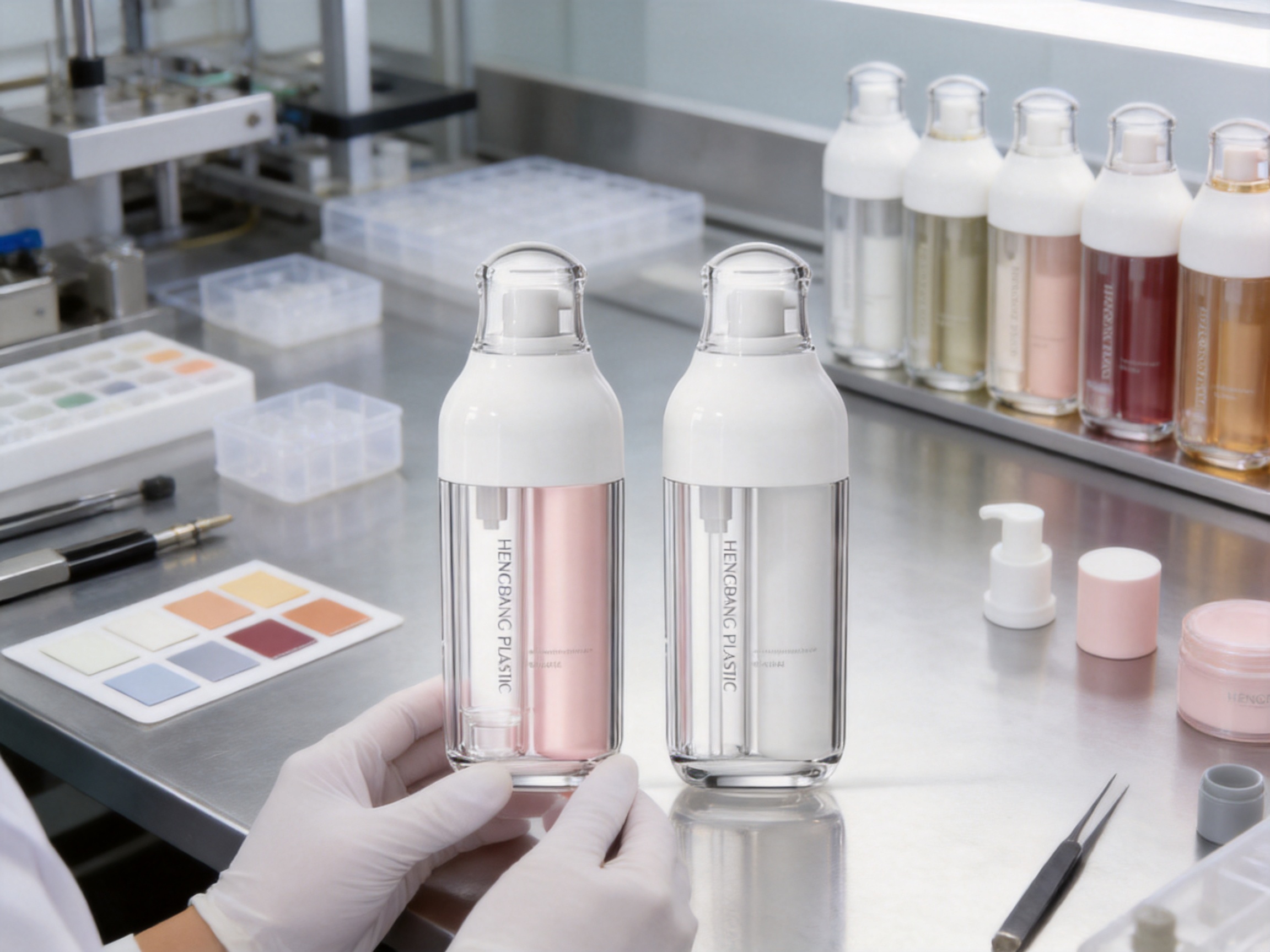
In the skincare and cosmetics market, packaging is no longer simply a protective shell around a formula. It has become an important part of product performance, brand communication, user experience, and commercial differentiation. Consumers increasingly expect packaging to be hygienic, convenient, visually appealing, and compatible with sophisticated formulations. At the same time, cosmetic brands are looking for packaging formats that allow them to introduce more advanced products without creating unnecessary complexity during use.
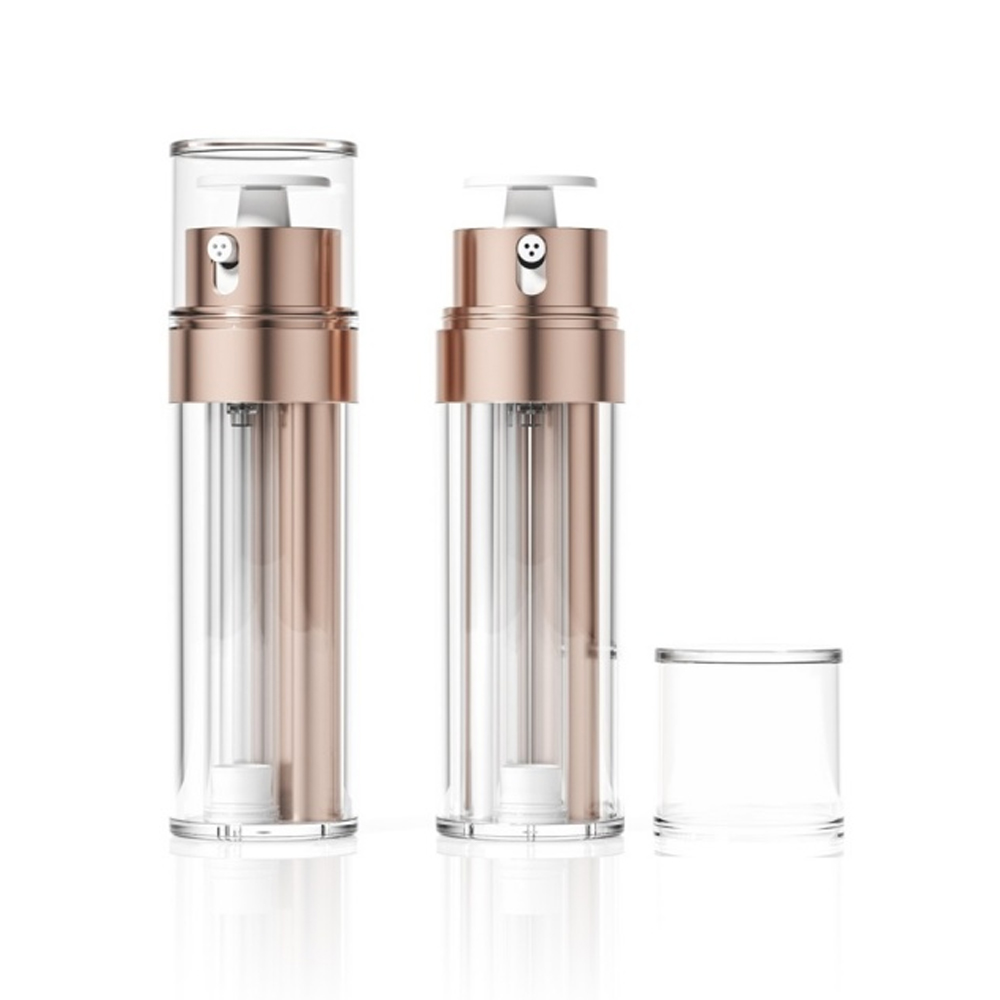
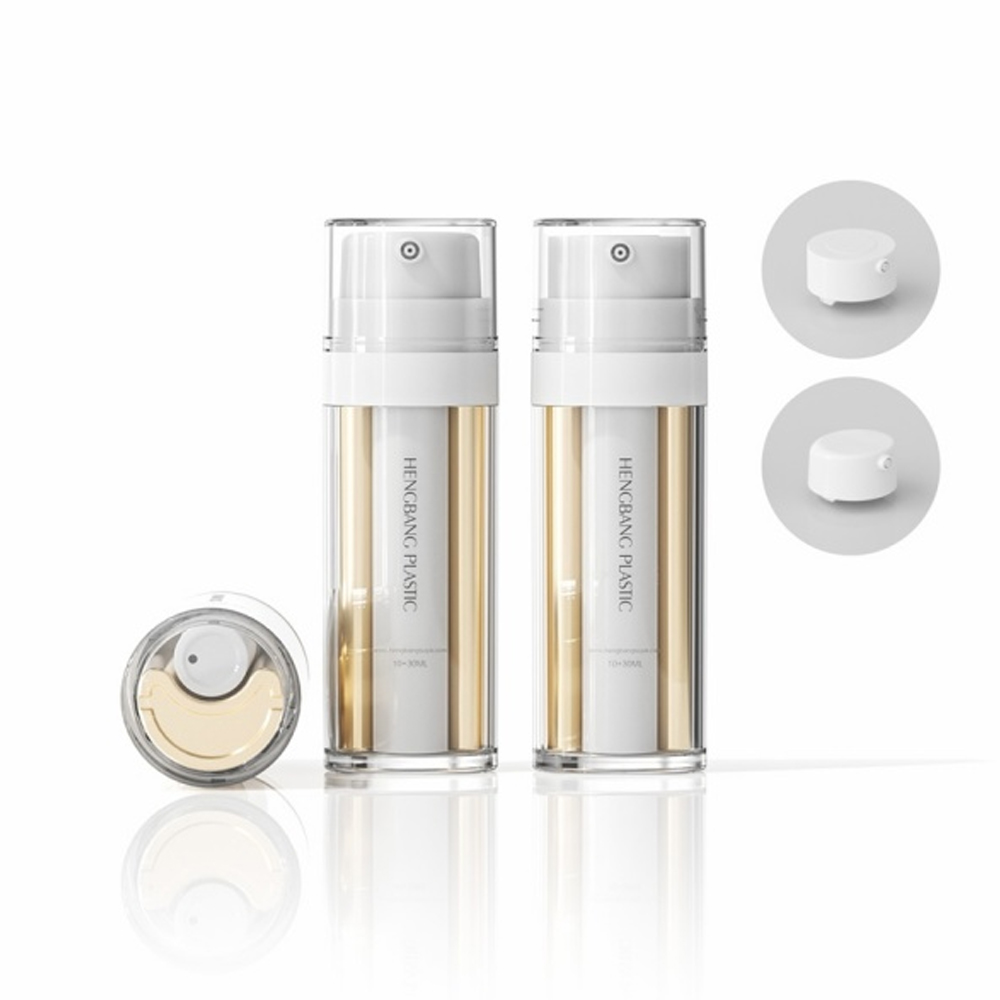
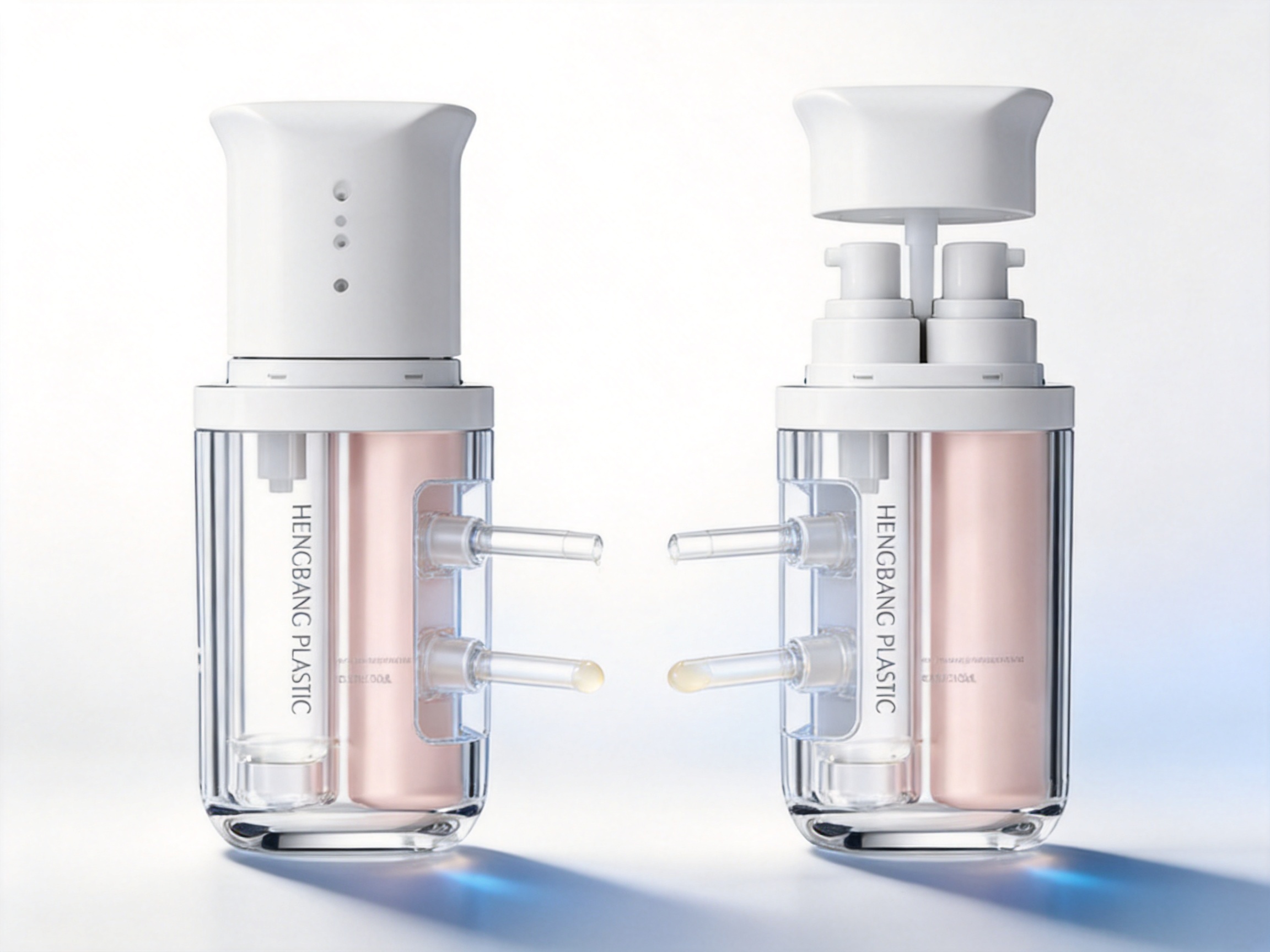
The HB-S004 2 In 1 Double Chamber Airless Bottle responds to these requirements with a compact package designed to hold and dispense two separate formulations. Its dual-chamber construction creates opportunities for combination skincare products, two-step treatments, paired serums, customized routines, and formulas that should remain separated until application. Rather than placing two products in separate bottles, the package brings them together in a unified presentation while preserving distinct internal chambers.
With an outer body made from MS material, inner bottles made from PP, and a pump structure incorporating PP and ABS, the HB-S004 combines a premium exterior appearance with functional plastic components selected for packaging performance. Its distinctive cap strengthens the visual identity of the package, while the transparent outer presentation can help users see the two formulations inside. The result is a format that balances product protection, controlled dispensing, shelf appeal, and brand customization.
This article examines the design, construction, applications, manufacturing strengths, and competitive advantages of the HB-S004. It also explains how Yuyao Hengbang Plastic Co., Ltd. supports cosmetic packaging development through professional production capabilities, quality management, material selection, and design services.
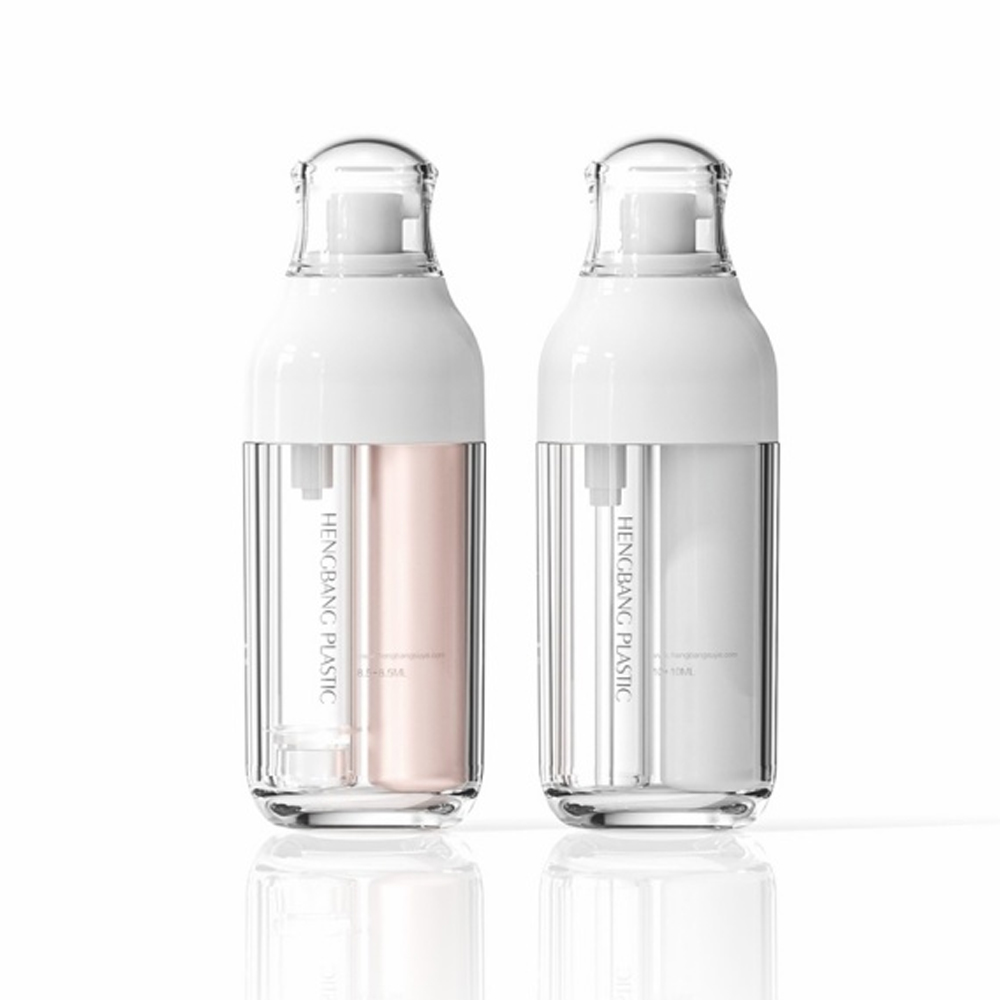
HB-S004 2 In 1 Double Chamber Airless Bottle
Traditional cosmetic packaging usually places one formulation inside one container. This approach remains suitable for many lotions, creams, toners, and serums, but it can become limiting when a product concept requires two different formulas. Some active ingredients may be more stable when stored separately. Other products may be designed around a paired application, such as a serum and an activating essence, a moisturizer and a concentrated treatment, or two complementary colors and textures.
Dual-chamber packaging addresses this challenge by creating two independent product spaces within a single package. The chambers may dispense separately, simultaneously, or in a coordinated manner depending on the pump design. In the HB-S004 concept, the two chambers are arranged within one compact bottle system, creating a convenient 2 In 1 format for modern skincare products.
The value of this structure extends beyond simple storage. A dual-chamber package can support product storytelling. It visually communicates that the product contains two distinct components, which may be used together as part of a carefully designed routine. The package itself becomes an explanation of the formula architecture. This can be especially valuable for premium skincare products, professional-use treatments, and products positioned around freshness, personalization, or advanced formulation technology.
For consumers, the format can simplify daily routines. Instead of locating two separate containers and measuring two products independently, users can access both components from one coordinated package. For brands, the format can create a stronger point of difference in a crowded market. A recognizable bottle structure can support a new product identity while giving the brand additional opportunities for color, decoration, transparency, and surface finishing.
The HB-S004 is a double-chamber airless bottle developed for cosmetic and skincare applications. Its listed product category is Double Chamber Airless Bottle, while its compact form can also be considered suitable for selected serum, lotion, treatment, and travel-oriented packaging concepts.
The product information identifies two capacity configurations: an airless configuration of 8.5 + 8.5 milliliters and a lotion configuration of 10 + 10 milliliters. Together, these configurations provide a total nominal capacity of approximately 17 milliliters or 20 milliliters, depending on the selected internal structure. The supplied product description also refers to the bottle as a 17 milliliter and 20 milliliter double-chamber airless bottle.
Because the specification table presents both capacity options, brands should confirm the desired internal configuration, filling process, and formula compatibility during the development stage. This is a normal and important step in cosmetic packaging customization. The selected chamber volume should correspond to the product’s dosage, expected period of use, viscosity, filling equipment, and market positioning.
The package has a listed height of 119 millimeters. Its listed diameter measurement is 41.7 × 34.2 millimeters, reflecting the dimensional profile of the bottle. The stated application dosage is 0.12 + 0.12 cubic centimeters, indicating a coordinated dispensing quantity for the two sides. Actual dosage performance should be validated with the selected formula, actuator, filling level, and production conditions.
| Specification | Available or Listed Information | Packaging Significance |
|---|---|---|
| Product type | 2 In 1 double-chamber airless bottle | Supports two separate formulations in one coordinated package |
| Airless capacity | 8.5 + 8.5 milliliters | Approximately 17 milliliters total for an airless configuration |
| Lotion capacity | 10 + 10 milliliters | Approximately 20 milliliters total for a lotion configuration |
| Height | 119 millimeters | Creates a slim, portable profile for compact skincare products |
| Diameter information | 41.7 × 34.2 millimeters | Defines the external dimensional profile of the package |
| Application dosage | 0.12 + 0.12 cubic centimeters | Supports controlled dispensing of the two formulations |
| Outer bottle | MS material | Provides a distinctive exterior structure and premium presentation |
| Inner bottles | PP material | Creates separate internal chambers for the two formulas |
| Pump | PP + ABS | Combines commonly used functional pump materials |
| Cap and shoulder | MS material | Enhances visual coordination and the overall design impression |
The main functional advantage of the HB-S004 is its ability to keep two formulations in separate chambers inside one bottle. This separation can be important when two formulas have different textures, colors, viscosities, or stability requirements. It may also be useful when a brand wants to present a paired treatment without requiring consumers to carry two independent packages.
An airless structure is designed to dispense product without relying on a conventional dip tube that extends into the container. As product is dispensed, the internal system can move upward or otherwise reduce the available empty space, limiting the need for air to enter the product chamber. The exact internal mechanism depends on the package construction, but the general objective is controlled evacuation and improved product access.
Airless packaging is frequently considered for skincare products because many cosmetic formulas are sensitive to repeated exposure to air, contamination, or excessive handling. A pump-based dispensing system can help keep users from placing fingers directly into the product. This supports a cleaner user experience and can be especially relevant for creams, concentrated treatments, and products marketed around freshness or active ingredients.
In a double-chamber airless bottle, the engineering challenge is greater than in a single-chamber package. The structure must accommodate two independent product paths while maintaining reliable actuation and an attractive external form. The HB-S004 addresses this challenge with a coordinated body, pump, inner bottle, shoulder, and cap design. Its two sides are integrated into one package rather than appearing as unrelated containers joined together.
The stated application dosage of 0.12 + 0.12 cubic centimeters provides a reference for the intended dispensing relationship between the two chambers. This can help a brand formulate a consistent use instruction, such as applying a measured amount of two complementary products at the same time. However, compatibility testing remains necessary because viscosity and rheology can affect actual output.
The outer bottle and shoulder are identified as MS material. In cosmetic packaging, a material used for the outer structure contributes not only to mechanical form but also to the visual character of the package. The MS construction gives the bottle a distinctive appearance that can be developed through color, transparency, surface treatment, and decoration.
The shoulder area is particularly important because it connects the body to the pump and cap. A well-integrated shoulder can make the package appear more stable and complete. It also helps define the transition between the product container and the dispensing components. In the HB-S004, the MS shoulder is part of the overall coordinated appearance, helping the cap and body read as one designed unit.
The outer bottle can also support brand communication through visual exposure. The supplied product description emphasizes the transparent outer bottle and its ability to allow consumers to see two distinct formulations. Transparency can make the package more informative because it gives users a visual indication of the product structure, colors, and remaining quantity. It can also create a modern and technical impression when combined with clean labeling and carefully chosen formula colors.
The inner bottles are made from PP material. Polypropylene is widely used in packaging because of its combination of light weight, processability, and practical resistance properties. In the HB-S004, PP inner bottles create two separate product spaces inside the outer presentation.
The use of independent inner chambers can help preserve the visual and functional distinction between the two products. One chamber may contain a clear serum while the other contains a colored lotion. Alternatively, both formulas may have similar appearances but different functions. The internal separation allows brands to develop a product concept without immediately mixing the components during storage.
Material selection must always be considered together with the formula. Brands should conduct compatibility tests using the actual ingredients, concentration levels, storage conditions, filling temperatures, and intended shelf life. These evaluations can examine odor transfer, color change, swelling, stress cracking, leakage, pump performance, and other relevant factors.
The pump is specified as PP + ABS. This combination reflects the fact that a cosmetic pump is a multi-part functional assembly rather than a single molded piece. Different components may be selected for their roles in the actuator, housing, internal structure, or appearance.
The pump must provide a consistent user experience. It should be easy to actuate, comfortable to press, and capable of delivering the intended quantity from each chamber. In a dual-chamber package, the coordination of the two outputs is particularly important. If one side dispenses much earlier or later than the other, the product experience may not match the intended use concept.
Testing should therefore cover actuation force, output volume, recovery, leakage resistance, repeatability, and performance after transportation and storage. These evaluations help ensure that the package works effectively with the selected formula and filling level rather than only performing well with an empty or water-based test sample.
The first competitive advantage of the HB-S004 is functional integration. A conventional single-chamber bottle is designed for one formulation. If a brand wants to offer two complementary products, it generally needs two containers. The HB-S004 places both products into one coordinated package, simplifying the product architecture and creating a more distinctive user experience.
The second advantage is the preservation of formula separation. Separate chambers can be beneficial when two formulas should not be mixed during storage. This may apply to products with different textures, different colors, or different stability requirements. It also supports product concepts in which the consumer applies two components together but the brand wants to maintain their independent identities until dispensing.
The third advantage is shelf differentiation. A double-chamber bottle has an immediately recognizable structure. Its unusual format can attract attention among standard jars, tubes, and single bottles. The transparent exterior can further emphasize the dual-product concept, giving consumers a clear visual reason to examine the package.
The fourth advantage is routine simplification. Consumers may appreciate having two related products in one bottle instead of managing separate containers. This can be useful for travel, handbags, compact skincare collections, and treatment kits. A single coordinated package may reduce clutter and make the usage sequence easier to understand.
The fifth advantage is promotional flexibility. The two formulations can be differentiated through color coding, transparent areas, labels, graphics, or formula contrast. A brand can use one chamber for a daytime component and the other for a nighttime component, or present a base product alongside a concentrated booster. The package creates a physical platform for explaining the product’s unique value.
The sixth advantage is controlled dispensing. The stated dosage of 0.12 + 0.12 cubic centimeters provides a reference for delivering the two formulas in a measured relationship. This can help brands create clearer instructions and more consistent consumer use than open jars or manually measured combinations.
Compared with a basic open-mouth cream jar, the pump format can also reduce direct finger contact with the product. Compared with two separate bottles, the integrated structure can provide a more compact and coordinated presentation. Compared with a standard single-chamber airless bottle, the HB-S004 adds a second formulation space and a stronger visual story.
Packaging has a direct influence on how consumers understand a cosmetic product before they try it. The HB-S004 supports visual communication through its distinctive cap, transparent outer presentation, and two-part internal structure. These elements can help a brand convey sophistication, innovation, and product specialization.
The unique cap enhances the overall design presentation. A cap is often treated as a secondary component, but its shape, proportion, finish, and relationship to the shoulder can significantly affect the perceived quality of the entire package. A well-designed cap can make the bottle look more complete and can provide a recognizable signature across a product line.
The transparent outer bottle creates another opportunity. Consumers can see the two distinct formulations, which helps explain why the package is different from a conventional container. If one formula is white and the other is translucent, or if each side uses a different color, the visual contrast can become part of the product identity.
Color coding can also support usage instructions. For example, a brand may use one color to represent hydration and another to represent treatment, or one side may represent a day formula and the other a night formula. Transparent sections can reveal the formula colors while allowing printed graphics or labels to communicate the specific function of each chamber.
Decoration options should be considered together with transparency. Depending on the chosen finish, brands may use screen printing, labeling, metallic effects, soft-touch coatings, frosted effects, or other surface treatments. The correct choice depends on the desired positioning, production volume, formula color, regulatory information, and target market.
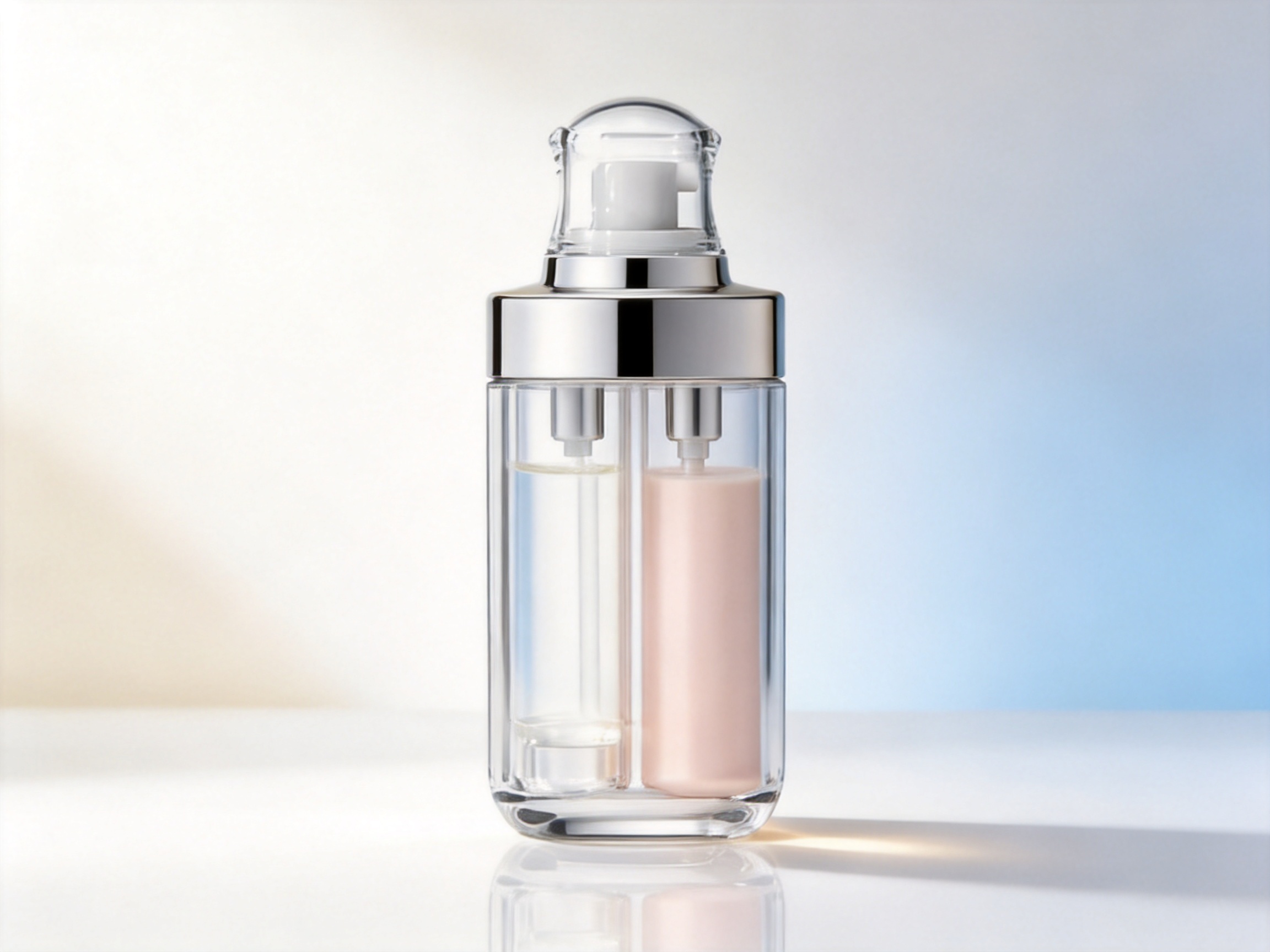
The HB-S004 can be considered for a variety of cosmetic and skincare concepts. Its two-chamber design makes it particularly suitable for products that depend on the relationship between two formulas.
A brand may use one chamber for a hydrating serum and the other for a brightening, firming, or soothing serum. The two products can be applied together or in sequence. Separate chambers allow the brand to preserve the identity of each serum and present the combination as an advanced treatment system.
Although the bottle is compact, it can support a paired routine in which one side is intended for daytime use and the other for evening use. Clear labeling and color differentiation can help consumers understand the distinction. The format can be especially attractive for travel-size regimens and introductory skincare kits.
One chamber can contain a light lotion while the second contains a more concentrated treatment. The user can dispense both in a specified ratio or use them according to different stages of a routine. This approach can provide a more customized experience than a single pre-mixed formula.
Cosmetic brands may explore a package that combines a skincare base with a makeup-preparation product. The two formulations could be designed to work together before foundation application. The dual-chamber structure can present the package as a complete preparation solution rather than an ordinary lotion bottle.
The transparent outer bottle is suitable for products in which the visual difference between the two formulas is part of the appeal. Brands can use contrasting colors, pearlescent effects, or visibly different textures to make the dual-chamber concept immediately understandable.
The compact capacity range may be suitable for travel collections, trial programs, gift sets, and limited-edition launches. A single package containing two related products can reduce the amount of space required in a travel bag while still allowing a brand to introduce a multi-step concept.
Yuyao Hengbang Plastic Co., Ltd. was established in 2006 and has developed a substantial operating base for cosmetic and skincare packaging production. The company has a building area of 35,000 square meters and more than 300 employees. This scale provides a foundation for coordinating product development, manufacturing, quality management, and customer service.
The company specializes in plastic packaging for cosmetics and skincare products. This specialization is important because cosmetic packaging requires more than general plastic processing. It involves knowledge of appearance, dimensional control, component matching, formula compatibility, dispensing behavior, decoration, filling requirements, and market presentation.
Hengbang’s young and professional team provides services that include design and development. For customers introducing a new cosmetic product, this can be valuable because packaging decisions often need to be made alongside formula development, visual identity, filling trials, and launch planning. A company capable of supporting design and development can help customers move more efficiently from an initial concept toward a manufacturable package.
The company’s product categories include cosmetic bottles, airless bottles, double-chamber bottles, lotion bottles, plastic cream jars, sunscreen bottles, and toner bottles. This broader category experience can help inform the development of specialized formats such as the HB-S004. Experience across multiple packaging types may support better understanding of different dispensing systems, sizes, material combinations, and market requirements.
Hengbang has passed ISO9001:2015 and ISO14001:2015 certifications. ISO9001:2015 is associated with quality management systems, while ISO14001:2015 is associated with environmental management systems. These certifications indicate that the company has established formal systems related to quality processes and environmental management. They do not replace product-specific testing, but they provide an important organizational framework for consistent production and responsible operational control.
The company was awarded as a Ningbo High-Tech Enterprise in 2021 and owns multiple invention patents. These achievements suggest an emphasis on technical development and innovation. For a complex package such as a double-chamber airless bottle, engineering knowledge and continuous improvement are particularly relevant because the product must combine multiple components within a compact, attractive structure.
Advanced cosmetic packaging manufacturing begins before the first production run. The package must be analyzed from the perspectives of function, appearance, formula compatibility, filling, assembly, transportation, and consumer use.
The first stage is to define the customer’s product requirements. This includes the number of chambers, target capacity, formula viscosity, intended dosage, packaging finish, color, decoration, market, and expected shelf life. For the HB-S004, the brand should clarify whether it requires the 8.5 + 8.5 milliliter airless configuration or the 10 + 10 milliliter lotion configuration.
The intended use pattern should also be established. Will both sides be pressed simultaneously? Will the formulas be used separately? Should the two outputs be applied in equal quantities? Does the product require a special order of application? These questions affect the pump structure, labeling, instructions, and testing plan.
After the requirements are defined, the bottle, inner chambers, shoulder, pump, and cap must be developed as a coordinated system. The component dimensions must fit together accurately, and the package must maintain an attractive appearance after assembly.
For a double-chamber package, dimensional accuracy is essential because two internal systems must operate within one exterior structure. The pump channels must align with the corresponding chambers. The shoulder must connect securely to the body. The cap must protect the pump while maintaining the intended visual proportions.
Material selection must be evaluated against the formula. The MS outer bottle, PP inner bottles, and PP + ABS pump components should be tested with the actual product formulations. Different ingredients can interact with packaging in different ways, especially over extended storage periods or under elevated temperatures.
Compatibility testing can include appearance observation, odor assessment, weight change, leakage inspection, component deformation, pump output, and formula stability. If the product contains volatile ingredients, oils, acids, alcohol, active compounds, or high levels of fragrance, the testing program should be designed accordingly.
Prototype samples allow the brand and manufacturer to evaluate the package before mass production. The prototype stage can reveal whether the cap feels secure, whether the pump is comfortable to use, whether the two outputs are balanced, and whether the transparent outer structure presents the formulas attractively.
Functional validation should include repeated actuation. A package may perform well during a few initial presses but show different behavior after prolonged use. Testing should examine the beginning, middle, and end of the package’s useful life. This is especially important for airless systems because the internal movement of the product can affect output behavior.
During production, assembly quality affects both appearance and performance. The bottle, inner chambers, pump, shoulder, and cap must be correctly positioned. Visual inspection can identify scratches, color variation, molding defects, contamination, assembly gaps, and decoration problems.
Functional inspection can examine leakage, actuation, output quantity, cap fit, and component alignment. Quality requirements should be defined in advance so that acceptable and unacceptable conditions are clearly understood by the production and inspection teams.
One of the primary reasons brands select airless packaging is the desire for a controlled and hygienic dispensing experience. A pump can help limit direct contact between the user’s hands and the formula. This is different from an open-mouth jar, in which the product may be repeatedly exposed to fingers and the surrounding environment.
Airless packaging may also help improve product evacuation. In a conventional bottle with a dip tube, some product may remain below the tube or in difficult-to-reach areas. An airless structure is designed to move the product toward the dispensing outlet, potentially helping consumers access more of the filled formula.
The performance of any airless system depends on the specific formula and package configuration. Very thick, highly particulate, or unusually structured products may require specialized evaluation. The pump, internal chamber, and formula must work together. The HB-S004 should therefore be tested with each intended product rather than evaluated only as an empty package.
For dual-chamber products, the protection benefit is also related to separation. Keeping two formulations apart during storage can help preserve the intended product design. However, brands should not assume that separation alone guarantees stability. The formulations still require appropriate stability, microbiological, and compatibility studies.
Packaging sustainability is becoming increasingly important to brands, retailers, regulators, and consumers. The HB-S004 is a plastic package with multiple components, so sustainability discussions should consider material quantity, product protection, manufacturing efficiency, transportation, use phase, and end-of-life handling.
The compact dual-chamber format may help combine two product functions in one external package. In some applications, this could reduce the need for two separate outer containers. The actual environmental benefit depends on the total material weight, the formulas being replaced, the size of the alternative packages, and the disposal systems available in the target market.
The company’s ISO14001:2015 certification indicates the presence of an environmental management framework. Such a framework can support systematic attention to resource use, waste management, environmental objectives, and operational improvement. Brands seeking sustainability claims should still request project-specific information and ensure that all environmental statements are supported by appropriate evidence.
Designers can also consider reducing unnecessary secondary packaging, optimizing carton dimensions, selecting appropriate decoration methods, and communicating disposal guidance. Because the HB-S004 contains multiple material types, responsible end-of-life communication may be particularly important. Recycling conditions vary by region, and packaging components may need to be separated or processed according to local systems.
The cosmetic packaging market includes many standard formats, but standardization can make it difficult for a new product to attract attention. The HB-S004 offers differentiation through its combined functionality and visual structure.
Its strongest competitive feature is the dual-chamber system. The package gives brands a way to present two formulations as one coordinated product. This can support more creative product concepts than a conventional single bottle and can provide a practical alternative to selling two separate products.
Its second major advantage is the combination of airless dispensing and compact capacity. Airless packaging is already associated with controlled delivery and modern skincare design. Adding two chambers creates a more specialized solution for products that require formulation separation or paired application.
Its third advantage is the visual communication created by the transparent outer bottle. Consumers can see that the package contains two distinct components. This is valuable because the design itself helps explain the product’s purpose without requiring lengthy text on the label.
Its fourth advantage is the coordinated cap and shoulder design. The cap is not simply a protective cover; it strengthens the package’s overall presentation. For premium and professional skincare brands, details at the top of the bottle can influence perceived quality and help establish a recognizable packaging family.
Its fifth advantage is manufacturing support from a company that focuses on cosmetic and skincare packaging. The product is not presented as a general-purpose plastic container. It is part of a broader packaging capability that includes airless bottles, lotion bottles, toner bottles, sunscreen bottles, cream jars, and other cosmetic formats.
Compared with competitors offering only standard single-chamber bottles, the HB-S004 can provide greater product concept flexibility. Compared with two independent packages, it can offer a more integrated presentation. Compared with ordinary jars, it can support a more controlled dispensing experience. These advantages should be confirmed through project-specific testing, but they form a strong basis for product development and market positioning.
Brands considering the HB-S004 should begin by identifying the relationship between the two formulas. The package is most valuable when the two chambers have a clear purpose. They may contain complementary treatments, separate steps in a routine, or two components that benefit from remaining apart until use.
The next step is to determine the ideal capacity configuration. The listed airless option is 8.5 + 8.5 milliliters, while the lotion option is 10 + 10 milliliters. The choice should be based on formula dosage, product positioning, expected usage period, and filling conditions.
Formula viscosity should be measured and communicated during development. A water-like toner, a medium-viscosity lotion, and a rich cream can behave differently in a pump. The brand should provide representative samples for testing and should evaluate the package under realistic storage conditions.
Brands should also plan the visual relationship between the two sides. Contrasting colors can make the dual nature obvious, while similar tones can create a more elegant and unified appearance. Labels, printing, transparent windows, and cap finishes should be selected to support the intended positioning.
Usage instructions should be tested with real consumers where possible. If both chambers dispense simultaneously, the package should make the action intuitive. If the two sides are used independently, each side should be clearly identified. A successful package is not only mechanically functional; it must also be easy to understand.
Finally, the brand should confirm all technical, regulatory, and quality requirements before mass production. This includes component specifications, artwork approval, color standards, filling trials, compatibility testing, transport testing, and finished-product inspection.
The HB-S004 is a cosmetic packaging container designed to hold two separate formulations in one coordinated bottle. It uses a double-chamber structure and an airless dispensing concept for selected configurations.
The supplied specifications list an 8.5 + 8.5 milliliter airless configuration and a 10 + 10 milliliter lotion configuration. These correspond to approximately 17 milliliters and 20 milliliters in total, respectively. The final configuration should be confirmed before production.
The cap and shoulder are made from MS material, the pump uses PP + ABS, the outer bottle uses MS, and the inner bottles use PP. Brands should conduct compatibility testing with the final formula.
A double-chamber bottle integrates two products into one coordinated package. It can simplify the user’s routine, reduce visual clutter, support formula separation, and create a distinctive presentation on the shelf.
Potential applications include paired serums, skincare treatments, lotion combinations, day-and-night products, concentrates, primers, travel products, and other cosmetic concepts that require two separate formulations.
The transparent outer presentation can allow consumers to see the two distinct formulations. Color coding, formula contrast, or visible product levels can help communicate the package’s two-part function.
No packaging system should be assumed to provide complete evacuation without testing. Actual performance depends on the formula, viscosity, internal structure, filling level, storage conditions, and pump behavior. The package should be tested with the final product.
The package is designed to keep the two formulations in separate chambers. Whether the outputs are mixed during application depends on the pump configuration and product instructions. Brands should confirm the intended dispensing relationship during development.
The listed application dosage is 0.12 + 0.12 cubic centimeters. This is a reference specification and should be validated with the selected formula, pump, filling process, and production conditions.
Recommended evaluations may include formula compatibility, leakage, actuation force, output consistency, pump recovery, cap fit, transportation simulation, temperature storage, appearance inspection, and repeated-use testing. The exact program should be based on the product and market requirements.
The company provides cosmetic packaging production together with design and development services. It has a 35,000-square-meter building area, more than 300 employees, ISO9001:2015 and ISO14001:2015 certifications, and experience in a range of cosmetic packaging categories.
The brand should provide the formula type, viscosity, target capacity, dosage, intended application method, artwork requirements, color preferences, and market requirements. The manufacturer can then support sample evaluation, compatibility testing, and production preparation.
The HB-S004 2 In 1 Double Chamber Airless Bottle represents a practical and visually distinctive direction for modern cosmetic packaging. By combining two internal product spaces with a coordinated airless dispensing structure, it gives brands more freedom to develop paired, separated, and complementary formulations.
Its listed 8.5 + 8.5 milliliter and 10 + 10 milliliter configurations provide compact capacity options for skincare products, trial formats, travel collections, and specialized treatments. The MS outer bottle and shoulder contribute to a premium visual structure, while PP inner bottles create the separated chambers needed for the two-formula concept. The PP + ABS pump supports controlled dispensing, and the unique cap strengthens the overall appearance.
The package’s key advantages include functional integration, formula separation, controlled application, compact presentation, shelf differentiation, and design flexibility. Its transparent outer bottle can help consumers recognize the two distinct formulations, while color coding and decorative treatment can give brands additional ways to communicate product benefits.
These packaging advantages are supported by Yuyao Hengbang Plastic Co., Ltd.’s experience in cosmetic and skincare packaging, design and development capabilities, formal quality and environmental management systems, technical recognition, and invention patents. With appropriate formula compatibility testing and product-specific validation, the HB-S004 can serve as a strong platform for brands seeking to make two-part skincare products more convenient, recognizable, and commercially distinctive.
1. Yuyao Hengbang Plastic Co., Ltd. Product specification information for HB-S004 2 In 1 Double Chamber Airless Bottle.
2. Yuyao Hengbang Plastic Co., Ltd. Corporate information, manufacturing capabilities, certifications, and product category overview.
3. ISO 9001:2015, Quality Management Systems — Requirements.
4. ISO 14001:2015, Environmental Management Systems — Requirements with Guidance for Use.
5. General principles of cosmetic packaging compatibility, dispensing performance, and stability evaluation.
6. General technical considerations for airless packaging systems and multi-chamber cosmetic containers.


Copyright © Yuyao Hengbang Plastic Co., Ltd.
All Rights Reserved.
 Wholesale Plastic Cosmetic Packaging Manufacturers